
Alameda County
State of California
Alameda County is the 8th largest jurisdiction in California — 1,682,353 residents across 7 regions, with 8,460 residential solar installs on record. This page is the permit route for that jurisdiction: the fifteen steps from working out who has a say over an address through to permission to operate, the documents this authority publishes, and 62 answers taken from those documents and dated.
Permitting 5 steps · 28 questions
Whether a permit is needed — Yes — a permit is required Q3 Electrical and building permits — Combined — one combo Building+Electrical permit Q4 Plan review — Over-the-counter roof PV: no plan review — permit issued over the counter / online, no appointment required during permit processing hours. Q18 Where you file — Alameda County Permit Portal at https://acpermit.acgov.org/permit/portal/#/ — the software identifies itself as 'Maintstar Permit Public' (MAINTSTAR) Q20
- Permit required
- Yes — a permit is required95% source
- What it costs
- $280 base ('Residential Photo-voltaic or other renewable energy system less than 35 Kva per system, when no plan review is required';85% source
- Plan review turnaround
- Over-the-counter roof PV: no plan review — permit issued over the counter / online, no appointment required during permit processing hours.78% source
- Key document
- County building permit application (bundled in the ground-mount PV checklist, dated 1/1/2026) cited by 6 open the document
-
Confirm who has a say over your address
A city address is usually permitted by the city, not the county — but not always, and some authorities keep building and hand electrical to someone else. Getting this wrong costs the whole submittal, because every requirement below belongs to whoever actually holds jurisdiction. Check the overlays in the same pass: an HOA, a historic district, a windstorm certification or a system-size cap can reshape the design, and all of them are cheaper to find now than after the array is laid out.
- Is this authority the AHJ for residential solar at this address? Yes — Alameda County PWA Building Inspection Department is the AHJ for residential solar in the unincorporated county 95% · adopting ordinance (BOS item, 7 Nov 2022, Ord. 2022-58)
- What does this authority permit itself, and what does it delegate? Both — the County permits and inspects building and electrical itself. Planning/zoning (CDA) is not required for small residential rooftop PV; Fire (ACFD) reviews only PV projects that go to plan review 90% · issued County building permit + job card
- Is a permit required for a residential rooftop PV system? Yes — a permit is required 95% · County permit-exemption handout (2025 CBC)
- Is there a separate electrical permit, or is it combined? Combined — one combo Building+Electrical permit 90% · issued County building permit
- Is a HOA or architectural approval required first? No — HOA/association approval may not be required or used as a condition. Ord. Ch. 15.08 Sec. 480.3.7: 'Approval of an application shall not be based on or conditioned on the approval of an association, as defined in Section 4080 of the Civil Code' 90% · adopting ordinance Sec. 480.3.7
- Is there a historic-district review? No — 'Zoning/Planning review is NOT required for small residential rooftop PV systems (California Gov. Code, Section 65850.5)' 60% · County guideline (2022 CBC)
- Is a wind or windstorm certification required? No — no wind or windstorm certification exists in this jurisdiction 60% · County forms and resources index
- Is a Specific Use Permit or Council approval ever required? No — review is administrative and non-discretionary; no Specific Use Permit or Board approval. Ord. 480.3: applications 'shall be processed in accordance with Government Code Section 65850.5. The building official shall implement the expedited, streamlined permitting process ... for the administrative, nondiscretionary review'. The only ground for refusal is a written 'specific, adverse impact' finding based on objective public health or safety standards 82% · adopting ordinance Sec. 480.2–480.3
- Is there a system-size cap on residential generation? No cap on generation size, but three thresholds gate the fast routes: (a) 10 kW AC nameplate (or 30 kW thermal) is the ordinance definition of a 'small residential rooftop solar energy system' entitled to expedited non-discretionary review; (b) 35 kW / 35 kVA per system is the ceiling for the $280 flat fee and the over-the-counter permit; (c) the module array must not exceed the maximum legal building height of the zoning district. The instant/Simple Solar path additionally caps at 400A service, 225A service disconnect, 225A busbars, 600V max DC, single phase, up to 2 string inverters 80% · adopting ordinance + fee schedule + eligibility checklist
-
Check who is allowed to apply
Several authorities require the electrical permit to be pulled by a licensed electrician, or require the contractor to be registered with them BEFORE applying. Registration is not same-day. This is second on the list rather than fourth because it is the step most likely to stop the job before the drawings matter.
- Who is allowed to pull the electrical permit? Either — a California-licensed contractor of class B, C-10 or C-46, or the property owner as owner-builder 80% · County guideline: Small Residential Rooftop Solar PV Permits (2022 CBC)
- Must the contractor be registered with this authority before applying? No — no prior contractor registration with the County; the County business licence fee (0.125% of valuation) is collected at permit issuance, not beforehand 65% · fee schedule (Schedule A, eff. 1 Jul 2024)
- Is a homeowner permitted to self-install and self-permit? Yes — owner-builder self-permit is available 70% · County building permit application (bundled in the ground-mount PV checklist, dated 1/1/2026)
-
Build the submittal package
Almost everywhere wants a site plan, a one-line or three-line electrical diagram, equipment cut sheets with listings, and a structural attachment detail. Build it against the published checklist rather than the last jurisdiction you worked in — the checklist is what the reviewer marks against.
- What documents make up a complete submittal? Over-the-counter roof PV: permit application via the portal, plus plans and specifications prepared by a CA-licensed architect, engineer or qualified contractor, showing job address, owner name/address, and the preparer's name, address and signature — available at permit issuance and on site at inspection. No plan review is performed at issuance. Where plan review IS required (ground mount, non-residential, non-listed equipment): one complete PDF containing cover sheet (address, APN, engineer contact, scope, applicable code references, occupancy/construction type), sheet index, site plan, array plans, foundation plans and structural details, structural calculations, electrical plans, plus C&D debris form, and geotechnical / special-inspection forms as needed 82% · County checklist: Solar Photovoltaic (PV) Ground-Mounted, 1/1/2026
- How many copies, and in what format? Electronic only — 'Submit one complete PDF file (not separate files for each trade)' through the Electronic Online Portal. Electronic stamps and signatures accepted; for expedited small residential rooftop solar a wet signature shall not be required 85% · County checklist, 1/1/2026
- Is a site plan required, and what must it show? Yes. Site plan must show: all property lines with dimensions; all structures and their distances to property lines; easements; any site work (landscaping, retaining walls, pools); any septic system; utility meter locations (gas, electric, water); north arrow and drawing scale 80% · County checklist, 1/1/2026
- Is a one-line / three-line diagram required? Yes — a one-line diagram of the system is required on the electrical plan 65% · California Solar Permitting Guidebook 4th ed. (adopted by reference in Ord. 15.08 Sec. 480.3.2)
- Is a structural PE stamp required, and at what threshold? No stamp for the over-the-counter path if max installed PV weight is 5 lbs/ft2 and no more than 40 lbs at any single support point, max height 18 inches above roof, and the building is a previously County-permitted structure. Where plan review is required: 'provide structural calculations ... The structural calculations shall address both vertical and lateral forces, and shall be wet stamped and signed by a licensed engineer or architect registered in the State of California' 85% · County guideline (2022 CBC) + issued permit + Simple Solar eligibility checklist
- Is an electrical PE stamp required, and at what threshold? Not required for residential. 'Electrical engineer required for commercial PV projects (Calif. Business & Professions Code 5537 & 5538)' 80% · County checklist, 1/1/2026
-
Apply and pay
Most authorities now take the whole application through a portal, and several states cap or constrain what a residential solar permit may cost. Check whether plan check is billed separately before you quote the job.
- Which permit portal does this authority use? Alameda County Permit Portal at https://acpermit.acgov.org/permit/portal/#/ — the software identifies itself as 'Maintstar Permit Public' (MAINTSTAR) 85% · department page + portal landing page
- Can the whole application be completed online? Yes — 'Apply for building permits, submit plans, schedule inspections and check permit status through the Alameda County Permit Portal'; payment by credit card online; 'All applications, plans and supporting documents shall be submitted through our Electronic Online Portal'; no wet signature required for expedited small residential rooftop solar 88% · department page + County checklist 1/1/2026
- What does a residential solar permit cost? $280 base ('Residential Photo-voltaic or other renewable energy system less than 35 Kva per system, when no plan review is required'; $140 for each additional system) + $30 combo permit processing fee + valuation-based add-ons: business licence 0.125% of valuation, residential SMIP 0.013%, State CBSC $1 per $25,000, document imaging 1% of permit fee, stormwater 4% of building permit fee, plus 3% card fee. Typical total for a plain roof PV job ~$335–$400. Add $140 for a battery/ESS line and $140 for a service/sub-panel line where applicable 85% · Board of Supervisors refund worksheet (28 Oct 2025) + Fee Schedule A
- How is the fee calculated? Flat — $280 flat per PV system under 35 kVA where no plan review is required; ancillary fees are valuation-based 85% · fee schedule (Schedule A, eff. 1 Jul 2024)
- Is there a separate plan-check fee? No plan-check fee on the over-the-counter path (the $280 rate is expressly 'when no plan review is required'). Where plan review is required, plan review is charged separately: building plan review 80% of the building permit fee, $140 minimum; 'Plumbing, Mechanical, Electrical work only' 80% of permit fees or $140 minimum per trade 80% · fee schedule (Schedule A)
-
Plan review — and start the utility in parallel
Interconnection is a separate process from the permit and usually the longer pole. Where the utility does not depend on the permit being issued, running both at once is the single biggest saving available on a residential job.
- What is the stated plan-review turnaround? Over-the-counter roof PV: no plan review — permit issued over the counter / online, no appointment required during permit processing hours. PV requiring plan review: intake 5–10 business days, first review 20–30 business days, subsequent reviews 10–15 business days 78% · County checklist 1/1/2026 + County guideline + Timelines handout
- How long is an issued permit valid before it expires? One year from issuance. Renewable once for up to a further year on written request before expiry (renewal fee $140); the building official may set a SHORTER period for short-term projects, and 'solar system installations' are named as an example of such projects 85% · adopting ordinance (Ord. 2022-58, Ch. 15.08 Sec. 105.5)
- Which utility handles interconnection here? Pacific Gas and Electric Company (PG&E) 90% · County inspection job card + County guideline
- Where does the utility sit in the sequence? Parallel — the County permit is independent of PG&E. Ord. 480.3.6: 'The building official's approval of the application does not authorize an applicant to connect a small residential rooftop solar energy system to the local utility provider's electricity grid.' PG&E approval/PTO comes after the County final inspection ('After passing the County's final inspection, the permit holder may need to contact PG&E for approval prior to activating the system'), and a PG&E AIC letter can be a prior-to-issuance condition on plan-review projects 75% · County guideline + adopting ordinance Sec. 480.3.6
28 questions answered against Alameda County’s own published documents
Q1 Is this authority the AHJ for residential solar at this address? Core Jurisdiction & scope
Yes — Alameda County PWA Building Inspection Department is the AHJ for residential solar in the unincorporated county
Why the confidence is not higherCounty Building Ordinance Ch. 15.08 Sec. 480.1 says the small-residential-rooftop-solar permitting process 'shall apply to the permitting of all small residential rooftop solar energy systems in the unincorporated area of the County'; the County's PV guideline masthead reads 'IN UNINCORPORATED ALAMEDA COUNTY'. Only caveat: department sits in Public Works Agency, not the Community Development Agency
adopting ordinance (BOS item, 7 Nov 2022, Ord. 2022-58) checked 2026-08-28 http://www.acgov.org/board/bos_calendar/documents/DocsAgendaReg_11_7_22/GENERAL%20ADMINISTRATION/Regular%20Calendar/Item_2_2022_Bldg_Standards_Code_memo_ord.pdf
Q2 What does this authority permit itself, and what does it delegate? Core Jurisdiction & scope
Both — the County permits and inspects building and electrical itself. Planning/zoning (CDA) is not required for small residential rooftop PV; Fire (ACFD) reviews only PV projects that go to plan review
Why the confidence is not higherAn issued County solar permit (BLD2021-04077) is headed 'This Permit is for: Building Electrical'; Ord. 2022-58 adopts Ch. 15.08 Building Code and Ch. 15.12 Electrical Code for the County; the roof-PV guideline states 'Zoning/Planning review is NOT required for small residential rooftop PV systems (California Gov. Code, Section 65850.5)'. Fire routing is evidenced on the ground-mount checklist. Deduction: the permit document is from 2021
issued County building permit + job card checked 2026-08-28 https://acpermit.acgov.org/Permit/api/AttachmentFile/GetOriginalFile/25acc1ce-20dc-4bbb-aa93-1849a5f7847b/1
Q3 Is a permit required for a residential rooftop PV system? Core Jurisdiction & scope
Yes — a permit is required
Why the confidence is not higherThe County's current 'Work Exempt From Permit (2025 CBC)' handout lists every exemption and contains no solar/PV item. Controls run in the same read: positive control 'electrical' = 8 hits, fabricated control 'zzqqx' = 0 hits, 'solar' = 0, 'photovoltaic' = 0 — so the search was working and the absence is real. Ord. Ch. 15.08 Sec. 480 assumes a permit throughout
County permit-exemption handout (2025 CBC) checked 2026-08-28 https://acgovt.sharepoint.com/:b:/s/acpublicdocs/IQCCyubjT0Y-SqitMeG8BIggAU1njmpdMxpRQL4niSUHzxY?e=JQlM8u
Q4 Is there a separate electrical permit, or is it combined? Core Jurisdiction & scope
Combined — one combo Building+Electrical permit
Why the confidence is not higherIssued permit BLD2021-04077 shows a single permit covering Building and Electrical with a '$30/c' combo processing fee; Fee Schedule A charges $20 for a single permit and $30 for a combo. Deduction: evidence is a 2021 permit plus the 2024 fee schedule rather than a current explanatory page
issued County building permit checked 2026-08-28 https://acpermit.acgov.org/Permit/api/AttachmentFile/GetOriginalFile/25acc1ce-20dc-4bbb-aa93-1849a5f7847b/1
Q5 Who is allowed to pull the electrical permit? Core Who may apply
Either — a California-licensed contractor of class B, C-10 or C-46, or the property owner as owner-builder
Why the confidence is not higherThe County roof-PV guideline says 'A qualified contractor (CA licensed class B, C10 or C46) can obtain an over-the-counter PV permit'; the County building permit application carries a full Owner-Builder Declaration (B&P 7044 / H&S 19825). Deduction: the guideline is written to the 2022 code cycle and the County has not republished it; the owner-builder route is inferred from the application form rather than stated for solar specifically
County guideline: Small Residential Rooftop Solar PV Permits (2022 CBC) checked 2026-08-28 http://web.archive.org/web/20240225235932/https://www.acpwa.org/acpwa-assets/docs/permits/forms-and-handouts/2023/Residential-Roof-PV-Permit-with-AB2188-2022-CBC.pdf
Q6 Must the contractor be registered with this authority before applying? Core Who may apply
No — no prior contractor registration with the County; the County business licence fee (0.125% of valuation) is collected at permit issuance, not beforehand
Why the confidence is not higherFee Schedule A section H lists 'Business License Fees: $1.25 per $1,000 valuation' among fees 'collected with building permits', and issued permit BLD2021-04077 shows that line charged at issuance. Inference from two County documents; no page states positively that no pre-registration exists
fee schedule (Schedule A, eff. 1 Jul 2024) checked 2026-08-28 https://acgovt.sharepoint.com/:b:/s/acpublicdocs/IQANA3q1RAlyQZkik3uS0xEBASG8R5q8RABJsr9xb37h6rE?e=OboCBg
Q7 Is a homeowner permitted to self-install and self-permit? Who may apply
Yes — owner-builder self-permit is available
Why the confidence is not higherThe County building permit application contains section B 'OWNER – BUILDER DECLARATION' with the B&P 7044 exemptions, and the County issues a 'Notice to Property Owner' under H&S 19825 requiring a signed Owner-Builder Acknowledgment before permit issuance. Deduction: this is the general application form, not a solar-specific statement, and the roof-PV guideline frames the over-the-counter route around a licensed contractor
County building permit application (bundled in the ground-mount PV checklist, dated 1/1/2026) checked 2026-08-28 https://acgovt.sharepoint.com/:b:/s/acpublicdocs/IQBXwR0I7ghTQpQfSAr6N-xbAe8mbKtXsTZnWkCtLlYgI3I?e=qx8OO2
Q8 What documents make up a complete submittal? Core Submittal package
Over-the-counter roof PV: permit application via the portal, plus plans and specifications prepared by a CA-licensed architect, engineer or qualified contractor, showing job address, owner name/address, and the preparer's name, address and signature — available at permit issuance and on site at inspection. No plan review is performed at issuance. Where plan review IS required (ground mount, non-residential, non-listed equipment): one complete PDF containing cover sheet (address, APN, engineer contact, scope, applicable code references, occupancy/construction type), sheet index, site plan, array plans, foundation plans and structural details, structural calculations, electrical plans, plus C&D debris form, and geotechnical / special-inspection forms as needed
Why the confidence is not higherTwo County documents: the roof-PV guideline for the OTC path and the current (1/1/2026) ground-mount PV checklist for the plan-review path. Deduction: the County no longer publishes a roof-mounted PV checklist at all (see not_found), so the OTC list is read off a guideline written to the 2022 code cycle
County checklist: Solar Photovoltaic (PV) Ground-Mounted, 1/1/2026 checked 2026-08-28 https://acgovt.sharepoint.com/:b:/s/acpublicdocs/IQBXwR0I7ghTQpQfSAr6N-xbAe8mbKtXsTZnWkCtLlYgI3I?e=qx8OO2
Q9 How many copies, and in what format? Submittal package
Electronic only — 'Submit one complete PDF file (not separate files for each trade)' through the Electronic Online Portal. Electronic stamps and signatures accepted; for expedited small residential rooftop solar a wet signature shall not be required
Why the confidence is not higherVerbatim from the County's current ground-mount PV checklist (1/1/2026); the wet-signature waiver is Ord. Ch. 15.08 Sec. 480.3.3. Deduction: the 'one PDF' instruction appears on the ground-mount checklist, and no roof-mounted equivalent is published
County checklist, 1/1/2026 checked 2026-08-28 https://acgovt.sharepoint.com/:b:/s/acpublicdocs/IQBXwR0I7ghTQpQfSAr6N-xbAe8mbKtXsTZnWkCtLlYgI3I?e=qx8OO2
Q10 Is a site plan required, and what must it show? Core Submittal package
Yes. Site plan must show: all property lines with dimensions; all structures and their distances to property lines; easements; any site work (landscaping, retaining walls, pools); any septic system; utility meter locations (gas, electric, water); north arrow and drawing scale
Why the confidence is not higherVerbatim bullet list from the County's current PV checklist. Deduction: it is the ground-mount checklist — the County publishes no roof-mount site-plan list, and a roof retrofit would not need every item (e.g. foundation-related site work)
County checklist, 1/1/2026 checked 2026-08-28 https://acgovt.sharepoint.com/:b:/s/acpublicdocs/IQBXwR0I7ghTQpQfSAr6N-xbAe8mbKtXsTZnWkCtLlYgI3I?e=qx8OO2
Q11 Is a one-line / three-line diagram required? Core Drawings & calculations
Yes — a one-line diagram of the system is required on the electrical plan
Why the confidence is not higherThe County does not publish its own PV electrical-plan requirement; instead Ord. Ch. 15.08 Sec. 480.3.2 requires the expedited process to 'substantially conform to the recommendations for expedited permitting — including any checklists and standard plans — contained in the most current version of the California Solar Permitting Guidebook', and the roof-PV guideline repeats that the County 'adopts the checklist and standards in the most recent California Solar Permitting Guidebook'. The Guidebook's electrical-plan list includes 'One-line diagram of system'. Inference across two County documents plus an adopted-by-reference state document, so not the authority saying it directly
California Solar Permitting Guidebook 4th ed. (adopted by reference in Ord. 15.08 Sec. 480.3.2) checked 2026-08-28 https://lci.ca.gov/docs/20190226-Solar_Permitting_Guidebook_4th_Edition.pdf
Q12 Are string and conductor calculations required? Drawings & calculations
Nothing published by this authority.
Where we lookedThe County's complete Permit Forms & Resources index (all headings enumerated), the Simple Solar eligibility checklist, the ground-mount PV checklist (1/1/2026), the roof-PV guideline, and the adopting ordinance's added Sec. 480. None mentions string or conductor calculations. The California Solar Permitting Guidebook adopted by reference asks the electrical plan to 'Specify grounding/bonding, conductor type and size, conduit type and size and number of conductors in each section of conduit' — a specification, not a calculation — so I could not honestly answer yes or no above 40
Q13 Is a structural PE stamp required, and at what threshold? Core Engineering & stamps
No stamp for the over-the-counter path if max installed PV weight is 5 lbs/ft2 and no more than 40 lbs at any single support point, max height 18 inches above roof, and the building is a previously County-permitted structure. Where plan review is required: 'provide structural calculations ... The structural calculations shall address both vertical and lateral forces, and shall be wet stamped and signed by a licensed engineer or architect registered in the State of California'
Why the confidence is not higherBoth halves are verbatim from the County's own roof-PV guideline, and the 5 psf / 40 lb / 18 inch limits are repeated as special conditions on an issued County permit and in the current Simple Solar eligibility checklist — three County sources agree. Deduction: the guideline itself is written to the 2022 code cycle
County guideline (2022 CBC) + issued permit + Simple Solar eligibility checklist checked 2026-08-28 http://web.archive.org/web/20240225235932/https://www.acpwa.org/acpwa-assets/docs/permits/forms-and-handouts/2023/Residential-Roof-PV-Permit-with-AB2188-2022-CBC.pdf
Q14 Is an electrical PE stamp required, and at what threshold? Engineering & stamps
Not required for residential. 'Electrical engineer required for commercial PV projects (Calif. Business & Professions Code 5537 & 5538)'
Why the confidence is not higherVerbatim from the County's current (1/1/2026) PV checklist; residential is not named, so the residential 'no' is read from the restriction to commercial rather than stated positively
County checklist, 1/1/2026 checked 2026-08-28 https://acgovt.sharepoint.com/:b:/s/acpublicdocs/IQBXwR0I7ghTQpQfSAr6N-xbAe8mbKtXsTZnWkCtLlYgI3I?e=qx8OO2
Q15 What does a residential solar permit cost? Core Fees
$280 base ('Residential Photo-voltaic or other renewable energy system less than 35 Kva per system, when no plan review is required'; $140 for each additional system) + $30 combo permit processing fee + valuation-based add-ons: business licence 0.125% of valuation, residential SMIP 0.013%, State CBSC $1 per $25,000, document imaging 1% of permit fee, stormwater 4% of building permit fee, plus 3% card fee. Typical total for a plain roof PV job ~$335–$400. Add $140 for a battery/ESS line and $140 for a service/sub-panel line where applicable
Why the confidence is not higherThree County sources agree on the $280: Fee Schedule A (eff. 1 Jul 2024), issued permit BLD2021-04077 (total $334.50), and a Sept 2025 Board refund worksheet for solar permit BLD2025-00656 that itemises 'Res Photo-Volt / Wind, <35kva $280.00', 'Battery (ESS) $140.00' and a $1,101.38 total for a solar+storage job. Deduction: the published Schedule A PDF carries an 'Archived' watermark yet the County's own residential fee estimator says 'Based on Fee Schedule Effective July 1, 2024' — so the current-ness of the schedule is muddled even though the amount is corroborated to Feb 2025
Board of Supervisors refund worksheet (28 Oct 2025) + Fee Schedule A checked 2026-08-28 https://www.alamedacountyca.gov/board/bos_calendar/documents/DocsAgendaReg_10_28_25/PUBLIC%20WORKS/Regular%20Calendar/ACPWA_394174.pdf
Q16 How is the fee calculated? Core Fees
Flat — $280 flat per PV system under 35 kVA where no plan review is required; ancillary fees are valuation-based
Why the confidence is not higherFee Schedule A section E states the flat amount per system with a threshold, not a per-kW or per-panel rate. Deduction: the ancillary fees (business licence, SMIP, CBSC, imaging, stormwater) are percentages of valuation, so the total is not purely flat
fee schedule (Schedule A, eff. 1 Jul 2024) checked 2026-08-28 https://acgovt.sharepoint.com/:b:/s/acpublicdocs/IQANA3q1RAlyQZkik3uS0xEBASG8R5q8RABJsr9xb37h6rE?e=OboCBg
Q17 Is there a separate plan-check fee? Fees
No plan-check fee on the over-the-counter path (the $280 rate is expressly 'when no plan review is required'). Where plan review is required, plan review is charged separately: building plan review 80% of the building permit fee, $140 minimum; 'Plumbing, Mechanical, Electrical work only' 80% of permit fees or $140 minimum per trade
Why the confidence is not higherBoth figures verbatim from Fee Schedule A sections D and E. Deduction: the schedule PDF is watermarked 'Archived' and dated 1 Jul 2024
fee schedule (Schedule A) checked 2026-08-28 https://acgovt.sharepoint.com/:b:/s/acpublicdocs/IQANA3q1RAlyQZkik3uS0xEBASG8R5q8RABJsr9xb37h6rE?e=OboCBg
Q18 What is the stated plan-review turnaround? Core Timeline & validity
Over-the-counter roof PV: no plan review — permit issued over the counter / online, no appointment required during permit processing hours. PV requiring plan review: intake 5–10 business days, first review 20–30 business days, subsequent reviews 10–15 business days
Why the confidence is not higherThe OTC statement is from the County roof-PV guideline; the review figures are from the current (1/1/2026) ground-mount PV checklist. Deduction: the County's published 'Timelines For Building Plan Review' table has no solar row at all — I read all ten rows (ADU, TI, demolition, JADU, multifamily, SFD new, SFD remodel, townhouse) and none covers PV, so the solar figures come from the checklist rather than the timelines table
County checklist 1/1/2026 + County guideline + Timelines handout checked 2026-08-28 https://acgovt.sharepoint.com/:b:/s/acpublicdocs/IQBXwR0I7ghTQpQfSAr6N-xbAe8mbKtXsTZnWkCtLlYgI3I?e=qx8OO2
Q19 How long is an issued permit valid before it expires? Timeline & validity
One year from issuance. Renewable once for up to a further year on written request before expiry (renewal fee $140); the building official may set a SHORTER period for short-term projects, and 'solar system installations' are named as an example of such projects
Why the confidence is not higherOrd. Ch. 15.08 Sec. 105.5 [BID] verbatim, with 105.5.1 Renewal; corroborated by issued permit BLD2021-04077 (issued 10/18/2021, expiration 10/18/2022). Deduction: 105.5 exception 3 expressly names solar as a category where a shorter period may be imposed, so one year is the default rather than a guarantee
adopting ordinance (Ord. 2022-58, Ch. 15.08 Sec. 105.5) checked 2026-08-28 http://www.acgov.org/board/bos_calendar/documents/DocsAgendaReg_11_7_22/GENERAL%20ADMINISTRATION/Regular%20Calendar/Item_2_2022_Bldg_Standards_Code_memo_ord.pdf
Q20 Which permit portal does this authority use? Core Portal & process
Alameda County Permit Portal at https://acpermit.acgov.org/permit/portal/#/ — the software identifies itself as 'Maintstar Permit Public' (MAINTSTAR)
Why the confidence is not higherThe portal page renders the string 'Maintstar Permit Public 26.8.20.6623', and acpwa.org/permits links to it as the single route to 'Apply for building permits, submit plans, schedule inspections and check permit status'. Deduction: the vendor name is read off a version banner, not off a County statement of what system they use
department page + portal landing page checked 2026-08-28 https://www.acpwa.org/permits/
Q21 Can the whole application be completed online? Core Portal & process
Yes — 'Apply for building permits, submit plans, schedule inspections and check permit status through the Alameda County Permit Portal'; payment by credit card online; 'All applications, plans and supporting documents shall be submitted through our Electronic Online Portal'; no wet signature required for expedited small residential rooftop solar
Why the confidence is not higherThree County sources agree (permits page, 1/1/2026 checklist, Ord. 480.3.3). Deduction: the ground-mount path still requires a printed hard copy of permit and approved plans for use during inspections, so the process is not paperless end-to-end
department page + County checklist 1/1/2026 checked 2026-08-28 https://www.acpwa.org/permits/
Q22 Which utility handles interconnection here? Core Utility interconnection
Pacific Gas and Electric Company (PG&E)
Why the confidence is not higherNamed from the County side, not from a territory map: the County inspection job card carries inspection codes '608 PG&E ELECTRIC RELEASE' and '609 PG&E GAS RELEASE'; the roof-PV guideline says 'the permit holder may need to contact PG&E for approval prior to activating the system'; the ground-mount checklist lists a 'PG&E AIC letter' as a prior-to-issuance condition. Note for the record: Alameda Municipal Power serves only the incorporated City of Alameda, not the unincorporated county; Ava Community Energy (formerly EBCE) is a CCA supplying generation only — PG&E still owns the wires, the meter and the interconnection
County inspection job card + County guideline checked 2026-08-28 https://acpermit.acgov.org/Permit/api/AttachmentFile/GetOriginalFile/25acc1ce-20dc-4bbb-aa93-1849a5f7847b/1
Q23 Where does the utility sit in the sequence? Core Utility interconnection
Parallel — the County permit is independent of PG&E. Ord. 480.3.6: 'The building official's approval of the application does not authorize an applicant to connect a small residential rooftop solar energy system to the local utility provider's electricity grid.' PG&E approval/PTO comes after the County final inspection ('After passing the County's final inspection, the permit holder may need to contact PG&E for approval prior to activating the system'), and a PG&E AIC letter can be a prior-to-issuance condition on plan-review projects
Why the confidence is not higherBoth quotes are from the County's own ordinance and guideline. Deduction: neither document describes when the PG&E interconnection application itself must be filed — that sits in PG&E's Rule 21 process, which I did not read for this answer
County guideline + adopting ordinance Sec. 480.3.6 checked 2026-08-28 http://web.archive.org/web/20240225235932/https://www.acpwa.org/acpwa-assets/docs/permits/forms-and-handouts/2023/Residential-Roof-PV-Permit-with-AB2188-2022-CBC.pdf
Q24 Is a HOA or architectural approval required first? Overlays & special cases
No — HOA/association approval may not be required or used as a condition. Ord. Ch. 15.08 Sec. 480.3.7: 'Approval of an application shall not be based on or conditioned on the approval of an association, as defined in Section 4080 of the Civil Code'
Why the confidence is not higherVerbatim from the County's adopting ordinance. Deduction: this binds the County, not the HOA's own private covenants, which are separately limited by Civil Code 714
adopting ordinance Sec. 480.3.7 checked 2026-08-28 http://www.acgov.org/board/bos_calendar/documents/DocsAgendaReg_11_7_22/GENERAL%20ADMINISTRATION/Regular%20Calendar/Item_2_2022_Bldg_Standards_Code_memo_ord.pdf
Q25 Is there a historic-district review? Overlays & special cases
No — 'Zoning/Planning review is NOT required for small residential rooftop PV systems (California Gov. Code, Section 65850.5)'
Why the confidence is not higherThe quote is verbatim County text and covers planning review generally, which includes historic review as a planning function. Marked down because no County document addresses historic districts by name for solar, and Ch. 15.08 Article III adopts the California Historical Building Code, which could bear on a designated resource. Ground-mount PV, by contrast, expressly requires Planning Department approval first
County guideline (2022 CBC) checked 2026-08-28 http://web.archive.org/web/20240225235932/https://www.acpwa.org/acpwa-assets/docs/permits/forms-and-handouts/2023/Residential-Roof-PV-Permit-with-AB2188-2022-CBC.pdf
Q26 Is a wind or windstorm certification required? Overlays & special cases
No — no wind or windstorm certification exists in this jurisdiction
Why the confidence is not higherInference from absence across the County's full published document set: I enumerated every item on the ACPWA Permit Forms & Resources page (applications, checklists, guidance, inspection, fees) and there is no wind/windstorm certificate, and neither the roof-PV guideline nor the ground-mount checklist nor the Simple Solar eligibility checklist mentions one. Marked at 60 because it is proof of absence, not a County statement, and California has no TDI-equivalent scheme
County forms and resources index checked 2026-08-28 https://www.acpwa.org/permits/permit-resources
Q27 Is a Specific Use Permit or Council approval ever required? Overlays & special cases
No — review is administrative and non-discretionary; no Specific Use Permit or Board approval. Ord. 480.3: applications 'shall be processed in accordance with Government Code Section 65850.5. The building official shall implement the expedited, streamlined permitting process ... for the administrative, nondiscretionary review'. The only ground for refusal is a written 'specific, adverse impact' finding based on objective public health or safety standards
Why the confidence is not higherVerbatim ordinance text. Deduction: this covers small residential rooftop systems only — ground-mount PV expressly requires Planning Department approval as Step 2A, and large rural East County solar has a separate CDA policy track
adopting ordinance Sec. 480.2–480.3 checked 2026-08-28 http://www.acgov.org/board/bos_calendar/documents/DocsAgendaReg_11_7_22/GENERAL%20ADMINISTRATION/Regular%20Calendar/Item_2_2022_Bldg_Standards_Code_memo_ord.pdf
Q28 Is there a system-size cap on residential generation? Overlays & special cases
No cap on generation size, but three thresholds gate the fast routes: (a) 10 kW AC nameplate (or 30 kW thermal) is the ordinance definition of a 'small residential rooftop solar energy system' entitled to expedited non-discretionary review; (b) 35 kW / 35 kVA per system is the ceiling for the $280 flat fee and the over-the-counter permit; (c) the module array must not exceed the maximum legal building height of the zoning district. The instant/Simple Solar path additionally caps at 400A service, 225A service disconnect, 225A busbars, 600V max DC, single phase, up to 2 string inverters
Why the confidence is not higherThresholds (a) and (c) are verbatim from Ord. Sec. 480.2; (b) from Fee Schedule A and the roof-PV guideline; the instant-path limits from the current Simple Solar eligibility checklist. Deduction: no single County document states 'there is no size cap' — that is read from the absence of one across all four
adopting ordinance + fee schedule + eligibility checklist checked 2026-08-28 http://www.acgov.org/board/bos_calendar/documents/DocsAgendaReg_11_7_22/GENERAL%20ADMINISTRATION/Regular%20Calendar/Item_2_2022_Bldg_Standards_Code_memo_ord.pdf
Lines marked with a percentage were read off this authority’s own published documents. Unmarked guidance is general good practice, not this jurisdiction’s rule — always confirm against the authority before you submit.
Install 5 steps · 20 questions
-
Build to the code editions actually in force here
The NEC edition a jurisdiction enforces is often a cycle behind the newest one published, and local amendments sit on top of it. Rapid shutdown, conductor sizing and labelling all change between editions, so the edition in force is the first thing to establish, not the last.
- Which NEC edition is in force? Other — 2025 California Electrical Code (Title 24, Part 3), in force since 1 January 2026. The CEC 2025 is based on NFPA 70 (NEC) 2023 85% · County checklist 1/1/2026 + County permit-exemption handout (2025 CBC)
- Which building code edition is in force? 2025 California Building Code (Title 24, Part 2) and 2025 California Residential Code (Part 2.5), in force from 1 January 2026, adopted as Alameda County Ordinance Code Ch. 15.08 88% · County permit-exemption handout (2025 CBC)
- Are there local amendments to any of the above? Yes — the County makes local amendments. The prior cycle (Ord. 2022-58) repealed and re-adopted Ch. 15.08 Building, 15.12 Electrical, 15.16 Mechanical, 15.20 Plumbing and 15.24 Housing with extensive County amendments (marked [BID]), including added Sec. 480 for small residential rooftop solar, added Sec. 105.5 expiration/renewal, added Sec. 110.7 inspection record card and 110.8 reinspections. The current handout is headed '2025 CALIFORNIA BUILDING CODE & ADOPTED COUNTY ORDINANCES' 80% · adopting ordinance (2022 cycle) + CBSC 2025 filing list
- What is the installation judged against? The 2025 California Building Standards Code as adopted and amended by the Alameda County Building Ordinance (Ch. 15.08 Building, Ch. 15.12 Electrical). For over-the-counter PV the County performs no plan review at all: 'No code review has been performed for this PV permit. Contractor shall provide plans & manufacturer's specs on site for inspector's review and install PV system according to Calif. Codes' — so the installation is judged at inspection, against the California Codes and the approved plans 85% · issued County permit, special condition #1.00
-
Fire access, setbacks and pathways
Ridge setbacks and roof access pathways are fire-service requirements and they constrain the array layout. They are the most common cause of a redesign after the fire department comments on a plan set.
- What ridge setback and access pathways are required? As stated by the County (2022-cycle wording, per California State Fire Marshal Guidelines for Fire Department Roof Access): panels shall not be installed closer than 3 ft from ridges, for Fire Dept smoke ventilation operation. For roofs sloped greater than 2:12 with panels — hip roof: provide a 3 ft access pathway from eave to ridge; single ridge roof: provide TWO 3 ft access pathways from eave to ridge; hips and valleys roof: provide 18 inches clear on each side of hips or valleys where panels are on both sides 65% · issued County permit special conditions + County guideline
-
Rapid shutdown
Which rapid-shutdown rule applies follows directly from the NEC edition in force, and the initiation device has to be at a location the fire service can reach and identify. This is inspected, and it is labelled.
- Is rapid shutdown required, and to which NEC edition? Yes — required by the California Electrical Code edition in force, i.e. CEC 2025 (NEC 2023) Art. 690.12 for permits filed from 1 Jan 2026. The County adds no rapid-shutdown rule of its own; it states only 'install PV system according to Calif. Codes' and the Simple Solar checklist requires the 'Current applicable California Electrical Code (CEC)' 65% · County Simple Solar eligibility checklist + County permit conditions
-
Labels and placards
The NEC sets a baseline for permanent markings at the service equipment and the disconnecting means. On top of that, an authority may specify its own wording, and the utility may specify more again. Where any of them writes its own text, a generic off-the-shelf label set will not pass — this is the detail most often fixed on a return visit.
- Which placards does this authority require at the service equipment? The County requires marking per the California Electrical Code and adds no list of its own. Its only express placard requirement is permit special condition #7: 'Post warning sign at each PV disconnect according to CEC.' Beyond that the County adopts, by ordinance, the checklists and standard plans of the California Solar Permitting Guidebook, whose signage table lists: WARNING: ELECTRIC SHOCK HAZARD... (inverter and battery enclosure); WARNING: ELECTRIC SHOCK HAZARD. THE DC CONDUCTORS OF THIS PHOTOVOLTAIC SYSTEM ARE UNGROUNDED AND MAY BE ENERGIZED (junction/combiner boxes, disconnects); PHOTOVOLTAIC SYSTEM DISCONNECT (AC and DC disconnects); operating current/voltage/max system voltage/short-circuit current (DC disconnects); RATED AC OUTPUT CURRENT / NOMINAL OPERATING AC VOLTAGE (point of interconnection); plaque or directory of service and PV disconnecting means (electrical service and inverter); WARNING! ELECTRIC SHOCK HAZARD. DO NOT TOUCH TERMINALS... (DC disconnect); WARNING: INVERTER OUTPUT CONNECTION DO NOT RELOCATE THIS OVERCURRENT DEVICE (inverter output OCPD); WARNING: PHOTOVOLTAIC POWER SOURCE (conduit/raceways/enclosures); PHOTOVOLTAIC SYSTEM EQUIPPED WITH RAPID SHUTDOWN (rapid shutdown initiation location) 75% · California Solar Permitting Guidebook Table 1 (adopted by reference) + County permit condition
- Does the authority specify placard wording of its own? No — the authority specifies no placard wording of its own; it defers to the CEC 80% · issued County permit special condition #7
- Does it specify letter height, colour or material? Nothing County-specific. Via the adopted Guidebook/CEC: PV power-source markings on conduit, raceways and cable assemblies use 3/8-inch (9.5 mm) minimum white letters on a red background, on reflective weather-resistant material, repeated every 10 ft, within 1 ft of turns or bends and within 1 ft above and below roof/ceiling, wall and barrier penetrations. Rapid-shutdown label likewise red background with white lettering. All labels 'shall be permanent and be suitable for the environment'. Separately, PG&E specifies its own: minimum 3/8 inch, all capitals, engraved phenolic or ANSI Z535.4 70% · California Solar Permitting Guidebook (adopted by reference)
- Is a site plan / facility map placard required, and what must it show? Yes, via the CEC rather than a County rule: 'A plaque or directory providing the location of the service disconnecting means and the photovoltaic system disconnecting means', posted at the electrical service and at the PV inverter if not at the same location. In addition PG&E requires 'a clear map and signs indicating the location of the disconnect switch' whenever the AC disconnect is not grouped with the meter panel, and a location map for any Net Generation Output Meter not grouped with the other meters 68% · PG&E doc 060559 Rev. 07 + adopted Guidebook table
- Does the UTILITY specify placards beyond the AHJ's? Yes. PG&E requires, beyond anything the County asks for: 'Permanently attached signage on the front that explains this is the ac disconnect switch for the generation. Example: "UTILITY AC DISCONNECT SWITCH"'; 'Labels shall be permanent and suitable for the environment and shall be engraved phenolic or comply with ANSI Z535.4. Lettering shall be a minimum 3/8" high and in all capitals'; 'When the disconnect switch is not grouped with the meter panel provide a map showing the location'; and if a Net Generation Output Meter is installed, proper labelling plus a location map where not grouped with the other meters and the disconnect 90% · PG&E Greenbook doc 060559 Rev. 07 (25 Mar 2022)
- Where must the labels be placed? County: 'at each PV disconnect' (per CEC). PG&E: on the FRONT of the AC disconnect switch enclosure. Per the adopted Guidebook/CEC: on AC and DC disconnects; on the inverter and battery enclosure; at each junction box, combiner box and disconnect with ungrounded circuits; at the interactive point of interconnection (usually the main service); at the electrical service and at the inverter if not co-located (plaque/directory); on the inverter output OCPD; on conduit, raceways and enclosures every 10 ft, at turns and above/below penetrations; at the rapid-shutdown initiation device 78% · issued County permit + PG&E 060559 + adopted Guidebook
-
Disconnect, storage and listed equipment
Where the AC disconnect must sit relative to the meter is usually the utility's rule, not the building department's. Battery storage frequently carries its own permit, its own inspection and its own fire conditions.
- Where must the AC disconnect be, relative to the meter? PG&E rule, not a County rule. Required position: 'Located 10 feet or less, in line of sight, from PG&E's electric meter at the point of common coupling or interconnection', or in an approved meter room 10 ft or less in line of sight of the meter; installed between the PG&E meter and all generation sources; isolating generation only, not customer loads; same grade level as the meter if outdoors; lockable for a PG&E padlock with a 5/16-inch shaft (keyed locks not allowed); molded case circuit breakers and pull-out type disconnects are NOT acceptable. EXEMPTION: inverter-based systems on PG&E single-phase services up to 240 V may be exempted, as determined by PG&E, if the interconnected meter panel is self-contained (not transformer-rated), accepts form 'S' socket-based meters, is rated CL 320 or less continuous, and is single-phase 120/240 V or 120/208 V — which covers most ordinary residential retrofits 90% · PG&E Greenbook doc 060559 Rev. 07
- Must equipment be on a specific approved list? No County-specific approved-equipment list. Equipment must be listed and labelled and installed per its listing (CEC 110.3); non-listed electrical systems are pushed out of the over-the-counter route into plan review — the guideline names 'non-listed electrical systems' as an example of PV projects requiring plan review 70% · County guideline (2022 CBC)
- Are batteries permitted, and under what conditions? Yes, with conditions. Permit special condition: 'Any battery system on the PV will require additional Code review and permit.' The instant/Simple Solar path admits new rooftop residential PV with ESS only where: lithium-ion; building is three stories or less, occupancy group R-3; ESS less than 400 lbs in seismic areas; and ESS must meet the requirements of the California Electrical Code. Storage is routine in practice — a Feb 2025 County solar permit carried both a PV line and a 'Battery (ESS)' line 80% · County Simple Solar eligibility checklist + issued permit + BOS refund worksheet
- Is there a separate ESS permit or inspection? Yes — ESS is charged and permitted as a separate line: 'Battery (ESS) $140.00' on a County solar permit fee breakdown, and the permit special condition requires 'additional Code review and permit' for any battery system 80% · Board of Supervisors refund worksheet (28 Oct 2025)
- Is a ground mount treated as a structure? Yes — a ground mount is treated as a structure and cannot use the fast routes. The Simple Solar instant path excludes it outright ('No ground mounted systems'), and the ground-mount checklist requires Planning/Zoning verification first, Environmental Health release where there is an onsite wastewater system, foundation plans and structural details, structural calculations, and Fire Department review; permits are issued per parcel 85% · County checklist 1/1/2026 + Simple Solar eligibility checklist
- Is there a local rule on service upgrades or busbar sizing? Yes. (a) 'Obtain a separate permit when service panel upgrade is required but not covered by this permit' (permit special condition). (b) The instant/Simple Solar path is limited to: up to or equal to 400A service; up to or equal to 225A service disconnect; up to or equal to 225A busbars; 600V max per DC system; single phase only; no aluminium wires; max 2 DC strings in parallel in conduit; max 9 current-carrying conductors in a raceway (CEC 310.15(C)(1)); terminals rated 75°C, labelled for Cu, accepting min 8 AWG; no existing permanent generator set connected to the home's service 85% · County Simple Solar eligibility checklist + issued permit
- Is a specific mounting system or attachment spacing required? No specific mounting system or attachment spacing is prescribed, but three dimensional limits apply: max installed PV weight 5 lbs/ft2 and 40 lbs at each support point ('Provide adequate roof structural supports'); max installed PV height 18 inches above the roof surface at any point; the instant path allows only one racking system type and one module type per project 85% · County Simple Solar eligibility checklist + issued permit + guideline
20 questions answered against Alameda County’s own published documents
Q29 Which NEC edition is in force? Core Code editions in force
Other — 2025 California Electrical Code (Title 24, Part 3), in force since 1 January 2026. The CEC 2025 is based on NFPA 70 (NEC) 2023
Why the confidence is not higherThe County's current documents say the applicable codes are the 'California Building Standards Codes (currently 2025) as adopted by Alameda County Building Ordinance' (ground-mount checklist, 1/1/2026) and the permit-exemption handout is headed '2025 CALIFORNIA BUILDING CODE & ADOPTED COUNTY ORDINANCES'. The County adopts the CEC as Ch. 15.12. Deduction: no County document names Part 3 or the 2025 edition explicitly for electrical — 'currently 2025' is a blanket statement across the Title 24 parts — and the NEC-2023 base year comes from the state publisher, not the County
County checklist 1/1/2026 + County permit-exemption handout (2025 CBC) checked 2026-08-28 https://acgovt.sharepoint.com/:b:/s/acpublicdocs/IQBXwR0I7ghTQpQfSAr6N-xbAe8mbKtXsTZnWkCtLlYgI3I?e=qx8OO2
Q30 Which building code edition is in force? Core Code editions in force
2025 California Building Code (Title 24, Part 2) and 2025 California Residential Code (Part 2.5), in force from 1 January 2026, adopted as Alameda County Ordinance Code Ch. 15.08
Why the confidence is not higherThe County's permit-exemption handout is titled 'Work Exempt From Permit (2025 CBC)' and headed 'WORK EXEMPT FROM PERMIT – 2025 CALIFORNIA BUILDING CODE & ADOPTED COUNTY ORDINANCES'; the 1/1/2026 PV checklist says 'currently 2025'. Deduction: I could not open a copy of the 2025-cycle adopting ordinance to get its number and date — Municode 403s to automated fetch and the elaws mirror is stale (still showing the 2016 cycle). See not_found
County permit-exemption handout (2025 CBC) checked 2026-08-28 https://acgovt.sharepoint.com/:b:/s/acpublicdocs/IQCCyubjT0Y-SqitMeG8BIggAU1njmpdMxpRQL4niSUHzxY?e=JQlM8u
Q31 Which fire code edition is in force? Code editions in force
Nothing published by this authority.
Where we lookedAlameda County Ordinance Code Title 6 Ch. 6.04 'ALAMEDA COUNTY FIRE CODE' (section list retrieved: 6.04.000 Fees, 6.04.010 California Fire Code, 6.04.020–6.04.130 amendments) — but the only readable mirror (alamedacounty-ca.elaws.us) is stale, still showing the 2013 CFC and the 2016 CBC, and Municode returns 403 to automated fetch. Alameda County Fire Department's most recent published development guideline is keyed to the 2022 CFC (Feb 2024). The statewide 2025 California Fire Code took effect 1 Jan 2026 and the County's building-side documents say 'currently 2025', but I could not confirm the County's own adopted fire code edition or its ordinance number from a current source
Q32 Are there local amendments to any of the above? Core Code editions in force
Yes — the County makes local amendments. The prior cycle (Ord. 2022-58) repealed and re-adopted Ch. 15.08 Building, 15.12 Electrical, 15.16 Mechanical, 15.20 Plumbing and 15.24 Housing with extensive County amendments (marked [BID]), including added Sec. 480 for small residential rooftop solar, added Sec. 105.5 expiration/renewal, added Sec. 110.7 inspection record card and 110.8 reinspections. The current handout is headed '2025 CALIFORNIA BUILDING CODE & ADOPTED COUNTY ORDINANCES'
Why the confidence is not higherThe 2022 ordinance is a complete, County-published amendment set with a documented findings key (local geological, climatic, topographical, shelter crisis). Deduction: I could not read the 2025-cycle text to confirm which amendments carried forward, and the state Building Standards Commission's list of 2025 ordinances received for filing shows ALAMEDA COUNTY with no ordinance number next to it — which on that page means no ordinance was filed with CBSC for this cycle. That is a real tension worth a phone call to the Building Official
adopting ordinance (2022 cycle) + CBSC 2025 filing list checked 2026-08-28 http://www.acgov.org/board/bos_calendar/documents/DocsAgendaReg_11_7_22/GENERAL%20ADMINISTRATION/Regular%20Calendar/Item_2_2022_Bldg_Standards_Code_memo_ord.pdf
Q33 What is the installation judged against? Core Electrical
The 2025 California Building Standards Code as adopted and amended by the Alameda County Building Ordinance (Ch. 15.08 Building, Ch. 15.12 Electrical). For over-the-counter PV the County performs no plan review at all: 'No code review has been performed for this PV permit. Contractor shall provide plans & manufacturer's specs on site for inspector's review and install PV system according to Calif. Codes' — so the installation is judged at inspection, against the California Codes and the approved plans
Why the confidence is not higherThe quoted special condition is verbatim from an issued County solar permit; the code set from the County's current checklist and exemption handout. Deduction: the permit quoted is from 2021, so the wording may have changed even though the OTC/no-plan-review structure persists
issued County permit, special condition #1.00 checked 2026-08-28 https://acpermit.acgov.org/Permit/api/AttachmentFile/GetOriginalFile/25acc1ce-20dc-4bbb-aa93-1849a5f7847b/1
Q34 Is there a local rule on service upgrades or busbar sizing? Electrical
Yes. (a) 'Obtain a separate permit when service panel upgrade is required but not covered by this permit' (permit special condition). (b) The instant/Simple Solar path is limited to: up to or equal to 400A service; up to or equal to 225A service disconnect; up to or equal to 225A busbars; 600V max per DC system; single phase only; no aluminium wires; max 2 DC strings in parallel in conduit; max 9 current-carrying conductors in a raceway (CEC 310.15(C)(1)); terminals rated 75°C, labelled for Cu, accepting min 8 AWG; no existing permanent generator set connected to the home's service
Why the confidence is not higher(a) verbatim from an issued County permit; (b) verbatim from the County's current 'Eligibility Checklist for Instant Solar Photovoltaic (PV) Residential Permit'. Deduction: the eligibility checklist is marked 'Version 1' and carries no date, and its limits gate the instant path rather than being a general local rule
County Simple Solar eligibility checklist + issued permit checked 2026-08-28 https://acgovt.sharepoint.com/:b:/s/acpublicdocs/IQB5b5xG_foATYKvHbHLcouCAXxFP_DVAbl-FB4o3hlXz0s?e=W6Be8x
Q35 Is a specific mounting system or attachment spacing required? Structural & mounting
No specific mounting system or attachment spacing is prescribed, but three dimensional limits apply: max installed PV weight 5 lbs/ft2 and 40 lbs at each support point ('Provide adequate roof structural supports'); max installed PV height 18 inches above the roof surface at any point; the instant path allows only one racking system type and one module type per project
Why the confidence is not higherThe 5 psf / 40 lb / 18 inch limits appear identically in three County sources — issued permit special conditions, the roof-PV guideline, and the current Simple Solar eligibility checklist. Deduction: 'no specific mounting system required' is read from absence across those three documents rather than stated
County Simple Solar eligibility checklist + issued permit + guideline checked 2026-08-28 https://acgovt.sharepoint.com/:b:/s/acpublicdocs/IQB5b5xG_foATYKvHbHLcouCAXxFP_DVAbl-FB4o3hlXz0s?e=W6Be8x
Q36 What ridge setback and access pathways are required? Core Fire pathways & setbacks
As stated by the County (2022-cycle wording, per California State Fire Marshal Guidelines for Fire Department Roof Access): panels shall not be installed closer than 3 ft from ridges, for Fire Dept smoke ventilation operation. For roofs sloped greater than 2:12 with panels — hip roof: provide a 3 ft access pathway from eave to ridge; single ridge roof: provide TWO 3 ft access pathways from eave to ridge; hips and valleys roof: provide 18 inches clear on each side of hips or valleys where panels are on both sides
Why the confidence is not higherWord-for-word identical in two County sources — the special conditions printed on an issued County permit and the County's roof-PV guideline. Marked down hard on currency: both are keyed to the 2022 code cycle, and the 2025 California Fire Code Chapter 12 uses a different scheme (18-inch ridge setback where the array covers 33% or less of the roof plan area, 36 inches above that, with two 36-inch pathways on separate roof planes). Verify against the 2025 CFC as adopted before relying on the 3 ft figures
issued County permit special conditions + County guideline checked 2026-08-28 https://acpermit.acgov.org/Permit/api/AttachmentFile/GetOriginalFile/25acc1ce-20dc-4bbb-aa93-1849a5f7847b/1
Q37 Is rapid shutdown required, and to which NEC edition? Core Rapid shutdown
Yes — required by the California Electrical Code edition in force, i.e. CEC 2025 (NEC 2023) Art. 690.12 for permits filed from 1 Jan 2026. The County adds no rapid-shutdown rule of its own; it states only 'install PV system according to Calif. Codes' and the Simple Solar checklist requires the 'Current applicable California Electrical Code (CEC)'
Why the confidence is not higherThe 'no local rule' half is proved from the County's own documents: neither the ordinance's added Sec. 480, nor the roof-PV guideline, nor the Simple Solar checklist, nor the permit special conditions mentions rapid shutdown. The 'yes' half is inference from which CEC edition is in force, not from a County statement
County Simple Solar eligibility checklist + County permit conditions checked 2026-08-28 https://acgovt.sharepoint.com/:b:/s/acpublicdocs/IQB5b5xG_foATYKvHbHLcouCAXxFP_DVAbl-FB4o3hlXz0s?e=W6Be8x
Q38 Which placards does this authority require at the service equipment? Core Labels Signage & labelling
The County requires marking per the California Electrical Code and adds no list of its own. Its only express placard requirement is permit special condition #7: 'Post warning sign at each PV disconnect according to CEC.' Beyond that the County adopts, by ordinance, the checklists and standard plans of the California Solar Permitting Guidebook, whose signage table lists: WARNING: ELECTRIC SHOCK HAZARD... (inverter and battery enclosure); WARNING: ELECTRIC SHOCK HAZARD. THE DC CONDUCTORS OF THIS PHOTOVOLTAIC SYSTEM ARE UNGROUNDED AND MAY BE ENERGIZED (junction/combiner boxes, disconnects); PHOTOVOLTAIC SYSTEM DISCONNECT (AC and DC disconnects); operating current/voltage/max system voltage/short-circuit current (DC disconnects); RATED AC OUTPUT CURRENT / NOMINAL OPERATING AC VOLTAGE (point of interconnection); plaque or directory of service and PV disconnecting means (electrical service and inverter); WARNING! ELECTRIC SHOCK HAZARD. DO NOT TOUCH TERMINALS... (DC disconnect); WARNING: INVERTER OUTPUT CONNECTION DO NOT RELOCATE THIS OVERCURRENT DEVICE (inverter output OCPD); WARNING: PHOTOVOLTAIC POWER SOURCE (conduit/raceways/enclosures); PHOTOVOLTAIC SYSTEM EQUIPPED WITH RAPID SHUTDOWN (rapid shutdown initiation location)
Why the confidence is not higherThe permit special condition is verbatim from a County-issued permit. The list is from the Guidebook the County adopts by reference (Ord. Sec. 480.3.2 and the roof-PV guideline's item 7). Marked down because the Guidebook's 4th edition is keyed to an older CEC and its article citations (e.g. 705.12(D)(2)(3)(b), 690.35(F)) have been renumbered or removed in NEC 2020/2023 — treat it as the shape of what is wanted, not the current article numbers
California Solar Permitting Guidebook Table 1 (adopted by reference) + County permit condition checked 2026-08-28 https://lci.ca.gov/docs/20190226-Solar_Permitting_Guidebook_4th_Edition.pdf
Q39 Does the authority specify placard wording of its own? Core Labels Signage & labelling
No — the authority specifies no placard wording of its own; it defers to the CEC
Why the confidence is not higherThe County's only placard sentence anywhere in its published material is 'Post warning sign at each PV disconnect according to CEC' — a pointer, not wording. I checked the adopting ordinance's added Sec. 480 (which is procedural only), the roof-PV guideline, the ground-mount checklist, the Simple Solar eligibility checklist and the permit special conditions; none contains label text. Deduction: I could not read the current 2025-cycle Ch. 15.08/15.12 amendment text directly (Municode blocked), so a newly added local placard amendment cannot be excluded
issued County permit special condition #7 checked 2026-08-28 https://acpermit.acgov.org/Permit/api/AttachmentFile/GetOriginalFile/25acc1ce-20dc-4bbb-aa93-1849a5f7847b/1
Q40 Does it specify letter height, colour or material? Core Labels Signage & labelling
Nothing County-specific. Via the adopted Guidebook/CEC: PV power-source markings on conduit, raceways and cable assemblies use 3/8-inch (9.5 mm) minimum white letters on a red background, on reflective weather-resistant material, repeated every 10 ft, within 1 ft of turns or bends and within 1 ft above and below roof/ceiling, wall and barrier penetrations. Rapid-shutdown label likewise red background with white lettering. All labels 'shall be permanent and be suitable for the environment'. Separately, PG&E specifies its own: minimum 3/8 inch, all capitals, engraved phenolic or ANSI Z535.4
Why the confidence is not higherGuidebook items 62–65 and Table 1 verbatim. Marked down for the same reason as q38 — the Guidebook is adopted by reference but keyed to an older CEC — and because the County itself specifies nothing, so this is one step removed from the authority
California Solar Permitting Guidebook (adopted by reference) checked 2026-08-28 https://lci.ca.gov/docs/20190226-Solar_Permitting_Guidebook_4th_Edition.pdf
Q41 Is a site plan / facility map placard required, and what must it show? Core Labels Signage & labelling
Yes, via the CEC rather than a County rule: 'A plaque or directory providing the location of the service disconnecting means and the photovoltaic system disconnecting means', posted at the electrical service and at the PV inverter if not at the same location. In addition PG&E requires 'a clear map and signs indicating the location of the disconnect switch' whenever the AC disconnect is not grouped with the meter panel, and a location map for any Net Generation Output Meter not grouped with the other meters
Why the confidence is not higherFirst half from the Guidebook signage table adopted by County ordinance; second half verbatim from PG&E document 060559 Rev. 07. Marked down because the County publishes no facility-map placard requirement of its own and the Guidebook's cited article numbers predate NEC 2023's 705.10
PG&E doc 060559 Rev. 07 + adopted Guidebook table checked 2026-08-28 https://www.pge.com/content/dam/pge/docs/account/service-requests/060559-r-07-disconnect-switch-requirements-for-distributed-generation-customers.pdf
Q42 Does the UTILITY specify placards beyond the AHJ's? Core Labels Signage & labelling
Yes. PG&E requires, beyond anything the County asks for: 'Permanently attached signage on the front that explains this is the ac disconnect switch for the generation. Example: "UTILITY AC DISCONNECT SWITCH"'; 'Labels shall be permanent and suitable for the environment and shall be engraved phenolic or comply with ANSI Z535.4. Lettering shall be a minimum 3/8" high and in all capitals'; 'When the disconnect switch is not grouped with the meter panel provide a map showing the location'; and if a Net Generation Output Meter is installed, proper labelling plus a location map where not grouped with the other meters and the disconnect
Why the confidence is not higherAll four quoted verbatim from PG&E document 060559 Rev. #07, the utility's own Greenbook disconnect-switch standard. Deduction of 10: the revision is dated 3/25/2022, so it may have been superseded, and it is a utility standard rather than an AHJ requirement — the County inspector does not enforce it
PG&E Greenbook doc 060559 Rev. 07 (25 Mar 2022) checked 2026-08-28 https://www.pge.com/content/dam/pge/docs/account/service-requests/060559-r-07-disconnect-switch-requirements-for-distributed-generation-customers.pdf
Q43 Where must the labels be placed? Core Labels Signage & labelling
County: 'at each PV disconnect' (per CEC). PG&E: on the FRONT of the AC disconnect switch enclosure. Per the adopted Guidebook/CEC: on AC and DC disconnects; on the inverter and battery enclosure; at each junction box, combiner box and disconnect with ungrounded circuits; at the interactive point of interconnection (usually the main service); at the electrical service and at the inverter if not co-located (plaque/directory); on the inverter output OCPD; on conduit, raceways and enclosures every 10 ft, at turns and above/below penetrations; at the rapid-shutdown initiation device
Why the confidence is not higherCounty half verbatim from an issued permit; PG&E half verbatim from doc 060559; the detailed placement list from the Guidebook table adopted by County ordinance. Marked down because the detailed placements are one step removed from the County and keyed to an older CEC
issued County permit + PG&E 060559 + adopted Guidebook checked 2026-08-28 https://acpermit.acgov.org/Permit/api/AttachmentFile/GetOriginalFile/25acc1ce-20dc-4bbb-aa93-1849a5f7847b/1
Q44 Must equipment be on a specific approved list? Equipment listing
No County-specific approved-equipment list. Equipment must be listed and labelled and installed per its listing (CEC 110.3); non-listed electrical systems are pushed out of the over-the-counter route into plan review — the guideline names 'non-listed electrical systems' as an example of PV projects requiring plan review
Why the confidence is not higherThe 'non-listed electrical systems' phrase is verbatim from the County guideline, which is good evidence that listing is the gate. Marked down because the County nowhere states positively that no approved list exists — that is read from its absence across the resources page, the checklists and the ordinance
County guideline (2022 CBC) checked 2026-08-28 http://web.archive.org/web/20240225235932/https://www.acpwa.org/acpwa-assets/docs/permits/forms-and-handouts/2023/Residential-Roof-PV-Permit-with-AB2188-2022-CBC.pdf
Q45 Are batteries permitted, and under what conditions? Core Battery / ESS
Yes, with conditions. Permit special condition: 'Any battery system on the PV will require additional Code review and permit.' The instant/Simple Solar path admits new rooftop residential PV with ESS only where: lithium-ion; building is three stories or less, occupancy group R-3; ESS less than 400 lbs in seismic areas; and ESS must meet the requirements of the California Electrical Code. Storage is routine in practice — a Feb 2025 County solar permit carried both a PV line and a 'Battery (ESS)' line
Why the confidence is not higherQuotes verbatim from an issued County permit and the current Simple Solar eligibility checklist, plus the Board refund worksheet as practice evidence. Deduction: the Simple Solar checklist is undated 'Version 1', and no County document sets out ESS siting/separation requirements (garage vs interior, separation distances) — those sit in the California Fire/Residential Code, whose County-adopted edition I could not confirm
County Simple Solar eligibility checklist + issued permit + BOS refund worksheet checked 2026-08-28 https://acgovt.sharepoint.com/:b:/s/acpublicdocs/IQB5b5xG_foATYKvHbHLcouCAXxFP_DVAbl-FB4o3hlXz0s?e=W6Be8x
Q46 Is there a separate ESS permit or inspection? Battery / ESS
Yes — ESS is charged and permitted as a separate line: 'Battery (ESS) $140.00' on a County solar permit fee breakdown, and the permit special condition requires 'additional Code review and permit' for any battery system
Why the confidence is not higherThe $140 ESS line is itemised on the County's own refund worksheet for solar permit BLD2025-00656 (Feb 2025), alongside the $280 PV line. Deduction: it is not clear whether this is a separate permit number or a separate fee line within the same combo permit — the refund worksheet shows all lines under one permit number, which contradicts a strict reading of 'separate permit'
Board of Supervisors refund worksheet (28 Oct 2025) checked 2026-08-28 https://www.alamedacountyca.gov/board/bos_calendar/documents/DocsAgendaReg_10_28_25/PUBLIC%20WORKS/Regular%20Calendar/ACPWA_394174.pdf
Q47 Is a ground mount treated as a structure? Core Ground mount
Yes — a ground mount is treated as a structure and cannot use the fast routes. The Simple Solar instant path excludes it outright ('No ground mounted systems'), and the ground-mount checklist requires Planning/Zoning verification first, Environmental Health release where there is an onsite wastewater system, foundation plans and structural details, structural calculations, and Fire Department review; permits are issued per parcel
Why the confidence is not higherBoth quotes verbatim from current County documents (Simple Solar eligibility checklist; ground-mount PV checklist dated 1/1/2026). Deduction: neither document uses the word 'structure' as such — the classification is read from the requirements imposed
County checklist 1/1/2026 + Simple Solar eligibility checklist checked 2026-08-28 https://acgovt.sharepoint.com/:b:/s/acpublicdocs/IQBXwR0I7ghTQpQfSAr6N-xbAe8mbKtXsTZnWkCtLlYgI3I?e=qx8OO2
Q48 Where must the AC disconnect be, relative to the meter? Core Utility equipment
PG&E rule, not a County rule. Required position: 'Located 10 feet or less, in line of sight, from PG&E's electric meter at the point of common coupling or interconnection', or in an approved meter room 10 ft or less in line of sight of the meter; installed between the PG&E meter and all generation sources; isolating generation only, not customer loads; same grade level as the meter if outdoors; lockable for a PG&E padlock with a 5/16-inch shaft (keyed locks not allowed); molded case circuit breakers and pull-out type disconnects are NOT acceptable. EXEMPTION: inverter-based systems on PG&E single-phase services up to 240 V may be exempted, as determined by PG&E, if the interconnected meter panel is self-contained (not transformer-rated), accepts form 'S' socket-based meters, is rated CL 320 or less continuous, and is single-phase 120/240 V or 120/208 V — which covers most ordinary residential retrofits
Why the confidence is not higherAll verbatim from PG&E document 060559 Rev. #07. Deduction of 10: revision dated 3/25/2022 and may be superseded; the exemption is discretionary ('as determined by PG&E'), so the practical answer for a given house is not certain from the document alone
PG&E Greenbook doc 060559 Rev. 07 checked 2026-08-28 https://www.pge.com/content/dam/pge/docs/account/service-requests/060559-r-07-disconnect-switch-requirements-for-distributed-generation-customers.pdf
Lines marked with a percentage were read off this authority’s own published documents. Unmarked guidance is general good practice, not this jurisdiction’s rule — always confirm against the authority before you submit.
Inspection 5 steps · 14 questions
-
Book it
Booking is a portal, a phone call or an email depending on the authority, and the notice required is rarely zero. Book before the work is finished rather than after — the lead time, not the work, is usually what sets the date.
- How is an inspection booked? Portal or Phone. Online Inspection Request at https://acpermit.acgov.org/Portal/#/, or the 24-hour automated inspection request line (510) 670-5434 (touch-tone IVR: permit number, inspection type code, date, AM/PM preference, callback number) 90% · County Automated Inspection Requests handout + County guideline + job card
- How much notice is required? Effectively zero business days' advance notice — but there is a hard cut-off: 'Inspection requests must be received before 12 A.M. on the day you want the inspection. Requests received after the cutoff time will have to be scheduled for another day that you select.' The same wording is printed on the inspection job card: 'INSPECTION REQUESTS MUST BE RECEIVED BEFORE 12A.M. ON THE DAY OF INSPECTION' 85% · County Automated Inspection Requests handout + job card
- Are same-day or AM/PM windows offered? AM/PM preference, yes; same-day, no. 'Enter Your Preference for an A.M. or a P.M. Inspection. We cannot promise you will receive your preference but, where possible, our inspectors try to accommodate your preference.' The daily assignment is published: 'Daily Inspection Schedule will be posted at https://www.acpwa.org/building-inspection after 9:00 am on the day of inspection' 85% · County Daily Inspection Route Sheet (27 Aug 2026) + inspection handout
-
Know who turns up
Some authorities inspect their own solar work; some delegate it, and a few do not inspect the PV equipment itself at all. Who is coming determines what they will look at.
- Does this AHJ perform its own final solar inspection? Yes — the County performs its own final solar inspection 90% · County Daily Inspection Route Sheet (27 Aug 2026) + adopting ordinance
- If delegated, to whom? Not delegated — Alameda County PWA Building Inspection Department, 399 Elmhurst Street Room 141, Hayward CA 94544, (510) 670-5440, performs it with its own staff. Alameda County Fire Department signs off separately where a Fire review applied ('OTHER AGENCY SIGN-OFFS: FIRE DEPT. – FRAME / FIRE DEPT. – FINAL' on the job card); PG&E issues the electric release (job card code 608) 85% · County inspection job card
-
Work the stages in order
A rough-in or mid-roof inspection, where one is required, has to happen before the work it covers is closed up. Missing a stage means opening something back up, and it is the most expensive kind of correction.
- Which inspections are required, and in what order? One consolidated inspection. 'A typical rooftop PV system only needs one consolidated inspection, which includes: Final Electrical (Required) – Code 605; Final Building (Required) – Code 607.' Ord. Sec. 480.4: 'For a small residential rooftop solar energy system eligible for expedited review, only one consolidated inspection shall be required, which shall be done in a timely manner. If a small residential rooftop solar energy system fails inspection, a subsequent inspection is authorized.' Then PG&E Electric Release (code 608) closes the loop 85% · County guideline + adopting ordinance Sec. 480.4
- Is a rough-in or mid-roof inspection required? No — no rough-in or mid-roof inspection for a typical rooftop PV system; it is a single consolidated final 85% · adopting ordinance Sec. 480.4 + County guideline
-
Have the paperwork on site
The approved plan set, the permit, and the equipment listings should be on site and reachable. Inspectors routinely verify that installed equipment matches what was approved, and that the labels are the ones the plan set promised.
- Is there a published inspection checklist? No County-published solar INSPECTION checklist. What the County publishes is an 'Eligibility Checklist for Instant Solar Photovoltaic (PV) Residential Permit' (Version 1) and a 'Solar Photovoltaic (PV) Ground-Mounted' submittal checklist; the inspection checklist is adopted by reference from the California Solar Permitting Guidebook (Ord. Sec. 480.3.1–480.3.2) 68% · County Permit Forms & Resources index (full enumeration)
- What must be on site at inspection? Approved plans and manufacturer's specifications ('Contractor shall provide plans & manufacturer's specs on site for inspector's review'); the inspection record card / job card — 'THIS CARD MUST BE AVAILABLE TO BUILDING INSPECTOR AT JOBSITE', and Ord. Sec. 110.7 requires it posted or otherwise available until final approval; and a printed hard copy of the building permit and approved plans ('Print one hard copy of building permit and approved plans for use during building inspections'). Reinspection fees may be assessed where the card is not available or the approved plans are not readily available to the inspector 90% · issued County permit + job card + ordinance + County checklist 1/1/2026
- Does the inspector verify labels and listings? Yes. Because no code review is done at permit issuance, the inspection is where compliance is judged: the permit requires the contractor to 'provide plans & manufacturer's specs on site for inspector's review', requires 'Post warning sign at each PV disconnect according to CEC', and the adopted Guidebook inspection checklist has the inspector confirm 'Equipment installed, listed and labeled according to the approved plan', 'DC modules are properly marked and labeled', 'AC modules are properly marked and labeled', and 'PV system markings, labels and signs according to the approved plan' 72% · issued County permit conditions + adopted Guidebook inspection checklist
-
Sign-off, and permission to operate
Passing gives you a final or an equivalent sign-off. That is not the same as permission to operate: PTO comes from the utility, and who tells the utility the inspection passed varies. A system left switched off for weeks is usually waiting on this handover.
- What is issued on pass? Final — the inspector signs off Final Electrical (605) and Final Building (607) on the inspection job card. No Certificate of Occupancy is issued for a PV retrofit (a CO is a change-of-occupancy instrument under Ord. Sec. 111.1, and the fee schedule charges $140 minimum to 'Issue official Certificate of Occupancy' as a separate service). The card's 'APPROVAL TO OCCUPY' block is not the solar path; PG&E Electric Release (608) follows separately 72% · County inspection job card + ordinance Sec. 111.1
- Who notifies the utility for PTO? Installer / permit holder. 'After passing the County's final inspection, the permit holder may need to contact PG&E for approval prior to activating the system.' Ord. Sec. 480.3.6: 'The building official's approval of the application does not authorize an applicant to connect ... The applicant may need to contact the local utility provider for approval prior to activating the system' 80% · County guideline + adopting ordinance Sec. 480.3.6
- Is there a re-inspection fee? $140.00 per hour, one hour minimum ('Additional inspection or Re-inspection Fees'). Inspections outside normal business hours: $210.00 per hour, two hours minimum. Not charged the first time a job is rejected for non-compliance; charged where inspection is called before the job is ready, where the record card is not posted, where approved plans are not available to the inspector, where access is not provided, or where there is deviation from plans. No further inspection is performed until the fee is paid 85% · fee schedule Schedule A + adopting ordinance Sec. 110.8
- How are corrections issued and cleared? Written correction notice, cleared by re-inspection. At application stage Ord. Sec. 480.3.5 requires the building official to 'issue a written correction notice detailing all deficiencies in the application and identifying any additional information required'. At inspection stage corrections are recorded against the permit and carried forward until cleared — the live Daily Route Sheet shows dated, initialled correction lists per permit (e.g. entries dated 7.27.2026 and 8.5.2026 on one permit) with the standing instruction 'finish all items on all correction notices before scheduling inspections'. Plan-review corrections are seen and answered on the portal 78% · County Daily Inspection Route Sheet (27 Aug 2026) + adopting ordinance Sec. 480.3.5
14 questions answered against Alameda County’s own published documents
Q49 How is an inspection booked? Core Booking & scheduling
Portal or Phone. Online Inspection Request at https://acpermit.acgov.org/Portal/#/, or the 24-hour automated inspection request line (510) 670-5434 (touch-tone IVR: permit number, inspection type code, date, AM/PM preference, callback number)
Why the confidence is not higherBoth routes are given identically in the County roof-PV guideline and the County's 'Automated Inspection Requests' handout, and the same phone number is printed on the inspection job card of an issued permit. Deduction: the inspection-requests handout carries an 'Archived' watermark, though the portal route is confirmed live on acpwa.org/permits ('schedule inspections ... through the Alameda County Permit Portal')
County Automated Inspection Requests handout + County guideline + job card checked 2026-08-28 https://acgovt.sharepoint.com/:b:/s/acpublicdocs/IQCgjkYJ0PWSQbcx3_5-mhzlAaCjOAU1nNvyqpHi_OBqt58?e=ushosy
Q50 How much notice is required? Core Booking & scheduling
Effectively zero business days' advance notice — but there is a hard cut-off: 'Inspection requests must be received before 12 A.M. on the day you want the inspection. Requests received after the cutoff time will have to be scheduled for another day that you select.' The same wording is printed on the inspection job card: 'INSPECTION REQUESTS MUST BE RECEIVED BEFORE 12A.M. ON THE DAY OF INSPECTION'
Why the confidence is not higherVerbatim in two County sources (inspection handout and job card of an issued permit). Deduction: '12 A.M.' is ambiguous as written — it reads as midnight at the start of the inspection day, i.e. request by the night before; the County does not clarify, and the handout is watermarked 'Archived'
County Automated Inspection Requests handout + job card checked 2026-08-28 https://acgovt.sharepoint.com/:b:/s/acpublicdocs/IQCgjkYJ0PWSQbcx3_5-mhzlAaCjOAU1nNvyqpHi_OBqt58?e=ushosy
Q51 Are same-day or AM/PM windows offered? Booking & scheduling
AM/PM preference, yes; same-day, no. 'Enter Your Preference for an A.M. or a P.M. Inspection. We cannot promise you will receive your preference but, where possible, our inspectors try to accommodate your preference.' The daily assignment is published: 'Daily Inspection Schedule will be posted at https://www.acpwa.org/building-inspection after 9:00 am on the day of inspection'
Why the confidence is not higherBoth quotes verbatim from County sources, and the live Daily Route Sheet (dated 8/27/2026, fetched today) shows AM/PM markers against each address, confirming the practice is current. Deduction: the job-card URL for the daily schedule (acpwa.org/building-inspection) now 404s — the live route sheet is reached from acpwa.org/permits instead
County Daily Inspection Route Sheet (27 Aug 2026) + inspection handout checked 2026-08-28 https://acgovt.sharepoint.com/:b:/s/acpublicdocs/IQC09lEy_lYqTqS-SVw70oEWAZfLDe7JsyJpdFIILUfZ7Nw?e=xPZO7M
Q52 Does this AHJ perform its own final solar inspection? Core Who inspects
Yes — the County performs its own final solar inspection
Why the confidence is not higherThe Daily Inspection Route Sheet fetched today lists named County inspectors against addresses in Castro Valley, Fairview and San Lorenzo with 'Final Electric' (code 0605) and 'Final Building' assignments; Ord. Sec. 480.4 requires 'only one consolidated inspection' for expedited rooftop solar, done by the County. Deduction: the route sheet does not identify any of the listed jobs as solar specifically
County Daily Inspection Route Sheet (27 Aug 2026) + adopting ordinance checked 2026-08-28 https://acgovt.sharepoint.com/:b:/s/acpublicdocs/IQC09lEy_lYqTqS-SVw70oEWAZfLDe7JsyJpdFIILUfZ7Nw?e=xPZO7M
Q53 If delegated, to whom? Core Who inspects
Not delegated — Alameda County PWA Building Inspection Department, 399 Elmhurst Street Room 141, Hayward CA 94544, (510) 670-5440, performs it with its own staff. Alameda County Fire Department signs off separately where a Fire review applied ('OTHER AGENCY SIGN-OFFS: FIRE DEPT. – FRAME / FIRE DEPT. – FINAL' on the job card); PG&E issues the electric release (job card code 608)
Why the confidence is not higherThe job card's own sign-off grid names the departments; the route sheet shows County inspectors doing the work. Deduction: for a small rooftop PV job no Fire sign-off is normally triggered, so the split named here is the general structure rather than the solar-specific one
County inspection job card checked 2026-08-28 https://acpermit.acgov.org/Permit/api/AttachmentFile/GetOriginalFile/25acc1ce-20dc-4bbb-aa93-1849a5f7847b/1
Q54 Which inspections are required, and in what order? Core Stages & sequence
One consolidated inspection. 'A typical rooftop PV system only needs one consolidated inspection, which includes: Final Electrical (Required) – Code 605; Final Building (Required) – Code 607.' Ord. Sec. 480.4: 'For a small residential rooftop solar energy system eligible for expedited review, only one consolidated inspection shall be required, which shall be done in a timely manner. If a small residential rooftop solar energy system fails inspection, a subsequent inspection is authorized.' Then PG&E Electric Release (code 608) closes the loop
Why the confidence is not higherVerbatim from the County guideline and the adopting ordinance, with the code numbers corroborated on the job card and in the live route sheet. Deduction: the guideline is written to the 2022 code cycle; a job with a service upgrade or ESS will pick up additional inspection lines (the fee breakdown for a 2025 solar+storage permit carried separate ESS, service/sub-panel and circuits lines)
County guideline + adopting ordinance Sec. 480.4 checked 2026-08-28 http://web.archive.org/web/20240225235932/https://www.acpwa.org/acpwa-assets/docs/permits/forms-and-handouts/2023/Residential-Roof-PV-Permit-with-AB2188-2022-CBC.pdf
Q55 Is a rough-in or mid-roof inspection required? Stages & sequence
No — no rough-in or mid-roof inspection for a typical rooftop PV system; it is a single consolidated final
Why the confidence is not higherOrd. Sec. 480.4 says 'only one consolidated inspection shall be required'; the County guideline lists only Final Electrical (605) and Final Building (607) for a typical rooftop PV system. Deduction: the general job card does list 307 ROUGH ELECTRIC among available inspection types, so a non-typical job (service upgrade, ESS, concealed work) could trigger one
adopting ordinance Sec. 480.4 + County guideline checked 2026-08-28 http://www.acgov.org/board/bos_calendar/documents/DocsAgendaReg_11_7_22/GENERAL%20ADMINISTRATION/Regular%20Calendar/Item_2_2022_Bldg_Standards_Code_memo_ord.pdf
Q56 Does the inspector verify labels and listings? Core What is checked
Yes. Because no code review is done at permit issuance, the inspection is where compliance is judged: the permit requires the contractor to 'provide plans & manufacturer's specs on site for inspector's review', requires 'Post warning sign at each PV disconnect according to CEC', and the adopted Guidebook inspection checklist has the inspector confirm 'Equipment installed, listed and labeled according to the approved plan', 'DC modules are properly marked and labeled', 'AC modules are properly marked and labeled', and 'PV system markings, labels and signs according to the approved plan'
Why the confidence is not higherThe permit conditions are verbatim County text and make label/listing verification the point of the visit; the itemised checklist is from the Guidebook the County adopts by reference rather than a County-published checklist. Marked down accordingly, and because the Guidebook's article citations are keyed to an older CEC
issued County permit conditions + adopted Guidebook inspection checklist checked 2026-08-28 https://acpermit.acgov.org/Permit/api/AttachmentFile/GetOriginalFile/25acc1ce-20dc-4bbb-aa93-1849a5f7847b/1
Q57 Is there a published inspection checklist? Core What is checked
No County-published solar INSPECTION checklist. What the County publishes is an 'Eligibility Checklist for Instant Solar Photovoltaic (PV) Residential Permit' (Version 1) and a 'Solar Photovoltaic (PV) Ground-Mounted' submittal checklist; the inspection checklist is adopted by reference from the California Solar Permitting Guidebook (Ord. Sec. 480.3.1–480.3.2)
Why the confidence is not higherProved by enumerating the County's complete Permit Forms & Resources index — every heading (Building Applications, Building Preparation, Building Checklists, ADUs, Building Guidance, Inspection Resources, Public Works Resources, Permit Fees) and every document under them. The only inspection documents are 'Inspection Requests', 'Special Inspection Statement and Schedule' and 'Approved Special Inspection Agencies'; there is no PV inspection checklist. Marked down because a checklist could be issued with the permit itself (the instant-permit path elsewhere in California produces one) and I have no post-2025 issued solar permit to check
County Permit Forms & Resources index (full enumeration) checked 2026-08-28 https://www.acpwa.org/permits/permit-resources
Q58 What must be on site at inspection? Core Documents on site
Approved plans and manufacturer's specifications ('Contractor shall provide plans & manufacturer's specs on site for inspector's review'); the inspection record card / job card — 'THIS CARD MUST BE AVAILABLE TO BUILDING INSPECTOR AT JOBSITE', and Ord. Sec. 110.7 requires it posted or otherwise available until final approval; and a printed hard copy of the building permit and approved plans ('Print one hard copy of building permit and approved plans for use during building inspections'). Reinspection fees may be assessed where the card is not available or the approved plans are not readily available to the inspector
Why the confidence is not higherFour County sources agree — issued permit special conditions, the job card footer, Ord. Sec. 110.7/110.8, and the current 1/1/2026 checklist Step 5. Deduction: two of the four are from the 2021/2022 vintage
issued County permit + job card + ordinance + County checklist 1/1/2026 checked 2026-08-28 https://acpermit.acgov.org/Permit/api/AttachmentFile/GetOriginalFile/25acc1ce-20dc-4bbb-aa93-1849a5f7847b/1
Q59 Is there a re-inspection fee? Corrections & re-inspection
$140.00 per hour, one hour minimum ('Additional inspection or Re-inspection Fees'). Inspections outside normal business hours: $210.00 per hour, two hours minimum. Not charged the first time a job is rejected for non-compliance; charged where inspection is called before the job is ready, where the record card is not posted, where approved plans are not available to the inspector, where access is not provided, or where there is deviation from plans. No further inspection is performed until the fee is paid
Why the confidence is not higherAmounts verbatim from Fee Schedule A section E; the trigger conditions verbatim from Ord. Ch. 15.08 Sec. 110.8 [BID]. Deduction: the fee schedule PDF is watermarked 'Archived' and dated 1 Jul 2024, and the ordinance text is from the 2022 cycle
fee schedule Schedule A + adopting ordinance Sec. 110.8 checked 2026-08-28 https://acgovt.sharepoint.com/:b:/s/acpublicdocs/IQANA3q1RAlyQZkik3uS0xEBASG8R5q8RABJsr9xb37h6rE?e=OboCBg
Q60 How are corrections issued and cleared? Corrections & re-inspection
Written correction notice, cleared by re-inspection. At application stage Ord. Sec. 480.3.5 requires the building official to 'issue a written correction notice detailing all deficiencies in the application and identifying any additional information required'. At inspection stage corrections are recorded against the permit and carried forward until cleared — the live Daily Route Sheet shows dated, initialled correction lists per permit (e.g. entries dated 7.27.2026 and 8.5.2026 on one permit) with the standing instruction 'finish all items on all correction notices before scheduling inspections'. Plan-review corrections are seen and answered on the portal
Why the confidence is not higherThe ordinance quote is verbatim; the practice is read directly off the County's live route sheet fetched today, which is strong evidence but is an operational document rather than a published procedure. No County page sets out a corrections procedure as such
County Daily Inspection Route Sheet (27 Aug 2026) + adopting ordinance Sec. 480.3.5 checked 2026-08-28 https://acgovt.sharepoint.com/:b:/s/acpublicdocs/IQC09lEy_lYqTqS-SVw70oEWAZfLDe7JsyJpdFIILUfZ7Nw?e=xPZO7M
Q61 What is issued on pass? Core Final sign-off & PTO
Final — the inspector signs off Final Electrical (605) and Final Building (607) on the inspection job card. No Certificate of Occupancy is issued for a PV retrofit (a CO is a change-of-occupancy instrument under Ord. Sec. 111.1, and the fee schedule charges $140 minimum to 'Issue official Certificate of Occupancy' as a separate service). The card's 'APPROVAL TO OCCUPY' block is not the solar path; PG&E Electric Release (608) follows separately
Why the confidence is not higherRead off the County's own job card structure plus Ord. Sec. 111.1 and Fee Schedule A section G. Marked down because no County document states in terms what a solar permit holder receives on pass — this is inference from the card layout and the code's CO provisions
County inspection job card + ordinance Sec. 111.1 checked 2026-08-28 https://acpermit.acgov.org/Permit/api/AttachmentFile/GetOriginalFile/25acc1ce-20dc-4bbb-aa93-1849a5f7847b/1
Q62 Who notifies the utility for PTO? Core Final sign-off & PTO
Installer / permit holder. 'After passing the County's final inspection, the permit holder may need to contact PG&E for approval prior to activating the system.' Ord. Sec. 480.3.6: 'The building official's approval of the application does not authorize an applicant to connect ... The applicant may need to contact the local utility provider for approval prior to activating the system'
Why the confidence is not higherBoth quotes verbatim from County sources, and both put the onus on the applicant. Deduction: the job card carries a County inspection code '608 PG&E ELECTRIC RELEASE', which suggests the County records a PG&E release against the permit — so there may be a County-to-PG&E notification step alongside the installer's own, and neither document says who triggers it
County guideline + adopting ordinance Sec. 480.3.6 checked 2026-08-28 http://web.archive.org/web/20240225235932/https://www.acpwa.org/acpwa-assets/docs/permits/forms-and-handouts/2023/Residential-Roof-PV-Permit-with-AB2188-2022-CBC.pdf
Lines marked with a percentage were read off this authority’s own published documents. Unmarked guidance is general good practice, not this jurisdiction’s rule — always confirm against the authority before you submit.
Jurisdiction & key facts
The standing 62-question set, answered for Alameda County against this authority’s own published documents. Every answer carries the confidence it was recorded at and the document it came from. Where nothing is published we say so and show where we looked — a blank here is a finding, not a gap.
Alameda County is the authority having jurisdiction 92% confidence
- Holds
- Building and electrical. The Building Inspection Department issues a single combined Building+Electrical permit for residential PV, does its own plan review where review is required, and performs its own inspections, in the unincorporated area only.
- Overridden by
- California Gov. Code 65850.5 / AB 2188 (Solar Rights Act) forces expedited, administrative, non-discretionary review and bars HOA-conditioned approval and discretionary planning review for 'small residential rooftop solar energy systems' (<=10 kW AC). California Health & Safety Code 18938.5 makes the 2025 California Building Standards Code apply to all permit applications filed on or after 1 Jan 2026. PG&E controls interconnection and PTO; the County explicitly states its approval does not authorize grid connection. Fire plan review for PV projects that need review sits with Alameda County Fire Department (all unincorporated areas except Fairview, which is Fairview Fire Protection District). Planning/zoning sits with the Community Development Agency — but is NOT required for small residential rooftop PV.
- Why not higher
- Ordinance Ch. 15.08 Sec. 480.1 states in terms that it 'shall apply to the permitting of all small residential rooftop solar energy systems in the unincorporated area of the County'; the County's own PV guideline is titled 'IN UNINCORPORATED ALAMEDA COUNTY'; an actual issued County permit shows 'This Permit is for: Building Electrical'. Deduction of 8: the caller named the Community Development Agency as the authority — that is wrong for building/electrical. Building Inspection sits in the PUBLIC WORKS AGENCY (ACPWA), not CDA; CDA holds Planning only. The 1946-onward 'Building Inspection Division' pages on apps.acgov.org / permits.acgov.org that still rank in search no longer resolve (DNS dead) — the live department is acpwa.org.
- Permit required
- Yes — a permit is required95%
- Permit cost
- $280 base ('Residential Photo-voltaic or other renewable energy system less than 35 Kva per system, when no plan review is required';85%
- Plan review
- Over-the-counter roof PV: no plan review — permit issued over the counter / online, no appointment required during permit processing hours.78%
- Portal
- Alameda County Permit Portal at https://acpermit.acgov.org/permit/portal/#/ — the software identifies itself as 'Maintstar Permit Public' (MAINTSTAR)85%
- Electrical code
- Other — 2025 California Electrical Code (Title 24, Part 3), in force since 1 January 2026. The CEC 2025 is based on NFPA 70 (NEC) 202385%
- Own placard wording
- No — the authority specifies no placard wording of its own; it defers to the CEC80%
- Booking an inspection
- Portal or Phone. Online Inspection Request at https://acpermit.acgov.org/Portal/#/, or the 24-hour automated inspection request line (510) 670-5434 (touch-tone IVR: permit number,90%
Labels & placards for this authority
Wording 80%
No — the authority specifies no placard wording of its own; it defers to the CEC
Size, colour & material 70%
Nothing County-specific. Via the adopted Guidebook/CEC: PV power-source markings on conduit, raceways and cable assemblies use 3/8-inch (9.5 mm) minimum white letters on a red background, on reflective weather-resistant material, repeated every 10 ft, within 1 ft of turns or bends and within 1 ft above and below roof/ceiling, wall and barrier penetrations. Rapid-shutdown label likewise red background with white lettering. All labels 'shall be permanent and be suitable for the environment'. Separately, PG&E specifies its own: minimum 3/8 inch, all capitals, engraved phenolic or ANSI Z535.4
Where they go 78%
County: 'at each PV disconnect' (per CEC). PG&E: on the FRONT of the AC disconnect switch enclosure. Per the adopted Guidebook/CEC: on AC and DC disconnects; on the inverter and battery enclosure; at each junction box, combiner box and disconnect with ungrounded circuits; at the interactive point of interconnection (usually the main service); at the electrical service and at the inverter if not co-located (plaque/directory); on the inverter output OCPD; on conduit, raceways and enclosures every 10 ft, at turns and above/below penetrations; at the rapid-shutdown initiation device
What the utility wants on top 90%
Yes. PG&E requires, beyond anything the County asks for: 'Permanently attached signage on the front that explains this is the ac disconnect switch for the generation. Example: "UTILITY AC DISCONNECT SWITCH"'; 'Labels shall be permanent and suitable for the environment and shall be engraved phenolic or comply with ANSI Z535.4. Lettering shall be a minimum 3/8" high and in all capitals'; 'When the disconnect switch is not grouped with the meter panel provide a map showing the location'; and if a Net Generation Output Meter is installed, proper labelling plus a location map where not grouped with the other meters and the disconnect
Each figure above is sourced and dated in the full answer set below (questions 38–43). Where an authority’s own published sheet is older than the code it has adopted, the answer says so.
Their website

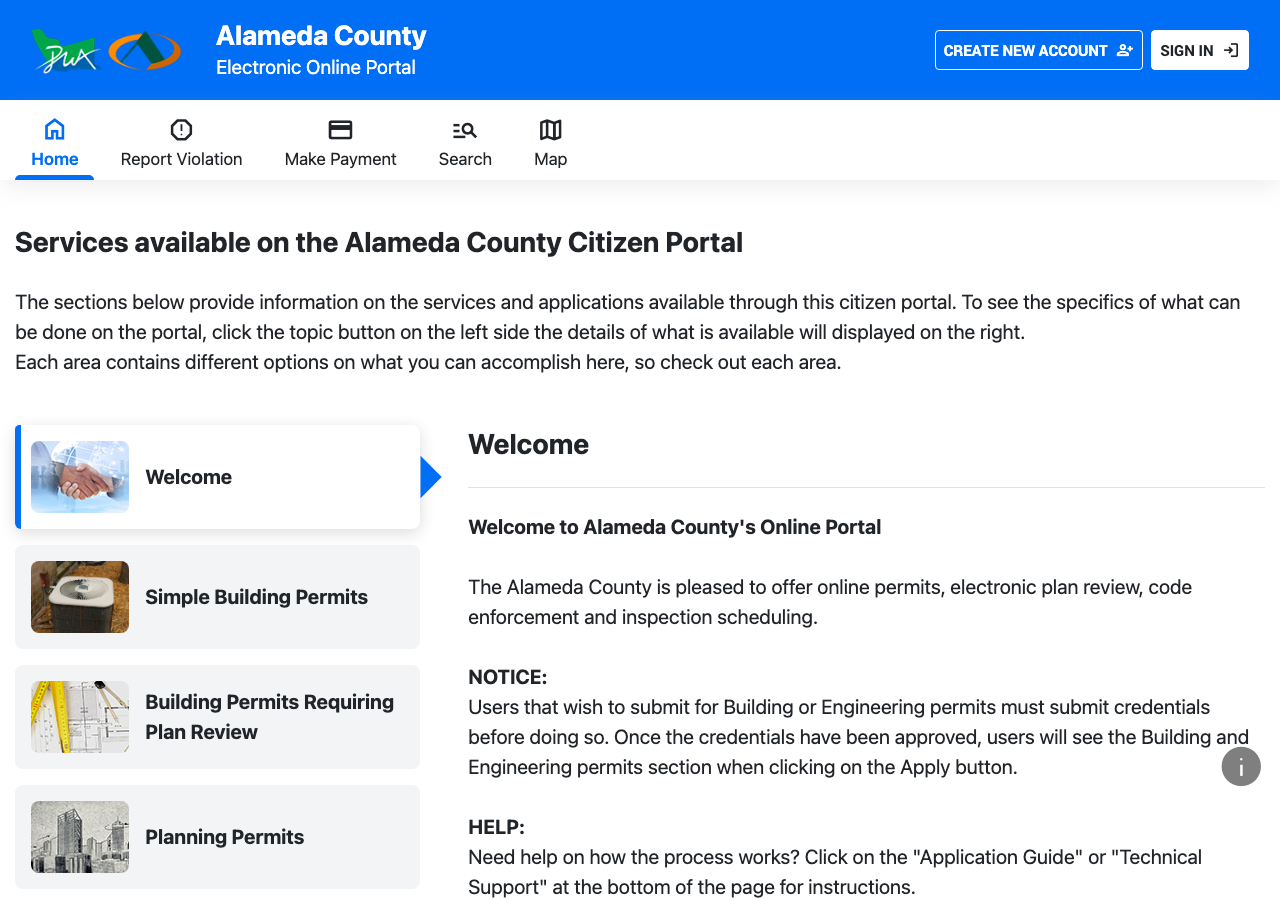
Average approval time — application to PTO
From the CPUC interconnection record. Bars show the average days taken each year; a year with no recorded projects is left blank rather than drawn as zero.