
Butte County
State of California
Butte County is a county authority in the State of California, covering 25 regions, serving 211,632 residents. 1,927 residential solar installs are on record here. This page is the permit route for that jurisdiction: the fifteen steps from working out who has a say over an address through to permission to operate, the documents this authority publishes, and 62 answers taken from those documents and dated.
Permitting 5 steps · 28 questions
Whether a permit is needed — Yes. BCC 26-102: 'A building permit is required to install a small residential rooftop solar energy system.' Solar does not appear in DBP-20 'Work Exempt From… Q3 Electrical and building permits — Combined - one permit. Butte County issues residential rooftop PV as a single electrical permit: the Master Fee Schedule carries 'Photovoltaic System - Residential… Q4 Plan review — For a standard residential ROOF-mount system: effectively none - it is an over-the-counter/online permit and the plan review happens at the inspection, Q18 Where you file — Accela Citizen Access (ACA) - the 'Butte County Public Permit Portal' at https://aca-prod.accela.com/BUTTECO/Default.aspx. Q20
- Permit required
- Yes. BCC 26-102: 'A building permit is required to install a small residential rooftop solar energy system.' Solar does not appear in DBP-20 'Work Exempt From Building Permits'.95% source
- What it costs
- $356 flat for a residential ROOF-mounted photovoltaic system, plus the 5% Technology Investment Fee surcharge = about $373.80.90% source
- Plan review turnaround
- For a standard residential ROOF-mount system: effectively none - it is an over-the-counter/online permit and the plan review happens at the inspection, not in the office.80% source
- Key document
- fee schedule cited by 4 open the document
-
Confirm who has a say over your address
A city address is usually permitted by the city, not the county — but not always, and some authorities keep building and hand electrical to someone else. Getting this wrong costs the whole submittal, because every requirement below belongs to whoever actually holds jurisdiction. Check the overlays in the same pass: an HOA, a historic district, a windstorm certification or a system-size cap can reshape the design, and all of them are cheaper to find now than after the array is laid out.
- Is this authority the AHJ for residential solar at this address? Yes - Butte County Department of Development Services, Building Division (7 County Center Drive, Oroville CA 95965; 530-552-3700, permit centre 530-552-3699, dsbuilding@buttecounty.net) is the AHJ for residential solar in the UNINCORPORATED area. Chico, Oroville and the Town of Paradise are separate AHJs. On the County's own evidence its Building Division ALSO serves the cities of Gridley and Biggs, so its reach is wider than 'unincorporated only'. 90% · department page
- What does this authority permit itself, and what does it delegate? Both. The Building Division of Development Services does building AND electrical plan review, permit issuance and inspection - Chapter 27 (Electricity) of the County Code was repealed in 2007 and the electrical code is now adopted only through BCC 26-1 Part 3 (2025 California Electrical Code), enforced by the same Building Official. BCC 26-3.2 additionally designates the Building Division as the County housing department under H&SC 17961/17964. Delegated/parallel: (a) fire - CAL FIRE/Butte County Fire Department, Office of the Fire Marshal, 176 Nelson Ave, Oroville, holds California Fire Code review (it charges a 'Solar Variance' fee of its own); (b) for GROUND-mount only, Planning Division (530-552-3701) for land use and setbacks, Environmental Health (530-552-3880) and Public Works (530-538-7681). Rooftop residential PV touches none of those three. 85% · ordinance
- Is a permit required for a residential rooftop PV system? Yes. BCC 26-102: 'A building permit is required to install a small residential rooftop solar energy system.' Solar does not appear in DBP-20 'Work Exempt From Building Permits'. 95% · ordinance
- Is there a separate electrical permit, or is it combined? Combined - one permit. Butte County issues residential rooftop PV as a single electrical permit: the Master Fee Schedule carries 'Photovoltaic System - Residential (a) Roof Mounted $356' inside section C 'Electrical Permit Fees', and the live inspection schedule shows the resulting records as RES-SOLAR-26-nnnn taking a single 'Building Final Inspection'. No separate building permit and no separate electrical permit are issued for the array itself. A service upgrade is a separate line ('Electrical Services, Residential and Non-Residential under 400 amps, $312'). 85% · fee schedule
- Is a HOA or architectural approval required first? No. Butte County requires no HOA or architectural approval before a solar permit, and none of the solar handouts or the streamlining ordinance mentions one; Gov. Code 65850.5 bars conditioning approval on HOA sign-off and Civil Code 714 limits what an association may do. Two local wrinkles worth knowing: BCC 24-157 C.6 asks owners of Solar Energy FACILITIES in General Plan scenic areas to shield them from public view 'to the maximum extent practicable', and BCC 15-31 records that 'The County of Butte is exempt from the provisions of the Solar Shade Control Act' under Public Resources Code 25985 - so a neighbour's shading trees are not restrained here. 75% · ordinance
- Is there a historic-district review? No. There is no historic-district or certificate-of-appropriateness review in the unincorporated area that would attach to a rooftop PV permit. What exists instead are landscape/scenic overlays - the Butte Creek Canyon (-BCC) and Watershed Protection (-WP) overlay zones (BCC 24-34.1 and the Camp Fire reconstruction provision BCC 53-64) and the General Plan scenic-area shielding clause in BCC 24-157 C.6. 65% · ordinance
- Is a wind or windstorm certification required? No. California has no windstorm certification regime (that is a Texas/TDI concept). Butte County's wind requirement is design compliance with ASCE 7-22 Chapters 26-31 as published in DPC-05 'Building Design Criteria - CBC 2025' (rev 2.18.26): basic wind speed 87 mph Risk Category I, 95 mph RC II (the normal dwelling case), 102 mph RC III, 105 mph RC IV, exposure category B or C by terrain. For roof mount the County satisfies itself through the racking manufacturer's listing and installation instructions rather than a certificate. 85% · published checklist
- Is a Specific Use Permit or Council approval ever required? Not for a normal rooftop system - BCC 26-103 makes an eligible small residential rooftop solar permit administrative and non-discretionary. A discretionary approval appears in four zoning situations under BCC 24-157: (1) a roof-mounted photovoltaic system projecting MORE THAN 6 FEET above the maximum elevation of the roof needs a MINOR USE PERMIT (up to 12 feet; beyond 12 feet is not provided for); (2) ground-mounted systems that want height or setback other than Table 24-157-2 need a minor use permit; (3) Tier 3 and Tier 4 ground-mounted systems are 'Utility, Intermediate' and 'Utility, Major' land uses with their own entitlements; (4) a system on or adjacent to an agricultural zone must record a Right to Farm Notice before any building permit issues. Separately, the Fire Marshal publishes a 'Solar Variance' fee of $160, which is the route for relief from California Fire Code roof-access and setback provisions. 85% · ordinance
- Is there a system-size cap on residential generation? No kW cap on what may be installed, but two size lines matter. (1) The expedited/streamlined track in BCC 26-101(b) is limited to 'a solar energy system that is no larger than ten (10) kilowatts alternating current nameplate rating or thirty (30) kilowatts thermal', installed on a single or duplex family dwelling, and not exceeding the maximum legal building height - a system above 10 kW AC still gets a permit but not the statutory one-inspection expedited treatment. (2) Zoning BCC 24-157 sizes by area, not kW: Tier 1 ('Utility, Minor') is roof mount, or ground mount up to half an acre; Tier 2 ('Utility, Accessory') is ground mount under 15% of the parcel up to 5 acres, with less than 50% of generation exported. 80% · ordinance
-
Check who is allowed to apply
Several authorities require the electrical permit to be pulled by a licensed electrician, or require the contractor to be registered with them BEFORE applying. Registration is not same-day. This is second on the list rather than fourth because it is the step most likely to stop the job before the drawings matter.
- Who is allowed to pull the electrical permit? Either. Per INF-03 (rev 2.20.26) a building permit may be applied for and signed by: the property owner acting as Owner-Builder; an authorised agent for that owner; a licensed contractor; or an authorised agent for the licensed contractor. The County adds no electrician-licence restriction of its own beyond CSLB classification (C-10/C-46/B). 85% · published checklist
- Must the contractor be registered with this authority before applying? No. Nothing in INF-03, DBP-01 or DBP-70/71 requires prior registration with the County. What is required AT ISSUANCE is proof of a current contractor's licence and Workers' Compensation insurance; there is no separate County contractor-registration step, and the ACA portal account is a public user account anyone can create. 75% · published checklist
- Is a homeowner permitted to self-install and self-permit? Yes. Owner-Builder self-permit is expressly provided for. The Residential Roof Mount Photovoltaic Packet bundles the Owner-Builder forms: the owner must read and initial each of the 12 statements on the 'Owner's Acknowledgment and Verification of Information' form (DBP-43) and sign it personally - an agent may not sign it - and present a driver's licence, notarisation or other acceptable verification at issuance. 90% · published checklist
-
Build the submittal package
Almost everywhere wants a site plan, a one-line or three-line electrical diagram, equipment cut sheets with listings, and a structural attachment detail. Build it against the published checklist rather than the last jurisdiction you worked in — the checklist is what the reviewer marks against.
- What documents make up a complete submittal? Per DBP-71 (rev 2/19/26), at permit intake for a residential roof-mount PV system: (1) complete permit application DBP-01; (2) permit fee payment; (3) a complete set of plans; (4) if the array goes on a permitted 'Ag Exempt' structure, a letter from a California registered architect or engineer stating the structure is sound and can carry the system. The plan set must contain: a cover sheet and/or site plan (job address; owner/contractor/designer/contact names, addresses, phones; description of work; number of panels with system size in kW; applicable codes; site plan showing the proposed and all existing structures and the well, septic and other utilities); electrical plans (size and location of main and sub-panels, location of all electrical equipment, single-line diagram showing all connections); and structural plans (proposed location of the array on the roof, racking plans with details of every connection into framing members, and the racking manufacturer's installation instructions). At INSPECTION: a printed complete set of plans plus specification sheets for all proposed equipment. The published packet also contains DBP-02 site plan requirements, DBP-03 site-plan paper, DBP-74 sample roof layout and DBP-75 sample electrical diagram. 90% · published checklist
- How many copies, and in what format? Not stated as a copy count. Butte County takes complete DIGITAL plans and documents, submitted three ways: at the Building Division counter, via the County's Ushare drop at www.bcdds.net/drop, or by email to dsbuilding@buttecounty.net; applications and payments can also be made through Accela Citizen Access. Approved digital plans are emailed back to the customer, who must PRINT them and have the printed set on site for every inspection. For roof-mount, DBP-71 asks for 'a complete set of plans' at intake and a 'printed complete set of plans' at inspection. 70% · published checklist
- Is a site plan required, and what must it show? Yes. DBP-71 requires a site plan identifying the location of the proposed structure and the location of all existing structures, the well, the septic and other utilities. The County's general site-plan standard DBP-02 applies: legible, in black ink, to scale (1"=20' or 1"=40'), fully dimensioned and labelled, showing APN and site address; owner name/address/phone and designer signature; north arrow, property lines and distances; streets and easements bordering the property with access details; all existing structures labelled 'existing' and proposed labelled 'proposed' with dimensions and distances to other structures and property lines, each structure's use labelled; LPG tanks and their setbacks; driveways, parking and bridges with SRA turnouts and turnarounds dimensioned; wells and septic (100 ft well setback) or a will-serve letter; landscaping and trees 6 inches or greater; signs, fences and storage/trash enclosures; storm drainage and, if in a flood zone, 100-year flood elevations. 85% · published checklist
- Is a one-line / three-line diagram required? Yes. DBP-71 requires 'Electrical Plans - identify size and location of main and sub-panels / location of all electrical equipment / single-line diagram showing all connections'. The County publishes DBP-75 'Solar Sample Electrical Diagram' as the worked example. A three-line diagram is not asked for. 90% · published checklist
- Are string and conductor calculations required? No. Neither DBP-71 nor DBP-72 asks for string sizing, voltage-drop or conductor ampacity calculations - the electrical deliverables are the single-line diagram, panel sizes and locations, and manufacturers' specification sheets for the inverter and modules. Structural calculations are only demanded for ground mount (DBP-70) or where a roof-mount system crosses a plan-review trigger. 75% · published checklist
- Is a structural PE stamp required, and at what threshold? For a normal residential ROOF mount: none. DBP-71 requires an engineer's or architect's involvement only in defined cases. A California registered architect or engineer letter is required if the array goes on a permitted 'Ag Exempt' structure (letter stating the structure is sound and can carry the system). Engineer or architect DESIGN is required, and the job loses over-the-counter/online eligibility, if either (a) panel and support framing exceeds 3.0 pounds per square foot, or (b) the panel-to-roof-plane angle exceeds 30 degrees, or 40 degrees from horizontal. Tilting systems, ballasted systems, arrays on unpermitted structures, and 'any other unique system as determined by the Building Official' also drop into full plan review. For GROUND mount, a stamp is effectively always required: site-specific foundation plans signed and stamped by a California engineer or architect, or general foundation plans plus a site-specific stamped letter saying the professional has reviewed the site and the foundation plans; plus structural calculations and anchoring details for any equipment over 400 lb. 90% · published checklist
- Is an electrical PE stamp required, and at what threshold? No electrical PE stamp is required at any threshold for residential PV. DBP-71's electrical deliverable is a single-line diagram; DBP-70's stamping requirement is explicitly structural (foundation plans and calculations). Plans generally must be 'signed by their designer', which is not the same as a licensed-engineer stamp. 70% · published checklist
-
Apply and pay
Most authorities now take the whole application through a portal, and several states cap or constrain what a residential solar permit may cost. Check whether plan check is billed separately before you quote the job.
- Which permit portal does this authority use? Accela Citizen Access (ACA) - the 'Butte County Public Permit Portal' at https://aca-prod.accela.com/BUTTECO/Default.aspx. It went live recently and is branded 'New Online Permit Portal! Accela Citizen Access (ACA) is now live!' on the Building Division page. It covers Development Services (Building, Planning, Code Enforcement), Environmental Health and Public Works in one portal. Butte County does NOT use SolarAPP+. 90% · portal landing page
- Can the whole application be completed online? Yes. 'Online applications, payments, and inspection requests can be completed within the online portal after creating a public user account.' Applications may alternatively be filed in person or by email to dsbuilding@buttecounty.net, payment in person or by mailed cheque (no cash), and inspections booked through ACA, in person, by phone on 530.552.3699 or by email. One caveat specific to solar: DBP-72 states a roof-mount job whose panel and support framing exceeds 3.0 psf, or whose panel-to-roof-plane angle exceeds 30 degrees (40 from horizontal), 'is not eligible for online application'. 85% · portal landing page
- What does a residential solar permit cost? $356 flat for a residential ROOF-mounted photovoltaic system, plus the 5% Technology Investment Fee surcharge = about $373.80. Related lines: residential solar RE-INSTALL $273; residential GROUND-mounted PV $1,274; residential 'Power Walls - Batteries Per System' $317; residential/non-residential electrical service under 400 A $312 if a service upgrade is needed. (Non-residential roof mount is $963.) Fire, Planning, Environmental Health, Public Works, impact, drainage, school and parks fees are collected on top where they apply - but for a plain unincorporated rooftop retrofit none of those are triggered. 90% · fee schedule
- How is the fee calculated? Flat. Every Butte County solar fee is a fixed per-system amount ('Each'), not valuation-based and not per kW or per panel - $356 residential roof mount, $1,274 residential ground mount, $963 non-residential roof mount, with the only tiering being on non-residential GROUND mount ($1,826 under 500 kW, $3,495 over 500 kW). This is consistent with Gov. Code 65850.55, which forbids valuation-based solar fees. 90% · fee schedule
- Is there a separate plan-check fee? No - not for a standard residential roof mount. The $356 is a single all-in permit fee and, per DBP-71, 'the Building Inspector will perform a plan review on the plans during the inspection' rather than in the office, so no plan-check fee is charged. A plan-check charge appears only when the job leaves that track: 'Supplemental Plan Check Fee $167/hour', 'Minor Plan Check Modifications $167/hour' and, if the applicant asks for it, 'Expedited Plan Check $222/hour'. Ground-mount PV goes through real plan review and its $1,274 fee covers it. 80% · fee schedule
-
Plan review — and start the utility in parallel
Interconnection is a separate process from the permit and usually the longer pole. Where the utility does not depend on the permit being issued, running both at once is the single biggest saving available on a residential job.
- What is the stated plan-review turnaround? For a standard residential ROOF-mount system: effectively none - it is an over-the-counter/online permit and the plan review happens at the inspection, not in the office. For everything that falls into plan review, the County publishes a live queue instead of a promised turnaround; on 28 August 2026 its 'Plans Being Checked Today' table read: Single Family - 3 weeks ago; Commercial - 3 weeks ago; Mobile Homes - 3 weeks ago; Accessory - 3 weeks ago; Ground Mounted & Non-Residential Roof Mounted Solar - 3 weeks ago; Re-checks - 2 weeks ago. So roughly 15 business days first review, 10 for a recheck. California sets no statutory review deadline for solar. 80% · department page
- How long is an issued permit valid before it expires? One year from the date of issuance. BCC 26-3.1 amends CBC section 105.5: a permit expires and becomes null and void one year from issuance; if work was commenced and no plan changes were made, a renewal permit may be applied for within 30 days of expiry, and the renewed permit runs one year from the original expiry date. INF-11 adds the trap that matters for solar: 'Some non-structural permits do not qualify for renewal, such as reroofs, ELECTRICAL, plumbing, and mechanical' - a residential PV permit is issued on the electrical fee schedule, so if it lapses a fresh application at current fees is required. A permit APPLICATION also expires one year after filing if there is no activity (BCC 26-3.1 amending CBC 105.3.2), extendable by the Building Official in periods of up to 90 days. 85% · ordinance
- Which utility handles interconnection here? Pacific Gas and Electric Company (PG&E) for the unincorporated area. The County's own DBP-18 Electric Service Questionnaire asks 'Have you contacted the electric utility (PG&E, Gridley Electric)?' - Gridley Electric being the City of Gridley's municipal utility, relevant only because the County Building Division also serves that city. PG&E is an investor-owned utility, so CPUC Electric Rule 21 and the Solar Billing Plan / Net Billing Tariff apply; Gridley Electric, as a municipal utility, sets its own interconnection terms. 90% · department form
- Where does the utility sit in the sequence? Parallel, with PG&E last. The contractor files the PG&E interconnection application while the County permit is being obtained and the system installed; the County inspection and final building permit then feed PG&E. PG&E's published sequence: Step 4 'To obtain a final building permit, your clean energy system must pass city or county inspections for safety and code compliance' and 'don't turn on your system until PG&E gives you official written permission to operate'; Step 5 the contractor submits the Interconnection Application, a single-line diagram and A COPY OF THE FINAL BUILDING PERMIT, after which PG&E changes the meter and issues PTO in typically 5-10 business days, up to a maximum of 30. Butte County Code 26-103(g) says the same thing from the other side: County approval 'does not authorize an applicant to connect ... to the local utility provider's electricity grid'. Note the tariff change: from 15 April 2026 NEM2 applications transition to the Solar Billing Plan (Net Billing Tariff). 85% · utility DG guidance
28 questions answered against Butte County’s own published documents
Q1 Is this authority the AHJ for residential solar at this address? Core Jurisdiction & scope
Yes - Butte County Department of Development Services, Building Division (7 County Center Drive, Oroville CA 95965; 530-552-3700, permit centre 530-552-3699, dsbuilding@buttecounty.net) is the AHJ for residential solar in the UNINCORPORATED area. Chico, Oroville and the Town of Paradise are separate AHJs. On the County's own evidence its Building Division ALSO serves the cities of Gridley and Biggs, so its reach is wider than 'unincorporated only'.
Why the confidence is not higherThe Building Division page states it 'administers State and County building codes and ordinances ... through the permitting, plan review and inspection process'. Butte County Code 26-1 declares the adopted 2025 CBSC 'the building code for Butte County ... in the unincorporated areas'. The Gridley/Biggs extension is inferred from three County documents rather than a contract: the County's own building permit application DBP-01 says 'Location must not be in the city limits of Chico, Oroville or Paradise' (Gridley and Biggs are not excluded); solar handouts DBP-70/DBP-71 tell applicants 'If located in City of Gridley, contact the City Planning Department' and the same for Biggs, i.e. only PLANNING goes to the city; and today's live County inspection schedule lists RES-ROOF-26-0326 at 1315 Hazel St, GRIDLEY. I could not find a service agreement published on either side.
department page checked 2026-08-28 https://www.buttecounty.net/252/Building
Q2 What does this authority permit itself, and what does it delegate? Core Jurisdiction & scope
Both. The Building Division of Development Services does building AND electrical plan review, permit issuance and inspection - Chapter 27 (Electricity) of the County Code was repealed in 2007 and the electrical code is now adopted only through BCC 26-1 Part 3 (2025 California Electrical Code), enforced by the same Building Official. BCC 26-3.2 additionally designates the Building Division as the County housing department under H&SC 17961/17964. Delegated/parallel: (a) fire - CAL FIRE/Butte County Fire Department, Office of the Fire Marshal, 176 Nelson Ave, Oroville, holds California Fire Code review (it charges a 'Solar Variance' fee of its own); (b) for GROUND-mount only, Planning Division (530-552-3701) for land use and setbacks, Environmental Health (530-552-3880) and Public Works (530-538-7681). Rooftop residential PV touches none of those three.
Why the confidence is not higherBCC 26-1 adopts Title 24 Parts 1-12 including Part 3 (CEC); Chapter 27 'ELECTRICITY' now contains only an editor's note that it 'was repealed and replaced by Ord. No. 3973, s 8, 12-11-07'. DBP-70 (ground mount, rev 2.18.26) names Planning, Environmental Health and Public Works as additional approvals; DBP-71 (roof mount, rev 2/19/26) names none of them for unincorporated addresses.
ordinance checked 2026-08-28 https://library.municode.com/ca/butte_county/codes/code_of_ordinances?nodeId=CH26BU_ARTIINGE
Q3 Is a permit required for a residential rooftop PV system? Core Jurisdiction & scope
Yes. BCC 26-102: 'A building permit is required to install a small residential rooftop solar energy system.' Solar does not appear in DBP-20 'Work Exempt From Building Permits'.
Why the confidence is not higherDirect text of BCC 26-102 (Ord. No. 4099, 9-15-15). I extracted DBP-20 with pdftotext and searched it for 'solar' and 'photovoltaic' - zero hits, with 'fence' as a positive control (2 hits) and 'zzqqx' as a fabricated control (0).
ordinance checked 2026-08-28 https://library.municode.com/ca/butte_county/codes/code_of_ordinances?nodeId=CH26BU_ARTVIISMREROSOENSY
Q4 Is there a separate electrical permit, or is it combined? Core Jurisdiction & scope
Combined - one permit. Butte County issues residential rooftop PV as a single electrical permit: the Master Fee Schedule carries 'Photovoltaic System - Residential (a) Roof Mounted $356' inside section C 'Electrical Permit Fees', and the live inspection schedule shows the resulting records as RES-SOLAR-26-nnnn taking a single 'Building Final Inspection'. No separate building permit and no separate electrical permit are issued for the array itself. A service upgrade is a separate line ('Electrical Services, Residential and Non-Residential under 400 amps, $312').
Why the confidence is not higherMaster Fee Schedule (effective 1 Oct 2025) pp.19-20, and the County's live daily inspection list for 28 Aug 2026 which shows RES-SOLAR-26-0090 and RES-SOLAR-26-0161 each with one 'Building Final Inspection'.
fee schedule checked 2026-08-28 https://www.buttecounty.net/DocumentCenter/View/1549/Master-Fee-Schedule-PDF
Q5 Who is allowed to pull the electrical permit? Core Who may apply
Either. Per INF-03 (rev 2.20.26) a building permit may be applied for and signed by: the property owner acting as Owner-Builder; an authorised agent for that owner; a licensed contractor; or an authorised agent for the licensed contractor. The County adds no electrician-licence restriction of its own beyond CSLB classification (C-10/C-46/B).
Why the confidence is not higherINF-03 'Who Can Apply and Sign for a Building Permit', extracted with pdftotext. Agents need a dated, signed letter of authorisation naming the agent and the APN; agents for a contractor need it on company letterhead with the licence number.
published checklist checked 2026-08-28 https://www.buttecounty.net/DocumentCenter/View/9616/INF-03-Who-Can-Apply-for-Permits-PDF
Q6 Must the contractor be registered with this authority before applying? Core Who may apply
No. Nothing in INF-03, DBP-01 or DBP-70/71 requires prior registration with the County. What is required AT ISSUANCE is proof of a current contractor's licence and Workers' Compensation insurance; there is no separate County contractor-registration step, and the ACA portal account is a public user account anyone can create.
Why the confidence is not higherDBP-70 'Permit Issuance' lists only 'Proof of current contractor's license / Worker's Compensation insurance (for contractors only)'. INF-03 lists the four categories of applicant with no registration precondition. The Online Permit Portal page describes only 'creating a public user account'.
published checklist checked 2026-08-28 https://www.buttecounty.net/DocumentCenter/View/9616/INF-03-Who-Can-Apply-for-Permits-PDF
Q7 Is a homeowner permitted to self-install and self-permit? Who may apply
Yes. Owner-Builder self-permit is expressly provided for. The Residential Roof Mount Photovoltaic Packet bundles the Owner-Builder forms: the owner must read and initial each of the 12 statements on the 'Owner's Acknowledgment and Verification of Information' form (DBP-43) and sign it personally - an agent may not sign it - and present a driver's licence, notarisation or other acceptable verification at issuance.
Why the confidence is not higherDBP-43 as bundled inside the Residential Roof Mount Photovoltaic Packet (rev 3.12.2020), plus INF-03. Butte County also publishes DBP-41 'Owner Builders What You Should Know'.
published checklist checked 2026-08-28 https://www.buttecounty.net/DocumentCenter/View/19075/Residential-Roof-Mount-Photovoltaic-Packet-PDF
Q8 What documents make up a complete submittal? Core Submittal package
Per DBP-71 (rev 2/19/26), at permit intake for a residential roof-mount PV system: (1) complete permit application DBP-01; (2) permit fee payment; (3) a complete set of plans; (4) if the array goes on a permitted 'Ag Exempt' structure, a letter from a California registered architect or engineer stating the structure is sound and can carry the system. The plan set must contain: a cover sheet and/or site plan (job address; owner/contractor/designer/contact names, addresses, phones; description of work; number of panels with system size in kW; applicable codes; site plan showing the proposed and all existing structures and the well, septic and other utilities); electrical plans (size and location of main and sub-panels, location of all electrical equipment, single-line diagram showing all connections); and structural plans (proposed location of the array on the roof, racking plans with details of every connection into framing members, and the racking manufacturer's installation instructions). At INSPECTION: a printed complete set of plans plus specification sheets for all proposed equipment. The published packet also contains DBP-02 site plan requirements, DBP-03 site-plan paper, DBP-74 sample roof layout and DBP-75 sample electrical diagram.
Why the confidence is not higherDBP-71 and the assembled Residential Roof Mount Photovoltaic Packet, both extracted with pdftotext. DBP-71 carries a February 2026 revision stamp, so this is current.
published checklist checked 2026-08-28 https://www.buttecounty.net/DocumentCenter/View/3147/DBP-71-Residential-Roof-Mount-Solar-System-PDF
Q9 How many copies, and in what format? Submittal package
Not stated as a copy count. Butte County takes complete DIGITAL plans and documents, submitted three ways: at the Building Division counter, via the County's Ushare drop at www.bcdds.net/drop, or by email to dsbuilding@buttecounty.net; applications and payments can also be made through Accela Citizen Access. Approved digital plans are emailed back to the customer, who must PRINT them and have the printed set on site for every inspection. For roof-mount, DBP-71 asks for 'a complete set of plans' at intake and a 'printed complete set of plans' at inspection.
Why the confidence is not higherDBP-70 'Plan Submittal for Construction / Quantity' and 'Permit Issuance' (rev 2.18.26) give the digital channels and the print-and-keep-on-site rule; DBP-71 gives the roof-mount wording. Neither document states a number of copies, which is consistent with an all-digital intake.
published checklist checked 2026-08-28 https://www.buttecounty.net/DocumentCenter/View/3146/DBP-70-Ground-Mount-Solar-Systems-PDF
Q10 Is a site plan required, and what must it show? Core Submittal package
Yes. DBP-71 requires a site plan identifying the location of the proposed structure and the location of all existing structures, the well, the septic and other utilities. The County's general site-plan standard DBP-02 applies: legible, in black ink, to scale (1"=20' or 1"=40'), fully dimensioned and labelled, showing APN and site address; owner name/address/phone and designer signature; north arrow, property lines and distances; streets and easements bordering the property with access details; all existing structures labelled 'existing' and proposed labelled 'proposed' with dimensions and distances to other structures and property lines, each structure's use labelled; LPG tanks and their setbacks; driveways, parking and bridges with SRA turnouts and turnarounds dimensioned; wells and septic (100 ft well setback) or a will-serve letter; landscaping and trees 6 inches or greater; signs, fences and storage/trash enclosures; storm drainage and, if in a flood zone, 100-year flood elevations.
Why the confidence is not higherDBP-71 for the solar-specific list and DBP-02 'Site Plan Requirements' for the County's minimum standard, both extracted from PDF. DBP-02 is bundled inside the residential roof-mount solar packet, which is what makes it the applicable standard for a solar submittal.
published checklist checked 2026-08-28 https://www.buttecounty.net/DocumentCenter/View/12741/DBP-02-Site-Plan-Requirements-PDF
Q11 Is a one-line / three-line diagram required? Core Drawings & calculations
Yes. DBP-71 requires 'Electrical Plans - identify size and location of main and sub-panels / location of all electrical equipment / single-line diagram showing all connections'. The County publishes DBP-75 'Solar Sample Electrical Diagram' as the worked example. A three-line diagram is not asked for.
Why the confidence is not higherDBP-71 (rev 2/19/26) Minimum Plan Requirements, Electrical.
published checklist checked 2026-08-28 https://www.buttecounty.net/DocumentCenter/View/3147/DBP-71-Residential-Roof-Mount-Solar-System-PDF
Q12 Are string and conductor calculations required? Drawings & calculations
No. Neither DBP-71 nor DBP-72 asks for string sizing, voltage-drop or conductor ampacity calculations - the electrical deliverables are the single-line diagram, panel sizes and locations, and manufacturers' specification sheets for the inverter and modules. Structural calculations are only demanded for ground mount (DBP-70) or where a roof-mount system crosses a plan-review trigger.
Why the confidence is not higherSearched the extracted text of DBP-71, DBP-72 and DBP-69 for 'calculation', 'string', 'conductor' and 'ampacity' - no requirement found; positive control 'roof' hit 4-6 times in each file, fabricated control 'zzqqx' zero. DBP-70 by contrast explicitly requires 'Structural calculations stamped and signed by the licensed professional'.
published checklist checked 2026-08-28 https://www.buttecounty.net/DocumentCenter/View/3148/DBP-72-Job-Site-Requirements-for-Online-Roof-Mount-Solar-PDF
Q13 Is a structural PE stamp required, and at what threshold? Core Engineering & stamps
For a normal residential ROOF mount: none. DBP-71 requires an engineer's or architect's involvement only in defined cases. A California registered architect or engineer letter is required if the array goes on a permitted 'Ag Exempt' structure (letter stating the structure is sound and can carry the system). Engineer or architect DESIGN is required, and the job loses over-the-counter/online eligibility, if either (a) panel and support framing exceeds 3.0 pounds per square foot, or (b) the panel-to-roof-plane angle exceeds 30 degrees, or 40 degrees from horizontal. Tilting systems, ballasted systems, arrays on unpermitted structures, and 'any other unique system as determined by the Building Official' also drop into full plan review. For GROUND mount, a stamp is effectively always required: site-specific foundation plans signed and stamped by a California engineer or architect, or general foundation plans plus a site-specific stamped letter saying the professional has reviewed the site and the foundation plans; plus structural calculations and anchoring details for any equipment over 400 lb.
Why the confidence is not higherDBP-71 and DBP-72 for roof mount (DBP-72 says in terms 'Engineer or architect design is required and the project is not eligible for online application'); DBP-70 (rev 2.18.26) for ground mount. Design criteria are in DPC-05: ASCE 7-22, wind 95 mph for Risk Category II, exposure B or C, snow from the ASCE Hazard Tool.
published checklist checked 2026-08-28 https://www.buttecounty.net/DocumentCenter/View/3147/DBP-71-Residential-Roof-Mount-Solar-System-PDF
Q14 Is an electrical PE stamp required, and at what threshold? Engineering & stamps
No electrical PE stamp is required at any threshold for residential PV. DBP-71's electrical deliverable is a single-line diagram; DBP-70's stamping requirement is explicitly structural (foundation plans and calculations). Plans generally must be 'signed by their designer', which is not the same as a licensed-engineer stamp.
Why the confidence is not higherAbsence proved by reading DBP-71, DBP-72 and DBP-70 in full after pdftotext extraction: every stamping sentence in them attaches to structure or foundation, never to the electrical design.
published checklist checked 2026-08-28 https://www.buttecounty.net/DocumentCenter/View/3146/DBP-70-Ground-Mount-Solar-Systems-PDF
Q15 What does a residential solar permit cost? Core Fees
$356 flat for a residential ROOF-mounted photovoltaic system, plus the 5% Technology Investment Fee surcharge = about $373.80. Related lines: residential solar RE-INSTALL $273; residential GROUND-mounted PV $1,274; residential 'Power Walls - Batteries Per System' $317; residential/non-residential electrical service under 400 A $312 if a service upgrade is needed. (Non-residential roof mount is $963.) Fire, Planning, Environmental Health, Public Works, impact, drainage, school and parks fees are collected on top where they apply - but for a plain unincorporated rooftop retrofit none of those are triggered.
Why the confidence is not higherButte County Master Fee Schedule, Development Services - Building fees effective 1 October 2025, pp.19-20 (section C 'Electrical Permit Fees', item 6 'Photovoltaic System - Residential'), plus the surcharge table on p.23 ('Technology Investment Fee ... % of Permit Fee, 5%, imposed as a percentage of ALL construction fees'; the 15% General Plan Maintenance Fee applies only to NEW construction permits, so not to a retrofit). $373.80 is comfortably under the Gov. Code 66015 residential rooftop cap of $450 + $15/kW above 15 kW. The $1,274 ground-mount fee is well above that figure, though 66015's cap is written for ROOFTOP systems.
fee schedule checked 2026-08-28 https://www.buttecounty.net/DocumentCenter/View/1549/Master-Fee-Schedule-PDF
Q16 How is the fee calculated? Core Fees
Flat. Every Butte County solar fee is a fixed per-system amount ('Each'), not valuation-based and not per kW or per panel - $356 residential roof mount, $1,274 residential ground mount, $963 non-residential roof mount, with the only tiering being on non-residential GROUND mount ($1,826 under 500 kW, $3,495 over 500 kW). This is consistent with Gov. Code 65850.55, which forbids valuation-based solar fees.
Why the confidence is not higherMaster Fee Schedule pp.19-20: the Unit column reads 'Each' for all residential PV lines. Note the permit application form DBP-01 still asks for a JOB VALUATION, but the published fee is not derived from it.
fee schedule checked 2026-08-28 https://www.buttecounty.net/DocumentCenter/View/1549/Master-Fee-Schedule-PDF
Q17 Is there a separate plan-check fee? Fees
No - not for a standard residential roof mount. The $356 is a single all-in permit fee and, per DBP-71, 'the Building Inspector will perform a plan review on the plans during the inspection' rather than in the office, so no plan-check fee is charged. A plan-check charge appears only when the job leaves that track: 'Supplemental Plan Check Fee $167/hour', 'Minor Plan Check Modifications $167/hour' and, if the applicant asks for it, 'Expedited Plan Check $222/hour'. Ground-mount PV goes through real plan review and its $1,274 fee covers it.
Why the confidence is not higherDBP-71 for the over-the-counter mechanism; Master Fee Schedule pp.18 and 23 for the hourly plan-check lines. There is no line item anywhere in the schedule called 'solar plan check'.
fee schedule checked 2026-08-28 https://www.buttecounty.net/DocumentCenter/View/1549/Master-Fee-Schedule-PDF
Q18 What is the stated plan-review turnaround? Core Timeline & validity
For a standard residential ROOF-mount system: effectively none - it is an over-the-counter/online permit and the plan review happens at the inspection, not in the office. For everything that falls into plan review, the County publishes a live queue instead of a promised turnaround; on 28 August 2026 its 'Plans Being Checked Today' table read: Single Family - 3 weeks ago; Commercial - 3 weeks ago; Mobile Homes - 3 weeks ago; Accessory - 3 weeks ago; Ground Mounted & Non-Residential Roof Mounted Solar - 3 weeks ago; Re-checks - 2 weeks ago. So roughly 15 business days first review, 10 for a recheck. California sets no statutory review deadline for solar.
Why the confidence is not higherThe 'Plan Check' table is published and dated on the Building Division landing page and I read it on the checked_on date; the absence of RESIDENTIAL roof-mount solar from that table is itself the evidence that it does not queue. DBP-71 states the inspector does the review at inspection.
department page checked 2026-08-28 https://www.buttecounty.net/252/Building
Q19 How long is an issued permit valid before it expires? Timeline & validity
One year from the date of issuance. BCC 26-3.1 amends CBC section 105.5: a permit expires and becomes null and void one year from issuance; if work was commenced and no plan changes were made, a renewal permit may be applied for within 30 days of expiry, and the renewed permit runs one year from the original expiry date. INF-11 adds the trap that matters for solar: 'Some non-structural permits do not qualify for renewal, such as reroofs, ELECTRICAL, plumbing, and mechanical' - a residential PV permit is issued on the electrical fee schedule, so if it lapses a fresh application at current fees is required. A permit APPLICATION also expires one year after filing if there is no activity (BCC 26-3.1 amending CBC 105.3.2), extendable by the Building Official in periods of up to 90 days.
Why the confidence is not higherButte County Code 26-3.1 (as amended by Ord. No. 4270, 10-28-25) and INF-11 'Building Permit Expiration Information' (rev 10.13.23).
ordinance checked 2026-08-28 https://library.municode.com/ca/butte_county/codes/code_of_ordinances?nodeId=CH26BU_ARTIINGE
Q20 Which permit portal does this authority use? Core Portal & process
Accela Citizen Access (ACA) - the 'Butte County Public Permit Portal' at https://aca-prod.accela.com/BUTTECO/Default.aspx. It went live recently and is branded 'New Online Permit Portal! Accela Citizen Access (ACA) is now live!' on the Building Division page. It covers Development Services (Building, Planning, Code Enforcement), Environmental Health and Public Works in one portal. Butte County does NOT use SolarAPP+.
Why the confidence is not higherThe Online Permit Portal page and the portal landing page itself, which I fetched and read (record types are behind login, but the Development Services / Env Health / Public Works service groups and the department contacts are on the anonymous page). A search of the whole County website for 'SolarAPP' returns 'No results found', while a control search for 'solar' returns 372 results - so the absence of automated instant permitting is real, which is worth noting given Gov. Code 65850.52 (SB 379).
portal landing page checked 2026-08-28 https://www.buttecounty.net/2171/Online-Permit-Portal
Q21 Can the whole application be completed online? Core Portal & process
Yes. 'Online applications, payments, and inspection requests can be completed within the online portal after creating a public user account.' Applications may alternatively be filed in person or by email to dsbuilding@buttecounty.net, payment in person or by mailed cheque (no cash), and inspections booked through ACA, in person, by phone on 530.552.3699 or by email. One caveat specific to solar: DBP-72 states a roof-mount job whose panel and support framing exceeds 3.0 psf, or whose panel-to-roof-plane angle exceeds 30 degrees (40 from horizontal), 'is not eligible for online application'.
Why the confidence is not higherOnline Permit Portal page wording, checked against DBP-72 'Job Site Requirements for Residential Roof Mounted Photovoltaic Systems'.
portal landing page checked 2026-08-28 https://www.buttecounty.net/2171/Online-Permit-Portal
Q22 Which utility handles interconnection here? Core Utility interconnection
Pacific Gas and Electric Company (PG&E) for the unincorporated area. The County's own DBP-18 Electric Service Questionnaire asks 'Have you contacted the electric utility (PG&E, Gridley Electric)?' - Gridley Electric being the City of Gridley's municipal utility, relevant only because the County Building Division also serves that city. PG&E is an investor-owned utility, so CPUC Electric Rule 21 and the Solar Billing Plan / Net Billing Tariff apply; Gridley Electric, as a municipal utility, sets its own interconnection terms.
Why the confidence is not higherButte County form DBP-18 (rev 1-12-23) names the two utilities the County expects; PG&E's own tariff-book Electric Service Area Map covers Butte County. No other retail electric provider appears in County permitting documents.
department form checked 2026-08-28 https://www.buttecounty.net/DocumentCenter/View/13802/DBP-18-Electric-Service-Questionnaire-PDF
Q23 Where does the utility sit in the sequence? Core Utility interconnection
Parallel, with PG&E last. The contractor files the PG&E interconnection application while the County permit is being obtained and the system installed; the County inspection and final building permit then feed PG&E. PG&E's published sequence: Step 4 'To obtain a final building permit, your clean energy system must pass city or county inspections for safety and code compliance' and 'don't turn on your system until PG&E gives you official written permission to operate'; Step 5 the contractor submits the Interconnection Application, a single-line diagram and A COPY OF THE FINAL BUILDING PERMIT, after which PG&E changes the meter and issues PTO in typically 5-10 business days, up to a maximum of 30. Butte County Code 26-103(g) says the same thing from the other side: County approval 'does not authorize an applicant to connect ... to the local utility provider's electricity grid'. Note the tariff change: from 15 April 2026 NEM2 applications transition to the Solar Billing Plan (Net Billing Tariff).
Why the confidence is not higherPG&E 'Getting started with solar' steps 4 and 5, read on the checked_on date (it carries the current April 2026 NEM2-to-Solar-Billing-Plan notice, so it is live rather than archived), cross-checked against BCC 26-103(g).
utility DG guidance checked 2026-08-28 https://www.pge.com/en/clean-energy/solar/getting-started-with-solar.html
Q24 Is a HOA or architectural approval required first? Overlays & special cases
No. Butte County requires no HOA or architectural approval before a solar permit, and none of the solar handouts or the streamlining ordinance mentions one; Gov. Code 65850.5 bars conditioning approval on HOA sign-off and Civil Code 714 limits what an association may do. Two local wrinkles worth knowing: BCC 24-157 C.6 asks owners of Solar Energy FACILITIES in General Plan scenic areas to shield them from public view 'to the maximum extent practicable', and BCC 15-31 records that 'The County of Butte is exempt from the provisions of the Solar Shade Control Act' under Public Resources Code 25985 - so a neighbour's shading trees are not restrained here.
Why the confidence is not higherBCC 26-100 to 26-103 (the AB 2188 streamlining article) contains no HOA step; BCC 24-157 and 15-31 read in full from Municode. The scenic-shielding clause sits in the Solar Energy FACILITY standards, not the Tier 1 rooftop definition.
ordinance checked 2026-08-28 https://library.municode.com/ca/butte_county/codes/code_of_ordinances?nodeId=CH15OFIS_ARTIINGE
Q25 Is there a historic-district review? Overlays & special cases
No. There is no historic-district or certificate-of-appropriateness review in the unincorporated area that would attach to a rooftop PV permit. What exists instead are landscape/scenic overlays - the Butte Creek Canyon (-BCC) and Watershed Protection (-WP) overlay zones (BCC 24-34.1 and the Camp Fire reconstruction provision BCC 53-64) and the General Plan scenic-area shielding clause in BCC 24-157 C.6.
Why the confidence is not higherFull-text search of the Butte County Code on Municode for 'historic' returned 22 hits, none of them a historic-preservation ordinance or design-review body (they are nonconforming signs, groundwater, agriculture overlay and definitions). Controls in the same run: 'electrical' 84 hits, fabricated 'zzqqx' 0 hits.
ordinance checked 2026-08-28 https://library.municode.com/ca/butte_county/codes/code_of_ordinances?nodeId=CH24ZO_ARTIVSUUSRE_DIV1SUUSRE
Q26 Is a wind or windstorm certification required? Overlays & special cases
No. California has no windstorm certification regime (that is a Texas/TDI concept). Butte County's wind requirement is design compliance with ASCE 7-22 Chapters 26-31 as published in DPC-05 'Building Design Criteria - CBC 2025' (rev 2.18.26): basic wind speed 87 mph Risk Category I, 95 mph RC II (the normal dwelling case), 102 mph RC III, 105 mph RC IV, exposure category B or C by terrain. For roof mount the County satisfies itself through the racking manufacturer's listing and installation instructions rather than a certificate.
Why the confidence is not higherDPC-05, extracted with pdftotext; DBP-71's structural deliverables are racking plans, connection details and the racking installation instructions - no certification document.
published checklist checked 2026-08-28 https://www.buttecounty.net/DocumentCenter/View/7553/DPC-05-Building-Design-Criteria---CBC-2025-PDF
Q27 Is a Specific Use Permit or Council approval ever required? Overlays & special cases
Not for a normal rooftop system - BCC 26-103 makes an eligible small residential rooftop solar permit administrative and non-discretionary. A discretionary approval appears in four zoning situations under BCC 24-157: (1) a roof-mounted photovoltaic system projecting MORE THAN 6 FEET above the maximum elevation of the roof needs a MINOR USE PERMIT (up to 12 feet; beyond 12 feet is not provided for); (2) ground-mounted systems that want height or setback other than Table 24-157-2 need a minor use permit; (3) Tier 3 and Tier 4 ground-mounted systems are 'Utility, Intermediate' and 'Utility, Major' land uses with their own entitlements; (4) a system on or adjacent to an agricultural zone must record a Right to Farm Notice before any building permit issues. Separately, the Fire Marshal publishes a 'Solar Variance' fee of $160, which is the route for relief from California Fire Code roof-access and setback provisions.
Why the confidence is not higherBCC 24-157 A-C read in full from Municode; Master Fee Schedule p.29 (Butte County Fire Department, Fire Prevention permits, item 19 'Solar Variance, Each, $160').
ordinance checked 2026-08-28 https://library.municode.com/ca/butte_county/codes/code_of_ordinances?nodeId=CH24ZO_ARTIVSUUSRE_DIV1SUUSRE
Q28 Is there a system-size cap on residential generation? Overlays & special cases
No kW cap on what may be installed, but two size lines matter. (1) The expedited/streamlined track in BCC 26-101(b) is limited to 'a solar energy system that is no larger than ten (10) kilowatts alternating current nameplate rating or thirty (30) kilowatts thermal', installed on a single or duplex family dwelling, and not exceeding the maximum legal building height - a system above 10 kW AC still gets a permit but not the statutory one-inspection expedited treatment. (2) Zoning BCC 24-157 sizes by area, not kW: Tier 1 ('Utility, Minor') is roof mount, or ground mount up to half an acre; Tier 2 ('Utility, Accessory') is ground mount under 15% of the parcel up to 5 acres, with less than 50% of generation exported.
Why the confidence is not higherBCC 26-101(b) and BCC 24-157 A-B, both read in full. Note the 10 kW figure tracks Gov. Code 65850.5's definition of a small residential rooftop solar energy system.
ordinance checked 2026-08-28 https://library.municode.com/ca/butte_county/codes/code_of_ordinances?nodeId=CH26BU_ARTVIISMREROSOENSY
Lines marked with a percentage were read off this authority’s own published documents. Unmarked guidance is general good practice, not this jurisdiction’s rule — always confirm against the authority before you submit.
Install 5 steps · 20 questions
-
Build to the code editions actually in force here
The NEC edition a jurisdiction enforces is often a cycle behind the newest one published, and local amendments sit on top of it. Rapid shutdown, conductor sizing and labelling all change between editions, so the edition in force is the first thing to establish, not the last.
- Which NEC edition is in force? 2023 NEC - in force as the 2025 California Electrical Code (Title 24 Part 3), adopted by reference in Butte County Code 26-1 by Ordinance No. 4270 (8 October / 28 October 2025) and effective 1 January 2026. NEC Article 690 is adopted with no California and no Butte County amendment. 95% · adopting ordinance
- Which building code edition is in force? 2025 California Building Code (Volumes 1 and 2, including Chapter 31B and Appendix Chapters C and Q) and 2025 California Residential Code (including Appendix Chapters BB and CI), effective 1 January 2026. BCC 26-1 adopts Title 24 Parts 1, 2, 2.5, 3, 4, 5, 6, 7, 8, 9, 10, 11 and 12 of the 2025 edition, and additionally the 1997 Uniform Housing Code Chapter 10 and the 1997 Uniform Code for the Abatement of Dangerous Buildings for property maintenance. Part 7, the 2025 California Wildland-Urban Interface Code, is adopted in full - which for Butte County is the substantive one. Solar sits at CRC R329 and storage at R330 after the 2025 renumbering. 95% · adopting ordinance
- Which fire code edition is in force? 2025 California Fire Code (Title 24 Part 9), adopted by BCC 26-1 'including Section 503, Appendix Chapters B, BB, C, CC, and D' - the express adoption of CFC Section 503 (fire apparatus access roads) and Appendices B/C/D matters here, because California leaves those to local adoption. Alongside it the 2025 California Wildland-Urban Interface Code (Part 7) is adopted, and BCC Chapter 38A (Ord. No. 4264, 10 June 2025) carries defensible space and hazardous vegetation management, administered by the Fire Chief with Code Enforcement. Enforcement is CAL FIRE/Butte County Fire Department, Office of the Fire Marshal. 90% · adopting ordinance
- Are there local amendments to any of the above? Yes, but none of them touch solar. Butte County's amendments in BCC 26-3 and 26-3.1 are administrative: the CBC/CRC/CMC/CEC/CPC/CWUIC/CFC boards of appeals are deleted and replaced by the County's Local Appeals Board; CBC 101.4.4 property maintenance is replaced by the 1997 UHC/UCADB; CBC 105.2 exempt work is edited (fences, small detached decks, agricultural water pumps); CBC 105.3.2 and 105.5 set the one-year application and permit expiries; CBC 105.8 adds permit transferability; and CBC 111.1/111.2 remove the certificate-of-occupancy requirement for Group R Division 3 and Group U occupancies. There is no local technical amendment to NEC Article 690/705, to CRC R329/R330 or to CFC 1205. Under AB 130 (Stats. 2025, Ch. 22) the County could not adopt a more-restrictive residential standard before 1 June 2031 in any event. 90% · ordinance
- What is the installation judged against? The 2025 California Electrical Code (2023 NEC) Article 690 and Article 705, applied with no local amendment, plus the County's own published field guide DBP-69 'Photovoltaic Inspection Guidelines - Residential Interactive Systems' and the utility's requirements (PG&E Greenbook document 060559). DBP-72 states it plainly: 'Installation shall conform to the California Electric Code (CEC) Article 690, Solar Photovoltaic Systems. All equipment and components shall be listed and labeled by Underwriters Laboratories or other recognized agency.' IMPORTANT STALENESS WARNING: DBP-69 still cites the 2016 CEC throughout (690.12, 690.13, 690.17, 690.31, 690.33, 690.41, 690.43, 690.47, 690.53, 690.54, 690.56, 690.61, 690.64) and was last revised 4.10.18. Those article numbers are dead or renumbered under the 2023 NEC - interconnection has moved to 705.12, labelling to 690.13/705.10, rapid shutdown marking to 690.56(C) as revised - so read DBP-69 for the County's expectations and the 2023 NEC for the citations. 85% · published checklist
-
Fire access, setbacks and pathways
Ridge setbacks and roof access pathways are fire-service requirements and they constrain the array layout. They are the most common cause of a redesign after the fire department comments on a plan set.
- What ridge setback and access pathways are required? The state rules apply unamended: 2025 California Fire Code section 1205 (renumbered from 1204 in the 2025 cycle) and California Residential Code R329 for one- and two-family dwellings - ridge setbacks, roof access pathways, smoke ventilation and the two 36-inch pathways/18-inch ridge setback family of requirements, with the CRC exceptions for detached structures and for roofs whose array covers no more than a defined portion. Butte County adds NO local pathway or setback amendment. What it does add is a relief route and a fire-access baseline: CAL FIRE/Butte County Fire Department charges a 'Solar Variance' of $160 as a published fire-prevention permit fee, which is the mechanism for a Fire Code alternative on setbacks/access; and BCC 26-1 expressly adopts CFC Section 503 plus Appendices B, BB, C, CC and D, giving the Fire Marshal enforceable fire-apparatus access standards (20 ft unobstructed, 10 ft for single-family driveways serving fewer than 4 units, 13 ft 6 in vertical clearance, all-weather surface for 75,000 lb, turnaround beyond 150 ft, 10% grade / 15% with approval). 75% · fire code + fee schedule
-
Rapid shutdown
Which rapid-shutdown rule applies follows directly from the NEC edition in force, and the initiation device has to be at a location the fire service can reach and identify. This is inspected, and it is labelled.
- Is rapid shutdown required, and to which NEC edition? Yes - required, to the 2023 NEC as adopted in the 2025 California Electrical Code (690.12, with the marking at 690.56(C)). Butte County's own inspection guideline DBP-69 requires it in the field: 'Photovoltaic systems located on or in a building shall include a Rapid Shutdown system'; 'Rapid Shutdown Equipment shall be listed and identified'; 'Controlled Conductors are limited to maximum 30 Volts and 240 Volt-Amps within 10 seconds of Rapid Shutdown initiation'; 'Volt and Power shall be measured between any two conductors and any conductor and ground'; and verify the permanent plaque or directory at the utility service reading 'PHOTOVOLTAIC SYSTEM EQUIPPED WITH RAPID SHUTDOWN'. Caveat: DBP-69 states this against the 2016 CEC, i.e. the array-boundary/conductor-level requirements that took effect on 1 January 2019 are described in their 2016 form; the enforceable text today is 2023 NEC 690.12. 85% · published checklist
-
Labels and placards
The NEC sets a baseline for permanent markings at the service equipment and the disconnecting means. On top of that, an authority may specify its own wording, and the utility may specify more again. Where any of them writes its own text, a generic off-the-shelf label set will not pass — this is the detail most often fixed on a return visit.
- Which placards does this authority require at the service equipment? Per DBP-69, at or around the service equipment: (1) on the AC disconnect, permanent identification of maximum AC output and operating AC voltage (its 690.54); (2) where the DC disconnect, inverter and/or AC disconnect are not in the same location as the utility service panel, a permanent PLAQUE on the utility panel identifying the location(s) of the other equipment (690.56); (3) the rapid-shutdown plaque or directory at the utility service reading 'PHOTOVOLTAIC SYSTEM EQUIPPED WITH RAPID SHUTDOWN' (690.56(C)); (4) for rooftop micro-inverter systems, which have no DC disconnect, the Installed System Information must be installed on the utility service panel instead. Elsewhere on the system: the DC disconnect must be labelled 'PHOTOVOLTAIC DC DISCONNECT' and carry the shock-hazard warning and the four installed-system values; junction boxes on DC circuits run through the building must be labelled 'DC SOURCE CIRCUITS'. Add PG&E's own: permanently attached front signage on the utility AC disconnect switch where one is fitted. Under the 2023 NEC in force the governing sections are 690.13, 690.56(C), 705.10 and 705.12. 85% · published checklist
- Does the authority specify placard wording of its own? No - the wording Butte County publishes is the NEC's, not its own. DBP-69 reproduces the standard text verbatim ('PHOTOVOLTAIC DC DISCONNECT'; 'WARNING ELECTRIC SHOCK HAZARD - DO NOT TOUCH TERMINALS - TERMINALS ON BOTH THE LINE AND LOAD SIDE MAY BE ENERGIZED IN THE OPEN POSITION'; 'PHOTOVOLTAIC SYSTEM EQUIPPED WITH RAPID SHUTDOWN'; 'DC SOURCE CIRCUITS') and cites the CEC article beside each one. No county-invented placard text exists. The one label with wording set by somebody other than the NEC is PG&E's - 'UTILITY AC DISCONNECT SWITCH' - and that is the utility's, not the AHJ's. 85% · published checklist
- Does it specify letter height, colour or material? The AHJ specifies none - DBP-69 requires labels to be 'proper and permanent' but sets no letter height, colour or material, and nothing in the County Code or the solar handouts adds any. The UTILITY does: PG&E Greenbook 060559 requires that labels 'be permanent and suitable for the environment and shall be engraved phenolic or comply with ANSI Z535.4', with 'Lettering ... a minimum 3/8" high and in all capitals'. Otherwise the default is the 2023 NEC's own marking standard (110.21(B), 690.13(B), 705.10) - permanent, suitable for the environment, and reflective/durable where required. 85% · utility DG manual
- Is a site plan / facility map placard required, and what must it show? Yes in substance, in two overlapping forms. From the AHJ: DBP-69 requires that where the DC disconnect, inverter and/or AC disconnect are NOT at the utility service panel, 'a permanent Plaque shall be installed on the Utility Panel identifying the location(s) of the other equipment' - the location-directory placard, now 2023 NEC 705.10/690.56. From the utility: PG&E requires that 'When the disconnect switch is not grouped with the meter panel provide a map showing the location', that a Net Generation Output Meter if installed be labelled and mapped the same way, and that 'If the device is not adjacent to PG&E's electric revenue meter(s), a clear map and signs indicating the location of the disconnect switch are required'; if the switch is not reachable from outside a locked premises, signs with contact information and a PG&E-approved locking device are required too. Neither the County nor PG&E prescribes a graphical site-plan format beyond that. 80% · utility DG manual + checklist
- Does the UTILITY specify placards beyond the AHJ's? Yes. PG&E Greenbook document 060559 'Disconnect Switch Requirements for Distributed Generation Customers', Rev. #07 dated 3/25/2022, requires beyond the AHJ: permanently attached signage on the front of the AC disconnect switch identifying it as the generation disconnect, example 'UTILITY AC DISCONNECT SWITCH'; labels permanent and environment-suitable, engraved phenolic or ANSI Z535.4 compliant, lettering minimum 3/8 inch and ALL CAPITALS; a map where the switch is not grouped with the meter panel; labelling and a map for any Net Generation Output Meter; the switch clearly marked on the submitted single-line diagram with manufacturer, model type, voltage rating, current rating and location; and signs with contact information plus an approved locking device if the switch sits behind a locked premises. IMPORTANT: most Butte County houses will not have a switch at all - see Q48. 90% · utility DG manual
- Where must the labels be placed? AHJ placement, per DBP-69: on the DC disconnect (which must be readily accessible and within sight of the inverter); on the AC disconnect; on the utility service panel where the other equipment is remote from it, and on the utility service panel for the installed-system information on micro-inverter systems; on junction boxes of DC circuits run through the building; and the rapid-shutdown plaque or directory 'located at Utility Service'. UTILITY placement, per PG&E 060559: on the front of the AC disconnect switch, which itself must be within 10 feet of and in line of sight of the PG&E meter, at the same grade level if outdoors, mounted between 48 and 75 inches from ground to the top of the enclosure, and never on a roof, above grade level or in a non-approved room. 85% · published checklist + utility manual
-
Disconnect, storage and listed equipment
Where the AC disconnect must sit relative to the meter is usually the utility's rule, not the building department's. Battery storage frequently carries its own permit, its own inspection and its own fire conditions.
- Where must the AC disconnect be, relative to the meter? PG&E's rule, not the County's: where an AC disconnect switch is required it must be installed BETWEEN the PG&E meter and all generation sources, isolate only generation and not customer load, be 'physically located for ease of access and visible to PG&E employees within 10 feet of the meter' and 'in close proximity, or within line of sight, of the meter'; at the same grade level if outdoors with the meter; 48 to 75 inches from ground to the top of the enclosure; lockable in the open position with a PG&E padlock taking a 5/16-inch shaft (keyed locks not allowed); manually and gang-operated with a visible air gap; and NOT on a roof, on any floor above grade, or in a room that is not an approved meter room. Molded-case breakers and pull-out disconnects are not acceptable. CRUCIAL EXEMPTION for the typical Butte County house: inverter-based systems on PG&E single-phase service up to 240 V may be exempted from installing a disconnect switch at all if the interconnected meter panel is self-contained (not transformer-rated), takes form 'S' socket-based meters, is rated CL 320 or less continuous, and is single-phase 120/240 V or 120/208 V - so most residential retrofits need no separate AC disconnect. 90% · utility DG manual
- Must equipment be on a specific approved list? Yes - listing, not a county-specific approved-products list. DBP-72: 'All equipment and components shall be listed and labeled by Underwriters Laboratories or other recognized agency.' BCC 26-101(b)(2) requires conformity to 'all applicable safety and performance standards established by the California Electrical Code, the Institute of Electrical and Electronics Engineers, and accredited testing laboratories such as Underwriters Laboratories and, where applicable, rules of the Public Utilities Commission'. BCC 24-157 C.1 repeats it for zoning. Butte County publishes no approved-equipment roster of its own; where it does maintain a list it is a list of people, not products (DPC-20 Approved Special Inspectors). For WUI-zone work, exterior building materials must appear on the State Fire Marshal Building Materials Listing. 85% · published checklist
- Are batteries permitted, and under what conditions? Yes, permitted, under the state codes as adopted with no local amendment: 2025 CRC R330 (energy storage systems, renumbered from R328 in this cycle) and 2025 CFC 1207, adopted by BCC 26-1 Parts 2.5 and 9. Butte County treats a battery as a chargeable per-system electrical item - 'Power Walls - Batteries Per System: Residential $317, Nonresidential $479' - which tells you it is permitted routinely. Nothing further is imposed locally: Butte County publishes no ESS handout, checklist or amendment, so listing to UL 9540/9540A, the CRC R330 quantity, separation and location limits and CFC 1207 govern. In a Wildland-Urban Interface parcel the CWUIC (Title 24 Part 7) constraints on exterior construction apply to any enclosure. 75% · fee schedule + adopting ordinance
- Is there a separate ESS permit or inspection? Yes for the FEE - batteries are a separate per-system charge of $317 residential, listed under Electrical Permit Fees alongside but distinct from the PV lines, so a PV-plus-storage job is charged $356 + $317 (+5% Technology Investment Fee). Whether it is issued as a separate permit RECORD or added to the solar permit is not published; the County's live inspection feed for 28 August 2026 shows record prefixes RES-SOLAR, RES-ROOF, RES-NEW, RES-ALT, RES-ACC, RES-ADD, RES-FDN, RES-MEC and RES-POOL, with no separate storage prefix visible on that day. No separate ESS inspection type is published. 55% · fee schedule
- Is a ground mount treated as a structure? Yes - and Butte County treats it far more heavily than the rooftop case. A residential ground-mount array is a structure requiring full plan review, not an over-the-counter permit: fee $1,274 (vs $356 roof mount); site-specific foundation plans signed and stamped by a California engineer or architect, or general foundation plans plus a stamped site-specific letter; structural calculations and anchoring details for equipment over 400 lb; a geotechnical report if applicable; and Special Inspection & Testing Agreement forms where applicable. Three other agencies are brought in that rooftop never touches: Planning (530-552-3701) for land use and setbacks BEFORE submittal, Environmental Health (530-552-3880), and Public Works (530-538-7681) for encroachment or legal-lot questions. Zoning bites too: BCC 24-157 Table 24-157-2 caps height at 8 ft on parcels under 2 acres, 10 ft on 2-10 acres and 15 ft over 10 acres, with the zone setback plus 10 or 15 additional feet in or adjacent to residential zones, and ground-mounted systems 'shall be required to meet all setback areas of the applicable zone'. Ground mount also has its own County submittal packet and its own place in the plan-check queue ('Ground Mounted & Non-Residential Roof Mounted Solar'). 90% · published checklist + ordinance
- Is there a local rule on service upgrades or busbar sizing? Yes - a busbar/backfeed rule and a service-change route. DBP-69 states: 'Photovoltaic interconnection circuit breaker at the Utility Service Panel shall not exceed 20% of the bussing rating and shall be positioned at the opposite end of the bussing from the main input circuit location (i.e. 20 amp for 100 amp panel)', citing 2016 CEC 690.64. That is the classic 120% allowance expressed as a 20% backfeed limit; under the 2025 CEC the governing section is 705.12(B)(3). A service upgrade is a separate permit line - 'Electrical Services, Residential and Non-Residential under 400 amps, $312' - and the County requires form DBP-18 'Electric Service Questionnaire' for service changeouts, retags and second services, which asks for the proposed amperage and voltage and whether PG&E (or Gridley Electric) has been contacted. BCC 26-103(d)(2) also puts the burden on the applicant, before submitting, to verify at their own cost that the existing line, load, ground and bonding wiring and the main panel and sub-panel sizes are adequately sized to carry the new PV load. 80% · published checklist
- Is a specific mounting system or attachment spacing required? No named product or attachment spacing, but four local constraints. (1) Racking: DBP-71 requires 'Plans for the racking system and details showing all connections into framing members' plus the racking system's installation instructions, so the listing and the manufacturer's instructions are the standard. (2) Weight: panel and support framing must not exceed 3.0 pounds per square foot, or an engineer's or architect's design is required and the job cannot be applied for online. (3) Tilt: panel-to-roof-plane angle must not exceed 30 degrees, or 40 degrees from horizontal, on the same terms; tilting and ballasted systems always go to full plan review. (4) Height, from zoning: BCC 24-157 C.4 - 'Photovoltaic panel systems attached to the roof of a structure shall not project more than six (6) feet above the maximum elevation of the roof', and projections over 6 feet but no more than 12 feet require a minor use permit. Ground-mounted arrays instead take Table 24-157-2 heights: 8 ft on parcels under 2 acres, 10 ft on 2-10 acres, 15 ft over 10 acres. 85% · ordinance / checklist
20 questions answered against Butte County’s own published documents
Q29 Which NEC edition is in force? Core Code editions in force
2023 NEC - in force as the 2025 California Electrical Code (Title 24 Part 3), adopted by reference in Butte County Code 26-1 by Ordinance No. 4270 (8 October / 28 October 2025) and effective 1 January 2026. NEC Article 690 is adopted with no California and no Butte County amendment.
Why the confidence is not higherBCC 26-1 lists 'Part 3 California Electrical Code' among the 2025 edition parts adopted, with the amending-ordinance chain ending at 'Ord. No. 4270, s 2, 10-28-25'. The Building Division page confirms operationally: 'the 2022 Code Cycle ended on December 31, 2025, at 3:00 pm. All permit applications submitted for review after this date and time, will be reviewed under the new 2025 Building Standards Codes.'
adopting ordinance checked 2026-08-28 https://library.municode.com/ca/butte_county/codes/code_of_ordinances?nodeId=CH26BU_ARTIINGE
Q30 Which building code edition is in force? Core Code editions in force
2025 California Building Code (Volumes 1 and 2, including Chapter 31B and Appendix Chapters C and Q) and 2025 California Residential Code (including Appendix Chapters BB and CI), effective 1 January 2026. BCC 26-1 adopts Title 24 Parts 1, 2, 2.5, 3, 4, 5, 6, 7, 8, 9, 10, 11 and 12 of the 2025 edition, and additionally the 1997 Uniform Housing Code Chapter 10 and the 1997 Uniform Code for the Abatement of Dangerous Buildings for property maintenance. Part 7, the 2025 California Wildland-Urban Interface Code, is adopted in full - which for Butte County is the substantive one. Solar sits at CRC R329 and storage at R330 after the 2025 renumbering.
Why the confidence is not higherBCC 26-1 as amended by Ord. No. 4270, 10-28-25, read from Municode; corroborated by DPC-05 'Building Design Criteria' (rev 2.18.26), which lists exactly this set of 2025 codes plus ASCE 7-22, NDS-2024/SDPWS-2021, ACI 318-19, TMS 402/602-2022 and AISC 360-22/341-22. This is a county that is CURRENT, not stale.
adopting ordinance checked 2026-08-28 https://library.municode.com/ca/butte_county/codes/code_of_ordinances?nodeId=CH26BU_ARTIINGE
Q31 Which fire code edition is in force? Code editions in force
2025 California Fire Code (Title 24 Part 9), adopted by BCC 26-1 'including Section 503, Appendix Chapters B, BB, C, CC, and D' - the express adoption of CFC Section 503 (fire apparatus access roads) and Appendices B/C/D matters here, because California leaves those to local adoption. Alongside it the 2025 California Wildland-Urban Interface Code (Part 7) is adopted, and BCC Chapter 38A (Ord. No. 4264, 10 June 2025) carries defensible space and hazardous vegetation management, administered by the Fire Chief with Code Enforcement. Enforcement is CAL FIRE/Butte County Fire Department, Office of the Fire Marshal.
Why the confidence is not higherBCC 26-1, Part 9 line, read verbatim from Municode; BCC 38A-3; Fire Marshal department page.
adopting ordinance checked 2026-08-28 https://library.municode.com/ca/butte_county/codes/code_of_ordinances?nodeId=CH26BU_ARTIINGE
Q32 Are there local amendments to any of the above? Core Code editions in force
Yes, but none of them touch solar. Butte County's amendments in BCC 26-3 and 26-3.1 are administrative: the CBC/CRC/CMC/CEC/CPC/CWUIC/CFC boards of appeals are deleted and replaced by the County's Local Appeals Board; CBC 101.4.4 property maintenance is replaced by the 1997 UHC/UCADB; CBC 105.2 exempt work is edited (fences, small detached decks, agricultural water pumps); CBC 105.3.2 and 105.5 set the one-year application and permit expiries; CBC 105.8 adds permit transferability; and CBC 111.1/111.2 remove the certificate-of-occupancy requirement for Group R Division 3 and Group U occupancies. There is no local technical amendment to NEC Article 690/705, to CRC R329/R330 or to CFC 1205. Under AB 130 (Stats. 2025, Ch. 22) the County could not adopt a more-restrictive residential standard before 1 June 2031 in any event.
Why the confidence is not higherBCC 26-3 and 26-3.1 read in full from Municode, and a full-text code search for 'solar' (16 hits) and 'photovoltaic' (3 hits) with controls - 'electrical' 84 hits, 'zzqqx' 0 - which located every solar provision in the code: BCC 15-31, 24-13, 24-19, 24-44, 24-75, 24-95, 24-157, 24-304, 26-90, 26-100 to 26-103, 38A-4. None of those amends a technical solar standard.
ordinance checked 2026-08-28 https://library.municode.com/ca/butte_county/codes/code_of_ordinances?nodeId=CH26BU_ARTIINGE
Q33 What is the installation judged against? Core Electrical
The 2025 California Electrical Code (2023 NEC) Article 690 and Article 705, applied with no local amendment, plus the County's own published field guide DBP-69 'Photovoltaic Inspection Guidelines - Residential Interactive Systems' and the utility's requirements (PG&E Greenbook document 060559). DBP-72 states it plainly: 'Installation shall conform to the California Electric Code (CEC) Article 690, Solar Photovoltaic Systems. All equipment and components shall be listed and labeled by Underwriters Laboratories or other recognized agency.' IMPORTANT STALENESS WARNING: DBP-69 still cites the 2016 CEC throughout (690.12, 690.13, 690.17, 690.31, 690.33, 690.41, 690.43, 690.47, 690.53, 690.54, 690.56, 690.61, 690.64) and was last revised 4.10.18. Those article numbers are dead or renumbered under the 2023 NEC - interconnection has moved to 705.12, labelling to 690.13/705.10, rapid shutdown marking to 690.56(C) as revised - so read DBP-69 for the County's expectations and the 2023 NEC for the citations.
Why the confidence is not higherDBP-69 and DBP-72 extracted with pdftotext and read in full; the 2016 CEC citations and the 'Revised 4.10.18' stamp are on the face of DBP-69, which the County still links from its current View All Forms page.
published checklist checked 2026-08-28 https://www.buttecounty.net/DocumentCenter/View/3151/DBP-69-Solar-Inspection-Guidelines-PDF
Q34 Is there a local rule on service upgrades or busbar sizing? Electrical
Yes - a busbar/backfeed rule and a service-change route. DBP-69 states: 'Photovoltaic interconnection circuit breaker at the Utility Service Panel shall not exceed 20% of the bussing rating and shall be positioned at the opposite end of the bussing from the main input circuit location (i.e. 20 amp for 100 amp panel)', citing 2016 CEC 690.64. That is the classic 120% allowance expressed as a 20% backfeed limit; under the 2025 CEC the governing section is 705.12(B)(3). A service upgrade is a separate permit line - 'Electrical Services, Residential and Non-Residential under 400 amps, $312' - and the County requires form DBP-18 'Electric Service Questionnaire' for service changeouts, retags and second services, which asks for the proposed amperage and voltage and whether PG&E (or Gridley Electric) has been contacted. BCC 26-103(d)(2) also puts the burden on the applicant, before submitting, to verify at their own cost that the existing line, load, ground and bonding wiring and the main panel and sub-panel sizes are adequately sized to carry the new PV load.
Why the confidence is not higherDBP-69 page 2 'AC Disconnect and Utility Panel'; Master Fee Schedule p.19 section C.1.a; DBP-18 (rev 1-12-23); BCC 26-103(d)(2).
published checklist checked 2026-08-28 https://www.buttecounty.net/DocumentCenter/View/3151/DBP-69-Solar-Inspection-Guidelines-PDF
Q35 Is a specific mounting system or attachment spacing required? Structural & mounting
No named product or attachment spacing, but four local constraints. (1) Racking: DBP-71 requires 'Plans for the racking system and details showing all connections into framing members' plus the racking system's installation instructions, so the listing and the manufacturer's instructions are the standard. (2) Weight: panel and support framing must not exceed 3.0 pounds per square foot, or an engineer's or architect's design is required and the job cannot be applied for online. (3) Tilt: panel-to-roof-plane angle must not exceed 30 degrees, or 40 degrees from horizontal, on the same terms; tilting and ballasted systems always go to full plan review. (4) Height, from zoning: BCC 24-157 C.4 - 'Photovoltaic panel systems attached to the roof of a structure shall not project more than six (6) feet above the maximum elevation of the roof', and projections over 6 feet but no more than 12 feet require a minor use permit. Ground-mounted arrays instead take Table 24-157-2 heights: 8 ft on parcels under 2 acres, 10 ft on 2-10 acres, 15 ft over 10 acres.
Why the confidence is not higherDBP-71, DBP-72 and BCC 24-157 C.3-C.4 with Table 24-157-2, all read in full. Wind and snow inputs come from DPC-05 (ASCE 7-22, 95 mph RC II, snow from the ASCE Hazard Tool).
ordinance / checklist checked 2026-08-28 https://www.buttecounty.net/DocumentCenter/View/3147/DBP-71-Residential-Roof-Mount-Solar-System-PDF
Q36 What ridge setback and access pathways are required? Core Fire pathways & setbacks
The state rules apply unamended: 2025 California Fire Code section 1205 (renumbered from 1204 in the 2025 cycle) and California Residential Code R329 for one- and two-family dwellings - ridge setbacks, roof access pathways, smoke ventilation and the two 36-inch pathways/18-inch ridge setback family of requirements, with the CRC exceptions for detached structures and for roofs whose array covers no more than a defined portion. Butte County adds NO local pathway or setback amendment. What it does add is a relief route and a fire-access baseline: CAL FIRE/Butte County Fire Department charges a 'Solar Variance' of $160 as a published fire-prevention permit fee, which is the mechanism for a Fire Code alternative on setbacks/access; and BCC 26-1 expressly adopts CFC Section 503 plus Appendices B, BB, C, CC and D, giving the Fire Marshal enforceable fire-apparatus access standards (20 ft unobstructed, 10 ft for single-family driveways serving fewer than 4 units, 13 ft 6 in vertical clearance, all-weather surface for 75,000 lb, turnaround beyond 150 ft, 10% grade / 15% with approval).
Why the confidence is not higherAbsence of a local roof-setback rule proved by reading DBP-69, DBP-70, DBP-71, DBP-72 and the residential and ground-mount packets in full (grep for 'ridge', 'pathway', 'setback', '1204', '1205', 'R324', 'R329' found no roof-access provision; controls: 'roof' 4-6 hits per file, 'zzqqx' 0), and by reading the Fire Marshal's Checklists & Standards page and its 'Residential Plan Requirements' handout and the Butte County Improvement Standards, neither of which contains the word 'solar' ('fire' appears 14 and 48 times respectively as positive controls). The Solar Variance line is Master Fee Schedule p.29; the access figures are from the Fire Marshal's Residential Plan Requirements handout citing CFC 503.
fire code + fee schedule checked 2026-08-28 https://www.buttecounty.net/572/Checklists-Standards
Q37 Is rapid shutdown required, and to which NEC edition? Core Rapid shutdown
Yes - required, to the 2023 NEC as adopted in the 2025 California Electrical Code (690.12, with the marking at 690.56(C)). Butte County's own inspection guideline DBP-69 requires it in the field: 'Photovoltaic systems located on or in a building shall include a Rapid Shutdown system'; 'Rapid Shutdown Equipment shall be listed and identified'; 'Controlled Conductors are limited to maximum 30 Volts and 240 Volt-Amps within 10 seconds of Rapid Shutdown initiation'; 'Volt and Power shall be measured between any two conductors and any conductor and ground'; and verify the permanent plaque or directory at the utility service reading 'PHOTOVOLTAIC SYSTEM EQUIPPED WITH RAPID SHUTDOWN'. Caveat: DBP-69 states this against the 2016 CEC, i.e. the array-boundary/conductor-level requirements that took effect on 1 January 2019 are described in their 2016 form; the enforceable text today is 2023 NEC 690.12.
Why the confidence is not higherDBP-69 'Rapid Shutdown' section verbatim; BCC 26-1 Part 3 for the code edition in force. The mismatch between the handout's 2016 citations and the adopted 2023 NEC is stated here because it is a live trap for installers.
published checklist checked 2026-08-28 https://www.buttecounty.net/DocumentCenter/View/3151/DBP-69-Solar-Inspection-Guidelines-PDF
Q38 Which placards does this authority require at the service equipment? Core Labels Signage & labelling
Per DBP-69, at or around the service equipment: (1) on the AC disconnect, permanent identification of maximum AC output and operating AC voltage (its 690.54); (2) where the DC disconnect, inverter and/or AC disconnect are not in the same location as the utility service panel, a permanent PLAQUE on the utility panel identifying the location(s) of the other equipment (690.56); (3) the rapid-shutdown plaque or directory at the utility service reading 'PHOTOVOLTAIC SYSTEM EQUIPPED WITH RAPID SHUTDOWN' (690.56(C)); (4) for rooftop micro-inverter systems, which have no DC disconnect, the Installed System Information must be installed on the utility service panel instead. Elsewhere on the system: the DC disconnect must be labelled 'PHOTOVOLTAIC DC DISCONNECT' and carry the shock-hazard warning and the four installed-system values; junction boxes on DC circuits run through the building must be labelled 'DC SOURCE CIRCUITS'. Add PG&E's own: permanently attached front signage on the utility AC disconnect switch where one is fitted. Under the 2023 NEC in force the governing sections are 690.13, 690.56(C), 705.10 and 705.12.
Why the confidence is not higherDBP-69 pages 1-2, read in full; PG&E Greenbook document 060559 Rev. #07 (3/25/2022) 'Labeling'.
published checklist checked 2026-08-28 https://www.buttecounty.net/DocumentCenter/View/3151/DBP-69-Solar-Inspection-Guidelines-PDF
Q39 Does the authority specify placard wording of its own? Core Labels Signage & labelling
No - the wording Butte County publishes is the NEC's, not its own. DBP-69 reproduces the standard text verbatim ('PHOTOVOLTAIC DC DISCONNECT'; 'WARNING ELECTRIC SHOCK HAZARD - DO NOT TOUCH TERMINALS - TERMINALS ON BOTH THE LINE AND LOAD SIDE MAY BE ENERGIZED IN THE OPEN POSITION'; 'PHOTOVOLTAIC SYSTEM EQUIPPED WITH RAPID SHUTDOWN'; 'DC SOURCE CIRCUITS') and cites the CEC article beside each one. No county-invented placard text exists. The one label with wording set by somebody other than the NEC is PG&E's - 'UTILITY AC DISCONNECT SWITCH' - and that is the utility's, not the AHJ's.
Why the confidence is not higherEvery quoted string in DBP-69 is followed by a CEC article citation; I checked each against the article it names. PG&E 060559 gives its example wording.
published checklist checked 2026-08-28 https://www.buttecounty.net/DocumentCenter/View/3151/DBP-69-Solar-Inspection-Guidelines-PDF
Q40 Does it specify letter height, colour or material? Core Labels Signage & labelling
The AHJ specifies none - DBP-69 requires labels to be 'proper and permanent' but sets no letter height, colour or material, and nothing in the County Code or the solar handouts adds any. The UTILITY does: PG&E Greenbook 060559 requires that labels 'be permanent and suitable for the environment and shall be engraved phenolic or comply with ANSI Z535.4', with 'Lettering ... a minimum 3/8" high and in all capitals'. Otherwise the default is the 2023 NEC's own marking standard (110.21(B), 690.13(B), 705.10) - permanent, suitable for the environment, and reflective/durable where required.
Why the confidence is not higherDBP-69 read in full for the absence; PG&E 060559 Rev. #07 'Labeling' bullet 2 for the specification. Both statements were verified against source text rather than inferred.
utility DG manual checked 2026-08-28 https://www.pge.com/assets/pge/docs/about/doing-business-with-pge/060559.pdf
Q41 Is a site plan / facility map placard required, and what must it show? Core Labels Signage & labelling
Yes in substance, in two overlapping forms. From the AHJ: DBP-69 requires that where the DC disconnect, inverter and/or AC disconnect are NOT at the utility service panel, 'a permanent Plaque shall be installed on the Utility Panel identifying the location(s) of the other equipment' - the location-directory placard, now 2023 NEC 705.10/690.56. From the utility: PG&E requires that 'When the disconnect switch is not grouped with the meter panel provide a map showing the location', that a Net Generation Output Meter if installed be labelled and mapped the same way, and that 'If the device is not adjacent to PG&E's electric revenue meter(s), a clear map and signs indicating the location of the disconnect switch are required'; if the switch is not reachable from outside a locked premises, signs with contact information and a PG&E-approved locking device are required too. Neither the County nor PG&E prescribes a graphical site-plan format beyond that.
Why the confidence is not higherDBP-69 'AC Disconnect and Utility Panel'; PG&E 060559 Rev. #07 'Labeling' and 'Location'.
utility DG manual + checklist checked 2026-08-28 https://www.pge.com/assets/pge/docs/about/doing-business-with-pge/060559.pdf
Q42 Does the UTILITY specify placards beyond the AHJ's? Core Labels Signage & labelling
Yes. PG&E Greenbook document 060559 'Disconnect Switch Requirements for Distributed Generation Customers', Rev. #07 dated 3/25/2022, requires beyond the AHJ: permanently attached signage on the front of the AC disconnect switch identifying it as the generation disconnect, example 'UTILITY AC DISCONNECT SWITCH'; labels permanent and environment-suitable, engraved phenolic or ANSI Z535.4 compliant, lettering minimum 3/8 inch and ALL CAPITALS; a map where the switch is not grouped with the meter panel; labelling and a map for any Net Generation Output Meter; the switch clearly marked on the submitted single-line diagram with manufacturer, model type, voltage rating, current rating and location; and signs with contact information plus an approved locking device if the switch sits behind a locked premises. IMPORTANT: most Butte County houses will not have a switch at all - see Q48.
Why the confidence is not higherPG&E 060559 Rev. #07 downloaded and extracted with pdftotext; I read the revision stamp on the document itself rather than dating it from the URL.
utility DG manual checked 2026-08-28 https://www.pge.com/assets/pge/docs/about/doing-business-with-pge/060559.pdf
Q43 Where must the labels be placed? Core Labels Signage & labelling
AHJ placement, per DBP-69: on the DC disconnect (which must be readily accessible and within sight of the inverter); on the AC disconnect; on the utility service panel where the other equipment is remote from it, and on the utility service panel for the installed-system information on micro-inverter systems; on junction boxes of DC circuits run through the building; and the rapid-shutdown plaque or directory 'located at Utility Service'. UTILITY placement, per PG&E 060559: on the front of the AC disconnect switch, which itself must be within 10 feet of and in line of sight of the PG&E meter, at the same grade level if outdoors, mounted between 48 and 75 inches from ground to the top of the enclosure, and never on a roof, above grade level or in a non-approved room.
Why the confidence is not higherDBP-69 and PG&E 060559 Rev. #07 'Location'; both read in full.
published checklist + utility manual checked 2026-08-28 https://www.buttecounty.net/DocumentCenter/View/3151/DBP-69-Solar-Inspection-Guidelines-PDF
Q44 Must equipment be on a specific approved list? Equipment listing
Yes - listing, not a county-specific approved-products list. DBP-72: 'All equipment and components shall be listed and labeled by Underwriters Laboratories or other recognized agency.' BCC 26-101(b)(2) requires conformity to 'all applicable safety and performance standards established by the California Electrical Code, the Institute of Electrical and Electronics Engineers, and accredited testing laboratories such as Underwriters Laboratories and, where applicable, rules of the Public Utilities Commission'. BCC 24-157 C.1 repeats it for zoning. Butte County publishes no approved-equipment roster of its own; where it does maintain a list it is a list of people, not products (DPC-20 Approved Special Inspectors). For WUI-zone work, exterior building materials must appear on the State Fire Marshal Building Materials Listing.
Why the confidence is not higherDBP-72; BCC 26-101(b)(2) and 24-157 C.1; DBI-06 WUI Compliance Checklist (rev 06.29.2026) for the SFM BML requirement. The View All Forms index contains no approved-equipment list.
published checklist checked 2026-08-28 https://www.buttecounty.net/DocumentCenter/View/3148/DBP-72-Job-Site-Requirements-for-Online-Roof-Mount-Solar-PDF
Q45 Are batteries permitted, and under what conditions? Core Battery / ESS
Yes, permitted, under the state codes as adopted with no local amendment: 2025 CRC R330 (energy storage systems, renumbered from R328 in this cycle) and 2025 CFC 1207, adopted by BCC 26-1 Parts 2.5 and 9. Butte County treats a battery as a chargeable per-system electrical item - 'Power Walls - Batteries Per System: Residential $317, Nonresidential $479' - which tells you it is permitted routinely. Nothing further is imposed locally: Butte County publishes no ESS handout, checklist or amendment, so listing to UL 9540/9540A, the CRC R330 quantity, separation and location limits and CFC 1207 govern. In a Wildland-Urban Interface parcel the CWUIC (Title 24 Part 7) constraints on exterior construction apply to any enclosure.
Why the confidence is not higherMaster Fee Schedule p.20 section C.9; BCC 26-1 Parts 2.5 and 9. The absence of a local ESS document was proved by reading the whole View All Forms index (which lists DBP-16 for generators, DBP-89/90 for EV charging, but nothing for storage) and by the code full-text search for 'energy storage' (9 hits, all zoning land-use tables and definitions plus BCC 38A-4's utility-generator definition, none a building standard).
fee schedule + adopting ordinance checked 2026-08-28 https://www.buttecounty.net/DocumentCenter/View/1549/Master-Fee-Schedule-PDF
Q46 Is there a separate ESS permit or inspection? Battery / ESS
Yes for the FEE - batteries are a separate per-system charge of $317 residential, listed under Electrical Permit Fees alongside but distinct from the PV lines, so a PV-plus-storage job is charged $356 + $317 (+5% Technology Investment Fee). Whether it is issued as a separate permit RECORD or added to the solar permit is not published; the County's live inspection feed for 28 August 2026 shows record prefixes RES-SOLAR, RES-ROOF, RES-NEW, RES-ALT, RES-ACC, RES-ADD, RES-FDN, RES-MEC and RES-POOL, with no separate storage prefix visible on that day. No separate ESS inspection type is published.
Why the confidence is not higherMaster Fee Schedule p.20 gives the fee with certainty; the record-structure part is an inference from one day's live inspection schedule and is flagged as such. The County publishes no ESS permit page, so I cannot resolve it further from public sources.
fee schedule checked 2026-08-28 https://www.buttecounty.net/DocumentCenter/View/1549/Master-Fee-Schedule-PDF
Q47 Is a ground mount treated as a structure? Core Ground mount
Yes - and Butte County treats it far more heavily than the rooftop case. A residential ground-mount array is a structure requiring full plan review, not an over-the-counter permit: fee $1,274 (vs $356 roof mount); site-specific foundation plans signed and stamped by a California engineer or architect, or general foundation plans plus a stamped site-specific letter; structural calculations and anchoring details for equipment over 400 lb; a geotechnical report if applicable; and Special Inspection & Testing Agreement forms where applicable. Three other agencies are brought in that rooftop never touches: Planning (530-552-3701) for land use and setbacks BEFORE submittal, Environmental Health (530-552-3880), and Public Works (530-538-7681) for encroachment or legal-lot questions. Zoning bites too: BCC 24-157 Table 24-157-2 caps height at 8 ft on parcels under 2 acres, 10 ft on 2-10 acres and 15 ft over 10 acres, with the zone setback plus 10 or 15 additional feet in or adjacent to residential zones, and ground-mounted systems 'shall be required to meet all setback areas of the applicable zone'. Ground mount also has its own County submittal packet and its own place in the plan-check queue ('Ground Mounted & Non-Residential Roof Mounted Solar').
Why the confidence is not higherDBP-70 (rev 2.18.26) and the Ground Mount Photovoltaic Packet; Master Fee Schedule p.19-20; BCC 24-157 C.2-C.3 and Table 24-157-2; the Building Division plan-check queue table.
published checklist + ordinance checked 2026-08-28 https://www.buttecounty.net/DocumentCenter/View/3146/DBP-70-Ground-Mount-Solar-Systems-PDF
Q48 Where must the AC disconnect be, relative to the meter? Core Utility equipment
PG&E's rule, not the County's: where an AC disconnect switch is required it must be installed BETWEEN the PG&E meter and all generation sources, isolate only generation and not customer load, be 'physically located for ease of access and visible to PG&E employees within 10 feet of the meter' and 'in close proximity, or within line of sight, of the meter'; at the same grade level if outdoors with the meter; 48 to 75 inches from ground to the top of the enclosure; lockable in the open position with a PG&E padlock taking a 5/16-inch shaft (keyed locks not allowed); manually and gang-operated with a visible air gap; and NOT on a roof, on any floor above grade, or in a room that is not an approved meter room. Molded-case breakers and pull-out disconnects are not acceptable. CRUCIAL EXEMPTION for the typical Butte County house: inverter-based systems on PG&E single-phase service up to 240 V may be exempted from installing a disconnect switch at all if the interconnected meter panel is self-contained (not transformer-rated), takes form 'S' socket-based meters, is rated CL 320 or less continuous, and is single-phase 120/240 V or 120/208 V - so most residential retrofits need no separate AC disconnect.
Why the confidence is not higherPG&E Greenbook document 060559 Rev. #07 (3/25/2022), General Information items 3-4 and 10-11, 'Location', and 'Exemption to the Disconnect Switch installation Requirement', extracted with pdftotext and read in full.
utility DG manual checked 2026-08-28 https://www.pge.com/assets/pge/docs/about/doing-business-with-pge/060559.pdf
Lines marked with a percentage were read off this authority’s own published documents. Unmarked guidance is general good practice, not this jurisdiction’s rule — always confirm against the authority before you submit.
Inspection 5 steps · 14 questions
-
Book it
Booking is a portal, a phone call or an email depending on the authority, and the notice required is rarely zero. Book before the work is finished rather than after — the lead time, not the work, is usually what sets the date.
- How is an inspection booked? Portal, with three fallbacks. 'Schedule inspections through ACA, in person, by phone 530.552.3699, or by email: dsbuilding@buttecounty.net.' The portal route needs a public user account linked to the permit; the County publishes an Accela 'How to Schedule an Inspection' tutorial video for it. Fire Department inspections, where they apply, go through CAL FIRE/Butte County Fire's own inspection request line, 530-538-6226. 90% · department page
- How much notice is required? No minimum notice period is published for BUILDING inspections. The County states the four booking channels and nothing about lead time; what it does publish is the next day's assignments - the Inspections page carries a live table for the current date listing record number, inspection type, named inspector, estimated start time and address, which implies scheduling closes at least the prior working day. For FIRE Department inspections the Fire Marshal's Residential Plan Requirements handout does state a figure: 'Fire Department inspections are required; schedule more than 48 hours in advance.' 50% · department page
- Are same-day or AM/PM windows offered? No AM/PM windows. Butte County publishes something better: a per-permit estimated start time. Each morning the Inspections page lists that day's inspections with record number, inspection type, inspector name, estimated start time (in 30-minute increments from 9:00 AM) and address, under the caveat '**NOTE: Times are estimated, and inspectors may arrive up to 1-hour prior or 1-hour later than the posted time.**' - i.e. an effective two-hour window centred on the posted time. The Building Division describes it as 'View the Inspection Schedule to find the 2-hour window of your inspection and the name of your inspector'. Same-day booking is not offered or mentioned. 85% · department page
-
Know who turns up
Some authorities inspect their own solar work; some delegate it, and a few do not inspect the PV equipment itself at all. Who is coming determines what they will look at.
- Does this AHJ perform its own final solar inspection? Yes. Butte County Building Division inspectors perform the final solar inspection themselves. On 28 August 2026 the County's own schedule showed RES-SOLAR-26-0176 (Magalia) and RES-SOLAR-26-0090 and RES-SOLAR-26-0161 (Chico area) each assigned a 'Building Final Inspection' by a named County inspector (Woody Townsend, Scott Young). BCC 26-103(e) puts the duty on the Building Official directly: for an eligible small residential rooftop system 'only one (1) inspection shall be required, which shall be done in a timely manner by the building official'. 90% · department page
- If delegated, to whom? Not applicable - nothing is delegated for residential rooftop PV. Third-party involvement exists only in adjacent places: special inspections under CBC Chapter 17 / CRC R109.1.5.2 are performed by inspectors employed by the owner and approved by the Butte County Building Division from its DPC-20 approved list (relevant to ground-mount foundations, not to a rooftop retrofit), and CAL FIRE/Butte County Fire Department runs its own inspections on the fire-code side. 85% · department page
-
Work the stages in order
A rough-in or mid-roof inspection, where one is required, has to happen before the work it covers is closed up. Missing a stage means opening something back up, and it is the most expensive kind of correction.
- Which inspections are required, and in what order? One inspection: a single 'Building Final Inspection'. BCC 26-103(e) guarantees it for eligible small residential rooftop systems - 'only one (1) inspection shall be required' - with a subsequent inspection authorised if the first fails (and that re-inspection is not bound by the one-inspection rule). The live schedule bears this out: every RES-SOLAR record on 28 August 2026 carried exactly one 'Building Final Inspection'. Where a PV job also involves a panel or service change, a separate 'Electric Tag Inspection' / service-change inspection appears (the schedule shows that inspection type on other records). Ground mount adds the structural sequence - 'Footing and Foundation Inspection' before the final. Fire Department inspections, where triggered, are booked and run separately. 90% · ordinance + department page
- Is a rough-in or mid-roof inspection required? No. There is no rough-in or mid-roof inspection for a residential rooftop PV system - BCC 26-103(e)'s single-inspection rule leaves no room for one, and no RES-SOLAR record on the live schedule showed anything but a final. (The County does run 'Framing Rough-In', 'Plumbing Rough-In', 'Rough Electrical' and 'Roof Nail' inspections on other work; they simply do not attach to solar.) The practical consequence is that DBP-69 requires the installer to provide access at the final - a properly supported temporary walking surface on tile roofs, a secured ladder on two-storey roofs, and attic/garage access where wiring runs there. 85% · ordinance + department page
-
Have the paperwork on site
The approved plan set, the permit, and the equipment listings should be on site and reachable. Inspectors routinely verify that installed equipment matches what was approved, and that the labels are the ones the plan set promised.
- Is there a published inspection checklist? Yes - DBP-69 'Photovoltaic Inspection Guidelines - Residential Interactive Systems', a two-page field checklist organised as In General / On Roof / DC Disconnect / Grounding / AC Disconnect and Utility Panel / Rapid Shutdown / Testing, with a CEC citation against nearly every line. It is published on the Building Division's View All Forms page. Caveat: it is stamped 'Revised 4.10.18' and cites the 2016 CEC throughout, so it is eight years and three code cycles behind the 2025 CEC now in force - use it for the County's expectations, not for the article numbers. 90% · published checklist
- What must be on site at inspection? Per DBP-71: a printed complete set of plans, and specification sheets for all proposed equipment. Per DBP-69: 'Customer/Installer shall provide Approved Plans on site for inspector'; the module count and locations must match the approved site plan; and the installer must provide access to all areas needed - a properly supported temporary walking surface on tile roofs to reach every module connection, secured ladders on two-storey roofs, and attic/garage access where the wiring runs there. Per DBP-70 (the general County rule): 'The approved digital plans will be sent to the customer by email. The customer is to print the approved plans and have them available at the job site for all inspections.' Per DBP-72, the on-site set should include the roof-layout plan showing panel and inverter locations and flush-mount or tilt angle, the manufacturer's specifications for the inverter and modules showing panel length, width and weight, and the manufacturer's installation instructions with details depicting connection to the roof framing. 90% · published checklist
- Does the inspector verify labels and listings? Yes, explicitly and in detail. DBP-69 directs the inspector to verify: structural supports installed per listing and properly sealed; module grounding done so a single module can be removed without disrupting the others' grounding, by wires, lugs, screws, bolts or other listed methods, with sheet-metal screws expressly not allowed (250.8); all exposed wiring listed sunlight-resistant; module interconnection connectors that require a tool to open; DC disconnect readily accessible, within sight of the inverter and listed for 600 V DC; the labelling on the DC disconnect, the AC disconnect and the utility panel; rapid-shutdown equipment 'listed and identified' and its plaque present; the 20%-of-busbar backfeed breaker position; grounding electrode conductors (minimum #8 copper on both DC and AC, bonded to the service electrode system); and a functional test - energise, observe output, then open the PV breaker and confirm inverter output drops to zero. 90% · published checklist
-
Sign-off, and permission to operate
Passing gives you a final or an equivalent sign-off. That is not the same as permission to operate: PTO comes from the utility, and who tells the utility the inspection passed varies. A system left switched off for weeks is usually waiting on this handover.
- What is issued on pass? Final - a passed 'Building Final Inspection' that finals the permit. No certificate of occupancy is issued: BCC 26-3.1 amends CBC 111.1 and 111.2 so that 'no certificate of occupancy is required for Group R, Division 3, and Group U Occupancies', which covers a single-family dwelling. There is no green-tag or letter product for solar; the artefact the installer needs next is the finalled permit itself, because PG&E requires 'a copy of the final building permit' before it will issue permission to operate. The legacy inspection-code list confirms the naming - 802 PERMIT FINAL, 803 ELECTRICAL FINAL. 85% · ordinance + utility guidance
- Who notifies the utility for PTO? Installer. PG&E's published process puts it on the contractor: 'To get permission to operate your system, your contractor submits all required paperwork to PG&E. The paperwork includes: The Interconnection Application; A single line diagram of the system; A copy of the final building permit.' PG&E then upgrades the meter and sends written permission to operate, typically in 5-10 business days and no more than 30. Butte County does not notify PG&E - BCC 26-103(g) says County approval 'does not authorize an applicant to connect the small residential rooftop energy system to the local utility provider's electricity grid. The applicant is responsible for obtaining such approval or permission from the local utility provider.' 90% · utility DG guidance
- Is there a re-inspection fee? No flat re-inspection fee is published. The Master Fee Schedule's Building Division hourly rates carry 'Supplemental Inspection Fee, Hour, $156', which is the line a re-inspection would be charged against, alongside 'Call-Out Fee (4 hrs min), Hour, $203' and 'Services Beyond Standard Fee (per the Director), Hour, $161'. A failed inspection on an expedited rooftop system is anticipated by BCC 26-103(e) - 'If a small residential rooftop solar energy system fails inspection, a subsequent inspection is authorized' - without stating a charge. Separately, Code Enforcement carries a 'Failure to Final Investigation Fee, Each, $452' and a 'Building Permit Investigation Fee' of 2x the permit fee as a penalty for unpermitted work. 60% · fee schedule
- How are corrections issued and cleared? For an incomplete APPLICATION the code is explicit: BCC 26-103(f) - 'Upon receipt of an incomplete application, the building official shall issue a written correction notice detailing all deficiencies in the application and any additional information required to be eligible for expedited permit issuance', and an application that satisfies the checklist 'shall be deemed complete'. For plan-review corrections the County's rule is a full resubmittal, not a marked-up page: the Fire Marshal's residential plan requirements put it as 'Revised plans shall be resubmitted as complete sets with a written response that clearly identifies all corrections', and the plan-check queue tracks 'Re-checks' separately (2 weeks on 28 August 2026). Documents are uploaded to the record through Accela Citizen Access; the County publishes a 'How to Upload Documents to a Record' tutorial. For field corrections the inspector leaves a correction notice at the site and the permit is re-inspected on request - DBP-06 'Plan Change Form' exists for changes to approved plans. 70% · ordinance + department page
14 questions answered against Butte County’s own published documents
Q49 How is an inspection booked? Core Booking & scheduling
Portal, with three fallbacks. 'Schedule inspections through ACA, in person, by phone 530.552.3699, or by email: dsbuilding@buttecounty.net.' The portal route needs a public user account linked to the permit; the County publishes an Accela 'How to Schedule an Inspection' tutorial video for it. Fire Department inspections, where they apply, go through CAL FIRE/Butte County Fire's own inspection request line, 530-538-6226.
Why the confidence is not higherOnline Permit Portal page and the Inspections page ('Schedule an Inspection by accessing the Butte County Accela Public Portal. A User account linked to your permit is required'); INF-10 for the fire inspection request line.
department page checked 2026-08-28 https://www.buttecounty.net/2171/Online-Permit-Portal
Q50 How much notice is required? Core Booking & scheduling
No minimum notice period is published for BUILDING inspections. The County states the four booking channels and nothing about lead time; what it does publish is the next day's assignments - the Inspections page carries a live table for the current date listing record number, inspection type, named inspector, estimated start time and address, which implies scheduling closes at least the prior working day. For FIRE Department inspections the Fire Marshal's Residential Plan Requirements handout does state a figure: 'Fire Department inspections are required; schedule more than 48 hours in advance.'
Why the confidence is not higherAbsence checked in the two places it would be - the Inspections page and the Online Permit Portal page - neither of which states a lead time. I cannot rule out a cut-off enforced inside Accela Citizen Access, which is behind login and not visible to an anonymous user; that is why this is a low-confidence answer rather than a flat 'none'. The 48-hour fire figure is quoted verbatim from the Fire Marshal handout.
department page checked 2026-08-28 https://www.buttecounty.net/257/Inspections
Q51 Are same-day or AM/PM windows offered? Booking & scheduling
No AM/PM windows. Butte County publishes something better: a per-permit estimated start time. Each morning the Inspections page lists that day's inspections with record number, inspection type, inspector name, estimated start time (in 30-minute increments from 9:00 AM) and address, under the caveat '**NOTE: Times are estimated, and inspectors may arrive up to 1-hour prior or 1-hour later than the posted time.**' - i.e. an effective two-hour window centred on the posted time. The Building Division describes it as 'View the Inspection Schedule to find the 2-hour window of your inspection and the name of your inspector'. Same-day booking is not offered or mentioned.
Why the confidence is not higherThe live Inspections page read on 28 August 2026 (it listed 27 inspections including RES-SOLAR-26-0176 at 10:00 AM, RES-SOLAR-26-0090 at 1:30 PM and RES-SOLAR-26-0161 at 2:00 PM), and the Building Division page's description of it.
department page checked 2026-08-28 https://www.buttecounty.net/257/Inspections
Q52 Does this AHJ perform its own final solar inspection? Core Who inspects
Yes. Butte County Building Division inspectors perform the final solar inspection themselves. On 28 August 2026 the County's own schedule showed RES-SOLAR-26-0176 (Magalia) and RES-SOLAR-26-0090 and RES-SOLAR-26-0161 (Chico area) each assigned a 'Building Final Inspection' by a named County inspector (Woody Townsend, Scott Young). BCC 26-103(e) puts the duty on the Building Official directly: for an eligible small residential rooftop system 'only one (1) inspection shall be required, which shall be done in a timely manner by the building official'.
Why the confidence is not higherLive inspection schedule for the checked_on date, plus BCC 26-103(e).
department page checked 2026-08-28 https://www.buttecounty.net/257/Inspections
Q53 If delegated, to whom? Core Who inspects
Not applicable - nothing is delegated for residential rooftop PV. Third-party involvement exists only in adjacent places: special inspections under CBC Chapter 17 / CRC R109.1.5.2 are performed by inspectors employed by the owner and approved by the Butte County Building Division from its DPC-20 approved list (relevant to ground-mount foundations, not to a rooftop retrofit), and CAL FIRE/Butte County Fire Department runs its own inspections on the fire-code side.
Why the confidence is not higherBCC 26-103(e) and the live inspection schedule show County staff doing the work; DPC-05 'Special Inspections' describes the only third-party route and confines it to CBC Chapter 17 items.
department page checked 2026-08-28 https://www.buttecounty.net/DocumentCenter/View/7553/DPC-05-Building-Design-Criteria---CBC-2025-PDF
Q54 Which inspections are required, and in what order? Core Stages & sequence
One inspection: a single 'Building Final Inspection'. BCC 26-103(e) guarantees it for eligible small residential rooftop systems - 'only one (1) inspection shall be required' - with a subsequent inspection authorised if the first fails (and that re-inspection is not bound by the one-inspection rule). The live schedule bears this out: every RES-SOLAR record on 28 August 2026 carried exactly one 'Building Final Inspection'. Where a PV job also involves a panel or service change, a separate 'Electric Tag Inspection' / service-change inspection appears (the schedule shows that inspection type on other records). Ground mount adds the structural sequence - 'Footing and Foundation Inspection' before the final. Fire Department inspections, where triggered, are booked and run separately.
Why the confidence is not higherBCC 26-103(e); the County's live daily inspection list for 28 August 2026, which is granular enough to show inspection types by record.
ordinance + department page checked 2026-08-28 https://library.municode.com/ca/butte_county/codes/code_of_ordinances?nodeId=CH26BU_ARTVIISMREROSOENSY
Q55 Is a rough-in or mid-roof inspection required? Stages & sequence
No. There is no rough-in or mid-roof inspection for a residential rooftop PV system - BCC 26-103(e)'s single-inspection rule leaves no room for one, and no RES-SOLAR record on the live schedule showed anything but a final. (The County does run 'Framing Rough-In', 'Plumbing Rough-In', 'Rough Electrical' and 'Roof Nail' inspections on other work; they simply do not attach to solar.) The practical consequence is that DBP-69 requires the installer to provide access at the final - a properly supported temporary walking surface on tile roofs, a secured ladder on two-storey roofs, and attic/garage access where wiring runs there.
Why the confidence is not higherBCC 26-103(e); live inspection schedule; the legacy IVR inspection code list (which has no solar code, only 802 Permit Final and 803 Electrical Final); DBP-69 'In General'.
ordinance + department page checked 2026-08-28 https://www.buttecounty.net/DocumentCenter/View/3151/DBP-69-Solar-Inspection-Guidelines-PDF
Q56 Does the inspector verify labels and listings? Core What is checked
Yes, explicitly and in detail. DBP-69 directs the inspector to verify: structural supports installed per listing and properly sealed; module grounding done so a single module can be removed without disrupting the others' grounding, by wires, lugs, screws, bolts or other listed methods, with sheet-metal screws expressly not allowed (250.8); all exposed wiring listed sunlight-resistant; module interconnection connectors that require a tool to open; DC disconnect readily accessible, within sight of the inverter and listed for 600 V DC; the labelling on the DC disconnect, the AC disconnect and the utility panel; rapid-shutdown equipment 'listed and identified' and its plaque present; the 20%-of-busbar backfeed breaker position; grounding electrode conductors (minimum #8 copper on both DC and AC, bonded to the service electrode system); and a functional test - energise, observe output, then open the PV breaker and confirm inverter output drops to zero.
Why the confidence is not higherDBP-69 'Photovoltaic Inspection Guidelines - Residential Interactive Systems', read line by line.
published checklist checked 2026-08-28 https://www.buttecounty.net/DocumentCenter/View/3151/DBP-69-Solar-Inspection-Guidelines-PDF
Q57 Is there a published inspection checklist? Core What is checked
Yes - DBP-69 'Photovoltaic Inspection Guidelines - Residential Interactive Systems', a two-page field checklist organised as In General / On Roof / DC Disconnect / Grounding / AC Disconnect and Utility Panel / Rapid Shutdown / Testing, with a CEC citation against nearly every line. It is published on the Building Division's View All Forms page. Caveat: it is stamped 'Revised 4.10.18' and cites the 2016 CEC throughout, so it is eight years and three code cycles behind the 2025 CEC now in force - use it for the County's expectations, not for the article numbers.
Why the confidence is not higherDBP-69 downloaded from the County's current forms index and extracted with pdftotext; the revision stamp and the 2016 CEC citations are on the face of the document.
published checklist checked 2026-08-28 https://www.buttecounty.net/DocumentCenter/View/3151/DBP-69-Solar-Inspection-Guidelines-PDF
Q58 What must be on site at inspection? Core Documents on site
Per DBP-71: a printed complete set of plans, and specification sheets for all proposed equipment. Per DBP-69: 'Customer/Installer shall provide Approved Plans on site for inspector'; the module count and locations must match the approved site plan; and the installer must provide access to all areas needed - a properly supported temporary walking surface on tile roofs to reach every module connection, secured ladders on two-storey roofs, and attic/garage access where the wiring runs there. Per DBP-70 (the general County rule): 'The approved digital plans will be sent to the customer by email. The customer is to print the approved plans and have them available at the job site for all inspections.' Per DBP-72, the on-site set should include the roof-layout plan showing panel and inverter locations and flush-mount or tilt angle, the manufacturer's specifications for the inverter and modules showing panel length, width and weight, and the manufacturer's installation instructions with details depicting connection to the roof framing.
Why the confidence is not higherDBP-71, DBP-69, DBP-70 and DBP-72, all extracted with pdftotext and read in full.
published checklist checked 2026-08-28 https://www.buttecounty.net/DocumentCenter/View/3148/DBP-72-Job-Site-Requirements-for-Online-Roof-Mount-Solar-PDF
Q59 Is there a re-inspection fee? Corrections & re-inspection
No flat re-inspection fee is published. The Master Fee Schedule's Building Division hourly rates carry 'Supplemental Inspection Fee, Hour, $156', which is the line a re-inspection would be charged against, alongside 'Call-Out Fee (4 hrs min), Hour, $203' and 'Services Beyond Standard Fee (per the Director), Hour, $161'. A failed inspection on an expedited rooftop system is anticipated by BCC 26-103(e) - 'If a small residential rooftop solar energy system fails inspection, a subsequent inspection is authorized' - without stating a charge. Separately, Code Enforcement carries a 'Failure to Final Investigation Fee, Each, $452' and a 'Building Permit Investigation Fee' of 2x the permit fee as a penalty for unpermitted work.
Why the confidence is not higherMaster Fee Schedule p.23 (Building Division Hourly Rates) and p.24 (Code Enforcement). The schedule does not label any line 'reinspection', so the mapping of a failed-inspection re-visit onto the $156 Supplemental Inspection Fee is a reading of the fee names rather than an explicit statement - hence the moderate confidence.
fee schedule checked 2026-08-28 https://www.buttecounty.net/DocumentCenter/View/1549/Master-Fee-Schedule-PDF
Q60 How are corrections issued and cleared? Corrections & re-inspection
For an incomplete APPLICATION the code is explicit: BCC 26-103(f) - 'Upon receipt of an incomplete application, the building official shall issue a written correction notice detailing all deficiencies in the application and any additional information required to be eligible for expedited permit issuance', and an application that satisfies the checklist 'shall be deemed complete'. For plan-review corrections the County's rule is a full resubmittal, not a marked-up page: the Fire Marshal's residential plan requirements put it as 'Revised plans shall be resubmitted as complete sets with a written response that clearly identifies all corrections', and the plan-check queue tracks 'Re-checks' separately (2 weeks on 28 August 2026). Documents are uploaded to the record through Accela Citizen Access; the County publishes a 'How to Upload Documents to a Record' tutorial. For field corrections the inspector leaves a correction notice at the site and the permit is re-inspected on request - DBP-06 'Plan Change Form' exists for changes to approved plans.
Why the confidence is not higherBCC 26-103(f) for the statutory part; the Fire Marshal 'Residential Plan Requirements' handout for the resubmittal standard; the plan-check queue table and the Online Permit Portal page for mechanics. The field-correction description is the general County process rather than a solar-specific published procedure.
ordinance + department page checked 2026-08-28 https://library.municode.com/ca/butte_county/codes/code_of_ordinances?nodeId=CH26BU_ARTVIISMREROSOENSY
Q61 What is issued on pass? Core Final sign-off & PTO
Final - a passed 'Building Final Inspection' that finals the permit. No certificate of occupancy is issued: BCC 26-3.1 amends CBC 111.1 and 111.2 so that 'no certificate of occupancy is required for Group R, Division 3, and Group U Occupancies', which covers a single-family dwelling. There is no green-tag or letter product for solar; the artefact the installer needs next is the finalled permit itself, because PG&E requires 'a copy of the final building permit' before it will issue permission to operate. The legacy inspection-code list confirms the naming - 802 PERMIT FINAL, 803 ELECTRICAL FINAL.
Why the confidence is not higherBCC 26-3.1 amendments to CBC 111.1/111.2; the live inspection schedule's 'Building Final Inspection' type; PG&E 'Getting started with solar' step 5.
ordinance + utility guidance checked 2026-08-28 https://library.municode.com/ca/butte_county/codes/code_of_ordinances?nodeId=CH26BU_ARTIINGE
Q62 Who notifies the utility for PTO? Core Final sign-off & PTO
Installer. PG&E's published process puts it on the contractor: 'To get permission to operate your system, your contractor submits all required paperwork to PG&E. The paperwork includes: The Interconnection Application; A single line diagram of the system; A copy of the final building permit.' PG&E then upgrades the meter and sends written permission to operate, typically in 5-10 business days and no more than 30. Butte County does not notify PG&E - BCC 26-103(g) says County approval 'does not authorize an applicant to connect the small residential rooftop energy system to the local utility provider's electricity grid. The applicant is responsible for obtaining such approval or permission from the local utility provider.'
Why the confidence is not higherPG&E 'Getting started with solar' step 5, read on the checked_on date; BCC 26-103(g). Both sides of the transaction agree, which is why this is high confidence.
utility DG guidance checked 2026-08-28 https://www.pge.com/en/clean-energy/solar/getting-started-with-solar.html
Lines marked with a percentage were read off this authority’s own published documents. Unmarked guidance is general good practice, not this jurisdiction’s rule — always confirm against the authority before you submit.
Jurisdiction & key facts
The standing 62-question set, answered for Butte County against this authority’s own published documents. Every answer carries the confidence it was recorded at and the document it came from. Where nothing is published we say so and show where we looked — a blank here is a finding, not a gap.
Butte County is the authority having jurisdiction
- Holds
- Building AND electrical plan review, permit issuance and inspection for residential solar, through the Butte County Department of Development Services, Building Division, 7 County Center Drive, Oroville CA 95965 (main 530-552-3700; Permit Centre 530-552-3699; dsbuilding@buttecounty.net; hours Mon/Tue/Fri 8am-4pm, Wed/Thu 8am-3pm). Permits are applied for, paid for and inspections booked through Accela Citizen Access at aca-prod.accela.com/BUTTECO. There is NO electrical split: County Code Chapter 27 'Electricity' was repealed in 2007 (Ord. 3973) and the California Electrical Code now comes in only through BCC 26-1 Part 3, enforced by the same Building Official; BCC 26-3.2 also designates the Building Division as the County housing department under H&SC 17961/17964. THE BRIEF'S 'UNINCORPORATED ONLY' FRAMING IS TOO NARROW: the County's own building permit application DBP-01 excludes only 'the city limits of Chico, Oroville or Paradise', the solar handouts DBP-70/DBP-71 send Gridley and Biggs applicants to their CITY PLANNING departments only, and the County's live inspection schedule for 28 Aug 2026 includes a County inspector doing a Building Final at 1315 Hazel St, GRIDLEY - so the Building Division appears to serve Gridley and Biggs as well as the unincorporated area. Chico, Oroville and the Town of Paradise are separate AHJs. Three adjacent bodies touch solar: (1) CAL FIRE/Butte County Fire Department, Office of the Fire Marshal, 176 Nelson Ave, Oroville (530-538-7111; inspection line 530-538-6226) holds California Fire Code enforcement and publishes a 'Solar Variance' fee of $160; (2) for GROUND mount only, Planning Division (530-552-3701) for land use and setbacks under BCC 24-157, Environmental Health (530-552-3880) and Public Works (530-538-7681); (3) PG&E for interconnection and permission to operate. A plain unincorporated rooftop retrofit touches none of (2). The County website answers on two domains, buttecounty.net and buttecounty.ca.gov, serving identical content.
- Overridden by
- The 2025 California Building Standards Code (Title 24), in force from 1 January 2026 and adopted locally by Ord. No. 4270 (28 Oct 2025) at BCC 26-1: 2025 CBC/CRC, 2025 CEC (2023 NEC), 2025 CFC (with Section 503 and Appendices B, BB, C, CC, D expressly adopted), 2025 CWUIC. Gov. Code 65850.5 (AB 2188) makes an eligible small residential rooftop solar permit administrative, non-discretionary and single-inspection, implemented locally at BCC 26-100 to 26-103 (Ord. 4099, 15 Sep 2015). Gov. Code 66015 caps residential rooftop solar permit fees at $450 plus $15/kW above 15 kW; Butte's $356 + 5% sits under it, though its $1,274 residential GROUND-mount fee does not. Gov. Code 65850.55 forbids valuation-based solar fees. AB 130 (Stats. 2025, Ch. 22) freezes more-restrictive local residential standards from 1 Oct 2025 to 1 Jun 2031. Gov. Code 65850.52 (SB 379) mandates automated instant permitting above the population thresholds - Butte County does not appear to offer SolarAPP+ or an equivalent, and a site-wide search of buttecounty.net for 'SolarAPP' returns no results. CPUC Electric Rule 21 and the Solar Billing Plan / Net Billing Tariff govern PG&E interconnection.
- Why not higher
- The brief's department name is right - Development Services holds both building and electrical - but its jurisdiction line is not: the County Building Division's own forms and live inspection feed show it operating inside Gridley and Biggs as well as the unincorporated area, with only planning retained by those cities. The brief's expectation of rebuild-driven streamlining or fee waivers touching solar did NOT hold up: County Code Chapter 53 (Camp Fire Recovery), Chapter 54 (North Complex Fire Recovery) and Chapter 56 (Park Fire and Thompson Fire Recovery) exist and are substantial, but a full-text code search (controls: 'electrical' 84 hits, 'zzqqx' 0) places every solar provision in the code outside them, the Camp Fire interim-housing article expired on 31 December 2023 by its own terms at BCC 53-52, and the Master Fee Schedule effective 1 October 2025 contains no disaster, rebuild or fire-recovery fee waiver of any kind. The WUI expectation DID hold: the County adopts Title 24 Part 7, the 2025 California Wildland-Urban Interface Code, in full and publishes a current WUI compliance checklist (DBI-06, revised 29 June 2026) - but it contains nothing about solar, and no County document anywhere adds a local roof-access or ridge-setback rule on top of CFC 1205. What Butte County does have that most California counties do not is a genuinely deep set of solar handouts - DBP-69 through DBP-75 plus assembled submittal packets, several revised in February 2026 - and an unusually generous process: residential roof-mount PV is an over-the-counter or online permit at a flat $356 with the plan review performed by the inspector at the inspection. The sharp edge is that its inspection guideline DBP-69 has not been revised since April 2018 and cites the 2016 CEC throughout, while the code actually in force is the 2023 NEC.
- Permit required
- Yes. BCC 26-102: 'A building permit is required to install a small residential rooftop solar energy system.' Solar does not appear in DBP-20 'Work Exempt From Building Permits'.95%
- Permit cost
- $356 flat for a residential ROOF-mounted photovoltaic system, plus the 5% Technology Investment Fee surcharge = about $373.80.90%
- Plan review
- For a standard residential ROOF-mount system: effectively none - it is an over-the-counter/online permit and the plan review happens at the inspection, not in the office.80%
- Portal
- Accela Citizen Access (ACA) - the 'Butte County Public Permit Portal' at https://aca-prod.accela.com/BUTTECO/Default.aspx.90%
- Electrical code
- 2023 NEC - in force as the 2025 California Electrical Code (Title 24 Part 3), adopted by reference in Butte County Code 26-1 by Ordinance No.95%
- Own placard wording
- No - the wording Butte County publishes is the NEC's, not its own. DBP-69 reproduces the standard text verbatim ('PHOTOVOLTAIC DC DISCONNECT';85%
- Booking an inspection
- Portal, with three fallbacks. 'Schedule inspections through ACA, in person, by phone 530.552.3699,90%
Labels & placards for this authority
Wording 85%
No - the wording Butte County publishes is the NEC's, not its own. DBP-69 reproduces the standard text verbatim ('PHOTOVOLTAIC DC DISCONNECT'; 'WARNING ELECTRIC SHOCK HAZARD - DO NOT TOUCH TERMINALS - TERMINALS ON BOTH THE LINE AND LOAD SIDE MAY BE ENERGIZED IN THE OPEN POSITION'; 'PHOTOVOLTAIC SYSTEM EQUIPPED WITH RAPID SHUTDOWN'; 'DC SOURCE CIRCUITS') and cites the CEC article beside each one. No county-invented placard text exists. The one label with wording set by somebody other than the NEC is PG&E's - 'UTILITY AC DISCONNECT SWITCH' - and that is the utility's, not the AHJ's.
Size, colour & material 85%
The AHJ specifies none - DBP-69 requires labels to be 'proper and permanent' but sets no letter height, colour or material, and nothing in the County Code or the solar handouts adds any. The UTILITY does: PG&E Greenbook 060559 requires that labels 'be permanent and suitable for the environment and shall be engraved phenolic or comply with ANSI Z535.4', with 'Lettering ... a minimum 3/8" high and in all capitals'. Otherwise the default is the 2023 NEC's own marking standard (110.21(B), 690.13(B), 705.10) - permanent, suitable for the environment, and reflective/durable where required.
Where they go 85%
AHJ placement, per DBP-69: on the DC disconnect (which must be readily accessible and within sight of the inverter); on the AC disconnect; on the utility service panel where the other equipment is remote from it, and on the utility service panel for the installed-system information on micro-inverter systems; on junction boxes of DC circuits run through the building; and the rapid-shutdown plaque or directory 'located at Utility Service'. UTILITY placement, per PG&E 060559: on the front of the AC disconnect switch, which itself must be within 10 feet of and in line of sight of the PG&E meter, at the same grade level if outdoors, mounted between 48 and 75 inches from ground to the top of the enclosure, and never on a roof, above grade level or in a non-approved room.
What the utility wants on top 90%
Yes. PG&E Greenbook document 060559 'Disconnect Switch Requirements for Distributed Generation Customers', Rev. #07 dated 3/25/2022, requires beyond the AHJ: permanently attached signage on the front of the AC disconnect switch identifying it as the generation disconnect, example 'UTILITY AC DISCONNECT SWITCH'; labels permanent and environment-suitable, engraved phenolic or ANSI Z535.4 compliant, lettering minimum 3/8 inch and ALL CAPITALS; a map where the switch is not grouped with the meter panel; labelling and a map for any Net Generation Output Meter; the switch clearly marked on the submitted single-line diagram with manufacturer, model type, voltage rating, current rating and location; and signs with contact information plus an approved locking device if the switch sits behind a locked premises. IMPORTANT: most Butte County houses will not have a switch at all - see Q48.
Each figure above is sourced and dated in the full answer set below (questions 38–43). Where an authority’s own published sheet is older than the code it has adopted, the answer says so.
Their website
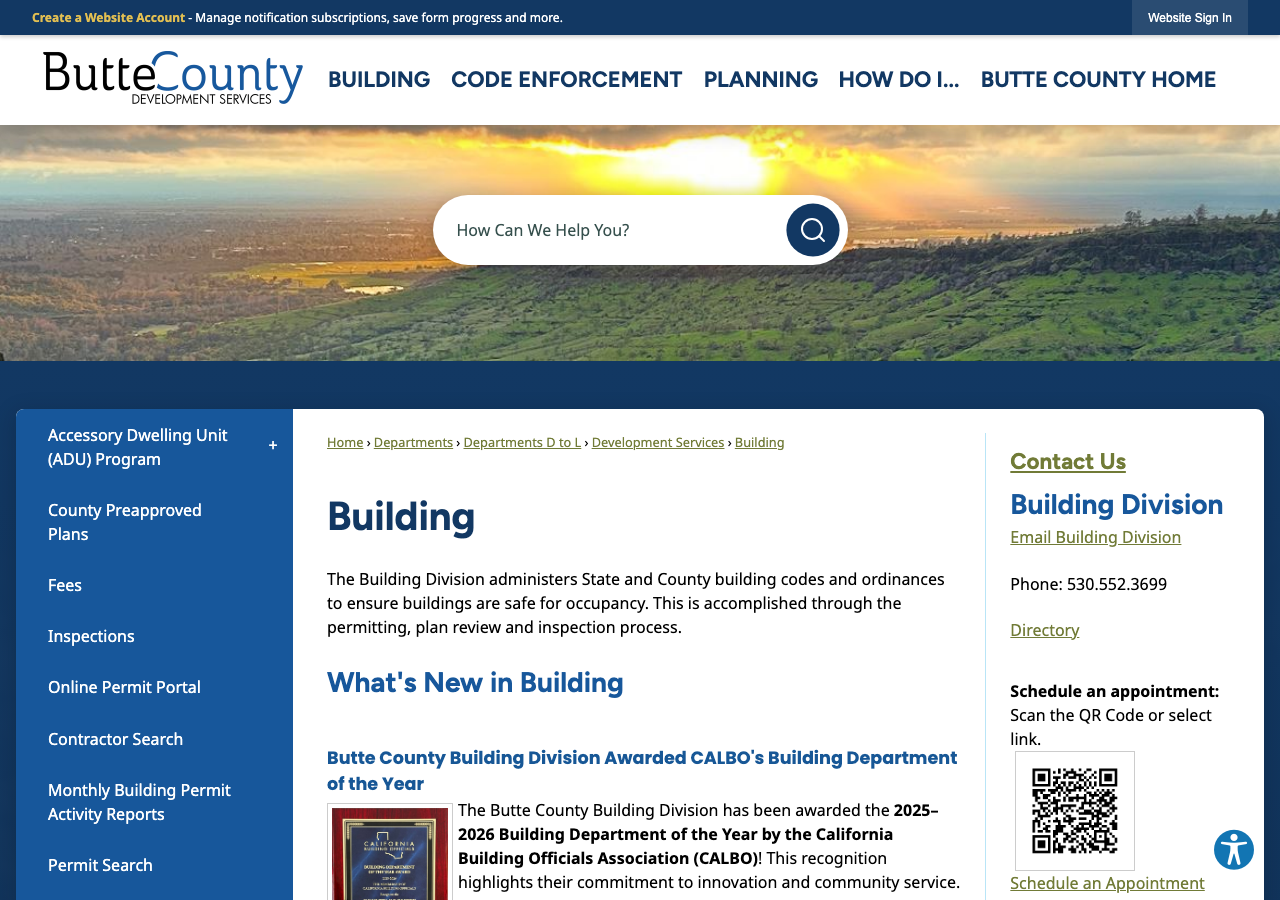
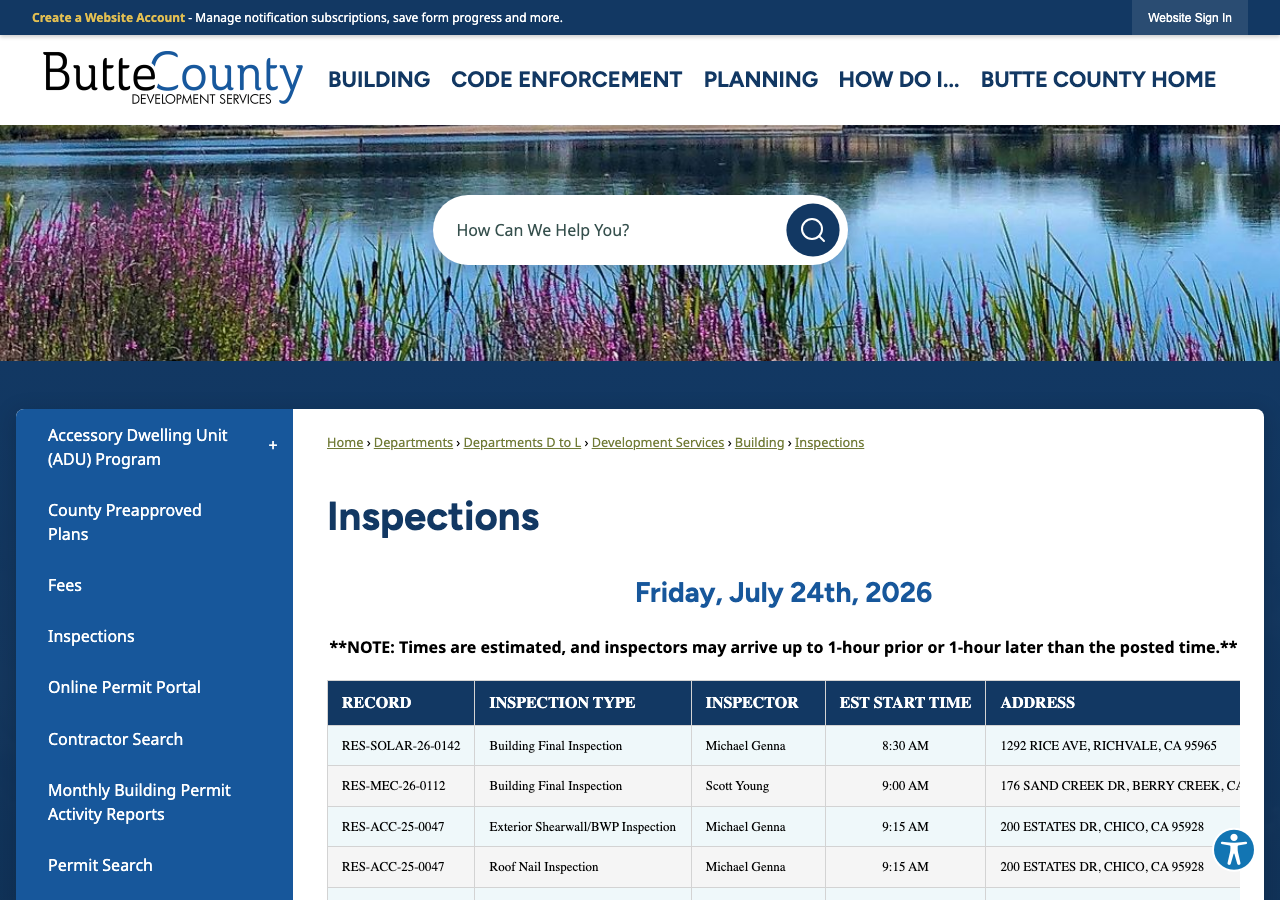
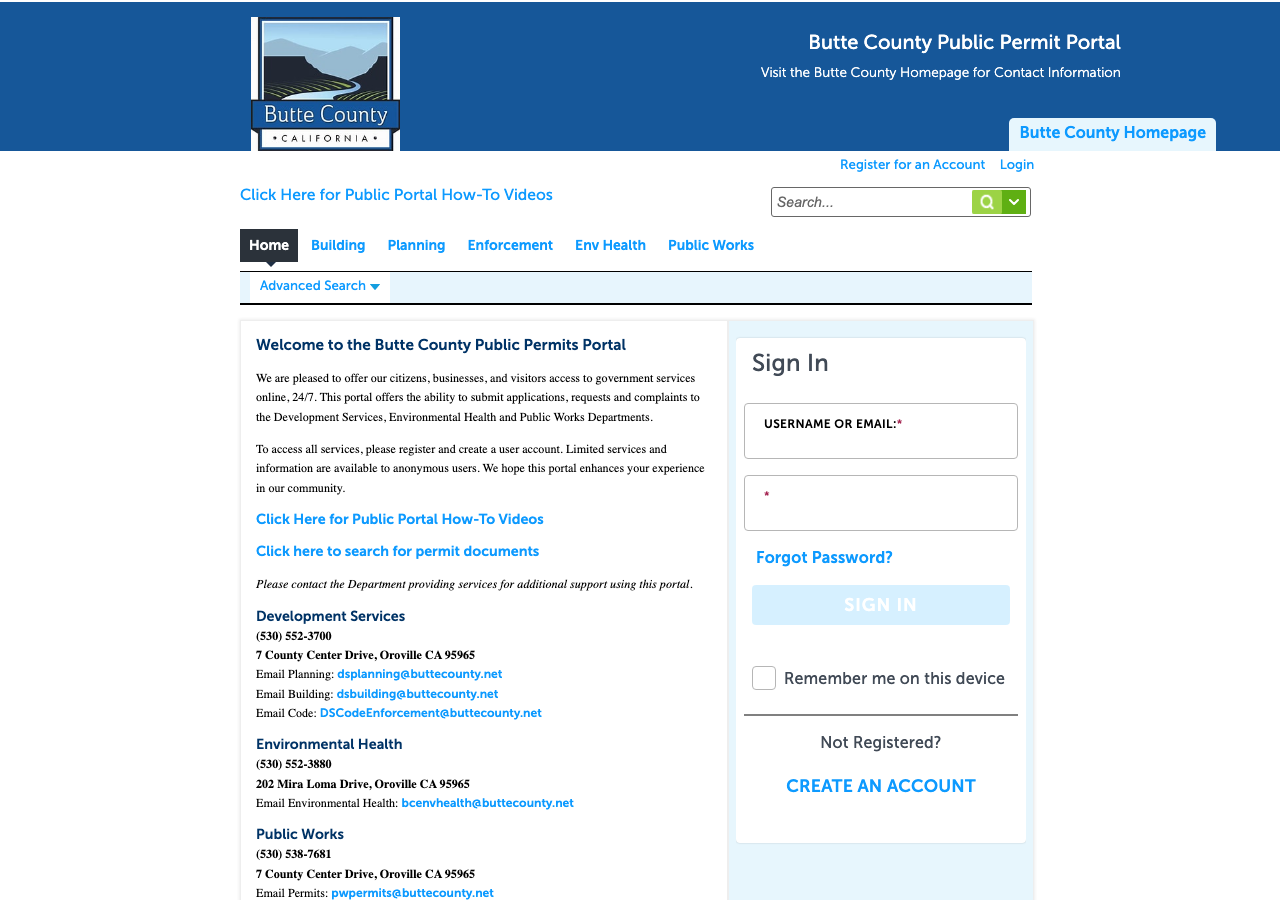
Average approval time — application to PTO
From the CPUC interconnection record. Bars show the average days taken each year; a year with no recorded projects is left blank rather than drawn as zero.