
City of Biggs
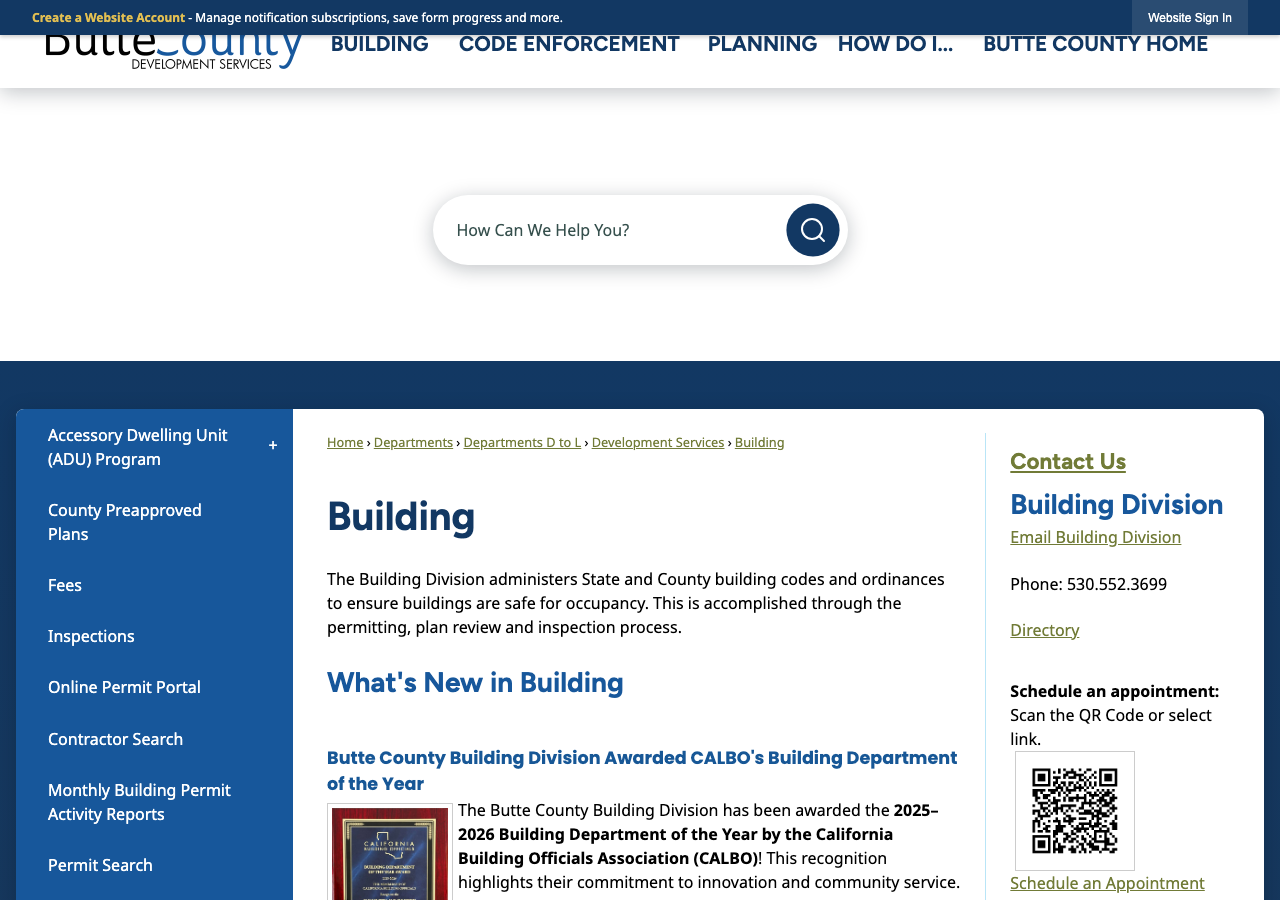
Butte County
City of Biggs is a city authority in the State of California, serving 1,964 residents. 202 residential solar installs are on record here. This page is the permit route for that jurisdiction: the fifteen steps from working out who has a say over an address through to permission to operate, the documents this authority publishes, and 62 answers taken from those documents and dated.
Permitting 5 steps · 28 questions
Whether a permit is needed — Yes Q3 Electrical and building permits — Combined Q4 Plan review — No separate wait for a standard over-the-counter residential roof-mount system -- DBP-71 states "The Building Inspector will perform a plan review on the plans… Q18 Where you file — Butte County Accela Citizen Access (ACA) -- aca-prod.accela.com/BUTTECO Q20
- Permit required
- Yes95% source
- What it costs
- $356 flat (residential roof-mounted PV, electrical permit fee); $1,274 flat (residential ground-mounted PV); $273 flat (solar reinstall); $317 flat (residential "Power Wall"/battery system).90% source
- Plan review turnaround
- No separate wait for a standard over-the-counter residential roof-mount system -- DBP-71 states "The Building Inspector will perform a plan review on the plans during the inspection" for systems that…78% source
- Key document
- published checklist/handout cited by 4 open the document
-
Confirm who has a say over your address
A city address is usually permitted by the city, not the county — but not always, and some authorities keep building and hand electrical to someone else. Getting this wrong costs the whole submittal, because every requirement below belongs to whoever actually holds jurisdiction. Check the overlays in the same pass: an HOA, a historic district, a windstorm certification or a system-size cap can reshape the design, and all of them are cheaper to find now than after the array is laid out.
- Is this authority the AHJ for residential solar at this address? No 90% · authority's own department page
- What does this authority permit itself, and what does it delegate? Delegated 92% · live permit/inspection portal
- Is a permit required for a residential rooftop PV system? Yes 95% · published checklist/handout
- Is there a separate electrical permit, or is it combined? Combined 82% · live permit/inspection portal
- Is a wind or windstorm certification required? No local wind/windstorm certification requirement found 55% · published checklist/handout
- Is there a system-size cap on residential generation? Not a cap on the BUILDING/ELECTRICAL PERMIT itself (Butte County's handouts set complexity thresholds -- tilt/ballast racking, framing load, roof angle -- that route a system to full plan review, not a kW ceiling). But the City's own 2011 Net Energy Metering tariff (Res. 2011-24, eff. 1 Dec 2011, codified at BMC 10.25.010/.060) states its "purpose... is to facilitate terms of service to customers with solar or wind power production systems of not more than 10 kilowatts" and separately that the tariff's "applicability... does not extend to customers whose solar or wind power production source exceeds three kilowatts for residential... projects." The document is internally inconsistent (10 kW in the purpose clause vs. 3 kW in the applicability clause) and is 15 years old with no newer version found published. 68% · utility tariff (City Council resolution)
-
Check who is allowed to apply
Several authorities require the electrical permit to be pulled by a licensed electrician, or require the contractor to be registered with them BEFORE applying. Registration is not same-day. This is second on the list rather than fourth because it is the step most likely to stop the job before the drawings matter.
- Who is allowed to pull the electrical permit? Either 82% · authority's own department page
- Must the contractor be registered with this authority before applying? No 78% · published checklist/handout
- Is a homeowner permitted to self-install and self-permit? Yes 78% · authority's own department page
-
Build the submittal package
Almost everywhere wants a site plan, a one-line or three-line electrical diagram, equipment cut sheets with listings, and a structural attachment detail. Build it against the published checklist rather than the last jurisdiction you worked in — the checklist is what the reviewer marks against.
- What documents make up a complete submittal? Complete permit application; permit-fee payment; complete set of plans (cover sheet/site plan with job address, owner/contractor/designer contacts, panel count and kW size, applicable codes; electrical plans with single-line diagram and location of all equipment; structural/racking plans with connection details); equipment specification sheets; for ground mount also structural calculations, geotechnical report (as applicable), and Special Inspection & Testing Agreement forms (as applicable); proof of contractor's license/workers'-comp at issuance. 90% · published checklist/handout
- How many copies, and in what format? Not stated as a fixed page/copy count. DBP-71 requires a "complete set of plans" at intake and a "printed complete set of plans" plus equipment spec sheets on-site at inspection. DBP-70 (ground mount) allows digital submittal at the counter, via the county's Ushare drop (www.bcdds.net/drop), or by email to dsbuilding@buttecounty.net; the county emails back approved digital plans and the customer must print a copy to have on site for inspection. 82% · published checklist/handout
- Is a site plan required, and what must it show? Yes. Must show: job address; owner/contractor/designer/contact names, addresses, phone; description of work; number of panels and system size in kW; applicable codes; location of the proposed system/structure and all existing structures; location of well, septic, and other utilities; for ground mount, also setbacks from property lines. 90% · published checklist/handout
- Is a one-line / three-line diagram required? Yes 92% · published checklist/handout
- Are string and conductor calculations required? Not stated as a separately named requirement; the required single-line diagram must show conductor/conduit sizing and grounding-electrode conductor sizing, per the county's own sample electrical diagram (DBP-75, a generic un-customized CALSEIA/OPR-style template with a full conductor/conduit schedule) -- so conductor sizing information is implicitly required as part of the electrical plan, but Butte County's handouts never use the phrase "string calculation" or size a required ampacity table. 58% · published sample diagram (generic/statewide template)
- Is a structural PE stamp required, and at what threshold? Roof mount: no PE/architect stamp required for a standard over-the-counter system (Building Inspector plan-reviews at the time of inspection), EXCEPT (a) if the array sits on a permitted "Ag Exempt" structure, which needs a structurally-sound letter from a CA-registered architect or engineer, or (b) if the system triggers full plan review (tilting/ballasted racking, framing load > 3 psf, panel-to-roof angle > 30 deg [or 40 deg], mounting on an unpermitted structure) -- full plan review is not stated to itself require a PE stamp but is reviewed by county staff rather than at the counter. Ground mount: ALWAYS requires site-specific foundation plans signed and stamped by a CA-licensed engineer or architect (or general foundation plans plus a site-specific stamped letter), and structural calculations/anchoring details are required specifically for equipment exceeding 400 lbs. 88% · published checklist/handout
-
Apply and pay
Most authorities now take the whole application through a portal, and several states cap or constrain what a residential solar permit may cost. Check whether plan check is billed separately before you quote the job.
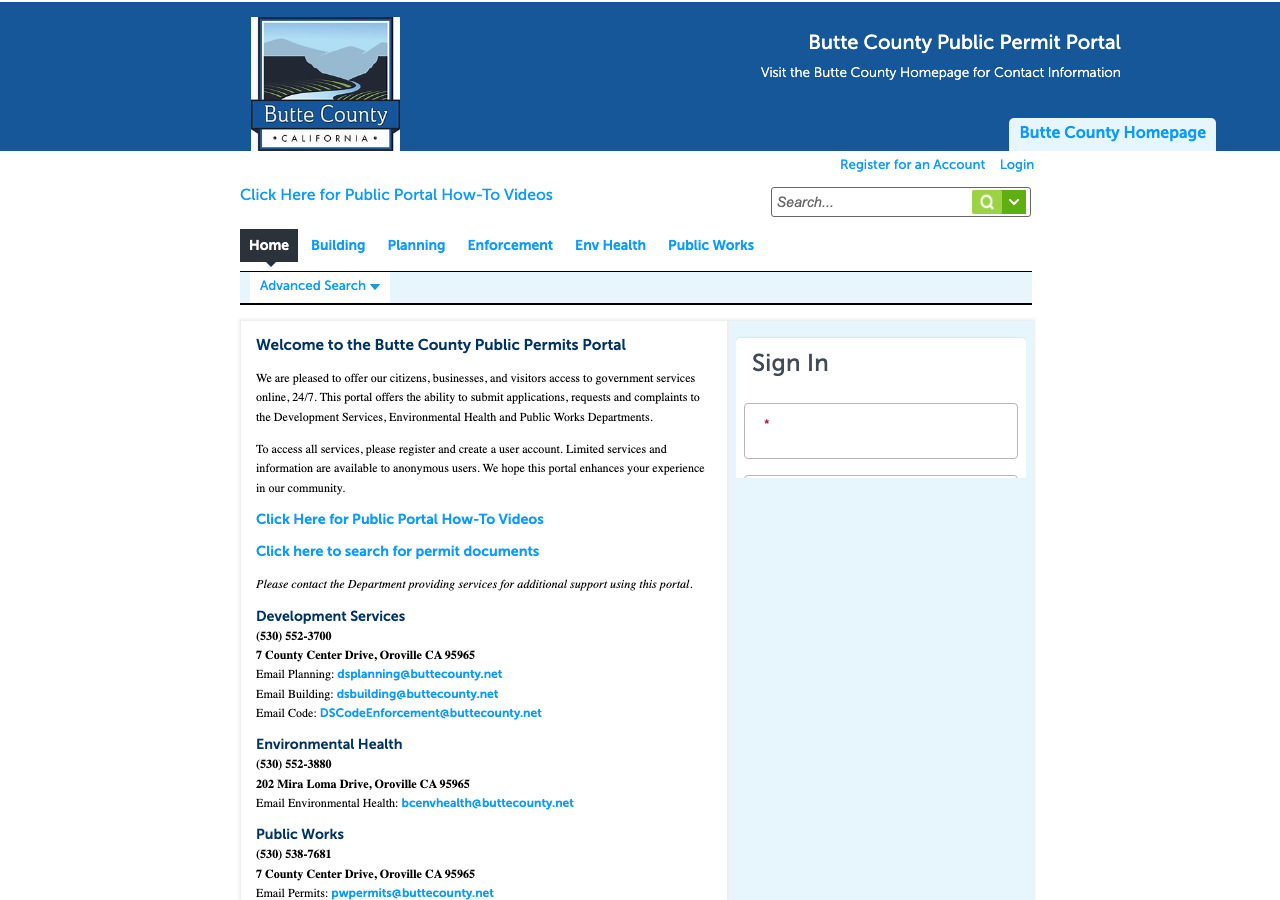
- Which permit portal does this authority use? Butte County Accela Citizen Access (ACA) -- aca-prod.accela.com/BUTTECO 95% · live permit portal
- Can the whole application be completed online? Yes, for systems eligible for over-the-counter review 78% · authority's own department page
- What does a residential solar permit cost? $356 flat (residential roof-mounted PV, electrical permit fee); $1,274 flat (residential ground-mounted PV); $273 flat (solar reinstall); $317 flat (residential "Power Wall"/battery system). 90% · published fee schedule
- How is the fee calculated? Flat 90% · published fee schedule
- Is there a separate plan-check fee? No separate line item for a standard over-the-counter residential PV system -- the flat electrical-permit fee appears to bundle the plan review that DBP-71 says happens "during the inspection." Systems that trigger full plan review (see Q13/Q28 triggers) instead draw on the Building Division's hourly rates ("Expedited Plan Check" $222/hr, "Supplemental Plan Check Fee" $167/hr), which are billed in addition to the flat permit fee. 65% · published fee schedule
-
Plan review — and start the utility in parallel
Interconnection is a separate process from the permit and usually the longer pole. Where the utility does not depend on the permit being issued, running both at once is the single biggest saving available on a residential job.
- What is the stated plan-review turnaround? No separate wait for a standard over-the-counter residential roof-mount system -- DBP-71 states "The Building Inspector will perform a plan review on the plans during the inspection" for systems that qualify. For systems requiring full plan review, Butte County's Building Division page's live "Plans Being Checked Today" tracker (checked 31 Aug 2026) showed the "Ground Mounted & Non-Residential Roof Mounted Solar" queue currently processing submissions from "3 weeks ago." 78% · authority's own department page (live status widget)
- Which utility handles interconnection here? City of Biggs Electric Utility -- a municipally-owned electric utility (POU), NOT PG&E. It is jointly staffed with the neighbouring City of Gridley as the "Gridley-Biggs Electric Department," a member of the Northern California Power Agency (NCPA), and interconnects to PG&E's 60kV transmission line only at the wholesale/transmission level (Dakota Ave./SR-99 substation) -- CPUC Rule 21 does not apply to this POU. 95% · authority's own department page
28 questions answered against City of Biggs’s own published documents
Q1 Is this authority the AHJ for residential solar at this address? Core Jurisdiction & scope
No
Why the confidence is not higherThe City of Biggs is not the AHJ for Building/Electrical review of residential solar -- it delegates that function entirely to Butte County Department of Development Services, per the City's own Building & Planning page. The City retains only Planning/zoning site-plan review (situational) and its own municipal electric utility's interconnection role.
authority's own department page checked 2026-08-31 https://www.biggs-ca.gov/City-Services/Building--Planning/index.html
Q2 What does this authority permit itself, and what does it delegate? Core Jurisdiction & scope
Delegated
Why the confidence is not higherCity's Building & Planning page names Butte County Building Department/Department of Development Services as the provider of "Building Permits and Services for Biggs"; confirmed live via Butte County's own Inspections page showing a Butte County inspector performing the final inspection on a Biggs-address solar permit (RES-SOLAR-26-0204) on 31 Aug 2026.
live permit/inspection portal checked 2026-08-31 https://www.buttecounty.net/257/Inspections
Q3 Is a permit required for a residential rooftop PV system? Core Jurisdiction & scope
Yes
Why the confidence is not higherButte County DBP-71 handout ("Residential Roof Mounted PV Solar Systems", revised 2/19/26) sets out the required permit-application, plan, and fee-payment package for any new residential roof-mounted PV system; Biggs' own Planning FAQ separately confirms "All electrical work" requires a permit.
published checklist/handout checked 2026-08-31 https://www.buttecounty.net/DocumentCenter/View/3147/DBP-71-Residential-Roof-Mount-Solar-System-PDF
Q4 Is there a separate electrical permit, or is it combined? Core Jurisdiction & scope
Combined
Why the confidence is not higherButte County's live inspection schedule shows a single permit record type "RES-SOLAR" (e.g. RES-SOLAR-26-0204) whose final inspection is logged as a "Building Final Inspection" -- one permit record covers the structural/building and electrical review together. The Master Fee Schedule likewise prices residential PV as a single flat line under "Electrical Permit Fees" (no separate building-permit valuation line for standard PV).
live permit/inspection portal checked 2026-08-31 https://www.buttecounty.net/257/Inspections
Q5 Who is allowed to pull the electrical permit? Core Who may apply
Either
Why the confidence is not higherButte County's Building Division page states: "The Permit Portal allows Licensed Contractors and homeowners to apply for and receive building permits over the internet" -- both a licensed contractor (typically C-46 Solar or C-10 Electrical) and a homeowner owner-builder may pull the permit.
authority's own department page checked 2026-08-31 https://www.buttecounty.net/252/Building
Q6 Must the contractor be registered with this authority before applying? Core Who may apply
No
Why the confidence is not higherButte County's DBP-70/DBP-71 handouts require only "Proof of current contractor's license / Worker's Compensation insurance (for contractors only)" at permit issuance -- a valid CSLB license, not pre-registration with the county. The only "contractor registration" the City of Biggs itself administers is a CUPCCAA informal-bidding vendor list for the City's OWN public-works construction contracts, unrelated to private residential permitting.
published checklist/handout checked 2026-08-31 https://www.buttecounty.net/DocumentCenter/View/3146/DBP-70-Ground-Mount-Solar-Systems-PDF
Q7 Is a homeowner permitted to self-install and self-permit? Who may apply
Yes
Why the confidence is not higherButte County's Building Division page states the Permit Portal lets "homeowners... apply for and receive building permits over the internet," consistent with standard CA owner-builder practice (B&P Code 7044); no evidence found that Butte County or Biggs bars owner-builder solar permits.
authority's own department page checked 2026-08-31 https://www.buttecounty.net/252/Building
Q8 What documents make up a complete submittal? Core Submittal package
Complete permit application; permit-fee payment; complete set of plans (cover sheet/site plan with job address, owner/contractor/designer contacts, panel count and kW size, applicable codes; electrical plans with single-line diagram and location of all equipment; structural/racking plans with connection details); equipment specification sheets; for ground mount also structural calculations, geotechnical report (as applicable), and Special Inspection & Testing Agreement forms (as applicable); proof of contractor's license/workers'-comp at issuance.
Why the confidence is not higherDirectly enumerated in Butte County's DBP-71 (roof mount) and DBP-70 (ground mount) submittal handouts.
published checklist/handout checked 2026-08-31 https://www.buttecounty.net/DocumentCenter/View/3147/DBP-71-Residential-Roof-Mount-Solar-System-PDF
Q9 How many copies, and in what format? Submittal package
Not stated as a fixed page/copy count. DBP-71 requires a "complete set of plans" at intake and a "printed complete set of plans" plus equipment spec sheets on-site at inspection. DBP-70 (ground mount) allows digital submittal at the counter, via the county's Ushare drop (www.bcdds.net/drop), or by email to dsbuilding@buttecounty.net; the county emails back approved digital plans and the customer must print a copy to have on site for inspection.
Why the confidence is not higherDirectly stated in DBP-70 and DBP-71.
published checklist/handout checked 2026-08-31 https://www.buttecounty.net/DocumentCenter/View/3146/DBP-70-Ground-Mount-Solar-Systems-PDF
Q10 Is a site plan required, and what must it show? Core Submittal package
Yes. Must show: job address; owner/contractor/designer/contact names, addresses, phone; description of work; number of panels and system size in kW; applicable codes; location of the proposed system/structure and all existing structures; location of well, septic, and other utilities; for ground mount, also setbacks from property lines.
Why the confidence is not higherEnumerated identically in DBP-70 and DBP-71's "Minimum Plan Requirements -- Cover Sheet and/or Site Plan" sections.
published checklist/handout checked 2026-08-31 https://www.buttecounty.net/DocumentCenter/View/3147/DBP-71-Residential-Roof-Mount-Solar-System-PDF
Q11 Is a one-line / three-line diagram required? Core Drawings & calculations
Yes
Why the confidence is not higherBoth DBP-70 and DBP-71 require "Electrical Plans -- identify size and location of main and sub-panels / location of all electrical equipment / single-line diagram showing all connections." The county also publishes a generic sample one-line diagram (DBP-75).
published checklist/handout checked 2026-08-31 https://www.buttecounty.net/DocumentCenter/View/3147/DBP-71-Residential-Roof-Mount-Solar-System-PDF
Q12 Are string and conductor calculations required? Drawings & calculations
Not stated as a separately named requirement; the required single-line diagram must show conductor/conduit sizing and grounding-electrode conductor sizing, per the county's own sample electrical diagram (DBP-75, a generic un-customized CALSEIA/OPR-style template with a full conductor/conduit schedule) -- so conductor sizing information is implicitly required as part of the electrical plan, but Butte County's handouts never use the phrase "string calculation" or size a required ampacity table.
Why the confidence is not higherInferred from the format of DBP-75's sample diagram rather than an explicit written requirement in DBP-70/71; DBP-74/75 are the generic, un-localized 2014-era statewide PV-toolkit sample sheets ("Bill and Ted's Solar," San Jose, CA), not Butte-specific content, so I am not confident this is an enforced local requirement rather than a sample illustration.
published sample diagram (generic/statewide template) checked 2026-08-31 https://www.buttecounty.net/DocumentCenter/View/3145/DBP-75-Solar-Sample-Electrical-Diagram-PDF
Q13 Is a structural PE stamp required, and at what threshold? Core Engineering & stamps
Roof mount: no PE/architect stamp required for a standard over-the-counter system (Building Inspector plan-reviews at the time of inspection), EXCEPT (a) if the array sits on a permitted "Ag Exempt" structure, which needs a structurally-sound letter from a CA-registered architect or engineer, or (b) if the system triggers full plan review (tilting/ballasted racking, framing load > 3 psf, panel-to-roof angle > 30 deg [or 40 deg], mounting on an unpermitted structure) -- full plan review is not stated to itself require a PE stamp but is reviewed by county staff rather than at the counter. Ground mount: ALWAYS requires site-specific foundation plans signed and stamped by a CA-licensed engineer or architect (or general foundation plans plus a site-specific stamped letter), and structural calculations/anchoring details are required specifically for equipment exceeding 400 lbs.
Why the confidence is not higherDirectly stated across DBP-70, DBP-71 and DBP-72.
published checklist/handout checked 2026-08-31 https://www.buttecounty.net/DocumentCenter/View/3146/DBP-70-Ground-Mount-Solar-Systems-PDF
Q14 Is an electrical PE stamp required, and at what threshold? Engineering & stamps
Nothing published by this authority.
Where we lookedButte County's six published solar handouts (DBP-69, 70, 71, 72, 74, 75) -- DBP-70/71 state a structural PE/architect stamp threshold in detail but none of the six documents states any separate electrical PE-stamp threshold.
Q15 What does a residential solar permit cost? Core Fees
$356 flat (residential roof-mounted PV, electrical permit fee); $1,274 flat (residential ground-mounted PV); $273 flat (solar reinstall); $317 flat (residential "Power Wall"/battery system).
Why the confidence is not higherButte County's 2025 Master Fee Schedule (Development Services -- Electrical Permit Fees, section C.5-C.9), effective 1 Oct 2025 per the document's own footer. These are the county fees since Building/Electrical permitting is delegated to Butte County; the City of Biggs separately charges its own Planning "Site Plan Review" fee of $282.50 only where Planning review is triggered.
published fee schedule checked 2026-08-31 https://www.buttecounty.net/DocumentCenter/View/1549/Master-Fee-Schedule-PDF
Q16 How is the fee calculated? Core Fees
Flat
Why the confidence is not higherMaster Fee Schedule prices residential PV as a flat per-system amount differentiated only by mount type (roof vs. ground) and by "reinstall," not by kW, panel count, or valuation.
published fee schedule checked 2026-08-31 https://www.buttecounty.net/DocumentCenter/View/1549/Master-Fee-Schedule-PDF
Q17 Is there a separate plan-check fee? Fees
No separate line item for a standard over-the-counter residential PV system -- the flat electrical-permit fee appears to bundle the plan review that DBP-71 says happens "during the inspection." Systems that trigger full plan review (see Q13/Q28 triggers) instead draw on the Building Division's hourly rates ("Expedited Plan Check" $222/hr, "Supplemental Plan Check Fee" $167/hr), which are billed in addition to the flat permit fee.
Why the confidence is not higherInferred from the fee schedule's structure (one flat PV line, no adjoining plan-check line) plus DBP-71's statement that OTC systems are reviewed at inspection; not stated explicitly as a yes/no policy anywhere.
published fee schedule checked 2026-08-31 https://www.buttecounty.net/DocumentCenter/View/1549/Master-Fee-Schedule-PDF
Q18 What is the stated plan-review turnaround? Core Timeline & validity
No separate wait for a standard over-the-counter residential roof-mount system -- DBP-71 states "The Building Inspector will perform a plan review on the plans during the inspection" for systems that qualify. For systems requiring full plan review, Butte County's Building Division page's live "Plans Being Checked Today" tracker (checked 31 Aug 2026) showed the "Ground Mounted & Non-Residential Roof Mounted Solar" queue currently processing submissions from "3 weeks ago."
Why the confidence is not higherDBP-71 quote plus a live, dated snapshot of the county's own plan-check backlog widget; the 3-week figure is a snapshot, not a published SLA, so it will drift.
authority's own department page (live status widget) checked 2026-08-31 https://www.buttecounty.net/252/Building
Q19 How long is an issued permit valid before it expires? Timeline & validity
Nothing published by this authority.
Where we lookedButte County Building Division page, Fees page, and Master Fee Schedule PDF -- none states a permit-validity/expiration period for an issued building or electrical permit; Biggs' own FAQ page (building permits generally) also does not state one.
Q20 Which permit portal does this authority use? Core Portal & process
Butte County Accela Citizen Access (ACA) -- aca-prod.accela.com/BUTTECO
Why the confidence is not higherLinked directly from the county's Building Division and Development Services pages as "Online Permit Portal" / "Permit Portal"; the county's Building page notes it went live recently ("New Online Permit Portal!").
live permit portal checked 2026-08-31 https://aca-prod.accela.com/BUTTECO/Default.aspx
Q21 Can the whole application be completed online? Core Portal & process
Yes, for systems eligible for over-the-counter review
Why the confidence is not higherBuilding Division page: "The Permit Portal allows Licensed Contractors and homeowners to apply for and receive building permits over the internet." However, DBP-72 (job-site requirements handout, dated 2016) states that if framing load exceeds 3.0 psf or panel angle exceeds 30/40 degrees, "the project is not eligible for online application" and requires engineered plan-check review instead -- so the full online path is scoped to simpler systems.
authority's own department page checked 2026-08-31 https://www.buttecounty.net/252/Building
Q22 Which utility handles interconnection here? Core Utility interconnection
City of Biggs Electric Utility -- a municipally-owned electric utility (POU), NOT PG&E. It is jointly staffed with the neighbouring City of Gridley as the "Gridley-Biggs Electric Department," a member of the Northern California Power Agency (NCPA), and interconnects to PG&E's 60kV transmission line only at the wholesale/transmission level (Dakota Ave./SR-99 substation) -- CPUC Rule 21 does not apply to this POU.
Why the confidence is not higherCity's own Electric utility page states it is "the sole provider of electric power to residences and businesses within the city limits" and describes the Gridley-Biggs Electric Department/NCPA arrangement directly.
authority's own department page checked 2026-08-31 https://www.biggs-ca.gov/City-Services/Utilities/Electric/index.html
Q23 Where does the utility sit in the sequence? Core Utility interconnection
Nothing published by this authority.
Where we lookedCity of Biggs Electric page, Current Utility Rates page, and the 2011 Net Energy Metering tariff PDF -- the tariff states a separate "generation agreement" with the City is required for interconnection/NEM service, but none of these sources states whether that agreement must be executed before, after, or in parallel with the Butte County building/electrical permit.
Q24 Is a HOA or architectural approval required first? Overlays & special cases
Nothing published by this authority.
Where we lookedBiggs Municipal Code Title 14 (Zoning) -- codepublishing.com/CA/Biggs now redirects to ecode360.com/BI4357, which returned a Cloudflare Turnstile bot-verification challenge page on every attempt (plain curl, curl with the iccsafe.org Referer header, and headless Chrome --dump-dom all returned the challenge, never the code text); the Wayback Machine's CDX index (checked via cdx.search) has no captures of individual Title 14 chapter pages, only the Title-level table of contents (last captured 2021), which lists chapter titles but not a solar/HOA-review provision.
Q25 Is there a historic-district review? Overlays & special cases
Nothing published by this authority.
Where we lookedSame blocked source as Q24 (Biggs Municipal Code Title 14, Zoning, via ecode360.com/BI4357); Biggs' General Plan and Downtown planning documents (linked from the Applications & Documents page) were not opened for this specific question given the code itself was the more direct source and was unreachable.
Q26 Is a wind or windstorm certification required? Overlays & special cases
No local wind/windstorm certification requirement found
Why the confidence is not higherButte County's own solar submittal handouts (DBP-70, DBP-71, DBP-72) enumerate every required structural document (racking installation instructions, foundation plans, structural calculations, geotechnical report where applicable) and never mention a wind or windstorm certification; California does not use a TDI-style windstorm-certificate system, instead folding wind load into standard CBC/ASCE-7 structural design/stamping. Confidence is moderate rather than high because I could not independently check Biggs' or Butte's zoning/building code text (eCode360 blocked) for any freestanding certification clause.
published checklist/handout checked 2026-08-31 https://www.buttecounty.net/DocumentCenter/View/3146/DBP-70-Ground-Mount-Solar-Systems-PDF
Q27 Is a Specific Use Permit or Council approval ever required? Overlays & special cases
Nothing published by this authority.
Where we lookedSame blocked source (Biggs Municipal Code Title 14, Zoning, via ecode360.com/BI4357); the archived 2021 Title 14 table of contents lists a "Conditional Use Permits" chapter (14.60) and a "Variances" chapter (14.70) by name but the current chapter text -- which would state whether solar specifically triggers either -- was unreachable.
https://web.archive.org/web/2021/http://www.codepublishing.com/CA/Biggs/html/Biggs14/Biggs14.html
Q28 Is there a system-size cap on residential generation? Overlays & special cases
Not a cap on the BUILDING/ELECTRICAL PERMIT itself (Butte County's handouts set complexity thresholds -- tilt/ballast racking, framing load, roof angle -- that route a system to full plan review, not a kW ceiling). But the City's own 2011 Net Energy Metering tariff (Res. 2011-24, eff. 1 Dec 2011, codified at BMC 10.25.010/.060) states its "purpose... is to facilitate terms of service to customers with solar or wind power production systems of not more than 10 kilowatts" and separately that the tariff's "applicability... does not extend to customers whose solar or wind power production source exceeds three kilowatts for residential... projects." The document is internally inconsistent (10 kW in the purpose clause vs. 3 kW in the applicability clause) and is 15 years old with no newer version found published.
Why the confidence is not higherDirectly quoted from the City's only published NEM tariff document; flagged at reduced confidence because of its age (2011, pre-dating modern residential PV system sizes) and its internal 10kW/3kW inconsistency -- it is unclear whether this tariff is still administered as written or has been superseded by an unpublished practice.
utility tariff (City Council resolution) checked 2026-08-31 https://www.biggs-ca.gov/documents/City-Services/Utilities/Electric/Electric%20Rates/Biggs-Net-Metering-Tariff-Nov-2011.pdf
Lines marked with a percentage were read off this authority’s own published documents. Unmarked guidance is general good practice, not this jurisdiction’s rule — always confirm against the authority before you submit.
Install 5 steps · 20 questions
-
Build to the code editions actually in force here
The NEC edition a jurisdiction enforces is often a cycle behind the newest one published, and local amendments sit on top of it. Rapid shutdown, conductor sizing and labelling all change between editions, so the edition in force is the first thing to establish, not the last.
- Which NEC edition is in force? 2023 88% · authority's own department page
- Which building code edition is in force? 2025 California Building Code and 2025 California Residential Code, effective 1 Jan 2026 88% · authority's own department page
- Which fire code edition is in force? 2025 California Fire Code 68% · authority's own department page
- What is the installation judged against? California Electrical Code (CEC) Article 690, Solar Photovoltaic Systems; all equipment/components must be listed and labeled by UL or another recognized testing agency. 85% · published checklist/handout
-
Fire access, setbacks and pathways
Ridge setbacks and roof access pathways are fire-service requirements and they constrain the array layout. They are the most common cause of a redesign after the fire department comments on a plan set.
Nothing recorded for City of Biggs on this step yet — 1 question checked and found unpublished. The guidance above is general.
-
Rapid shutdown
Which rapid-shutdown rule applies follows directly from the NEC edition in force, and the initiation device has to be at a location the fire service can reach and identify. This is inspected, and it is labelled.
- Is rapid shutdown required, and to which NEC edition? Yes, rapid shutdown is required for PV located on or in a building. Butte County's own current inspection guideline (DBP-69) cites "2016 CEC, Article 690.12" for this requirement, but that citation is stale: the county's Building Division now enforces the 2025 CEC (based on the 2023 NEC) for all permits reviewed after 31 Dec 2025, and NEC 690.12's controlled-conductor/array-boundary provisions have been substantially revised across the 2017, 2020 and 2023 NEC cycles since DBP-69 was last revised (4/10/18) -- DBP-69 has not been updated to reflect the current edition's specific requirements. 75% · published checklist/handout (dated)
-
Labels and placards
The NEC sets a baseline for permanent markings at the service equipment and the disconnecting means. On top of that, an authority may specify its own wording, and the utility may specify more again. Where any of them writes its own text, a generic off-the-shelf label set will not pass — this is the detail most often fixed on a return visit.
- Which placards does this authority require at the service equipment? DC Disconnect label; "WARNING ELECTRIC SHOCK HAZARD" placard at the DC disconnect; installed-system-information label at the DC disconnect (rated max power-point current/voltage, max system voltage, short-circuit current); AC Disconnect label (max AC output, operating AC voltage); a permanent plaque/directory at the Utility Service Panel identifying the location(s) of other equipment if not co-located; a rapid-shutdown placard at the utility service equipment. 78% · published checklist/handout (dated)
- Does the authority specify placard wording of its own? Yes 72% · published checklist/handout (dated)
- Does it specify letter height, colour or material? Not specified 75% · published checklist/handout
- Is a site plan / facility map placard required, and what must it show? A directory/plaque is required at the Utility Service Panel ONLY when the DC Disconnect, Inverter, and/or AC Disconnect are not co-located with the Utility Service Panel; it must identify the location(s) of that other equipment. No separate graphical facility/site-plan placard is described beyond this equipment-location plaque. 70% · published checklist/handout (dated)
- Where must the labels be placed? DC Disconnect: readily accessible and within sight of the inverter. If DC wiring runs through the building, the DC Disconnect must sit before the conductors enter the building (or the conductors must run in metallic raceway/enclosure to the disconnect, with J-boxes labeled "DC Source Circuits"). Rooftop micro-inverter systems have no DC disconnect; instead an AC Disconnect is installed on the roof or at the utility panel, lockable OFF. Rapid-shutdown placard and equipment-location plaque go at the Utility Service Panel/equipment. 78% · published checklist/handout (dated)
-
Disconnect, storage and listed equipment
Where the AC disconnect must sit relative to the meter is usually the utility's rule, not the building department's. Battery storage frequently carries its own permit, its own inspection and its own fire conditions.
- Where must the AC disconnect be, relative to the meter? For rooftop micro-inverter systems (no DC disconnect), the AC Disconnect must be installed "on the roof or at the Utility panel" and be capable of being locked OFF, with installed-system information posted at the Utility Service Panel. For central/string-inverter systems, the general CEC/NEC rule applies: the AC disconnect/interconnection point must be readily accessible at or near the service equipment. No Butte-County-specific numeric distance-from-meter rule was found beyond this. 68% · published checklist/handout (dated)
- Must equipment be on a specific approved list? Yes 88% · published checklist/handout
- Are batteries permitted, and under what conditions? Yes, permitted -- Butte County's Master Fee Schedule prices a residential "Power Walls -- Batteries Per System" line at $317, separate from the PV permit fee, confirming the county issues permits for battery storage. No dedicated ESS/battery installation-conditions handout was found among the county's six published solar bulletins (DBP-69 through DBP-75), which are all PV-specific. 72% · published fee schedule
- Is there a separate ESS permit or inspection? Likely yes, in fee terms -- the Master Fee Schedule prices "Power Walls -- Batteries Per System, Residential" ($317) as its own distinct line item, separate from the PV roof/ground-mount lines, implying a discrete permit fee is assessed for a battery even when paired with PV. Whether it is issued as a physically separate permit record (vs. an add-on line to the same RES-SOLAR permit) is not confirmed. 55% · published fee schedule
- Is a ground mount treated as a structure? Yes 85% · published checklist/handout
- Is there a local rule on service upgrades or busbar sizing? "Photovoltaic interconnection circuit breaker at the Utility Service Panel shall not exceed 20% of the bussing rating and shall be positioned at the opposite end of the bussing from the main input circuit location (i.e. 20 amp for 100 amp panel)." 65% · published checklist/handout
- Is a specific mounting system or attachment spacing required? No universal spacing figure specified; racking must follow the manufacturer's listed installation instructions with details showing all connections into roof/foundation framing members. Systems exceeding 3.0 lbs/sq ft of panel+support framing, or a panel-to-roof-plane angle exceeding 30 (or 40) degrees from horizontal, are routed out of the over-the-counter path into full engineered plan review. 80% · published checklist/handout
20 questions answered against City of Biggs’s own published documents
Q29 Which NEC edition is in force? Core Code editions in force
2023
Why the confidence is not higherButte County Department of Development Services (which performs Building/Electrical review for Biggs) states: "Building Code Updates Effective January 1, 2026... the 2022 Code Cycle ended on December 31, 2025... All permit applications submitted for review after this date... will be reviewed under the new 2025 Building Standards Codes," and links the "2025 CA Electrical Code (PDF)" directly. California's 2025 code cycle (effective 1 Jan 2026) adopts the 2023 NEC as its base document. Not scored higher because I have not independently verified that Biggs' own municipal code (Title 11.05, blocked by Cloudflare) has not separately amended this.
authority's own department page checked 2026-08-31 https://www.buttecounty.net/252/Building
Q30 Which building code edition is in force? Core Code editions in force
2025 California Building Code and 2025 California Residential Code, effective 1 Jan 2026
Why the confidence is not higherSame Butte County Building Division page, which links both documents by name as part of the current code cycle enforced for permits reviewed after 31 Dec 2025.
authority's own department page checked 2026-08-31 https://www.buttecounty.net/252/Building
Q31 Which fire code edition is in force? Code editions in force
2025 California Fire Code
Why the confidence is not higherListed by Butte County's Building Division page among the current 2025-cycle code documents it links; the actual enforcing fire agency for Biggs is the Butte County Cooperative Fire Agencies (serving unincorporated Butte County plus Oroville, Paradise, Gridley and Biggs by name), whose own separate fire-code adoption ordinance I was not able to independently confirm.
authority's own department page checked 2026-08-31 https://www.buttecounty.net/252/Building
Q32 Are there local amendments to any of the above? Core Code editions in force
Nothing published by this authority.
Where we lookedBiggs Municipal Code Title 11.05 (Building Codes) -- unreachable (ecode360.com/BI4357 blocked by Cloudflare, see Q24); Butte County's own building-code adoption ordinance (the local-amendment ordinance referenced on the Building Division page) was not located within the time available. Note as a related but distinct fact: DBP-69's own inspection checklist still cites the 2016 CEC while the county's current code cycle is the 2025 CEC -- a vintage gap in guidance documentation, not confirmed evidence of (or against) a formal local amendment.
Q33 What is the installation judged against? Core Electrical
California Electrical Code (CEC) Article 690, Solar Photovoltaic Systems; all equipment/components must be listed and labeled by UL or another recognized testing agency.
Why the confidence is not higherDBP-72 states this conformance requirement verbatim ("Installation shall conform to the California Electric Code (CEC) Article 690, Solar Photovoltaic Systems. All equipment and components shall be listed and labeled by Underwriters Laboratories or other recognized agency"); the document itself is dated 2016 but this general conformance clause tracks whichever CEC edition is currently in force (now the 2025 CEC).
published checklist/handout checked 2026-08-31 https://www.buttecounty.net/DocumentCenter/View/3148/DBP-72-Job-Site-Requirements-for-Online-Roof-Mount-Solar-PDF
Q34 Is there a local rule on service upgrades or busbar sizing? Electrical
"Photovoltaic interconnection circuit breaker at the Utility Service Panel shall not exceed 20% of the bussing rating and shall be positioned at the opposite end of the bussing from the main input circuit location (i.e. 20 amp for 100 amp panel)."
Why the confidence is not higherQuoted from Butte County's DBP-69 Solar Inspection Guidelines, citing "2016 CEC, Article 690.64" -- this restates the NEC/CEC's own 120%-rule (690.64/705.12) rather than a stricter local amendment, and the citation is stale relative to the current 2025 CEC/2023 NEC in force, though the underlying rule is materially unchanged.
published checklist/handout checked 2026-08-31 https://www.buttecounty.net/DocumentCenter/View/3151/DBP-69-Solar-Inspection-Guidelines-PDF
Q35 Is a specific mounting system or attachment spacing required? Structural & mounting
No universal spacing figure specified; racking must follow the manufacturer's listed installation instructions with details showing all connections into roof/foundation framing members. Systems exceeding 3.0 lbs/sq ft of panel+support framing, or a panel-to-roof-plane angle exceeding 30 (or 40) degrees from horizontal, are routed out of the over-the-counter path into full engineered plan review.
Why the confidence is not higherDirectly stated in DBP-71 (minimum plan requirements) and DBP-72 (job-site requirements / OTC eligibility thresholds).
published checklist/handout checked 2026-08-31 https://www.buttecounty.net/DocumentCenter/View/3148/DBP-72-Job-Site-Requirements-for-Online-Roof-Mount-Solar-PDF
Q36 What ridge setback and access pathways are required? Core Fire pathways & setbacks
Nothing published by this authority.
Where we lookedButte County Fire Department's Master Fee Schedule section (within the 2025 Master Fee Schedule PDF, "FIRE DEPARTMENT" section, item A.19 "Solar Variance -- $160") -- this proves SOME fire-code process exists for solar (a variance fee), but no numeric ridge-setback or access-pathway standard is stated in that fee schedule, and Biggs' Fire page is only an external link to Butte County Cooperative Fire Agencies with no PV-specific content of its own.
https://www.buttecounty.net/DocumentCenter/View/1549/Master-Fee-Schedule-PDF
Q37 Is rapid shutdown required, and to which NEC edition? Core Rapid shutdown
Yes, rapid shutdown is required for PV located on or in a building. Butte County's own current inspection guideline (DBP-69) cites "2016 CEC, Article 690.12" for this requirement, but that citation is stale: the county's Building Division now enforces the 2025 CEC (based on the 2023 NEC) for all permits reviewed after 31 Dec 2025, and NEC 690.12's controlled-conductor/array-boundary provisions have been substantially revised across the 2017, 2020 and 2023 NEC cycles since DBP-69 was last revised (4/10/18) -- DBP-69 has not been updated to reflect the current edition's specific requirements.
Why the confidence is not higherRequirement itself confirmed by the county's own published inspection checklist; code-edition citation is demonstrably out of date against the county's own current code-adoption statement, which I am flagging rather than silently reconciling.
published checklist/handout (dated) checked 2026-08-31 https://www.buttecounty.net/DocumentCenter/View/3151/DBP-69-Solar-Inspection-Guidelines-PDF
Q38 Which placards does this authority require at the service equipment? Core Labels Signage & labelling
DC Disconnect label; "WARNING ELECTRIC SHOCK HAZARD" placard at the DC disconnect; installed-system-information label at the DC disconnect (rated max power-point current/voltage, max system voltage, short-circuit current); AC Disconnect label (max AC output, operating AC voltage); a permanent plaque/directory at the Utility Service Panel identifying the location(s) of other equipment if not co-located; a rapid-shutdown placard at the utility service equipment.
Why the confidence is not higherEnumerated in Butte County's DBP-69 Solar Inspection Guidelines, citing 2016 CEC Articles 690.17/690.53/690.54/690.56 -- again a stale citation but the underlying placard categories remain part of the current NEC 690 labeling scheme.
published checklist/handout (dated) checked 2026-08-31 https://www.buttecounty.net/DocumentCenter/View/3151/DBP-69-Solar-Inspection-Guidelines-PDF
Q39 Does the authority specify placard wording of its own? Core Labels Signage & labelling
Yes
Why the confidence is not higherDBP-69 reproduces verbatim required wording: "PHOTOVOLTAIC DC DISCONNECT," the shock-hazard warning sentence, and "PHOTOVOLTAIC SYSTEM EQUIPPED WITH RAPID SHUTDOWN." This wording derives from the CEC itself rather than being uniquely authored by the county, but the county does publish it as its own inspection-verification checklist.
published checklist/handout (dated) checked 2026-08-31 https://www.buttecounty.net/DocumentCenter/View/3151/DBP-69-Solar-Inspection-Guidelines-PDF
Q40 Does it specify letter height, colour or material? Core Labels Signage & labelling
Not specified
Why the confidence is not higherAll six of Butte County's published solar handouts (DBP-69 through DBP-75) were read in full; none specifies a required letter height, color, or material for any placard -- only the wording content is given. This is a proven absence within the documents that would be expected to carry it, not an unsearched gap.
published checklist/handout checked 2026-08-31 https://www.buttecounty.net/DocumentCenter/View/3151/DBP-69-Solar-Inspection-Guidelines-PDF
Q41 Is a site plan / facility map placard required, and what must it show? Core Labels Signage & labelling
A directory/plaque is required at the Utility Service Panel ONLY when the DC Disconnect, Inverter, and/or AC Disconnect are not co-located with the Utility Service Panel; it must identify the location(s) of that other equipment. No separate graphical facility/site-plan placard is described beyond this equipment-location plaque.
Why the confidence is not higherDBP-69, citing 2016 CEC Article 690.56.
published checklist/handout (dated) checked 2026-08-31 https://www.buttecounty.net/DocumentCenter/View/3151/DBP-69-Solar-Inspection-Guidelines-PDF
Q42 Does the UTILITY specify placards beyond the AHJ's? Core Labels Signage & labelling
Nothing published by this authority.
Where we lookedCity of Biggs Electric utility page, Current Utility Rates page, and the 2011 NEM tariff PDF -- none publishes a DG interconnection manual or a placard/labeling specification beyond the AHJ's (Butte County's) own; no such document was found anywhere on biggs-ca.gov.
https://www.biggs-ca.gov/City-Services/Utilities/Electric/index.html
Q43 Where must the labels be placed? Core Labels Signage & labelling
DC Disconnect: readily accessible and within sight of the inverter. If DC wiring runs through the building, the DC Disconnect must sit before the conductors enter the building (or the conductors must run in metallic raceway/enclosure to the disconnect, with J-boxes labeled "DC Source Circuits"). Rooftop micro-inverter systems have no DC disconnect; instead an AC Disconnect is installed on the roof or at the utility panel, lockable OFF. Rapid-shutdown placard and equipment-location plaque go at the Utility Service Panel/equipment.
Why the confidence is not higherDBP-69, citing 2016 CEC Articles 690.13 and 690.31(G).
published checklist/handout (dated) checked 2026-08-31 https://www.buttecounty.net/DocumentCenter/View/3151/DBP-69-Solar-Inspection-Guidelines-PDF
Q44 Must equipment be on a specific approved list? Equipment listing
Yes
Why the confidence is not higherDBP-72: "All equipment and components shall be listed and labeled by Underwriters Laboratories or other recognized agency."
published checklist/handout checked 2026-08-31 https://www.buttecounty.net/DocumentCenter/View/3148/DBP-72-Job-Site-Requirements-for-Online-Roof-Mount-Solar-PDF
Q45 Are batteries permitted, and under what conditions? Core Battery / ESS
Yes, permitted -- Butte County's Master Fee Schedule prices a residential "Power Walls -- Batteries Per System" line at $317, separate from the PV permit fee, confirming the county issues permits for battery storage. No dedicated ESS/battery installation-conditions handout was found among the county's six published solar bulletins (DBP-69 through DBP-75), which are all PV-specific.
Why the confidence is not higherFee-schedule line item is clear evidence of permitting; the absence of a written conditions document was checked across all six solar handouts but could reflect a genuine gap in published guidance rather than unregulated installation.
published fee schedule checked 2026-08-31 https://www.buttecounty.net/DocumentCenter/View/1549/Master-Fee-Schedule-PDF
Q46 Is there a separate ESS permit or inspection? Battery / ESS
Likely yes, in fee terms -- the Master Fee Schedule prices "Power Walls -- Batteries Per System, Residential" ($317) as its own distinct line item, separate from the PV roof/ground-mount lines, implying a discrete permit fee is assessed for a battery even when paired with PV. Whether it is issued as a physically separate permit record (vs. an add-on line to the same RES-SOLAR permit) is not confirmed.
Why the confidence is not higherInferred from fee-schedule structure alone; no handout or portal documentation describes the actual permit-record mechanics for a combined PV+battery submittal.
published fee schedule checked 2026-08-31 https://www.buttecounty.net/DocumentCenter/View/1549/Master-Fee-Schedule-PDF
Q47 Is a ground mount treated as a structure? Core Ground mount
Yes
Why the confidence is not higherDBP-70 (Ground Mounted PV Solar Systems) requires site-specific or general foundation plans stamped by a CA engineer/architect, structural calculations and anchoring details for equipment over 400 lbs, and a geotechnical report where applicable -- the same submittal profile as any other engineered accessory structure, and it separately routes to Planning for setback review.
published checklist/handout checked 2026-08-31 https://www.buttecounty.net/DocumentCenter/View/3146/DBP-70-Ground-Mount-Solar-Systems-PDF
Q48 Where must the AC disconnect be, relative to the meter? Core Utility equipment
For rooftop micro-inverter systems (no DC disconnect), the AC Disconnect must be installed "on the roof or at the Utility panel" and be capable of being locked OFF, with installed-system information posted at the Utility Service Panel. For central/string-inverter systems, the general CEC/NEC rule applies: the AC disconnect/interconnection point must be readily accessible at or near the service equipment. No Butte-County-specific numeric distance-from-meter rule was found beyond this.
Why the confidence is not higherDBP-69's "Note" on rooftop micro-inverter systems is the only Butte-specific statement found; general CEC placement language is otherwise relied on.
published checklist/handout (dated) checked 2026-08-31 https://www.buttecounty.net/DocumentCenter/View/3151/DBP-69-Solar-Inspection-Guidelines-PDF
Lines marked with a percentage were read off this authority’s own published documents. Unmarked guidance is general good practice, not this jurisdiction’s rule — always confirm against the authority before you submit.
Inspection 5 steps · 14 questions
-
Book it
Booking is a portal, a phone call or an email depending on the authority, and the notice required is rarely zero. Book before the work is finished rather than after — the lead time, not the work, is usually what sets the date.
- How is an inspection booked? Portal 88% · authority's own department page
- Are same-day or AM/PM windows offered? Estimated-time windows, not generic AM/PM -- the county's live daily inspection schedule assigns each inspection a specific estimated start time with the notice "inspectors may arrive up to 1-hour prior or 1-hour later than the posted time" (effectively a ~2-hour window); the Building Division's own page separately describes this as "the 2-hour window of your inspection." 80% · live inspection schedule
-
Know who turns up
Some authorities inspect their own solar work; some delegate it, and a few do not inspect the PV equipment itself at all. Who is coming determines what they will look at.
- Does this AHJ perform its own final solar inspection? Delegated 95% · live inspection schedule
- If delegated, to whom? Butte County Department of Development Services, Building Division 95% · live inspection schedule
-
Work the stages in order
A rough-in or mid-roof inspection, where one is required, has to happen before the work it covers is closed up. Missing a stage means opening something back up, and it is the most expensive kind of correction.
- Which inspections are required, and in what order? For a standard over-the-counter roof-mount system, DBP-71 describes a single-inspection model: the Building Inspector plan-reviews and inspects the installed system together, and the live schedule shows the terminal inspection on a RES-SOLAR permit logged simply as "Building Final Inspection." For ground-mount systems, DBP-70's foundation/geotechnical submittal requirements imply a footing/foundation inspection would precede the final, though this is not spelled out as a named, sequenced stage in the published handouts. 72% · published checklist/handout
- Is a rough-in or mid-roof inspection required? No, not for a standard roof-mount system -- DBP-71's model is a single combined plan-review-and-final inspection ("The Building Inspector will perform a plan review on the plans during the inspection"), with no separate rough-in or mid-roof stage named. 65% · published checklist/handout
-
Have the paperwork on site
The approved plan set, the permit, and the equipment listings should be on site and reachable. Inspectors routinely verify that installed equipment matches what was approved, and that the labels are the ones the plan set promised.
- Is there a published inspection checklist? Yes 92% · published checklist/handout
- What must be on site at inspection? Approved plans on site (printed complete set, matching the module count/location on the approved site plan); equipment specification sheets for all installed equipment; site access to all inspection areas (a properly supported temporary walking surface for tile roofs, a secured ladder for two-story access, and attic/garage access if wiring runs there). 90% · published checklist/handout
- Does the inspector verify labels and listings? Yes 92% · published checklist/handout
-
Sign-off, and permission to operate
Passing gives you a final or an equivalent sign-off. That is not the same as permission to operate: PTO comes from the utility, and who tells the utility the inspection passed varies. A system left switched off for weeks is usually waiting on this handover.
- What is issued on pass? Final 72% · live inspection schedule
- Is there a re-inspection fee? Not billed under a line literally named "re-inspection"; the two Building Division hourly rates that would apply to a return trip are the "Call-Out Fee" ($203/hour, 4-hour minimum -> $812 minimum) and the "Supplemental Inspection Fee" ($156/hour). Which one is actually charged for a routine failed-inspection return visit is not stated in the fee schedule. 50% · published fee schedule
14 questions answered against City of Biggs’s own published documents
Q49 How is an inspection booked? Core Booking & scheduling
Portal
Why the confidence is not higherButte County's Inspections page: "Schedule an Inspection by accessing the Butte County Accela Public Portal. A User account linked to your permit is required to schedule an inspection." Phone/email support is offered for help with the portal (530-552-3699 / dsbuilding@buttecounty.net), not as an alternate booking channel.
authority's own department page checked 2026-08-31 https://www.buttecounty.net/257/Inspections
Q50 How much notice is required? Core Booking & scheduling
Nothing published by this authority.
Where we lookedButte County Inspections page and Building Division page -- neither states a minimum advance-notice period for scheduling an inspection through the Accela portal.
Q51 Are same-day or AM/PM windows offered? Booking & scheduling
Estimated-time windows, not generic AM/PM -- the county's live daily inspection schedule assigns each inspection a specific estimated start time with the notice "inspectors may arrive up to 1-hour prior or 1-hour later than the posted time" (effectively a ~2-hour window); the Building Division's own page separately describes this as "the 2-hour window of your inspection."
Why the confidence is not higherDirectly observed on the county's live, dated Inspections page (31 Aug 2026) and corroborated by the Building page's own description.
live inspection schedule checked 2026-08-31 https://www.buttecounty.net/257/Inspections
Q52 Does this AHJ perform its own final solar inspection? Core Who inspects
Delegated
Why the confidence is not higherLive, dated proof: Butte County's public Inspections page (fetched 31 Aug 2026) lists permit RES-SOLAR-26-0204, "Building Final Inspection," inspector Michael Genna, 290 Willey Way, BIGGS, CA 95917, 10:00 AM that day -- a Butte County inspector performing the final solar inspection at a Biggs address.
live inspection schedule checked 2026-08-31 https://www.buttecounty.net/257/Inspections
Q53 If delegated, to whom? Core Who inspects
Butte County Department of Development Services, Building Division
Why the confidence is not higherSame live inspection-schedule evidence as Q52, corroborated by the City's own Building & Planning page naming the county as the building-permit provider.
live inspection schedule checked 2026-08-31 https://www.buttecounty.net/257/Inspections
Q54 Which inspections are required, and in what order? Core Stages & sequence
For a standard over-the-counter roof-mount system, DBP-71 describes a single-inspection model: the Building Inspector plan-reviews and inspects the installed system together, and the live schedule shows the terminal inspection on a RES-SOLAR permit logged simply as "Building Final Inspection." For ground-mount systems, DBP-70's foundation/geotechnical submittal requirements imply a footing/foundation inspection would precede the final, though this is not spelled out as a named, sequenced stage in the published handouts.
Why the confidence is not higherDirect statement in DBP-71 for roof-mount plus the live Accela record; ground-mount sequencing is inferred rather than stated.
published checklist/handout checked 2026-08-31 https://www.buttecounty.net/DocumentCenter/View/3147/DBP-71-Residential-Roof-Mount-Solar-System-PDF
Q55 Is a rough-in or mid-roof inspection required? Stages & sequence
No, not for a standard roof-mount system -- DBP-71's model is a single combined plan-review-and-final inspection ("The Building Inspector will perform a plan review on the plans during the inspection"), with no separate rough-in or mid-roof stage named.
Why the confidence is not higherInferred from DBP-71's stated one-inspection model; ground-mount systems were not addressed on this point.
published checklist/handout checked 2026-08-31 https://www.buttecounty.net/DocumentCenter/View/3147/DBP-71-Residential-Roof-Mount-Solar-System-PDF
Q56 Does the inspector verify labels and listings? Core What is checked
Yes
Why the confidence is not higherButte County's DBP-69 "Photovoltaic Inspection Guidelines" is literally an inspector's verification checklist: it instructs the inspector to verify module numbers/locations against the approved site plan, verify grounding, verify Sunlight-Resistant wiring listing, and verify every required label and plaque's presence and wording.
published checklist/handout checked 2026-08-31 https://www.buttecounty.net/DocumentCenter/View/3151/DBP-69-Solar-Inspection-Guidelines-PDF
Q57 Is there a published inspection checklist? Core What is checked
Yes
Why the confidence is not higher"Photovoltaic Inspection Guidelines -- Residential Interactive Systems" (DBP-69) is a publicly posted county form, linked from the Building Division's "View All Building Forms" page.
published checklist/handout checked 2026-08-31 https://www.buttecounty.net/DocumentCenter/View/3151/DBP-69-Solar-Inspection-Guidelines-PDF
Q58 What must be on site at inspection? Core Documents on site
Approved plans on site (printed complete set, matching the module count/location on the approved site plan); equipment specification sheets for all installed equipment; site access to all inspection areas (a properly supported temporary walking surface for tile roofs, a secured ladder for two-story access, and attic/garage access if wiring runs there).
Why the confidence is not higherDBP-69 ("In General" section) and DBP-71 ("required at time of inspection").
published checklist/handout checked 2026-08-31 https://www.buttecounty.net/DocumentCenter/View/3151/DBP-69-Solar-Inspection-Guidelines-PDF
Q59 Is there a re-inspection fee? Corrections & re-inspection
Not billed under a line literally named "re-inspection"; the two Building Division hourly rates that would apply to a return trip are the "Call-Out Fee" ($203/hour, 4-hour minimum -> $812 minimum) and the "Supplemental Inspection Fee" ($156/hour). Which one is actually charged for a routine failed-inspection return visit is not stated in the fee schedule.
Why the confidence is not higherMaster Fee Schedule, Building Division Hourly Rates section; the schedule does not use the word "re-inspection" so I cannot confidently map it to a single figure.
published fee schedule checked 2026-08-31 https://www.buttecounty.net/DocumentCenter/View/1549/Master-Fee-Schedule-PDF
Q60 How are corrections issued and cleared? Corrections & re-inspection
Nothing published by this authority.
Where we lookedButte County Building Division, Fees, and Inspections pages -- none describes a written corrections-notice or correction-clearance procedure; presumably tracked inside the Accela Citizen Access portal itself, which requires a login to view.
Q61 What is issued on pass? Core Final sign-off & PTO
Final
Why the confidence is not higherButte County's live Accela-based inspection schedule labels the terminal inspection on solar (and other residential) permits "Building Final Inspection," consistent with an Accela permit status of "Finaled" rather than a separate green-tag or CO document for a residential accessory system.
live inspection schedule checked 2026-08-31 https://www.buttecounty.net/257/Inspections
Q62 Who notifies the utility for PTO? Core Final sign-off & PTO
Nothing published by this authority.
Where we lookedCity of Biggs Electric utility page, Current Utility Rates page, and the 2011 NEM tariff PDF -- none states who (installer, homeowner, or the AHJ) is responsible for notifying the City's own Electric Utility to authorize interconnection/PTO after final inspection passes.
Lines marked with a percentage were read off this authority’s own published documents. Unmarked guidance is general good practice, not this jurisdiction’s rule — always confirm against the authority before you submit.
Jurisdiction & key facts
The standing 62-question set, answered for City of Biggs against this authority’s own published documents. Every answer carries the confidence it was recorded at and the document it came from. Where nothing is published we say so and show where we looked — a blank here is a finding, not a gap.
City of Biggs is not the permitting authority for residential solar here 95% confidence
- Holds
- Planning/zoning review only (site-plan approval is triggered by footprint, height, or setback changes -- not routinely triggered by a rooftop PV retrofit) and its own municipally-owned electric utility (Biggs Electric Utility, jointly staffed with the City of Gridley as the "Gridley-Biggs Electric Department", NCPA member) for interconnection/net metering. The City does NOT self-perform Building or Electrical permitting, plan check, or inspection for solar.
- Delegated to
- Butte County Department of Development Services, Building Division, 7 County Center Drive, Oroville, CA 95965 (530-552-3700). Confirmed live and current: Butte County's own public Inspections page, fetched 31 Aug 2026, shows a same-day scheduled entry 'RES-SOLAR-26-0204, Building Final Inspection, Michael Genna, 10:00 AM, 290 WILLEY WAY, BIGGS, CA 95917' -- a Butte County inspector performing the final inspection on a Biggs-address residential solar permit.
- Why not higher
- The City's own Building & Planning page states outright: "Building Permits and Services for Biggs are provided by the Butte County Building Department and Butte County Department of Development Services." This is a city-to-county delegation of the entire building/electrical permitting function (the mirror image of the usual firm-delegation pattern), while the City's own contract Planner (Bob Summerville, 530-868-6008) retains site-plan/zoning review. Not 100 because I could not independently read Biggs Municipal Code Title 11 (Buildings and Construction) or Title 10.25 (Electric System) to see the codified delegation language itself -- ecode360.com/BI4357 (where codepublishing.com now redirects) is behind a Cloudflare Turnstile bot-challenge that blocked every fetch method used (plain curl, curl with the iccsafe.org Referer header, and headless Chrome all returned the Cloudflare challenge page, never content), and the Wayback Machine's CDX index has no captures of the individual chapter pages (only the Title-level table-of-contents pages, last captured 2021), so the ordinance text itself is a proven-blocked source, not a confirmed absence.
https://www.biggs-ca.gov/City-Services/Building--Planning/index.html
- Permit required
- Yes95%
- Permit cost
- $356 flat (residential roof-mounted PV, electrical permit fee); $1,274 flat (residential ground-mounted PV); $273 flat (solar reinstall); $317 flat (residential "Power Wall"/battery system).90%
- Plan review
- No separate wait for a standard over-the-counter residential roof-mount system -- DBP-71 states "The Building Inspector will perform a plan review on the plans during the inspection" for…78%
- Portal
- Butte County Accela Citizen Access (ACA) -- aca-prod.accela.com/BUTTECO95%
- Electrical code
- 202388%
- Own placard wording
- Yes72%
- Booking an inspection
- Portal88%
Labels & placards for this authority
City of Biggs writes its own placard wording. A standard NEC label set will not satisfy it — the exact text, and in most cases the size, colour and font, are specified below.
Wording 72%
Yes
Size, colour & material 75%
Not specified
Where they go 78%
DC Disconnect: readily accessible and within sight of the inverter. If DC wiring runs through the building, the DC Disconnect must sit before the conductors enter the building (or the conductors must run in metallic raceway/enclosure to the disconnect, with J-boxes labeled "DC Source Circuits"). Rooftop micro-inverter systems have no DC disconnect; instead an AC Disconnect is installed on the roof or at the utility panel, lockable OFF. Rapid-shutdown placard and equipment-location plaque go at the Utility Service Panel/equipment.
What the utility wants on top None%
Each figure above is sourced and dated in the full answer set below (questions 38–43). Where an authority’s own published sheet is older than the code it has adopted, the answer says so.
Average approval time — application to PTO
From the CPUC interconnection record. Bars show the average days taken each year; a year with no recorded projects is left blank rather than drawn as zero.