
City of El Cajon
San Diego County
City of El Cajon is a busy jurisdiction for residential solar — 22nd in California by installs on record — 106,215 residents, with 15,201 residential solar installs on record. This page is the permit route for that jurisdiction: the fifteen steps from working out who has a say over an address through to permission to operate, the documents this authority publishes, and 62 answers taken from those documents and dated.
Permitting 5 steps · 28 questions
Whether a permit is needed — Yes. ECMC 15.24.010 requires a permit from the building department before any electric wiring, device, appliance or equipment is installed or altered, Q3 Electrical and building permits — Combined - one permit. ECMC 15.92.050(A) speaks of a single building permit, the SolarAPP+ route issues one permit through PACO, Q4 Plan review — Two very different answers. SOLARAPP+: instant - the City advertises 'OBTAIN PERMIT IN 30 MINUTES' and 'instantaneous permit issuance once you've completed the… Q18 Where you file — PACO - the Project Assistance Center Online - which is Tyler Technologies EnerGov Citizen Self Service, Q20
- Permit required
- Yes. ECMC 15.24.010 requires a permit from the building department before any electric wiring, device, appliance or equipment is installed or altered,95% source
- What it costs
- $250.00 for the PV system itself on a system of up to 50 modules, plus flat adders. The adopted fee schedule (Exhibit A to Resolution No.82% source
- Plan review turnaround
- Two very different answers. SOLARAPP+: instant - the City advertises 'OBTAIN PERMIT IN 30 MINUTES' and 'instantaneous permit issuance once you've completed the application'.90% source
- Key document
- published application form + department permit page cited by 5 open the document
-
Confirm who has a say over your address
A city address is usually permitted by the city, not the county — but not always, and some authorities keep building and hand electrical to someone else. Getting this wrong costs the whole submittal, because every requirement below belongs to whoever actually holds jurisdiction. Check the overlays in the same pass: an HOA, a historic district, a windstorm certification or a system-size cap can reshape the design, and all of them are cheaper to find now than after the array is laid out.
- Is this authority the AHJ for residential solar at this address? Yes - the City of El Cajon Community Development Department, Building and Fire Safety Division (200 Civic Center Way) is the AHJ for residential rooftop PV inside the city limits. San Diego County is a separate AHJ for the unincorporated area only and none of its answers carry over. Note the address trap: the City's own PACO FAQ warns that 'Many unincorporated San Diego County addresses have El Cajon listed as the city' - a postal El Cajon address is NOT proof of City jurisdiction, and the City directs applicants to an interactive jurisdiction map before applying. 95% · department permit page
- What does this authority permit itself, and what does it delegate? Both, and fire as well, in ONE division. The brief's likely assumption of a separate building department and a separate fire department is wrong here: El Cajon runs a single 'Building and Fire Safety Division' (day-to-day name 'Building Safety') inside the Community Development Department, which does building plan check, electrical permitting, fire-code plan review and field inspection. Fire SERVICE is provided by Heartland Fire & Rescue, a joint exercise of powers agreement between the Cities of El Cajon, La Mesa and Lemon Grove entered into on 1 January 2010 - a shared single management team (Fire Chief, Fire Marshal, Deputy Fire Marshal) across three cities, NOT a contract-out to another city or to a fire district. Each city keeps local control and its own fee schedule. El Cajon's fee schedule carries a line 'Heartland Fire and Rescue Permit/Plan Review Processing Services $45.00', so the City bills the Heartland review through its own counter. For a rooftop PV job the placard and access rules that apply are the CITY's (ECMC 15.56 adopting the 2025 CFC, plus the Building and Fire Safety Division's own PV installation-standards handout) - Heartland publishes no PV document of its own. 90% · fire department About page + city department page + adopted fee schedule
- Is a permit required for a residential rooftop PV system? Yes. ECMC 15.24.010 requires a permit from the building department before any electric wiring, device, appliance or equipment is installed or altered, and ECMC 15.92.050(A) directs the Building and Fire Safety Division to issue a building permit for small residential rooftop solar. The City offers no permit-free route: SolarAPP+ is an instant permit, not an exemption. 95% · municipal code
- Is there a separate electrical permit, or is it combined? Combined - one permit. ECMC 15.92.050(A) speaks of a single building permit, the SolarAPP+ route issues one permit through PACO, and the PV fee itself sits in the fee schedule's ELECTRICAL FEES table ('PV System (up to 50 modules) $250.00'), so there is no second stand-alone electrical permit to pull for a rooftop array. A separate electrical permit chapter (ECMC 15.24) exists and governs the electrical work, but it is administered through the same application. 80% · adopted fee schedule + municipal code
- Is a HOA or architectural approval required first? No. ECMC 15.92.050(D) is categorical: 'No approval of any association is required for the issuance of a permit for a solar energy permit, electric vehicle charging station, or advanced energy storage system.' That mirrors Gov. Code 65850.5. A homeowners association may still have private covenants, but the City will not condition the permit on them and does not ask for HOA approval anywhere in the submittal. 95% · municipal code
- Is there a historic-district review? No historic-district review applies to residential rooftop solar. El Cajon has no historic-district overlay: a search of the whole municipal code for 'historic district' returned only a definitional cross-reference inside the flood-damage chapter (ECMC 15.14.030). What does exist is ECMC Chapter 17.55 HISTORIC PRESERVATION in the zoning title, under which an owner of an improvement may REQUEST designation of an individual historic resource, the Planning Commission reports to the City Council, and 'Alteration' is defined as any exterior change or modification of a designated historic resource. Even on a designated resource, ECMC 15.92.050(B) limits review of a small residential rooftop solar application to whether it meets health and safety requirements, and the SolarAPP+ route involves no discretionary review at all. 78% · municipal code
- Is a wind or windstorm certification required? No. There is no wind or windstorm certification in El Cajon - a whole-code search for 'windstorm' returned zero results, and no such certificate appears in the Building Safety forms library. What the City does publish is a design PARAMETER, not a certification: the Building Design Criteria sheet gives a minimum basic wind speed of 100 mph for Risk Category I, 110 mph for II and 115 mph for III and IV (3-second gust), with surface roughness generally Exposure B but possibly C depending on site conditions. ECMC 15.54.030 amends CRC Table R301.2 (Climatic and Geographic Design Criteria) - the local hook for those values. 88% · municipal code search + published design-criteria handout
- Is a Specific Use Permit or Council approval ever required? Only on a written adverse-impact finding, and it is a minor CUP rather than a council approval. ECMC 15.92.050(E): if the building official finds that the installation 'will have a specific, adverse, impact upon the public health or safety, requiring a conditional use permit or minor conditional use permit pursuant to Chapter 17.50 of this code the decision shall be in writing, and may be appealed to the Planning Commission as provided in Chapter 17.30.' If a minor CUP is required and the director of community development finds no feasible mitigation and denies it, that denial is likewise appealable to the Planning Commission. Ordinary rooftop PV therefore needs no council or commission approval; the discretionary door only opens on a written finding. 92% · municipal code
- Is there a system-size cap on residential generation? No cap on what may be installed - a threshold for who gets the fast route. ECMC 15.92.010 defines a 'small residential rooftop solar energy system' as one no larger than 10 kilowatts AC or 30 kilowatts thermal, conforming to the applicable state fire, structural, electrical and other codes, installed on a single or duplex family dwelling, with a panel or module array not exceeding the maximum legal building height under Title 17. The City's own Expedited Photovoltaic Application repeats the threshold as criterion 1, 'Maximum 10 kilowatt AC output', with criteria 2-6: roof mounted residential limited to two stories; only one central inverter or micro-inverters, with integrated DC disconnect and integrated DC arc-fault protection; minimum conduit size 3/4 inch; two ground rods and a water bond, or a single ufer ground; and 'Proposed PV system is not a 2nd system, nor an addition to an existing system.' Anything larger or outside those criteria is not banned - it goes to standard plan check. 90% · municipal code + published application form
-
Check who is allowed to apply
Several authorities require the electrical permit to be pulled by a licensed electrician, or require the contractor to be registered with them BEFORE applying. Registration is not same-day. This is second on the list rather than fourth because it is the step most likely to stop the job before the drawings matter.
- Who is allowed to pull the electrical permit? Either - but the two routes are split. A licensed contractor (with a current City of El Cajon business license) or the property owner may pull the permit. ECMC 15.24.020 lets the building official issue a permit to an individual property owner after the owner of record signs an ownership affidavit. HOWEVER the City restricts the instant route: 'If you are a licensed contractor or installer, you may register for a new SolarAPP+ account (Non-licensed/owner-builders must apply for a regular Building Permit with Plan Check.)' So SolarAPP+ is contractors only; owner-builders are pushed onto the plan-check path. 92% · department permit page + municipal code
- Must the contractor be registered with this authority before applying? Yes - a current City of El Cajon BUSINESS LICENSE is required of the contractor before a permit is issued. The Building Permits page lists, for contractor permits: 'A permit application with project description; A workers' compensation certificate; Contractors State License information; A current City of El Cajon business license.' There is no separate contractor-registration scheme beyond the business license and CSLB licence. 90% · department permit page
- Is a homeowner permitted to self-install and self-permit? Yes, but not on the fast route. ECMC 15.24.020 authorises a special owner's permit on a signed ownership affidavit, the forms library publishes an 'Owner Builder Form' and an 'Authorization to Sign Permit for Property Owner', and the Building Permits page sets out the owner/builder documents (owner-builder declaration signed, permit application with job description, identification as the property owner). The Photovoltaic page then excludes owner-builders from SolarAPP+ and routes them to a regular Building Permit with Plan Check. 92% · department permit page + municipal code + published form
-
Build the submittal package
Almost everywhere wants a site plan, a one-line or three-line electrical diagram, equipment cut sheets with listings, and a structural attachment detail. Build it against the published checklist rather than the last jurisdiction you worked in — the checklist is what the reviewer marks against.
- What documents make up a complete submittal? Two different packages, depending on route. (A) SOLARAPP+ (contractors; MANDATORY for any PV-with-battery since 1/2026): no plans at all - 'PLANS ARE NOT REQUIRED'. You get SolarAPP+ pre-approval, then log in to PACO, enter the SolarAPP+ pre-approval ID number, upload the required documentation, pay, and the permit issues electronically. Then 'complete the third party inspection declaration on the permit and upload to PACO using the ATTACHMENTS tab, and request a Final Review'. (B) STANDARD PLAN CHECK (owner-builders, anything outside SolarAPP+ eligibility): the City's Expedited Photovoltaic Application form, which is a self-contained 8-step package - Step 1 specification sheets for inverter, micro-inverter, modules, racking/roof attachment system, optimizer and rapid shutdown; Step 2 module data and conductor sizing calculation; Step 3 inverter data and AC conductor sizing; Step 4 point of connection to utility with the busbar table; Step 5 wiring diagram; Step 6 site plan and roof layout with fire clearances; Step 7 labelling; Step 8 signed general notes under penalty of perjury. Add the general permit application, a plot plan per the Plot Plan Requirements handout, and - specific to El Cajon - 'New meters or meter upgrades will need documentation of approved location from SDG&E'. 85% · published application form + department permit page
- How many copies, and in what format? Electronic only, through PACO, one complete PDF per required item. 'Submittals shall be in electronic format via PACO website.' ECMC 15.92.040(B) requires electronic submittal to be made available and 15.92.040(C) requires an applicant's ELECTRONIC SIGNATURE to be accepted in lieu of a wet signature. Paper is discouraged by price rather than banned: the fee schedule carries an 'Intake fee for paper plan submittal $45.00' on top of the ordinary issuance fee. No copy count is published for PV (the '10 copies' figure in the City's Plan Submittal Requirements document belongs to PLANNING permits, not building/PV, and does not apply). 85% · department permit page + municipal code + fee schedule
- Is a site plan required, and what must it show? Yes. On the SolarAPP+ route the site plan is inside the SolarAPP+ submission rather than the City's. On the standard route the City's Expedited Photovoltaic Application, Step 6 'Fire Clearance at Roof', requires a site plan and roof layout drawn in the space provided or attached, showing fire department roof access and ridge clearances, with the printed guidance '18 inch fire access clearance required at ridge and 3 ft along roof edges', '18 inch fire access clearance required at both sides of valleys', 'No panels allowed over roof vents', 'Roof slopes less than 2 in 12 do not require access pathways per CFC 1204.2', and 'Show and label location of meter and inverter'. Separately, the Plot Plan Requirements handout (rev 5/17) governs the general plot plan: minimum sheet 8.5 x 11, north arrow, stated scale, parcel area and dimensions, Assessor Parcel Number, bordering street names and widths, all utility and open-space easements with use and dimensions, driveway locations and widths, all existing and proposed buildings with their use, distances to property lines and between buildings, and slopes and banks. 90% · published application form + published checklist
- Is a one-line / three-line diagram required? Yes on the standard route, no on SolarAPP+. The Expedited Photovoltaic Application Step 5 requires a completed typical wiring diagram - separate templates for a central inverter and for micro-inverters - with conductor sizes at locations A and B, PV OCPD size, panel amperage, equipment grounding conductor size, grounding electrode conductor and grounding electrode all filled in, or 'provide separate standard wiring diagram'. SolarAPP+ jobs submit no diagram to the City at all ('PLANS ARE NOT REQUIRED'). 90% · published application form
- Are string and conductor calculations required? Yes on the standard route. The Expedited Photovoltaic Application makes the applicant do the arithmetic on the form: Step 2 'Isc rating ___ X # Strings ___ X 1.25 = ___' with a printed conductor table (under 20 A use #12 at location A, 20-30 A use #10, 30-40 A use #8, and 'If wire run is over 100 feet increase by one wire size'), and 'Voc rating ___ X # modules (per string) ___ X 1.1 = ___' with the note '(Maximum voltage per string connection at inverter cannot exceed 600 volts.)'. Step 3 repeats the exercise for the inverter's maximum continuous AC output current at location B. Step 8 note 3 adds that 'The amperage of strings at connection to the inverter cannot exceed the inverter short circuit input rating.' 90% · published application form
- Is a structural PE stamp required, and at what threshold? No structural PE stamp threshold is published for residential rooftop PV, and none is imposed by ordinance. Instead the City publishes a Building Design Criteria sheet giving the parameters a designer must use - and that sheet is STALE: revised 1/2020 and still listing the 2019 code editions throughout, while ECMC Title 15 adopts the 2025 editions and the department's own landing page says the City enforces the 2025 California Building Standards Code from 1 January 2026. Its substance: minimum basic wind speed 100 mph (Risk Category I), 110 mph (II), 115 mph (III and IV), 3-second gust; surface roughness generally Exposure B but possibly C depending on site conditions; seismic design category D2 assumed for CRC-designed structures unless substantiated by analysis; site soil Class D unless a site-specific geotechnical report says otherwise; Title 24 Climate Zone 10. 75% · published design-criteria handout
-
Apply and pay
Most authorities now take the whole application through a portal, and several states cap or constrain what a residential solar permit may cost. Check whether plan check is billed separately before you quote the job.
- Which permit portal does this authority use? PACO - the Project Assistance Center Online - which is Tyler Technologies EnerGov Citizen Self Service, hosted at elcajonca-energovpub.tylerhost.net/Apps/SelfService, reachable from www.elcajon.gov/PACO. Solar sits on top of it: contractors get pre-approval at gosolarapp.org, then enter the SolarAPP+ pre-approval ID into a dedicated PACO permit application. PACO handles submittal, fee payment, corrections and redlines, inspection scheduling and the daily inspection results list. A log-in procedure change took effect 15 April 2024 and the City publishes account-registration instructions. 95% · portal landing page
- Can the whole application be completed online? Yes. Registration, application, document upload, fee payment, correction/redline review, resubmittal, inspection scheduling and permit issuance are all in PACO, and ECMC 15.92.040(C) requires an electronic signature to be accepted in lieu of a wet signature. On the SolarAPP+ route the whole thing completes without a plan set and without a counter visit. The City still keeps a counter open (paper submittal costs an extra $45 intake fee) and tells applicants with an unlisted permit type to phone or come in. 92% · portal FAQ + municipal code
- What does a residential solar permit cost? $250.00 for the PV system itself on a system of up to 50 modules, plus flat adders. The adopted fee schedule (Exhibit A to Resolution No. 036-26, adopted 12 May 2026, effective 13 July 2026) sets, under ELECTRICAL FEES: 'PV System (up to 50 modules) $250.00'; 'PV System (51 to 100 modules) $360.00'; 'PV System (each block of 100, or portion thereof, over 100) $135.00'; 'Energy Storage System (battery) with PV $115.00'; 'Energy Storage System (battery) without PV $230.00'. Add the 'Issuance fee for all permits $45.00' and the 'Technology Maintenance Fee $25.00 surcharge on each permit processed'. On the SolarAPP+ route add 'Self-certification fee for minor permits $130.00 (SolarAPP+, water heaters, reroofs, and air conditioning units)'. So a typical contractor-installed SolarAPP+ array of up to 50 modules computes as 250 + 130 + 45 + 25 = $450.00 - exactly at, and not above, the Gov. Code 66015 residential cap of $450 for systems up to 15 kW; a Planning Division Plan Check line 'Miscellaneous - Pool / Spa / PV / ... $60.00' exists and would push it over if applied, and a battery adds $115. 82% · adopted fee schedule (Resolution 036-26)
- How is the fee calculated? Tiered by MODULE COUNT, plus flat adders - not valuation, not per kW. The bands are up to 50 modules / 51 to 100 modules / each block of 100 or portion thereof over 100. Batteries are a separate flat adder. This matters because it is one of the few Californian schedules that prices solar by panel count: a 60-module array costs $360 rather than $250 while a 12-module and a 50-module array cost the same. The valuation table elsewhere in the schedule (and the 65%-of-permit-fee plan check) governs general building work, not the PV line; Gov. Code 65850.55 forbids valuation-based fees for solar in any case. 90% · adopted fee schedule
- Is there a separate plan-check fee? Yes in general, but not as a separate line for the banded PV fee. The schedule sets 'Plan Check Fee: 65% of Building Permit Fee' for valuation-based building work, and a Planning Division Plan Check line 'Miscellaneous - Pool / Spa / PV / Retaining Walls / Freestanding Fence and Wall / EV Charging Station / Trash Enclosure / State Exempt ADU and JADU $60.00'. On the SolarAPP+ route there is no plan check at all - the City charges the $130 self-certification fee instead. Additional plan review at 4th submittal or revisions is charged at minimum 1 hour at the fully burdened rate, and expedited plan check, where available, is the normal plan fee plus 50%. 80% · adopted fee schedule
-
Plan review — and start the utility in parallel
Interconnection is a separate process from the permit and usually the longer pole. Where the utility does not depend on the permit being issued, running both at once is the single biggest saving available on a residential job.
- What is the stated plan-review turnaround? Two very different answers. SOLARAPP+: instant - the City advertises 'OBTAIN PERMIT IN 30 MINUTES' and 'instantaneous permit issuance once you've completed the application'. STANDARD PLAN CHECK: 'Time periods vary depending on workloads but a typical plan check submittal will take about three to four weeks' (i.e. roughly 15 to 20 business days), with 'Typically, a recheck takes about one to two weeks.' Separately, PACO invoices initial plan-check fees 'Within 1 to 2 business days' of submittal and review does not begin until that invoice is paid - so the clock effectively starts at payment, not at upload. There is no statutory review deadline for solar in California. 90% · department page FAQ + portal FAQ
- How long is an issued permit valid before it expires? 180 days for the electrical permit; longer and differently framed for the building permit. ECMC 15.24.040: 'If the work authorized by a permit is not commenced within a period of one hundred eighty days, or if construction or work is suspended or abandoned for a period of one hundred eighty days at any time after work has commenced, the permit shall become void.' ECMC 15.04.050 amends CBC Section 105.5 so that a permit for new housing construction becomes invalid if work is not commenced within one year or is suspended or abandoned for one year, with 'The maximum life of any permit is two years. If a final inspection is not obtained within the two-year time period the permit will become invalid and a new permit will be required', and the building official may grant written extensions of not more than 180 days each on justifiable cause. The fee schedule prices a 'Building Permit Extension / Change of Contractor' at $179.00. 92% · municipal code
- Which utility handles interconnection here? San Diego Gas & Electric (SDG&E). El Cajon is wholly inside SDG&E's electric service territory. Interconnection runs under CPUC Electric Rule 21 through SDG&E's Distribution Interconnection Information System (DIIS). SDG&E is an investor-owned utility, so Rule 21 genuinely applies (unlike a municipal utility). Generation supply may come from a community choice aggregator, but that has no bearing on permitting or interconnection. 95% · city department page + utility page
- Where does the utility sit in the sequence? Before, then after - it brackets the permit. SDG&E's own Contractor Interconnection Process guide sets the order: Step 2 the contractor completes a DIIS interconnection application; Step 3 SDG&E reviews and initiates technical reviews; Step 5 'Once the application passes initial technical reviews, an email is sent to the customer and contractor to inform them that they can begin installation'; Step 6 'After the installation is complete, the contractor schedules an inspection with the Authority Having Jurisdiction (city or county)'; Step 7 'After passing the inspection by the Authority Having Jurisdiction (AHJ), the AHJ transmits the release to SDG&E'; Steps 8-10 SDG&E inspection (2-3 weeks) or final review, then the Permission to Operate email. SDG&E states online applications are processed within 30 days of receipt, averaging under five business days. 92% · utility interconnection process guide
28 questions answered against City of El Cajon’s own published documents
Q1 Is this authority the AHJ for residential solar at this address? Core Jurisdiction & scope
Yes - the City of El Cajon Community Development Department, Building and Fire Safety Division (200 Civic Center Way) is the AHJ for residential rooftop PV inside the city limits. San Diego County is a separate AHJ for the unincorporated area only and none of its answers carry over. Note the address trap: the City's own PACO FAQ warns that 'Many unincorporated San Diego County addresses have El Cajon listed as the city' - a postal El Cajon address is NOT proof of City jurisdiction, and the City directs applicants to an interactive jurisdiction map before applying.
Why the confidence is not higherThe City publishes its own Photovoltaic permit page, its own Installation Standards for Photovoltaic Systems handout, its own Expedited Photovoltaic Application and its own fee lines for PV Systems, and ECMC 15.92.050(A) puts issuance in the Building and Fire Safety Division. Held at 95 rather than 100 because energisation is SDG&E's, not the City's, and because for SolarAPP+ permits the City has delegated the field inspection to a third party (see q52).
department permit page checked 2026-08-28 https://www.elcajon.gov/your-government/departments/community-development/building-fire-safety/photovoltaic
Q2 What does this authority permit itself, and what does it delegate? Core Jurisdiction & scope
Both, and fire as well, in ONE division. The brief's likely assumption of a separate building department and a separate fire department is wrong here: El Cajon runs a single 'Building and Fire Safety Division' (day-to-day name 'Building Safety') inside the Community Development Department, which does building plan check, electrical permitting, fire-code plan review and field inspection. Fire SERVICE is provided by Heartland Fire & Rescue, a joint exercise of powers agreement between the Cities of El Cajon, La Mesa and Lemon Grove entered into on 1 January 2010 - a shared single management team (Fire Chief, Fire Marshal, Deputy Fire Marshal) across three cities, NOT a contract-out to another city or to a fire district. Each city keeps local control and its own fee schedule. El Cajon's fee schedule carries a line 'Heartland Fire and Rescue Permit/Plan Review Processing Services $45.00', so the City bills the Heartland review through its own counter. For a rooftop PV job the placard and access rules that apply are the CITY's (ECMC 15.56 adopting the 2025 CFC, plus the Building and Fire Safety Division's own PV installation-standards handout) - Heartland publishes no PV document of its own.
Why the confidence is not higherDivision name is on the City's Building Safety landing page and on the letterhead of every Building Safety handout; the JPA description and its 1 Jan 2010 date are from Heartland's own About page; the $45 processing line is in the adopted fee schedule (Resolution 036-26). Held at 90 because I did not read the JPA agreement text itself, only the parties' descriptions of it.
fire department About page + city department page + adopted fee schedule checked 2026-08-28 https://www.heartlandfire.org/153/About-Heartland-Fire-Rescue
Q3 Is a permit required for a residential rooftop PV system? Core Jurisdiction & scope
Yes. ECMC 15.24.010 requires a permit from the building department before any electric wiring, device, appliance or equipment is installed or altered, and ECMC 15.92.050(A) directs the Building and Fire Safety Division to issue a building permit for small residential rooftop solar. The City offers no permit-free route: SolarAPP+ is an instant permit, not an exemption.
Why the confidence is not higherECMC 15.24.010 and 15.92.050(A) read in full on eCode360; the PV page describes SolarAPP+ as 'instantaneous permit issuance', i.e. a permit.
municipal code checked 2026-08-28 https://ecode360.com/44372522
Q4 Is there a separate electrical permit, or is it combined? Core Jurisdiction & scope
Combined - one permit. ECMC 15.92.050(A) speaks of a single building permit, the SolarAPP+ route issues one permit through PACO, and the PV fee itself sits in the fee schedule's ELECTRICAL FEES table ('PV System (up to 50 modules) $250.00'), so there is no second stand-alone electrical permit to pull for a rooftop array. A separate electrical permit chapter (ECMC 15.24) exists and governs the electrical work, but it is administered through the same application.
Why the confidence is not higherFee schedule structure (PV lines under Electrical Fees, one Issuance Fee), ECMC 15.92.050(A), and the single PACO permit type on the PV page. Held at 80 because the City publishes no sentence explicitly stating 'combined'; this is read off the fee schedule and the portal, not a policy statement.
adopted fee schedule + municipal code checked 2026-08-28 https://www.elcajon.gov/home/showdocument?id=30110&t=639192685379931066
Q5 Who is allowed to pull the electrical permit? Core Who may apply
Either - but the two routes are split. A licensed contractor (with a current City of El Cajon business license) or the property owner may pull the permit. ECMC 15.24.020 lets the building official issue a permit to an individual property owner after the owner of record signs an ownership affidavit. HOWEVER the City restricts the instant route: 'If you are a licensed contractor or installer, you may register for a new SolarAPP+ account (Non-licensed/owner-builders must apply for a regular Building Permit with Plan Check.)' So SolarAPP+ is contractors only; owner-builders are pushed onto the plan-check path.
Why the confidence is not higherECMC 15.24.020 (special owner's permit) and the Contractor Permits list on the Building Permits page ('A current City of El Cajon business license'), plus the explicit owner-builder carve-out quoted verbatim from the Photovoltaic page.
department permit page + municipal code checked 2026-08-28 https://www.elcajon.gov/your-government/departments/community-development/building-fire-safety/photovoltaic
Q6 Must the contractor be registered with this authority before applying? Core Who may apply
Yes - a current City of El Cajon BUSINESS LICENSE is required of the contractor before a permit is issued. The Building Permits page lists, for contractor permits: 'A permit application with project description; A workers' compensation certificate; Contractors State License information; A current City of El Cajon business license.' There is no separate contractor-registration scheme beyond the business license and CSLB licence.
Why the confidence is not higherQuoted verbatim from the Contractor Permits section of the City's Building Permits page. The City publishes no separate trade-registration programme; I looked in the Building Safety forms library (four pages, all 70 forms listed) and found none.
department permit page checked 2026-08-28 https://www.elcajon.gov/your-government/departments/community-development/building-fire-safety-division/building-permits
Q7 Is a homeowner permitted to self-install and self-permit? Who may apply
Yes, but not on the fast route. ECMC 15.24.020 authorises a special owner's permit on a signed ownership affidavit, the forms library publishes an 'Owner Builder Form' and an 'Authorization to Sign Permit for Property Owner', and the Building Permits page sets out the owner/builder documents (owner-builder declaration signed, permit application with job description, identification as the property owner). The Photovoltaic page then excludes owner-builders from SolarAPP+ and routes them to a regular Building Permit with Plan Check.
Why the confidence is not higherECMC 15.24.020; the Owner Builder Form and Authorization to Sign Permit for Property Owner in the Building Safety forms library; the owner-builder sentence on the PV page.
department permit page + municipal code + published form checked 2026-08-28 https://www.elcajon.gov/your-government/departments/community-development/building-fire-safety/photovoltaic
Q8 What documents make up a complete submittal? Core Submittal package
Two different packages, depending on route. (A) SOLARAPP+ (contractors; MANDATORY for any PV-with-battery since 1/2026): no plans at all - 'PLANS ARE NOT REQUIRED'. You get SolarAPP+ pre-approval, then log in to PACO, enter the SolarAPP+ pre-approval ID number, upload the required documentation, pay, and the permit issues electronically. Then 'complete the third party inspection declaration on the permit and upload to PACO using the ATTACHMENTS tab, and request a Final Review'. (B) STANDARD PLAN CHECK (owner-builders, anything outside SolarAPP+ eligibility): the City's Expedited Photovoltaic Application form, which is a self-contained 8-step package - Step 1 specification sheets for inverter, micro-inverter, modules, racking/roof attachment system, optimizer and rapid shutdown; Step 2 module data and conductor sizing calculation; Step 3 inverter data and AC conductor sizing; Step 4 point of connection to utility with the busbar table; Step 5 wiring diagram; Step 6 site plan and roof layout with fire clearances; Step 7 labelling; Step 8 signed general notes under penalty of perjury. Add the general permit application, a plot plan per the Plot Plan Requirements handout, and - specific to El Cajon - 'New meters or meter upgrades will need documentation of approved location from SDG&E'.
Why the confidence is not higherThe SolarAPP+ steps are quoted from the City's Photovoltaic page; the standard-path contents are the section headings of the City's own Expedited Photovoltaic Application (8 pages, read in full); the SDG&E meter-location document requirement is quoted from the Contractor Permits list on the Building Permits page. Held at 85 because the Expedited PV Application still carries a 1/2020 revision stamp and its status alongside the newer SolarAPP+ mandate is not stated anywhere by the City.
published application form + department permit page checked 2026-08-28 https://www.elcajon.gov/home/showpublisheddocument/21506/637218758188230000
Q9 How many copies, and in what format? Submittal package
Electronic only, through PACO, one complete PDF per required item. 'Submittals shall be in electronic format via PACO website.' ECMC 15.92.040(B) requires electronic submittal to be made available and 15.92.040(C) requires an applicant's ELECTRONIC SIGNATURE to be accepted in lieu of a wet signature. Paper is discouraged by price rather than banned: the fee schedule carries an 'Intake fee for paper plan submittal $45.00' on top of the ordinary issuance fee. No copy count is published for PV (the '10 copies' figure in the City's Plan Submittal Requirements document belongs to PLANNING permits, not building/PV, and does not apply).
Why the confidence is not higherQuoted from the How To Submit For A Plan Check panel on the Building Permits page; ECMC 15.92.040(B) and (C); the paper-intake fee line in the adopted fee schedule. I opened the 'Plan Submittal Requirements' handout and confirmed it is headed 'ADDITIONAL REQUIREMENTS FOR PLANNING PERMITS' - it is not the building submittal rule, and treating it as one would be wrong.
department permit page + municipal code + fee schedule checked 2026-08-28 https://www.elcajon.gov/your-government/departments/community-development/building-fire-safety-division/building-permits
Q10 Is a site plan required, and what must it show? Core Submittal package
Yes. On the SolarAPP+ route the site plan is inside the SolarAPP+ submission rather than the City's. On the standard route the City's Expedited Photovoltaic Application, Step 6 'Fire Clearance at Roof', requires a site plan and roof layout drawn in the space provided or attached, showing fire department roof access and ridge clearances, with the printed guidance '18 inch fire access clearance required at ridge and 3 ft along roof edges', '18 inch fire access clearance required at both sides of valleys', 'No panels allowed over roof vents', 'Roof slopes less than 2 in 12 do not require access pathways per CFC 1204.2', and 'Show and label location of meter and inverter'. Separately, the Plot Plan Requirements handout (rev 5/17) governs the general plot plan: minimum sheet 8.5 x 11, north arrow, stated scale, parcel area and dimensions, Assessor Parcel Number, bordering street names and widths, all utility and open-space easements with use and dimensions, driveway locations and widths, all existing and proposed buildings with their use, distances to property lines and between buildings, and slopes and banks.
Why the confidence is not higherBoth documents read in full and rendered as images where the content is a drawing. The 18 inch / 3 ft figures are transcribed from the Step 6 example drawing.
published application form + published checklist checked 2026-08-28 https://www.elcajon.gov/home/showpublisheddocument/21506/637218758188230000
Q11 Is a one-line / three-line diagram required? Core Drawings & calculations
Yes on the standard route, no on SolarAPP+. The Expedited Photovoltaic Application Step 5 requires a completed typical wiring diagram - separate templates for a central inverter and for micro-inverters - with conductor sizes at locations A and B, PV OCPD size, panel amperage, equipment grounding conductor size, grounding electrode conductor and grounding electrode all filled in, or 'provide separate standard wiring diagram'. SolarAPP+ jobs submit no diagram to the City at all ('PLANS ARE NOT REQUIRED').
Why the confidence is not higherExpedited Photovoltaic Application Step 5 read in full; the SolarAPP+ statement quoted from the PV page.
published application form checked 2026-08-28 https://www.elcajon.gov/home/showpublisheddocument/21506/637218758188230000
Q12 Are string and conductor calculations required? Drawings & calculations
Yes on the standard route. The Expedited Photovoltaic Application makes the applicant do the arithmetic on the form: Step 2 'Isc rating ___ X # Strings ___ X 1.25 = ___' with a printed conductor table (under 20 A use #12 at location A, 20-30 A use #10, 30-40 A use #8, and 'If wire run is over 100 feet increase by one wire size'), and 'Voc rating ___ X # modules (per string) ___ X 1.1 = ___' with the note '(Maximum voltage per string connection at inverter cannot exceed 600 volts.)'. Step 3 repeats the exercise for the inverter's maximum continuous AC output current at location B. Step 8 note 3 adds that 'The amperage of strings at connection to the inverter cannot exceed the inverter short circuit input rating.'
Why the confidence is not higherExpedited Photovoltaic Application Steps 2, 3 and 8 read in full. Note the 600 V ceiling on that form is a residual of an older CEC edition and the adopted code is now the 2025 CEC (2023 NEC); the form is stamped 1/2020.
published application form checked 2026-08-28 https://www.elcajon.gov/home/showpublisheddocument/21506/637218758188230000
Q13 Is a structural PE stamp required, and at what threshold? Core Engineering & stamps
No structural PE stamp threshold is published for residential rooftop PV, and none is imposed by ordinance. Instead the City publishes a Building Design Criteria sheet giving the parameters a designer must use - and that sheet is STALE: revised 1/2020 and still listing the 2019 code editions throughout, while ECMC Title 15 adopts the 2025 editions and the department's own landing page says the City enforces the 2025 California Building Standards Code from 1 January 2026. Its substance: minimum basic wind speed 100 mph (Risk Category I), 110 mph (II), 115 mph (III and IV), 3-second gust; surface roughness generally Exposure B but possibly C depending on site conditions; seismic design category D2 assumed for CRC-designed structures unless substantiated by analysis; site soil Class D unless a site-specific geotechnical report says otherwise; Title 24 Climate Zone 10.
Why the confidence is not higherBuilding Design Criteria handout read in full; ECMC 15.04.010 and 15.54.010 (2025 editions) read on eCode360; the 2025-code notice read on the Building Safety landing page. Held at 75 because 'no published threshold' is an absence about engineering stamps that a plan checker could still impose case by case, and because the criteria sheet's code list is three cycles out of date - H&SC 18938(b) makes the state 2025 edition apply regardless of what the handout prints.
published design-criteria handout checked 2026-08-28 https://www.elcajon.gov/home/showpublisheddocument/550/639123571607130000
Q14 Is an electrical PE stamp required, and at what threshold? Engineering & stamps
Nothing published by this authority.
Where we lookedNo electrical PE stamp requirement or threshold is published for residential PV. Looked in: the Expedited Photovoltaic Application (all 8 pages, which instead has the CONTRACTOR OR OWNER sign the calculations under penalty of perjury rather than an engineer stamp them), the Installation Standards for Photovoltaic Systems handout, the Photovoltaic permit page, the Building Permits page, the complete Building Safety forms library (four pages, roughly 70 forms, checked by name), and ECMC Title 15 chapters 15.20 (California Electrical Code), 15.24 (Electrical Permits), 15.28 (Inspection and Service Connections) and 15.92 - none contains an engineering-stamp provision. Controls run in the same session on the eCode360 search: 'electrical' returned a full page of Title 15 and Title 17 hits, 'zzqqx' returned zero.
Q15 What does a residential solar permit cost? Core Fees
$250.00 for the PV system itself on a system of up to 50 modules, plus flat adders. The adopted fee schedule (Exhibit A to Resolution No. 036-26, adopted 12 May 2026, effective 13 July 2026) sets, under ELECTRICAL FEES: 'PV System (up to 50 modules) $250.00'; 'PV System (51 to 100 modules) $360.00'; 'PV System (each block of 100, or portion thereof, over 100) $135.00'; 'Energy Storage System (battery) with PV $115.00'; 'Energy Storage System (battery) without PV $230.00'. Add the 'Issuance fee for all permits $45.00' and the 'Technology Maintenance Fee $25.00 surcharge on each permit processed'. On the SolarAPP+ route add 'Self-certification fee for minor permits $130.00 (SolarAPP+, water heaters, reroofs, and air conditioning units)'. So a typical contractor-installed SolarAPP+ array of up to 50 modules computes as 250 + 130 + 45 + 25 = $450.00 - exactly at, and not above, the Gov. Code 66015 residential cap of $450 for systems up to 15 kW; a Planning Division Plan Check line 'Miscellaneous - Pool / Spa / PV / ... $60.00' exists and would push it over if applied, and a battery adds $115.
Why the confidence is not higherAll figures transcribed line by line from the adopted fee schedule PDF (19 pages, extracted with pdftotext -layout, not summarised). Held at 82 because the City publishes no worked example for a solar permit and explicitly declines to give one - 'For an estimate of fees you may call the general information line of Building Safety' - so which of the adders actually attach to a SolarAPP+ solar permit is an inference from the schedule's own wording, not a published total. Whether the $60 Planning Division PV plan-check line is charged on a SolarAPP+ permit is the specific open question; if it is, the total exceeds the Gov. Code 66015 cap and I found no published written finding justifying that.
adopted fee schedule (Resolution 036-26) checked 2026-08-28 https://www.elcajon.gov/home/showdocument?id=30110&t=639192685379931066
Q16 How is the fee calculated? Core Fees
Tiered by MODULE COUNT, plus flat adders - not valuation, not per kW. The bands are up to 50 modules / 51 to 100 modules / each block of 100 or portion thereof over 100. Batteries are a separate flat adder. This matters because it is one of the few Californian schedules that prices solar by panel count: a 60-module array costs $360 rather than $250 while a 12-module and a 50-module array cost the same. The valuation table elsewhere in the schedule (and the 65%-of-permit-fee plan check) governs general building work, not the PV line; Gov. Code 65850.55 forbids valuation-based fees for solar in any case.
Why the confidence is not higherThe three PV bands and the two ESS lines read directly off the adopted fee schedule. The schedule also carries an orphaned narrative line, 'PV Systems 1.5 hours P.C. & 1.5 hours inspection time per 10,000 kilowatt or portion thereof', immediately above the bands - it appears to be the cost-justification note for the banded fees rather than a separate charge, and it is not itself expressed as a fee.
adopted fee schedule checked 2026-08-28 https://www.elcajon.gov/home/showdocument?id=30110&t=639192685379931066
Q17 Is there a separate plan-check fee? Fees
Yes in general, but not as a separate line for the banded PV fee. The schedule sets 'Plan Check Fee: 65% of Building Permit Fee' for valuation-based building work, and a Planning Division Plan Check line 'Miscellaneous - Pool / Spa / PV / Retaining Walls / Freestanding Fence and Wall / EV Charging Station / Trash Enclosure / State Exempt ADU and JADU $60.00'. On the SolarAPP+ route there is no plan check at all - the City charges the $130 self-certification fee instead. Additional plan review at 4th submittal or revisions is charged at minimum 1 hour at the fully burdened rate, and expedited plan check, where available, is the normal plan fee plus 50%.
Why the confidence is not higherAll four lines transcribed from the adopted fee schedule. Held at 80 for the same reason as q15: the schedule does not say which of these attach to a PV permit.
adopted fee schedule checked 2026-08-28 https://www.elcajon.gov/home/showdocument?id=30110&t=639192685379931066
Q18 What is the stated plan-review turnaround? Core Timeline & validity
Two very different answers. SOLARAPP+: instant - the City advertises 'OBTAIN PERMIT IN 30 MINUTES' and 'instantaneous permit issuance once you've completed the application'. STANDARD PLAN CHECK: 'Time periods vary depending on workloads but a typical plan check submittal will take about three to four weeks' (i.e. roughly 15 to 20 business days), with 'Typically, a recheck takes about one to two weeks.' Separately, PACO invoices initial plan-check fees 'Within 1 to 2 business days' of submittal and review does not begin until that invoice is paid - so the clock effectively starts at payment, not at upload. There is no statutory review deadline for solar in California.
Why the confidence is not higherThe 30-minute and instantaneous claims are quoted from the Photovoltaic page; the three-to-four-weeks and one-to-two-weeks figures from the Building Permits page FAQ; the 1-to-2-business-day invoicing step from the PACO FAQ page.
department page FAQ + portal FAQ checked 2026-08-28 https://www.elcajon.gov/your-government/departments/community-development/building-fire-safety-division/building-permits
Q19 How long is an issued permit valid before it expires? Timeline & validity
180 days for the electrical permit; longer and differently framed for the building permit. ECMC 15.24.040: 'If the work authorized by a permit is not commenced within a period of one hundred eighty days, or if construction or work is suspended or abandoned for a period of one hundred eighty days at any time after work has commenced, the permit shall become void.' ECMC 15.04.050 amends CBC Section 105.5 so that a permit for new housing construction becomes invalid if work is not commenced within one year or is suspended or abandoned for one year, with 'The maximum life of any permit is two years. If a final inspection is not obtained within the two-year time period the permit will become invalid and a new permit will be required', and the building official may grant written extensions of not more than 180 days each on justifiable cause. The fee schedule prices a 'Building Permit Extension / Change of Contractor' at $179.00.
Why the confidence is not higherECMC 15.24.040 and 15.04.050 read in full on eCode360; the extension fee from the adopted fee schedule. Held at 92 because the City does not say which of the two clocks it applies to a PV permit issued under the Electrical fee table.
municipal code checked 2026-08-28 https://ecode360.com/44372522
Q20 Which permit portal does this authority use? Core Portal & process
PACO - the Project Assistance Center Online - which is Tyler Technologies EnerGov Citizen Self Service, hosted at elcajonca-energovpub.tylerhost.net/Apps/SelfService, reachable from www.elcajon.gov/PACO. Solar sits on top of it: contractors get pre-approval at gosolarapp.org, then enter the SolarAPP+ pre-approval ID into a dedicated PACO permit application. PACO handles submittal, fee payment, corrections and redlines, inspection scheduling and the daily inspection results list. A log-in procedure change took effect 15 April 2024 and the City publishes account-registration instructions.
Why the confidence is not higherFollowed the City's own 'Apply for a Permit' and 'Sign up for a Building or Fire Inspection' links and confirmed both resolve to the Tyler host; the two solar permit-type deep links are on the Photovoltaic page; the portal's own function list is on the Project Assistance Center page and PACO FAQ page.
portal landing page checked 2026-08-28 https://elcajonca-energovpub.tylerhost.net/Apps/SelfService#/home
Q21 Can the whole application be completed online? Core Portal & process
Yes. Registration, application, document upload, fee payment, correction/redline review, resubmittal, inspection scheduling and permit issuance are all in PACO, and ECMC 15.92.040(C) requires an electronic signature to be accepted in lieu of a wet signature. On the SolarAPP+ route the whole thing completes without a plan set and without a counter visit. The City still keeps a counter open (paper submittal costs an extra $45 intake fee) and tells applicants with an unlisted permit type to phone or come in.
Why the confidence is not higherPACO FAQ process description read in full; ECMC 15.92.040(B) and (C); the paper intake fee in the adopted fee schedule.
portal FAQ + municipal code checked 2026-08-28 https://www.elcajon.gov/your-government/departments/community-development/project-assistance-center/paco-faqs
Q22 Which utility handles interconnection here? Core Utility interconnection
San Diego Gas & Electric (SDG&E). El Cajon is wholly inside SDG&E's electric service territory. Interconnection runs under CPUC Electric Rule 21 through SDG&E's Distribution Interconnection Information System (DIIS). SDG&E is an investor-owned utility, so Rule 21 genuinely applies (unlike a municipal utility). Generation supply may come from a community choice aggregator, but that has no bearing on permitting or interconnection.
Why the confidence is not higherThe City's own Building Permits page requires 'documentation of approved location from SDG&E' for new meters or meter upgrades, and the Photovoltaic page ends the process with 'a release of solar to SDG&E' - both are the City naming its utility. Confirmed against SDG&E's own Solar and Battery Installation Center.
city department page + utility page checked 2026-08-28 https://www.elcajon.gov/your-government/departments/community-development/building-fire-safety-division/building-permits
Q23 Where does the utility sit in the sequence? Core Utility interconnection
Before, then after - it brackets the permit. SDG&E's own Contractor Interconnection Process guide sets the order: Step 2 the contractor completes a DIIS interconnection application; Step 3 SDG&E reviews and initiates technical reviews; Step 5 'Once the application passes initial technical reviews, an email is sent to the customer and contractor to inform them that they can begin installation'; Step 6 'After the installation is complete, the contractor schedules an inspection with the Authority Having Jurisdiction (city or county)'; Step 7 'After passing the inspection by the Authority Having Jurisdiction (AHJ), the AHJ transmits the release to SDG&E'; Steps 8-10 SDG&E inspection (2-3 weeks) or final review, then the Permission to Operate email. SDG&E states online applications are processed within 30 days of receipt, averaging under five business days.
Why the confidence is not higherSDG&E's Contractor Interconnection Process PDF downloaded and extracted with pdftotext, not summarised; the 30-day/five-day figures from the Solar and Battery Installation Center page. This is a utility-side sequence; the City does not publish its own ordering.
utility interconnection process guide checked 2026-08-28 https://www.sdge.com/sites/default/files/Interconnection_Guide_ContractorInstall_0.pdf
Q24 Is a HOA or architectural approval required first? Overlays & special cases
No. ECMC 15.92.050(D) is categorical: 'No approval of any association is required for the issuance of a permit for a solar energy permit, electric vehicle charging station, or advanced energy storage system.' That mirrors Gov. Code 65850.5. A homeowners association may still have private covenants, but the City will not condition the permit on them and does not ask for HOA approval anywhere in the submittal.
Why the confidence is not higherECMC 15.92.050(D) quoted verbatim from eCode360.
municipal code checked 2026-08-28 https://ecode360.com/44372953
Q25 Is there a historic-district review? Overlays & special cases
No historic-district review applies to residential rooftop solar. El Cajon has no historic-district overlay: a search of the whole municipal code for 'historic district' returned only a definitional cross-reference inside the flood-damage chapter (ECMC 15.14.030). What does exist is ECMC Chapter 17.55 HISTORIC PRESERVATION in the zoning title, under which an owner of an improvement may REQUEST designation of an individual historic resource, the Planning Commission reports to the City Council, and 'Alteration' is defined as any exterior change or modification of a designated historic resource. Even on a designated resource, ECMC 15.92.050(B) limits review of a small residential rooftop solar application to whether it meets health and safety requirements, and the SolarAPP+ route involves no discretionary review at all.
Why the confidence is not highereCode360 searches for 'historic district', 'historic' and 'appropriateness' run in the same session with controls ('electrical' hit widely, 'zzqqx' returned zero); ECMC 17.55.040 and 17.55.060 read from the search snippets; ECMC 15.92.050(B) read in full. Held at 78 because I read Chapter 17.55 through its definitions and designation section rather than end to end, so I cannot rule out a permit trigger buried in a later section of that chapter.
municipal code checked 2026-08-28 https://ecode360.com/EL4925
Q26 Is a wind or windstorm certification required? Overlays & special cases
No. There is no wind or windstorm certification in El Cajon - a whole-code search for 'windstorm' returned zero results, and no such certificate appears in the Building Safety forms library. What the City does publish is a design PARAMETER, not a certification: the Building Design Criteria sheet gives a minimum basic wind speed of 100 mph for Risk Category I, 110 mph for II and 115 mph for III and IV (3-second gust), with surface roughness generally Exposure B but possibly C depending on site conditions. ECMC 15.54.030 amends CRC Table R301.2 (Climatic and Geographic Design Criteria) - the local hook for those values.
Why the confidence is not highereCode360 whole-code search for 'windstorm' returned All Results (0) in the same session in which 'electrical' returned a full page and 'zzqqx' returned zero, so the absence is proved rather than assumed; the wind figures are from the Building Design Criteria handout, which is stamped 1/2020 and still names the 2019 codes.
municipal code search + published design-criteria handout checked 2026-08-28 https://www.elcajon.gov/home/showpublisheddocument/550/639123571607130000
Q27 Is a Specific Use Permit or Council approval ever required? Overlays & special cases
Only on a written adverse-impact finding, and it is a minor CUP rather than a council approval. ECMC 15.92.050(E): if the building official finds that the installation 'will have a specific, adverse, impact upon the public health or safety, requiring a conditional use permit or minor conditional use permit pursuant to Chapter 17.50 of this code the decision shall be in writing, and may be appealed to the Planning Commission as provided in Chapter 17.30.' If a minor CUP is required and the director of community development finds no feasible mitigation and denies it, that denial is likewise appealable to the Planning Commission. Ordinary rooftop PV therefore needs no council or commission approval; the discretionary door only opens on a written finding.
Why the confidence is not higherECMC 15.92.050(E) read in full on eCode360.
municipal code checked 2026-08-28 https://ecode360.com/44372953
Q28 Is there a system-size cap on residential generation? Overlays & special cases
No cap on what may be installed - a threshold for who gets the fast route. ECMC 15.92.010 defines a 'small residential rooftop solar energy system' as one no larger than 10 kilowatts AC or 30 kilowatts thermal, conforming to the applicable state fire, structural, electrical and other codes, installed on a single or duplex family dwelling, with a panel or module array not exceeding the maximum legal building height under Title 17. The City's own Expedited Photovoltaic Application repeats the threshold as criterion 1, 'Maximum 10 kilowatt AC output', with criteria 2-6: roof mounted residential limited to two stories; only one central inverter or micro-inverters, with integrated DC disconnect and integrated DC arc-fault protection; minimum conduit size 3/4 inch; two ground rods and a water bond, or a single ufer ground; and 'Proposed PV system is not a 2nd system, nor an addition to an existing system.' Anything larger or outside those criteria is not banned - it goes to standard plan check.
Why the confidence is not higherECMC 15.92.010 definition from the eCode360 search result text; the six expedited criteria transcribed verbatim from page 1 of the City's Expedited Photovoltaic Application. Note the SolarAPP+ eligibility list is a separate, national one maintained by gosolarapp.org, to which the City simply links.
municipal code + published application form checked 2026-08-28 https://www.elcajon.gov/home/showpublisheddocument/21506/637218758188230000
Lines marked with a percentage were read off this authority’s own published documents. Unmarked guidance is general good practice, not this jurisdiction’s rule — always confirm against the authority before you submit.
Install 5 steps · 20 questions
-
Build to the code editions actually in force here
The NEC edition a jurisdiction enforces is often a cycle behind the newest one published, and local amendments sit on top of it. Rapid shutdown, conductor sizing and labelling all change between editions, so the edition in force is the first thing to establish, not the last.
- Which NEC edition is in force? 2023 NEC, as the 2025 California Electrical Code. ECMC 15.20.010: 'The California Electrical Code, 2025 Edition, as published by ... the International Code Council, is adopted as the electrical code of the city (the electrical code), except as hereinafter modified, amended or set out herein.' El Cajon is CURRENT - it is not one of the jurisdictions still publishing the 2022 cycle in its ordinance. The Building Safety landing page reinforces it: 'Beginning on January 1, 2026, the El Cajon Community Development Department will follow State law and enforce the 2025 Edition of California Building Standards Codes.' 95% · adopting ordinance + department page
- Which building code edition is in force? 2025 California Building Code (ECMC 15.04.010) and 2025 California Residential Code (ECMC 15.54.010), both adopted by reference. Also adopted at the 2025 edition: California Mechanical Code (15.48.010), California Plumbing Code (15.52.010), California Green Building Standards Code (15.60.010), California Existing Building Code (15.84.010) and California Historical Building Code (15.88.010). The whole of Title 15 is on the current cycle - no stale edition in the ordinance. 95% · adopting ordinance
- Which fire code edition is in force? 2025 California Fire Code (ECMC 15.56.010) - AND, worth flagging for an inland East County city, the 2025 California WILDLAND-URBAN INTERFACE CODE, adopted whole at ECMC 15.57.010. El Cajon also designates Very High Fire Hazard Severity Zones in Local Responsibility Areas at ECMC 15.86.010 and publishes Fire Hazard Severity Zone maps. So the extra environmental layer here is fire, not coast. 93% · adopting ordinance
- Are there local amendments to any of the above? Yes - there are local amendments, but NONE of them touch solar, PV, energy storage or PV placards. The amendments are: to the CBC - 15.04.040 (105.2 work exempt from permits), 15.04.050 (105.5 expiration), 15.04.055 (109.6 refunds), 15.04.060 (113.1 board of appeals, 113.3 deleted), 15.04.065 (202 definitions, new construction), 15.04.070 (501.2 address identification), 15.04.080 (adds 1505.1.3 wood shake or shingle roofs prohibited), 15.04.090 (adds 3202.5 special provisions for SP 182), 15.04.100 (adds 3303.8 construction safeguards and dust control), 15.04.105 (adds Appendix Q emergency housing), 15.04.107 (Appendix I patio cover); to the CRC - 15.54.020 (R112.1 amended, R112.3 deleted), 15.54.030 (Table R301.2 climatic and geographic design criteria), 15.54.040 (R902.2 fire-retardant-treated shingles and shakes prohibited); to the CFC - 15.56.020 through 15.56.130, covering title, schedule of fees, 105.3.1 expiration, 112 board of appeals, 202 definitions, 503.2.1 fire apparatus road dimensions, added 503.2.2 fire lane designation, 505.1 premises identification, and four aboveground-tank and LPG limitation sections. Nothing amends CFC Chapter 12 (Energy Systems, where solar sits at 1205 in the 2025 edition), nothing amends CRC R329 or R330, and nothing amends the CEC - Chapter 15.20 carries only administrative sections (duties of the building official, authority, interpretation, liability, appeals, fees). Also relevant: AB 130 (Stats. 2025, Ch. 22) bars a city from adopting MORE-RESTRICTIVE residential standards between 1 October 2025 and 1 June 2031. 90% · adopting ordinance
- What is the installation judged against? The 2025 CEC (2023 NEC) as adopted with no local amendment - Articles 690 and 705 in particular - PLUS the City's own three-page handout 'Installation Standards for Photovoltaic Systems' (Building and Fire Safety Division), which restates CFC Chapter 12 and CEC 690.12, 690.13(B), 690.31(E)(3), 690.31(E)(4) and 690.56 with El Cajon's own gloss on several of them, and cites the SAN DIEGO AREA ELECTRICAL NEWSLETTER 2020 as the authority for its 690.56 plaque rule. Add the Expedited Photovoltaic Application's Step 8 general notes, which the form states 'are required and are considered a part of this plan and approval': all PV panels listed and labelled to UL 1703; installation per plan and per all manufacturer installation instructions; string amperage at the inverter not to exceed the inverter short circuit input rating; system configured for 'Listed Rapid Shutdown' per CEC 690.12; for service upgrades the utility approved service order provided to the inspector at the time of inspection; and 'Any deviations from the information provided on this form will render your permit null and void.' The handout is stamped 'Revised 1/2020' (though the file was re-saved 14 April 2026) and still cites CFC 1204.x, which the 2025 CFC renumbered to 1205 - the substance survives the renumbering but the citations are dead. 90% · department installation-standards handout + published application form
-
Fire access, setbacks and pathways
Ridge setbacks and roof access pathways are fire-service requirements and they constrain the array layout. They are the most common cause of a redesign after the fire department comments on a plan set.
- What ridge setback and access pathways are required? As published by the City (Installation Standards handout, restating CFC Chapter 12; note the 2025 CFC has renumbered these from 1204 to 1205). RESIDENTIAL (R-3): a minimum of two 3-foot-wide pathways on separate roof planes from lowest edge to ridge on all buildings, at least one on the street or driveway side; each roof plane with a PV array gets at least one 3-foot-wide pathway from lowest edge to ridge on the same plane, an adjacent plane, or straddling both. RIDGE SETBACKS: for arrays occupying 33 percent or less of the plan-view total roof area, a minimum 18-inch setback on BOTH sides of the ridge; over 33 percent, a 3-foot setback on both sides. WITH SPRINKLERS: 66 percent or less, 18 inches both sides; over 66 percent, 3 feet both sides. Panels/modules shall not be placed below emergency escape and rescue openings such as windows, and a 3-foot path shall be provided to the escape and rescue opening. EXCEPTION: the access and pathway requirements do not apply to roofs with slopes of 2:12 or less, and roof access, pathways and spacing need not be provided where the fire code official has determined rooftop operations will not be employed. Detached non-habitable Group U structures (detached garages serving R-3, parking shade structures, carports, solar trellises and similar) are excepted from the chapter. NON-RESIDENTIAL: 6-foot clear perimeter (4-foot where either building axis is 250 feet or less), interior pathways at no greater than 150-foot intervals, a 4-foot straight-line path to standpipes or ventilation hatches, 4 feet around roof access hatches with at least one 4-foot path clear to a parapet or roof edge, and the smoke-ventilation options (4-foot pathway bordering all sides of non-gravity smoke and heat vents; between array sections either a pathway 8 feet or greater, or 4 feet on at least one side of gravity-operated dropout vents, or a 4-foot pathway bordering 4 ft x 8 ft venting cutouts every 20 ft on alternating sides). The City's Expedited PV Application repeats the field version on its Step 6 example: '18 inch fire access clearance required at ridge and 3 ft along roof edges', '18 inch fire access clearance required at both sides of valleys', 'No panels allowed over roof vents.' 90% · department installation-standards handout
-
Rapid shutdown
Which rapid-shutdown rule applies follows directly from the NEC edition in force, and the initiation device has to be at a location the fire service can reach and identify. This is inspected, and it is labelled.
- Is rapid shutdown required, and to which NEC edition? Yes - to the 2023 NEC as the 2025 CEC. ECMC 15.20.010 adopts the 2025 CEC with no technical amendment, so NEC 690.12 module-level rapid shutdown applies in full. The City's own documents require it twice over: the Installation Standards handout restates '690.12 Rapid Shutdown of PV Systems on Buildings. PV system circuits installed on or in buildings shall include a rapid shutdown function to reduce shack hazard for emergency responders in accordance with 690.12(A) through (D)' (the 'shack' is a typographical error for 'shock' in the City's document), and the Expedited PV Application requires a rapid-shutdown specification sheet at Step 1, notes at Step 3 that 'System shall be configured for Listed Rapid Shutdown as per CEC 690.12', and repeats it as general note 4 at Step 8. The label 'PHOTOVOLTAIC SYSTEM EQUIPPED WITH RAPID SHUTDOWN' is one of the minimum labels that must be installed for final inspection. 92% · adopting ordinance + department handout + published application form
-
Labels and placards
The NEC sets a baseline for permanent markings at the service equipment and the disconnecting means. On top of that, an authority may specify its own wording, and the utility may specify more again. Where any of them writes its own text, a generic off-the-shelf label set will not pass — this is the detail most often fixed on a return visit.
- Which placards does this authority require at the service equipment? Six placard families at or near the service equipment, and they come from the CITY's own documents rather than from the NEC alone. From the Expedited Photovoltaic Application, Step 7, 'The following minimum labels must be installed for final inspection': (1) at the PV breaker location - 'PHOTOVOLTAIC AC DISCONNECT' and 'DO NOT RELOCATE THIS OVERCURRENT DEVICE'; (2) at junction boxes and on conduit at 10-foot intervals - 'WARNING: PHOTOVOLTAIC POWER SOURCE'; (3) at the inverter - a rating placard with fields for MAXIMUM POWER-POINT CURRENT (Imp) A, MAXIMUM POWER-POINT VOLTAGE (Vmp) V, MAXIMUM SYSTEM VOLTAGE (Voc) V and SHORT-CIRCUIT CURRENT (Isc) A; (4) at the electrical service - the CAUTION site-plan placard (see q40 and q41); (5) at the panel - 'UTILITY INTERACTIVE POWER FLOWING THROUGH THIS PANEL: RATED AC OUTPUT CURRENT ___ A MAX; NOMINAL AC OPERATING VOLTAGE ___ VAC'; (6) 'PHOTOVOLTAIC SYSTEM EQUIPPED WITH RAPID SHUTDOWN'. The Installation Standards handout adds the 690.13(B) 'PV SYSTEM DISCONNECT' marking on each PV system disconnecting means and the 690.56 plaque. On top of all of that sit SDG&E's two utility plaques (q42). 92% · published application form (label artwork) + department handout
- Does the authority specify placard wording of its own? Yes. El Cajon prints the exact wording of its required labels as artwork in the Expedited Photovoltaic Application, and its Installation Standards handout dictates wording of its own for the DC circuit marking and the power-source plaque. The wordings it specifies: 'PHOTOVOLTAIC AC DISCONNECT'; 'DO NOT RELOCATE THIS OVERCURRENT DEVICE'; 'WARNING: PHOTOVOLTAIC POWER SOURCE'; 'PHOTOVOLTAIC SYSTEM EQUIPPED WITH RAPID SHUTDOWN'; 'UTILITY INTERACTIVE POWER FLOWING THROUGH THIS PANEL: RATED AC OUTPUT CURRENT ___ A MAX / NOMINAL AC OPERATING VOLTAGE ___ VAC'; 'CAUTION' over 'POWER TO THIS BUILDING IS ALSO SUPPLIED FROM THE FOLLOWING SOURCES WITH DISCONNECTS LOCATED AS SHOWN:'; 'WARNING! INVERTER OUTPUT CONNECTION. DO NOT RELOCATE THIS OVERCURRENT DEVICE.' (the long form, in the Installation Standards handout, 'or equivalent marking'); and 'PV SYSTEM DISCONNECT' per 690.13(B). Some of these track NEC wording, but 'PHOTOVOLTAIC AC DISCONNECT' and the full 'WARNING! INVERTER OUTPUT CONNECTION' block are the City's own formulations rather than verbatim code text. 90% · published application form (label artwork) + department handout
- Does it specify letter height, colour or material? YES - and this is the answer no NEC section carries. El Cajon specifies COLOUR, LETTER HEIGHT, REFLECTIVITY and FASTENING. (a) COLOUR: every label in the City's Step 7 artwork is WHITE LETTERING ON A RED FIELD - the CAUTION site placard, the PV AC disconnect label, the DO NOT RELOCATE label, the WARNING: PHOTOVOLTAIC POWER SOURCE label, the inverter rating placard, the utility-interactive panel placard and the rapid-shutdown placard are all rendered red with white text. (b) DC CIRCUIT MARKING, spelled out in words in the Installation Standards handout at 690.31(E)(4): 'Labels or markings shall be visible, REFLECTIVE capitalized WHITE ON RED minimum 3/8 inch in height. PV system dc circuit labels shall be placed not more than every 10 feet and shall appear on every section of the wiring system separated by enclosures, walls, partitions, ceilings, or floors. Labels shall be suitable for the environment they are installed.' The word REFLECTIVE is El Cajon's own addition - it is not in NEC 690.31(E)(4). (c) LETTER HEIGHT ON THE SITE PLACARD, dimensioned on the City's own drawing: '3/4 inch TEXT' for the word CAUTION and '1/4 inch TEXT' for the line 'POWER TO THIS BUILDING IS ALSO SUPPLIED FROM THE FOLLOWING SOURCES WITH DISCONNECTS LOCATED AS SHOWN:'. (d) FASTENING: the same drawing calls out 'PERMANENT RIVOT (TYP)' (the City's spelling of rivet) at all four corners of the site placard and at the corners of the utility-interactive panel placard - i.e. a permanently riveted plate, not an adhesive label. (e) The 690.56 plaque 'shall be attached to the exterior of the enclosure by a permanent means acceptable to the AHJ'. 90% · department installation-standards handout + published application form (dimensioned label artwork)
- Is a site plan / facility map placard required, and what must it show? Yes, and El Cajon draws it. The Expedited Photovoltaic Application, Step 7 item 4, requires a placard 'At the electrical service (Example only, replace with actual roof layout) (Contractor to fill in appropriate information)', and the example is a red plate carrying: 'CAUTION' in 3/4 inch text; 'POWER TO THIS BUILDING IS ALSO SUPPLIED FROM THE FOLLOWING SOURCES WITH DISCONNECTS LOCATED AS SHOWN:' in 1/4 inch text; and beneath that a SITE PLAN OF THE ACTUAL PROPERTY showing the building footprint and roof, the property lines, the fronting street named, and leader-line callouts for 'SERVICE POINT UTILITY METERING' with the meter rating spelled out (the example reads 200A METER 120/240V 1PH 3W), 'INVERTER AND AC DISCONNECT LOCATION', 'SOLAR ARRAY ON ROOF', and a north arrow. It is fastened with permanent rivets at the corners. Separately the Installation Standards handout states the requirement in words at 690.56: 'A plaque identifying the location of all customer self-generation equipment, the service point and DC disconnects must be installed on the enclosure for the service disconnect AND AT EACH SOURCE DISCONNECT LOCATION. The plaque shall be attached to the exterior of the enclosure by a permanent means acceptable to the AHJ. (San Diego Area Electrical Newsletter 2020)'. 90% · published application form (dimensioned label artwork) + department handout
- Does the UTILITY specify placards beyond the AHJ's? Yes, and SDG&E's spec is more prescriptive than El Cajon's - and one number in it has CHANGED, which matters because the wrong figure is widely repeated. CONFIRMED FROM SDG&E'S OWN CURRENT DOCUMENTS, IN THIS RUN. (1) THE SITE PLACARD IS MANDATORY: SDG&E Electric Service Standards and Guides sheet SG806.2 note II, 'A SITE PLACARD IS REQUIRED AT THE SERVICE AND METERING EQUIPMENT', with reference (a) at SG806.5, 'FOR SITE PLACARD REQUIREMENTS, SEE SG017.' SG806 is 'DISTRIBUTED GENERATION', latest revision E, 11 December 2025. (2) THE SPEC ITSELF, SG017 'PLAQUE SPECIFICATIONS AND EXAMPLES', latest revision B, 26 February 2025, four sheets. SG017.4 notes: 'I. THE PLAQUE OR DIRECTORY REQUIRED BY SECTION 230.2 OF THE NATIONAL ELECTRICAL CODE SHALL BE MANUFACTURED IN METAL OR PLASTIC WITH ENGRAVED OR MACHINE-PRINTED LETTERING, OR ELECTRO-PHOTO-PLATING, IN A CONTRASTING COLOR. II THE PLAQUE SHALL INCLUDE A FOOTPRINT OF THE ENTIRE BUILDING. III. THE PLAQUE SHALL BE ATTACHED TO THE SERVICE DISCONNECTING MEANS SECURELY BY A MEANS ACCEPTABLE TO THE GOVERNMENTAL AUTHORITY HAVING JURISDICTION (AHJ). IV. EPOXY IS NO LONGER AN ACCEPTABLE METHOD OF SECURING. V THE PLAQUE SHALL INCLUDE A FOOTPRINT OF THE ENTIRE BUILDING WITH THE AREA SERVED BY EACH SERVICE CLEARLY DELINEATED.' (3) LETTER HEIGHTS - THE CORRECTION. Figure 1 of SG017.1, 'SAMPLE PLAQUE FOR ELECTRICAL EQUIPMENT LABELS', dimensions four tiers: 3/4 inch MIN. for the heading, 1/4 inch MIN. for the second line, and 3/16 inch MIN. for the callouts and again 3/16 inch MIN. for the building-diagram labels - with the 3/16 inch values HIGHLIGHTED as the latest revision. The tiered 3/4 / 1/4 / 1/8 inch figure that circulates in this trade comes from the older 'Sample Utility Caution Placards for Generation' PDF (internal dates: created 21 August 2009, last modified 21 May 2018), which is STILL LINKED TODAY from SDG&E's Solar and Battery Installation Center and does show 3/4 inch MIN., 1/4 inch MIN. and 1/8 inch MIN. on its CAUTION drawing. So SDG&E currently publishes two documents with different smallest-text minima - 1/8 inch on the 2018 sample sheet, 3/16 inch in the 2025 Service Standards - and the Service Standards is the governing one. Cut to 3/16 inch and you satisfy both. (4) THAT 2018 SAMPLE SHEET also specifies, in words: 'The plaque shall be metal or plastic, with engraved or machined printed letters in a contrasting color to the plaque, shall include the location of the service point, utility meter, AC and DC disconnects, inverter, PV Array, Generator or other types of generation sources, and a footprint of the entire building and site. The plaque shall be attached to the exterior of the enclosure for the service disconnect in a manner that is required by the Authority Having Jurisdiction. Attachment methods must be made watertight and the integrity of the enclosure rating must be maintained.' Its drawing carries the callouts SERVICE POINT & UTILITY METERING, PV SYSTEM DISCONNECT FOR UTILITY OPERATION, STATIONARY ENGINE GENERATOR, STORAGE BATTERIES IN GARAGE/ROOM 123, SOLAR PHOTOVOLTAIC ARRAY ON ROOF, INVERTER LOCATION TO BE IDENTIFIED, and WIND TURBINE OR SOLAR PHOTOVOLTAIC ARRAY REMOTE LOCATION PER ZONING REQUIREMENTS. (5) THE SECOND PLAQUE - AC DISCONNECT. SG806.3 note IV: 'CUSTOMER SHALL INSTALL A PLACARD ON THE AC DISCONNECT SWITCH LABELED PV SYSTEM DISCONNECT FOR UTILITY OPERATION OR WIND TURBINE, FUEL CELL, BATTERY, ETC., SYSTEM DISCONNECT FOR UTILITY OPERATION, AS APPROPRIATE. THE AC DISCONNECT SHALL BE IDENTIFIED THE SAME ON THE SITE PLACARD.' SG806.5 note XI(d): 'CUSTOMERS SHALL INSTALL PLAQUES AT ALL UTILITY AC DISCONNECTS CLEARLY STATING *TECHNOLOGY (EX: PV BESS ETC)* DISCONNECT FOR UTILITY OPERATION'. The 2018 sample sheet dimensions that plaque at 3/8 inch LETTERS, on the FACE of the utility AC disconnect, one per disconnect where multiple are installed, 'METAL OR PLASTIC, WITH ENGRAVED OR MACHINE PRINTED LETTERS, OR ELECTRO-PHOTO PLATING, IN A CONTRASTING COLER TO THE PLAQUE' (SDG&E's typographical error for COLOR). (6) OPERATIONAL TEETH: SDG&E's Fast Track process for systems under 30 kW on service panels rated below 400 A asks for 'a single frame photo showing the SDG&E electric meter and safety Caution placard (attached to the service panel)' uploaded with the interconnection application - so on a residential job with no AC disconnect the site Caution placard is still required and is photographed. NOTE FOR THE INSTALLER: SDG&E says contrasting colour; El Cajon draws white on red. White on red satisfies both. 93% · utility service standards manual (SG017, SG806) + utility placard sample sheet
- Where must the labels be placed? Where each label goes. CITY-SIDE: the CAUTION site-plan placard on the exterior of the service disconnect enclosure - and El Cajon extends this beyond the NEC, because its 690.56 restatement requires the plaque 'on the enclosure for the service disconnect AND AT EACH SOURCE DISCONNECT LOCATION'. 'PHOTOVOLTAIC AC DISCONNECT' and 'DO NOT RELOCATE THIS OVERCURRENT DEVICE' at the PV breaker location. 'WARNING: PHOTOVOLTAIC POWER SOURCE' at junction boxes and on conduit at 10-FOOT INTERVALS, and per the handout's 690.31(E)(4) restatement 'not more than every 10 feet and ... on every section of the wiring system separated by enclosures, walls, partitions, ceilings, or floors'. The rating placard at the inverter. The utility-interactive placard on the distribution panel that was de-rated. The rapid-shutdown placard at the service disconnecting means. 'PV SYSTEM DISCONNECT' on each PV system disconnecting means per 690.13(B). UTILITY-SIDE: SDG&E's site placard at the service and metering equipment, attached to the service disconnecting means securely by a means acceptable to the AHJ - not with epoxy; and SDG&E's disconnect plaque on the FACE of the utility AC disconnect, one per disconnect, identified identically on the site placard. 90% · department installation-standards handout + published application form + utility service standards
-
Disconnect, storage and listed equipment
Where the AC disconnect must sit relative to the meter is usually the utility's rule, not the building department's. Battery storage frequently carries its own permit, its own inspection and its own fire conditions.
- Where must the AC disconnect be, relative to the meter? There is NO ten-foot rule - and this run adds a further correction. Nothing in El Cajon's ordinance, its Photovoltaic page, its Installation Standards handout, its Expedited Photovoltaic Application or its Residential Electric Meter Installation standard states any distance between the AC disconnect and the meter. What SDG&E's CURRENT Electric Service Standards and Guides actually says, at SG806.4 note VIII(a): 'CUSTOMERS INSTALLING INVERTER-BASED SYSTEMS LESS THAN 30KW CEC AC WILL NO LONGER BE REQUIRED TO INCLUDE AN AC DISCONNECT SWITCH WHEN THE FACILITY HAS A SELF-CONTAINED BILLING METER (I.E., 0-225A SOCKET-BASED METER OR A 400A CLASS 320 SOCKET-BASED METER).' Note the bracket: 0-225 A socket-based, or 400 A Class 320 - if you are carrying '0-320 A socket-based or 400 A K-based' from an older source, that is not what the current manual says. SG806.2 note III adds 'A DISCONNECT SWITCH IS HIGHLY RECOMMENDED BUT NOT REQUIRED', and SG806.4 note VIII(b) explains why it can be omitted: 'IN LIEU OF AN AC DISCONNECT, THE BILLING METER MAY TEMPORARILY BE REMOVED BY SDG&E TO ISOLATE THE CUSTOMER'S INVERTER'. A disconnect IS required (SG806.4 note IX) for inverter-based systems 30 kW CEC AC and larger, for any interconnection on a CT-rated meter, and for all non-inverter-based generators. WHERE ONE IS INSTALLED, SG806.4 note XI(a) governs location and it is a location rule, not a distance rule: 'A SINGLE, VISIBLE OPEN, LOCKABLE AC DISCONNECT MUST BE INSTALLED AT THE POINT OF COMMON COUPLING (PCC), ALSO REFERRED TO AS THE SERVICE AND METERING EQUIPMENT, AT A LOCATION APPROVED BY SDG&E' - acceptable locations being inside the electric meter room, or immediately outside it at a location approved by SDG&E and the AHJ. It must be readily accessible under all conditions 24 hours a day; locked doors and gates SDG&E's employees must pass through must use the SDG&E restricted Schlage Primus VHLK keyway; the disconnect is service equipment and needs a 3 ft x 3 ft clear and level poured-in-place concrete housekeeping pad at final grade; it must have an open air-gap with visible verification, with a viewing window required at 277/480 V and above and for disconnects built into switchgear (exception: wall or rack mounted knifeblade disconnects up to and including 800 A and under 480 V); and it must be lockable in the open position with a single SDG&E padlock, with the panel cover not removable while padlocked open. 90% · utility service standards manual (SG806)
- Must equipment be on a specific approved list? Yes - El Cajon publishes its own accepted-laboratory list. The Building and Fire Safety Division's handout 'Nationally Recognized Testing Laboratories and Field Evaluation Companies' names the NRTLs and field-evaluation companies 'that are acceptable to the City of El Cajon and have been recognized by OSHA in accordance with 29 CFR 1910.7', and leaves a door open: 'Other companies may be acceptable based on qualifications as presented to the Building and Fire Safety Division.' The list includes CSA, Curtis-Straus, NSF International, QPS Evaluation Services and others across two pages. Product-specific: the Expedited PV Application general note 1 requires that 'All photovoltaic panels shall be listed and labeled in accordance with U.L. 1703', and ECMC 15.92.030(C) requires solar electric systems to meet the standards of the California Electrical Code, the IEEE and accredited testing laboratories such as Underwriters Laboratories. There is no El Cajon-specific approved-equipment list of makes and models. 88% · department published list + published application form + municipal code
- Are batteries permitted, and under what conditions? Yes, and since January 2026 batteries have driven the ROUTE rather than merely being allowed on it. The City's Photovoltaic page opens with '**UPDATE! All Solar PV with battery reviews must be processed using SolarAPP+!**' and adds 'Adding ESS (Battery Energy Storage Systems) are now eligible thru Solar APP+ (NEW 1/2026)'. So a PV-plus-battery job in El Cajon is now REQUIRED to go through SolarAPP+, not merely permitted to. Code side: ECMC 15.92 covers 'advanced energy storage systems' alongside solar, defining advanced energy storage by reference to Public Utilities Code section 2835 and limiting it to 'Electrochemical energy storage in non-venting packages' and 'Customer sited installations'; ECMC 15.92.035 requires certification by an accredited listing agency as defined by the California Electrical Code and compliance with the CEC, IEEE and accredited testing laboratory standards; ECMC 15.92.050(F) requires final approval 'with the fewest inspections possible'. Substantively the 2025 CFC (ECMC 15.56.010) and 2025 CRC (ECMC 15.54.010) govern - ESS moved to CRC R330 in the 2025 cycle - and El Cajon amends neither on this point. 88% · department permit page + municipal code
- Is there a separate ESS permit or inspection? No separate PERMIT, but a separate FEE and a separate inspection outcome. The adopted fee schedule charges 'Energy Storage System (battery) with PV $115.00' and 'Energy Storage System (battery) without PV $230.00' - the with-PV price is half, which is what you would expect of an adder to an existing solar permit rather than a stand-alone permit. ECMC 15.92 treats advanced energy storage as one of three streamlined categories on the same permit path as solar, and 15.92.050(F) requires 'final approval ... with the fewest inspections possible to ascertain the safety and code compliance of the system' for ESS - note this is phrased differently from the 'one consolidated building inspection' guaranteed to small residential rooftop solar in the same subsection, so an ESS is not promised a single inspection the way solar is. 80% · adopted fee schedule + municipal code
- Is a ground mount treated as a structure? Not eligible for the fast route, and treated as a site structure with a brush-clearance rule. Ground mounts fall outside both fast paths: the Expedited Photovoltaic Application criterion 2 requires 'System is roof mounted residential limited to two stories', and ECMC 15.92.010 defines a small residential rooftop solar energy system as one 'installed on ... a single or duplex family dwelling'. So a ground mount goes to standard plan check with a plot plan. Substantively the City's Installation Standards handout carries CFC 1204.4 (renumbered 1205.4 in the 2025 CFC): 'Ground-mounted photovoltaic panel systems shall comply with Section 1204.1 and this section. Setback requirements shall not apply to ground-mounted, free-standing photovoltaic arrays. A clear, BRUSH-FREE AREA OF 10 FEET shall be required for ground mounted photovoltaic arrays.' The 10-foot brush-free clearance is the operative local number, and it matters more here than in a coastal city: El Cajon adopts the 2025 California Wildland-Urban Interface Code at ECMC 15.57.010 and designates Very High Fire Hazard Severity Zones at ECMC 15.86.010. 80% · department installation-standards handout + published application form + municipal code
- Is there a local rule on service upgrades or busbar sizing? Yes - El Cajon publishes a busbar table and a breaker-position rule. The Expedited Photovoltaic Application, Step 4, prints 'Maximum Supply (over current protection device) Based on Bus Bar Rating (Amps)' with paired rows: busbar 100 / main 100 / max combined PV 20; 125/100/50; 125/125/25; 150/150/30; 200/150/60*; 200/175/60*; 200/200/40; 225/175/60*; 225/200/60; 225/225/45 - with the footnote 'This Value has been lowered to 60 amp from the calculated value to reflect 10 kw AC size Maximum.' The Installation Standards handout adds: 'Panel bus ratings may be exceeded by the position of the inverter disconnect breaker. PV breaker shall be at the opposite end of the utility supply but when the bus is center fed, the breakers shall comply with section 705.12 or a panel upgrade may be required. A permanent warning label shall be applied to the distribution equipment with the following or equivalent marking: WARNING! INVERTER OUTPUT CONNECTION. DO NOT RELOCATE THIS OVERCURRENT DEVICE.' On service upgrades: the Building Permits page requires that 'New meters or meter upgrades will need documentation of approved location from SDG&E', Step 4 of the PV form has a tick-box for 'An electrical service upgrade to ___ Amps is included as a part of this permit, SDG&E Planner Sheet must be provided', and the City publishes a one-page 'Residential Electric Meter Installation' standard covering service head clearances, flashing on all roof penetrations, riser size and attachment (1-1/4 in max 30 in above roof, 1-1/2 in max 40 in above roof, secured with 3/8 x 3 in lag or 1/4 in toggle bolts), service entrance conductor sizes (#4 Cu for 100 A, #1 Cu for 150 A, 2/0 Cu for 200 A), neutral sizing, grounding electrode (ufer, or two driven copper rods 5/8 in by 8 ft, minimum 6 ft apart) and the water pipe bond. 90% · published application form + department handouts
- Is a specific mounting system or attachment spacing required? No proprietary mounting system and no attachment spacing is mandated, but El Cajon does impose grounding-hardware conditions that a standard kit can fail. From the Installation Standards handout: 'GROUNDING: All exposed non-current carrying metal parts shall be grounded with listed hardware compatible with panels, racks and other equipment as approved by the equipment manufacturer and installed per the instillation instructions. Documentation shall be provided to the field inspector showing that grounding hardware is approved for the application for which it is used. WEEB clips shall not be used unless the panel manufacturer's cut sheets and the racking system cut sheets indicate WEEB clips are approved.' Also: 'Grounding and bonding per CEC Article 250, 2 ground rods and a water bond or equivalent', and 'An ADDITIONAL GROUND ROD is required per section 250.53(A)(2) unless an exception applies.' The Expedited PV Application requires the racking system / roof attachment system specification sheet at Step 1, and the Residential Electric Meter Installation standard requires flashing on all roof penetrations. 88% · department installation-standards handout
20 questions answered against City of El Cajon’s own published documents
Q29 Which NEC edition is in force? Core Code editions in force
2023 NEC, as the 2025 California Electrical Code. ECMC 15.20.010: 'The California Electrical Code, 2025 Edition, as published by ... the International Code Council, is adopted as the electrical code of the city (the electrical code), except as hereinafter modified, amended or set out herein.' El Cajon is CURRENT - it is not one of the jurisdictions still publishing the 2022 cycle in its ordinance. The Building Safety landing page reinforces it: 'Beginning on January 1, 2026, the El Cajon Community Development Department will follow State law and enforce the 2025 Edition of California Building Standards Codes.'
Why the confidence is not higherECMC 15.20.010 read in full on eCode360; the 1 January 2026 notice read on the City's Building Safety landing page. NEC Article 690 is adopted with no California amendment and El Cajon adds none.
adopting ordinance + department page checked 2026-08-28 https://ecode360.com/49618796
Q30 Which building code edition is in force? Core Code editions in force
2025 California Building Code (ECMC 15.04.010) and 2025 California Residential Code (ECMC 15.54.010), both adopted by reference. Also adopted at the 2025 edition: California Mechanical Code (15.48.010), California Plumbing Code (15.52.010), California Green Building Standards Code (15.60.010), California Existing Building Code (15.84.010) and California Historical Building Code (15.88.010). The whole of Title 15 is on the current cycle - no stale edition in the ordinance.
Why the confidence is not higherTitle 15 chapter list and section headings read in full on eCode360; each adopting section names the 2025 Edition.
adopting ordinance checked 2026-08-28 https://ecode360.com/49618796
Q31 Which fire code edition is in force? Code editions in force
2025 California Fire Code (ECMC 15.56.010) - AND, worth flagging for an inland East County city, the 2025 California WILDLAND-URBAN INTERFACE CODE, adopted whole at ECMC 15.57.010. El Cajon also designates Very High Fire Hazard Severity Zones in Local Responsibility Areas at ECMC 15.86.010 and publishes Fire Hazard Severity Zone maps. So the extra environmental layer here is fire, not coast.
Why the confidence is not higherECMC 15.56.010, 15.57.010 and 15.86.010 read from the Title 15 chapter list on eCode360; the FHSZ map page is linked from the City home page. I did not open 15.57 or 15.86 section by section, so I state that the WUI code and the VHFHSZ designation exist without asserting what they require of a rooftop array.
adopting ordinance checked 2026-08-28 https://ecode360.com/49618796
Q32 Are there local amendments to any of the above? Core Code editions in force
Yes - there are local amendments, but NONE of them touch solar, PV, energy storage or PV placards. The amendments are: to the CBC - 15.04.040 (105.2 work exempt from permits), 15.04.050 (105.5 expiration), 15.04.055 (109.6 refunds), 15.04.060 (113.1 board of appeals, 113.3 deleted), 15.04.065 (202 definitions, new construction), 15.04.070 (501.2 address identification), 15.04.080 (adds 1505.1.3 wood shake or shingle roofs prohibited), 15.04.090 (adds 3202.5 special provisions for SP 182), 15.04.100 (adds 3303.8 construction safeguards and dust control), 15.04.105 (adds Appendix Q emergency housing), 15.04.107 (Appendix I patio cover); to the CRC - 15.54.020 (R112.1 amended, R112.3 deleted), 15.54.030 (Table R301.2 climatic and geographic design criteria), 15.54.040 (R902.2 fire-retardant-treated shingles and shakes prohibited); to the CFC - 15.56.020 through 15.56.130, covering title, schedule of fees, 105.3.1 expiration, 112 board of appeals, 202 definitions, 503.2.1 fire apparatus road dimensions, added 503.2.2 fire lane designation, 505.1 premises identification, and four aboveground-tank and LPG limitation sections. Nothing amends CFC Chapter 12 (Energy Systems, where solar sits at 1205 in the 2025 edition), nothing amends CRC R329 or R330, and nothing amends the CEC - Chapter 15.20 carries only administrative sections (duties of the building official, authority, interpretation, liability, appeals, fees). Also relevant: AB 130 (Stats. 2025, Ch. 22) bars a city from adopting MORE-RESTRICTIVE residential standards between 1 October 2025 and 1 June 2031.
Why the confidence is not higherEvery amendment section title in Title 15 read from the eCode360 chapter list; the CEC chapter's section list read in full and contains no technical amendment. The one thing I did not do is read each CFC amendment's body, so I state their subject from their titles.
adopting ordinance checked 2026-08-28 https://ecode360.com/49618796
Q33 What is the installation judged against? Core Electrical
The 2025 CEC (2023 NEC) as adopted with no local amendment - Articles 690 and 705 in particular - PLUS the City's own three-page handout 'Installation Standards for Photovoltaic Systems' (Building and Fire Safety Division), which restates CFC Chapter 12 and CEC 690.12, 690.13(B), 690.31(E)(3), 690.31(E)(4) and 690.56 with El Cajon's own gloss on several of them, and cites the SAN DIEGO AREA ELECTRICAL NEWSLETTER 2020 as the authority for its 690.56 plaque rule. Add the Expedited Photovoltaic Application's Step 8 general notes, which the form states 'are required and are considered a part of this plan and approval': all PV panels listed and labelled to UL 1703; installation per plan and per all manufacturer installation instructions; string amperage at the inverter not to exceed the inverter short circuit input rating; system configured for 'Listed Rapid Shutdown' per CEC 690.12; for service upgrades the utility approved service order provided to the inspector at the time of inspection; and 'Any deviations from the information provided on this form will render your permit null and void.' The handout is stamped 'Revised 1/2020' (though the file was re-saved 14 April 2026) and still cites CFC 1204.x, which the 2025 CFC renumbered to 1205 - the substance survives the renumbering but the citations are dead.
Why the confidence is not higherBoth documents downloaded and extracted with pdftotext -layout and read in full; the revision stamp was read off the page footer, not inferred from the URL or the file date. The 1204-to-1205 renumbering is the 2025 cycle change.
department installation-standards handout + published application form checked 2026-08-28 https://www.elcajon.gov/home/showpublisheddocument/618/639123583659030000
Q34 Is there a local rule on service upgrades or busbar sizing? Electrical
Yes - El Cajon publishes a busbar table and a breaker-position rule. The Expedited Photovoltaic Application, Step 4, prints 'Maximum Supply (over current protection device) Based on Bus Bar Rating (Amps)' with paired rows: busbar 100 / main 100 / max combined PV 20; 125/100/50; 125/125/25; 150/150/30; 200/150/60*; 200/175/60*; 200/200/40; 225/175/60*; 225/200/60; 225/225/45 - with the footnote 'This Value has been lowered to 60 amp from the calculated value to reflect 10 kw AC size Maximum.' The Installation Standards handout adds: 'Panel bus ratings may be exceeded by the position of the inverter disconnect breaker. PV breaker shall be at the opposite end of the utility supply but when the bus is center fed, the breakers shall comply with section 705.12 or a panel upgrade may be required. A permanent warning label shall be applied to the distribution equipment with the following or equivalent marking: WARNING! INVERTER OUTPUT CONNECTION. DO NOT RELOCATE THIS OVERCURRENT DEVICE.' On service upgrades: the Building Permits page requires that 'New meters or meter upgrades will need documentation of approved location from SDG&E', Step 4 of the PV form has a tick-box for 'An electrical service upgrade to ___ Amps is included as a part of this permit, SDG&E Planner Sheet must be provided', and the City publishes a one-page 'Residential Electric Meter Installation' standard covering service head clearances, flashing on all roof penetrations, riser size and attachment (1-1/4 in max 30 in above roof, 1-1/2 in max 40 in above roof, secured with 3/8 x 3 in lag or 1/4 in toggle bolts), service entrance conductor sizes (#4 Cu for 100 A, #1 Cu for 150 A, 2/0 Cu for 200 A), neutral sizing, grounding electrode (ufer, or two driven copper rods 5/8 in by 8 ft, minimum 6 ft apart) and the water pipe bond.
Why the confidence is not higherBusbar table transcribed cell by cell from Step 4 of the Expedited Photovoltaic Application; the breaker-position paragraph quoted verbatim from the Installation Standards handout; the meter standard read in full. Worth noting the meter handout cites the 'SDG&E 2017 Service Standards & Guide' - the current issue is the 2026 manual, so that cross-reference is nine years out of date.
published application form + department handouts checked 2026-08-28 https://www.elcajon.gov/home/showpublisheddocument/21506/637218758188230000
Q35 Is a specific mounting system or attachment spacing required? Structural & mounting
No proprietary mounting system and no attachment spacing is mandated, but El Cajon does impose grounding-hardware conditions that a standard kit can fail. From the Installation Standards handout: 'GROUNDING: All exposed non-current carrying metal parts shall be grounded with listed hardware compatible with panels, racks and other equipment as approved by the equipment manufacturer and installed per the instillation instructions. Documentation shall be provided to the field inspector showing that grounding hardware is approved for the application for which it is used. WEEB clips shall not be used unless the panel manufacturer's cut sheets and the racking system cut sheets indicate WEEB clips are approved.' Also: 'Grounding and bonding per CEC Article 250, 2 ground rods and a water bond or equivalent', and 'An ADDITIONAL GROUND ROD is required per section 250.53(A)(2) unless an exception applies.' The Expedited PV Application requires the racking system / roof attachment system specification sheet at Step 1, and the Residential Electric Meter Installation standard requires flashing on all roof penetrations.
Why the confidence is not higherAll quoted verbatim from the Installation Standards for Photovoltaic Systems handout and the Expedited Photovoltaic Application. The WEEB-clip prohibition and the demand for grounding-hardware documentation at the field inspection are the El Cajon-specific parts.
department installation-standards handout checked 2026-08-28 https://www.elcajon.gov/home/showpublisheddocument/618/639123583659030000
Q36 What ridge setback and access pathways are required? Core Fire pathways & setbacks
As published by the City (Installation Standards handout, restating CFC Chapter 12; note the 2025 CFC has renumbered these from 1204 to 1205). RESIDENTIAL (R-3): a minimum of two 3-foot-wide pathways on separate roof planes from lowest edge to ridge on all buildings, at least one on the street or driveway side; each roof plane with a PV array gets at least one 3-foot-wide pathway from lowest edge to ridge on the same plane, an adjacent plane, or straddling both. RIDGE SETBACKS: for arrays occupying 33 percent or less of the plan-view total roof area, a minimum 18-inch setback on BOTH sides of the ridge; over 33 percent, a 3-foot setback on both sides. WITH SPRINKLERS: 66 percent or less, 18 inches both sides; over 66 percent, 3 feet both sides. Panels/modules shall not be placed below emergency escape and rescue openings such as windows, and a 3-foot path shall be provided to the escape and rescue opening. EXCEPTION: the access and pathway requirements do not apply to roofs with slopes of 2:12 or less, and roof access, pathways and spacing need not be provided where the fire code official has determined rooftop operations will not be employed. Detached non-habitable Group U structures (detached garages serving R-3, parking shade structures, carports, solar trellises and similar) are excepted from the chapter. NON-RESIDENTIAL: 6-foot clear perimeter (4-foot where either building axis is 250 feet or less), interior pathways at no greater than 150-foot intervals, a 4-foot straight-line path to standpipes or ventilation hatches, 4 feet around roof access hatches with at least one 4-foot path clear to a parapet or roof edge, and the smoke-ventilation options (4-foot pathway bordering all sides of non-gravity smoke and heat vents; between array sections either a pathway 8 feet or greater, or 4 feet on at least one side of gravity-operated dropout vents, or a 4-foot pathway bordering 4 ft x 8 ft venting cutouts every 20 ft on alternating sides). The City's Expedited PV Application repeats the field version on its Step 6 example: '18 inch fire access clearance required at ridge and 3 ft along roof edges', '18 inch fire access clearance required at both sides of valleys', 'No panels allowed over roof vents.'
Why the confidence is not higherTranscribed section by section from the City's Installation Standards for Photovoltaic Systems handout (3 pages, pdftotext -layout) and cross-checked against the Step 6 drawing in the Expedited PV Application. The handout is stamped Revised 1/2020 and cites the pre-2025 numbering; the 2025 CFC moved solar from 1204 to 1205 and H&SC 18938(b) makes the 2025 edition apply regardless of the handout's citations.
department installation-standards handout checked 2026-08-28 https://www.elcajon.gov/home/showpublisheddocument/618/639123583659030000
Q37 Is rapid shutdown required, and to which NEC edition? Core Rapid shutdown
Yes - to the 2023 NEC as the 2025 CEC. ECMC 15.20.010 adopts the 2025 CEC with no technical amendment, so NEC 690.12 module-level rapid shutdown applies in full. The City's own documents require it twice over: the Installation Standards handout restates '690.12 Rapid Shutdown of PV Systems on Buildings. PV system circuits installed on or in buildings shall include a rapid shutdown function to reduce shack hazard for emergency responders in accordance with 690.12(A) through (D)' (the 'shack' is a typographical error for 'shock' in the City's document), and the Expedited PV Application requires a rapid-shutdown specification sheet at Step 1, notes at Step 3 that 'System shall be configured for Listed Rapid Shutdown as per CEC 690.12', and repeats it as general note 4 at Step 8. The label 'PHOTOVOLTAIC SYSTEM EQUIPPED WITH RAPID SHUTDOWN' is one of the minimum labels that must be installed for final inspection.
Why the confidence is not higherECMC 15.20.010; the handout and the application form read in full, with the label page rendered as an image because it is artwork rather than text.
adopting ordinance + department handout + published application form checked 2026-08-28 https://www.elcajon.gov/home/showpublisheddocument/618/639123583659030000
Q38 Which placards does this authority require at the service equipment? Core Labels Signage & labelling
Six placard families at or near the service equipment, and they come from the CITY's own documents rather than from the NEC alone. From the Expedited Photovoltaic Application, Step 7, 'The following minimum labels must be installed for final inspection': (1) at the PV breaker location - 'PHOTOVOLTAIC AC DISCONNECT' and 'DO NOT RELOCATE THIS OVERCURRENT DEVICE'; (2) at junction boxes and on conduit at 10-foot intervals - 'WARNING: PHOTOVOLTAIC POWER SOURCE'; (3) at the inverter - a rating placard with fields for MAXIMUM POWER-POINT CURRENT (Imp) A, MAXIMUM POWER-POINT VOLTAGE (Vmp) V, MAXIMUM SYSTEM VOLTAGE (Voc) V and SHORT-CIRCUIT CURRENT (Isc) A; (4) at the electrical service - the CAUTION site-plan placard (see q40 and q41); (5) at the panel - 'UTILITY INTERACTIVE POWER FLOWING THROUGH THIS PANEL: RATED AC OUTPUT CURRENT ___ A MAX; NOMINAL AC OPERATING VOLTAGE ___ VAC'; (6) 'PHOTOVOLTAIC SYSTEM EQUIPPED WITH RAPID SHUTDOWN'. The Installation Standards handout adds the 690.13(B) 'PV SYSTEM DISCONNECT' marking on each PV system disconnecting means and the 690.56 plaque. On top of all of that sit SDG&E's two utility plaques (q42).
Why the confidence is not higherStep 7 and Step 8 of the Expedited Photovoltaic Application rendered as images at 160 dpi and read directly - the labels are artwork with no text layer, so they were transcribed from the rendering, not from a PDF summary. Cross-checked against the Installation Standards handout.
published application form (label artwork) + department handout checked 2026-08-28 https://www.elcajon.gov/home/showpublisheddocument/21506/637218758188230000
Q39 Does the authority specify placard wording of its own? Core Labels Signage & labelling
Yes. El Cajon prints the exact wording of its required labels as artwork in the Expedited Photovoltaic Application, and its Installation Standards handout dictates wording of its own for the DC circuit marking and the power-source plaque. The wordings it specifies: 'PHOTOVOLTAIC AC DISCONNECT'; 'DO NOT RELOCATE THIS OVERCURRENT DEVICE'; 'WARNING: PHOTOVOLTAIC POWER SOURCE'; 'PHOTOVOLTAIC SYSTEM EQUIPPED WITH RAPID SHUTDOWN'; 'UTILITY INTERACTIVE POWER FLOWING THROUGH THIS PANEL: RATED AC OUTPUT CURRENT ___ A MAX / NOMINAL AC OPERATING VOLTAGE ___ VAC'; 'CAUTION' over 'POWER TO THIS BUILDING IS ALSO SUPPLIED FROM THE FOLLOWING SOURCES WITH DISCONNECTS LOCATED AS SHOWN:'; 'WARNING! INVERTER OUTPUT CONNECTION. DO NOT RELOCATE THIS OVERCURRENT DEVICE.' (the long form, in the Installation Standards handout, 'or equivalent marking'); and 'PV SYSTEM DISCONNECT' per 690.13(B). Some of these track NEC wording, but 'PHOTOVOLTAIC AC DISCONNECT' and the full 'WARNING! INVERTER OUTPUT CONNECTION' block are the City's own formulations rather than verbatim code text.
Why the confidence is not higherAll transcribed from the City's own artwork and handout text as described at q38.
published application form (label artwork) + department handout checked 2026-08-28 https://www.elcajon.gov/home/showpublisheddocument/21506/637218758188230000
Q40 Does it specify letter height, colour or material? Core Labels Signage & labelling
YES - and this is the answer no NEC section carries. El Cajon specifies COLOUR, LETTER HEIGHT, REFLECTIVITY and FASTENING. (a) COLOUR: every label in the City's Step 7 artwork is WHITE LETTERING ON A RED FIELD - the CAUTION site placard, the PV AC disconnect label, the DO NOT RELOCATE label, the WARNING: PHOTOVOLTAIC POWER SOURCE label, the inverter rating placard, the utility-interactive panel placard and the rapid-shutdown placard are all rendered red with white text. (b) DC CIRCUIT MARKING, spelled out in words in the Installation Standards handout at 690.31(E)(4): 'Labels or markings shall be visible, REFLECTIVE capitalized WHITE ON RED minimum 3/8 inch in height. PV system dc circuit labels shall be placed not more than every 10 feet and shall appear on every section of the wiring system separated by enclosures, walls, partitions, ceilings, or floors. Labels shall be suitable for the environment they are installed.' The word REFLECTIVE is El Cajon's own addition - it is not in NEC 690.31(E)(4). (c) LETTER HEIGHT ON THE SITE PLACARD, dimensioned on the City's own drawing: '3/4 inch TEXT' for the word CAUTION and '1/4 inch TEXT' for the line 'POWER TO THIS BUILDING IS ALSO SUPPLIED FROM THE FOLLOWING SOURCES WITH DISCONNECTS LOCATED AS SHOWN:'. (d) FASTENING: the same drawing calls out 'PERMANENT RIVOT (TYP)' (the City's spelling of rivet) at all four corners of the site placard and at the corners of the utility-interactive panel placard - i.e. a permanently riveted plate, not an adhesive label. (e) The 690.56 plaque 'shall be attached to the exterior of the enclosure by a permanent means acceptable to the AHJ'.
Why the confidence is not higherThe 3/8 inch reflective white-on-red DC marking is machine-extracted text from the Installation Standards for Photovoltaic Systems handout. The 3/4 inch and 1/4 inch heights, the red-and-white colour scheme and the PERMANENT RIVOT callout are transcribed from page 7 of the Expedited Photovoltaic Application, rendered at 160 dpi and read as an image because the labels are artwork with no text layer. Held at 90 rather than higher because the colour requirement is expressed as artwork for every label except the DC conduit marking, where it is written out - so for the site placard, red-and-white is what the City draws rather than what it states in words.
department installation-standards handout + published application form (dimensioned label artwork) checked 2026-08-28 https://www.elcajon.gov/home/showpublisheddocument/618/639123583659030000
Q41 Is a site plan / facility map placard required, and what must it show? Core Labels Signage & labelling
Yes, and El Cajon draws it. The Expedited Photovoltaic Application, Step 7 item 4, requires a placard 'At the electrical service (Example only, replace with actual roof layout) (Contractor to fill in appropriate information)', and the example is a red plate carrying: 'CAUTION' in 3/4 inch text; 'POWER TO THIS BUILDING IS ALSO SUPPLIED FROM THE FOLLOWING SOURCES WITH DISCONNECTS LOCATED AS SHOWN:' in 1/4 inch text; and beneath that a SITE PLAN OF THE ACTUAL PROPERTY showing the building footprint and roof, the property lines, the fronting street named, and leader-line callouts for 'SERVICE POINT UTILITY METERING' with the meter rating spelled out (the example reads 200A METER 120/240V 1PH 3W), 'INVERTER AND AC DISCONNECT LOCATION', 'SOLAR ARRAY ON ROOF', and a north arrow. It is fastened with permanent rivets at the corners. Separately the Installation Standards handout states the requirement in words at 690.56: 'A plaque identifying the location of all customer self-generation equipment, the service point and DC disconnects must be installed on the enclosure for the service disconnect AND AT EACH SOURCE DISCONNECT LOCATION. The plaque shall be attached to the exterior of the enclosure by a permanent means acceptable to the AHJ. (San Diego Area Electrical Newsletter 2020)'.
Why the confidence is not higherThe placard is artwork; it was rendered at 160 dpi and read directly. The 690.56 text is machine-extracted from the Installation Standards handout, including its attribution to the San Diego Area Electrical Newsletter 2020 - the same regional inspectors' publication that San Diego County's PDS 081s defers to, which suggests a shared East County convention rather than an El Cajon invention. I did not obtain the Newsletter itself, so that one link in the chain is unread.
published application form (dimensioned label artwork) + department handout checked 2026-08-28 https://www.elcajon.gov/home/showpublisheddocument/21506/637218758188230000
Q42 Does the UTILITY specify placards beyond the AHJ's? Core Labels Signage & labelling
Yes, and SDG&E's spec is more prescriptive than El Cajon's - and one number in it has CHANGED, which matters because the wrong figure is widely repeated. CONFIRMED FROM SDG&E'S OWN CURRENT DOCUMENTS, IN THIS RUN. (1) THE SITE PLACARD IS MANDATORY: SDG&E Electric Service Standards and Guides sheet SG806.2 note II, 'A SITE PLACARD IS REQUIRED AT THE SERVICE AND METERING EQUIPMENT', with reference (a) at SG806.5, 'FOR SITE PLACARD REQUIREMENTS, SEE SG017.' SG806 is 'DISTRIBUTED GENERATION', latest revision E, 11 December 2025. (2) THE SPEC ITSELF, SG017 'PLAQUE SPECIFICATIONS AND EXAMPLES', latest revision B, 26 February 2025, four sheets. SG017.4 notes: 'I. THE PLAQUE OR DIRECTORY REQUIRED BY SECTION 230.2 OF THE NATIONAL ELECTRICAL CODE SHALL BE MANUFACTURED IN METAL OR PLASTIC WITH ENGRAVED OR MACHINE-PRINTED LETTERING, OR ELECTRO-PHOTO-PLATING, IN A CONTRASTING COLOR. II THE PLAQUE SHALL INCLUDE A FOOTPRINT OF THE ENTIRE BUILDING. III. THE PLAQUE SHALL BE ATTACHED TO THE SERVICE DISCONNECTING MEANS SECURELY BY A MEANS ACCEPTABLE TO THE GOVERNMENTAL AUTHORITY HAVING JURISDICTION (AHJ). IV. EPOXY IS NO LONGER AN ACCEPTABLE METHOD OF SECURING. V THE PLAQUE SHALL INCLUDE A FOOTPRINT OF THE ENTIRE BUILDING WITH THE AREA SERVED BY EACH SERVICE CLEARLY DELINEATED.' (3) LETTER HEIGHTS - THE CORRECTION. Figure 1 of SG017.1, 'SAMPLE PLAQUE FOR ELECTRICAL EQUIPMENT LABELS', dimensions four tiers: 3/4 inch MIN. for the heading, 1/4 inch MIN. for the second line, and 3/16 inch MIN. for the callouts and again 3/16 inch MIN. for the building-diagram labels - with the 3/16 inch values HIGHLIGHTED as the latest revision. The tiered 3/4 / 1/4 / 1/8 inch figure that circulates in this trade comes from the older 'Sample Utility Caution Placards for Generation' PDF (internal dates: created 21 August 2009, last modified 21 May 2018), which is STILL LINKED TODAY from SDG&E's Solar and Battery Installation Center and does show 3/4 inch MIN., 1/4 inch MIN. and 1/8 inch MIN. on its CAUTION drawing. So SDG&E currently publishes two documents with different smallest-text minima - 1/8 inch on the 2018 sample sheet, 3/16 inch in the 2025 Service Standards - and the Service Standards is the governing one. Cut to 3/16 inch and you satisfy both. (4) THAT 2018 SAMPLE SHEET also specifies, in words: 'The plaque shall be metal or plastic, with engraved or machined printed letters in a contrasting color to the plaque, shall include the location of the service point, utility meter, AC and DC disconnects, inverter, PV Array, Generator or other types of generation sources, and a footprint of the entire building and site. The plaque shall be attached to the exterior of the enclosure for the service disconnect in a manner that is required by the Authority Having Jurisdiction. Attachment methods must be made watertight and the integrity of the enclosure rating must be maintained.' Its drawing carries the callouts SERVICE POINT & UTILITY METERING, PV SYSTEM DISCONNECT FOR UTILITY OPERATION, STATIONARY ENGINE GENERATOR, STORAGE BATTERIES IN GARAGE/ROOM 123, SOLAR PHOTOVOLTAIC ARRAY ON ROOF, INVERTER LOCATION TO BE IDENTIFIED, and WIND TURBINE OR SOLAR PHOTOVOLTAIC ARRAY REMOTE LOCATION PER ZONING REQUIREMENTS. (5) THE SECOND PLAQUE - AC DISCONNECT. SG806.3 note IV: 'CUSTOMER SHALL INSTALL A PLACARD ON THE AC DISCONNECT SWITCH LABELED PV SYSTEM DISCONNECT FOR UTILITY OPERATION OR WIND TURBINE, FUEL CELL, BATTERY, ETC., SYSTEM DISCONNECT FOR UTILITY OPERATION, AS APPROPRIATE. THE AC DISCONNECT SHALL BE IDENTIFIED THE SAME ON THE SITE PLACARD.' SG806.5 note XI(d): 'CUSTOMERS SHALL INSTALL PLAQUES AT ALL UTILITY AC DISCONNECTS CLEARLY STATING *TECHNOLOGY (EX: PV BESS ETC)* DISCONNECT FOR UTILITY OPERATION'. The 2018 sample sheet dimensions that plaque at 3/8 inch LETTERS, on the FACE of the utility AC disconnect, one per disconnect where multiple are installed, 'METAL OR PLASTIC, WITH ENGRAVED OR MACHINE PRINTED LETTERS, OR ELECTRO-PHOTO PLATING, IN A CONTRASTING COLER TO THE PLAQUE' (SDG&E's typographical error for COLOR). (6) OPERATIONAL TEETH: SDG&E's Fast Track process for systems under 30 kW on service panels rated below 400 A asks for 'a single frame photo showing the SDG&E electric meter and safety Caution placard (attached to the service panel)' uploaded with the interconnection application - so on a residential job with no AC disconnect the site Caution placard is still required and is photographed. NOTE FOR THE INSTALLER: SDG&E says contrasting colour; El Cajon draws white on red. White on red satisfies both.
Why the confidence is not higherThe 33 MB SDG&E Electric Service Standards and Guides manual (2026-07 issue, SG2026v0724) was downloaded and extracted with pdftotext -layout, not summarised; controls run on the extraction in the same session - 'electric' returned 1,685 lines, 'zzqqx' returned zero. The epoxy note and the SG806 notes are machine-extracted text quoted verbatim. The letter heights are dimensions on drawings: SG017.1 page 65 and the plaque sample sheet were each rendered to PNG and read as images. Revision letters and dates were read from each sheet's own revision block, not inferred from the URL. Held at 93 rather than higher only because SG017 is framed around the NEC 230.2 multiple-service directory and reaches generation placards by SG806's cross-reference rather than by its own scope statement.
utility service standards manual (SG017, SG806) + utility placard sample sheet checked 2026-08-28 https://sdge.com/sites/default/files/documents/2026-07/SG2026v0724%20-%20External_%20Service%20Standards%20and%20Guide%20Manual.pdf
Q43 Where must the labels be placed? Core Labels Signage & labelling
Where each label goes. CITY-SIDE: the CAUTION site-plan placard on the exterior of the service disconnect enclosure - and El Cajon extends this beyond the NEC, because its 690.56 restatement requires the plaque 'on the enclosure for the service disconnect AND AT EACH SOURCE DISCONNECT LOCATION'. 'PHOTOVOLTAIC AC DISCONNECT' and 'DO NOT RELOCATE THIS OVERCURRENT DEVICE' at the PV breaker location. 'WARNING: PHOTOVOLTAIC POWER SOURCE' at junction boxes and on conduit at 10-FOOT INTERVALS, and per the handout's 690.31(E)(4) restatement 'not more than every 10 feet and ... on every section of the wiring system separated by enclosures, walls, partitions, ceilings, or floors'. The rating placard at the inverter. The utility-interactive placard on the distribution panel that was de-rated. The rapid-shutdown placard at the service disconnecting means. 'PV SYSTEM DISCONNECT' on each PV system disconnecting means per 690.13(B). UTILITY-SIDE: SDG&E's site placard at the service and metering equipment, attached to the service disconnecting means securely by a means acceptable to the AHJ - not with epoxy; and SDG&E's disconnect plaque on the FACE of the utility AC disconnect, one per disconnect, identified identically on the site placard.
Why the confidence is not higherCity-side placements from the Installation Standards handout (machine-extracted) and Step 7 of the Expedited PV Application (read as rendered images); utility-side from SG017.4, SG806.3 note IV and SG806.5 note XI(d).
department installation-standards handout + published application form + utility service standards checked 2026-08-28 https://www.elcajon.gov/home/showpublisheddocument/618/639123583659030000
Q44 Must equipment be on a specific approved list? Equipment listing
Yes - El Cajon publishes its own accepted-laboratory list. The Building and Fire Safety Division's handout 'Nationally Recognized Testing Laboratories and Field Evaluation Companies' names the NRTLs and field-evaluation companies 'that are acceptable to the City of El Cajon and have been recognized by OSHA in accordance with 29 CFR 1910.7', and leaves a door open: 'Other companies may be acceptable based on qualifications as presented to the Building and Fire Safety Division.' The list includes CSA, Curtis-Straus, NSF International, QPS Evaluation Services and others across two pages. Product-specific: the Expedited PV Application general note 1 requires that 'All photovoltaic panels shall be listed and labeled in accordance with U.L. 1703', and ECMC 15.92.030(C) requires solar electric systems to meet the standards of the California Electrical Code, the IEEE and accredited testing laboratories such as Underwriters Laboratories. There is no El Cajon-specific approved-equipment list of makes and models.
Why the confidence is not higherThe NRTL handout downloaded and extracted; the UL 1703 note from the application form; ECMC 15.92.030(C) from eCode360.
department published list + published application form + municipal code checked 2026-08-28 https://www.elcajon.gov/home/showpublisheddocument/632/639123586952930000
Q45 Are batteries permitted, and under what conditions? Core Battery / ESS
Yes, and since January 2026 batteries have driven the ROUTE rather than merely being allowed on it. The City's Photovoltaic page opens with '**UPDATE! All Solar PV with battery reviews must be processed using SolarAPP+!**' and adds 'Adding ESS (Battery Energy Storage Systems) are now eligible thru Solar APP+ (NEW 1/2026)'. So a PV-plus-battery job in El Cajon is now REQUIRED to go through SolarAPP+, not merely permitted to. Code side: ECMC 15.92 covers 'advanced energy storage systems' alongside solar, defining advanced energy storage by reference to Public Utilities Code section 2835 and limiting it to 'Electrochemical energy storage in non-venting packages' and 'Customer sited installations'; ECMC 15.92.035 requires certification by an accredited listing agency as defined by the California Electrical Code and compliance with the CEC, IEEE and accredited testing laboratory standards; ECMC 15.92.050(F) requires final approval 'with the fewest inspections possible'. Substantively the 2025 CFC (ECMC 15.56.010) and 2025 CRC (ECMC 15.54.010) govern - ESS moved to CRC R330 in the 2025 cycle - and El Cajon amends neither on this point.
Why the confidence is not higherThe battery mandate quoted verbatim from the City's Photovoltaic page; ECMC 15.92.010, .035 and .050(F) read on eCode360; the fee lines from the adopted fee schedule. Held at 88 because the City publishes no ESS installation handout of its own - the PV handout is silent on batteries - so siting, separation and fire-rating questions fall back on the state code with no local gloss.
department permit page + municipal code checked 2026-08-28 https://www.elcajon.gov/your-government/departments/community-development/building-fire-safety/photovoltaic
Q46 Is there a separate ESS permit or inspection? Battery / ESS
No separate PERMIT, but a separate FEE and a separate inspection outcome. The adopted fee schedule charges 'Energy Storage System (battery) with PV $115.00' and 'Energy Storage System (battery) without PV $230.00' - the with-PV price is half, which is what you would expect of an adder to an existing solar permit rather than a stand-alone permit. ECMC 15.92 treats advanced energy storage as one of three streamlined categories on the same permit path as solar, and 15.92.050(F) requires 'final approval ... with the fewest inspections possible to ascertain the safety and code compliance of the system' for ESS - note this is phrased differently from the 'one consolidated building inspection' guaranteed to small residential rooftop solar in the same subsection, so an ESS is not promised a single inspection the way solar is.
Why the confidence is not higherFee lines from the adopted fee schedule; ECMC 15.92.050(F) read in full, where the two-tier wording is explicit. Held at 80 because the City does not state anywhere in prose whether a battery on an existing array needs its own application; the fee structure and the ordinance are the whole basis.
adopted fee schedule + municipal code checked 2026-08-28 https://www.elcajon.gov/home/showdocument?id=30110&t=639192685379931066
Q47 Is a ground mount treated as a structure? Core Ground mount
Not eligible for the fast route, and treated as a site structure with a brush-clearance rule. Ground mounts fall outside both fast paths: the Expedited Photovoltaic Application criterion 2 requires 'System is roof mounted residential limited to two stories', and ECMC 15.92.010 defines a small residential rooftop solar energy system as one 'installed on ... a single or duplex family dwelling'. So a ground mount goes to standard plan check with a plot plan. Substantively the City's Installation Standards handout carries CFC 1204.4 (renumbered 1205.4 in the 2025 CFC): 'Ground-mounted photovoltaic panel systems shall comply with Section 1204.1 and this section. Setback requirements shall not apply to ground-mounted, free-standing photovoltaic arrays. A clear, BRUSH-FREE AREA OF 10 FEET shall be required for ground mounted photovoltaic arrays.' The 10-foot brush-free clearance is the operative local number, and it matters more here than in a coastal city: El Cajon adopts the 2025 California Wildland-Urban Interface Code at ECMC 15.57.010 and designates Very High Fire Hazard Severity Zones at ECMC 15.86.010.
Why the confidence is not higherCFC 1204.4 text machine-extracted from the Installation Standards handout; the roof-mounted-only criteria from the application form and ECMC 15.92.010. Held at 80 because the City publishes no ground-mount handout and no explicit statement that a ground mount is a 'structure' for zoning setback purposes - the honest answer is that the expedited paths exclude it and the fire clearance applies, not that I found a definitive structural classification.
department installation-standards handout + published application form + municipal code checked 2026-08-28 https://www.elcajon.gov/home/showpublisheddocument/618/639123583659030000
Q48 Where must the AC disconnect be, relative to the meter? Core Utility equipment
There is NO ten-foot rule - and this run adds a further correction. Nothing in El Cajon's ordinance, its Photovoltaic page, its Installation Standards handout, its Expedited Photovoltaic Application or its Residential Electric Meter Installation standard states any distance between the AC disconnect and the meter. What SDG&E's CURRENT Electric Service Standards and Guides actually says, at SG806.4 note VIII(a): 'CUSTOMERS INSTALLING INVERTER-BASED SYSTEMS LESS THAN 30KW CEC AC WILL NO LONGER BE REQUIRED TO INCLUDE AN AC DISCONNECT SWITCH WHEN THE FACILITY HAS A SELF-CONTAINED BILLING METER (I.E., 0-225A SOCKET-BASED METER OR A 400A CLASS 320 SOCKET-BASED METER).' Note the bracket: 0-225 A socket-based, or 400 A Class 320 - if you are carrying '0-320 A socket-based or 400 A K-based' from an older source, that is not what the current manual says. SG806.2 note III adds 'A DISCONNECT SWITCH IS HIGHLY RECOMMENDED BUT NOT REQUIRED', and SG806.4 note VIII(b) explains why it can be omitted: 'IN LIEU OF AN AC DISCONNECT, THE BILLING METER MAY TEMPORARILY BE REMOVED BY SDG&E TO ISOLATE THE CUSTOMER'S INVERTER'. A disconnect IS required (SG806.4 note IX) for inverter-based systems 30 kW CEC AC and larger, for any interconnection on a CT-rated meter, and for all non-inverter-based generators. WHERE ONE IS INSTALLED, SG806.4 note XI(a) governs location and it is a location rule, not a distance rule: 'A SINGLE, VISIBLE OPEN, LOCKABLE AC DISCONNECT MUST BE INSTALLED AT THE POINT OF COMMON COUPLING (PCC), ALSO REFERRED TO AS THE SERVICE AND METERING EQUIPMENT, AT A LOCATION APPROVED BY SDG&E' - acceptable locations being inside the electric meter room, or immediately outside it at a location approved by SDG&E and the AHJ. It must be readily accessible under all conditions 24 hours a day; locked doors and gates SDG&E's employees must pass through must use the SDG&E restricted Schlage Primus VHLK keyway; the disconnect is service equipment and needs a 3 ft x 3 ft clear and level poured-in-place concrete housekeeping pad at final grade; it must have an open air-gap with visible verification, with a viewing window required at 277/480 V and above and for disconnects built into switchgear (exception: wall or rack mounted knifeblade disconnects up to and including 800 A and under 480 V); and it must be lockable in the open position with a single SDG&E padlock, with the panel cover not removable while padlocked open.
Why the confidence is not higherAll quoted verbatim from machine-extracted text of the current SDG&E Electric Service Standards and Guides manual, sheets SG806.2 through SG806.5, revision E dated 11 December 2025. Controls on the extraction passed in the same session. The absence of any City distance rule was proved by reading all five City PV-related documents end to end rather than by not finding one.
utility service standards manual (SG806) checked 2026-08-28 https://sdge.com/sites/default/files/documents/2026-07/SG2026v0724%20-%20External_%20Service%20Standards%20and%20Guide%20Manual.pdf
Lines marked with a percentage were read off this authority’s own published documents. Unmarked guidance is general good practice, not this jurisdiction’s rule — always confirm against the authority before you submit.
Inspection 5 steps · 14 questions
-
Book it
Booking is a portal, a phone call or an email depending on the authority, and the notice required is rarely zero. Book before the work is finished rather than after — the lead time, not the work, is usually what sets the date.
- How is an inspection booked? Portal - PACO. The City's 'Sign Up For... A Building or Fire Inspection' and 'Request an Inspection' links both resolve to the PACO self-service portal at elcajonca-energovpub.tylerhost.net/Apps/SelfService, and the Project Assistance Center page states applicants use PACO to 'submit for certain types of projects, pay for permits, SCHEDULE INSPECTIONS, and get status updates'. On the SolarAPP+ route the request is specifically for a FINAL REVIEW, made after uploading the completed third party inspection declaration to the ATTACHMENTS tab. Phone remains available through Building Safety on 619-441-1726. 90% · department page + portal
- Are same-day or AM/PM windows offered? The City publishes a DAILY INSPECTION LIST rather than a booking-window policy. Both the Building Safety landing page and the Building Permits page carry the link 'View daily inspection times, results and corrections HERE', which points to PACO under the title 'Today's Inspections' - so an assigned time, the result and any corrections are visible to the public on the day. Counter and phone hours are Monday to Thursday 07:30 to 17:00 with alternate Fridays 08:00 to 17:00, a 9/80 schedule that closes the department every other Friday and is worth planning around. The fee schedule prices out-of-hours work: inspections outside normal business hours cost a minimum of 1 hour at 1.5 times the fully burdened hourly rate if an extension of the workday, or a minimum of 4 hours at 1.5 times if not an extension of the workday or on a weekend. 78% · department page + adopted fee schedule
-
Know who turns up
Some authorities inspect their own solar work; some delegate it, and a few do not inspect the PV equipment itself at all. Who is coming determines what they will look at.
- Does this AHJ perform its own final solar inspection? DELEGATED on the SolarAPP+ route - this is the most consequential El Cajon-specific fact in this record, and it is unusual for a California city. The Photovoltaic page instructs: 'Please complete the third party inspection declaration on the permit and upload to PACO using the ATTACHMENTS tab, and request a Final Review in order to obtain a release of solar to SDG&E. NO OTHER CITY INSPECTIONS WILL BE REQUIRED.' So for a contractor-installed SolarAPP+ array - which since January 2026 includes every PV-with-battery job - the City does NOT send an inspector; it accepts a third-party inspection declaration and performs a documentary Final Review. On the standard plan-check route (owner-builders, and anything outside SolarAPP+ eligibility) the City inspects in the ordinary way, and ECMC 15.92.050(F) guarantees 'one consolidated building inspection' for a small residential rooftop solar energy system, with re-inspections required if it fails. 88% · department permit page
- If delegated, to whom? To a third-party inspector engaged by the permit holder, evidenced by a 'third party inspection declaration' completed on the permit and uploaded to PACO under the ATTACHMENTS tab. The City names no firm, no panel and no approved list for this. Two adjacent City documents suggest where the qualification bar may sit but neither is stated to apply to solar: the Building Safety forms library publishes a 'Special Inspection Agencies' list and a 'Special Inspection Program' handout, and the City separately publishes its list of accepted Nationally Recognized Testing Laboratories and Field Evaluation Companies. On the standard route nothing is delegated - the City's own inspectors attend. 70% · department permit page
-
Work the stages in order
A rough-in or mid-roof inspection, where one is required, has to happen before the work it covers is closed up. Missing a stage means opening something back up, and it is the most expensive kind of correction.
- Which inspections are required, and in what order? SOLARAPP+ ROUTE: one step, and it is documentary. Upload the completed third party inspection declaration to PACO, request a FINAL REVIEW, and on approval the City issues the release of solar to SDG&E. 'No other City inspections will be required.' STANDARD ROUTE: ECMC 15.92.050(F) - 'For a small residential rooftop solar energy system ONE CONSOLIDATED BUILDING INSPECTION shall be required, which shall be done in a timely manner. If a small residential rooftop solar energy system fails inspection, re-inspections are required.' For ESS and EV charging, 'final approval shall be granted with the fewest inspections possible'. Where a service upgrade is included, the Expedited PV Application general note 5 adds a document gate at that inspection: 'For service upgrades the utility approved service order must be provided to the inspector at the time of inspection.' Beyond the City, SDG&E's own process may add an inspection of its own after the AHJ release - Step 8 of its Contractor Interconnection Process routes a project either to 'Pending SDG&E inspection' (conducted within 2-3 weeks) or straight to 'Pending final review by SDG&E'. 88% · municipal code + department permit page + utility process guide
- Is a rough-in or mid-roof inspection required? No. ECMC 15.92.050(F) mandates ONE CONSOLIDATED building inspection for a small residential rooftop solar energy system, which forecloses a separate rough-in or mid-roof stage, and on the SolarAPP+ route there is no City site visit at all. The City's general advice on the Building Permits page - 'Do not cover any aspect of construction (underground, wall framing, etc.) until you have obtained a passing inspection' - is the ordinary building-work rule and is not applied to rooftop PV as a mid-roof stage. Where the job includes a service upgrade or a new meter, the SDG&E-approved location documentation and the utility approved service order are the gating items rather than an extra City inspection. 85% · municipal code + department page
-
Have the paperwork on site
The approved plan set, the permit, and the equipment listings should be on site and reachable. Inspectors routinely verify that installed equipment matches what was approved, and that the labels are the ones the plan set promised.
- Is there a published inspection checklist? Yes - two, on two different routes, and ECMC 15.92.040(D) requires it: 'The Building and Fire Safety Division shall maintain a standard plan and checklist of all requirements with which small residential rooftop solar energy systems, electric vehicle charging stations, or advanced energy storage systems shall comply to be eligible for expedited review.' The City discharges that with (a) its own 8-step Expedited Photovoltaic Application, which is a tick-box checklist covering eligibility criteria, specification sheets, calculations, point of connection, wiring diagram, fire clearances, labelling and general notes, and (b) for the SolarAPP+ route, the national SolarAPP+ eligibility checklist to which the City links: 'To see which systems are eligible, please refer to the Eligibility Checklist. Only projects that conform to this list are eligible to use the automated SolarAPP+ portal for instant permitting. All other Solar/PV installations require a regular Building Permit.' What the City does NOT publish is a field-inspection checklist - a list of what the inspector will look at. 85% · municipal code + published application form
- What must be on site at inspection? On the standard route: the issued permit with its inspection sheet ('Required inspections will be listed on the inspection sheet of your permit'); the approved plan, since general note 2 requires installation 'per plan and in accordance with all manufacturer installation instructions' and note 6 warns that 'Any deviations from the information provided on this form will render your permit null and void'; documentation showing the grounding hardware is approved for the application it is used in, plus the panel manufacturer's and racking system cut sheets where WEEB clips are used; and, where the job includes a service upgrade, 'the utility approved service order must be provided to the inspector at the time of inspection'. All the Step 7 labels must be physically installed before the final. On the SolarAPP+ route the equivalent is documentary rather than on site: the completed third party inspection declaration uploaded to PACO's ATTACHMENTS tab, with the SolarAPP+ pre-approval ID already on the permit. 85% · published application form + department handouts + department permit page
- Does the inspector verify labels and listings? Yes - explicitly, and labels are called out as a final-inspection item. The Expedited Photovoltaic Application heads Step 7 'Labeling' with: 'The following minimum labels must be installed for final inspection.' The Installation Standards handout requires listing evidence to be produced in the field: 'Documentation shall be provided to the field inspector showing that grounding hardware is approved for the application for which it is used. WEEB clips shall not be used unless the panel manufacturer's cut sheets and the racking system cut sheets indicate WEEB clips are approved.' General note 1 requires panels listed and labelled to UL 1703, and general note 5 requires the utility approved service order at the inspection for service upgrades. Caveat: on the SolarAPP+ route the City is not on site, so this verification passes to the third-party inspector signing the declaration. 85% · published application form + department handout
-
Sign-off, and permission to operate
Passing gives you a final or an equivalent sign-off. That is not the same as permission to operate: PTO comes from the utility, and who tells the utility the inspection passed varies. A system left switched off for weeks is usually waiting on this handover.
- What is issued on pass? Final. On the SolarAPP+ route the operative act is the approval of the requested FINAL REVIEW, which the City describes by its consequence rather than by a certificate: complete the third party inspection declaration and 'request a Final Review IN ORDER TO OBTAIN A RELEASE OF SOLAR TO SDG&E'. On the standard route it is the passing of the one consolidated building inspection under ECMC 15.92.050(F). No certificate of occupancy is involved - a rooftop array on an existing dwelling creates no new occupancy - and the City publishes no green-tag or letter for solar. The City does publish monthly 'Finaled Permits' lists, so the final is a public record. 85% · department permit page + municipal code
- Who notifies the utility for PTO? AHJ - the City transmits the release. SDG&E's own Contractor Interconnection Process guide, Step 7: 'After passing the inspection by the Authority Having Jurisdiction (AHJ), the AHJ transmits the release to SDG&E.' Step 8: 'The release is automatically posted to the interconnection application in DIIS moving it to the next step, which is either A. Pending SDG&E inspection OR B. Pending final review by SDG&E.' Step 9: projects requiring an SDG&E inspection get it within 2-3 weeks. Step 10: 'If the final review is approved, a Permission to Operate (PTO) email is sent to the customer and contractor.' El Cajon's side matches exactly - the installer requests a Final Review 'in order to obtain a release of solar to SDG&E'. So the installer triggers it, the City issues the release, SDG&E grants PTO. 92% · utility interconnection process guide + department permit page
- Is there a re-inspection fee? Not a flat sum - charged at time. Building side: 'Re-inspection fees (normal business hours) - Minimum 1 hour at fully burdened hourly rate.' Out of hours it is a minimum of 1 hour at 1.5 times the fully burdened rate if an extension of the workday, or a minimum of 4 hours at 1.5 times if not an extension or on a weekend. Fire side, where the schedule is explicit and generous: 'The fee for re-inspection shall be zero cost upon 2nd inspection. Upon the 3rd and each subsequent inspection, the fee shall be $155.00.' Planning side: 'Planning Re-Inspection (after two failed final inspections) $110.00 each inspection', plus 'Phased Final Inspection $110.00 each inspection'. Plan-review resubmittals are charged separately: 'Additional plan review at 4th submittal or revisions - Minimum 1 hour at fully burdened rate', and on the fire side 'Plan Review Re-Submittal (3rd and each subsequent time) 50% of original fee'. The fully burdened hourly rate itself is not printed in the schedule, so no dollar figure can be given for a building re-inspection. 85% · adopted fee schedule
- How are corrections issued and cleared? Through PACO, in writing, with redlines. ECMC 15.92.050(E) sets the standard: 'If an application is deemed incomplete or requires corrections to be addressed, a WRITTEN OR EMAILED CORRECTION NOTICE DETAILING ALL DEFICIENCIES in the application and any additional information or documentation required to be eligible for expedited permit issuance shall be sent to the applicant for resubmission.' In practice, per the City: 'Yes, you will be contacted by email when the plan check is complete'; 'You can log in to your account with the Project Assistance Center Online (PACO) and view corrections to your plans on the site'; and from the PACO FAQ, 'you'll receive an e-mail directing you to PACO to see any review corrections, redline plans, or additional invoices. For review corrections and redline plans, please revise and resubmit via PACO the requested documents or plans.' Recheck takes typically one to two weeks. Field corrections are published on the daily inspection list alongside times and results. 90% · municipal code + portal FAQ + department page
14 questions answered against City of El Cajon’s own published documents
Q49 How is an inspection booked? Core Booking & scheduling
Portal - PACO. The City's 'Sign Up For... A Building or Fire Inspection' and 'Request an Inspection' links both resolve to the PACO self-service portal at elcajonca-energovpub.tylerhost.net/Apps/SelfService, and the Project Assistance Center page states applicants use PACO to 'submit for certain types of projects, pay for permits, SCHEDULE INSPECTIONS, and get status updates'. On the SolarAPP+ route the request is specifically for a FINAL REVIEW, made after uploading the completed third party inspection declaration to the ATTACHMENTS tab. Phone remains available through Building Safety on 619-441-1726.
Why the confidence is not higherBoth City navigation links followed to their final URL; the portal function list quoted from the Project Assistance Center page and the PACO FAQ; the SolarAPP+ wording quoted from the Photovoltaic page.
department page + portal checked 2026-08-28 https://www.elcajon.gov/doing-business/project-assistance-center
Q50 How much notice is required? Core Booking & scheduling
Nothing published by this authority.
Where we lookedNo notice period for booking an inspection is published. Looked in: the 'Sign Up For a Building or Fire Inspection' page (a redirect stub to PACO with no content of its own), the 'Request an Inspection' page under the Project Assistance Center (likewise a stub), the Project Assistance Center page, the PACO Frequently Asked Questions page (which covers registration, the application process, address lookup and invoice payment but says nothing about inspection lead time), the Building Permits page and its four FAQ panels, the Photovoltaic page, and the Building Safety forms library. The City does publish a daily inspection list - 'View daily inspection times, results and corrections' - which implies same-day assignment of a time once booked, but it does not state how far ahead a request must be made. Scheduling rules live inside the authenticated PACO portal, which cannot be reached without an account.
Q51 Are same-day or AM/PM windows offered? Booking & scheduling
The City publishes a DAILY INSPECTION LIST rather than a booking-window policy. Both the Building Safety landing page and the Building Permits page carry the link 'View daily inspection times, results and corrections HERE', which points to PACO under the title 'Today's Inspections' - so an assigned time, the result and any corrections are visible to the public on the day. Counter and phone hours are Monday to Thursday 07:30 to 17:00 with alternate Fridays 08:00 to 17:00, a 9/80 schedule that closes the department every other Friday and is worth planning around. The fee schedule prices out-of-hours work: inspections outside normal business hours cost a minimum of 1 hour at 1.5 times the fully burdened hourly rate if an extension of the workday, or a minimum of 4 hours at 1.5 times if not an extension of the workday or on a weekend.
Why the confidence is not higherThe daily inspection link and its 'Today's Inspections' title read from the page HTML on both City pages; hours from the City site footer; the out-of-hours rates from the adopted fee schedule. Held at 78 because no AM/PM window policy is published as such - this describes what the City does publish, which is a list rather than a window.
department page + adopted fee schedule checked 2026-08-28 https://www.elcajon.gov/your-government/departments/community-development/building-fire-safety-division
Q52 Does this AHJ perform its own final solar inspection? Core Who inspects
DELEGATED on the SolarAPP+ route - this is the most consequential El Cajon-specific fact in this record, and it is unusual for a California city. The Photovoltaic page instructs: 'Please complete the third party inspection declaration on the permit and upload to PACO using the ATTACHMENTS tab, and request a Final Review in order to obtain a release of solar to SDG&E. NO OTHER CITY INSPECTIONS WILL BE REQUIRED.' So for a contractor-installed SolarAPP+ array - which since January 2026 includes every PV-with-battery job - the City does NOT send an inspector; it accepts a third-party inspection declaration and performs a documentary Final Review. On the standard plan-check route (owner-builders, and anything outside SolarAPP+ eligibility) the City inspects in the ordinary way, and ECMC 15.92.050(F) guarantees 'one consolidated building inspection' for a small residential rooftop solar energy system, with re-inspections required if it fails.
Why the confidence is not higherThe delegation sentence is quoted verbatim from the City's Photovoltaic page; ECMC 15.92.050(F) read in full on eCode360. Held at 88 rather than higher because the City publishes no separate policy document setting out who may sign the declaration or what the third party must check - the instruction on the web page is the whole of it, and I could not retrieve the declaration form itself (see the not_found entry for q53).
department permit page checked 2026-08-28 https://www.elcajon.gov/your-government/departments/community-development/building-fire-safety/photovoltaic
Q53 If delegated, to whom? Core Who inspects
To a third-party inspector engaged by the permit holder, evidenced by a 'third party inspection declaration' completed on the permit and uploaded to PACO under the ATTACHMENTS tab. The City names no firm, no panel and no approved list for this. Two adjacent City documents suggest where the qualification bar may sit but neither is stated to apply to solar: the Building Safety forms library publishes a 'Special Inspection Agencies' list and a 'Special Inspection Program' handout, and the City separately publishes its list of accepted Nationally Recognized Testing Laboratories and Field Evaluation Companies. On the standard route nothing is delegated - the City's own inspectors attend.
Why the confidence is not higherThe declaration and its upload route are quoted from the Photovoltaic page. Held at 70 because the delegation is real and quoted but the delegate is not identified: I could not locate the declaration form itself in the forms library (all four pages enumerated by name) and the City's site search returns HTTP 404, so who qualifies as the third party is unproven.
department permit page checked 2026-08-28 https://www.elcajon.gov/your-government/departments/community-development/building-fire-safety/photovoltaic
Q54 Which inspections are required, and in what order? Core Stages & sequence
SOLARAPP+ ROUTE: one step, and it is documentary. Upload the completed third party inspection declaration to PACO, request a FINAL REVIEW, and on approval the City issues the release of solar to SDG&E. 'No other City inspections will be required.' STANDARD ROUTE: ECMC 15.92.050(F) - 'For a small residential rooftop solar energy system ONE CONSOLIDATED BUILDING INSPECTION shall be required, which shall be done in a timely manner. If a small residential rooftop solar energy system fails inspection, re-inspections are required.' For ESS and EV charging, 'final approval shall be granted with the fewest inspections possible'. Where a service upgrade is included, the Expedited PV Application general note 5 adds a document gate at that inspection: 'For service upgrades the utility approved service order must be provided to the inspector at the time of inspection.' Beyond the City, SDG&E's own process may add an inspection of its own after the AHJ release - Step 8 of its Contractor Interconnection Process routes a project either to 'Pending SDG&E inspection' (conducted within 2-3 weeks) or straight to 'Pending final review by SDG&E'.
Why the confidence is not higherECMC 15.92.050(F) quoted verbatim; the SolarAPP+ sequence from the Photovoltaic page; the service-order gate from the application form; the SDG&E branch from its Contractor Interconnection Process guide.
municipal code + department permit page + utility process guide checked 2026-08-28 https://ecode360.com/44372953
Q55 Is a rough-in or mid-roof inspection required? Stages & sequence
No. ECMC 15.92.050(F) mandates ONE CONSOLIDATED building inspection for a small residential rooftop solar energy system, which forecloses a separate rough-in or mid-roof stage, and on the SolarAPP+ route there is no City site visit at all. The City's general advice on the Building Permits page - 'Do not cover any aspect of construction (underground, wall framing, etc.) until you have obtained a passing inspection' - is the ordinary building-work rule and is not applied to rooftop PV as a mid-roof stage. Where the job includes a service upgrade or a new meter, the SDG&E-approved location documentation and the utility approved service order are the gating items rather than an extra City inspection.
Why the confidence is not higherECMC 15.92.050(F) read in full; the cover-up warning quoted from the Building Permits page; the SolarAPP+ position from the Photovoltaic page.
municipal code + department page checked 2026-08-28 https://ecode360.com/44372953
Q56 Does the inspector verify labels and listings? Core What is checked
Yes - explicitly, and labels are called out as a final-inspection item. The Expedited Photovoltaic Application heads Step 7 'Labeling' with: 'The following minimum labels must be installed for final inspection.' The Installation Standards handout requires listing evidence to be produced in the field: 'Documentation shall be provided to the field inspector showing that grounding hardware is approved for the application for which it is used. WEEB clips shall not be used unless the panel manufacturer's cut sheets and the racking system cut sheets indicate WEEB clips are approved.' General note 1 requires panels listed and labelled to UL 1703, and general note 5 requires the utility approved service order at the inspection for service upgrades. Caveat: on the SolarAPP+ route the City is not on site, so this verification passes to the third-party inspector signing the declaration.
Why the confidence is not higherQuoted verbatim from Step 7 and Step 8 of the Expedited Photovoltaic Application and from the Installation Standards handout.
published application form + department handout checked 2026-08-28 https://www.elcajon.gov/home/showpublisheddocument/21506/637218758188230000
Q57 Is there a published inspection checklist? Core What is checked
Yes - two, on two different routes, and ECMC 15.92.040(D) requires it: 'The Building and Fire Safety Division shall maintain a standard plan and checklist of all requirements with which small residential rooftop solar energy systems, electric vehicle charging stations, or advanced energy storage systems shall comply to be eligible for expedited review.' The City discharges that with (a) its own 8-step Expedited Photovoltaic Application, which is a tick-box checklist covering eligibility criteria, specification sheets, calculations, point of connection, wiring diagram, fire clearances, labelling and general notes, and (b) for the SolarAPP+ route, the national SolarAPP+ eligibility checklist to which the City links: 'To see which systems are eligible, please refer to the Eligibility Checklist. Only projects that conform to this list are eligible to use the automated SolarAPP+ portal for instant permitting. All other Solar/PV installations require a regular Building Permit.' What the City does NOT publish is a field-inspection checklist - a list of what the inspector will look at.
Why the confidence is not higherECMC 15.92.040(D) quoted verbatim; both checklists located and, for the City's own, read in full. The distinction between a submittal checklist (which exists) and an inspection checklist (which I did not find in the forms library, on the PV page or on the Building Permits page) is stated rather than glossed over.
municipal code + published application form checked 2026-08-28 https://www.elcajon.gov/home/showpublisheddocument/21506/637218758188230000
Q58 What must be on site at inspection? Core Documents on site
On the standard route: the issued permit with its inspection sheet ('Required inspections will be listed on the inspection sheet of your permit'); the approved plan, since general note 2 requires installation 'per plan and in accordance with all manufacturer installation instructions' and note 6 warns that 'Any deviations from the information provided on this form will render your permit null and void'; documentation showing the grounding hardware is approved for the application it is used in, plus the panel manufacturer's and racking system cut sheets where WEEB clips are used; and, where the job includes a service upgrade, 'the utility approved service order must be provided to the inspector at the time of inspection'. All the Step 7 labels must be physically installed before the final. On the SolarAPP+ route the equivalent is documentary rather than on site: the completed third party inspection declaration uploaded to PACO's ATTACHMENTS tab, with the SolarAPP+ pre-approval ID already on the permit.
Why the confidence is not higherAssembled from quoted text in the Expedited Photovoltaic Application (notes 2, 5 and 6, and Step 7), the Installation Standards handout (grounding documentation), the Building Permits page (inspection sheet) and the Photovoltaic page (declaration upload).
published application form + department handouts + department permit page checked 2026-08-28 https://www.elcajon.gov/home/showpublisheddocument/21506/637218758188230000
Q59 Is there a re-inspection fee? Corrections & re-inspection
Not a flat sum - charged at time. Building side: 'Re-inspection fees (normal business hours) - Minimum 1 hour at fully burdened hourly rate.' Out of hours it is a minimum of 1 hour at 1.5 times the fully burdened rate if an extension of the workday, or a minimum of 4 hours at 1.5 times if not an extension or on a weekend. Fire side, where the schedule is explicit and generous: 'The fee for re-inspection shall be zero cost upon 2nd inspection. Upon the 3rd and each subsequent inspection, the fee shall be $155.00.' Planning side: 'Planning Re-Inspection (after two failed final inspections) $110.00 each inspection', plus 'Phased Final Inspection $110.00 each inspection'. Plan-review resubmittals are charged separately: 'Additional plan review at 4th submittal or revisions - Minimum 1 hour at fully burdened rate', and on the fire side 'Plan Review Re-Submittal (3rd and each subsequent time) 50% of original fee'. The fully burdened hourly rate itself is not printed in the schedule, so no dollar figure can be given for a building re-inspection.
Why the confidence is not higherAll five lines transcribed from the adopted fee schedule (Resolution 036-26, effective 13 July 2026). The one thing that cannot be answered is the dollar amount of a building re-inspection, because the schedule states a basis rather than a rate and does not publish the fully burdened rate anywhere in its 19 pages.
adopted fee schedule checked 2026-08-28 https://www.elcajon.gov/home/showdocument?id=30110&t=639192685379931066
Q60 How are corrections issued and cleared? Corrections & re-inspection
Through PACO, in writing, with redlines. ECMC 15.92.050(E) sets the standard: 'If an application is deemed incomplete or requires corrections to be addressed, a WRITTEN OR EMAILED CORRECTION NOTICE DETAILING ALL DEFICIENCIES in the application and any additional information or documentation required to be eligible for expedited permit issuance shall be sent to the applicant for resubmission.' In practice, per the City: 'Yes, you will be contacted by email when the plan check is complete'; 'You can log in to your account with the Project Assistance Center Online (PACO) and view corrections to your plans on the site'; and from the PACO FAQ, 'you'll receive an e-mail directing you to PACO to see any review corrections, redline plans, or additional invoices. For review corrections and redline plans, please revise and resubmit via PACO the requested documents or plans.' Recheck takes typically one to two weeks. Field corrections are published on the daily inspection list alongside times and results.
Why the confidence is not higherECMC 15.92.050(E) quoted verbatim; the practical steps quoted from the Building Permits FAQ and the PACO FAQ; the daily corrections list from the Building Safety page link.
municipal code + portal FAQ + department page checked 2026-08-28 https://www.elcajon.gov/your-government/departments/community-development/project-assistance-center/paco-faqs
Q61 What is issued on pass? Core Final sign-off & PTO
Final. On the SolarAPP+ route the operative act is the approval of the requested FINAL REVIEW, which the City describes by its consequence rather than by a certificate: complete the third party inspection declaration and 'request a Final Review IN ORDER TO OBTAIN A RELEASE OF SOLAR TO SDG&E'. On the standard route it is the passing of the one consolidated building inspection under ECMC 15.92.050(F). No certificate of occupancy is involved - a rooftop array on an existing dwelling creates no new occupancy - and the City publishes no green-tag or letter for solar. The City does publish monthly 'Finaled Permits' lists, so the final is a public record.
Why the confidence is not higherThe Final Review wording quoted verbatim from the Photovoltaic page; ECMC 15.92.050(F); the monthly Finaled Permits lists are on the Building Safety landing page.
department permit page + municipal code checked 2026-08-28 https://www.elcajon.gov/your-government/departments/community-development/building-fire-safety/photovoltaic
Q62 Who notifies the utility for PTO? Core Final sign-off & PTO
AHJ - the City transmits the release. SDG&E's own Contractor Interconnection Process guide, Step 7: 'After passing the inspection by the Authority Having Jurisdiction (AHJ), the AHJ transmits the release to SDG&E.' Step 8: 'The release is automatically posted to the interconnection application in DIIS moving it to the next step, which is either A. Pending SDG&E inspection OR B. Pending final review by SDG&E.' Step 9: projects requiring an SDG&E inspection get it within 2-3 weeks. Step 10: 'If the final review is approved, a Permission to Operate (PTO) email is sent to the customer and contractor.' El Cajon's side matches exactly - the installer requests a Final Review 'in order to obtain a release of solar to SDG&E'. So the installer triggers it, the City issues the release, SDG&E grants PTO.
Why the confidence is not higherSDG&E's Contractor Interconnection Process PDF downloaded and extracted with pdftotext, steps 7 to 10 quoted verbatim; the City's matching wording from the Photovoltaic page.
utility interconnection process guide + department permit page checked 2026-08-28 https://www.sdge.com/sites/default/files/Interconnection_Guide_ContractorInstall_0.pdf
Lines marked with a percentage were read off this authority’s own published documents. Unmarked guidance is general good practice, not this jurisdiction’s rule — always confirm against the authority before you submit.
Jurisdiction & key facts
The standing 62-question set, answered for City of El Cajon against this authority’s own published documents. Every answer carries the confidence it was recorded at and the document it came from. Where nothing is published we say so and show where we looked — a blank here is a finding, not a gap.
City of El Cajon is the authority having jurisdiction 90% confidence
- Holds
- Building permitting, electrical permitting, plan review, FIRE-code plan review and field inspection for residential solar PV and PV-plus-battery inside the city limits - all in one place. The department is the Community Development Department, and the unit is the BUILDING AND FIRE SAFETY DIVISION (day-to-day name 'Building Safety') at 200 Civic Center Way, El Cajon, CA 92020, 619-441-1726, Building@elcajon.gov. Building and fire are a single division here, so there is no separate fire-department plan-review counter to satisfy. Everything transacts through PACO, the Project Assistance Center Online (Tyler EnerGov Citizen Self Service at elcajonca-energovpub.tylerhost.net), which since 2014 has integrated Planning, Engineering and Building services into one counter.
- Delegated to
- Field inspection of contractor-installed SolarAPP+ solar - which since January 2026 includes every PV-with-battery job - is DELEGATED to a third party. The City instructs: 'Please complete the third party inspection declaration on the permit and upload to PACO using the ATTACHMENTS tab, and request a Final Review in order to obtain a release of solar to SDG&E. No other City inspections will be required.' The City retains a documentary Final Review and issues the release to SDG&E. On the standard plan-check route (owner-builders and anything outside SolarAPP+ eligibility) nothing is delegated and ECMC 15.92.050(F) guarantees one consolidated City inspection. Fire SERVICE, as distinct from fire-code enforcement, is provided by Heartland Fire & Rescue - a joint exercise of powers agreement of 1 January 2010 between the Cities of El Cajon, La Mesa and Lemon Grove, sharing one management team (Fire Chief, Fire Marshal, Deputy Fire Marshal) across three cities while each keeps local control and its own fee schedule. That is a shared-management JPA, not a contract-out, and it does not move placard or access authority away from El Cajon: Heartland publishes no PV document, and the El Cajon fee schedule bills 'Heartland Fire and Rescue Permit/Plan Review Processing Services $45.00' through the City's own counter.
- Overridden by
- The California Building Standards Code sets the substance and El Cajon is CURRENT on it: ECMC Title 15 adopts the 2025 editions of the Building, Residential, Electrical (2023 NEC), Mechanical, Plumbing, Fire, Wildland-Urban Interface, Green Building Standards, Existing Building and Historical Building Codes, and the department states it enforces the 2025 code from 1 January 2026. Local amendments exist to the CBC, CRC and CFC but NONE touches solar, PV, energy storage or PV placards, and the CEC is adopted with no technical amendment at all. AB 130 (Stats. 2025, Ch. 22) bars more-restrictive residential amendments from 1 October 2025 to 1 June 2031. Gov. Code 65850.5 drives ECMC 15.92's administrative, non-discretionary path, its no-HOA-approval rule and its one-consolidated-inspection rule; Gov. Code 65850.52 is satisfied by SolarAPP+. SDG&E holds interconnection and Permission to Operate under CPUC Electric Rule 21 and imposes its own placard specification (SG017 and SG806 of its Electric Service Standards and Guides) that is more prescriptive than anything the City publishes.
- Why not higher
- The division name, the address and the delegation are all quoted from the City's own pages; the code editions from ECMC Title 15 read chapter by chapter on eCode360 with controls passing in the same session; the Heartland arrangement from Heartland's own About page and from the line item in El Cajon's adopted fee schedule. The correction worth flagging against the brief: fire is not a separate department to be chased here, it is inside Building Safety - and the genuinely unusual fact is the third-party inspection delegation on the SolarAPP+ route, which means the City does not visit most residential solar jobs at all. Held at 90 because I could not retrieve the third party inspection declaration form itself, so the qualification of the delegate is unproven.
- Permit required
- Yes. ECMC 15.24.010 requires a permit from the building department before any electric wiring, device, appliance or equipment is installed or altered,95%
- Permit cost
- $250.00 for the PV system itself on a system of up to 50 modules, plus flat adders. The adopted fee schedule (Exhibit A to Resolution No.82%
- Plan review
- Two very different answers. SOLARAPP+: instant - the City advertises 'OBTAIN PERMIT IN 30 MINUTES' and 'instantaneous permit issuance once you've completed the application'.90%
- Portal
- PACO - the Project Assistance Center Online - which is Tyler Technologies EnerGov Citizen Self Service, hosted at elcajonca-energovpub.tylerhost.net/Apps/SelfService,95%
- Electrical code
- 2023 NEC, as the 2025 California Electrical Code. ECMC 15.20.010: 'The California Electrical Code, 2025 Edition, as published by ...95%
- Own placard wording
- Yes. El Cajon prints the exact wording of its required labels as artwork in the Expedited Photovoltaic Application,90%
- Booking an inspection
- Portal - PACO. The City's 'Sign Up For... A Building or Fire Inspection' and 'Request an Inspection' links both resolve to the PACO self-service portal at…90%
Labels & placards for this authority
City of El Cajon writes its own placard wording. A standard NEC label set will not satisfy it — the exact text, and in most cases the size, colour and font, are specified below.
Wording 90%
Yes. El Cajon prints the exact wording of its required labels as artwork in the Expedited Photovoltaic Application, and its Installation Standards handout dictates wording of its own for the DC circuit marking and the power-source plaque. The wordings it specifies: 'PHOTOVOLTAIC AC DISCONNECT'; 'DO NOT RELOCATE THIS OVERCURRENT DEVICE'; 'WARNING: PHOTOVOLTAIC POWER SOURCE'; 'PHOTOVOLTAIC SYSTEM EQUIPPED WITH RAPID SHUTDOWN'; 'UTILITY INTERACTIVE POWER FLOWING THROUGH THIS PANEL: RATED AC OUTPUT CURRENT ___ A MAX / NOMINAL AC OPERATING VOLTAGE ___ VAC'; 'CAUTION' over 'POWER TO THIS BUILDING IS ALSO SUPPLIED FROM THE FOLLOWING SOURCES WITH DISCONNECTS LOCATED AS SHOWN:'; 'WARNING! INVERTER OUTPUT CONNECTION. DO NOT RELOCATE THIS OVERCURRENT DEVICE.' (the long form, in the Installation Standards handout, 'or equivalent marking'); and 'PV SYSTEM DISCONNECT' per 690.13(B). Some of these track NEC wording, but 'PHOTOVOLTAIC AC DISCONNECT' and the full 'WARNING! INVERTER OUTPUT CONNECTION' block are the City's own formulations rather than verbatim code text.
Size, colour & material 90%
YES - and this is the answer no NEC section carries. El Cajon specifies COLOUR, LETTER HEIGHT, REFLECTIVITY and FASTENING. (a) COLOUR: every label in the City's Step 7 artwork is WHITE LETTERING ON A RED FIELD - the CAUTION site placard, the PV AC disconnect label, the DO NOT RELOCATE label, the WARNING: PHOTOVOLTAIC POWER SOURCE label, the inverter rating placard, the utility-interactive panel placard and the rapid-shutdown placard are all rendered red with white text. (b) DC CIRCUIT MARKING, spelled out in words in the Installation Standards handout at 690.31(E)(4): 'Labels or markings shall be visible, REFLECTIVE capitalized WHITE ON RED minimum 3/8 inch in height. PV system dc circuit labels shall be placed not more than every 10 feet and shall appear on every section of the wiring system separated by enclosures, walls, partitions, ceilings, or floors. Labels shall be suitable for the environment they are installed.' The word REFLECTIVE is El Cajon's own addition - it is not in NEC 690.31(E)(4). (c) LETTER HEIGHT ON THE SITE PLACARD, dimensioned on the City's own drawing: '3/4 inch TEXT' for the word CAUTION and '1/4 inch TEXT' for the line 'POWER TO THIS BUILDING IS ALSO SUPPLIED FROM THE FOLLOWING SOURCES WITH DISCONNECTS LOCATED AS SHOWN:'. (d) FASTENING: the same drawing calls out 'PERMANENT RIVOT (TYP)' (the City's spelling of rivet) at all four corners of the site placard and at the corners of the utility-interactive panel placard - i.e. a permanently riveted plate, not an adhesive label. (e) The 690.56 plaque 'shall be attached to the exterior of the enclosure by a permanent means acceptable to the AHJ'.
Where they go 90%
Where each label goes. CITY-SIDE: the CAUTION site-plan placard on the exterior of the service disconnect enclosure - and El Cajon extends this beyond the NEC, because its 690.56 restatement requires the plaque 'on the enclosure for the service disconnect AND AT EACH SOURCE DISCONNECT LOCATION'. 'PHOTOVOLTAIC AC DISCONNECT' and 'DO NOT RELOCATE THIS OVERCURRENT DEVICE' at the PV breaker location. 'WARNING: PHOTOVOLTAIC POWER SOURCE' at junction boxes and on conduit at 10-FOOT INTERVALS, and per the handout's 690.31(E)(4) restatement 'not more than every 10 feet and ... on every section of the wiring system separated by enclosures, walls, partitions, ceilings, or floors'. The rating placard at the inverter. The utility-interactive placard on the distribution panel that was de-rated. The rapid-shutdown placard at the service disconnecting means. 'PV SYSTEM DISCONNECT' on each PV system disconnecting means per 690.13(B). UTILITY-SIDE: SDG&E's site placard at the service and metering equipment, attached to the service disconnecting means securely by a means acceptable to the AHJ - not with epoxy; and SDG&E's disconnect plaque on the FACE of the utility AC disconnect, one per disconnect, identified identically on the site placard.
What the utility wants on top 93%
Yes, and SDG&E's spec is more prescriptive than El Cajon's - and one number in it has CHANGED, which matters because the wrong figure is widely repeated. CONFIRMED FROM SDG&E'S OWN CURRENT DOCUMENTS, IN THIS RUN. (1) THE SITE PLACARD IS MANDATORY: SDG&E Electric Service Standards and Guides sheet SG806.2 note II, 'A SITE PLACARD IS REQUIRED AT THE SERVICE AND METERING EQUIPMENT', with reference (a) at SG806.5, 'FOR SITE PLACARD REQUIREMENTS, SEE SG017.' SG806 is 'DISTRIBUTED GENERATION', latest revision E, 11 December 2025. (2) THE SPEC ITSELF, SG017 'PLAQUE SPECIFICATIONS AND EXAMPLES', latest revision B, 26 February 2025, four sheets. SG017.4 notes: 'I. THE PLAQUE OR DIRECTORY REQUIRED BY SECTION 230.2 OF THE NATIONAL ELECTRICAL CODE SHALL BE MANUFACTURED IN METAL OR PLASTIC WITH ENGRAVED OR MACHINE-PRINTED LETTERING, OR ELECTRO-PHOTO-PLATING, IN A CONTRASTING COLOR. II THE PLAQUE SHALL INCLUDE A FOOTPRINT OF THE ENTIRE BUILDING. III. THE PLAQUE SHALL BE ATTACHED TO THE SERVICE DISCONNECTING MEANS SECURELY BY A MEANS ACCEPTABLE TO THE GOVERNMENTAL AUTHORITY HAVING JURISDICTION (AHJ). IV. EPOXY IS NO LONGER AN ACCEPTABLE METHOD OF SECURING. V THE PLAQUE SHALL INCLUDE A FOOTPRINT OF THE ENTIRE BUILDING WITH THE AREA SERVED BY EACH SERVICE CLEARLY DELINEATED.' (3) LETTER HEIGHTS - THE CORRECTION. Figure 1 of SG017.1, 'SAMPLE PLAQUE FOR ELECTRICAL EQUIPMENT LABELS', dimensions four tiers: 3/4 inch MIN. for the heading, 1/4 inch MIN. for the second line, and 3/16 inch MIN. for the callouts and again 3/16 inch MIN. for the building-diagram labels - with the 3/16 inch values HIGHLIGHTED as the latest revision. The tiered 3/4 / 1/4 / 1/8 inch figure that circulates in this trade comes from the older 'Sample Utility Caution Placards for Generation' PDF (internal dates: created 21 August 2009, last modified 21 May 2018), which is STILL LINKED TODAY from SDG&E's Solar and Battery Installation Center and does show 3/4 inch MIN., 1/4 inch MIN. and 1/8 inch MIN. on its CAUTION drawing. So SDG&E currently publishes two documents with different smallest-text minima - 1/8 inch on the 2018 sample sheet, 3/16 inch in the 2025 Service Standards - and the Service Standards is the governing one. Cut to 3/16 inch and you satisfy both. (4) THAT 2018 SAMPLE SHEET also specifies, in words: 'The plaque shall be metal or plastic, with engraved or machined printed letters in a contrasting color to the plaque, shall include the location of the service point, utility meter, AC and DC disconnects, inverter, PV Array, Generator or other types of generation sources, and a footprint of the entire building and site. The plaque shall be attached to the exterior of the enclosure for the service disconnect in a manner that is required by the Authority Having Jurisdiction. Attachment methods must be made watertight and the integrity of the enclosure rating must be maintained.' Its drawing carries the callouts SERVICE POINT & UTILITY METERING, PV SYSTEM DISCONNECT FOR UTILITY OPERATION, STATIONARY ENGINE GENERATOR, STORAGE BATTERIES IN GARAGE/ROOM 123, SOLAR PHOTOVOLTAIC ARRAY ON ROOF, INVERTER LOCATION TO BE IDENTIFIED, and WIND TURBINE OR SOLAR PHOTOVOLTAIC ARRAY REMOTE LOCATION PER ZONING REQUIREMENTS. (5) THE SECOND PLAQUE - AC DISCONNECT. SG806.3 note IV: 'CUSTOMER SHALL INSTALL A PLACARD ON THE AC DISCONNECT SWITCH LABELED PV SYSTEM DISCONNECT FOR UTILITY OPERATION OR WIND TURBINE, FUEL CELL, BATTERY, ETC., SYSTEM DISCONNECT FOR UTILITY OPERATION, AS APPROPRIATE. THE AC DISCONNECT SHALL BE IDENTIFIED THE SAME ON THE SITE PLACARD.' SG806.5 note XI(d): 'CUSTOMERS SHALL INSTALL PLAQUES AT ALL UTILITY AC DISCONNECTS CLEARLY STATING *TECHNOLOGY (EX: PV BESS ETC)* DISCONNECT FOR UTILITY OPERATION'. The 2018 sample sheet dimensions that plaque at 3/8 inch LETTERS, on the FACE of the utility AC disconnect, one per disconnect where multiple are installed, 'METAL OR PLASTIC, WITH ENGRAVED OR MACHINE PRINTED LETTERS, OR ELECTRO-PHOTO PLATING, IN A CONTRASTING COLER TO THE PLAQUE' (SDG&E's typographical error for COLOR). (6) OPERATIONAL TEETH: SDG&E's Fast Track process for systems under 30 kW on service panels rated below 400 A asks for 'a single frame photo showing the SDG&E electric meter and safety Caution placard (attached to the service panel)' uploaded with the interconnection application - so on a residential job with no AC disconnect the site Caution placard is still required and is photographed. NOTE FOR THE INSTALLER: SDG&E says contrasting colour; El Cajon draws white on red. White on red satisfies both.
Each figure above is sourced and dated in the full answer set below (questions 38–43). Where an authority’s own published sheet is older than the code it has adopted, the answer says so.
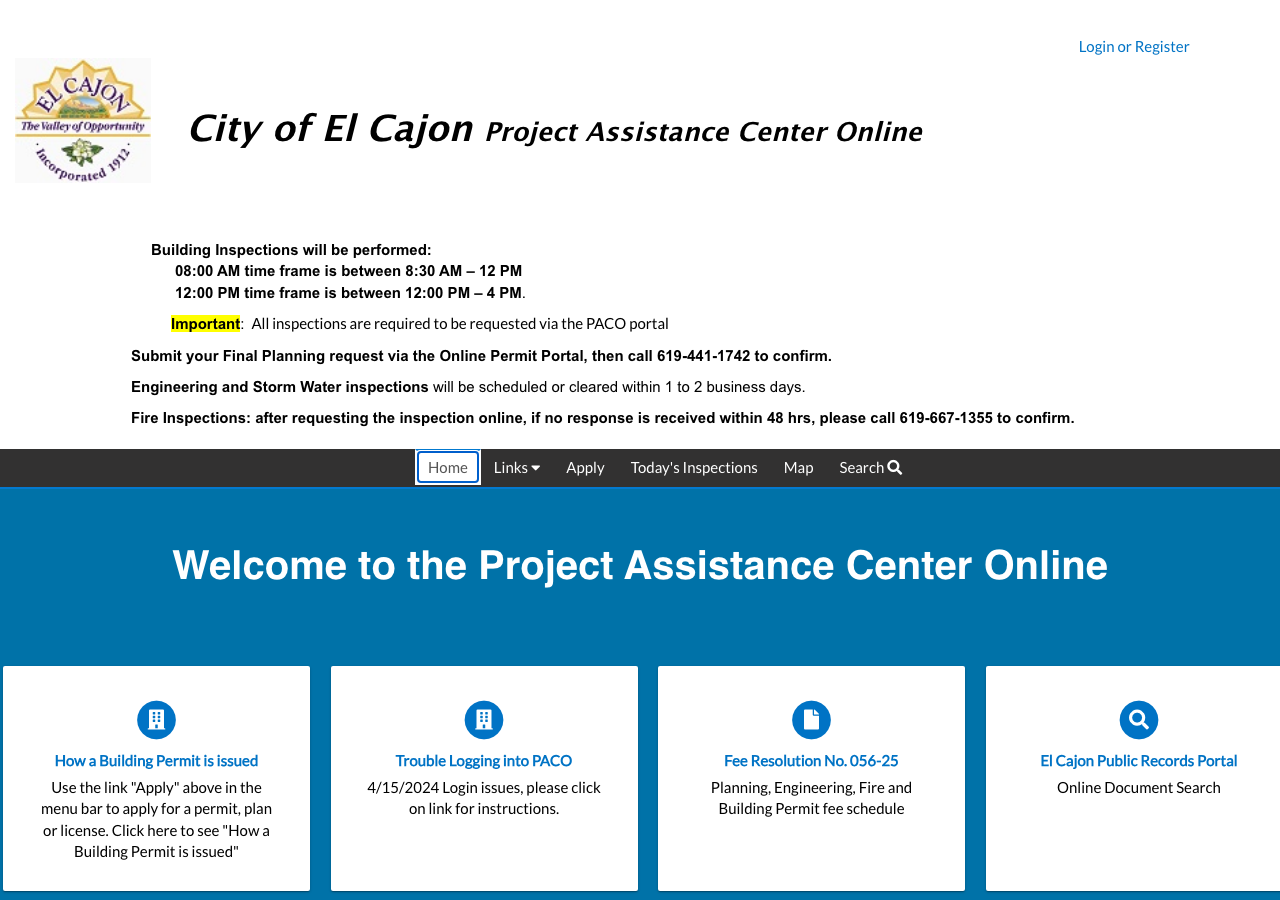
Average approval time — application to PTO
From the CPUC interconnection record. Bars show the average days taken each year; a year with no recorded projects is left blank rather than drawn as zero.