
City of Escondido
San Diego County
City of Escondido is a busy jurisdiction for residential solar — 12th in California by installs on record — 151,038 residents, with 19,755 residential solar installs on record. This page is the permit route for that jurisdiction: the fifteen steps from working out who has a say over an address through to permission to operate, the documents this authority publishes, and 62 answers taken from those documents and dated.
Permitting 5 steps · 28 questions
Whether a permit is needed — Yes Q3 Electrical and building permits — Combined Q4 Plan review — SolarAPP+ route: instant - no city plan review; the permit issues immediately and electronically once the SolarAPP+ certificate is uploaded and fees are paid. Q18 Where you file — Three systems, in sequence. (1) SolarAPP+ (gosolarapp.org) for automated code-compliance review of eligible residential PV - Escondido implements Gov. Q20
- Permit required
- Yes95% source
- What it costs
- $308 flat for a residential PV system of 15 kW or less; above 15 kW, $450 base + $15 per kW over 15 kW.85% source
- Plan review turnaround
- SolarAPP+ route: instant - no city plan review; the permit issues immediately and electronically once the SolarAPP+ certificate is uploaded and fees are paid.88% source
- Key document
- adopting ordinance (EMC 6-1.2, 11-15) + department page cited by 4 open the document
-
Confirm who has a say over your address
A city address is usually permitted by the city, not the county — but not always, and some authorities keep building and hand electrical to someone else. Getting this wrong costs the whole submittal, because every requirement below belongs to whoever actually holds jurisdiction. Check the overlays in the same pass: an HOA, a historic district, a windstorm certification or a system-size cap can reshape the design, and all of them are cheaper to find now than after the array is laid out.
- Is this authority the AHJ for residential solar at this address? Yes 95% · adopting ordinance (EMC 6-1.2, 11-15) + department page
- What does this authority permit itself, and what does it delegate? Both 92% · adopting ordinance (EMC Art. 6-6) + fire department permit page
- Is a permit required for a residential rooftop PV system? Yes 95% · ordinance (EMC 6-13, 6-19.3)
- Is there a separate electrical permit, or is it combined? Combined 85% · fee schedule (Fee Guide for Development Projects, updated 21 Jul 2026) + ordinance
- Is a HOA or architectural approval required first? No 82% · ordinance (EMC 6-19.6, Zoning 33-1122, 33-1085)
- Is there a historic-district review? Yes 88% · ordinance (Zoning 33-798) + department page
- Is a wind or windstorm certification required? No 85% · published handout (Climatic & Geographic Design Criteria)
- Is a Specific Use Permit or Council approval ever required? Normally never. Zoning sec. 33-1122(b)(1) requires a conditional use permit for commercial electric generating facilities but states 'Solar-energy systems are EXEMPT from this requirement and design review unless the building official determines the solar-energy system would have a specific, adverse impact upon the public health and safety and there is no feasible method to avoid the specific adverse impact.' EMC sec. 6-19.6(a) mirrors this: the building official 'may require an applicant to apply for a conditional use permit if the official finds, based on substantial evidence, that the solar energy system could have a specific, adverse impact upon the public health and safety', and sec. 6-19.6(c) requires written findings on the record plus a statement of why each feasible mitigation was rejected. Appeals run to the Planning Commission (10 days from the building official's decision) and thence to the City Council under Zoning Article 61 Division 6. No City Council approval is required for a residential rooftop system. 88% · ordinance (Zoning 33-1122, EMC 6-19.6)
- Is there a system-size cap on residential generation? No cap on system size. What Escondido has instead are three different size lines that are easy to confuse: (1) the ORDINANCE's expedited class - EMC sec. 6-19.2 defines a 'small residential rooftop solar energy system' as no larger than 10 kW AC nameplate or 30 kW thermal, on a single- or two-family dwelling, not exceeding the maximum legal building height; (2) the stale handout - Guideline 24A is titled '10 KW OR LESS' and 24B's checklist item A is 'System size is 10 kw rating or less'; (3) the FEE tier break at 15 kW ($308 at or below, $450 + $15/kW above). Nothing in the Zoning Code or EMC caps residential generation, and sec. 33-1122(b)(1) exempts solar-energy systems from the CUP that would otherwise apply to generating facilities. 85% · ordinance (EMC 6-19.2) + fee schedule
-
Check who is allowed to apply
Several authorities require the electrical permit to be pulled by a licensed electrician, or require the contractor to be registered with them BEFORE applying. Registration is not same-day. This is second on the list rather than fourth because it is the step most likely to stop the job before the drawings matter.
- Who is allowed to pull the electrical permit? Either 90% · published checklist (Guideline 7) + permit application form
- Must the contractor be registered with this authority before applying? Yes 92% · department page + permit application form
- Is a homeowner permitted to self-install and self-permit? Yes 88% · ordinance/handout (Guideline 20, Guideline 7) + SolarAPP+ page
-
Build the submittal package
Almost everywhere wants a site plan, a one-line or three-line electrical diagram, equipment cut sheets with listings, and a structural attachment detail. Build it against the published checklist rather than the last jurisdiction you worked in — the checklist is what the reviewer marks against.
- What documents make up a complete submittal? Two different packages depending on route. (A) SolarAPP+ route (licensed contractor, residential only): SolarAPP+ account + City Portal account + active City business licence; run the design through SolarAPP+ (NREL eligibility checklist), then upload the SolarAPP+ APPROVED PLAN SET and the SolarAPP+ CERTIFICATE / permit number into the City Portal and pay fees - the permit issues immediately and electronically, with NO city plan review. (B) Standard route (owner-builder, or anything outside SolarAPP+ eligibility): completed Application for Permit; Guideline 24B Eligibility Checklist; plot/site plan; roof plan showing the module layout, roof access points, code-compliant fire access pathways, PV system fire classification, and the location of all required placards and markings; array support and bonding details plus the module bonding device and its listing; a standard electrical plan or an electrical single-line diagram; manufacturer specification sheets and UL/NRTL listing approvals for cells, modules, inverters, optimizers, monitoring meters and module support systems; structural calculations and details if required. 86% · published checklist (Guideline 24A/24B) + SolarAPP+ page
- How many copies, and in what format? Electronic only - no paper. 'The Building Division only accepts plans in an electronic format' (since 1 Aug 2022). Residential Solar/PV is one of the permit types that MUST be applied for through the City Portal (cwols.escondido.org/Portal). Plan sets for the standard route go through ProjectDox: files in the Drawings folder must be ONE PAGE PER FILE and must follow the City's naming convention Case-Number + Discipline + PageNumbers - FileName with NO SPACES (e.g. B16-4882A001-TitleSheet) or the upload is rejected; multi-page files go in the Documents folder. Sheets must be drawn to scale, English standard, of uniform size no smaller than 18" x 24", legible and fully dimensioned, and signed by whoever prepared them. 88% · department page + published checklist (Guideline 7)
- Is a site plan required, and what must it show? Yes. Guideline 1A requires a site plan on every submittal showing the location of the work identified and setbacks to other structures and to the property line measured from wall or post AND from eaves/projections; it expressly allows 'Aerial photos and or SDGE Work Order drawings' to satisfy the site plan requirement. Guideline 24A adds the PV-specific content: a roof plan showing the PV module layout plus the fire-safety items - approximate location of roof access points, code-compliant fire access pathways, the PV system fire classification, and the location of all required placards and markings - together with the location of all electrical disconnects, panels and equipment. Fill-in site plan templates are published as Guideline 16A (8.5x11) and 16B (11x17). 88% · published checklist (Guideline 1A + 24A)
- Is a one-line / three-line diagram required? Yes 90% · published checklist (Guideline 24A + Guideline 7)
- Are string and conductor calculations required? Yes 80% · published checklist (Guideline 7 + 24A)
- Is a structural PE stamp required, and at what threshold? No published numeric threshold. Structural calculations are conditional: Guideline 24B asks 'Complete structural calculations and details are attached. (If required)', and EMC sec. 6-14.2 gives the building official open authority - 'The building official may require plans, computations and specifications to be prepared and designed by an engineer or architect licensed by the state to practice as such EVEN IF NOT REQUIRED BY STATE LAW', and may require an unlicensed preparer to demonstrate that state law does not require a licensed designer. Guideline 7's M.A.P.S. matrix marks 'Architect/Engineer Stamp when required', 'Structural Calculations' and 'Soils Report' as 'P - Possible Requirement, if Applicable' for single-family dwellings. The de facto residential screens in 24B are qualitative: single roof without reroof overlay; roof structure appearing sound with no alteration, deterioration or sagging; modules not overhanging any roof edge; a roof plan and anchor layout attached. SolarAPP+ applies its own structural criteria in place of a City stamp. 78% · published checklist (Guideline 24B) + ordinance (EMC 6-14.2)
- Is an electrical PE stamp required, and at what threshold? Not required, and no threshold is published. No Escondido ordinance or handout requires an electrical engineer's stamp on a residential PV submittal. The only stamp language is the general one: Guideline 7 - 'Per State law, all licensed individuals must also stamp all submittal documents. If the documents do not contain a proper stamp, a Statement of Licensure is required', and EMC sec. 6-14.2/6-14.4 let the building official require an engineer or architect of record. Practically this is governed by state Business & Professions Code exemptions, not by the City. 75% · published checklist (Guideline 7) + ordinance (EMC 6-14)
-
Apply and pay
Most authorities now take the whole application through a portal, and several states cap or constrain what a residential solar permit may cost. Check whether plan check is billed separately before you quote the job.
- Which permit portal does this authority use? Three systems, in sequence. (1) SolarAPP+ (gosolarapp.org) for automated code-compliance review of eligible residential PV - Escondido implements Gov. Code 65850.52 / SB 379 and says so on the page. (2) The City Portal at https://cwols.escondido.org/Portal/ - branded 'City of Escondido Permit & Administrative Citation Payment Portal', footed '2018 Timmons Group' - for the permit application, fee payment, permit issuance and ALL inspection scheduling; Residential Solar/PV is one of the permit types that MUST use it. (3) ProjectDox (Avolve) at https://escondido-ca-us.avolvecloud.com/ for electronic plan review on the standard route, live since 14 March 2024. 90% · portal landing page + department page
- Can the whole application be completed online? Yes 90% · department page + portal
- What does a residential solar permit cost? $308 flat for a residential PV system of 15 kW or less; above 15 kW, $450 base + $15 per kW over 15 kW. Additive charges: Permit Processing Fee $73.00/permit, General Plan Maintenance Fee 5% of base permit, Technology Fee 5% of permit/plan check - so a typical SolarAPP+ job lands near $412. A battery adds a 'Battery Backup Storage' permit at $176; a service panel upgrade adds 'Service Panel Upgrade - Residential' at $176. The Fire Department's own schedule carries a 'Solar Plan Review Fee' of $233.00 each and a 'Battery System' construction permit at $388.00. 85% · published fee schedule (Fee Guide, updated 21 Jul 2026) + fire fee schedule
- How is the fee calculated? Tiered 90% · published fee schedule (Fee Guide p.13, p.15)
- Is there a separate plan-check fee? No 75% · published fee schedule + ordinance (EMC 6-16.3)
-
Plan review — and start the utility in parallel
Interconnection is a separate process from the permit and usually the longer pole. Where the utility does not depend on the permit being issued, running both at once is the single biggest saving available on a residential job.
- What is the stated plan-review turnaround? SolarAPP+ route: instant - no city plan review; the permit issues immediately and electronically once the SolarAPP+ certificate is uploaded and fees are paid. Standard route: approximately 30 CALENDAR days per review cycle ('Upon receipt of a complete set of construction documents, plan review will be approximately 30 calendar days for each review cycle'). Fire Department review, where triggered, is stated separately as 'Plans are checked as quickly as possible but may require a minimum of 30 days.' There is no statutory review deadline for solar in California, so these are service targets rather than shot clocks. 88% · department page
- How long is an issued permit valid before it expires? 365 82% · department page + ordinance (EMC 6-15.4, 6-16.4)
- Which utility handles interconnection here? San Diego Gas & Electric (SDG&E) 93% · utility service standards manual (2026 Service Standards & Guide, historical record 24 Jul 2026) + city fee schedule
- Where does the utility sit in the sequence? Parallel 88% · utility DG page + city handout (Prerequisites for Permit Issuance) + ordinance (EMC 6-20.1)
28 questions answered against City of Escondido’s own published documents
Q1 Is this authority the AHJ for residential solar at this address? Core Jurisdiction & scope
Yes
Why the confidence is not higherFor any address inside the Escondido city limits the City is the AHJ. Escondido Municipal Code sec. 6-1.2 (Ord. No. 2025-09, 17 Dec 2025) adopts the 2025 California Building, Residential, Electrical, Mechanical, Plumbing, Historical, Existing Building, Green Building and Energy Codes, and sec. 6-8/6-9 vest enforcement in the City's Building Official; EMC sec. 11-15 (Ord. No. 2025-10, same date) adopts the 2025 California Fire Code and the 2025 California Wildland-Urban Interface Code for the City's Local Responsibility Area. Building permitting, plan review and inspection sit in the Building Division of the Development Services / Community Development Department, City Hall 1st floor, 201 N. Broadway, Escondido CA 92025, 760-839-4647, buildingpermits@escondido.gov; Building Official Douglas L. Moody. TWO boundary cautions. (a) San Diego County is a SEPARATE AHJ for the unincorporated area and none of its answers carry across in either direction. (b) The Escondido Fire Department's plan-review area is LARGER than the City: Fire Prevention reviews plans for Escondido AND for the Rincon del Diablo Fire Protection District, but for Rincon-area parcels the BUILDING authority is the County of San Diego - the City's own page says 'County plans must be submitted to the County of San Diego Building Department (Rincon del Diablo area) for approval'. So a job that gets Escondido fire review may still be a County building job.
adopting ordinance (EMC 6-1.2, 11-15) + department page checked 2026-08-28 https://www.escondido.gov/215/Building
Q2 What does this authority permit itself, and what does it delegate? Core Jurisdiction & scope
Both
Why the confidence is not higherThe City retains building AND electrical. There is no delegation for residential rooftop PV. Electrical is adopted inside the general technical-code section, not in its own article: EMC Article 6 'ELECTRICAL CODE' is now empty - sec. 6-159 and 6-160 are both '(Reserved)', Ord. No. 2011-02RR sec. 12 (16 Mar 2011) having repealed the standalone Electrical Code adoption - and the 2025 California Electrical Code is instead adopted at sec. 6-1.2(c). A second City reviewer exists: the Fire Department (Community Risk Reduction / Fire Prevention Division) issues a California Fire Code construction permit for 'Solar Photovoltaic Power Systems' and for 'Battery Systems', and carries a separate 'Solar Plan Review Fee'. Third-party review is used by the Fire Department only for fire-protection systems (sprinklers, alarms, standpipes, kitchen suppression) and fire protection plans - never for PV electrical.
adopting ordinance (EMC Art. 6-6) + fire department permit page checked 2026-08-28 https://ecode360.com/43255059
Q3 Is a permit required for a residential rooftop PV system? Core Jurisdiction & scope
Yes
Why the confidence is not higherEMC sec. 6-13.1: no building, structure or building service equipment regulated by the technical codes may be erected, altered or installed without a separate appropriate permit from the building official. The permit-exemption lists at sec. 6-13.3 (building), 6-13.5 (electrical) and Information Guideline 18 do not exempt photovoltaic systems. EMC sec. 6-19.3(b) confirms a permit is required for a new or materially modified small residential rooftop solar energy system, and that routine operation, maintenance or like-kind replacement does not require one.
ordinance (EMC 6-13, 6-19.3) checked 2026-08-28 https://ecode360.com/43254719
Q4 Is there a separate electrical permit, or is it combined? Core Jurisdiction & scope
Combined
Why the confidence is not higherOne permit type covers the PV system: the fee schedule's 'Residential Solar Photovoltaic System - Solar Permit' is a single base fee, and Table 3-A adds electrical/mechanical/plumbing inspection at 10% of the base permit fee per category rather than issuing separate trade permits. Separate permits ARE required for the adjacent work: 'Service Panel Upgrade - Residential' ($176) and 'Battery Backup Storage' ($176) are their own line items, consistent with EMC sec. 6-13.1 requiring a separate permit for each item of building service equipment. Guideline 24A (stale) still describes this as 'Electrical Fee +$25.00 (with Panel upgrade or Battery)'. A separate Fire Department construction permit for the PV system is also on the Fire Department's list.
fee schedule (Fee Guide for Development Projects, updated 21 Jul 2026) + ordinance checked 2026-08-28 https://www.escondido.gov/DocumentCenter/View/9950
Q5 Who is allowed to pull the electrical permit? Core Who may apply
Either
Why the confidence is not higherInformation Guideline 7 (M.A.P.S., April 2025): 'The owner, licensed contractor, or their authorized agent can fill out the application.' The permit application form carries a single CONTRACTOR / OWNER BUILDER checkbox with the Health & Safety Code sec. 19825 declarations. ONE HARD RESTRICTION: the SolarAPP+ automated route is open only to licensed contractors - the City's page states 'Licensed contractors can now use SolarAPP+ ... (non-licensed/owner-builders must apply for a regular Building Permit with Plan Check)'. So a homeowner may permit, but only down the slow plan-check path.
published checklist (Guideline 7) + permit application form checked 2026-08-28 https://www.escondido.gov/DocumentCenter/View/459/7---Minimum-Acceptable-Plan-Submittals-PDF
Q6 Must the contractor be registered with this authority before applying? Core Who may apply
Yes
Why the confidence is not higherAn ACTIVE City of Escondido Business License is required before applying, and this is enforced at three points: the SolarAPP+ page - 'An active City of Escondido Business License (You must have an active business license BEFORE submitting for a SolarAPP+ permit)'; the permit application form, which has a mandatory 'CITY BUSINESS LICENSE #' field alongside 'CONTRACTOR STATE LICENSE # AND CLASS' and states incomplete applications will not be accepted; and the Fire Department plan-review page - 'A Business License is required for all third party reviewers and contractors conducting business within the City of Escondido ... including businesses that operate from home.' The Fee Guide adds that it is annual (City Hall, 760-839-4659). This is the single most common trip-up for an out-of-town installer.
department page + permit application form checked 2026-08-28 https://www.escondido.gov/1247/Solar-App-Plus
Q7 Is a homeowner permitted to self-install and self-permit? Who may apply
Yes
Why the confidence is not higherOwner-builder is permitted. The permit application carries the OWNER BUILDER election and the B&P Code sec. 7044 declarations; Information Guideline 20 is the Owner-Builder Declaration; Guideline 7 states 'an owner/builder verification form is required for all owner/builder projects. This form will be given to you by Building Division staff.' The trade-off is speed: owner-builders are barred from SolarAPP+ and must run a full building permit with plan check (roughly 30 calendar days per review cycle).
ordinance/handout (Guideline 20, Guideline 7) + SolarAPP+ page checked 2026-08-28 https://www.escondido.gov/DocumentCenter/View/8842/20---Owner---Building-Declaration-PDF
Q8 What documents make up a complete submittal? Core Submittal package
Two different packages depending on route. (A) SolarAPP+ route (licensed contractor, residential only): SolarAPP+ account + City Portal account + active City business licence; run the design through SolarAPP+ (NREL eligibility checklist), then upload the SolarAPP+ APPROVED PLAN SET and the SolarAPP+ CERTIFICATE / permit number into the City Portal and pay fees - the permit issues immediately and electronically, with NO city plan review. (B) Standard route (owner-builder, or anything outside SolarAPP+ eligibility): completed Application for Permit; Guideline 24B Eligibility Checklist; plot/site plan; roof plan showing the module layout, roof access points, code-compliant fire access pathways, PV system fire classification, and the location of all required placards and markings; array support and bonding details plus the module bonding device and its listing; a standard electrical plan or an electrical single-line diagram; manufacturer specification sheets and UL/NRTL listing approvals for cells, modules, inverters, optimizers, monitoring meters and module support systems; structural calculations and details if required.
Why the confidence is not higherAssembled from the SolarAPP+ page (route A) and Information Guideline 24A 'Plan Submittal Documents' / 'Basic Plan Check information' plus 24B (route B). EMC sec. 6-19.5 requires the building official to adopt a standard plan and checklist substantially conforming to the California Solar Permitting Guidebook and to publish all required documents on the City website - 24A/24B are that checklist, but they are the stale half of the pattern: 24A is dated January 2022, 24B August 2018, and 24B's fire-safety item still cites CRC R324.6.1-R324.6.2.1, a section renumbered to R329 in the 2025 CRC now in force.
published checklist (Guideline 24A/24B) + SolarAPP+ page checked 2026-08-28 https://www.escondido.gov/DocumentCenter/View/481/24A---Solar-Photovoltaic-Systems-Guidelines-PDF
Q9 How many copies, and in what format? Submittal package
Electronic only - no paper. 'The Building Division only accepts plans in an electronic format' (since 1 Aug 2022). Residential Solar/PV is one of the permit types that MUST be applied for through the City Portal (cwols.escondido.org/Portal). Plan sets for the standard route go through ProjectDox: files in the Drawings folder must be ONE PAGE PER FILE and must follow the City's naming convention Case-Number + Discipline + PageNumbers - FileName with NO SPACES (e.g. B16-4882A001-TitleSheet) or the upload is rejected; multi-page files go in the Documents folder. Sheets must be drawn to scale, English standard, of uniform size no smaller than 18" x 24", legible and fully dimensioned, and signed by whoever prepared them.
Why the confidence is not higherBuilding Division page, Information Guideline 7 (April 2025) and the ProjectDox FAQ page. Note the two-system split that catches people: application and fee payment in the Portal (Timmons Group), plan files in ProjectDox (Avolve, escondido-ca-us.avolvecloud.com).
department page + published checklist (Guideline 7) checked 2026-08-28 https://www.escondido.gov/1203/ProjectDox-Plan-Review
Q10 Is a site plan required, and what must it show? Core Submittal package
Yes. Guideline 1A requires a site plan on every submittal showing the location of the work identified and setbacks to other structures and to the property line measured from wall or post AND from eaves/projections; it expressly allows 'Aerial photos and or SDGE Work Order drawings' to satisfy the site plan requirement. Guideline 24A adds the PV-specific content: a roof plan showing the PV module layout plus the fire-safety items - approximate location of roof access points, code-compliant fire access pathways, the PV system fire classification, and the location of all required placards and markings - together with the location of all electrical disconnects, panels and equipment. Fill-in site plan templates are published as Guideline 16A (8.5x11) and 16B (11x17).
Why the confidence is not higherGuideline 1A (Residential Plan Submittal Guideline) and Guideline 24A. Worth noting for label planning: the City asks for placard LOCATIONS on the roof plan at submittal, so an installer has to have decided the marking layout before the permit issues.
published checklist (Guideline 1A + 24A) checked 2026-08-28 https://www.escondido.gov/DocumentCenter/View/471/1A---Minimum-Plan-Submittal-Requirements-PDF
Q11 Is a one-line / three-line diagram required? Core Drawings & calculations
Yes
Why the confidence is not higherGuideline 24A: 'Complete a standard electrical plan or provide an electrical single line drawing that will be uploaded for review.' Guideline 7's M.A.P.S. matrix lists 'Single-Line Drawing' as a required item. Guideline 7 specifies the single-line content: conduit and wire sizes; aluminium or copper conductors and insulation type; serving voltage, amperage and available short-circuit current from the utility; service grounding method, ground-wire size and cold-water bond; fuse/breaker sizes and equipment AIC; and the main service arrangement with work space, access and connection to the utility transformer. A THREE-line diagram is nowhere required. On the SolarAPP+ route no diagram is reviewed by the City at all - SolarAPP+ does it.
published checklist (Guideline 24A + Guideline 7) checked 2026-08-28 https://www.escondido.gov/DocumentCenter/View/481/24A---Solar-Photovoltaic-Systems-Guidelines-PDF
Q12 Are string and conductor calculations required? Drawings & calculations
Yes
Why the confidence is not higherGuideline 7 requires 'Electrical Load Calculations/Panel Schedules' - load calculations justifying the size and type of equipment and conductors, and panel rated capacity, AIC rating, voltage, main-lugs-only or with main protection, and panel locations. Guideline 24A requires conduit and wire sizes on the single line, an equipment ground sized per NEC Table 250.122 and a minimum #8 grounding electrode conductor from the grounding electrode to the array. There is no separately published string-sizing/temperature-correction worksheet; the 120%/705.12(B) busbar check appears as an inspection item in 24A rather than as a submittal form. On the SolarAPP+ route the calculations are performed inside SolarAPP+ and not re-checked by the City.
published checklist (Guideline 7 + 24A) checked 2026-08-28 https://www.escondido.gov/DocumentCenter/View/459/7---Minimum-Acceptable-Plan-Submittals-PDF
Q13 Is a structural PE stamp required, and at what threshold? Core Engineering & stamps
No published numeric threshold. Structural calculations are conditional: Guideline 24B asks 'Complete structural calculations and details are attached. (If required)', and EMC sec. 6-14.2 gives the building official open authority - 'The building official may require plans, computations and specifications to be prepared and designed by an engineer or architect licensed by the state to practice as such EVEN IF NOT REQUIRED BY STATE LAW', and may require an unlicensed preparer to demonstrate that state law does not require a licensed designer. Guideline 7's M.A.P.S. matrix marks 'Architect/Engineer Stamp when required', 'Structural Calculations' and 'Soils Report' as 'P - Possible Requirement, if Applicable' for single-family dwellings. The de facto residential screens in 24B are qualitative: single roof without reroof overlay; roof structure appearing sound with no alteration, deterioration or sagging; modules not overhanging any roof edge; a roof plan and anchor layout attached. SolarAPP+ applies its own structural criteria in place of a City stamp.
Why the confidence is not higherGuideline 24B, Guideline 7 and EMC sec. 6-14.2. Recorded as 'no threshold published' after reading all three - this is a real absence, not an unchecked field: no kW, no psf, no roof-age and no dead-load trigger appears in any Escondido document.
published checklist (Guideline 24B) + ordinance (EMC 6-14.2) checked 2026-08-28 https://www.escondido.gov/DocumentCenter/View/482/24B---Solar-Photovoltaic-Systems-Checklist-PDF
Q14 Is an electrical PE stamp required, and at what threshold? Engineering & stamps
Not required, and no threshold is published. No Escondido ordinance or handout requires an electrical engineer's stamp on a residential PV submittal. The only stamp language is the general one: Guideline 7 - 'Per State law, all licensed individuals must also stamp all submittal documents. If the documents do not contain a proper stamp, a Statement of Licensure is required', and EMC sec. 6-14.2/6-14.4 let the building official require an engineer or architect of record. Practically this is governed by state Business & Professions Code exemptions, not by the City.
Why the confidence is not higherSearched Guideline 7, Guideline 24A/24B, Guideline 1A and EMC Article 6-1 (sec. 6-14) for any electrical PE requirement; none appears.
published checklist (Guideline 7) + ordinance (EMC 6-14) checked 2026-08-28 https://www.escondido.gov/DocumentCenter/View/459/7---Minimum-Acceptable-Plan-Submittals-PDF
Q15 What does a residential solar permit cost? Core Fees
$308 flat for a residential PV system of 15 kW or less; above 15 kW, $450 base + $15 per kW over 15 kW. Additive charges: Permit Processing Fee $73.00/permit, General Plan Maintenance Fee 5% of base permit, Technology Fee 5% of permit/plan check - so a typical SolarAPP+ job lands near $412. A battery adds a 'Battery Backup Storage' permit at $176; a service panel upgrade adds 'Service Panel Upgrade - Residential' at $176. The Fire Department's own schedule carries a 'Solar Plan Review Fee' of $233.00 each and a 'Battery System' construction permit at $388.00.
Why the confidence is not higherFee Guide for Development Projects, 'COMMONLY REQUESTED PERMIT TYPES BASE FEE' p.15 and 'OTHER APPLICABLE FEES' p.15, updated 21 July 2026; Fire fee schedule adopted with Resolution 2024-72 (10 Jul 2024). WORTH FLAGGING: Gov. Code 66015 caps residential PV at $450 plus $15/kW above 15 kW absent a written finding. Escondido's own above-15 kW tier is written as exactly the statutory formula - but the $73 processing fee and the two 5% surcharges are stated as additional to it, and the Fire Department's $233 Solar Plan Review Fee, if levied on a residential rooftop job, would push the total to roughly $645. Guideline 24A still advertises the superseded '$233.95 plan review & issuance' and '+$25.00' electrical figures.
published fee schedule (Fee Guide, updated 21 Jul 2026) + fire fee schedule checked 2026-08-28 https://www.escondido.gov/DocumentCenter/View/9950
Q16 How is the fee calculated? Core Fees
Tiered
Why the confidence is not higherFlat below the tier break, then per-kW above it: $308/permit at 15 kW or less, then $450 base + $15/kW above 15 kW (commercial runs $1,000 at 50 kW or less, then $7/kW to 250 kW, then $2,400 + $5/kW). Escondido expressly took solar OFF valuation: a footnote to the valuation-multiplier tables states that by Resolution #2024-72 (10 July 2024) 'All Solar PV Systems' (with battery backup storage, service panel upgrades, EV chargers and generators) no longer use valuation multipliers for the base permit fee. That is Gov. Code 65850.55 compliance and it is a real change from the older Table 3-A valuation method.
published fee schedule (Fee Guide p.13, p.15) checked 2026-08-28 https://www.escondido.gov/DocumentCenter/View/9950
Q17 Is there a separate plan-check fee? Fees
No
Why the confidence is not higherOn the SolarAPP+ route there is no separate plan-check fee because there is no city plan review - the City states that qualifying projects 'will not require a city plan review'. The $308 figure is published as a base permit fee, not a permit-plus-plan-check pair. Two cautions. First, the general rule elsewhere in the Fee Guide is 'PLAN CHECK FEE ... 75% of Building Permit Fee', while EMC sec. 6-16.3.1 says the plan review fee 'shall be 65% of the building permit fee or as set forth in the fee schedule adopted by this jurisdiction' - the ordinance and the schedule disagree, and the schedule governs. Second, the Fire Department's separate 'Solar Plan Review Fee' of $233.00 each is functionally a plan-check fee where fire review is triggered.
published fee schedule + ordinance (EMC 6-16.3) checked 2026-08-28 https://www.escondido.gov/DocumentCenter/View/9950
Q18 What is the stated plan-review turnaround? Core Timeline & validity
SolarAPP+ route: instant - no city plan review; the permit issues immediately and electronically once the SolarAPP+ certificate is uploaded and fees are paid. Standard route: approximately 30 CALENDAR days per review cycle ('Upon receipt of a complete set of construction documents, plan review will be approximately 30 calendar days for each review cycle'). Fire Department review, where triggered, is stated separately as 'Plans are checked as quickly as possible but may require a minimum of 30 days.' There is no statutory review deadline for solar in California, so these are service targets rather than shot clocks.
Why the confidence is not higherBuilding Division page and Fire Department Plan Review page. Note the units: Escondido publishes CALENDAR days, not business days, and the 30 days runs per cycle - a two-cycle correction loop is 60 calendar days.
department page checked 2026-08-28 https://www.escondido.gov/215/Building
Q19 How long is an issued permit valid before it expires? Timeline & validity
365
Why the confidence is not higherPublished: 'Permit - Valid for 1 year after issuance and extended 180 days after inspection; 180-day extension with written approval.' Plan check is 'Valid for 1 year after submission; 90-day extension with written approval.' The ordinance is slightly different and slightly more generous in form: EMC sec. 6-15.4.1 voids a permit if work is not COMMENCED within 12 months or is suspended/abandoned for 12 months, with a half-fee restart if nothing changed; sec. 6-16.4 expires an application on which no permit issued within 360 days, extendable 180 days, more than once. Extension requests must be written and carry site address, permit number, reason and signature, and cost $176. TIMING TRAP NOW LIVE: 'Due to the new California Building Code update effective January 1, 2026, plan check extensions will NOT be provided on any applications submitted prior to that date.'
department page + ordinance (EMC 6-15.4, 6-16.4) checked 2026-08-28 https://www.escondido.gov/215/Building
Q20 Which permit portal does this authority use? Core Portal & process
Three systems, in sequence. (1) SolarAPP+ (gosolarapp.org) for automated code-compliance review of eligible residential PV - Escondido implements Gov. Code 65850.52 / SB 379 and says so on the page. (2) The City Portal at https://cwols.escondido.org/Portal/ - branded 'City of Escondido Permit & Administrative Citation Payment Portal', footed '2018 Timmons Group' - for the permit application, fee payment, permit issuance and ALL inspection scheduling; Residential Solar/PV is one of the permit types that MUST use it. (3) ProjectDox (Avolve) at https://escondido-ca-us.avolvecloud.com/ for electronic plan review on the standard route, live since 14 March 2024.
Why the confidence is not higherSolarAPP+ page, City Portal landing page and ProjectDox page. Escondido is NOT an authority where SB 379 went unimplemented - automated solar permitting is live and the City page names the statute.
portal landing page + department page checked 2026-08-28 https://cwols.escondido.org/Portal/
Q21 Can the whole application be completed online? Core Portal & process
Yes
Why the confidence is not higherEnd to end online for residential PV. The Building Division page lists 'Commercial and Residential Solar / PV' among the permit types that MUST use the portal; SolarAPP+ projects are issued 'immediately and electronically' once fees are paid; plans on the standard route go through ProjectDox; and inspections are booked only in the Portal. The counter at 201 N. Broadway is open Mon-Thu 8am-5pm (closed every third Thursday for staff training) but is not needed for a PV job.
department page + portal checked 2026-08-28 https://www.escondido.gov/215/Building
Q22 Which utility handles interconnection here? Core Utility interconnection
San Diego Gas & Electric (SDG&E)
Why the confidence is not higherSDG&E is the electric distribution utility and the interconnection authority for the whole City of Escondido. City-side confirmation: the Fee Guide for Development Projects lists 'San Diego Gas and Electric Co. (SDG&E)' under Other Agencies whose fees may affect a project; the Prerequisites for Permit Issuance handout makes an 'SDG&E Work Order/Disconnect Letter' a residential permit-issuance item; and Guideline 1A allows 'SDGE Work Order drawings' to satisfy the site-plan requirement. Utility-side confirmation: SDG&E's 2026 Service Standards & Guide lists its own Escondido offices (Service Order Team NORTHEAST and Project Management Office NORTHERN REGION, both 571 Enterprise St, Escondido CA 92029) and its embedded San Diego Area Electrical Newsletters name 'City of Escondido' among Participating San Diego Area Inspection Jurisdictions. IMPORTANT NUANCE: Escondido is a Clean Energy Alliance (CEA) community-choice-aggregation city, so CEA - not SDG&E - sets the export credit; SDG&E still owns the wires, the meter, the interconnection application and the Permission To Operate. Also note NEM is closed: a new Escondido residential system in 2026 goes on SDG&E's Solar Billing Plan (Net Billing Tariff), application form 142-02777 for 30 kW or less. The technical interconnection requirements are unchanged.
utility service standards manual (2026 Service Standards & Guide, historical record 24 Jul 2026) + city fee schedule checked 2026-08-28 https://sdge.com/sites/default/files/documents/2026-07/SG2026v0724%20-%20External_%20Service%20Standards%20and%20Guide%20Manual.pdf
Q23 Where does the utility sit in the sequence? Core Utility interconnection
Parallel
Why the confidence is not higherTwo independent tracks that must be sequenced against ONE fixed point - the City inspection. (a) The City permit does not require an SDG&E document for a plain load-side PV install; the Prerequisites for Permit Issuance handout requires an SDG&E work order only 'if the scope of work includes new utilities or utility upgrade prior to a permit application being accepted and or prior to permit issuance ... A permit will not be issued without an SDG&E work order' - so a service or panel upgrade DOES make SDG&E a before-permit dependency. (b) SDG&E's own track runs in parallel but must be started early: the interconnection application goes into DIIS first, SDG&E's Customer Generation team emails 'you or your contractor can begin installation' once initial technical review passes, and SDG&E instructs 'Please submit your application two weeks prior to city and/or county inspection to avoid unexpected delays' - five business days for Fast Track (under 30 kW, no access issues). Greenbook SG806.1 Note I requires written SDG&E authorisation to interconnect and operate in parallel. Then EMC sec. 6-20.1 gates the other end: no connection to a source of power until the building official approves. NOTE: no City of Escondido document - not the SolarAPP+ page, not Guideline 24A or 24B - explains any of this; the utility sequence is entirely undocumented on the City side.
utility DG page + city handout (Prerequisites for Permit Issuance) + ordinance (EMC 6-20.1) checked 2026-08-28 https://www.sdge.com/solar/solar-and-battery-installation-center
Q24 Is a HOA or architectural approval required first? Overlays & special cases
No
Why the confidence is not higherThe City does not condition a solar permit on HOA or architectural-committee approval. EMC sec. 6-19.6(a)-(b) makes the review 'administrative, nondiscretionary' and limits it to 'whether the application meets local, state, and federal health and safety requirements' - nothing else may be reviewed. Zoning sec. 33-1122(b)(1) separately exempts solar-energy systems from design review, and sec. 33-1085(5)(B) exempts solar photovoltaic systems from the City's mechanical-equipment screening requirements. Private CC&Rs are governed by Civil Code 714, not by the City. The one exception is historic - see Q25.
ordinance (EMC 6-19.6, Zoning 33-1122, 33-1085) checked 2026-08-28 https://ecode360.com/43254986
Q25 Is there a historic-district review? Overlays & special cases
Yes
Why the confidence is not higherOnly for historic properties, and only as a staff-level review. Zoning sec. 33-798(b) (Ord. No. 2024-05, 8 May 2024) requires a CERTIFICATE OF APPROPRIATENESS for any alteration affecting the exterior appearance of a historical resource listed on the local register or located within a historical overlay district, 'even when a building permit is not otherwise required'. Sec. 33-798(e)(1)(A) expressly lists 'solar collectors' among MINOR PROJECTS, which are subject to planning division staff ADMINISTRATIVE review rather than Planning Commission design review. The overlay in question is the Old Escondido Historic District, established 1989; properties merely on the Escondido historic sites survey outside an overlay also get staff administrative review under 33-798(e)(1)(B). Outside those, no historic review.
ordinance (Zoning 33-798) + department page checked 2026-08-28 https://ecode360.com/43266625
Q26 Is a wind or windstorm certification required? Overlays & special cases
No
Why the confidence is not higherNo wind or windstorm certification exists in California; that is a Texas TDI construct. Escondido publishes a Climatic & Geographic Design Criteria sheet giving an ultimate design wind speed of 110 mph (Vult) and Seismic Design Category D, which the designer uses for the CBC/CRC calculation - but there is no separate certificate, no windstorm inspector and no third-party wind sign-off. Nothing in EMC Chapter 6 or the Guideline 24A/24B/7 handouts asks for one.
published handout (Climatic & Geographic Design Criteria) checked 2026-08-28 https://www.escondido.gov/DocumentCenter/View/277/Climatic-and-Geographic-Design-PDF
Q27 Is a Specific Use Permit or Council approval ever required? Overlays & special cases
Normally never. Zoning sec. 33-1122(b)(1) requires a conditional use permit for commercial electric generating facilities but states 'Solar-energy systems are EXEMPT from this requirement and design review unless the building official determines the solar-energy system would have a specific, adverse impact upon the public health and safety and there is no feasible method to avoid the specific adverse impact.' EMC sec. 6-19.6(a) mirrors this: the building official 'may require an applicant to apply for a conditional use permit if the official finds, based on substantial evidence, that the solar energy system could have a specific, adverse impact upon the public health and safety', and sec. 6-19.6(c) requires written findings on the record plus a statement of why each feasible mitigation was rejected. Appeals run to the Planning Commission (10 days from the building official's decision) and thence to the City Council under Zoning Article 61 Division 6. No City Council approval is required for a residential rooftop system.
Why the confidence is not higherZoning sec. 33-1122 and EMC sec. 6-19.6. This is the AB 2188 escape valve and it is drafted narrowly - it is a finding requirement, not a discretionary hook.
ordinance (Zoning 33-1122, EMC 6-19.6) checked 2026-08-28 https://ecode360.com/43267971
Q28 Is there a system-size cap on residential generation? Overlays & special cases
No cap on system size. What Escondido has instead are three different size lines that are easy to confuse: (1) the ORDINANCE's expedited class - EMC sec. 6-19.2 defines a 'small residential rooftop solar energy system' as no larger than 10 kW AC nameplate or 30 kW thermal, on a single- or two-family dwelling, not exceeding the maximum legal building height; (2) the stale handout - Guideline 24A is titled '10 KW OR LESS' and 24B's checklist item A is 'System size is 10 kw rating or less'; (3) the FEE tier break at 15 kW ($308 at or below, $450 + $15/kW above). Nothing in the Zoning Code or EMC caps residential generation, and sec. 33-1122(b)(1) exempts solar-energy systems from the CUP that would otherwise apply to generating facilities.
Why the confidence is not higherEMC sec. 6-19.2, Guideline 24A/24B and the Fee Guide. Searched the Zoning Code (Chapter 33) for any generation cap on residential property and found none.
ordinance (EMC 6-19.2) + fee schedule checked 2026-08-28 https://ecode360.com/43254986
Lines marked with a percentage were read off this authority’s own published documents. Unmarked guidance is general good practice, not this jurisdiction’s rule — always confirm against the authority before you submit.
Install 5 steps · 20 questions
-
Build to the code editions actually in force here
The NEC edition a jurisdiction enforces is often a cycle behind the newest one published, and local amendments sit on top of it. Rapid shutdown, conductor sizing and labelling all change between editions, so the edition in force is the first thing to establish, not the last.
- Which NEC edition is in force? 2023 95% · adopting ordinance (EMC 6-1.2(c), Ord. 2025-09)
- Which building code edition is in force? 2025 California Building Code (Title 24 Part 2, including Appendix Chapters C and I) and 2025 California Residential Code (Title 24 Part 2.5, including Appendix Chapter H) - adopted by Ord. No. 2025-09, 17 Dec 2025, effective with the statewide 1 Jan 2026 code date. The same section adopts the 2025 California Mechanical, Plumbing (with Appendices A, D and H), Historical Building, Existing Building, Green Building Standards (excluding all appendices) and Energy Codes. 95% · adopting ordinance (EMC 6-1.2, Ord. 2025-09)
- Which fire code edition is in force? 2025 California Fire Code (Title 24 Part 9), including Appendix Chapters 4, B, C, D (Sections D102, D103.6, D103.6.1 and D103.6.2 only), I and N; PLUS the 2025 California Wildland-Urban Interface Code (Title 24 Part 7). Both adopted by EMC sec. 11-15, Ord. No. 2025-10 dated 12/17/2025, which repealed Ord. Nos. 2016-09, 2019-17 and 2022-22. The code applies to the Local Responsibility Area. Rooftop solar therefore sits under CFC 1205 (not the old 1204). 93% · adopting ordinance (EMC 11-15, Ord. 2025-10)
- Are there local amendments to any of the above? Yes - but NONE of them touch solar, storage, roof access or labelling. Building: the only amendment to the CBC is EMC sec. 6-42.1, amending Appendix Chapter J to incorporate Article 55 of the Escondido Zoning Code (Grading and Erosion Control). EMC sec. 6-13.3 adds local permit EXEMPTIONS (low decks, like-for-like window replacements outside the historic register and Old Escondido, small ground signs, various minor electrical repairs). Electrical: none - the CEC is adopted verbatim at sec. 6-1.2(c). Fire: EMC sec. 11-16 adopts amendments published as an attachment to Chapter 11; the attachment (filename '2022 CFC Amendments', but the document itself is headed '2025 California Fire Code Amendments (Ord. No. 2022-22 sec. 2, 12-7-22; Ord. No. 2025-10, 12/17/2025)' and footed 'Supp 7, Feb 2026') amends only CFC 305.6 (rockets/sky lanterns over fire severity zones), 325 (mid-rise buildings), 505.3-505.4 (directory maps, response-map updates), 5704.2.9.6.1 and 5706.2.4.4 (aboveground Class I/II liquid tanks) and 6104.2 (LPG limits). I extracted all five pages with pdftotext and searched for solar, photovoltaic, PV, 1204, 1205, ridge, setback, pathway, battery, energy storage, placard and marking: ZERO hits. Also note AB 130 (Stats. 2025 ch. 22) now bars new more-restrictive residential local standards until 1 Jun 2031. 90% · adopting ordinance + published amendment attachment (Supp 7, Feb 2026)
- What is the installation judged against? The 2025 California Electrical Code (2023 NEC), unamended - Articles 690 and 705 as written - together with the 2025 CBC/CRC (solar at CRC R329, storage at R330), the 2025 California Fire Code (rooftop PV at CFC 1205) and the 2025 California WUI Code, plus the approved plans and the manufacturers' listings. EMC sec. 6-19.4(c) restates the standard: solar energy systems producing electricity 'shall meet all applicable safety and performance standards established by the California Electrical Code, the Institute of Electrical and Electronics Engineers, and accredited testing laboratories such as Underwriters Laboratories and, where applicable, rules of the Public Utilities Commission regarding safety and reliability.' In the field the inspector works the Guideline 24A checklist (see Q57). 88% · ordinance (EMC 6-1.2, 6-19.4)
-
Fire access, setbacks and pathways
Ridge setbacks and roof access pathways are fire-service requirements and they constrain the array layout. They are the most common cause of a redesign after the fire department comments on a plan set.
- What ridge setback and access pathways are required? By ADOPTED ORDINANCE: the 2025 California Fire Code section 1205 and 2025 CRC R329, unamended - i.e. the standard state package (ridge setback 18 in. where the dwelling has an automatic sprinkler system and 36 in. otherwise, 36 in. wide pathways per the 2025 provisions), with no Escondido overlay. I read the City's entire fire-code amendment attachment (Supp 7, Feb 2026) and it contains no solar, roof-access, pathway or ridge-setback amendment at all, and EMC sec. 6-42 amends only CBC Appendix J. Despite substantial WUI exposure in the eastern hills, the City's wildfire response is ignition-resistant construction, Class A roof coverings and 100 ft defensible space (EMC sec. 11-21 Fire Severity Zones map, adopted by Ord. No. 2025-01 on 7 May 2025 following CAL FIRE's 24 March 2025 map release), not a PV-specific setback. BUT THE PUBLISHED HANDOUTS SAY SOMETHING ELSE AND ARE WRONG: (a) Guideline 24B requires 'Clear fire access pathways ... per CRC Sections R324.6.1 - R324.6.2.1' - a section number that no longer exists (solar moved to R329 in the 2025 CRC); (b) the Fire Department's Plan Review page publishes, as a 'Useful Fire Prevention Guideline', the CAL FIRE-OSFM 'Solar Photovoltaic Installation Guideline' dated APRIL 22, 2008 and still marked DRAFT, which specifies modules 'no higher than three feet (3') below the ridge', TWO 3-ft eave-to-ridge pathways on a single-ridge roof, ONE 3-ft pathway per slope on a hip roof, and modules no closer than 1.5 ft to a hip or valley. An installer laying out to that 2008 sheet would leave a 3-ft ridge gap where the adopted code asks 18 in., and would be building to a document that predates CFC 605/1204/1205 entirely. 87% · adopting ordinance + fire department published guideline (CSFM, 22 Apr 2008 draft)
-
Rapid shutdown
Which rapid-shutdown rule applies follows directly from the NEC edition in force, and the initiation device has to be at a location the fire service can reach and identify. This is inspected, and it is labelled.
- Is rapid shutdown required, and to which NEC edition? Yes - NEC 690.12 rapid shutdown as it appears in the 2023 NEC, adopted as the 2025 California Electrical Code by EMC sec. 6-1.2(c) (Ord. No. 2025-09, 17 Dec 2025), with no California and no Escondido amendment. Escondido publishes NOTHING of its own on rapid shutdown: a site-wide search of escondido.gov for 'rapid shutdown' returns no Building or Fire document on the subject (the only hits are the Knox 'Rapid Entry' box and unrelated RFPs), and neither Guideline 24A nor 24B mentions it - both predate the requirement in practical terms (24A January 2022, 24B August 2018). On the SolarAPP+ route rapid-shutdown compliance is checked inside SolarAPP+; on the standard route it is a field-inspection matter against the adopted CEC. 86% · adopting ordinance (EMC 6-1.2(c)) + site search
-
Labels and placards
The NEC sets a baseline for permanent markings at the service equipment and the disconnecting means. On top of that, an authority may specify its own wording, and the utility may specify more again. Where any of them writes its own text, a generic off-the-shelf label set will not pass — this is the detail most often fixed on a return visit.
- Which placards does this authority require at the service equipment? The NEC/CEC set as adopted - Article 690 and 705 markings (690.13(B), 690.31, 690.53, 690.56(C) rapid-shutdown label, 705.10 permanent plaque or directory, 705.12(B)(3)(2) de-rated-busbar label where applicable) plus CFC 1205 marking - and, on top of that, the Escondido Fire Department's published CAL FIRE-OSFM marking spec (see Q39/Q40). Guideline 24A requires the roof plan at submittal to show 'the location of all required placards and markings', and lists 'All appropriate placards are installed and displayed' and 'Required placards for main electrical panels that are de-rated when applying the 120% PV OCPD rule' as field-inspection items. There is no Escondido ordinance placard section. 82% · published checklist (Guideline 24A) + fire department published guideline
- Does the authority specify placard wording of its own? Yes 80% · fire department published guideline (CSFM Solar PV Installation Guideline, 22 Apr 2008 draft)
- Does it specify letter height, colour or material? Yes - the CSFM guideline published by Escondido Fire gives a full physical spec for both markings: RED BACKGROUND; WHITE LETTERING; MINIMUM 3/8 INCH LETTER HEIGHT; ALL CAPITAL LETTERS; ARIAL OR SIMILAR FONT, NON-BOLD; REFLECTIVE, WEATHER-RESISTANT MATERIAL SUITABLE FOR THE ENVIRONMENT (durable adhesive materials may meet this). The document adds that 'Materials used for marking must be weather resistant. It is recommended that Underwriters Laboratories Marking and Labeling System 969 (UL 969) be used as standard to determine weather rating. (UL listing of markings is not required).' No Escondido ordinance carries any letter height, colour or material requirement of its own. 80% · fire department published guideline (CSFM, 22 Apr 2008 draft)
- Is a site plan / facility map placard required, and what must it show? No local requirement beyond NEC 705.10. Escondido publishes no site-plan/facility-map placard specification of its own - EMC Chapters 6 and 11 contain nothing, and the fire-code amendments attachment contains nothing. The nearest local hook is at PLAN stage rather than at the service equipment: Guideline 24A requires the submitted roof plan to show 'approximate location of roof access points, location of the ... code-complaint fire access pathways, PV system fire classification and the location of all required placards and markings', and 24B item E asks for 'A diagram of the roof layout of all panels, modules, access pathways and locations of the electrical disconnecting means and all associated equipment'. So the map exists on the drawing; the physical 705.10 plaque is required only because the CEC is adopted. 80% · published checklist (Guideline 24A/24B) + adopted NEC 705.10
- Does the UTILITY specify placards beyond the AHJ's? Yes - and SDG&E's placards are more prescriptive than either the NEC or anything Escondido publishes. TWO plaques, specified in 'Sample Utility Caution Placards for Generation' (PDF internal dates: created 21 Aug 2009, last modified 21 May 2018) and mandated by Greenbook SG803.1 Note I (Rev B, 3 Feb 2025), SG806.2 Notes II and IV and SG806.4 Note XI(d) (Rev E, 11 Dec 2025). (1) SITE / DIRECTORY CAUTION PLACARD, required at the service and metering equipment on EVERY interconnected generator - wording 'CAUTION' at 3/4 inch minimum letter height over 'POWER TO THIS BUILDING IS ALSO SUPPLIED FROM THE FOLLOWING SOURCES WITH DISCONNECTS LOCATED AS SHOWN:' at 1/4 inch minimum, with callouts at 1/8 inch minimum ('SERVICE POINT & UTILITY METERING', 'PV SYSTEM DISCONNECT FOR UTILITY OPERATION', 'SOLAR PHOTOVOLTAIC ARRAY ON ROOF', 'STORAGE BATTERIES IN GARAGE/ROOM 123', inverter location). It must carry a FOOTPRINT OF THE ENTIRE BUILDING AND SITE. Material: metal or plastic, engraved or machine-printed letters or electro-photo-plating, in a contrasting colour; attached to the exterior of the service-disconnect enclosure watertight without breaking the enclosure rating. SG017.4 (Rev B, 26 Feb 2025) adds: 'EPOXY IS NO LONGER AN ACCEPTABLE METHOD OF SECURING' - the 2012 sample_warning_plaque.doc still linked from SDG&E's Rule 21 page permits epoxy and is superseded. (2) AC DISCONNECT PLAQUE, only where a disconnect is installed - 'PV SYSTEM DISCONNECT FOR UTILITY OPERATION' (or 'WIND TURBINE, FUEL CELL, BATTERY, ETC., SYSTEM DISCONNECT FOR UTILITY OPERATION') in 3/8 inch letters, on the FACE of the disconnect, one plaque per disconnect, and identified identically on the site placard. No colour is specified for either beyond 'contrasting'. OPERATIONAL TEETH: SDG&E's Fast Track submittal wants 'a single frame photo showing the SDG&E electric meter and safety Caution placard (attached to the service panel)' uploaded with the interconnection application - so on a residential job with no AC disconnect the site Caution placard is still required and is photographed. 90% · utility DG manual (SDG&E placard sample sheet + Service Standards & Guide SG803/SG806/SG017)
- Where must the labels be placed? Two sets, in two places. NEC/CEC as adopted governs the code labels (at the PV disconnect, the inverter, DC raceways, the service equipment plaque per 705.10, and the rapid-shutdown label at the service disconnecting means). The Escondido Fire Department's published CSFM guideline additionally directs: for RESIDENTIAL applications the marking 'may be placed WITHIN the main service disconnect - if the main service disconnect is operable with the service panel closed, the marking should be placed on the OUTSIDE COVER' (for commercial, adjacent to the main service disconnect and clearly visible from where the lever is operated); and DC markings 'on all interior and exterior DC conduit, raceways, enclosures, and cable assemblies, EVERY 10 FEET, AT TURNS AND ABOVE AND/OR BELOW PENETRATIONS AND ALL DC COMBINER AND JUNCTION BOXES.' The same document also asks that PV conduit and raceways be routed as close as possible to the ridge, hip or valley and then as directly as possible to an outside wall. 80% · fire department published guideline (CSFM, 22 Apr 2008 draft)
-
Disconnect, storage and listed equipment
Where the AC disconnect must sit relative to the meter is usually the utility's rule, not the building department's. Battery storage frequently carries its own permit, its own inspection and its own fire conditions.
- Where must the AC disconnect be, relative to the meter? Usually there is NO utility AC disconnect on a residential Escondido job - this is the answer most likely to be got wrong. SDG&E Greenbook SG806.3 Note VIII: 'CUSTOMERS INSTALLING INVERTER-BASED SYSTEMS LESS THAN 30KW CEC AC WILL NO LONGER BE REQUIRED TO INCLUDE AN AC DISCONNECT SWITCH WHEN THE FACILITY HAS A SELF-CONTAINED BILLING METER (I.E., 0-225A SOCKET-BASED METER OR A 400A CLASS 320 SOCKET-BASED METER) ... IN LIEU OF AN AC DISCONNECT, THE BILLING METER MAY TEMPORARILY BE REMOVED BY SDG&E TO ISOLATE THE CUSTOMER'S INVERTER' - though it remains 'HIGHLY RECOMMENDED'. SDG&E's own simplified single-line template for Rule 21 PV up to 30 kW labels the AC Disconnect '(Recommended. Required if applicable)'. THE BINDING CONDITION on the exemption: if the self-contained meter is being used in lieu of a disconnect, THE METER CANNOT BE LOCATED INSIDE A RESIDENCE OR GARAGE - SDG&E must be able to pull it 24/7. A disconnect IS required for inverter systems 30 kW CEC-AC and larger, for any CT-rated meter, and for non-inverter/rotating generators (SG806.3 Note IX). WHERE IT GOES WHEN REQUIRED (SG806.3/806.4 Note XI, Rev E 11 Dec 2025): 'A SINGLE, VISIBLE OPEN, LOCKABLE AC DISCONNECT MUST BE INSTALLED AT THE POINT OF COMMON COUPLING (PCC), ALSO REFERRED TO AS THE SERVICE AND METERING EQUIPMENT, AT A LOCATION APPROVED BY SDG&E'; readily accessible under all conditions 24 hours a day; any locked door or gate SDG&E must pass through has to use the SDG&E restricted Schlage Primus VHLK keyway; treated as service equipment, so a 3 ft x 3 ft clear and level poured-in-place concrete housekeeping pad at final grade; open air-gap visible without disassembling the device (viewing window required at 277/480 V and above, not required for wall/rack-mounted knifeblade disconnects up to 800 A below 480 V); lockable open with a SINGLE SDG&E PADLOCK and the panel cover not removable while padlocked open; and when adding generation to a site that already has generation, the new generation must land on the existing (or a larger replacement) disconnect so all generation isolates without dropping load. The joint utility/AHJ San Diego Area Electrical Newsletters text (published Aug 2005, revised Jan 2023, reprinted in the Greenbook) adds only 'immediately adjacent to the electric service and meter location'. NO NUMERIC DISTANCE OR MOUNTING HEIGHT is published: SG806, SG511, SG504, SG017, SG803 and the Distribution Interconnection Handbook were all searched and the rule is qualitative. 88% · utility DG manual (SDG&E Service Standards & Guide SG806)
- Must equipment be on a specific approved list? No 85% · ordinance (EMC 6-19.4) + published checklist (Guideline 24A/24B)
- Are batteries permitted, and under what conditions? Yes, permitted, under the state code as adopted with no local amendment: 2025 CRC R330 / CBC and CFC Chapter 12 (Energy Storage Systems) as adopted by EMC sec. 6-1.2 and sec. 11-15, plus NEC Article 706. Escondido adds no ESS amendment - I searched the municipal code for 'energy storage' and 'battery' (positive controls returned results; fabricated control 'zzqqx' returned none) and the fire-code amendments attachment contains nothing on batteries or ESS. What the City does add is process: a Building permit line 'Battery Backup Storage' at $176/permit, and a Fire Department California Fire Code CONSTRUCTION PERMIT for 'Battery Systems' at $388/permit. Note that a battery makes a job INELIGIBLE for the City's own expedited checklist - Guideline 24B general requirement D is 'Solar system is utility interactive and WITHOUT storage batteries.' The Fire Department's Battery Safety page is consumer lithium-ion advice only and carries no installation rules. 85% · adopting ordinance + fee schedules + fire department permit page
- Is there a separate ESS permit or inspection? Yes 85% · fee schedules + fire department permit page + ordinance (EMC 6-19.6(e))
- Is a ground mount treated as a structure? Yes 80% · ordinance (EMC 6-13.1, Zoning 33-1085, 33-1122) + published checklist (Guideline 7)
- Is there a local rule on service upgrades or busbar sizing? No local rule - the NEC governs unamended. The 120% busbar allowance is applied as CEC/NEC 705.12(B) writes it; Escondido adds nothing and, unlike Stockton, mandates no specific de-rate placard wording. Two local touches worth knowing: (a) Guideline 24A's inspection list carries 'Sum of the OCPD's and the inverter OCPD is rated for not more than 120% of the bus bar rating of the main service', 'When applying the 120% PV OCPD rule, the main electrical panel is not a center fed panel', and 'Required placards for main electrical panels that are de-rated when applying the 120% PV OCPD rule' - the requirement is asserted but no wording, size or colour is given; (b) Guideline 24B makes a DE-RATED PANEL DISQUALIFYING for the expedited checklist ('The electrical panel has not been de-rated'), so a de-rate pushes the job to standard plan check. A service change is its own permit ('Service Panel Upgrade - Residential', $176) and triggers the SDG&E work-order prerequisite (Q23). 84% · published checklist (Guideline 24A/24B) + ordinance (EMC Art. 6-6 reserved)
- Is a specific mounting system or attachment spacing required? No local mounting system or attachment-spacing rule. Escondido specifies performance, not hardware. Guideline 24A: 'Specify the module bonding device and listing approval. Verify compatibility of the device with the modules and module support system'; 'Include an equipment ground sized per NEC Table 250-122 and a minimum # 8 grounding electrode conductor from the grounding electrode to the array'; and the submittal must carry 'Array support and bonding' details plus manufacturer information and listings for the module support system. Guideline 24B's structural screens are qualitative: a single roof without reroof overlay; roof structure appearing sound with no alteration, deterioration or sagging; modules not overhanging any roof edge; a roof plan and anchor layout attached. Inspection verifies the array is 'fastened, sealed and supported according to the plans and details'. Design loads come from the published Climatic & Geographic Design Criteria (110 mph Vult, Seismic Design Category D). 84% · published checklist (Guideline 24A/24B)
20 questions answered against City of Escondido’s own published documents
Q29 Which NEC edition is in force? Core Code editions in force
2023
Why the confidence is not higherEMC sec. 6-1.2(c) adopts 'The 2025 California Electrical Code, California Code of Regulations, Title 24, Part 3' by Ord. No. 2025-09 dated 12/17/2025, which also repealed Ord. No. 2022-21. The 2025 CEC is the 2023 NEC. Escondido is CURRENT, not stale, on the ordinance. Two structural oddities: the electrical adoption does not live in EMC Article 6-6 'ELECTRICAL CODE' - sec. 6-159 and 6-160 there are both '(Reserved)' after Ord. No. 2011-02RR sec. 12 repealed the old adoption - and sec. 6-1.2(j) still adopts the 2019 (not 2025) California Referenced Standards Code, an apparent drafting slip. NEC Article 690 is adopted with zero California amendment and Escondido adds none.
adopting ordinance (EMC 6-1.2(c), Ord. 2025-09) checked 2026-08-28 https://ecode360.com/43254719
Q30 Which building code edition is in force? Core Code editions in force
2025 California Building Code (Title 24 Part 2, including Appendix Chapters C and I) and 2025 California Residential Code (Title 24 Part 2.5, including Appendix Chapter H) - adopted by Ord. No. 2025-09, 17 Dec 2025, effective with the statewide 1 Jan 2026 code date. The same section adopts the 2025 California Mechanical, Plumbing (with Appendices A, D and H), Historical Building, Existing Building, Green Building Standards (excluding all appendices) and Energy Codes.
Why the confidence is not higherEMC sec. 6-1.2(a),(b). Escondido is current. Note the contrast the installer actually feels: the ordinance is on the 2025 CRC, in which rooftop solar is at R329 and energy storage at R330 - but the City's own Guideline 24B still cites CRC R324.6.1-R324.6.2.1, and the Energy Regulations & Handouts page still publishes only 2022 Energy Code fact sheets.
adopting ordinance (EMC 6-1.2, Ord. 2025-09) checked 2026-08-28 https://ecode360.com/43254719
Q31 Which fire code edition is in force? Code editions in force
2025 California Fire Code (Title 24 Part 9), including Appendix Chapters 4, B, C, D (Sections D102, D103.6, D103.6.1 and D103.6.2 only), I and N; PLUS the 2025 California Wildland-Urban Interface Code (Title 24 Part 7). Both adopted by EMC sec. 11-15, Ord. No. 2025-10 dated 12/17/2025, which repealed Ord. Nos. 2016-09, 2019-17 and 2022-22. The code applies to the Local Responsibility Area. Rooftop solar therefore sits under CFC 1205 (not the old 1204).
Why the confidence is not higherEMC sec. 11-15. Two published-page contradictions to be aware of: the City's Fire Code landing page simultaneously headlines 'California Fire Code (2025)' and then refers to 'The Escondido 2026 Fire Code ... and 2026 San Diego Consolidated Fire Code'; and the Fire Department's Construction Permits page still says 'The California Fire Code was adopted by the City of Escondido (Ordinance 2019-17)', two cycles out of date.
adopting ordinance (EMC 11-15, Ord. 2025-10) checked 2026-08-28 https://ecode360.com/43257415
Q32 Are there local amendments to any of the above? Core Code editions in force
Yes - but NONE of them touch solar, storage, roof access or labelling. Building: the only amendment to the CBC is EMC sec. 6-42.1, amending Appendix Chapter J to incorporate Article 55 of the Escondido Zoning Code (Grading and Erosion Control). EMC sec. 6-13.3 adds local permit EXEMPTIONS (low decks, like-for-like window replacements outside the historic register and Old Escondido, small ground signs, various minor electrical repairs). Electrical: none - the CEC is adopted verbatim at sec. 6-1.2(c). Fire: EMC sec. 11-16 adopts amendments published as an attachment to Chapter 11; the attachment (filename '2022 CFC Amendments', but the document itself is headed '2025 California Fire Code Amendments (Ord. No. 2022-22 sec. 2, 12-7-22; Ord. No. 2025-10, 12/17/2025)' and footed 'Supp 7, Feb 2026') amends only CFC 305.6 (rockets/sky lanterns over fire severity zones), 325 (mid-rise buildings), 505.3-505.4 (directory maps, response-map updates), 5704.2.9.6.1 and 5706.2.4.4 (aboveground Class I/II liquid tanks) and 6104.2 (LPG limits). I extracted all five pages with pdftotext and searched for solar, photovoltaic, PV, 1204, 1205, ridge, setback, pathway, battery, energy storage, placard and marking: ZERO hits. Also note AB 130 (Stats. 2025 ch. 22) now bars new more-restrictive residential local standards until 1 Jun 2031.
Why the confidence is not higherEMC sec. 6-42, sec. 6-13.3, sec. 11-16 and the full text of the Chapter 11 fire-code amendments attachment. This is a proved absence, not an unchecked field.
adopting ordinance + published amendment attachment (Supp 7, Feb 2026) checked 2026-08-28 https://ecode360.com/attachment/334145/ES4926-011a%202022%20CFC%20Amendments.pdf
Q33 What is the installation judged against? Core Electrical
The 2025 California Electrical Code (2023 NEC), unamended - Articles 690 and 705 as written - together with the 2025 CBC/CRC (solar at CRC R329, storage at R330), the 2025 California Fire Code (rooftop PV at CFC 1205) and the 2025 California WUI Code, plus the approved plans and the manufacturers' listings. EMC sec. 6-19.4(c) restates the standard: solar energy systems producing electricity 'shall meet all applicable safety and performance standards established by the California Electrical Code, the Institute of Electrical and Electronics Engineers, and accredited testing laboratories such as Underwriters Laboratories and, where applicable, rules of the Public Utilities Commission regarding safety and reliability.' In the field the inspector works the Guideline 24A checklist (see Q57).
Why the confidence is not higherEMC sec. 6-1.2, 6-19.4 and 11-15, plus Guideline 24A. On the SolarAPP+ route the code check happens inside SolarAPP+ before the permit issues, and the City's only touch is the field inspection.
ordinance (EMC 6-1.2, 6-19.4) checked 2026-08-28 https://ecode360.com/43254986
Q34 Is there a local rule on service upgrades or busbar sizing? Electrical
No local rule - the NEC governs unamended. The 120% busbar allowance is applied as CEC/NEC 705.12(B) writes it; Escondido adds nothing and, unlike Stockton, mandates no specific de-rate placard wording. Two local touches worth knowing: (a) Guideline 24A's inspection list carries 'Sum of the OCPD's and the inverter OCPD is rated for not more than 120% of the bus bar rating of the main service', 'When applying the 120% PV OCPD rule, the main electrical panel is not a center fed panel', and 'Required placards for main electrical panels that are de-rated when applying the 120% PV OCPD rule' - the requirement is asserted but no wording, size or colour is given; (b) Guideline 24B makes a DE-RATED PANEL DISQUALIFYING for the expedited checklist ('The electrical panel has not been de-rated'), so a de-rate pushes the job to standard plan check. A service change is its own permit ('Service Panel Upgrade - Residential', $176) and triggers the SDG&E work-order prerequisite (Q23).
Why the confidence is not higherGuideline 24A/24B, EMC Article 6-6 (reserved - no local electrical amendments) and the Fee Guide. Searched the municipal code for any busbar, de-rate, main-breaker or service-upgrade amendment and found none.
published checklist (Guideline 24A/24B) + ordinance (EMC Art. 6-6 reserved) checked 2026-08-28 https://www.escondido.gov/DocumentCenter/View/481/24A---Solar-Photovoltaic-Systems-Guidelines-PDF
Q35 Is a specific mounting system or attachment spacing required? Structural & mounting
No local mounting system or attachment-spacing rule. Escondido specifies performance, not hardware. Guideline 24A: 'Specify the module bonding device and listing approval. Verify compatibility of the device with the modules and module support system'; 'Include an equipment ground sized per NEC Table 250-122 and a minimum # 8 grounding electrode conductor from the grounding electrode to the array'; and the submittal must carry 'Array support and bonding' details plus manufacturer information and listings for the module support system. Guideline 24B's structural screens are qualitative: a single roof without reroof overlay; roof structure appearing sound with no alteration, deterioration or sagging; modules not overhanging any roof edge; a roof plan and anchor layout attached. Inspection verifies the array is 'fastened, sealed and supported according to the plans and details'. Design loads come from the published Climatic & Geographic Design Criteria (110 mph Vult, Seismic Design Category D).
Why the confidence is not higherGuideline 24A/24B plus the Climatic & Geographic Design Criteria sheet. No rail brand, no maximum attachment spacing and no flashing standard is published.
published checklist (Guideline 24A/24B) checked 2026-08-28 https://www.escondido.gov/DocumentCenter/View/482/24B---Solar-Photovoltaic-Systems-Checklist-PDF
Q36 What ridge setback and access pathways are required? Core Fire pathways & setbacks
By ADOPTED ORDINANCE: the 2025 California Fire Code section 1205 and 2025 CRC R329, unamended - i.e. the standard state package (ridge setback 18 in. where the dwelling has an automatic sprinkler system and 36 in. otherwise, 36 in. wide pathways per the 2025 provisions), with no Escondido overlay. I read the City's entire fire-code amendment attachment (Supp 7, Feb 2026) and it contains no solar, roof-access, pathway or ridge-setback amendment at all, and EMC sec. 6-42 amends only CBC Appendix J. Despite substantial WUI exposure in the eastern hills, the City's wildfire response is ignition-resistant construction, Class A roof coverings and 100 ft defensible space (EMC sec. 11-21 Fire Severity Zones map, adopted by Ord. No. 2025-01 on 7 May 2025 following CAL FIRE's 24 March 2025 map release), not a PV-specific setback. BUT THE PUBLISHED HANDOUTS SAY SOMETHING ELSE AND ARE WRONG: (a) Guideline 24B requires 'Clear fire access pathways ... per CRC Sections R324.6.1 - R324.6.2.1' - a section number that no longer exists (solar moved to R329 in the 2025 CRC); (b) the Fire Department's Plan Review page publishes, as a 'Useful Fire Prevention Guideline', the CAL FIRE-OSFM 'Solar Photovoltaic Installation Guideline' dated APRIL 22, 2008 and still marked DRAFT, which specifies modules 'no higher than three feet (3') below the ridge', TWO 3-ft eave-to-ridge pathways on a single-ridge roof, ONE 3-ft pathway per slope on a hip roof, and modules no closer than 1.5 ft to a hip or valley. An installer laying out to that 2008 sheet would leave a 3-ft ridge gap where the adopted code asks 18 in., and would be building to a document that predates CFC 605/1204/1205 entirely.
Why the confidence is not higherEMC sec. 11-15/11-16 and the full amendment attachment (extracted with pdftotext and searched); Guideline 24B; the CSFM guideline PDF as published by Escondido Fire.
adopting ordinance + fire department published guideline (CSFM, 22 Apr 2008 draft) checked 2026-08-28 https://www.escondido.gov/DocumentCenter/View/3232/Solar-Photovoltaic-Guideline---California-State-Fire-Marshal-PDF
Q37 Is rapid shutdown required, and to which NEC edition? Core Rapid shutdown
Yes - NEC 690.12 rapid shutdown as it appears in the 2023 NEC, adopted as the 2025 California Electrical Code by EMC sec. 6-1.2(c) (Ord. No. 2025-09, 17 Dec 2025), with no California and no Escondido amendment. Escondido publishes NOTHING of its own on rapid shutdown: a site-wide search of escondido.gov for 'rapid shutdown' returns no Building or Fire document on the subject (the only hits are the Knox 'Rapid Entry' box and unrelated RFPs), and neither Guideline 24A nor 24B mentions it - both predate the requirement in practical terms (24A January 2022, 24B August 2018). On the SolarAPP+ route rapid-shutdown compliance is checked inside SolarAPP+; on the standard route it is a field-inspection matter against the adopted CEC.
Why the confidence is not higherEMC sec. 6-1.2(c); escondido.gov site search for 'rapid shutdown' (control: the same search engine returns 305 results for 'solar' and 127 for 'photovoltaic', so the search works).
adopting ordinance (EMC 6-1.2(c)) + site search checked 2026-08-28 https://ecode360.com/43254719
Q38 Which placards does this authority require at the service equipment? Core Labels Signage & labelling
The NEC/CEC set as adopted - Article 690 and 705 markings (690.13(B), 690.31, 690.53, 690.56(C) rapid-shutdown label, 705.10 permanent plaque or directory, 705.12(B)(3)(2) de-rated-busbar label where applicable) plus CFC 1205 marking - and, on top of that, the Escondido Fire Department's published CAL FIRE-OSFM marking spec (see Q39/Q40). Guideline 24A requires the roof plan at submittal to show 'the location of all required placards and markings', and lists 'All appropriate placards are installed and displayed' and 'Required placards for main electrical panels that are de-rated when applying the 120% PV OCPD rule' as field-inspection items. There is no Escondido ordinance placard section.
Why the confidence is not higherGuideline 24A; the CSFM guideline as published by Escondido Fire; EMC Chapter 6 and Chapter 11 (no placard provisions - searched the code for 'placard' and for the fire amendments attachment).
published checklist (Guideline 24A) + fire department published guideline checked 2026-08-28 https://www.escondido.gov/DocumentCenter/View/481/24A---Solar-Photovoltaic-Systems-Guidelines-PDF
Q39 Does the authority specify placard wording of its own? Core Labels Signage & labelling
Yes
Why the confidence is not higherQualified yes, and this is the Escondido-specific detail an off-the-shelf label kit fails. No ORDINANCE specifies wording. But the Fire Department publishes, on its Plan Review page under 'Useful Fire Prevention Guidelines', the CAL FIRE-OSFM Solar Photovoltaic Installation Guideline, which mandates exact marking CONTENT: at the main service disconnect, 'CAUTION: SOLAR ELECTRIC SYSTEM CONNECTED' (the artwork block in the same document reads 'CAUTION: SOLAR ELECTRIC SYSTEM'); and on all interior and exterior DC conduit, raceways, enclosures, cable assemblies and junction boxes, 'CAUTION SOLAR CIRCUIT'. Neither string is NEC wording - the NEC uses 'PHOTOVOLTAIC POWER SOURCE' and 'SOLAR PV SYSTEM IS EQUIPPED WITH RAPID SHUTDOWN'. Nothing on the Building Division side specifies wording; a search of escondido.gov for 'placard' returns only 14 hits, all of them Guideline 24A/24B, which say 'all required placards' without naming any. Treat the CSFM wording as a Fire Department expectation, not an enforceable ordinance, and confirm with Fire Prevention (760-839-5400) before printing.
fire department published guideline (CSFM Solar PV Installation Guideline, 22 Apr 2008 draft) checked 2026-08-28 https://www.escondido.gov/DocumentCenter/View/3232/Solar-Photovoltaic-Guideline---California-State-Fire-Marshal-PDF
Q40 Does it specify letter height, colour or material? Core Labels Signage & labelling
Yes - the CSFM guideline published by Escondido Fire gives a full physical spec for both markings: RED BACKGROUND; WHITE LETTERING; MINIMUM 3/8 INCH LETTER HEIGHT; ALL CAPITAL LETTERS; ARIAL OR SIMILAR FONT, NON-BOLD; REFLECTIVE, WEATHER-RESISTANT MATERIAL SUITABLE FOR THE ENVIRONMENT (durable adhesive materials may meet this). The document adds that 'Materials used for marking must be weather resistant. It is recommended that Underwriters Laboratories Marking and Labeling System 969 (UL 969) be used as standard to determine weather rating. (UL listing of markings is not required).' No Escondido ordinance carries any letter height, colour or material requirement of its own.
Why the confidence is not higherCSFM Solar Photovoltaic Installation Guideline as published on the Escondido Fire Department Plan Review page. Note the mismatch: a standard NEC-compliant label set is typically white-on-red only for some labels and does not use the 'CAUTION: SOLAR ELECTRIC SYSTEM CONNECTED' string at all, and the 3/8 in. minimum is stricter than the NEC's general marking rules.
fire department published guideline (CSFM, 22 Apr 2008 draft) checked 2026-08-28 https://www.escondido.gov/DocumentCenter/View/3232/Solar-Photovoltaic-Guideline---California-State-Fire-Marshal-PDF
Q41 Is a site plan / facility map placard required, and what must it show? Core Labels Signage & labelling
No local requirement beyond NEC 705.10. Escondido publishes no site-plan/facility-map placard specification of its own - EMC Chapters 6 and 11 contain nothing, and the fire-code amendments attachment contains nothing. The nearest local hook is at PLAN stage rather than at the service equipment: Guideline 24A requires the submitted roof plan to show 'approximate location of roof access points, location of the ... code-complaint fire access pathways, PV system fire classification and the location of all required placards and markings', and 24B item E asks for 'A diagram of the roof layout of all panels, modules, access pathways and locations of the electrical disconnecting means and all associated equipment'. So the map exists on the drawing; the physical 705.10 plaque is required only because the CEC is adopted.
Why the confidence is not higherGuideline 24A/24B; EMC Chapters 6 and 11 searched for placard/plaque/directory provisions with none found.
published checklist (Guideline 24A/24B) + adopted NEC 705.10 checked 2026-08-28 https://www.escondido.gov/DocumentCenter/View/481/24A---Solar-Photovoltaic-Systems-Guidelines-PDF
Q42 Does the UTILITY specify placards beyond the AHJ's? Core Labels Signage & labelling
Yes - and SDG&E's placards are more prescriptive than either the NEC or anything Escondido publishes. TWO plaques, specified in 'Sample Utility Caution Placards for Generation' (PDF internal dates: created 21 Aug 2009, last modified 21 May 2018) and mandated by Greenbook SG803.1 Note I (Rev B, 3 Feb 2025), SG806.2 Notes II and IV and SG806.4 Note XI(d) (Rev E, 11 Dec 2025). (1) SITE / DIRECTORY CAUTION PLACARD, required at the service and metering equipment on EVERY interconnected generator - wording 'CAUTION' at 3/4 inch minimum letter height over 'POWER TO THIS BUILDING IS ALSO SUPPLIED FROM THE FOLLOWING SOURCES WITH DISCONNECTS LOCATED AS SHOWN:' at 1/4 inch minimum, with callouts at 1/8 inch minimum ('SERVICE POINT & UTILITY METERING', 'PV SYSTEM DISCONNECT FOR UTILITY OPERATION', 'SOLAR PHOTOVOLTAIC ARRAY ON ROOF', 'STORAGE BATTERIES IN GARAGE/ROOM 123', inverter location). It must carry a FOOTPRINT OF THE ENTIRE BUILDING AND SITE. Material: metal or plastic, engraved or machine-printed letters or electro-photo-plating, in a contrasting colour; attached to the exterior of the service-disconnect enclosure watertight without breaking the enclosure rating. SG017.4 (Rev B, 26 Feb 2025) adds: 'EPOXY IS NO LONGER AN ACCEPTABLE METHOD OF SECURING' - the 2012 sample_warning_plaque.doc still linked from SDG&E's Rule 21 page permits epoxy and is superseded. (2) AC DISCONNECT PLAQUE, only where a disconnect is installed - 'PV SYSTEM DISCONNECT FOR UTILITY OPERATION' (or 'WIND TURBINE, FUEL CELL, BATTERY, ETC., SYSTEM DISCONNECT FOR UTILITY OPERATION') in 3/8 inch letters, on the FACE of the disconnect, one plaque per disconnect, and identified identically on the site placard. No colour is specified for either beyond 'contrasting'. OPERATIONAL TEETH: SDG&E's Fast Track submittal wants 'a single frame photo showing the SDG&E electric meter and safety Caution placard (attached to the service panel)' uploaded with the interconnection application - so on a residential job with no AC disconnect the site Caution placard is still required and is photographed.
Why the confidence is not higherSDG&E 'Sample Utility Caution Placards for Generation' plus the 2026 Service Standards & Guide sections SG803.1, SG806.2, SG806.4 and SG017.4. This is the label detail an off-the-shelf kit fails: 3/4 in. / 1/4 in. / 1/8 in. tiered letter heights, engraved or machine-printed metal or plastic, and a site footprint drawing - none of which comes in a standard NEC PV label pack, and none of which Escondido itself publishes.
utility DG manual (SDG&E placard sample sheet + Service Standards & Guide SG803/SG806/SG017) checked 2026-08-28 https://www.sdge.com/sites/default/files/NEM-Warning_Plaques_May2018_0_0.pdf
Q43 Where must the labels be placed? Core Labels Signage & labelling
Two sets, in two places. NEC/CEC as adopted governs the code labels (at the PV disconnect, the inverter, DC raceways, the service equipment plaque per 705.10, and the rapid-shutdown label at the service disconnecting means). The Escondido Fire Department's published CSFM guideline additionally directs: for RESIDENTIAL applications the marking 'may be placed WITHIN the main service disconnect - if the main service disconnect is operable with the service panel closed, the marking should be placed on the OUTSIDE COVER' (for commercial, adjacent to the main service disconnect and clearly visible from where the lever is operated); and DC markings 'on all interior and exterior DC conduit, raceways, enclosures, and cable assemblies, EVERY 10 FEET, AT TURNS AND ABOVE AND/OR BELOW PENETRATIONS AND ALL DC COMBINER AND JUNCTION BOXES.' The same document also asks that PV conduit and raceways be routed as close as possible to the ridge, hip or valley and then as directly as possible to an outside wall.
Why the confidence is not higherCSFM Solar Photovoltaic Installation Guideline as published by Escondido Fire; no Escondido ordinance placement rule exists.
fire department published guideline (CSFM, 22 Apr 2008 draft) checked 2026-08-28 https://www.escondido.gov/DocumentCenter/View/3232/Solar-Photovoltaic-Guideline---California-State-Fire-Marshal-PDF
Q44 Must equipment be on a specific approved list? Equipment listing
No
Why the confidence is not higherThere is no Escondido-specific approved-equipment list. The standard is third-party listing: EMC sec. 6-19.4(c) requires solar electric systems to meet the standards of the California Electrical Code, IEEE and 'accredited testing laboratories such as Underwriters Laboratories'. Guideline 24A requires 'the manufacturer's information for cells, modules, inverters, optimizers, monitoring meters and module support systems. Include all information such as UL listing components or a nationally recognized testing agency for specific associated devices', and requires the module bonding device to be listed and verified compatible with the modules and support system; 24B item G repeats it. The inspector checks 'Equipment ratings and listings match the approved plans'. Separately, CPUC Rule 21 requires inverters to be on the CEC's approved smart-inverter list - a state/utility requirement, not a City one.
ordinance (EMC 6-19.4) + published checklist (Guideline 24A/24B) checked 2026-08-28 https://ecode360.com/43254986
Q45 Are batteries permitted, and under what conditions? Core Battery / ESS
Yes, permitted, under the state code as adopted with no local amendment: 2025 CRC R330 / CBC and CFC Chapter 12 (Energy Storage Systems) as adopted by EMC sec. 6-1.2 and sec. 11-15, plus NEC Article 706. Escondido adds no ESS amendment - I searched the municipal code for 'energy storage' and 'battery' (positive controls returned results; fabricated control 'zzqqx' returned none) and the fire-code amendments attachment contains nothing on batteries or ESS. What the City does add is process: a Building permit line 'Battery Backup Storage' at $176/permit, and a Fire Department California Fire Code CONSTRUCTION PERMIT for 'Battery Systems' at $388/permit. Note that a battery makes a job INELIGIBLE for the City's own expedited checklist - Guideline 24B general requirement D is 'Solar system is utility interactive and WITHOUT storage batteries.' The Fire Department's Battery Safety page is consumer lithium-ion advice only and carries no installation rules.
Why the confidence is not higherEMC sec. 6-1.2 and 11-15 (unamended adoption), the fire-code amendments attachment, the Fee Guide and the Fire fee schedule, and Guideline 24B.
adopting ordinance + fee schedules + fire department permit page checked 2026-08-28 https://www.escondido.gov/534/Construction-Permits
Q46 Is there a separate ESS permit or inspection? Battery / ESS
Yes
Why the confidence is not higherTwo separate permits sit on top of the PV permit for a battery: the Building Division's 'Battery Backup Storage' permit ($176/permit, taken off valuation multipliers by Resolution 2024-72) and the Escondido Fire Department's Fire Code construction permit for 'Battery Systems' ($388/permit), which appears in the Fire Department's published Construction Permits list alongside Solar Photovoltaic Power Systems. Inspection follows the permit: the ESS gets its own inspection rather than riding the single expedited solar inspection, which by EMC sec. 6-19.6(e) applies only to systems eligible for expedited review - and Guideline 24B excludes battery systems from that class.
fee schedules + fire department permit page + ordinance (EMC 6-19.6(e)) checked 2026-08-28 https://www.escondido.gov/534/Construction-Permits
Q47 Is a ground mount treated as a structure? Core Ground mount
Yes
Why the confidence is not higherA ground-mounted array is treated as a structure and needs its own permit. EMC sec. 6-13.1 requires 'a separate, appropriate permit for each building, structure or building service equipment', and Information Guideline 7 states 'All projects must have a separate permit application for each building or structure (including retaining walls, underground tanks, signs, etc.)'. Zoning treats it favourably once permitted: sec. 33-1085(5)(B) exempts 'Electric generating facilities, including solar photovoltaic systems' from the City's mechanical-equipment screening requirements, and sec. 33-1122(b)(1) exempts solar-energy systems from the conditional use permit and design review that other generating facilities need. There is NO published ground-mount handout, no setback table and no height rule specific to ground-mounted PV - the underlying zone's accessory-structure standards apply. EMC sec. 6-19 expedited processing does not reach it: sec. 6-19.2 defines the expedited class as ROOFTOP on a single- or two-family dwelling.
ordinance (EMC 6-13.1, Zoning 33-1085, 33-1122) + published checklist (Guideline 7) checked 2026-08-28 https://ecode360.com/43267732
Q48 Where must the AC disconnect be, relative to the meter? Core Utility equipment
Usually there is NO utility AC disconnect on a residential Escondido job - this is the answer most likely to be got wrong. SDG&E Greenbook SG806.3 Note VIII: 'CUSTOMERS INSTALLING INVERTER-BASED SYSTEMS LESS THAN 30KW CEC AC WILL NO LONGER BE REQUIRED TO INCLUDE AN AC DISCONNECT SWITCH WHEN THE FACILITY HAS A SELF-CONTAINED BILLING METER (I.E., 0-225A SOCKET-BASED METER OR A 400A CLASS 320 SOCKET-BASED METER) ... IN LIEU OF AN AC DISCONNECT, THE BILLING METER MAY TEMPORARILY BE REMOVED BY SDG&E TO ISOLATE THE CUSTOMER'S INVERTER' - though it remains 'HIGHLY RECOMMENDED'. SDG&E's own simplified single-line template for Rule 21 PV up to 30 kW labels the AC Disconnect '(Recommended. Required if applicable)'. THE BINDING CONDITION on the exemption: if the self-contained meter is being used in lieu of a disconnect, THE METER CANNOT BE LOCATED INSIDE A RESIDENCE OR GARAGE - SDG&E must be able to pull it 24/7. A disconnect IS required for inverter systems 30 kW CEC-AC and larger, for any CT-rated meter, and for non-inverter/rotating generators (SG806.3 Note IX). WHERE IT GOES WHEN REQUIRED (SG806.3/806.4 Note XI, Rev E 11 Dec 2025): 'A SINGLE, VISIBLE OPEN, LOCKABLE AC DISCONNECT MUST BE INSTALLED AT THE POINT OF COMMON COUPLING (PCC), ALSO REFERRED TO AS THE SERVICE AND METERING EQUIPMENT, AT A LOCATION APPROVED BY SDG&E'; readily accessible under all conditions 24 hours a day; any locked door or gate SDG&E must pass through has to use the SDG&E restricted Schlage Primus VHLK keyway; treated as service equipment, so a 3 ft x 3 ft clear and level poured-in-place concrete housekeeping pad at final grade; open air-gap visible without disassembling the device (viewing window required at 277/480 V and above, not required for wall/rack-mounted knifeblade disconnects up to 800 A below 480 V); lockable open with a SINGLE SDG&E PADLOCK and the panel cover not removable while padlocked open; and when adding generation to a site that already has generation, the new generation must land on the existing (or a larger replacement) disconnect so all generation isolates without dropping load. The joint utility/AHJ San Diego Area Electrical Newsletters text (published Aug 2005, revised Jan 2023, reprinted in the Greenbook) adds only 'immediately adjacent to the electric service and meter location'. NO NUMERIC DISTANCE OR MOUNTING HEIGHT is published: SG806, SG511, SG504, SG017, SG803 and the Distribution Interconnection Handbook were all searched and the rule is qualitative.
Why the confidence is not higherSDG&E 2026 Service Standards & Guide SG806.2/806.3/806.4 (Rev E, 11 Dec 2025), the Rule 21 NEM PV simplified SLD template (updated 15 Jul 2020) and the Electric Distribution System Interconnection Handbook (revised 25 May 2018). Escondido publishes no disconnect-location rule of its own; EMC Article 6-6 (Electrical Code) is reserved and adds nothing.
utility DG manual (SDG&E Service Standards & Guide SG806) checked 2026-08-28 https://sdge.com/sites/default/files/documents/2026-07/SG2026v0724%20-%20External_%20Service%20Standards%20and%20Guide%20Manual.pdf
Lines marked with a percentage were read off this authority’s own published documents. Unmarked guidance is general good practice, not this jurisdiction’s rule — always confirm against the authority before you submit.
Inspection 5 steps · 14 questions
-
Book it
Booking is a portal, a phone call or an email depending on the authority, and the notice required is rarely zero. Book before the work is finished rather than after — the lead time, not the work, is usually what sets the date.
- How is an inspection booked? Portal 95% · department page
- How much notice is required? 1 88% · department page + ordinance (EMC 6-17)
- Are same-day or AM/PM windows offered? No same-day inspections and no AM/PM window is offered at booking. The Portal asks for a date and time when the request is made, but the actual assignment is published later: 'View inspection time frames online at 9AM the morning of your inspection', and the request only changes from 'Requested' to 'Confirmed' in the Portal by 9 AM on the day. Progress and results are then trackable in real time. Inspections outside normal business hours can be bought at $211.00/hour with a four-hour minimum. 85% · department page + fee schedule
-
Know who turns up
Some authorities inspect their own solar work; some delegate it, and a few do not inspect the PV equipment itself at all. Who is coming determines what they will look at.
- Does this AHJ perform its own final solar inspection? Yes 92% · ordinance (EMC 6-17, 6-19.6(e)) + department page
- If delegated, to whom? Not applicable - nothing is delegated. The Building Division inspects; the Fire Department inspects its own fire-code construction permits (Battery Systems, and any fire-protection system) with its own fees. The only third-party involvement Escondido publishes is Fire Department OUTSIDE PLAN CHECK for fire-protection systems (sprinklers NFPA 13/13D/13R, fire alarm, commercial kitchen suppression, standpipes, FM200) and fire protection plans, which never applies to a residential rooftop PV job. 85% · department page + ordinance
-
Work the stages in order
A rough-in or mid-roof inspection, where one is required, has to happen before the work it covers is closed up. Missing a stage means opening something back up, and it is the most expensive kind of correction.
- Which inspections are required, and in what order? For an eligible small residential rooftop PV system: ONE inspection - the final. EMC sec. 6-19.6(e): 'Only one inspection shall be required and performed by the Building Division for small residential rooftop solar energy systems eligible for expedited review. (1) The inspection shall be done in a timely manner and should include consolidated inspections. (2) If a small residential rooftop solar energy system fails inspection, a subsequent inspection is authorized.' This implements Gov. Code 65850.5. Additional inspections attach only to the adjacent scopes: a service panel upgrade, a battery (its own Building permit plus a Fire Department Battery Systems construction permit and inspection), or any trenching/underground for a ground mount, which under EMC sec. 6-17 would pick up an underground inspection before backfill. Nothing may be concealed before inspection (sec. 6-17). 90% · ordinance (EMC 6-19.6(e), 6-17)
- Is a rough-in or mid-roof inspection required? No 85% · ordinance (EMC 6-19.6(e), 6-17)
-
Have the paperwork on site
The approved plan set, the permit, and the equipment listings should be on site and reachable. Inspectors routinely verify that installed equipment matches what was approved, and that the labels are the ones the plan set promised.
- Is there a published inspection checklist? Yes 85% · published checklist (Guideline 24A)
- What must be on site at inspection? Approved plans and the inspection record card must be on site, plus safe roof access. Guideline 24A: 'Approved plans and inspection card must be on site for the inspector. An OSHA approved ladder must be provided for access to the roof.' The SolarAPP+ page adds: 'Please make sure to have all approved paperwork, as well as permit and inspection card printed and present on site for your inspector.' EMC sec. 6-15.2 requires one set of approved plans and specifications to be kept on the site at all times while work is in progress; sec. 6-17 requires the inspection record card to be posted or otherwise available until final approval, and allows a reinspection fee if the card is not posted or the approved plans are not readily available to the inspector. 88% · published checklist (Guideline 24A) + department page + ordinance
- Does the inspector verify labels and listings? Yes 85% · published checklist (Guideline 24A, inspection points)
-
Sign-off, and permission to operate
Passing gives you a final or an equivalent sign-off. That is not the same as permission to operate: PTO comes from the utility, and who tells the utility the inspection passed varies. A system left switched off for weeks is usually waiting on this handover.
- What is issued on pass? Final 88% · ordinance (EMC 6-21.1.1, 6-20.1)
- Who notifies the utility for PTO? AHJ 90% · utility DG manual (SDG&E Interconnection Guide, created 9 Oct 2024) + tariff form 142-02774
- Is there a re-inspection fee? $88.00 per reinspection. Related charges: missed inspection $88/occurrence; inspections for which no fee is specified $88.00/half-hour (half-hour minimum); inspections outside normal business hours $211.00/hour with a four-hour minimum; work done without a permit draws an investigation fee equal to the permit fee (i.e. double). Escondido Fire's own schedule is much heavier: 'Additional Field Inspection / Failed Inspection' $388.00 per reinspection and 'Requested Inspection' $271.00. EMC sec. 6-17 sets the grounds: a reinspection fee is not charged the first time a job is rejected for non-compliance, but IS chargeable when the job was not ready, when the inspection record card is not posted, when the approved plans are not readily available to the inspector, when access is not provided on the requested date, or for deviating from approved plans. 88% · published fee schedule + ordinance (EMC 6-17)
- How are corrections issued and cleared? Field corrections are issued by the inspector on the inspection record card and posted as inspection RESULTS in the City Portal, which the City says can be tracked 'in real time'; the work must not proceed past the point of a failed inspection until approved (EMC sec. 6-17 'Approval Required'), and a subsequent inspection is authorised after a failure (sec. 6-19.6(e)(2)) at $88 per reinspection. Plan-check corrections on the standard route are issued as ProjectDox review comments, visible to the applicant in real time under the project's Review tab, filterable by department or viewed all at once; the applicant may export the comments to Excel, add responses (multiple team members can each upload their own copy of the exported file) and upload it back so the responses land directly in the ProjectDox review comments, then re-upload corrected sheets under the same naming convention. For an expedited solar application judged incomplete, EMC sec. 6-19.6(d) requires the City to send a WRITTEN correction notice 'detailing all deficiencies in the application and any additional information or documentation required to be eligible for expedited permit issuance'. 86% · department page + ordinance (EMC 6-19.6(d), 6-17)
14 questions answered against City of Escondido’s own published documents
Q49 How is an inspection booked? Core Booking & scheduling
Portal
Why the confidence is not higherPortal only, and this is a recent hard change: 'The City has moved to a fully online system for scheduling and tracking building inspections. This means inspections will no longer be scheduled through our website or by phone; everything will be done through the City Portal' (cwols.escondido.org/Portal). You need a City Portal account AND the SEARCH CODE printed at the top of the permit or inspection record card; if you are not the applicant listed on the permit you CANNOT schedule at all and must call 760-839-4647 ext. 1 or email BLDsearchcode@escondido.gov. Maximum 4 inspections per permit per day. STALE HANDOUT WARNING: Guideline 24A still tells installers to schedule 'by calling 760-839-4646 or going online https://www.escondido.org/building-inspections-request', and the SolarAPP+ page still links the old FormCenter 'Building Inspections Request' form - both routes are superseded.
department page checked 2026-08-28 https://www.escondido.gov/1280/New---Online-Building-Inspection-Request
Q50 How much notice is required? Core Booking & scheduling
1
Why the confidence is not higherRequests received BEFORE 3 PM are added to the schedule for the NEXT BUSINESS DAY (unless a later date is chosen or it is a holiday); requests after 3 PM or on holidays are scheduled for the SECOND BUSINESS DAY following the request. So effectively one business day's notice, with a 3 PM cut-off. EMC sec. 6-17 backs this: 'The building official may require that every request for inspection be filed at least one working day before such inspection is desired.'
department page + ordinance (EMC 6-17) checked 2026-08-28 https://www.escondido.gov/1280/New---Online-Building-Inspection-Request
Q51 Are same-day or AM/PM windows offered? Booking & scheduling
No same-day inspections and no AM/PM window is offered at booking. The Portal asks for a date and time when the request is made, but the actual assignment is published later: 'View inspection time frames online at 9AM the morning of your inspection', and the request only changes from 'Requested' to 'Confirmed' in the Portal by 9 AM on the day. Progress and results are then trackable in real time. Inspections outside normal business hours can be bought at $211.00/hour with a four-hour minimum.
Why the confidence is not higherOnline Building Inspection Request page and the Fee Guide 'Other Applicable Fees'.
department page + fee schedule checked 2026-08-28 https://www.escondido.gov/1280/New---Online-Building-Inspection-Request
Q52 Does this AHJ perform its own final solar inspection? Core Who inspects
Yes
Why the confidence is not higherThe City's own Building Division inspectors perform the solar inspection. EMC sec. 6-17 vests all inspection in the building official; sec. 6-19.6(e) requires that the single expedited solar inspection be 'required and performed by the Building Division'. Nothing is contracted out for residential PV. The Fire Department performs its own separate inspections where a Fire construction permit is involved (e.g. Battery Systems), at its own fee schedule.
ordinance (EMC 6-17, 6-19.6(e)) + department page checked 2026-08-28 https://ecode360.com/43254986
Q53 If delegated, to whom? Core Who inspects
Not applicable - nothing is delegated. The Building Division inspects; the Fire Department inspects its own fire-code construction permits (Battery Systems, and any fire-protection system) with its own fees. The only third-party involvement Escondido publishes is Fire Department OUTSIDE PLAN CHECK for fire-protection systems (sprinklers NFPA 13/13D/13R, fire alarm, commercial kitchen suppression, standpipes, FM200) and fire protection plans, which never applies to a residential rooftop PV job.
Why the confidence is not higherEMC sec. 6-17 / 6-19.6(e) and the Fire Department Plan Review page ('Third Party Review for Initial Plan Checking').
department page + ordinance checked 2026-08-28 https://www.escondido.gov/540/Plan-Review
Q54 Which inspections are required, and in what order? Core Stages & sequence
For an eligible small residential rooftop PV system: ONE inspection - the final. EMC sec. 6-19.6(e): 'Only one inspection shall be required and performed by the Building Division for small residential rooftop solar energy systems eligible for expedited review. (1) The inspection shall be done in a timely manner and should include consolidated inspections. (2) If a small residential rooftop solar energy system fails inspection, a subsequent inspection is authorized.' This implements Gov. Code 65850.5. Additional inspections attach only to the adjacent scopes: a service panel upgrade, a battery (its own Building permit plus a Fire Department Battery Systems construction permit and inspection), or any trenching/underground for a ground mount, which under EMC sec. 6-17 would pick up an underground inspection before backfill. Nothing may be concealed before inspection (sec. 6-17).
Why the confidence is not higherEMC sec. 6-19.6(e) and sec. 6-17.
ordinance (EMC 6-19.6(e), 6-17) checked 2026-08-28 https://ecode360.com/43254986
Q55 Is a rough-in or mid-roof inspection required? Stages & sequence
No
Why the confidence is not higherThere is no rough-in or mid-roof inspection for a residential rooftop PV system - the whole point of EMC sec. 6-19.6(e) is a single consolidated inspection. Escondido has no mid-roof/nailing inspection published for solar (its roofing inspections belong to the separate Residential Re-Roof permit). The general rule in EMC sec. 6-17 that work must remain accessible and exposed until approved still applies to any concealed conduit run.
ordinance (EMC 6-19.6(e), 6-17) checked 2026-08-28 https://ecode360.com/43254986
Q56 Does the inspector verify labels and listings? Core What is checked
Yes
Why the confidence is not higherGuideline 24A's inspection checklist expressly includes 'All appropriate placards are installed and displayed', 'Equipment ratings and listings match the approved plans', 'Number of PV modules and model number match plans and specification sheets', 'Inverter has a rating as high as max voltage on PV power source sign', 'DC-side overcurrent circuit protection devices are DC rated at least as high as max voltage on sign', and 'Required placards for main electrical panels that are de-rated when applying the 120% PV OCPD rule'. So labels and listings are both explicitly on the inspector's list.
published checklist (Guideline 24A, inspection points) checked 2026-08-28 https://www.escondido.gov/DocumentCenter/View/481/24A---Solar-Photovoltaic-Systems-Guidelines-PDF
Q57 Is there a published inspection checklist? Core What is checked
Yes
Why the confidence is not higherGuideline 24A page 2 is a published inspection checklist headed 'See the following checklist for common points of inspection that the applicant should be prepared to show compliance' - fourteen items covering module count/model match, conductor support, array grounding, box accessibility and environmental suitability, fastening/sealing/support per plans, conductor and conduit sizes and ratings, placards, equipment ratings and listings, grounding electrode connection, inverter and DC OCPD voltage ratings, manufacturer-specified switch/OCPD installation, the 120% busbar sum, the centre-fed-panel exclusion, and de-rate placards. Guideline 24B is the published eligibility/plan checklist. CAVEAT: 24A is dated January 2022 and 24B August 2018, both still footed 'Guideline #24 (09-15).doc'; they carry a superseded fee, a dead inspection-booking route and dead CRC section numbers.
published checklist (Guideline 24A) checked 2026-08-28 https://www.escondido.gov/DocumentCenter/View/481/24A---Solar-Photovoltaic-Systems-Guidelines-PDF
Q58 What must be on site at inspection? Core Documents on site
Approved plans and the inspection record card must be on site, plus safe roof access. Guideline 24A: 'Approved plans and inspection card must be on site for the inspector. An OSHA approved ladder must be provided for access to the roof.' The SolarAPP+ page adds: 'Please make sure to have all approved paperwork, as well as permit and inspection card printed and present on site for your inspector.' EMC sec. 6-15.2 requires one set of approved plans and specifications to be kept on the site at all times while work is in progress; sec. 6-17 requires the inspection record card to be posted or otherwise available until final approval, and allows a reinspection fee if the card is not posted or the approved plans are not readily available to the inspector.
Why the confidence is not higherGuideline 24A, SolarAPP+ page and EMC sec. 6-15.2 / 6-17.
published checklist (Guideline 24A) + department page + ordinance checked 2026-08-28 https://www.escondido.gov/DocumentCenter/View/481/24A---Solar-Photovoltaic-Systems-Guidelines-PDF
Q59 Is there a re-inspection fee? Corrections & re-inspection
$88.00 per reinspection. Related charges: missed inspection $88/occurrence; inspections for which no fee is specified $88.00/half-hour (half-hour minimum); inspections outside normal business hours $211.00/hour with a four-hour minimum; work done without a permit draws an investigation fee equal to the permit fee (i.e. double). Escondido Fire's own schedule is much heavier: 'Additional Field Inspection / Failed Inspection' $388.00 per reinspection and 'Requested Inspection' $271.00. EMC sec. 6-17 sets the grounds: a reinspection fee is not charged the first time a job is rejected for non-compliance, but IS chargeable when the job was not ready, when the inspection record card is not posted, when the approved plans are not readily available to the inspector, when access is not provided on the requested date, or for deviating from approved plans.
Why the confidence is not higherFee Guide 'OTHER APPLICABLE FEES' p.15 (updated 21 Jul 2026), Fire fee schedule, and EMC sec. 6-17 'Reinspections'.
published fee schedule + ordinance (EMC 6-17) checked 2026-08-28 https://www.escondido.gov/DocumentCenter/View/9950
Q60 How are corrections issued and cleared? Corrections & re-inspection
Field corrections are issued by the inspector on the inspection record card and posted as inspection RESULTS in the City Portal, which the City says can be tracked 'in real time'; the work must not proceed past the point of a failed inspection until approved (EMC sec. 6-17 'Approval Required'), and a subsequent inspection is authorised after a failure (sec. 6-19.6(e)(2)) at $88 per reinspection. Plan-check corrections on the standard route are issued as ProjectDox review comments, visible to the applicant in real time under the project's Review tab, filterable by department or viewed all at once; the applicant may export the comments to Excel, add responses (multiple team members can each upload their own copy of the exported file) and upload it back so the responses land directly in the ProjectDox review comments, then re-upload corrected sheets under the same naming convention. For an expedited solar application judged incomplete, EMC sec. 6-19.6(d) requires the City to send a WRITTEN correction notice 'detailing all deficiencies in the application and any additional information or documentation required to be eligible for expedited permit issuance'.
Why the confidence is not higherProjectDox FAQ page, Online Building Inspection Request page, and EMC sec. 6-17 / 6-19.6(d).
department page + ordinance (EMC 6-19.6(d), 6-17) checked 2026-08-28 https://www.escondido.gov/1203/ProjectDox-Plan-Review
Q61 What is issued on pass? Core Final sign-off & PTO
Final
Why the confidence is not higherA passed final inspection recorded on the inspection record card. Escondido makes this explicit for houses: EMC sec. 6-21.1.1 - 'For Group R, Division 3, and Group U Occupancies, the COMPLETED INSPECTION RECORD CARD BECOMES THE CERTIFICATE OF OCCUPANCY.' So there is no separate CO, green tag or letter issued for a residential rooftop PV system; the finalled card in the Portal is the document. EMC sec. 6-20.1 then gates the utility: 'Persons shall not make connections from a source of energy, fuel or power to building service equipment which is regulated by the technical codes and for which a permit is required by this code, until approved by the building official.'
ordinance (EMC 6-21.1.1, 6-20.1) checked 2026-08-28 https://ecode360.com/43254719
Q62 Who notifies the utility for PTO? Core Final sign-off & PTO
AHJ
Why the confidence is not higherThe City transmits the release; the installer must NOT try to send it. SDG&E's Interconnection Guide (Contractor Install and Self-Install versions, PDF created 9 Oct 2024) states at Step 7: 'After passing the inspection by the Authority Having Jurisdiction (AHJ), the AHJ transmits the release to SDG&E', and Step 8: 'The release is automatically posted to the interconnection application in DIIS.' SDG&E's tariff form 142-02774 is blunter still: 'The city or county electrical inspector must notify SDG&E's New Service Department directly. The Net Energy Department cannot accept copies of an electrical permit.' DIIS carries an 'inspector' external-user role for exactly this. After the release, SDG&E either inspects (within 2-3 weeks) or, on Fast Track, skips straight to final review; the Permission To Operate email then goes to the customer and the contractor. SDG&E nowhere publishes a number of days between AHJ release and PTO. On the Escondido side, EMC sec. 6-20.1 bars energising until the building official approves, and for a house the completed inspection record card IS the certificate of occupancy (sec. 6-21.1.1) - but the City publishes NOTHING about PTO, SDG&E notification or who sends what: a site search of escondido.gov for 'permission to operate' and 'interconnection' returns no Building Division document on the subject.
utility DG manual (SDG&E Interconnection Guide, created 9 Oct 2024) + tariff form 142-02774 checked 2026-08-28 https://www.sdge.com/sites/default/files/Interconnection_Guide_ContractorInstall_0.pdf
Lines marked with a percentage were read off this authority’s own published documents. Unmarked guidance is general good practice, not this jurisdiction’s rule — always confirm against the authority before you submit.
Jurisdiction & key facts
The standing 62-question set, answered for City of Escondido against this authority’s own published documents. Every answer carries the confidence it was recorded at and the document it came from. Where nothing is published we say so and show where we looked — a blank here is a finding, not a gap.
City of Escondido is the authority having jurisdiction
- Holds
- Building, residential, electrical, mechanical and plumbing permitting, plan review and field inspection for every property inside the Escondido city limits, through the BUILDING DIVISION of the Development Services / Community Development Department, City Hall 1st floor, 201 N. Broadway, Escondido CA 92025, 760-839-4647, buildingpermits@escondido.gov; Building Official Douglas L. Moody; Development Services Director Kevin Snyder. Counter Mon-Thu 8am-5pm, closed every third Thursday for staff training; department hours Mon-Fri 8am-5pm. Electrical is RETAINED, not delegated - but it is adopted in an unexpected place: EMC Article 6-6 'ELECTRICAL CODE' is empty (sec. 6-159 and 6-160 both '(Reserved)' since Ord. No. 2011-02RR sec. 12, 16 Mar 2011), and the 2025 California Electrical Code is adopted instead at EMC sec. 6-1.2(c) by Ord. No. 2025-09 (17 Dec 2025). A SECOND CITY REVIEWER exists: the Escondido Fire Department's Community Risk Reduction / Fire Prevention Division (1163 N. Centre City Parkway, 760-839-5400) issues California Fire Code CONSTRUCTION PERMITS for 'Solar Photovoltaic Power Systems' and 'Battery Systems' and carries its own fees - a $233.00 'Solar Plan Review Fee' and a $388.00 'Battery System' permit. Third-party review is used by Fire only for fire-protection systems and fire protection plans, never for PV. THREE SYSTEMS run the process: SolarAPP+ (gosolarapp.org) for automated review of eligible residential PV - Escondido implements Gov. Code 65850.52 / SB 379 and names the statute on its page; the City Portal at cwols.escondido.org/Portal (Timmons Group) for application, fees, issuance and ALL inspection booking; and ProjectDox (Avolve) for electronic plan review on the standard route since 14 March 2024. SDG&E is the distribution utility and interconnection authority; Clean Energy Alliance is the CCA that sets export credits.
- Why not higher
- The brief's department naming is right - Building sits under Development Services / Community Development and holds both building and electrical - but three boundary facts are worth stating because they are easy to get wrong. FIRST, San Diego County is a wholly separate AHJ for the unincorporated area and its answers must not be inherited in either direction; the City's own Building page nonetheless publishes a COUNTY OF SAN DIEGO document (PDS 664, rev. 01/01/2020) as its 'Wildland-Urban Interface Code Requirements', which points readers at County Code Title 9 rather than at Escondido's own adopted 2025 California WUI Code. SECOND, the Escondido FIRE Department's plan-review area is larger than the City - Fire Prevention reviews for Escondido AND for the Rincon del Diablo Fire Protection District - but for Rincon-area parcels the BUILDING authority is the County: 'County plans must be submitted to the County of San Diego Building Department (Rincon del Diablo area) for approval.' A job can therefore draw Escondido fire review and County building review. THIRD, the City's Fire Code landing page muddles its own editions, headlining 'California Fire Code (2025)' while referring in the next paragraph to 'The Escondido 2026 Fire Code ... and 2026 San Diego Consolidated Fire Code', and its County Consolidated Fire Code page still serves the 2020 edition under a 2017 ratifying ordinance. THE PATTERN HOLDS EXACTLY AS PREDICTED, AND HARDER THAN AVERAGE. The adopted ordinance is fully CURRENT: Ord. No. 2025-09 and Ord. No. 2025-10, both 17 December 2025, adopt the 2025 CBC, CRC, CEC (2023 NEC), CMC, CPC, CHBC, CEBC, CALGreen, Energy Code, the 2025 CFC and the 2025 California WUI Code. The published handouts are years behind and cite dead sections: Information Guideline 24A (Residential Solar Roof Top Expedited Permitting, 10 kW or Less) is stamped January 2022, Guideline 24B (Eligibility Checklist) August 2018, both still footed 'Guideline #24 (09-15).doc'; 24B requires fire access pathways 'per CRC Sections R324.6.1 - R324.6.2.1', a number renumbered to R329 in the 2025 CRC; 24A quotes a plan review and issuance fee of $233.95 plus $25.00 when the schedule now says $308; 24A and the SolarAPP+ page both still route inspection booking to a phone number and a website form the City abolished when it moved to portal-only scheduling; the Energy Regulations handouts are all 2022 Energy Code; the Fire Department's 'Fire Prevention Requirements at a Glance' is dated 2/16 and points at the dead fire.escondido.org; its 'Preliminary Requirement' correction sheet still references the 2013 California Fire Code; and its Plan Review page carries a broken link written as a local Windows path, file:///H:/2024 County of San Diego Fire Protection Plan Guidelines.pdf. An installer building to Escondido's own PDFs would build to superseded code. ONE COUNTER-EXAMPLE WORTH RECORDING: the fire-code amendment attachment on eCode360 is FILED under the stale name '2022 CFC Amendments' but its content is current - headed '2025 California Fire Code Amendments' and footed 'Supp 7, Feb 2026' - so filename staleness and content staleness are not the same thing here. THE PLACARD FINDING. Escondido has no ordinance placard wording, and a site search of escondido.gov for 'placard' returns only 14 hits, all Guideline 24A/24B, which say 'all required placards' without naming one. But the FIRE DEPARTMENT publishes, as a 'Useful Fire Prevention Guideline', the CAL FIRE-OSFM 'Solar Photovoltaic Installation Guideline' dated 22 APRIL 2008 and still marked DRAFT, which does specify wording, colour, letter height and material: 'CAUTION: SOLAR ELECTRIC SYSTEM CONNECTED' at the main service disconnect and 'CAUTION SOLAR CIRCUIT' on DC conduit every 10 feet, red background, white lettering, minimum 3/8 inch letter height, all capitals, Arial or similar non-bold, reflective weather-resistant material with UL 969 recommended. Neither string is NEC wording. The same 2008 sheet also asks for modules no higher than 3 FEET below the ridge and two 3-ft eave-to-ridge pathways, against the 18 inch / 36 inch scheme of the adopted 2025 CRC R329 and CFC 1205. On top of that, SDG&E's own placards are stricter than the NEC - a site directory plaque with a footprint of the entire building and site, letter heights of 3/4 inch / 1/4 inch / 1/8 inch, engraved or machine-printed metal or plastic, epoxy attachment expressly forbidden. Between them, an off-the-shelf NEC label kit will not satisfy this jurisdiction. WUI: Escondido has real eastern-hills exposure and adopted the new CAL FIRE Fire Hazard Severity Zone map by Ord. No. 2025-01 on 7 May 2025 (EMC sec. 11-21), but I read the entire fire-code amendment attachment and searched it for solar, photovoltaic, PV, 1204, 1205, ridge, setback, pathway, battery, energy storage, placard and marking - ZERO hits. There is NO local ridge-setback or fire-access rule for rooftop PV beyond CFC 1205 and CRC R329; the City's WUI response is ignition-resistant construction, Class A roofs and 100 ft defensible space. FEE CAP TENSION: the above-15 kW tier is written as exactly the Gov. Code 66015 formula ($450 + $15/kW), but the $73 processing fee and two 5% surcharges are stated as additional to it, and the Fire Department's $233 Solar Plan Review Fee would push a plan-checked residential job past the statutory cap. SEARCH CONTROLS RUN IN THIS SESSION: eCode360 required a real browser (curl returns a Cloudflare 403 even with the iccsafe.org Referer); positive controls 'solar', 'photovoltaic', 'electrical', 'energy storage', 'satellite dishes' and 'Electric generating facilities' all returned hits, the fabricated control 'zzqqx' returned 'No results found', and on escondido.gov 'solar' returned 305 results and 'photovoltaic' 127 while 'rapid shutdown' returned nothing relevant. Every PDF cited here was downloaded and extracted with pdftotext -layout; none was summarised.
- Permit required
- Yes95%
- Permit cost
- $308 flat for a residential PV system of 15 kW or less; above 15 kW, $450 base + $15 per kW over 15 kW.85%
- Plan review
- SolarAPP+ route: instant - no city plan review; the permit issues immediately and electronically once the SolarAPP+ certificate is uploaded and fees are paid.88%
- Portal
- Three systems, in sequence. (1) SolarAPP+ (gosolarapp.org) for automated code-compliance review of eligible residential PV - Escondido implements Gov.90%
- Electrical code
- 202395%
- Own placard wording
- Yes80%
- Booking an inspection
- Portal95%
Labels & placards for this authority
City of Escondido writes its own placard wording. A standard NEC label set will not satisfy it — the exact text, and in most cases the size, colour and font, are specified below.
Wording 80%
Yes
Size, colour & material 80%
Yes - the CSFM guideline published by Escondido Fire gives a full physical spec for both markings: RED BACKGROUND; WHITE LETTERING; MINIMUM 3/8 INCH LETTER HEIGHT; ALL CAPITAL LETTERS; ARIAL OR SIMILAR FONT, NON-BOLD; REFLECTIVE, WEATHER-RESISTANT MATERIAL SUITABLE FOR THE ENVIRONMENT (durable adhesive materials may meet this). The document adds that 'Materials used for marking must be weather resistant. It is recommended that Underwriters Laboratories Marking and Labeling System 969 (UL 969) be used as standard to determine weather rating. (UL listing of markings is not required).' No Escondido ordinance carries any letter height, colour or material requirement of its own.
Where they go 80%
Two sets, in two places. NEC/CEC as adopted governs the code labels (at the PV disconnect, the inverter, DC raceways, the service equipment plaque per 705.10, and the rapid-shutdown label at the service disconnecting means). The Escondido Fire Department's published CSFM guideline additionally directs: for RESIDENTIAL applications the marking 'may be placed WITHIN the main service disconnect - if the main service disconnect is operable with the service panel closed, the marking should be placed on the OUTSIDE COVER' (for commercial, adjacent to the main service disconnect and clearly visible from where the lever is operated); and DC markings 'on all interior and exterior DC conduit, raceways, enclosures, and cable assemblies, EVERY 10 FEET, AT TURNS AND ABOVE AND/OR BELOW PENETRATIONS AND ALL DC COMBINER AND JUNCTION BOXES.' The same document also asks that PV conduit and raceways be routed as close as possible to the ridge, hip or valley and then as directly as possible to an outside wall.
What the utility wants on top 90%
Yes - and SDG&E's placards are more prescriptive than either the NEC or anything Escondido publishes. TWO plaques, specified in 'Sample Utility Caution Placards for Generation' (PDF internal dates: created 21 Aug 2009, last modified 21 May 2018) and mandated by Greenbook SG803.1 Note I (Rev B, 3 Feb 2025), SG806.2 Notes II and IV and SG806.4 Note XI(d) (Rev E, 11 Dec 2025). (1) SITE / DIRECTORY CAUTION PLACARD, required at the service and metering equipment on EVERY interconnected generator - wording 'CAUTION' at 3/4 inch minimum letter height over 'POWER TO THIS BUILDING IS ALSO SUPPLIED FROM THE FOLLOWING SOURCES WITH DISCONNECTS LOCATED AS SHOWN:' at 1/4 inch minimum, with callouts at 1/8 inch minimum ('SERVICE POINT & UTILITY METERING', 'PV SYSTEM DISCONNECT FOR UTILITY OPERATION', 'SOLAR PHOTOVOLTAIC ARRAY ON ROOF', 'STORAGE BATTERIES IN GARAGE/ROOM 123', inverter location). It must carry a FOOTPRINT OF THE ENTIRE BUILDING AND SITE. Material: metal or plastic, engraved or machine-printed letters or electro-photo-plating, in a contrasting colour; attached to the exterior of the service-disconnect enclosure watertight without breaking the enclosure rating. SG017.4 (Rev B, 26 Feb 2025) adds: 'EPOXY IS NO LONGER AN ACCEPTABLE METHOD OF SECURING' - the 2012 sample_warning_plaque.doc still linked from SDG&E's Rule 21 page permits epoxy and is superseded. (2) AC DISCONNECT PLAQUE, only where a disconnect is installed - 'PV SYSTEM DISCONNECT FOR UTILITY OPERATION' (or 'WIND TURBINE, FUEL CELL, BATTERY, ETC., SYSTEM DISCONNECT FOR UTILITY OPERATION') in 3/8 inch letters, on the FACE of the disconnect, one plaque per disconnect, and identified identically on the site placard. No colour is specified for either beyond 'contrasting'. OPERATIONAL TEETH: SDG&E's Fast Track submittal wants 'a single frame photo showing the SDG&E electric meter and safety Caution placard (attached to the service panel)' uploaded with the interconnection application - so on a residential job with no AC disconnect the site Caution placard is still required and is photographed.
Each figure above is sourced and dated in the full answer set below (questions 38–43). Where an authority’s own published sheet is older than the code it has adopted, the answer says so.

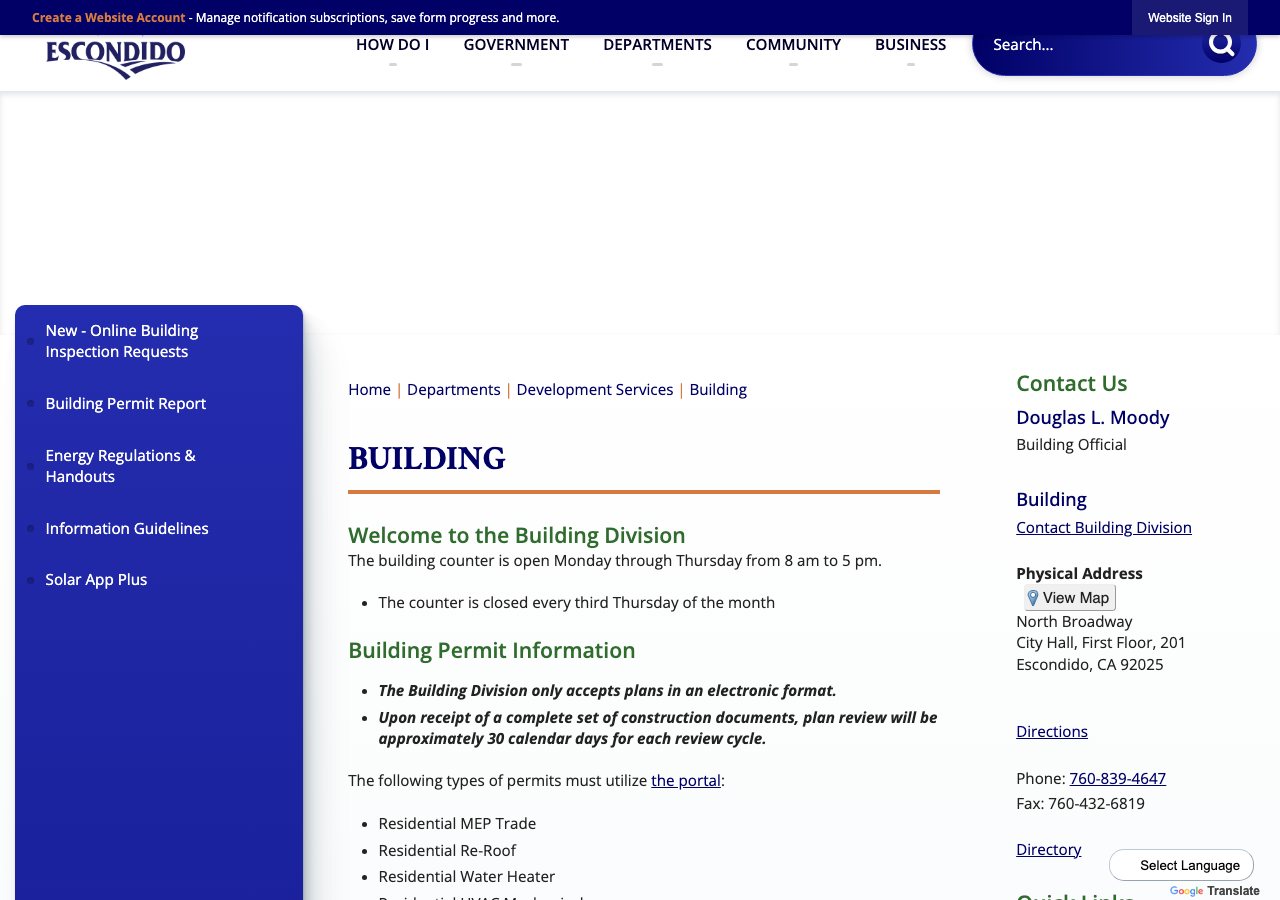

Average approval time — application to PTO
From the CPUC interconnection record. Bars show the average days taken each year; a year with no recorded projects is left blank rather than drawn as zero.