
City of Fontana
San Bernardino County
City of Fontana is a busy jurisdiction for residential solar — 16th in California by installs on record — 208,393 residents, with 17,924 residential solar installs on record. This page is the permit route for that jurisdiction: the fifteen steps from working out who has a say over an address through to permission to operate, the documents this authority publishes, and 62 answers taken from those documents and dated.
Permitting 5 steps · 28 questions
Whether a permit is needed — Yes. A building permit (and the electrical work under it) is required for a residential rooftop PV system. FMC ch. 5 art. Q3 Electrical and building permits — Either, and in practice Combined. Fontana's fee schedule prices residential single-family PV as FOUR separate line items - a Building plan check, Q4 Plan review — Three different published figures, by route. (1) SolarAPP+ - automated, real-time compliance check, permit auto-issued after DocuSign signature; no queue. Q18 Where you file — BUILD FONTANA - an Accela Citizen Access deployment at https://aca-prod.accela.com/FONTANA/Default.aspx, also reachable at build.fontanaca.gov and buildfontana.org. Q20
- Permit required
- Yes. A building permit (and the electrical work under it) is required for a residential rooftop PV system. FMC ch. 5 art.95% source
- What it costs
- $390 total for a single-family residential PV system of 0-15 kW, made up of four line items in the City's Comprehensive Fee Schedule (Building and Safety section,90% source
- Plan review turnaround
- Three different published figures, by route. (1) SolarAPP+ - automated, real-time compliance check, permit auto-issued after DocuSign signature; no queue.85% source
- Key document
- ordinance (FMC 5-602) + department handout cited by 5 open the document
-
Confirm who has a say over your address
A city address is usually permitted by the city, not the county — but not always, and some authorities keep building and hand electrical to someone else. Getting this wrong costs the whole submittal, because every requirement below belongs to whoever actually holds jurisdiction. Check the overlays in the same pass: an HOA, a historic district, a windstorm certification or a system-size cap can reshape the design, and all of them are cheaper to find now than after the array is laid out.
- Is this authority the AHJ for residential solar at this address? Yes. The City of Fontana is the AHJ for residential rooftop PV at any address inside the city limits. Fontana Municipal Code (FMC) sec. 5-2 defines 'Authority having jurisdiction' as 'the Director of Building and Safety of the City of Fontana' and 'Building official and/or administrative authority' as the same officer. San Bernardino County has no building or electrical role inside the city. 95% · ordinance (FMC 5-2)
- What does this authority permit itself, and what does it delegate? Both, retained. Building AND electrical plan review, permit issuance and field inspection all sit with the City's Department of Building & Safety (Development Services), 8353 Sierra Ave, Fontana CA 92335, (909) 350-7640, building@fontanaca.gov, Monday-Thursday 08:00-17:00, closed every Friday. Nothing is delegated to San Bernardino County. Fire is a separate arm of the same city: the Fontana Fire Protection District, a subsidiary district whose governing board is the Fontana City Council, with Fire Prevention at (909) 428-8890 / 428-8891 - but Fire Prevention does NOT review residential rooftop PV (its published review list is fire protection and alarm systems, building construction plans, fire apparatus access roads, hydrants and water supply), and the City's own fee schedule marks the Fire District photovoltaic inspection fee 'COMMERCIAL ONLY'. 92% · department page + fee schedule
- Is a permit required for a residential rooftop PV system? Yes. A building permit (and the electrical work under it) is required for a residential rooftop PV system. FMC ch. 5 art. XX governs the permitting of 'all small residential rooftop solar energy systems in the city'; the City publishes two solar permit record types - 'Solar PV Permit' (IVR 121, prefix Solar) and 'Residential SolarApp Plus Permit' (IVR 117, prefix RES-SOLAR). 95% · ordinance (FMC 5-602) + department handout
- Is there a separate electrical permit, or is it combined? Either, and in practice Combined. Fontana's fee schedule prices residential single-family PV as FOUR separate line items - a Building plan check, an Electrical plan check, a Building inspection/permit and an Electrical inspection/permit - so the electrical scope is billed separately but is applied for and issued as one solar record. The SolarAPP+ route is explicitly a single permit with a single 'Building Inspection (899 Permit Final)'. A standalone Electrical Permit record type (IVR 104, prefix ELEC) exists and is used where a service/panel upgrade is pulled on its own. 80% · fee schedule + department page
- Is a HOA or architectural approval required first? No. FMC 5-607(e): 'The city shall not condition approval of an application on the approval of an association, as defined in Section 4080 of the Civil Code.' That mirrors Gov. Code 65850.5. A homeowners association may still have its own private contractual process, but it is not a City prerequisite and the City will not enforce it. 92% · ordinance (FMC 5-607)
- Is there a historic-district review? Only for a designated or proposed historical resource, or a property inside a designated or proposed historic overlay district - in which case yes, and it is a City COUNCIL approval, not a staff one. FMC 5-357: 'Any alteration, restoration, rehabilitation, remodeling, construction, addition, change of use, demolition, relocation or removal of any designated or proposed historical resource or any improvement or object in a designated or proposed historical overlay district shall require a certificate of appropriateness from the city council. Where a permit is required for the proposed project, such permits shall not [be] issued unless and until a certificate of appropriateness has been approved by the city council.' The exemption for 'ordinary maintenance or repairs that do not involve a change in design, exterior material or original appearance' would not obviously cover a rooftop array. The Historic Preservation Commission (FMC 5-353 et seq.) reviews and the Planning Division notifies it of any permit application on a designated or proposed historical resource. For the overwhelming majority of Fontana housing stock, which is not designated, there is no historic review. 85% · ordinance (FMC 5-357)
- Is a wind or windstorm certification required? No. California has no equivalent of the Texas TDI windstorm certificate and Fontana requires no separate wind certification. What Fontana does impose is a wind DESIGN criterion, and it is stricter than the state default because parts of the city sit in a special wind region: FMC 5-601 amends CRC Table R301.2 to 'Speed - Special wind region ... 129 V mph. Other areas ... 96 V mph', and amends both CBC 1609.4.3 and CRC R301.2.1.4 to add 'Exposure C, as a minimum, shall apply in all cases unless the architect or engineer in general responsible charge can justify to the building official that the building site and surrounding terrain conform to the criteria for Exposure B.' The solar packet carries the same number: PV 1 requires 'Wind Design: 129 MPH Ultimate Design Wind Speed (Vult), Exposure C' for non-qualifying systems, and PV 5 gives the flush-mount escape route from a site-specific calculation. The Council's supporting finding cites Santa Ana winds 'in excess of 90 miles per hour' lasting three to seven days. 88% · adopting ordinance + checklist
- Is a Specific Use Permit or Council approval ever required? No. Nothing in FMC ch. 5 art. XX, ch. 5 art. I, or ch. 30 (Zoning and Development Code) subjects a residential rooftop PV system to a Conditional Use Permit, Minor Use Permit, Design Review, Administrative Site Plan or Council approval. FMC 5-604(a) routes qualifying systems into the administrative expedited process and 5-607(d) requires staff to 'issue a building permit or other nondiscretionary permit within a reasonable period of time after receipt of a complete application'. The one Council-level exception is the historic certificate of appropriateness under FMC 5-357 (see Q25). Commercial-scale solar on industrial or commercial land is a different matter and is touched by FMC 30-487 / 30-528 resource-conservation provisions and FMC 9-73 alternative energy, none of which reach single-family rooftops. 85% · ordinance (searched code)
- Is there a system-size cap on residential generation? No cap on residential generation. What Fontana has is an ELIGIBILITY size for its expedited process, and it is stale: FMC 5-603 defines a 'small residential rooftop solar energy system' as one that 'is no larger than ten kilowatts alternating current nameplate rating or 30 kilowatts thermal', is on a single or duplex family dwelling, and whose panel or module array 'does not exceed the maximum legal building height as defined by the city'. The state definition in Gov. Code 65850.5 was raised to 15 kW AC by AB 1414 (2017) and Fontana never updated Ord. No. 1732 - meanwhile the City's own 2026 fee schedule prices residential PV at '0-15kw', and the PV 1/PV 2 forms cap the standard-plan route at 10 kW AC with a 225 A or smaller bus bar and no battery storage. A system above those thresholds is not prohibited; it simply loses the expedited/standard-plan route and goes to comprehensive plan check. 88% · ordinance (FMC 5-603) + fee schedule
-
Check who is allowed to apply
Several authorities require the electrical permit to be pulled by a licensed electrician, or require the contractor to be registered with them BEFORE applying. Registration is not same-day. This is second on the list rather than fourth because it is the step most likely to stop the job before the drawings matter.
- Who is allowed to pull the electrical permit? Either - a California state-licensed contractor (C-10 electrical or C-46 solar, per B&P Code) or the property owner as an owner-builder. The Build Fontana application flow has an explicit 'Yes/No' owner-builder toggle and states '*If you are pulling this permit as owner-builder, you do not need to fill out this [licensed professional] information'. Fontana adds a local closing rule: 'only the signing contractor on record or the owner of the site can sign for the permit', and anyone pulling on their behalf needs written permission notarised by the owner or contractor. The SolarAPP+ route is narrower - 'Only licensed contractors may submit through SolarAPP+'. 88% · department page
- Must the contractor be registered with this authority before applying? No separate Building & Safety contractor registration, but two things are required in practice: a Build Fontana (Accela Citizen Access) account, and a City of Fontana business licence - the Application for Building Permit and Plan Check (rev. 09-08-23) has a mandatory 'City Business License #' field alongside 'State License #' and 'State License Class'. I found no solar-specific or trade-specific pre-registration requirement in FMC ch. 5 or ch. 15. 70% · permit application form
- Is a homeowner permitted to self-install and self-permit? Yes. The City publishes an Owner Builder Verification form (notarised where the owner is allowing another person to pull the permit on their behalf) and warns that an owner who pulls a permit for a contractor's work assumes the liability. The Build Fontana online application carries an explicit owner-builder path. Self-permitting is NOT available through SolarAPP+, which is restricted to licensed contractors - a homeowner must use the standard Build Fontana submittal. 88% · department page + form
-
Build the submittal package
Almost everywhere wants a site plan, a one-line or three-line electrical diagram, equipment cut sheets with listings, and a structural attachment detail. Build it against the published checklist rather than the last jurisdiction you worked in — the checklist is what the reviewer marks against.
- What documents make up a complete submittal? Two published packages, depending on route. (A) STANDARD (Build Fontana): completed permit application; plans; structural calculations; and per the City's PV 1 form, two complete sets of - PV 2 Eligibility Checklist, PV 3 & PV 3S or PV 4 Solar PV Standard Plan, a Roof Plan showing roof layout, PV panels, approximate roof access point, code-compliant access pathways, PV system fire classification and the locations of all required labels and markings, a Site Plan showing all structures, property lines, PV panels, service meter, subpanels, inverters and disconnects, listed/approved manufacturer specification sheets for modules, inverters, panels, racking, support mounts, and PV 5 Structural Criteria (or, for non-qualifying systems, structural drawings and calculations stamped and signed by a California licensed architect or registered civil/structural engineer with roof covering count, framing type/size/spacing, panel weight, support locations and attachment method, framing strengthening details, site-specific calculations and 129 mph Ultimate Design Wind Speed Exposure C). (B) SolarAPP+: the SolarAPP+ Approval Document, the SolarAPP+ Spec Sheets and the SolarAPP+ Approval ID, uploaded to Build Fontana. 90% · published checklist (Form PV 1)
- How many copies, and in what format? Electronic PDF through the Build Fontana portal is now the working route - FMC 5-606 requires electronic submittal to be made available for small residential rooftop solar and accepts an electronic signature in lieu of a wet signature, and plans 'must meet all of our Electronic File Submittal requirements or will be returned unprocessed'. The still-published PV 1 form specifies the counter alternative: 'Two (2) complete sets' of the listed documents delivered in person to the Building and Safety Division public counter. 82% · ordinance + checklist + portal guide
- Is a site plan required, and what must it show? Yes. PV 1 item 2(4): 'A Site Plan showing all structures on property, property lines, PV panels, service meter, sub-panels, inverters, disconnects, etc.' A separate Roof Plan is also required (item 2(3)) showing roof layout, PV panels, the approximate location of the roof access point, the location of code-compliant access pathways, the PV system fire classification, and the locations of all required labels and markings. PV 2 item 4 under FIRE SAFETY REQUIREMENTS repeats that a diagram of the roof layout of all panels, modules, clear access pathways and approximate locations of electrical disconnecting means and roof access points must be attached. 92% · published checklist (Forms PV 1 / PV 2)
- Is a one-line / three-line diagram required? Yes. Fontana's PV 3 (central/string inverter) and PV 4 (microinverter) Solar PV Standard Plans are single-line diagram forms - the applicant completes a tagged Equipment Schedule and a Single-Inverter or Microinverter/ACM Line Diagram showing modules, combiner box, DC disconnect, inverter, AC disconnect, PV production meter and point of connection, with boxes for grounded/ungrounded DC system. Where the standard plan is not used, a comprehensive plan set is required instead. 88% · published checklist (Forms PV 3 / PV 4)
- Are string and conductor calculations required? Yes. The PV 3 / PV 4 standard plans require the applicant to work through and record string and conductor sizing: maximum system DC voltage, DC/DC converter voltage, source-circuit OCPD, inverter continuous output current, minimum OCPD size and minimum conductor size (AWG, 75 C copper) from the form's Table 3, bus bar rating, main OCPD, and the maximum combined PV system OCPD at 120 percent (end-fed) or 100 percent (center-fed) of bus bar rating from Table 4 per CEC 705.12. Structural calculations are separately required as an upload on the Build Fontana solar application. 85% · published checklist (Form PV 3)
- Is a structural PE stamp required, and at what threshold? Threshold-based, not blanket. No stamp is required if every item on Form PV 5 Structural Criteria is answered YES. If ANY item is NO, 'Attach project-specific drawings and calculations stamped and signed by a California Registered Civil / Structural Engineer or California Licensed Architect.' The PV 5 YES conditions are: dwelling farther than 500 yards from large open fields or grassland; relatively flat area (grade under 5 percent) and not within 500 yards of the crest of a tall hill; not on the top half of a very steep hill (average grade over 15 percent) and not within 500 yards of its crest; a map showing a 500-yard radius; single roof without a reroof overlay; roof structurally sound without alteration or sagging; measured roof slope 6:12 or less; rafter spacing 24 in o.c. or less; roof framing at least 2x4 DF #2; flush-mounted array parallel to the roof plane with a 2 in to 10 in gap; no overhang of ridges, hips, gable ends or eaves; modules plus supports no more than 4 psf; array covers no more than half the total roof area; manufacturer worksheets attached; roof plan of module and anchor layout attached; horizontal anchor spacing not more than 4 ft in each direction; and 5/16 in lag screws with 2.5 in rafter embedment or anchors meeting the manufacturer's guidelines. 90% · published checklist (Form PV 5)
- Is an electrical PE stamp required, and at what threshold? No electrical PE stamp is required at any published threshold for a residential rooftop system. Fontana's forms call for a stamped design only on the STRUCTURAL side (PV 5 summary, and PV 1's non-qualifying-system paragraph, both naming a California licensed architect or registered civil/structural engineer). The word 'electrical engineer' does not appear in the PV packet; the electrical design is carried by the PV 3 / PV 4 standard plan, which the contractor or owner-builder signs. 75% · published checklist + ordinance
-
Apply and pay
Most authorities now take the whole application through a portal, and several states cap or constrain what a residential solar permit may cost. Check whether plan check is billed separately before you quote the job.
- Which permit portal does this authority use? BUILD FONTANA - an Accela Citizen Access deployment at https://aca-prod.accela.com/FONTANA/Default.aspx, also reachable at build.fontanaca.gov and buildfontana.org. Solar sits under Building > Create an Application, record type 'SolarPermit' for the standard route and 'Residential Solar PV with SolarAPP+' for the automated route. Inspections are booked in the same portal or through the interactive voice response line (909) 350-7693. SolarAPP+ (gosolarapp.org) is the front end for automated plan review, and the City runs a daily inspection route viewer at web1.fontana.org/AccelaDailyInspection/. 92% · portal landing page
- Can the whole application be completed online? Yes for both routes. FMC 5-606 requires that all documents needed for an expedited small residential rooftop solar application be published on a publicly accessible city website, that electronic submittal 'be made available to all small residential rooftop solar energy system permit applicants', and that 'An applicant's electronic signature shall be accepted on all forms, applications, and other documents in lieu of a wet signature'. In practice: apply, upload, pay and schedule in Build Fontana; SolarAPP+ permits are signed by DocuSign and 'your approved permit will be issued automatically with your job card', downloadable from the Citizen Access account. The in-person counter route survives as an option (application form: 'APPLICATIONS CAN BE SUBMITTED ONLINE AT FONTANACA.GOV, OR IN PERSON M-TH BETWEEN 8:00 A.M. & 5:00 P.M.'). 92% · ordinance (FMC 5-606) + portal
- What does a residential solar permit cost? $390 total for a single-family residential PV system of 0-15 kW, made up of four line items in the City's Comprehensive Fee Schedule (Building and Safety section, category 'Alternative Energy'): ID 2002 Plan Check - Building, Photovoltaic - Single Family Residence, $130.00; ID 2003 Plan Check - Electrical, $130.00; ID 2004 Inspection/Permit - Building, $65.00; ID 2005 Inspection/Permit - Electrical, $65.00. On top sit the two state pass-throughs (Strong Motion Instrumentation Program, and Building Standards / SB 1473), which are valuation-based and are not City fees. SolarAPP+ adds a separate $25 processing fee payable to SolarAPP+, not to the City. There is NO Fire District fee on residential PV - fee ID 1968 'Photovoltaic Systems ... $378.00 per hour rate for Officer - Fire Marshal' is annotated 'COMMERCIAL ONLY'. The City's own PV 1 handout still quotes the superseded 2016 figures ($176 plan check + $169.21 permit = $345.21) and should not be used. 90% · fee schedule
- How is the fee calculated? Flat, banded by system size. The residential single-family PV rows are flat amounts expressly scoped to '0-15kw'. No per-kW adder above 15 kW is published; a larger residential system falls back on the Electrical 'Alternate Energy - Other' rows (plan check $130, permit $105) or on the multi-family/commercial rows, which ARE area-based ($130 for the first 1,000 sq ft of panel/collector area plus $22 per 100 sq ft thereafter for multi-family plan check; $195 for the first 10,000 sq ft plus $32 per 1,000 sq ft for commercial). The state pass-throughs (SMIP, Building Standards) remain valuation-based, which is permitted because they are state fees rather than the City's permit fee - Gov. Code 65850.55 bars valuation-based city solar fees. 85% · fee schedule
- Is there a separate plan-check fee? Yes - and there are two of them. Plan check is billed separately from the permit/inspection fee, and Fontana splits plan check itself into a Building plan check ($130) and an Electrical plan check ($130). Expedite options exist and are also separate: 'Plan Check Expedite - In House' at plan check + 50 percent (ID 2021) and 'Plan Check Expedite (Consultant)' at plan check fee + 50 percent (ID 2000). 92% · fee schedule
-
Plan review — and start the utility in parallel
Interconnection is a separate process from the permit and usually the longer pole. Where the utility does not depend on the permit being issued, running both at once is the single biggest saving available on a residential job.
- What is the stated plan-review turnaround? Three different published figures, by route. (1) SolarAPP+ - automated, real-time compliance check, permit auto-issued after DocuSign signature; no queue. (2) Expedited PV via the standard route - the City's Plan Check page says 'For expedited solar reviews, it takes about 3-5 business days but PV Expedite Requirements must be met'; the PV 1 form itself says applications using all the standard plans (PV 2, PV 3 or PV 4, PV 5) 'qualify for an expedited plan review timeframe within one to three working days'. Those two City documents disagree; treat 3-5 business days as the current figure since the Plan Check page is the live one. (3) Anything not eligible for expedited review - 1st review 'typically takes about 3-4 weeks', subsequent reviews 'about 2 weeks after amended plans are submitted'. Fire Prevention's 15-working-day goal does not apply to residential rooftop PV. 85% · department page + checklist
- How long is an issued permit valid before it expires? 6 months (180 days) from issuance for a solar permit, extendable once by up to 180 days. FMC 5-11 sets permit expiry by work type and item (9) is explicit: 'Plumbing, mechanical, electrical and solar (not associated with any of the above items) ..... 6 months' - the permit 'shall expire by limitation and become null and void if the building or work authorized by such permit is not completed by the owner, owner's agent, or the permittee and approved by the city within' that period. The exception allows the building official, on written request made BEFORE expiry, to extend for not more than 180 days, once only, on a showing of circumstances beyond the applicant's control, reasonable progress, no health or safety hazard, and no unreasonable detriment to the neighbourhood. A separate rule runs alongside it: 'a lapse of 180 days between inspections will void your building permit and a new permit will be required to resume construction.' Plan check itself also expires at 6 months (FMC 5-11(11)); the extension request fee is $161 (fee ID 2043). 92% · ordinance (FMC 5-11)
- Which utility handles interconnection here? Southern California Edison (SCE, CPUC utility U 338-E). SCE is the electric distribution utility throughout the City of Fontana; interconnection is under SCE's Rule 21 (Generating Facility Interconnections) and the NEM/NBT successor tariff. Fontana Water Company and the Inland Empire Utilities Agency handle water and sewer and have no role in PV. 92% · city source (council records) + utility tariff
- Where does the utility sit in the sequence? Parallel, with a hard dependency at the end. SCE's Rule 21 section F.2.b provides that for NEM/NBT generating facilities of 1 MW or smaller, Permission to Operate 'shall normally be processed not later than thirty (30) Business Days following Distribution Provider's receipt of 1) a completed NBT/Net Energy Metering Interconnection Request including all supporting documents and required payments; 2) a completed signed NBT/Net Energy Metering Generator Interconnection Agreement; and 3) evidence of Applicant's final electric inspection clearance from the Governmental Authority having jurisdiction over the Generating Facility.' So the interconnection application runs in parallel with (and is normally filed before) the City permit, but PTO cannot issue until Fontana's final inspection has passed and that clearance is in SCE's hands. Neither the City nor SCE conditions the other's paperwork at the front end. 88% · utility tariff (SCE Rule 21)
28 questions answered against City of Fontana’s own published documents
Q1 Is this authority the AHJ for residential solar at this address? Core Jurisdiction & scope
Yes. The City of Fontana is the AHJ for residential rooftop PV at any address inside the city limits. Fontana Municipal Code (FMC) sec. 5-2 defines 'Authority having jurisdiction' as 'the Director of Building and Safety of the City of Fontana' and 'Building official and/or administrative authority' as the same officer. San Bernardino County has no building or electrical role inside the city.
Why the confidence is not higherFMC ch. 5 art. I sec. 5-2 definitions, read in full on Municode (Code of Ordinances online content updated 15 May 2026). Confirmed by the City's own Building & Safety pages, which issue and inspect Solar PV and Residential SolarAPP+ permits at 8353 Sierra Ave.
ordinance (FMC 5-2) checked 2026-08-28 https://library.municode.com/ca/fontana/codes/code_of_ordinances?nodeId=CO_CH5BUBURE_ARTIINGE
Q2 What does this authority permit itself, and what does it delegate? Core Jurisdiction & scope
Both, retained. Building AND electrical plan review, permit issuance and field inspection all sit with the City's Department of Building & Safety (Development Services), 8353 Sierra Ave, Fontana CA 92335, (909) 350-7640, building@fontanaca.gov, Monday-Thursday 08:00-17:00, closed every Friday. Nothing is delegated to San Bernardino County. Fire is a separate arm of the same city: the Fontana Fire Protection District, a subsidiary district whose governing board is the Fontana City Council, with Fire Prevention at (909) 428-8890 / 428-8891 - but Fire Prevention does NOT review residential rooftop PV (its published review list is fire protection and alarm systems, building construction plans, fire apparatus access roads, hydrants and water supply), and the City's own fee schedule marks the Fire District photovoltaic inspection fee 'COMMERCIAL ONLY'.
Why the confidence is not higherCity Building & Safety pages; FMC 5-2; Fontana Fire Protection District pages (Plan Checks, New Development & Construction); Comprehensive Fee Schedule row 1968 'Photovoltaic Systems ... Per Hour Rate for Officer - Fire Marshal / COMMERCIAL ONLY'. Note the brief's framing of a single department is right for solar: the split only matters for commercial PV.
department page + fee schedule checked 2026-08-28 https://www.fontanaca.gov/1141/Plan-Checks
Q3 Is a permit required for a residential rooftop PV system? Core Jurisdiction & scope
Yes. A building permit (and the electrical work under it) is required for a residential rooftop PV system. FMC ch. 5 art. XX governs the permitting of 'all small residential rooftop solar energy systems in the city'; the City publishes two solar permit record types - 'Solar PV Permit' (IVR 121, prefix Solar) and 'Residential SolarApp Plus Permit' (IVR 117, prefix RES-SOLAR).
Why the confidence is not higherFMC 5-602 applicability; Record Types and IVR Numbers handout; Photovoltaic (Solar) Systems page. No exemption exists in FMC 5-3 (which exempts only recognised public utility companies' own distribution/generation/transmission/metering work).
ordinance (FMC 5-602) + department handout checked 2026-08-28 https://library.municode.com/ca/fontana/codes/code_of_ordinances?nodeId=CO_CH5BUBURE_ARTXXSMREROSOSY
Q4 Is there a separate electrical permit, or is it combined? Core Jurisdiction & scope
Either, and in practice Combined. Fontana's fee schedule prices residential single-family PV as FOUR separate line items - a Building plan check, an Electrical plan check, a Building inspection/permit and an Electrical inspection/permit - so the electrical scope is billed separately but is applied for and issued as one solar record. The SolarAPP+ route is explicitly a single permit with a single 'Building Inspection (899 Permit Final)'. A standalone Electrical Permit record type (IVR 104, prefix ELEC) exists and is used where a service/panel upgrade is pulled on its own.
Why the confidence is not higherComprehensive Fee Schedule IDs 2002-2005 (Alternative Energy, Photovoltaic - Single Family Residence); Solar PV Permit with SolarAPP+ page; Record Types and IVR Numbers handout.
fee schedule + department page checked 2026-08-28 https://www.fontanaca.gov/351/User-Fees-PDF
Q5 Who is allowed to pull the electrical permit? Core Who may apply
Either - a California state-licensed contractor (C-10 electrical or C-46 solar, per B&P Code) or the property owner as an owner-builder. The Build Fontana application flow has an explicit 'Yes/No' owner-builder toggle and states '*If you are pulling this permit as owner-builder, you do not need to fill out this [licensed professional] information'. Fontana adds a local closing rule: 'only the signing contractor on record or the owner of the site can sign for the permit', and anyone pulling on their behalf needs written permission notarised by the owner or contractor. The SolarAPP+ route is narrower - 'Only licensed contractors may submit through SolarAPP+'.
Why the confidence is not higherPermits page ('Authorizations and Verifications' / 'Permit Generation'); Photovoltaic (Solar) Systems page owner-builder step; Apply for a Permit Online guide step 2; Solar PV Permit with SolarAPP+ page.
department page checked 2026-08-28 https://www.fontanaca.gov/142/Permits
Q6 Must the contractor be registered with this authority before applying? Core Who may apply
No separate Building & Safety contractor registration, but two things are required in practice: a Build Fontana (Accela Citizen Access) account, and a City of Fontana business licence - the Application for Building Permit and Plan Check (rev. 09-08-23) has a mandatory 'City Business License #' field alongside 'State License #' and 'State License Class'. I found no solar-specific or trade-specific pre-registration requirement in FMC ch. 5 or ch. 15.
Why the confidence is not higherApplication for Building Permit and Plan Check PDF, page 1; Photovoltaic (Solar) Systems page ('Register for an account via Build Fontana Online Portal'). Searched the Fontana code on Municode for 'contractor business license' (183 hits) and '"business license required"' (4 hits) - none imposes a Building & Safety contractor registration for solar.
permit application form checked 2026-08-28 https://www.fontanaca.gov/DocumentCenter/View/314/Application-for-Building-Permit-and-Plan-Check-PDF-
Q7 Is a homeowner permitted to self-install and self-permit? Who may apply
Yes. The City publishes an Owner Builder Verification form (notarised where the owner is allowing another person to pull the permit on their behalf) and warns that an owner who pulls a permit for a contractor's work assumes the liability. The Build Fontana online application carries an explicit owner-builder path. Self-permitting is NOT available through SolarAPP+, which is restricted to licensed contractors - a homeowner must use the standard Build Fontana submittal.
Why the confidence is not higherPermits page 'Authorizations and Verifications' and Owner Builder Verification (PDF); Photovoltaic (Solar) Systems page; Solar PV Permit with SolarAPP+ page 'Only licensed contractors may submit through SolarAPP+'.
department page + form checked 2026-08-28 https://www.fontanaca.gov/142/Permits
Q8 What documents make up a complete submittal? Core Submittal package
Two published packages, depending on route. (A) STANDARD (Build Fontana): completed permit application; plans; structural calculations; and per the City's PV 1 form, two complete sets of - PV 2 Eligibility Checklist, PV 3 & PV 3S or PV 4 Solar PV Standard Plan, a Roof Plan showing roof layout, PV panels, approximate roof access point, code-compliant access pathways, PV system fire classification and the locations of all required labels and markings, a Site Plan showing all structures, property lines, PV panels, service meter, subpanels, inverters and disconnects, listed/approved manufacturer specification sheets for modules, inverters, panels, racking, support mounts, and PV 5 Structural Criteria (or, for non-qualifying systems, structural drawings and calculations stamped and signed by a California licensed architect or registered civil/structural engineer with roof covering count, framing type/size/spacing, panel weight, support locations and attachment method, framing strengthening details, site-specific calculations and 129 mph Ultimate Design Wind Speed Exposure C). (B) SolarAPP+: the SolarAPP+ Approval Document, the SolarAPP+ Spec Sheets and the SolarAPP+ Approval ID, uploaded to Build Fontana.
Why the confidence is not higherPV 1 Submittal Requirements (Form PV 1, REV. 01-05-16) extracted with pdftotext; Photovoltaic (Solar) Systems page 'Attachments: Plans, Structural Calculations'; Solar PV Permit with SolarAPP+ page 'Required Documents'. The PV forms are the 2016 California Solar Permitting Guidebook set and are the only solar submittal checklist Fontana publishes.
published checklist (Form PV 1) checked 2026-08-28 https://www.fontanaca.gov/DocumentCenter/View/11142/PV-1-Submittal-Requirements-PDF-
Q9 How many copies, and in what format? Submittal package
Electronic PDF through the Build Fontana portal is now the working route - FMC 5-606 requires electronic submittal to be made available for small residential rooftop solar and accepts an electronic signature in lieu of a wet signature, and plans 'must meet all of our Electronic File Submittal requirements or will be returned unprocessed'. The still-published PV 1 form specifies the counter alternative: 'Two (2) complete sets' of the listed documents delivered in person to the Building and Safety Division public counter.
Why the confidence is not higherFMC 5-606; Apply for a Permit Online guide (Step 3, Supporting Documentation); PV 1 Submittal Requirements. Recorded both because the City has not withdrawn the paper instruction.
ordinance + checklist + portal guide checked 2026-08-28 https://www.fontanaca.gov/DocumentCenter/View/11142/PV-1-Submittal-Requirements-PDF-
Q10 Is a site plan required, and what must it show? Core Submittal package
Yes. PV 1 item 2(4): 'A Site Plan showing all structures on property, property lines, PV panels, service meter, sub-panels, inverters, disconnects, etc.' A separate Roof Plan is also required (item 2(3)) showing roof layout, PV panels, the approximate location of the roof access point, the location of code-compliant access pathways, the PV system fire classification, and the locations of all required labels and markings. PV 2 item 4 under FIRE SAFETY REQUIREMENTS repeats that a diagram of the roof layout of all panels, modules, clear access pathways and approximate locations of electrical disconnecting means and roof access points must be attached.
Why the confidence is not higherPV 1 Submittal Requirements and PV 2 Eligibility Checklist, both extracted with pdftotext from the City's own PDFs.
published checklist (Forms PV 1 / PV 2) checked 2026-08-28 https://www.fontanaca.gov/DocumentCenter/View/11142/PV-1-Submittal-Requirements-PDF-
Q11 Is a one-line / three-line diagram required? Core Drawings & calculations
Yes. Fontana's PV 3 (central/string inverter) and PV 4 (microinverter) Solar PV Standard Plans are single-line diagram forms - the applicant completes a tagged Equipment Schedule and a Single-Inverter or Microinverter/ACM Line Diagram showing modules, combiner box, DC disconnect, inverter, AC disconnect, PV production meter and point of connection, with boxes for grounded/ungrounded DC system. Where the standard plan is not used, a comprehensive plan set is required instead.
Why the confidence is not higherPV 3 / PV 3S / PV 4 forms inside the Central Inverter System and Micro-Inverter System packets, extracted with pdftotext.
published checklist (Forms PV 3 / PV 4) checked 2026-08-28 https://www.fontanaca.gov/DocumentCenter/View/11319
Q12 Are string and conductor calculations required? Drawings & calculations
Yes. The PV 3 / PV 4 standard plans require the applicant to work through and record string and conductor sizing: maximum system DC voltage, DC/DC converter voltage, source-circuit OCPD, inverter continuous output current, minimum OCPD size and minimum conductor size (AWG, 75 C copper) from the form's Table 3, bus bar rating, main OCPD, and the maximum combined PV system OCPD at 120 percent (end-fed) or 100 percent (center-fed) of bus bar rating from Table 4 per CEC 705.12. Structural calculations are separately required as an upload on the Build Fontana solar application.
Why the confidence is not higherPV 3 form steps 8-16 and Tables 3 and 4; Photovoltaic (Solar) Systems page Attachments.
published checklist (Form PV 3) checked 2026-08-28 https://www.fontanaca.gov/DocumentCenter/View/11319
Q13 Is a structural PE stamp required, and at what threshold? Core Engineering & stamps
Threshold-based, not blanket. No stamp is required if every item on Form PV 5 Structural Criteria is answered YES. If ANY item is NO, 'Attach project-specific drawings and calculations stamped and signed by a California Registered Civil / Structural Engineer or California Licensed Architect.' The PV 5 YES conditions are: dwelling farther than 500 yards from large open fields or grassland; relatively flat area (grade under 5 percent) and not within 500 yards of the crest of a tall hill; not on the top half of a very steep hill (average grade over 15 percent) and not within 500 yards of its crest; a map showing a 500-yard radius; single roof without a reroof overlay; roof structurally sound without alteration or sagging; measured roof slope 6:12 or less; rafter spacing 24 in o.c. or less; roof framing at least 2x4 DF #2; flush-mounted array parallel to the roof plane with a 2 in to 10 in gap; no overhang of ridges, hips, gable ends or eaves; modules plus supports no more than 4 psf; array covers no more than half the total roof area; manufacturer worksheets attached; roof plan of module and anchor layout attached; horizontal anchor spacing not more than 4 ft in each direction; and 5/16 in lag screws with 2.5 in rafter embedment or anchors meeting the manufacturer's guidelines.
Why the confidence is not higherForm PV 5 Structural Criteria (REV. 01-07-16), full text extracted with pdftotext.
published checklist (Form PV 5) checked 2026-08-28 https://www.fontanaca.gov/DocumentCenter/View/11147/PV-5-Structural-Criteria-PDF
Q14 Is an electrical PE stamp required, and at what threshold? Engineering & stamps
No electrical PE stamp is required at any published threshold for a residential rooftop system. Fontana's forms call for a stamped design only on the STRUCTURAL side (PV 5 summary, and PV 1's non-qualifying-system paragraph, both naming a California licensed architect or registered civil/structural engineer). The word 'electrical engineer' does not appear in the PV packet; the electrical design is carried by the PV 3 / PV 4 standard plan, which the contractor or owner-builder signs.
Why the confidence is not higherPV 1, PV 3, PV 4 and PV 5 read in full; FMC ch. 5 art. XX read in full on Municode. Proven absence rather than an unsearched one.
published checklist + ordinance checked 2026-08-28 https://www.fontanaca.gov/DocumentCenter/View/11142/PV-1-Submittal-Requirements-PDF-
Q15 What does a residential solar permit cost? Core Fees
$390 total for a single-family residential PV system of 0-15 kW, made up of four line items in the City's Comprehensive Fee Schedule (Building and Safety section, category 'Alternative Energy'): ID 2002 Plan Check - Building, Photovoltaic - Single Family Residence, $130.00; ID 2003 Plan Check - Electrical, $130.00; ID 2004 Inspection/Permit - Building, $65.00; ID 2005 Inspection/Permit - Electrical, $65.00. On top sit the two state pass-throughs (Strong Motion Instrumentation Program, and Building Standards / SB 1473), which are valuation-based and are not City fees. SolarAPP+ adds a separate $25 processing fee payable to SolarAPP+, not to the City. There is NO Fire District fee on residential PV - fee ID 1968 'Photovoltaic Systems ... $378.00 per hour rate for Officer - Fire Marshal' is annotated 'COMMERCIAL ONLY'. The City's own PV 1 handout still quotes the superseded 2016 figures ($176 plan check + $169.21 permit = $345.21) and should not be used.
Why the confidence is not higherCity of Fontana Comprehensive Fee Schedule by Department/Division and Type, PDF created 10 Feb 2026, extracted with pdftotext -layout. $390 sits comfortably under the Gov. Code 66015 residential cap of $450 for systems up to 15 kW.
fee schedule checked 2026-08-28 https://www.fontanaca.gov/351/User-Fees-PDF
Q16 How is the fee calculated? Core Fees
Flat, banded by system size. The residential single-family PV rows are flat amounts expressly scoped to '0-15kw'. No per-kW adder above 15 kW is published; a larger residential system falls back on the Electrical 'Alternate Energy - Other' rows (plan check $130, permit $105) or on the multi-family/commercial rows, which ARE area-based ($130 for the first 1,000 sq ft of panel/collector area plus $22 per 100 sq ft thereafter for multi-family plan check; $195 for the first 10,000 sq ft plus $32 per 1,000 sq ft for commercial). The state pass-throughs (SMIP, Building Standards) remain valuation-based, which is permitted because they are state fees rather than the City's permit fee - Gov. Code 65850.55 bars valuation-based city solar fees.
Why the confidence is not higherComprehensive Fee Schedule IDs 1380-1384, 1420-1424, 2002-2005, 1893-1894.
fee schedule checked 2026-08-28 https://www.fontanaca.gov/351/User-Fees-PDF
Q17 Is there a separate plan-check fee? Fees
Yes - and there are two of them. Plan check is billed separately from the permit/inspection fee, and Fontana splits plan check itself into a Building plan check ($130) and an Electrical plan check ($130). Expedite options exist and are also separate: 'Plan Check Expedite - In House' at plan check + 50 percent (ID 2021) and 'Plan Check Expedite (Consultant)' at plan check fee + 50 percent (ID 2000).
Why the confidence is not higherComprehensive Fee Schedule IDs 2002, 2003, 2000, 2021.
fee schedule checked 2026-08-28 https://www.fontanaca.gov/351/User-Fees-PDF
Q18 What is the stated plan-review turnaround? Core Timeline & validity
Three different published figures, by route. (1) SolarAPP+ - automated, real-time compliance check, permit auto-issued after DocuSign signature; no queue. (2) Expedited PV via the standard route - the City's Plan Check page says 'For expedited solar reviews, it takes about 3-5 business days but PV Expedite Requirements must be met'; the PV 1 form itself says applications using all the standard plans (PV 2, PV 3 or PV 4, PV 5) 'qualify for an expedited plan review timeframe within one to three working days'. Those two City documents disagree; treat 3-5 business days as the current figure since the Plan Check page is the live one. (3) Anything not eligible for expedited review - 1st review 'typically takes about 3-4 weeks', subsequent reviews 'about 2 weeks after amended plans are submitted'. Fire Prevention's 15-working-day goal does not apply to residential rooftop PV.
Why the confidence is not higherPlan Check page; PV 1 Submittal Requirements; Solar PV Permit with SolarAPP+ page; Fire New Development & Construction page. California sets no statutory solar review deadline, so these are department service goals, not deadlines.
department page + checklist checked 2026-08-28 https://www.fontanaca.gov/146/Plan-Check
Q19 How long is an issued permit valid before it expires? Timeline & validity
6 months (180 days) from issuance for a solar permit, extendable once by up to 180 days. FMC 5-11 sets permit expiry by work type and item (9) is explicit: 'Plumbing, mechanical, electrical and solar (not associated with any of the above items) ..... 6 months' - the permit 'shall expire by limitation and become null and void if the building or work authorized by such permit is not completed by the owner, owner's agent, or the permittee and approved by the city within' that period. The exception allows the building official, on written request made BEFORE expiry, to extend for not more than 180 days, once only, on a showing of circumstances beyond the applicant's control, reasonable progress, no health or safety hazard, and no unreasonable detriment to the neighbourhood. A separate rule runs alongside it: 'a lapse of 180 days between inspections will void your building permit and a new permit will be required to resume construction.' Plan check itself also expires at 6 months (FMC 5-11(11)); the extension request fee is $161 (fee ID 2043).
Why the confidence is not higherFMC ch. 5 art. I sec. 5-11 read in full on Municode; Schedule an Inspection page; Comprehensive Fee Schedule ID 2043. This is a genuinely local rule - it names 'solar' as its own expiry class, and 6 months is shorter than the 12 months many California cities use.
ordinance (FMC 5-11) checked 2026-08-28 https://library.municode.com/ca/fontana/codes/code_of_ordinances?nodeId=CO_CH5BUBURE_ARTIINGE
Q20 Which permit portal does this authority use? Core Portal & process
BUILD FONTANA - an Accela Citizen Access deployment at https://aca-prod.accela.com/FONTANA/Default.aspx, also reachable at build.fontanaca.gov and buildfontana.org. Solar sits under Building > Create an Application, record type 'SolarPermit' for the standard route and 'Residential Solar PV with SolarAPP+' for the automated route. Inspections are booked in the same portal or through the interactive voice response line (909) 350-7693. SolarAPP+ (gosolarapp.org) is the front end for automated plan review, and the City runs a daily inspection route viewer at web1.fontana.org/AccelaDailyInspection/.
Why the confidence is not higherPhotovoltaic (Solar) Systems page; Solar PV Permit with SolarAPP+ page; Build Fontana page; Schedule an Inspection page. Fontana (population ~215,000) is above the Gov. Code 65850.52 (SB 379) threshold and HAS implemented automated solar permitting - it is not one of the jurisdictions where the mandate has gone unmet.
portal landing page checked 2026-08-28 https://aca-prod.accela.com/FONTANA/Default.aspx
Q21 Can the whole application be completed online? Core Portal & process
Yes for both routes. FMC 5-606 requires that all documents needed for an expedited small residential rooftop solar application be published on a publicly accessible city website, that electronic submittal 'be made available to all small residential rooftop solar energy system permit applicants', and that 'An applicant's electronic signature shall be accepted on all forms, applications, and other documents in lieu of a wet signature'. In practice: apply, upload, pay and schedule in Build Fontana; SolarAPP+ permits are signed by DocuSign and 'your approved permit will be issued automatically with your job card', downloadable from the Citizen Access account. The in-person counter route survives as an option (application form: 'APPLICATIONS CAN BE SUBMITTED ONLINE AT FONTANACA.GOV, OR IN PERSON M-TH BETWEEN 8:00 A.M. & 5:00 P.M.').
Why the confidence is not higherFMC 5-606; Solar PV Permit with SolarAPP+ page; Apply for a Permit Online guide; Application for Building Permit and Plan Check (rev. 09-08-23).
ordinance (FMC 5-606) + portal checked 2026-08-28 https://library.municode.com/ca/fontana/codes/code_of_ordinances?nodeId=CO_CH5BUBURE_ARTXXSMREROSOSY
Q22 Which utility handles interconnection here? Core Utility interconnection
Southern California Edison (SCE, CPUC utility U 338-E). SCE is the electric distribution utility throughout the City of Fontana; interconnection is under SCE's Rule 21 (Generating Facility Interconnections) and the NEM/NBT successor tariff. Fontana Water Company and the Inland Empire Utilities Agency handle water and sewer and have no role in PV.
Why the confidence is not higherCity-side confirmation rather than a ZIP lookup: the City's emergency pages direct residents to 'Southern California Edison's outage map', and the City Council has repeatedly approved Joint Use Agreements, easements and anchor easements with Southern California Edison Company for distribution facilities across Fontana (Legistar files 21-2607, 21-3128, 21-3259, 25-0486, 26-0721, 26-0901). Fontana is not municipally served.
city source (council records) + utility tariff checked 2026-08-28 https://webapi.legistar.com/v1/fontana/matters
Q23 Where does the utility sit in the sequence? Core Utility interconnection
Parallel, with a hard dependency at the end. SCE's Rule 21 section F.2.b provides that for NEM/NBT generating facilities of 1 MW or smaller, Permission to Operate 'shall normally be processed not later than thirty (30) Business Days following Distribution Provider's receipt of 1) a completed NBT/Net Energy Metering Interconnection Request including all supporting documents and required payments; 2) a completed signed NBT/Net Energy Metering Generator Interconnection Agreement; and 3) evidence of Applicant's final electric inspection clearance from the Governmental Authority having jurisdiction over the Generating Facility.' So the interconnection application runs in parallel with (and is normally filed before) the City permit, but PTO cannot issue until Fontana's final inspection has passed and that clearance is in SCE's hands. Neither the City nor SCE conditions the other's paperwork at the front end.
Why the confidence is not higherSCE Rule 21, Cal. PUC Sheet series, section F.2.b, extracted with pdftotext from SCE's own tariff PDF. No Fontana document sequences the utility at all.
utility tariff (SCE Rule 21) checked 2026-08-28 https://www.sce.com/sites/default/files/custom-files/PDF_Files/ELECTRIC_RULES_21.pdf
Q24 Is a HOA or architectural approval required first? Overlays & special cases
No. FMC 5-607(e): 'The city shall not condition approval of an application on the approval of an association, as defined in Section 4080 of the Civil Code.' That mirrors Gov. Code 65850.5. A homeowners association may still have its own private contractual process, but it is not a City prerequisite and the City will not enforce it.
Why the confidence is not higherFMC ch. 5 art. XX sec. 5-607(e) read in full on Municode.
ordinance (FMC 5-607) checked 2026-08-28 https://library.municode.com/ca/fontana/codes/code_of_ordinances?nodeId=CO_CH5BUBURE_ARTXXSMREROSOSY
Q25 Is there a historic-district review? Overlays & special cases
Only for a designated or proposed historical resource, or a property inside a designated or proposed historic overlay district - in which case yes, and it is a City COUNCIL approval, not a staff one. FMC 5-357: 'Any alteration, restoration, rehabilitation, remodeling, construction, addition, change of use, demolition, relocation or removal of any designated or proposed historical resource or any improvement or object in a designated or proposed historical overlay district shall require a certificate of appropriateness from the city council. Where a permit is required for the proposed project, such permits shall not [be] issued unless and until a certificate of appropriateness has been approved by the city council.' The exemption for 'ordinary maintenance or repairs that do not involve a change in design, exterior material or original appearance' would not obviously cover a rooftop array. The Historic Preservation Commission (FMC 5-353 et seq.) reviews and the Planning Division notifies it of any permit application on a designated or proposed historical resource. For the overwhelming majority of Fontana housing stock, which is not designated, there is no historic review.
Why the confidence is not higherFMC ch. 5 art. XIII (Preservation of Historic Resources), secs. 5-353, 5-357, 5-358, 5-360, read on Municode. Worth flagging: a discretionary Council certificate sits in tension with Gov. Code 65850.5's non-discretionary mandate and Civil Code 714, and Fontana's solar article (art. XX) does not carve historic properties out either way.
ordinance (FMC 5-357) checked 2026-08-28 https://library.municode.com/ca/fontana/codes/code_of_ordinances?nodeId=CO_CH5BUBURE_ARTXIIIPRHIRE
Q26 Is a wind or windstorm certification required? Overlays & special cases
No. California has no equivalent of the Texas TDI windstorm certificate and Fontana requires no separate wind certification. What Fontana does impose is a wind DESIGN criterion, and it is stricter than the state default because parts of the city sit in a special wind region: FMC 5-601 amends CRC Table R301.2 to 'Speed - Special wind region ... 129 V mph. Other areas ... 96 V mph', and amends both CBC 1609.4.3 and CRC R301.2.1.4 to add 'Exposure C, as a minimum, shall apply in all cases unless the architect or engineer in general responsible charge can justify to the building official that the building site and surrounding terrain conform to the criteria for Exposure B.' The solar packet carries the same number: PV 1 requires 'Wind Design: 129 MPH Ultimate Design Wind Speed (Vult), Exposure C' for non-qualifying systems, and PV 5 gives the flush-mount escape route from a site-specific calculation. The Council's supporting finding cites Santa Ana winds 'in excess of 90 miles per hour' lasting three to seven days.
Why the confidence is not higherOrdinance No. 1975 (adopted 28 Oct 2025) sections 2, 3 and 9, read from the City Clerk's attachment on Legistar; PV 1 and PV 5 forms.
adopting ordinance + checklist checked 2026-08-28 https://fontana.legistar1.com/fontana/attachments/c231842a-795f-4ba5-8307-624f44c4e1e7.docx
Q27 Is a Specific Use Permit or Council approval ever required? Overlays & special cases
No. Nothing in FMC ch. 5 art. XX, ch. 5 art. I, or ch. 30 (Zoning and Development Code) subjects a residential rooftop PV system to a Conditional Use Permit, Minor Use Permit, Design Review, Administrative Site Plan or Council approval. FMC 5-604(a) routes qualifying systems into the administrative expedited process and 5-607(d) requires staff to 'issue a building permit or other nondiscretionary permit within a reasonable period of time after receipt of a complete application'. The one Council-level exception is the historic certificate of appropriateness under FMC 5-357 (see Q25). Commercial-scale solar on industrial or commercial land is a different matter and is touched by FMC 30-487 / 30-528 resource-conservation provisions and FMC 9-73 alternative energy, none of which reach single-family rooftops.
Why the confidence is not higherSearched the Fontana Code of Ordinances and Zoning and Development Code on Municode for 'solar' (32 hits, all enumerated) and 'photovoltaic' (2 hits). Controls run in the same session: 'electrical' returned 101 hits (positive) and 'zzqqx' returned 0 (fabricated). No conditional-use trigger for residential rooftop PV exists.
ordinance (searched code) checked 2026-08-28 https://library.municode.com/ca/fontana/codes/code_of_ordinances?nodeId=CO_CH5BUBURE_ARTXXSMREROSOSY
Q28 Is there a system-size cap on residential generation? Overlays & special cases
No cap on residential generation. What Fontana has is an ELIGIBILITY size for its expedited process, and it is stale: FMC 5-603 defines a 'small residential rooftop solar energy system' as one that 'is no larger than ten kilowatts alternating current nameplate rating or 30 kilowatts thermal', is on a single or duplex family dwelling, and whose panel or module array 'does not exceed the maximum legal building height as defined by the city'. The state definition in Gov. Code 65850.5 was raised to 15 kW AC by AB 1414 (2017) and Fontana never updated Ord. No. 1732 - meanwhile the City's own 2026 fee schedule prices residential PV at '0-15kw', and the PV 1/PV 2 forms cap the standard-plan route at 10 kW AC with a 225 A or smaller bus bar and no battery storage. A system above those thresholds is not prohibited; it simply loses the expedited/standard-plan route and goes to comprehensive plan check.
Why the confidence is not higherFMC 5-603 and 5-604 on Municode (Ord. No. 1732, sec. 1, 8-25-15); Comprehensive Fee Schedule IDs 2002-2005; PV 2 Eligibility Checklist general and electrical requirements. The 10 kW / 15 kW mismatch between the ordinance and the fee schedule is a real trap for anyone quoting the code.
ordinance (FMC 5-603) + fee schedule checked 2026-08-28 https://library.municode.com/ca/fontana/codes/code_of_ordinances?nodeId=CO_CH5BUBURE_ARTXXSMREROSOSY
Lines marked with a percentage were read off this authority’s own published documents. Unmarked guidance is general good practice, not this jurisdiction’s rule — always confirm against the authority before you submit.
Install 5 steps · 20 questions
-
Build to the code editions actually in force here
The NEC edition a jurisdiction enforces is often a cycle behind the newest one published, and local amendments sit on top of it. Rapid shutdown, conductor sizing and labelling all change between editions, so the edition in force is the first thing to establish, not the last.
- Which NEC edition is in force? 2023 NEC, as the 2025 California Electrical Code (Title 24 Part 3). FMC 5-111, as rewritten by Ordinance No. 1975: 'The 2025 Edition of the California Electrical Code, known as the California Code of regulations, Title 24, Part 3, based on the 2023 Edition of the National Electrical Code, published by the National Fire Protection Association is hereby adopted as the Electrical Code of the City.' Fontana is CURRENT - the adopting ordinance was introduced 14 October 2025, adopted 28 October 2025 and took effect thirty days later, ahead of the 1 January 2026 state effective date. The City's Codes & Local Amendments page states the same. This is not a jurisdiction publishing a stale edition. 95% · adopting ordinance (Ord. 1975 / FMC 5-111)
- Which building code edition is in force? 2025 California Building Code (Title 24 Part 2, Volumes 1 & 2, based on the 2024 IBC), including Chapter 1 and Appendices B, C, I and J - FMC 5-61. For a single-family dwelling the governing document is the 2025 California Residential Code (Title 24 Part 2.5, based on the 2024 IRC), including Appendix BF and Appendix CI - FMC 5-600. Also adopted by Ord. 1975: 2025 California Plumbing Code, 2025 California Mechanical Code, 2025 California Existing Building Code, 2025 California Green Building Standards Code, 2025 International Property Maintenance Code, and - new this cycle - the 2025 California Wildland-Urban Interface Code at FMC 5-615 (Article XXII), adopted with no amendments. 95% · adopting ordinance (Ord. 1975)
- Which fire code edition is in force? 2025 California Fire Code (Title 24 Part 9, based on the 2024 IFC) plus appendices, together with the 2025 California Wildland-Urban Interface Code, adopted by the Fontana Fire Protection District as Ordinance No. FFD-006 - which repeals FFD-005 and enacts 'the Fontana Fire Protection District Fire Code'. Second reading and adoption were on 23 July 2026, so this is very recent. The adopted text is, section by section, the San Bernardino County Fire Protection District Fire Code: the ordinance body refers throughout to 'the San Bernardino County Fire Protection District Fire Code' and recites H&SC 13869.7 ratification, because fire service to Fontana is provided under contract by San Bernardino County Fire. The City's building ordinance separately adopts the CA WUI Code at FMC 5-615. 92% · adopting ordinance (Ord. FFD-006)
- Are there local amendments to any of the above? Yes - but none of them touch solar. Fontana's local amendments in Ord. No. 1975 are: CBC 105.2 (fence/retaining wall exemptions), CBC 202 (swimming pool definition), CBC 502.1 and CRC R308.1 (address identification per FMC 5-239), CBC 903.2 and CRC R309 (sprinklers required in all new construction per FMC ch. 11 art. II), CBC 1505.5 (non-classified roofing not approved for use in the City), CBC 1609.3 (special wind region table), CBC 1609.4.3 and CRC R301.2.1.4 (Exposure C minimum), CBC 3109.2 / CRC Appendix CI (pool barriers), CBC Appendix I105.2 and CRC BF105.2 (patio covers), CBC Appendix J103.2/J104.1/J107.4 (grading and rock disposal), CRC Table R301.2 (129 mph special wind region, 96 mph elsewhere, SDC D2 or E, frost line 12-24 in, termite Very Heavy, winter design temp 43), CRC R306.1 (flood hazard), IPMC 303.2 and 304.3. On the electrical side, exactly two: CEC 110.5 - 'Aluminum conductors of No. 6 or smaller shall require continuous inspection by an approved independent testing agency for proper torquing of connections at their termination point'; and CEC 225.1 - 'All new outside wiring on private property shall be underground', with exceptions for Article 590 temporary wiring, services under Article 230 subject to approval, and 'Wiring in approved conduit and raceways directly attached to a building'. The Plumbing, Mechanical, Existing Building, CALGreen and WUI codes are adopted with NO amendments, and there is no amendment anywhere to NEC/CEC Article 690 or 705, to CRC R329 (solar) or R330 (ESS), or to CFC Chapter 12 / section 1205. 90% · adopting ordinance + fire ordinance
- What is the installation judged against? The 2025 California Electrical Code (2023 NEC) as adopted at FMC 5-111, plus the two City amendments at FMC 5-112 (CEC 110.5 aluminum-conductor torque inspection; CEC 225.1 outside wiring underground), plus the approved plans. NEC Article 690 and Article 705 apply verbatim - California adds nothing and Fontana adds nothing. The City's PV standard plan works the installation against CEC 690.7/690.8 (voltage and current), 690.9 and 240.5 (OCPD and conductor sizing), 690.12 (rapid shutdown), 690.13/690.15/690.17 (disconnects), 690.41-690.47 (grounding/bonding), 690.53/690.54 (DC and AC markings), 705.10 (power source directory), 705.12 (interconnection and bus bar 120 percent / 100 percent rules) and 705.12(D)(7) (breaker position), and against CEC 110.3 listing. Field practice is set out in the PV 1 inspection checklist. 85% · ordinance (FMC 5-111/5-112) + checklist
-
Fire access, setbacks and pathways
Ridge setbacks and roof access pathways are fire-service requirements and they constrain the array layout. They are the most common cause of a redesign after the fire department comments on a plan set.
- What ridge setback and access pathways are required? The 2025 California Fire Code section 1205 as published - no local amendment. Ordinance No. FFD-006 amends CFC Chapters 1, 3, 5, 9, 11, 28, 56 and Appendix C only; Chapter 12 is untouched, so CFC 1205's ridge setbacks, access pathways and smoke-ventilation provisions apply exactly as written (and the section is 1205 in the 2025 cycle, not the 1204 that Fontana's 2016 PV forms still cite - those forms reference CFC 605.11.1 and CRC R331, both long dead). Note the numbering trap: the 2025 CRC renumbers rooftop solar from R324 to R329 and ESS from R328 to R330. On access roads FFD-006 does add City-side rules that matter to a ground-mount or a driveway: fire apparatus access roads 26 ft unobstructed width and 14 ft 6 in vertical clearance (30 ft where exterior walls are 30 ft or higher), with a 20 ft minimum for fire-department-only roads and a 12 ft minimum for driveways serving not more than two R-3 and accessory U occupancies; roads must support 80,000 lb apparatus with all-weather surfacing; dead ends over 150 ft need an approved turnaround. And FFD-006 section 503.1.1 exception (2) provides that 'Where approved by the fire code official, fire apparatus access roads shall be permitted to be exempted or modified for solar photovoltaic power generation facilities.' 88% · fire ordinance (Ord. FFD-006) + CFC 1205
-
Rapid shutdown
Which rapid-shutdown rule applies follows directly from the NEC edition in force, and the initiation device has to be at a location the fire service can reach and identify. This is inspected, and it is labelled.
- Is rapid shutdown required, and to which NEC edition? Yes - NEC 690.12 as carried into the 2025 California Electrical Code (2023 NEC), adopted unamended at FMC 5-111. That means the 2023 NEC form of rapid shutdown: a controlled conductor boundary 1 ft outside the array and 3 ft from any entry point, 80 V within 30 seconds outside the boundary, and the 690.56(C) rapid shutdown label with its diagram and the initiation-device location marking. California makes no Article 690 amendment and Fontana makes none either. Caution when reading Fontana's own handouts: the PV 3 and PV 4 standard plans predate this - they are REV. 01-05-16 / 01-07-16 and were drawn against the 2013 CEC, so their rapid-shutdown treatment and their 690.35(F) / 690.5(C) ungrounded-system labels are obsolete. 88% · ordinance (FMC 5-111) + NEC edition in force
-
Labels and placards
The NEC sets a baseline for permanent markings at the service equipment and the disconnecting means. On top of that, an authority may specify its own wording, and the utility may specify more again. Where any of them writes its own text, a generic off-the-shelf label set will not pass — this is the detail most often fixed on a return visit.
- Which placards does this authority require at the service equipment? The code set, nothing local. At the service equipment the required plaques are the 2023 NEC / 2025 CEC ones: the 705.10 permanent plaque or directory denoting all electric power sources on or in the premises, at each service equipment location (and the City's own note on the PV 3 marking sheet says 'CEC 705.12 requires a permanent plaque or directory denoting all electric power sources on or in the premises'; the microinverter sheet cites 705.10 for the same thing); the 705.12(D)(7)-style 'WARNING / INVERTER OUTPUT CONNECTION; DO NOT RELOCATE THIS OVERCURRENT DEVICE' at the back-fed breaker, marked '[Not required if panelboard is rated not less than sum of ampere ratings of all overcurrent devices supplying it]'; the 690.54 / 705.12(D)(4) 'WARNING / DUAL POWER SOURCES / SECOND SOURCE IS PHOTOVOLTAIC SYSTEM / RATED AC OUTPUT CURRENT ____ AMPS AC / NORMAL OPERATING VOLTAGE ____ VOLTS' at the point of connection; the 690.54 'PV SYSTEM AC DISCONNECT / RATED AC OUTPUT CURRENT ____ AMPS / AC NORMAL OPERATING VOLTAGE ____ VOLTS' at the AC disconnect; the 690.53 'PV SYSTEM DC DISCONNECT' block (max power-point current and voltage, short-circuit current, maximum system voltage); the 690.17 'WARNING / ELECTRIC SHOCK HAZARD / DO NOT TOUCH TERMINALS / TERMINALS ON BOTH LINE AND LOAD SIDES MAY BE ENERGIZED IN THE OPEN POSITION'; and 'WARNING: PHOTOVOLTAIC POWER SOURCE' on junction and combiner boxes and on conduit every 10 ft. Fontana's field checklist reduces this to three things the inspector will look for: 'a. Sign identifying PV system attributes at DC disconnect; b. Sign identifying AC disconnect; c. Warning sign indicating Dual Power Sources.' Add the 2023 NEC 690.56(C) rapid shutdown placard, which post-dates the City's forms. The utility layer is SCE's and is described at Q42. 85% · published checklist (Forms PV 3 / PV 4) + NEC
- Does the authority specify placard wording of its own? No. Fontana specifies no placard wording of its own. Every legend on the City's marking sheets is a reproduction of the California Solar Permitting Guidebook / NEC text with the code section printed under it - there is no Fontana-invented label. I looked specifically for an equivalent of Monterey County's engraved 'SOLAR DISCONNECT INSIDE PANEL' or Stockton's 'DO NOT UPSIZE MAIN BREAKER' and there is none. Fontana's analogous concern is handled by prohibition rather than by a label: Form PV 3 Table 4 states 'Reduction of the main breaker is not permitted with this plan', pushing a de-rated main into comprehensive plan check instead of onto a warning sticker. 88% · ordinance (searched code) + checklists
- Does it specify letter height, colour or material? No City-set letter height, colour or material - and this is the notable absence. Fontana's marking sheets carry only an advisory, reproduced verbatim from the state guidebook: 'Informational note: ANSI Z535.4 provides guidelines for the design of safety signs and labels for application to products. A phenolic plaque with contrasting colors between the text and background would meet the intent of the code for permanency. No type size is specified, but 20 point (3/8") should be considered the minimum.' That is a recommendation, not a City requirement - it says 'would meet the intent' and 'should be considered', and it appears identically on both the central-inverter and the microinverter sheets. The enforceable floor is therefore CEC 110.21(B)'s durable, legible, environment-suitable marking plus whatever the individual label's NEC section prescribes. Fontana does impose one genuinely local PHYSICAL requirement on the hardware itself, from the PV 1 field checklist: 'All exterior equipment including but not limited to raceways, junction boxes, combiner boxes, load centers, disconnects etc. are painted to match exterior of building.' That is an aesthetic/finish rule with no NEC counterpart and it is checked at inspection. Where SCE equipment is involved, SCE's own material spec applies (see Q42). 85% · published checklist (Forms PV 1 / PV 3 / PV 4)
- Is a site plan / facility map placard required, and what must it show? Yes, at two levels. (1) Plan stage: PV 1 requires 'A Roof Plan showing roof layout, PV panels and the following fire safety items: approximate location of roof access point, location of code-compliant access pathways, PV system fire classification and the locations of all required labels and markings', plus a separate Site Plan showing all structures, property lines, PV panels, service meter, subpanels, inverters and disconnects; PV 2 item 4 requires 'A diagram of the roof layout of all panels, modules, clear access pathways and approximate locations of electrical disconnecting means and roof access points' to be attached. (2) Field stage: the CEC 705.10 permanent plaque or directory denoting all electric power sources on or in the premises, which in a 2023 NEC installation is the power-source directory at the service equipment. Fontana adds no facility-map placard of its own beyond that - it has no equivalent of a fire-department site-plan placard. 85% · published checklist + NEC 705.10
- Does the UTILITY specify placards beyond the AHJ's? Yes, SCE has its own, and this run retrieved them - the Electrical Service Requirements (ESR) manual, 2026 Third Quarter Issue (document dated 07-31-2026), which prior runs could not reach behind SharePoint. What SCE requires at the service equipment: (a) NGOM equipment marking, ESR-1 section 12.3 - 'NGOM equipment shall be permanently labeled "Net Generation Output Metering." The label shall be located on the meter panel or adjacent to the meter socket. Customer NGOM section(s) or panel(s) shall be labeled by permanently attached machine-engraved laminated phenolic (or equal) tags. All lettering shall be a minimum one-quarter inch in height.' Where switchboards or switchgear are installed the customer must tag which bus or cable direction from the NGOM connects to the generator output, 'Typically, the marking should read "Grid side" or "Generation side."' If NGOM and PCC metering are more than 100 ft apart or on different levels or floors, 'a permanent sign shall be placed at the PCC metering location which states the location of the NGOM equipment.' (b) NGOM isolation devices 'shall have signage that clearly indicates open positions' and provide for an SCE padlock (ESR-1 12.5). (c) Multi-service plaque/directory, ESR-5 Figure 5-1 - where a service installation does not serve an entire building the contractor must permanently mark the portion served: 'The plaque or directory required shall be metal or plastic, with engraved or machine-printed letters, or electrophoto plating, in contrasting color to the plaque. The plaque shall include a plate map of the entire building and shall be attached to the service disconnect with POP rivets, screws, or epoxy', with a 3/4 in minimum header ('SERVICE 1 OF 2'), 1/4 in minimum body text and 1/8 in minimum sub-labels. (d) Rule 21 H.1.d and Hh.1.d - the visible isolating device must 'include markings or signage that clearly indicates open and closed positions', and 'If the device is not adjacent to the PCC, permanent signage must be installed at a Distribution Provider approved location providing a clear description of the location of the device. If the switch is not accessible outside the locked premises, signage with contact information and a Distribution Provider approved locking device for the premises shall be installed.' (e) Elsewhere in the ESR, SCE's general placard spec is machine-engraved laminated phenolic (or equivalent) with 1/4 in black letters on white, mechanically attached by screws or rivets; a 'System Ground Location' placard is 4 in high by 6 in wide with 1/2 in black letters on white at the bottom of the hinge side of the door; and LINE/LOAD labels on above-600 V metering panels are engraved placards 1 in by 3 in, red background with white lettering. IMPORTANT LIMIT: none of these is a residential-rooftop-PV placard. For an ordinary single-family NEM system with no NGOM, the ESR imposes no PV-specific label - the NEC set at Q38 is what goes on the wall. 85% · utility manual (SCE ESR) + utility tariff (Rule 21)
- Where must the labels be placed? Per the NEC section that creates each label, as reproduced on Fontana's marking sheets: the dual-power-source / point-of-connection warning and the 705.10 power source directory at the main service panel or service equipment; the 'INVERTER OUTPUT CONNECTION; DO NOT RELOCATE THIS OVERCURRENT DEVICE' warning at the back-fed breaker in the panelboard; the 690.54 AC rating label at the PV system AC disconnect; the 690.53 DC rating block at the PV system DC disconnect; the 690.17 line-and-load energised warning on disconnects; 'WARNING: PHOTOVOLTAIC POWER SOURCE' on junction and combiner boxes and on conduit at intervals of every 10 ft; and the 690.56(C) rapid shutdown placard at the service disconnecting means. Fontana requires the LOCATIONS of all required labels and markings to be drawn on the submitted roof plan, and its inspector verifies signs at the DC disconnect, the AC disconnect and the dual-power-source location. SCE's requirements are located on the meter panel or adjacent to the meter socket (NGOM label), on the service disconnect (multi-service plaque), and at a Distribution Provider approved location if the visible isolating device is not adjacent to the PCC. 85% · published checklist + utility manual
-
Disconnect, storage and listed equipment
Where the AC disconnect must sit relative to the meter is usually the utility's rule, not the building department's. Battery storage frequently carries its own permit, its own inspection and its own fire conditions.
- Where must the AC disconnect be, relative to the meter? There is NO published distance in feet, and specifically no 'within 10 feet of the meter' rule. SCE's Rule 21 section H.1.d (and the parallel Hh.1.d for UL 1741 SB smart inverters) requires, 'When required by Distribution Provider's operating practices', a ganged, manually-operated isolating switch 'near the Point of Interconnection' - no dimension is given. The device must allow visible verification of separation (opening the enclosure to observe contact separation is acceptable), carry markings or signage clearly indicating open and closed positions, be reachable quickly and conveniently 24 hours a day for emergency purposes by SCE personnel 'without obstacles or requiring those seeking access to obtain keys, special permission, or security clearances' and during normal business hours for non-emergency purposes, be capable of being locked in the open position, and be clearly marked on the submitted single line diagram with its type and location approved by SCE before installation. If it is not adjacent to the PCC, permanent signage must be installed at an SCE-approved location describing where it is. Generating facilities with non-islanding inverters totalling 1 kVA or less are exempt. The one place SCE DOES state an adjacency is not the PV AC disconnect: for a Generation Meter Adapter installation, ESR-1 section 12.8.B requires 'A single, AC fuseable disconnect, with an external lockable handle shall be installed directly adjacent to the meter', with the connection between the overcurrent device and the GMA in liquid-tight flexible conduit of 2 ft minimum to 3 ft maximum. Separately, ESR-5 note 1/ says 'In all installations listed above, the service disconnect shall be installed at the same location and directly adjacent to the meter and service equipment' - that is the service disconnect, not the PV disconnect. Fontana itself sets no location: Form PV 4 labels the AC disconnect 'Optional AC Disconnect per AHJ'. 88% · utility tariff (SCE Rule 21) + utility manual (SCE ESR)
- Must equipment be on a specific approved list? No AHJ-specific approved list. What is required is listing and labelling under CEC 110.3: PV 1 requires 'Listed/approved manufacturer Specification Sheets for all proposed equipment including modules, inverters, panels, racking system, support mounts, etc.', and the standard plan states 'Listed and labeled equipment shall be installed and used in accordance with any instructions included in the listing or labeling (CEC 110.3).' Two external lists do bite in Fontana: SolarAPP+ maintains its own eligibility and equipment rules for the automated route, and SCE keeps an Approved Product List that a customer-owned Meter Socket Adapter must appear on ('the device must be listed on SCE's Approved Product List'), plus a published SCE Inverter List by Manufacturer and Rule 21 type-testing/certification requirements for smart inverters (UL 1741 SB). 82% · published checklist + utility manual
- Are batteries permitted, and under what conditions? Yes, permitted, and Fontana supports them - the City lists 'Residential Solar PV with Energy Storage' as a supported SolarAPP+ project type alongside 'Residential Solar PV'. Conditions: the 2025 California Residential Code R330 (formerly R328) and 2025 California Fire Code section 1207 apply as published, with no Fontana amendment to either; and the Fontana Fire Protection District has ADDED an operational permit requirement - Ordinance No. FFD-006 section 105.5.4A 'Battery and other energy storage system: An operational permit is required for a battery system or electrical energy storage system as regulated by section 1207 of the California Fire Code.' Note the mismatch with the City's own solar forms: the PV 2 Eligibility Checklist requires that the 'Solar system is utility interactive and without battery storage', so a battery job cannot use the 2016 standard-plan route - it goes SolarAPP+ or full plan check. Fire Prevention's only published battery handout is a 'Submittal Checklist for Battery Systems' aimed at stationary/UPS installations under CFC 608 and Chapter 27 (three sets of drawings, application, payment, contractor licence copy, spill control, ventilation at 6 air changes per hour, 4A20-B:C extinguisher, no-smoking/open-flame signage, HMMP over 55 gallons of electrolyte) - it is dated and not written for residential lithium ESS. 85% · fire ordinance + department page + checklist
- Is there a separate ESS permit or inspection? Yes - a Fire District operational permit is required for a battery or electrical energy storage system under Ordinance No. FFD-006 section 105.5.4A, which is separate from and additional to the City building/electrical permit. On the building side the ESS is normally carried on the same solar record (SolarAPP+ supports 'Residential Solar PV with Energy Storage' as one permit with one Building Inspection, 899 Permit Final), so there is no separate building permit but there IS a separate fire permit. The City's fee schedule prices Fire District photovoltaic inspection as COMMERCIAL ONLY, so residential ESS fire fees are not published as a PV line. 78% · fire ordinance + department page
- Is a ground mount treated as a structure? Yes. Fontana's entire published solar apparatus is rooftop-only - FMC ch. 5 art. XX applies to 'small residential rooftop solar energy systems' installed 'on a single or duplex family dwelling', and every City form (PV 1 through PV 5) is titled for 'Rooftop Solar Energy Installations'. A ground mount therefore falls outside the expedited route and is permitted as an ordinary structure under the 2025 CBC/CRC with a foundation, setback and height review, plus FMC 5-112's amended CEC 225.1 requiring new outside wiring on private property to be underground (the exception for 'wiring in approved conduit and raceways directly attached to a building' does not help a run across a yard). Two other things bear on a ground mount: FFD-006 section 503.1.1 exception (2) allows the fire code official to exempt or modify fire apparatus access roads for solar photovoltaic power generation facilities, and Ord. 1975's Appendix J grading amendments (50 cubic yard exemptions, rock placement depths) apply if the site is cut or filled. 75% · ordinance + checklist titles (proven absence of a ground-mount handout)
- Is there a local rule on service upgrades or busbar sizing? No busbar rule of Fontana's own - the 705.12 calculation is the NEC's. What Fontana publishes is the standard-plan working method: Table 4 of Form PV 3 gives 'Maximum Combined Supply OCPDs Based on Bus Bar Rating (Amps) per CEC 705.12(D)(2)' for 100/125/200/225 A bus bars at both 120 percent (end-fed) and 100 percent (center-fed), and adds a rule that matters on a de-rate job: '*This value has been lowered to 60 A from the calculated value to reflect 10kW AC size maximum. Reduction of the main breaker is not permitted with this plan. Otherwise, provide comprehensive plan).' So in Fontana you cannot solve a busbar problem by down-sizing the main on the expedited standard plan - a de-rated main forces you into full plan check. PV 2 caps the standard-plan bus bar at 225 A or less on a 120/240 V single-phase service and requires load-side connection. Panel upgrades are a separate fee event ('Additional fees apply for main panel upgrades'; Electrical Permit services rows $105/$157/$210 by ampacity). Two local electrical amendments bite on a service upgrade: CEC 110.5 torque inspection by an approved independent testing agency for aluminum No. 6 or smaller, and CEC 225.1 undergrounding of new outside wiring. 88% · published checklist (Form PV 3) + ordinance
- Is a specific mounting system or attachment spacing required? Yes, for the expedited/standard-plan route, and it is prescriptive. Form PV 5 requires: flush-mounted array with the module plane parallel to the roof plane; a 2 in to 10 in gap between the underside of the module and the roof surface; no overhang of any roof edge (ridges, hips, gable ends, eaves); modules plus support components no more than 4 psf; array covering no more than half the total roof area across all roof planes; horizontal anchor (stand-off) spacing not exceeding 4 ft in each direction; and anchor fasteners that are either 5/16 in diameter lag screws with 2.5 in embedment into the rafter or meet the manufacturer's guidelines, with lag/hanger-bolt/self-drilling screw diameter, rafter embedment depth and screws per anchor all recorded on the form. Manufacturer project-specific worksheets, tables with relevant cells circled, or web-based calculator results must be attached, along with a roof plan of the module and anchor layout. Fail any of these and the job needs stamped project-specific drawings and calculations. Nothing beyond this specifies a particular racking brand or approved list. 90% · published checklist (Form PV 5)
20 questions answered against City of Fontana’s own published documents
Q29 Which NEC edition is in force? Core Code editions in force
2023 NEC, as the 2025 California Electrical Code (Title 24 Part 3). FMC 5-111, as rewritten by Ordinance No. 1975: 'The 2025 Edition of the California Electrical Code, known as the California Code of regulations, Title 24, Part 3, based on the 2023 Edition of the National Electrical Code, published by the National Fire Protection Association is hereby adopted as the Electrical Code of the City.' Fontana is CURRENT - the adopting ordinance was introduced 14 October 2025, adopted 28 October 2025 and took effect thirty days later, ahead of the 1 January 2026 state effective date. The City's Codes & Local Amendments page states the same. This is not a jurisdiction publishing a stale edition.
Why the confidence is not higherOrdinance No. 1975 section 5, from the City Clerk's attachment on Legistar (matter 25-0616, second reading 13 Oct 2025); Codes & Local Amendments page.
adopting ordinance (Ord. 1975 / FMC 5-111) checked 2026-08-28 https://fontana.legistar1.com/fontana/attachments/c231842a-795f-4ba5-8307-624f44c4e1e7.docx
Q30 Which building code edition is in force? Core Code editions in force
2025 California Building Code (Title 24 Part 2, Volumes 1 & 2, based on the 2024 IBC), including Chapter 1 and Appendices B, C, I and J - FMC 5-61. For a single-family dwelling the governing document is the 2025 California Residential Code (Title 24 Part 2.5, based on the 2024 IRC), including Appendix BF and Appendix CI - FMC 5-600. Also adopted by Ord. 1975: 2025 California Plumbing Code, 2025 California Mechanical Code, 2025 California Existing Building Code, 2025 California Green Building Standards Code, 2025 International Property Maintenance Code, and - new this cycle - the 2025 California Wildland-Urban Interface Code at FMC 5-615 (Article XXII), adopted with no amendments.
Why the confidence is not higherOrdinance No. 1975 sections 3, 4, 6, 7, 8, 9, 10 and 11.
adopting ordinance (Ord. 1975) checked 2026-08-28 https://fontana.legistar1.com/fontana/attachments/c231842a-795f-4ba5-8307-624f44c4e1e7.docx
Q31 Which fire code edition is in force? Code editions in force
2025 California Fire Code (Title 24 Part 9, based on the 2024 IFC) plus appendices, together with the 2025 California Wildland-Urban Interface Code, adopted by the Fontana Fire Protection District as Ordinance No. FFD-006 - which repeals FFD-005 and enacts 'the Fontana Fire Protection District Fire Code'. Second reading and adoption were on 23 July 2026, so this is very recent. The adopted text is, section by section, the San Bernardino County Fire Protection District Fire Code: the ordinance body refers throughout to 'the San Bernardino County Fire Protection District Fire Code' and recites H&SC 13869.7 ratification, because fire service to Fontana is provided under contract by San Bernardino County Fire. The City's building ordinance separately adopts the CA WUI Code at FMC 5-615.
Why the confidence is not higherOrdinance No. FFD-006, full text extracted from the docx attachment on Legistar (matters 26-1144 first reading 6 Jul 2026, 26-1172 second reading 23 Jul 2026); Ordinance No. 1975 section 11. Read from Fontana's own enacted document - not inherited from the separate San Bernardino County authority record.
adopting ordinance (Ord. FFD-006) checked 2026-08-28 https://fontana.legistar1.com/fontana/attachments/3d9539ca-0ad2-4f4a-81c6-4b8105ce61d1.docx
Q32 Are there local amendments to any of the above? Core Code editions in force
Yes - but none of them touch solar. Fontana's local amendments in Ord. No. 1975 are: CBC 105.2 (fence/retaining wall exemptions), CBC 202 (swimming pool definition), CBC 502.1 and CRC R308.1 (address identification per FMC 5-239), CBC 903.2 and CRC R309 (sprinklers required in all new construction per FMC ch. 11 art. II), CBC 1505.5 (non-classified roofing not approved for use in the City), CBC 1609.3 (special wind region table), CBC 1609.4.3 and CRC R301.2.1.4 (Exposure C minimum), CBC 3109.2 / CRC Appendix CI (pool barriers), CBC Appendix I105.2 and CRC BF105.2 (patio covers), CBC Appendix J103.2/J104.1/J107.4 (grading and rock disposal), CRC Table R301.2 (129 mph special wind region, 96 mph elsewhere, SDC D2 or E, frost line 12-24 in, termite Very Heavy, winter design temp 43), CRC R306.1 (flood hazard), IPMC 303.2 and 304.3. On the electrical side, exactly two: CEC 110.5 - 'Aluminum conductors of No. 6 or smaller shall require continuous inspection by an approved independent testing agency for proper torquing of connections at their termination point'; and CEC 225.1 - 'All new outside wiring on private property shall be underground', with exceptions for Article 590 temporary wiring, services under Article 230 subject to approval, and 'Wiring in approved conduit and raceways directly attached to a building'. The Plumbing, Mechanical, Existing Building, CALGreen and WUI codes are adopted with NO amendments, and there is no amendment anywhere to NEC/CEC Article 690 or 705, to CRC R329 (solar) or R330 (ESS), or to CFC Chapter 12 / section 1205.
Why the confidence is not higherOrdinance No. 1975 read in full; Ordinance No. FFD-006 read in full and every amended section enumerated (Chapters 1, 3, 5, 9, 11, 28, 56 and Appendix C only). Controls: 'electrical' returns 7 hits and 'fire' 365 in FFD-006 while 'zzqqx' returns 0; 'solar' returns 0 in Ord. 1975. Note also that Ord. 1975 was adopted 28 Oct 2025, i.e. after AB 130 (Stats. 2025, ch. 22) froze more-restrictive local residential standards from 1 Oct 2025 - the City made H&SC 17958.5/17958.7 findings but the freeze is worth flagging.
adopting ordinance + fire ordinance checked 2026-08-28 https://fontana.legistar1.com/fontana/attachments/c231842a-795f-4ba5-8307-624f44c4e1e7.docx
Q33 What is the installation judged against? Core Electrical
The 2025 California Electrical Code (2023 NEC) as adopted at FMC 5-111, plus the two City amendments at FMC 5-112 (CEC 110.5 aluminum-conductor torque inspection; CEC 225.1 outside wiring underground), plus the approved plans. NEC Article 690 and Article 705 apply verbatim - California adds nothing and Fontana adds nothing. The City's PV standard plan works the installation against CEC 690.7/690.8 (voltage and current), 690.9 and 240.5 (OCPD and conductor sizing), 690.12 (rapid shutdown), 690.13/690.15/690.17 (disconnects), 690.41-690.47 (grounding/bonding), 690.53/690.54 (DC and AC markings), 705.10 (power source directory), 705.12 (interconnection and bus bar 120 percent / 100 percent rules) and 705.12(D)(7) (breaker position), and against CEC 110.3 listing. Field practice is set out in the PV 1 inspection checklist.
Why the confidence is not higherFMC 5-111 and 5-112 (Ord. 1975 section 5); PV 3 / PV 4 standard plans and PV 1 inspection checklist.
ordinance (FMC 5-111/5-112) + checklist checked 2026-08-28 https://fontana.legistar1.com/fontana/attachments/c231842a-795f-4ba5-8307-624f44c4e1e7.docx
Q34 Is there a local rule on service upgrades or busbar sizing? Electrical
No busbar rule of Fontana's own - the 705.12 calculation is the NEC's. What Fontana publishes is the standard-plan working method: Table 4 of Form PV 3 gives 'Maximum Combined Supply OCPDs Based on Bus Bar Rating (Amps) per CEC 705.12(D)(2)' for 100/125/200/225 A bus bars at both 120 percent (end-fed) and 100 percent (center-fed), and adds a rule that matters on a de-rate job: '*This value has been lowered to 60 A from the calculated value to reflect 10kW AC size maximum. Reduction of the main breaker is not permitted with this plan. Otherwise, provide comprehensive plan).' So in Fontana you cannot solve a busbar problem by down-sizing the main on the expedited standard plan - a de-rated main forces you into full plan check. PV 2 caps the standard-plan bus bar at 225 A or less on a 120/240 V single-phase service and requires load-side connection. Panel upgrades are a separate fee event ('Additional fees apply for main panel upgrades'; Electrical Permit services rows $105/$157/$210 by ampacity). Two local electrical amendments bite on a service upgrade: CEC 110.5 torque inspection by an approved independent testing agency for aluminum No. 6 or smaller, and CEC 225.1 undergrounding of new outside wiring.
Why the confidence is not higherForm PV 3 Table 4 and its footnote; Form PV 2 electrical requirements; FMC 5-112; Comprehensive Fee Schedule; PV 1 fee note. Fontana has no equivalent of Stockton's 'DO NOT UPSIZE MAIN BREAKER' label - it forbids the de-rate on the expedited path instead of labelling it.
published checklist (Form PV 3) + ordinance checked 2026-08-28 https://www.fontanaca.gov/DocumentCenter/View/11319
Q35 Is a specific mounting system or attachment spacing required? Structural & mounting
Yes, for the expedited/standard-plan route, and it is prescriptive. Form PV 5 requires: flush-mounted array with the module plane parallel to the roof plane; a 2 in to 10 in gap between the underside of the module and the roof surface; no overhang of any roof edge (ridges, hips, gable ends, eaves); modules plus support components no more than 4 psf; array covering no more than half the total roof area across all roof planes; horizontal anchor (stand-off) spacing not exceeding 4 ft in each direction; and anchor fasteners that are either 5/16 in diameter lag screws with 2.5 in embedment into the rafter or meet the manufacturer's guidelines, with lag/hanger-bolt/self-drilling screw diameter, rafter embedment depth and screws per anchor all recorded on the form. Manufacturer project-specific worksheets, tables with relevant cells circled, or web-based calculator results must be attached, along with a roof plan of the module and anchor layout. Fail any of these and the job needs stamped project-specific drawings and calculations. Nothing beyond this specifies a particular racking brand or approved list.
Why the confidence is not higherForm PV 5 Structural Criteria, full text.
published checklist (Form PV 5) checked 2026-08-28 https://www.fontanaca.gov/DocumentCenter/View/11147/PV-5-Structural-Criteria-PDF
Q36 What ridge setback and access pathways are required? Core Fire pathways & setbacks
The 2025 California Fire Code section 1205 as published - no local amendment. Ordinance No. FFD-006 amends CFC Chapters 1, 3, 5, 9, 11, 28, 56 and Appendix C only; Chapter 12 is untouched, so CFC 1205's ridge setbacks, access pathways and smoke-ventilation provisions apply exactly as written (and the section is 1205 in the 2025 cycle, not the 1204 that Fontana's 2016 PV forms still cite - those forms reference CFC 605.11.1 and CRC R331, both long dead). Note the numbering trap: the 2025 CRC renumbers rooftop solar from R324 to R329 and ESS from R328 to R330. On access roads FFD-006 does add City-side rules that matter to a ground-mount or a driveway: fire apparatus access roads 26 ft unobstructed width and 14 ft 6 in vertical clearance (30 ft where exterior walls are 30 ft or higher), with a 20 ft minimum for fire-department-only roads and a 12 ft minimum for driveways serving not more than two R-3 and accessory U occupancies; roads must support 80,000 lb apparatus with all-weather surfacing; dead ends over 150 ft need an approved turnaround. And FFD-006 section 503.1.1 exception (2) provides that 'Where approved by the fire code official, fire apparatus access roads shall be permitted to be exempted or modified for solar photovoltaic power generation facilities.'
Why the confidence is not higherOrdinance No. FFD-006 read in full, every amended section enumerated - no Chapter 12 amendment exists (grep for '1205', '1204' and 'Chapter 12' returns 0 against a positive control of 365 hits for 'fire'); FFD-006 sections 503.1.1, 503.2.1, 503.2.3, 503.2.5; PV 1 / PV 3 forms for the dead citations.
fire ordinance (Ord. FFD-006) + CFC 1205 checked 2026-08-28 https://fontana.legistar1.com/fontana/attachments/3d9539ca-0ad2-4f4a-81c6-4b8105ce61d1.docx
Q37 Is rapid shutdown required, and to which NEC edition? Core Rapid shutdown
Yes - NEC 690.12 as carried into the 2025 California Electrical Code (2023 NEC), adopted unamended at FMC 5-111. That means the 2023 NEC form of rapid shutdown: a controlled conductor boundary 1 ft outside the array and 3 ft from any entry point, 80 V within 30 seconds outside the boundary, and the 690.56(C) rapid shutdown label with its diagram and the initiation-device location marking. California makes no Article 690 amendment and Fontana makes none either. Caution when reading Fontana's own handouts: the PV 3 and PV 4 standard plans predate this - they are REV. 01-05-16 / 01-07-16 and were drawn against the 2013 CEC, so their rapid-shutdown treatment and their 690.35(F) / 690.5(C) ungrounded-system labels are obsolete.
Why the confidence is not higherFMC 5-111 (Ord. 1975 section 5) plus the absence of any Article 690 amendment in Ord. 1975; PV 3 / PV 4 revision stamps and code citations read from the City's PDFs.
ordinance (FMC 5-111) + NEC edition in force checked 2026-08-28 https://fontana.legistar1.com/fontana/attachments/c231842a-795f-4ba5-8307-624f44c4e1e7.docx
Q38 Which placards does this authority require at the service equipment? Core Labels Signage & labelling
The code set, nothing local. At the service equipment the required plaques are the 2023 NEC / 2025 CEC ones: the 705.10 permanent plaque or directory denoting all electric power sources on or in the premises, at each service equipment location (and the City's own note on the PV 3 marking sheet says 'CEC 705.12 requires a permanent plaque or directory denoting all electric power sources on or in the premises'; the microinverter sheet cites 705.10 for the same thing); the 705.12(D)(7)-style 'WARNING / INVERTER OUTPUT CONNECTION; DO NOT RELOCATE THIS OVERCURRENT DEVICE' at the back-fed breaker, marked '[Not required if panelboard is rated not less than sum of ampere ratings of all overcurrent devices supplying it]'; the 690.54 / 705.12(D)(4) 'WARNING / DUAL POWER SOURCES / SECOND SOURCE IS PHOTOVOLTAIC SYSTEM / RATED AC OUTPUT CURRENT ____ AMPS AC / NORMAL OPERATING VOLTAGE ____ VOLTS' at the point of connection; the 690.54 'PV SYSTEM AC DISCONNECT / RATED AC OUTPUT CURRENT ____ AMPS / AC NORMAL OPERATING VOLTAGE ____ VOLTS' at the AC disconnect; the 690.53 'PV SYSTEM DC DISCONNECT' block (max power-point current and voltage, short-circuit current, maximum system voltage); the 690.17 'WARNING / ELECTRIC SHOCK HAZARD / DO NOT TOUCH TERMINALS / TERMINALS ON BOTH LINE AND LOAD SIDES MAY BE ENERGIZED IN THE OPEN POSITION'; and 'WARNING: PHOTOVOLTAIC POWER SOURCE' on junction and combiner boxes and on conduit every 10 ft. Fontana's field checklist reduces this to three things the inspector will look for: 'a. Sign identifying PV system attributes at DC disconnect; b. Sign identifying AC disconnect; c. Warning sign indicating Dual Power Sources.' Add the 2023 NEC 690.56(C) rapid shutdown placard, which post-dates the City's forms. The utility layer is SCE's and is described at Q42.
Why the confidence is not higherPV 3 (Central/String Inverter) and PV 4 (Microinverter) Markings sheets inside the City's Central Inverter System and Micro-Inverter System packets, extracted with pdftotext; PV 1 inspection checklist item 4. The City's cites are to the 2013 CEC and to CRC R331.2 / CFC 605.11.1, both dead sections - the labels themselves are the standard California Solar Permitting Guidebook set.
published checklist (Forms PV 3 / PV 4) + NEC checked 2026-08-28 https://www.fontanaca.gov/DocumentCenter/View/11319
Q39 Does the authority specify placard wording of its own? Core Labels Signage & labelling
No. Fontana specifies no placard wording of its own. Every legend on the City's marking sheets is a reproduction of the California Solar Permitting Guidebook / NEC text with the code section printed under it - there is no Fontana-invented label. I looked specifically for an equivalent of Monterey County's engraved 'SOLAR DISCONNECT INSIDE PANEL' or Stockton's 'DO NOT UPSIZE MAIN BREAKER' and there is none. Fontana's analogous concern is handled by prohibition rather than by a label: Form PV 3 Table 4 states 'Reduction of the main breaker is not permitted with this plan', pushing a de-rated main into comprehensive plan check instead of onto a warning sticker.
Why the confidence is not higherSearched the whole Fontana Code of Ordinances and Zoning and Development Code on Municode for 'placard' - 8 hits, all of them post-disaster safety assessment placards under FMC ch. 5 art. XVI (secs. 5-450, 5-453) or disabled-parking placards under FMC 17-158; none relate to PV. Controls in the same session: 'electrical' 101 hits, 'zzqqx' 0 hits. Ordinance No. 1975 contains no signage amendment beyond address identification; Ordinance No. FFD-006's only added label texts are 'DANGER - ELECTRIC FENCING' (sec. 316.7) and 'NO PARKING-FIRE LANE' (sec. 503.3). PV 1, PV 3, PV 4 and PV 5 read in full.
ordinance (searched code) + checklists checked 2026-08-28 https://library.municode.com/ca/fontana/codes/code_of_ordinances?nodeId=CO_CH5BUBURE_ARTXXSMREROSOSY
Q40 Does it specify letter height, colour or material? Core Labels Signage & labelling
No City-set letter height, colour or material - and this is the notable absence. Fontana's marking sheets carry only an advisory, reproduced verbatim from the state guidebook: 'Informational note: ANSI Z535.4 provides guidelines for the design of safety signs and labels for application to products. A phenolic plaque with contrasting colors between the text and background would meet the intent of the code for permanency. No type size is specified, but 20 point (3/8") should be considered the minimum.' That is a recommendation, not a City requirement - it says 'would meet the intent' and 'should be considered', and it appears identically on both the central-inverter and the microinverter sheets. The enforceable floor is therefore CEC 110.21(B)'s durable, legible, environment-suitable marking plus whatever the individual label's NEC section prescribes. Fontana does impose one genuinely local PHYSICAL requirement on the hardware itself, from the PV 1 field checklist: 'All exterior equipment including but not limited to raceways, junction boxes, combiner boxes, load centers, disconnects etc. are painted to match exterior of building.' That is an aesthetic/finish rule with no NEC counterpart and it is checked at inspection. Where SCE equipment is involved, SCE's own material spec applies (see Q42).
Why the confidence is not higherPV 3 and PV 4 Markings sheets; PV 1 Submittal Requirements inspection checklist item 6. Nothing in Ord. 1975, Ord. FFD-006 or the Municipal Code adds a letter height, colour or material for PV labels.
published checklist (Forms PV 1 / PV 3 / PV 4) checked 2026-08-28 https://www.fontanaca.gov/DocumentCenter/View/11142/PV-1-Submittal-Requirements-PDF-
Q41 Is a site plan / facility map placard required, and what must it show? Core Labels Signage & labelling
Yes, at two levels. (1) Plan stage: PV 1 requires 'A Roof Plan showing roof layout, PV panels and the following fire safety items: approximate location of roof access point, location of code-compliant access pathways, PV system fire classification and the locations of all required labels and markings', plus a separate Site Plan showing all structures, property lines, PV panels, service meter, subpanels, inverters and disconnects; PV 2 item 4 requires 'A diagram of the roof layout of all panels, modules, clear access pathways and approximate locations of electrical disconnecting means and roof access points' to be attached. (2) Field stage: the CEC 705.10 permanent plaque or directory denoting all electric power sources on or in the premises, which in a 2023 NEC installation is the power-source directory at the service equipment. Fontana adds no facility-map placard of its own beyond that - it has no equivalent of a fire-department site-plan placard.
Why the confidence is not higherPV 1 items 2(3) and 2(4); PV 2 fire safety requirement 4; PV 3 / PV 4 markings note on CEC 705.10 / 705.12.
published checklist + NEC 705.10 checked 2026-08-28 https://www.fontanaca.gov/DocumentCenter/View/11142/PV-1-Submittal-Requirements-PDF-
Q42 Does the UTILITY specify placards beyond the AHJ's? Core Labels Signage & labelling
Yes, SCE has its own, and this run retrieved them - the Electrical Service Requirements (ESR) manual, 2026 Third Quarter Issue (document dated 07-31-2026), which prior runs could not reach behind SharePoint. What SCE requires at the service equipment: (a) NGOM equipment marking, ESR-1 section 12.3 - 'NGOM equipment shall be permanently labeled "Net Generation Output Metering." The label shall be located on the meter panel or adjacent to the meter socket. Customer NGOM section(s) or panel(s) shall be labeled by permanently attached machine-engraved laminated phenolic (or equal) tags. All lettering shall be a minimum one-quarter inch in height.' Where switchboards or switchgear are installed the customer must tag which bus or cable direction from the NGOM connects to the generator output, 'Typically, the marking should read "Grid side" or "Generation side."' If NGOM and PCC metering are more than 100 ft apart or on different levels or floors, 'a permanent sign shall be placed at the PCC metering location which states the location of the NGOM equipment.' (b) NGOM isolation devices 'shall have signage that clearly indicates open positions' and provide for an SCE padlock (ESR-1 12.5). (c) Multi-service plaque/directory, ESR-5 Figure 5-1 - where a service installation does not serve an entire building the contractor must permanently mark the portion served: 'The plaque or directory required shall be metal or plastic, with engraved or machine-printed letters, or electrophoto plating, in contrasting color to the plaque. The plaque shall include a plate map of the entire building and shall be attached to the service disconnect with POP rivets, screws, or epoxy', with a 3/4 in minimum header ('SERVICE 1 OF 2'), 1/4 in minimum body text and 1/8 in minimum sub-labels. (d) Rule 21 H.1.d and Hh.1.d - the visible isolating device must 'include markings or signage that clearly indicates open and closed positions', and 'If the device is not adjacent to the PCC, permanent signage must be installed at a Distribution Provider approved location providing a clear description of the location of the device. If the switch is not accessible outside the locked premises, signage with contact information and a Distribution Provider approved locking device for the premises shall be installed.' (e) Elsewhere in the ESR, SCE's general placard spec is machine-engraved laminated phenolic (or equivalent) with 1/4 in black letters on white, mechanically attached by screws or rivets; a 'System Ground Location' placard is 4 in high by 6 in wide with 1/2 in black letters on white at the bottom of the hinge side of the door; and LINE/LOAD labels on above-600 V metering panels are engraved placards 1 in by 3 in, red background with white lettering. IMPORTANT LIMIT: none of these is a residential-rooftop-PV placard. For an ordinary single-family NEM system with no NGOM, the ESR imposes no PV-specific label - the NEC set at Q38 is what goes on the wall.
Why the confidence is not higherSCE Electrical Service Requirements manual, 2026 Third Quarter Issue, ESR-1 sections 12.3 and 12.5, ESR-3 note 11, ESR-5 Figure 5-1 and notes, ESR-7 notes - downloaded as PDF and extracted with pdftotext -layout. ROUTE THAT WORKED, for future runs: SCE publishes the ESR only as an anonymous SharePoint link, which returns a login page on a plain GET but returns the PDF when '&download=1' is appended to the share URL. SCE's Net Energy Metering Interconnection Handbook (on.sce.com/InterconnectionHandbook) remains behind a Microsoft tenant login and could NOT be retrieved - it is referenced by ESR-1 12.8 and 12.9 for GMA/MSA detail, so a residual gap remains there.
utility manual (SCE ESR) + utility tariff (Rule 21) checked 2026-08-28 https://www.sce.com/regulatory/distribution-manuals/electrical-service-requirements
Q43 Where must the labels be placed? Core Labels Signage & labelling
Per the NEC section that creates each label, as reproduced on Fontana's marking sheets: the dual-power-source / point-of-connection warning and the 705.10 power source directory at the main service panel or service equipment; the 'INVERTER OUTPUT CONNECTION; DO NOT RELOCATE THIS OVERCURRENT DEVICE' warning at the back-fed breaker in the panelboard; the 690.54 AC rating label at the PV system AC disconnect; the 690.53 DC rating block at the PV system DC disconnect; the 690.17 line-and-load energised warning on disconnects; 'WARNING: PHOTOVOLTAIC POWER SOURCE' on junction and combiner boxes and on conduit at intervals of every 10 ft; and the 690.56(C) rapid shutdown placard at the service disconnecting means. Fontana requires the LOCATIONS of all required labels and markings to be drawn on the submitted roof plan, and its inspector verifies signs at the DC disconnect, the AC disconnect and the dual-power-source location. SCE's requirements are located on the meter panel or adjacent to the meter socket (NGOM label), on the service disconnect (multi-service plaque), and at a Distribution Provider approved location if the visible isolating device is not adjacent to the PCC.
Why the confidence is not higherPV 3 / PV 4 Markings sheets with their conduit-every-10-ft note; PV 1 items 2(3) and inspection checklist item 4; SCE ESR-1 12.3 and ESR-5 Figure 5-1; SCE Rule 21 H.1.d(v).
published checklist + utility manual checked 2026-08-28 https://www.fontanaca.gov/DocumentCenter/View/11319
Q44 Must equipment be on a specific approved list? Equipment listing
No AHJ-specific approved list. What is required is listing and labelling under CEC 110.3: PV 1 requires 'Listed/approved manufacturer Specification Sheets for all proposed equipment including modules, inverters, panels, racking system, support mounts, etc.', and the standard plan states 'Listed and labeled equipment shall be installed and used in accordance with any instructions included in the listing or labeling (CEC 110.3).' Two external lists do bite in Fontana: SolarAPP+ maintains its own eligibility and equipment rules for the automated route, and SCE keeps an Approved Product List that a customer-owned Meter Socket Adapter must appear on ('the device must be listed on SCE's Approved Product List'), plus a published SCE Inverter List by Manufacturer and Rule 21 type-testing/certification requirements for smart inverters (UL 1741 SB).
Why the confidence is not higherPV 1 item 2(5) and PV 3 note on CEC 110.3; Solar PV Permit with SolarAPP+ eligibility section; SCE ESR-1 section 12.9.A; SCE Rule 21 sections Hh and P.
published checklist + utility manual checked 2026-08-28 https://www.fontanaca.gov/DocumentCenter/View/11142/PV-1-Submittal-Requirements-PDF-
Q45 Are batteries permitted, and under what conditions? Core Battery / ESS
Yes, permitted, and Fontana supports them - the City lists 'Residential Solar PV with Energy Storage' as a supported SolarAPP+ project type alongside 'Residential Solar PV'. Conditions: the 2025 California Residential Code R330 (formerly R328) and 2025 California Fire Code section 1207 apply as published, with no Fontana amendment to either; and the Fontana Fire Protection District has ADDED an operational permit requirement - Ordinance No. FFD-006 section 105.5.4A 'Battery and other energy storage system: An operational permit is required for a battery system or electrical energy storage system as regulated by section 1207 of the California Fire Code.' Note the mismatch with the City's own solar forms: the PV 2 Eligibility Checklist requires that the 'Solar system is utility interactive and without battery storage', so a battery job cannot use the 2016 standard-plan route - it goes SolarAPP+ or full plan check. Fire Prevention's only published battery handout is a 'Submittal Checklist for Battery Systems' aimed at stationary/UPS installations under CFC 608 and Chapter 27 (three sets of drawings, application, payment, contractor licence copy, spill control, ventilation at 6 air changes per hour, 4A20-B:C extinguisher, no-smoking/open-flame signage, HMMP over 55 gallons of electrolyte) - it is dated and not written for residential lithium ESS.
Why the confidence is not higherSolar PV Permit with SolarAPP+ page; Ordinance No. FFD-006 section 105.5.4A; Form PV 2 general requirement 4; Submittal Checklist for Battery Systems (Fontana Fire Protection District, DocumentCenter 10418).
fire ordinance + department page + checklist checked 2026-08-28 https://fontana.legistar1.com/fontana/attachments/3d9539ca-0ad2-4f4a-81c6-4b8105ce61d1.docx
Q46 Is there a separate ESS permit or inspection? Battery / ESS
Yes - a Fire District operational permit is required for a battery or electrical energy storage system under Ordinance No. FFD-006 section 105.5.4A, which is separate from and additional to the City building/electrical permit. On the building side the ESS is normally carried on the same solar record (SolarAPP+ supports 'Residential Solar PV with Energy Storage' as one permit with one Building Inspection, 899 Permit Final), so there is no separate building permit but there IS a separate fire permit. The City's fee schedule prices Fire District photovoltaic inspection as COMMERCIAL ONLY, so residential ESS fire fees are not published as a PV line.
Why the confidence is not higherOrdinance No. FFD-006 section 105.5.4A; Solar PV Permit with SolarAPP+ page; Comprehensive Fee Schedule ID 1968. Confidence held down because no Fontana handout explains how the residential ESS operational permit is actually obtained.
fire ordinance + department page checked 2026-08-28 https://fontana.legistar1.com/fontana/attachments/3d9539ca-0ad2-4f4a-81c6-4b8105ce61d1.docx
Q47 Is a ground mount treated as a structure? Core Ground mount
Yes. Fontana's entire published solar apparatus is rooftop-only - FMC ch. 5 art. XX applies to 'small residential rooftop solar energy systems' installed 'on a single or duplex family dwelling', and every City form (PV 1 through PV 5) is titled for 'Rooftop Solar Energy Installations'. A ground mount therefore falls outside the expedited route and is permitted as an ordinary structure under the 2025 CBC/CRC with a foundation, setback and height review, plus FMC 5-112's amended CEC 225.1 requiring new outside wiring on private property to be underground (the exception for 'wiring in approved conduit and raceways directly attached to a building' does not help a run across a yard). Two other things bear on a ground mount: FFD-006 section 503.1.1 exception (2) allows the fire code official to exempt or modify fire apparatus access roads for solar photovoltaic power generation facilities, and Ord. 1975's Appendix J grading amendments (50 cubic yard exemptions, rock placement depths) apply if the site is cut or filled.
Why the confidence is not higherFMC 5-602 and 5-603(4); PV 1-PV 5 form titles; FMC 5-112 (CEC 225.1); Ordinance No. FFD-006 section 503.1.1; Ordinance No. 1975 Appendix J amendments. Fontana publishes no ground-mount handout at all - searched the Building & Safety Document Library (7 tabs, all documents enumerated) and the Municode 'solar' results (32 hits).
ordinance + checklist titles (proven absence of a ground-mount handout) checked 2026-08-28 https://library.municode.com/ca/fontana/codes/code_of_ordinances?nodeId=CO_CH5BUBURE_ARTXXSMREROSOSY
Q48 Where must the AC disconnect be, relative to the meter? Core Utility equipment
There is NO published distance in feet, and specifically no 'within 10 feet of the meter' rule. SCE's Rule 21 section H.1.d (and the parallel Hh.1.d for UL 1741 SB smart inverters) requires, 'When required by Distribution Provider's operating practices', a ganged, manually-operated isolating switch 'near the Point of Interconnection' - no dimension is given. The device must allow visible verification of separation (opening the enclosure to observe contact separation is acceptable), carry markings or signage clearly indicating open and closed positions, be reachable quickly and conveniently 24 hours a day for emergency purposes by SCE personnel 'without obstacles or requiring those seeking access to obtain keys, special permission, or security clearances' and during normal business hours for non-emergency purposes, be capable of being locked in the open position, and be clearly marked on the submitted single line diagram with its type and location approved by SCE before installation. If it is not adjacent to the PCC, permanent signage must be installed at an SCE-approved location describing where it is. Generating facilities with non-islanding inverters totalling 1 kVA or less are exempt. The one place SCE DOES state an adjacency is not the PV AC disconnect: for a Generation Meter Adapter installation, ESR-1 section 12.8.B requires 'A single, AC fuseable disconnect, with an external lockable handle shall be installed directly adjacent to the meter', with the connection between the overcurrent device and the GMA in liquid-tight flexible conduit of 2 ft minimum to 3 ft maximum. Separately, ESR-5 note 1/ says 'In all installations listed above, the service disconnect shall be installed at the same location and directly adjacent to the meter and service equipment' - that is the service disconnect, not the PV disconnect. Fontana itself sets no location: Form PV 4 labels the AC disconnect 'Optional AC Disconnect per AHJ'.
Why the confidence is not higherSCE Rule 21 sections H.1.d and Hh.1.d, extracted with pdftotext from SCE's tariff PDF; SCE Electrical Service Requirements 2026 Q3 sections 12.8.B and ESR-5 note 1/; Form PV 4 single-line diagram. Consistent with the brief's warning - two prior runs found the 10-foot rule absent from PG&E and SDG&E documents, and it is absent from SCE's too.
utility tariff (SCE Rule 21) + utility manual (SCE ESR) checked 2026-08-28 https://www.sce.com/sites/default/files/custom-files/PDF_Files/ELECTRIC_RULES_21.pdf
Lines marked with a percentage were read off this authority’s own published documents. Unmarked guidance is general good practice, not this jurisdiction’s rule — always confirm against the authority before you submit.
Inspection 5 steps · 14 questions
-
Book it
Booking is a portal, a phone call or an email depending on the authority, and the notice required is rarely zero. Book before the work is finished rather than after — the lead time, not the work, is usually what sets the date.
- How is an inspection booked? Portal or Phone. 'The City of Fontana has an online Permitting System and an electronic voice response system to request inspections. To schedule an inspection, visit build.fontanaca.gov or call (909) 350-7693 and follow the voice prompts.' The IVR takes the permit's record-type code - 121 for a Solar PV Permit (prefix Solar) and 117 for a Residential SolarApp Plus Permit (prefix RES-SOLAR). Fire Prevention inspections, which do not apply to residential rooftop PV, are booked separately on (909) 428-8890 or by email and only after fees are paid. 92% · department page
- How much notice is required? One business day. 'An inspection request must be made a minimum of one day prior to the anticipated inspection', and inspections are 'regularly scheduled Monday through Thursday only' - Building & Safety is closed every Friday, so a Thursday request cannot be served until the following Monday. The 2016 PV 1 form puts it the same way from the other side: 'Inspection requests received within business hours are typically scheduled for the next business day.' 90% · department page
- Are same-day or AM/PM windows offered? No AM/PM windows and no same-day service are published. Instead Fontana publishes the actual daily route: the Accela Daily Inspection Schedule at web1.fontana.org/AccelaDailyInspection/ lets you pick an inspector and see that inspector's scheduled building permit inspections for the day, with the caveat 'The order of inspections may vary due to unforeseen circumstances. Also, inspections that fall closer to the morning and afternoon could vary either way.' Out-of-hours inspection is available as a priced option rather than a window: 'Inspection outside of normal business hours (2 hour minimum)' at $210 on the Electrical Permit schedule (fee ID 1425), and an 'After Hours Inspection (per hour)' administrative charge of $398 in addition to the base fee (fee ID 1059). Failing to have the work ready triggers a re-inspection. 80% · department tool + fee schedule
-
Know who turns up
Some authorities inspect their own solar work; some delegate it, and a few do not inspect the PV equipment itself at all. Who is coming determines what they will look at.
- Does this AHJ perform its own final solar inspection? Yes. 'The Inspections Section of the Department of Building & Safety is responsible for all field inspections of construction work in progress. Individual inspectors are assigned to areas within the City and are responsible for all natures of on-site inspections required for construction.' FMC 5-608(a) says the same for solar specifically: 'Only one inspection shall be required and performed by the building and safety division for small residential rooftop solar energy systems eligible for expedited review.' The SolarAPP+ route ends in a City 'Building Inspection (899 Permit Final)'. Nothing is contracted out and nothing goes to San Bernardino County. 92% · department page + ordinance
- If delegated, to whom? Not applicable - nothing is delegated. Building and electrical inspection of residential rooftop PV is performed by City of Fontana Building & Safety inspectors. The only other public body in the loop is the Fontana Fire Protection District (a subsidiary district of the City, governed by the City Council, with operations provided under contract by the San Bernardino County Fire Department), and it does not inspect residential rooftop PV - the City's fee schedule marks the Fire District's photovoltaic inspection fee COMMERCIAL ONLY and Fire Prevention's published review scope is fire protection systems, alarms, access roads, hydrants and water supply. 88% · department page + fee schedule
-
Work the stages in order
A rough-in or mid-roof inspection, where one is required, has to happen before the work it covers is closed up. Missing a stage means opening something back up, and it is the most expensive kind of correction.
- Which inspections are required, and in what order? One. FMC 5-608: '(a) Only one inspection shall be required and performed by the building and safety division for small residential rooftop solar energy systems eligible for expedited review. (b) The inspection shall be done in a timely manner. (c) If a small residential rooftop solar energy system fails inspection, a subsequent inspection is authorized but need not conform to the requirements of this article.' The SolarAPP+ route names it: 'Residential PV with SolarAPP+ permits require a Building Inspection (899 Permit Final).' A job that is NOT expedited-eligible - a battery, a ground mount, a de-rated main, a non-conforming roof - falls back to the ordinary sequence of periodic inspections through construction, and a main panel upgrade normally adds a separate electrical/meter-release step (record type 'Meter Release', IVR 109, prefix METER) before SCE will re-energise. 88% · ordinance (FMC 5-608) + department page
- Is a rough-in or mid-roof inspection required? No for an expedited rooftop PV system - FMC 5-608(a) allows only one inspection, which is the final. There is no rough-in, mid-roof or in-progress solar inspection. Two adjacent things exist and should not be confused with it: the City offers a voluntary Residential Pre-Inspection, an advisory site visit before you design an addition (setbacks, separation, lighting, ventilation), which is not part of the solar sequence; and a non-expedited job reverts to 'periodic inspections throughout the construction process'. 88% · ordinance (FMC 5-608) + department page
-
Have the paperwork on site
The approved plan set, the permit, and the equipment listings should be on site and reachable. Inspectors routinely verify that installed equipment matches what was approved, and that the labels are the ones the plan set promised.
- Is there a published inspection checklist? Yes, though it is old. The City's Inspections page links a document headed 'Photovoltaic Inspections' (DocumentCenter/View/11142) which is Form PV 1 - its second page carries 'The inspection checklist provides an overview of common points of inspection that the applicant should be prepared to show compliance' followed by six numbered check areas. The same PDF is linked from the Plan Check page as 'PV Expedite Requirements'. It is stamped REV. 01-05-16 and its code citations are to the 2013 CEC and to dead sections (CRC R331, CFC 605.11.1), so it should be read for the department's method rather than for current code. There is no separate, current inspection checklist. 88% · department page + published checklist
- What must be on site at inspection? Approved plans and the permit, always. 'Please ensure that a copy of the approved plans and permit are always available on site for the city inspector to review during any field inspection.' For the SolarAPP+ route that means the auto-issued permit and job card downloaded from the Build Fontana Citizen Access account after DocuSign signature, together with the SolarAPP+ approved document and spec sheets. The PV 1 checklist assumes the manufacturer specification sheets are on hand too, since the inspector matches module count and model numbers and equipment ratings against them, and the installed labels must already be in place. 'Contractor/owner-builder must be prepared to show conformance with all technical requirements in the field at the time of inspection.' 88% · department page + published checklist
- Does the inspector verify labels and listings? Yes. The City's own field checklist puts labels and listings at the centre of the solar inspection: '4) Appropriate signs are properly constructed, installed and displayed, including the following: a. Sign identifying PV system attributes at DC disconnect; b. Sign identifying AC disconnect; c. Warning sign indicating Dual Power Sources', and '5) Equipment ratings are consistent with application and installed signs on the installation' - the inspector cross-checks the inverter voltage rating against the max voltage on the PV power source sign, the DC OCPD rating against the same sign, the inverter AC voltage against the point-of-connection sign, the inverter AC OCPD against 125 percent of the maximum current on the sign and against the inverter listing label, and the sum of main plus inverter OCPD against 120 percent (end-fed) or 100 percent (center-fed) of the busbar. Also checked: module count and model number against plans and spec sheets, conductor ratings and sizes against plans, workmanship, and the Fontana-only finish rule that exterior raceways, junction boxes, combiner boxes, load centres and disconnects are painted to match the exterior of the building. 90% · published checklist (Form PV 1)
-
Sign-off, and permission to operate
Passing gives you a final or an equivalent sign-off. That is not the same as permission to operate: PTO comes from the utility, and who tells the utility the inspection passed varies. A system left switched off for weeks is usually waiting on this handover.
- What is issued on pass? Final. A residential rooftop PV permit closes on a passed final inspection - for the SolarAPP+ route the named milestone is '899 Permit Final'. No certificate of occupancy is issued for a solar retrofit; the C of O route (with its own routing sheet and $250 fee for an existing building) belongs to occupancy changes and new buildings. Fontana issues no 'green tag'. FMC 5-6 conditions permanent connection of utilities on a successful final inspection by the building official. 85% · department page + ordinance
- Who notifies the utility for PTO? Installer (the interconnection Applicant). Fontana does not notify SCE and publishes no PTO step at all. SCE Rule 21 F.2.b puts the burden on the applicant: Permission to Operate is processed within thirty business days of SCE receiving (1) a completed NBT/Net Energy Metering Interconnection Request with all supporting documents and required payments, (2) a completed signed NBT/Net Energy Metering Generator Interconnection Agreement, and (3) 'evidence of Applicant's final electric inspection clearance from the Governmental Authority having jurisdiction over the Generating Facility'. So the contractor uploads Fontana's passed final to SCE, and SCE - not the City - issues PTO. 88% · utility tariff (SCE Rule 21)
- Is there a re-inspection fee? $105.00, one hour minimum, on the Electrical Permit schedule (fee ID 1426 'Re-inspection fee, 1 hour minimum'); the Plumbing and Mechanical schedules carry the same $105 (IDs 1304, 1346). The trigger is stated plainly: 'If you or your contractor schedule an inspection, and the work to be inspected is not yet complete when the inspector arrives, another inspection will be required. A fee for this additional inspection may be charged prior to the re-inspection.' Related charges: inspection outside normal business hours $210 (2 hour minimum, ID 1425); after-hours administrative charge $398 per hour on top of the base fee (ID 1059); incidental/nuisance inspection $210 (ID 2006); investigation fee for work started without a permit equal to the permit fee (ID 2042). 88% · fee schedule
- How are corrections issued and cleared? Plan-check corrections: FMC 5-607(b) requires that 'If an application is deemed incomplete, a written correction notice detailing all deficiencies in the application and any additional information or documentation required to be eligible for expedited permit issuance shall be sent to the applicant for resubmission.' The Plan Check page adds the practice - 'You will be notified of any corrections/changes needed to meet minimum standards' and re-review 'typically takes about 2 weeks after amended plans are submitted'; revisions are resubmitted through Build Fontana and status is checked in the portal, by phone on (909) 350-7640 or by email to building@fontanaca.gov with the plan check number or property address. Field corrections: the inspector records the correction on the job card and a re-inspection is booked through the portal or the IVR line on (909) 350-7693, with the $105 re-inspection fee where the work was not ready. FMC 5-608(c) makes clear a failed solar system gets a subsequent inspection that 'need not conform to the requirements of this article' - i.e. the one-inspection guarantee does not survive a failure. 82% · ordinance + department page
14 questions answered against City of Fontana’s own published documents
Q49 How is an inspection booked? Core Booking & scheduling
Portal or Phone. 'The City of Fontana has an online Permitting System and an electronic voice response system to request inspections. To schedule an inspection, visit build.fontanaca.gov or call (909) 350-7693 and follow the voice prompts.' The IVR takes the permit's record-type code - 121 for a Solar PV Permit (prefix Solar) and 117 for a Residential SolarApp Plus Permit (prefix RES-SOLAR). Fire Prevention inspections, which do not apply to residential rooftop PV, are booked separately on (909) 428-8890 or by email and only after fees are paid.
Why the confidence is not higherSchedule an Inspection page; Record Types and IVR Numbers handout; Solar PV Permit with SolarAPP+ page; Fire New Development & Construction page.
department page checked 2026-08-28 https://www.fontanaca.gov/152/Schedule-an-Inspection
Q50 How much notice is required? Core Booking & scheduling
One business day. 'An inspection request must be made a minimum of one day prior to the anticipated inspection', and inspections are 'regularly scheduled Monday through Thursday only' - Building & Safety is closed every Friday, so a Thursday request cannot be served until the following Monday. The 2016 PV 1 form puts it the same way from the other side: 'Inspection requests received within business hours are typically scheduled for the next business day.'
Why the confidence is not higherSchedule an Inspection page; PV 1 Submittal Requirements; Building & Safety hours (Monday-Thursday 08:00-17:00, closed every Friday).
department page checked 2026-08-28 https://www.fontanaca.gov/152/Schedule-an-Inspection
Q51 Are same-day or AM/PM windows offered? Booking & scheduling
No AM/PM windows and no same-day service are published. Instead Fontana publishes the actual daily route: the Accela Daily Inspection Schedule at web1.fontana.org/AccelaDailyInspection/ lets you pick an inspector and see that inspector's scheduled building permit inspections for the day, with the caveat 'The order of inspections may vary due to unforeseen circumstances. Also, inspections that fall closer to the morning and afternoon could vary either way.' Out-of-hours inspection is available as a priced option rather than a window: 'Inspection outside of normal business hours (2 hour minimum)' at $210 on the Electrical Permit schedule (fee ID 1425), and an 'After Hours Inspection (per hour)' administrative charge of $398 in addition to the base fee (fee ID 1059). Failing to have the work ready triggers a re-inspection.
Why the confidence is not higherAccela Daily Inspection Schedule page (fetched and read); Comprehensive Fee Schedule IDs 1425 and 1059; Schedule an Inspection page. Recorded as a proven absence of published windows, not an unsearched one.
department tool + fee schedule checked 2026-08-28 http://web1.fontana.org/AccelaDailyInspection/
Q52 Does this AHJ perform its own final solar inspection? Core Who inspects
Yes. 'The Inspections Section of the Department of Building & Safety is responsible for all field inspections of construction work in progress. Individual inspectors are assigned to areas within the City and are responsible for all natures of on-site inspections required for construction.' FMC 5-608(a) says the same for solar specifically: 'Only one inspection shall be required and performed by the building and safety division for small residential rooftop solar energy systems eligible for expedited review.' The SolarAPP+ route ends in a City 'Building Inspection (899 Permit Final)'. Nothing is contracted out and nothing goes to San Bernardino County.
Why the confidence is not higherInspections page; FMC 5-608(a); Solar PV Permit with SolarAPP+ page; Accela Daily Inspection Schedule (which names individual City inspectors).
department page + ordinance checked 2026-08-28 https://www.fontanaca.gov/149/Inspections
Q53 If delegated, to whom? Core Who inspects
Not applicable - nothing is delegated. Building and electrical inspection of residential rooftop PV is performed by City of Fontana Building & Safety inspectors. The only other public body in the loop is the Fontana Fire Protection District (a subsidiary district of the City, governed by the City Council, with operations provided under contract by the San Bernardino County Fire Department), and it does not inspect residential rooftop PV - the City's fee schedule marks the Fire District's photovoltaic inspection fee COMMERCIAL ONLY and Fire Prevention's published review scope is fire protection systems, alarms, access roads, hydrants and water supply.
Why the confidence is not higherInspections page; About the Fontana Fire District page; Fire Plan Checks page; Comprehensive Fee Schedule ID 1968; Ordinance No. 1975 recital ('fire service is provided to the City by the San Bernardino County Fire Department').
department page + fee schedule checked 2026-08-28 https://www.fontanaca.gov/635/About-the-Fontana-Fire-District
Q54 Which inspections are required, and in what order? Core Stages & sequence
One. FMC 5-608: '(a) Only one inspection shall be required and performed by the building and safety division for small residential rooftop solar energy systems eligible for expedited review. (b) The inspection shall be done in a timely manner. (c) If a small residential rooftop solar energy system fails inspection, a subsequent inspection is authorized but need not conform to the requirements of this article.' The SolarAPP+ route names it: 'Residential PV with SolarAPP+ permits require a Building Inspection (899 Permit Final).' A job that is NOT expedited-eligible - a battery, a ground mount, a de-rated main, a non-conforming roof - falls back to the ordinary sequence of periodic inspections through construction, and a main panel upgrade normally adds a separate electrical/meter-release step (record type 'Meter Release', IVR 109, prefix METER) before SCE will re-energise.
Why the confidence is not higherFMC 5-608; Solar PV Permit with SolarAPP+ page; Schedule an Inspection page; Record Types and IVR Numbers handout.
ordinance (FMC 5-608) + department page checked 2026-08-28 https://library.municode.com/ca/fontana/codes/code_of_ordinances?nodeId=CO_CH5BUBURE_ARTXXSMREROSOSY
Q55 Is a rough-in or mid-roof inspection required? Stages & sequence
No for an expedited rooftop PV system - FMC 5-608(a) allows only one inspection, which is the final. There is no rough-in, mid-roof or in-progress solar inspection. Two adjacent things exist and should not be confused with it: the City offers a voluntary Residential Pre-Inspection, an advisory site visit before you design an addition (setbacks, separation, lighting, ventilation), which is not part of the solar sequence; and a non-expedited job reverts to 'periodic inspections throughout the construction process'.
Why the confidence is not higherFMC 5-608(a); Residential Pre-Inspections page; Schedule an Inspection page.
ordinance (FMC 5-608) + department page checked 2026-08-28 https://library.municode.com/ca/fontana/codes/code_of_ordinances?nodeId=CO_CH5BUBURE_ARTXXSMREROSOSY
Q56 Does the inspector verify labels and listings? Core What is checked
Yes. The City's own field checklist puts labels and listings at the centre of the solar inspection: '4) Appropriate signs are properly constructed, installed and displayed, including the following: a. Sign identifying PV system attributes at DC disconnect; b. Sign identifying AC disconnect; c. Warning sign indicating Dual Power Sources', and '5) Equipment ratings are consistent with application and installed signs on the installation' - the inspector cross-checks the inverter voltage rating against the max voltage on the PV power source sign, the DC OCPD rating against the same sign, the inverter AC voltage against the point-of-connection sign, the inverter AC OCPD against 125 percent of the maximum current on the sign and against the inverter listing label, and the sum of main plus inverter OCPD against 120 percent (end-fed) or 100 percent (center-fed) of the busbar. Also checked: module count and model number against plans and spec sheets, conductor ratings and sizes against plans, workmanship, and the Fontana-only finish rule that exterior raceways, junction boxes, combiner boxes, load centres and disconnects are painted to match the exterior of the building.
Why the confidence is not higherPV 1 Submittal Requirements, INSPECTIONS section, items 1-6, extracted with pdftotext. This document is linked from the City's Inspections page as 'Photovoltaic Inspections'.
published checklist (Form PV 1) checked 2026-08-28 https://www.fontanaca.gov/DocumentCenter/View/11142/PV-1-Submittal-Requirements-PDF-
Q57 Is there a published inspection checklist? Core What is checked
Yes, though it is old. The City's Inspections page links a document headed 'Photovoltaic Inspections' (DocumentCenter/View/11142) which is Form PV 1 - its second page carries 'The inspection checklist provides an overview of common points of inspection that the applicant should be prepared to show compliance' followed by six numbered check areas. The same PDF is linked from the Plan Check page as 'PV Expedite Requirements'. It is stamped REV. 01-05-16 and its code citations are to the 2013 CEC and to dead sections (CRC R331, CFC 605.11.1), so it should be read for the department's method rather than for current code. There is no separate, current inspection checklist.
Why the confidence is not higherInspections page; Plan Check page; PV 1 PDF revision stamp read from the document itself, not inferred from the URL.
department page + published checklist checked 2026-08-28 https://www.fontanaca.gov/149/Inspections
Q58 What must be on site at inspection? Core Documents on site
Approved plans and the permit, always. 'Please ensure that a copy of the approved plans and permit are always available on site for the city inspector to review during any field inspection.' For the SolarAPP+ route that means the auto-issued permit and job card downloaded from the Build Fontana Citizen Access account after DocuSign signature, together with the SolarAPP+ approved document and spec sheets. The PV 1 checklist assumes the manufacturer specification sheets are on hand too, since the inspector matches module count and model numbers and equipment ratings against them, and the installed labels must already be in place. 'Contractor/owner-builder must be prepared to show conformance with all technical requirements in the field at the time of inspection.'
Why the confidence is not higherSchedule an Inspection page; Solar PV Permit with SolarAPP+ page; PV 1 Submittal Requirements INSPECTIONS section.
department page + published checklist checked 2026-08-28 https://www.fontanaca.gov/152/Schedule-an-Inspection
Q59 Is there a re-inspection fee? Corrections & re-inspection
$105.00, one hour minimum, on the Electrical Permit schedule (fee ID 1426 'Re-inspection fee, 1 hour minimum'); the Plumbing and Mechanical schedules carry the same $105 (IDs 1304, 1346). The trigger is stated plainly: 'If you or your contractor schedule an inspection, and the work to be inspected is not yet complete when the inspector arrives, another inspection will be required. A fee for this additional inspection may be charged prior to the re-inspection.' Related charges: inspection outside normal business hours $210 (2 hour minimum, ID 1425); after-hours administrative charge $398 per hour on top of the base fee (ID 1059); incidental/nuisance inspection $210 (ID 2006); investigation fee for work started without a permit equal to the permit fee (ID 2042).
Why the confidence is not higherComprehensive Fee Schedule (Feb 2026) IDs 1426, 1304, 1346, 1425, 1059, 2006, 2042; Schedule an Inspection page.
fee schedule checked 2026-08-28 https://www.fontanaca.gov/351/User-Fees-PDF
Q60 How are corrections issued and cleared? Corrections & re-inspection
Plan-check corrections: FMC 5-607(b) requires that 'If an application is deemed incomplete, a written correction notice detailing all deficiencies in the application and any additional information or documentation required to be eligible for expedited permit issuance shall be sent to the applicant for resubmission.' The Plan Check page adds the practice - 'You will be notified of any corrections/changes needed to meet minimum standards' and re-review 'typically takes about 2 weeks after amended plans are submitted'; revisions are resubmitted through Build Fontana and status is checked in the portal, by phone on (909) 350-7640 or by email to building@fontanaca.gov with the plan check number or property address. Field corrections: the inspector records the correction on the job card and a re-inspection is booked through the portal or the IVR line on (909) 350-7693, with the $105 re-inspection fee where the work was not ready. FMC 5-608(c) makes clear a failed solar system gets a subsequent inspection that 'need not conform to the requirements of this article' - i.e. the one-inspection guarantee does not survive a failure.
Why the confidence is not higherFMC 5-607(b) and 5-608(c); Plan Check page; Schedule an Inspection page; Comprehensive Fee Schedule ID 1426.
ordinance + department page checked 2026-08-28 https://www.fontanaca.gov/146/Plan-Check
Q61 What is issued on pass? Core Final sign-off & PTO
Final. A residential rooftop PV permit closes on a passed final inspection - for the SolarAPP+ route the named milestone is '899 Permit Final'. No certificate of occupancy is issued for a solar retrofit; the C of O route (with its own routing sheet and $250 fee for an existing building) belongs to occupancy changes and new buildings. Fontana issues no 'green tag'. FMC 5-6 conditions permanent connection of utilities on a successful final inspection by the building official.
Why the confidence is not higherSolar PV Permit with SolarAPP+ page ('Residential PV with SolarAPP+ permits require a Building Inspection (899 Permit Final)'); FMC 5-6; Certificate of Occupancy - Routing Information and Comprehensive Fee Schedule ID 2007 for the contrast.
department page + ordinance checked 2026-08-28 https://www.fontanaca.gov/3682/Solar-PV-Permit-with-SolarAPP
Q62 Who notifies the utility for PTO? Core Final sign-off & PTO
Installer (the interconnection Applicant). Fontana does not notify SCE and publishes no PTO step at all. SCE Rule 21 F.2.b puts the burden on the applicant: Permission to Operate is processed within thirty business days of SCE receiving (1) a completed NBT/Net Energy Metering Interconnection Request with all supporting documents and required payments, (2) a completed signed NBT/Net Energy Metering Generator Interconnection Agreement, and (3) 'evidence of Applicant's final electric inspection clearance from the Governmental Authority having jurisdiction over the Generating Facility'. So the contractor uploads Fontana's passed final to SCE, and SCE - not the City - issues PTO.
Why the confidence is not higherSCE Rule 21 section F.2.b; absence of any PTO or utility-notification step across the City's Photovoltaic (Solar) Systems, Solar PV Permit with SolarAPP+, Inspections and Schedule an Inspection pages, all read in full.
utility tariff (SCE Rule 21) checked 2026-08-28 https://www.sce.com/sites/default/files/custom-files/PDF_Files/ELECTRIC_RULES_21.pdf
Lines marked with a percentage were read off this authority’s own published documents. Unmarked guidance is general good practice, not this jurisdiction’s rule — always confirm against the authority before you submit.
Jurisdiction & key facts
The standing 62-question set, answered for City of Fontana against this authority’s own published documents. Every answer carries the confidence it was recorded at and the document it came from. Where nothing is published we say so and show where we looked — a blank here is a finding, not a gap.
City of Fontana is the authority having jurisdiction
- Holds
- Building and electrical plan review, permit issuance and field inspection for all property inside the City of Fontana city limits, held by the City's Department of Building & Safety in the Development Services group, 8353 Sierra Avenue, Fontana CA 92335, (909) 350-7640, building@fontanaca.gov, open Monday-Thursday 08:00-17:00 and closed every Friday. FMC sec. 5-2 defines the 'Authority having jurisdiction' as 'the Director of Building and Safety of the City of Fontana' and 'Building official and/or administrative authority' as the same officer with his or her deputies. Nothing is delegated to San Bernardino County: the County is the AHJ only for the unincorporated area and has no building or electrical role in Fontana. Electrical is retained in-house - FMC 5-111 adopts the 2025 California Electrical Code (2023 NEC) and FMC 5-112 adds two City-only electrical amendments (CEC 110.5 continuous torque inspection by an approved independent testing agency for aluminum conductors No. 6 or smaller; CEC 225.1 requiring all new outside wiring on private property to be underground). Residential rooftop solar has its own article, FMC ch. 5 art. XX (Ord. No. 1732, 25 Aug 2015), which implements the Solar Rights Act as amended by AB 2188: expedited non-discretionary review, standard plans and checklists (Forms PV 1 to PV 5), electronic submittal and e-signature, no HOA approval condition, and only one inspection. Fontana has implemented Gov. Code 65850.52 (SB 379): SolarAPP+ is live for Residential Solar PV and Residential Solar PV with Energy Storage, with the permit auto-issued through the Build Fontana (Accela Citizen Access) portal after DocuSign signature. Inspections are booked in that portal or on the IVR line (909) 350-7693 and the City publishes each inspector's daily route at web1.fontana.org/AccelaDailyInspection/.
- Overridden by
- Fire code review and enforcement sits with the Fontana Fire Protection District - a subsidiary district of the City whose governing board is the Fontana City Council, with Fire Prevention at 8353 Sierra Avenue, (909) 428-8890 / 428-8891. Its Ordinance No. FFD-006 (first reading 6 Jul 2026, second reading and adoption 23 Jul 2026) repeals FFD-005 and adopts the 2025 California Fire Code and the 2025 California Wildland-Urban Interface Code together with amendments - and the adopted text is, section by section, the San Bernardino County Fire Protection District Fire Code, ratified under H&SC 13869.7, because fire and emergency services to Fontana are provided under contract by the San Bernardino County Fire Department (recited in the City's own Ordinance No. 1975). That ordinance leaves CFC Chapter 12 untouched, so CFC 1205 rooftop solar access and setbacks apply exactly as published, but it ADDS section 105.5.4A requiring an operational permit for a battery or electrical energy storage system regulated by CFC 1207, and section 503.1.1 exception (2) allowing the fire code official to exempt or modify fire apparatus access roads for solar photovoltaic power generation facilities. In practice the Fire District does NOT review or inspect residential rooftop PV: its published review scope is fire protection and alarm systems, building construction plans, fire apparatus access roads, hydrants and water supply, and the City's Comprehensive Fee Schedule marks the Fire District's photovoltaic inspection fee (ID 1968, $378 per hour) 'COMMERCIAL ONLY'. On the utility side Southern California Edison (U 338-E) governs interconnection under Rule 21 and its Electrical Service Requirements manual; SCE, not the City, issues Permission to Operate, and Rule 21 F.2.b makes the applicant responsible for delivering Fontana's final inspection clearance to SCE.
- Why not higher
- The brief's framing is correct as far as it goes but understates the split. Building and electrical are with the City's Department of Building & Safety (not a county agency, and not a combined community development department). Fire is a legally separate special district that happens to share the City Council as its board and the County Fire Department as its operator - so a Fontana fire question has three possible right answers depending on which document you read, and the enacted one is Ordinance No. FFD-006. On WUI: Fontana has real northern-foothill exposure and the Council said so in writing when adopting the 2025 codes - 'The City's neighboring foothills create a unique fire hazard' and 'An extreme and unusual fire hazard exists in the hillsides and other areas of the City south of Jurupa Avenue and north of the I-15 Freeway due to the presence of highly flammable vegetation, the region's dry climate, and frequent hot, dry Santa Ana winds' - and it responded by adopting the 2025 California Wildland-Urban Interface Code (FMC art. XXII, no amendments), banning non-classified roofing citywide (CBC 1505.5 as amended), requiring sprinklers in all new construction (CBC 903.2 / CRC R309 as amended), and setting a 129 mph special-wind-region design speed with Exposure C as a minimum. What it did NOT do is add any ridge setback, access pathway or rooftop-solar rule beyond CFC 1205 - I enumerated every section FFD-006 amends and Chapter 12 is not among them. Timing note worth carrying forward: Ordinance No. 1975 was introduced 14 October and adopted 28 October 2025, i.e. after AB 130 (Stats. 2025, ch. 22) froze more-restrictive local residential standards from 1 October 2025; the Council made the H&SC 17958.5/17958.7 climatic, geological and topographical findings, but several of those amendments are residential and more restrictive than the state code.
- Permit required
- Yes. A building permit (and the electrical work under it) is required for a residential rooftop PV system. FMC ch. 5 art.95%
- Permit cost
- $390 total for a single-family residential PV system of 0-15 kW, made up of four line items in the City's Comprehensive Fee Schedule (Building and Safety section,90%
- Plan review
- Three different published figures, by route. (1) SolarAPP+ - automated, real-time compliance check, permit auto-issued after DocuSign signature; no queue.85%
- Portal
- BUILD FONTANA - an Accela Citizen Access deployment at https://aca-prod.accela.com/FONTANA/Default.aspx, also reachable at build.fontanaca.gov and buildfontana.org.92%
- Electrical code
- 2023 NEC, as the 2025 California Electrical Code (Title 24 Part 3). FMC 5-111, as rewritten by Ordinance No.95%
- Own placard wording
- No. Fontana specifies no placard wording of its own. Every legend on the City's marking sheets is a reproduction of the California Solar Permitting Guidebook / NEC text with the code…88%
- Booking an inspection
- Portal or Phone. 'The City of Fontana has an online Permitting System and an electronic voice response system to request inspections.92%
Labels & placards for this authority
Wording 88%
No. Fontana specifies no placard wording of its own. Every legend on the City's marking sheets is a reproduction of the California Solar Permitting Guidebook / NEC text with the code section printed under it - there is no Fontana-invented label. I looked specifically for an equivalent of Monterey County's engraved 'SOLAR DISCONNECT INSIDE PANEL' or Stockton's 'DO NOT UPSIZE MAIN BREAKER' and there is none. Fontana's analogous concern is handled by prohibition rather than by a label: Form PV 3 Table 4 states 'Reduction of the main breaker is not permitted with this plan', pushing a de-rated main into comprehensive plan check instead of onto a warning sticker.
Size, colour & material 85%
No City-set letter height, colour or material - and this is the notable absence. Fontana's marking sheets carry only an advisory, reproduced verbatim from the state guidebook: 'Informational note: ANSI Z535.4 provides guidelines for the design of safety signs and labels for application to products. A phenolic plaque with contrasting colors between the text and background would meet the intent of the code for permanency. No type size is specified, but 20 point (3/8") should be considered the minimum.' That is a recommendation, not a City requirement - it says 'would meet the intent' and 'should be considered', and it appears identically on both the central-inverter and the microinverter sheets. The enforceable floor is therefore CEC 110.21(B)'s durable, legible, environment-suitable marking plus whatever the individual label's NEC section prescribes. Fontana does impose one genuinely local PHYSICAL requirement on the hardware itself, from the PV 1 field checklist: 'All exterior equipment including but not limited to raceways, junction boxes, combiner boxes, load centers, disconnects etc. are painted to match exterior of building.' That is an aesthetic/finish rule with no NEC counterpart and it is checked at inspection. Where SCE equipment is involved, SCE's own material spec applies (see Q42).
Where they go 85%
Per the NEC section that creates each label, as reproduced on Fontana's marking sheets: the dual-power-source / point-of-connection warning and the 705.10 power source directory at the main service panel or service equipment; the 'INVERTER OUTPUT CONNECTION; DO NOT RELOCATE THIS OVERCURRENT DEVICE' warning at the back-fed breaker in the panelboard; the 690.54 AC rating label at the PV system AC disconnect; the 690.53 DC rating block at the PV system DC disconnect; the 690.17 line-and-load energised warning on disconnects; 'WARNING: PHOTOVOLTAIC POWER SOURCE' on junction and combiner boxes and on conduit at intervals of every 10 ft; and the 690.56(C) rapid shutdown placard at the service disconnecting means. Fontana requires the LOCATIONS of all required labels and markings to be drawn on the submitted roof plan, and its inspector verifies signs at the DC disconnect, the AC disconnect and the dual-power-source location. SCE's requirements are located on the meter panel or adjacent to the meter socket (NGOM label), on the service disconnect (multi-service plaque), and at a Distribution Provider approved location if the visible isolating device is not adjacent to the PCC.
What the utility wants on top 85%
Yes, SCE has its own, and this run retrieved them - the Electrical Service Requirements (ESR) manual, 2026 Third Quarter Issue (document dated 07-31-2026), which prior runs could not reach behind SharePoint. What SCE requires at the service equipment: (a) NGOM equipment marking, ESR-1 section 12.3 - 'NGOM equipment shall be permanently labeled "Net Generation Output Metering." The label shall be located on the meter panel or adjacent to the meter socket. Customer NGOM section(s) or panel(s) shall be labeled by permanently attached machine-engraved laminated phenolic (or equal) tags. All lettering shall be a minimum one-quarter inch in height.' Where switchboards or switchgear are installed the customer must tag which bus or cable direction from the NGOM connects to the generator output, 'Typically, the marking should read "Grid side" or "Generation side."' If NGOM and PCC metering are more than 100 ft apart or on different levels or floors, 'a permanent sign shall be placed at the PCC metering location which states the location of the NGOM equipment.' (b) NGOM isolation devices 'shall have signage that clearly indicates open positions' and provide for an SCE padlock (ESR-1 12.5). (c) Multi-service plaque/directory, ESR-5 Figure 5-1 - where a service installation does not serve an entire building the contractor must permanently mark the portion served: 'The plaque or directory required shall be metal or plastic, with engraved or machine-printed letters, or electrophoto plating, in contrasting color to the plaque. The plaque shall include a plate map of the entire building and shall be attached to the service disconnect with POP rivets, screws, or epoxy', with a 3/4 in minimum header ('SERVICE 1 OF 2'), 1/4 in minimum body text and 1/8 in minimum sub-labels. (d) Rule 21 H.1.d and Hh.1.d - the visible isolating device must 'include markings or signage that clearly indicates open and closed positions', and 'If the device is not adjacent to the PCC, permanent signage must be installed at a Distribution Provider approved location providing a clear description of the location of the device. If the switch is not accessible outside the locked premises, signage with contact information and a Distribution Provider approved locking device for the premises shall be installed.' (e) Elsewhere in the ESR, SCE's general placard spec is machine-engraved laminated phenolic (or equivalent) with 1/4 in black letters on white, mechanically attached by screws or rivets; a 'System Ground Location' placard is 4 in high by 6 in wide with 1/2 in black letters on white at the bottom of the hinge side of the door; and LINE/LOAD labels on above-600 V metering panels are engraved placards 1 in by 3 in, red background with white lettering. IMPORTANT LIMIT: none of these is a residential-rooftop-PV placard. For an ordinary single-family NEM system with no NGOM, the ESR imposes no PV-specific label - the NEC set at Q38 is what goes on the wall.
Each figure above is sourced and dated in the full answer set below (questions 38–43). Where an authority’s own published sheet is older than the code it has adopted, the answer says so.
Their website
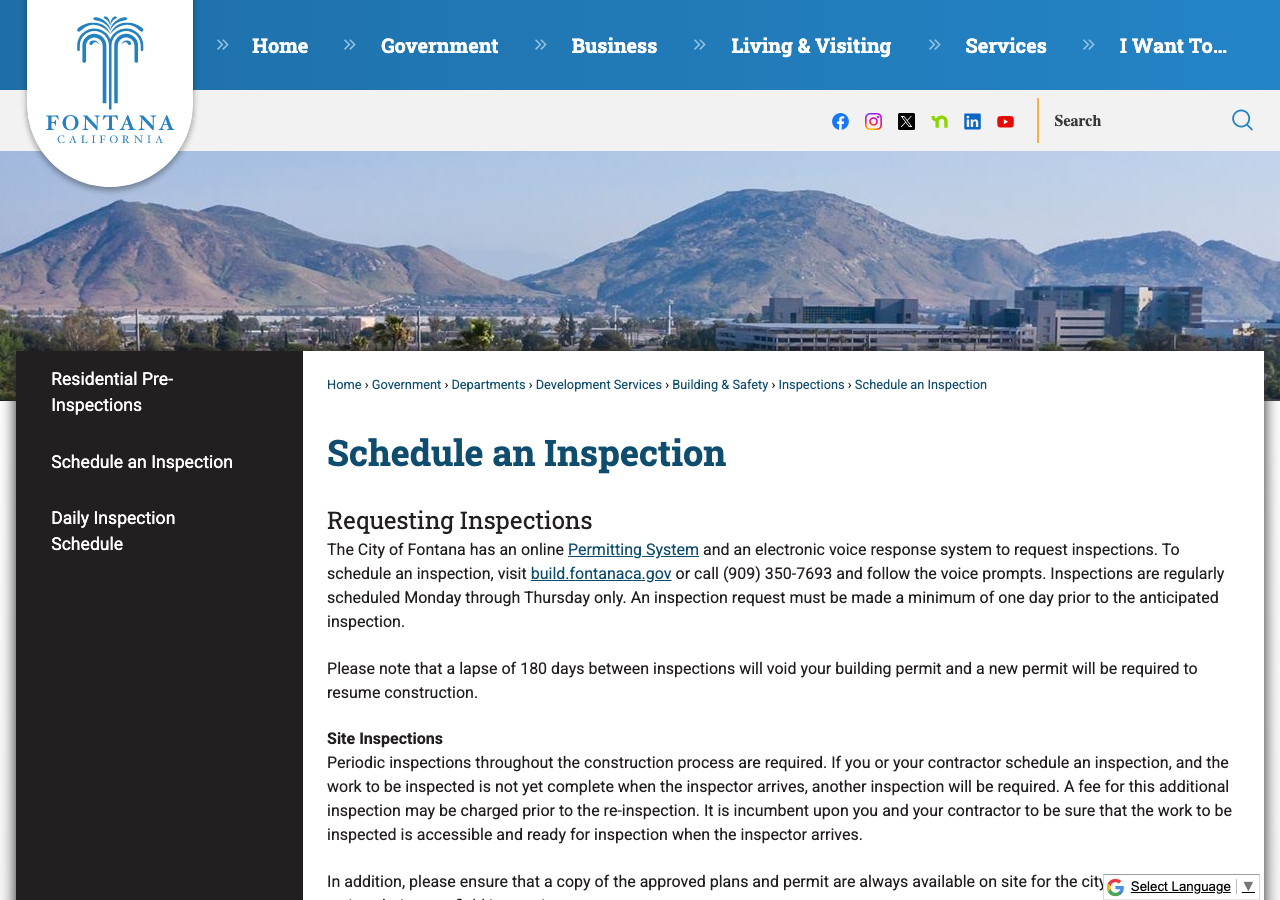
Average approval time — application to PTO
From the CPUC interconnection record. Bars show the average days taken each year; a year with no recorded projects is left blank rather than drawn as zero.