
City of Fremont
Alameda County
City of Fremont is a city authority in the State of California, serving 230,504 residents. 12,715 residential solar installs are on record here. This page is the permit route for that jurisdiction: the fifteen steps from working out who has a say over an address through to permission to operate, the documents this authority publishes, and 62 answers taken from those documents and dated.
Permitting 5 steps · 28 questions
Whether a permit is needed — Yes Q3 Electrical and building permits — Combined Q4 Plan review — ISP: same-day for over-the-counter, 1-3 days otherwise (per FMC 15.63.060(a)). Standard permit: 'Solar, Residential, Q18 Where you file — Citizen Access (Accela-based portal) Q20
- Permit required
- Yes98% source
- What it costs
- ISP: $133 flat (0-15kW) + $7.50/kW over 15kW (city inspection fee), plus a separate $25 SolarAPP+ processing fee paid to the third-party platform.95% source
- Plan review turnaround
- ISP: same-day for over-the-counter, 1-3 days otherwise (per FMC 15.63.060(a)). Standard permit: 'Solar, Residential, Roof-mount P/V <10kW' = 3 business days (1st and 2nd+ cycle);92% source
- Key document
- municipal code cited by 5 open the document
-
Confirm who has a say over your address
A city address is usually permitted by the city, not the county — but not always, and some authorities keep building and hand electrical to someone else. Getting this wrong costs the whole submittal, because every requirement below belongs to whoever actually holds jurisdiction. Check the overlays in the same pass: an HOA, a historic district, a windstorm certification or a system-size cap can reshape the design, and all of them are cheaper to find now than after the array is laid out.
- Is this authority the AHJ for residential solar at this address? Yes 95% · department page
- What does this authority permit itself, and what does it delegate? Both 90% · municipal code
- Is a permit required for a residential rooftop PV system? Yes 98% · municipal code
- Is there a separate electrical permit, or is it combined? Combined 88% · department page
- Is a HOA or architectural approval required first? No 72% · municipal code
- Is there a historic-district review? Yes, conditionally 90% · municipal code
- Is a Specific Use Permit or Council approval ever required? Yes, in limited cases: the Building Official may require a 'solar use permit' (appealable to the Planning Commission) if the system could have a 'specific, adverse impact' on public health/safety 90% · municipal code
- Is there a system-size cap on residential generation? No absolute cap; systems up to 10kW AC (or 30kW thermal) on a single/duplex-family home qualify for the streamlined/expedited process (FMC 15.63), larger residential systems are still permittable but go through the standard Renewable Energy Permit track and possibly a 'solar use permit' review 82% · municipal code
-
Check who is allowed to apply
Several authorities require the electrical permit to be pulled by a licensed electrician, or require the contractor to be registered with them BEFORE applying. Registration is not same-day. This is second on the list rather than fourth because it is the step most likely to stop the job before the drawings matter.
- Who is allowed to pull the electrical permit? Licensed contractor (homeowner may self-permit under an owner-builder exemption) 82% · municipal code
- Must the contractor be registered with this authority before applying? Yes, for the ISP path (must be registered with SolarAPP+); standard Citizen Access account otherwise 75% · department page
- Is a homeowner permitted to self-install and self-permit? Yes, via the standard Renewable Energy Permit as an owner-builder (not via the ISP/SolarAPP+ fast-track, which is contractor-only) 78% · municipal code
-
Build the submittal package
Almost everywhere wants a site plan, a one-line or three-line electrical diagram, equipment cut sheets with listings, and a structural attachment detail. Build it against the published checklist rather than the last jurisdiction you worked in — the checklist is what the reviewer marks against.
- What documents make up a complete submittal? For ISP: SolarAPP+ Approval Documents, SolarAPP+ Inspection Checklist, Homeowner Acknowledgement Instant Solar Permit Form, ESS UL9540 Test Report (if stacked storage), Proof of Ownership (if recently transferred) 92% · published checklist
-
Apply and pay
Most authorities now take the whole application through a portal, and several states cap or constrain what a residential solar permit may cost. Check whether plan check is billed separately before you quote the job.
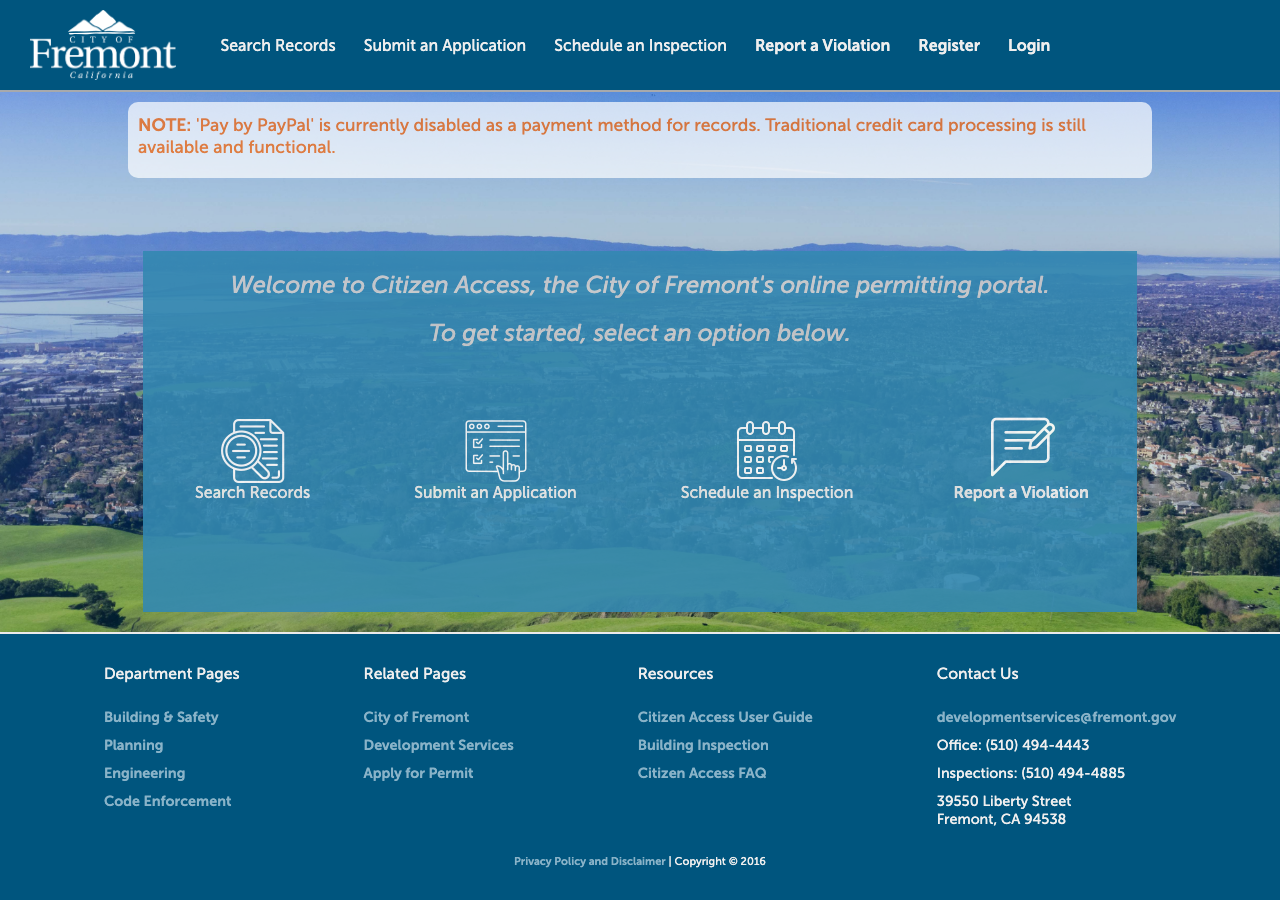
- Which permit portal does this authority use? Citizen Access (Accela-based portal) 97% · portal landing page
- Can the whole application be completed online? Yes 93% · portal / department page
- What does a residential solar permit cost? ISP: $133 flat (0-15kW) + $7.50/kW over 15kW (city inspection fee), plus a separate $25 SolarAPP+ processing fee paid to the third-party platform. Standard Renewable Energy Permit (non-ISP): $280 flat (0-15kW) + $15/kW over 15kW. Residential thermal: $280 flat (0-10kWth) + $15/kWth over 10kWth. Solar removal/replacement under a reroof permit: $399 flat. 95% · fee schedule
- How is the fee calculated? Tiered 88% · fee schedule
- Is there a separate plan-check fee? No 68% · fee schedule
-
Plan review — and start the utility in parallel
Interconnection is a separate process from the permit and usually the longer pole. Where the utility does not depend on the permit being issued, running both at once is the single biggest saving available on a residential job.
- What is the stated plan-review turnaround? ISP: same-day for over-the-counter, 1-3 days otherwise (per FMC 15.63.060(a)). Standard permit: 'Solar, Residential, Roof-mount P/V <10kW' = 3 business days (1st and 2nd+ cycle); 'Solar, Residential, Ground-Mount & Roof-Mount P/V ≥10kW' = 15 days (1st cycle) / 10 days (2nd+ cycle). 92% · department page / turnaround-time schedule
- How long is an issued permit valid before it expires? 365 days to commence work from issuance; work is deemed suspended/abandoned (and permit voided) if halted for 180 days 82% · municipal code
- Which utility handles interconnection here? PG&E (Pacific Gas & Electric) 92% · department page
- Where does the utility sit in the sequence? Parallel (application can be submitted before/during construction), but Permission to Operate (PTO) specifically requires proof of a finaled/signed-off building permit 68% · utility program page
28 questions answered against City of Fremont’s own published documents
Q1 Is this authority the AHJ for residential solar at this address? Core Jurisdiction & scope
Yes
Why the confidence is not higherCity's own ISP and Permit Types pages plus FMC Ch. 15.63 show Fremont's Building & Safety Division issues residential solar permits directly.
department page checked 2026-08-30 https://www.fremont.gov/government/departments/community-development/planning-building-permit-services/planning-building-permits/permit-types
Q2 What does this authority permit itself, and what does it delegate? Core Jurisdiction & scope
Both
Why the confidence is not higherFMC 15.10.050 (CBC 104.12) makes the city Building Official the 'Authority Having Jurisdiction'; CEC/electrical review is administered by the same division (FMC 15.25), not delegated elsewhere.
municipal code checked 2026-08-30 https://www.codepublishing.com/CA/Fremont/html/Fremont15/Fremont1510.html
Q3 Is a permit required for a residential rooftop PV system? Core Jurisdiction & scope
Yes
Why the confidence is not higherBoth the 'Renewable Energy Permit' and 'Instant Solar Permit (ISP)' record types exist specifically for this; FMC 15.63.030 states the chapter 'applies to the permitting of all small residential rooftop solar energy systems.'
municipal code checked 2026-08-30 https://www.codepublishing.com/CA/Fremont/html/Fremont15/Fremont1563.html
Q4 Is there a separate electrical permit, or is it combined? Core Jurisdiction & scope
Combined
Why the confidence is not higherSolar is processed as a single 'Renewable Energy Permit' or ISP record covering electrical scope; the city's separate 'Residential Electrical' express permit explicitly states it is 'Not applicable for solar panels or battery storage power walls,' confirming solar isn't split into its own electrical permit.
department page checked 2026-08-30 https://www.fremont.gov/government/departments/community-development/planning-building-permit-services/planning-building-permits/permit-types
Q5 Who is allowed to pull the electrical permit? Core Who may apply
Licensed contractor (homeowner may self-permit under an owner-builder exemption)
Why the confidence is not higherFMC 15.10.070 (amended CBC 105.3.3): 'Permits shall be issued only to State licensed Architect, Engineer, or contractor...Exception: Permits may be issued to owners certifying proof of exemption under...Business and Professions Code Section 7044.' ISP specifically requires a SolarAPP+-registered contractor.
municipal code checked 2026-08-30 https://www.codepublishing.com/CA/Fremont/html/Fremont15/Fremont1510.html
Q6 Must the contractor be registered with this authority before applying? Core Who may apply
Yes, for the ISP path (must be registered with SolarAPP+); standard Citizen Access account otherwise
Why the confidence is not higherISP page: 'The ISP application is only for use by contractors registered with SolarAPP+.' Standard Renewable Energy Permit only requires a normal Citizen Access account, not a separate pre-registration.
department page checked 2026-08-30 https://www.fremont.gov/government/departments/community-development/planning-building-permit-services/planning-building-permits/permit-types/instant-solar-permit-isp
Q7 Is a homeowner permitted to self-install and self-permit? Who may apply
Yes, via the standard Renewable Energy Permit as an owner-builder (not via the ISP/SolarAPP+ fast-track, which is contractor-only)
Why the confidence is not higherFMC 105.3.3 owner-builder exemption (B&P §7044) applies generally to building permits; ISP page explicitly restricts ISP itself to SolarAPP+-registered contractors, so a self-installing homeowner would use the standard track.
municipal code checked 2026-08-30 https://www.codepublishing.com/CA/Fremont/html/Fremont15/Fremont1510.html
Q8 What documents make up a complete submittal? Core Submittal package
For ISP: SolarAPP+ Approval Documents, SolarAPP+ Inspection Checklist, Homeowner Acknowledgement Instant Solar Permit Form, ESS UL9540 Test Report (if stacked storage), Proof of Ownership (if recently transferred)
Why the confidence is not higherEnumerated directly on the ISP page's 'Upload Required Submittal Documents' section. Standard (non-ISP) Renewable Energy Permit checklist was not found published separately (see not_found).
published checklist checked 2026-08-30 https://www.fremont.gov/government/departments/community-development/planning-building-permit-services/planning-building-permits/permit-types/instant-solar-permit-isp
Q9 How many copies, and in what format? Submittal package
Nothing published by this authority.
Where we lookedISP page, Apply for Permit page, Permit Forms & Handouts page — general Citizen Access electronic-submittal rules (PDF via 'Scout' analyzer, page-count limits) were found but no solar-specific copy/format requirement distinct from the general electronic-submittal rule.
Q10 Is a site plan required, and what must it show? Core Submittal package
Nothing published by this authority.
Where we lookedSingle-Family Dwelling Projects (Non-AB2234) submittal-document matrix PDF (no 'Solar'/'Renewable Energy' row present at all — extracted full text via pdf.js and confirmed absence), ISP page, FMC 15.63.
https://www.fremont.gov/home/showpublisheddocument/14755/638388527766470000
Q11 Is a one-line / three-line diagram required? Core Drawings & calculations
Nothing published by this authority.
Where we lookedSame submittal matrix (no solar row), FMC 15.63, Permit Forms & Handouts list — no Fremont-published document explicitly states a one-line/three-line diagram requirement for the standard Renewable Energy Permit (the SolarAPP+ platform used for the ISP path implicitly requires one, but that is a third-party platform requirement, not a Fremont document).
Q12 Are string and conductor calculations required? Drawings & calculations
Nothing published by this authority.
Where we lookedSame as Q11 — no Fremont-published string/conductor calculation requirement found distinct from SolarAPP+'s own platform criteria.
Q13 Is a structural PE stamp required, and at what threshold? Core Engineering & stamps
Nothing published by this authority.
Where we lookedFMC 15.10 (Building Code amendments), FMC 15.63, Permit Forms & Handouts — found general geotechnical/structural stamp requirements (FMC 1803.8) unrelated to solar; no solar-specific structural PE stamp threshold published.
https://www.codepublishing.com/CA/Fremont/html/Fremont15/Fremont1510.html
Q14 Is an electrical PE stamp required, and at what threshold? Engineering & stamps
Nothing published by this authority.
Where we lookedFMC 15.25 (Electrical Code, only Article 110 amended), FMC 15.63 — no electrical PE stamp threshold specific to solar found.
https://www.codepublishing.com/CA/Fremont/html/Fremont15/Fremont1525.html
Q15 What does a residential solar permit cost? Core Fees
ISP: $133 flat (0-15kW) + $7.50/kW over 15kW (city inspection fee), plus a separate $25 SolarAPP+ processing fee paid to the third-party platform. Standard Renewable Energy Permit (non-ISP): $280 flat (0-15kW) + $15/kW over 15kW. Residential thermal: $280 flat (0-10kWth) + $15/kWth over 10kWth. Solar removal/replacement under a reroof permit: $399 flat.
Why the confidence is not higherRead directly from the city's Master Fee Schedule (effective July 1, 2026), extracted with pdf.js since the PDF viewer strips to no plain text otherwise; cross-checked against the ISP page's stated $25 SolarAPP+ fee, which is a separate, non-city charge.
fee schedule checked 2026-08-30 https://www.fremont.gov/home/showpublisheddocument/20810/639184906195370000
Q16 How is the fee calculated? Core Fees
Tiered
Why the confidence is not higherFee schedule shows a flat base rate for the first tier (e.g., 0-15kW) plus a per-kW surcharge above that threshold — closest fit is 'Tiered' rather than pure Flat or pure Per-kW.
fee schedule checked 2026-08-30 https://www.fremont.gov/home/showpublisheddocument/20810/639184906195370000
Q17 Is there a separate plan-check fee? Fees
No
Why the confidence is not higherFee schedule footnote for the ISP line states the fee 'includes application, plan check, inspection'; the standard Renewable Energy Permit fee footnotes (22-28) describe similarly bundled flat amounts derived from blended hourly-rate equivalents rather than a separately itemized plan-check line.
fee schedule checked 2026-08-30 https://www.fremont.gov/home/showpublisheddocument/20810/639184906195370000
Q18 What is the stated plan-review turnaround? Core Timeline & validity
ISP: same-day for over-the-counter, 1-3 days otherwise (per FMC 15.63.060(a)). Standard permit: 'Solar, Residential, Roof-mount P/V <10kW' = 3 business days (1st and 2nd+ cycle); 'Solar, Residential, Ground-Mount & Roof-Mount P/V ≥10kW' = 15 days (1st cycle) / 10 days (2nd+ cycle).
Why the confidence is not higherDirect citation from FMC 15.63.060(a) and the city's own 'Turnaround Times: Permit Plan Review' PDF, extracted via pdf.js.
department page / turnaround-time schedule checked 2026-08-30 https://www.fremont.gov/home/showpublisheddocument/14745/638705520046830000
Q19 How long is an issued permit valid before it expires? Timeline & validity
365 days to commence work from issuance; work is deemed suspended/abandoned (and permit voided) if halted for 180 days
Why the confidence is not higherGeneral building-permit expiration rule at FMC 15.10.070 (amended CBC 105.5); not solar-specific but applies to all building permits including solar.
municipal code checked 2026-08-30 https://www.codepublishing.com/CA/Fremont/html/Fremont15/Fremont1510.html
Q20 Which permit portal does this authority use? Core Portal & process
Citizen Access (Accela-based portal)
Why the confidence is not higherNamed repeatedly across the ISP, Apply for Permit, and Permit Center pages as the city's online permitting portal.
portal landing page checked 2026-08-30 https://www.fremont.gov/government/departments/community-development/planning-building-permit-services/planning-building-permits/apply-for-permit
Q21 Can the whole application be completed online? Core Portal & process
Yes
Why the confidence is not higherApply for Permit page walks through a fully online submittal, upload, payment, and record-tracking process through Citizen Access; ISP is issued automatically online once documents/fees are complete.
portal / department page checked 2026-08-30 https://www.fremont.gov/government/departments/community-development/planning-building-permit-services/planning-building-permits/apply-for-permit
Q22 Which utility handles interconnection here? Core Utility interconnection
PG&E (Pacific Gas & Electric)
Why the confidence is not higherListed as the electric utility contact on the city's own Outside Agency Permits page; Fremont sits in PG&E's Bay Area territory (not a municipally-owned utility city).
department page checked 2026-08-30 https://www.fremont.gov/government/departments/community-development/planning-building-permit-services/planning-building-permits/outside-agency-permits
Q23 Where does the utility sit in the sequence? Core Utility interconnection
Parallel (application can be submitted before/during construction), but Permission to Operate (PTO) specifically requires proof of a finaled/signed-off building permit
Why the confidence is not higherPG&E's own NEM program page states applicants should submit documentation 'as soon as possible, even before the system is built,' and that NEM applications require 'final electrical inspection clearance' before PTO is granted — meaning the two tracks run in parallel but converge at PTO. Note: could not load the live pge.com page directly with the browser tool (site permission denied); this synthesis comes from a WebFetch summary of that same PG&E page plus a corroborating PG&E 'Larger self-generation' page snippet found via search ('Signed-Off Building Permit...indicates the finished project has been inspected and approved by the local [AHJ]').
utility program page checked 2026-08-30 https://www.pge.com/en/about/doing-business-with-pge/interconnections/net-energy-metering-program.html
Q24 Is a HOA or architectural approval required first? Overlays & special cases
No
Why the confidence is not higherNo Fremont-specific HOA pre-approval requirement found; state law (Civil Code §714, the Solar Rights Act) limits an HOA/CC&R to only 'reasonable restrictions' and Fremont's own FMC 15.63.020(d)-(e) explicitly imports that standard, which forecloses a blanket HOA veto/precondition.
municipal code checked 2026-08-30 https://www.codepublishing.com/CA/Fremont/html/Fremont15/Fremont1563.html
Q25 Is there a historic-district review? Overlays & special cases
Yes, conditionally
Why the confidence is not higherFMC 15.63.030(c): 'Historical architectural review pursuant to Chapters 18.135 and 18.175 shall be required if the small residential rooftop solar energy system is proposed to be located on property containing a registered or potential registered [historic] resource.'
municipal code checked 2026-08-30 https://www.codepublishing.com/CA/Fremont/html/Fremont15/Fremont1563.html
Q26 Is a wind or windstorm certification required? Overlays & special cases
Nothing published by this authority.
Where we lookedFMC 15.10, FMC 15.63 — no wind/windstorm certification requirement found; Fremont is not in a designated high-wind/hurricane design region under the adopted CBC, but no explicit city statement of exemption was found either.
https://www.codepublishing.com/CA/Fremont/html/Fremont15/Fremont1563.html
Q27 Is a Specific Use Permit or Council approval ever required? Overlays & special cases
Yes, in limited cases: the Building Official may require a 'solar use permit' (appealable to the Planning Commission) if the system could have a 'specific, adverse impact' on public health/safety
Why the confidence is not higherDirect citation, FMC 15.63.060(b)-(d).
municipal code checked 2026-08-30 https://www.codepublishing.com/CA/Fremont/html/Fremont15/Fremont1563.html
Q28 Is there a system-size cap on residential generation? Overlays & special cases
No absolute cap; systems up to 10kW AC (or 30kW thermal) on a single/duplex-family home qualify for the streamlined/expedited process (FMC 15.63), larger residential systems are still permittable but go through the standard Renewable Energy Permit track and possibly a 'solar use permit' review
Why the confidence is not higherFMC 15.63.020(b)(1) defines 'small residential rooftop solar' (the class eligible for expedited review) with this threshold; the fee schedule has explicit '>15kW' tiers proving larger systems are still permitted, just costed/reviewed differently.
municipal code checked 2026-08-30 https://www.codepublishing.com/CA/Fremont/html/Fremont15/Fremont1563.html
Lines marked with a percentage were read off this authority’s own published documents. Unmarked guidance is general good practice, not this jurisdiction’s rule — always confirm against the authority before you submit.
Install 5 steps · 20 questions
-
Build to the code editions actually in force here
The NEC edition a jurisdiction enforces is often a cycle behind the newest one published, and local amendments sit on top of it. Rapid shutdown, conductor sizing and labelling all change between editions, so the edition in force is the first thing to establish, not the last.
- Which NEC edition is in force? 2023 78% · adopting ordinance
- Which building code edition is in force? 2025 California Building Code (Title 24, Part 2), effective January 1, 2026 97% · adopting ordinance / department page
- Which fire code edition is in force? 2025 California Fire Code 92% · adopting ordinance
- Are there local amendments to any of the above? Yes 95% · municipal code
- What is the installation judged against? The 2025 CEC/CBC as locally amended, plus FMC Ch. 15.63's own health/safety standard ('applicable safety and performance standards established by the California Electrical Code, IEEE, UL-type testing laboratories, and CPUC rules') 85% · municipal code
-
Fire access, setbacks and pathways
Ridge setbacks and roof access pathways are fire-service requirements and they constrain the array layout. They are the most common cause of a redesign after the fire department comments on a plan set.
- What ridge setback and access pathways are required? No Fremont-specific ridge-setback/pathway amendment found; falls back to the base (unamended) 2025 CFC's PV provisions 45% · municipal code (absence proved)
-
Rapid shutdown
Which rapid-shutdown rule applies follows directly from the NEC edition in force, and the initiation device has to be at a location the fire service can reach and identify. This is inspected, and it is labelled.
- Is rapid shutdown required, and to which NEC edition? Yes, required per the adopted 2025 CEC (NEC Art. 690.12); no local amendment alters or removes this requirement 68% · municipal code
-
Labels and placards
The NEC sets a baseline for permanent markings at the service equipment and the disconnecting means. On top of that, an authority may specify its own wording, and the utility may specify more again. Where any of them writes its own text, a generic off-the-shelf label set will not pass — this is the detail most often fixed on a return visit.
- Does the authority specify placard wording of its own? No 78% · department handout (absence proved)
- Does it specify letter height, colour or material? No 78% · department handout (absence proved)
-
Disconnect, storage and listed equipment
Where the AC disconnect must sit relative to the meter is usually the utility's rule, not the building department's. Battery storage frequently carries its own permit, its own inspection and its own fire conditions.
- Must equipment be on a specific approved list? Yes (implied) 65% · department handout
- Are batteries permitted, and under what conditions? Yes, permitted as part of the same Renewable Energy Permit/ISP, with or without solar; a UL9540 test report is required if the ESS is a 'stacked' storage configuration 90% · department page
- Is there a separate ESS permit or inspection? No 80% · department page
20 questions answered against City of Fremont’s own published documents
Q29 Which NEC edition is in force? Core Code editions in force
2023
Why the confidence is not higherFremont adopted the '2025 California Electrical Code' effective Jan 1, 2026 (FMC 15.25.020, Ord. 13-2025). California's 2025 Title 24 triennial cycle bases its CEC on the 2023 NFPA 70 (NEC); I did not find that base-edition cross-reference spelled out verbatim on Fremont's own pages, so this is inference from the known CA code-cycle mapping, not a direct city statement — flagged accordingly.
adopting ordinance checked 2026-08-30 https://www.codepublishing.com/CA/Fremont/html/Fremont15/Fremont1525.html
Q30 Which building code edition is in force? Core Code editions in force
2025 California Building Code (Title 24, Part 2), effective January 1, 2026
Why the confidence is not higherDirectly stated on the city's Building Code page and FMC 15.10.020; adopted by Ord. 13-2025 on Nov. 18, 2025.
adopting ordinance / department page checked 2026-08-30 https://www.fremont.gov/government/departments/community-development/planning-building-permit-services/building-code
Q31 Which fire code edition is in force? Code editions in force
2025 California Fire Code
Why the confidence is not higherFMC Ch. 15.35 title and section 15.35.030 ('Adoption of the 2025 CFC with amendments'); part of the same Nov. 2025 code-adoption cycle as the building code.
adopting ordinance checked 2026-08-30 https://www.codepublishing.com/CA/Fremont/html/Fremont15/Fremont1535.html
Q32 Are there local amendments to any of the above? Core Code editions in force
Yes
Why the confidence is not higherExtensive local amendments exist to the Building Code (FMC 15.10, e.g. amended permit/fee/inspection/occupancy sections), the Electrical Code (FMC 15.25, Article 110 amendment), and the Fire Code (FMC 15.35, e.g. Knox Remote Power Box requirement explicitly listing 'Solar, photovoltaic, wind-powered systems' and 'Battery Storage Facilities').
municipal code checked 2026-08-30 https://www.codepublishing.com/CA/Fremont/html/Fremont15/Fremont1510.html
Q33 What is the installation judged against? Core Electrical
The 2025 CEC/CBC as locally amended, plus FMC Ch. 15.63's own health/safety standard ('applicable safety and performance standards established by the California Electrical Code, IEEE, UL-type testing laboratories, and CPUC rules')
Why the confidence is not higherDirect citation, FMC 15.63.040(c).
municipal code checked 2026-08-30 https://www.codepublishing.com/CA/Fremont/html/Fremont15/Fremont1563.html
Q34 Is there a local rule on service upgrades or busbar sizing? Electrical
Nothing published by this authority.
Where we lookedFMC 15.25 (Fremont Electrical Code) — read in full; only Article 110 (mechanical strength/grounding electrodes) is locally amended. No busbar-sizing or service-upgrade-specific local rule (e.g., 120% rule override) found.
https://www.codepublishing.com/CA/Fremont/html/Fremont15/Fremont1525.html
Q35 Is a specific mounting system or attachment spacing required? Structural & mounting
Nothing published by this authority.
Where we lookedFMC 15.10, FMC 15.63, Permit Forms & Handouts — no Fremont-specific mounting-system or attachment-spacing requirement found beyond deferring to manufacturer engineering/listed racking under the adopted CBC/CRC.
https://www.codepublishing.com/CA/Fremont/html/Fremont15/Fremont1563.html
Q36 What ridge setback and access pathways are required? Core Fire pathways & setbacks
No Fremont-specific ridge-setback/pathway amendment found; falls back to the base (unamended) 2025 CFC's PV provisions
Why the confidence is not higherReviewed the full FMC 15.35 (Fire Code) table of contents and confirmed there is no chapter/section specifically amending rooftop-PV setbacks or fire-access pathways (the only solar/PV-related local fire amendment found is the Knox Remote Power Box key-access rule, unrelated to setbacks). This is a proved absence of a local override, not a full read of the underlying 2025 CFC's own default PV setback text, hence capped confidence.
municipal code (absence proved) checked 2026-08-30 https://www.codepublishing.com/CA/Fremont/html/Fremont15/Fremont1535.html
Q37 Is rapid shutdown required, and to which NEC edition? Core Rapid shutdown
Yes, required per the adopted 2025 CEC (NEC Art. 690.12); no local amendment alters or removes this requirement
Why the confidence is not higherFMC 15.25.030 shows only Article 110 was locally amended; Article 690 (PV, including rapid shutdown) was left as adopted from the 2025 CEC base text, which I did not independently re-read section-by-section — inferred from the amendment list being exhaustive and short.
municipal code checked 2026-08-30 https://www.codepublishing.com/CA/Fremont/html/Fremont15/Fremont1525.html
Q38 Which placards does this authority require at the service equipment? Core Labels Signage & labelling
Nothing published by this authority.
Where we lookedFire Appliance Signs handout (confirmed off-topic, see Q39/40), Permit Forms & Handouts full list, FMC 15.63, FMC 15.35 TOC — no Fremont-published placard list specific to PV service-equipment labeling beyond default NEC/CEC-mandated labels.
https://www.fremont.gov/home/showpublisheddocument/10458/637910770697630000
Q39 Does the authority specify placard wording of its own? Core Labels Signage & labelling
No
Why the confidence is not higherSearched the city's own placard-specific handout ('Fire Department Appliance Signs') and confirmed via both a positive control (document discusses non-solar appliance signs in detail) and the search term itself that it contains zero mentions of 'solar,' 'photovoltaic,' or 'PV' — it governs FDC/PIV/riser signage only. No other Fremont-published solar placard-wording spec was found across the Permit Forms & Handouts page, FMC Ch. 15.63, 15.10, or 15.25.
department handout (absence proved) checked 2026-08-30 https://www.fremont.gov/home/showpublisheddocument/10458/637910770697630000
Q40 Does it specify letter height, colour or material? Core Labels Signage & labelling
No
Why the confidence is not higherSame absence proof as Q39 — the city's only placard-spec document (Fire Appliance Signs) does not address solar/PV and no other Fremont document specifying letter height/colour/material for PV labels was found.
department handout (absence proved) checked 2026-08-30 https://www.fremont.gov/home/showpublisheddocument/10458/637910770697630000
Q41 Is a site plan / facility map placard required, and what must it show? Core Labels Signage & labelling
Nothing published by this authority.
Where we lookedPermit Forms & Handouts, FMC Title 15 chapters reviewed — no Fremont-specific site-plan/facility-map placard spec found beyond the default adopted-code (705.10-equivalent) requirement.
Q42 Does the UTILITY specify placards beyond the AHJ's? Core Labels Signage & labelling
Nothing published by this authority.
Where we lookedPG&E's own NEM/interconnection pages via WebFetch summary and Google search snippets; the claude-in-chrome browser tool returned 'Permission denied for reading page content' on pge.com domain (no site-level permission granted), preventing a full read of PG&E's DG/Rule 21 interconnection handbook for utility-specific placard requirements.
Q43 Where must the labels be placed? Core Labels Signage & labelling
Nothing published by this authority.
Where we lookedSame PG&E access limitation as Q42, plus Fremont's own Permit Forms & Handouts and FMC 15.63 — no specific label-placement requirement beyond the default adopted NEC/CEC locations.
Q44 Must equipment be on a specific approved list? Equipment listing
Yes (implied)
Why the confidence is not higherThe city's 'Recognized Testing Agencies for Electrical Equipment Certification' handout lists third-party agencies the Building Division accepts for field-evaluating electrical equipment that is NOT already listed by a standard NRTL — this only makes sense if the default rule requires equipment to be on/covered by an approved listing.
department handout checked 2026-08-30 https://www.fremont.gov/home/showpublisheddocument/13021/638175858269170000
Q45 Are batteries permitted, and under what conditions? Core Battery / ESS
Yes, permitted as part of the same Renewable Energy Permit/ISP, with or without solar; a UL9540 test report is required if the ESS is a 'stacked' storage configuration
Why the confidence is not higherDirect citation, ISP page submittal-documents list and Permit Types page ('Renewable Energy Permit: ...an energy storage backup system').
department page checked 2026-08-30 https://www.fremont.gov/government/departments/community-development/planning-building-permit-services/planning-building-permits/permit-types/instant-solar-permit-isp
Q46 Is there a separate ESS permit or inspection? Battery / ESS
No
Why the confidence is not higherBattery/ESS is folded into the same 'Renewable Energy Permit' or ISP record type rather than requiring its own separate permit or inspection.
department page checked 2026-08-30 https://www.fremont.gov/government/departments/community-development/planning-building-permit-services/planning-building-permits/permit-types
Q47 Is a ground mount treated as a structure? Core Ground mount
Nothing published by this authority.
Where we lookedPermit Types page, Turnaround Times PDF (which groups 'Ground-Mount & Roof-Mount' together under one fee/timeline row, implying similar treatment but not stating a zoning/structure classification), FMC 15.63 — no explicit statement that a ground-mount array is classified as an accessory structure for zoning/setback purposes.
https://www.fremont.gov/home/showpublisheddocument/14745/638705520046830000
Q48 Where must the AC disconnect be, relative to the meter? Core Utility equipment
Nothing published by this authority.
Where we lookedOutside Agency Permits page (PG&E contact only, no technical spec), FMC 15.63, Permit Forms & Handouts — no Fremont-published or accessible PG&E document specifying AC disconnect placement relative to the meter (PG&E site access blocked, see Q42).
Lines marked with a percentage were read off this authority’s own published documents. Unmarked guidance is general good practice, not this jurisdiction’s rule — always confirm against the authority before you submit.
Inspection 5 steps · 14 questions
-
Book it
Booking is a portal, a phone call or an email depending on the authority, and the notice required is rarely zero. Book before the work is finished rather than after — the lead time, not the work, is usually what sets the date.
- How is an inspection booked? Portal (Citizen Access) or Phone (Inspection Scheduling Line, 510-494-4885, 24/7 IVR) 92% · department page
- How much notice is required? Effectively 1 business day — cutoff for next-day inspection requests is 2:00 p.m. the business day before 88% · department page
- Are same-day or AM/PM windows offered? No formal AM/PM window is published; instead an estimated inspector arrival time is emailed/posted in Citizen Access after 6:00 p.m. the evening before 80% · department page
-
Know who turns up
Some authorities inspect their own solar work; some delegate it, and a few do not inspect the PV equipment itself at all. Who is coming determines what they will look at.
- Does this AHJ perform its own final solar inspection? Yes 93% · department page
- If delegated, to whom? N/A — not delegated 88% · department page
-
Work the stages in order
A rough-in or mid-roof inspection, where one is required, has to happen before the work it covers is closed up. Missing a stage means opening something back up, and it is the most expensive kind of correction.
- Which inspections are required, and in what order? For expedited/small residential rooftop systems: a single consolidated final inspection (re-inspection allowed on failure). Larger/non-expedited systems follow the standard building-permit inspection sequence culminating in a final inspection. 82% · municipal code
- Is a rough-in or mid-roof inspection required? No, not for a standard new rooftop PV install (single consolidated final inspection per FMC 15.63.060(g)). A mid-roof 'in-progress' inspection IS required specifically when REROOFING a home that has existing solar PV, per a dedicated city handout. 80% · department handout
-
Have the paperwork on site
The approved plan set, the permit, and the equipment listings should be on site and reachable. Inspectors routinely verify that installed equipment matches what was approved, and that the labels are the ones the plan set promised.
- Is there a published inspection checklist? Yes (for ISP) 78% · department page
- What must be on site at inspection? The building permit itself along with all approved plans/documentation, kept on site until final approval 78% · municipal code
-
Sign-off, and permission to operate
Passing gives you a final or an equivalent sign-off. That is not the same as permission to operate: PTO comes from the utility, and who tells the utility the inspection passed varies. A system left switched off for weeks is usually waiting on this handover.
- What is issued on pass? Final (a signed-off building permit) 82% · municipal code
- Who notifies the utility for PTO? Installer/contractor (submits final inspection clearance documentation to PG&E, which then issues the PTO letter) 68% · utility program page
- Is there a re-inspection fee? $133 flat per inspection 88% · fee schedule
- How are corrections issued and cleared? For plan-review deficiencies: a written correction notice is sent to the applicant for resubmission (FMC 15.63.060(f)); general corrections/comments are transmitted and tracked through Citizen Access, viewable under the record's 'Documents' tab 75% · municipal code
14 questions answered against City of Fremont’s own published documents
Q49 How is an inspection booked? Core Booking & scheduling
Portal (Citizen Access) or Phone (Inspection Scheduling Line, 510-494-4885, 24/7 IVR)
Why the confidence is not higherBoth methods directly described on the Inspections page.
department page checked 2026-08-30 https://www.fremont.gov/government/departments/community-development/planning-building-permit-services/planning-building-permits/inspections
Q50 How much notice is required? Core Booking & scheduling
Effectively 1 business day — cutoff for next-day inspection requests is 2:00 p.m. the business day before
Why the confidence is not higherStated on the Inspections page ('cut off time for next day inspections is 2:00 p.m. the business day prior') and echoed in the ISP fee terms.
department page checked 2026-08-30 https://www.fremont.gov/government/departments/community-development/planning-building-permit-services/planning-building-permits/inspections
Q51 Are same-day or AM/PM windows offered? Booking & scheduling
No formal AM/PM window is published; instead an estimated inspector arrival time is emailed/posted in Citizen Access after 6:00 p.m. the evening before
Why the confidence is not higherDirectly described on the Inspections page's 'Inspector Name and Time of Inspection' section.
department page checked 2026-08-30 https://www.fremont.gov/government/departments/community-development/planning-building-permit-services/planning-building-permits/inspections
Q52 Does this AHJ perform its own final solar inspection? Core Who inspects
Yes
Why the confidence is not higherThe Inspections page lists 'Solar permits' among the permit types requiring inspection and names the city's own Building Inspector staff (with direct mobile contacts) as the inspectors performing them — not delegated to a third party.
department page checked 2026-08-30 https://www.fremont.gov/government/departments/community-development/planning-building-permit-services/planning-building-permits/inspections
Q53 If delegated, to whom? Core Who inspects
N/A — not delegated
Why the confidence is not higherFollows from Q52; the city performs its own solar inspections via its Building & Safety Division inspectors.
department page checked 2026-08-30 https://www.fremont.gov/government/departments/community-development/planning-building-permit-services/planning-building-permits/inspections
Q54 Which inspections are required, and in what order? Core Stages & sequence
For expedited/small residential rooftop systems: a single consolidated final inspection (re-inspection allowed on failure). Larger/non-expedited systems follow the standard building-permit inspection sequence culminating in a final inspection.
Why the confidence is not higherDirect citation, FMC 15.63.060(g): 'Only one inspection shall be required and performed by the building and safety division for small residential rooftop solar energy systems eligible for expedited review... If a small residential rooftop solar energy system fails inspection, a subsequent inspection is authorized.'
municipal code checked 2026-08-30 https://www.codepublishing.com/CA/Fremont/html/Fremont15/Fremont1563.html
Q55 Is a rough-in or mid-roof inspection required? Stages & sequence
No, not for a standard new rooftop PV install (single consolidated final inspection per FMC 15.63.060(g)). A mid-roof 'in-progress' inspection IS required specifically when REROOFING a home that has existing solar PV, per a dedicated city handout.
Why the confidence is not higherFMC 15.63.060(g) plus the city's own '"In-Progress" Residential Reroof Inspections and Reroofing with Existing Solar PV Systems' handout, which describes a distinct in-progress inspection scenario (reroof work, not new PV installation).
department handout checked 2026-08-30 https://www.fremont.gov/home/showpublisheddocument/17522/638768733743570000
Q56 Does the inspector verify labels and listings? Core What is checked
Nothing published by this authority.
Where we lookedInspections page (general solar-inspection listing only, no itemized inspection-scope statement), FMC 15.63 — no explicit statement that the inspector checks labels/listings, though this is standard code-compliance practice.
Q57 Is there a published inspection checklist? Core What is checked
Yes (for ISP)
Why the confidence is not higherThe ISP process requires and uses a 'SolarAPP+ Inspection Checklist' as a mandatory uploaded submittal document, functioning as the published checklist for that inspection; this checklist is generated by the SolarAPP+ platform rather than a standalone Fremont PDF.
department page checked 2026-08-30 https://www.fremont.gov/government/departments/community-development/planning-building-permit-services/planning-building-permits/permit-types/instant-solar-permit-isp
Q58 What must be on site at inspection? Core Documents on site
The building permit itself along with all approved plans/documentation, kept on site until final approval
Why the confidence is not higherGeneral rule at FMC 15.10.100 (amended CBC 105.7, 'Placement of Permit') and 110.8 (Inspection Card); not solar-specific but applies to all permitted work including solar.
municipal code checked 2026-08-30 https://www.codepublishing.com/CA/Fremont/html/Fremont15/Fremont1510.html
Q59 Is there a re-inspection fee? Corrections & re-inspection
$133 flat per inspection
Why the confidence is not higherMaster Fee Schedule, Renewable Energy Permit fee group (code 39241003.3740), line item 'g. Re-inspection — Flat $133 / inspection.'
fee schedule checked 2026-08-30 https://www.fremont.gov/home/showpublisheddocument/20810/639184906195370000
Q60 How are corrections issued and cleared? Corrections & re-inspection
For plan-review deficiencies: a written correction notice is sent to the applicant for resubmission (FMC 15.63.060(f)); general corrections/comments are transmitted and tracked through Citizen Access, viewable under the record's 'Documents' tab
Why the confidence is not higherDirect citation, FMC 15.63.060(f), plus the Apply for Permit page's description of the plan-review comment-letter process in Citizen Access.
municipal code checked 2026-08-30 https://www.codepublishing.com/CA/Fremont/html/Fremont15/Fremont1563.html
Q61 What is issued on pass? Core Final sign-off & PTO
Final (a signed-off building permit)
Why the confidence is not higherFMC 15.10.110 (amended CBC 111.1) exception: 'Single-family homes, townhomes, and U occupancies. The final and signed building permit by the building inspector will act as a certificate of occupancy' — no separate CO is issued for a solar addition to an existing single-family home.
municipal code checked 2026-08-30 https://www.codepublishing.com/CA/Fremont/html/Fremont15/Fremont1510.html
Q62 Who notifies the utility for PTO? Core Final sign-off & PTO
Installer/contractor (submits final inspection clearance documentation to PG&E, which then issues the PTO letter)
Why the confidence is not higherPG&E's own NEM program page: 'Once PG&E receives the completed documentation from a contractor, it typically takes five to 10 business days...to receive permission to operate.' Could not confirm with a Fremont-side document since PTO is a utility-side process outside city jurisdiction.
utility program page checked 2026-08-30 https://www.pge.com/en/about/doing-business-with-pge/interconnections/net-energy-metering-program.html
Lines marked with a percentage were read off this authority’s own published documents. Unmarked guidance is general good practice, not this jurisdiction’s rule — always confirm against the authority before you submit.
Jurisdiction & key facts
The standing 62-question set, answered for City of Fremont against this authority’s own published documents. Every answer carries the confidence it was recorded at and the document it came from. Where nothing is published we say so and show where we looked — a blank here is a finding, not a gap.
City of Fremont is the authority having jurisdiction 95% confidence
- Holds
- Both (Building and Electrical)
- Overridden by
- CA Gov. Code §65850.5 / AB 2188 (mandatory expedited residential solar permitting, codified locally as FMC Ch. 15.63); Civil Code §714 (Solar Rights Act, limits HOA/CC&R restrictions); PG&E/CPUC Rule 21 governs interconnection and PTO as a separate, parallel track from the city permit
- Why not higher
- Fremont is an incorporated city with its own Building & Safety Division inside the Community Development Dept.; it is NOT delegated to Alameda County. It issues both the standard 'Renewable Energy Permit' and the SolarAPP+-integrated 'Instant Solar Permit (ISP)' itself, per its own permit-types page and Fremont Municipal Code (FMC) Ch. 15.63, which the city adopted specifically to comply with the Solar Rights Act/AB 2188 (Gov. Code §65850.5). PG&E is a separate required party for interconnection/PTO, not a delegate of building/electrical review.
- Permit required
- Yes98%
- Permit cost
- ISP: $133 flat (0-15kW) + $7.50/kW over 15kW (city inspection fee), plus a separate $25 SolarAPP+ processing fee paid to the third-party platform.95%
- Plan review
- ISP: same-day for over-the-counter, 1-3 days otherwise (per FMC 15.63.060(a)). Standard permit: 'Solar, Residential, Roof-mount P/V <10kW' = 3 business days (1st and 2nd+ cycle);92%
- Portal
- Citizen Access (Accela-based portal)97%
- Electrical code
- 202378%
- Own placard wording
- No78%
- Booking an inspection
- Portal (Citizen Access) or Phone (Inspection Scheduling Line, 510-494-4885, 24/7 IVR)92%
Labels & placards for this authority
Wording 78%
No
Size, colour & material 78%
No
Where they go None%
What the utility wants on top None%
Each figure above is sourced and dated in the full answer set below (questions 38–43). Where an authority’s own published sheet is older than the code it has adopted, the answer says so.
Average approval time — application to PTO
From the CPUC interconnection record. Bars show the average days taken each year; a year with no recorded projects is left blank rather than drawn as zero.