
City of Kerman
Fresno County
City of Kerman is a city authority in the State of California, serving 16,016 residents. 1,919 residential solar installs are on record here. This page is the permit route for that jurisdiction: the fifteen steps from working out who has a say over an address through to permission to operate, the documents this authority publishes, and 62 answers taken from those documents and dated.
Permitting 5 steps · 28 questions
Whether a permit is needed — Yes Q3 Electrical and building permits — Combined Q4 Plan review — Same day for over-the-counter applications; one to three business days for electronic applications. Q18 Where you file — SolarAPP+ (https://solarapp.nrel.gov/) for residential solar specifically — confirmed from real issued permits carrying a 'SolarAPP+ ID' under jurisdiction code… Q20
- Permit required
- Yes98% source
- What it costs
- $305 flat for systems ≤15kW AC (initial deposit/minimum fee, effective 1 Jul 2025); for systems above 15kW: $450 base fee plus $15 per kW above 15kW.92% source
- Plan review turnaround
- Same day for over-the-counter applications; one to three business days for electronic applications.95% source
- Key document
- codified ordinance + permit records (real system exceeding the threshold) cited by 7 open the document
-
Confirm who has a say over your address
A city address is usually permitted by the city, not the county — but not always, and some authorities keep building and hand electrical to someone else. Getting this wrong costs the whole submittal, because every requirement below belongs to whoever actually holds jurisdiction. Check the overlays in the same pass: an HOA, a historic district, a windstorm certification or a system-size cap can reshape the design, and all of them are cheaper to find now than after the array is laid out.
- Is this authority the AHJ for residential solar at this address? Yes 95% · department page + codified ordinance + permit records
- What does this authority permit itself, and what does it delegate? Both 90% · department page + special district ordinance
- Is a permit required for a residential rooftop PV system? Yes 98% · codified ordinance (KMC ch. 15.24) + permit application form
- Is there a separate electrical permit, or is it combined? Combined 85% · permit application form + fee schedule + permit records
- Is a HOA or architectural approval required first? No 75% · codified ordinance (KMC §15.24) + zoning code (control-checked absence)
- Is there a historic-district review? No 90% · codified zoning ordinance (Chapter 17.32, control-checked as empty)
- Is a wind or windstorm certification required? No wind/windstorm-certification requirement found 60% · codified ordinance (absence)
- Is a Specific Use Permit or Council approval ever required? Only conditionally for ordinary residential rooftop PV: KMC §15.24.060(A) lets the Building Official require a site plan review permit under Title 17 procedures only where there is 'substantial evidence' the system 'could have a specific, adverse impact on the public health and safety' — the default path is nondiscretionary/administrative. Separately, utility-scale ground-mounted PV is routed through the zoning code's use tables as a 'Solar Energy Generation Facility' — classified 'Major' (>2,000 sq ft, Conditional Use Permit required) or 'Minor' (≤2,000 sq ft, Administrative Use Permit) — but that classification is for commercial/utility-scale generation facilities, not an ordinary residential rooftop or accessory system. 85% · codified ordinance + zoning use tables
- Is there a system-size cap on residential generation? 10 kW AC nameplate rating or 30 kW thermal is the codified eligibility threshold for the expedited/ministerial small-residential-rooftop-solar pathway (KMC §15.24.020(B)), scoped to single- or two-family dwellings and capped at the district's max legal building height. This functions as an ELIGIBILITY GATE for the streamlined process rather than a hard generation cap: the city's own real issued permits include systems well above that figure processed as ordinary 'Solar Panel Permit Residential' jobs via SolarAPP+ (e.g. a 22.62 kW roof-mounted system, permit 25-RES-0174), so larger systems are still permitted, just outside the guaranteed same-day/1-3-day review track. 85% · codified ordinance + permit records (real system exceeding the threshold)
-
Check who is allowed to apply
Several authorities require the electrical permit to be pulled by a licensed electrician, or require the contractor to be registered with them BEFORE applying. Registration is not same-day. This is second on the list rather than fourth because it is the step most likely to stop the job before the drawings matter.
- Who is allowed to pull the electrical permit? Either 82% · permit application form (general rule) + Reroof Policy (reroof-specific exception)
- Must the contractor be registered with this authority before applying? Yes 85% · department page + permit application form
- Is a homeowner permitted to self-install and self-permit? Yes 80% · permit application form
-
Build the submittal package
Almost everywhere wants a site plan, a one-line or three-line electrical diagram, equipment cut sheets with listings, and a structural attachment detail. Build it against the published checklist rather than the last jurisdiction you worked in — the checklist is what the reviewer marks against.
- What documents make up a complete submittal? Application for Building Permit (project/site/owner/contractor/PV modules-kW info) plus a Standard Plot Plan (required for any residential addition/alteration involving a site change, including PV); supportive documents such as equipment cut sheets are referenced informally via real permit descriptions (module count, kW, ESS, MPU). NOTE: KMC §15.24.050(C) requires the Building Division to 'adopt a standard plan and checklist of all requirements' for expedited solar review, and no such standalone published solar checklist was found linked anywhere on the Building Division page — a codified mandate with no discoverable published document, distinct from the general forms above. 60% · department page (forms list; codified mandate cross-checked)
- How many copies, and in what format? Digital only for the general path — the Building Permit Application and supporting documents are submitted as a PDF to buildingonline@cityofkerman.gov; no stated copy count. For SolarAPP+-eligible residential PV, the entire submittal (including PV Modules/kW data) goes through the SolarAPP+ national online portal instead of email, confirmed from real issued permits carrying a 'SolarAPP+ ID' (e.g. SA20260501-13280-14-7-A). 75% · department page + permit records
- Is a site plan required, and what must it show? Yes — a Standard Plot Plan is required 'for any residential addition or alteration involving a change to the site,' which includes rooftop and ground-mount PV. Required content (18 items on the city's own Plot Plan Example): owner name, property address, date, project description, type of construction, existing/proposed sq ft, total sq ft, lot size, lot coverage, lot dimensions, location of all buildings/structures, yards/space between buildings, walls/fences/landscaping, setbacks (front/rear/sides), legal description (APN/lot/tract), plus whatever else Planning requires. 85% · published form/checklist
- Is a one-line / three-line diagram required? Not specified by the city in any Kerman document (Building Permit Application, Plot Plan, Reroof Policy, and the full codified KMC ch. 15.24 were all checked — none use the words 'one-line', 'single-line' or 'three-line'). The requirement exists at utility level instead: PG&E's own Greenbook (Doc 060559) requires the AC/interconnection disconnect to be 'clearly marked on the submitted single-line diagram indicating the manufacturer, model type, voltage rating, current rating, and location,' and SolarAPP+'s own national compliance engine independently requires one for any system routed through it. 65% · utility DG manual (PG&E Greenbook 060559)
-
Apply and pay
Most authorities now take the whole application through a portal, and several states cap or constrain what a residential solar permit may cost. Check whether plan check is billed separately before you quote the job.
- Which permit portal does this authority use? SolarAPP+ (https://solarapp.nrel.gov/) for residential solar specifically — confirmed from real issued permits carrying a 'SolarAPP+ ID' under jurisdiction code 13280 (e.g. SA20260417-13280-12-4592-A, SA20251209-13280-16-10160-A). General (non-solar, or non-SolarAPP+-eligible) building permits are submitted by PDF email to buildingonline@cityofkerman.gov; a site-wide search found no evidence of a general online citizen portal (eTRAKiT, Accela, CityView, OpenGov, Citizenserve all returned zero results). 90% · permit records + site-wide search (absence of a general portal)
- Can the whole application be completed online? Yes for SolarAPP+-eligible residential solar (the entire submittal, review and approval happens on the SolarAPP+ platform). No/partial for the general (non-SolarAPP+) path — application and supporting documents are emailed as a PDF packet rather than submitted through an online portal. 82% · department page + permit records
- What does a residential solar permit cost? $305 flat for systems ≤15kW AC (initial deposit/minimum fee, effective 1 Jul 2025); for systems above 15kW: $450 base fee plus $15 per kW above 15kW. A separate 'Ground-Mount Solar - Residential' line exists at $450 (≤15kW) / $450 + $15/kW above 15kW. Footnote [a] on both lines: 'Total fees shall not exceed amounts outlined in California Government Code 66015(a)(1).' A 'Battery Backup Storage - Residential' fee of $174 applies to standalone battery installs. Additional permit-processing and other-department fees may apply on top per the section note. 92% · published fee schedule (current, effective 1 Jul 2025)
- How is the fee calculated? Tiered/per-kW-above-threshold — flat fee up to 15kW AC, then a base fee plus a fixed $/kW rate for capacity above 15kW. 90% · published fee schedule
- Is there a separate plan-check fee? No — for the named Solar Permit fee line specifically, the fee schedule states that fees in that section (Section A, which includes the Solar Permit lines) 'include all applicable inspection, and plan review fees,' so plan review is bundled into the flat/tiered solar permit fee rather than charged as a separate line. (A general 'Building Plan Check Fees' section D exists in the same schedule — 75% of the building permit fee — but that applies to projects priced under Sections B-C, not to the Section A Solar Permit line.) 82% · published fee schedule
-
Plan review — and start the utility in parallel
Interconnection is a separate process from the permit and usually the longer pole. Where the utility does not depend on the permit being issued, running both at once is the single biggest saving available on a residential job.
- What is the stated plan-review turnaround? Same day for over-the-counter applications; one to three business days for electronic applications. 95% · codified ordinance (KMC §15.24.060)
- How long is an issued permit valid before it expires? Not locally amended — no provision in Title 15 (chs. 15.04, 15.06, 15.08, 15.12, 15.24, all read in full) modifies the standard (unamended) 2025 CBC/CRC §105.5 permit-expiration rule (work must commence within 180 days, and 180 days between required inspections, extendable). The fee schedule's own 'Permit Reactivation Fee' section (up to one year expired vs. more than one year expired) presupposes but does not itself restate that default validity period. 60% · fee schedule (inference) + codified ordinance (absence)
- Which utility handles interconnection here? Pacific Gas and Electric Company (PG&E) 92% · city permit records (own document, names utility explicitly)
- Where does the utility sit in the sequence? After permit / Parallel — PG&E's Rule 21 (§D.13.b, statewide tariff, not independently re-downloaded this run) gates Permission To Operate on 'evidence of Applicant's final electric inspection clearance from the Governmental Authority having jurisdiction,' i.e. downstream of the city's final ('green tag') inspection. Kerman's own permit records use exactly that sequencing language: an electrical-service-panel job needing a 'green tag release for PGE reconnect,' and another needing 'Meter release needed for green tag for PG&E' — both confirming the city's final sign-off precedes PG&E's own meter action. 75% · permit records (city-side sequencing) + utility tariff (general rule, not re-verified)
28 questions answered against City of Kerman’s own published documents
Q1 Is this authority the AHJ for residential solar at this address? Core Jurisdiction & scope
Yes
Why the confidence is not higherCity of Kerman's Community Development Dept / Building Division self-performs building & electrical plan check, permit issuance and inspection in-house for residential solar; KMC ch. 15.24 (Ord. 23-07, 2023) is a full codified small-residential-rooftop-solar ordinance, the city's own fee schedule prices named 'Residential Solar Photovoltaic System' and 'Ground-Mount Solar - Residential' permit lines, and dozens of real issued residential solar permits (e.g. 25-RES-0266, 25-RES-0245) appear in the city's own monthly Building Division permit reports.
department page + codified ordinance + permit records checked 2026-08-31 https://www.cityofkerman.gov/164/Building-Division
Q2 What does this authority permit itself, and what does it delegate? Core Jurisdiction & scope
Both
Why the confidence is not higherCity holds Building AND Electrical in-house via the Community Development Dept's Building Division (no contract firm found on any staff page, fee-schedule appendix, portal domain, or email address — all city emails are @cityofkerman.gov). Fire-code enforcement, however, is NOT a city function: it sits with North Central Fire Protection District (NCFPD), an independent special district with its own Fire Chief and its own separately-adopted fire code ordinance (see jurisdiction block) — so 'Both' describes the city's own scope, with fire delegated externally to a special district rather than a contract firm.
department page + special district ordinance checked 2026-08-31 https://www.cityofkerman.gov/164/Building-Division
Q3 Is a permit required for a residential rooftop PV system? Core Jurisdiction & scope
Yes
Why the confidence is not higherKMC ch. 15.24 'Expedited Permit Process for Small Residential Rooftop Solar Systems' (Ord. 23-07 § 3, 2023) exists specifically to govern permitting of residential rooftop PV, and the Building Permit Application form has a dedicated 'Photovoltaic' checkbox category (New/Revision/Panel Upgrade) with Modules/kW fields.
codified ordinance (KMC ch. 15.24) + permit application form checked 2026-08-31 https://ecode360.com/KE4495
Q4 Is there a separate electrical permit, or is it combined? Core Jurisdiction & scope
Combined
Why the confidence is not higherThe city's Building Permit Application has one 'Photovoltaic' checkbox category (distinct from, but on the same single form as, the general 'Electrical' Project Type box), and the fee schedule prices 'Residential Solar Photovoltaic System - Solar Permit' as ONE line item whose note states fees in that section 'include all applicable inspection, and plan review fees.' Real issued permits (e.g. 25-RES-0266) carry a single permit type 'SolarPanel' and one total fee covering the PV array and any bundled electrical work (MPU, panel upgrade) together.
permit application form + fee schedule + permit records checked 2026-08-31 https://www.cityofkerman.gov/DocumentCenter/View/2030
Q5 Who is allowed to pull the electrical permit? Core Who may apply
Either
Why the confidence is not higherThe Building Permit Application has both a 'LICENSED CONTRACTOR DECLARATION' block (license #, class, expiration) and an 'OWNER-BUILDER DECLARATION' block with no solar-specific restriction in KMC ch. 15.24. Note a narrower exception found in the city's current Reroof Policy: when an existing PV system is present on a roof being re-roofed, 'only a licensed solar contractor, elect. contractor or "A" or "B" contractor can remove and re-install solar panels' — homeowner self-install is barred for that specific reroof-plus-solar scenario.
permit application form (general rule) + Reroof Policy (reroof-specific exception) checked 2026-08-31 https://www.cityofkerman.gov/DocumentCenter/View/2030
Q6 Must the contractor be registered with this authority before applying? Core Who may apply
Yes
Why the confidence is not higherCity's own Business License Required for Contractors page states plainly: 'All contractors working within City limits must obtain a business license from the City of Kerman.' The Building Permit Application also has a 'CITY BUSINESS LICENSE' field alongside the contractor license fields.
department page + permit application form checked 2026-08-31 https://www.cityofkerman.gov/165/Business-License-Required-for-Contractor
Q7 Is a homeowner permitted to self-install and self-permit? Who may apply
Yes
Why the confidence is not higherThe Building Permit Application's 'OWNER-BUILDER DECLARATION' section (three statutory statements under Bus. & Prof. Code ch. 9) is a standard part of the general application, and no solar-specific bar on owner-builder self-permitting appears in KMC ch. 15.24.
permit application form checked 2026-08-31 https://www.cityofkerman.gov/DocumentCenter/View/2030
Q8 What documents make up a complete submittal? Core Submittal package
Application for Building Permit (project/site/owner/contractor/PV modules-kW info) plus a Standard Plot Plan (required for any residential addition/alteration involving a site change, including PV); supportive documents such as equipment cut sheets are referenced informally via real permit descriptions (module count, kW, ESS, MPU). NOTE: KMC §15.24.050(C) requires the Building Division to 'adopt a standard plan and checklist of all requirements' for expedited solar review, and no such standalone published solar checklist was found linked anywhere on the Building Division page — a codified mandate with no discoverable published document, distinct from the general forms above.
Why the confidence is not higherThe Building Division's own 'FORMS' list (Application for Building Permit, Standard Plot Plan, Owner Builder form, etc.) contains no item titled a solar-specific checklist, despite §15.24.050(C)'s own requirement that one be adopted. Two other items literally named on the same page — 'Building and Structural Design Criteria' and 'Frequently Asked Questions' — appear as plain unlinked list-item text with no href at all (confirmed in the raw HTML), and a site-wide search for 'design criteria' returns no matching document either.
department page (forms list; codified mandate cross-checked) checked 2026-08-31 https://www.cityofkerman.gov/164/Building-Division
Q9 How many copies, and in what format? Submittal package
Digital only for the general path — the Building Permit Application and supporting documents are submitted as a PDF to buildingonline@cityofkerman.gov; no stated copy count. For SolarAPP+-eligible residential PV, the entire submittal (including PV Modules/kW data) goes through the SolarAPP+ national online portal instead of email, confirmed from real issued permits carrying a 'SolarAPP+ ID' (e.g. SA20260501-13280-14-7-A).
Why the confidence is not higherEmail address and submittal method are stated plainly on the Building Division page and printed on the application form itself; the SolarAPP+ path is confirmed from live permit records rather than a city policy page (no dedicated city SolarAPP+ landing page was found).
department page + permit records checked 2026-08-31 https://www.cityofkerman.gov/164/Building-Division
Q10 Is a site plan required, and what must it show? Core Submittal package
Yes — a Standard Plot Plan is required 'for any residential addition or alteration involving a change to the site,' which includes rooftop and ground-mount PV. Required content (18 items on the city's own Plot Plan Example): owner name, property address, date, project description, type of construction, existing/proposed sq ft, total sq ft, lot size, lot coverage, lot dimensions, location of all buildings/structures, yards/space between buildings, walls/fences/landscaping, setbacks (front/rear/sides), legal description (APN/lot/tract), plus whatever else Planning requires.
Why the confidence is not higherQuoted from the city's own 'Standard Plot Plan' / Plot Plan Example document, which is directly linked from the Building Division's FORMS list.
published form/checklist checked 2026-08-31 https://www.cityofkerman.gov/DocumentCenter/View/2052
Q11 Is a one-line / three-line diagram required? Core Drawings & calculations
Not specified by the city in any Kerman document (Building Permit Application, Plot Plan, Reroof Policy, and the full codified KMC ch. 15.24 were all checked — none use the words 'one-line', 'single-line' or 'three-line'). The requirement exists at utility level instead: PG&E's own Greenbook (Doc 060559) requires the AC/interconnection disconnect to be 'clearly marked on the submitted single-line diagram indicating the manufacturer, model type, voltage rating, current rating, and location,' and SolarAPP+'s own national compliance engine independently requires one for any system routed through it.
Why the confidence is not higherPositive requirement sourced from PG&E's own current Greenbook document (extracted with pdftotext -layout, Rev. #07: 3/25/2022), not from a Kerman-specific document — recorded at utility level per the split-jurisdiction rule.
utility DG manual (PG&E Greenbook 060559) checked 2026-08-31 https://www.pge.com/assets/pge/docs/about/doing-business-with-pge/060559.pdf
Q12 Are string and conductor calculations required? Drawings & calculations
Nothing published by this authority.
Where we lookedFull text of KMC ch. 15.24, the Building Permit Application, Standard Plot Plan and Reroof Policy — none require string or conductor sizing calculations by name. On the SolarAPP+ path the national program performs this compliance check itself rather than the city.
Q13 Is a structural PE stamp required, and at what threshold? Core Engineering & stamps
Nothing published by this authority.
Where we lookedKMC ch. 15.24 (the whole chapter, read in full) and Title 15 ch. 15.04 (Building Code and Regulations, administrative sections 15.04.030 through 15.04.290) — no local structural PE-stamp threshold is stated; unlike some comparable cities (e.g. Sanger, Fresno County) Kerman's ordinance text contains no 'self-verification' clause either, so there is nothing pointing to a threshold at all.
Q14 Is an electrical PE stamp required, and at what threshold? Engineering & stamps
Nothing published by this authority.
Where we lookedKMC ch. 15.12 (Electrical Code chapter — itself a stale pre-2008 relic per §15.12.150, 'no application to permits issued after January 1, 2008') and the omnibus Title 24 adoption at §15.04.010(D) — no local electrical PE-stamp threshold found in either.
Q15 What does a residential solar permit cost? Core Fees
$305 flat for systems ≤15kW AC (initial deposit/minimum fee, effective 1 Jul 2025); for systems above 15kW: $450 base fee plus $15 per kW above 15kW. A separate 'Ground-Mount Solar - Residential' line exists at $450 (≤15kW) / $450 + $15/kW above 15kW. Footnote [a] on both lines: 'Total fees shall not exceed amounts outlined in California Government Code 66015(a)(1).' A 'Battery Backup Storage - Residential' fee of $174 applies to standalone battery installs. Additional permit-processing and other-department fees may apply on top per the section note.
Why the confidence is not higherCity's own 'Schedule of User and Regulatory Fees, Effective July 1, 2025' (a before/after illustration comparing the prior and the July-2025 fee, with the July-2025 'Proposed' column now in force). CreationDate/ModDate both 30 Jun 2025, one day before the stated effective date.
published fee schedule (current, effective 1 Jul 2025) checked 2026-08-31 https://www.cityofkerman.gov/DocumentCenter/View/1748
Q16 How is the fee calculated? Core Fees
Tiered/per-kW-above-threshold — flat fee up to 15kW AC, then a base fee plus a fixed $/kW rate for capacity above 15kW.
Why the confidence is not higherDirectly read from the fee schedule's 'Residential Solar Photovoltaic System - Solar Permit' and 'Ground-Mount Solar - Residential' line items.
published fee schedule checked 2026-08-31 https://www.cityofkerman.gov/DocumentCenter/View/1748
Q17 Is there a separate plan-check fee? Fees
No — for the named Solar Permit fee line specifically, the fee schedule states that fees in that section (Section A, which includes the Solar Permit lines) 'include all applicable inspection, and plan review fees,' so plan review is bundled into the flat/tiered solar permit fee rather than charged as a separate line. (A general 'Building Plan Check Fees' section D exists in the same schedule — 75% of the building permit fee — but that applies to projects priced under Sections B-C, not to the Section A Solar Permit line.)
Why the confidence is not higherRead directly from the fee schedule's Section A header note and Section D, City of Kerman Fee Schedule effective 1 Jul 2025.
published fee schedule checked 2026-08-31 https://www.cityofkerman.gov/DocumentCenter/View/1748
Q18 What is the stated plan-review turnaround? Core Timeline & validity
Same day for over-the-counter applications; one to three business days for electronic applications.
Why the confidence is not higherKMC §15.24.060(A), verbatim: the building division 'shall issue a building permit... on the same day for over-the-counter applications or within one to three business days for electronic applications upon receipt of a complete application that meets the requirements of the approved checklist and standard plan.'
codified ordinance (KMC §15.24.060) checked 2026-08-31 https://ecode360.com/KE4495
Q19 How long is an issued permit valid before it expires? Timeline & validity
Not locally amended — no provision in Title 15 (chs. 15.04, 15.06, 15.08, 15.12, 15.24, all read in full) modifies the standard (unamended) 2025 CBC/CRC §105.5 permit-expiration rule (work must commence within 180 days, and 180 days between required inspections, extendable). The fee schedule's own 'Permit Reactivation Fee' section (up to one year expired vs. more than one year expired) presupposes but does not itself restate that default validity period.
Why the confidence is not higherInference from a full-chapter read of Title 15 (no local amendment found) plus the fee schedule's reactivation-fee tiers, which imply but do not state the underlying day-count.
fee schedule (inference) + codified ordinance (absence) checked 2026-08-31 https://www.cityofkerman.gov/DocumentCenter/View/1748
Q20 Which permit portal does this authority use? Core Portal & process
SolarAPP+ (https://solarapp.nrel.gov/) for residential solar specifically — confirmed from real issued permits carrying a 'SolarAPP+ ID' under jurisdiction code 13280 (e.g. SA20260417-13280-12-4592-A, SA20251209-13280-16-10160-A). General (non-solar, or non-SolarAPP+-eligible) building permits are submitted by PDF email to buildingonline@cityofkerman.gov; a site-wide search found no evidence of a general online citizen portal (eTRAKiT, Accela, CityView, OpenGov, Citizenserve all returned zero results).
Why the confidence is not higherSolarAPP+ IDs are quoted verbatim from the city's own monthly Building Division 'Permits Issued' reports (a routine transparency artifact); the absence of a general portal was checked by site-wide CivicPlus search for each vendor name.
permit records + site-wide search (absence of a general portal) checked 2026-08-31 https://www.cityofkerman.gov/DocumentCenter/View/2401
Q21 Can the whole application be completed online? Core Portal & process
Yes for SolarAPP+-eligible residential solar (the entire submittal, review and approval happens on the SolarAPP+ platform). No/partial for the general (non-SolarAPP+) path — application and supporting documents are emailed as a PDF packet rather than submitted through an online portal.
Why the confidence is not higherSame evidence as Q20 — real SolarAPP+ permit IDs for the solar path; the Building Division page describes only email/drop-off for the general path.
department page + permit records checked 2026-08-31 https://www.cityofkerman.gov/164/Building-Division
Q22 Which utility handles interconnection here? Core Utility interconnection
Pacific Gas and Electric Company (PG&E)
Why the confidence is not higherConfirmed from the city's OWN monthly Building Division permit report, which describes a real electrical-service-panel job as: 'Electrical Service Panel Residential: Meter release needed for green tag for PG&E' (25-RES-0227) — a first-party city document naming the utility explicitly, not an inference from PowerToChoose or a third-party map. Kerman has no municipal electric utility (its own Utility Rates / Utility Billing pages bill only water, sewer and refuse).
city permit records (own document, names utility explicitly) checked 2026-08-31 https://www.cityofkerman.gov/documentcenter/view/1939
Q23 Where does the utility sit in the sequence? Core Utility interconnection
After permit / Parallel — PG&E's Rule 21 (§D.13.b, statewide tariff, not independently re-downloaded this run) gates Permission To Operate on 'evidence of Applicant's final electric inspection clearance from the Governmental Authority having jurisdiction,' i.e. downstream of the city's final ('green tag') inspection. Kerman's own permit records use exactly that sequencing language: an electrical-service-panel job needing a 'green tag release for PGE reconnect,' and another needing 'Meter release needed for green tag for PG&E' — both confirming the city's final sign-off precedes PG&E's own meter action.
Why the confidence is not higherThe Rule 21 citation is the generic statewide PG&E tariff rule (not re-verified from PG&E's own PDF this run); the sequencing itself is corroborated first-party from two of Kerman's own real permit records.
permit records (city-side sequencing) + utility tariff (general rule, not re-verified) checked 2026-08-31 https://www.cityofkerman.gov/documentcenter/view/1939
Q24 Is a HOA or architectural approval required first? Overlays & special cases
No
Why the confidence is not higherZoning Code (Title 17, searched in full, control-checked: 'homeowners association' 2 hits, both generic PUD/definitions text, no HOA-approval-before-permit gate) contains no HOA or architectural-review precondition for a building permit, and KMC §15.24.060 establishes a nondiscretionary, administrative review process for qualifying systems. Unlike some comparable cities, Kerman's own ordinance text does not explicitly echo Civil Code §714, so this is inference from the ordinance's nondiscretionary structure plus a control-checked zoning-code absence rather than an explicit statutory bar stated in the code itself.
codified ordinance (KMC §15.24) + zoning code (control-checked absence) checked 2026-08-31 https://ecode360.com/KE4495
Q25 Is there a historic-district review? Overlays & special cases
No
Why the confidence is not higherZoning Code Chapter 17.32, titled 'HISTORIC PRESERVATION,' is codified as '(RESERVED)' — an empty chapter with no operative text at all. A full-text search of Title 17 for 'historic' (15 hits) found only unrelated sign/ADU provisions and this reserved chapter heading; there is no historic-district, landmark or Certificate-of-Appropriateness process anywhere in the current zoning code.
codified zoning ordinance (Chapter 17.32, control-checked as empty) checked 2026-08-31 https://ecode360.com/KE4495
Q26 Is a wind or windstorm certification required? Overlays & special cases
No wind/windstorm-certification requirement found
Why the confidence is not higherTitle 15's Building Code chapter (15.04) is a pure 2025 CBC/ASCE-7 adoption with no local wind-related amendment found in a full-chapter read; California relies on ASCE 7 wind provisions embedded in the CBC itself rather than a separate windstorm-certification regime (the TDI-style certification referenced in the question is a Texas mechanism with no California analogue).
codified ordinance (absence) checked 2026-08-31 https://ecode360.com/KE4495
Q27 Is a Specific Use Permit or Council approval ever required? Overlays & special cases
Only conditionally for ordinary residential rooftop PV: KMC §15.24.060(A) lets the Building Official require a site plan review permit under Title 17 procedures only where there is 'substantial evidence' the system 'could have a specific, adverse impact on the public health and safety' — the default path is nondiscretionary/administrative. Separately, utility-scale ground-mounted PV is routed through the zoning code's use tables as a 'Solar Energy Generation Facility' — classified 'Major' (>2,000 sq ft, Conditional Use Permit required) or 'Minor' (≤2,000 sq ft, Administrative Use Permit) — but that classification is for commercial/utility-scale generation facilities, not an ordinary residential rooftop or accessory system.
Why the confidence is not higherBoth clauses read directly from KMC §15.24.060(A) and the Title 17 use-table 'Solar Energy Generation Facility, Major/Minor' entries and definitions.
codified ordinance + zoning use tables checked 2026-08-31 https://ecode360.com/KE4495
Q28 Is there a system-size cap on residential generation? Overlays & special cases
10 kW AC nameplate rating or 30 kW thermal is the codified eligibility threshold for the expedited/ministerial small-residential-rooftop-solar pathway (KMC §15.24.020(B)), scoped to single- or two-family dwellings and capped at the district's max legal building height. This functions as an ELIGIBILITY GATE for the streamlined process rather than a hard generation cap: the city's own real issued permits include systems well above that figure processed as ordinary 'Solar Panel Permit Residential' jobs via SolarAPP+ (e.g. a 22.62 kW roof-mounted system, permit 25-RES-0174), so larger systems are still permitted, just outside the guaranteed same-day/1-3-day review track.
Why the confidence is not higher10kW/30kW definition quoted verbatim from KMC §15.24.020(B); the eligibility-vs-cap distinction is confirmed by a real 22.62 kW residential system appearing in the city's own monthly permit report as an issued, finaled 'SolarPanel' permit.
codified ordinance + permit records (real system exceeding the threshold) checked 2026-08-31 https://ecode360.com/KE4495
Lines marked with a percentage were read off this authority’s own published documents. Unmarked guidance is general good practice, not this jurisdiction’s rule — always confirm against the authority before you submit.
Install 5 steps · 20 questions
-
Build to the code editions actually in force here
The NEC edition a jurisdiction enforces is often a cycle behind the newest one published, and local amendments sit on top of it. Rapid shutdown, conductor sizing and labelling all change between editions, so the edition in force is the first thing to establish, not the last.
- Which NEC edition is in force? 2023 NEC, as incorporated into the 2025 California Electrical Code (CCR Title 24, Part 3), adopted by the city effective with the 2025 code-cycle omnibus adoption (Ord. 25-03, 2025). 95% · adopting ordinance (KMC §15.04.010)
- Which building code edition is in force? 2025 California Building Code and 2025 California Residential Code (CCR Title 24, Parts 2 and 2.5), adopted via the same omnibus ordinance. 95% · adopting ordinance (KMC §15.04.010)
- Which fire code edition is in force? Split between the city's nominal adoption and the actual enforcing agency's operative ordinance. The City's own Title 15.04.010(J) formally adopts the '2025 California Fire Code — CCR Title 24, Part 9' as part of its Title-24 omnibus (Ord. 25-03, 2025) — but the City has no fire department of its own; the agency that actually enforces the fire code, North Central Fire Protection District (NCFPD), has its OWN separately-enacted fire code ordinance (Ord. 2022-01, adopted January 2023) still on the 2022 California Fire Code / 2021 International Fire Code. That is a genuine two-cycle gap between the city's own code text and the operative fire-code ordinance of the agency that actually enforces fire provisions in the city. 80% · codified ordinance (city) + special district ordinance (fire, OCR'd)
- Are there local amendments to any of the above? Yes. On the city side: minor legacy amendments survive in Title 15 — e.g. §15.04.075 (Fire Suppression Sprinklers, adopted 1989, still citing the outdated 'Uniform Fire Code' and 'Uniform Building Code Section 3804' terminology, never updated since) and the general fee/appeals/investigation sections. On the fire side, NCFPD's Ord. 2022-01 amends dozens of California Fire Code sections (administration, appointment of the fire code official, right-of-entry, sprinkler/alarm/tank/standpipe requirements, flammable-liquids storage, compressed gases, etc.) — but a full OCR read of all 37 pages found NONE of those amendments touch PV/ESS-relevant sections (605, 1204-1207) at all. 85% · codified ordinance + special district ordinance
- What is the installation judged against? The 2025 California Building/Residential/Electrical/Mechanical/Plumbing/Energy/Green Building Codes as adopted by the city (KMC §15.04.010, Ord. 25-03), plus KMC §15.24.040's own solar-specific cross-references (CEC, IEEE, UL/accredited testing laboratories, and CPUC safety/reliability rules), and — for the fire-code component specifically — NCFPD's own locally-amended 2022 California Fire Code (Ord. 2022-01), which is one cycle behind the city's nominal 2025 CFC adoption. 85% · codified ordinance (composite)
-
Fire access, setbacks and pathways
Ridge setbacks and roof access pathways are fire-service requirements and they constrain the array layout. They are the most common cause of a redesign after the fire department comments on a plan set.
Nothing recorded for City of Kerman on this step yet — 1 question checked and found unpublished. The guidance above is general.
-
Rapid shutdown
Which rapid-shutdown rule applies follows directly from the NEC edition in force, and the initiation device has to be at a location the fire service can reach and identify. This is inspected, and it is labelled.
- Is rapid shutdown required, and to which NEC edition? Yes, per NEC 690.12 as incorporated into the 2025 California Electrical Code (2023 NEC base) — no local amendment to CEC Article 690 was found anywhere in Title 15. Confirmed in practice: the city's own monthly permit reports describe real installed jobs with explicit rapid-shutdown device counts, e.g. '(17) Solar Panels... (2) ESS... 225/175A main panel upgrade' jobs and others listing '11-RSD' devices. 85% · adopting ordinance + permit records
-
Labels and placards
The NEC sets a baseline for permanent markings at the service equipment and the disconnecting means. On top of that, an authority may specify its own wording, and the utility may specify more again. Where any of them writes its own text, a generic off-the-shelf label set will not pass — this is the detail most often fixed on a return visit.
- Which placards does this authority require at the service equipment? No PV-specific placard is required by either the city or North Central Fire Protection District. A full-text, control-checked search of Title 15 (positive control 'electrical'=44, fabricated 'zzqqx'=0) and of NCFPD's own 37-page fire-code ordinance (OCR'd in full) found no 'placard,' 'label' or 'marking' requirement tied to solar/PV/ESS anywhere in either document. The only markings/labels found in Title 15 relate to EV-charging-station receptacles, not PV. 75% · codified ordinance + special district ordinance (control-checked absence)
- Does the authority specify placard wording of its own? No 75% · codified ordinance (control-checked absence)
- Does it specify letter height, colour or material? Not specified by the city or the fire district. The applicable specification instead comes from PG&E's own Greenbook (utility level, statewide): 'Labels shall be permanent and suitable for the environment and shall be engraved phenolic or comply with ANSI Z535.4. Lettering shall be a minimum 3/8" high and in all capitals.' 85% · utility DG manual (PG&E Greenbook 060559)
- Does the UTILITY specify placards beyond the AHJ's? Yes — PG&E is the binding placard authority since neither the city nor NCFPD specifies one of its own. Greenbook 060559 requires: permanently attached signage on the front of the AC disconnect (example wording 'UTILITY AC DISCONNECT SWITCH'); open/closed position marking on the switch; a device label with ratings/UL certification; engraved-phenolic-or-ANSI-Z535.4-compliant, minimum 3/8" all-capital lettering; a location map where the disconnect is not grouped with the meter panel; and the same treatment for a Net Generation Output Meter if installed. 90% · utility DG manual
- Where must the labels be placed? On the front of the AC disconnect switch enclosure (PG&E: 'Permanently attached signage on the front'), with open/closed marking on the switch itself; where the disconnect is not grouped with or adjacent to the meter, add a location map and signage at the meter. Neither the city nor NCFPD adds a placement rule of its own. 85% · utility DG manual
-
Disconnect, storage and listed equipment
Where the AC disconnect must sit relative to the meter is usually the utility's rule, not the building department's. Battery storage frequently carries its own permit, its own inspection and its own fire conditions.
- Where must the AC disconnect be, relative to the meter? PG&E: the AC/interconnection disconnect must be located 10 feet or less, in line of sight, from PG&E's electric meter at the point of common coupling, easily seen from the meter panel; if wall-mounted or pad-mounted, installed between 48 inches (min) and 75 inches (max) above grade; NOT allowed on any floor/level above grade, on a roof, or in a room that is not an approved electric meter room. An exemption exists for certain inverter-based systems on self-contained, form-'S', ≤320A, single-phase 120/240V meter panels, as determined by PG&E. Neither the city nor NCFPD specifies an AC-disconnect location rule of its own. 90% · utility DG manual
- Must equipment be on a specific approved list? No separate city-maintained approved-equipment list; equipment must instead meet CEC-listing/UL/accredited-testing-laboratory and CPUC safety/reliability standards under KMC §15.24.040(C). 80% · codified ordinance
- Are batteries permitted, and under what conditions? Yes, and extensively used in practice — most residential PV permits sampled in the city's own monthly reports bundle one or more battery/ESS units (Tesla Powerwalls, Enphase batteries) into the same job. No dedicated local ESS ordinance was found (a full OCR read of NCFPD's fire-code ordinance found no CFC §1206/1207 amendment); batteries are governed by the unamended 2025 California Residential/Fire Code ESS provisions. The city's fee schedule separately prices a standalone 'Battery Backup Storage - Residential' line at $174, distinct from the Solar Permit fee line. 85% · permit records + fee schedule + special district ordinance (absence)
- Is there a separate ESS permit or inspection? Split by scenario. A standalone battery installation (no accompanying PV) draws its own 'Battery Backup Storage - Residential' fee line ($174) on the current fee schedule, distinct from the PV permit fee. A battery installed alongside PV, however, is typically added as an 'ESS addendum' to the existing solar permit (using the city's general 'Application for an Addendum to Current Building Permit or Plan Review' form) rather than as a wholly separate permit, per multiple real examples in the monthly permit reports (e.g. '25-RES-0174... Addendum 1 Correction...', jobs listing '(1) ESS addendum'). 82% · fee schedule + permit records + department form
- Is a ground mount treated as a structure? Yes (by inference) — the fee schedule prices 'Ground-Mount Solar - Residential' as its own distinct line ($450 ≤15kW / $450+$15/kW above), separate from the rooftop 'Residential Solar Photovoltaic System' line, implying the city treats a ground-mounted array differently in practice. No PV-specific ground-mount provision exists in the Zoning Code (Title 17 was searched in full for 'solar' — every hit concerns the utility-scale 'Solar Energy Generation Facility' use-table classification, not a residential accessory standard), so a residential ground-mount PV array most likely falls to the zoning code's general 'Residential accessory structure standards' (Chapter 17.22): maximum height 12 feet unless otherwise regulated, with setback rules that vary by structure size (≤120 sq ft: 5 ft rear/side setback; larger: full zone setback) and a minimum 10 ft space between structures. 75% · fee schedule + zoning code (inference)
- Is there a local rule on service upgrades or busbar sizing? No local busbar-sizing or service-upgrade-specific rule found 78% · codified ordinance (control-checked absence)
20 questions answered against City of Kerman’s own published documents
Q29 Which NEC edition is in force? Core Code editions in force
2023 NEC, as incorporated into the 2025 California Electrical Code (CCR Title 24, Part 3), adopted by the city effective with the 2025 code-cycle omnibus adoption (Ord. 25-03, 2025).
Why the confidence is not higherKMC §15.04.010(D): 'D. 2025 California Electrical Code — CCR Title 24, Part 3, including Article 89 and Annex H, as published by the National Fire Protection Association' — one of the most current, un-lagged code adoptions found in this survey (most comparable small cities are still one cycle behind).
adopting ordinance (KMC §15.04.010) checked 2026-08-31 https://ecode360.com/KE4495
Q30 Which building code edition is in force? Core Code editions in force
2025 California Building Code and 2025 California Residential Code (CCR Title 24, Parts 2 and 2.5), adopted via the same omnibus ordinance.
Why the confidence is not higherKMC §15.04.010(B)-(C), Ord. 25-03, 2025.
adopting ordinance (KMC §15.04.010) checked 2026-08-31 https://ecode360.com/KE4495
Q31 Which fire code edition is in force? Code editions in force
Split between the city's nominal adoption and the actual enforcing agency's operative ordinance. The City's own Title 15.04.010(J) formally adopts the '2025 California Fire Code — CCR Title 24, Part 9' as part of its Title-24 omnibus (Ord. 25-03, 2025) — but the City has no fire department of its own; the agency that actually enforces the fire code, North Central Fire Protection District (NCFPD), has its OWN separately-enacted fire code ordinance (Ord. 2022-01, adopted January 2023) still on the 2022 California Fire Code / 2021 International Fire Code. That is a genuine two-cycle gap between the city's own code text and the operative fire-code ordinance of the agency that actually enforces fire provisions in the city.
Why the confidence is not higherCity figure from KMC §15.04.010(J); district figure read directly from the cover/title page of NCFPD's Ordinance 2022-01 ('AN ORDINANCE AMENDING THE 2022 CALIFORNIA FIRE CODE AND THE 2021 INTERNATIONAL FIRE CODE...'), OCR-extracted in full (pdftotext returned 0 characters; recovered via pdftoppm + tesseract).
codified ordinance (city) + special district ordinance (fire, OCR'd) checked 2026-08-31 https://www.northcentralfire.org/files/124b41a1b/22-01+Resolution+-+Adopted+Fire+Code+Ordinance.pdf
Q32 Are there local amendments to any of the above? Core Code editions in force
Yes. On the city side: minor legacy amendments survive in Title 15 — e.g. §15.04.075 (Fire Suppression Sprinklers, adopted 1989, still citing the outdated 'Uniform Fire Code' and 'Uniform Building Code Section 3804' terminology, never updated since) and the general fee/appeals/investigation sections. On the fire side, NCFPD's Ord. 2022-01 amends dozens of California Fire Code sections (administration, appointment of the fire code official, right-of-entry, sprinkler/alarm/tank/standpipe requirements, flammable-liquids storage, compressed gases, etc.) — but a full OCR read of all 37 pages found NONE of those amendments touch PV/ESS-relevant sections (605, 1204-1207) at all.
Why the confidence is not higherCity amendment quoted from KMC §15.04.075; district amendment list read from the full table of contents and section headers of NCFPD Ord. 2022-01 (OCR'd in full, positive control 'electrical' = 2 hits present, confirming the extraction worked).
codified ordinance + special district ordinance checked 2026-08-31 https://ecode360.com/KE4495
Q33 What is the installation judged against? Core Electrical
The 2025 California Building/Residential/Electrical/Mechanical/Plumbing/Energy/Green Building Codes as adopted by the city (KMC §15.04.010, Ord. 25-03), plus KMC §15.24.040's own solar-specific cross-references (CEC, IEEE, UL/accredited testing laboratories, and CPUC safety/reliability rules), and — for the fire-code component specifically — NCFPD's own locally-amended 2022 California Fire Code (Ord. 2022-01), which is one cycle behind the city's nominal 2025 CFC adoption.
Why the confidence is not higherAssembled directly from KMC §15.04.010, §15.24.040, and NCFPD Ord. 2022-01's title page.
codified ordinance (composite) checked 2026-08-31 https://ecode360.com/KE4495
Q34 Is there a local rule on service upgrades or busbar sizing? Electrical
No local busbar-sizing or service-upgrade-specific rule found
Why the confidence is not higherKMC ch. 15.12 (the pre-2008 legacy Electrical Code chapter, no longer applied to permits after 1 Jan 2008 per §15.12.150) and the omnibus 2025 CEC adoption at §15.04.010(D) were both read in full — no busbar-size or service-upgrade amendment (e.g. a Palm Springs-style 225A minimum) exists anywhere in Title 15. Control-checked: 'electrical' returns 44 hits across the full Title-15 text extraction, 'zzqqx' returns 0.
codified ordinance (control-checked absence) checked 2026-08-31 https://ecode360.com/KE4495
Q35 Is a specific mounting system or attachment spacing required? Structural & mounting
Nothing published by this authority.
Where we lookedKMC ch. 15.24 (full text), the Building Permit Application, Standard Plot Plan, Reroof Policy, and the current fee schedule — none specify a required mounting system or attachment-point spacing. The city's own Building Division page lists a 'Building and Structural Design Criteria' resource by title, but that item is unlinked plain text in the page's HTML with no href at all (confirmed by inspecting the raw markup), and a site-wide search for 'design criteria' surfaces no matching published document — the referenced document could not be located.
Q36 What ridge setback and access pathways are required? Core Fire pathways & setbacks
Nothing published by this authority.
Where we lookedFull text of Title 15 (no CFC amendment found, control-checked: 'fire' 11 hits, no 605/1204-1207 hits) AND the complete 37-page NCFPD Ord. 2022-01 (OCR'd in full — its amended-section list runs through administration, sprinklers, alarms, tanks, standpipes, flammable liquids and compressed gases, but never touches CFC access-pathway or ridge-setback sections). Neither the city's own code nor the actual enforcing fire district's locally-amended ordinance specifies a PV ridge setback or access-pathway rule beyond the unamended state code.
https://www.northcentralfire.org/files/124b41a1b/22-01+Resolution+-+Adopted+Fire+Code+Ordinance.pdf
Q37 Is rapid shutdown required, and to which NEC edition? Core Rapid shutdown
Yes, per NEC 690.12 as incorporated into the 2025 California Electrical Code (2023 NEC base) — no local amendment to CEC Article 690 was found anywhere in Title 15. Confirmed in practice: the city's own monthly permit reports describe real installed jobs with explicit rapid-shutdown device counts, e.g. '(17) Solar Panels... (2) ESS... 225/175A main panel upgrade' jobs and others listing '11-RSD' devices.
Why the confidence is not higherRule is inherited from the state-mandated 2025 CEC (§15.04.010(D)); real-world confirmation from the city's own issued-permit descriptions in its monthly Building Division reports.
adopting ordinance + permit records checked 2026-08-31 https://www.cityofkerman.gov/documentcenter/view/1968
Q38 Which placards does this authority require at the service equipment? Core Labels Signage & labelling
No PV-specific placard is required by either the city or North Central Fire Protection District. A full-text, control-checked search of Title 15 (positive control 'electrical'=44, fabricated 'zzqqx'=0) and of NCFPD's own 37-page fire-code ordinance (OCR'd in full) found no 'placard,' 'label' or 'marking' requirement tied to solar/PV/ESS anywhere in either document. The only markings/labels found in Title 15 relate to EV-charging-station receptacles, not PV.
Why the confidence is not higherAbsence proven by full-text extraction and controlled search of both the city's codified Title 15 and North Central Fire Protection District's Ord. 2022-01 (image-only, recovered via OCR).
codified ordinance + special district ordinance (control-checked absence) checked 2026-08-31 https://ecode360.com/KE4495
Q39 Does the authority specify placard wording of its own? Core Labels Signage & labelling
No
Why the confidence is not higherSame control-checked absence as Q38 — neither the city's Title 15 nor NCFPD's Ord. 2022-01 specifies any placard wording for solar/PV/ESS.
codified ordinance (control-checked absence) checked 2026-08-31 https://ecode360.com/KE4495
Q40 Does it specify letter height, colour or material? Core Labels Signage & labelling
Not specified by the city or the fire district. The applicable specification instead comes from PG&E's own Greenbook (utility level, statewide): 'Labels shall be permanent and suitable for the environment and shall be engraved phenolic or comply with ANSI Z535.4. Lettering shall be a minimum 3/8" high and in all capitals.'
Why the confidence is not higherPG&E language quoted verbatim from Greenbook Document 060559 (downloaded and extracted this run with pdftotext -layout; revision stamp 'Rev. #07: 3/25/2022'). City/district absence control-checked as in Q38-39.
utility DG manual (PG&E Greenbook 060559) checked 2026-08-31 https://www.pge.com/assets/pge/docs/about/doing-business-with-pge/060559.pdf
Q41 Is a site plan / facility map placard required, and what must it show? Core Labels Signage & labelling
Nothing published by this authority.
Where we lookedKMC ch. 15.24, the Building Permit Application, Standard Plot Plan and NCFPD's own fire-code ordinance and fee schedule — none require a distinct site-plan/facility-map placard (as distinct from the general Standard Plot Plan submitted with the application). No NEC 705.10-style facility-map placard requirement was found.
Q42 Does the UTILITY specify placards beyond the AHJ's? Core Labels Signage & labelling
Yes — PG&E is the binding placard authority since neither the city nor NCFPD specifies one of its own. Greenbook 060559 requires: permanently attached signage on the front of the AC disconnect (example wording 'UTILITY AC DISCONNECT SWITCH'); open/closed position marking on the switch; a device label with ratings/UL certification; engraved-phenolic-or-ANSI-Z535.4-compliant, minimum 3/8" all-capital lettering; a location map where the disconnect is not grouped with the meter panel; and the same treatment for a Net Generation Output Meter if installed.
Why the confidence is not higherQuoted directly from PG&E's own current Greenbook document, downloaded and extracted this run (not summarised).
utility DG manual checked 2026-08-31 https://www.pge.com/assets/pge/docs/about/doing-business-with-pge/060559.pdf
Q43 Where must the labels be placed? Core Labels Signage & labelling
On the front of the AC disconnect switch enclosure (PG&E: 'Permanently attached signage on the front'), with open/closed marking on the switch itself; where the disconnect is not grouped with or adjacent to the meter, add a location map and signage at the meter. Neither the city nor NCFPD adds a placement rule of its own.
Why the confidence is not higherPG&E placement language quoted from Greenbook 060559 (Location and Labeling sections).
utility DG manual checked 2026-08-31 https://www.pge.com/assets/pge/docs/about/doing-business-with-pge/060559.pdf
Q44 Must equipment be on a specific approved list? Equipment listing
No separate city-maintained approved-equipment list; equipment must instead meet CEC-listing/UL/accredited-testing-laboratory and CPUC safety/reliability standards under KMC §15.24.040(C).
Why the confidence is not higherQuoted from KMC §15.24.040(C); no separate approved-products list document was found on the Building Division page.
codified ordinance checked 2026-08-31 https://ecode360.com/KE4495
Q45 Are batteries permitted, and under what conditions? Core Battery / ESS
Yes, and extensively used in practice — most residential PV permits sampled in the city's own monthly reports bundle one or more battery/ESS units (Tesla Powerwalls, Enphase batteries) into the same job. No dedicated local ESS ordinance was found (a full OCR read of NCFPD's fire-code ordinance found no CFC §1206/1207 amendment); batteries are governed by the unamended 2025 California Residential/Fire Code ESS provisions. The city's fee schedule separately prices a standalone 'Battery Backup Storage - Residential' line at $174, distinct from the Solar Permit fee line.
Why the confidence is not higherBundling practice confirmed directly from real permit descriptions in the city's own monthly reports (e.g. '(2) ESS addendum', 'Tesla Powerwall 3 integrated inverter + battery'); no-local-amendment finding from a full OCR read of NCFPD Ord. 2022-01; fee line from the current fee schedule.
permit records + fee schedule + special district ordinance (absence) checked 2026-08-31 https://www.cityofkerman.gov/documentcenter/view/1286
Q46 Is there a separate ESS permit or inspection? Battery / ESS
Split by scenario. A standalone battery installation (no accompanying PV) draws its own 'Battery Backup Storage - Residential' fee line ($174) on the current fee schedule, distinct from the PV permit fee. A battery installed alongside PV, however, is typically added as an 'ESS addendum' to the existing solar permit (using the city's general 'Application for an Addendum to Current Building Permit or Plan Review' form) rather than as a wholly separate permit, per multiple real examples in the monthly permit reports (e.g. '25-RES-0174... Addendum 1 Correction...', jobs listing '(1) ESS addendum').
Why the confidence is not higherFee-line distinction from the current fee schedule; addendum practice confirmed from real permit records and the city's own general Addendum application form.
fee schedule + permit records + department form checked 2026-08-31 https://www.cityofkerman.gov/DocumentCenter/View/2029
Q47 Is a ground mount treated as a structure? Core Ground mount
Yes (by inference) — the fee schedule prices 'Ground-Mount Solar - Residential' as its own distinct line ($450 ≤15kW / $450+$15/kW above), separate from the rooftop 'Residential Solar Photovoltaic System' line, implying the city treats a ground-mounted array differently in practice. No PV-specific ground-mount provision exists in the Zoning Code (Title 17 was searched in full for 'solar' — every hit concerns the utility-scale 'Solar Energy Generation Facility' use-table classification, not a residential accessory standard), so a residential ground-mount PV array most likely falls to the zoning code's general 'Residential accessory structure standards' (Chapter 17.22): maximum height 12 feet unless otherwise regulated, with setback rules that vary by structure size (≤120 sq ft: 5 ft rear/side setback; larger: full zone setback) and a minimum 10 ft space between structures.
Why the confidence is not higherGround-mount fee-line distinction is a direct city document; the accessory-structure-standards inference follows the same shape used for comparable cities in this survey (e.g. Sanger) where no PV-specific ground-mount ordinance exists.
fee schedule + zoning code (inference) checked 2026-08-31 https://www.cityofkerman.gov/DocumentCenter/View/1748
Q48 Where must the AC disconnect be, relative to the meter? Core Utility equipment
PG&E: the AC/interconnection disconnect must be located 10 feet or less, in line of sight, from PG&E's electric meter at the point of common coupling, easily seen from the meter panel; if wall-mounted or pad-mounted, installed between 48 inches (min) and 75 inches (max) above grade; NOT allowed on any floor/level above grade, on a roof, or in a room that is not an approved electric meter room. An exemption exists for certain inverter-based systems on self-contained, form-'S', ≤320A, single-phase 120/240V meter panels, as determined by PG&E. Neither the city nor NCFPD specifies an AC-disconnect location rule of its own.
Why the confidence is not higherQuoted verbatim from PG&E's own Greenbook 060559, downloaded and extracted this run.
utility DG manual checked 2026-08-31 https://www.pge.com/assets/pge/docs/about/doing-business-with-pge/060559.pdf
Lines marked with a percentage were read off this authority’s own published documents. Unmarked guidance is general good practice, not this jurisdiction’s rule — always confirm against the authority before you submit.
Inspection 5 steps · 14 questions
-
Book it
Booking is a portal, a phone call or an email depending on the authority, and the notice required is rarely zero. Book before the work is finished rather than after — the lead time, not the work, is usually what sets the date.
- How is an inspection booked? Phone — the Building Inspections page states inspections are 'scheduled by contacting the Building Division,' with no online booking option described for general building inspections (contrast with a few comparable Fresno County cities that have since moved to a mandatory online portal). 90% · department page
- How much notice is required? Effectively one business day — inspection must be called in by 4pm one day prior to the requested inspection date; Monday inspections must be called in by 4pm the preceding Friday. 92% · department page
- Are same-day or AM/PM windows offered? No AM/PM windows are stated for general inspections. Inspections are available only Monday, Wednesday and Friday (per Building Inspections page); the Reroof Policy separately states re-roof inspections specifically run '8 – NOON' on those same three days — the two documents together suggest a morning-only inspection window, though the general Building Inspections page does not itself state a time range for all trades. 75% · department page + Reroof Policy handout
-
Know who turns up
Some authorities inspect their own solar work; some delegate it, and a few do not inspect the PV equipment itself at all. Who is coming determines what they will look at.
- Does this AHJ perform its own final solar inspection? Yes 92% · codified ordinance
- If delegated, to whom? N/A — not delegated for the ministerial single-inspection path defined by KMC §15.24.060(G)-(I); the Building Division performs the (single, consolidated) final inspection itself. There is a documented tension worth flagging: North Central Fire Protection District's own current City-of-Kerman-specific Plan Review Application (DFP-001k, Rev 7/23/2025) carries a 'Solar: Residential/Commercial' checkbox, and that document states plans need a City 'Reviewed for Code Compliance' stamp before NCFPD will accept them, with NCFPD's own fire permit/letter then required 'prior to the issuance of a City building permit' — meaning NCFPD functions as a parallel PLAN-REVIEW gate for at least some solar submittals, even though it is not the inspecting party and has no PV/ESS fee line of its own. 75% · codified ordinance + special district form (tension reported, not resolved)
-
Work the stages in order
A rough-in or mid-roof inspection, where one is required, has to happen before the work it covers is closed up. Missing a stage means opening something back up, and it is the most expensive kind of correction.
- Which inspections are required, and in what order? For a qualifying small-residential system: (1) submittal to City Building Division (email PDF or SolarAPP+); (2) if routed to fire, NCFPD plan review — which itself requires a City 'Reviewed for Code Compliance' stamp or a letter that no city review is required BEFORE NCFPD will accept the plans, and NCFPD's resulting fire permit/letter is then 'considered proof to fulfill the requirement of a fire review prior to the issuance of a City building permit'; (3) City issues the building permit; (4) a single, consolidated final inspection by the Building Division (KMC §15.24.060(G)-(I)); (5) on pass, a 'green tag'/Finaled status enabling PG&E meter reconnection/PTO. 75% · codified ordinance + special district form + permit records (composite)
- Is a rough-in or mid-roof inspection required? No 88% · codified ordinance
-
Have the paperwork on site
The approved plan set, the permit, and the equipment listings should be on site and reachable. Inspectors routinely verify that installed equipment matches what was approved, and that the labels are the ones the plan set promised.
- What must be on site at inspection? Permit and job card must be on the job site; the city-approved plans must be on site; any previous correction notices must be available; a ladder must be provided if needed for a roof inspection. 88% · department page
- Does the inspector verify labels and listings? Yes (inferred) — the adopted 2025 CEC and KMC §15.24.040(C)'s own CEC/UL/IEEE-listing requirement would necessarily be checked at the single final inspection, though no city or NCFPD document explicitly states in those words that the inspector verifies labels and listings. 60% · inference from codified requirement
-
Sign-off, and permission to operate
Passing gives you a final or an equivalent sign-off. That is not the same as permission to operate: PTO comes from the utility, and who tells the utility the inspection passed varies. A system left switched off for weeks is usually waiting on this handover.
- What is issued on pass? Final / 'Green tag' — the city's own permit-tracking status field uses 'Finaled' for a passed/closed-out permit, and its own permit records use the colloquial term 'green tag' for the passed-inspection status that PG&E requires before reconnecting/energizing service (e.g. 'Meter release needed for green tag for PG&E'; 'Need green tag release for PGE reconnect'). No separate Certificate of Occupancy is issued for a rooftop PV/ESS retrofit. 82% · permit records
- Who notifies the utility for PTO? Installer — PG&E's customer-facing solar process states the contractor submits the Interconnection Application, single-line diagram, and a copy of the final building permit to PG&E, which then issues Permission to Operate; nothing in Kerman's own code or department pages describes the city notifying the utility. Kerman's own permit records use exactly this installer-driven framing ('Meter release needed for green tag for PG&E' appearing on an electrical-service-panel job, i.e. the installer/electrician requesting the city's sign-off in order to get PG&E's meter action). 80% · utility process page + permit records
- Is there a re-inspection fee? $87.00 per re-inspection, applied after the first re-inspection (as determined by the City Building Official). 90% · published fee schedule
- How are corrections issued and cleared? At the application-intake stage, if an application is incomplete the Building Official issues a written correction notice (a standard building-permit-process mechanism; not called out separately for solar). No dedicated city document describes how FIELD-inspection corrections specifically (post-inspection, as opposed to at intake) are issued or cleared, beyond the Building Inspections page noting that 'previous correction notices' should be available on site at the next inspection. 55% · department page (partial)
14 questions answered against City of Kerman’s own published documents
Q49 How is an inspection booked? Core Booking & scheduling
Phone — the Building Inspections page states inspections are 'scheduled by contacting the Building Division,' with no online booking option described for general building inspections (contrast with a few comparable Fresno County cities that have since moved to a mandatory online portal).
Why the confidence is not higherQuoted directly from the current Building Inspections department page.
department page checked 2026-08-31 https://www.cityofkerman.gov/166/Building-Inspections
Q50 How much notice is required? Core Booking & scheduling
Effectively one business day — inspection must be called in by 4pm one day prior to the requested inspection date; Monday inspections must be called in by 4pm the preceding Friday.
Why the confidence is not higherQuoted verbatim from the Building Inspections page ('you will need to call by 4 pm one day prior to the requested inspection date. Monday inspections will need to be called in Friday before 4 pm.').
department page checked 2026-08-31 https://www.cityofkerman.gov/166/Building-Inspections
Q51 Are same-day or AM/PM windows offered? Booking & scheduling
No AM/PM windows are stated for general inspections. Inspections are available only Monday, Wednesday and Friday (per Building Inspections page); the Reroof Policy separately states re-roof inspections specifically run '8 – NOON' on those same three days — the two documents together suggest a morning-only inspection window, though the general Building Inspections page does not itself state a time range for all trades.
Why the confidence is not higherDays confirmed on the Building Inspections page; the '8 – NOON' window is stated only on the Reroof Policy document, which may or may not generalise to every trade type.
department page + Reroof Policy handout checked 2026-08-31 https://www.cityofkerman.gov/166/Building-Inspections
Q52 Does this AHJ perform its own final solar inspection? Core Who inspects
Yes
Why the confidence is not higherKMC §15.24.060(G), verbatim: 'Only one inspection shall be required and performed by the building division for small residential rooftop solar energy systems eligible for expedited review.'
codified ordinance checked 2026-08-31 https://ecode360.com/KE4495
Q53 If delegated, to whom? Core Who inspects
N/A — not delegated for the ministerial single-inspection path defined by KMC §15.24.060(G)-(I); the Building Division performs the (single, consolidated) final inspection itself. There is a documented tension worth flagging: North Central Fire Protection District's own current City-of-Kerman-specific Plan Review Application (DFP-001k, Rev 7/23/2025) carries a 'Solar: Residential/Commercial' checkbox, and that document states plans need a City 'Reviewed for Code Compliance' stamp before NCFPD will accept them, with NCFPD's own fire permit/letter then required 'prior to the issuance of a City building permit' — meaning NCFPD functions as a parallel PLAN-REVIEW gate for at least some solar submittals, even though it is not the inspecting party and has no PV/ESS fee line of its own.
Why the confidence is not higherSingle-inspection rule from KMC §15.24.060; NCFPD's parallel plan-review role from its own current Kerman-specific Plan Review Application/instructions document.
codified ordinance + special district form (tension reported, not resolved) checked 2026-08-31 https://www.northcentralfire.org/files/8b8f0a6b6/DFP-001k+-+Plan+Review+Application++Instructions-+City+of+Kerman+%28Rev+07-23-2025%29.pdf
Q54 Which inspections are required, and in what order? Core Stages & sequence
For a qualifying small-residential system: (1) submittal to City Building Division (email PDF or SolarAPP+); (2) if routed to fire, NCFPD plan review — which itself requires a City 'Reviewed for Code Compliance' stamp or a letter that no city review is required BEFORE NCFPD will accept the plans, and NCFPD's resulting fire permit/letter is then 'considered proof to fulfill the requirement of a fire review prior to the issuance of a City building permit'; (3) City issues the building permit; (4) a single, consolidated final inspection by the Building Division (KMC §15.24.060(G)-(I)); (5) on pass, a 'green tag'/Finaled status enabling PG&E meter reconnection/PTO.
Why the confidence is not higherAssembled from KMC §15.24.060, NCFPD's own City-of-Kerman Plan Review Application/instructions, and the terminology used in the city's own permit records ('green tag release... for PGE reconnect').
codified ordinance + special district form + permit records (composite) checked 2026-08-31 https://www.northcentralfire.org/files/8b8f0a6b6/DFP-001k+-+Plan+Review+Application++Instructions-+City+of+Kerman+%28Rev+07-23-2025%29.pdf
Q55 Is a rough-in or mid-roof inspection required? Stages & sequence
No
Why the confidence is not higherKMC §15.24.060(G) caps qualifying expedited small-residential systems at 'only one inspection' — no separate rough-in or mid-roof stage.
codified ordinance checked 2026-08-31 https://ecode360.com/KE4495
Q56 Does the inspector verify labels and listings? Core What is checked
Yes (inferred) — the adopted 2025 CEC and KMC §15.24.040(C)'s own CEC/UL/IEEE-listing requirement would necessarily be checked at the single final inspection, though no city or NCFPD document explicitly states in those words that the inspector verifies labels and listings.
Why the confidence is not higherInference from the codified equipment-listing requirement at §15.24.040(C); no explicit 'the inspector verifies labels and listings' sentence was found in any city document.
inference from codified requirement checked 2026-08-31 https://ecode360.com/KE4495
Q57 Is there a published inspection checklist? Core What is checked
Nothing published by this authority.
Where we lookedThe Building Division's full 'FORMS' list (Application for Building Permit, Application for Addendum, Application for Re-roof Permit, Business License Application, Owner Builder form, Smoke/CO Verification, Pool Barrier Acknowledgement, Standard Patio Plan, Standard Plot Plan, Subcontractor List) and 'OTHER RESOURCES' list (Building Fee Schedule, Patio Guide, Reroof Policy) — no item is a published solar-specific inspection checklist, despite KMC §15.24.050(C)'s own requirement that the Building Division adopt 'a standard plan and checklist of all requirements' for expedited solar review.
Q58 What must be on site at inspection? Core Documents on site
Permit and job card must be on the job site; the city-approved plans must be on site; any previous correction notices must be available; a ladder must be provided if needed for a roof inspection.
Why the confidence is not higherQuoted from the Building Inspections page's 'When the Inspector Arrives' section, which applies to inspections generally (including solar/PV jobs).
department page checked 2026-08-31 https://www.cityofkerman.gov/166/Building-Inspections
Q59 Is there a re-inspection fee? Corrections & re-inspection
$87.00 per re-inspection, applied after the first re-inspection (as determined by the City Building Official).
Why the confidence is not higher'Re-inspection Fee (as determined by City Building Official) (each) — $87 [proposed/current]' with footnote [a] 'Reinspection fee applies after the first re-inspection,' current fee schedule effective 1 Jul 2025.
published fee schedule checked 2026-08-31 https://www.cityofkerman.gov/DocumentCenter/View/1748
Q60 How are corrections issued and cleared? Corrections & re-inspection
At the application-intake stage, if an application is incomplete the Building Official issues a written correction notice (a standard building-permit-process mechanism; not called out separately for solar). No dedicated city document describes how FIELD-inspection corrections specifically (post-inspection, as opposed to at intake) are issued or cleared, beyond the Building Inspections page noting that 'previous correction notices' should be available on site at the next inspection.
Why the confidence is not higherIntake-stage process is standard practice inferred from the general permit process; the on-site 'previous correction notices' reference is quoted from the Building Inspections page. No dedicated field-correction-notice document was found.
department page (partial) checked 2026-08-31 https://www.cityofkerman.gov/166/Building-Inspections
Q61 What is issued on pass? Core Final sign-off & PTO
Final / 'Green tag' — the city's own permit-tracking status field uses 'Finaled' for a passed/closed-out permit, and its own permit records use the colloquial term 'green tag' for the passed-inspection status that PG&E requires before reconnecting/energizing service (e.g. 'Meter release needed for green tag for PG&E'; 'Need green tag release for PGE reconnect'). No separate Certificate of Occupancy is issued for a rooftop PV/ESS retrofit.
Why the confidence is not higherBoth terms ('Finaled' status field and 'green tag') are quoted directly from the city's own monthly Building Division permit reports.
permit records checked 2026-08-31 https://www.cityofkerman.gov/documentcenter/view/1939
Q62 Who notifies the utility for PTO? Core Final sign-off & PTO
Installer — PG&E's customer-facing solar process states the contractor submits the Interconnection Application, single-line diagram, and a copy of the final building permit to PG&E, which then issues Permission to Operate; nothing in Kerman's own code or department pages describes the city notifying the utility. Kerman's own permit records use exactly this installer-driven framing ('Meter release needed for green tag for PG&E' appearing on an electrical-service-panel job, i.e. the installer/electrician requesting the city's sign-off in order to get PG&E's meter action).
Why the confidence is not higherPG&E process sourced from its own customer-facing solar page (not the full Rule 21 handbook, hence not higher); the installer-driven framing is corroborated by the city's own permit record language.
utility process page + permit records checked 2026-08-31 https://www.pge.com/en/clean-energy/solar/getting-started-with-solar.html
Lines marked with a percentage were read off this authority’s own published documents. Unmarked guidance is general good practice, not this jurisdiction’s rule — always confirm against the authority before you submit.
Jurisdiction & key facts
The standing 62-question set, answered for City of Kerman against this authority’s own published documents. Every answer carries the confidence it was recorded at and the document it came from. Where nothing is published we say so and show where we looked — a blank here is a finding, not a gap.
City of Kerman is the authority having jurisdiction 90% confidence
- Holds
- Building and Electrical (Community Development Department, Building Division — in-house, self-performed; no contract firm found on any staff page, fee-schedule appendix, portal domain or email address)
- Delegated to
- North Central Fire Protection District (fire-code enforcement only) — an independent special district, not a contract staffing firm. NCFPD's own Ord. 2022-01 §103.2 has its Fire Code Official appointed by the district's own Fire Chief, and §101.1.3 explicitly extends enforcement of state fire/panic-safety building standards to 'R-3 occupancies, including one and two-family dwellings.'
- Overridden by
- CA Gov. Code §65850.5 (AB 2188) governs the expedited ministerial process codified at KMC ch. 15.24; the fee schedule's own footnote caps the solar permit fee under Gov. Code §66015(a)(1) at a figure ($450 + $15/kW above 15kW) matching the shape of Gov. Code §65850.55's statutory fee cap; Civil Code §714 (Solar Rights Act) preempts HOA conditions generally, though Kerman's own ordinance text does not explicitly cite it; AB 130 (Stats. 2025, ch. 22) freezes more-restrictive local residential code amendments 1 Oct 2025-1 Jun 2031; PG&E's Rule 21 gates PTO on the city's own final ('green tag') inspection clearance, confirmed both by PG&E's general tariff rule and by the wording used in Kerman's own permit records.
- Why not higher
- City of Kerman is an incorporated city in Fresno County whose own Community Development Department / Building Division self-performs building & electrical plan check, permit issuance and inspection in-house for residential solar -- confirmed by the department's own pages, a full codified small-residential-solar ordinance (KMC ch. 15.24, Ord. 23-07, 2023), a fee schedule with named solar/battery/ground-mount PV line items, and dozens of real issued residential solar permits (e.g. 25-RES-0266, 25-RES-0174) in the city's own monthly Building Division permit reports. Kerman's own Title 15.04.010(J) also nominally adopts the '2025 California Fire Code' as part of its Title-24 omnibus building-code ordinance -- but the city has no fire department, no Fire Chief and no fire-prevention staff of its own. The agency that actually enforces the fire code in Kerman is North Central Fire Protection District (NCFPD), an independent special district headquartered at 15850 W Kearney Blvd, Kerman (confirmed both from the city's own staff directory, which lists NCFPD under a department listing, and from NCFPD's own site, which names 'Fire Station 55 (City of Kerman)' among its stations). NCFPD's own separately-enacted fire code ordinance (Ord. 2022-01, adopted January 2023) is still on the 2022 California Fire Code / 2021 International Fire Code -- a genuine two-cycle gap against the city's own nominal 2025 CFC text -- and its own §101.1.3 explicitly extends enforcement of state fire/panic-safety building standards to R-3 (one- and two-family dwelling) occupancies, which is the codified hook proving NCFPD, not the city, is the operative fire AHJ for residential PV. Despite that, a full OCR-read of all 37 pages of NCFPD's Ord. 2022-01 found NO amendment touching PV/ESS-relevant CFC sections (605, 1204-1207), and NCFPD's own current (Ord. 2026-01) Master Fee Schedule carries ZERO PV/ESS fee lines at all (control-checked: 'fire'=33 hits, 'zzqqx'=0), so the fire side's code apparatus and cost sit almost entirely with the city's Building Division. The one live wrinkle: NCFPD's own current City-of-Kerman-specific Plan Review Application (DFP-001k, Rev 7/23/2025) carries a 'Solar: Residential/Commercial' checkbox and states its fire-review letter/permit is required 'prior to the issuance of a City building permit' for whichever submittals get routed to it -- reported as an open tension rather than resolved either way. PG&E was independently confirmed (not inherited from the brief) as the interconnecting utility from the city's OWN permit records, which name 'PG&E' explicitly in describing a real electrical-service-panel job requiring a 'green tag' for 'PGE reconnect.'
- Permit required
- Yes98%
- Permit cost
- $305 flat for systems ≤15kW AC (initial deposit/minimum fee, effective 1 Jul 2025); for systems above 15kW: $450 base fee plus $15 per kW above 15kW.92%
- Plan review
- Same day for over-the-counter applications; one to three business days for electronic applications.95%
- Portal
- SolarAPP+ (https://solarapp.nrel.gov/) for residential solar specifically — confirmed from real issued permits carrying a 'SolarAPP+ ID' under jurisdiction code 13280 (e.g.90%
- Electrical code
- 2023 NEC, as incorporated into the 2025 California Electrical Code (CCR Title 24, Part 3), adopted by the city effective with the 2025 code-cycle omnibus adoption (Ord. 25-03, 2025).95%
- Own placard wording
- No75%
- Booking an inspection
- Phone — the Building Inspections page states inspections are 'scheduled by contacting the Building Division,' with no online booking option described for general building inspections…90%
Labels & placards for this authority
Wording 75%
No
Size, colour & material 85%
Not specified by the city or the fire district. The applicable specification instead comes from PG&E's own Greenbook (utility level, statewide): 'Labels shall be permanent and suitable for the environment and shall be engraved phenolic or comply with ANSI Z535.4. Lettering shall be a minimum 3/8" high and in all capitals.'
Where they go 85%
On the front of the AC disconnect switch enclosure (PG&E: 'Permanently attached signage on the front'), with open/closed marking on the switch itself; where the disconnect is not grouped with or adjacent to the meter, add a location map and signage at the meter. Neither the city nor NCFPD adds a placement rule of its own.
What the utility wants on top 90%
Yes — PG&E is the binding placard authority since neither the city nor NCFPD specifies one of its own. Greenbook 060559 requires: permanently attached signage on the front of the AC disconnect (example wording 'UTILITY AC DISCONNECT SWITCH'); open/closed position marking on the switch; a device label with ratings/UL certification; engraved-phenolic-or-ANSI-Z535.4-compliant, minimum 3/8" all-capital lettering; a location map where the disconnect is not grouped with the meter panel; and the same treatment for a Net Generation Output Meter if installed.
Each figure above is sourced and dated in the full answer set below (questions 38–43). Where an authority’s own published sheet is older than the code it has adopted, the answer says so.
Their website


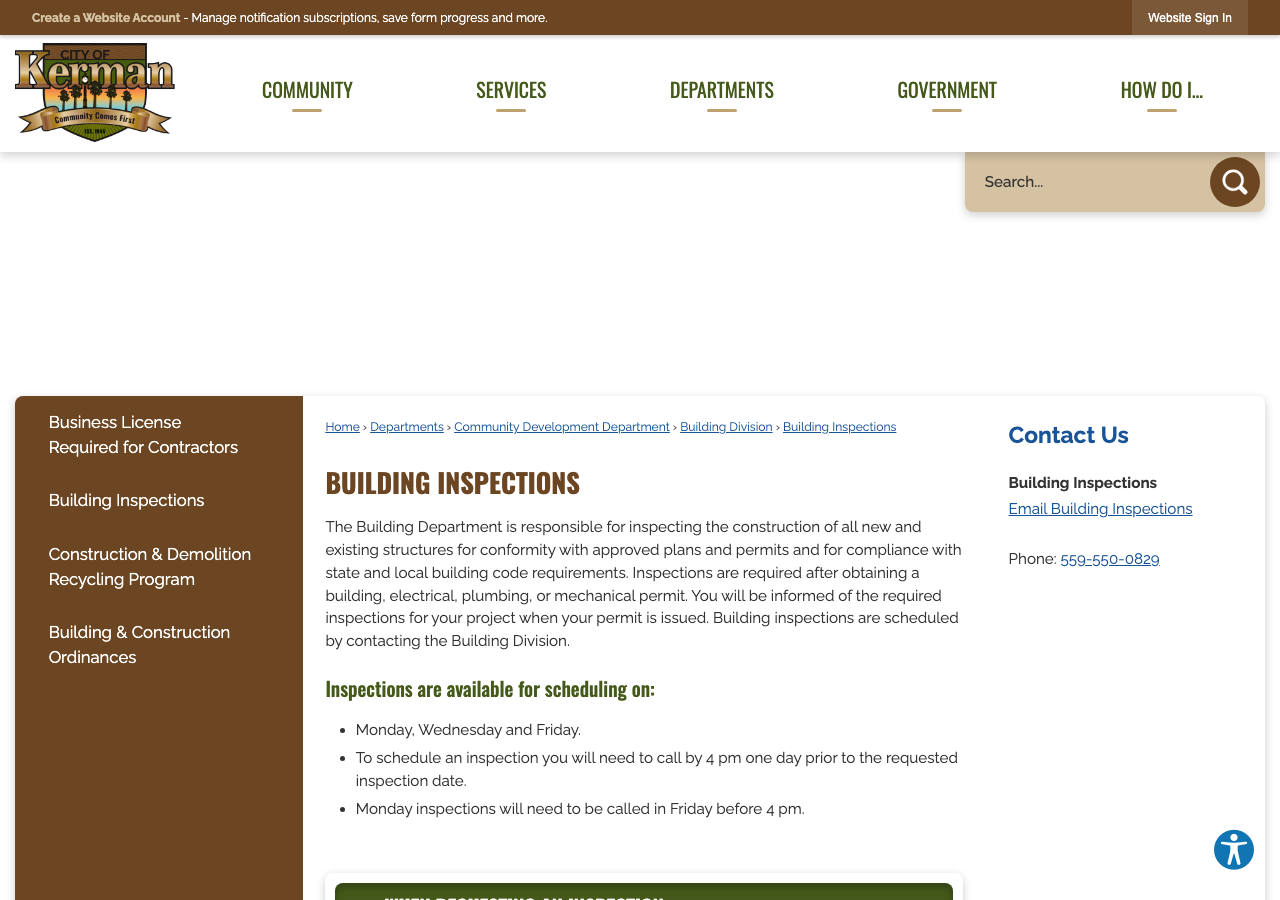
Average approval time — application to PTO
From the CPUC interconnection record. Bars show the average days taken each year; a year with no recorded projects is left blank rather than drawn as zero.