
City of La Habra Heights
Los Angeles County
City of La Habra Heights is a city authority in the State of California, serving 5,682 residents. 426 residential solar installs are on record here. This page is the permit route for that jurisdiction: the fifteen steps from working out who has a say over an address through to permission to operate, the documents this authority publishes, and 62 answers taken from those documents and dated.
Permitting 5 steps · 28 questions
Whether a permit is needed — Yes Q3 Electrical and building permits — Separate Q4 Plan review — 3 business days for a compliant expedited small residential rooftop solar application Q18 Where you file — No online permit portal; applications are submitted at the Building Counter (in person, 8am-5:30pm Mon-Thu) or electronically via email/fax to the Building Division Q20
- Permit required
- Yes95% source
- What it costs
- Building Permit Issuance Fee: $72.44 flat (in addition to a valuation-based building/plan-check fee not itemized on the application form itself);55% source
- Plan review turnaround
- 3 business days for a compliant expedited small residential rooftop solar application92% source
- Key document
- municipal code cited by 4 open the document
-
Confirm who has a say over your address
A city address is usually permitted by the city, not the county — but not always, and some authorities keep building and hand electrical to someone else. Getting this wrong costs the whole submittal, because every requirement below belongs to whoever actually holds jurisdiction. Check the overlays in the same pass: an HOA, a historic district, a windstorm certification or a system-size cap can reshape the design, and all of them are cheaper to find now than after the array is laid out.
- Is this authority the AHJ for residential solar at this address? Yes 95% · municipal code
- What does this authority permit itself, and what does it delegate? Both 75% · department page + permit application forms
- Is a permit required for a residential rooftop PV system? Yes 95% · municipal code
- Is there a separate electrical permit, or is it combined? Separate 60% · permit application forms
- Is a HOA or architectural approval required first? No 90% · municipal code
- Is there a historic-district review? No 65% · municipal code (TOC walk + targeted search)
- Is a wind or windstorm certification required? No 50% · municipal code (adopted CBC wind design by reference; no local wind-certification program found)
- Is a Specific Use Permit or Council approval ever required? Yes, conditionally — a use permit may be required if the Building Official finds a specific, adverse health/safety impact 90% · municipal code
- Is there a system-size cap on residential generation? Two different, uncoordinated caps in the City's own current code: (1) the AB 2188 'small residential rooftop solar energy system' definition used for the expedited-review chapter is capped at 10 kW AC nameplate / 30 kW thermal, single-or-duplex-family dwellings only (LMC §5.2.71.I); (2) a separate CBC local amendment (§107.6, added by the same 2025-04 building-code update) sets its OWN expedited-review threshold at 'Solar PV systems up to 15kw'. Neither cross-references the other. 82% · municipal code (two provisions, cross-checked)
-
Check who is allowed to apply
Several authorities require the electrical permit to be pulled by a licensed electrician, or require the contractor to be registered with them BEFORE applying. Registration is not same-day. This is second on the list rather than fourth because it is the step most likely to stop the job before the drawings matter.
- Who is allowed to pull the electrical permit? Either 55% · permit application form (inference)
- Must the contractor be registered with this authority before applying? Yes 85% · department FAQ page
-
Build the submittal package
Almost everywhere wants a site plan, a one-line or three-line electrical diagram, equipment cut sheets with listings, and a structural attachment detail. Build it against the published checklist rather than the last jurisdiction you worked in — the checklist is what the reviewer marks against.
Nothing recorded for City of La Habra Heights on this step yet — 7 questions checked and found unpublished. The guidance above is general.
-
Apply and pay
Most authorities now take the whole application through a portal, and several states cap or constrain what a residential solar permit may cost. Check whether plan check is billed separately before you quote the job.
- Which permit portal does this authority use? No online permit portal; applications are submitted at the Building Counter (in person, 8am-5:30pm Mon-Thu) or electronically via email/fax to the Building Division 85% · municipal code
- Can the whole application be completed online? No 88% · municipal code
- What does a residential solar permit cost? Building Permit Issuance Fee: $72.44 flat (in addition to a valuation-based building/plan-check fee not itemized on the application form itself); if a separate electrical permit is pulled, itemized per-item electrical fees apply from the current Electrical Permit fee schedule (no solar/PV-specific line item exists on it) — e.g. Services/Panels 0-399 AMP $105.67, Power Apparatus (incl. inverters, by HP/KW/KVA bracket) $54.21-$387.21 depending on size bracket, plus the same $72.44 issuance fee. 55% · current permit application (fee lines only, partial)
- How is the fee calculated? Valuation 55% · municipal code + fee application forms
- Is there a separate plan-check fee? Yes 85% · municipal code
-
Plan review — and start the utility in parallel
Interconnection is a separate process from the permit and usually the longer pole. Where the utility does not depend on the permit being issued, running both at once is the single biggest saving available on a residential job.
- What is the stated plan-review turnaround? 3 business days for a compliant expedited small residential rooftop solar application 92% · municipal code
- How long is an issued permit valid before it expires? 12 months from issuance; one extension of up to 180 days available for a fee equal to 25% of the permit fee (no more than one extension may span a code-cycle change) 90% · municipal code (code-adoption/amendment chapter)
- Which utility handles interconnection here? Southern California Edison (SCE) 90% · city planning document (adopted Housing Element)
28 questions answered against City of La Habra Heights’s own published documents
Q1 Is this authority the AHJ for residential solar at this address? Core Jurisdiction & scope
Yes
Why the confidence is not higherCity's own current Municipal Code Article 5, Chapter 5.2 (§§5.2.70-5.2.75, 'Solar Energy System Requirements' / 'Expedited Permit Review and Inspection Requirements', Ord. 2015-02) codifies the City as the permitting authority for small residential rooftop solar; the city's Building & Safety Division issues building/electrical permits for all residential construction including solar.
municipal code checked 2026-08-31 https://ecode360.com/50196373
Q2 What does this authority permit itself, and what does it delegate? Core Jurisdiction & scope
Both
Why the confidence is not higherThe City maintains a separate Building Permit Application and a separate Electrical Permit Application (both effective 7/1/2025, both hosted at lhhcity.org/163) rather than delegating either function; LMC §5.2.20(A) lists the 2025 CBC/CRC/CEC as all locally adopted and enforced by the City's own Building Official title. However, day-to-day plan check/inspection staffing for that function is contracted to Scott Fazekas & Associates (see jurisdiction block) rather than performed by city employees, which is why this isn't scored higher.
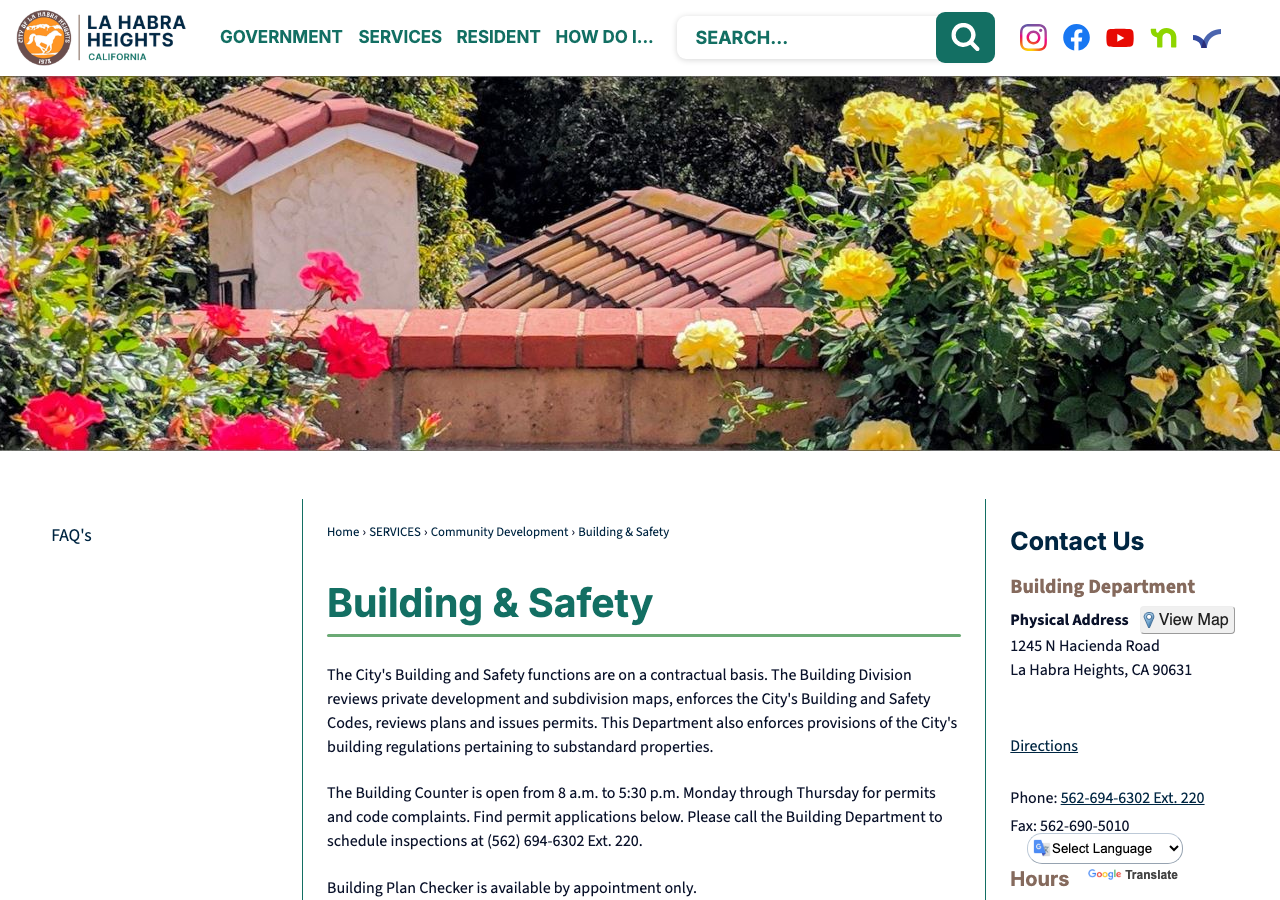
department page + permit application forms checked 2026-08-31 https://www.lhhcity.org/163/Building-Safety
Q3 Is a permit required for a residential rooftop PV system? Core Jurisdiction & scope
Yes
Why the confidence is not higherLMC §5.2.72 (Applicability): 'This Chapter applies to the permitting of all small residential rooftop solar energy systems in the City.' Routine operation/maintenance and like-kind replacement are the only carve-outs.
municipal code checked 2026-08-31 https://ecode360.com/50196361
Q4 Is there a separate electrical permit, or is it combined? Core Jurisdiction & scope
Separate
Why the confidence is not higherThe City publishes two distinct forms — a 'Building Permit Application' and a separate itemized 'Electrical Permit Application' (both effective 7/1/2025) — with no combined 'Solar Permit' line item on either, unlike some cities (e.g. Lincoln) that bundle solar into one line. I did not find an explicit city statement confirming solar always requires both permits versus building-only in practice, hence not scored higher.
permit application forms checked 2026-08-31 https://www.lhhcity.org/DocumentCenter/View/2862/LHH-Electrical-App-25-26
Q5 Who is allowed to pull the electrical permit? Core Who may apply
Either
Why the confidence is not higherThe Electrical Permit Application has a 'Contractor' field with a State License No./Class field but does not exclude an owner-applicant; California B&P Code §7044 owner-builder rights apply statewide regardless of local form design. The city's own forms do not present an explicit 'Owner/Builder' checkbox the way some other cities' forms do (e.g. Lincoln's), so this is inferred rather than city-stated.
permit application form (inference) checked 2026-08-31 https://www.lhhcity.org/DocumentCenter/View/2862/LHH-Electrical-App-25-26
Q6 Must the contractor be registered with this authority before applying? Core Who may apply
Yes
Why the confidence is not higherCity's own Building & Safety FAQ page states plainly: 'Anyone who does business in La Habra Heights is required to have a current City of La Habra Heights Business License, including contractors and subcontractors.' This is a general city business-license requirement, not solar-specific, so I did not score it at the top of the scale.
department FAQ page checked 2026-08-31 https://www.lhhcity.org/451/FAQs
Q7 Is a homeowner permitted to self-install and self-permit? Who may apply
Nothing published by this authority.
Where we lookedLMC Ch. 5.2 (solar ordinance, no owner-builder language), Building & Safety page, FAQ page ('Does My Contractor Need a License?' entry addresses CSLB/business-license requirements but not owner-builder self-permitting), and the Building/Electrical Permit Application PDFs (no explicit Owner/Builder checkbox found, unlike some other cities' forms) — no city-specific statement on homeowner self-install/self-permit found this run.
Q8 What documents make up a complete submittal? Core Submittal package
Nothing published by this authority.
Where we lookedLMC §5.2.74(D)-(E) requires the Building Department to adopt and publish a standard plan/checklist conforming to the CA Solar Permitting Guidebook, but a search of the Building & Safety page, Licenses & Permits page, FAQ page and full DocumentCenter listing for that department found zero 'solar' mentions and no such checklist published — so the CONTENT of a complete submittal package could not be determined, only that the ordinance requires one to exist.
Q9 How many copies, and in what format? Submittal package
Nothing published by this authority.
Where we lookedSame search as Q8 — no published checklist exists to specify copy count or format.
Q10 Is a site plan required, and what must it show? Core Submittal package
Nothing published by this authority.
Where we lookedLMC Ch. 5.2 and the CBC/CRC amendment chapters (§5.4.10, §5.4.20) — general plan-review language exists (CBC §105.3) but no solar-specific site-plan content requirement is stated anywhere in city documents.
Q11 Is a one-line / three-line diagram required? Core Drawings & calculations
Nothing published by this authority.
Where we lookedLMC Ch. 5.2 and CEC amendment chapter (§5.4.30) — no requirement for a one-line/three-line diagram is stated in any city document (only the AC-disconnect-location amendment exists in the CEC chapter).
Q12 Are string and conductor calculations required? Drawings & calculations
Nothing published by this authority.
Where we lookedSame search as Q11 — no requirement for string/conductor calculations found in any city document.
Q13 Is a structural PE stamp required, and at what threshold? Core Engineering & stamps
Nothing published by this authority.
Where we lookedLMC Ch. 5.2 and CBC amendment chapter (§5.4.10) — no structural-PE-stamp threshold specific to solar was found; general CBC deferred-submittal/special-inspection provisions are adopted by reference but not locally amended for solar.
Q14 Is an electrical PE stamp required, and at what threshold? Engineering & stamps
Nothing published by this authority.
Where we lookedCEC amendment chapter (§5.4.30) — only the Article 310.3(B) aluminum-wire rule and the 690.13(A) AC-disconnect-location rule are locally amended; no electrical-PE-stamp threshold is stated.
Q15 What does a residential solar permit cost? Core Fees
Building Permit Issuance Fee: $72.44 flat (in addition to a valuation-based building/plan-check fee not itemized on the application form itself); if a separate electrical permit is pulled, itemized per-item electrical fees apply from the current Electrical Permit fee schedule (no solar/PV-specific line item exists on it) — e.g. Services/Panels 0-399 AMP $105.67, Power Apparatus (incl. inverters, by HP/KW/KVA bracket) $54.21-$387.21 depending on size bracket, plus the same $72.44 issuance fee.
Why the confidence is not higherRead directly from the City's current (effective 7/1/2025) Building and Electrical Permit Application PDFs. Confidence is capped because neither form displays the underlying valuation-based fee table that LMC §5.2.30(A) says 'shall be as adopted by resolution' — I could not locate that standalone Fee Ordinance/Resolution document on the city's site this run, so the total building-permit cost for a typical residential PV job could not be fully reconstructed.
current permit application (fee lines only, partial) checked 2026-08-31 https://www.lhhcity.org/DocumentCenter/View/2856/LHH-Building-25-26
Q16 How is the fee calculated? Core Fees
Valuation
Why the confidence is not higherLMC §5.2.30(A): 'All plan review fees and permit fees shall be as adopted by resolution' — the standard CA model is valuation-based for the Building Permit component; the Electrical Permit component uses a separate per-item/per-bracket schedule (itemized by device count or HP/KW/KVA size bracket, not a flat solar-specific rate), which is closer to 'Tiered'. No PV-specific per-kW fee line exists on either published form.
municipal code + fee application forms checked 2026-08-31 https://ecode360.com/50196309
Q17 Is there a separate plan-check fee? Fees
Yes
Why the confidence is not higherLMC §5.2.30(B) (Refunds) speaks of 'the plan checking fee' as distinct from the permit fee, stating 90% of 'the plan checking fee' is refundable if no review was performed — this only makes sense if plan-check is charged as its own separate line from the permit fee.
municipal code checked 2026-08-31 https://ecode360.com/50196309
Q18 What is the stated plan-review turnaround? Core Timeline & validity
3 business days for a compliant expedited small residential rooftop solar application
Why the confidence is not higherLMC §5.2.75(A): 'For an application for a small residential rooftop solar energy system that meets the requirements of the approved checklist and standard plan, the Building Department shall issue a building permit or other nondiscretionary permit within three (3) business days.'
municipal code checked 2026-08-31 https://ecode360.com/50196373
Q19 How long is an issued permit valid before it expires? Timeline & validity
12 months from issuance; one extension of up to 180 days available for a fee equal to 25% of the permit fee (no more than one extension may span a code-cycle change)
Why the confidence is not higherCBC §105.5 as locally amended, LMC §5.4.10(F) (Ord. 2025-04, current as of 11/10/2025): 'Every permit issued shall become invalid unless the work... is commenced within 12 months... The building official is authorized to grant... one or more extensions of time, for periods not more than 180 days each... In no case shall an extension be granted which would extend the construction time... beyond the limits described in Section 5.2.50 or which exceeds the extensions allowed by the City Fee Ordinance.' No solar-specific override found.
municipal code (code-adoption/amendment chapter) checked 2026-08-31 https://ecode360.com/50196387
Q20 Which permit portal does this authority use? Core Portal & process
No online permit portal; applications are submitted at the Building Counter (in person, 8am-5:30pm Mon-Thu) or electronically via email/fax to the Building Division
Why the confidence is not higherLMC §5.2.74(B): 'Electronic submittal of the required permit application and documents via email or facsimile shall be made available to all small residential rooftop solar energy system permit applicants. Website applications may be allowed at such time in the future that the technology is made available by the City' — an explicit, current statement that no web/online application system exists yet. Confirmed by the absence of any SolarAPP+, Accela, or other portal reference anywhere on the city's Building & Safety or FAQ pages (both searched, zero hits).
municipal code checked 2026-08-31 https://ecode360.com/50196366
Q21 Can the whole application be completed online? Core Portal & process
No
Why the confidence is not higherSame §5.2.74(B) language above states online/website applications are not yet available, only email/fax electronic submittal or in-person counter submittal.
municipal code checked 2026-08-31 https://ecode360.com/50196366
Q22 Which utility handles interconnection here? Core Utility interconnection
Southern California Edison (SCE)
Why the confidence is not higherCity's own current Housing Element (2021-2029, dated July 2025 revision) states: 'Utility providers serving La Habra Heights such as Southern California Edison (SCE) and Southern California Gas Company offer various programs to encourage energy conservation.' Sourced from the authority's own planning document rather than a third-party utility lookup tool, per the brief's caution about PowerToChoose-type sources.
city planning document (adopted Housing Element) checked 2026-08-31 https://lhhcity.org/DocumentCenter/View/2944/LHH-Housing-Element-2021-2029-_-July-2025
Q23 Where does the utility sit in the sequence? Core Utility interconnection
Nothing published by this authority.
Where we lookedCity's Building & Safety, Licenses & Permits, and FAQ pages — none address utility interconnection sequencing; Southern California Edison's own DG/Rule 21 interconnection manual was not fetched this run (utility-level document, out of scope of what the city itself publishes).
Q24 Is a HOA or architectural approval required first? Overlays & special cases
No
Why the confidence is not higherLMC §5.2.75(E): 'The City shall not condition the approval of an application on the approval of an association as defined in Civil Code Section 4080.' The city not only doesn't require HOA sign-off, it is barred by its own ordinance from conditioning approval on one.
municipal code checked 2026-08-31 https://ecode360.com/50196373
Q25 Is there a historic-district review? Overlays & special cases
No
Why the confidence is not higherA full table-of-contents walk of Article 7 (Development Code and Zoning Ordinance) found no 'Historic' or 'Landmark' chapter/overlay anywhere in the zoning title, and a text search of the two most solar-relevant zoning chapters (R-A Zone; Building Design Standards) for 'historic' returned zero hits. Not scored higher because this was a TOC walk plus a two-chapter grep, not an exhaustive full-text search of every chapter in Article 7.
municipal code (TOC walk + targeted search) checked 2026-08-31 https://ecode360.com/50196557
Q26 Is a wind or windstorm certification required? Overlays & special cases
No
Why the confidence is not higherNo windstorm/wind certification program was found in any city document; California does not run a TDI-style windstorm certification the way some Gulf Coast states do. This is inferred from the general absence rather than a city statement addressing wind certification directly, hence the moderate confidence.
municipal code (adopted CBC wind design by reference; no local wind-certification program found) checked 2026-08-31 https://ecode360.com/50196285
Q27 Is a Specific Use Permit or Council approval ever required? Overlays & special cases
Yes, conditionally — a use permit may be required if the Building Official finds a specific, adverse health/safety impact
Why the confidence is not higherLMC §5.2.75(A): 'The Building Official may require an applicant to apply for a use permit if the official finds, based on substantial evidence, that the solar energy system could have a specific, adverse impact upon the public health and safety. Such decisions may be appealed to the Board of Appeals.' Note: the CBC amendment (§5.4.10(J)) defines the Board of Appeals as the City Council itself.
municipal code checked 2026-08-31 https://ecode360.com/50196373
Q28 Is there a system-size cap on residential generation? Overlays & special cases
Two different, uncoordinated caps in the City's own current code: (1) the AB 2188 'small residential rooftop solar energy system' definition used for the expedited-review chapter is capped at 10 kW AC nameplate / 30 kW thermal, single-or-duplex-family dwellings only (LMC §5.2.71.I); (2) a separate CBC local amendment (§107.6, added by the same 2025-04 building-code update) sets its OWN expedited-review threshold at 'Solar PV systems up to 15kw'. Neither cross-references the other.
Why the confidence is not higherBoth figures are read directly from the city's own current, in-force code (eCode360, current through Nov. 2025). This is the classic 'uncoordinated caps' pattern seen elsewhere in this survey (10 kW codified vs. a different figure elsewhere) — here it is 10 kW AC vs. 15 kW, in two different chapters of the same code.
municipal code (two provisions, cross-checked) checked 2026-08-31 https://ecode360.com/50196329
Lines marked with a percentage were read off this authority’s own published documents. Unmarked guidance is general good practice, not this jurisdiction’s rule — always confirm against the authority before you submit.
Install 5 steps · 20 questions
-
Build to the code editions actually in force here
The NEC edition a jurisdiction enforces is often a cycle behind the newest one published, and local amendments sit on top of it. Rapid shutdown, conductor sizing and labelling all change between editions, so the edition in force is the first thing to establish, not the last.
- Which NEC edition is in force? 2023 95% · municipal code (code-adoption chapter)
- Which building code edition is in force? 2025 California Building Code (based on the 2024 IBC) and 2025 California Residential Code (based on the 2024 IRC) 95% · municipal code (code-adoption chapter)
- Which fire code edition is in force? 2019 California Fire Code (Title 24, Part 9) — three code cycles behind the 2025 building/electrical adoption 90% · municipal code (fire code adoption chapter)
- Are there local amendments to any of the above? Yes 95% · municipal code
- What is the installation judged against? The 2025 CEC/2023 NEC, IEEE standards, UL-accredited testing-laboratory listing, and CPUC safety/reliability rules where applicable 88% · municipal code
-
Fire access, setbacks and pathways
Ridge setbacks and roof access pathways are fire-service requirements and they constrain the array layout. They are the most common cause of a redesign after the fire department comments on a plan set.
- What ridge setback and access pathways are required? No local ridge-setback or fire-access-pathway amendment found for residential PV; the City's own Fire Code chapter (Ch. 4.4, full text, ~72 section headers) contains zero PV/solar/panel/photovoltaic content, and the CBC and CRC local-amendment chapters likewise contain zero hits for 'ridge' or PV-specific setback language 78% · municipal code (full fire-code chapter, control-checked)
-
Rapid shutdown
Which rapid-shutdown rule applies follows directly from the NEC edition in force, and the initiation device has to be at a location the fire service can reach and identify. This is inspected, and it is labelled.
- Is rapid shutdown required, and to which NEC edition? Applies only by wholesale adoption of the 2023 NEC (via the 2025 CEC) — the City's own documents never name '690.12' or 'rapid shutdown' anywhere 72% · municipal code (control-checked absence)
-
Labels and placards
The NEC sets a baseline for permanent markings at the service equipment and the disconnecting means. On top of that, an authority may specify its own wording, and the utility may specify more again. Where any of them writes its own text, a generic off-the-shelf label set will not pass — this is the detail most often fixed on a return visit.
- Which placards does this authority require at the service equipment? No AHJ-specific placard schedule of its own; whatever the unamended base 2023 NEC Article 690 marking requirements call for applies by wholesale code adoption 75% · municipal code (control-checked absence)
- Does the authority specify placard wording of its own? No 80% · municipal code (control-checked absence)
- Does it specify letter height, colour or material? No 80% · municipal code (control-checked absence)
-
Disconnect, storage and listed equipment
Where the AC disconnect must sit relative to the meter is usually the utility's rule, not the building department's. Battery storage frequently carries its own permit, its own inspection and its own fire conditions.
- Where must the AC disconnect be, relative to the meter? A single, visible-open, lockable AC disconnect shall be within 3 feet of the meter on the exterior of the building 95% · municipal code (local CEC amendment)
- Must equipment be on a specific approved list? Yes 85% · municipal code
- Are batteries permitted, and under what conditions? No local battery/ESS-specific conditions found; governed entirely by the unamended base 2019 CFC / 2025 CRC-CBC as adopted, with no local amendment addressing batteries 72% · municipal code (repealed-amendment stub + control-checked absence)
- Is there a separate ESS permit or inspection? No 70% · municipal code + fee forms (control-checked absence)
- Is a specific mounting system or attachment spacing required? No specific mounting-system or attachment-spacing spec found; the only city-authored rule is an architectural-integration requirement: 'Skylights and solar panels are permitted but shall be integrated with the roof slope and architectural design of the building' (Building Design Standards chapter of the zoning code) 70% · municipal code (zoning/design standards)
20 questions answered against City of La Habra Heights’s own published documents
Q29 Which NEC edition is in force? Core Code editions in force
2023
Why the confidence is not higherLMC §5.2.20(A)(4): '2025 California Electrical Code (Part 3, based on the 2023 National Electrical Code)', adopted by Ord. 2025-04, effective 11/10/2025, current codification.
municipal code (code-adoption chapter) checked 2026-08-31 https://ecode360.com/50196285
Q30 Which building code edition is in force? Core Code editions in force
2025 California Building Code (based on the 2024 IBC) and 2025 California Residential Code (based on the 2024 IRC)
Why the confidence is not higherLMC §5.2.20(A)(2)-(3), adopted by Ord. 2025-04, effective 11/10/2025, the most recent code-cycle ordinance in the current codification (through Nov. 2025).
municipal code (code-adoption chapter) checked 2026-08-31 https://ecode360.com/50196285
Q31 Which fire code edition is in force? Code editions in force
2019 California Fire Code (Title 24, Part 9) — three code cycles behind the 2025 building/electrical adoption
Why the confidence is not higherLMC §4.4.10 (Adopt California Fire Code): 'Title 24, Part 9, 2019 California Fire Code... is hereby adopted by reference... and shall constitute... the Fire Code of the City of La Habra Heights' (Ord. 2016-06 §2; Ord. 2019-04 §3). The most recent fire ordinance found, Ord. 2025-05 (11/10/2025, same day as the building-code update), only amended other sections of Ch. 4.4 — including REPEALING the local amendment to CFC Chapter 12 (Energy Systems) — but did not touch §4.4.10's base-edition text, so the adopted base edition is still 2019, a genuine, current internal lag against the 2025-cycle building/electrical codes.
municipal code (fire code adoption chapter) checked 2026-08-31 https://ecode360.com/50195556
Q32 Are there local amendments to any of the above? Core Code editions in force
Yes
Why the confidence is not higherExtensive, explicit local amendments read directly: CBC §§101.4.9, 105.2, 105.3.2, 105.5, 107.6, 109.2, 109.6, 113.3, 1505.1/Table 1505.1 (LMC §5.4.10); CEC Article 310.3(B) and 690.13(A) (LMC §5.4.30); a CRC swimming-pool-fencing setback amendment (§115922); and multiple named amendments to Fire Code Chapter 4.4 across at least seven separate ordinances since 2016.
municipal code checked 2026-08-31 https://ecode360.com/50196387
Q33 What is the installation judged against? Core Electrical
The 2025 CEC/2023 NEC, IEEE standards, UL-accredited testing-laboratory listing, and CPUC safety/reliability rules where applicable
Why the confidence is not higherLMC §5.2.73(C): 'Solar energy systems for producing electricity shall meet all applicable safety and performance standards established by the California Electrical Code, the Institute of Electrical and Electronics Engineers, and accredited testing laboratories such as Underwriters Laboratories and, where applicable, rules of the Public Utilities Commission regarding safety and reliability.'
municipal code checked 2026-08-31 https://ecode360.com/50196362
Q34 Is there a local rule on service upgrades or busbar sizing? Electrical
Nothing published by this authority.
Where we lookedCEC amendment chapter (§5.4.30) — the only related local rule found is the Article 310.3(B) amendment on copper-vs-aluminum wire for feeders/branch circuits ≤ #6, which is a general electrical-material rule, not a service-upgrade-sizing or busbar rule specifically; no busbar-sizing amendment found.
Q35 Is a specific mounting system or attachment spacing required? Structural & mounting
No specific mounting-system or attachment-spacing spec found; the only city-authored rule is an architectural-integration requirement: 'Skylights and solar panels are permitted but shall be integrated with the roof slope and architectural design of the building' (Building Design Standards chapter of the zoning code)
Why the confidence is not higherRead directly from LMC Article 7, 'Building Design Standards' chapter. This is a design/aesthetic rule, not a technical structural-attachment or spacing specification, and the same chapter separately confirms 'Undergrounding of Utilities... does not apply to solar panels' — a related design-standards carve-out for solar.
municipal code (zoning/design standards) checked 2026-08-31 https://ecode360.com/50197524
Q36 What ridge setback and access pathways are required? Core Fire pathways & setbacks
No local ridge-setback or fire-access-pathway amendment found for residential PV; the City's own Fire Code chapter (Ch. 4.4, full text, ~72 section headers) contains zero PV/solar/panel/photovoltaic content, and the CBC and CRC local-amendment chapters likewise contain zero hits for 'ridge' or PV-specific setback language
Why the confidence is not higherControl-proven absence: extracted the ENTIRE Fire Code chapter (Article 4.4, all subsections, ~122KB of text) and grepped for 'solar', 'panel', 'photovoltaic', 'rapid shutdown', '690.12' — zero hits; positive controls ('fire chief' 6 hits, 'access road' 6 hits) and fabricated control ('zzqqx' 0 hits) confirm the extraction and search worked. Same zero-hit result in the CBC (§5.4.10) and CRC (§5.4.20) amendment chapters. Because the base 2019 CFC and 2025 CRC/CBC are otherwise adopted wholesale, any pathway/setback requirement that exists comes from the unamended base model code text, not a local rule.
municipal code (full fire-code chapter, control-checked) checked 2026-08-31 https://ecode360.com/50195555
Q37 Is rapid shutdown required, and to which NEC edition? Core Rapid shutdown
Applies only by wholesale adoption of the 2023 NEC (via the 2025 CEC) — the City's own documents never name '690.12' or 'rapid shutdown' anywhere
Why the confidence is not higherSame control-proven absence as Q36/38-40 across the Fire Code, CBC, CRC and CEC amendment chapters (zero hits for 'rapid shutdown' or '690.12' in any of them). The City's only CEC-specific local amendment is to Article 690.13(A), the AC-disconnect-location rule, not 690.12. Since the 2023 NEC is adopted in full, §690.12 applies as a matter of state code, just not called out locally.
municipal code (control-checked absence) checked 2026-08-31 https://ecode360.com/50196419
Q38 Which placards does this authority require at the service equipment? Core Labels Signage & labelling
No AHJ-specific placard schedule of its own; whatever the unamended base 2023 NEC Article 690 marking requirements call for applies by wholesale code adoption
Why the confidence is not higherControl-proven absence: the full Fire Code chapter's only 'placard' hit is for flammable-liquid tank labeling (CFC §5704.2.3.2, 3-inch red-on-white lettering for liquid storage tanks) — unrelated to PV — and the CBC/CRC/CEC local amendment chapters have zero 'placard' hits. Positive control ('roof': 5-7 hits across the amendment chapters) and fabricated control ('zzqqx': 0 hits) both behaved as expected.
municipal code (control-checked absence) checked 2026-08-31 https://ecode360.com/50195555
Q39 Does the authority specify placard wording of its own? Core Labels Signage & labelling
No
Why the confidence is not higherSame control-checked search as Q38 — zero city-authored placard wording found anywhere in the code (Fire, CBC, CRC, CEC amendment chapters all searched).
municipal code (control-checked absence) checked 2026-08-31 https://ecode360.com/50195555
Q40 Does it specify letter height, colour or material? Core Labels Signage & labelling
No
Why the confidence is not higherSame control-checked search as Q38/39 — no letter-height, colour, or material specification found for solar-related signage anywhere in the code.
municipal code (control-checked absence) checked 2026-08-31 https://ecode360.com/50195555
Q41 Is a site plan / facility map placard required, and what must it show? Core Labels Signage & labelling
Nothing published by this authority.
Where we lookedFire Code chapter (full text, control-checked), CBC/CRC/CEC amendment chapters — zero hits for a facility-map/site-plan placard requirement anywhere in city-authored text (this would ordinarily track NEC 705.10 if locally addressed).
Q42 Does the UTILITY specify placards beyond the AHJ's? Core Labels Signage & labelling
Nothing published by this authority.
Where we lookedCity's own pages searched (Building & Safety, FAQ) contain no utility-placard cross-reference; Southern California Edison's own DG interconnection manual/Rule 21 handbook was not fetched this run.
Q43 Where must the labels be placed? Core Labels Signage & labelling
Nothing published by this authority.
Where we lookedSame control-checked search as Q38-40 (Fire Code, CBC, CRC, CEC amendment chapters) — the only location-specific rule found is the CEC §690.13(A) AC-disconnect-location amendment (used to answer Q48), which addresses disconnect placement, not general label/placard placement; no separate label-placement rule found.
Q44 Must equipment be on a specific approved list? Equipment listing
Yes
Why the confidence is not higherLMC §5.2.73(C) requires solar-electric equipment to meet standards of 'accredited testing laboratories such as Underwriters Laboratories' — a UL-listing requirement, functionally an approved-equipment-list gate even though it isn't phrased as a single named list.
municipal code checked 2026-08-31 https://ecode360.com/50196362
Q45 Are batteries permitted, and under what conditions? Core Battery / ESS
No local battery/ESS-specific conditions found; governed entirely by the unamended base 2019 CFC / 2025 CRC-CBC as adopted, with no local amendment addressing batteries
Why the confidence is not higherControl-proven absence: 'battery' and 'energy storage' return zero hits across the entire Fire Code chapter (Ch. 4.4, full text) and the CBC/CRC/CEC local-amendment chapters. Notably, the one place a local amendment WOULD naturally live — CFC Chapter 12 'Energy Systems' — exists only as a stub reading 'Repealed by Ord. 2025-05', meaning the city affirmatively removed its prior local Chapter 12 amendment in the same Nov. 2025 ordinance round that updated the building codes, leaving no local ESS rule at all.
municipal code (repealed-amendment stub + control-checked absence) checked 2026-08-31 https://ecode360.com/50195666
Q46 Is there a separate ESS permit or inspection? Battery / ESS
No
Why the confidence is not higherNo separate ESS permit or inspection process is named anywhere in the code (same control-checked absence as Q45); the fee applications found (Building, Electrical) carry no ESS/battery line item either.
municipal code + fee forms (control-checked absence) checked 2026-08-31 https://www.lhhcity.org/DocumentCenter/View/2856/LHH-Building-25-26
Q47 Is a ground mount treated as a structure? Core Ground mount
Nothing published by this authority.
Where we lookedZoning code (Article 7) chapters reviewed (R-A Zone, Lot Development Standards, Building Design Standards, Setback and Yard Use Standards) — no ground-mount-specific 'is it a structure' statement found; general CBC/zoning 'structure' definitions apply but nothing solar-specific.
Q48 Where must the AC disconnect be, relative to the meter? Core Utility equipment
A single, visible-open, lockable AC disconnect shall be within 3 feet of the meter on the exterior of the building
Why the confidence is not higherLMC §5.4.30(B), amending CEC Article 690.13(A): 'The PV disconnecting means shall be installed at a readily accessible location either on the outside of a building or structure or inside nearest the point of entrance of the system conductors. A single, visible-open, lockable AC disconnect shall be within 3 feet of the meter on the exterior of the building.' A genuine, city-specific local amendment (Ord. 2022-07 §4; Ord. 2025-04 §4).
municipal code (local CEC amendment) checked 2026-08-31 https://ecode360.com/50196419
Lines marked with a percentage were read off this authority’s own published documents. Unmarked guidance is general good practice, not this jurisdiction’s rule — always confirm against the authority before you submit.
Inspection 5 steps · 14 questions
-
Book it
Booking is a portal, a phone call or an email depending on the authority, and the notice required is rarely zero. Book before the work is finished rather than after — the lead time, not the work, is usually what sets the date.
- How is an inspection booked? Phone — call the Building Department at (562) 694-6302 Ext. 220 to schedule inspections 88% · department page
-
Know who turns up
Some authorities inspect their own solar work; some delegate it, and a few do not inspect the PV equipment itself at all. Who is coming determines what they will look at.
- Does this AHJ perform its own final solar inspection? Delegated 80% · department page + municipal code
- If delegated, to whom? Scott Fazekas & Associates, Inc., 9 Corporate Park, Suite 200, Irvine, CA 92606 80% · department page
-
Work the stages in order
A rough-in or mid-roof inspection, where one is required, has to happen before the work it covers is closed up. Missing a stage means opening something back up, and it is the most expensive kind of correction.
- Which inspections are required, and in what order? For small residential rooftop solar eligible for expedited review: a single inspection performed by the Building Department. For general building permits, the FAQ page confirms a 'final' inspection is always required at minimum, with foundation/framing/plumbing/electrical inspections 'depending on the scope of your project.' 82% · municipal code + department FAQ
- Is a rough-in or mid-roof inspection required? No 82% · municipal code
-
Have the paperwork on site
The approved plan set, the permit, and the equipment listings should be on site and reachable. Inspectors routinely verify that installed equipment matches what was approved, and that the labels are the ones the plan set promised.
- Is there a published inspection checklist? No 68% · department page + document search (proven absence)
-
Sign-off, and permission to operate
Passing gives you a final or an equivalent sign-off. That is not the same as permission to operate: PTO comes from the utility, and who tells the utility the inspection passed varies. A system left switched off for weeks is usually waiting on this handover.
- What is issued on pass? Final (a passed final inspection) 60% · department FAQ (general, not solar-specific)
- How are corrections issued and cleared? For incomplete expedited-solar applications, a written correction notice detailing all deficiencies is sent to the applicant for resubmission 60% · municipal code
14 questions answered against City of La Habra Heights’s own published documents
Q49 How is an inspection booked? Core Booking & scheduling
Phone — call the Building Department at (562) 694-6302 Ext. 220 to schedule inspections
Why the confidence is not higherCity's own Building & Safety page: 'Please call the Building Department to schedule inspections at (562) 694-6302 Ext. 220.' No online scheduling tool or portal was found anywhere on the site.
department page checked 2026-08-31 https://www.lhhcity.org/163/Building-Safety
Q50 How much notice is required? Core Booking & scheduling
Nothing published by this authority.
Where we lookedCity's Building & Safety page — states only how to schedule (call the Building Department) but never states a minimum advance-notice period in days.
Q51 Are same-day or AM/PM windows offered? Booking & scheduling
Nothing published by this authority.
Where we lookedSame page as Q50 — states building-counter hours (8am-5:30pm Mon-Thu) but never addresses same-day booking or AM/PM inspection windows.
Q52 Does this AHJ perform its own final solar inspection? Core Who inspects
Delegated
Why the confidence is not higherLMC §5.2.75(G) says the single required inspection is 'performed by the Building Department' for expedited small residential rooftop solar — but the City's own Building & Safety page states that 'the City's Building and Safety functions are on a contractual basis,' naming Scott Fazekas & Associates, Inc. as the plan-check/building-official contractor. I did not find a document that separately names who physically performs the field inspection (vs. plan check), so this is scored as Delegated rather than a clean No, on the strength of the city's own 'contractual basis' statement.
department page + municipal code checked 2026-08-31 https://www.lhhcity.org/163/Building-Safety
Q53 If delegated, to whom? Core Who inspects
Scott Fazekas & Associates, Inc., 9 Corporate Park, Suite 200, Irvine, CA 92606
Why the confidence is not higherNamed on the city's own Building & Safety page as the firm providing 'Plan Check Services,' with Scott Fazekas himself titled 'Building Official' and Brett Archibald, P.E. titled 'Plan Check Engineer' for the City. Not confirmed independently from the firm's own site this run.
department page checked 2026-08-31 https://www.lhhcity.org/163/Building-Safety
Q54 Which inspections are required, and in what order? Core Stages & sequence
For small residential rooftop solar eligible for expedited review: a single inspection performed by the Building Department. For general building permits, the FAQ page confirms a 'final' inspection is always required at minimum, with foundation/framing/plumbing/electrical inspections 'depending on the scope of your project.'
Why the confidence is not higherLMC §5.2.75(G)-(H) plus the city's own Building & Safety FAQ page ('Do all Building Permits Need Inspections?').
municipal code + department FAQ checked 2026-08-31 https://ecode360.com/50196373
Q55 Is a rough-in or mid-roof inspection required? Stages & sequence
No
Why the confidence is not higherLMC §5.2.75(G): 'Only one (1) inspection shall be required and performed by the Building Department for small residential rooftop solar energy systems eligible for expedited review' — no separate rough-in or mid-roof stage.
municipal code checked 2026-08-31 https://ecode360.com/50196373
Q56 Does the inspector verify labels and listings? Core What is checked
Nothing published by this authority.
Where we lookedLMC §5.2.75 and Building & Safety/FAQ pages — the UL-listing requirement (§5.2.73(C), used for Q44) implies equipment should be checked, but no document explicitly states that the inspector verifies labels/listings as a discrete inspection step.
Q57 Is there a published inspection checklist? Core What is checked
No
Why the confidence is not higherThe City's own solar ordinance (LMC §5.2.74(D)-(E)) states that the Building Department 'shall adopt a standard plan and checklist' conforming to the state's California Solar Permitting Guidebook — but I searched the Building & Safety page, the Licenses & Permits page, the FAQ page, and the full DocumentCenter listing for that department, and found zero mention of 'solar' anywhere and no such checklist document published. This is a proven absence of a document the City's own ordinance says should exist, not merely a failure to find it.
department page + document search (proven absence) checked 2026-08-31 https://www.lhhcity.org/163/Building-Safety
Q58 What must be on site at inspection? Core Documents on site
Nothing published by this authority.
Where we lookedCity's Building & Safety and FAQ pages — no published list of what must be physically on site at inspection time (e.g., approved plans, permit card) was found for solar or general building inspections.
Q59 Is there a re-inspection fee? Corrections & re-inspection
Nothing published by this authority.
Where we lookedCurrent Building and Electrical Permit Application PDFs (effective 7/1/2025) — neither lists a re-inspection fee line; LMC §5.2.30 discusses plan-check refunds but not re-inspection fees; the standalone Fee Ordinance/Resolution referenced repeatedly in the code (e.g. CBC §109.2 amendment) was not locatable on the city's site this run.
https://www.lhhcity.org/DocumentCenter/View/2856/LHH-Building-25-26
Q60 How are corrections issued and cleared? Corrections & re-inspection
For incomplete expedited-solar applications, a written correction notice detailing all deficiencies is sent to the applicant for resubmission
Why the confidence is not higherLMC §5.2.75(F): 'If an application for a small residential rooftop solar energy system is deemed incomplete, a written correction notice detailing all deficiencies in the application and any additional information or documentation required to be eligible for expedited permitting shall be sent to the applicant for resubmission.' This addresses application-completeness corrections, not necessarily post-inspection field corrections, which is why confidence isn't higher.
municipal code checked 2026-08-31 https://ecode360.com/50196373
Q61 What is issued on pass? Core Final sign-off & PTO
Final (a passed final inspection)
Why the confidence is not higherCity's own FAQ: 'All work completed under a building permit issued by the City of La Habra Heights must pass a final inspection by the Building Inspector.' No solar-specific document names a distinct certificate/tag/letter, so this is inferred from the general final-inspection language rather than a solar-specific statement.
department FAQ (general, not solar-specific) checked 2026-08-31 https://www.lhhcity.org/451/FAQs
Q62 Who notifies the utility for PTO? Core Final sign-off & PTO
Nothing published by this authority.
Where we lookedCity's Building & Safety, Licenses & Permits, and FAQ pages — none address who submits interconnection/PTO completion paperwork to Southern California Edison; SCE's own process documentation was not fetched this run.
Lines marked with a percentage were read off this authority’s own published documents. Unmarked guidance is general good practice, not this jurisdiction’s rule — always confirm against the authority before you submit.
Jurisdiction & key facts
The standing 62-question set, answered for City of La Habra Heights against this authority’s own published documents. Every answer carries the confidence it was recorded at and the document it came from. Where nothing is published we say so and show where we looked — a blank here is a finding, not a gap.
City of La Habra Heights is the authority having jurisdiction 92% confidence
- Holds
- Building and Electrical (Building & Safety Division), with plan check and building-official function contracted out; Fire held separately by the City's OWN La Habra Heights Fire Department
- Delegated to
- Scott Fazekas & Associates, Inc. (Irvine, CA) — the city's own Building & Safety page names Scott Fazekas, AIA, NCARB, CBO as 'Building Official' and Brett Archibald, P.E. as 'Plan Check Engineer', both under the 'Plan Check Services' heading for that firm, and the page states outright: 'The City's Building and Safety functions are on a contractual basis.' Not one of the playbook's usual firms (Willdan/Transtech/CSG/4LEAF/Interwest/Bureau Veritas/TRB/Charles Abbott/EsGil) — a name not previously seen in this survey.
- Overridden by
- CA Gov. Code §65850.5 (Solar Rights Act / AB 2188, 2014) mandates the nondiscretionary expedited review the city has codified verbatim at LMC (eCode360) §§5.2.70-5.2.75; AB 130 (Stats. 2025, Ch. 22) also freezes the city from adopting any residential amendment MORE restrictive than the state code from 1 Oct 2025 to 1 Jun 2031.
- Why not higher
- City's own Building & Safety department page (lhhcity.org/163) both names the contracted firm and states plainly that Building & Safety is run 'on a contractual basis'; the city's own current Municipal Code (Article 5, Chapter 5.2, on eCode360 custId LA4503) codifies AB 2188 solar permitting in the City's name. Correcting the brief's implicit LA-County-fire assumption: the city's own Fire Department page (lhhcity.org/168) describes 'The La Habra Heights Fire Department' as its own 24/7 department led by its own Fire Chief — NOT a delegation to LA County Fire (LACoFD), which is the more common shape for a small incorporated LA County city and was not assumed here without checking. Confidence not higher because I could not independently reach a document from Scott Fazekas & Associates confirming the scope of their contract (e.g., whether it also covers final inspections, or only plan check) beyond the city's own summary.
Check the code edition before you build
This authority's published code edition does not match what the state has adopted. That usually means the authority's ordinance has not been updated for the current cycle — but a local amendment can also be lawful. Confirm with the building department before you submit.
- Permit required
- Yes95%
- Permit cost
- Building Permit Issuance Fee: $72.44 flat (in addition to a valuation-based building/plan-check fee not itemized on the application form itself);55%
- Plan review
- 3 business days for a compliant expedited small residential rooftop solar application92%
- Portal
- No online permit portal; applications are submitted at the Building Counter (in person, 8am-5:30pm Mon-Thu) or electronically via email/fax to the Building Division85%
- Electrical code
- 202395%
- Own placard wording
- No80%
- Booking an inspection
- Phone — call the Building Department at (562) 694-6302 Ext. 220 to schedule inspections88%
Labels & placards for this authority
Wording 80%
No
Size, colour & material 80%
No
Where they go None%
What the utility wants on top None%
Each figure above is sourced and dated in the full answer set below (questions 38–43). Where an authority’s own published sheet is older than the code it has adopted, the answer says so.
Their website
Average approval time — application to PTO
From the CPUC interconnection record. Bars show the average days taken each year; a year with no recorded projects is left blank rather than drawn as zero.