
City of Murrieta
Riverside County
City of Murrieta is a busy jurisdiction for residential solar — 20th in California by installs on record — 110,949 residents, with 16,378 residential solar installs on record. This page is the permit route for that jurisdiction: the fifteen steps from working out who has a say over an address through to permission to operate, the documents this authority publishes, and 62 answers taken from those documents and dated.
Permitting 5 steps · 28 questions
Whether a permit is needed — Yes. A building permit is required for a residential rooftop PV system. IB-131 reproduces CBC 105.1/105.2 as adopted by MMC 15.04.130 and PV is not among the listed… Q3 Electrical and building permits — Combined for the array itself - one 'BLDG-Building (R) - Solar Photovoltaic SolarAPP+' permit covers the structural and electrical work, Q4 Plan review — Immediate for the SolarAPP+ route - SolarAPP+ returns an automated approval and generates the inspection checklist, and the City permit then issues through CSS. Q18 Where you file — Two, used in sequence. Plan review for eligible roof-mount residential PV is done by SOLARAPP+ (NREL, solarapp.nrel.gov). Q20
- Permit required
- Yes. A building permit is required for a residential rooftop PV system. IB-131 reproduces CBC 105.1/105.2 as adopted by MMC 15.04.130 and PV is not among the listed exemptions;95% source
- What it costs
- $450.00 for a residential photovoltaic system of 15 kW or less - a single flat fee that IB-125 states 'covers City costs associated with plan review and inspection', payable at permit issuance.92% source
- Plan review turnaround
- Immediate for the SolarAPP+ route - SolarAPP+ returns an automated approval and generates the inspection checklist, and the City permit then issues through CSS.85% source
- Key document
- permit application form + information bulletin cited by 5 open the document
-
Confirm who has a say over your address
A city address is usually permitted by the city, not the county — but not always, and some authorities keep building and hand electrical to someone else. Getting this wrong costs the whole submittal, because every requirement below belongs to whoever actually holds jurisdiction. Check the overlays in the same pass: an HOA, a historic district, a windstorm certification or a system-size cap can reshape the design, and all of them are cheaper to find now than after the array is laid out.
- Is this authority the AHJ for residential solar at this address? Yes. The City of Murrieta is the AHJ for residential rooftop PV at any address inside the city limits. The permitting, plan review and inspection authority is the BUILDING & SAFETY DIVISION of the DEVELOPMENT SERVICES DEPARTMENT (not a stand-alone Building Department), 1 Town Square, Murrieta CA 92562, (951) 461-6062, Building Official Andrew Krogh. Fire is a City department in its own right - Murrieta Fire & Rescue, 41825 Juniper Street, (951) 304-3473, Fire Marshal James Gillespie - not a contract with CAL FIRE or Riverside County Fire. Riverside County is the AHJ only for the unincorporated area and appears on Murrieta's own handouts merely as an outside-agency contact. 95% · department page + ordinance (MMC Title 15) + IB-127
- What does this authority permit itself, and what does it delegate? Both, and nothing material is delegated. Building & Safety holds building, electrical, mechanical and plumbing plan check and field inspection in-house (staff titles in the fee schedule include Building Official, Sr. Plans Examiner, Building Inspector III and Building Inspector Supervisor). Murrieta Fire & Rescue holds fire plan review and fire inspection but publishes no residential-PV review step. Automated plan review for eligible roof-mount residential PV is outsourced to SolarAPP+ (NREL), which is a delegation of the PLAN REVIEW only - the permit is still issued by the City through its own portal and the City still inspects. 90% · department page + fee schedule
- Is a permit required for a residential rooftop PV system? Yes. A building permit is required for a residential rooftop PV system. IB-131 reproduces CBC 105.1/105.2 as adopted by MMC 15.04.130 and PV is not among the listed exemptions; IB-163 lists 'Residential - Photovoltaic System (Solar)' as a permit type with its own inspection set. Every eligible roof-mounted residential system MUST go through SolarAPP+ - the City does not accept a conventional plan-check submittal for an eligible roof mount. 95% · information bulletin + ordinance (MMC 15.04.130)
- Is there a separate electrical permit, or is it combined? Combined for the array itself - one 'BLDG-Building (R) - Solar Photovoltaic SolarAPP+' permit covers the structural and electrical work, and the fee schedule carries a single Solar Permit Fee. BUT Murrieta breaks out the service panel: 'ALL service panel upgrades require separate permits. If your solar project includes a service panel upgrade, you will still have to show the service panel upgrade on the plans, but a separate permit is still required.' That second permit is an electrical permit and only a C-10 licensed electrical contractor may pull it. 92% · department page + fee schedule
- Is a HOA or architectural approval required first? No. Murrieta imposes no HOA or architectural-approval precondition. MMC ch. 15.62 (the Gov. Code 65850.5 expedited chapter) requires only the checklist, structural verification and electrical-capacity verification before submittal, and directs the building official to 'administratively approve the application and issue all required permits' once complete. DS-114 has no HOA field and IB-161 (Pre-Requisite Clearances and Approvals) lists prerequisites for new commercial/industrial/multi-family only - grading permit, DIF, TUMF, will-serve letter, school fees, waste management plan - none of which is an HOA approval and none of which attaches to a residential rooftop PV permit. Gov. Code 65850.5 forbids conditioning approval on HOA approval in any event. 88% · ordinance (MMC ch. 15.62) + information bulletin
- Is there a historic-district review? No for solar. Murrieta's historic mechanism is MMC ch. 16.26 Cultural Resource Preservation, and its permit hook - 16.26.080 Certificates of Appropriateness - is triggered only 'prior to the demolition or relocation of any designated cultural resource or contributing resource', decided by the City Council on a recommendation from the Historic Preservation Advisory Commission. Installing a rooftop array is neither demolition nor relocation, so no certificate of appropriateness is required. THERE IS A DIFFERENT AND REAL OVERLAY, though: IB-117 'Historically and/or Biologically Sensitive Properties' (February 2025) describes a TRIBAL process - if a permit technician finds the property is in a sensitive historical/biological area, Planning notifies the Consulting Tribe, plans get only a TENTATIVE APPROVAL, the applicant must obtain a signed Tribal Monitoring Agreement and upload it before final approval, and 'No Building and Safety inspection can be scheduled until approval from the Consulting Tribe has been given', with a 72-hour minimum notice for a monitor on day 1 of any ground-disturbing activity. That is a ground-disturbance process, so it bites on ground mounts and trenching rather than roof mounts. 88% · ordinance (MMC 16.26) + information bulletin (IB-117)
- Is a wind or windstorm certification required? No. California has no windstorm certification regime equivalent to Texas TDI/TWIA, and Murrieta requires none. What it publishes instead is design criteria: IB-114 gives basic design wind speeds by risk category (Vasd 78-83 mph), Wind Exposure Category C per CBC 1609.4, Seismic Design Category D (D2 under the CRC), Site Class D, Climate Zone 10, ground snow load zero, and 2 inches per hour rainfall. CAUTION - IB-114 IS STALE: it is dated December 2024 and states 'The City of Murrieta Building & Safety California Model Codes currently in effect are the 2022 California Codes, based on Amendments to the 2021 International Residential Code (IRC), 2021 Uniform Plumbing and Mechanical Codes, 2020 National Electric Code (NEC), 2021 International Fire Code (IFC)', which is a code cycle out of date; MMC 15.08.010/15.08.015/15.40.010 adopt the 2025 CBC/CRC/CEC and H&SC 18938(b) makes the state edition apply regardless. 85% · information bulletin (IB-114) + ordinance
- Is a Specific Use Permit or Council approval ever required? Only in one narrow, evidence-tested case, and Council approval is never the normal route. MMC 15.62.050: 'The building official may require an applicant to apply for a minor use permit if the official finds, based on substantial evidence, that the solar energy system could have a specific, adverse impact upon the public health and safety. Such decisions may be appealed to the Planning Commission. If a minor use permit is required, the city may deny such application if it makes written findings based upon substantive evidence in the record that the proposed installation would have a specific, adverse impact upon public health or safety and there is no feasible method to satisfactorily mitigate or avoid, as defined, the adverse impact.' Otherwise approval is administrative and non-discretionary. Murrieta's zoning code does NOT contain a solar use standard at all: MMC ch. 16.44 Standards for Specific Land Uses runs 16.44.010 to 16.44.270 and regulates, among other things, Non-commercial Wind Energy Conversion Systems (16.44.220) and Electric Vehicle Parking Requirements (16.44.115) - but has no solar section. City Council does appear in one historic-resource context only (certificates of appropriateness for demolition/relocation under 16.26.080). 90% · ordinance (MMC 15.62.050 and ch. 16.44)
- Is there a system-size cap on residential generation? No cap on system size. The only kW figures in Murrieta's code are eligibility and fee thresholds, not limits. MMC 15.62.010 defines a 'small residential rooftop solar energy system' - the class entitled to the Gov. Code 65850.5 expedited, single-inspection treatment - as no larger than 10 kilowatts AC nameplate or 30 kilowatts thermal, conforming to state codes as adopted or amended by the City, installed on a single or duplex family dwelling, with an array not exceeding the maximum legal building height. The fee schedule prices residential PV in bands above 15 kW without limit. SolarAPP+ imposes its own eligibility envelope (up to 400 A service, up to 225 A service disconnect, up to 225 A busbar, single phase 240 V or 208 V, 600 V max DC, maximum 2 DC strings in parallel, up to 2 string inverters or 1 microinverter model, no existing PV or ESS) - but a system outside that envelope is not prohibited, it merely loses the instant route and goes to conventional plan check with a written narrative. 90% · ordinance (MMC 15.62.010) + fee schedule
-
Check who is allowed to apply
Several authorities require the electrical permit to be pulled by a licensed electrician, or require the contractor to be registered with them BEFORE applying. Registration is not same-day. This is second on the list rather than fourth because it is the step most likely to stop the job before the drawings matter.
- Who is allowed to pull the electrical permit? Either - a licensed contractor or the homeowner as owner-builder. DS-114 (the residential solar application) carries the full Business & Professions Code 7044 owner-builder declaration with all three exemption boxes, and DS-124/DS-144 are the owner-builder authorisation and information forms. ONE EXCEPTION: for the separate service-panel-upgrade permit, 'Only Electrical C-10 licensed contractors may obtain panel upgrade permits.' Contractors must also carry a current City of Murrieta business licence and a current CSLB licence, both of which are fields on DS-114. 90% · permit application form + department page
- Must the contractor be registered with this authority before applying? Yes. A City of Murrieta business licence is required of 'Every person (1099) or entity planning to engage in business within city limits', and the Permit Processing page states that 'City Business License and State Contractor License information and expiration dates must be present on applications at the time of applying for permits.' DS-114 has a dedicated 'City Business License # / Expiration date' field in the Applicant block. Licences are applied for and renewed at bl.murrietaca.gov (HdL). 93% · department page + permit application form
- Is a homeowner permitted to self-install and self-permit? Yes. A homeowner may self-permit and self-install as an owner-builder under B&P Code 7044, and Murrieta publishes DS-124 (Owner-Builder Information Authorization Form), DS-144 (Owner-Builder Information) and IB-107 (Owner-Builder Information) for that purpose. The owner-builder declaration is printed on the solar application itself. The practical constraint is that an eligible roof mount must still be run through SolarAPP+, which requires the system to be 'Installed by contractor with all licenses required by jurisdiction' - so a self-installing homeowner falls outside SolarAPP+ eligibility and must submit a conventional plan check with a written narrative explaining why the project is not SolarAPP+ eligible. 78% · permit application form + information bulletin
-
Build the submittal package
Almost everywhere wants a site plan, a one-line or three-line electrical diagram, equipment cut sheets with listings, and a structural attachment detail. Build it against the published checklist rather than the last jurisdiction you worked in — the checklist is what the reviewer marks against.
- What documents make up a complete submittal? Two different packages depending on route. (A) ELIGIBLE ROOF MOUNT - mandatory SolarAPP+ route: register and submit at solarapp.nrel.gov, pay SolarAPP+'s own plan-review processing fee, receive the SolarAPP+ approval ID and generated inspection checklist; then in the CSS Portal choose Apply > Permits > ALL, search 'Photovoltaic', select 'BLDG-Building (R) - Solar Photovoltaic SolarAPP+', enter the SolarAPP+ ID as the project name, and upload the SolarAPP+ inspection checklist. Zero-lot-line properties do NOT qualify. (B) GROUND MOUNT or anything not SolarAPP+ eligible - conventional plan check in CSS with a written narrative explaining why it is not eligible, plus: completed DS-114 solar permit application (or DS-148 plan review application) stating kW DC, panel count, inverter count and valuation; cover sheet (site address, system size, panel weight/length/width/depth, number of panels and inverters/micro-inverters, code data naming the 2025 CRC / 2025 CEC / 2025 CBC); site plan per IB-105 showing north arrow, street frontage, building footprint, array location, setbacks to property lines and easements, adjacent structures, roof layout, location of ALL required PV signage and fire setbacks notated on the roof layout; electrical plan with electrical plot plan, single-line diagram giving wire and conduit size and type, existing main service size and location and any proposed panel relocation or upgrade, and all required PV signage/labels; cut sheets for ALL equipment (modules, inverters, racking, disconnects); structural calculations WITH a letter from a California licensed engineer confirming the racking system has been reviewed and complies with the 2025 CBC; all required PV signage; Title 24 CF-1R where applicable; and two mandatory plan notes - 'No vents (dormer, plumbing, mechanical) to be covered or routed around Solar Modules' and 'All equipment shall be painted prior to inspection'. A ground-mount site plan must also show a 10-foot clear fire zone around the full array measured from the outside edge of the panels, and the conduit route from array to panel. 93% · published checklist (IB-125) + department page
- How many copies, and in what format? All submittals are electronic - 'All plan submittals are completed electronically' and 'All Inspection Requests must be submitted online'. No paper set count is published for PV. DS-162 governs the digital files: PDF only, no .ZIP, TrueType (Arial preferred), no scanned plan files, not password-protected or encrypted, flattened/optimised, plan sheets minimum 24x36 inches in LANDSCAPE and upright (any upside-down or sideways page and the ENTIRE submission is returned), page numbers lower right, a reserved 3-inch by 2-inch space for City stamps in the lower right above the page number, consistent title blocks, plans as ONE file with supplemental calculations/reports as separate 8.5x11 PDFs, and a filename convention of street number + street name + abbreviated suffix + unit + document type (e.g. B41000MainStSuiteA072315). IB-125 adds the same landscape-orientation rule and file naming. After approval the applicant must PRINT one set in colour for the job site: the complete plan set at 11x17 and all other documents (application, cut sheets, calculations, job card, smoke/CO self-certification) at 8.5x11. 90% · published checklist (DS-162) + information bulletin
- Is a site plan required, and what must it show? Yes - a site/plot plan is required and IB-105 sets the generic content while IB-125 adds the PV-specific content. IB-105: scope-of-work statement, north arrow, drawn to scale or fully dimensioned, property lines with dimensions, exterior dimensions of all existing and proposed buildings with dimensions to property lines and between structures, public right-of-way dimensions (curb to property line or street centreline to property line) and paving type, existing and proposed public improvements, easements with dimensions/location/purpose, property owner name/address/phone, site address, legal description and APN; minimum sheet 8.5x11. IB-125 adds for PV: identification of street frontage, location of the photovoltaic system and roof layout, setbacks to property lines and/or easements, adjacent structures, LOCATION OF ALL REQUIRED PV SIGNAGE, fire setbacks notated on the roof layout to the minimum current Fire Code, and the two mandatory notes about vents and painting. For a ground mount the plan must additionally show a 10-foot clear fire zone around the full array (measured from the outside edge of the panels/array) and the conduit route from array to panel. The cover sheet and plot plan may be combined. 93% · published checklist (IB-105 + IB-125)
- Is a one-line / three-line diagram required? Yes. IB-125 requires a 'Single Line Diagram to include wire/conduit size and type' on the electrical plan, in both the construction-plan list and the submittal list. A three-line diagram is not separately demanded. On the SolarAPP+ route the single-line is generated inside SolarAPP+ rather than drawn by the applicant, and SCE Rule 21 separately requires the utility-visible disconnect to be 'clearly marked on the submitted single line diagram'. 92% · published checklist + utility tariff
- Are string and conductor calculations required? No - string and conductor calculations are not a listed submittal item. IB-125 asks for a single-line diagram giving wire and conduit SIZE AND TYPE and for the existing main service size, not for string sizing or voltage-drop calculations; the only calculations expressly required are STRUCTURAL calculations for the racking. The SolarAPP+ inspection checklist reserves this to the field: 'Conduit sizing to be confirmed at time of inspection. Contractor to provide conduit fill calculations where requested by inspector.' 85% · published checklist + inspection checklist
- Is a structural PE stamp required, and at what threshold? Required for every conventionally plan-checked PV submittal, with no kW or square-foot threshold: IB-125 demands 'Structural Calculations with a letter from a California Licensed Engineer indicating the racking system has been reviewed and approved and is in compliance with the 2025 CBC'. It is listed twice - once under Supplemental Information and again in the submittal list - and is not qualified by system size. On the SolarAPP+ route no engineer's letter is required, because SolarAPP+ enforces its own structural envelope instead: PV plus hardware weight not more than 4 psf, no ground mounts, no carports or non-permanent structures, no modification/alteration/upgrade to the structure, at least 20 percent of each tilt-up array under 2 feet above the roof, installed on a permitted structure, no wood shake or wood shingle roofing, maximum 10 inches above the roof on pitched (>2/12) roofs, one racking model only, and one- and two-family dwellings and townhomes not more than three storeys. DS-113 separately confirms that a single-family wood-frame dwelling of not more than two storeys may be designed by an unlicensed person UNLESS the work involves structural alteration - which is why the racking letter is demanded. 90% · published checklist + information bulletin
- Is an electrical PE stamp required, and at what threshold? None published. Murrieta publishes no electrical PE stamp requirement for residential PV at any threshold. DS-113 - the City's own bulletin on when a licensed professional is needed - lists the categories requiring an architect's or engineer's stamp (structural or seismic alterations, occupancy changes, Groups A/E/F/H/I/R-1,2,6/S, storage racks over 8 feet, tanks and vessels, machinery anchorage, pole-embedded lateral systems) and residential photovoltaic is not among them; the only stamped item IB-125 requires for a PV job is the STRUCTURAL racking letter. The residual hook is DS-113's catch-all: 'Any other project deemed by the Building Official to require professional designs by a California Registered Engineer or Architect.' 85% · information bulletin (DS-113)
-
Apply and pay
Most authorities now take the whole application through a portal, and several states cap or constrain what a residential solar permit may cost. Check whether plan check is billed separately before you quote the job.
- Which permit portal does this authority use? Two, used in sequence. Plan review for eligible roof-mount residential PV is done by SOLARAPP+ (NREL, solarapp.nrel.gov). Permitting, payment, document upload and inspection scheduling are done in the City's TYLER TECHNOLOGIES ENERGOV CITIZEN SELF-SERVICE PORTAL ('CSS Portal') at murrietaca-energovpub.tylerhost.net/apps/selfservice. The CSS Portal replaced the previous system on 1 March 2023 (fire permit numbers changed from F22-12345 to FIRE-ASU-2023-12345 on 1 September 2023). Murrieta uses SolarAPP+, NOT Symbium. Records lookup is a third system, the OnBase Public Access Viewer at onbase.murrietaca.gov/records/, and business licences a fourth (HdL at bl.murrietaca.gov). 95% · portal landing page
- Can the whole application be completed online? Yes, end to end, and in practice online is the ONLY route. 'All plan submittals are completed electronically'; the CSS Portal lets the applicant 'submit applications for Building Permits & Plan Checks and pay any associated permit or application fees... monitor the status of all of your applications, request inspections, and upload and collaborate on any relevant plans'; 'All Inspection Requests must be submitted online; inspections are no longer scheduled over the phone or at the counter'; and 'ALL FINAL PROJECT DOCUMENTS MUST BE SUBMITTED DIGITALLY TO YOUR CSS PORTAL PRIOR TO THE INSPECTOR COMING OUT FOR YOUR FINAL INSPECTIONS.' Electronic signatures are accepted in lieu of wet signatures for the expedited small-residential-rooftop route (MMC 15.62.020(C)). A permit-technician appointment can be booked online via each technician's Microsoft Bookings link (Tanya Newport, Tammy Figueroa, Samantha Yessian, Claudia Huezo) but is not required for a solar permit. There is one non-portal step: the applicant must EMAIL Building & Safety after submitting a project with a mandated timeline, quoting address and project number - 'Failure to send the follow-up email may result in extended timelines.' The approved plans must then be printed in colour for the job site. 92% · portal landing page + department page
- What does a residential solar permit cost? $450.00 for a residential photovoltaic system of 15 kW or less - a single flat fee that IB-125 states 'covers City costs associated with plan review and inspection', payable at permit issuance. Above 15 kW: $500.00 base plus $15.00 per kW over 15 kW. (Solar thermal is separately tabulated at $450 to 10 kW, then $450 base plus $15/kW.) The SolarAPP+ processing fee is charged separately BY SolarAPP+, not by the City. A service panel upgrade is a separate permit at the Electrical 'Upgrade' rate of $67.56 plan check plus $96.36 inspection. Note that the $500 base above 15 kW sits $50 ABOVE the Gov. Code 66015 cap of $450 plus $15/kW; no written finding justifying the excess is published in the fee schedule, which instead asserts the fees are 'assessed in accordance with California Government Code section 66015'. 92% · published fee schedule
- How is the fee calculated? Tiered. Flat $450 up to 15 kW, then a $500 base plus $15 per kW above 15 kW for residential; commercial steps at 50 kW ($1,000) and 250 kW ($2,400 plus $5/kW). It is NOT valuation-based for the solar permit itself, although DS-114 still asks the applicant to state a valuation and the State-mandated Strong-Motion (SMIP) and Building Standards Administration Special Revolving Fund charges are valuation-driven. The fee schedule footnote adds that 'Separate permits and fees are required for structural work and non-solar systems associated with solar installations, including carports, ground-mounted support systems, exterior lighting, and electric vehicle (EV) charging equipment, regardless of whether such work or systems are installed solely to support or serve the solar installation.' 93% · published fee schedule
- Is there a separate plan-check fee? No separate plan-check fee for the solar permit. The Solar Permit Fees table gives one number per size band and IB-125 says the $450 'covers City costs associated with plan review and inspection'. Two qualifications: SolarAPP+ charges its own plan-review processing fee directly to the applicant ('A processing fee will be charged by SolarAPP+ for plan review'), and the separate panel-upgrade permit does carry its own plan check line ($67.56) alongside inspection ($96.36). Expedited plan review is available citywide at 1.5 times the hourly rate (fire-side expedite is an additional 50 percent of the plan check fee). 88% · published fee schedule + information bulletin
-
Plan review — and start the utility in parallel
Interconnection is a separate process from the permit and usually the longer pole. Where the utility does not depend on the permit being issued, running both at once is the single biggest saving available on a residential job.
- What is the stated plan-review turnaround? Immediate for the SolarAPP+ route - SolarAPP+ returns an automated approval and generates the inspection checklist, and the City permit then issues through CSS. For conventional plan check the City posts a banner across every Building & Safety page reading 'Permit Processing for completeness check is approximately 15 business days. A Tech will reach out once the completeness check is under review.' IB-125 states review 'typically takes 15 to 20 business days to complete' with re-review 'typically done within ten business days'. IB-106 gives a slightly different target: 'our target goal of 12 to 15 business days', with expedited review at 'five to ten business days' for 1.5 times the hourly rate. The three published figures do not agree; the 15-business-day banner is the current front-page number. 85% · department page + information bulletin
- How long is an issued permit valid before it expires? 365 days. MMC 15.04.140 (amending CBC 105.5) - a permit 'shall expire by limitation and become null and void if the building or work authorized by such permit is not commenced within one year from the date of permit issuance, or if the building or work authorized by such permit is suspended or abandoned at any time after the work is commenced for a period of 180 days', and 'if an inspection approval is not recorded documenting substantial progress, the work authorized by the permit is deemed not commenced'. An unexpired permit may be extended once by the Building Official for up to one year at no additional fee and without being subject to newer regulations; an expired permit may be renewed on a written explanation plus a schedule committing to substantial progress, at a renewal fee scaled to the work remaining, each renewal adding one year. Further extensions beyond the initial year are at the Building Official's sole discretion. The Building & Safety FAQ states the same headline more simply: 'A building permit is valid for 365 days after it is issued.' 93% · ordinance (MMC 15.04.140) + department FAQ
- Which utility handles interconnection here? Southern California Edison (SCE). Murrieta is entirely inside SCE's service territory; there is no municipal electric utility. Gas is SoCalGas; water is split between four districts (Eastern Municipal, Western Municipal, Elsinore Valley Municipal and Rancho California) with the boundary shown on the City's TD-133 map. 95% · city information bulletin (IB-127) + city inspection checklist
- Where does the utility sit in the sequence? Parallel, with the utility both before and after the City. SCE's own consumer sequence puts the interconnection application and the building permit application side by side at Step 4 - the contractor will 'Apply for interconnection with SCE' and 'Apply for a building permit with the city or county' - and then 'SCE will provide authorization to operate the solar system once proper installation and permitting are completed.' The City's dependency runs the other way at final: MMC 15.62.050 warns that City approval 'does not authorize an applicant to connect the small residential rooftop energy system to the local utility provider's electricity grid'. Where the job includes a service upgrade the utility comes BEFORE the City inspection in a hard way: DS-125 requires 'a SoCal Edison service order and completed City of Murrieta Final Inspection & Permit Card' to be on site, and the City must clear the equipment to re-energise by SCE's 2:00 p.m. deadline on the day of a scheduled outage. 90% · utility process page + ordinance + city inspection checklist
28 questions answered against City of Murrieta’s own published documents
Q1 Is this authority the AHJ for residential solar at this address? Core Jurisdiction & scope
Yes. The City of Murrieta is the AHJ for residential rooftop PV at any address inside the city limits. The permitting, plan review and inspection authority is the BUILDING & SAFETY DIVISION of the DEVELOPMENT SERVICES DEPARTMENT (not a stand-alone Building Department), 1 Town Square, Murrieta CA 92562, (951) 461-6062, Building Official Andrew Krogh. Fire is a City department in its own right - Murrieta Fire & Rescue, 41825 Juniper Street, (951) 304-3473, Fire Marshal James Gillespie - not a contract with CAL FIRE or Riverside County Fire. Riverside County is the AHJ only for the unincorporated area and appears on Murrieta's own handouts merely as an outside-agency contact.
Why the confidence is not higherThe Building & Safety page sits under Government > Departments > Development Services in the site's own breadcrumb; MMC 15.04.070 makes the building official the administrator of Title 15 and 15.04.050(B) maps every code reference to 'the building official and his or her authorized assistants'. Ord. 626-25 sec.15.24.040 creates the fire agency as 'The City of Murrieta / Murrieta Fire & Rescue'. IB-127 lists County of Riverside only as an outside agency.
department page + ordinance (MMC Title 15) + IB-127 checked 2026-08-28 https://www.murrietaca.gov/162/Building-Safety
Q2 What does this authority permit itself, and what does it delegate? Core Jurisdiction & scope
Both, and nothing material is delegated. Building & Safety holds building, electrical, mechanical and plumbing plan check and field inspection in-house (staff titles in the fee schedule include Building Official, Sr. Plans Examiner, Building Inspector III and Building Inspector Supervisor). Murrieta Fire & Rescue holds fire plan review and fire inspection but publishes no residential-PV review step. Automated plan review for eligible roof-mount residential PV is outsourced to SolarAPP+ (NREL), which is a delegation of the PLAN REVIEW only - the permit is still issued by the City through its own portal and the City still inspects.
Why the confidence is not higherFee schedule Section I lists in-house plan check and inspection staff and hourly rates; the Self-Issuing Permits page requires SolarAPP+ approval first and then a City permit application in CSS, with City inspection after.
department page + fee schedule checked 2026-08-28 https://www.murrietaca.gov/1368/Self--Issuing-Permits-Solar-App
Q3 Is a permit required for a residential rooftop PV system? Core Jurisdiction & scope
Yes. A building permit is required for a residential rooftop PV system. IB-131 reproduces CBC 105.1/105.2 as adopted by MMC 15.04.130 and PV is not among the listed exemptions; IB-163 lists 'Residential - Photovoltaic System (Solar)' as a permit type with its own inspection set. Every eligible roof-mounted residential system MUST go through SolarAPP+ - the City does not accept a conventional plan-check submittal for an eligible roof mount.
Why the confidence is not higherIB-131 exemption list contains no PV entry; IB-163 lists the residential PV permit type; the Self-Issuing Permits page states 'All Eligible Residential Roof Mount Solar applications are required to be submitted via the Solar App+'.
information bulletin + ordinance (MMC 15.04.130) checked 2026-08-28 https://www.murrietaca.gov/DocumentCenter/View/12188/IB-131-Permits-Required
Q4 Is there a separate electrical permit, or is it combined? Core Jurisdiction & scope
Combined for the array itself - one 'BLDG-Building (R) - Solar Photovoltaic SolarAPP+' permit covers the structural and electrical work, and the fee schedule carries a single Solar Permit Fee. BUT Murrieta breaks out the service panel: 'ALL service panel upgrades require separate permits. If your solar project includes a service panel upgrade, you will still have to show the service panel upgrade on the plans, but a separate permit is still required.' That second permit is an electrical permit and only a C-10 licensed electrical contractor may pull it.
Why the confidence is not higherSelf-Issuing Permits & Solar App+ page, section 'Service Panel Upgrade Permits for Solar Projects'; the fee schedule has a single Solar Permit Fees table plus a separate Electrical Upgrade line.
department page + fee schedule checked 2026-08-28 https://www.murrietaca.gov/1368/Self--Issuing-Permits-Solar-App
Q5 Who is allowed to pull the electrical permit? Core Who may apply
Either - a licensed contractor or the homeowner as owner-builder. DS-114 (the residential solar application) carries the full Business & Professions Code 7044 owner-builder declaration with all three exemption boxes, and DS-124/DS-144 are the owner-builder authorisation and information forms. ONE EXCEPTION: for the separate service-panel-upgrade permit, 'Only Electrical C-10 licensed contractors may obtain panel upgrade permits.' Contractors must also carry a current City of Murrieta business licence and a current CSLB licence, both of which are fields on DS-114.
Why the confidence is not higherDS-114 owner-builder declaration and 'City Business License #' field; Self-Issuing Permits page for the C-10 restriction on panel upgrades.
permit application form + department page checked 2026-08-28 https://www.murrietaca.gov/DocumentCenter/View/12106/DS-114-SOLAR-Permit-App
Q6 Must the contractor be registered with this authority before applying? Core Who may apply
Yes. A City of Murrieta business licence is required of 'Every person (1099) or entity planning to engage in business within city limits', and the Permit Processing page states that 'City Business License and State Contractor License information and expiration dates must be present on applications at the time of applying for permits.' DS-114 has a dedicated 'City Business License # / Expiration date' field in the Applicant block. Licences are applied for and renewed at bl.murrietaca.gov (HdL).
Why the confidence is not higherBusiness Licenses page 'Who Needs a Business License'; Permit Processing page requirement; DS-114 field.
department page + permit application form checked 2026-08-28 https://www.murrietaca.gov/170/Business-Licenses
Q7 Is a homeowner permitted to self-install and self-permit? Who may apply
Yes. A homeowner may self-permit and self-install as an owner-builder under B&P Code 7044, and Murrieta publishes DS-124 (Owner-Builder Information Authorization Form), DS-144 (Owner-Builder Information) and IB-107 (Owner-Builder Information) for that purpose. The owner-builder declaration is printed on the solar application itself. The practical constraint is that an eligible roof mount must still be run through SolarAPP+, which requires the system to be 'Installed by contractor with all licenses required by jurisdiction' - so a self-installing homeowner falls outside SolarAPP+ eligibility and must submit a conventional plan check with a written narrative explaining why the project is not SolarAPP+ eligible.
Why the confidence is not higherDS-114 owner-builder declaration and DS-124/DS-144/IB-107 on the Forms & Handouts page; the SolarAPP+ eligibility table reproduced at the back of IB-125 requires contractor installation. The interaction between the two is not spelled out by the City, so the narrative route is the published fallback rather than an explicit statement about homeowners.
permit application form + information bulletin checked 2026-08-28 https://www.murrietaca.gov/DocumentCenter/View/12185/IB-125-Submittal-Requirements-for-Residential-Solar-Permit
Q8 What documents make up a complete submittal? Core Submittal package
Two different packages depending on route. (A) ELIGIBLE ROOF MOUNT - mandatory SolarAPP+ route: register and submit at solarapp.nrel.gov, pay SolarAPP+'s own plan-review processing fee, receive the SolarAPP+ approval ID and generated inspection checklist; then in the CSS Portal choose Apply > Permits > ALL, search 'Photovoltaic', select 'BLDG-Building (R) - Solar Photovoltaic SolarAPP+', enter the SolarAPP+ ID as the project name, and upload the SolarAPP+ inspection checklist. Zero-lot-line properties do NOT qualify. (B) GROUND MOUNT or anything not SolarAPP+ eligible - conventional plan check in CSS with a written narrative explaining why it is not eligible, plus: completed DS-114 solar permit application (or DS-148 plan review application) stating kW DC, panel count, inverter count and valuation; cover sheet (site address, system size, panel weight/length/width/depth, number of panels and inverters/micro-inverters, code data naming the 2025 CRC / 2025 CEC / 2025 CBC); site plan per IB-105 showing north arrow, street frontage, building footprint, array location, setbacks to property lines and easements, adjacent structures, roof layout, location of ALL required PV signage and fire setbacks notated on the roof layout; electrical plan with electrical plot plan, single-line diagram giving wire and conduit size and type, existing main service size and location and any proposed panel relocation or upgrade, and all required PV signage/labels; cut sheets for ALL equipment (modules, inverters, racking, disconnects); structural calculations WITH a letter from a California licensed engineer confirming the racking system has been reviewed and complies with the 2025 CBC; all required PV signage; Title 24 CF-1R where applicable; and two mandatory plan notes - 'No vents (dormer, plumbing, mechanical) to be covered or routed around Solar Modules' and 'All equipment shall be painted prior to inspection'. A ground-mount site plan must also show a 10-foot clear fire zone around the full array measured from the outside edge of the panels, and the conduit route from array to panel.
Why the confidence is not higherIB-125 (March 2026) sections 'CONSTRUCTION PLANS SHALL INCLUDE BUT NOT BE LIMITED TO' and 'HOW DO I SUBMIT AN APPLICATION'; Self-Issuing Permits page for the SolarAPP+ sequence and the zero-lot-line exclusion.
published checklist (IB-125) + department page checked 2026-08-28 https://www.murrietaca.gov/DocumentCenter/View/12185/IB-125-Submittal-Requirements-for-Residential-Solar-Permit
Q9 How many copies, and in what format? Submittal package
All submittals are electronic - 'All plan submittals are completed electronically' and 'All Inspection Requests must be submitted online'. No paper set count is published for PV. DS-162 governs the digital files: PDF only, no .ZIP, TrueType (Arial preferred), no scanned plan files, not password-protected or encrypted, flattened/optimised, plan sheets minimum 24x36 inches in LANDSCAPE and upright (any upside-down or sideways page and the ENTIRE submission is returned), page numbers lower right, a reserved 3-inch by 2-inch space for City stamps in the lower right above the page number, consistent title blocks, plans as ONE file with supplemental calculations/reports as separate 8.5x11 PDFs, and a filename convention of street number + street name + abbreviated suffix + unit + document type (e.g. B41000MainStSuiteA072315). IB-125 adds the same landscape-orientation rule and file naming. After approval the applicant must PRINT one set in colour for the job site: the complete plan set at 11x17 and all other documents (application, cut sheets, calculations, job card, smoke/CO self-certification) at 8.5x11.
Why the confidence is not higherDS-162 Digital Submittal Requirements (September 2024); IB-125 sections on plan orientation and part III 'AFTER PLAN CHECK IS COMPLETE'; Building & Safety FAQ 'Do I need an appointment to submit my plans?'.
published checklist (DS-162) + information bulletin checked 2026-08-28 https://www.murrietaca.gov/DocumentCenter/View/12135/DS-162-Digital-Submittal-Requirements
Q10 Is a site plan required, and what must it show? Core Submittal package
Yes - a site/plot plan is required and IB-105 sets the generic content while IB-125 adds the PV-specific content. IB-105: scope-of-work statement, north arrow, drawn to scale or fully dimensioned, property lines with dimensions, exterior dimensions of all existing and proposed buildings with dimensions to property lines and between structures, public right-of-way dimensions (curb to property line or street centreline to property line) and paving type, existing and proposed public improvements, easements with dimensions/location/purpose, property owner name/address/phone, site address, legal description and APN; minimum sheet 8.5x11. IB-125 adds for PV: identification of street frontage, location of the photovoltaic system and roof layout, setbacks to property lines and/or easements, adjacent structures, LOCATION OF ALL REQUIRED PV SIGNAGE, fire setbacks notated on the roof layout to the minimum current Fire Code, and the two mandatory notes about vents and painting. For a ground mount the plan must additionally show a 10-foot clear fire zone around the full array (measured from the outside edge of the panels/array) and the conduit route from array to panel. The cover sheet and plot plan may be combined.
Why the confidence is not higherIB-105 (May 2024) list A-J; IB-125 (March 2026) 'Site Plan' and 'Completed site plan consistent with Information Bulletin IB-105'.
published checklist (IB-105 + IB-125) checked 2026-08-28 https://www.murrietaca.gov/DocumentCenter/View/12176/IB-105-How-to-Prepare-a-Site--Plot-Plan
Q11 Is a one-line / three-line diagram required? Core Drawings & calculations
Yes. IB-125 requires a 'Single Line Diagram to include wire/conduit size and type' on the electrical plan, in both the construction-plan list and the submittal list. A three-line diagram is not separately demanded. On the SolarAPP+ route the single-line is generated inside SolarAPP+ rather than drawn by the applicant, and SCE Rule 21 separately requires the utility-visible disconnect to be 'clearly marked on the submitted single line diagram'.
Why the confidence is not higherIB-125 'Electrical Plan' item 2 and 'An electrical plot plan, which includes the following'; SCE Rule 21 H.1.d(v).
published checklist + utility tariff checked 2026-08-28 https://www.murrietaca.gov/DocumentCenter/View/12185/IB-125-Submittal-Requirements-for-Residential-Solar-Permit
Q12 Are string and conductor calculations required? Drawings & calculations
No - string and conductor calculations are not a listed submittal item. IB-125 asks for a single-line diagram giving wire and conduit SIZE AND TYPE and for the existing main service size, not for string sizing or voltage-drop calculations; the only calculations expressly required are STRUCTURAL calculations for the racking. The SolarAPP+ inspection checklist reserves this to the field: 'Conduit sizing to be confirmed at time of inspection. Contractor to provide conduit fill calculations where requested by inspector.'
Why the confidence is not higherIB-125 submittal list contains no electrical calculation item; IB-133 general guidelines put conduit fill calculations at the inspector's request in the field.
published checklist + inspection checklist checked 2026-08-28 https://www.murrietaca.gov/DocumentCenter/View/12185/IB-125-Submittal-Requirements-for-Residential-Solar-Permit
Q13 Is a structural PE stamp required, and at what threshold? Core Engineering & stamps
Required for every conventionally plan-checked PV submittal, with no kW or square-foot threshold: IB-125 demands 'Structural Calculations with a letter from a California Licensed Engineer indicating the racking system has been reviewed and approved and is in compliance with the 2025 CBC'. It is listed twice - once under Supplemental Information and again in the submittal list - and is not qualified by system size. On the SolarAPP+ route no engineer's letter is required, because SolarAPP+ enforces its own structural envelope instead: PV plus hardware weight not more than 4 psf, no ground mounts, no carports or non-permanent structures, no modification/alteration/upgrade to the structure, at least 20 percent of each tilt-up array under 2 feet above the roof, installed on a permitted structure, no wood shake or wood shingle roofing, maximum 10 inches above the roof on pitched (>2/12) roofs, one racking model only, and one- and two-family dwellings and townhomes not more than three storeys. DS-113 separately confirms that a single-family wood-frame dwelling of not more than two storeys may be designed by an unlicensed person UNLESS the work involves structural alteration - which is why the racking letter is demanded.
Why the confidence is not higherIB-125 Supplemental Information item 2 and the submittal bullet 'A letter from a California Licensed Engineer indicating the racking system has been reviewed, approved'; the SolarAPP+ eligibility table printed at the back of IB-125; DS-113 (February 2025).
published checklist + information bulletin checked 2026-08-28 https://www.murrietaca.gov/DocumentCenter/View/12185/IB-125-Submittal-Requirements-for-Residential-Solar-Permit
Q14 Is an electrical PE stamp required, and at what threshold? Engineering & stamps
None published. Murrieta publishes no electrical PE stamp requirement for residential PV at any threshold. DS-113 - the City's own bulletin on when a licensed professional is needed - lists the categories requiring an architect's or engineer's stamp (structural or seismic alterations, occupancy changes, Groups A/E/F/H/I/R-1,2,6/S, storage racks over 8 feet, tanks and vessels, machinery anchorage, pole-embedded lateral systems) and residential photovoltaic is not among them; the only stamped item IB-125 requires for a PV job is the STRUCTURAL racking letter. The residual hook is DS-113's catch-all: 'Any other project deemed by the Building Official to require professional designs by a California Registered Engineer or Architect.'
Why the confidence is not higherDS-113 (February 2025) both lists, read in full; IB-125 requires only a structural engineer's letter. Positive control: DS-113 does contain the terms 'engineer' and 'electrical'; no electrical-PE trigger appears.
information bulletin (DS-113) checked 2026-08-28 https://www.murrietaca.gov/DocumentCenter/View/13954/DS-113-When-is-a-Licensed-Professinal-Required-for-Plan-Designs
Q15 What does a residential solar permit cost? Core Fees
$450.00 for a residential photovoltaic system of 15 kW or less - a single flat fee that IB-125 states 'covers City costs associated with plan review and inspection', payable at permit issuance. Above 15 kW: $500.00 base plus $15.00 per kW over 15 kW. (Solar thermal is separately tabulated at $450 to 10 kW, then $450 base plus $15/kW.) The SolarAPP+ processing fee is charged separately BY SolarAPP+, not by the City. A service panel upgrade is a separate permit at the Electrical 'Upgrade' rate of $67.56 plan check plus $96.36 inspection. Note that the $500 base above 15 kW sits $50 ABOVE the Gov. Code 66015 cap of $450 plus $15/kW; no written finding justifying the excess is published in the fee schedule, which instead asserts the fees are 'assessed in accordance with California Government Code section 66015'.
Why the confidence is not higherFY 2026/27 User Fee Schedule, 'Solar Permit Fees' table p.24 and 'Electrical' table p.23; IB-125 part IV. The Gov. Code 66015 comparison is arithmetic on the published numbers, not a legal conclusion. WARNING ON THE SOURCE: the city links this document as 'FY25/26 Fees' from /DocumentCenter/View/14633 but the file served under that ID is now titled FY-2026-2027 and its pages read 'Fiscal Year 2026/27' - the fee schedule was updated IN PLACE under the old link text.
published fee schedule checked 2026-08-28 https://www.murrietaca.gov/DocumentCenter/View/14633/FY-2026-2027-User-Fee-Schedule---updated-71
Q16 How is the fee calculated? Core Fees
Tiered. Flat $450 up to 15 kW, then a $500 base plus $15 per kW above 15 kW for residential; commercial steps at 50 kW ($1,000) and 250 kW ($2,400 plus $5/kW). It is NOT valuation-based for the solar permit itself, although DS-114 still asks the applicant to state a valuation and the State-mandated Strong-Motion (SMIP) and Building Standards Administration Special Revolving Fund charges are valuation-driven. The fee schedule footnote adds that 'Separate permits and fees are required for structural work and non-solar systems associated with solar installations, including carports, ground-mounted support systems, exterior lighting, and electric vehicle (EV) charging equipment, regardless of whether such work or systems are installed solely to support or serve the solar installation.'
Why the confidence is not higherFY 2026/27 User Fee Schedule 'Solar Permit Fees' table and its footnote.
published fee schedule checked 2026-08-28 https://www.murrietaca.gov/DocumentCenter/View/14633/FY-2026-2027-User-Fee-Schedule---updated-71
Q17 Is there a separate plan-check fee? Fees
No separate plan-check fee for the solar permit. The Solar Permit Fees table gives one number per size band and IB-125 says the $450 'covers City costs associated with plan review and inspection'. Two qualifications: SolarAPP+ charges its own plan-review processing fee directly to the applicant ('A processing fee will be charged by SolarAPP+ for plan review'), and the separate panel-upgrade permit does carry its own plan check line ($67.56) alongside inspection ($96.36). Expedited plan review is available citywide at 1.5 times the hourly rate (fire-side expedite is an additional 50 percent of the plan check fee).
Why the confidence is not higherFY 2026/27 fee schedule Solar Permit Fees and Electrical tables; IB-125 part IV; Self-Issuing Permits page on the SolarAPP+ processing fee; IB-106 part V.A on expedited review.
published fee schedule + information bulletin checked 2026-08-28 https://www.murrietaca.gov/DocumentCenter/View/14633/FY-2026-2027-User-Fee-Schedule---updated-71
Q18 What is the stated plan-review turnaround? Core Timeline & validity
Immediate for the SolarAPP+ route - SolarAPP+ returns an automated approval and generates the inspection checklist, and the City permit then issues through CSS. For conventional plan check the City posts a banner across every Building & Safety page reading 'Permit Processing for completeness check is approximately 15 business days. A Tech will reach out once the completeness check is under review.' IB-125 states review 'typically takes 15 to 20 business days to complete' with re-review 'typically done within ten business days'. IB-106 gives a slightly different target: 'our target goal of 12 to 15 business days', with expedited review at 'five to ten business days' for 1.5 times the hourly rate. The three published figures do not agree; the 15-business-day banner is the current front-page number.
Why the confidence is not higherBuilding & Safety / Permit Processing / Plan Review / Forms & Handouts banners (all four carry the 15-business-day line); IB-125 part II; IB-106 part V.A. There is no statutory review deadline for solar in California, so these are department targets, not deadlines.
department page + information bulletin checked 2026-08-28 https://www.murrietaca.gov/163/Permit-Processing
Q19 How long is an issued permit valid before it expires? Timeline & validity
365 days. MMC 15.04.140 (amending CBC 105.5) - a permit 'shall expire by limitation and become null and void if the building or work authorized by such permit is not commenced within one year from the date of permit issuance, or if the building or work authorized by such permit is suspended or abandoned at any time after the work is commenced for a period of 180 days', and 'if an inspection approval is not recorded documenting substantial progress, the work authorized by the permit is deemed not commenced'. An unexpired permit may be extended once by the Building Official for up to one year at no additional fee and without being subject to newer regulations; an expired permit may be renewed on a written explanation plus a schedule committing to substantial progress, at a renewal fee scaled to the work remaining, each renewal adding one year. Further extensions beyond the initial year are at the Building Official's sole discretion. The Building & Safety FAQ states the same headline more simply: 'A building permit is valid for 365 days after it is issued.'
Why the confidence is not higherMMC 15.04.140 (Ord. 552-19 sec.6) as published at 2026 S-23; Building & Safety FAQ 'When will my permit expire?'.
ordinance (MMC 15.04.140) + department FAQ checked 2026-08-28 https://codelibrary.amlegal.com/codes/murrieta/latest/murrieta_ca/0-0-0-22712
Q20 Which permit portal does this authority use? Core Portal & process
Two, used in sequence. Plan review for eligible roof-mount residential PV is done by SOLARAPP+ (NREL, solarapp.nrel.gov). Permitting, payment, document upload and inspection scheduling are done in the City's TYLER TECHNOLOGIES ENERGOV CITIZEN SELF-SERVICE PORTAL ('CSS Portal') at murrietaca-energovpub.tylerhost.net/apps/selfservice. The CSS Portal replaced the previous system on 1 March 2023 (fire permit numbers changed from F22-12345 to FIRE-ASU-2023-12345 on 1 September 2023). Murrieta uses SolarAPP+, NOT Symbium. Records lookup is a third system, the OnBase Public Access Viewer at onbase.murrietaca.gov/records/, and business licences a fourth (HdL at bl.murrietaca.gov).
Why the confidence is not higherSelf-Issuing Permits & Solar App+ page and CSS Portal page; Fire Plan Review page for the March 2023 cutover; Building & Safety FAQ for OnBase.
portal landing page checked 2026-08-28 https://www.murrietaca.gov/1367/Self-Service-Portal-CSS-Portal
Q21 Can the whole application be completed online? Core Portal & process
Yes, end to end, and in practice online is the ONLY route. 'All plan submittals are completed electronically'; the CSS Portal lets the applicant 'submit applications for Building Permits & Plan Checks and pay any associated permit or application fees... monitor the status of all of your applications, request inspections, and upload and collaborate on any relevant plans'; 'All Inspection Requests must be submitted online; inspections are no longer scheduled over the phone or at the counter'; and 'ALL FINAL PROJECT DOCUMENTS MUST BE SUBMITTED DIGITALLY TO YOUR CSS PORTAL PRIOR TO THE INSPECTOR COMING OUT FOR YOUR FINAL INSPECTIONS.' Electronic signatures are accepted in lieu of wet signatures for the expedited small-residential-rooftop route (MMC 15.62.020(C)). A permit-technician appointment can be booked online via each technician's Microsoft Bookings link (Tanya Newport, Tammy Figueroa, Samantha Yessian, Claudia Huezo) but is not required for a solar permit. There is one non-portal step: the applicant must EMAIL Building & Safety after submitting a project with a mandated timeline, quoting address and project number - 'Failure to send the follow-up email may result in extended timelines.' The approved plans must then be printed in colour for the job site.
Why the confidence is not higherCSS Portal page; Inspections page; IB-128; Permit Processing page (technician booking links and the follow-up-email notice); MMC 15.62.020(C).
portal landing page + department page checked 2026-08-28 https://www.murrietaca.gov/1367/Self-Service-Portal-CSS-Portal
Q22 Which utility handles interconnection here? Core Utility interconnection
Southern California Edison (SCE). Murrieta is entirely inside SCE's service territory; there is no municipal electric utility. Gas is SoCalGas; water is split between four districts (Eastern Municipal, Western Municipal, Elsinore Valley Municipal and Rancho California) with the boundary shown on the City's TD-133 map.
Why the confidence is not higherIB-127 Outside Agencies Contact Information (June 2026) names 'Electric Company: Southern California Edison, 800-655-4555, www.SCE.com' as the sole electric provider; DS-125 independently requires 'a SoCal Edison service order' for projects with a service upgrade. Both are city-side sources, not a ZIP-code lookup.
city information bulletin (IB-127) + city inspection checklist checked 2026-08-28 https://www.murrietaca.gov/DocumentCenter/View/12186/IB-127-Outside-Agencies-Contact-Info
Q23 Where does the utility sit in the sequence? Core Utility interconnection
Parallel, with the utility both before and after the City. SCE's own consumer sequence puts the interconnection application and the building permit application side by side at Step 4 - the contractor will 'Apply for interconnection with SCE' and 'Apply for a building permit with the city or county' - and then 'SCE will provide authorization to operate the solar system once proper installation and permitting are completed.' The City's dependency runs the other way at final: MMC 15.62.050 warns that City approval 'does not authorize an applicant to connect the small residential rooftop energy system to the local utility provider's electricity grid'. Where the job includes a service upgrade the utility comes BEFORE the City inspection in a hard way: DS-125 requires 'a SoCal Edison service order and completed City of Murrieta Final Inspection & Permit Card' to be on site, and the City must clear the equipment to re-energise by SCE's 2:00 p.m. deadline on the day of a scheduled outage.
Why the confidence is not higherSCE 'Generating Electricity at Home: Solar Basics' Steps 4-5; MMC 15.62.050; DS-125 sections A and G.
utility process page + ordinance + city inspection checklist checked 2026-08-28 https://www.sce.com/clean-energy-efficiency/solar-generating-your-own-power/solar-power-basics
Q24 Is a HOA or architectural approval required first? Overlays & special cases
No. Murrieta imposes no HOA or architectural-approval precondition. MMC ch. 15.62 (the Gov. Code 65850.5 expedited chapter) requires only the checklist, structural verification and electrical-capacity verification before submittal, and directs the building official to 'administratively approve the application and issue all required permits' once complete. DS-114 has no HOA field and IB-161 (Pre-Requisite Clearances and Approvals) lists prerequisites for new commercial/industrial/multi-family only - grading permit, DIF, TUMF, will-serve letter, school fees, waste management plan - none of which is an HOA approval and none of which attaches to a residential rooftop PV permit. Gov. Code 65850.5 forbids conditioning approval on HOA approval in any event.
Why the confidence is not higherMMC 15.62.030 and 15.62.050; DS-114 field list; IB-161 read in full (its prerequisites are expressly for New Commercial, Industrial, Multi-Family Dwelling).
ordinance (MMC ch. 15.62) + information bulletin checked 2026-08-28 https://codelibrary.amlegal.com/codes/murrieta/latest/murrieta_ca/0-0-0-36050
Q25 Is there a historic-district review? Overlays & special cases
No for solar. Murrieta's historic mechanism is MMC ch. 16.26 Cultural Resource Preservation, and its permit hook - 16.26.080 Certificates of Appropriateness - is triggered only 'prior to the demolition or relocation of any designated cultural resource or contributing resource', decided by the City Council on a recommendation from the Historic Preservation Advisory Commission. Installing a rooftop array is neither demolition nor relocation, so no certificate of appropriateness is required. THERE IS A DIFFERENT AND REAL OVERLAY, though: IB-117 'Historically and/or Biologically Sensitive Properties' (February 2025) describes a TRIBAL process - if a permit technician finds the property is in a sensitive historical/biological area, Planning notifies the Consulting Tribe, plans get only a TENTATIVE APPROVAL, the applicant must obtain a signed Tribal Monitoring Agreement and upload it before final approval, and 'No Building and Safety inspection can be scheduled until approval from the Consulting Tribe has been given', with a 72-hour minimum notice for a monitor on day 1 of any ground-disturbing activity. That is a ground-disturbance process, so it bites on ground mounts and trenching rather than roof mounts.
Why the confidence is not higherMMC 16.26.080 read in full and the ch. 16.26 section list (010 Purpose to 140 Enforcement - no alteration/design-review section); IB-117 steps 1-10.
ordinance (MMC 16.26) + information bulletin (IB-117) checked 2026-08-28 https://codelibrary.amlegal.com/codes/murrieta/latest/murrieta_ca/0-0-0-25912
Q26 Is a wind or windstorm certification required? Overlays & special cases
No. California has no windstorm certification regime equivalent to Texas TDI/TWIA, and Murrieta requires none. What it publishes instead is design criteria: IB-114 gives basic design wind speeds by risk category (Vasd 78-83 mph), Wind Exposure Category C per CBC 1609.4, Seismic Design Category D (D2 under the CRC), Site Class D, Climate Zone 10, ground snow load zero, and 2 inches per hour rainfall. CAUTION - IB-114 IS STALE: it is dated December 2024 and states 'The City of Murrieta Building & Safety California Model Codes currently in effect are the 2022 California Codes, based on Amendments to the 2021 International Residential Code (IRC), 2021 Uniform Plumbing and Mechanical Codes, 2020 National Electric Code (NEC), 2021 International Fire Code (IFC)', which is a code cycle out of date; MMC 15.08.010/15.08.015/15.40.010 adopt the 2025 CBC/CRC/CEC and H&SC 18938(b) makes the state edition apply regardless.
Why the confidence is not higherIB-114 (December 2024) design tables and its own code-cycle paragraph, compared against MMC 15.08 and 15.40 at 2026 S-23.
information bulletin (IB-114) + ordinance checked 2026-08-28 https://www.murrietaca.gov/DocumentCenter/View/13588/IB-114-Architectural-and-Engineering-Construction-Design-Criteria
Q27 Is a Specific Use Permit or Council approval ever required? Overlays & special cases
Only in one narrow, evidence-tested case, and Council approval is never the normal route. MMC 15.62.050: 'The building official may require an applicant to apply for a minor use permit if the official finds, based on substantial evidence, that the solar energy system could have a specific, adverse impact upon the public health and safety. Such decisions may be appealed to the Planning Commission. If a minor use permit is required, the city may deny such application if it makes written findings based upon substantive evidence in the record that the proposed installation would have a specific, adverse impact upon public health or safety and there is no feasible method to satisfactorily mitigate or avoid, as defined, the adverse impact.' Otherwise approval is administrative and non-discretionary. Murrieta's zoning code does NOT contain a solar use standard at all: MMC ch. 16.44 Standards for Specific Land Uses runs 16.44.010 to 16.44.270 and regulates, among other things, Non-commercial Wind Energy Conversion Systems (16.44.220) and Electric Vehicle Parking Requirements (16.44.115) - but has no solar section. City Council does appear in one historic-resource context only (certificates of appropriateness for demolition/relocation under 16.26.080).
Why the confidence is not higherMMC 15.62.050; MMC ch. 16.44 section list read in full at 2026 S-23 (positive control: the chapter does contain 'wind energy' and 'electric vehicle'; there is no solar entry).
ordinance (MMC 15.62.050 and ch. 16.44) checked 2026-08-28 https://codelibrary.amlegal.com/codes/murrieta/latest/murrieta_ca/0-0-0-36050
Q28 Is there a system-size cap on residential generation? Overlays & special cases
No cap on system size. The only kW figures in Murrieta's code are eligibility and fee thresholds, not limits. MMC 15.62.010 defines a 'small residential rooftop solar energy system' - the class entitled to the Gov. Code 65850.5 expedited, single-inspection treatment - as no larger than 10 kilowatts AC nameplate or 30 kilowatts thermal, conforming to state codes as adopted or amended by the City, installed on a single or duplex family dwelling, with an array not exceeding the maximum legal building height. The fee schedule prices residential PV in bands above 15 kW without limit. SolarAPP+ imposes its own eligibility envelope (up to 400 A service, up to 225 A service disconnect, up to 225 A busbar, single phase 240 V or 208 V, 600 V max DC, maximum 2 DC strings in parallel, up to 2 string inverters or 1 microinverter model, no existing PV or ESS) - but a system outside that envelope is not prohibited, it merely loses the instant route and goes to conventional plan check with a written narrative.
Why the confidence is not higherMMC 15.62.010; FY 2026/27 fee schedule Solar Permit Fees bands; SolarAPP+ eligibility table printed at the back of IB-125.
ordinance (MMC 15.62.010) + fee schedule checked 2026-08-28 https://codelibrary.amlegal.com/codes/murrieta/latest/murrieta_ca/0-0-0-36050
Lines marked with a percentage were read off this authority’s own published documents. Unmarked guidance is general good practice, not this jurisdiction’s rule — always confirm against the authority before you submit.
Install 5 steps · 20 questions
-
Build to the code editions actually in force here
The NEC edition a jurisdiction enforces is often a cycle behind the newest one published, and local amendments sit on top of it. Rapid shutdown, conductor sizing and labelling all change between editions, so the edition in force is the first thing to establish, not the last.
- Which NEC edition is in force? 2023 NEC, as the 2025 California Electrical Code. MMC 15.40.010: 'The California Electrical Code, 2025 Edition (Title 24, Part 3), is hereby adopted and made part of this title by reference. (Ord. 625-25 sec.9, 2025; Ord. 583 sec.8, 2022; Ord. 552-19 sec.13, 2019)'. Chapter 15.40 contains that ONE section and nothing else - Murrieta adopts the electrical code with ZERO local amendment. Effective 1 January 2026, which the Forms & Handouts page confirms: 'As of 1/1/2026 the newly adopted 2025 California Building Codes went into affect.' 95% · adopting ordinance (MMC 15.40, Ord. 625-25)
- Which building code edition is in force? 2025 California Building Code and 2025 California Residential Code, both adopted by Ord. 625-25 (2025) and effective 1 January 2026. MMC 15.08.010: 'The California Building Code, 2025 Edition (Title 24, Part 2), is hereby adopted...'. MMC 15.08.015: 'The California Residential Code, 2025 Edition (Title 24, Part 2.5), is hereby adopted...'. IB-125 (March 2026) already cites the current cycle correctly on its cover-sheet requirement - '2025 California Residential Code (CRC), the 2025 California Electrical Code (CEC) and 2025 California Building Code (CBC)'. THE ODD ONE OUT is IB-114, which still names the 2022 California Codes / 2021 IRC / 2020 NEC / 2021 IFC; H&SC 18938(b) makes the 2025 state edition apply regardless. 95% · adopting ordinance (MMC 15.08, Ord. 625-25)
- Which fire code edition is in force? 2025 California Fire Code, based on the 2024 International Fire Code, adopted by Ordinance No. 626-25 - passed 18 November 2025, effective 1 January 2026 - which repealed and replaced MMC ch. 15.24 in its entirety. MMC 15.24.010 also pulls back in provisions the State leaves out: 'Chapter 1, Division II, Chapters 3, 25, and Sections 503, 510.2, 1103.2, and Appendices A, C, H, I, N, O and P are adopted together with the city's amendments as set forth in this chapter.' SEPARATELY, Ordinance No. 627-25 (same council date, 18 November 2025) ADDS MMC ch. 15.30 adopting the 2025 CALIFORNIA WILDLAND-URBAN INTERFACE CODE (2024 IWUIC base), including Chapter 1 Division II, Section 402 and Appendix A except A102.3 to A102.3.2.2. NOTE FOR ANYONE LOOKING IT UP: ch. 15.30 is NOT yet in the online municipal code - the American Legal Title 15 table of contents at 2026 S-23 (current through Ord. 634-26, 7 July 2026) runs 15.02, 15.04, 15.08, 15.12, 15.16, 15.20, 15.24, 15.40, 15.43, 15.45, 15.46, 15.47, 15.48, 15.50, 15.52, 15.54, 15.56, 15.60, 15.62, 15.63 with no 15.30. The WUI code text is only in the ordinance PDF on the Fire Department's CFC Adoption page. 93% · adopting ordinance (Ord. 626-25 and Ord. 627-25)
- Are there local amendments to any of the above? Yes - and one of them reaches rooftop PV directly, though it RELAXES rather than restricts. MMC 15.24.620 (Ord. 626-25) amends CFC Section 1205.2 Access and Pathways by adding 'Exception 3. Building-Integrated Photovoltaic (BIPV) systems where the BIPV systems are approved, integrated into the finished roof surface and are listed in accordance with a national test standard developed to address Section 690.12(B)(2) of the California Electrical Code. The removal or cutting away of portions of the BIPV system during firefighting operations shall not expose a firefighter to electrical shock hazards and smoke ventilation opportunity areas shall be identified.' That is the ONLY PV-touching amendment in roughly 80 fire-code amendments. Other amendments that could reach a solar job indirectly: 15.24.400 (sprinklers required in all new buildings 3,600 sq ft or larger or over two storeys, Group R excepted to 903.2.8); 15.24.770 adding CFC Appendix B105.4, which increases required fire flow by 500 gpm at 20 psi for 2 hours for all new buildings in a High or Very High FHSZ unless built to IBHS Wildfire Technical Standards; 15.24.640 banning all fireworks; and MMC 15.30.060 requiring a fuel modification plan approved by the fire code official before a grading permit. ON THE BUILDING/ELECTRICAL SIDE THERE ARE NO PV AMENDMENTS AT ALL - ch. 15.40 adopts the CEC with a single unamended section, and ch. 15.08 adopts the CBC and CRC by bare reference. Murrieta addressed AB 130 head on in the Ord. 626-25 recitals: 'in accordance with AB 130, the following changes or modifications are substantially equivalent to changes or modifications that were previously filed by the City of Murrieta in Ordinance 584-22 adopted December 17th, 2022, and effective prior to September 30, 2025'. 93% · adopting ordinance (Ord. 626-25) + MMC 15.08/15.40
- What is the installation judged against? The 2025 California Electrical Code (2023 NEC) as adopted verbatim by MMC 15.40.010, plus the approved plans and the manufacturer's installation instructions. DS-125 states the purpose of inspection is 'to ensure compliance with the California Electrical Code (CEC), other applicable codes and regulations, and approved plans. The intent of the regulations is the practical safeguarding of persons and property from hazards arising from installation of solar systems.' Where any code conflicts, MMC 15.04.030(C) governs: 'Where, in any specific case, any of the California Building, Residential, Electrical, Plumbing or Mechanical Codes are different from the version the City adopts, the City's shall govern... those providing the greater safety to life or limb, property or public welfare shall prevail. Where there is a conflict between a general requirement and a specific requirement, the specific requirement shall be applicable.' On the SolarAPP+ route the checklist is also enforceable in the field: 'All OCPD ratings shown must match the inspection checklist and be installed per the equipment manufacturer's instructions, any ratings that do not match the inspection checklist are valid reasons for inspection failure.' 92% · inspection checklist (DS-125) + ordinance
-
Fire access, setbacks and pathways
Ridge setbacks and roof access pathways are fire-service requirements and they constrain the array layout. They are the most common cause of a redesign after the fire department comments on a plan set.
- What ridge setback and access pathways are required? 2025 CFC Section 1205 as adopted, with Murrieta's one local amendment adding a BIPV exception - so the state ridge setbacks and access pathways of CFC 1205.2/1205.3 apply unmodified for conventional modules (note the 2025 renumbering: the old CFC 1204 is now 1205). Murrieta does not publish its own dimensioned pathway diagram; instead IB-125 makes the applicant do it - 'Fire setbacks shall be notated on roof layout to minimum current Fire Code.' On the SolarAPP+ route the geometry is computed and printed on the checklist itself, which reports 'Percentage of the Roof with a Solar Array', 'Fire Pathways, venting and access in accordance with Less Than 33/66', and includes ridge setback, hip-and-valley setback and minimum 3-foot emergency escape pathway diagrams, all cross-referenced to an AHJ Fire Bulletin Appendix. THE ONE MURRIETA-SPECIFIC DIMENSION IS FOR GROUND MOUNTS: 'For Ground Mount Solar, provide 10' clear Fire Zone around full array. Measurement is from outside edge of panels/array.' That 10-foot clear zone is a City requirement carried in the submittal bulletin, not a CFC 1205 figure. The local amendment itself, MMC 15.24.620, adds only Exception 3 for listed, roof-integrated BIPV whose removal during firefighting will not expose a firefighter to shock hazard and whose smoke ventilation opportunity areas are identified. 90% · fire code + local amendment + published checklist
-
Rapid shutdown
Which rapid-shutdown rule applies follows directly from the NEC edition in force, and the initiation device has to be at a location the fire service can reach and identify. This is inspected, and it is labelled.
- Is rapid shutdown required, and to which NEC edition? Yes - NEC 690.12 of the 2023 NEC, in force as the 2025 CEC via MMC 15.40.010, with no local amendment. Two concrete consequences in Murrieta practice. First, the SolarAPP+ route bars one compliance method outright: 'Rapid Shutdown cannot be satisfied using the method: No exposed wiring or conductive parts [690.12(B)(2)(3)]' - i.e. the array-boundary exemption is off the table for an instant permit, so a module-level shutdown device is effectively required. Second, the label is inspected: the SolarAPP+ checklist line is 'Presence of Rapid Shutdown switch label per Fire Bulletin', and the fire-bulletin placard reproduced in IB-133 reads 'SOLAR PV SYSTEM EQUIPPED WITH RAPID SHUTDOWN' with 'TURN RAPID SHUTDOWN SWITCH TO THE "OFF" POSITION TO SHUT DOWN PV SYSTEM AND REDUCE SHOCK HAZARD IN ARRAY.' plus a simple diagram, located at the service disconnect. Murrieta's own BIPV amendment (15.24.620) is expressly keyed to products 'listed in accordance with a national test standard developed to address Section 690.12(B)(2)'. 92% · NEC edition in force + SolarAPP+ checklist
-
Labels and placards
The NEC sets a baseline for permanent markings at the service equipment and the disconnecting means. On top of that, an authority may specify its own wording, and the utility may specify more again. Where any of them writes its own text, a generic off-the-shelf label set will not pass — this is the detail most often fixed on a return visit.
- Which placards does this authority require at the service equipment? At and around the service equipment Murrieta enforces the standard NEC 690/705 set, delivered through the SolarAPP+ Fire Bulletin artwork reproduced in IB-133 and checked against DS-125. The set is: (1) at the service disconnect, the rapid-shutdown plaque 'SOLAR PV SYSTEM EQUIPPED WITH RAPID SHUTDOWN' / 'TURN RAPID SHUTDOWN SWITCH TO THE "OFF" POSITION TO SHUT DOWN PV SYSTEM AND REDUCE SHOCK HAZARD IN ARRAY.' with diagram; (2) at the service location or an approved readily accessible location, the point-of-interconnection plaque 'CAUTION: MULTIPLE SOURCES OF POWER' with layout or description [NEC 705.10]; (3) 'WARNING: DUAL POWER SOURCE / SECOND SOURCE IS PV SYSTEM' on equipment containing overcurrent devices supplying a busbar or conductor fed from multiple sources [705.12(C)]; (4) 'WARNING: POWER SOURCE OUTPUT CONNECTION - DO NOT RELOCATE THIS OVERCURRENT DEVICE'; (5) 'WARNING: THIS EQUIPMENT FED BY MULTIPLE SOURCES. TOTAL RATING OF ALL OVERCURRENT DEVICES EXCLUDING MAIN SUPPLY OVERCURRENT DEVICE, SHALL NOT EXCEED AMPACITY OF BUSBAR'; (6) 'PV SYSTEM DISCONNECT' at each PV system disconnect, AC or DC [690.13(B)]; (7) 'WARNING: ELECTRIC SHOCK HAZARD TERMINALS ON LINE AND LOAD SIDES MAY BE ENERGIZED IN THE OPEN POSITION' where that is true [690.13(B)]; (8) 'PHOTOVOLTAIC DC DISCONNECT' at each DC disconnecting means; (9) the PV system maximum voltage / operating current plaque at each DC disconnecting means [690.53]. DS-125 adds two of the City's own at the general level: under Service Equipment, 'Install a placard for all customer self-generating electrical equipment as required by the California Electrical Code'; and under Inverters & DC Disconnects, 'The placard or label with the actual power source operating voltages and currents shall be affixed to or located immediately adjacent to either the inverter or the DC disconnect.' All labelling must comply with NEC 110.21(B). The general check is DS-125 section A: 'All required labels must be properly fixed in place.' 90% · SolarAPP+ fire bulletin as published by the City + city inspection checklist
- Does the authority specify placard wording of its own? YES - one placard wording is Murrieta's own and is carried by no NEC section. DS-125 section F, 'AC Overcurrent Protection and Required Utility Disconnects': 'When the utility disconnect is required, it shall be identified on the placard as "PV System Disconnect for Utility Operation."' That exact string - PV System Disconnect for Utility Operation - is not NEC 690.13(B) language ('PV SYSTEM DISCONNECT'), not NEC 705.10 language, and does not appear in SCE Rule 21; it is a City of Murrieta requirement stated in the City's own residential PV inspection checklist. The same section also requires that 'All back-fed circuit breakers and disconnects shall be properly labeled.' Beyond that one string, Murrieta does not author placard text - it adopts the SolarAPP+ Fire Bulletin artwork wholesale. 88% · city inspection checklist (DS-125)
- Does it specify letter height, colour or material? No. Murrieta specifies NO letter height, colour, material, engraving method or background/legend contrast for any PV placard. This is a proved absence, not an unchecked one. Looked in: DS-125 Residential Solar Photovoltaic System Inspection Checklist in full (it names placard CONTENT and LOCATION - 'affixed to or located immediately adjacent to either the inverter or the DC disconnect', 'identified on the placard as "PV System Disconnect for Utility Operation"', 'All required labels must be properly fixed in place' - and nothing about physical form); IB-125 Submittal Requirements (requires 'All required PV Signage' and that its LOCATION be shown on the site plan and electrical plot plan, with no spec); IB-133 SolarAPP+ checklist, whose only durability rule is the generic 'All labeling shall comply with [NEC 110.21(B)]' plus 'Section 324 of the 2021 International Residential Code and Articles 690 and 705'; Ordinance 626-25 in full, whose eighty-odd fire-code amendments contain exactly one photovoltaic reference (15.24.620, the BIPV pathway exception) and no signage spec; the Murrieta Fire & Rescue Forms/Checklists/Guidelines page, which lists Access & Water, Blasting, CO2 Detection, Fire Watch, Fuel Modification, Residential Care Facilities, UG Private Fire Service Mains, Water Storage Tanks, AMM, Business Pre-Fire Inspection, Large Family Daycare and Tent/Canopy - and NO solar or PV guideline of any kind; and MMC ch. 15.40, which adopts the CEC in a single unamended section. So Murrieta has nothing comparable to Monterey County's engraved red-with-white-half-inch-non-serif-capitals rule. CONTROLS RUN THIS SESSION: in Ord. 626-25 the term 'electrical' returns 7 hits and the fabricated term 'zzqqx' returns 0; in the fire Access & Water guideline 'fire' returns 567 hits and 'zzqqx' 0; in the Fuel Modification guideline 'fire' returns 52 and 'zzqqx' 0. The searches were working; the specification does not exist. 88% · city inspection checklist + ordinance + fire department forms page (absence)
- Is a site plan / facility map placard required, and what must it show? Yes in substance, via NEC 705.10 as enforced through the SolarAPP+ Fire Bulletin: the 'CAUTION: MULTIPLE SOURCES OF POWER' plaque with '(LAYOUT OR DESCRIPTION)' is required at the 'Service location or approved readily accessible location', cited to [NEC 705.10]. That is the permanent plant diagram/directory. Murrieta adds no extra content requirement of its own for that plaque, but it does impose a PLAN-SET counterpart that most authorities do not: the site plan must show 'Location of all required PV signage' and the electrical plot plan must show 'All required PV Signage/labels', so signage placement is reviewed on paper before it is inspected in the field. IB-125 also requires 'All required PV Signage' to be included with the submittal itself as a Supplemental Information item. 85% · 705.10 as enforced via SolarAPP+ fire bulletin + city submittal checklist
- Does the UTILITY specify placards beyond the AHJ's? Yes, but SCE's requirement is about the DISCONNECT, not extra warning placards. SCE Rule 21 section H.1.d 'Visible Disconnect Required' provides that where required by SCE's operating practices the producer must install a ganged, manually operated isolating switch near the Point of Interconnection, and that the device must '(ii) Include markings or signage that clearly indicates open and closed positions' and '(v) be clearly marked on the submitted single line diagram and its type and location approved by Distribution Provider prior to installation. If the device is not adjacent to the PCC, permanent signage must be installed at a Distribution Provider approved location providing a clear description of the location of the device. If the switch is not accessible outside the locked premises, signage with contact information and a Distribution Provider approved locking device for the premises shall be installed.' Generating facilities with non-islanding inverters totalling 1 kVA or less are exempt. The City then requires that this utility disconnect be labelled with its own wording - 'PV System Disconnect for Utility Operation' (DS-125 F). CAVEAT ON COMPLETENESS: SCE's Electrical Service Requirements (ESR) manual, the document most likely to carry any further metering/service-equipment marking rules, could not be extracted in this run - the only published route is an anonymous SharePoint share from sce.com/regulatory/distribution-manuals/electrical-service-requirements which bounced to a Microsoft tenant login both plainly and with the &download=1 trick, and no current mirror was found (the only mirrors located are 2022 copies on third-party sites). Rule 21 itself downloaded and parsed cleanly (890 KB of text, 'interconnection' 1,705 hits, 'zzqqx' 0). 82% · utility tariff (SCE Rule 21)
- Where must the labels be placed? By device, per the placard set. Service disconnect: rapid-shutdown plaque. Service location or an approved readily accessible location: the 705.10 'CAUTION: MULTIPLE SOURCES OF POWER' plaque. Electrical equipment containing overcurrent devices in circuits supplying a busbar or conductor fed from multiple sources: 'WARNING: DUAL POWER SOURCE' [705.12(C)]. Each PV system disconnect, AC or DC: 'PV SYSTEM DISCONNECT' [690.13(B)]. Each DC disconnecting means: 'PHOTOVOLTAIC DC DISCONNECT' and the 690.53 maximum-voltage plaque. Where line and load terminals may remain energised in the open position: the shock-hazard warning. Murrieta's own two location rules are: 'The placard or label with the actual power source operating voltages and currents shall be affixed to or located immediately adjacent to either the inverter or the DC disconnect' (DS-125 E), and the utility disconnect placard at the AC disconnect, which 'shall be located at the service equipment unless the utility approves a remote location' (DS-125 F). SCE Rule 21 adds that where the disconnect is NOT adjacent to the point of common coupling, permanent signage must be installed at an SCE-approved location describing where the device is. Finally, the label locations must be drawn on the site plan and the electrical plot plan at submittal. 88% · city inspection checklist + SolarAPP+ fire bulletin + utility tariff
-
Disconnect, storage and listed equipment
Where the AC disconnect must sit relative to the meter is usually the utility's rule, not the building department's. Battery storage frequently carries its own permit, its own inspection and its own fire conditions.
- Where must the AC disconnect be, relative to the meter? AT THE SERVICE EQUIPMENT - and this is a rule Murrieta states in its own words, not the folklore '10 feet from the meter'. DS-125 section F: 'When a lockable AC disconnect is required by the utility (SoCal Edison), it shall be located at the service equipment unless the utility approves a remote location.' No distance in feet is given by the City. SCE Rule 21 H.1.d, which is the controlling tariff, likewise sets NO distance: the isolating switch must be 'near the Point of Interconnection', must allow visible verification that separation has been accomplished (which may be met by opening the enclosure to observe contact separation), must include markings or signage that clearly indicates open and closed positions, must be reachable by SCE personnel quickly and conveniently 24 hours a day for emergency purposes without keys, special permission or security clearances and during normal business hours otherwise, must be capable of being locked in the open position, and must be clearly marked on the submitted single-line diagram with its type and location approved by SCE before installation. If the device is not adjacent to the PCC, permanent signage must be installed at an SCE-approved location describing its location; if the switch is not accessible outside locked premises, signage with contact information plus an SCE-approved locking device for the premises is required. Non-islanding inverters totalling 1 kVA or less are exempt from the requirement altogether. The City then requires the device to be placarded 'PV System Disconnect for Utility Operation'. 92% · city inspection checklist + utility tariff (SCE Rule 21)
- Must equipment be on a specific approved list? Yes on the SolarAPP+ route, which is the mandatory route for eligible roof mounts: 'Modules and Inverters must be listed on CEC' and 'Energy Storage Systems and Batteries must be listed on CEC' - i.e. the California Energy Commission's equipment lists. The listing is enforced in the field indirectly through DS-125, which requires that 'The installed inverters shall be the same as those identified on the approved plans' and 'The installed racking system and PV modules shall be the same as those identified on the approved plans', and through IB-133's rule that OCPD ratings not matching the checklist are 'valid reasons for inspection failure'. For a conventionally plan-checked system the City requires cut sheets for ALL equipment rather than naming a list. The general listing duty is NEC 690.4(B)/110.3(B) as adopted. 85% · SolarAPP+ eligibility criteria as published by the City + inspection checklist
- Are batteries permitted, and under what conditions? Yes, permitted, under the 2025 California codes with no local amendment. Batteries are an explicit project type on the City's own solar application - DS-114's project-type row is '[ ] Revision [ ] MFG Home [ ] Roof Mount [ ] Ground Mount [ ] Panel Derate [ ] GMA [ ] Powerwall/Battery' - and the application asks for 'Any additional equipment installed to support solar installation'. IB-125 requires the cover sheet to carry a 'Description of any additional equipment or work that will be part of solar installation (i.e., solar batteries, power walls/cells, GMAs)'. The governing standards are CRC R330 and CFC 1207 as adopted (note the 2025 renumbering from R328), plus NEC Article 706; Ordinance 626-25 makes NO amendment to CFC Chapter 12, so the state ESS rules apply as written. On the SolarAPP+ route batteries must be CEC-listed, and the instant route is unavailable where there is already existing PV or ESS on site. Murrieta Fire & Rescue's operational fire code permit list includes 'Battery Systems Stationary Storage', so a stationary battery installation above the CFC 105.5 permit thresholds needs a fire operational permit ($225.95 'Battery System' on the fire fee schedule) in addition to the building permit. 80% · permit application form + fire operational permit list + fee schedule
- Is a ground mount treated as a structure? Yes. A ground-mounted array is treated as a structure and is handled quite differently from a roof mount. It is categorically OUTSIDE SolarAPP+ ('No ground mounted systems' in the eligibility criteria), so it goes to conventional plan check with a written narrative explaining ineligibility. IB-125 is in fact written primarily for it: 'This handout is designed for assistance in obtaining a permit to install a Ground mounted Photovoltaic System.' It requires a 10-foot clear fire zone around the full array measured from the outside edge of the panels, the conduit route from array to panel shown on the plan, structural calculations plus a California licensed engineer's letter on the racking, and it draws a separate inspection sequence: DS-125 section H gives ground-mounted systems a FOOTING inspection, an UNDERGROUND ELECTRICAL inspection (raceway and conduits) and a FINAL - where a roof mount gets rough electrical, array bonding/grounding and final. The fee schedule footnote confirms the structure treatment: 'Separate permits and fees are required for structural work and non-solar systems associated with solar installations, including carports, ground-mounted support systems...'. Earth disturbance triggers two more things: written DIGALERT findings must be on site (DS-125 A), and if the parcel is historically or biologically sensitive the IB-117 tribal-monitoring process applies, with no Building & Safety inspection schedulable until the Consulting Tribe approves. 92% · published checklist + inspection checklist + fee schedule
- Is there a local rule on service upgrades or busbar sizing? Yes - Murrieta's strongest local process rule concerns exactly this. (1) SEPARATE PERMIT: 'Please be aware that ALL service panel upgrades require separate permits. If your solar project includes a service panel upgrade, you will still have to show the service panel upgrade on the plans, but a separate permit is still required.' (2) LICENCE RESTRICTION: 'Only Electrical C-10 licensed contractors may obtain panel upgrade permits.' (3) PLAN CONTENT: IB-125 requires the electrical plan to show 'Existing main service size, location; proposed panel relocation or upgrade'. (4) BUSBAR AT INSPECTION: DS-125 section B - 'Service equipment and its verifiable bus rating shall be adequate and properly sized for the designed PV source', and 'New circuit breakers shall be of the same manufacturer as the existing service equipment or listed to be used with the existing electrical equipment. When existing circuits are relocated to accommodate the PV breaker, a new panel schedule is required, and the loads shall remain balanced' - DS-121 is the City's Single Phase Panel Schedule form for that. (5) PRE-SUBMITTAL DUTY: MMC 15.62.030(B) obliges the applicant, at their own cost, to verify 'using standard electrical inspection techniques that the existing electrical system including existing line, load, ground and bonding wiring as well as main panel and subpanel sizes are adequately sized, based on the existing electrical system's current use, to carry all new photovoltaic electrical loads.' (6) SOLARAPP+ CEILINGS: service up to 400 A, service disconnect up to 225 A, busbars up to 225 A - above that the instant route is unavailable. (7) SCHEDULED OUTAGE: DS-125 section G sets a hard 2:00 p.m. deadline for City approval to re-energise on an SCE outage day, with the contractor to call the inspector between 7:15 and 8:00 a.m. No de-rate placard of the Stockton 'DO NOT UPSIZE MAIN BREAKER' type is published, although DS-114 does have a 'Panel Derate' project tick-box. 93% · department page + inspection checklist + ordinance
- Is a specific mounting system or attachment spacing required? No City-specified mounting system or attachment spacing. What Murrieta requires instead is proof: 'Cut sheets on ALL equipment (inverters, panels, racking system, disconnect, etc.)' and 'Structural Calculations with a letter from a California Licensed Engineer indicating the racking system has been reviewed and approved and is in compliance with the 2025 CBC'. In the field DS-125 section C tests four things - the racking and modules installed per the MANUFACTURER'S installation instructions, the installed racking and modules being the same as those on the approved plans, the racking 'positively attached to the structure' with the weather protection of the roof membrane maintained, and arrays not compromising or obstructing roof vents, plumbing vents or chimneys - plus 'Class A fire rating shall be provided'. Two aesthetic rules of Murrieta's own attach to the hardware: 'All Conduits equipment shall be painted to match background building color', and a mandatory plan note 'No vents (dormer, plumbing, mechanical) to be covered or routed around Solar Modules'; relocating vents is allowed only subject to permit review and approval. On the SolarAPP+ route the envelope is numerical rather than prescriptive - one racking model only, PV plus hardware not more than 4 psf, at least 20 percent of each tilt-up array under 2 feet above the roof, 10-inch maximum height above a pitched (>2/12) roof, minimum rooftop conduit height 7/8 inch, no Schedule 80 PVC conduit, no wood shake or wood shingle roofing. 90% · published checklist + inspection checklist
20 questions answered against City of Murrieta’s own published documents
Q29 Which NEC edition is in force? Core Code editions in force
2023 NEC, as the 2025 California Electrical Code. MMC 15.40.010: 'The California Electrical Code, 2025 Edition (Title 24, Part 3), is hereby adopted and made part of this title by reference. (Ord. 625-25 sec.9, 2025; Ord. 583 sec.8, 2022; Ord. 552-19 sec.13, 2019)'. Chapter 15.40 contains that ONE section and nothing else - Murrieta adopts the electrical code with ZERO local amendment. Effective 1 January 2026, which the Forms & Handouts page confirms: 'As of 1/1/2026 the newly adopted 2025 California Building Codes went into affect.'
Why the confidence is not higherMMC 15.40.010 at code version 2026 S-23 (current through Ord. 634-26, passed 7 July 2026) - the chapter's Sections list has a single entry; Forms & Handouts banner.
adopting ordinance (MMC 15.40, Ord. 625-25) checked 2026-08-28 https://codelibrary.amlegal.com/codes/murrieta/latest/murrieta_ca/0-0-0-22881
Q30 Which building code edition is in force? Core Code editions in force
2025 California Building Code and 2025 California Residential Code, both adopted by Ord. 625-25 (2025) and effective 1 January 2026. MMC 15.08.010: 'The California Building Code, 2025 Edition (Title 24, Part 2), is hereby adopted...'. MMC 15.08.015: 'The California Residential Code, 2025 Edition (Title 24, Part 2.5), is hereby adopted...'. IB-125 (March 2026) already cites the current cycle correctly on its cover-sheet requirement - '2025 California Residential Code (CRC), the 2025 California Electrical Code (CEC) and 2025 California Building Code (CBC)'. THE ODD ONE OUT is IB-114, which still names the 2022 California Codes / 2021 IRC / 2020 NEC / 2021 IFC; H&SC 18938(b) makes the 2025 state edition apply regardless.
Why the confidence is not higherMMC 15.08.010 and 15.08.015 at 2026 S-23; IB-125 (March 2026) versus IB-114 (December 2024).
adopting ordinance (MMC 15.08, Ord. 625-25) checked 2026-08-28 https://codelibrary.amlegal.com/codes/murrieta/latest/murrieta_ca/0-0-0-22738
Q31 Which fire code edition is in force? Code editions in force
2025 California Fire Code, based on the 2024 International Fire Code, adopted by Ordinance No. 626-25 - passed 18 November 2025, effective 1 January 2026 - which repealed and replaced MMC ch. 15.24 in its entirety. MMC 15.24.010 also pulls back in provisions the State leaves out: 'Chapter 1, Division II, Chapters 3, 25, and Sections 503, 510.2, 1103.2, and Appendices A, C, H, I, N, O and P are adopted together with the city's amendments as set forth in this chapter.' SEPARATELY, Ordinance No. 627-25 (same council date, 18 November 2025) ADDS MMC ch. 15.30 adopting the 2025 CALIFORNIA WILDLAND-URBAN INTERFACE CODE (2024 IWUIC base), including Chapter 1 Division II, Section 402 and Appendix A except A102.3 to A102.3.2.2. NOTE FOR ANYONE LOOKING IT UP: ch. 15.30 is NOT yet in the online municipal code - the American Legal Title 15 table of contents at 2026 S-23 (current through Ord. 634-26, 7 July 2026) runs 15.02, 15.04, 15.08, 15.12, 15.16, 15.20, 15.24, 15.40, 15.43, 15.45, 15.46, 15.47, 15.48, 15.50, 15.52, 15.54, 15.56, 15.60, 15.62, 15.63 with no 15.30. The WUI code text is only in the ordinance PDF on the Fire Department's CFC Adoption page.
Why the confidence is not higherOrd. 626-25 cover page ('Adopted 11/18/2025, Effective 1/1/2026') and MMC 15.24.010; Ord. 627-25 Section 1 and Exhibit A 15.30.010, both inside the same PDF; Title 15 TOC checked directly at amlegal 2026 S-23.
adopting ordinance (Ord. 626-25 and Ord. 627-25) checked 2026-08-28 https://www.murrietaca.gov/DocumentCenter/View/15907/California-Fire-Code-2025-Ordinance-626-25-PDF
Q32 Are there local amendments to any of the above? Core Code editions in force
Yes - and one of them reaches rooftop PV directly, though it RELAXES rather than restricts. MMC 15.24.620 (Ord. 626-25) amends CFC Section 1205.2 Access and Pathways by adding 'Exception 3. Building-Integrated Photovoltaic (BIPV) systems where the BIPV systems are approved, integrated into the finished roof surface and are listed in accordance with a national test standard developed to address Section 690.12(B)(2) of the California Electrical Code. The removal or cutting away of portions of the BIPV system during firefighting operations shall not expose a firefighter to electrical shock hazards and smoke ventilation opportunity areas shall be identified.' That is the ONLY PV-touching amendment in roughly 80 fire-code amendments. Other amendments that could reach a solar job indirectly: 15.24.400 (sprinklers required in all new buildings 3,600 sq ft or larger or over two storeys, Group R excepted to 903.2.8); 15.24.770 adding CFC Appendix B105.4, which increases required fire flow by 500 gpm at 20 psi for 2 hours for all new buildings in a High or Very High FHSZ unless built to IBHS Wildfire Technical Standards; 15.24.640 banning all fireworks; and MMC 15.30.060 requiring a fuel modification plan approved by the fire code official before a grading permit. ON THE BUILDING/ELECTRICAL SIDE THERE ARE NO PV AMENDMENTS AT ALL - ch. 15.40 adopts the CEC with a single unamended section, and ch. 15.08 adopts the CBC and CRC by bare reference. Murrieta addressed AB 130 head on in the Ord. 626-25 recitals: 'in accordance with AB 130, the following changes or modifications are substantially equivalent to changes or modifications that were previously filed by the City of Murrieta in Ordinance 584-22 adopted December 17th, 2022, and effective prior to September 30, 2025'.
Why the confidence is not higherOrd. 626-25 sections 15.24.020 through 15.24.770 read in full (positive control 'electrical' hits 7 times; fabricated control 'zzqqx' hits 0; the only 'photovoltaic' hit in the whole ordinance is 15.24.620); MMC 15.40 and 15.08 checked at 2026 S-23.
adopting ordinance (Ord. 626-25) + MMC 15.08/15.40 checked 2026-08-28 https://www.murrietaca.gov/DocumentCenter/View/15907/California-Fire-Code-2025-Ordinance-626-25-PDF
Q33 What is the installation judged against? Core Electrical
The 2025 California Electrical Code (2023 NEC) as adopted verbatim by MMC 15.40.010, plus the approved plans and the manufacturer's installation instructions. DS-125 states the purpose of inspection is 'to ensure compliance with the California Electrical Code (CEC), other applicable codes and regulations, and approved plans. The intent of the regulations is the practical safeguarding of persons and property from hazards arising from installation of solar systems.' Where any code conflicts, MMC 15.04.030(C) governs: 'Where, in any specific case, any of the California Building, Residential, Electrical, Plumbing or Mechanical Codes are different from the version the City adopts, the City's shall govern... those providing the greater safety to life or limb, property or public welfare shall prevail. Where there is a conflict between a general requirement and a specific requirement, the specific requirement shall be applicable.' On the SolarAPP+ route the checklist is also enforceable in the field: 'All OCPD ratings shown must match the inspection checklist and be installed per the equipment manufacturer's instructions, any ratings that do not match the inspection checklist are valid reasons for inspection failure.'
Why the confidence is not higherMMC 15.40.010 and 15.04.030(C); DS-125 opening paragraph; IB-133 general guidelines.
inspection checklist (DS-125) + ordinance checked 2026-08-28 https://www.murrietaca.gov/DocumentCenter/View/12110/DS-125-PV-System-Inspection-Checklist
Q34 Is there a local rule on service upgrades or busbar sizing? Electrical
Yes - Murrieta's strongest local process rule concerns exactly this. (1) SEPARATE PERMIT: 'Please be aware that ALL service panel upgrades require separate permits. If your solar project includes a service panel upgrade, you will still have to show the service panel upgrade on the plans, but a separate permit is still required.' (2) LICENCE RESTRICTION: 'Only Electrical C-10 licensed contractors may obtain panel upgrade permits.' (3) PLAN CONTENT: IB-125 requires the electrical plan to show 'Existing main service size, location; proposed panel relocation or upgrade'. (4) BUSBAR AT INSPECTION: DS-125 section B - 'Service equipment and its verifiable bus rating shall be adequate and properly sized for the designed PV source', and 'New circuit breakers shall be of the same manufacturer as the existing service equipment or listed to be used with the existing electrical equipment. When existing circuits are relocated to accommodate the PV breaker, a new panel schedule is required, and the loads shall remain balanced' - DS-121 is the City's Single Phase Panel Schedule form for that. (5) PRE-SUBMITTAL DUTY: MMC 15.62.030(B) obliges the applicant, at their own cost, to verify 'using standard electrical inspection techniques that the existing electrical system including existing line, load, ground and bonding wiring as well as main panel and subpanel sizes are adequately sized, based on the existing electrical system's current use, to carry all new photovoltaic electrical loads.' (6) SOLARAPP+ CEILINGS: service up to 400 A, service disconnect up to 225 A, busbars up to 225 A - above that the instant route is unavailable. (7) SCHEDULED OUTAGE: DS-125 section G sets a hard 2:00 p.m. deadline for City approval to re-energise on an SCE outage day, with the contractor to call the inspector between 7:15 and 8:00 a.m. No de-rate placard of the Stockton 'DO NOT UPSIZE MAIN BREAKER' type is published, although DS-114 does have a 'Panel Derate' project tick-box.
Why the confidence is not higherSelf-Issuing Permits & Solar App+ page, Service Panel Upgrade section; IB-125 Electrical Plan item 3; DS-125 sections B and G; MMC 15.62.030(B); DS-114 project-type boxes; SolarAPP+ eligibility table in IB-125.
department page + inspection checklist + ordinance checked 2026-08-28 https://www.murrietaca.gov/1368/Self--Issuing-Permits-Solar-App
Q35 Is a specific mounting system or attachment spacing required? Structural & mounting
No City-specified mounting system or attachment spacing. What Murrieta requires instead is proof: 'Cut sheets on ALL equipment (inverters, panels, racking system, disconnect, etc.)' and 'Structural Calculations with a letter from a California Licensed Engineer indicating the racking system has been reviewed and approved and is in compliance with the 2025 CBC'. In the field DS-125 section C tests four things - the racking and modules installed per the MANUFACTURER'S installation instructions, the installed racking and modules being the same as those on the approved plans, the racking 'positively attached to the structure' with the weather protection of the roof membrane maintained, and arrays not compromising or obstructing roof vents, plumbing vents or chimneys - plus 'Class A fire rating shall be provided'. Two aesthetic rules of Murrieta's own attach to the hardware: 'All Conduits equipment shall be painted to match background building color', and a mandatory plan note 'No vents (dormer, plumbing, mechanical) to be covered or routed around Solar Modules'; relocating vents is allowed only subject to permit review and approval. On the SolarAPP+ route the envelope is numerical rather than prescriptive - one racking model only, PV plus hardware not more than 4 psf, at least 20 percent of each tilt-up array under 2 feet above the roof, 10-inch maximum height above a pitched (>2/12) roof, minimum rooftop conduit height 7/8 inch, no Schedule 80 PVC conduit, no wood shake or wood shingle roofing.
Why the confidence is not higherIB-125 Supplemental Information items 2, 3, 5 and 6; DS-125 section C; SolarAPP+ eligibility table printed at the back of IB-125.
published checklist + inspection checklist checked 2026-08-28 https://www.murrietaca.gov/DocumentCenter/View/12185/IB-125-Submittal-Requirements-for-Residential-Solar-Permit
Q36 What ridge setback and access pathways are required? Core Fire pathways & setbacks
2025 CFC Section 1205 as adopted, with Murrieta's one local amendment adding a BIPV exception - so the state ridge setbacks and access pathways of CFC 1205.2/1205.3 apply unmodified for conventional modules (note the 2025 renumbering: the old CFC 1204 is now 1205). Murrieta does not publish its own dimensioned pathway diagram; instead IB-125 makes the applicant do it - 'Fire setbacks shall be notated on roof layout to minimum current Fire Code.' On the SolarAPP+ route the geometry is computed and printed on the checklist itself, which reports 'Percentage of the Roof with a Solar Array', 'Fire Pathways, venting and access in accordance with Less Than 33/66', and includes ridge setback, hip-and-valley setback and minimum 3-foot emergency escape pathway diagrams, all cross-referenced to an AHJ Fire Bulletin Appendix. THE ONE MURRIETA-SPECIFIC DIMENSION IS FOR GROUND MOUNTS: 'For Ground Mount Solar, provide 10' clear Fire Zone around full array. Measurement is from outside edge of panels/array.' That 10-foot clear zone is a City requirement carried in the submittal bulletin, not a CFC 1205 figure. The local amendment itself, MMC 15.24.620, adds only Exception 3 for listed, roof-integrated BIPV whose removal during firefighting will not expose a firefighter to shock hazard and whose smoke ventilation opportunity areas are identified.
Why the confidence is not higherOrd. 626-25 sec.15.24.620; IB-125 Site Plan section (ground-mount 10-foot fire zone) and submittal bullet on fire setbacks; IB-133 Fire Safety Code Requirements pages.
fire code + local amendment + published checklist checked 2026-08-28 https://www.murrietaca.gov/DocumentCenter/View/15907/California-Fire-Code-2025-Ordinance-626-25-PDF
Q37 Is rapid shutdown required, and to which NEC edition? Core Rapid shutdown
Yes - NEC 690.12 of the 2023 NEC, in force as the 2025 CEC via MMC 15.40.010, with no local amendment. Two concrete consequences in Murrieta practice. First, the SolarAPP+ route bars one compliance method outright: 'Rapid Shutdown cannot be satisfied using the method: No exposed wiring or conductive parts [690.12(B)(2)(3)]' - i.e. the array-boundary exemption is off the table for an instant permit, so a module-level shutdown device is effectively required. Second, the label is inspected: the SolarAPP+ checklist line is 'Presence of Rapid Shutdown switch label per Fire Bulletin', and the fire-bulletin placard reproduced in IB-133 reads 'SOLAR PV SYSTEM EQUIPPED WITH RAPID SHUTDOWN' with 'TURN RAPID SHUTDOWN SWITCH TO THE "OFF" POSITION TO SHUT DOWN PV SYSTEM AND REDUCE SHOCK HAZARD IN ARRAY.' plus a simple diagram, located at the service disconnect. Murrieta's own BIPV amendment (15.24.620) is expressly keyed to products 'listed in accordance with a national test standard developed to address Section 690.12(B)(2)'.
Why the confidence is not higherMMC 15.40.010; SolarAPP+ eligibility table in IB-125; IB-133 inspection line and Service Disconnect placard artwork; Ord. 626-25 sec.15.24.620.
NEC edition in force + SolarAPP+ checklist checked 2026-08-28 https://www.murrietaca.gov/DocumentCenter/View/12195/IB-133-SolarApp-Inspection-Checklist
Q38 Which placards does this authority require at the service equipment? Core Labels Signage & labelling
At and around the service equipment Murrieta enforces the standard NEC 690/705 set, delivered through the SolarAPP+ Fire Bulletin artwork reproduced in IB-133 and checked against DS-125. The set is: (1) at the service disconnect, the rapid-shutdown plaque 'SOLAR PV SYSTEM EQUIPPED WITH RAPID SHUTDOWN' / 'TURN RAPID SHUTDOWN SWITCH TO THE "OFF" POSITION TO SHUT DOWN PV SYSTEM AND REDUCE SHOCK HAZARD IN ARRAY.' with diagram; (2) at the service location or an approved readily accessible location, the point-of-interconnection plaque 'CAUTION: MULTIPLE SOURCES OF POWER' with layout or description [NEC 705.10]; (3) 'WARNING: DUAL POWER SOURCE / SECOND SOURCE IS PV SYSTEM' on equipment containing overcurrent devices supplying a busbar or conductor fed from multiple sources [705.12(C)]; (4) 'WARNING: POWER SOURCE OUTPUT CONNECTION - DO NOT RELOCATE THIS OVERCURRENT DEVICE'; (5) 'WARNING: THIS EQUIPMENT FED BY MULTIPLE SOURCES. TOTAL RATING OF ALL OVERCURRENT DEVICES EXCLUDING MAIN SUPPLY OVERCURRENT DEVICE, SHALL NOT EXCEED AMPACITY OF BUSBAR'; (6) 'PV SYSTEM DISCONNECT' at each PV system disconnect, AC or DC [690.13(B)]; (7) 'WARNING: ELECTRIC SHOCK HAZARD TERMINALS ON LINE AND LOAD SIDES MAY BE ENERGIZED IN THE OPEN POSITION' where that is true [690.13(B)]; (8) 'PHOTOVOLTAIC DC DISCONNECT' at each DC disconnecting means; (9) the PV system maximum voltage / operating current plaque at each DC disconnecting means [690.53]. DS-125 adds two of the City's own at the general level: under Service Equipment, 'Install a placard for all customer self-generating electrical equipment as required by the California Electrical Code'; and under Inverters & DC Disconnects, 'The placard or label with the actual power source operating voltages and currents shall be affixed to or located immediately adjacent to either the inverter or the DC disconnect.' All labelling must comply with NEC 110.21(B). The general check is DS-125 section A: 'All required labels must be properly fixed in place.'
Why the confidence is not higherIB-133 'Signs, Placards, Directories, and Markings' pages (SolarAPP+ Fire Bulletin artwork with location and code citations); DS-125 sections A, B, E and F.
SolarAPP+ fire bulletin as published by the City + city inspection checklist checked 2026-08-28 https://www.murrietaca.gov/DocumentCenter/View/12195/IB-133-SolarApp-Inspection-Checklist
Q39 Does the authority specify placard wording of its own? Core Labels Signage & labelling
YES - one placard wording is Murrieta's own and is carried by no NEC section. DS-125 section F, 'AC Overcurrent Protection and Required Utility Disconnects': 'When the utility disconnect is required, it shall be identified on the placard as "PV System Disconnect for Utility Operation."' That exact string - PV System Disconnect for Utility Operation - is not NEC 690.13(B) language ('PV SYSTEM DISCONNECT'), not NEC 705.10 language, and does not appear in SCE Rule 21; it is a City of Murrieta requirement stated in the City's own residential PV inspection checklist. The same section also requires that 'All back-fed circuit breakers and disconnects shall be properly labeled.' Beyond that one string, Murrieta does not author placard text - it adopts the SolarAPP+ Fire Bulletin artwork wholesale.
Why the confidence is not higherDS-125 (May 2024) section F, quoted verbatim. Checked against the NEC-cited artwork in IB-133, against MMC ch. 15.24 as amended by Ord. 626-25, and against SCE Rule 21 - none of them carries this phrase.
city inspection checklist (DS-125) checked 2026-08-28 https://www.murrietaca.gov/DocumentCenter/View/12110/DS-125-PV-System-Inspection-Checklist
Q40 Does it specify letter height, colour or material? Core Labels Signage & labelling
No. Murrieta specifies NO letter height, colour, material, engraving method or background/legend contrast for any PV placard. This is a proved absence, not an unchecked one. Looked in: DS-125 Residential Solar Photovoltaic System Inspection Checklist in full (it names placard CONTENT and LOCATION - 'affixed to or located immediately adjacent to either the inverter or the DC disconnect', 'identified on the placard as "PV System Disconnect for Utility Operation"', 'All required labels must be properly fixed in place' - and nothing about physical form); IB-125 Submittal Requirements (requires 'All required PV Signage' and that its LOCATION be shown on the site plan and electrical plot plan, with no spec); IB-133 SolarAPP+ checklist, whose only durability rule is the generic 'All labeling shall comply with [NEC 110.21(B)]' plus 'Section 324 of the 2021 International Residential Code and Articles 690 and 705'; Ordinance 626-25 in full, whose eighty-odd fire-code amendments contain exactly one photovoltaic reference (15.24.620, the BIPV pathway exception) and no signage spec; the Murrieta Fire & Rescue Forms/Checklists/Guidelines page, which lists Access & Water, Blasting, CO2 Detection, Fire Watch, Fuel Modification, Residential Care Facilities, UG Private Fire Service Mains, Water Storage Tanks, AMM, Business Pre-Fire Inspection, Large Family Daycare and Tent/Canopy - and NO solar or PV guideline of any kind; and MMC ch. 15.40, which adopts the CEC in a single unamended section. So Murrieta has nothing comparable to Monterey County's engraved red-with-white-half-inch-non-serif-capitals rule. CONTROLS RUN THIS SESSION: in Ord. 626-25 the term 'electrical' returns 7 hits and the fabricated term 'zzqqx' returns 0; in the fire Access & Water guideline 'fire' returns 567 hits and 'zzqqx' 0; in the Fuel Modification guideline 'fire' returns 52 and 'zzqqx' 0. The searches were working; the specification does not exist.
Why the confidence is not higherAbsence proved across DS-125, IB-125, IB-133, Ord. 626-25 (CFC + CWUI), the Fire Department Forms page and MMC ch. 15.40, with positive and fabricated controls in the same run.
city inspection checklist + ordinance + fire department forms page (absence) checked 2026-08-28 https://www.murrietaca.gov/DocumentCenter/View/12110/DS-125-PV-System-Inspection-Checklist
Q41 Is a site plan / facility map placard required, and what must it show? Core Labels Signage & labelling
Yes in substance, via NEC 705.10 as enforced through the SolarAPP+ Fire Bulletin: the 'CAUTION: MULTIPLE SOURCES OF POWER' plaque with '(LAYOUT OR DESCRIPTION)' is required at the 'Service location or approved readily accessible location', cited to [NEC 705.10]. That is the permanent plant diagram/directory. Murrieta adds no extra content requirement of its own for that plaque, but it does impose a PLAN-SET counterpart that most authorities do not: the site plan must show 'Location of all required PV signage' and the electrical plot plan must show 'All required PV Signage/labels', so signage placement is reviewed on paper before it is inspected in the field. IB-125 also requires 'All required PV Signage' to be included with the submittal itself as a Supplemental Information item.
Why the confidence is not higherIB-133 'Signs, Placards, Directories, and Markings - Point of Interconnection' page with its Location and Code lines; IB-125 site plan and electrical plot plan bullets and Supplemental Information item 4.
705.10 as enforced via SolarAPP+ fire bulletin + city submittal checklist checked 2026-08-28 https://www.murrietaca.gov/DocumentCenter/View/12195/IB-133-SolarApp-Inspection-Checklist
Q42 Does the UTILITY specify placards beyond the AHJ's? Core Labels Signage & labelling
Yes, but SCE's requirement is about the DISCONNECT, not extra warning placards. SCE Rule 21 section H.1.d 'Visible Disconnect Required' provides that where required by SCE's operating practices the producer must install a ganged, manually operated isolating switch near the Point of Interconnection, and that the device must '(ii) Include markings or signage that clearly indicates open and closed positions' and '(v) be clearly marked on the submitted single line diagram and its type and location approved by Distribution Provider prior to installation. If the device is not adjacent to the PCC, permanent signage must be installed at a Distribution Provider approved location providing a clear description of the location of the device. If the switch is not accessible outside the locked premises, signage with contact information and a Distribution Provider approved locking device for the premises shall be installed.' Generating facilities with non-islanding inverters totalling 1 kVA or less are exempt. The City then requires that this utility disconnect be labelled with its own wording - 'PV System Disconnect for Utility Operation' (DS-125 F). CAVEAT ON COMPLETENESS: SCE's Electrical Service Requirements (ESR) manual, the document most likely to carry any further metering/service-equipment marking rules, could not be extracted in this run - the only published route is an anonymous SharePoint share from sce.com/regulatory/distribution-manuals/electrical-service-requirements which bounced to a Microsoft tenant login both plainly and with the &download=1 trick, and no current mirror was found (the only mirrors located are 2022 copies on third-party sites). Rule 21 itself downloaded and parsed cleanly (890 KB of text, 'interconnection' 1,705 hits, 'zzqqx' 0).
Why the confidence is not higherSCE Rule 21, Sheets 145 and 148 (Advice 5093-E), read from the tariff PDF; DS-125 section F for the City's overlay. The ESR gap is stated rather than papered over.
utility tariff (SCE Rule 21) checked 2026-08-28 https://www.sce.com/sites/default/files/custom-files/PDF_Files/ELECTRIC_RULES_21.pdf
Q43 Where must the labels be placed? Core Labels Signage & labelling
By device, per the placard set. Service disconnect: rapid-shutdown plaque. Service location or an approved readily accessible location: the 705.10 'CAUTION: MULTIPLE SOURCES OF POWER' plaque. Electrical equipment containing overcurrent devices in circuits supplying a busbar or conductor fed from multiple sources: 'WARNING: DUAL POWER SOURCE' [705.12(C)]. Each PV system disconnect, AC or DC: 'PV SYSTEM DISCONNECT' [690.13(B)]. Each DC disconnecting means: 'PHOTOVOLTAIC DC DISCONNECT' and the 690.53 maximum-voltage plaque. Where line and load terminals may remain energised in the open position: the shock-hazard warning. Murrieta's own two location rules are: 'The placard or label with the actual power source operating voltages and currents shall be affixed to or located immediately adjacent to either the inverter or the DC disconnect' (DS-125 E), and the utility disconnect placard at the AC disconnect, which 'shall be located at the service equipment unless the utility approves a remote location' (DS-125 F). SCE Rule 21 adds that where the disconnect is NOT adjacent to the point of common coupling, permanent signage must be installed at an SCE-approved location describing where the device is. Finally, the label locations must be drawn on the site plan and the electrical plot plan at submittal.
Why the confidence is not higherIB-133 placard pages, each with an explicit 'Location:' line; DS-125 sections E and F; SCE Rule 21 H.1.d(v); IB-125 plan-content bullets.
city inspection checklist + SolarAPP+ fire bulletin + utility tariff checked 2026-08-28 https://www.murrietaca.gov/DocumentCenter/View/12110/DS-125-PV-System-Inspection-Checklist
Q44 Must equipment be on a specific approved list? Equipment listing
Yes on the SolarAPP+ route, which is the mandatory route for eligible roof mounts: 'Modules and Inverters must be listed on CEC' and 'Energy Storage Systems and Batteries must be listed on CEC' - i.e. the California Energy Commission's equipment lists. The listing is enforced in the field indirectly through DS-125, which requires that 'The installed inverters shall be the same as those identified on the approved plans' and 'The installed racking system and PV modules shall be the same as those identified on the approved plans', and through IB-133's rule that OCPD ratings not matching the checklist are 'valid reasons for inspection failure'. For a conventionally plan-checked system the City requires cut sheets for ALL equipment rather than naming a list. The general listing duty is NEC 690.4(B)/110.3(B) as adopted.
Why the confidence is not higherSolarAPP+ eligibility table printed at the back of IB-125; DS-125 sections C and E; IB-133 general guidelines.
SolarAPP+ eligibility criteria as published by the City + inspection checklist checked 2026-08-28 https://www.murrietaca.gov/DocumentCenter/View/12185/IB-125-Submittal-Requirements-for-Residential-Solar-Permit
Q45 Are batteries permitted, and under what conditions? Core Battery / ESS
Yes, permitted, under the 2025 California codes with no local amendment. Batteries are an explicit project type on the City's own solar application - DS-114's project-type row is '[ ] Revision [ ] MFG Home [ ] Roof Mount [ ] Ground Mount [ ] Panel Derate [ ] GMA [ ] Powerwall/Battery' - and the application asks for 'Any additional equipment installed to support solar installation'. IB-125 requires the cover sheet to carry a 'Description of any additional equipment or work that will be part of solar installation (i.e., solar batteries, power walls/cells, GMAs)'. The governing standards are CRC R330 and CFC 1207 as adopted (note the 2025 renumbering from R328), plus NEC Article 706; Ordinance 626-25 makes NO amendment to CFC Chapter 12, so the state ESS rules apply as written. On the SolarAPP+ route batteries must be CEC-listed, and the instant route is unavailable where there is already existing PV or ESS on site. Murrieta Fire & Rescue's operational fire code permit list includes 'Battery Systems Stationary Storage', so a stationary battery installation above the CFC 105.5 permit thresholds needs a fire operational permit ($225.95 'Battery System' on the fire fee schedule) in addition to the building permit.
Why the confidence is not higherDS-114 project-type boxes; IB-125 cover-sheet bullet; Ord. 626-25 amendment list (no Chapter 12 entry); SolarAPP+ eligibility table; Murrieta Fire & Rescue Operational Fire Code Permits list (12/22/2025) and FY 2026/27 fee schedule fire section. The CFC 105.5 threshold question for a domestic-scale battery is not addressed by any Murrieta document, so the fire-permit point is stated as the published list, not as a confirmed rule for a house battery.
permit application form + fire operational permit list + fee schedule checked 2026-08-28 https://www.murrietaca.gov/DocumentCenter/View/12106/DS-114-SOLAR-Permit-App
Q46 Is there a separate ESS permit or inspection? Battery / ESS
Nothing published by this authority.
Where we lookedWhether an energy storage system needs a SEPARATE permit or a separate inspection in Murrieta is not published anywhere the City makes public. Looked in: the Forms & Handouts page in full (68 DS/IB/TD documents listed - there is a Residential Solar PV inspection checklist, a residential EV charger guideline DS-149 and EV eligibility checklists DS-150/DS-151, but NO ESS, battery or energy-storage handout of any kind); IB-125 Submittal Requirements for Residential Solar Photovoltaic Systems, which mentions batteries only as something to describe on the cover sheet; DS-125, whose inspection list has no ESS section; IB-163 Permit Types and the Inspections Needed for Each, which lists Residential- Photovoltaic System (Solar) but no ESS permit type; IB-131 Permits Required; the FY 2026/27 User Fee Schedule, which has a Solar Permit Fees table and an Electrical table but no ESS or battery line on the building side; and Ordinance 626-25, which makes no amendment to CFC Chapter 12. The evidence that exists points both ways and none of it is a rule: DS-114 carries a 'Powerwall/Battery' project-type tick-box on the SOLAR application, which suggests a battery rides on the solar permit; but Murrieta Fire & Rescue's Operational Fire Code Permits list (12/22/2025) includes 'Battery Systems Stationary Storage' with a $225.95 'Battery System' fee in the fire fee schedule, which would be a second, fire-side permit at some threshold the City does not state. The definitive answer would be the permit-type catalogue inside the Tyler EnerGov CSS Portal, which requires a registered account and could not be read anonymously (the portal's SelfService API returned 404/405 to unauthenticated GETs). Recording blank rather than guessing.
Q47 Is a ground mount treated as a structure? Core Ground mount
Yes. A ground-mounted array is treated as a structure and is handled quite differently from a roof mount. It is categorically OUTSIDE SolarAPP+ ('No ground mounted systems' in the eligibility criteria), so it goes to conventional plan check with a written narrative explaining ineligibility. IB-125 is in fact written primarily for it: 'This handout is designed for assistance in obtaining a permit to install a Ground mounted Photovoltaic System.' It requires a 10-foot clear fire zone around the full array measured from the outside edge of the panels, the conduit route from array to panel shown on the plan, structural calculations plus a California licensed engineer's letter on the racking, and it draws a separate inspection sequence: DS-125 section H gives ground-mounted systems a FOOTING inspection, an UNDERGROUND ELECTRICAL inspection (raceway and conduits) and a FINAL - where a roof mount gets rough electrical, array bonding/grounding and final. The fee schedule footnote confirms the structure treatment: 'Separate permits and fees are required for structural work and non-solar systems associated with solar installations, including carports, ground-mounted support systems...'. Earth disturbance triggers two more things: written DIGALERT findings must be on site (DS-125 A), and if the parcel is historically or biologically sensitive the IB-117 tribal-monitoring process applies, with no Building & Safety inspection schedulable until the Consulting Tribe approves.
Why the confidence is not higherIB-125 opening line and Site Plan section; DS-125 section H; FY 2026/27 fee schedule Solar Permit Fees footnote; SolarAPP+ eligibility table; IB-117.
published checklist + inspection checklist + fee schedule checked 2026-08-28 https://www.murrietaca.gov/DocumentCenter/View/12185/IB-125-Submittal-Requirements-for-Residential-Solar-Permit
Q48 Where must the AC disconnect be, relative to the meter? Core Utility equipment
AT THE SERVICE EQUIPMENT - and this is a rule Murrieta states in its own words, not the folklore '10 feet from the meter'. DS-125 section F: 'When a lockable AC disconnect is required by the utility (SoCal Edison), it shall be located at the service equipment unless the utility approves a remote location.' No distance in feet is given by the City. SCE Rule 21 H.1.d, which is the controlling tariff, likewise sets NO distance: the isolating switch must be 'near the Point of Interconnection', must allow visible verification that separation has been accomplished (which may be met by opening the enclosure to observe contact separation), must include markings or signage that clearly indicates open and closed positions, must be reachable by SCE personnel quickly and conveniently 24 hours a day for emergency purposes without keys, special permission or security clearances and during normal business hours otherwise, must be capable of being locked in the open position, and must be clearly marked on the submitted single-line diagram with its type and location approved by SCE before installation. If the device is not adjacent to the PCC, permanent signage must be installed at an SCE-approved location describing its location; if the switch is not accessible outside locked premises, signage with contact information plus an SCE-approved locking device for the premises is required. Non-islanding inverters totalling 1 kVA or less are exempt from the requirement altogether. The City then requires the device to be placarded 'PV System Disconnect for Utility Operation'.
Why the confidence is not higherDS-125 section F; SCE Rule 21 section H.1.d 'Visible Disconnect Required' (Sheets 145 and 148) read directly from the tariff PDF. Searched Rule 21 for any distance rule - there is none.
city inspection checklist + utility tariff (SCE Rule 21) checked 2026-08-28 https://www.murrietaca.gov/DocumentCenter/View/12110/DS-125-PV-System-Inspection-Checklist
Lines marked with a percentage were read off this authority’s own published documents. Unmarked guidance is general good practice, not this jurisdiction’s rule — always confirm against the authority before you submit.
Inspection 5 steps · 14 questions
-
Book it
Booking is a portal, a phone call or an email depending on the authority, and the notice required is rarely zero. Book before the work is finished rather than after — the lead time, not the work, is usually what sets the date.
- How is an inspection booked? Portal. 'All Inspection Requests must be submitted online; inspections are no longer scheduled over the phone or at the counter' - requests go through the Tyler EnerGov CSS Portal, with IB-143 as the step-by-step guide. Two fallbacks exist: an online 'Building Inspection Request' web form at /FormCenter/Development-Services-4/Building-Inspection-Request-46 for applicants who cannot use the portal, and the phone (951) 461-6062 for CANCELLING an inspection on the day. Solar inspections specifically 'shall be scheduled through the CSS Portal'. Throughput is capped: 'Inspections for 2 projects/addresses per solar company can be accommodated per day. Additional Project/address inspections can be scheduled for the same day with adequate notice; please contact Building and Safety.' 93% · department page
- How much notice is required? One business day - the request must be in by 4:00 p.m. the previous business day. The Inspections page states: 'Effective January 1, 2026, inspection requests will be cut-off times at 4:00 PM each day. Please know that if requested after 4:00PM, or on a non-working day, inspections will not be scheduled for the following business day.' BEWARE OF STALE COPIES OF THIS NUMBER ON THE SAME SITE: the CSS Portal page and the Building & Safety FAQ still say 4:00 pm and 4:30 pm respectively, and the Self-Issuing Permits page and IB-128 (May 2024) both still say 4:30 p.m. The 4:00 p.m. figure on the Inspections page is the one dated to the current code cycle. Requested dates and times are explicitly not guaranteed. 88% · department page
- Are same-day or AM/PM windows offered? AM/PM half-day windows, requestable but not guaranteed, and SOLAR IS ALWAYS AM. Inspections run Monday to Friday; the Inspections page says 8:00 a.m. to 4:00 p.m. while the FAQ says 'approximately 8:30 a.m. and 3:30 p.m.' and the Forms page says 8:30 a.m. to 4 p.m. 'AM listed on the run sheet - inspections will be performed between 8:00 AM-12:00 PM. PM listed on the run sheet - inspections will be performed between 12:00 PM-4:00 PM. All Solar inspections will be conducted during the AM hours.' The FAQ repeats it: 'Please know that ALL solar inspections are performed in the AM timeframe.' 'REQUESTING AN AM OR PM TIME IS ONLY A REQUEST AND NOT GUARANTEED.' No same-day inspections are offered; the daily run sheet is published at /DocumentCenter/View/7280 by 8:00 a.m. each business day so the applicant can see their slot. Inspectors are reachable by phone roughly 8:00-8:30 a.m. and 3:30-4:30/5:00 p.m. Overtime inspections are available in writing with the Supervising Building Inspector's approval at time-and-a-half of the fully burdened hourly rate. One special case: for a service upgrade with a scheduled SCE outage, the contractor calls the inspector between 7:15 and 8:00 a.m. on the day and the City must clear re-energisation by 2:00 p.m. 90% · department page + FAQ
-
Know who turns up
Some authorities inspect their own solar work; some delegate it, and a few do not inspect the PV equipment itself at all. Who is coming determines what they will look at.
- Does this AHJ perform its own final solar inspection? Yes. Murrieta performs its own solar inspections with its own staff - the fee schedule budgets Building Inspector III, Building Inspector Supervisor and Development Services Technician inspection rates, the Inspections page publishes a daily run sheet of City inspections, and DS-125 opens 'The purpose of inspections by DSD staff is to ensure compliance with the California Electrical Code (CEC), other applicable codes and regulations, and approved plans.' It is the PLAN REVIEW that is outsourced for eligible roof mounts (to SolarAPP+), not the inspection. Deputy/special inspectors exist (DS-110 Deputy Inspector Registration) but that is the CBC Chapter 17 special-inspection programme, not a solar route. 93% · department page + inspection checklist
- If delegated, to whom? N/A - nothing is delegated. Field inspection is retained by Building & Safety. The only third party in the process is SolarAPP+ (NREL), which performs the automated plan review for eligible roof-mount systems and issues the approval ID and inspection checklist that the City's inspector then verifies in the field; the City still issues the permit and still inspects. Murrieta Fire & Rescue may join the inspection rather than replace it - MMC 15.62.040 allows the single required inspection for an expedited small residential rooftop system to be 'a consolidated inspection by the building official and fire chief'. 90% · department page + ordinance
-
Work the stages in order
A rough-in or mid-roof inspection, where one is required, has to happen before the work it covers is closed up. Missing a stage means opening something back up, and it is the most expensive kind of correction.
- Which inspections are required, and in what order? For a roof-mounted residential PV system, three inspections in this order per DS-125 section H: (1) ROUGH ELECTRICAL for concealed wiring; (2) ARRAY BONDING AND GROUNDING; (3) FINAL inspection of the complete system including modules, panel, wire terminations and grounding. IB-163 lists the same permit type as 'Residential - Photovoltaic System (Solar): Final B&S, Electrical Final & Electrical Rough'. For a GROUND-MOUNTED system the order is different: (1) FOOTING inspection; (2) UNDERGROUND ELECTRICAL (raceway and conduits); (3) FINAL. A separate service-panel-upgrade permit carries its own electrical inspection, and where that involves a scheduled SCE outage the City inspection is booked for the day of the outage with a note that it involves a disconnect/reconnect, and clearance to re-energise must be issued by 2:00 p.m. STATUTORY OVERLAY: MMC 15.62.040 provides that for a small residential rooftop system eligible for expedited review 'only one inspection shall be required, which shall be done in a timely manner and may include a consolidated inspection by the building official and fire chief', with a subsequent inspection authorised only on failure - so for the sub-10 kW AC expedited class the single-visit rule prevails over the three-stage list. 90% · inspection checklist + information bulletin + ordinance
- Is a rough-in or mid-roof inspection required? No mid-roof inspection for solar, but yes a rough electrical stage. Murrieta's rough-in for PV is 'Rough electrical for concealed wiring' plus 'Array bonding and grounding' before final (DS-125 H); IB-163 confirms 'Electrical Rough' in the residential PV inspection set. A mid-roof or roof-sheathing inspection exists in Murrieta only for re-roofs and new construction (IB-163 lists 'Residential- Re-Roof: Inspection 1- Roof Sheathing, Inspection 2- Final B&S'; IB-128 item 3 describes the roof sheathing inspection) and is not part of the PV sequence. For the sub-10 kW AC expedited class MMC 15.62.040 reduces the whole thing to one inspection. 88% · information bulletin + inspection checklist
-
Have the paperwork on site
The approved plan set, the permit, and the equipment listings should be on site and reachable. Inspectors routinely verify that installed equipment matches what was approved, and that the labels are the ones the plan set promised.
- Is there a published inspection checklist? Yes - two, both published as PDFs on the Forms & Handouts page. DS-125 'Residential Solar PV System Inspection Checklist' (May 2024) is the City's own eight-section list: A General, B Service Equipment, C PV Array Installed on Roofs, D Combiner Boxes/Junction Boxes/Wiring Methods, E PV Inverters and DC Disconnects, F AC Overcurrent Protection and Required Utility Disconnects, G Service Upgrades Involving Scheduled Outages with the Utility Company, H City Building Inspection Types Required. IB-133 'SolarApp+ Checklist' (August 2025) is a worked sample of the SolarAPP+-generated inspection checklist as it arrives in Murrieta, with the fire-bulletin placard artwork and the fire-safety geometry pages. A CAVEAT ON IB-133 AS PUBLISHED: the sample is a real project sheet whose header reads 'Murrieta, CA' and 'Approval ID SA20230724-7-581-563-A' but whose body gives 'AHJ: Menifee, CA', a project address in Menifee CA 92585, and code cycle '2020/2021' - i.e. the City published a neighbouring jurisdiction's approval, under the previous code cycle, as its Murrieta sample. Use it for the shape of the document, not for the code references. 90% · published inspection checklists
- What must be on site at inspection? Approved plans, the inspection record card (job card) and the manufacturer's installation instructions, plus a CAL-OSHA-compliant ladder secured in place for roof access. DS-125 section A: 'Approved plans, inspection record card and manufacture installation instructions shall be made available on site... A ladder complying with CAL-OSHA requirements shall be made available and secured in place for the inspection... For projects with an electrical service upgrade, a SoCal Edison service order and completed City of Murrieta Final Inspection & Permit Card shall be available on site... (If earth disturbance will occur) Written findings and determinations from DIGALERT shall be available on site.' On the SolarAPP+ route: 'Permit, SolarApp+ approved inspection checklist and specification must be printed and on the job site for inspection. Failing to have all documents on the job site during inspection might result in a failed inspection.' The printed set must be in COLOUR - complete plan set at 11x17 and all other documents at 8.5x11 including application, cut sheets, calculations, job card and the smoke/CO self-certification form. All final project documents must additionally be uploaded to the CSS Portal BEFORE the final inspection is attended. The FAQ is blunt about the consequence: 'If any of these items are absent the inspection will not be done and you will have to re-schedule the inspection.' Attendance: for minor residential projects 'such as patios, decks, re-roofs, and solar systems, where the work to be inspected does not require the inspector to enter the home or garage, the inspections can be performed without the contractor or homeowner present' - but access must be open, animals secured and a ladder left out. 93% · inspection checklist + department page + FAQ
- Does the inspector verify labels and listings? Yes. DS-125 section A includes 'All required labels must be properly fixed in place' as a general pre-inspection condition, and the label and listing checks are spread through the rest of the checklist - the placard for customer self-generating equipment (B), the voltage/current placard at the inverter or DC disconnect (E), the utility-disconnect placard wording (F), 'All back-fed circuit breakers and disconnects shall be properly labeled' (F), the requirement that the installed inverters, racking and modules be the same as those on the approved plans (C, E), 'Class A fire rating shall be provided' (C) and the requirement that manufacturer's installation instructions be on site (A). On the SolarAPP+ route the checklist itself is the inspection instrument and includes 'Presence of Rapid Shutdown switch label per Fire Bulletin', 'Signage, Placards, Directories and Markings in accordance with the SolarAPP Fire Bulletin', 'The installation is in compliance with the AHJ Fire Bulletin Appendix', 'Maximum AC operating current in labels', 'Maximum AC operating voltage in labels' and 'All power terminals are rated to 75 degrees C or greater, labeled for use with Copper Class B or Class C wires'. Murrieta also requires the installer to self-certify first: 'Field solar representative shall verify the IB-133 inspection checklist and sign the document confirming completion prior to inspection.' 92% · inspection checklist (DS-125 and IB-133)
-
Sign-off, and permission to operate
Passing gives you a final or an equivalent sign-off. That is not the same as permission to operate: PTO comes from the utility, and who tells the utility the inspection passed varies. A system left switched off for weeks is usually waiting on this handover.
- What is issued on pass? A signed-off FINAL inspection - no certificate of occupancy is involved for a solar retrofit. The evidence of pass is the inspector's initials and date on the job card for the specific inspection, mirrored in CSS Portal > My Work > permit > Inspections. IB-163 names the final stage for a residential PV permit as 'Final B&S' alongside Electrical Final. A Certificate of Occupancy is a separate product for new buildings and tenant occupancies only (IB-109; the FAQ notes a City business licence must be obtained before a C of O issues) and there is no 'green tag' terminology in Murrieta's published material. The permit itself, once paid for, is obtained with a job card through the CSS Portal per IB-135. 88% · department FAQ + information bulletin
- Who notifies the utility for PTO? The installer. SCE's published consumer sequence puts the interconnection application in the contractor's hands - at Step 4 'In most cases, your contractor will coordinate and manage the following activities: Apply for interconnection with SCE; Apply for a building permit with the city or county; Obtain the permit and direct the installation of the solar system' - and at Step 5 'Once your contractor has obtained approval for interconnection to our electric grid, your meter will be updated'. SCE, not the City, issues the authorisation: 'SCE will provide authorization to operate the solar system once proper installation and permitting are completed.' Murrieta explicitly disclaims the role: MMC 15.62.050 provides that City approval 'does not authorize an applicant to connect the small residential rooftop energy system to the local utility provider's electricity grid. The applicant is responsible for obtaining such approval or permission from the local utility provider.' Under Rule 21 SCE also requires authorisation before parallel operation. The one place the City does talk to SCE directly is a service upgrade, where the inspector's clearance to re-energise must reach the utility by 2:00 p.m. on the outage day. 90% · utility process page + ordinance
- Is there a re-inspection fee? Charged at the fully burdened hourly rate with a one-hour minimum, not a fixed dollar amount: the FY 2026/27 fee schedule line is 'BLDG Re-Inspection Minimum 1 hour - Actual Cost on Fully Burdened Hourly Rate', with the note 'Re-inspection Fees will be assessed at FBHR (Fully Burdened Hourly Rate) for inspection process.' The applicable inspection rates in the same schedule are Building Inspector III $99.68/hr, Building Inspector Supervisor $138.45/hr and Development Services Technician $84.18/hr - so a re-inspection is on the order of $100 for one hour of an inspector's time. TRIGGERS ARE SPELLED OUT AND ARE UNUSUALLY EXPLICIT FOR SOLAR: 'Inspection fees include only 2 site visits; additional site visits will have additional fees', and 'A reinspection will be applied if the work is not ready or if revisions are not completed via SolarApp+'. Separately, 'On residential inspections only: 3 failed inspections or late same-day cancellations will result in a re-inspection fee.' Overtime inspections are charged at time-and-a-half FBHR. 88% · published fee schedule + department page
- How are corrections issued and cleared? Corrections are issued in writing and cleared through the CSS Portal, with the route depending on where in the process they arise. AT PLAN CHECK: 'should information be missing or unclear, we will email you our comments and corrections following our review. Please make the required changes to the documents per our instructions and submit via the... Portal. Our re-review is typically done within ten business days.' Under MMC 15.62.050, 'Upon receipt of an incomplete application, the building official shall issue a written correction notice detailing all deficiencies in the application and any additional information required to be eligible for expedited permit issuance.' Where multiple divisions review, IB-117 describes the mechanic: 'after all departments have reviewed the application packet, a correction letter and plan mark-ups will be sent out to the customer. Once the corrections have been made, please resubmit the response letter and corrected plans to your CSS Portal and let your Permit Technician know you have resubmitted, not doing so may result in delays.' A plan-check fee covers a maximum of three plan reviews; additional reviews are billed at the fully burdened hourly rate. ON A SOLARAPP+ JOB, revisions go back through SolarAPP+, not the City: 'Revisions can be processed in the field prior to the inspection. Submit revised plans via SolarAPP+. Once approved, add approved documents are required to be uploaded to the permit on CSS Portal and email the Tech to let them know Revisions have been uploaded.' AT INSPECTION, results are visible three ways - be present; read the inspector's initials and date on the job card; or open CSS Portal > My Work > permit > Inspections. Inspectors are reachable roughly 8:00-8:30 a.m. and 3:30-4:30 p.m. Appeals of a Building Official determination go to the Building Construction Advisory Board of Appeals within 30 days (MMC 15.04.120), a five-member body with appointees from the Building Industry Association of Riverside County, the Coachella Valley/Foothill/San Diego ICC chapters and the Development Services Director; the BCA Board recommends and the Director issues the final written decision within 15 days. 90% · information bulletin + department page + ordinance
14 questions answered against City of Murrieta’s own published documents
Q49 How is an inspection booked? Core Booking & scheduling
Portal. 'All Inspection Requests must be submitted online; inspections are no longer scheduled over the phone or at the counter' - requests go through the Tyler EnerGov CSS Portal, with IB-143 as the step-by-step guide. Two fallbacks exist: an online 'Building Inspection Request' web form at /FormCenter/Development-Services-4/Building-Inspection-Request-46 for applicants who cannot use the portal, and the phone (951) 461-6062 for CANCELLING an inspection on the day. Solar inspections specifically 'shall be scheduled through the CSS Portal'. Throughput is capped: 'Inspections for 2 projects/addresses per solar company can be accommodated per day. Additional Project/address inspections can be scheduled for the same day with adequate notice; please contact Building and Safety.'
Why the confidence is not higherInspections page; Self-Issuing Permits & Solar App+ page (solar-specific scheduling and the two-per-company-per-day cap); IB-128.
department page checked 2026-08-28 https://www.murrietaca.gov/165/Inspections
Q50 How much notice is required? Core Booking & scheduling
One business day - the request must be in by 4:00 p.m. the previous business day. The Inspections page states: 'Effective January 1, 2026, inspection requests will be cut-off times at 4:00 PM each day. Please know that if requested after 4:00PM, or on a non-working day, inspections will not be scheduled for the following business day.' BEWARE OF STALE COPIES OF THIS NUMBER ON THE SAME SITE: the CSS Portal page and the Building & Safety FAQ still say 4:00 pm and 4:30 pm respectively, and the Self-Issuing Permits page and IB-128 (May 2024) both still say 4:30 p.m. The 4:00 p.m. figure on the Inspections page is the one dated to the current code cycle. Requested dates and times are explicitly not guaranteed.
Why the confidence is not higherInspections page (the only place carrying the 1 January 2026 change); conflicting 4:30 p.m. figures on the CSS Portal page, the Self-Issuing Permits page, IB-128 and FAQ question 67, all noted rather than reconciled.
department page checked 2026-08-28 https://www.murrietaca.gov/165/Inspections
Q51 Are same-day or AM/PM windows offered? Booking & scheduling
AM/PM half-day windows, requestable but not guaranteed, and SOLAR IS ALWAYS AM. Inspections run Monday to Friday; the Inspections page says 8:00 a.m. to 4:00 p.m. while the FAQ says 'approximately 8:30 a.m. and 3:30 p.m.' and the Forms page says 8:30 a.m. to 4 p.m. 'AM listed on the run sheet - inspections will be performed between 8:00 AM-12:00 PM. PM listed on the run sheet - inspections will be performed between 12:00 PM-4:00 PM. All Solar inspections will be conducted during the AM hours.' The FAQ repeats it: 'Please know that ALL solar inspections are performed in the AM timeframe.' 'REQUESTING AN AM OR PM TIME IS ONLY A REQUEST AND NOT GUARANTEED.' No same-day inspections are offered; the daily run sheet is published at /DocumentCenter/View/7280 by 8:00 a.m. each business day so the applicant can see their slot. Inspectors are reachable by phone roughly 8:00-8:30 a.m. and 3:30-4:30/5:00 p.m. Overtime inspections are available in writing with the Supervising Building Inspector's approval at time-and-a-half of the fully burdened hourly rate. One special case: for a service upgrade with a scheduled SCE outage, the contractor calls the inspector between 7:15 and 8:00 a.m. on the day and the City must clear re-energisation by 2:00 p.m.
Why the confidence is not higherInspections page; Building & Safety FAQ questions 80 and 81; Forms & Handouts banner; DS-125 section G; FY 2026/27 fee schedule (BLDG Overtime Inspections).
department page + FAQ checked 2026-08-28 https://www.murrietaca.gov/165/Inspections
Q52 Does this AHJ perform its own final solar inspection? Core Who inspects
Yes. Murrieta performs its own solar inspections with its own staff - the fee schedule budgets Building Inspector III, Building Inspector Supervisor and Development Services Technician inspection rates, the Inspections page publishes a daily run sheet of City inspections, and DS-125 opens 'The purpose of inspections by DSD staff is to ensure compliance with the California Electrical Code (CEC), other applicable codes and regulations, and approved plans.' It is the PLAN REVIEW that is outsourced for eligible roof mounts (to SolarAPP+), not the inspection. Deputy/special inspectors exist (DS-110 Deputy Inspector Registration) but that is the CBC Chapter 17 special-inspection programme, not a solar route.
Why the confidence is not higherDS-125 opening; fee schedule Section I inspection staff rates; Inspections page daily run sheet; DS-110 on the Forms & Handouts page.
department page + inspection checklist checked 2026-08-28 https://www.murrietaca.gov/DocumentCenter/View/12110/DS-125-PV-System-Inspection-Checklist
Q53 If delegated, to whom? Core Who inspects
N/A - nothing is delegated. Field inspection is retained by Building & Safety. The only third party in the process is SolarAPP+ (NREL), which performs the automated plan review for eligible roof-mount systems and issues the approval ID and inspection checklist that the City's inspector then verifies in the field; the City still issues the permit and still inspects. Murrieta Fire & Rescue may join the inspection rather than replace it - MMC 15.62.040 allows the single required inspection for an expedited small residential rooftop system to be 'a consolidated inspection by the building official and fire chief'.
Why the confidence is not higherSelf-Issuing Permits & Solar App+ page; MMC 15.62.040; Inspections page.
department page + ordinance checked 2026-08-28 https://codelibrary.amlegal.com/codes/murrieta/latest/murrieta_ca/0-0-0-36050
Q54 Which inspections are required, and in what order? Core Stages & sequence
For a roof-mounted residential PV system, three inspections in this order per DS-125 section H: (1) ROUGH ELECTRICAL for concealed wiring; (2) ARRAY BONDING AND GROUNDING; (3) FINAL inspection of the complete system including modules, panel, wire terminations and grounding. IB-163 lists the same permit type as 'Residential - Photovoltaic System (Solar): Final B&S, Electrical Final & Electrical Rough'. For a GROUND-MOUNTED system the order is different: (1) FOOTING inspection; (2) UNDERGROUND ELECTRICAL (raceway and conduits); (3) FINAL. A separate service-panel-upgrade permit carries its own electrical inspection, and where that involves a scheduled SCE outage the City inspection is booked for the day of the outage with a note that it involves a disconnect/reconnect, and clearance to re-energise must be issued by 2:00 p.m. STATUTORY OVERLAY: MMC 15.62.040 provides that for a small residential rooftop system eligible for expedited review 'only one inspection shall be required, which shall be done in a timely manner and may include a consolidated inspection by the building official and fire chief', with a subsequent inspection authorised only on failure - so for the sub-10 kW AC expedited class the single-visit rule prevails over the three-stage list.
Why the confidence is not higherDS-125 section H; IB-163 row 'Residential- Photovoltaic System (Solar)'; MMC 15.62.040; DS-125 section G.
inspection checklist + information bulletin + ordinance checked 2026-08-28 https://www.murrietaca.gov/DocumentCenter/View/12110/DS-125-PV-System-Inspection-Checklist
Q55 Is a rough-in or mid-roof inspection required? Stages & sequence
No mid-roof inspection for solar, but yes a rough electrical stage. Murrieta's rough-in for PV is 'Rough electrical for concealed wiring' plus 'Array bonding and grounding' before final (DS-125 H); IB-163 confirms 'Electrical Rough' in the residential PV inspection set. A mid-roof or roof-sheathing inspection exists in Murrieta only for re-roofs and new construction (IB-163 lists 'Residential- Re-Roof: Inspection 1- Roof Sheathing, Inspection 2- Final B&S'; IB-128 item 3 describes the roof sheathing inspection) and is not part of the PV sequence. For the sub-10 kW AC expedited class MMC 15.62.040 reduces the whole thing to one inspection.
Why the confidence is not higherDS-125 section H; IB-163; IB-128 item 3; MMC 15.62.040.
information bulletin + inspection checklist checked 2026-08-28 https://www.murrietaca.gov/DocumentCenter/View/12192/IB-163-Permit-Types-and-Inspections-Needed-for-Each
Q56 Does the inspector verify labels and listings? Core What is checked
Yes. DS-125 section A includes 'All required labels must be properly fixed in place' as a general pre-inspection condition, and the label and listing checks are spread through the rest of the checklist - the placard for customer self-generating equipment (B), the voltage/current placard at the inverter or DC disconnect (E), the utility-disconnect placard wording (F), 'All back-fed circuit breakers and disconnects shall be properly labeled' (F), the requirement that the installed inverters, racking and modules be the same as those on the approved plans (C, E), 'Class A fire rating shall be provided' (C) and the requirement that manufacturer's installation instructions be on site (A). On the SolarAPP+ route the checklist itself is the inspection instrument and includes 'Presence of Rapid Shutdown switch label per Fire Bulletin', 'Signage, Placards, Directories and Markings in accordance with the SolarAPP Fire Bulletin', 'The installation is in compliance with the AHJ Fire Bulletin Appendix', 'Maximum AC operating current in labels', 'Maximum AC operating voltage in labels' and 'All power terminals are rated to 75 degrees C or greater, labeled for use with Copper Class B or Class C wires'. Murrieta also requires the installer to self-certify first: 'Field solar representative shall verify the IB-133 inspection checklist and sign the document confirming completion prior to inspection.'
Why the confidence is not higherDS-125 sections A-F; IB-133 checklist lines; Self-Issuing Permits & Solar App+ page on the signed pre-inspection verification.
inspection checklist (DS-125 and IB-133) checked 2026-08-28 https://www.murrietaca.gov/DocumentCenter/View/12110/DS-125-PV-System-Inspection-Checklist
Q57 Is there a published inspection checklist? Core What is checked
Yes - two, both published as PDFs on the Forms & Handouts page. DS-125 'Residential Solar PV System Inspection Checklist' (May 2024) is the City's own eight-section list: A General, B Service Equipment, C PV Array Installed on Roofs, D Combiner Boxes/Junction Boxes/Wiring Methods, E PV Inverters and DC Disconnects, F AC Overcurrent Protection and Required Utility Disconnects, G Service Upgrades Involving Scheduled Outages with the Utility Company, H City Building Inspection Types Required. IB-133 'SolarApp+ Checklist' (August 2025) is a worked sample of the SolarAPP+-generated inspection checklist as it arrives in Murrieta, with the fire-bulletin placard artwork and the fire-safety geometry pages. A CAVEAT ON IB-133 AS PUBLISHED: the sample is a real project sheet whose header reads 'Murrieta, CA' and 'Approval ID SA20230724-7-581-563-A' but whose body gives 'AHJ: Menifee, CA', a project address in Menifee CA 92585, and code cycle '2020/2021' - i.e. the City published a neighbouring jurisdiction's approval, under the previous code cycle, as its Murrieta sample. Use it for the shape of the document, not for the code references.
Why the confidence is not higherForms & Handouts page listings for DS-125 and IB-133; both PDFs downloaded and extracted with pdftotext. The Menifee/Murrieta mismatch is on the face of IB-133.
published inspection checklists checked 2026-08-28 https://www.murrietaca.gov/172/Forms-Handouts
Q58 What must be on site at inspection? Core Documents on site
Approved plans, the inspection record card (job card) and the manufacturer's installation instructions, plus a CAL-OSHA-compliant ladder secured in place for roof access. DS-125 section A: 'Approved plans, inspection record card and manufacture installation instructions shall be made available on site... A ladder complying with CAL-OSHA requirements shall be made available and secured in place for the inspection... For projects with an electrical service upgrade, a SoCal Edison service order and completed City of Murrieta Final Inspection & Permit Card shall be available on site... (If earth disturbance will occur) Written findings and determinations from DIGALERT shall be available on site.' On the SolarAPP+ route: 'Permit, SolarApp+ approved inspection checklist and specification must be printed and on the job site for inspection. Failing to have all documents on the job site during inspection might result in a failed inspection.' The printed set must be in COLOUR - complete plan set at 11x17 and all other documents at 8.5x11 including application, cut sheets, calculations, job card and the smoke/CO self-certification form. All final project documents must additionally be uploaded to the CSS Portal BEFORE the final inspection is attended. The FAQ is blunt about the consequence: 'If any of these items are absent the inspection will not be done and you will have to re-schedule the inspection.' Attendance: for minor residential projects 'such as patios, decks, re-roofs, and solar systems, where the work to be inspected does not require the inspector to enter the home or garage, the inspections can be performed without the contractor or homeowner present' - but access must be open, animals secured and a ladder left out.
Why the confidence is not higherDS-125 section A; Self-Issuing Permits & Solar App+ page; IB-125 part III; Inspections page; Building & Safety FAQ questions 68 and 83.
inspection checklist + department page + FAQ checked 2026-08-28 https://www.murrietaca.gov/DocumentCenter/View/12110/DS-125-PV-System-Inspection-Checklist
Q59 Is there a re-inspection fee? Corrections & re-inspection
Charged at the fully burdened hourly rate with a one-hour minimum, not a fixed dollar amount: the FY 2026/27 fee schedule line is 'BLDG Re-Inspection Minimum 1 hour - Actual Cost on Fully Burdened Hourly Rate', with the note 'Re-inspection Fees will be assessed at FBHR (Fully Burdened Hourly Rate) for inspection process.' The applicable inspection rates in the same schedule are Building Inspector III $99.68/hr, Building Inspector Supervisor $138.45/hr and Development Services Technician $84.18/hr - so a re-inspection is on the order of $100 for one hour of an inspector's time. TRIGGERS ARE SPELLED OUT AND ARE UNUSUALLY EXPLICIT FOR SOLAR: 'Inspection fees include only 2 site visits; additional site visits will have additional fees', and 'A reinspection will be applied if the work is not ready or if revisions are not completed via SolarApp+'. Separately, 'On residential inspections only: 3 failed inspections or late same-day cancellations will result in a re-inspection fee.' Overtime inspections are charged at time-and-a-half FBHR.
Why the confidence is not higherFY 2026/27 fee schedule, Building & Safety Inspections table p.29 and its Notes, plus Section I hourly rates; Self-Issuing Permits & Solar App+ page; Inspections page.
published fee schedule + department page checked 2026-08-28 https://www.murrietaca.gov/DocumentCenter/View/14633/FY-2026-2027-User-Fee-Schedule---updated-71
Q60 How are corrections issued and cleared? Corrections & re-inspection
Corrections are issued in writing and cleared through the CSS Portal, with the route depending on where in the process they arise. AT PLAN CHECK: 'should information be missing or unclear, we will email you our comments and corrections following our review. Please make the required changes to the documents per our instructions and submit via the... Portal. Our re-review is typically done within ten business days.' Under MMC 15.62.050, 'Upon receipt of an incomplete application, the building official shall issue a written correction notice detailing all deficiencies in the application and any additional information required to be eligible for expedited permit issuance.' Where multiple divisions review, IB-117 describes the mechanic: 'after all departments have reviewed the application packet, a correction letter and plan mark-ups will be sent out to the customer. Once the corrections have been made, please resubmit the response letter and corrected plans to your CSS Portal and let your Permit Technician know you have resubmitted, not doing so may result in delays.' A plan-check fee covers a maximum of three plan reviews; additional reviews are billed at the fully burdened hourly rate. ON A SOLARAPP+ JOB, revisions go back through SolarAPP+, not the City: 'Revisions can be processed in the field prior to the inspection. Submit revised plans via SolarAPP+. Once approved, add approved documents are required to be uploaded to the permit on CSS Portal and email the Tech to let them know Revisions have been uploaded.' AT INSPECTION, results are visible three ways - be present; read the inspector's initials and date on the job card; or open CSS Portal > My Work > permit > Inspections. Inspectors are reachable roughly 8:00-8:30 a.m. and 3:30-4:30 p.m. Appeals of a Building Official determination go to the Building Construction Advisory Board of Appeals within 30 days (MMC 15.04.120), a five-member body with appointees from the Building Industry Association of Riverside County, the Coachella Valley/Foothill/San Diego ICC chapters and the Development Services Director; the BCA Board recommends and the Director issues the final written decision within 15 days.
Why the confidence is not higherIB-125 part II; MMC 15.62.050; IB-117 step 3a; Self-Issuing Permits & Solar App+ page 'Submit Revisions'; fee schedule plan-check footnote; Building & Safety FAQ question 69; MMC 15.04.120.
information bulletin + department page + ordinance checked 2026-08-28 https://www.murrietaca.gov/DocumentCenter/View/12185/IB-125-Submittal-Requirements-for-Residential-Solar-Permit
Q61 What is issued on pass? Core Final sign-off & PTO
A signed-off FINAL inspection - no certificate of occupancy is involved for a solar retrofit. The evidence of pass is the inspector's initials and date on the job card for the specific inspection, mirrored in CSS Portal > My Work > permit > Inspections. IB-163 names the final stage for a residential PV permit as 'Final B&S' alongside Electrical Final. A Certificate of Occupancy is a separate product for new buildings and tenant occupancies only (IB-109; the FAQ notes a City business licence must be obtained before a C of O issues) and there is no 'green tag' terminology in Murrieta's published material. The permit itself, once paid for, is obtained with a job card through the CSS Portal per IB-135.
Why the confidence is not higherBuilding & Safety FAQ question 69 ('look at the inspection job card. If it is approved the inspector will sign his initials with the date for the specific inspection'); IB-163; FAQ question 71 on C of O; Self-Issuing Permits page on printing the permit and job card.
department FAQ + information bulletin checked 2026-08-28 https://www.murrietaca.gov/Faq.aspx?TID=16
Q62 Who notifies the utility for PTO? Core Final sign-off & PTO
The installer. SCE's published consumer sequence puts the interconnection application in the contractor's hands - at Step 4 'In most cases, your contractor will coordinate and manage the following activities: Apply for interconnection with SCE; Apply for a building permit with the city or county; Obtain the permit and direct the installation of the solar system' - and at Step 5 'Once your contractor has obtained approval for interconnection to our electric grid, your meter will be updated'. SCE, not the City, issues the authorisation: 'SCE will provide authorization to operate the solar system once proper installation and permitting are completed.' Murrieta explicitly disclaims the role: MMC 15.62.050 provides that City approval 'does not authorize an applicant to connect the small residential rooftop energy system to the local utility provider's electricity grid. The applicant is responsible for obtaining such approval or permission from the local utility provider.' Under Rule 21 SCE also requires authorisation before parallel operation. The one place the City does talk to SCE directly is a service upgrade, where the inspector's clearance to re-energise must reach the utility by 2:00 p.m. on the outage day.
Why the confidence is not higherSCE 'Generating Electricity at Home: Solar Basics' Steps 4-5; MMC 15.62.050; SCE Rule 21 section D 'Authorization Required to Operate'; DS-125 section G.
utility process page + ordinance checked 2026-08-28 https://www.sce.com/clean-energy-efficiency/solar-generating-your-own-power/solar-power-basics
Lines marked with a percentage were read off this authority’s own published documents. Unmarked guidance is general good practice, not this jurisdiction’s rule — always confirm against the authority before you submit.
Jurisdiction & key facts
The standing 62-question set, answered for City of Murrieta against this authority’s own published documents. Every answer carries the confidence it was recorded at and the document it came from. Where nothing is published we say so and show where we looked — a blank here is a finding, not a gap.
City of Murrieta is the authority having jurisdiction
- Holds
- Building, electrical, mechanical and plumbing permitting, plan review and field inspection for all property inside the City of Murrieta limits, held by the BUILDING & SAFETY DIVISION of the DEVELOPMENT SERVICES DEPARTMENT (the brief's 'building department' is a division inside Development Services, not a department), 1 Town Square, Murrieta CA 92562, (951) 461-6062, Building Official Andrew Krogh, plans examiners David Kim and Erica Jenkins. City Hall is Monday-Friday 8 a.m.-5 p.m.; inspections Monday-Friday with published 2026 closures on 2/16, 5/25, 7/3, 9/7, 11/11, 11/26 & 11/28, 12/24 & 12/25, 12/31 and 1/1/2027. MMC 15.04.070 makes the building official the administrator of Title 15 and 15.04.050(B) maps every code reference in every adopted code to the building official. The adopting ordinances are CURRENT across the board: Ord. 625-25 (2025) adopts the 2025 CBC (MMC 15.08.010), the 2025 CRC (15.08.015) and the 2025 CEC / 2023 NEC (15.40.010); Ord. 626-25, adopted 18 November 2025 and effective 1 January 2026, repealed and replaced MMC ch. 15.24 with the 2025 CFC on the 2024 IFC; Ord. 627-25 the same night added MMC ch. 15.30 adopting the 2025 California Wildland-Urban Interface Code on the 2024 IWUIC. Chapter 15.40 adopts the electrical code in a SINGLE section with zero local amendment. MMC ch. 15.62 (Ord. 503, 2015) is the Gov. Code 65850.5 expedited chapter and defines a 'small residential rooftop solar energy system' as not more than 10 kW AC / 30 kW thermal on a single or duplex family dwelling; 15.62.040 gives that class ONE inspection, possibly consolidated between the building official and the fire chief. Murrieta meets its Gov. Code 65850.52 automated-permitting obligation with SOLARAPP+, not Symbium: for eligible roof mounts SolarAPP+ is not merely available, it is MANDATORY - 'All Eligible Residential Roof Mount Solar applications are required to be submitted via the Solar App+' - and properties with zero lot lines are excluded from it. The permit, payment, uploads and inspection booking all happen in the Tyler EnerGov Citizen Self-Service (CSS) Portal at murrietaca-energovpub.tylerhost.net, live since 1 March 2023. Records are in OnBase; business licences in HdL.
- Overridden by
- Three bodies sit alongside Building & Safety on a Murrieta solar job. (1) MURRIETA FIRE & RESCUE is a full CITY DEPARTMENT, not a contract with CAL FIRE or Riverside County Fire - it has its own Fire Marshal (James Gillespie, appointed 2025), its own accredited emergency communications centre, an ISO Class 2 rating, a Fire Risk Reduction Community designation and two Firewise USA communities; administration at 41825 Juniper Street, (951) 304-3473. It runs its own plan review and inspections through the same CSS Portal (permit prefix FIRE-ASU-) and Ord. 626-25 sec.15.24.040 creates it as the fire agency. Despite Murrieta's significant wildfire exposure on its eastern and southern edges, MFR publishes NO solar or PV guideline: its Forms/Checklists/Guidelines page lists Access & Water, Blasting, CO2 Detection, Fire Watch, Fuel Modification, Residential Care Facilities, UG Private Fire Service Mains, Water Storage Tanks, AMM, Business Pre-Fire Inspection, Large Family Daycare and Tent/Canopy - and nothing on rooftop PV. Its wildfire regime touches PV only indirectly: MMC 15.24.770 (CFC Appendix B105.4 added) raises required fire flow by 500 gpm at 20 psi for 2 hours for new buildings in a High or Very High FHSZ unless built to IBHS Wildfire Technical Standards; MMC 15.30.060 requires a fuel modification plan approved by the fire code official before a GRADING permit; AB 38 defensible-space inspections apply on sale of homes in High/Very High FHSZ; the 2025 CAL FIRE FHSZ maps were adopted by Council effective 4 July 2025; and Zone Zero guidance is expressly advisory - 'though they are not currently mandatory'. The single fire-code amendment that reaches rooftop PV is MMC 15.24.620, which amends CFC 1205.2 Access and Pathways by ADDING an exception for listed building-integrated PV - a relaxation, not a restriction. (2) SOLARAPP+ (NREL) holds the plan review for eligible roof mounts and its Fire Bulletin supplies the placard artwork the City inspects against. (3) SOUTHERN CALIFORNIA EDISON holds interconnection and permission to operate; MMC 15.62.050 states in terms that City approval 'does not authorize an applicant to connect... to the local utility provider's electricity grid'. Two further overlays can stop a job: the IB-117 tribal-monitoring process on historically or biologically sensitive parcels, where 'No Building and Safety inspection can be scheduled until approval from the Consulting Tribe has been given'; and the separate C-10-only service-panel-upgrade permit. FOUR PUBLICATION DEFECTS WORTH KNOWING: (a) MMC ch. 15.30, the adopted 2025 WUI code, is NOT in the online municipal code - American Legal's Title 15 table of contents at 2026 S-23, current through Ord. 634-26 passed 7 July 2026, runs 15.02 to 15.63 with no 15.30, so the WUI text exists only in the ordinance PDF on the Fire Department's CFC Adoption page; (b) IB-114, the City's Architectural/Engineering Construction Design Criteria bulletin, is dated December 2024 and still states the codes in effect are the 2022 California Codes / 2021 IRC / 2020 NEC / 2021 IFC - a full cycle out of date, though H&SC 18938(b) makes the 2025 state edition apply regardless; (c) the fee schedule was updated IN PLACE - /DocumentCenter/View/14633 is still linked as 'FY25/26 Fees' but now serves a document titled FY-2026-2027 whose pages read 'Fiscal Year 2026/27'; (d) IB-133, published as Murrieta's sample SolarAPP+ inspection checklist, is actually a MENIFEE, CA approval (AHJ field 'Menifee, CA', address in Menifee 92585, code cycle 2020/2021), and DS-162's file-naming table tells Land Development applicants to 'Visit TemeculaCA.gov/375 to learn more'.
- Permit required
- Yes. A building permit is required for a residential rooftop PV system. IB-131 reproduces CBC 105.1/105.2 as adopted by MMC 15.04.130 and PV is not among the listed exemptions;95%
- Permit cost
- $450.00 for a residential photovoltaic system of 15 kW or less - a single flat fee that IB-125 states 'covers City costs associated with plan review and inspection',92%
- Plan review
- Immediate for the SolarAPP+ route - SolarAPP+ returns an automated approval and generates the inspection checklist, and the City permit then issues through CSS.85%
- Portal
- Two, used in sequence. Plan review for eligible roof-mount residential PV is done by SOLARAPP+ (NREL, solarapp.nrel.gov).95%
- Electrical code
- 2023 NEC, as the 2025 California Electrical Code. MMC 15.40.010: 'The California Electrical Code, 2025 Edition (Title 24, Part 3),95%
- Own placard wording
- YES - one placard wording is Murrieta's own and is carried by no NEC section. DS-125 section F, 'AC Overcurrent Protection and Required Utility Disconnects': 'When the utility disconnect is…88%
- Booking an inspection
- Portal. 'All Inspection Requests must be submitted online; inspections are no longer scheduled over the phone or at the counter' - requests go through the Tyler EnerGov CSS Portal,93%
Labels & placards for this authority
City of Murrieta writes its own placard wording. A standard NEC label set will not satisfy it — the exact text, and in most cases the size, colour and font, are specified below.
Wording 88%
YES - one placard wording is Murrieta's own and is carried by no NEC section. DS-125 section F, 'AC Overcurrent Protection and Required Utility Disconnects': 'When the utility disconnect is required, it shall be identified on the placard as "PV System Disconnect for Utility Operation."' That exact string - PV System Disconnect for Utility Operation - is not NEC 690.13(B) language ('PV SYSTEM DISCONNECT'), not NEC 705.10 language, and does not appear in SCE Rule 21; it is a City of Murrieta requirement stated in the City's own residential PV inspection checklist. The same section also requires that 'All back-fed circuit breakers and disconnects shall be properly labeled.' Beyond that one string, Murrieta does not author placard text - it adopts the SolarAPP+ Fire Bulletin artwork wholesale.
Size, colour & material 88%
No. Murrieta specifies NO letter height, colour, material, engraving method or background/legend contrast for any PV placard. This is a proved absence, not an unchecked one. Looked in: DS-125 Residential Solar Photovoltaic System Inspection Checklist in full (it names placard CONTENT and LOCATION - 'affixed to or located immediately adjacent to either the inverter or the DC disconnect', 'identified on the placard as "PV System Disconnect for Utility Operation"', 'All required labels must be properly fixed in place' - and nothing about physical form); IB-125 Submittal Requirements (requires 'All required PV Signage' and that its LOCATION be shown on the site plan and electrical plot plan, with no spec); IB-133 SolarAPP+ checklist, whose only durability rule is the generic 'All labeling shall comply with [NEC 110.21(B)]' plus 'Section 324 of the 2021 International Residential Code and Articles 690 and 705'; Ordinance 626-25 in full, whose eighty-odd fire-code amendments contain exactly one photovoltaic reference (15.24.620, the BIPV pathway exception) and no signage spec; the Murrieta Fire & Rescue Forms/Checklists/Guidelines page, which lists Access & Water, Blasting, CO2 Detection, Fire Watch, Fuel Modification, Residential Care Facilities, UG Private Fire Service Mains, Water Storage Tanks, AMM, Business Pre-Fire Inspection, Large Family Daycare and Tent/Canopy - and NO solar or PV guideline of any kind; and MMC ch. 15.40, which adopts the CEC in a single unamended section. So Murrieta has nothing comparable to Monterey County's engraved red-with-white-half-inch-non-serif-capitals rule. CONTROLS RUN THIS SESSION: in Ord. 626-25 the term 'electrical' returns 7 hits and the fabricated term 'zzqqx' returns 0; in the fire Access & Water guideline 'fire' returns 567 hits and 'zzqqx' 0; in the Fuel Modification guideline 'fire' returns 52 and 'zzqqx' 0. The searches were working; the specification does not exist.
Where they go 88%
By device, per the placard set. Service disconnect: rapid-shutdown plaque. Service location or an approved readily accessible location: the 705.10 'CAUTION: MULTIPLE SOURCES OF POWER' plaque. Electrical equipment containing overcurrent devices in circuits supplying a busbar or conductor fed from multiple sources: 'WARNING: DUAL POWER SOURCE' [705.12(C)]. Each PV system disconnect, AC or DC: 'PV SYSTEM DISCONNECT' [690.13(B)]. Each DC disconnecting means: 'PHOTOVOLTAIC DC DISCONNECT' and the 690.53 maximum-voltage plaque. Where line and load terminals may remain energised in the open position: the shock-hazard warning. Murrieta's own two location rules are: 'The placard or label with the actual power source operating voltages and currents shall be affixed to or located immediately adjacent to either the inverter or the DC disconnect' (DS-125 E), and the utility disconnect placard at the AC disconnect, which 'shall be located at the service equipment unless the utility approves a remote location' (DS-125 F). SCE Rule 21 adds that where the disconnect is NOT adjacent to the point of common coupling, permanent signage must be installed at an SCE-approved location describing where the device is. Finally, the label locations must be drawn on the site plan and the electrical plot plan at submittal.
What the utility wants on top 82%
Yes, but SCE's requirement is about the DISCONNECT, not extra warning placards. SCE Rule 21 section H.1.d 'Visible Disconnect Required' provides that where required by SCE's operating practices the producer must install a ganged, manually operated isolating switch near the Point of Interconnection, and that the device must '(ii) Include markings or signage that clearly indicates open and closed positions' and '(v) be clearly marked on the submitted single line diagram and its type and location approved by Distribution Provider prior to installation. If the device is not adjacent to the PCC, permanent signage must be installed at a Distribution Provider approved location providing a clear description of the location of the device. If the switch is not accessible outside the locked premises, signage with contact information and a Distribution Provider approved locking device for the premises shall be installed.' Generating facilities with non-islanding inverters totalling 1 kVA or less are exempt. The City then requires that this utility disconnect be labelled with its own wording - 'PV System Disconnect for Utility Operation' (DS-125 F). CAVEAT ON COMPLETENESS: SCE's Electrical Service Requirements (ESR) manual, the document most likely to carry any further metering/service-equipment marking rules, could not be extracted in this run - the only published route is an anonymous SharePoint share from sce.com/regulatory/distribution-manuals/electrical-service-requirements which bounced to a Microsoft tenant login both plainly and with the &download=1 trick, and no current mirror was found (the only mirrors located are 2022 copies on third-party sites). Rule 21 itself downloaded and parsed cleanly (890 KB of text, 'interconnection' 1,705 hits, 'zzqqx' 0).
Each figure above is sourced and dated in the full answer set below (questions 38–43). Where an authority’s own published sheet is older than the code it has adopted, the answer says so.
Their website
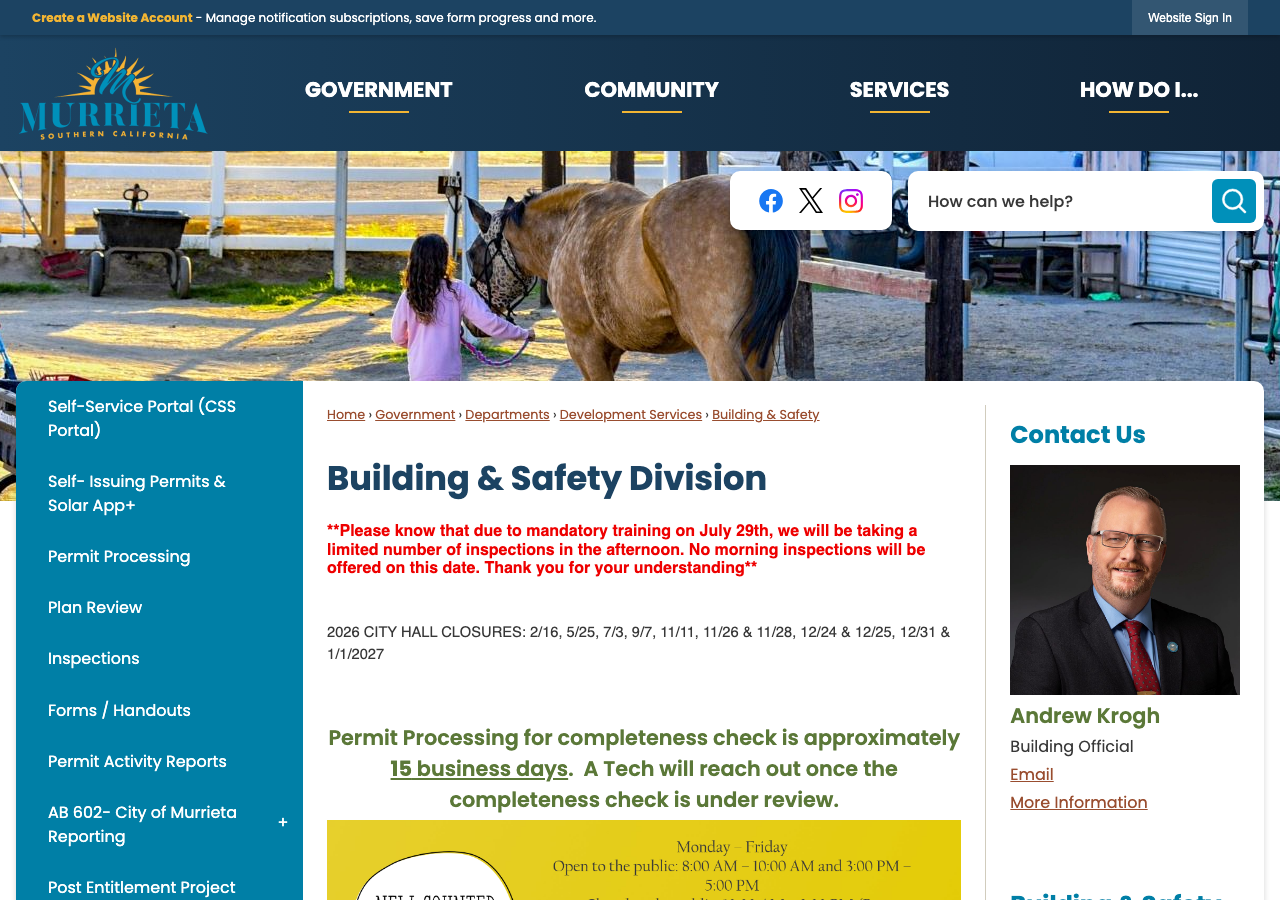
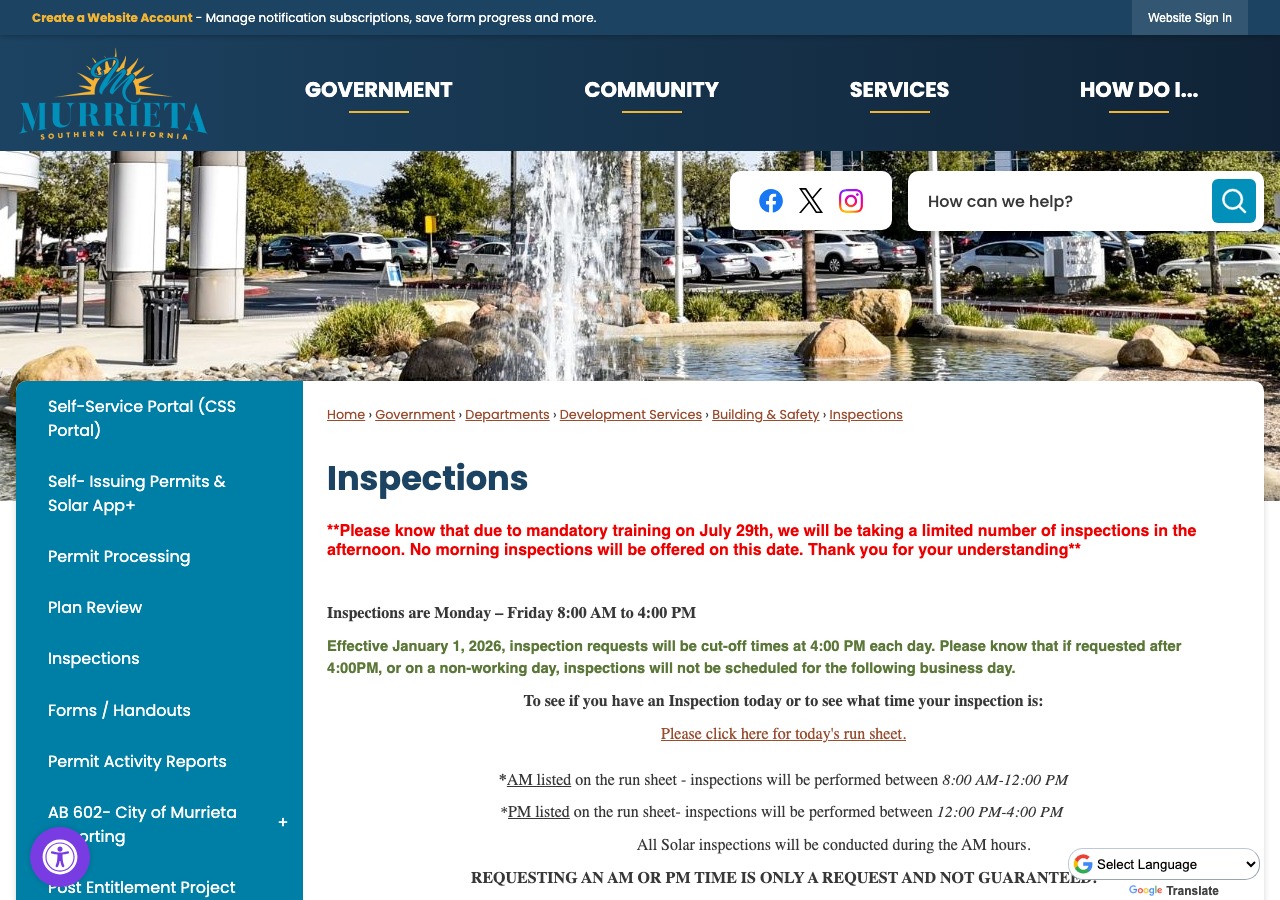

Average approval time — application to PTO
From the CPUC interconnection record. Bars show the average days taken each year; a year with no recorded projects is left blank rather than drawn as zero.