
City of Palm Desert
Riverside County
City of Palm Desert is a city authority in the State of California, serving 51,163 residents. 8,505 residential solar installs are on record here. This page is the permit route for that jurisdiction: the fifteen steps from working out who has a say over an address through to permission to operate, the documents this authority publishes, and 62 answers taken from those documents and dated.
Permitting 5 steps · 28 questions
Whether a permit is needed — Yes Q3 Electrical and building permits — Combined Q4 Plan review — 7 to 10 business days for the initial review of a qualifying (expedited) system, with follow-up reviews within 7 business days; Q18 Where you file — Clariti (the city's online permit portal), used in tandem with SolarAPP+ for automated PV plan review Q20
- Permit required
- Yes95% source
- What it costs
- $353 flat, all-inclusive, for systems up to 15kW AC; $353 base + $15/kW for each kW above 15kW90% source
- Plan review turnaround
- 7 to 10 business days for the initial review of a qualifying (expedited) system, with follow-up reviews within 7 business days;85% source
- Key document
- department bulletin cited by 9 open the document
-
Confirm who has a say over your address
A city address is usually permitted by the city, not the county — but not always, and some authorities keep building and hand electrical to someone else. Getting this wrong costs the whole submittal, because every requirement below belongs to whoever actually holds jurisdiction. Check the overlays in the same pass: an HOA, a historic district, a windstorm certification or a system-size cap can reshape the design, and all of them are cheaper to find now than after the array is laid out.
- Is this authority the AHJ for residential solar at this address? Yes 95% · department page
- What does this authority permit itself, and what does it delegate? Both (Building and Electrical) in-house; Fire Marshal function contracted to Riverside County Fire Department; Planning Dept. also reviews under the ministerial Solar Rights Act standard 92% · ordinance
- Is a permit required for a residential rooftop PV system? Yes 95% · department page
- Is there a separate electrical permit, or is it combined? Combined 85% · fee schedule
- Is a HOA or architectural approval required first? Planning Dept. design/aesthetic review required at submittal (panel tilt height, racking color/match, wire concealment), but a city or HOA cannot condition permit approval on an association's separate approval 85% · ordinance
- Is there a historic-district review? Not addressed for solar specifically; the city has a general Historic Preservation review track but no PV-specific historic-district rule was found 45% · department page
- Is a wind or windstorm certification required? No windstorm certification of the Texas type; instead structural submittals must address the city's own Basic Wind Speed table (91-108 mph 3-second gust depending on Risk Category) via the Structural Criteria Checklist or stamped calculations 80% · department bulletin
- Is a Specific Use Permit or Council approval ever required? Not required for a qualifying small residential rooftop system; Council/SUP-type approval is not mentioned anywhere in the PV-specific materials 55% · ordinance
- Is there a system-size cap on residential generation? No hard cap for a residential permit generally; the ministerial/expedited process defined in PDMC 15.17.030 applies only to systems ≤10kW AC (or ≤30kW thermal) on a single/duplex dwelling, and the city's own PV bulletin extends its expedited SolarAPP+/administrative treatment up to 30kW AC — larger systems still get a residential PV permit, just via standard (non-expedited) review 85% · ordinance
-
Check who is allowed to apply
Several authorities require the electrical permit to be pulled by a licensed electrician, or require the contractor to be registered with them BEFORE applying. Registration is not same-day. This is second on the list rather than fourth because it is the step most likely to stop the job before the drawings matter.
- Who is allowed to pull the electrical permit? Licensed electrician or licensed C-46 solar contractor (or a licensed design professional) 90% · department bulletin
- Must the contractor be registered with this authority before applying? No 60% · department page
- Is a homeowner permitted to self-install and self-permit? Not addressed for the SolarAPP+ pathway (Licensed Contractors Only); standard (non-SolarAPP+) permits appear to allow the state owner-builder route 55% · department page
-
Build the submittal package
Almost everywhere wants a site plan, a one-line or three-line electrical diagram, equipment cut sheets with listings, and a structural attachment detail. Build it against the published checklist rather than the last jurisdiction you worked in — the checklist is what the reviewer marks against.
- What documents make up a complete submittal? Site plan, roof plan, attachment/racking details, product cut-sheets for panels/inverters/disconnects, a legend of all required signage/placards, a single-line electrical diagram (grounding/bonding, conductor type & size, conduit), and — for non-qualifying systems — stamped structural calculations 90% · department bulletin
- How many copies, and in what format? Two (2) complete plan sets, 11x17 minimum to 24x36 maximum, plus a separate Site/Roof Layout Plan for the Riverside County Assessor's Office 70% · department bulletin
- Is a site plan required, and what must it show? Yes — a fully dimensioned site plan showing property lines, all structures, main electrical service location, all PV inverters/disconnects, plus a roof plan showing panel layout, required setbacks, access pathways, and roof framing 90% · department bulletin
- Is a one-line / three-line diagram required? Yes 90% · department bulletin
- Are string and conductor calculations required? Partially — string/module counts and conductor sizing are required on the electrical plan; full engineering calculations are only required for non-qualifying (larger/non-standard) systems 70% · department bulletin
- Is a structural PE stamp required, and at what threshold? Not required for systems meeting the Structural Criteria Checklist; required (licensed architect/engineer stamp) for systems outside that checklist's scope, with no explicit kW threshold — eligibility is criteria-based, not size-based 80% · department bulletin
- Is an electrical PE stamp required, and at what threshold? Not required — electrical plans may be signed by a licensed C-10/C-46 contractor in lieu of a PE stamp 75% · department bulletin
-
Apply and pay
Most authorities now take the whole application through a portal, and several states cap or constrain what a residential solar permit may cost. Check whether plan check is billed separately before you quote the job.
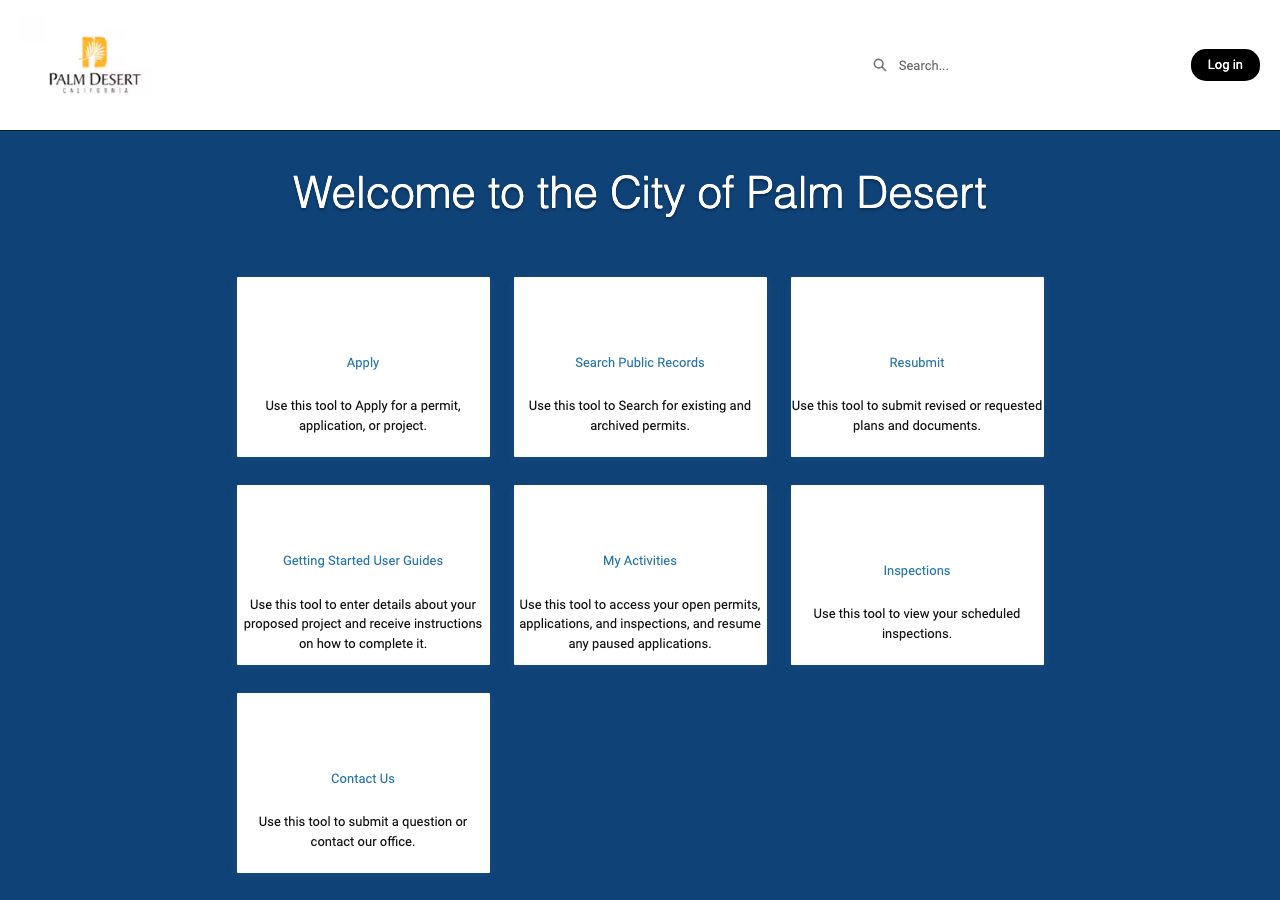
- Which permit portal does this authority use? Clariti (the city's online permit portal), used in tandem with SolarAPP+ for automated PV plan review 95% · portal landing page
- Can the whole application be completed online? Yes 90% · portal
- What does a residential solar permit cost? $353 flat, all-inclusive, for systems up to 15kW AC; $353 base + $15/kW for each kW above 15kW 90% · fee schedule
- How is the fee calculated? Tiered — flat base fee up to 15kW AC, then per-kW above that threshold 90% · fee schedule
- Is there a separate plan-check fee? No — the solar permit fee is expressly labeled 'All inclusive' 70% · fee schedule
-
Plan review — and start the utility in parallel
Interconnection is a separate process from the permit and usually the longer pole. Where the utility does not depend on the permit being issued, running both at once is the single biggest saving available on a residential job.
- What is the stated plan-review turnaround? 7 to 10 business days for the initial review of a qualifying (expedited) system, with follow-up reviews within 7 business days; standard (non-qualifying) plan review is a 10-business-day initial review with 7-business-day follow-up 85% · department bulletin
- How long is an issued permit valid before it expires? 12 months from issuance if work has not commenced (or has stalled for 12 months); the Building Official may grant a written extension of up to 180 days, but total permit life may not exceed 2 years from issuance absent significant cause 88% · ordinance
- Which utility handles interconnection here? Southern California Edison (SCE); Desert Community Energy (DCE) is the Community Choice Aggregator that supplies generation service in parallel but does not perform interconnection 90% · utility/CCA source
- Where does the utility sit in the sequence? Parallel — the city's own PV bulletin describes utility approval as a separate track from the building permit, recommending applicants start it early rather than sequence it strictly before or after 55% · department bulletin
28 questions answered against City of Palm Desert’s own published documents
Q1 Is this authority the AHJ for residential solar at this address? Core Jurisdiction & scope
Yes
Why the confidence is not higherCity's own Building & Safety page states the division 'reviews building plans, issues permits, and conducts inspections'; confirmed independently by the current Palm Desert Municipal Code (PDMC) Title 15, all chapters last amended by Ord. 1439 (1/8/2026), which the city administers itself.
department page checked 2026-08-30 https://www.palmdesert.gov/build-develop/building-and-safety
Q2 What does this authority permit itself, and what does it delegate? Core Jurisdiction & scope
Both (Building and Electrical) in-house; Fire Marshal function contracted to Riverside County Fire Department; Planning Dept. also reviews under the ministerial Solar Rights Act standard
Why the confidence is not higherPDMC 15.17 (adopted by Ord. 1439, 1/8/2026) has the Chief Building Official issue the PV permit; PDMC 15.26.010(A)(2) names the Riverside County Fire Department as fire code enforcer via the Fire Chief of Riverside County; the city's PV bulletin requires 'Planning Department approval... at the time of plan review submittal' for aesthetic/height items, coordinated at (760) 776-6483.
ordinance checked 2026-08-30 https://ecode360.com/43847876
Q3 Is a permit required for a residential rooftop PV system? Core Jurisdiction & scope
Yes
Why the confidence is not higherThe city issues a dedicated 'Photovoltaic' permit type for residential and requires it before installation; confirmed by the Permit Types page and by the adopted Fee Schedule 2026-27 which lists 'Residential Solar Photovoltaic System - Solar Permit' as a chargeable permit.
department page checked 2026-08-30 https://www.palmdesert.gov/build-develop/permit-type
Q4 Is there a separate electrical permit, or is it combined? Core Jurisdiction & scope
Combined
Why the confidence is not higherThe Fee Schedule 2026-27 (OCR'd from the city's own PDF) lists a single line item 'Residential Solar Photovoltaic System - Solar Permit (All inclusive) $353' with no separate electrical-permit line for solar, and the PV submittal bulletin treats one Photovoltaic System Permit as covering both trades.
fee schedule checked 2026-08-30 https://www.palmdesert.gov/home/showpublisheddocument/480/639196170388870000
Q5 Who is allowed to pull the electrical permit? Core Who may apply
Licensed electrician or licensed C-46 solar contractor (or a licensed design professional)
Why the confidence is not higherCity's own 'Photovoltaic Residential 30kW or Less' bulletin: 'All submittals must be signed by a C-10 (Electrical Contractor) or C-46 (Solar Contractor) or licensed design professional.' PDMC 15.02 (105.8) separately requires any electrical permit to go to a CSLB-licensed contractor holding the applicable specialty license.
department bulletin checked 2026-08-30 https://www.palmdesert.gov/home/showpublisheddocument/576/639196258220030000
Q6 Must the contractor be registered with this authority before applying? Core Who may apply
No
Why the confidence is not higherNo city-specific contractor registration/pre-qualification step is described anywhere in the Building & Safety, Permit, or PV pages; the only license check found is the statewide CSLB license (C-10/C-46) referenced in the PV bulletin and PDMC 15.02 (105.8). A city business license is required of subcontractors by the time of final inspection (Construction Inspections page), which is a revenue/tax registration rather than a technical pre-qualification, so I answer No at reduced confidence.
department page checked 2026-08-30 https://www.palmdesert.gov/build-develop/inspections
Q7 Is a homeowner permitted to self-install and self-permit? Who may apply
Not addressed for the SolarAPP+ pathway (Licensed Contractors Only); standard (non-SolarAPP+) permits appear to allow the state owner-builder route
Why the confidence is not higherThe Energy & Solar page states the SolarAPP+ route is 'Licensed Contractors Only' and the SolarAPP+ eligibility checklist explicitly excludes homeowner-installed systems. Nothing on the city's own pages affirmatively states whether homeowners may self-permit outside SolarAPP+; California's general owner-builder permit process is state law, not a Palm Desert-specific rule, so I can't confirm it applies to solar specifically from a city source.
department page checked 2026-08-30 https://www.palmdesert.gov/community/energy-solar
Q8 What documents make up a complete submittal? Core Submittal package
Site plan, roof plan, attachment/racking details, product cut-sheets for panels/inverters/disconnects, a legend of all required signage/placards, a single-line electrical diagram (grounding/bonding, conductor type & size, conduit), and — for non-qualifying systems — stamped structural calculations
Why the confidence is not higherFull submittal package is itemized in the city's own 'Photovoltaic Residential 30kW or Less' bulletin under 'Minimum Plan Set Requirements.' Content is dated Feb 2023 in its revision stamp even though the PDF was re-published under the same filename July 2026; the checklist has not been superseded by anything newer found on the site.
department bulletin checked 2026-08-30 https://www.palmdesert.gov/home/showpublisheddocument/576/639196258220030000
Q9 How many copies, and in what format? Submittal package
Two (2) complete plan sets, 11x17 minimum to 24x36 maximum, plus a separate Site/Roof Layout Plan for the Riverside County Assessor's Office
Why the confidence is not higherStated explicitly in the PV bulletin's 'Minimum Plan Set Requirements' section. This is the only figure the city publishes; it may be stale now that the city has moved permitting onto the Clariti portal with electronic upload (PDMC 15.17.030(C) allows electronic submittal), so the physical-copy count may no longer be enforced for portal submittals — flagging the contradiction rather than resolving it.
department bulletin checked 2026-08-30 https://www.palmdesert.gov/home/showpublisheddocument/576/639196258220030000
Q10 Is a site plan required, and what must it show? Core Submittal package
Yes — a fully dimensioned site plan showing property lines, all structures, main electrical service location, all PV inverters/disconnects, plus a roof plan showing panel layout, required setbacks, access pathways, and roof framing
Why the confidence is not higherDirectly itemized under 'Site Plan' and 'Roof Plan' in the city's PV submittal bulletin.
department bulletin checked 2026-08-30 https://www.palmdesert.gov/home/showpublisheddocument/576/639196258220030000
Q11 Is a one-line / three-line diagram required? Core Drawings & calculations
Yes
Why the confidence is not higherPV bulletin's 'Standard Electrical Plan' section requires a 'Single line diagram of system' for all solar submittals up to 30kW.
department bulletin checked 2026-08-30 https://www.palmdesert.gov/home/showpublisheddocument/576/639196258220030000
Q12 Are string and conductor calculations required? Drawings & calculations
Partially — string/module counts and conductor sizing are required on the electrical plan; full engineering calculations are only required for non-qualifying (larger/non-standard) systems
Why the confidence is not higherBulletin requires 'Total number of modules, number of modules per string and the total number of strings' and 'conductor type and size' on the standard electrical plan; the Eligibility Checklist caps strings/MPPT combinations as a qualifying condition rather than requiring a stamped calculation package.
department bulletin checked 2026-08-30 https://www.palmdesert.gov/home/showpublisheddocument/574/639196258215270000
Q13 Is a structural PE stamp required, and at what threshold? Core Engineering & stamps
Not required for systems meeting the Structural Criteria Checklist; required (licensed architect/engineer stamp) for systems outside that checklist's scope, with no explicit kW threshold — eligibility is criteria-based, not size-based
Why the confidence is not higher'Expedited Structural Criteria with Supporting Documentation' section: qualifying projects use a downloadable Structural Criteria Checklist in lieu of a stamp; 'For non-qualifying systems, provide structural drawings and calculations stamped and signed by a licensed design professional.'
department bulletin checked 2026-08-30 https://www.palmdesert.gov/home/showpublisheddocument/576/639196258220030000
Q14 Is an electrical PE stamp required, and at what threshold? Engineering & stamps
Not required — electrical plans may be signed by a licensed C-10/C-46 contractor in lieu of a PE stamp
Why the confidence is not higherPV bulletin: 'All submittals must be signed by a C-10 (Electrical Contractor) or C-46 (Solar Contractor) or licensed design professional' — the contractor-signature route is explicitly offered as an alternative to a design professional, implying no mandatory electrical PE stamp for qualifying systems.
department bulletin checked 2026-08-30 https://www.palmdesert.gov/home/showpublisheddocument/576/639196258220030000
Q15 What does a residential solar permit cost? Core Fees
$353 flat, all-inclusive, for systems up to 15kW AC; $353 base + $15/kW for each kW above 15kW
Why the confidence is not higherAdopted Fee Schedule 2026-27 (Resolution No. 2025-064), OCR'd directly from the city's own current PDF: 'Residential Solar Photovoltaic System - Solar Permit (All inclusive) $353' with a footnote citing Gov. Code §66015(a)(1) (statutory cap of $450 + $15/kW above 15kW) — the city charges below the statutory ceiling. This supersedes the older $203 plan-review + ~$266 permit figures still printed in the 2023-vintage PV bulletin, which I judge stale relative to the FY2026-27 fee schedule.
fee schedule checked 2026-08-30 https://www.palmdesert.gov/home/showpublisheddocument/480/639196170388870000
Q16 How is the fee calculated? Core Fees
Tiered — flat base fee up to 15kW AC, then per-kW above that threshold
Why the confidence is not higherSame fee-schedule line item: base $353 covers systems to 15kW, plus $15 per additional kW above 15kW.
fee schedule checked 2026-08-30 https://www.palmdesert.gov/home/showpublisheddocument/480/639196170388870000
Q17 Is there a separate plan-check fee? Fees
No — the solar permit fee is expressly labeled 'All inclusive'
Why the confidence is not higherThe Fee Schedule marks the residential PV line 'All inclusive,' distinct from the general 'Plan Review Fee, if applicable — 65% of Building Permit Fee' that applies to other permit types; I read this as plan review being bundled into the $353, though the schedule does not say so in as many words for solar specifically.
fee schedule checked 2026-08-30 https://www.palmdesert.gov/home/showpublisheddocument/480/639196170388870000
Q18 What is the stated plan-review turnaround? Core Timeline & validity
7 to 10 business days for the initial review of a qualifying (expedited) system, with follow-up reviews within 7 business days; standard (non-qualifying) plan review is a 10-business-day initial review with 7-business-day follow-up
Why the confidence is not higherCity's own PV bulletin: 'All qualifying small residential photovoltaic plan reviews are expedited to seven (7) to ten (10) working days... All necessary follow up reviews occur within seven (7) working days.' The companion Eligibility Checklist gives the standard-process figure as '10 Business Day initial review/7 Business Day Follow-up Review.'
department bulletin checked 2026-08-30 https://www.palmdesert.gov/home/showpublisheddocument/576/639196258220030000
Q19 How long is an issued permit valid before it expires? Timeline & validity
12 months from issuance if work has not commenced (or has stalled for 12 months); the Building Official may grant a written extension of up to 180 days, but total permit life may not exceed 2 years from issuance absent significant cause
Why the confidence is not higherPDMC 15.02.020, amending CBC §105.5 (Ord. 1439, 1/8/2026): 'Every permit issued shall become invalid unless the work... is commenced within 12 months after its issuance, or if... suspended, abandoned, or without progress... for a period of 12 months.' This is a general building-permit rule, not solar-specific, but nothing in Ch. 15.17 overrides it for PV.
ordinance checked 2026-08-30 https://ecode360.com/43847818
Q20 Which permit portal does this authority use? Core Portal & process
Clariti (the city's online permit portal), used in tandem with SolarAPP+ for automated PV plan review
Why the confidence is not higherBoth the Energy & Solar page and the Apply for a Permit page name Clariti as the city's permit portal, with SolarAPP+ approval numbers entered into a Clariti 'Express Permit' application.
portal landing page checked 2026-08-30 https://www.palmdesert.gov/community/energy-solar
Q21 Can the whole application be completed online? Core Portal & process
Yes
Why the confidence is not higherSolarAPP+-eligible systems get an instant, auto-issued approval, and the entire Palm Desert side (application, payment, inspection scheduling) is completed online through Clariti per the Energy & Solar page and the Apply for a Permit page.
portal checked 2026-08-30 https://www.palmdesert.gov/build-develop/permit
Q22 Which utility handles interconnection here? Core Utility interconnection
Southern California Edison (SCE); Desert Community Energy (DCE) is the Community Choice Aggregator that supplies generation service in parallel but does not perform interconnection
Why the confidence is not higherDesert Community Energy's own 'Solar Customers' page states DCE offers 'the same rates for your excess energy production as Southern California Edison (SCE)' and describes SCE's Net Energy Metering / Solar Billing Plan (NBT) as the operative interconnection/export tariff, with SCE issuing Permission to Operate. DCE (formed by Palm Springs, Palm Desert and Cathedral City, per the city's own Energy & Solar page) is confirmed as a CPUC-certified CCA, not the interconnecting utility.
utility/CCA source checked 2026-08-30 https://desertcommunityenergy.org/your-options/solar-customers/
Q23 Where does the utility sit in the sequence? Core Utility interconnection
Parallel — the city's own PV bulletin describes utility approval as a separate track from the building permit, recommending applicants start it early rather than sequence it strictly before or after
Why the confidence is not higherPV bulletin 'Quick Tips': 'Local electric utilities have a completely separate approval process from the local jurisdiction's permitting process. Some electric utilities may require that the solar project be reviewed before the local jurisdiction issues a building permit.' This is boilerplate OPR/CALSEIA guidance the city copied into its own bulletin rather than a Palm Desert-specific statement, and it hedges rather than commits to one sequence, so confidence is capped.
department bulletin checked 2026-08-30 https://www.palmdesert.gov/home/showpublisheddocument/576/639196258220030000
Q24 Is a HOA or architectural approval required first? Overlays & special cases
Planning Dept. design/aesthetic review required at submittal (panel tilt height, racking color/match, wire concealment), but a city or HOA cannot condition permit approval on an association's separate approval
Why the confidence is not higherPV bulletin: 'Planning Department approval is required at the time of plan review submittal'; the SolarAPP+ Eligibility Checklist's 'Planning Department Requirements' section sets max tilt (18 in.), racking color-match, and wire-concealment rules. PDMC 15.17.040(H) (Ord. 1439, 1/8/2026): 'A city... shall not condition approval for any solar energy system permit on the approval of a solar energy system by an association.'
ordinance checked 2026-08-30 https://ecode360.com/43847876
Q25 Is there a historic-district review? Overlays & special cases
Not addressed for solar specifically; the city has a general Historic Preservation review track but no PV-specific historic-district rule was found
Why the confidence is not higherBuilding & Safety's left-nav lists a 'Historic Preservation' page and PDMC 15.20 adopts the Historical Building Code, but none of the PV-specific documents (energy-solar page, PV bulletin, Ch. 15.17) mention historic-district review for rooftop solar, and I did not locate a historic-overlay map cross-referenced to solar.
department page checked 2026-08-30 https://www.palmdesert.gov/build-develop/building-and-safety
Q26 Is a wind or windstorm certification required? Overlays & special cases
No windstorm certification of the Texas type; instead structural submittals must address the city's own Basic Wind Speed table (91-108 mph 3-second gust depending on Risk Category) via the Structural Criteria Checklist or stamped calculations
Why the confidence is not higherCity's own 'Palm Desert Ordinance and Design Criteria' bulletin lists Basic Wind Speed by Risk Category (I-IV) and Wind Exposure by street reference, tied to the ASCE hazard tool; the PV bulletin requires either the Structural Criteria Checklist or stamped structural calcs addressing wind/seismic loads.
department bulletin checked 2026-08-30 https://www.palmdesert.gov/home/showpublisheddocument/526/639196237881370000
Q27 Is a Specific Use Permit or Council approval ever required? Overlays & special cases
Not required for a qualifying small residential rooftop system; Council/SUP-type approval is not mentioned anywhere in the PV-specific materials
Why the confidence is not higherChapter 15.17 describes an administrative (staff-level) approval process only; no reference to Planning Commission or City Council hearing appears in the PV ordinance, PV bulletin, or Eligibility Checklist for qualifying systems. I could not fully rule out a Council-level process for large/ground-mount/non-qualifying systems since those go through 'standard' (non-solar-specific) review, so this is not a proven absence for every possible project.
ordinance checked 2026-08-30 https://ecode360.com/43847876
Q28 Is there a system-size cap on residential generation? Overlays & special cases
No hard cap for a residential permit generally; the ministerial/expedited process defined in PDMC 15.17.030 applies only to systems ≤10kW AC (or ≤30kW thermal) on a single/duplex dwelling, and the city's own PV bulletin extends its expedited SolarAPP+/administrative treatment up to 30kW AC — larger systems still get a residential PV permit, just via standard (non-expedited) review
Why the confidence is not higherPDMC 15.17.030 (Ord. 1439, 1/8/2026) defines 'small residential rooftop solar energy system' at ≤10kW AC/30kW thermal for the state-mandated expedited process; the city's PV bulletin title and Eligibility Checklist instead set the local expedited-review bar at ≤30kW AC. The fee schedule's tiered per-kW pricing above 15kW confirms there's no absolute size ceiling on the residential PV permit itself.
ordinance checked 2026-08-30 https://ecode360.com/43847876
Lines marked with a percentage were read off this authority’s own published documents. Unmarked guidance is general good practice, not this jurisdiction’s rule — always confirm against the authority before you submit.
Install 5 steps · 20 questions
-
Build to the code editions actually in force here
The NEC edition a jurisdiction enforces is often a cycle behind the newest one published, and local amendments sit on top of it. Rapid shutdown, conductor sizing and labelling all change between editions, so the edition in force is the first thing to establish, not the last.
- Which NEC edition is in force? 2023 95% · adopting ordinance
- Which building code edition is in force? 2025 California Building Code (based on the 2024 IBC) and 2025 California Residential Code (based on the 2024 IRC) 95% · adopting ordinance
- Which fire code edition is in force? 2025 California Fire Code 95% · adopting ordinance
- Are there local amendments to any of the above? Yes 95% · ordinance
- What is the installation judged against? The 2025 California Electrical Code (Part 3, Title 24), as locally amended by PDMC Ch. 15.10, plus the state Solar Rights Act (Civil Code §714 / Gov. Code §65850.5) standards codified at PDMC Ch. 15.17 90% · ordinance
-
Fire access, setbacks and pathways
Ridge setbacks and roof access pathways are fire-service requirements and they constrain the array layout. They are the most common cause of a redesign after the fire department comments on a plan set.
- What ridge setback and access pathways are required? No local ridge-setback figure was found in Ch. 15.17 or Ch. 15.26; the PV bulletin instead points installers to the State Fire Marshal's Office solar PV access-pathway guideline for clearances, and the roof plan must show pathways and roof-access points 60% · department bulletin
-
Rapid shutdown
Which rapid-shutdown rule applies follows directly from the NEC edition in force, and the initiation device has to be at a location the fire service can reach and identify. This is inspected, and it is labelled.
- Is rapid shutdown required, and to which NEC edition? Yes, rapid shutdown is required as a matter of the state-mandated 2023 NEC (via the 2025 CEC now in force, PDMC 15.10.010) — but the city's own PV submittal bulletin never mentions rapid shutdown or NEC 690.12 by name 70% · adopting ordinance / department bulletin
-
Labels and placards
The NEC sets a baseline for permanent markings at the service equipment and the disconnecting means. On top of that, an authority may specify its own wording, and the utility may specify more again. Where any of them writes its own text, a generic off-the-shelf label set will not pass — this is the detail most often fixed on a return visit.
- Which placards does this authority require at the service equipment? No city-specific placard beyond what NEC/CEC Articles 690 and 705 require at PV disconnects, rapid-shutdown boxes, and service equipment 70% · department bulletin
- Does the authority specify placard wording of its own? No 70% · department bulletin
- Does it specify letter height, colour or material? Not specified locally — no letter height, color, or material requirement beyond whatever NEC 690/705 itself prescribes 65% · department bulletin
- Is a site plan / facility map placard required, and what must it show? A roof/site diagram showing panel layout, disconnect locations, access pathways and roof-access points must be submitted and is used to verify field labeling, but no distinct 'facility map placard' posted at the meter is described 60% · department bulletin
- Where must the labels be placed? At the point of installation required by CEC 690/705 (PV disconnects, rapid-shutdown equipment, and main service equipment); the city's plan-review checklist requires a legend showing 'locations and wording of all required signs or placards at various photovoltaic system components' 65% · department bulletin
-
Disconnect, storage and listed equipment
Where the AC disconnect must sit relative to the meter is usually the utility's rule, not the building department's. Battery storage frequently carries its own permit, its own inspection and its own fire conditions.
- Must equipment be on a specific approved list? Not stated as a blanket requirement; equipment must be UL-listed per standard CEC/CBC product-listing rules, and the SolarAPP+ pathway independently requires listed inverters/batteries, but no city-maintained 'approved products list' was found 55% · department bulletin
- Are batteries permitted, and under what conditions? Yes, batteries/ESS are permitted in residential (Group R-3) occupancies, subject to fire-detection requirements: a listed heat detector interconnected to the home's smoke alarms (or a UL 985 household fire-warning system, or a listed alarm rated for unconditioned space) where installed in an attached garage, or installation in an exterior location instead 85% · fire code + amendments (county fire marshal guideline)
- Is there a separate ESS permit or inspection? Yes — a construction permit for the ESS is required from both the city's Building Department and Riverside County's Office of the Fire Marshal (RVC-OFM), in addition to any solar permit 80% · ordinance / county fire guideline
- Is a ground mount treated as a structure? Yes, by exclusion — ground-mounted and ballasted systems are barred from the streamlined SolarAPP+/expedited path and fall back to standard plan review as a structure under the CBC/CRC 70% · department page / ordinance
- Is there a local rule on service upgrades or busbar sizing? No PV-specific local amendment to service/busbar sizing was found; the only Ch. 15.10 amendment on file concerns underground wiring depth ('6 inches beneath the bottom of slab'), unrelated to service upgrades 70% · ordinance
- Is a specific mounting system or attachment spacing required? For qualifying systems, a downloadable Structural Criteria Checklist governs attachment/spacing; there is no single prescriptive spacing table published on the city's site — non-qualifying systems require project-specific stamped structural calculations 70% · department bulletin
20 questions answered against City of Palm Desert’s own published documents
Q29 Which NEC edition is in force? Core Code editions in force
2023
Why the confidence is not higherPDMC 15.10.010 (Ord. 1439, effective 1/8/2026): 'the California Electrical Code, 2025 Edition... based on the 2023 National Electrical Code.' This is the current codified text (eCode360 shows the code as current through the 2026-05-28 supplement) and supersedes the city's own Building & Safety webpage and 'Design Criteria' bulletin, both of which still describe the superseded 2022 CBSC/Ord. 1388 cycle — I'm flagging that internal contradiction rather than resolving it in the stale pages' favor.
adopting ordinance checked 2026-08-30 https://ecode360.com/43847843
Q30 Which building code edition is in force? Core Code editions in force
2025 California Building Code (based on the 2024 IBC) and 2025 California Residential Code (based on the 2024 IRC)
Why the confidence is not higherPDMC 15.04.010 and 15.06.010 (both Ord. 1439, 1/8/2026) adopt the 2025 CBC/CRC by reference. As with q29, the city's Building & Safety page and its 'Design Criteria' bulletin still describe the 2022 cycle under the older Ord. 1388 — those pages have not caught up to the codified ordinance and I weight the ordinance as controlling.
adopting ordinance checked 2026-08-30 https://ecode360.com/43847826
Q31 Which fire code edition is in force? Code editions in force
2025 California Fire Code
Why the confidence is not higherPDMC 15.26.010 (Ord. 1439, 1/8/2026): 'the purpose of this chapter is to adopt the 2025 California Fire Code... as amended, to govern the safeguarding of life and property.' Riverside County Fire's own Residential ESS Guideline (OFM-16) still cites the superseded 2022 CFC — flagging that county/city divergence per the brief's known pattern, not resolving it.
adopting ordinance checked 2026-08-30 https://ecode360.com/43847897
Q32 Are there local amendments to any of the above? Core Code editions in force
Yes
Why the confidence is not higherPDMC 15.04.020, 15.06.020, 15.10.020, and 15.26.010(B) all contain substantive local amendments to the respective 2025 state codes (e.g., a residential A/C requirement, a 6-inch under-slab conductor depth change, and roughly 20 fire-code amendment items).
ordinance checked 2026-08-30 https://ecode360.com/43847897
Q33 What is the installation judged against? Core Electrical
The 2025 California Electrical Code (Part 3, Title 24), as locally amended by PDMC Ch. 15.10, plus the state Solar Rights Act (Civil Code §714 / Gov. Code §65850.5) standards codified at PDMC Ch. 15.17
Why the confidence is not higherDirectly stated in PDMC 15.10.010 and 15.17.020.
ordinance checked 2026-08-30 https://ecode360.com/43847843
Q34 Is there a local rule on service upgrades or busbar sizing? Electrical
No PV-specific local amendment to service/busbar sizing was found; the only Ch. 15.10 amendment on file concerns underground wiring depth ('6 inches beneath the bottom of slab'), unrelated to service upgrades
Why the confidence is not higherRead PDMC 15.10.020 in full (the entire Electrical Code amendment chapter): its single amendment is to Table 300.5(A) location-of-wiring depth, not busbar/service sizing. I looked in the place a busbar rule would sit (the electrical-code amendment chapter) and found nothing solar- or busbar-related there.
ordinance checked 2026-08-30 https://ecode360.com/43847843
Q35 Is a specific mounting system or attachment spacing required? Structural & mounting
For qualifying systems, a downloadable Structural Criteria Checklist governs attachment/spacing; there is no single prescriptive spacing table published on the city's site — non-qualifying systems require project-specific stamped structural calculations
Why the confidence is not higherPV bulletin references 'A Structural Criteria Checklist can be downloaded at Department's website or obtained in person' but the checklist file itself was not linked from the archived Forms & Handouts page snapshot I could retrieve, so I could not read its numeric spacing values directly.
department bulletin checked 2026-08-30 https://www.palmdesert.gov/home/showpublisheddocument/576/639196258220030000
Q36 What ridge setback and access pathways are required? Core Fire pathways & setbacks
No local ridge-setback figure was found in Ch. 15.17 or Ch. 15.26; the PV bulletin instead points installers to the State Fire Marshal's Office solar PV access-pathway guideline for clearances, and the roof plan must show pathways and roof-access points
Why the confidence is not higherPV bulletin: 'demonstrate the required clear path access pathways as required by the State Fire Marshal's Office' with a link to osfm.fire.ca.gov's solar PV guideline; I read the full Ch. 15.26 Fire Code amendment list (about 20 items) and found none that add a Palm-Desert-specific ridge-setback number beyond the state fire code's standard pathway requirements.
department bulletin checked 2026-08-30 https://www.palmdesert.gov/home/showpublisheddocument/576/639196258220030000
Q37 Is rapid shutdown required, and to which NEC edition? Core Rapid shutdown
Yes, rapid shutdown is required as a matter of the state-mandated 2023 NEC (via the 2025 CEC now in force, PDMC 15.10.010) — but the city's own PV submittal bulletin never mentions rapid shutdown or NEC 690.12 by name
Why the confidence is not higherI read both the PV bulletin ('Photovoltaic Residential 30kW or Less') and the Eligibility Checklist in full and neither uses the words 'rapid shutdown' or cites 690.12; the requirement nonetheless follows automatically from PDMC 15.10.010 adopting the 2023-NEC-based 2025 CEC, which is the current NEC edition with the full 690.12 controlled-conductor scheme. I'm holding confidence at 70 specifically because the authority's own installer-facing document is silent on it — the exact 'current date is no guarantee' pattern flagged in this brief.
adopting ordinance / department bulletin checked 2026-08-30 https://ecode360.com/43847843
Q38 Which placards does this authority require at the service equipment? Core Labels Signage & labelling
No city-specific placard beyond what NEC/CEC Articles 690 and 705 require at PV disconnects, rapid-shutdown boxes, and service equipment
Why the confidence is not higherPV bulletin's Standard Electrical Plan checklist: 'Labeling of equipment as required by CEC, Sections 690 and 705.' No additional city-created placard (e.g., a Palm-Desert-specific main-service placard) was found in Ch. 15.17, Ch. 15.26, or the fee/inspection pages.
department bulletin checked 2026-08-30 https://www.palmdesert.gov/home/showpublisheddocument/576/639196258220030000
Q39 Does the authority specify placard wording of its own? Core Labels Signage & labelling
No
Why the confidence is not higherThe bulletin defers entirely to 'CEC, Sections 690 and 705' for labeling content; no city-drafted wording is quoted or attached in the Ch. 15.17 ordinance, the PV bulletin, or the Eligibility Checklist.
department bulletin checked 2026-08-30 https://www.palmdesert.gov/home/showpublisheddocument/576/639196258220030000
Q40 Does it specify letter height, colour or material? Core Labels Signage & labelling
Not specified locally — no letter height, color, or material requirement beyond whatever NEC 690/705 itself prescribes
Why the confidence is not higherSame bulletin section only cross-references CEC 690/705; I found no separate city table of letter heights/colors/materials anywhere in Title 15 or the PV/EV bulletins on the Forms & Handouts page.
department bulletin checked 2026-08-30 https://www.palmdesert.gov/home/showpublisheddocument/576/639196258220030000
Q41 Is a site plan / facility map placard required, and what must it show? Core Labels Signage & labelling
A roof/site diagram showing panel layout, disconnect locations, access pathways and roof-access points must be submitted and is used to verify field labeling, but no distinct 'facility map placard' posted at the meter is described
Why the confidence is not higherPV bulletin requires a 'Site diagram showing the arrangement of panels on the roof or ground, north arrow, lot dimensions...' as a plan-submittal item and the field-inspection checklist checks that 'appropriate signs are properly constructed, installed and displayed' — but nothing describes a separate as-built facility-map placard requirement distinct from CEC 690/705 labeling.
department bulletin checked 2026-08-30 https://www.palmdesert.gov/home/showpublisheddocument/574/639196258215270000
Q42 Does the UTILITY specify placards beyond the AHJ's? Core Labels Signage & labelling
Nothing published by this authority.
Where we lookedSouthern California Edison's Rule 21/interconnection handbook pages (on.sce.com/interconnectionhandbook and sce.com/business/generating-your-own-power/interconnections), and DCE's site for any DCE-specific placard addendum
https://www.sce.com/business/generating-your-own-power/interconnections
Q43 Where must the labels be placed? Core Labels Signage & labelling
At the point of installation required by CEC 690/705 (PV disconnects, rapid-shutdown equipment, and main service equipment); the city's plan-review checklist requires a legend showing 'locations and wording of all required signs or placards at various photovoltaic system components'
Why the confidence is not higherPV bulletin 'Signage Specifications' item, read alongside the Standard Electrical Plan's CEC 690/705 labeling reference — both address location only in terms of 'at various photovoltaic system components,' not a further Palm-Desert-specific placement rule.
department bulletin checked 2026-08-30 https://www.palmdesert.gov/home/showpublisheddocument/576/639196258220030000
Q44 Must equipment be on a specific approved list? Equipment listing
Not stated as a blanket requirement; equipment must be UL-listed per standard CEC/CBC product-listing rules, and the SolarAPP+ pathway independently requires listed inverters/batteries, but no city-maintained 'approved products list' was found
Why the confidence is not higherPV bulletin requires 'manufacturers' specifications' and cut-sheets for all major components (a listing-verification step) but does not reference or link a city-specific approved-equipment list.
department bulletin checked 2026-08-30 https://www.palmdesert.gov/home/showpublisheddocument/576/639196258220030000
Q45 Are batteries permitted, and under what conditions? Core Battery / ESS
Yes, batteries/ESS are permitted in residential (Group R-3) occupancies, subject to fire-detection requirements: a listed heat detector interconnected to the home's smoke alarms (or a UL 985 household fire-warning system, or a listed alarm rated for unconditioned space) where installed in an attached garage, or installation in an exterior location instead
Why the confidence is not higherRiverside County Fire Department's own Guideline OFM-16 ('Residential Energy Storage Systems Fire Detection Requirements'), applicable to Palm Desert as an RVC Fire contract city, sets out these three garage-installation options plus the exterior-location alternative, citing CFC 1207.11 and CRC R328.7. Note the guideline itself is dated 10/8/2024 and still cites the 2022 CFC even though Palm Desert has since moved to the 2025 CFC (Ord. 1439) — flagging the code-cycle mismatch rather than resolving it.
fire code + amendments (county fire marshal guideline) checked 2026-08-30 https://www.rvcfire.org/pdf/fire-marshal/guideline-ofm/Residential%20ESS%20Guideline.pdf
Q46 Is there a separate ESS permit or inspection? Battery / ESS
Yes — a construction permit for the ESS is required from both the city's Building Department and Riverside County's Office of the Fire Marshal (RVC-OFM), in addition to any solar permit
Why the confidence is not higherOFM-16: 'A construction permit (CFC 510.3) for the installation, or modification to Energy Storage Systems and related equipment is required prior to installation. Construction documents and equipment data sheets shall be submitted to the Building Department within your jurisdiction and RVC-OFM for review and approval.' No separate ESS fee line was found on the city's own Fee Schedule (searched the full 25-page OCR text for 'battery'/'energy storage' with no hits beyond a commercial sprinkler-exemption clause), so the ESS permit appears to ride on the standard electrical/panel-upgrade fee lines rather than its own fee.
ordinance / county fire guideline checked 2026-08-30 https://www.rvcfire.org/pdf/fire-marshal/guideline-ofm/Residential%20ESS%20Guideline.pdf
Q47 Is a ground mount treated as a structure? Core Ground mount
Yes, by exclusion — ground-mounted and ballasted systems are barred from the streamlined SolarAPP+/expedited path and fall back to standard plan review as a structure under the CBC/CRC
Why the confidence is not higherEnergy & Solar page: SolarAPP+ eligibility is 'Main dwelling rooftop, permitted, residential structures only. No ballasted or ground mounted systems.' The city's PV bulletin and Ch. 15.17 both define 'small residential rooftop solar energy system' as roof-mounted only, implying ground-mount is handled under standard structural (CBC/CRC) review rather than the solar-specific streamlined chapter — a reasonable inference rather than a direct city statement that ground mounts are 'a structure.'
department page / ordinance checked 2026-08-30 https://www.palmdesert.gov/community/energy-solar
Q48 Where must the AC disconnect be, relative to the meter? Core Utility equipment
Nothing published by this authority.
Where we lookedSouthern California Edison's Rule 21/DG interconnection manual, which would normally specify AC-disconnect placement relative to the meter (on.sce.com/interconnectionhandbook 302-redirects to the SCE homepage with no working replacement page found, and the successor URL 404s)
Lines marked with a percentage were read off this authority’s own published documents. Unmarked guidance is general good practice, not this jurisdiction’s rule — always confirm against the authority before you submit.
Inspection 5 steps · 14 questions
-
Book it
Booking is a portal, a phone call or an email depending on the authority, and the notice required is rarely zero. Book before the work is finished rather than after — the lead time, not the work, is usually what sets the date.
- How is an inspection booked? Portal (Clariti) 90% · department page
- How much notice is required? 24 hours 85% · department bulletin
- Are same-day or AM/PM windows offered? Yes — AM/PM windows 90% · department page
-
Know who turns up
Some authorities inspect their own solar work; some delegate it, and a few do not inspect the PV equipment itself at all. Who is coming determines what they will look at.
- Does this AHJ perform its own final solar inspection? Yes 85% · ordinance
- If delegated, to whom? Not delegated for routine residential PV; Riverside County Fire Department (Fire Marshal/RVC-OFM) may be consolidated into the same visit only where fire-code items (e.g., an ESS) are in scope 70% · ordinance
-
Work the stages in order
A rough-in or mid-roof inspection, where one is required, has to happen before the work it covers is closed up. Missing a stage means opening something back up, and it is the most expensive kind of correction.
- Which inspections are required, and in what order? One consolidated final inspection for qualifying systems ≤30kW; for systems >30kW, a rough inspection after the mounting system is installed, followed by a final inspection 80% · department bulletin
- Is a rough-in or mid-roof inspection required? No, not for systems ≤30kW; yes (a rough/mounting inspection) for systems over 30kW 80% · department bulletin
-
Have the paperwork on site
The approved plan set, the permit, and the equipment listings should be on site and reachable. Inspectors routinely verify that installed equipment matches what was approved, and that the labels are the ones the plan set promised.
- Is there a published inspection checklist? Yes 85% · department bulletin
- What must be on site at inspection? Approved plans and specification sheets on site for comparison, plus an OSHA-approved ladder for roof access; smoke and CO alarms must also be present/operational at final 80% · department bulletin
- Does the inspector verify labels and listings? Yes 85% · department bulletin
-
Sign-off, and permission to operate
Passing gives you a final or an equivalent sign-off. That is not the same as permission to operate: PTO comes from the utility, and who tells the utility the inspection passed varies. A system left switched off for weeks is usually waiting on this handover.
- What is issued on pass? Final (a Clariti portal approval record for virtual inspections; a signed-off final inspection generally, since PV is not a new-occupancy permit and would not trigger a Certificate of Occupancy) 60% · department page
- Who notifies the utility for PTO? Installer/applicant 90% · ordinance
- Is there a re-inspection fee? $89 for the 2nd re-inspection or more (each) 85% · fee schedule
- How are corrections issued and cleared? Corrections are noted by the inspector and cleared at a re-inspection; for virtual inspections, corrections/questions are posted back to the applicant's Clariti account for response and re-submission 70% · department page
14 questions answered against City of Palm Desert’s own published documents
Q49 How is an inspection booked? Core Booking & scheduling
Portal (Clariti)
Why the confidence is not higherConstruction Inspections page: 'Inspections are scheduled through Clariti, the City of Palm Desert's permit processing portal.'
department page checked 2026-08-30 https://www.palmdesert.gov/build-develop/inspections
Q50 How much notice is required? Core Booking & scheduling
24 hours
Why the confidence is not higherPV bulletin: 'Inspections are required to be scheduled twenty-four (24) hours in advance.' The general Construction Inspections page does not give a different lead time for other trades, so I treat 24 hours as the applicable solar-specific figure.
department bulletin checked 2026-08-30 https://www.palmdesert.gov/home/showpublisheddocument/576/639196258220030000
Q51 Are same-day or AM/PM windows offered? Booking & scheduling
Yes — AM/PM windows
Why the confidence is not higherConstruction Inspections page: 'On the morning of your scheduled inspection, log in to Clariti... Inspections are noted as AM (morning) or PM (afternoon).' Same-day requests are explicitly not guaranteed ('Same day inspection will not be provided' per the PV bulletin).
department page checked 2026-08-30 https://www.palmdesert.gov/build-develop/inspections
Q52 Does this AHJ perform its own final solar inspection? Core Who inspects
Yes
Why the confidence is not higherPDMC 15.17.040(E) (Ord. 1439, 1/8/2026): a qualifying system gets 'one inspection... which shall be done in a timely manner and may include a consolidated inspection by the building official and Fire Chief' — the Building Official (city) performs/coordinates the final inspection himself; Fire Marshal participation is optional/consolidated, not delegated away from the city.
ordinance checked 2026-08-30 https://ecode360.com/43847876
Q53 If delegated, to whom? Core Who inspects
Not delegated for routine residential PV; Riverside County Fire Department (Fire Marshal/RVC-OFM) may be consolidated into the same visit only where fire-code items (e.g., an ESS) are in scope
Why the confidence is not higherSame PDMC 15.17.040(E) language, read together with OFM-16's construction-permit/inspection role for ESS specifically; for PV-only systems the city's own PV bulletin makes no mention of a separate fire inspection at all ('Fire Marshall approval is not required for small residential rooftop systems at this time').
ordinance checked 2026-08-30 https://ecode360.com/43847876
Q54 Which inspections are required, and in what order? Core Stages & sequence
One consolidated final inspection for qualifying systems ≤30kW; for systems >30kW, a rough inspection after the mounting system is installed, followed by a final inspection
Why the confidence is not higherPV bulletin: 'Qualifying small rooftop PV systems will be inspected in one (1) site visit, if under 30 kilowatts. If PV system is over 30 kilowatts it will require a rough inspection after mounting system is installed.'
department bulletin checked 2026-08-30 https://www.palmdesert.gov/home/showpublisheddocument/576/639196258220030000
Q55 Is a rough-in or mid-roof inspection required? Stages & sequence
No, not for systems ≤30kW; yes (a rough/mounting inspection) for systems over 30kW
Why the confidence is not higherSame PV bulletin passage as q54.
department bulletin checked 2026-08-30 https://www.palmdesert.gov/home/showpublisheddocument/576/639196258220030000
Q56 Does the inspector verify labels and listings? Core What is checked
Yes
Why the confidence is not higherPV bulletin's inspection checklist explicitly includes: 'Number of PV modules and model number match plans and specification sheets' and 'Appropriate signs are properly constructed, installed and displayed.'
department bulletin checked 2026-08-30 https://www.palmdesert.gov/home/showpublisheddocument/576/639196258220030000
Q57 Is there a published inspection checklist? Core What is checked
Yes
Why the confidence is not higherThe PV bulletin publishes a 'common points of inspection' list (module/model match, grounding, workmanlike installation, conductor sizing, signage, smoke/CO alarms) as part of its public Inspection Information section.
department bulletin checked 2026-08-30 https://www.palmdesert.gov/home/showpublisheddocument/576/639196258220030000
Q58 What must be on site at inspection? Core Documents on site
Approved plans and specification sheets on site for comparison, plus an OSHA-approved ladder for roof access; smoke and CO alarms must also be present/operational at final
Why the confidence is not higherPV bulletin: 'Permit holders must be prepared to show conformance with all technical requirements in the field... An OSHA approved ladder must be provided by the contractor of record or property owner at the time of inspection,' and the checklist requires 'Smoke detector and carbon monoxide alarms... at final inspection.'
department bulletin checked 2026-08-30 https://www.palmdesert.gov/home/showpublisheddocument/576/639196258220030000
Q59 Is there a re-inspection fee? Corrections & re-inspection
$89 for the 2nd re-inspection or more (each)
Why the confidence is not higherAdopted Fee Schedule 2026-27: 'Re-inspection Fee (2nd Re-inspection or More) (each) $89,' footnoted 'Reinspection fee applies after the first re-inspection' — a general building-fee line, not solar-specific, but nothing in Ch. 15.17 sets a different solar re-inspection fee.
fee schedule checked 2026-08-30 https://www.palmdesert.gov/home/showpublisheddocument/480/639196170388870000
Q60 How are corrections issued and cleared? Corrections & re-inspection
Corrections are noted by the inspector and cleared at a re-inspection; for virtual inspections, corrections/questions are posted back to the applicant's Clariti account for response and re-submission
Why the confidence is not higherConstruction Inspections page (Virtual Inspection Program): 'The inspector will update your Clariti account with any follow up questions, corrections, or an approval.' For in-person inspections the same page states 'Reinspections will only be conducted after corrections have been made,' but does not describe the correction-notice mechanism (verbal, printed card, or portal) in as much detail as the virtual-inspection path.
department page checked 2026-08-30 https://www.palmdesert.gov/build-develop/inspections
Q61 What is issued on pass? Core Final sign-off & PTO
Final (a Clariti portal approval record for virtual inspections; a signed-off final inspection generally, since PV is not a new-occupancy permit and would not trigger a Certificate of Occupancy)
Why the confidence is not higherConstruction Inspections page describes a 'Final Inspection' stage generally and states for virtual inspections specifically that 'The permit approval in your Clariti account will serve as your record of final inspection... A standard job card will not be issued.' Nothing PV-specific names the exact document issued on a passed solar final, so this is an inference from the general inspections page rather than a solar-specific statement.
department page checked 2026-08-30 https://www.palmdesert.gov/build-develop/inspections
Q62 Who notifies the utility for PTO? Core Final sign-off & PTO
Installer/applicant
Why the confidence is not higherPDMC 15.17.040(G) (Ord. 1439, 1/8/2026): city approval 'does not authorize an applicant to connect the small residential rooftop energy system to the local utility provider's electricity grid. The applicant is responsible for obtaining such approval or permission from the local utility provider.'
ordinance checked 2026-08-30 https://ecode360.com/43847876
Lines marked with a percentage were read off this authority’s own published documents. Unmarked guidance is general good practice, not this jurisdiction’s rule — always confirm against the authority before you submit.
Jurisdiction & key facts
The standing 62-question set, answered for City of Palm Desert against this authority’s own published documents. Every answer carries the confidence it was recorded at and the document it came from. Where nothing is published we say so and show where we looked — a blank here is a finding, not a gap.
City of Palm Desert is the authority having jurisdiction 92% confidence
- Holds
- Building and Electrical (in-house, Building & Safety Division); Fire Marshal function contracted to Riverside County Fire Department
- Delegated to
- Riverside County Fire Department (fire plan review/inspection/prevention only, via the county Fire Chief and RVC-OFM); Southern California Edison (interconnection/PTO, outside city jurisdiction)
- Overridden by
- State law sets a ceiling the city cannot go under: Solar Rights Act (Civil Code §714, §4600) and Gov. Code §65850.5 require the ministerial/expedited process codified at PDMC Ch. 15.17; AB 130 (Stats. 2025, Ch. 22) froze more-restrictive local residential building-standard amendments 1 Oct 2025 - 1 Jun 2031; the 2025 Title 24 cycle (effective 1 Jan 2026, adopted locally by Ord. 1439 on 1/8/2026) supersedes the older 2022-cycle language still printed on some of the city's own webpages/bulletins.
- Why not higher
- Palm Desert is an incorporated city with its own Building & Safety Division (Chief Building Official Jason Finley) that issues and inspects residential PV permits directly, confirmed by the city's Energy & Solar and Building & Safety pages and by the current Palm Desert Municipal Code Title 15 (all chapters current through Ord. 1439, 1/8/2026, per eCode360's own '2026-05-28' code-currency banner). Fire is NOT a city department: Palm Desert Fire Marshal Services list the exact same address (73-510 Fred Waring Drive) and phone number (760-346-0611) as the city itself on Riverside County Fire Department's own service-area page, and PDMC 15.26.010 names 'the Fire Chief of Riverside County' as the Fire Chief for code-enforcement purposes — this is the whole-function RVC Fire contract model, not an in-house fire department. Electricity is delivered by Southern California Edison; Desert Community Energy (a CCA formed by Palm Springs/Palm Desert/Cathedral City) supplies generation only and does not perform interconnection, per DCE's own solar-customers page which describes SCE's NEM/Solar Billing Plan and PTO process as the operative track.
https://www.palmdesert.gov/build-develop/building-and-safety
- Permit required
- Yes95%
- Permit cost
- $353 flat, all-inclusive, for systems up to 15kW AC; $353 base + $15/kW for each kW above 15kW90%
- Plan review
- 7 to 10 business days for the initial review of a qualifying (expedited) system, with follow-up reviews within 7 business days;85%
- Portal
- Clariti (the city's online permit portal), used in tandem with SolarAPP+ for automated PV plan review95%
- Electrical code
- 202395%
- Own placard wording
- No70%
- Booking an inspection
- Portal (Clariti)90%
Labels & placards for this authority
Wording 70%
No
Size, colour & material 65%
Not specified locally — no letter height, color, or material requirement beyond whatever NEC 690/705 itself prescribes
Where they go 65%
At the point of installation required by CEC 690/705 (PV disconnects, rapid-shutdown equipment, and main service equipment); the city's plan-review checklist requires a legend showing 'locations and wording of all required signs or placards at various photovoltaic system components'
What the utility wants on top None%
Each figure above is sourced and dated in the full answer set below (questions 38–43). Where an authority’s own published sheet is older than the code it has adopted, the answer says so.
Their website
Average approval time — application to PTO
From the CPUC interconnection record. Bars show the average days taken each year; a year with no recorded projects is left blank rather than drawn as zero.