
City of Palmdale
Los Angeles County
City of Palmdale is a city authority in the State of California, serving 169,450 residents. 13,754 residential solar installs are on record here. This page is the permit route for that jurisdiction: the fifteen steps from working out who has a say over an address through to permission to operate, the documents this authority publishes, and 62 answers taken from those documents and dated.
Permitting 5 steps · 28 questions
Whether a permit is needed — Yes. PMC 8.04.200 section 106.1 requires a permit before anyone may 'erect, construct, enlarge, alter, repair, move, improve, remove, connect, convert, demolish, Q3 Electrical and building permits — Combined - one PV permit. The FY2026 fee schedule carries a single 'Photovoltaic System (PV)' line under Building & Safety with the inspection 'included w/ PV… Q4 Plan review — Real time on the SolarAPP+ route - the city states the permit 'is issued in real time' and 'Your permit will be auto issued' immediately after fees are paid in… Q18 Where you file — Accela Citizen Access (ACA) at https://aca-prod.accela.com/PALMDALE/Login.aspx is the single portal for applications, document upload, Q20
- Permit required
- Yes. PMC 8.04.200 section 106.1 requires a permit before anyone may 'erect, construct, enlarge, alter, repair, move, improve, remove, connect, convert, demolish, or equip any building, structure ...95% source
- What it costs
- $314.00 flat up to 10 kW through SolarAPP+; $450.00 flat up to 10 kW for a residential PV permit NOT using SolarAPP+; plus $15.00 per kW above 10 kW on either route.90% source
- Plan review turnaround
- Real time on the SolarAPP+ route - the city states the permit 'is issued in real time' and 'Your permit will be auto issued' immediately after fees are paid in Accela.75% source
- Key document
- adopting ordinance (PMC 8.04.204, 8.04.753) + PMC 8.05.010 + Solar Self-Certification form cited by 9 open the document
-
Confirm who has a say over your address
A city address is usually permitted by the city, not the county — but not always, and some authorities keep building and hand electrical to someone else. Getting this wrong costs the whole submittal, because every requirement below belongs to whoever actually holds jurisdiction. Check the overlays in the same pass: an HOA, a historic district, a windstorm certification or a system-size cap can reshape the design, and all of them are cheaper to find now than after the array is laid out.
- Is this authority the AHJ for residential solar at this address? Yes. The City of Palmdale is the building and electrical AHJ for residential rooftop PV inside the city limits, through the Building & Safety Division of the Economic and Community Development Department, 38250 Sierra Highway, (661) 267-5353, BuildingAdmin@cityofpalmdaleca.gov. Building Official is Brian George. Palmdale is an incorporated city inside Los Angeles County; LA County Public Works Building & Safety has no role inside the city (the city's own page links LA County Building and Safety only as an external reference for the unincorporated Antelope Valley). The FIRE code AHJ is the Los Angeles County Fire Department. 95% · adopting ordinance (PMC Ch. 8.04, Ord. 1661) + Building & Safety department page
- What does this authority permit itself, and what does it delegate? Both, in one division. Palmdale Building & Safety issues and inspects building, residential, electrical, plumbing, mechanical and green-code permits itself; plan review is done in-house electronically in DigEplan. Delegated OUT in two directions. (1) FIRE: PMC 8.04.400 adopts 'Title 32, Fire Code, of the Los Angeles County Code, as amended from time to time' as the 'Palmdale Fire Code', so LA County Fire Department enforces the fire code at every Palmdale address - LACoFD's own Regional Units Fire Inspection Office sits inside the Palmdale Development Services building (Palmdale inspection line 661/537-2901, general 661/949-6319, plan submittal through EPIC-LA). LACoFD retains PV/ESS electrical-disconnect and rapid-shutdown placarding, ESS over 3 kWh, and qualifying BIPV, and requires its own separately invoiced inspection before the installation may be used. (2) UTILITY: interconnection is entirely SCE's; the city lists SCE as an outside agency. Other outside agencies for other project types: LA County Sanitation, LA County Health, AVAQMD, water districts, school districts. 90% · city Development Guide (Jan 2026) + PMC 8.04.400 + LA County DHS Ref. No. 404
- Is a permit required for a residential rooftop PV system? Yes. PMC 8.04.200 section 106.1 requires a permit before anyone may 'erect, construct, enlarge, alter, repair, move, improve, remove, connect, convert, demolish, or equip any building, structure ... electrical system or device'. Section 106.3's list of exempt work contains no solar entry, and the adopted fee schedule prices a 'Photovoltaic System (PV)' permit. PMC Ch. 8.05 then sets an expedited, streamlined route for small residential rooftop systems under Gov. Code 65850.5. 95% · adopting ordinance (PMC 8.04.200 sections 106.1/106.3) + fee schedule
- Is there a separate electrical permit, or is it combined? Combined - one PV permit. The FY2026 fee schedule carries a single 'Photovoltaic System (PV)' line under Building & Safety with the inspection 'included w/ PV permit'; there is no separate building permit for a rooftop retrofit and no separate structural fee. Through SolarAPP+ the record is issued as a single 'SolarAPP_Plus' Building record (number format BSA26-nnnn) that auto-issues. Non-SolarAPP+ residential PV is applied for as a standard PV permit in Accela. A main service panel upgrade done with the PV job is priced separately by ampacity (up to 399 A $42.25; 400-1000 A $81.00; over 1000 A $172.25, each plus the electrical permit fee). 70% · adopted fee schedule (FY 2025-26, eff. 1 Sep 2025) + SolarAPP+ instructions
- Is a HOA or architectural approval required first? No. PMC 8.05.030(C)(3): 'In the technical review of a solar energy system, the Building Official shall not condition its approval on the approval of such a system by an association as that term is defined in Section 4080 of the Civil Code.' The city may not make an HOA sign-off a condition of the permit. (Whatever separate private obligations a homeowner has to an HOA under Civil Code 714 are outside the permit.) 95% · adopting ordinance (PMC 8.05.030(C)(3))
- Is there a historic-district review? No. Palmdale has no historic-preservation ordinance, no historic overlay district and no certificate-of-appropriateness process. A full-code search for 'historic' returns only the floodplain-management definitions of 'historic structure' and 'substantial improvement' (PMC 15.28.010), the water-efficient-landscape definition of an ecological restoration project, and 'historic sites and exhibits' inside the zoning definition of 'cultural institutions'. There is no Ch. on historic resources in Title 17. 85% · full-code search of the Palmdale Municipal Code (eCode360 PA4578)
- Is a wind or windstorm certification required? No. There is no wind or windstorm certification, no TDI-style product-approval scheme and no windborne-debris requirement in Palmdale. What exists instead is the amended design criteria the racking must be designed to: PMC 8.04.753 fills in CRC Table R301.2 with a basic wind speed of 95 mph, topographic effects 'No', special wind region 'No', wind-borne debris zone 'No', Seismic Design Category D2, ground snow load 20 lb/sq ft, frost line depth 12 inches, winter design temperature 21F. PMC 8.04.204 separately amends CBC 1608.2 to the same 20 psf ground snow load. Only a roof-mounted small residential WIND GENERATOR requires a state registered professional engineer's certification of compliance (PMC 17.99.020(B)(3)). 85% · adopting ordinance (PMC 8.04.753 CRC Table R301.2 as amended, PMC 8.04.204)
- Is a Specific Use Permit or Council approval ever required? Never for residential rooftop PV. PMC 8.05 makes the approval administrative and non-discretionary under Gov. Code 65850.5; the Building Official's determination is appealable to the Planning Commission (whose decision is final and not appealable to the City Council), but no council or commission approval is required to get a permit. Rooftop PV does not appear in any zoning permissions table as a use needing a CUP. Utility-scale ground-mount is different: 'Solar Energy System (Primary)' is Permitted only in the industrial zones, is shown as not allowed ('-') in every residential, mixed-use, commercial/office and public-facilities zone, and is governed by PMC 17.99.030 with a 25-year maximum approval period, 8-foot security fencing, glare controls referencing U.S. Air Force Plant 42, and a dust-control plan. 90% · zoning ordinance (PMC Ch. 17.99, allowed-use tables) + PMC 8.05.040(D)
- Is there a system-size cap on residential generation? No cap on residential rooftop PV size. 10 kW AC is only the eligibility line for the expedited process - PMC 8.05.020(B) defines a 'small residential rooftop solar energy system' as no larger than 10 kW AC or 30 kW thermal, on a duplex or single-family dwelling, not exceeding the maximum legal building height - and the fee schedule expressly prices systems above 10 kW at $15/kW, so larger systems are permitted, just outside the expedited box. SolarAPP+ eligibility is single-family and duplex only, and mobile homes are excluded. Real caps exist on the battery side: LACFC 1207.11 limits an individual ESS unit to 20 kWh, and the aggregate to 80 kWh per site and 80 kWh per location on the site. 85% · adopting ordinance (PMC 8.05.020(B)) + fee schedule + LACoFD expedited checklist
-
Check who is allowed to apply
Several authorities require the electrical permit to be pulled by a licensed electrician, or require the contractor to be registered with them BEFORE applying. Registration is not same-day. This is second on the list rather than fourth because it is the step most likely to stop the job before the drawings matter.
- Who is allowed to pull the electrical permit? Licensed contractor. This is an authority-specific rule, not the state default. PMC 8.04.200 section 106.5.2 says permits may be issued to a bona fide owner or a licensed California contractor, then carves out an Exception: 'A permit for AC or DC power-generating equipment connected to a public utility, including photovoltaic solar systems, Energy Storage Systems (ESS), and backup generators, shall not be issued to a homeowner without a licensed contractor associated with the permit and a signed State Contractor's Declaration Form.' Exception 2 does the same for main electrical service panel upgrades. On the SolarAPP+ route the city requires 'Licensed contractors, who have registered as an installer with SolarAPP+'; the Self-Certification form requires a C-10, C-46 or B licensed California contractor or their approved agent. 95% · adopting ordinance (PMC 8.04.200 section 106.5.2, Exceptions 1 and 2)
- Must the contractor be registered with this authority before applying? No registration with Building & Safety is required, and the city's Development Guide list of documents required for permit issuance does not include a city business licence. Two other registrations do bite: (a) to use the express route the contractor must be registered as an installer with SolarAPP+ (with NREL, not with the city); (b) PMC 3.44.040 requires a City of Palmdale business licence to transact and carry on business in the city, administered separately through HdL at Palmdale.HdLGov.com, (661) 267-5434. Building & Safety separately registers special inspectors ($155.50/yr) and maintenance electricians ($189.00/yr) - neither applies to a solar contractor. 60% · PMC 3.44.040 + city Development Guide + fee schedule + business licence page
- Is a homeowner permitted to self-install and self-permit? No, not for PV. Palmdale does allow owner-builder permits generally - PMC 8.04.200 section 106.5.2 defines HOMEOWNER and lets a homeowner permit work done by himself or an immediate family member - but photovoltaic solar systems, ESS and backup generators are expressly excepted: no such permit issues to a homeowner without a licensed contractor associated with the permit and a signed State Contractor's Declaration Form. The city publishes an 'Owner/Builder Policy For Permit Issuance' and owner-builder handouts for the work that is still open to homeowners. 90% · adopting ordinance (PMC 8.04.200 section 106.5.2)
-
Build the submittal package
Almost everywhere wants a site plan, a one-line or three-line electrical diagram, equipment cut sheets with listings, and a structural attachment detail. Build it against the published checklist rather than the last jurisdiction you worked in — the checklist is what the reviewer marks against.
- What documents make up a complete submittal? SolarAPP+ route (single-family and duplex rooftop PV, no mobile homes, no batteries): complete a SolarAPP+ application at solarapp.nrel.gov, then open a 'SolarAPP_Plus' application in Accela and upload exactly three documents under their matching Accela document types - (i) SolarAPP+ Approval Checklist, (ii) Solar Equipment Spec Sheets, (iii) One-Line Diagram (Electrical) - plus the State Declaration by licence holder or agent with notarized authorization. The application will not proceed without all three uploaded under the correct type names. Enter the SolarAPP+ ID, project type 'Solar', system size in kW, and mobile-home yes/no. Fees are paid at checkout and the permit auto-issues. Additionally, present the signed Solar Self-Certification of rooftop PV attachments and flashings (or a stamped structural observation form from the engineer of record) with the job card at final inspection. Non-SolarAPP+ PV: standard Accela application with electronic plans through DigEplan, C&D Waste Management Plan, and any outside-agency approvals uploaded before issuance. 90% · city SolarAPP+ Application Instructions + Solar Self-Certification form
- How many copies, and in what format? Electronic only; no paper copies. PMC 8.04.200 section 106.4.2 requires plans and specifications to be 'submitted in an electronic format approved by the Building Official'. All applications, plans, fee payment and inspection requests go through the Accela Citizens Portal; plan review is done in DigEplan. PMC 8.05.040(C) requires the Building Official to accept electronic signatures in lieu of wet signatures on all forms and applications for solar. A 2% plan maintenance fee is charged only on plans NOT submitted in an approved electronic format, which is the fee schedule's own confirmation that electronic is the norm. 85% · city Development Guide + PMC 8.04.200 section 106.4.2 + PMC 8.05.040(C)
- Is a site plan required, and what must it show? No PV-specific site-plan handout is published, and the SolarAPP+ route does not ask for one separately - SolarAPP+'s own approval checklist carries the site information. For a standard (non-SolarAPP+) permit, PMC 8.04.200 section 106.4.3 requires a plot plan showing the location of any proposed buildings and of every existing building on the property, with the address and street name, the owner's name and address, and the preparer's name and contacts on the first sheet; where the work affects site drainage, existing and proposed drainage patterns and the NPDES mitigation measures must also be shown. Note the city DOES publish a dedicated site-plan form for EV charging stations (Form EV023D) and nothing equivalent for solar. 75% · adopting ordinance (PMC 8.04.200 section 106.4.3) + Building & Safety forms page
- Is a one-line / three-line diagram required? Yes, a one-line. 'One-Line Diagram (Electrical)' is one of the mandatory Accela uploads on the SolarAPP+ route. For standard permits, PMC 8.04.200 section 106.4.3 (Electrical Code) requires 'A complete single line diagram' along with the type, location and capacity of all service equipment and a dimensioned elevation diagram of the service. No three-line diagram is required by the city. SCE separately requires a single-line diagram with its interconnection application, and requires a signed PE stamp on it only for a grid (line) side connection. 90% · city SolarAPP+ instructions + PMC 8.04.200 section 106.4.3
- Are string and conductor calculations required? No separate string or conductor calculation package is required by the city. SolarAPP+ performs the code-compliance check in place of plan review, and the city's three required uploads are the SolarAPP+ checklist, equipment spec sheets and the one-line. PMC 8.04.200 section 106.4.3 (Electrical Code) does require conductor and raceway sizes, the number/size/type of all conductors, and for alterations or additions to an existing installation 'the existing load, as calculated in accordance with the Palmdale Electrical Code' - which is what carries the busbar/service calculation on a standard permit. 65% · adopting ordinance (PMC 8.04.200 section 106.4.3) + SolarAPP+ instructions
- Is a structural PE stamp required, and at what threshold? No structural PE stamp is required for an ordinary residential rooftop PV retrofit, and no kW or square-foot threshold is published. Two adjacent facts matter. (1) The city's Solar Self-Certification form accepts, as an alternative to the contractor's certification, 'A signed and stamped structural observation form from the Engineer of record' - an option, not a trigger. (2) Palmdale's amended design criteria are more onerous than most of California and the racking calculation must meet them: PMC 8.04.204 amends CBC 1608.2 to a 20 lb/sq ft ground snow load, and PMC 8.04.753 fills in CRC Table R301.2 with a 95 mph wind speed, Seismic Design Category D2, no special wind region and no wind-borne-debris zone. PMC 8.05.010 says outright that Palmdale's snow load is 'greater than that normally found in California and, as such, the City of Palmdale is authorized to modify the standards found in the California Solar Permitting Guidebook'. Contrast: a ROOF-MOUNTED small residential wind generator does require 'Certification of compliance by a State registered professional engineer' (PMC 17.99.020(B)(3)); solar does not. 85% · adopting ordinance (PMC 8.04.204, 8.04.753) + PMC 8.05.010 + Solar Self-Certification form
- Is an electrical PE stamp required, and at what threshold? Not required by the City of Palmdale. The fee schedule's electrical plan-check triggers are installations with a service, switchboard, motor control centre or feeder rated 400 amperes or larger, anything above 600 volts, theatres, assembly over 500 persons, hospitals, hazardous locations, fixtures over 300 lb and certain tenant improvements - a residential PV job on a typical 100-200 A service hits none of them. The only PE-stamp requirement anywhere in the chain is SCE's: its NBT/NEM Handbook requires a 'Signed PE Stamp' on the single-line diagram where the scope includes a grid (line) side connection. 85% · adopted fee schedule (electrical plan check triggers) + SCE NBT/NEM Handbook v10
-
Apply and pay
Most authorities now take the whole application through a portal, and several states cap or constrain what a residential solar permit may cost. Check whether plan check is billed separately before you quote the job.
- Which permit portal does this authority use? Accela Citizen Access (ACA) at https://aca-prod.accela.com/PALMDALE/Login.aspx is the single portal for applications, document upload, fees and inspection scheduling. Plan review is conducted in DigEplan (PlanReview@cityofpalmdaleca.gov). For eligible single-family and duplex rooftop PV the front end is SolarAPP+ at https://solarapp.nrel.gov/login, which hands off to Accela. Business licences are on a separate HdL portal (Palmdale.HdLGov.com) and LACoFD plan submittals go to EPIC-LA (EPICLA.LACounty.gov). 95% · Building & Safety department page + SolarAPP+ page + Development Guide
- Can the whole application be completed online? Yes for residential rooftop PV. 'All permit applications are submitted via the Accela Citizen Portal', 'All plan reviews are completed electronically using DigEplan', and 'Inspections must be scheduled online through the Accela Citizens Portal'. On the SolarAPP+ route the whole cycle - application, upload, payment, auto-issue, inspection booking, and even field revisions - is online end to end. The one caveat is that outside-agency approvals (LA County Fire, school districts, AVAQMD, water districts where applicable) are obtained independently from those agencies and their receipts uploaded to Accela before issuance; and LACoFD's own PV/ESS inspection is booked by telephone and email to its regional office, not through Accela. 85% · Building & Safety department page + Development Guide + LACoFD expedited checklist
- What does a residential solar permit cost? $314.00 flat up to 10 kW through SolarAPP+; $450.00 flat up to 10 kW for a residential PV permit NOT using SolarAPP+; plus $15.00 per kW above 10 kW on either route. Inspection is included in the PV permit; re-inspection $135.75. A GIS fee of 5% of total fee applies to all Building & Safety permitting, plan checking, inspection and processing fees under Exhibit J of the same resolution. Non-residential under 600 V: $1,000 flat to 50 kW, $7/kW 51-250 kW, $5/kW above 250 kW. 90% · adopted fee schedule (FY 2025-26 Master Schedule of Fees, eff. 1 Sep 2025)
- How is the fee calculated? Tiered - flat to a threshold, then per kW. Residential PV is a flat fee to 10 kW ($314 SolarAPP+, $450 otherwise) plus $15/kW above 10 kW. It is expressly NOT valuation-based, which distinguishes it from Palmdale's ordinary building permit fee: PMC 8.04.200 section 107.1 and Table 1-A of the fee resolution compute the general building permit fee from project valuation, and the plan review fee at 85% of the permit fee. The PV line sits outside that machinery. 90% · adopted fee schedule + PMC 8.04.200 section 107.1
- Is there a separate plan-check fee? No, not for residential PV. The PV fee is a single flat/per-kW line with no plan-check companion, and the SolarAPP+ route 'eliminat[es] the need for plan review' altogether. A separate electrical plan check - 70% of the required permit fee, minimum $151.25 - applies only to the listed triggers (400 A or larger service/switchboard/feeder, above 600 V, theatres, large assembly, health care, hazardous locations, fixtures over 300 lb, certain tenant improvements). The general 85%-of-permit-fee plan review under PMC 8.04.200 section 107.2 attaches to building/residential permits, not to the PV flat fee. Note that any plan check that IS run covers only the first and second rounds; further rounds are charged at $151.25. 80% · adopted fee schedule + city SolarAPP+ page
-
Plan review — and start the utility in parallel
Interconnection is a separate process from the permit and usually the longer pole. Where the utility does not depend on the permit being issued, running both at once is the single biggest saving available on a residential job.
- What is the stated plan-review turnaround? Real time on the SolarAPP+ route - the city states the permit 'is issued in real time' and 'Your permit will be auto issued' immediately after fees are paid in Accela. For a conventional PV permit that goes to plan review, NO turnaround is published. What is published instead are the outer limits: PMC 8.04.200 section 107.4 gives a permit APPLICATION one year to obtain all approvals before it expires, extendable twice in 12-month blocks to a 36-month maximum and never beyond one code-cycle change. 75% · city SolarAPP+ page + city Development Guide + PMC 8.04.200 section 107.4
- How long is an issued permit valid before it expires? 365 days to the first passed inspection. PMC 8.04.200 section 106.5.4: a permit expires and becomes null and void if the work 'has not passed a foundation inspection or the first phase of inspections if no foundation exists within one year from the date of such permit', or if work is suspended or abandoned for one year or more after commencing. Renewal costs 25% of a new permit fee provided the lapse has not exceeded one and a half years and no code or plan changes have occurred. The Building Official may extend once, for up to 365 days, on a written showing of circumstances beyond the permittee's control; the extension fee is 25% of the original fee plus the issuance fee. No permit may be extended more than once. 95% · adopting ordinance (PMC 8.04.200 section 106.5.4)
- Which utility handles interconnection here? Southern California Edison. SCE owns and maintains the distribution system and the meters, handles all interconnection and grants Permission to Operate. Palmdale ALSO has its own community choice aggregator - Palmdale EPIC Energy ('Energy for Palmdale's Independent Choice'), a member of the California Choice Energy Authority, default for residential accounts since 1 Oct 2022 and commercial since 1 Mar 2023, with a NEM product called 'EPIC Empowerment'. A CCA does not run interconnection and EPIC says so in its own words: 'If you are new to net energy metering, please contact SCE at (800) 974-2356 to submit your interconnection application. Once you are enrolled with SCE's program, you will automatically be enrolled in EPIC Empowerment.' EPIC bills only generation; SCE bills delivery and issues the single bill. 95% · CCA's own FAQ (Palmdale EPIC Energy) + city Development Guide agency list
- Where does the utility sit in the sequence? Parallel, with the city's final inspection as the gate on the utility's last step. SCE's interconnection application is submitted independently of and alongside the building permit; nothing in Palmdale's process requires SCE approval before permit issuance (SCE appears in the Development Guide's outside-agency list, but for service/planning coordination). At the far end SCE requires 'a copy of the Electrical Inspection Release from the appropriate Authority Having Jurisdiction (e.g., final inspection job card from the local building and safety department)' before a witness test will be scheduled, and PTO 'will typically be issued within 5 to 10 business days' once the assigned engineer returns the project to the Interconnection group. 90% · SCE NBT/NEM Interconnection Handbook v10 + city permit process flow chart
28 questions answered against City of Palmdale’s own published documents
Q1 Is this authority the AHJ for residential solar at this address? Core Jurisdiction & scope
Yes. The City of Palmdale is the building and electrical AHJ for residential rooftop PV inside the city limits, through the Building & Safety Division of the Economic and Community Development Department, 38250 Sierra Highway, (661) 267-5353, BuildingAdmin@cityofpalmdaleca.gov. Building Official is Brian George. Palmdale is an incorporated city inside Los Angeles County; LA County Public Works Building & Safety has no role inside the city (the city's own page links LA County Building and Safety only as an external reference for the unincorporated Antelope Valley). The FIRE code AHJ is the Los Angeles County Fire Department.
Why the confidence is not higherRead off the adopting ordinance itself: PMC Ch. 8.04 (Ord. 1661, 21 Oct 2025) adopts the 2025 California codes as the 'Palmdale Building Code', 'Palmdale Electrical Code' etc. and vests everything in 'the Building Official'. BRIEF CORRECTION: the department is Economic & Community Development, not 'Development Services' - Development Services is the name of the building the counter sits in, which is also where LACoFD's regional fire inspection office is housed.
adopting ordinance (PMC Ch. 8.04, Ord. 1661) + Building & Safety department page checked 2026-08-28 https://ecode360.com/print/PA4578?guid=46596511
Q2 What does this authority permit itself, and what does it delegate? Core Jurisdiction & scope
Both, in one division. Palmdale Building & Safety issues and inspects building, residential, electrical, plumbing, mechanical and green-code permits itself; plan review is done in-house electronically in DigEplan. Delegated OUT in two directions. (1) FIRE: PMC 8.04.400 adopts 'Title 32, Fire Code, of the Los Angeles County Code, as amended from time to time' as the 'Palmdale Fire Code', so LA County Fire Department enforces the fire code at every Palmdale address - LACoFD's own Regional Units Fire Inspection Office sits inside the Palmdale Development Services building (Palmdale inspection line 661/537-2901, general 661/949-6319, plan submittal through EPIC-LA). LACoFD retains PV/ESS electrical-disconnect and rapid-shutdown placarding, ESS over 3 kWh, and qualifying BIPV, and requires its own separately invoiced inspection before the installation may be used. (2) UTILITY: interconnection is entirely SCE's; the city lists SCE as an outside agency. Other outside agencies for other project types: LA County Sanitation, LA County Health, AVAQMD, water districts, school districts.
Why the confidence is not higherThe fire delegation is read off the enacted PMC 8.04.400 text and corroborated by the city's own Development Guide (Jan 2026), which devotes three pages to 'LA COUNTY FIRE DEPARTMENT SUBMITTAL AND APPROVAL (LACOFD)'. TESTED INDEPENDENTLY OF LANCASTER: Palmdale's ordinance adopts Title 32 in its own right, and LA County DHS Reference No. 404 (1 Jan 2026) lists Palmdale among incorporated cities provided fire and EMS services by LACoFD.
city Development Guide (Jan 2026) + PMC 8.04.400 + LA County DHS Ref. No. 404 checked 2026-08-28 https://www.cityofpalmdaleca.gov/DocumentCenter/View/19916/Building-and-Safety-Development-Guide
Q3 Is a permit required for a residential rooftop PV system? Core Jurisdiction & scope
Yes. PMC 8.04.200 section 106.1 requires a permit before anyone may 'erect, construct, enlarge, alter, repair, move, improve, remove, connect, convert, demolish, or equip any building, structure ... electrical system or device'. Section 106.3's list of exempt work contains no solar entry, and the adopted fee schedule prices a 'Photovoltaic System (PV)' permit. PMC Ch. 8.05 then sets an expedited, streamlined route for small residential rooftop systems under Gov. Code 65850.5.
Why the confidence is not higherRead the exemption list in full - 16 building/residential items and 11 electrical items - and no PV, module, array or inverter appears in any of them.
adopting ordinance (PMC 8.04.200 sections 106.1/106.3) + fee schedule checked 2026-08-28 https://ecode360.com/print/PA4578?guid=46596511
Q4 Is there a separate electrical permit, or is it combined? Core Jurisdiction & scope
Combined - one PV permit. The FY2026 fee schedule carries a single 'Photovoltaic System (PV)' line under Building & Safety with the inspection 'included w/ PV permit'; there is no separate building permit for a rooftop retrofit and no separate structural fee. Through SolarAPP+ the record is issued as a single 'SolarAPP_Plus' Building record (number format BSA26-nnnn) that auto-issues. Non-SolarAPP+ residential PV is applied for as a standard PV permit in Accela. A main service panel upgrade done with the PV job is priced separately by ampacity (up to 399 A $42.25; 400-1000 A $81.00; over 1000 A $172.25, each plus the electrical permit fee).
Why the confidence is not higherInferred from the fee schedule's single PV line plus the SolarAPP+ instructions' single Accela record type; the city publishes no statement that expressly says 'one permit covers both'. Palmdale's daily inspection list also shows solar-adjacent work appearing under separate ELE (electrical) records, so a standalone electrical permit route plainly exists too.
adopted fee schedule (FY 2025-26, eff. 1 Sep 2025) + SolarAPP+ instructions checked 2026-08-28 https://www.cityofpalmdaleca.gov/DocumentCenter/View/18919/FY-2026-Master-Schedule-of-Fees
Q5 Who is allowed to pull the electrical permit? Core Who may apply
Licensed contractor. This is an authority-specific rule, not the state default. PMC 8.04.200 section 106.5.2 says permits may be issued to a bona fide owner or a licensed California contractor, then carves out an Exception: 'A permit for AC or DC power-generating equipment connected to a public utility, including photovoltaic solar systems, Energy Storage Systems (ESS), and backup generators, shall not be issued to a homeowner without a licensed contractor associated with the permit and a signed State Contractor's Declaration Form.' Exception 2 does the same for main electrical service panel upgrades. On the SolarAPP+ route the city requires 'Licensed contractors, who have registered as an installer with SolarAPP+'; the Self-Certification form requires a C-10, C-46 or B licensed California contractor or their approved agent.
Why the confidence is not higherQuoted verbatim from the enacted administrative provisions. This is the single most consequential Palmdale-specific permitting rule found in this run.
adopting ordinance (PMC 8.04.200 section 106.5.2, Exceptions 1 and 2) checked 2026-08-28 https://ecode360.com/print/PA4578?guid=46596511
Q6 Must the contractor be registered with this authority before applying? Core Who may apply
No registration with Building & Safety is required, and the city's Development Guide list of documents required for permit issuance does not include a city business licence. Two other registrations do bite: (a) to use the express route the contractor must be registered as an installer with SolarAPP+ (with NREL, not with the city); (b) PMC 3.44.040 requires a City of Palmdale business licence to transact and carry on business in the city, administered separately through HdL at Palmdale.HdLGov.com, (661) 267-5434. Building & Safety separately registers special inspectors ($155.50/yr) and maintenance electricians ($189.00/yr) - neither applies to a solar contractor.
Why the confidence is not higherThe permit-side answer is solid (the ordinance requires only the State Contractor's Declaration Form). Whether the business-licence tax is enforced at solar-permit issuance is not stated anywhere I could find, so I have not claimed it is a gate on the permit.
PMC 3.44.040 + city Development Guide + fee schedule + business licence page checked 2026-08-28 https://www.cityofpalmdaleca.gov/DocumentCenter/View/18919/FY-2026-Master-Schedule-of-Fees
Q7 Is a homeowner permitted to self-install and self-permit? Who may apply
No, not for PV. Palmdale does allow owner-builder permits generally - PMC 8.04.200 section 106.5.2 defines HOMEOWNER and lets a homeowner permit work done by himself or an immediate family member - but photovoltaic solar systems, ESS and backup generators are expressly excepted: no such permit issues to a homeowner without a licensed contractor associated with the permit and a signed State Contractor's Declaration Form. The city publishes an 'Owner/Builder Policy For Permit Issuance' and owner-builder handouts for the work that is still open to homeowners.
Why the confidence is not higherThe carve-out is explicit in the enacted text. A homeowner can still be the permit applicant, but a licensed contractor must be attached to the record - so the practical answer for an installer is that the C-10/C-46/B licence is unavoidable.
adopting ordinance (PMC 8.04.200 section 106.5.2) checked 2026-08-28 https://ecode360.com/print/PA4578?guid=46596511
Q8 What documents make up a complete submittal? Core Submittal package
SolarAPP+ route (single-family and duplex rooftop PV, no mobile homes, no batteries): complete a SolarAPP+ application at solarapp.nrel.gov, then open a 'SolarAPP_Plus' application in Accela and upload exactly three documents under their matching Accela document types - (i) SolarAPP+ Approval Checklist, (ii) Solar Equipment Spec Sheets, (iii) One-Line Diagram (Electrical) - plus the State Declaration by licence holder or agent with notarized authorization. The application will not proceed without all three uploaded under the correct type names. Enter the SolarAPP+ ID, project type 'Solar', system size in kW, and mobile-home yes/no. Fees are paid at checkout and the permit auto-issues. Additionally, present the signed Solar Self-Certification of rooftop PV attachments and flashings (or a stamped structural observation form from the engineer of record) with the job card at final inspection. Non-SolarAPP+ PV: standard Accela application with electronic plans through DigEplan, C&D Waste Management Plan, and any outside-agency approvals uploaded before issuance.
Why the confidence is not higherTaken from the city's own SolarAPP+ Application Instructions PDF, which enumerates the uploads and warns 'You will NOT be able to continue your application without the 3 required documents and the associated names chosen.' Note the instructions label them 'Three (3) Required Documents' but then list four items - the State Declaration is the fourth.
city SolarAPP+ Application Instructions + Solar Self-Certification form checked 2026-08-28 https://www.cityofpalmdaleca.gov/DocumentCenter/View/17041
Q9 How many copies, and in what format? Submittal package
Electronic only; no paper copies. PMC 8.04.200 section 106.4.2 requires plans and specifications to be 'submitted in an electronic format approved by the Building Official'. All applications, plans, fee payment and inspection requests go through the Accela Citizens Portal; plan review is done in DigEplan. PMC 8.05.040(C) requires the Building Official to accept electronic signatures in lieu of wet signatures on all forms and applications for solar. A 2% plan maintenance fee is charged only on plans NOT submitted in an approved electronic format, which is the fee schedule's own confirmation that electronic is the norm.
Why the confidence is not higherConsistent across the ordinance, the Building & Safety page, the Development Guide (Jan 2026) and the permit-process flow chart. No page number/sheet-size requirement is published for PV.
city Development Guide + PMC 8.04.200 section 106.4.2 + PMC 8.05.040(C) checked 2026-08-28 https://www.cityofpalmdaleca.gov/DocumentCenter/View/19916/Building-and-Safety-Development-Guide
Q10 Is a site plan required, and what must it show? Core Submittal package
No PV-specific site-plan handout is published, and the SolarAPP+ route does not ask for one separately - SolarAPP+'s own approval checklist carries the site information. For a standard (non-SolarAPP+) permit, PMC 8.04.200 section 106.4.3 requires a plot plan showing the location of any proposed buildings and of every existing building on the property, with the address and street name, the owner's name and address, and the preparer's name and contacts on the first sheet; where the work affects site drainage, existing and proposed drainage patterns and the NPDES mitigation measures must also be shown. Note the city DOES publish a dedicated site-plan form for EV charging stations (Form EV023D) and nothing equivalent for solar.
Why the confidence is not higherThe absence of a solar site-plan form was checked against the Building & Safety page, the full Building & Safety Forms and Documents page and the Development Guide index; the EV equivalent's existence is what makes the solar gap notable rather than accidental.
adopting ordinance (PMC 8.04.200 section 106.4.3) + Building & Safety forms page checked 2026-08-28 https://ecode360.com/print/PA4578?guid=46596511
Q11 Is a one-line / three-line diagram required? Core Drawings & calculations
Yes, a one-line. 'One-Line Diagram (Electrical)' is one of the mandatory Accela uploads on the SolarAPP+ route. For standard permits, PMC 8.04.200 section 106.4.3 (Electrical Code) requires 'A complete single line diagram' along with the type, location and capacity of all service equipment and a dimensioned elevation diagram of the service. No three-line diagram is required by the city. SCE separately requires a single-line diagram with its interconnection application, and requires a signed PE stamp on it only for a grid (line) side connection.
Why the confidence is not higherBoth the city route and the utility route were checked; the requirement is a single-line in each case, and no Palmdale document uses the phrase 'three-line'.
city SolarAPP+ instructions + PMC 8.04.200 section 106.4.3 checked 2026-08-28 https://www.cityofpalmdaleca.gov/DocumentCenter/View/17041
Q12 Are string and conductor calculations required? Drawings & calculations
No separate string or conductor calculation package is required by the city. SolarAPP+ performs the code-compliance check in place of plan review, and the city's three required uploads are the SolarAPP+ checklist, equipment spec sheets and the one-line. PMC 8.04.200 section 106.4.3 (Electrical Code) does require conductor and raceway sizes, the number/size/type of all conductors, and for alterations or additions to an existing installation 'the existing load, as calculated in accordance with the Palmdale Electrical Code' - which is what carries the busbar/service calculation on a standard permit.
Why the confidence is not higherA published requirement for string sizing specifically was not found; the general electrical-plan content list is what exists. Searched the fee schedule's electrical plan-check triggers, the Development Guide and PMC Ch. 8.04.
adopting ordinance (PMC 8.04.200 section 106.4.3) + SolarAPP+ instructions checked 2026-08-28 https://ecode360.com/print/PA4578?guid=46596511
Q13 Is a structural PE stamp required, and at what threshold? Core Engineering & stamps
No structural PE stamp is required for an ordinary residential rooftop PV retrofit, and no kW or square-foot threshold is published. Two adjacent facts matter. (1) The city's Solar Self-Certification form accepts, as an alternative to the contractor's certification, 'A signed and stamped structural observation form from the Engineer of record' - an option, not a trigger. (2) Palmdale's amended design criteria are more onerous than most of California and the racking calculation must meet them: PMC 8.04.204 amends CBC 1608.2 to a 20 lb/sq ft ground snow load, and PMC 8.04.753 fills in CRC Table R301.2 with a 95 mph wind speed, Seismic Design Category D2, no special wind region and no wind-borne-debris zone. PMC 8.05.010 says outright that Palmdale's snow load is 'greater than that normally found in California and, as such, the City of Palmdale is authorized to modify the standards found in the California Solar Permitting Guidebook'. Contrast: a ROOF-MOUNTED small residential wind generator does require 'Certification of compliance by a State registered professional engineer' (PMC 17.99.020(B)(3)); solar does not.
Why the confidence is not higherThe 20 psf / 95 mph values were pulled out of the eCode360 HTML table cells, which the plain-text render drops. The wind-generator contrast is what shows the absence of a solar PE trigger is deliberate rather than an oversight.
adopting ordinance (PMC 8.04.204, 8.04.753) + PMC 8.05.010 + Solar Self-Certification form checked 2026-08-28 https://ecode360.com/print/PA4578?guid=46596511
Q14 Is an electrical PE stamp required, and at what threshold? Engineering & stamps
Not required by the City of Palmdale. The fee schedule's electrical plan-check triggers are installations with a service, switchboard, motor control centre or feeder rated 400 amperes or larger, anything above 600 volts, theatres, assembly over 500 persons, hospitals, hazardous locations, fixtures over 300 lb and certain tenant improvements - a residential PV job on a typical 100-200 A service hits none of them. The only PE-stamp requirement anywhere in the chain is SCE's: its NBT/NEM Handbook requires a 'Signed PE Stamp' on the single-line diagram where the scope includes a grid (line) side connection.
Why the confidence is not higherBoth the city's trigger list and SCE's handbook were read; the stamp requirement is the utility's and applies only to supply-side taps.
adopted fee schedule (electrical plan check triggers) + SCE NBT/NEM Handbook v10 checked 2026-08-28 https://www.cityofpalmdaleca.gov/DocumentCenter/View/18919/FY-2026-Master-Schedule-of-Fees
Q15 What does a residential solar permit cost? Core Fees
$314.00 flat up to 10 kW through SolarAPP+; $450.00 flat up to 10 kW for a residential PV permit NOT using SolarAPP+; plus $15.00 per kW above 10 kW on either route. Inspection is included in the PV permit; re-inspection $135.75. A GIS fee of 5% of total fee applies to all Building & Safety permitting, plan checking, inspection and processing fees under Exhibit J of the same resolution. Non-residential under 600 V: $1,000 flat to 50 kW, $7/kW 51-250 kW, $5/kW above 250 kW.
Why the confidence is not higherRead off the adopted FY 2025-26 Master Schedule of Fees, Building & Safety exhibit, effective 1 September 2025. TWO THINGS WORTH FLAGGING. (1) The schedule labels every PV line 'Gov Code 66015, Flat Fee' but starts the $15/kW adder above 10 kW, whereas the state baseline for this survey has the residential flat cap running to 15 kW - so an 11-15 kW residential system would be charged $465-$525 where the cap logic would give $450. No written finding justifying that was published with the schedule. (2) The Exhibit J GIS fee is worded to reach 'all permitting, plan checking, inspection, and processing fees', which on its face adds ~5% on top of a fee the same document calls a Gov. Code 66015 flat fee. I record both as facts about the fee schedule, not as legal conclusions.
adopted fee schedule (FY 2025-26 Master Schedule of Fees, eff. 1 Sep 2025) checked 2026-08-28 https://www.cityofpalmdaleca.gov/DocumentCenter/View/18919/FY-2026-Master-Schedule-of-Fees
Q16 How is the fee calculated? Core Fees
Tiered - flat to a threshold, then per kW. Residential PV is a flat fee to 10 kW ($314 SolarAPP+, $450 otherwise) plus $15/kW above 10 kW. It is expressly NOT valuation-based, which distinguishes it from Palmdale's ordinary building permit fee: PMC 8.04.200 section 107.1 and Table 1-A of the fee resolution compute the general building permit fee from project valuation, and the plan review fee at 85% of the permit fee. The PV line sits outside that machinery.
Why the confidence is not higherThe contrast with the valuation table in the same document is what makes this a confident answer, and it is the arrangement Gov. Code 65850.55 requires.
adopted fee schedule + PMC 8.04.200 section 107.1 checked 2026-08-28 https://www.cityofpalmdaleca.gov/DocumentCenter/View/18919/FY-2026-Master-Schedule-of-Fees
Q17 Is there a separate plan-check fee? Fees
No, not for residential PV. The PV fee is a single flat/per-kW line with no plan-check companion, and the SolarAPP+ route 'eliminat[es] the need for plan review' altogether. A separate electrical plan check - 70% of the required permit fee, minimum $151.25 - applies only to the listed triggers (400 A or larger service/switchboard/feeder, above 600 V, theatres, large assembly, health care, hazardous locations, fixtures over 300 lb, certain tenant improvements). The general 85%-of-permit-fee plan review under PMC 8.04.200 section 107.2 attaches to building/residential permits, not to the PV flat fee. Note that any plan check that IS run covers only the first and second rounds; further rounds are charged at $151.25.
Why the confidence is not higherRead from the fee schedule's own structure. There is no published line reading 'PV plan check', and the SolarAPP+ page states the review is replaced by the software.
adopted fee schedule + city SolarAPP+ page checked 2026-08-28 https://www.cityofpalmdaleca.gov/DocumentCenter/View/18919/FY-2026-Master-Schedule-of-Fees
Q18 What is the stated plan-review turnaround? Core Timeline & validity
Real time on the SolarAPP+ route - the city states the permit 'is issued in real time' and 'Your permit will be auto issued' immediately after fees are paid in Accela. For a conventional PV permit that goes to plan review, NO turnaround is published. What is published instead are the outer limits: PMC 8.04.200 section 107.4 gives a permit APPLICATION one year to obtain all approvals before it expires, extendable twice in 12-month blocks to a 36-month maximum and never beyond one code-cycle change.
Why the confidence is not higherThe absence of a stated review turnaround is proved: I searched the Building & Safety page, the SolarAPP+ page, the 30-page Development Guide (updated January 2026, including its whole 'Application Process' and 'Permit Fees and Processing' sections), the 44-page fee schedule and PMC Chs. 8.04 and 8.05. The Development Guide says only that applications are 'processed in the order received'. There is also no statutory review deadline for solar in California.
city SolarAPP+ page + city Development Guide + PMC 8.04.200 section 107.4 checked 2026-08-28 https://www.cityofpalmdaleca.gov/1513/SolarAPP
Q19 How long is an issued permit valid before it expires? Timeline & validity
365 days to the first passed inspection. PMC 8.04.200 section 106.5.4: a permit expires and becomes null and void if the work 'has not passed a foundation inspection or the first phase of inspections if no foundation exists within one year from the date of such permit', or if work is suspended or abandoned for one year or more after commencing. Renewal costs 25% of a new permit fee provided the lapse has not exceeded one and a half years and no code or plan changes have occurred. The Building Official may extend once, for up to 365 days, on a written showing of circumstances beyond the permittee's control; the extension fee is 25% of the original fee plus the issuance fee. No permit may be extended more than once.
Why the confidence is not higherQuoted from the enacted administrative provisions. Note the clock runs to the first PASSED inspection, not merely to the start of work.
adopting ordinance (PMC 8.04.200 section 106.5.4) checked 2026-08-28 https://ecode360.com/print/PA4578?guid=46596511
Q20 Which permit portal does this authority use? Core Portal & process
Accela Citizen Access (ACA) at https://aca-prod.accela.com/PALMDALE/Login.aspx is the single portal for applications, document upload, fees and inspection scheduling. Plan review is conducted in DigEplan (PlanReview@cityofpalmdaleca.gov). For eligible single-family and duplex rooftop PV the front end is SolarAPP+ at https://solarapp.nrel.gov/login, which hands off to Accela. Business licences are on a separate HdL portal (Palmdale.HdLGov.com) and LACoFD plan submittals go to EPIC-LA (EPICLA.LACounty.gov).
Why the confidence is not higherThree separate city documents give the same Accela URL and the same DigEplan/SolarAPP+ split.
Building & Safety department page + SolarAPP+ page + Development Guide checked 2026-08-28 https://www.cityofpalmdaleca.gov/152/Building-Safety
Q21 Can the whole application be completed online? Core Portal & process
Yes for residential rooftop PV. 'All permit applications are submitted via the Accela Citizen Portal', 'All plan reviews are completed electronically using DigEplan', and 'Inspections must be scheduled online through the Accela Citizens Portal'. On the SolarAPP+ route the whole cycle - application, upload, payment, auto-issue, inspection booking, and even field revisions - is online end to end. The one caveat is that outside-agency approvals (LA County Fire, school districts, AVAQMD, water districts where applicable) are obtained independently from those agencies and their receipts uploaded to Accela before issuance; and LACoFD's own PV/ESS inspection is booked by telephone and email to its regional office, not through Accela.
Why the confidence is not higherThe city's claim is unqualified; the caveat is drawn from the city's own Development Guide and LACoFD's checklist, which requires a phone call to the jurisdictional office and an emailed request.
Building & Safety department page + Development Guide + LACoFD expedited checklist checked 2026-08-28 https://www.cityofpalmdaleca.gov/152/Building-Safety
Q22 Which utility handles interconnection here? Core Utility interconnection
Southern California Edison. SCE owns and maintains the distribution system and the meters, handles all interconnection and grants Permission to Operate. Palmdale ALSO has its own community choice aggregator - Palmdale EPIC Energy ('Energy for Palmdale's Independent Choice'), a member of the California Choice Energy Authority, default for residential accounts since 1 Oct 2022 and commercial since 1 Mar 2023, with a NEM product called 'EPIC Empowerment'. A CCA does not run interconnection and EPIC says so in its own words: 'If you are new to net energy metering, please contact SCE at (800) 974-2356 to submit your interconnection application. Once you are enrolled with SCE's program, you will automatically be enrolled in EPIC Empowerment.' EPIC bills only generation; SCE bills delivery and issues the single bill.
Why the confidence is not higherChecked precisely because Palmdale, like Lancaster, has an Antelope Valley CCA and it would be easy to mis-file EPIC as the interconnecting utility. EPIC's own FAQ settles it. Palmdale's Development Guide also lists Southern California Edison, not EPIC, among the outside agencies for building permits.
CCA's own FAQ (Palmdale EPIC Energy) + city Development Guide agency list checked 2026-08-28 https://palmdaleepicenergy.com/about/faqs/
Q23 Where does the utility sit in the sequence? Core Utility interconnection
Parallel, with the city's final inspection as the gate on the utility's last step. SCE's interconnection application is submitted independently of and alongside the building permit; nothing in Palmdale's process requires SCE approval before permit issuance (SCE appears in the Development Guide's outside-agency list, but for service/planning coordination). At the far end SCE requires 'a copy of the Electrical Inspection Release from the appropriate Authority Having Jurisdiction (e.g., final inspection job card from the local building and safety department)' before a witness test will be scheduled, and PTO 'will typically be issued within 5 to 10 business days' once the assigned engineer returns the project to the Interconnection group.
Why the confidence is not higherBoth ends read from the primary documents: the city's flow chart for the permit side, SCE's NBT/NEM Handbook v10 (Oct 2025) for the utility side.
SCE NBT/NEM Interconnection Handbook v10 + city permit process flow chart checked 2026-08-28 https://www.sce.com/sites/default/files/custom-files/PDF_Files/NBT-NEM-Handbook-Version_10_WCAG_Oct2025_ADA.pdf
Q24 Is a HOA or architectural approval required first? Overlays & special cases
No. PMC 8.05.030(C)(3): 'In the technical review of a solar energy system, the Building Official shall not condition its approval on the approval of such a system by an association as that term is defined in Section 4080 of the Civil Code.' The city may not make an HOA sign-off a condition of the permit. (Whatever separate private obligations a homeowner has to an HOA under Civil Code 714 are outside the permit.)
Why the confidence is not higherQuoted from the enacted solar chapter.
adopting ordinance (PMC 8.05.030(C)(3)) checked 2026-08-28 https://ecode360.com/print/PA4578?guid=46596589
Q25 Is there a historic-district review? Overlays & special cases
No. Palmdale has no historic-preservation ordinance, no historic overlay district and no certificate-of-appropriateness process. A full-code search for 'historic' returns only the floodplain-management definitions of 'historic structure' and 'substantial improvement' (PMC 15.28.010), the water-efficient-landscape definition of an ecological restoration project, and 'historic sites and exhibits' inside the zoning definition of 'cultural institutions'. There is no Ch. on historic resources in Title 17.
Why the confidence is not higherAbsence proved by named search on the city's own code library (eCode360 client PA4578, legislation through 5 May 2026) with same-run controls: 'electrical' returned many hits, the fabricated term 'zzqqx' returned 'No results found'. Also confirmed no historic review appears among the city departments or outside agencies in the Development Guide's approval list.
full-code search of the Palmdale Municipal Code (eCode360 PA4578) checked 2026-08-28 https://ecode360.com/PA4578/search?query=solar
Q26 Is a wind or windstorm certification required? Overlays & special cases
No. There is no wind or windstorm certification, no TDI-style product-approval scheme and no windborne-debris requirement in Palmdale. What exists instead is the amended design criteria the racking must be designed to: PMC 8.04.753 fills in CRC Table R301.2 with a basic wind speed of 95 mph, topographic effects 'No', special wind region 'No', wind-borne debris zone 'No', Seismic Design Category D2, ground snow load 20 lb/sq ft, frost line depth 12 inches, winter design temperature 21F. PMC 8.04.204 separately amends CBC 1608.2 to the same 20 psf ground snow load. Only a roof-mounted small residential WIND GENERATOR requires a state registered professional engineer's certification of compliance (PMC 17.99.020(B)(3)).
Why the confidence is not higherThe table values were extracted from the eCode360 HTML table cells; the plain-text rendering drops them entirely, which is exactly the kind of silent data loss that produces a false 'not published'.
adopting ordinance (PMC 8.04.753 CRC Table R301.2 as amended, PMC 8.04.204) checked 2026-08-28 https://ecode360.com/print/PA4578?guid=46596511
Q27 Is a Specific Use Permit or Council approval ever required? Overlays & special cases
Never for residential rooftop PV. PMC 8.05 makes the approval administrative and non-discretionary under Gov. Code 65850.5; the Building Official's determination is appealable to the Planning Commission (whose decision is final and not appealable to the City Council), but no council or commission approval is required to get a permit. Rooftop PV does not appear in any zoning permissions table as a use needing a CUP. Utility-scale ground-mount is different: 'Solar Energy System (Primary)' is Permitted only in the industrial zones, is shown as not allowed ('-') in every residential, mixed-use, commercial/office and public-facilities zone, and is governed by PMC 17.99.030 with a 25-year maximum approval period, 8-foot security fencing, glare controls referencing U.S. Air Force Plant 42, and a dust-control plan.
Why the confidence is not higherRead across the residential, mixed-use, commercial/office, industrial and public-facilities allowed-use tables (PMC 17.35.020, 17.54.020, 17.47.020, 17.65.020, 17.75.020) - solar as a PRIMARY use is industrial-only.
zoning ordinance (PMC Ch. 17.99, allowed-use tables) + PMC 8.05.040(D) checked 2026-08-28 https://ecode360.com/print/PA4578?guid=46606307
Q28 Is there a system-size cap on residential generation? Overlays & special cases
No cap on residential rooftop PV size. 10 kW AC is only the eligibility line for the expedited process - PMC 8.05.020(B) defines a 'small residential rooftop solar energy system' as no larger than 10 kW AC or 30 kW thermal, on a duplex or single-family dwelling, not exceeding the maximum legal building height - and the fee schedule expressly prices systems above 10 kW at $15/kW, so larger systems are permitted, just outside the expedited box. SolarAPP+ eligibility is single-family and duplex only, and mobile homes are excluded. Real caps exist on the battery side: LACFC 1207.11 limits an individual ESS unit to 20 kWh, and the aggregate to 80 kWh per site and 80 kWh per location on the site.
Why the confidence is not higherThe kW figure and its function as a threshold rather than a ceiling is read off the ordinance and the fee schedule together; the ESS caps are from LACoFD's own inspection checklist citing LACFC 1207.11.
adopting ordinance (PMC 8.05.020(B)) + fee schedule + LACoFD expedited checklist checked 2026-08-28 https://ecode360.com/print/PA4578?guid=46596589
Lines marked with a percentage were read off this authority’s own published documents. Unmarked guidance is general good practice, not this jurisdiction’s rule — always confirm against the authority before you submit.
Install 5 steps · 20 questions
-
Build to the code editions actually in force here
The NEC edition a jurisdiction enforces is often a cycle behind the newest one published, and local amendments sit on top of it. Rapid shutdown, conductor sizing and labelling all change between editions, so the edition in force is the first thing to establish, not the last.
- Which NEC edition is in force? 2023 NEC, as the 2025 California Electrical Code. PMC 8.04.300: 'Articles 90 through 840 inclusive, Chapter 9, of the California Electrical Code, 2025 Edition ... are hereby adopted and incorporated herein by reference ... and shall be known and cited as the Palmdale Electrical Code'. Adopted by Ord. 1661 on 21 October 2025. Article 690 is adopted with no Palmdale amendment - PMC 8.04.340 adds only the Chapter 1 administrative provisions (as Article 89), and Palmdale's amendment sections attack CBC Chapters 16-31 and CRC Chapters 3-6, never the electrical articles. 95% · adopting ordinance (PMC 8.04.300, Ord. 1661, 21 Oct 2025)
- Which building code edition is in force? 2025 California codes throughout. PMC 8.04.201 adopts CBC 2025 (Chapters 2-35 of Volumes I and II, Appendix I Patio Covers, Appendix J Grading) as the Palmdale Building Code. PMC 8.04.750 adopts CRC 2025 (Chapters 2-10, Chapter 44, Appendix BF Patio Covers, Appendix AX Swimming Pools) as the Palmdale Residential Code. PMC 8.04.265 adopts the 2025 California Existing Building Code. PMC 8.04.203 repeals CBC Chapter 7A outright and adopts the 2025 International Wildland-Urban Interface Code in its place as the 'Palmdale Wildland-Urban Interface Code'. All by Ord. 1661, 21 October 2025. The 2025 renumbering applies: residential solar is CRC R329 and storage R330. 95% · adopting ordinance (PMC 8.04.201, 8.04.203, 8.04.265, 8.04.750; Ord. 1661)
- Which fire code edition is in force? The 'Palmdale Fire Code' is not a state code adoption at all - it is the Los Angeles County fire code, adopted whole. PMC 8.04.400: 'Title 32, Fire Code, of the Los Angeles County Code, as amended from time to time, adopting the 2025 Edition of the California Fire Code and 2024 Edition of the International Fire Code, as amended by Title 32 Los Angeles County Fire Code, is adopted and incorporated herein by reference and shall constitute, and may be cited as, the Palmdale Fire Code.' PMC 8.04.410 then redefines the county's terms locally: 'Board of Supervisors' means the Palmdale City Council, 'County' or 'County of Los Angeles' means the City of Palmdale, 'Jurisdictional area' means the City of Palmdale. DISCREPANCY WORTH KNOWING: LA County's own published Title 32 (Municode, Ord. 2023-0008 adopted 31 Jan 2023, effective 2 Mar 2023) still adopts the 2022 California Fire Code, not the 2025 - so Palmdale's ordinance names an edition of Title 32 that the county's published code does not yet show. Because Palmdale adopts Title 32 'as amended from time to time' the county's amendments bind either way, and under H&SC 18938(b) the 2025 CFC applies regardless of what either document prints. 90% · adopting ordinance (PMC 8.04.400, 8.04.410) + LA County Code Title 32 editor's note
- Are there local amendments to any of the above? Yes, extensively - and Palmdale is one of the more heavily amended California cities in this dataset. Structural: CBC 1608.2 amended to a 20 lb/sq ft ground snow load; ASCE 7 sections 12.2.3.1, 12.11.2.2.3 and 12.12.3 modified; amendments to CBC Chapters 16, 17, 18, 19, 23 and 31 and Appendix J; CRC Table R301.2 filled in at 95 mph wind and SDC D2, and CRC Chapters 4, 5 and 6 amended (footings, floors, wall bracing tables and figures). Structural/administrative: CBC Chapter 7A repealed and replaced by the 2025 IWUIC; city-written Chapters 65 (Signs), 66 (Special Safety), 67 (Security), 68 (Relocation) and 98 (Unoccupied Buildings); a full Chapter 1 administrative provisions set (PMC 8.04.200) applied across the building, plumbing, mechanical, electrical, residential and green codes, containing the licensed-contractor requirement for PV/ESS permits and the safety-assessment placard programme. Fire: the entire code is the LA County Fire Code with all its county amendments. NOT amended: the electrical articles - NEC Article 690/705 stands as adopted. 90% · adopting ordinance (PMC Ch. 8.04 in full)
- What is the installation judged against? A residential rooftop PV installation in Palmdale is judged against, in layers: (1) the Palmdale Electrical Code = 2025 CEC = 2023 NEC, Article 690 and 705 unamended; (2) the Palmdale Building/Residential Code = 2025 CBC/CRC with Palmdale's structural amendments - 20 lb/sq ft ground snow load, 95 mph basic wind speed, SDC D2 - which is what the racking and attachments must be designed for; (3) the Palmdale Fire Code = LA County Code Title 32, in particular Section 509 (utility and hazardous equipment identification, disconnection-means access and the 6-foot location rule), Section 1205 (PV access, pathways and rapid-shutdown labelling) and Section 1207 (ESS); (4) the SolarAPP+ approval checklist, which replaces plan review on the express route; and (5) SCE's Rule 21 and NBT/NEM Interconnection Handbook v10 for anything on the utility side of the AC disconnect. 90% · adopting ordinance + LA County Code Title 32 + SolarAPP+ + SCE handbook
-
Fire access, setbacks and pathways
Ridge setbacks and roof access pathways are fire-service requirements and they constrain the array layout. They are the most common cause of a redesign after the fire department comments on a plan set.
- What ridge setback and access pathways are required? Governed by the Palmdale Fire Code = LA County Code Title 32 Section 1205. LA County does NOT change the dimensional numbers: 1205.2 as amended still routes to 'Sections 1205.2.1 through 1205.3.3' for roof access, pathways and spacing, so the ridge setback and pathway widths are the state CFC's. What LA County rewrites is the exceptions, and it adds a regulatory note that matters on the roofs installers actually work on: the exceptions do NOT apply to portions of roofs where windows or doors with ready access from within, or designated emergency escape and rescue openings, are set back from the roof edge such that occupants would have to cross any portion of the array or its associated electrical hazard during escape or rescue, unless the fire code official determines otherwise - considerations named include pathway widths of 36 inches 'up to the full width of the opening where the extent of such pathways cannot be readily determined or visibly indicated'. Exceptions retained: detached non-habitable Group U structures (detached garages serving R-3, parking shade structures, carports, solar trellises); where the fire code official determines rooftop operations will not be employed; and approved BIPV integrated into the finished roof surface and listed to a national standard addressing CEC 690.12(B)(2). Palmdale adds no setback of its own. 85% · LA County Code Title 32 section 1205.2, as adopted by PMC 8.04.400
-
Rapid shutdown
Which rapid-shutdown rule applies follows directly from the NEC edition in force, and the initiation device has to be at a location the fire service can reach and identify. This is inspected, and it is labelled.
- Is rapid shutdown required, and to which NEC edition? Yes - NEC 690.12 rapid shutdown, to the 2023 NEC as the 2025 California Electrical Code (PMC 8.04.300), adopted with no Palmdale and no California amendment. On top of the NEC labels, the Palmdale Fire Code adds a cross-reference the state code does not have: LA County Code Title 32 section 1205.4 reads 'Buildings with rapid shutdown solar photovoltaic systems shall have permanent labels in accordance with Sections 1205.4.1 through 1205.4.3, and Section 509, et seq.' - the 'and Section 509, et seq.' is the county's amendment, and it pulls the LACoFD placarding system onto the rapid-shutdown initiation device. LACoFD's own guide is explicit: where a PV system has a required Rapid Shutdown, Hazard Control System or similar feature, placards 'shall be included in the total number of placards (Y) as necessary to ensure inclusion of any/all switches necessary to initiate each PV Rapid Shutdown or similar function for each PV system having one, new or existing'. The RSD activation device is also caught by the 6-foot / same-wall-plane location rule in LACFC 509.3, and LACoFD inspects rapid-shutdown attenuation devices and their placarding itself. 90% · LA County Code Title 32 section 1205.4 + LACoFD Guide for ESS, PV and Disconnects Appendix B
-
Labels and placards
The NEC sets a baseline for permanent markings at the service equipment and the disconnecting means. On top of that, an authority may specify its own wording, and the utility may specify more again. Where any of them writes its own text, a generic off-the-shelf label set will not pass — this is the detail most often fixed on a return visit.
- Which placards does this authority require at the service equipment? Four stacked sets. (1) STATE ELECTRICAL: the 2023 NEC / 2025 CEC labels and markings - 690.13, 690.56, 705.10 permanent plaque or directory at the service equipment or an approved readily visible location, 705.12 - unamended. (2) FIRE CODE IDENTIFICATION: LACFC 509.1.1 requires gas shutoff valves, electric meters, service switches and other utility equipment to be 'clearly and legibly marked to identify the unit or space that each serves, and to identify the disconnection means of each, along with the total number of disconnects for each category of hazardous sources', and states that 'both an energy storage system (ESS) and a photovoltaic (PV) system shall each be considered an electrical power source, with electrical service equipment, and an electrical hazard'. (3) THE LACoFD ELECTRICAL POWER SOURCE DISCONNECT PLACARDING SYSTEM: an exterior placard reading 'F.D. - ELECTRICAL BLDG DISCONNECT # X of Y' on the exterior of, or immediately adjacent to, every panel, enclosure or standalone disconnect that must be operated to disconnect the structure from all power sources; plus panel-interior placards reading '#X' inside a panel where multiple switches within it must be operated. X and Y are set by the C-10 electrician subject to fire code official approval, and Y must account for every essential switch or panel including rapid-shutdown initiation. (4) SCE: 'Grid Side' / 'Generation Side' tags on isolation devices and net output generation metering. Plans must also carry a Required Disconnect Schedule and Notes listing the minimum number of disconnects, with the utility service listed as '#1'. 90% · LACoFD Guide for ESS, PV and Disconnects (Rev 3) Appendix B + LA County Code Title 32 section 509.1.1
- Does the authority specify placard wording of its own? Yes - but by adoption, not from Palmdale's own pen. The City of Palmdale itself specifies no PV placard wording anywhere: a full-code search of the Palmdale Municipal Code for 'placard' returns only the post-disaster Safety Assessment Placard programme in PMC 8.04.200 section 104.2.2.4, a gun-dealer advertising provision and the prohibited-signs list; 'plaque' returns nothing; 'directory' returns only a sign definition; 'rapid shutdown' and 'disconnect' return nothing electrical. What binds instead is the wording LACoFD sets under the adopted Palmdale Fire Code: 'F.D. - ELECTRICAL BLDG DISCONNECT # X of Y' on exterior placards and '#X' on panel-interior placards, with the verbiage and word arrangement required to be 'as pictured'. 90% · full-code search of PMC + LACoFD Guide Appendix B (via PMC 8.04.400)
- Does it specify letter height, colour or material? Yes, in full detail - LACoFD Appendix B, verified verbatim. SIZE AND MATERIAL: exterior placards minimum 2 inches tall by 3.5 inches wide, weather-resistant plastic, with verbiage ENGRAVED; panel-interior placards minimum 7/16 inch tall by 3/4 inch wide, weather-resistant plastic, engraved. COLOUR: 'red letters engraved into a yellow background with the verbiage as displayed'. CHARACTER TYPE: exterior - solid, all-capitals, Arial font, minimum font size 24, with 'F.D.' and '# X of Y' in bold type at minimum font size 28; panel-interior - solid, all-capitals, Arial, bold, minimum font size 24. ATTACHMENT: 'by means of permanent epoxy that is material, weather, and surface compatible'. Separately, SCE's own signage spec gives acceptable font sizes between 3/8 inch and 1 inch on permanently attached machine-engraved laminated phenolic (or equal) tags. The City of Palmdale itself specifies no letter height, colour or material for PV placards. 90% · LACoFD Guide for ESS, PV and Disconnects (Rev 3, 2023-09-01) Appendix B, section B.1-B.4
- Is a site plan / facility map placard required, and what must it show? NEC 705.10 applies unamended - a permanent plaque or directory at each service equipment location, or at an approved readily visible location, denoting the location of all electric power source disconnecting means. Neither Palmdale nor LA County adds a drawing specification for it: there is no north-arrow, no building-footprint plan view, no tiered letter heights of the kind SDG&E-territory jurisdictions publish. What LACoFD substitutes is different in kind - a numbered 'X of Y' placard system that tells a firefighter how many disconnects exist and where each sits, plus a REQUIRED DISCONNECT SCHEDULE AND NOTES on the construction documents listing the minimum number of disconnects needed to disconnect all electrical power sources from the structure, with the utility service listed as '#1' and each further source given its '#X of Y' designation. 80% · NEC 705.10 as adopted + LACoFD Guide Appendix B and Disconnect Schedule requirement
- Does the UTILITY specify placards beyond the AHJ's? Yes. SCE's NBT/NEM Interconnection Handbook v10 (October 2025), Appendix H: 'Equipment signage shall be labeled by permanently attached machine-engraved laminated phenolic (or equal) tags. Typically, the marking should read Grid Side or Generation Side and required for isolation devices and net output generation metering. Signage may also be required for special conditions applications and/or as required by SCE. Acceptable font sizes are between 3/8 - 1.' Appendix H opens by telling the reader to 'refer to SCE's Electrical Service Requirements (ESR) for signage requirements', but Appendix H is itself the operative specification - the ESR contains no PV or generating-facility signage content. These tags are additional to, and physically different from, LACoFD's red-on-yellow engraved plastic placards. 90% · SCE NBT/NEM Interconnection Handbook v10 Appendix H
- Where must the labels be placed? LACoFD exterior placards go 'onto the exterior of, or immediately adjacent to, each panel/enclosure or standalone disconnect switch that is necessary to be operated', with additional exterior placards where an enclosure houses multiple panels or where more than the Main within a placarded panel must be operated. Panel-interior placards go inside a panel to identify specific switches or breakers where multiple switches within one panel/enclosure must be operated. Placement locations are determined by the C-10 electrician (or other appropriate classification) and are subject to approval by the fire code official; where the need for additional 'X of Y' placards is unclear the fire code official decides. Underneath that sits the location rule for the equipment itself - LACFC 509.3 requires all the disconnection/attenuation means for electrical hazards to be located TOGETHER, within 6 feet of the main service panel, on the same wall plane, and not separated from one another by walls, gates, fences, vegetation or architectural features - and 509.2 requires that storage, trash and other materials not be kept so as to prevent that equipment and the required means of disconnection from being readily accessible. SCE's tags go on the isolation devices and the net output generation meter. NEC 705.10's plaque goes at each service equipment location or an approved readily visible location. 90% · LACoFD Guide Appendix B item 7 + LA County Code Title 32 sections 509.2 and 509.3
-
Disconnect, storage and listed equipment
Where the AC disconnect must sit relative to the meter is usually the utility's rule, not the building department's. Battery storage frequently carries its own permit, its own inspection and its own fire conditions.
- Where must the AC disconnect be, relative to the meter? Two different rules apply and NEITHER is the folkloric 'within 10 feet of the meter'. (1) FIRE, and this is the one that binds every Palmdale job: LA County Code Title 32 section 509.3, adopted as the Palmdale Fire Code - 'Required disconnection and/or attenuation means for electrical hazards shall be located within 6 feet (1829 mm) of the main service panel, on the same wall plane, and maintained not separated from one another by walls, gates, fences, vegetation, or architectural features of the building.' Measured from the MAIN SERVICE PANEL, not the meter, and all sources' disconnects must be located together in a location approved by the fire code official; where remote means are needed the physical disconnection must be achieved at the source, e.g. by relay. (2) UTILITY: SCE requires a single visible-open, lockable AC disconnect for residential customers ONLY 'where Non Self-Contained Utility Meter is used' - so on an ordinary residential self-contained meter SCE does not require one at all, though it 'highly encourages' one directly adjacent to the main service panel. Where one is required on a load (generation) side connection it 'shall be located near the PCC (Typically the meter) with 24/7 access to SCE personnel', and if it cannot be adjacent, the assigned engineer must review and approve the location under the Section 10.2 variance process. SCE's ten feet appears only in two places, neither of which is ordinary residential load-side work: a line (grid) side connection where a location variance is granted ('the placement of the overcurrent device shall be no further than 10 feet from the PCC'), and Generation Meter Adapter installations. SCE Rule 21 states no dimension. (3) Palmdale's own municipal code states no distance - a full-code search for 'disconnect' returns a single hit in the vacant-property definitions. 95% · LA County Code Title 32 section 509.3 + SCE NBT/NEM Handbook v10 sections 5.5-5.5.3 + full-code search of PMC
- Must equipment be on a specific approved list? Yes, on two separate lists - both held by others, not by Palmdale. INTERCONNECTION: SCE will only interconnect inverters certified to UL 1741 and UL 1741 SB (effective 29 Aug 2023) and IEEE 1547 - 'Inverters listed on the Grid Support Inverters List and Energy Storage of the California Energy Commission website have been verified to be certified', and 'Separate single-unit or multiple-unit inverters that do not meet UL 1741 and UL1741 SB certification will not be granted commercial operation status and the customer will not be permitted to interconnect to SCE's electrical Distribution System.' FIRE: LACFC 1207.11.1 requires ESS units to carry a UL 9540 listing (all individual components or as an entire unit) and inverters a UL 1741 listing, and states that 'ESS listed and labeled solely for utility or commercial use shall not be used for residential applications'. Palmdale itself maintains no approved-product list; it requires equipment spec sheets with the application and PMC 8.05.030(C)(2) requires compliance with standards 'established by the California Electrical Code, the Institute of Electrical and Electronics Engineers, and accredited testing laboratories such as Underwriters Laboratories'. 90% · SCE NBT/NEM Handbook v10 + LACoFD expedited checklist (LACFC 1207.11.1) + PMC 8.05.030(C)(2)
- Are batteries permitted, and under what conditions? Yes, under the Palmdale Fire Code = LA County Code Title 32 section 1207.11, and the conditions are detailed. CAPACITY: maximum 20 kWh per individual ESS unit; aggregate maximum 80 kWh per site, and 80 kWh per location category on the site (inside attached garages / inside detached garages / outdoors on the outer side of exterior building walls / outdoors on the ground). Pre-existing ESS and any standalone vehicle battery used to power the structure count toward the aggregate. LOCATION: the LACFC does not allow ESS inside dwelling units (anywhere within the envelope, ADUs included), sleeping units, spaces opening directly into sleeping rooms, closets, bathrooms, basements, accessory structures that are not garages, or vaults, unless by an approved alternate means and methods request. SEPARATION: units at least 3 feet apart; where installed outdoors or on the outer side of exterior walls, at least 3 feet from all doors, windows, operable openings, HVAC inlets and other penetrations into habitable or occupiable spaces or bathrooms - measured from the vent to the nearest ESS surface - and a further 5-foot and 10-foot set of separations from specified items. DETECTION: an approved self-contained heat alarm or a heat detector tied to the residence's fire alarm where the ESS is in an attached garage. IMPACT PROTECTION: required where subject to vehicular impact, with an exception where no portion of the unit is less than 36 inches above the finished floor. INSPECTION: any ESS over 3 kWh requires an LACoFD inspection. 90% · LACoFD expedited PV/ESS inspection checklist + LACoFD Guide (LACFC 1207.11 et seq.)
- Is there a separate ESS permit or inspection? Yes on both counts. PERMIT: SolarAPP+ cannot be used - the city's own instruction sheet opens with '(SolarAPP+ does not process solar battery or Energy Storage Systems)' - so a battery goes through a conventional Accela application with plan review, and does not get the $314 SolarAPP+ PV fee. INSPECTION: LACoFD requires its own separate inspection for any ESS with capacity over 3 kWh, and for the electrical disconnection devices and placarding on every job. That inspection is booked directly with LACoFD's regional office, not through Accela: call the jurisdictional office (Palmdale inspection 661/537-2901), email the request with the subject 'PV/ESS Inspection Request: [address]' attaching the address and occupancy classification, digital proof of the expedited construction permit including any inspection checklist, and contractor name, licence number, telephone and billing details - then pay the invoice, because 'Invoices unpaid at the time of the inspection will result in a cancellation of inspection.' LACoFD must pass the installation before the PV or ESS may be used. 90% · city SolarAPP+ instructions + LACoFD expedited PV/ESS inspection checklist
- Is a ground mount treated as a structure? Yes. PMC 8.04.200 section 106.1 requires a permit for any structure, and section 106.3's exempt list contains nothing resembling a solar array or its supports (the closest exemptions are 120 sq ft detached light-framed accessory structures, ground-support dish antennas up to 15 feet, and greenhouses/pergolas). In zoning a residential ground mount falls under 'Small-scale solar energy system' (PMC 17.16.190), defined as one or more roof-mounted and/or ground-mounted solar collector devices primarily to offset on-site consumption - distinct from 'Solar Energy System (Primary)', the utility-scale use permitted only in industrial zones under PMC 17.99.030. IMPORTANT CONSEQUENCE: PMC Ch. 8.05 and Gov. Code 65850.5 streamlining apply to ROOFTOP systems, and SolarAPP+ is for rooftop single-family/duplex - so a ground mount does not get the expedited route, the one-inspection rule or the $314 fee, and goes through ordinary plan review. 70% · adopting ordinance (PMC 8.04.200 sections 106.1/106.3) + PMC 17.16.190 + PMC 8.05
- Is there a local rule on service upgrades or busbar sizing? No local busbar or 120%-rule amendment - NEC 705.12 applies as adopted. Two Palmdale-specific things do attach to service work. (1) PMC 8.04.200 section 106.5.2 Exception 2: 'A permit for installing equipment connected to a public utility, including main electrical service panel upgrades, shall not be issued to the homeowner without a licensed contractor associated with the permit and a signed State Contractor's Declaration Form.' (2) Service and panel fees are by ampacity: up to 399 A $42.25; 400-1000 A $81.00 plus electrical permit fee; over 1000 A $172.25 plus electrical permit fee - and an electrical PLAN CHECK becomes mandatory at 400 amperes or larger, at 70% of the permit fee, minimum $151.25. So a service upgrade to 400 A crosses Palmdale from a no-plan-check job into a plan-checked one. 85% · adopted fee schedule + PMC 8.04.200 section 106.5.2
- Is a specific mounting system or attachment spacing required? No mounting system, rail spacing or attachment pattern is prescribed. What Palmdale does instead is inspect or certify the attachments. PMC 8.05.040(E): 'A pre-inspection of the roof penetrations is required to ensure that the footings of the solar energy system are properly installed.' The city publishes a Solar Self-Certification form to satisfy that in lieu of the physical inspection, in which a C-10, C-46 or B licensed California contractor (or their approved agent) certifies that 'all solar racking arrays and modules have been flashed, anchored and attached per the approved plans, manufacturer's specifications and industry standards' - covering stand-offs, flashing and anchorage. A signed and stamped structural observation form from the engineer of record may be provided instead. If the certification is not used, the inspector must have access to inspect random anchors, flashing and grounding. Design loads: 20 lb/sq ft ground snow, 95 mph wind, SDC D2. 90% · city Solar Self-Certification form + PMC 8.05.040(E) + PMC 8.04.204/8.04.753
20 questions answered against City of Palmdale’s own published documents
Q29 Which NEC edition is in force? Core Code editions in force
2023 NEC, as the 2025 California Electrical Code. PMC 8.04.300: 'Articles 90 through 840 inclusive, Chapter 9, of the California Electrical Code, 2025 Edition ... are hereby adopted and incorporated herein by reference ... and shall be known and cited as the Palmdale Electrical Code'. Adopted by Ord. 1661 on 21 October 2025. Article 690 is adopted with no Palmdale amendment - PMC 8.04.340 adds only the Chapter 1 administrative provisions (as Article 89), and Palmdale's amendment sections attack CBC Chapters 16-31 and CRC Chapters 3-6, never the electrical articles.
Why the confidence is not higherRead the adoption clause and then checked every amendment section in Ch. 8.04 for an electrical-article amendment; there is none. The Palmdale ordinance is CURRENT, not stale - it names the 2025 edition and was adopted after the 2025 code cycle took effect.
adopting ordinance (PMC 8.04.300, Ord. 1661, 21 Oct 2025) checked 2026-08-28 https://ecode360.com/print/PA4578?guid=46596511
Q30 Which building code edition is in force? Core Code editions in force
2025 California codes throughout. PMC 8.04.201 adopts CBC 2025 (Chapters 2-35 of Volumes I and II, Appendix I Patio Covers, Appendix J Grading) as the Palmdale Building Code. PMC 8.04.750 adopts CRC 2025 (Chapters 2-10, Chapter 44, Appendix BF Patio Covers, Appendix AX Swimming Pools) as the Palmdale Residential Code. PMC 8.04.265 adopts the 2025 California Existing Building Code. PMC 8.04.203 repeals CBC Chapter 7A outright and adopts the 2025 International Wildland-Urban Interface Code in its place as the 'Palmdale Wildland-Urban Interface Code'. All by Ord. 1661, 21 October 2025. The 2025 renumbering applies: residential solar is CRC R329 and storage R330.
Why the confidence is not higherThe WUI substitution is a genuine Palmdale-specific structural choice and worth knowing in an Antelope Valley fire-hazard context - Palmdale also adopted the CAL FIRE Fire Hazard Severity Zone map by Bulletin 25-002.
adopting ordinance (PMC 8.04.201, 8.04.203, 8.04.265, 8.04.750; Ord. 1661) checked 2026-08-28 https://ecode360.com/print/PA4578?guid=46596511
Q31 Which fire code edition is in force? Code editions in force
The 'Palmdale Fire Code' is not a state code adoption at all - it is the Los Angeles County fire code, adopted whole. PMC 8.04.400: 'Title 32, Fire Code, of the Los Angeles County Code, as amended from time to time, adopting the 2025 Edition of the California Fire Code and 2024 Edition of the International Fire Code, as amended by Title 32 Los Angeles County Fire Code, is adopted and incorporated herein by reference and shall constitute, and may be cited as, the Palmdale Fire Code.' PMC 8.04.410 then redefines the county's terms locally: 'Board of Supervisors' means the Palmdale City Council, 'County' or 'County of Los Angeles' means the City of Palmdale, 'Jurisdictional area' means the City of Palmdale. DISCREPANCY WORTH KNOWING: LA County's own published Title 32 (Municode, Ord. 2023-0008 adopted 31 Jan 2023, effective 2 Mar 2023) still adopts the 2022 California Fire Code, not the 2025 - so Palmdale's ordinance names an edition of Title 32 that the county's published code does not yet show. Because Palmdale adopts Title 32 'as amended from time to time' the county's amendments bind either way, and under H&SC 18938(b) the 2025 CFC applies regardless of what either document prints.
Why the confidence is not higherThis is the question the whole Palmdale placard answer turns on, and it was established from Palmdale's own enacted ordinance rather than carried across from Lancaster. The county-edition mismatch was found by reading the Municode editor's note on Title 32 in the same run.
adopting ordinance (PMC 8.04.400, 8.04.410) + LA County Code Title 32 editor's note checked 2026-08-28 https://ecode360.com/print/PA4578?guid=46596511
Q32 Are there local amendments to any of the above? Core Code editions in force
Yes, extensively - and Palmdale is one of the more heavily amended California cities in this dataset. Structural: CBC 1608.2 amended to a 20 lb/sq ft ground snow load; ASCE 7 sections 12.2.3.1, 12.11.2.2.3 and 12.12.3 modified; amendments to CBC Chapters 16, 17, 18, 19, 23 and 31 and Appendix J; CRC Table R301.2 filled in at 95 mph wind and SDC D2, and CRC Chapters 4, 5 and 6 amended (footings, floors, wall bracing tables and figures). Structural/administrative: CBC Chapter 7A repealed and replaced by the 2025 IWUIC; city-written Chapters 65 (Signs), 66 (Special Safety), 67 (Security), 68 (Relocation) and 98 (Unoccupied Buildings); a full Chapter 1 administrative provisions set (PMC 8.04.200) applied across the building, plumbing, mechanical, electrical, residential and green codes, containing the licensed-contractor requirement for PV/ESS permits and the safety-assessment placard programme. Fire: the entire code is the LA County Fire Code with all its county amendments. NOT amended: the electrical articles - NEC Article 690/705 stands as adopted.
Why the confidence is not higherEnumerated by reading the whole of PMC Ch. 8.04. Timing note offered as a fact, not a conclusion: Ord. 1661 was adopted 21 Oct 2025, after the 1 Oct 2025 start of the AB 130 (Stats. 2025 Ch. 22) freeze on more-restrictive residential standards, though most of these amendments carry forward from Ord. 1595 (2022).
adopting ordinance (PMC Ch. 8.04 in full) checked 2026-08-28 https://ecode360.com/print/PA4578?guid=46596511
Q33 What is the installation judged against? Core Electrical
A residential rooftop PV installation in Palmdale is judged against, in layers: (1) the Palmdale Electrical Code = 2025 CEC = 2023 NEC, Article 690 and 705 unamended; (2) the Palmdale Building/Residential Code = 2025 CBC/CRC with Palmdale's structural amendments - 20 lb/sq ft ground snow load, 95 mph basic wind speed, SDC D2 - which is what the racking and attachments must be designed for; (3) the Palmdale Fire Code = LA County Code Title 32, in particular Section 509 (utility and hazardous equipment identification, disconnection-means access and the 6-foot location rule), Section 1205 (PV access, pathways and rapid-shutdown labelling) and Section 1207 (ESS); (4) the SolarAPP+ approval checklist, which replaces plan review on the express route; and (5) SCE's Rule 21 and NBT/NEM Interconnection Handbook v10 for anything on the utility side of the AC disconnect.
Why the confidence is not higherAssembled from the adopting ordinance plus the two documents the installer actually has to satisfy in the field (SolarAPP+ checklist, LACoFD checklist).
adopting ordinance + LA County Code Title 32 + SolarAPP+ + SCE handbook checked 2026-08-28 https://ecode360.com/print/PA4578?guid=46596511
Q34 Is there a local rule on service upgrades or busbar sizing? Electrical
No local busbar or 120%-rule amendment - NEC 705.12 applies as adopted. Two Palmdale-specific things do attach to service work. (1) PMC 8.04.200 section 106.5.2 Exception 2: 'A permit for installing equipment connected to a public utility, including main electrical service panel upgrades, shall not be issued to the homeowner without a licensed contractor associated with the permit and a signed State Contractor's Declaration Form.' (2) Service and panel fees are by ampacity: up to 399 A $42.25; 400-1000 A $81.00 plus electrical permit fee; over 1000 A $172.25 plus electrical permit fee - and an electrical PLAN CHECK becomes mandatory at 400 amperes or larger, at 70% of the permit fee, minimum $151.25. So a service upgrade to 400 A crosses Palmdale from a no-plan-check job into a plan-checked one.
Why the confidence is not higherThe 400 A plan-check threshold is the practically useful finding here and comes from the fee schedule's own list of installations for which plans are required.
adopted fee schedule + PMC 8.04.200 section 106.5.2 checked 2026-08-28 https://www.cityofpalmdaleca.gov/DocumentCenter/View/18919/FY-2026-Master-Schedule-of-Fees
Q35 Is a specific mounting system or attachment spacing required? Structural & mounting
No mounting system, rail spacing or attachment pattern is prescribed. What Palmdale does instead is inspect or certify the attachments. PMC 8.05.040(E): 'A pre-inspection of the roof penetrations is required to ensure that the footings of the solar energy system are properly installed.' The city publishes a Solar Self-Certification form to satisfy that in lieu of the physical inspection, in which a C-10, C-46 or B licensed California contractor (or their approved agent) certifies that 'all solar racking arrays and modules have been flashed, anchored and attached per the approved plans, manufacturer's specifications and industry standards' - covering stand-offs, flashing and anchorage. A signed and stamped structural observation form from the engineer of record may be provided instead. If the certification is not used, the inspector must have access to inspect random anchors, flashing and grounding. Design loads: 20 lb/sq ft ground snow, 95 mph wind, SDC D2.
Why the confidence is not higherThis is an authority-specific mechanism - the mandatory penetration pre-inspection and the published in-lieu certification are Palmdale's own, not a state default.
city Solar Self-Certification form + PMC 8.05.040(E) + PMC 8.04.204/8.04.753 checked 2026-08-28 https://www.cityofpalmdaleca.gov/DocumentCenter/View/10555
Q36 What ridge setback and access pathways are required? Core Fire pathways & setbacks
Governed by the Palmdale Fire Code = LA County Code Title 32 Section 1205. LA County does NOT change the dimensional numbers: 1205.2 as amended still routes to 'Sections 1205.2.1 through 1205.3.3' for roof access, pathways and spacing, so the ridge setback and pathway widths are the state CFC's. What LA County rewrites is the exceptions, and it adds a regulatory note that matters on the roofs installers actually work on: the exceptions do NOT apply to portions of roofs where windows or doors with ready access from within, or designated emergency escape and rescue openings, are set back from the roof edge such that occupants would have to cross any portion of the array or its associated electrical hazard during escape or rescue, unless the fire code official determines otherwise - considerations named include pathway widths of 36 inches 'up to the full width of the opening where the extent of such pathways cannot be readily determined or visibly indicated'. Exceptions retained: detached non-habitable Group U structures (detached garages serving R-3, parking shade structures, carports, solar trellises); where the fire code official determines rooftop operations will not be employed; and approved BIPV integrated into the finished roof surface and listed to a national standard addressing CEC 690.12(B)(2). Palmdale adds no setback of its own.
Why the confidence is not higherRead the enacted county text rather than a summary. The 2025 renumbering applies - what old handouts call CFC 1204 is 1205.
LA County Code Title 32 section 1205.2, as adopted by PMC 8.04.400 checked 2026-08-28 https://library.municode.com/ca/los_angeles_county/codes/code_of_ordinances?nodeId=TIT32FICO_1205.2ACPA
Q37 Is rapid shutdown required, and to which NEC edition? Core Rapid shutdown
Yes - NEC 690.12 rapid shutdown, to the 2023 NEC as the 2025 California Electrical Code (PMC 8.04.300), adopted with no Palmdale and no California amendment. On top of the NEC labels, the Palmdale Fire Code adds a cross-reference the state code does not have: LA County Code Title 32 section 1205.4 reads 'Buildings with rapid shutdown solar photovoltaic systems shall have permanent labels in accordance with Sections 1205.4.1 through 1205.4.3, and Section 509, et seq.' - the 'and Section 509, et seq.' is the county's amendment, and it pulls the LACoFD placarding system onto the rapid-shutdown initiation device. LACoFD's own guide is explicit: where a PV system has a required Rapid Shutdown, Hazard Control System or similar feature, placards 'shall be included in the total number of placards (Y) as necessary to ensure inclusion of any/all switches necessary to initiate each PV Rapid Shutdown or similar function for each PV system having one, new or existing'. The RSD activation device is also caught by the 6-foot / same-wall-plane location rule in LACFC 509.3, and LACoFD inspects rapid-shutdown attenuation devices and their placarding itself.
Why the confidence is not higherBoth halves verified against primary text - the enacted county section and LACoFD's Appendix B, item 6.
LA County Code Title 32 section 1205.4 + LACoFD Guide for ESS, PV and Disconnects Appendix B checked 2026-08-28 https://library.municode.com/ca/los_angeles_county/codes/code_of_ordinances?nodeId=TIT32FICO_1205.4BURASH
Q38 Which placards does this authority require at the service equipment? Core Labels Signage & labelling
Four stacked sets. (1) STATE ELECTRICAL: the 2023 NEC / 2025 CEC labels and markings - 690.13, 690.56, 705.10 permanent plaque or directory at the service equipment or an approved readily visible location, 705.12 - unamended. (2) FIRE CODE IDENTIFICATION: LACFC 509.1.1 requires gas shutoff valves, electric meters, service switches and other utility equipment to be 'clearly and legibly marked to identify the unit or space that each serves, and to identify the disconnection means of each, along with the total number of disconnects for each category of hazardous sources', and states that 'both an energy storage system (ESS) and a photovoltaic (PV) system shall each be considered an electrical power source, with electrical service equipment, and an electrical hazard'. (3) THE LACoFD ELECTRICAL POWER SOURCE DISCONNECT PLACARDING SYSTEM: an exterior placard reading 'F.D. - ELECTRICAL BLDG DISCONNECT # X of Y' on the exterior of, or immediately adjacent to, every panel, enclosure or standalone disconnect that must be operated to disconnect the structure from all power sources; plus panel-interior placards reading '#X' inside a panel where multiple switches within it must be operated. X and Y are set by the C-10 electrician subject to fire code official approval, and Y must account for every essential switch or panel including rapid-shutdown initiation. (4) SCE: 'Grid Side' / 'Generation Side' tags on isolation devices and net output generation metering. Plans must also carry a Required Disconnect Schedule and Notes listing the minimum number of disconnects, with the utility service listed as '#1'.
Why the confidence is not higherVerified against LACoFD's own Appendix B and the enacted county code, not carried across from Lancaster. Caveat recorded in q40 about the guide's code-cycle date.
LACoFD Guide for ESS, PV and Disconnects (Rev 3) Appendix B + LA County Code Title 32 section 509.1.1 checked 2026-08-28 https://fire.lacounty.gov/wp-content/uploads/2023/09/LACoFD-Guide-for-ESS-PV-and-Disconnects-Rev-3-2023-09-01-w-Appendices-SECURED.pdf
Q39 Does the authority specify placard wording of its own? Core Labels Signage & labelling
Yes - but by adoption, not from Palmdale's own pen. The City of Palmdale itself specifies no PV placard wording anywhere: a full-code search of the Palmdale Municipal Code for 'placard' returns only the post-disaster Safety Assessment Placard programme in PMC 8.04.200 section 104.2.2.4, a gun-dealer advertising provision and the prohibited-signs list; 'plaque' returns nothing; 'directory' returns only a sign definition; 'rapid shutdown' and 'disconnect' return nothing electrical. What binds instead is the wording LACoFD sets under the adopted Palmdale Fire Code: 'F.D. - ELECTRICAL BLDG DISCONNECT # X of Y' on exterior placards and '#X' on panel-interior placards, with the verbiage and word arrangement required to be 'as pictured'.
Why the confidence is not higherThe Palmdale-side absence is proved by named search on eCode360 client PA4578 (legislation through 5 May 2026) with same-run controls - 'electrical' returned many results, the fabricated 'zzqqx' returned 'No results found'. So the honest answer is Yes with the source correctly attributed to the county fire department, not to the city.
full-code search of PMC + LACoFD Guide Appendix B (via PMC 8.04.400) checked 2026-08-28 https://fire.lacounty.gov/wp-content/uploads/2023/09/LACoFD-Guide-for-ESS-PV-and-Disconnects-Rev-3-2023-09-01-w-Appendices-SECURED.pdf
Q40 Does it specify letter height, colour or material? Core Labels Signage & labelling
Yes, in full detail - LACoFD Appendix B, verified verbatim. SIZE AND MATERIAL: exterior placards minimum 2 inches tall by 3.5 inches wide, weather-resistant plastic, with verbiage ENGRAVED; panel-interior placards minimum 7/16 inch tall by 3/4 inch wide, weather-resistant plastic, engraved. COLOUR: 'red letters engraved into a yellow background with the verbiage as displayed'. CHARACTER TYPE: exterior - solid, all-capitals, Arial font, minimum font size 24, with 'F.D.' and '# X of Y' in bold type at minimum font size 28; panel-interior - solid, all-capitals, Arial, bold, minimum font size 24. ATTACHMENT: 'by means of permanent epoxy that is material, weather, and surface compatible'. Separately, SCE's own signage spec gives acceptable font sizes between 3/8 inch and 1 inch on permanently attached machine-engraved laminated phenolic (or equal) tags. The City of Palmdale itself specifies no letter height, colour or material for PV placards.
Why the confidence is not higherExtracted with pdftotext from LACoFD's own secured PDF, not from any summary. IMPORTANT CAVEAT: the guide is Rev 3 dated 2023-09-01 and states its authority as the 2023 LACFC (a locally amended 2022 CFC) and the 2022 CEC 'or their equivalent in later editions', while Palmdale's Ord. 1661 names the 2025 CFC - so the placard spec is a code cycle behind the ordinance that adopts it, and the 'or their equivalent in later editions' clause is what carries it forward. Note also the contrast with SDG&E territory, where epoxy is expressly no longer acceptable; in LACoFD territory permanent epoxy is the required method.
LACoFD Guide for ESS, PV and Disconnects (Rev 3, 2023-09-01) Appendix B, section B.1-B.4 checked 2026-08-28 https://fire.lacounty.gov/wp-content/uploads/2023/09/LACoFD-Guide-for-ESS-PV-and-Disconnects-Rev-3-2023-09-01-w-Appendices-SECURED.pdf
Q41 Is a site plan / facility map placard required, and what must it show? Core Labels Signage & labelling
NEC 705.10 applies unamended - a permanent plaque or directory at each service equipment location, or at an approved readily visible location, denoting the location of all electric power source disconnecting means. Neither Palmdale nor LA County adds a drawing specification for it: there is no north-arrow, no building-footprint plan view, no tiered letter heights of the kind SDG&E-territory jurisdictions publish. What LACoFD substitutes is different in kind - a numbered 'X of Y' placard system that tells a firefighter how many disconnects exist and where each sits, plus a REQUIRED DISCONNECT SCHEDULE AND NOTES on the construction documents listing the minimum number of disconnects needed to disconnect all electrical power sources from the structure, with the utility service listed as '#1' and each further source given its '#X of Y' designation.
Why the confidence is not higherThe absence of a site-plan-placard spec was searched for in three places in the same run: the Palmdale Municipal Code ('plaque' - no results; 'directory' - one sign-ordinance hit; controls passed), LACoFD's Guide Appendix B in full, and SCE's NBT/NEM Handbook Appendix H. None contains one. This is a real difference from San Diego-area practice and should not be assumed by analogy.
NEC 705.10 as adopted + LACoFD Guide Appendix B and Disconnect Schedule requirement checked 2026-08-28 https://fire.lacounty.gov/wp-content/uploads/2023/09/LACoFD-Guide-for-ESS-PV-and-Disconnects-Rev-3-2023-09-01-w-Appendices-SECURED.pdf
Q42 Does the UTILITY specify placards beyond the AHJ's? Core Labels Signage & labelling
Yes. SCE's NBT/NEM Interconnection Handbook v10 (October 2025), Appendix H: 'Equipment signage shall be labeled by permanently attached machine-engraved laminated phenolic (or equal) tags. Typically, the marking should read Grid Side or Generation Side and required for isolation devices and net output generation metering. Signage may also be required for special conditions applications and/or as required by SCE. Acceptable font sizes are between 3/8 - 1.' Appendix H opens by telling the reader to 'refer to SCE's Electrical Service Requirements (ESR) for signage requirements', but Appendix H is itself the operative specification - the ESR contains no PV or generating-facility signage content. These tags are additional to, and physically different from, LACoFD's red-on-yellow engraved plastic placards.
Why the confidence is not higherRead from the open static copy of the handbook (6.96 MB, Version 10.0 effective October 2025). Note this is the NBT/NEM handbook, the residential one - not the SharePoint-gated 'Interconnection Handbook', which covers voltages above 34.5 kV and has nothing residential in it.
SCE NBT/NEM Interconnection Handbook v10 Appendix H checked 2026-08-28 https://www.sce.com/sites/default/files/custom-files/PDF_Files/NBT-NEM-Handbook-Version_10_WCAG_Oct2025_ADA.pdf
Q43 Where must the labels be placed? Core Labels Signage & labelling
LACoFD exterior placards go 'onto the exterior of, or immediately adjacent to, each panel/enclosure or standalone disconnect switch that is necessary to be operated', with additional exterior placards where an enclosure houses multiple panels or where more than the Main within a placarded panel must be operated. Panel-interior placards go inside a panel to identify specific switches or breakers where multiple switches within one panel/enclosure must be operated. Placement locations are determined by the C-10 electrician (or other appropriate classification) and are subject to approval by the fire code official; where the need for additional 'X of Y' placards is unclear the fire code official decides. Underneath that sits the location rule for the equipment itself - LACFC 509.3 requires all the disconnection/attenuation means for electrical hazards to be located TOGETHER, within 6 feet of the main service panel, on the same wall plane, and not separated from one another by walls, gates, fences, vegetation or architectural features - and 509.2 requires that storage, trash and other materials not be kept so as to prevent that equipment and the required means of disconnection from being readily accessible. SCE's tags go on the isolation devices and the net output generation meter. NEC 705.10's plaque goes at each service equipment location or an approved readily visible location.
Why the confidence is not higherPlacement text quoted from LACoFD Appendix B item 7 and the enacted county code, both read in this run.
LACoFD Guide Appendix B item 7 + LA County Code Title 32 sections 509.2 and 509.3 checked 2026-08-28 https://fire.lacounty.gov/wp-content/uploads/2023/09/LACoFD-Guide-for-ESS-PV-and-Disconnects-Rev-3-2023-09-01-w-Appendices-SECURED.pdf
Q44 Must equipment be on a specific approved list? Equipment listing
Yes, on two separate lists - both held by others, not by Palmdale. INTERCONNECTION: SCE will only interconnect inverters certified to UL 1741 and UL 1741 SB (effective 29 Aug 2023) and IEEE 1547 - 'Inverters listed on the Grid Support Inverters List and Energy Storage of the California Energy Commission website have been verified to be certified', and 'Separate single-unit or multiple-unit inverters that do not meet UL 1741 and UL1741 SB certification will not be granted commercial operation status and the customer will not be permitted to interconnect to SCE's electrical Distribution System.' FIRE: LACFC 1207.11.1 requires ESS units to carry a UL 9540 listing (all individual components or as an entire unit) and inverters a UL 1741 listing, and states that 'ESS listed and labeled solely for utility or commercial use shall not be used for residential applications'. Palmdale itself maintains no approved-product list; it requires equipment spec sheets with the application and PMC 8.05.030(C)(2) requires compliance with standards 'established by the California Electrical Code, the Institute of Electrical and Electronics Engineers, and accredited testing laboratories such as Underwriters Laboratories'.
Why the confidence is not higherThree primary sources checked in the same run; the practical point for an installer is that the CEC equipment list is the binding gate, enforced by SCE not by the city.
SCE NBT/NEM Handbook v10 + LACoFD expedited checklist (LACFC 1207.11.1) + PMC 8.05.030(C)(2) checked 2026-08-28 https://www.sce.com/sites/default/files/custom-files/PDF_Files/NBT-NEM-Handbook-Version_10_WCAG_Oct2025_ADA.pdf
Q45 Are batteries permitted, and under what conditions? Core Battery / ESS
Yes, under the Palmdale Fire Code = LA County Code Title 32 section 1207.11, and the conditions are detailed. CAPACITY: maximum 20 kWh per individual ESS unit; aggregate maximum 80 kWh per site, and 80 kWh per location category on the site (inside attached garages / inside detached garages / outdoors on the outer side of exterior building walls / outdoors on the ground). Pre-existing ESS and any standalone vehicle battery used to power the structure count toward the aggregate. LOCATION: the LACFC does not allow ESS inside dwelling units (anywhere within the envelope, ADUs included), sleeping units, spaces opening directly into sleeping rooms, closets, bathrooms, basements, accessory structures that are not garages, or vaults, unless by an approved alternate means and methods request. SEPARATION: units at least 3 feet apart; where installed outdoors or on the outer side of exterior walls, at least 3 feet from all doors, windows, operable openings, HVAC inlets and other penetrations into habitable or occupiable spaces or bathrooms - measured from the vent to the nearest ESS surface - and a further 5-foot and 10-foot set of separations from specified items. DETECTION: an approved self-contained heat alarm or a heat detector tied to the residence's fire alarm where the ESS is in an attached garage. IMPACT PROTECTION: required where subject to vehicular impact, with an exception where no portion of the unit is less than 36 inches above the finished floor. INSPECTION: any ESS over 3 kWh requires an LACoFD inspection.
Why the confidence is not higherTaken from LACoFD's published expedited-permitting inspection checklist and its guide, which quote the enacted LACFC sections; the county code sections were confirmed to exist in Title 32 in the same run.
LACoFD expedited PV/ESS inspection checklist + LACoFD Guide (LACFC 1207.11 et seq.) checked 2026-08-28 https://fire.lacounty.gov/wp-content/uploads/2023/09/Expedited-Permitting-Checklist-LACoFD-ESS-PV-Disconnects-2023-09-01-SECURED.pdf
Q46 Is there a separate ESS permit or inspection? Battery / ESS
Yes on both counts. PERMIT: SolarAPP+ cannot be used - the city's own instruction sheet opens with '(SolarAPP+ does not process solar battery or Energy Storage Systems)' - so a battery goes through a conventional Accela application with plan review, and does not get the $314 SolarAPP+ PV fee. INSPECTION: LACoFD requires its own separate inspection for any ESS with capacity over 3 kWh, and for the electrical disconnection devices and placarding on every job. That inspection is booked directly with LACoFD's regional office, not through Accela: call the jurisdictional office (Palmdale inspection 661/537-2901), email the request with the subject 'PV/ESS Inspection Request: [address]' attaching the address and occupancy classification, digital proof of the expedited construction permit including any inspection checklist, and contractor name, licence number, telephone and billing details - then pay the invoice, because 'Invoices unpaid at the time of the inspection will result in a cancellation of inspection.' LACoFD must pass the installation before the PV or ESS may be used.
Why the confidence is not higherThe SolarAPP+ exclusion is the city's own first line; the inspection procedure is quoted from LACoFD's checklist. The separate invoice is the part installers most often miss.
city SolarAPP+ instructions + LACoFD expedited PV/ESS inspection checklist checked 2026-08-28 https://www.cityofpalmdaleca.gov/DocumentCenter/View/17041
Q47 Is a ground mount treated as a structure? Core Ground mount
Yes. PMC 8.04.200 section 106.1 requires a permit for any structure, and section 106.3's exempt list contains nothing resembling a solar array or its supports (the closest exemptions are 120 sq ft detached light-framed accessory structures, ground-support dish antennas up to 15 feet, and greenhouses/pergolas). In zoning a residential ground mount falls under 'Small-scale solar energy system' (PMC 17.16.190), defined as one or more roof-mounted and/or ground-mounted solar collector devices primarily to offset on-site consumption - distinct from 'Solar Energy System (Primary)', the utility-scale use permitted only in industrial zones under PMC 17.99.030. IMPORTANT CONSEQUENCE: PMC Ch. 8.05 and Gov. Code 65850.5 streamlining apply to ROOFTOP systems, and SolarAPP+ is for rooftop single-family/duplex - so a ground mount does not get the expedited route, the one-inspection rule or the $314 fee, and goes through ordinary plan review.
Why the confidence is not higherThe permit requirement is solid. The consequence for the expedited route is inferred from the wording of PMC 8.05 ('small residential rooftop solar energy system') and the SolarAPP+ page's rooftop framing; the city publishes no ground-mount handout, and no ground-mount setback or height standard appears in the residential zoning chapters.
adopting ordinance (PMC 8.04.200 sections 106.1/106.3) + PMC 17.16.190 + PMC 8.05 checked 2026-08-28 https://ecode360.com/print/PA4578?guid=46596511
Q48 Where must the AC disconnect be, relative to the meter? Core Utility equipment
Two different rules apply and NEITHER is the folkloric 'within 10 feet of the meter'. (1) FIRE, and this is the one that binds every Palmdale job: LA County Code Title 32 section 509.3, adopted as the Palmdale Fire Code - 'Required disconnection and/or attenuation means for electrical hazards shall be located within 6 feet (1829 mm) of the main service panel, on the same wall plane, and maintained not separated from one another by walls, gates, fences, vegetation, or architectural features of the building.' Measured from the MAIN SERVICE PANEL, not the meter, and all sources' disconnects must be located together in a location approved by the fire code official; where remote means are needed the physical disconnection must be achieved at the source, e.g. by relay. (2) UTILITY: SCE requires a single visible-open, lockable AC disconnect for residential customers ONLY 'where Non Self-Contained Utility Meter is used' - so on an ordinary residential self-contained meter SCE does not require one at all, though it 'highly encourages' one directly adjacent to the main service panel. Where one is required on a load (generation) side connection it 'shall be located near the PCC (Typically the meter) with 24/7 access to SCE personnel', and if it cannot be adjacent, the assigned engineer must review and approve the location under the Section 10.2 variance process. SCE's ten feet appears only in two places, neither of which is ordinary residential load-side work: a line (grid) side connection where a location variance is granted ('the placement of the overcurrent device shall be no further than 10 feet from the PCC'), and Generation Meter Adapter installations. SCE Rule 21 states no dimension. (3) Palmdale's own municipal code states no distance - a full-code search for 'disconnect' returns a single hit in the vacant-property definitions.
Why the confidence is not higherThree documents read end to end in this run - the enacted county code section, SCE's current handbook, and the Palmdale code with same-run controls (positive 'electrical' many hits, fabricated 'zzqqx' none). The practical answer for a Palmdale installer is 6 feet from the main service panel on the same wall plane, driven by the fire code, with the utility usually requiring no AC disconnect at all.
LA County Code Title 32 section 509.3 + SCE NBT/NEM Handbook v10 sections 5.5-5.5.3 + full-code search of PMC checked 2026-08-28 https://library.municode.com/ca/los_angeles_county/codes/code_of_ordinances?nodeId=TIT32FICO_509.3DIMELO
Lines marked with a percentage were read off this authority’s own published documents. Unmarked guidance is general good practice, not this jurisdiction’s rule — always confirm against the authority before you submit.
Inspection 5 steps · 14 questions
-
Book it
Booking is a portal, a phone call or an email depending on the authority, and the notice required is rarely zero. Book before the work is finished rather than after — the lead time, not the work, is usually what sets the date.
- How is an inspection booked? Portal. 'Inspections must be scheduled online through the Accela Citizens Portal.' The city's Inspection Contact Information sheet repeats it: 'Inspection Requests must be scheduled online through your Accela Citizen Portal account.' PMC 8.04.200 section 108.7 puts it in the ordinance: 'Requests shall be made through the permit holder's online account or as provided by the City of Palmdale Building and Safety Division.' Questions (not bookings) go to Inpections@cityofpalmdaleca.gov [sic - the city's own spelling]. LACoFD's separate PV/ESS inspection is the exception: it is booked by telephone and email to LACoFD's regional office (Palmdale 661/537-2901), not through Accela. 95% · Building & Safety page + Inspection Contact Information sheet + PMC 8.04.200 section 108.7
- How much notice is required? One working day. PMC 8.04.200 section 108.7: 'The Building official may require that every request for inspection be filed at least one working day before such inspection is desired.' Note the city is closed on Fridays - office and counter hours are Monday to Thursday 7:30 a.m. to 5:30 p.m. with the counter closed 11:30 a.m. to 1:30 p.m. - so a Thursday request in practice lands the following Monday. 90% · adopting ordinance (PMC 8.04.200 section 108.7) + Building & Safety page
- Are same-day or AM/PM windows offered? Yes - four-hour AM/PM windows, published daily by inspector. The city posts a live 'Scheduled Inspection List' as its Inspection Report, with columns for Record Number, Scheduled Date, '4 hour window, starting at', Route Order, Inspection Type, Inspection Location and Inspection Status. The starting times seen are 08:00AM and 01:00PM, with some entries carrying only 'PM'. Inspector office hours are Monday-Thursday 7:30-8:00 a.m. and 4:30-5:30 p.m., which is when the inspectors can be reached directly by phone or email; there are six named building inspectors. Inspections outside normal business hours are chargeable at $135.75 per hour with a four-hour minimum. 90% · city daily Scheduled Inspection List + Inspection Contact Information sheet + fee schedule
-
Know who turns up
Some authorities inspect their own solar work; some delegate it, and a few do not inspect the PV equipment itself at all. Who is coming determines what they will look at.
- Does this AHJ perform its own final solar inspection? Yes for the electrical and structural work - and Delegated in part to LACoFD for the fire-code items. Palmdale's own inspector performs the final: PMC 8.04.200 section 108.4.D.4 'All installations require a final inspection after all work and labeling is complete and ready to be energized', and 108.4.D.3 'No system, appliance, installation or wiring shall be energized until approved by the Building Official.' PMC 8.05.040(E) limits eligible small residential rooftop systems to that one final inspection. Separately and additionally, LACoFD inspects - and must pass, before the installation may be used - the electrical disconnection devices and their placarding, the rapid-shutdown attenuation devices and their placarding, any ESS over 3 kWh, and BIPV arrays meeting two stated criteria; and 'LACoFD retains the right to inspect other portions of the PV system subject to laws, codes, and regulations under the authority of the Fire Department.' 90% · adopting ordinance (PMC 8.04.200 section 108.4.D) + PMC 8.05.040(E) + LACoFD expedited checklist
- If delegated, to whom? Los Angeles County Fire Department, Fire Prevention Division - for the fire-code portion only. The Regional Units Fire Inspection Office serving Palmdale is physically located inside the City of Palmdale Development Services building and 'is for projects within the jurisdiction of the City of Palmdale only'. Contacts: Palmdale inspection 661/537-2901; LACoFD general 661/949-6319; plan submittals through EPIC-LA at EPICLA.LACounty.gov under 'Fire Engineering'; expedited PV/ESS inspection scheduling by phone plus email to the assigned office. Nothing is delegated to a third-party plan-check or inspection firm. 90% · city Development Guide (Jan 2026) + LACoFD expedited checklist
-
Work the stages in order
A rough-in or mid-roof inspection, where one is required, has to happen before the work it covers is closed up. Missing a stage means opening something back up, and it is the most expensive kind of correction.
- Which inspections are required, and in what order? In order: (1) PV attachment / roof-penetration pre-inspection under PMC 8.05.040(E) - or waive it by submitting the city's Solar Self-Certification form (or a stamped structural observation form from the engineer of record); (2) the City of Palmdale final electrical inspection, made 'after all work and labeling is complete and ready to be energized' - for an eligible small residential rooftop system this is the ONLY inspection required, 'which shall be done in a timely manner'; nothing may be energized until the Building Official approves; (3) LACoFD's separate PV/ESS and disconnect-placarding inspection, scheduled and invoiced directly by LACoFD, required to pass 'prior to use of the PV or ESS installation'; (4) SCE's witness test where required, which SCE will not schedule until it holds the AHJ's Electrical Inspection Release, followed by Permission to Operate. If the city's final is failed, PMC 8.05.040(E) says 'subsequent inspection(s) are authorized' - the one-inspection guarantee falls away, and the Self-Certification form says the same in stronger terms: 'If any inspection is failed by the inspector, it is no longer eligible for Certification.' 90% · PMC 8.05.040(E) + PMC 8.04.200 section 108.4.D + Solar Self-Certification form + LACoFD checklist + SCE handbook
- Is a rough-in or mid-roof inspection required? Yes in the ordinance, routinely waived in practice by a published form. PMC 8.05.040(E) is unambiguous: 'A pre-inspection of the roof penetrations is required to ensure that the footings of the solar energy system are properly installed.' The city then publishes the 'Self-Certification of Single-Family Residential Rooftop Solar/PV Attachments and Flashings' expressly 'In-lieu of the required PV Attachment/Rough Inspection and to accommodate the one inspection requirement as required by AB2188'. If the certification is not used, 'the building inspector must have access to perform adequate inspections of random anchors, flashing, grounding, etc. If it is not accessible for inspection, and the inspection is failed by the building inspector, subsequent inspections need not adhere to the one inspection requirement.' The certifying contractor must be C-10, C-46 or B licensed, or their approved agent, and the signed form is handed to the inspector with the job card at final. 90% · city Solar Self-Certification form + PMC 8.05.040(E)
-
Have the paperwork on site
The approved plan set, the permit, and the equipment listings should be on site and reachable. Inspectors routinely verify that installed equipment matches what was approved, and that the labels are the ones the plan set promised.
- Is there a published inspection checklist? Partly, and the useful one is the fire department's. LACoFD publishes a five-page 'Expedited PV/ESS Permitting Process - LACoFD Inspection Checklist for Group R-3/-4 ESS, PV, and Electrical-Disconnect Placarding' (effective 2023-09-01), with Y/N/NA boxes covering listings, capacities, aggregates, locations, separations, impact protection, detection and Section IV placarding. The City of Palmdale publishes no PV inspection checklist of its own; what it publishes are the SolarAPP+ Application Instructions (which name the SolarAPP+ Approval Checklist that must be uploaded and kept in the field), the Solar Self-Certification form, the permit process flow chart, the Development Guide, and the daily Scheduled Inspection List. Notably PMC 8.05.030(B) requires the Building Official's checklist and procedures to 'become effective upon approval by the Planning Commission' and to 'be published on the City's website, and shall be binding upon all applicants' - I could not find any such checklist published. 80% · LACoFD expedited PV/ESS inspection checklist + city Building & Safety forms page + PMC 8.05.030(B)
- What must be on site at inspection? On site: the approved plan set - PMC 8.04.200 section 106.5.1, 'One set of approved plans and specifications shall be returned to the applicant to be kept on such building or work site at all times while the authorized work is in progress'; the inspection record card / job card, posted or otherwise made available from before work starts until final approval (section 108.2); the signed Solar Self-Certification form, which the city directs you to 'provide ... with the job card, to the Building Inspector upon final inspection'; and the SolarAPP+ Approval Checklist - after any field revision, 'Schedule inspection online and have the new checklist available in the field.' For the LACoFD inspection: digital proof of the expedited-permitting construction permit including any inspection checklist provided with it, the contractor's name, licence number and telephone number, billing details, and ESS/inverter cut sheets or the full installation manual on request. Note that on a permit with a Construction and Demolition deposit, receipts must be submitted and approved before a final inspection can even be scheduled. 85% · adopting ordinance (PMC 8.04.200 sections 106.5.1, 108.2) + Solar Self-Certification form + SolarAPP+ instructions + LACoFD checklist
- Does the inspector verify labels and listings? Yes. PMC 8.04.200 section 108.4.D.4: 'All installations require a final inspection after all work and labeling is complete and ready to be energized' - labelling is written into the trigger for the final. On the fire side LACoFD's inspection is largely a labelling and listing inspection: its checklist covers the electrical-disconnection devices and associated placarding, the rapid-shutdown attenuation devices and their placarding, and requires cut/specification sheets to be 'immediately available upon request of the fire code official' with confirmation of UL 9540 (ESS) and UL 1741 (inverter) listings and that the manufacturer permits the proposed location and mounting. 90% · adopting ordinance (PMC 8.04.200 section 108.4.D.4) + LACoFD expedited PV/ESS inspection checklist
-
Sign-off, and permission to operate
Passing gives you a final or an equivalent sign-off. That is not the same as permission to operate: PTO comes from the utility, and who tells the utility the inspection passed varies. A system left switched off for weeks is usually waiting on this handover.
- What is issued on pass? Final. The permit is finaled in Accela - the city's daily inspection list shows 'Permit Final' and 'Electrical Release' as the closing inspection types - and the approval is recorded on the inspection record card / job card. PMC 8.04.200 section 108.3: 'There shall be a final inspection and approval of all building, plumbing, mechanical, electrical, green code requirements and structures when completed and ready for occupancy or use.' No certificate of occupancy is issued for a PV retrofit; the section 109 CO machinery attaches to buildings and changes of occupancy, not to an electrical alteration. The document SCE then wants is the Electrical Inspection Release, i.e. the signed final inspection job card. 85% · city daily Scheduled Inspection List + PMC 8.04.200 sections 108.3 and 109
- Who notifies the utility for PTO? Installer. SCE grants PTO, and the applicant supplies the evidence: 'Before a witness test will be scheduled, SCE requires a copy of the Electrical Inspection Release from the appropriate Authority Having Jurisdiction (e.g., final inspection job card from the local building and safety department) to ensure that the work on the customer's side of the meter has been permitted, meets the requirements of the National Electric Code, applicable local codes and ordinances, and is therefore safe to energize.' A signed final inspection is likewise on SCE's list of items required before PTO. PTO 'will typically be issued within 5 to 10 business days' once the assigned engineer returns the project to the Interconnection group. The City of Palmdale does not notify SCE, and Palmdale EPIC Energy - the CCA - has no role at all: it enrols existing SCE NEM customers automatically and directs new ones to SCE. SCE also warns that the service address on the AHJ permit must match the address on the interconnection form exactly, or the meter service order will not release. 90% · SCE NBT/NEM Interconnection Handbook v10 + Palmdale EPIC Energy FAQ
- Is there a re-inspection fee? $135.75. The fee schedule lists 'Re-inspection $135.75' directly under the Photovoltaic System (PV) heading on both the standard and SolarAPP+ residential lines, and generally 'For each extra inspection resulting from defective workmanship or materials, each $135.75 per hour'. Inspection outside normal business hours is $135.75 per hour with a four-hour minimum. Field revisions carry their own warning in the city's SolarAPP+ instructions: 'Field revisions may require additional inspection fees.' LACoFD bills its inspection separately and independently, and an unpaid invoice cancels the inspection. 90% · adopted fee schedule (FY 2025-26)
- How are corrections issued and cleared? PLAN REVIEW: corrections are issued electronically and emailed to the application's single designated point of contact, who resubmits through DigEplan/Accela until approved. Palmdale requires one point of contact per permit deliberately - 'To maintain communication, accuracy and eliminate confusion.' The initial plan review fee covers the first and second rounds; 'if additional reviews are needed beyond the second round, additional plan review fees will be required' ($151.25). PMC 8.05.040(B) requires the Building Official to issue a WRITTEN correction notice 'detailing all deficiencies in the application and any additional information required to be eligible for expedited permit issuance'. FIELD: PMC 8.04.200 section 108.3 - the Building Official either passes the work or 'notify the permit holder or the permit holder's agent wherein the same fails to comply'; non-complying portions must be corrected and must not be covered or concealed until authorized; 'Inspection Correction(s), verbal or written, needed to approve permitted work shall be completed in a timely manner'; refusal, failure or neglect to comply is itself a violation. Re-inspection is booked in Accela at $135.75. SOLARAPP+ REVISIONS: resubmit through SolarAPP+, upload the newly approved checklist into the original BSA record, reschedule the inspection online and carry the new checklist in the field. 85% · city Development Guide (Jan 2026) + PMC 8.04.200 section 108.3 + PMC 8.05.040(B) + SolarAPP+ instructions
14 questions answered against City of Palmdale’s own published documents
Q49 How is an inspection booked? Core Booking & scheduling
Portal. 'Inspections must be scheduled online through the Accela Citizens Portal.' The city's Inspection Contact Information sheet repeats it: 'Inspection Requests must be scheduled online through your Accela Citizen Portal account.' PMC 8.04.200 section 108.7 puts it in the ordinance: 'Requests shall be made through the permit holder's online account or as provided by the City of Palmdale Building and Safety Division.' Questions (not bookings) go to Inpections@cityofpalmdaleca.gov [sic - the city's own spelling]. LACoFD's separate PV/ESS inspection is the exception: it is booked by telephone and email to LACoFD's regional office (Palmdale 661/537-2901), not through Accela.
Why the confidence is not higherThree city sources agree, and the ordinance backs the practice.
Building & Safety page + Inspection Contact Information sheet + PMC 8.04.200 section 108.7 checked 2026-08-28 https://www.cityofpalmdaleca.gov/152/Building-Safety
Q50 How much notice is required? Core Booking & scheduling
One working day. PMC 8.04.200 section 108.7: 'The Building official may require that every request for inspection be filed at least one working day before such inspection is desired.' Note the city is closed on Fridays - office and counter hours are Monday to Thursday 7:30 a.m. to 5:30 p.m. with the counter closed 11:30 a.m. to 1:30 p.m. - so a Thursday request in practice lands the following Monday.
Why the confidence is not higherThe ordinance text is permissive in form ('may require') but is the only published notice period; the Friday closure is from the city's own Building & Safety page and inspection contact sheet.
adopting ordinance (PMC 8.04.200 section 108.7) + Building & Safety page checked 2026-08-28 https://ecode360.com/print/PA4578?guid=46596511
Q51 Are same-day or AM/PM windows offered? Booking & scheduling
Yes - four-hour AM/PM windows, published daily by inspector. The city posts a live 'Scheduled Inspection List' as its Inspection Report, with columns for Record Number, Scheduled Date, '4 hour window, starting at', Route Order, Inspection Type, Inspection Location and Inspection Status. The starting times seen are 08:00AM and 01:00PM, with some entries carrying only 'PM'. Inspector office hours are Monday-Thursday 7:30-8:00 a.m. and 4:30-5:30 p.m., which is when the inspectors can be reached directly by phone or email; there are six named building inspectors. Inspections outside normal business hours are chargeable at $135.75 per hour with a four-hour minimum.
Why the confidence is not higherRead from the actual published daily list (capture dated 27 August 2026), not from a description of it. Solar-relevant inspection types visible on that list include 'Permit Final', 'Electrical Release' and 'Re-Inspection'.
city daily Scheduled Inspection List + Inspection Contact Information sheet + fee schedule checked 2026-08-28 https://www.cityofpalmdaleca.gov/DocumentCenter/View/9116
Q52 Does this AHJ perform its own final solar inspection? Core Who inspects
Yes for the electrical and structural work - and Delegated in part to LACoFD for the fire-code items. Palmdale's own inspector performs the final: PMC 8.04.200 section 108.4.D.4 'All installations require a final inspection after all work and labeling is complete and ready to be energized', and 108.4.D.3 'No system, appliance, installation or wiring shall be energized until approved by the Building Official.' PMC 8.05.040(E) limits eligible small residential rooftop systems to that one final inspection. Separately and additionally, LACoFD inspects - and must pass, before the installation may be used - the electrical disconnection devices and their placarding, the rapid-shutdown attenuation devices and their placarding, any ESS over 3 kWh, and BIPV arrays meeting two stated criteria; and 'LACoFD retains the right to inspect other portions of the PV system subject to laws, codes, and regulations under the authority of the Fire Department.'
Why the confidence is not higherBoth halves from primary text. The split matters: a Palmdale solar job has two inspecting agencies and two bills.
adopting ordinance (PMC 8.04.200 section 108.4.D) + PMC 8.05.040(E) + LACoFD expedited checklist checked 2026-08-28 https://ecode360.com/print/PA4578?guid=46596511
Q53 If delegated, to whom? Core Who inspects
Los Angeles County Fire Department, Fire Prevention Division - for the fire-code portion only. The Regional Units Fire Inspection Office serving Palmdale is physically located inside the City of Palmdale Development Services building and 'is for projects within the jurisdiction of the City of Palmdale only'. Contacts: Palmdale inspection 661/537-2901; LACoFD general 661/949-6319; plan submittals through EPIC-LA at EPICLA.LACounty.gov under 'Fire Engineering'; expedited PV/ESS inspection scheduling by phone plus email to the assigned office. Nothing is delegated to a third-party plan-check or inspection firm.
Why the confidence is not higherThe co-location of LACoFD's regional inspection office inside the city's own Development Services building is from Palmdale's Development Guide (Jan 2026) and is a genuinely useful logistical fact for an installer.
city Development Guide (Jan 2026) + LACoFD expedited checklist checked 2026-08-28 https://www.cityofpalmdaleca.gov/DocumentCenter/View/19916/Building-and-Safety-Development-Guide
Q54 Which inspections are required, and in what order? Core Stages & sequence
In order: (1) PV attachment / roof-penetration pre-inspection under PMC 8.05.040(E) - or waive it by submitting the city's Solar Self-Certification form (or a stamped structural observation form from the engineer of record); (2) the City of Palmdale final electrical inspection, made 'after all work and labeling is complete and ready to be energized' - for an eligible small residential rooftop system this is the ONLY inspection required, 'which shall be done in a timely manner'; nothing may be energized until the Building Official approves; (3) LACoFD's separate PV/ESS and disconnect-placarding inspection, scheduled and invoiced directly by LACoFD, required to pass 'prior to use of the PV or ESS installation'; (4) SCE's witness test where required, which SCE will not schedule until it holds the AHJ's Electrical Inspection Release, followed by Permission to Operate. If the city's final is failed, PMC 8.05.040(E) says 'subsequent inspection(s) are authorized' - the one-inspection guarantee falls away, and the Self-Certification form says the same in stronger terms: 'If any inspection is failed by the inspector, it is no longer eligible for Certification.'
Why the confidence is not higherSequenced from four primary documents. The failure consequence is an authority-specific detail installers should know before opting for self-certification.
PMC 8.05.040(E) + PMC 8.04.200 section 108.4.D + Solar Self-Certification form + LACoFD checklist + SCE handbook checked 2026-08-28 https://ecode360.com/print/PA4578?guid=46596589
Q55 Is a rough-in or mid-roof inspection required? Stages & sequence
Yes in the ordinance, routinely waived in practice by a published form. PMC 8.05.040(E) is unambiguous: 'A pre-inspection of the roof penetrations is required to ensure that the footings of the solar energy system are properly installed.' The city then publishes the 'Self-Certification of Single-Family Residential Rooftop Solar/PV Attachments and Flashings' expressly 'In-lieu of the required PV Attachment/Rough Inspection and to accommodate the one inspection requirement as required by AB2188'. If the certification is not used, 'the building inspector must have access to perform adequate inspections of random anchors, flashing, grounding, etc. If it is not accessible for inspection, and the inspection is failed by the building inspector, subsequent inspections need not adhere to the one inspection requirement.' The certifying contractor must be C-10, C-46 or B licensed, or their approved agent, and the signed form is handed to the inspector with the job card at final.
Why the confidence is not higherThis is a Palmdale-specific mechanism and the sentence about losing the one-inspection protection is the part with teeth. Ordinance subsection amended by Ord. 1614 (2023).
city Solar Self-Certification form + PMC 8.05.040(E) checked 2026-08-28 https://www.cityofpalmdaleca.gov/DocumentCenter/View/10555
Q56 Does the inspector verify labels and listings? Core What is checked
Yes. PMC 8.04.200 section 108.4.D.4: 'All installations require a final inspection after all work and labeling is complete and ready to be energized' - labelling is written into the trigger for the final. On the fire side LACoFD's inspection is largely a labelling and listing inspection: its checklist covers the electrical-disconnection devices and associated placarding, the rapid-shutdown attenuation devices and their placarding, and requires cut/specification sheets to be 'immediately available upon request of the fire code official' with confirmation of UL 9540 (ESS) and UL 1741 (inverter) listings and that the manufacturer permits the proposed location and mounting.
Why the confidence is not higherBoth halves from primary text; the ordinance wording ties the final inspection to labelling completion explicitly rather than by implication.
adopting ordinance (PMC 8.04.200 section 108.4.D.4) + LACoFD expedited PV/ESS inspection checklist checked 2026-08-28 https://ecode360.com/print/PA4578?guid=46596511
Q57 Is there a published inspection checklist? Core What is checked
Partly, and the useful one is the fire department's. LACoFD publishes a five-page 'Expedited PV/ESS Permitting Process - LACoFD Inspection Checklist for Group R-3/-4 ESS, PV, and Electrical-Disconnect Placarding' (effective 2023-09-01), with Y/N/NA boxes covering listings, capacities, aggregates, locations, separations, impact protection, detection and Section IV placarding. The City of Palmdale publishes no PV inspection checklist of its own; what it publishes are the SolarAPP+ Application Instructions (which name the SolarAPP+ Approval Checklist that must be uploaded and kept in the field), the Solar Self-Certification form, the permit process flow chart, the Development Guide, and the daily Scheduled Inspection List. Notably PMC 8.05.030(B) requires the Building Official's checklist and procedures to 'become effective upon approval by the Planning Commission' and to 'be published on the City's website, and shall be binding upon all applicants' - I could not find any such checklist published.
Why the confidence is not higherThe missing 8.05.030(B) checklist is a proved absence: I looked on the Building & Safety department page, the complete Building & Safety Forms and Documents page (every DocumentCenter link enumerated), the SolarAPP+ page, and the January 2026 Development Guide's index and body. The city appears to be treating SolarAPP+'s checklist as satisfying that obligation, but nothing published says so.
LACoFD expedited PV/ESS inspection checklist + city Building & Safety forms page + PMC 8.05.030(B) checked 2026-08-28 https://fire.lacounty.gov/wp-content/uploads/2023/09/Expedited-Permitting-Checklist-LACoFD-ESS-PV-Disconnects-2023-09-01-SECURED.pdf
Q58 What must be on site at inspection? Core Documents on site
On site: the approved plan set - PMC 8.04.200 section 106.5.1, 'One set of approved plans and specifications shall be returned to the applicant to be kept on such building or work site at all times while the authorized work is in progress'; the inspection record card / job card, posted or otherwise made available from before work starts until final approval (section 108.2); the signed Solar Self-Certification form, which the city directs you to 'provide ... with the job card, to the Building Inspector upon final inspection'; and the SolarAPP+ Approval Checklist - after any field revision, 'Schedule inspection online and have the new checklist available in the field.' For the LACoFD inspection: digital proof of the expedited-permitting construction permit including any inspection checklist provided with it, the contractor's name, licence number and telephone number, billing details, and ESS/inverter cut sheets or the full installation manual on request. Note that on a permit with a Construction and Demolition deposit, receipts must be submitted and approved before a final inspection can even be scheduled.
Why the confidence is not higherAssembled from four city documents plus LACoFD's checklist; each item is quoted or closely paraphrased from its source.
adopting ordinance (PMC 8.04.200 sections 106.5.1, 108.2) + Solar Self-Certification form + SolarAPP+ instructions + LACoFD checklist checked 2026-08-28 https://ecode360.com/print/PA4578?guid=46596511
Q59 Is there a re-inspection fee? Corrections & re-inspection
$135.75. The fee schedule lists 'Re-inspection $135.75' directly under the Photovoltaic System (PV) heading on both the standard and SolarAPP+ residential lines, and generally 'For each extra inspection resulting from defective workmanship or materials, each $135.75 per hour'. Inspection outside normal business hours is $135.75 per hour with a four-hour minimum. Field revisions carry their own warning in the city's SolarAPP+ instructions: 'Field revisions may require additional inspection fees.' LACoFD bills its inspection separately and independently, and an unpaid invoice cancels the inspection.
Why the confidence is not higherRead off the adopted FY 2025-26 fee schedule. The city's daily inspection list shows 'Re-Inspection' as a live, frequently used inspection type, so this is not a theoretical fee.
adopted fee schedule (FY 2025-26) checked 2026-08-28 https://www.cityofpalmdaleca.gov/DocumentCenter/View/18919/FY-2026-Master-Schedule-of-Fees
Q60 How are corrections issued and cleared? Corrections & re-inspection
PLAN REVIEW: corrections are issued electronically and emailed to the application's single designated point of contact, who resubmits through DigEplan/Accela until approved. Palmdale requires one point of contact per permit deliberately - 'To maintain communication, accuracy and eliminate confusion.' The initial plan review fee covers the first and second rounds; 'if additional reviews are needed beyond the second round, additional plan review fees will be required' ($151.25). PMC 8.05.040(B) requires the Building Official to issue a WRITTEN correction notice 'detailing all deficiencies in the application and any additional information required to be eligible for expedited permit issuance'. FIELD: PMC 8.04.200 section 108.3 - the Building Official either passes the work or 'notify the permit holder or the permit holder's agent wherein the same fails to comply'; non-complying portions must be corrected and must not be covered or concealed until authorized; 'Inspection Correction(s), verbal or written, needed to approve permitted work shall be completed in a timely manner'; refusal, failure or neglect to comply is itself a violation. Re-inspection is booked in Accela at $135.75. SOLARAPP+ REVISIONS: resubmit through SolarAPP+, upload the newly approved checklist into the original BSA record, reschedule the inspection online and carry the new checklist in the field.
Why the confidence is not higherThree routes, three primary sources. The 'two rounds included, then charged' rule is the one that costs money.
city Development Guide (Jan 2026) + PMC 8.04.200 section 108.3 + PMC 8.05.040(B) + SolarAPP+ instructions checked 2026-08-28 https://www.cityofpalmdaleca.gov/DocumentCenter/View/19916/Building-and-Safety-Development-Guide
Q61 What is issued on pass? Core Final sign-off & PTO
Final. The permit is finaled in Accela - the city's daily inspection list shows 'Permit Final' and 'Electrical Release' as the closing inspection types - and the approval is recorded on the inspection record card / job card. PMC 8.04.200 section 108.3: 'There shall be a final inspection and approval of all building, plumbing, mechanical, electrical, green code requirements and structures when completed and ready for occupancy or use.' No certificate of occupancy is issued for a PV retrofit; the section 109 CO machinery attaches to buildings and changes of occupancy, not to an electrical alteration. The document SCE then wants is the Electrical Inspection Release, i.e. the signed final inspection job card.
Why the confidence is not higher'Electrical Release' appearing as its own inspection type on the published daily list is the concrete evidence that the deliverable is a release/final rather than a certificate.
city daily Scheduled Inspection List + PMC 8.04.200 sections 108.3 and 109 checked 2026-08-28 https://www.cityofpalmdaleca.gov/DocumentCenter/View/9116
Q62 Who notifies the utility for PTO? Core Final sign-off & PTO
Installer. SCE grants PTO, and the applicant supplies the evidence: 'Before a witness test will be scheduled, SCE requires a copy of the Electrical Inspection Release from the appropriate Authority Having Jurisdiction (e.g., final inspection job card from the local building and safety department) to ensure that the work on the customer's side of the meter has been permitted, meets the requirements of the National Electric Code, applicable local codes and ordinances, and is therefore safe to energize.' A signed final inspection is likewise on SCE's list of items required before PTO. PTO 'will typically be issued within 5 to 10 business days' once the assigned engineer returns the project to the Interconnection group. The City of Palmdale does not notify SCE, and Palmdale EPIC Energy - the CCA - has no role at all: it enrols existing SCE NEM customers automatically and directs new ones to SCE. SCE also warns that the service address on the AHJ permit must match the address on the interconnection form exactly, or the meter service order will not release.
Why the confidence is not higherRead from SCE's own handbook. The address-match warning is a practical failure mode worth carrying.
SCE NBT/NEM Interconnection Handbook v10 + Palmdale EPIC Energy FAQ checked 2026-08-28 https://www.sce.com/sites/default/files/custom-files/PDF_Files/NBT-NEM-Handbook-Version_10_WCAG_Oct2025_ADA.pdf
Lines marked with a percentage were read off this authority’s own published documents. Unmarked guidance is general good practice, not this jurisdiction’s rule — always confirm against the authority before you submit.
Jurisdiction & key facts
The standing 62-question set, answered for City of Palmdale against this authority’s own published documents. Every answer carries the confidence it was recorded at and the document it came from. Where nothing is published we say so and show where we looked — a blank here is a finding, not a gap.
City of Palmdale is the authority having jurisdiction
- Holds
- Building, residential, electrical, plumbing, mechanical and green-code permitting, plan check and field inspection inside the city limits. Building & Safety Division, Economic and Community Development Department, 38250 Sierra Highway, Palmdale CA 93550, (661) 267-5353, BuildingAdmin@cityofpalmdaleca.gov; Building Official Brian George. Counter Monday-Thursday only, closed Fridays. Codes adopted by Ordinance No. 1661, 21 October 2025, as PMC Chapter 8.04: 2025 CBC, 2025 CRC, 2025 CEC (= 2023 NEC), 2025 CPC/CMC/Green/Existing Building, and the 2025 International Wildland-Urban Interface Code in place of CBC Chapter 7A. Local amendments are substantial on the structural side - 20 lb/sq ft ground snow load (CBC 1608.2 as amended) and a 95 mph basic wind speed with SDC D2 (CRC Table R301.2 as amended) - and PMC 8.05.010 says outright that Palmdale's snow load justifies modifying the California Solar Permitting Guidebook. Residential rooftop PV runs on SolarAPP+ (single-family and duplex, no mobile homes, no batteries) into Accela, auto-issued in real time. BRIEF CORRECTION: the department is Economic & Community Development, not Development Services - Development Services is the name of the building, which also houses LACoFD's regional fire inspection office.
- Delegated to
- Delegated outward in two directions, both established from Palmdale's own enacted ordinance rather than assumed from neighbouring Lancaster. (1) FIRE: PMC 8.04.400 adopts 'Title 32, Fire Code, of the Los Angeles County Code, as amended from time to time' as the 'Palmdale Fire Code', and PMC 8.04.410 substitutes Palmdale for the County throughout it. LA County DHS Reference No. 404 (1 Jan 2026) lists Palmdale among the incorporated cities provided fire and EMS services by LACoFD (Battalion 17, Division V). So LACoFD's amendments do reach every Palmdale address - LACFC 509.1.1 identification, LACFC 509.3's six-foot / same-wall-plane disconnect rule, LACFC 1205 PV pathways, LACFC 1207.11 ESS limits, and the LACoFD Electrical Power Source Disconnect Placarding System (2 in x 3.5 in engraved weather-resistant plastic, red letters on yellow, Arial all-caps min. font size 24 with 'F.D.' and '# X of Y' bold at 28, permanent epoxy, reading 'F.D. - ELECTRICAL BLDG DISCONNECT # X of Y'). LACoFD requires its own separately scheduled and separately invoiced inspection of disconnects, placarding, rapid-shutdown devices, ESS over 3 kWh and qualifying BIPV before the installation may be used; its Regional Units Fire Inspection Office sits inside the Palmdale Development Services building (661/537-2901). A published-edition mismatch to note: PMC 8.04.400 describes Title 32 as adopting the 2025 CFC and 2024 IFC, while LA County's own published Title 32 (Ord. 2023-0008, eff. 2 Mar 2023) still adopts the 2022 CFC - the county amendments bind either way and H&SC 18938(b) makes the 2025 CFC apply regardless. (2) UTILITY: interconnection is entirely Southern California Edison's. Palmdale also has its own CCA - Palmdale EPIC Energy ('Energy for Palmdale's Independent Choice', a California Choice Energy Authority member, default residential since 1 Oct 2022) - but a CCA does not run interconnection and EPIC says so itself, directing new NEM customers to call SCE to submit the interconnection application.
- Why not higher
- The brief's premise was tested, not inherited. Palmdale's Ord. 1661 independently adopts LA County Code Title 32 as its fire code, and LA County DHS Ref. 404 independently confirms LACoFD serves the city - so the LACoFD placard spec and the LACFC 509.3 six-foot rule do apply here, established from Palmdale-side and County-side primary sources. The department name in the brief needed correcting. Two Palmdale-only findings that no neighbouring authority would have given: PMC 8.04.200 section 106.5.2 bars issuing a PV, ESS or generator permit to a homeowner without a licensed contractor attached and a signed State Contractor's Declaration Form, and PMC 8.05.040(E) requires a roof-penetration pre-inspection that the city's published Solar Self-Certification form waives. Palmdale uses SolarAPP+ where Lancaster uses Symbium.
Check the code edition before you build
This authority's published code edition does not match what the state has adopted. That usually means the authority's ordinance has not been updated for the current cycle — but a local amendment can also be lawful. Confirm with the building department before you submit.
- Permit required
- Yes. PMC 8.04.200 section 106.1 requires a permit before anyone may 'erect, construct, enlarge, alter, repair, move, improve, remove, connect, convert, demolish, or equip any building,95%
- Permit cost
- $314.00 flat up to 10 kW through SolarAPP+; $450.00 flat up to 10 kW for a residential PV permit NOT using SolarAPP+; plus $15.00 per kW above 10 kW on either route.90%
- Plan review
- Real time on the SolarAPP+ route - the city states the permit 'is issued in real time' and 'Your permit will be auto issued' immediately after fees are paid in Accela.75%
- Portal
- Accela Citizen Access (ACA) at https://aca-prod.accela.com/PALMDALE/Login.aspx is the single portal for applications, document upload, fees and inspection scheduling.95%
- Electrical code
- 2023 NEC, as the 2025 California Electrical Code. PMC 8.04.300: 'Articles 90 through 840 inclusive, Chapter 9, of the California Electrical Code, 2025 Edition ...95%
- Own placard wording
- Yes - but by adoption, not from Palmdale's own pen. The City of Palmdale itself specifies no PV placard wording anywhere: a full-code search of the Palmdale Municipal Code for 'placard'…90%
- Booking an inspection
- Portal. 'Inspections must be scheduled online through the Accela Citizens Portal.' The city's Inspection Contact Information sheet repeats it: 'Inspection Requests must be scheduled online…95%
Labels & placards for this authority
City of Palmdale writes its own placard wording. A standard NEC label set will not satisfy it — the exact text, and in most cases the size, colour and font, are specified below.
Wording 90%
Yes - but by adoption, not from Palmdale's own pen. The City of Palmdale itself specifies no PV placard wording anywhere: a full-code search of the Palmdale Municipal Code for 'placard' returns only the post-disaster Safety Assessment Placard programme in PMC 8.04.200 section 104.2.2.4, a gun-dealer advertising provision and the prohibited-signs list; 'plaque' returns nothing; 'directory' returns only a sign definition; 'rapid shutdown' and 'disconnect' return nothing electrical. What binds instead is the wording LACoFD sets under the adopted Palmdale Fire Code: 'F.D. - ELECTRICAL BLDG DISCONNECT # X of Y' on exterior placards and '#X' on panel-interior placards, with the verbiage and word arrangement required to be 'as pictured'.
Size, colour & material 90%
Yes, in full detail - LACoFD Appendix B, verified verbatim. SIZE AND MATERIAL: exterior placards minimum 2 inches tall by 3.5 inches wide, weather-resistant plastic, with verbiage ENGRAVED; panel-interior placards minimum 7/16 inch tall by 3/4 inch wide, weather-resistant plastic, engraved. COLOUR: 'red letters engraved into a yellow background with the verbiage as displayed'. CHARACTER TYPE: exterior - solid, all-capitals, Arial font, minimum font size 24, with 'F.D.' and '# X of Y' in bold type at minimum font size 28; panel-interior - solid, all-capitals, Arial, bold, minimum font size 24. ATTACHMENT: 'by means of permanent epoxy that is material, weather, and surface compatible'. Separately, SCE's own signage spec gives acceptable font sizes between 3/8 inch and 1 inch on permanently attached machine-engraved laminated phenolic (or equal) tags. The City of Palmdale itself specifies no letter height, colour or material for PV placards.
Where they go 90%
LACoFD exterior placards go 'onto the exterior of, or immediately adjacent to, each panel/enclosure or standalone disconnect switch that is necessary to be operated', with additional exterior placards where an enclosure houses multiple panels or where more than the Main within a placarded panel must be operated. Panel-interior placards go inside a panel to identify specific switches or breakers where multiple switches within one panel/enclosure must be operated. Placement locations are determined by the C-10 electrician (or other appropriate classification) and are subject to approval by the fire code official; where the need for additional 'X of Y' placards is unclear the fire code official decides. Underneath that sits the location rule for the equipment itself - LACFC 509.3 requires all the disconnection/attenuation means for electrical hazards to be located TOGETHER, within 6 feet of the main service panel, on the same wall plane, and not separated from one another by walls, gates, fences, vegetation or architectural features - and 509.2 requires that storage, trash and other materials not be kept so as to prevent that equipment and the required means of disconnection from being readily accessible. SCE's tags go on the isolation devices and the net output generation meter. NEC 705.10's plaque goes at each service equipment location or an approved readily visible location.
What the utility wants on top 90%
Yes. SCE's NBT/NEM Interconnection Handbook v10 (October 2025), Appendix H: 'Equipment signage shall be labeled by permanently attached machine-engraved laminated phenolic (or equal) tags. Typically, the marking should read Grid Side or Generation Side and required for isolation devices and net output generation metering. Signage may also be required for special conditions applications and/or as required by SCE. Acceptable font sizes are between 3/8 - 1.' Appendix H opens by telling the reader to 'refer to SCE's Electrical Service Requirements (ESR) for signage requirements', but Appendix H is itself the operative specification - the ESR contains no PV or generating-facility signage content. These tags are additional to, and physically different from, LACoFD's red-on-yellow engraved plastic placards.
Each figure above is sourced and dated in the full answer set below (questions 38–43). Where an authority’s own published sheet is older than the code it has adopted, the answer says so.
Their website



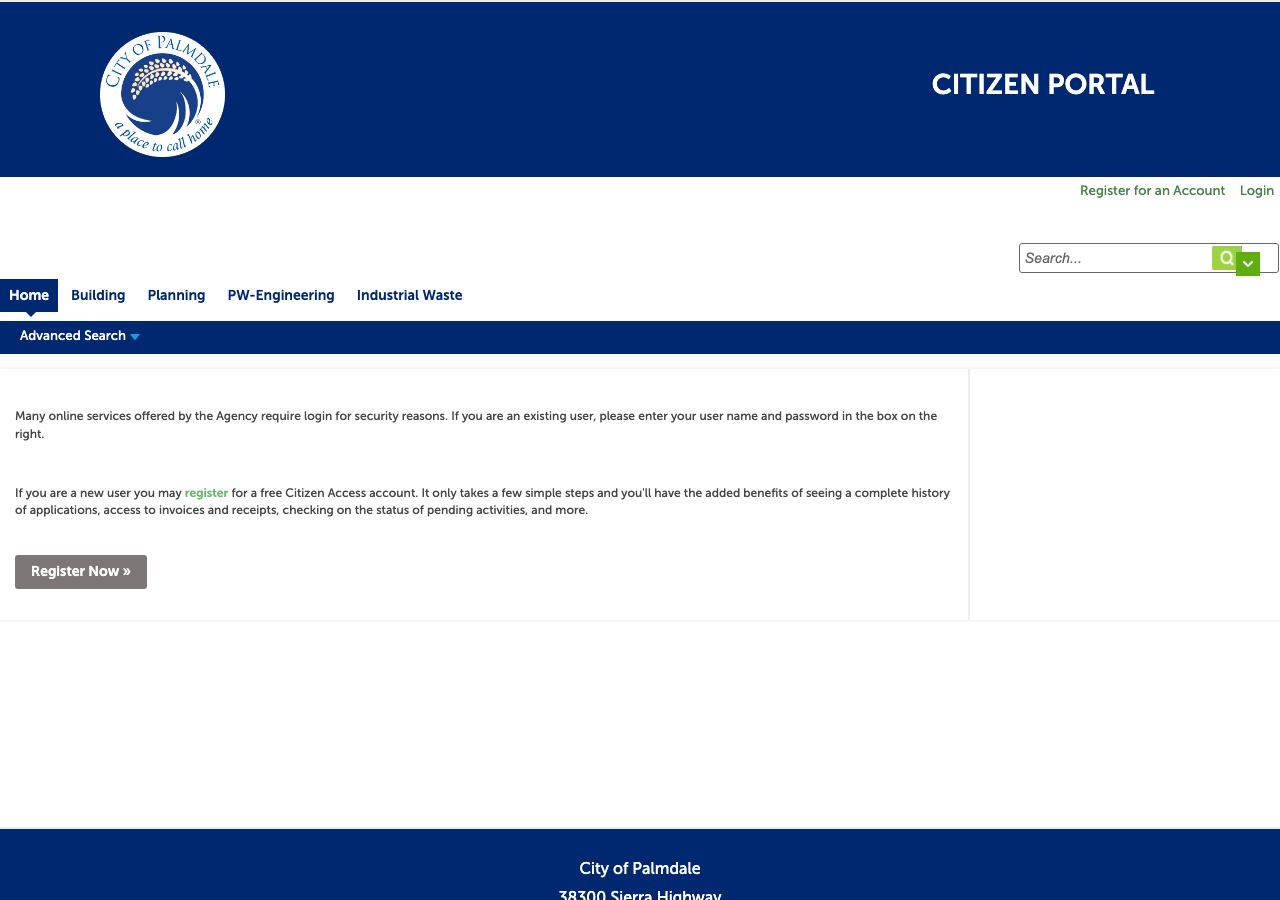
Average approval time — application to PTO
From the CPUC interconnection record. Bars show the average days taken each year; a year with no recorded projects is left blank rather than drawn as zero.