
Colusa County
State of California
Colusa County is a county authority in the State of California, covering 8 regions, serving 21,839 residents. 930 residential solar installs are on record here. This page is the permit route for that jurisdiction: the fifteen steps from working out who has a say over an address through to permission to operate, the documents this authority publishes, and 62 answers taken from those documents and dated.
Permitting 5 steps · 28 questions
Whether a permit is needed — Yes. Q3 Electrical and building permits — Combined into a single building permit for qualifying small residential rooftop solar. Q4 Plan review — Same day for over-the-counter applications; 1 to 3 business days for electronically-submitted applications. Q18 Where you file — The county's 'Online Permit Portal' (ViewPoint Cloud / OpenGov), at colusacountyca.viewpointcloud.com, Q20
- Permit required
- Yes.96% source
- What it costs
- $210 flat, for a qualifying 'small residential rooftop solar energy system' (≤10 kW AC / ≤30 kW thermal, on a single- or two-family dwelling).92% source
- Plan review turnaround
- Same day for over-the-counter applications; 1 to 3 business days for electronically-submitted applications.92% source
- Key document
- codified ordinance + zoning code + case file cited by 11 open the document
-
Confirm who has a say over your address
A city address is usually permitted by the city, not the county — but not always, and some authorities keep building and hand electrical to someone else. Getting this wrong costs the whole submittal, because every requirement below belongs to whoever actually holds jurisdiction. Check the overlays in the same pass: an HOA, a historic district, a windstorm certification or a system-size cap can reshape the design, and all of them are cheaper to find now than after the array is laid out.
- Is this authority the AHJ for residential solar at this address? Yes — but only for UNINCORPORATED Colusa County. The two incorporated cities, City of Colusa (the county seat) and City of Williams, are each a separate AHJ with their own in-house Building Department. 96% · codified ordinance
- What does this authority permit itself, and what does it delegate? Both — the county's own Development Services Department (Building Division) issues and inspects both building and electrical permits in-house for unincorporated-area residential solar. Fire-code adoption sits with the county too (GCC Ch.5 Art.II §5-12 and a separate Ch.7), but field fire review is administered per-parcel by whichever city fire department, rural fire protection district, or CAL FIRE unit covers that address — not a county fire office (none appears in the county's own department directory). 85% · department page + general plan element
- Is a permit required for a residential rooftop PV system? Yes. 96% · codified ordinance
- Is there a separate electrical permit, or is it combined? Combined into a single building permit for qualifying small residential rooftop solar. The Building Permits page lists 'Electrical Plans' as one of several required drawings under one submittal, and GCC §5-36 sets one flat permit fee (not separate building + electrical fee lines) covering 'the average reasonable cost to the county to evaluate the system.' 75% · codified ordinance + department page
- Is there a historic-district review? No — the Colusa County Zoning Code (Ch.44) has no historic-preservation or historic-district-review article at all (confirmed against the chapter's full section table of contents); the only 'historic' references in the code are incidental, in agricultural-parcel and CEQA/housing-element contexts. 78% · codified ordinance (control-checked absence)
- Is a Specific Use Permit or Council approval ever required? No SUP/Council approval is required for a qualifying small residential rooftop solar system — GCC §5-35(a) mandates 'an administrative, nondiscretionary review process.' However, the Zoning Code (Ch.44) separately classifies 'Commercial solar photovoltaic facilities' and 'Photovoltaic power stations' as major/energy-generation land uses requiring a discretionary Use Permit with Planning Commission/Board review (the pathway the utility-scale 'Janus Solar and Battery Storage Project,' UP 20-01, went through) — a different, non-residential category. 85% · codified ordinance + zoning code + case file
- Is there a system-size cap on residential generation? 10 kW AC (alternating-current nameplate) / 30 kW thermal — the codified definitional ceiling for a 'small residential rooftop solar energy system' eligible for the flat-fee/administrative-review path (GCC §5-31(b)(1)). The same definition also caps panel/module array height at 'the maximum legal building height as defined by the county' (§5-31(b)(4)) — no separate height allowance above the district limit is granted, unlike some other CA jurisdictions. 90% · codified ordinance
-
Check who is allowed to apply
Several authorities require the electrical permit to be pulled by a licensed electrician, or require the contractor to be registered with them BEFORE applying. Registration is not same-day. This is second on the list rather than fourth because it is the step most likely to stop the job before the drawings matter.
- Who is allowed to pull the electrical permit? Either — a licensed contractor or the homeowner. GCC §5-4 states: 'Nothing contained in this chapter shall be construed to prevent any person from performing his own building, plumbing or electrical work when performed with the permits and in compliance with the provisions of this chapter.' 82% · codified ordinance
- Is a homeowner permitted to self-install and self-permit? Yes. 90% · codified ordinance
-
Build the submittal package
Almost everywhere wants a site plan, a one-line or three-line electrical diagram, equipment cut sheets with listings, and a structural attachment detail. Build it against the published checklist rather than the last jurisdiction you worked in — the checklist is what the reviewer marks against.
- What documents make up a complete submittal? General submittal package (from the county's own Building Permits page, not solar-exclusive): electrical plans, plumbing plans, truss calculations, energy calculations, plot plan, sprinkler plan (when applicable), and 'SOLAR PLAN (when applicable),' plus designer signature/statement on truss calcs and, if engineered, signed and stamped structural calculations. 85% · department page
- How many copies, and in what format? Electronic only, via the county's Online Permit Portal — 'Applications are now online only... Need help? Call or come in, we can help you apply.' No paper-copy count is specified since submittal is now digital-only through the portal. 78% · department page
- Is a site plan required, and what must it show? Yes. The plot plan must show: Assessor's Parcel Number, north arrow, property dimensions, all existing and proposed buildings/structures, distances between all buildings/structures and to property lines, utility locations (water supply, sewage disposal, leach field), all streets and easements (identified), and the location of the access road. 90% · department page
- Is a structural PE stamp required, and at what threshold? No solar-specific structural PE-stamp threshold found; the general (non-solar) building rule on the county's own Building Permits page states 'Structures 20' or more in length or width may require engineering and structural calculations,' and that any structure 'not of conventional wood frame construction or [with] unusual design features, or where there is insufficient lateral bracing shall be designed by a registered civil engineer or licensed architect.' 55% · department page (general, not solar-specific)
-
Apply and pay
Most authorities now take the whole application through a portal, and several states cap or constrain what a residential solar permit may cost. Check whether plan check is billed separately before you quote the job.
- Which permit portal does this authority use? The county's 'Online Permit Portal' (ViewPoint Cloud / OpenGov), at colusacountyca.viewpointcloud.com, linked from the county's Building Permits and Development Services pages. 95% · department page + portal landing page
- Can the whole application be completed online? Yes — the portal supports account creation, application submittal, status tracking, payment, inspection requests, and messaging the reviewer, entirely online. 92% · department page
- What does a residential solar permit cost? $210 flat, for a qualifying 'small residential rooftop solar energy system' (≤10 kW AC / ≤30 kW thermal, on a single- or two-family dwelling). 92% · codified ordinance
- How is the fee calculated? Flat. 92% · codified ordinance
- Is there a separate plan-check fee? No separate plan-check fee identified for qualifying small residential rooftop solar — §5-36 describes the $210 flat fee as covering 'the average reasonable cost to the county to evaluate the system including, but not limited to, inspection and related clerical staff time.' (The general, non-solar Article III plan-review fee — 65% of the building permit fee, per 2001 CBC Table 1-A as locally modified — is a separate mechanism for standard permits, but nothing in Article IV layers it onto the solar flat fee.) 68% · codified ordinance
-
Plan review — and start the utility in parallel
Interconnection is a separate process from the permit and usually the longer pole. Where the utility does not depend on the permit being issued, running both at once is the single biggest saving available on a residential job.
- What is the stated plan-review turnaround? Same day for over-the-counter applications; 1 to 3 business days for electronically-submitted applications. 92% · codified ordinance
- Which utility handles interconnection here? PG&E (Pacific Gas & Electric). 80% · county-adjacent environmental document (Energy Impact Assessment)
- Where does the utility sit in the sequence? Parallel — utility interconnection review can proceed alongside county permitting, but Permission to Operate specifically is gated on the county's final electrical inspection clearance. 72% · utility tariff (PG&E Electric Rule 21)
28 questions answered against Colusa County’s own published documents
Q1 Is this authority the AHJ for residential solar at this address? Core Jurisdiction & scope
Yes — but only for UNINCORPORATED Colusa County. The two incorporated cities, City of Colusa (the county seat) and City of Williams, are each a separate AHJ with their own in-house Building Department.
Why the confidence is not higherGCC §5-3 'Territorial applicability': 'The provisions of this chapter shall apply to all of the unincorporated territory of Colusa County,' and §5-32(a) (solar-specific): 'This chapter applies to the permitting of all small residential rooftop solar energy systems in the unincorporated territory of the county' — both read directly from the county's current codified ordinance. Both cities independently confirmed to self-perform (see jurisdiction block).
codified ordinance checked 2026-08-31 http://www.codepublishing.com/CA/ColusaCounty/html/ColusaCounty05.html
Q2 What does this authority permit itself, and what does it delegate? Core Jurisdiction & scope
Both — the county's own Development Services Department (Building Division) issues and inspects both building and electrical permits in-house for unincorporated-area residential solar. Fire-code adoption sits with the county too (GCC Ch.5 Art.II §5-12 and a separate Ch.7), but field fire review is administered per-parcel by whichever city fire department, rural fire protection district, or CAL FIRE unit covers that address — not a county fire office (none appears in the county's own department directory).
Why the confidence is not higherDepartment structure and in-house administration confirmed from the county's own Building Permits page (review by 'the Building Department' located at 1213 Market Street) and Development Services page; per-parcel fire routing confirmed on the same Building Permits page ('Based on the district of your location, the fire district reviews projects...') and corroborated by the General Plan Public Services & Facilities Element.
department page + general plan element checked 2026-08-31 https://www.countyofcolusa.org/134/Building-Permits
Q3 Is a permit required for a residential rooftop PV system? Core Jurisdiction & scope
Yes.
Why the confidence is not higherGCC §5-36 sets a permit fee for 'small residential rooftop solar energy systems,' and the county's own Building Permits page lists 'SOLAR PLAN (when applicable)' among required submittal drawings — both confirm a building permit is required.
codified ordinance checked 2026-08-31 http://www.codepublishing.com/CA/ColusaCounty/html/ColusaCounty05.html
Q4 Is there a separate electrical permit, or is it combined? Core Jurisdiction & scope
Combined into a single building permit for qualifying small residential rooftop solar. The Building Permits page lists 'Electrical Plans' as one of several required drawings under one submittal, and GCC §5-36 sets one flat permit fee (not separate building + electrical fee lines) covering 'the average reasonable cost to the county to evaluate the system.'
Why the confidence is not higherInferred from the single-fee structure in §5-36 and the single combined drawings list on the Building Permits page; no document explicitly uses the word 'combined.'
codified ordinance + department page checked 2026-08-31 http://www.codepublishing.com/CA/ColusaCounty/html/ColusaCounty05.html
Q5 Who is allowed to pull the electrical permit? Core Who may apply
Either — a licensed contractor or the homeowner. GCC §5-4 states: 'Nothing contained in this chapter shall be construed to prevent any person from performing his own building, plumbing or electrical work when performed with the permits and in compliance with the provisions of this chapter.'
Why the confidence is not higherDirectly from the county's own codified Building Code scope section; does not separately require a C-10 electrical license where an owner-builder self-performs.
codified ordinance checked 2026-08-31 http://www.codepublishing.com/CA/ColusaCounty/html/ColusaCounty05.html
Q6 Must the contractor be registered with this authority before applying? Core Who may apply
Nothing published by this authority.
Where we lookedCounty Building Permits page (134), Online Permit Portal page (954), and GCC Ch.5 — no requirement that a contractor register with the county (e.g., a local contractor license or registration list) before applying for a permit was found.
Q7 Is a homeowner permitted to self-install and self-permit? Who may apply
Yes.
Why the confidence is not higherGCC §5-4 explicitly allows 'any person' to perform their own building, plumbing, or electrical work with permits — a direct homeowner self-install/self-permit allowance.
codified ordinance checked 2026-08-31 http://www.codepublishing.com/CA/ColusaCounty/html/ColusaCounty05.html
Q8 What documents make up a complete submittal? Core Submittal package
General submittal package (from the county's own Building Permits page, not solar-exclusive): electrical plans, plumbing plans, truss calculations, energy calculations, plot plan, sprinkler plan (when applicable), and 'SOLAR PLAN (when applicable),' plus designer signature/statement on truss calcs and, if engineered, signed and stamped structural calculations.
Why the confidence is not higherRead directly from the county's current Building Permits page 'Required Documents / DRAWINGS TO INCLUDE' list. The solar-specific standard plan/checklist that GCC §5-34(c) directs the department to adopt ('Exhibit A') was not found published separately on the live site (see not_found q38-41,43).
department page checked 2026-08-31 https://www.countyofcolusa.org/134/Building-Permits
Q9 How many copies, and in what format? Submittal package
Electronic only, via the county's Online Permit Portal — 'Applications are now online only... Need help? Call or come in, we can help you apply.' No paper-copy count is specified since submittal is now digital-only through the portal.
Why the confidence is not higherStated on the Building page's contact note and corroborated by the Online Permit Portal page ('ALL Permit Applications must be submitted through the Online Permit Portal').
department page checked 2026-08-31 https://www.countyofcolusa.org/133/Building
Q10 Is a site plan required, and what must it show? Core Submittal package
Yes. The plot plan must show: Assessor's Parcel Number, north arrow, property dimensions, all existing and proposed buildings/structures, distances between all buildings/structures and to property lines, utility locations (water supply, sewage disposal, leach field), all streets and easements (identified), and the location of the access road.
Why the confidence is not higherRead directly from the county's current Building Permits page 'Plot Plan' requirements list (general building requirement, not solar-exclusive, but applies to any building permit including solar).
department page checked 2026-08-31 https://www.countyofcolusa.org/134/Building-Permits
Q11 Is a one-line / three-line diagram required? Core Drawings & calculations
Nothing published by this authority.
Where we lookedCounty Building Permits page (134) and GCC Ch.5 Art. IV (§§5-30–5-36) — no explicit mention of a one-line/three-line diagram requirement found; the referenced solar-specific 'Exhibit A' checklist (§5-34(c)) is not published on the current site.
Q12 Are string and conductor calculations required? Drawings & calculations
Nothing published by this authority.
Where we lookedSame documents as q11 — no explicit string/conductor calculation requirement found.
http://www.codepublishing.com/CA/ColusaCounty/html/ColusaCounty05.html
Q13 Is a structural PE stamp required, and at what threshold? Core Engineering & stamps
No solar-specific structural PE-stamp threshold found; the general (non-solar) building rule on the county's own Building Permits page states 'Structures 20' or more in length or width may require engineering and structural calculations,' and that any structure 'not of conventional wood frame construction or [with] unusual design features, or where there is insufficient lateral bracing shall be designed by a registered civil engineer or licensed architect.'
Why the confidence is not higherThis is a general building-code threshold read from the county's Building Permits page, not stated as applying specifically to solar racking/arrays — flagged as inference at reduced confidence.
department page (general, not solar-specific) checked 2026-08-31 https://www.countyofcolusa.org/134/Building-Permits
Q14 Is an electrical PE stamp required, and at what threshold? Engineering & stamps
Nothing published by this authority.
Where we lookedGCC Ch.5 and the county Building Permits page — no separate electrical PE-stamp threshold for solar found.
http://www.codepublishing.com/CA/ColusaCounty/html/ColusaCounty05.html
Q15 What does a residential solar permit cost? Core Fees
$210 flat, for a qualifying 'small residential rooftop solar energy system' (≤10 kW AC / ≤30 kW thermal, on a single- or two-family dwelling).
Why the confidence is not higherGCC §5-36 (Ord. No. 775, §7): 'The permit fee for small residential rooftop solar systems is a flat fee of two hundred ten dollars.' This is well under the AB 1124 statutory cap ($450 + $15/kW above 15kW) that the county's own Building page separately links as state-level context (a generic CALBO AB 1124 article, not the county's own fee document) — the codified $210 figure is the county's own set fee and controls.
codified ordinance checked 2026-08-31 http://www.codepublishing.com/CA/ColusaCounty/html/ColusaCounty05.html
Q16 How is the fee calculated? Core Fees
Flat.
Why the confidence is not higherGCC §5-36 sets a single flat dollar figure ($210), not valuation-, per-kW-, or per-panel-based, for the qualifying small residential rooftop category.
codified ordinance checked 2026-08-31 http://www.codepublishing.com/CA/ColusaCounty/html/ColusaCounty05.html
Q17 Is there a separate plan-check fee? Fees
No separate plan-check fee identified for qualifying small residential rooftop solar — §5-36 describes the $210 flat fee as covering 'the average reasonable cost to the county to evaluate the system including, but not limited to, inspection and related clerical staff time.' (The general, non-solar Article III plan-review fee — 65% of the building permit fee, per 2001 CBC Table 1-A as locally modified — is a separate mechanism for standard permits, but nothing in Article IV layers it onto the solar flat fee.)
Why the confidence is not higherInferred from the wording of §5-36 versus the separately-described Article III (§5-23) general plan-check fee; no document states explicitly that Article III's plan-check fee does NOT also apply to solar.
codified ordinance checked 2026-08-31 http://www.codepublishing.com/CA/ColusaCounty/html/ColusaCounty05.html
Q18 What is the stated plan-review turnaround? Core Timeline & validity
Same day for over-the-counter applications; 1 to 3 business days for electronically-submitted applications.
Why the confidence is not higherGCC §5-35(a): 'The department shall issue a building permit, the issuance of which is nondiscretionary, on the same day for over-the-counter applications or within one to three business days for electronic submittal...'
codified ordinance checked 2026-08-31 http://www.codepublishing.com/CA/ColusaCounty/html/ColusaCounty05.html
Q19 How long is an issued permit valid before it expires? Timeline & validity
Nothing published by this authority.
Where we lookedGCC Ch.5 Articles III and IV — no local provision was found fixing how long an issued small-residential-solar permit remains valid before expiring.
http://www.codepublishing.com/CA/ColusaCounty/html/ColusaCounty05.html
Q20 Which permit portal does this authority use? Core Portal & process
The county's 'Online Permit Portal' (ViewPoint Cloud / OpenGov), at colusacountyca.viewpointcloud.com, linked from the county's Building Permits and Development Services pages.
Why the confidence is not higherBuilding Permits page: 'Click Here for the Online Permit Portal... ALL Permit Applications must be submitted through the Online Permit Portal.'
department page + portal landing page checked 2026-08-31 https://www.countyofcolusa.org/134/Building-Permits
Q21 Can the whole application be completed online? Core Portal & process
Yes — the portal supports account creation, application submittal, status tracking, payment, inspection requests, and messaging the reviewer, entirely online.
Why the confidence is not higherCounty's own Online Permit Portal page lists training topics: 'How to Submit an Application... How to Make a Payment... How to Request an Inspection... How to Message your Reviewer,' and the Building Permits page states 'ALL Permit Applications must be submitted through the Online Permit Portal.'
department page checked 2026-08-31 https://www.countyofcolusa.org/954/Online-Permit-Portal
Q22 Which utility handles interconnection here? Core Utility interconnection
PG&E (Pacific Gas & Electric).
Why the confidence is not higherA county-adjacent environmental document (Appendix D 'Energy Impact Assessment,' prepared in connection with a county land-use application) states plainly: 'PG&E provides electricity and natural gas to unincorporated Colusa County.' Corroborated negatively: the county's own department directory names no municipal electric utility; Glenn-Colusa Irrigation District's own site shows no retail electric business (water/irrigation only); no CCA was found serving Colusa County. Not from PowerToChoose.
county-adjacent environmental document (Energy Impact Assessment) checked 2026-08-31 https://www.countyofcolusaca.gov/documentcenter/view/14828
Q23 Where does the utility sit in the sequence? Core Utility interconnection
Parallel — utility interconnection review can proceed alongside county permitting, but Permission to Operate specifically is gated on the county's final electrical inspection clearance.
Why the confidence is not higherPG&E's own current Electric Rule 21, §D.13.b (Sheet 45, effective 29 Aug 2025, verified this run): for NEM/NBT Generating Facilities ≤1 MW, PTO 'shall normally be processed not later than thirty (30) Business Days' following receipt of, among other things, 'evidence of Applicant's final electric inspection clearance from the Governmental Authority having jurisdiction over the Generating Facility.' This is a statewide PG&E tariff provision, not a Colusa-specific document, hence not scored higher.
utility tariff (PG&E Electric Rule 21) checked 2026-08-31 https://www.pge.com/tariffs/assets/pdf/tariffbook/ELEC_RULES_21.pdf
Q24 Is a HOA or architectural approval required first? Overlays & special cases
Nothing published by this authority.
Where we lookedGCC Ch.5 (Building Code/solar ordinance) and Ch.44 (Zoning Code) — no HOA/architectural-approval requirement (or exemption from one) found for residential solar specifically.
http://www.codepublishing.com/CA/ColusaCounty/html/ColusaCounty44.html
Q25 Is there a historic-district review? Overlays & special cases
No — the Colusa County Zoning Code (Ch.44) has no historic-preservation or historic-district-review article at all (confirmed against the chapter's full section table of contents); the only 'historic' references in the code are incidental, in agricultural-parcel and CEQA/housing-element contexts.
Why the confidence is not higherRead the full Ch.44 section listing (Articles 44-0 through 44-5) — none is a historic-preservation article — and every 'historic' keyword hit in the chapter's full text was read and confirmed non-regulatory (agricultural character, housing-element CEQA exemptions, sign nonconformity for a 'designated historic resource' with no chapter of its own).
codified ordinance (control-checked absence) checked 2026-08-31 http://www.codepublishing.com/CA/ColusaCounty/html/ColusaCounty44.html
Q26 Is a wind or windstorm certification required? Overlays & special cases
Nothing published by this authority.
Where we lookedGCC Ch.5 Art. II (state code adoption) — no local wind/windstorm-certification amendment was found; the county appears to rely on the unamended CBC/ASCE 7 wind provisions as adopted by reference.
http://www.codepublishing.com/CA/ColusaCounty/html/ColusaCounty05.html
Q27 Is a Specific Use Permit or Council approval ever required? Overlays & special cases
No SUP/Council approval is required for a qualifying small residential rooftop solar system — GCC §5-35(a) mandates 'an administrative, nondiscretionary review process.' However, the Zoning Code (Ch.44) separately classifies 'Commercial solar photovoltaic facilities' and 'Photovoltaic power stations' as major/energy-generation land uses requiring a discretionary Use Permit with Planning Commission/Board review (the pathway the utility-scale 'Janus Solar and Battery Storage Project,' UP 20-01, went through) — a different, non-residential category.
Why the confidence is not higher§5-35(a) for the residential administrative path; Ch.44 definitions ('Utilities, major' includes 'Photovoltaic power stations') plus the county's own published Janus Solar Use Permit case file for the discretionary utility-scale path.
codified ordinance + zoning code + case file checked 2026-08-31 http://www.codepublishing.com/CA/ColusaCounty/html/ColusaCounty05.html
Q28 Is there a system-size cap on residential generation? Overlays & special cases
10 kW AC (alternating-current nameplate) / 30 kW thermal — the codified definitional ceiling for a 'small residential rooftop solar energy system' eligible for the flat-fee/administrative-review path (GCC §5-31(b)(1)). The same definition also caps panel/module array height at 'the maximum legal building height as defined by the county' (§5-31(b)(4)) — no separate height allowance above the district limit is granted, unlike some other CA jurisdictions.
Why the confidence is not higherRead directly from GCC §5-31 definitions.
codified ordinance checked 2026-08-31 http://www.codepublishing.com/CA/ColusaCounty/html/ColusaCounty05.html
Lines marked with a percentage were read off this authority’s own published documents. Unmarked guidance is general good practice, not this jurisdiction’s rule — always confirm against the authority before you submit.
Install 5 steps · 20 questions
-
Build to the code editions actually in force here
The NEC edition a jurisdiction enforces is often a cycle behind the newest one published, and local amendments sit on top of it. Rapid shutdown, conductor sizing and labelling all change between editions, so the edition in force is the first thing to establish, not the last.
- Which NEC edition is in force? Live: 2025 CEC (part of the 2025 California Building Standards Code / Title 24 cycle, effective 1 Jan 2026), per the county's own current Building page. Based on the 2023 NEC. BUT the codified county ordinance itself has an internal lag: GCC §5-10 (California Electrical Code) still literally reads '[t]he 2016 Edition of the California Electrical Code... is adopted,' last touched by Ord. Nos. 744/763/781, and has not been re-worded for later cycles the way §5-8 (the general Building Standards Code section) has. 62% · department page + codified ordinance (conflict)
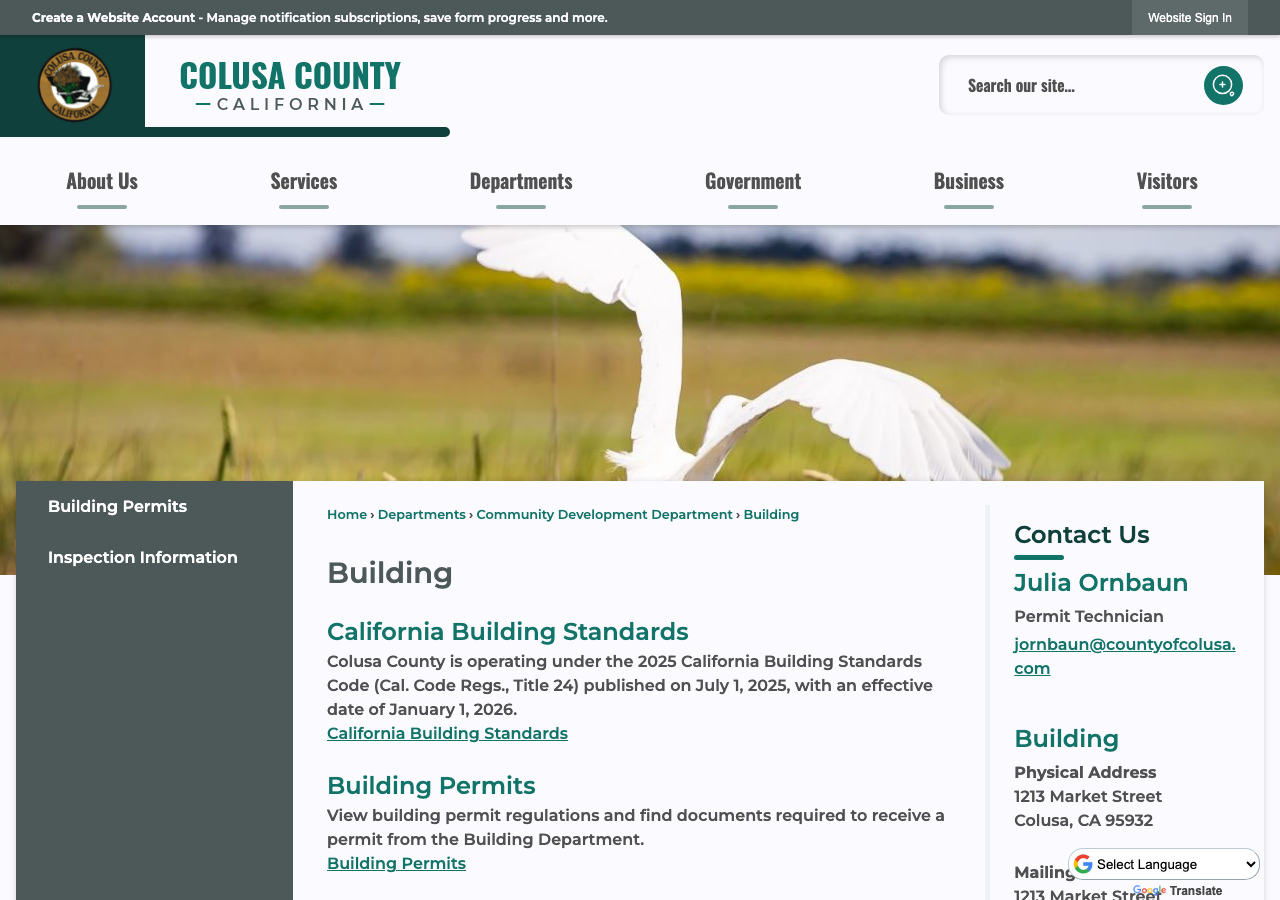
- Which building code edition is in force? 2025 California Building Standards Code (Title 24 of the California Code of Regulations), published 1 Jul 2025, effective 1 Jan 2026. 90% · department page + codified ordinance
- Which fire code edition is in force? Ambiguous/conflicted, and reported as found rather than resolved. By the same self-updating logic as the Building Code, the LIVE fire code is presumably the current 2025 CFC (Title 24 Part 9) cycle — but the codified text has TWO separate problems: (a) GCC §5-12 (inside the modern Article II code-adoption chapter) still literally reads '2016 Edition,' the same unrepaired lag as the Electrical Code; and (b) a SEPARATE, apparently never-repealed Chapter 7 'Fire Prevention' independently adopts the 1982 Uniform Fire Code (a pre-Title-24, non-CFC legacy code, 'recommended by the Western Fire Chiefs Association') as 'controlling within the limits of the unincorporated areas of the county.' 45% · codified ordinance (internal conflict)
- Are there local amendments to any of the above? Yes. 90% · codified ordinance
- What is the installation judged against? The currently-adopted California Electrical Code (for the electrical installation), the California Building/Residential Code (for structural), and — per GCC §5-33(c) — 'all applicable safety and performance standards established by the California Electrical Code, the Institute of Electrical and Electronics Engineers (IEEE), Underwriters Laboratories (UL) or other national testing laboratory and, if applicable, rules of the Public Utilities Commission regarding safety and reliability.' 85% · codified ordinance
-
Fire access, setbacks and pathways
Ridge setbacks and roof access pathways are fire-service requirements and they constrain the array layout. They are the most common cause of a redesign after the fire department comments on a plan set.
Nothing recorded for Colusa County on this step yet — 1 question checked and found unpublished. The guidance above is general.
-
Rapid shutdown
Which rapid-shutdown rule applies follows directly from the NEC edition in force, and the initiation device has to be at a location the fire service can reach and identify. This is inspected, and it is labelled.
- Is rapid shutdown required, and to which NEC edition? Required to the extent the currently-governing CEC (whichever edition actually controls, given the q29 conflict) requires it under NEC §690.12 — but no LOCAL rapid-shutdown-specific rule, amendment, or citation of '690.12' was found anywhere in the corpus checked. 60% · codified ordinance (corpus-wide absence)
-
Labels and placards
The NEC sets a baseline for permanent markings at the service equipment and the disconnecting means. On top of that, an authority may specify its own wording, and the utility may specify more again. Where any of them writes its own text, a generic off-the-shelf label set will not pass — this is the detail most often fixed on a return visit.
- Does the UTILITY specify placards beyond the AHJ's? Yes — PG&E requires a visible AC disconnect with open/closed position markings. Electric Rule 21 §H.1.d 'Visible Disconnect Required': the Producer must furnish a ganged, manually-operated isolating switch near the Point of Interconnection that must (i) 'allow visible verification that separation has been accomplished' and (ii) 'include markings or signage that clearly indicates open and closed positions,' reachable 24 hours a day by PG&E personnel. 85% · utility tariff (PG&E Electric Rule 21)
-
Disconnect, storage and listed equipment
Where the AC disconnect must sit relative to the meter is usually the utility's rule, not the building department's. Battery storage frequently carries its own permit, its own inspection and its own fire conditions.
- Must equipment be on a specific approved list? Implicitly yes, via a listing/testing-standard requirement rather than a named county 'approved list': GCC §5-33(c) requires solar-electric equipment to 'meet all applicable safety and performance standards established by the California Electrical Code, the Institute of Electrical and Electronics Engineers (IEEE), Underwriters Laboratories (UL) or other national testing laboratory.' 68% · codified ordinance
- Is a ground mount treated as a structure? Yes, by inference — the Zoning Code's general definition of 'Structure' ('[a]nything constructed or erected that requires attachment to the ground or permanently located on the ground, including swimming pools...') would capture a ground-mounted PV array; no PV-specific carve-out or ground-mount-specific solar development standard was found in the Zoning Code (Ch.44) itself. 62% · codified ordinance (inference)
20 questions answered against Colusa County’s own published documents
Q29 Which NEC edition is in force? Core Code editions in force
Live: 2025 CEC (part of the 2025 California Building Standards Code / Title 24 cycle, effective 1 Jan 2026), per the county's own current Building page. Based on the 2023 NEC. BUT the codified county ordinance itself has an internal lag: GCC §5-10 (California Electrical Code) still literally reads '[t]he 2016 Edition of the California Electrical Code... is adopted,' last touched by Ord. Nos. 744/763/781, and has not been re-worded for later cycles the way §5-8 (the general Building Standards Code section) has.
Why the confidence is not higherReported both and did not resolve: live county webpage says 2025/Title 24 cycle; codified §5-10 text says 2016. §5-8 alone was amended by Ord. 805 to read 'including any subsequent amendments... as may occur from time to time' (self-updating); §§5-9–5-16 (Mechanical/Electrical/Plumbing/Fire/Residential/Energy/Green/Referenced Standards) were not similarly reworded and remain pinned at 2016 in the code's literal text.
department page + codified ordinance (conflict) checked 2026-08-31 https://www.countyofcolusa.org/133/Building
Q30 Which building code edition is in force? Core Code editions in force
2025 California Building Standards Code (Title 24 of the California Code of Regulations), published 1 Jul 2025, effective 1 Jan 2026.
Why the confidence is not higherCounty's own current Building page states plainly: 'Colusa County is operating under the 2025 California Building Standards Code (Cal. Code Regs., Title 24) published on July 1, 2025, with an effective date of January 1, 2026,' and GCC §5-8 adopts the CBC 'including any subsequent amendments to the code as may occur from time to time' — a self-updating adoption consistent with that statement.
department page + codified ordinance checked 2026-08-31 https://www.countyofcolusa.org/133/Building
Q31 Which fire code edition is in force? Code editions in force
Ambiguous/conflicted, and reported as found rather than resolved. By the same self-updating logic as the Building Code, the LIVE fire code is presumably the current 2025 CFC (Title 24 Part 9) cycle — but the codified text has TWO separate problems: (a) GCC §5-12 (inside the modern Article II code-adoption chapter) still literally reads '2016 Edition,' the same unrepaired lag as the Electrical Code; and (b) a SEPARATE, apparently never-repealed Chapter 7 'Fire Prevention' independently adopts the 1982 Uniform Fire Code (a pre-Title-24, non-CFC legacy code, 'recommended by the Western Fire Chiefs Association') as 'controlling within the limits of the unincorporated areas of the county.'
Why the confidence is not higherBoth codified provisions were read in full from the county's own current code (through Ord. 850, 7 Apr 2026): §5-12's literal 2016 text, and Ch.7's full 1982 UFC adoption language including its own 'controlling within the limits of the unincorporated areas' scope clause. Neither has been repealed in the codification available; which one actually governs a residential PV permit's fire review (if any) could not be determined from these documents alone.
codified ordinance (internal conflict) checked 2026-08-31 http://www.codepublishing.com/CA/ColusaCounty/html/ColusaCounty07.html
Q32 Are there local amendments to any of the above? Core Code editions in force
Yes.
Why the confidence is not higherGCC Ch.5 Article IV (Small Residential Rooftop Solar, §§5-30–5-36) and Article V (Electric Vehicle Charging Stations, §§5-40–5-45) are the county's own local additions layered onto the wholesale state-code adoption in Article II, and Article III's §5-23(g) locally modifies the 2001 CBC's Table 1-A ('Total Valuation $1.00 to $1,700.00 = $63.00').
codified ordinance checked 2026-08-31 http://www.codepublishing.com/CA/ColusaCounty/html/ColusaCounty05.html
Q33 What is the installation judged against? Core Electrical
The currently-adopted California Electrical Code (for the electrical installation), the California Building/Residential Code (for structural), and — per GCC §5-33(c) — 'all applicable safety and performance standards established by the California Electrical Code, the Institute of Electrical and Electronics Engineers (IEEE), Underwriters Laboratories (UL) or other national testing laboratory and, if applicable, rules of the Public Utilities Commission regarding safety and reliability.'
Why the confidence is not higherRead directly from GCC §5-33.
codified ordinance checked 2026-08-31 http://www.codepublishing.com/CA/ColusaCounty/html/ColusaCounty05.html
Q34 Is there a local rule on service upgrades or busbar sizing? Electrical
Nothing published by this authority.
Where we lookedGCC Ch.5 (full text, control-checked: 'amend' appears only twice, neither about busbar/service-upgrade sizing) — no local rule on service upgrades or busbar sizing found.
http://www.codepublishing.com/CA/ColusaCounty/html/ColusaCounty05.html
Q35 Is a specific mounting system or attachment spacing required? Structural & mounting
Nothing published by this authority.
Where we lookedGCC Ch.5 Art. IV and the county's general Building Permits page — no specific mounting-system or attachment-spacing requirement found beyond general truss/structural-calculation language that is not solar-specific.
http://www.codepublishing.com/CA/ColusaCounty/html/ColusaCounty05.html
Q36 What ridge setback and access pathways are required? Core Fire pathways & setbacks
Nothing published by this authority.
Where we lookedGCC Ch.5 Art. II §5-12 (bare one-line CFC adoption, no amendment text) and Ch.7 Fire Prevention (full text, 0 hits for 'solar,' control-checked against the chapter's real, extractable 1982 UFC content) — no ridge-setback or fire-access-pathway rule specific to PV was found in either fire-code adoption.
http://www.codepublishing.com/CA/ColusaCounty/html/ColusaCounty07.html
Q37 Is rapid shutdown required, and to which NEC edition? Core Rapid shutdown
Required to the extent the currently-governing CEC (whichever edition actually controls, given the q29 conflict) requires it under NEC §690.12 — but no LOCAL rapid-shutdown-specific rule, amendment, or citation of '690.12' was found anywhere in the corpus checked.
Why the confidence is not higherCorpus-wide grep (Ch.5 solar ordinance and full Building Code text, Ch.7 Fire Prevention, Ch.44 Zoning Code, the 'Solar Energy Systems Guidelines' handout) for both 'rapid shutdown' and '690.12' returned zero hits in every document. GCC §5-33(c) only generically references 'the California Electrical Code... IEEE... UL,' without naming a specific NEC section.
codified ordinance (corpus-wide absence) checked 2026-08-31 http://www.codepublishing.com/CA/ColusaCounty/html/ColusaCounty05.html
Q38 Which placards does this authority require at the service equipment? Core Labels Signage & labelling
Nothing published by this authority.
Where we lookedGCC §5-34(c) directs the department to adopt a standard plan/checklist ('Exhibit A') for solar submittals, but that document is not published on the current county website; also checked the Fire Prevention chapter (0 solar hits), the Zoning Code (0 placard-related hits), and the 'Solar Energy Systems Guidelines' handout linked from the Building page (a generic third-party CALBO AB 1124 fee-cap article with no signage content) — no placard specification found in any of them.
Q39 Does the authority specify placard wording of its own? Core Labels Signage & labelling
Nothing published by this authority.
Where we lookedSame search as q38 — no wording specification found.
Q40 Does it specify letter height, colour or material? Core Labels Signage & labelling
Nothing published by this authority.
Where we lookedSame search as q38 — no letter-height/colour/material specification found.
Q41 Is a site plan / facility map placard required, and what must it show? Core Labels Signage & labelling
Nothing published by this authority.
Where we lookedSame search as q38 — no site-plan/facility-map placard requirement beyond the general plot-plan rules on the Building Permits page (which are not solar-specific) was found.
Q42 Does the UTILITY specify placards beyond the AHJ's? Core Labels Signage & labelling
Yes — PG&E requires a visible AC disconnect with open/closed position markings. Electric Rule 21 §H.1.d 'Visible Disconnect Required': the Producer must furnish a ganged, manually-operated isolating switch near the Point of Interconnection that must (i) 'allow visible verification that separation has been accomplished' and (ii) 'include markings or signage that clearly indicates open and closed positions,' reachable 24 hours a day by PG&E personnel.
Why the confidence is not higherRead directly from PG&E's current Electric Rule 21 tariff (Sheet 171, current filing effective 29 Aug 2025), downloaded and extracted this run. A statewide PG&E requirement, not a Colusa-specific document — the county itself publishes no placard rule of its own (see q38-41).
utility tariff (PG&E Electric Rule 21) checked 2026-08-31 https://www.pge.com/tariffs/assets/pdf/tariffbook/ELEC_RULES_21.pdf
Q43 Where must the labels be placed? Core Labels Signage & labelling
Nothing published by this authority.
Where we lookedSame search as q38 — no label-placement location requirement (beyond the general PG&E disconnect-marking rule already captured at q42) was found in any county document.
Q44 Must equipment be on a specific approved list? Equipment listing
Implicitly yes, via a listing/testing-standard requirement rather than a named county 'approved list': GCC §5-33(c) requires solar-electric equipment to 'meet all applicable safety and performance standards established by the California Electrical Code, the Institute of Electrical and Electronics Engineers (IEEE), Underwriters Laboratories (UL) or other national testing laboratory.'
Why the confidence is not higherRead directly from §5-33(c); the county names no separate approved-equipment list of its own beyond this general listing/standards requirement.
codified ordinance checked 2026-08-31 http://www.codepublishing.com/CA/ColusaCounty/html/ColusaCounty05.html
Q45 Are batteries permitted, and under what conditions? Core Battery / ESS
Nothing published by this authority.
Where we lookedGCC Ch.5 (full text) and Ch.7 Fire Prevention (full text) — no battery/ESS-specific provision found; a regex check for 'batter'/'energy storage' in both chapters returned only false-positive substring matches inside unrelated words, confirming a genuine absence rather than a search failure.
http://www.codepublishing.com/CA/ColusaCounty/html/ColusaCounty05.html
Q46 Is there a separate ESS permit or inspection? Battery / ESS
Nothing published by this authority.
Where we lookedSame search as q45 — no separate ESS permit or inspection requirement found.
http://www.codepublishing.com/CA/ColusaCounty/html/ColusaCounty07.html
Q47 Is a ground mount treated as a structure? Core Ground mount
Yes, by inference — the Zoning Code's general definition of 'Structure' ('[a]nything constructed or erected that requires attachment to the ground or permanently located on the ground, including swimming pools...') would capture a ground-mounted PV array; no PV-specific carve-out or ground-mount-specific solar development standard was found in the Zoning Code (Ch.44) itself.
Why the confidence is not higherInference from the general zoning 'Structure' definition, flagged as inference — GCC's own Art. IV solar ordinance is scoped explicitly to rooftop systems ('installed on a single- or two-family dwelling'), so it does not itself address ground mounts.
codified ordinance (inference) checked 2026-08-31 http://www.codepublishing.com/CA/ColusaCounty/html/ColusaCounty44.html
Q48 Where must the AC disconnect be, relative to the meter? Core Utility equipment
Nothing published by this authority.
Where we lookedPG&E Electric Rule 21 (full text, downloaded and grepped this run for 'meter'/production-meter proximity language) — no AC-disconnect-to-meter distance/location spec was found; per the pattern confirmed elsewhere in this survey, that finer spec sits in PG&E's access-gated 'Greenbook' interconnection document, not in Rule 21 or any Colusa County document.
https://www.pge.com/tariffs/assets/pdf/tariffbook/ELEC_RULES_21.pdf
Lines marked with a percentage were read off this authority’s own published documents. Unmarked guidance is general good practice, not this jurisdiction’s rule — always confirm against the authority before you submit.
Inspection 5 steps · 14 questions
-
Book it
Booking is a portal, a phone call or an email depending on the authority, and the notice required is rarely zero. Book before the work is finished rather than after — the lead time, not the work, is usually what sets the date.
- How is an inspection booked? Portal (online inspection requests via the Online Permit Portal) or Phone at (530) 458-0481 — both explicitly offered. 85% · department page
- How much notice is required? 3 to 5 business days advance notice. 90% · department page
-
Know who turns up
Some authorities inspect their own solar work; some delegate it, and a few do not inspect the PV equipment itself at all. Who is coming determines what they will look at.
- Does this AHJ perform its own final solar inspection? Yes. 92% · codified ordinance
- If delegated, to whom? Not applicable — inspection is performed directly by the county's own Building Department (Development Services Dept.), not delegated to any outside agency. 90% · codified ordinance
-
Work the stages in order
A rough-in or mid-roof inspection, where one is required, has to happen before the work it covers is closed up. Missing a stage means opening something back up, and it is the most expensive kind of correction.
- Which inspections are required, and in what order? For a qualifying small residential rooftop solar system: a single, consolidated final inspection performed by the county Building Department after permit issuance — 'The inspection shall be done in a timely manner and should include consolidated inspections' (§5-35(h)); if it fails, 'a subsequent inspection is authorized' (§5-35(i)). 78% · codified ordinance
- Is a rough-in or mid-roof inspection required? No — for a qualifying small residential rooftop solar system, GCC §5-35(g) limits the process to 'only one inspection,' which by implication excludes a separate rough-in/mid-roof inspection for that category. 72% · codified ordinance (inference)
-
Have the paperwork on site
The approved plan set, the permit, and the equipment listings should be on site and reachable. Inspectors routinely verify that installed equipment matches what was approved, and that the labels are the ones the plan set promised.
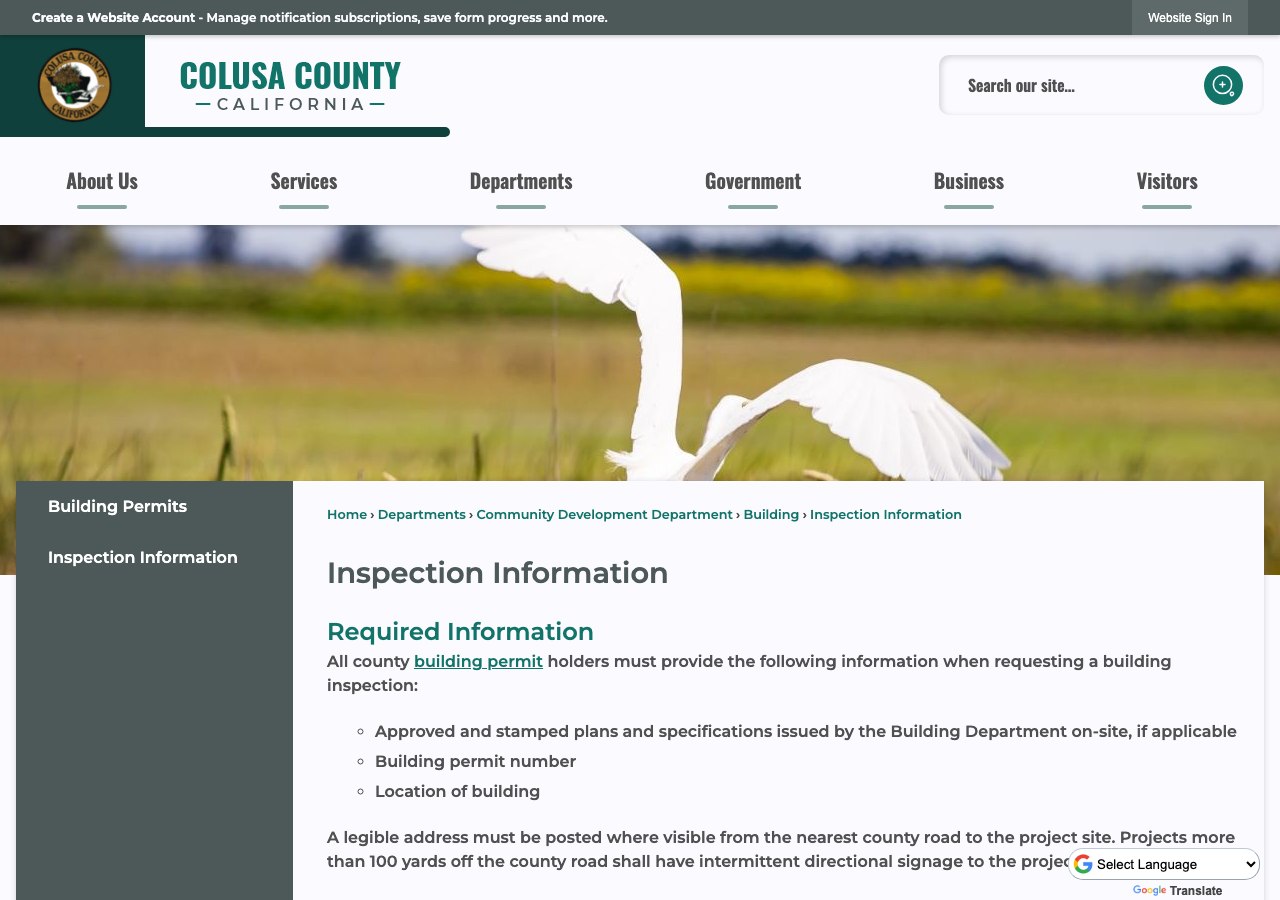
- What must be on site at inspection? Approved and stamped plans and specifications on-site (if applicable), the building permit number, and a legible address posted visible from the nearest county road (with intermittent directional signage required if the project site is more than 100 yards off the county road). 88% · department page
-
Sign-off, and permission to operate
Passing gives you a final or an equivalent sign-off. That is not the same as permission to operate: PTO comes from the utility, and who tells the utility the inspection passed varies. A system left switched off for weeks is usually waiting on this handover.
- Who notifies the utility for PTO? Installer (as the customer's applicant/agent) — PG&E's own interconnection process is applicant-driven throughout Rule 21 (the 'Applicant' submits the Interconnection Request, supporting documents, and — per §D.13.b — evidence of the AHJ's final inspection clearance, to trigger PG&E's PTO processing). 55% · utility tariff (inference)
- Is there a re-inspection fee? $47 per hour. 92% · department page + codified fee table
- How are corrections issued and cleared? A failed or cancelled inspection must be reported to the Building Department office before 8:00am the day of the requested inspection or a re-inspection fee applies; for a small residential rooftop solar system specifically, GCC §5-35(i) provides that 'if a small residential rooftop solar energy system fails inspection, a subsequent inspection is authorized.' 80% · department page + codified ordinance
14 questions answered against Colusa County’s own published documents
Q49 How is an inspection booked? Core Booking & scheduling
Portal (online inspection requests via the Online Permit Portal) or Phone at (530) 458-0481 — both explicitly offered.
Why the confidence is not higherOnline Permit Portal page lists 'How to Request an Inspection' as a portal function; the Inspection Information page separately states 'You may request inspections by phone at (530) 458-0481.'
department page checked 2026-08-31 https://www.countyofcolusa.org/135/Inspection-Information
Q50 How much notice is required? Core Booking & scheduling
3 to 5 business days advance notice.
Why the confidence is not higherInspection Information page: 'Please request your inspection at least three to five days in advance for an inspection.'
department page checked 2026-08-31 https://www.countyofcolusa.org/135/Inspection-Information
Q51 Are same-day or AM/PM windows offered? Booking & scheduling
Nothing published by this authority.
Where we lookedInspection Information page (135) — no AM/PM or same-day inspection window is mentioned. (An old, superseded 2011 'Building Permits' handout stated inspections run 'Monday through Thursday and closed on Fridays,' but that conflicts with the department's own current Monday–Friday 7:30am–4:00pm hours stated on the current Building page, so it was excluded as stale rather than carried forward.)
Q52 Does this AHJ perform its own final solar inspection? Core Who inspects
Yes.
Why the confidence is not higherGCC §5-35(g): 'Only one inspection shall be required and performed by the department for small residential rooftop solar energy systems eligible for expedited review.'
codified ordinance checked 2026-08-31 http://www.codepublishing.com/CA/ColusaCounty/html/ColusaCounty05.html
Q53 If delegated, to whom? Core Who inspects
Not applicable — inspection is performed directly by the county's own Building Department (Development Services Dept.), not delegated to any outside agency.
Why the confidence is not higherSame source as q52 — 'performed by the department.'
codified ordinance checked 2026-08-31 http://www.codepublishing.com/CA/ColusaCounty/html/ColusaCounty05.html
Q54 Which inspections are required, and in what order? Core Stages & sequence
For a qualifying small residential rooftop solar system: a single, consolidated final inspection performed by the county Building Department after permit issuance — 'The inspection shall be done in a timely manner and should include consolidated inspections' (§5-35(h)); if it fails, 'a subsequent inspection is authorized' (§5-35(i)).
Why the confidence is not higherRead directly from §5-35(g)-(i); the general (non-solar) Inspection Information page's requirements (approved plans on-site, permit number, address posted) apply as a baseline to any inspection including this one.
codified ordinance checked 2026-08-31 http://www.codepublishing.com/CA/ColusaCounty/html/ColusaCounty05.html
Q55 Is a rough-in or mid-roof inspection required? Stages & sequence
No — for a qualifying small residential rooftop solar system, GCC §5-35(g) limits the process to 'only one inspection,' which by implication excludes a separate rough-in/mid-roof inspection for that category.
Why the confidence is not higherDirect inference from §5-35(g)'s 'only one inspection' language.
codified ordinance (inference) checked 2026-08-31 http://www.codepublishing.com/CA/ColusaCounty/html/ColusaCounty05.html
Q56 Does the inspector verify labels and listings? Core What is checked
Nothing published by this authority.
Where we lookedInspection Information page (135) and GCC §5-35 — neither explicitly states that the inspector verifies labels/listings as part of the (single) solar inspection.
Q57 Is there a published inspection checklist? Core What is checked
Nothing published by this authority.
Where we lookedInspection Information page (135) — its posted requirements are general (any building permit), not a dedicated, published PV inspection checklist.
Q58 What must be on site at inspection? Core Documents on site
Approved and stamped plans and specifications on-site (if applicable), the building permit number, and a legible address posted visible from the nearest county road (with intermittent directional signage required if the project site is more than 100 yards off the county road).
Why the confidence is not higherRead directly from the county's current Inspection Information page.
department page checked 2026-08-31 https://www.countyofcolusa.org/135/Inspection-Information
Q59 Is there a re-inspection fee? Corrections & re-inspection
$47 per hour.
Why the confidence is not higherInspection Information page: 'Failure to comply with the above items will result in the payment of a re-inspection fee of $47 per hour...' — corroborated by the codified Article III fee table (Attachment A): 'Reinspection fees $47.00 per hr.'
department page + codified fee table checked 2026-08-31 https://www.countyofcolusa.org/135/Inspection-Information
Q60 How are corrections issued and cleared? Corrections & re-inspection
A failed or cancelled inspection must be reported to the Building Department office before 8:00am the day of the requested inspection or a re-inspection fee applies; for a small residential rooftop solar system specifically, GCC §5-35(i) provides that 'if a small residential rooftop solar energy system fails inspection, a subsequent inspection is authorized.'
Why the confidence is not higherCombines the Inspection Information page's general cancellation policy with §5-35(i)'s solar-specific re-inspection allowance.
department page + codified ordinance checked 2026-08-31 https://www.countyofcolusa.org/135/Inspection-Information
Q61 What is issued on pass? Core Final sign-off & PTO
Nothing published by this authority.
Where we lookedInspection Information page (135) and GCC Ch.5 Art. IV — neither states what document/tag is issued on a passing solar inspection; the only description found (an old, dated 2011 general 'Building Permits' handout describing a signed job card and a Certificate of Occupancy/Notice of Completion 'upon request') is about new construction generally, is superseded in other respects (see q51), and was not relied on here.
Q62 Who notifies the utility for PTO? Core Final sign-off & PTO
Installer (as the customer's applicant/agent) — PG&E's own interconnection process is applicant-driven throughout Rule 21 (the 'Applicant' submits the Interconnection Request, supporting documents, and — per §D.13.b — evidence of the AHJ's final inspection clearance, to trigger PG&E's PTO processing).
Why the confidence is not higherInferred from PG&E Electric Rule 21's applicant-driven process language (verified this run); Rule 21 does not use the specific word 'installer,' and does not name the county as the notifying party.
utility tariff (inference) checked 2026-08-31 https://www.pge.com/tariffs/assets/pdf/tariffbook/ELEC_RULES_21.pdf
Lines marked with a percentage were read off this authority’s own published documents. Unmarked guidance is general good practice, not this jurisdiction’s rule — always confirm against the authority before you submit.
Jurisdiction & key facts
The standing 62-question set, answered for Colusa County against this authority’s own published documents. Every answer carries the confidence it was recorded at and the document it came from. Where nothing is published we say so and show where we looked — a blank here is a finding, not a gap.
Colusa County is the authority having jurisdiction 93% confidence
- Holds
- Building AND Electrical (via the county's own Development Services Department / Building Division) for UNINCORPORATED Colusa County only. Fire-code ADOPTION also sits with the county (GCC Ch.5 Art.II §5-12, and a separate, apparently never-repealed Ch.7 1982 Uniform Fire Code — see q31), but field fire REVIEW is administered per-parcel by whichever city fire department, rural fire protection district, or CAL FIRE unit covers that address, not by a county fire office: 'Based on the district of your location, the fire district reviews projects for compliance with State Fire-Safe regulations. Please contact the Building Department for the contact information' (county's own Building Permits page), corroborated by the General Plan Public Services & Facilities Element naming 'Rural Fire Protection Districts, City Fire Departments, the California Department of Forestry (CalFire)' operating under mutual aid, and by the absence of any 'Fire' entry in the county's own department directory.
- Overridden by
- PG&E Electric Rule 21 gates Permission to Operate on 'evidence of Applicant's final electric inspection clearance from the Governmental Authority having jurisdiction' (§D.13.b, current sheet effective 29 Aug 2025, downloaded and verified this run) — PG&E will not process/approve interconnection to completion until the county's own final inspection clears. Fire-code administration is effectively delegated per-parcel as described in 'holds' above.
- Why not higher
- GCC §5-3 ('The provisions of this chapter shall apply to all of the unincorporated territory of Colusa County') and the solar-specific §5-32(a) ('This chapter applies to the permitting of all small residential rooftop solar energy systems in the unincorporated territory of the county') are read directly from the county's own current codified ordinance (codepublishing.com, 'current through Ordinance 850, passed April 7, 2026'). Both incorporated cities were independently confirmed, from their own sites, to self-perform: City of Colusa's Planning & Building page names in-house staff (Wyatt Paxton, buildinginspections@cityofcolusa.gov) issuing permits, reviewing plans, inspecting, and issuing Certificates of Occupancy, with its own permit portal; City of Williams' site names an in-house Building contact (stapia@cityofwilliams.org) and its own Building Permit Application portal (williamscali.portal.iworq.net), separate from the county. Held below 96 only because the fire-jurisdiction-per-parcel mechanic, though corroborated by two of the county's own documents, could not be tied within this run to a confirmed, named list of the specific rural fire protection districts covering unincorporated Colusa County (no LAFCo Municipal Service Review lists an independent fire protection district for the county — see the fire notes returned separately).
http://www.codepublishing.com/CA/ColusaCounty/html/ColusaCounty05.html
- Permit required
- Yes.96%
- Permit cost
- $210 flat, for a qualifying 'small residential rooftop solar energy system' (≤10 kW AC / ≤30 kW thermal, on a single- or two-family dwelling).92%
- Plan review
- Same day for over-the-counter applications; 1 to 3 business days for electronically-submitted applications.92%
- Portal
- The county's 'Online Permit Portal' (ViewPoint Cloud / OpenGov), at colusacountyca.viewpointcloud.com, linked from the county's Building Permits and Development Services pages.95%
- Electrical code
- Live: 2025 CEC (part of the 2025 California Building Standards Code / Title 24 cycle, effective 1 Jan 2026), per the county's own current Building page. Based on the 2023 NEC.62%
- Booking an inspection
- Portal (online inspection requests via the Online Permit Portal) or Phone at (530) 458-0481 — both explicitly offered.85%
Labels & placards for this authority
Wording None%
Size, colour & material None%
Where they go None%
What the utility wants on top 85%
Yes — PG&E requires a visible AC disconnect with open/closed position markings. Electric Rule 21 §H.1.d 'Visible Disconnect Required': the Producer must furnish a ganged, manually-operated isolating switch near the Point of Interconnection that must (i) 'allow visible verification that separation has been accomplished' and (ii) 'include markings or signage that clearly indicates open and closed positions,' reachable 24 hours a day by PG&E personnel.
Each figure above is sourced and dated in the full answer set below (questions 38–43). Where an authority’s own published sheet is older than the code it has adopted, the answer says so.
Their website
Average approval time — application to PTO
From the CPUC interconnection record. Bars show the average days taken each year; a year with no recorded projects is left blank rather than drawn as zero.