
Merced County
State of California
Merced County is a county authority in the State of California, covering 18 regions, serving 281,202 residents. 1,819 residential solar installs are on record here. This page is the permit route for that jurisdiction: the fifteen steps from working out who has a say over an address through to permission to operate, the documents this authority publishes, and 62 answers taken from those documents and dated.
Permitting 5 steps · 28 questions
Whether a permit is needed — Yes. 'All installs of solar panels on a residential property, whether ground mounted or roof mounted, Q3 Electrical and building permits — Combined. Merced County issues a single combination permit for single-family dwellings and duplexes covering building, electrical, plumbing and mechanical work, Q4 Plan review — Two different answers depending on route. General building plan check: 'The initial plan checks are completed within 4-6 weeks of receipt of complete plans, Q18 Where you file — The Merced County Licensing & Permitting portal at permits.countyofmerced.com, plus SolarAPP+ for eligible residential PV. Q20
- Permit required
- Yes. 'All installs of solar panels on a residential property, whether ground mounted or roof mounted, require an approved permit with the Building & Safety Division prior to the start of any work.'…95% source
- Plan review turnaround
- Two different answers depending on route. General building plan check: 'The initial plan checks are completed within 4-6 weeks of receipt of complete plans,85% source
- Key document
- published checklist cited by 5 open the document
-
Confirm who has a say over your address
A city address is usually permitted by the city, not the county — but not always, and some authorities keep building and hand electrical to someone else. Getting this wrong costs the whole submittal, because every requirement below belongs to whoever actually holds jurisdiction. Check the overlays in the same pass: an HOA, a historic district, a windstorm certification or a system-size cap can reshape the design, and all of them are cheaper to find now than after the array is laid out.
- Is this authority the AHJ for residential solar at this address? Yes. The Building and Safety Division of the Merced County Community and Economic Development Department (CED) is the AHJ for residential rooftop and ground-mount PV throughout the unincorporated county. Counter: 2222 M Street, 2nd Floor, Merced CA 95340; (209) 385-7477; Buildings@countyofmerced.com. The department's general/planning line is (209) 385-7654. 95% · department page
- What does this authority permit itself, and what does it delegate? Both. Building AND electrical are held by the CED Building & Safety Division, which issues combination permits (building/electrical/plumbing/mechanical) for single-family dwellings and duplexes. Nothing is delegated outside the County. Fire review is a sibling county department (Merced County Fire Department) and approval of the Fire Department is required on all structures; plans also route to Planning, Roads, Environmental Health, Consumer Protection and CUPA as applicable. The serving utility (MID, PG&E or TID) runs its own separate interconnection review and its own field inspection, which the County does not perform. 90% · published guide
- Is a permit required for a residential rooftop PV system? Yes. 'All installs of solar panels on a residential property, whether ground mounted or roof mounted, require an approved permit with the Building & Safety Division prior to the start of any work.' MCC 16.12.070(A) requires a permit for any alteration and expressly requires permits for electrical work; MCC 16.20 requires a permit for all electrical work unless specifically exempted (the exemptions are lamp/fuse/switch replacement, <=25 V / <=50 W circuits, and utility-company work under NEC 90.2 - none reach PV). 95% · portal permit page
- Is there a separate electrical permit, or is it combined? Combined. Merced County issues a single combination permit for single-family dwellings and duplexes covering building, electrical, plumbing and mechanical work, and residential PV is applied for as one record type - 'Residential Solar/PV Permit' (or 'Residential Solar/PV - SolarApp+ Permit Only'). There is a separate 'Residential Electrical Permit' record type but it is for service changes/AMP changes, not for the PV system. 88% · portal permit catalog
- Is a HOA or architectural approval required first? No. Nothing in Merced County Code conditions a solar permit on HOA or architectural approval, and Gov. Code 65850.5(a) forbids it. MCC 16.18.030 makes approval administrative and non-discretionary on a complete checklist. A whole-code search of the Merced County Code for 'homeowners association' returns no provision touching solar. 85% · county code
- Is there a historic-district review? No. Merced County has no historic preservation ordinance and no historic-district review that reaches a residential solar permit. A whole-code search for 'historic preservation' returns exactly one hit, and it is a definition of 'Historic structure' inside MCC 18.26.020 (Special Flood Hazard Areas), used for FEMA substantial-improvement purposes only. There is no HR/historic overlay zone in Title 18. 85% · county code
- Is a wind or windstorm certification required? No windstorm certification, but there IS a codified wind design rule you must satisfy on the plans. MCC 16.16.020(D) amends CBC Section 1609.4.3: 'the entire unincorporated area of the County of Merced is hereby declared to be, and is hereby, established as Exposure C, unless the Engineer or Architect can justify to the Building Official, by a study or survey, that the building site and surrounding terrain conform to the criteria for Exposure B.' The solar checklist accordingly requires every plan set to state Exposure Category 'C' and 'a minimum wind speed of what is appropriate for Merced County', plus a rail span chart. No third-party wind certification, TDI-style windstorm inspection or separate wind permit exists. 90% · county code
- Is a Specific Use Permit or Council approval ever required? Not for a residential rooftop or accessory ground-mount system. MCC 16.18.030 makes a small residential rooftop solar energy system (<=10 kW AC or 30 kW thermal on a single- or duplex-family dwelling) administratively approvable with no discretionary permit. Utility-scale solar in the unincorporated county is a different animal and does require a Conditional Use Permit from the Planning Commission plus CEQA review - recent examples include CUP20-011/GPA20-001 (Las Camas Solar), CUP22-015 (Zeta Solar and Battery Energy Storage System) and the Canyon Road Solar Energy Project. There is no defined kW line in the code between the two; anything outside the 10 kW small-residential definition falls to ordinary Title 18 zoning review. 80% · county code
- Is there a system-size cap on residential generation? No county cap on residential generation. MCC 16.18.030 defines a 'small residential rooftop solar energy system' as no larger than 10 kW AC nameplate (or 30 kW thermal) on a single- or duplex-family dwelling - that is the eligibility line for expedited administrative processing, not a size limit; a larger system is still permitted, just outside the streamlined path. The real caps are the utility's. MID: generation 'must not exceed 120% of the customer's estimated annual consumption at the address of installation', based on the customer's average demonstrated load over the past 24 months, or 2 W/sq ft where no data exists; to exceed it you must show proof of increased load (EV, pool, other high-demand appliance). MID's construction standard covers 0-100 kW, with anything larger reviewed case by case; the NEM tariff caps eligibility at 1 MW. MID also permits 'Only one PV system (including net and performance meter) per account/customer' and does not offer virtual net metering. 88% · utility checklist
-
Check who is allowed to apply
Several authorities require the electrical permit to be pulled by a licensed electrician, or require the contractor to be registered with them BEFORE applying. Registration is not same-day. This is second on the list rather than fourth because it is the step most likely to stop the job before the drawings matter.
- Who is allowed to pull the electrical permit? Either. Only the legal property owner or a California-licensed contractor may pull the permit. The portal FAQ is explicit: 'Do I have to hire a contractor to install solar/pv? No. The legal property owner may apply for a permit... By doing so, the property owner takes full responsibility for the job.' Merced County goes further than most: MCC 16.12.040 states that 'No licensing shall be required to do any work of any kind related to single family owner-occupied residences', so on an owner-occupied SFD the county does not require the installer to hold a licence at all. MID/TID/PG&E do require a licensed contractor for the interconnection side - MID requires an A, B, C-10 or C-46 licence. 88% · county code
- Must the contractor be registered with this authority before applying? No. Nothing on the Building & Safety pages, the portal Residential Solar/PV Permit page or in MCC Title 16 requires a contractor to register with Merced County before applying. What is required is a free customer self-service account on the permitting portal, plus contractor name, CSLB licence number and bonding information entered on the application. 80% · portal permit page
- Is a homeowner permitted to self-install and self-permit? Yes. The portal FAQ states the legal property owner may apply for the permit and 'takes full responsibility for the job'. MCC 16.12.040 additionally waives any county licensing requirement for work on single-family owner-occupied residences. Merced County Environmental Health publishes an 'Are You Considering Becoming An Owner-Builder?' handout and a Supplemental Form A - Owner-Builder for its own permits. Note the county's solar handout carves owner-builders out of one requirement: the signed solar contract with the legal property owner is '(NOT REQUIRED FOR OWNER/BUILDER PERMITS)'. 90% · published checklist
-
Build the submittal package
Almost everywhere wants a site plan, a one-line or three-line electrical diagram, equipment cut sheets with listings, and a structural attachment detail. Build it against the published checklist rather than the last jurisdiction you worked in — the checklist is what the reviewer marks against.
- What documents make up a complete submittal? Two published lists, and they differ. The portal (current) requires: legal property owner information, project address, job description; number of panels and job valuation; licensed contractor information if applicable; and completed plans containing - ROOF MOUNT: site plan, roof layout, location of panels and fire setbacks, electrical line drawings, structural analysis, panel detailing, mounting specs, installation instructions, trenching details if applicable. GROUND MOUNT: site plan, well/septic/leach line locations shown on the site plan, property setbacks shown, ground mount details, electrical line drawings, structural analysis, panel detailing, mounting specs, installation instructions, trenching detail if applicable. ALL plans must additionally indicate the current building code, Exposure Category 'C', a minimum wind speed appropriate for Merced County, a rail span chart, and a signed and dated solar contract with the legal property owner. Two forms attach to the record: the Smoke Detector & Carbon Monoxide self-certification and the Ladder Requirement form. The older PDF handout adds 'footings details' for ground mounts and exempts owner/builder permits from the solar contract. 92% · published checklist
- How many copies, and in what format? Electronic PDF through the portal is the current route: 'ensure there are no special characters in the document title (#, @, %, etc.) and the document format is a PDF'. The County's Electronic Plan Submittal Requirements (the standing standard since 1 Jan 2016) require all drawings as ONE PDF file covering all disciplines, supplemental documents (calculations, reports, truss calcs) as SEPARATE PDFs, every sheet indexed and numbered on the title page, landscape orientation with the top of the page at the top of the monitor, black lines/lettering on a white background with no colour, files flattened with no editable mark-ups and NOT locked read-only, plus one paper copy of the site plan on 11x17. The 2025 solar handout still describes the pre-portal alternative: 'ALL SUBMITTALS MUST BE ON 11X17 PAPER OR SMALLER (2 COMPLETE SETS OF PLANS) OR PDF FILE ON CD/FLASHDRIVE.' 85% · published checklist
- Is a site plan required, and what must it show? Yes, required for both roof and ground mounts. For a roof mount the site plan is paired with a roof layout showing panel locations and fire setbacks. For a ground mount the site plan must additionally show well, septic and leach line locations and all property setbacks. The County's general Minimum Plan Information handout sets the site-plan content standard: owner/builder name and contact, project address and APN, square footage by occupancy, entire property with boundary dimensions, north arrow and frontage street name, setback dimensions from property line / sidewalk line / street centreline, location of existing and proposed structures with dimensions and distances between them, location of utility services including electric service, all rights-of-way and utility easements, site elevations at lot corners and drainage away from the structure for 10 ft. 90% · published checklist
- Is a one-line / three-line diagram required? Yes. Both the portal checklist and the PDF handout require 'Electrical line drawings' for roof and ground mounts. The County does not use the words 'one-line' or 'three-line' and does not state which. All three serving utilities do: MID requires a single line diagram with its PV application; TID requires a single line diagram AND three line diagrams showing current and potential transformers as connected to relays and meters; PG&E requires switchboard drawings for self-generation to be submitted to the local Job Owner. If an ESS is included, MID requires a specific note on the SLD (see Q45). 90% · published checklist
- Are string and conductor calculations required? Not as a named item. The County requires 'structural analysis', 'panel detailing', 'mounting specs' and 'installation instructions' but does not list string sizing or conductor/ampacity calculations. The utilities collect the equivalent data on their forms rather than as calculations: MID's Net Metering Equipment Specifications sheet (Standard 55010 sheet 6) captures module operating/max system voltage, operating and short-circuit current, max series fuse (OCPD), inverter max DC voltage, nominal AC voltage, max AC current, protection device rating, AC disconnect voltage/current rating and fuse size, and service panel voltage and main breaker rating. TID requires main breaker rating and bus size on the SLD and applies its own PV breaker sizing rules. 80% · utility construction standard
- Is a structural PE stamp required, and at what threshold? No residential PE stamp threshold is published. A 'structural analysis' is required with every residential solar submittal, roof or ground mount, but nothing states it must be wet-stamped. The stamp rule is drawn on the residential/commercial line, not on a size threshold: the Guide states 'Plans for commercial projects require stamps and signature (electronic or digital) from a CA licensed Architect or Engineer', and the solar handout adds '**ALL AG/COMMERCIAL PROJECTS MUST INCLUDE A SOILS REPORT & MUST BE STAMPED BY AN ENGENEER &/OR ARCHITECT**' [sic]. Related residential threshold: MCC 16.18.020(A) exempts single-family dwellings and residential structures from an R401.4.1.1 soils investigation where soil capacity is 1,500 psi or greater - relevant to ground-mount footings. 82% · published guide
- Is an electrical PE stamp required, and at what threshold? No. No electrical PE stamp is required at any threshold for residential PV. MCC 16.20.020 deletes/amends/supersedes nothing in the California Electrical Code ('None'), and neither the portal checklist nor the handout asks for a stamped electrical design. Commercial and agricultural projects require an engineer's and/or architect's stamp on the whole submittal. TID adds an equipment-listing requirement that functions similarly for large services: 'Field RE-UL-Listed is required for any changes or modifications made in the panel above 400 Amps for the PV interconnections.' 85% · county code
-
Apply and pay
Most authorities now take the whole application through a portal, and several states cap or constrain what a residential solar permit may cost. Check whether plan check is billed separately before you quote the job.
- Which permit portal does this authority use? The Merced County Licensing & Permitting portal at permits.countyofmerced.com, plus SolarAPP+ for eligible residential PV. The portal offers a Permit Decision Tool, a Permit & Service Catalog, a customer self-service account for applying, paying, checking plan-review status, scheduling inspections and printing the issued permit, plus maps and records requests. Applications and corrections may alternatively be emailed to permits@countyofmerced.com or Buildings@countyofmerced.com. The record-system vendor is not disclosed on any public page; the portal front end is a Granicus-hosted site. 85% · portal landing page
- Can the whole application be completed online? Yes for the standard route, with one current caveat. The whole application, fee payment, status tracking, inspection scheduling and permit printing are done in the customer self-service portal, and documents upload as PDFs. E-check is temporarily out of service - 'If you prefer to pay your permit fees with a check, please mail it in noting the permit or license number or visit our office to pay in person' - so card, mail or counter are the working payment routes. MCC 16.18.030(D) also guarantees an electronic route by ordinance, including electronic signature in lieu of wet signature. 88% · portal permit page
- How is the fee calculated? Not published. The mechanism is known but not the numbers. MCC 16.12.090 states 'Fees will be established by the county of Merced County board of supervisors pursuant to resolution' and MCC 16.20.060 routes electrical permit fees to MCC 16.12.090. MCC 16.16.020(B) repeatedly refers to 'the normal permit fee established in Table 1-A of this title' - but no Table 1-A exists anywhere in the published code (a whole-code search for the phrase returns exactly one hit, inside 16.16.020's own text). The portal application form does ask for 'Number of panels and job valuation', which implies valuation is at least an input. The County directs applicants to phone (209) 385-7477 for a fee estimate. 70% · county code
- Is there a separate plan-check fee? Yes. Plan-check fees are collected separately from and in addition to the permit fee, and there are several of them from different departments. The Guide states the Building and Safety Division 'will collect a Planning fee, Building Plan Check fee, Department of Public Works (Road's) Plan check fee, Environmental Health plan check fee, and Fire plan check fee' on receipt of plans. MCC 16.16.020(C) confirms plan review fees are separate and non-transferable: an application dormant 90 calendar days expires and 'the applicant shall resubmit plans and pay a new plan review fee'. MCC 16.12.070(B) adds that 'No permit fee or plan review fee shall be refunded.' 88% · published guide
-
Plan review — and start the utility in parallel
Interconnection is a separate process from the permit and usually the longer pole. Where the utility does not depend on the permit being issued, running both at once is the single biggest saving available on a residential job.
- What is the stated plan-review turnaround? Two different answers depending on route. General building plan check: 'The initial plan checks are completed within 4-6 weeks of receipt of complete plans, documents and payment of Plan Check fees... Subsequent plan checks may require up to an additional two weeks to complete, depending on workloads.' But solar does not necessarily go through plan check at all - the same Guide lists 'Small residential patios and solar systems' among the permits that 'may also be over the counter', issued same day. And a system routed through the portal's 'Residential Solar/PV - SolarApp+ Permit Only' path is approved by SolarAPP+ instantly. No solar-specific review deadline is published and California sets none. 85% · published guide
- How long is an issued permit valid before it expires? 180 calendar days. MCC 16.12.070(B): a permit 'shall expire by limitation and become null and void if the work authorized by such permit is not commenced within 180 calendar days from the date of such permit, or if the building or work authorized by such permit is suspended or abandoned at any time after the work is commenced for a period of 180 calendar days.' A permit stays alive if the builder passes at least one major phase of construction within each 180-day window. Renewal of an expired permit costs the same as a new permit, minimum $75, and no fee is refunded. MCC 16.12.070(C) allows one extension of up to 180 days at the Building Official's discretion. Separately, MCC 16.16.020(C) expires a plan-review APPLICATION on which no action is taken for 90 calendar days. 92% · county code
- Which utility handles interconnection here? THREE utilities, not two, and the split is by address. (1) Merced Irrigation District (MID) - a publicly owned utility, a special district under the California Water Code governed by an elected 5-member board; 258 sq mi, ~13,000 electric accounts, ~185,000 people, serving 'the communities of Merced, Livingston, Winton, and Atwater' plus Castle Airport and the Aviation Development Center in eastern Merced County. Winton and the Castle/Franklin-Beachwood fringe are UNINCORPORATED, so MID genuinely serves unincorporated county, not just the cities. (2) Turlock Irrigation District (TID) - also a POU, 662 sq mi; its own 2025 Wildfire Mitigation Plan lists Delhi, Hilmar and Ballico among the communities it serves, all of which are unincorporated Merced County. (3) Pacific Gas and Electric (PG&E) - the IOU, covering the balance including the west side (Los Banos, Dos Palos, Gustine, Santa Nella) and much of the east side. CPUC Rule 21 binds PG&E only; MID and TID each set their own interconnection terms. 83% · utility wildfire mitigation plan
- Where does the utility sit in the sequence? Before permit AND after permit - the utility brackets the county process, and this differs by utility. MID: strictly BEFORE. 'Submit an Application to Merced ID prior to installation of your system. (You must wait for approval from MID before beginning installation.)' MID then approves, the contractor has 90 days to submit all approval documents and 180 days to install, then the County inspects, then MID inspects, then MID issues PTO. TID: same shape - 'Prior to receiving written authorization from TID, Customer-Generator must obtain local jurisdictional (local city or county building department) approval (building permit and/or signed inspection tag)', i.e. TID's authorisation comes after the county sign-off but the application goes in first. PG&E: parallel - the interconnection request can be submitted at any time, and Rule 21 D.13.b makes PTO conditional on 'evidence of Applicant's final electric inspection clearance from the Governmental Authority having jurisdiction'. The County ordinance is explicit that its own approval does not touch this: MCC 16.18.030(H) 'Such approval does not authorize an applicant to connect... to the local utility provider's electricity grid.' 90% · utility DG manual
28 questions answered against Merced County’s own published documents
Q1 Is this authority the AHJ for residential solar at this address? Core Jurisdiction & scope
Yes. The Building and Safety Division of the Merced County Community and Economic Development Department (CED) is the AHJ for residential rooftop and ground-mount PV throughout the unincorporated county. Counter: 2222 M Street, 2nd Floor, Merced CA 95340; (209) 385-7477; Buildings@countyofmerced.com. The department's general/planning line is (209) 385-7654.
Why the confidence is not higherThe Building & Safety page states the Division 'is responsible for the issuance of building permits and inspection of all construction within the unincorporated areas of Merced County', and MCC 16.16.010 adopts the building code for 'all construction within the unincorporated area of the county of Merced'. Note the brief-style assumption that this sits in Public Works is now WRONG but half-true: the Division was created under Public Works in 1968 and the county's own 2016 press-release text on the Building & Safety page still calls it 'the Building and Safety Division of the Merced County Department of Public Works'. MCC 16.16.020(A) settles it - the Division 'is under the jurisdiction of the Director of Community and Economic Development Department' and the official in charge is the 'Deputy Director - Buildings'. The six incorporated cities (Atwater, Dos Palos, Gustine, Livingston, Los Banos, Merced) are separate AHJs and out of scope.
department page checked 2026-08-28 https://www.countyofmerced.com/639/Building-Safety
Q2 What does this authority permit itself, and what does it delegate? Core Jurisdiction & scope
Both. Building AND electrical are held by the CED Building & Safety Division, which issues combination permits (building/electrical/plumbing/mechanical) for single-family dwellings and duplexes. Nothing is delegated outside the County. Fire review is a sibling county department (Merced County Fire Department) and approval of the Fire Department is required on all structures; plans also route to Planning, Roads, Environmental Health, Consumer Protection and CUPA as applicable. The serving utility (MID, PG&E or TID) runs its own separate interconnection review and its own field inspection, which the County does not perform.
Why the confidence is not higherGuide to Building Permits & Inspections (updated December 2025) p.12: 'This section applies to all permits as we issue combination permits (combination building, electrical, plumbing and mechanical permits issued for single family residences and duplexes)'; p.3: plans 'routed to the Planning Division, Roads Division, Environmental Health Division, Consumer Protection, CUPA, and the Fire Department for review'. Minimum Plan Information handout: 'Approval of Fire Department is required on all structures.' MCC 16.20 (Electrical Code) is administered by the same Deputy Director - Buildings.
published guide checked 2026-08-28 https://www.countyofmerced.com/DocumentCenter/View/3586/PermitProcessPublication
Q3 Is a permit required for a residential rooftop PV system? Core Jurisdiction & scope
Yes. 'All installs of solar panels on a residential property, whether ground mounted or roof mounted, require an approved permit with the Building & Safety Division prior to the start of any work.' MCC 16.12.070(A) requires a permit for any alteration and expressly requires permits for electrical work; MCC 16.20 requires a permit for all electrical work unless specifically exempted (the exemptions are lamp/fuse/switch replacement, <=25 V / <=50 W circuits, and utility-company work under NEC 90.2 - none reach PV).
Why the confidence is not higherQuoted from the county permit portal's Residential Solar/PV Permit page. Corroborated by MCC 16.12.070(A) and by MCC 16.20 'ELECTRICAL EXEMPTIONS' as printed in the December 2025 Guide, which lists no solar exemption.
portal permit page checked 2026-08-28 https://permits.countyofmerced.com/Permitting-Licensing-Divisions/Building-Safety-Division/Residential-Building-Permits/Residential-SolarPV-Permit
Q4 Is there a separate electrical permit, or is it combined? Core Jurisdiction & scope
Combined. Merced County issues a single combination permit for single-family dwellings and duplexes covering building, electrical, plumbing and mechanical work, and residential PV is applied for as one record type - 'Residential Solar/PV Permit' (or 'Residential Solar/PV - SolarApp+ Permit Only'). There is a separate 'Residential Electrical Permit' record type but it is for service changes/AMP changes, not for the PV system.
Why the confidence is not higherGuide to Building Permits & Inspections (Dec 2025) p.12 states the County issues combination permits for SFDs and duplexes. The portal Permit & Service Catalog lists 'Residential Solar/PV Permit' and 'Residential Solar/PV - SolarApp+ Permit Only' as single application types, and separately 'Residential Electrical Permit' whose stated requirement is 'Number of current AMPs and number of new AMPs'.
portal permit catalog checked 2026-08-28 https://permits.countyofmerced.com/Permitting-Licensing-Divisions/Permit-Service-Catalog
Q5 Who is allowed to pull the electrical permit? Core Who may apply
Either. Only the legal property owner or a California-licensed contractor may pull the permit. The portal FAQ is explicit: 'Do I have to hire a contractor to install solar/pv? No. The legal property owner may apply for a permit... By doing so, the property owner takes full responsibility for the job.' Merced County goes further than most: MCC 16.12.040 states that 'No licensing shall be required to do any work of any kind related to single family owner-occupied residences', so on an owner-occupied SFD the county does not require the installer to hold a licence at all. MID/TID/PG&E do require a licensed contractor for the interconnection side - MID requires an A, B, C-10 or C-46 licence.
Why the confidence is not higherPortal Residential Solar/PV Permit FAQ tab; Guide to Building Permits (Dec 2025) p.3 'only a Property Owner, or a Licensed Contractor may obtain a Building Permit, in accordance with state law'; MCC 16.12.040 'No qualifications of workers to be required'. MID Photovoltaic (PV) Application General Information item 2: 'Contractors must possess, or employ subcontractors who possess, an A, B, C-10 or C-46 license.' The county rule cannot override CSLB state licensing law for work done for compensation - it removes only the COUNTY's own licence check.
county code checked 2026-08-28 https://ecode360.com/43020419
Q6 Must the contractor be registered with this authority before applying? Core Who may apply
No. Nothing on the Building & Safety pages, the portal Residential Solar/PV Permit page or in MCC Title 16 requires a contractor to register with Merced County before applying. What is required is a free customer self-service account on the permitting portal, plus contractor name, CSLB licence number and bonding information entered on the application.
Why the confidence is not higherChecked: the portal's Residential Solar/PV Permit 'Apply' tab (requires only 'Licensed contractor information, if applicable'), the Residential Building Permits page, the Building & Safety Division page, the Guide to Building Permits & Inspections (Dec 2025) p.3 which lists 'Contractor Information (Contractor's Name, License and Bonding)' as information to bring, and MCC 16.12 (no registration section). MCC 16.12.040 points the other way entirely.
portal permit page checked 2026-08-28 https://permits.countyofmerced.com/Permitting-Licensing-Divisions/Building-Safety-Division/Residential-Building-Permits/Residential-SolarPV-Permit
Q7 Is a homeowner permitted to self-install and self-permit? Who may apply
Yes. The portal FAQ states the legal property owner may apply for the permit and 'takes full responsibility for the job'. MCC 16.12.040 additionally waives any county licensing requirement for work on single-family owner-occupied residences. Merced County Environmental Health publishes an 'Are You Considering Becoming An Owner-Builder?' handout and a Supplemental Form A - Owner-Builder for its own permits. Note the county's solar handout carves owner-builders out of one requirement: the signed solar contract with the legal property owner is '(NOT REQUIRED FOR OWNER/BUILDER PERMITS)'.
Why the confidence is not higherPortal Residential Solar/PV Permit FAQ tab; MCC 16.12.040; Residential Solar Requirements handout (rev. 2025), final line of the contract paragraph.
published checklist checked 2026-08-28 https://www.countyofmerced.com/DocumentCenter/View/455/Residential-Solar-Permit-Requirements
Q8 What documents make up a complete submittal? Core Submittal package
Two published lists, and they differ. The portal (current) requires: legal property owner information, project address, job description; number of panels and job valuation; licensed contractor information if applicable; and completed plans containing - ROOF MOUNT: site plan, roof layout, location of panels and fire setbacks, electrical line drawings, structural analysis, panel detailing, mounting specs, installation instructions, trenching details if applicable. GROUND MOUNT: site plan, well/septic/leach line locations shown on the site plan, property setbacks shown, ground mount details, electrical line drawings, structural analysis, panel detailing, mounting specs, installation instructions, trenching detail if applicable. ALL plans must additionally indicate the current building code, Exposure Category 'C', a minimum wind speed appropriate for Merced County, a rail span chart, and a signed and dated solar contract with the legal property owner. Two forms attach to the record: the Smoke Detector & Carbon Monoxide self-certification and the Ladder Requirement form. The older PDF handout adds 'footings details' for ground mounts and exempts owner/builder permits from the solar contract.
Why the confidence is not higherPortal Residential Solar/PV Permit 'Apply' and 'Forms' tabs, cross-checked against DocumentCenter/View/455 'Residential Solar Permit Requirements' (revised 2025, indexed 7 Nov 2025). The signed solar contract with the property owner is a distinctive Merced requirement not seen in the neighbouring counties.
published checklist checked 2026-08-28 https://permits.countyofmerced.com/Permitting-Licensing-Divisions/Building-Safety-Division/Residential-Building-Permits/Residential-SolarPV-Permit
Q9 How many copies, and in what format? Submittal package
Electronic PDF through the portal is the current route: 'ensure there are no special characters in the document title (#, @, %, etc.) and the document format is a PDF'. The County's Electronic Plan Submittal Requirements (the standing standard since 1 Jan 2016) require all drawings as ONE PDF file covering all disciplines, supplemental documents (calculations, reports, truss calcs) as SEPARATE PDFs, every sheet indexed and numbered on the title page, landscape orientation with the top of the page at the top of the monitor, black lines/lettering on a white background with no colour, files flattened with no editable mark-ups and NOT locked read-only, plus one paper copy of the site plan on 11x17. The 2025 solar handout still describes the pre-portal alternative: 'ALL SUBMITTALS MUST BE ON 11X17 PAPER OR SMALLER (2 COMPLETE SETS OF PLANS) OR PDF FILE ON CD/FLASHDRIVE.'
Why the confidence is not higherPortal Residential Building Permits page 'PLEASE NOTE' block; Electronic Plan Submittal Requirements handout; Residential Solar Requirements handout. The CD/flash-drive language is stale relative to the portal but has not been withdrawn.
published checklist checked 2026-08-28 https://www.countyofmerced.com/DocumentCenter/View/18355/Electronic-Plan-Submittal-Requirements
Q10 Is a site plan required, and what must it show? Core Submittal package
Yes, required for both roof and ground mounts. For a roof mount the site plan is paired with a roof layout showing panel locations and fire setbacks. For a ground mount the site plan must additionally show well, septic and leach line locations and all property setbacks. The County's general Minimum Plan Information handout sets the site-plan content standard: owner/builder name and contact, project address and APN, square footage by occupancy, entire property with boundary dimensions, north arrow and frontage street name, setback dimensions from property line / sidewalk line / street centreline, location of existing and proposed structures with dimensions and distances between them, location of utility services including electric service, all rights-of-way and utility easements, site elevations at lot corners and drainage away from the structure for 10 ft.
Why the confidence is not higherPortal Residential Solar/PV Permit 'Apply' tab for the solar-specific content; Minimum Plan Information Required for a Building Permit handout, section A 'SITE (PLOT) PLAN', for the general content standard. Item A.5 - 'Location of utility services such as water, gas, well, sewer lines and/or private sewer system, and electric service' - is the one that matters for a PV site plan.
published checklist checked 2026-08-28 https://www.countyofmerced.com/DocumentCenter/View/10478/Minimum-Plan-Information-Required-for-a-Building-Permit
Q11 Is a one-line / three-line diagram required? Core Drawings & calculations
Yes. Both the portal checklist and the PDF handout require 'Electrical line drawings' for roof and ground mounts. The County does not use the words 'one-line' or 'three-line' and does not state which. All three serving utilities do: MID requires a single line diagram with its PV application; TID requires a single line diagram AND three line diagrams showing current and potential transformers as connected to relays and meters; PG&E requires switchboard drawings for self-generation to be submitted to the local Job Owner. If an ESS is included, MID requires a specific note on the SLD (see Q45).
Why the confidence is not higherPortal Residential Solar/PV Permit 'Apply' tab and Residential Solar Requirements handout; MID Solar Application Checklist step 1; TID Application for Interconnection page 'Single Line Diagram... Three Line Diagrams'.
published checklist checked 2026-08-28 https://permits.countyofmerced.com/Permitting-Licensing-Divisions/Building-Safety-Division/Residential-Building-Permits/Residential-SolarPV-Permit
Q12 Are string and conductor calculations required? Drawings & calculations
Not as a named item. The County requires 'structural analysis', 'panel detailing', 'mounting specs' and 'installation instructions' but does not list string sizing or conductor/ampacity calculations. The utilities collect the equivalent data on their forms rather than as calculations: MID's Net Metering Equipment Specifications sheet (Standard 55010 sheet 6) captures module operating/max system voltage, operating and short-circuit current, max series fuse (OCPD), inverter max DC voltage, nominal AC voltage, max AC current, protection device rating, AC disconnect voltage/current rating and fuse size, and service panel voltage and main breaker rating. TID requires main breaker rating and bus size on the SLD and applies its own PV breaker sizing rules.
Why the confidence is not higherPortal Residential Solar/PV Permit 'Apply' tab and the 2025 PDF handout list no calculations beyond structural. MID Construction Standard 55010 sheet 6 of 12 'NET METERING EQUIPMENT SPECIFICATIONS'; TID Solar Installation Guidelines sections 1.b and 5.
utility construction standard checked 2026-08-28 https://mercedid.org/wp-content/uploads/2025/05/MID-Net-Metering-Standards-0-100kW.pdf
Q13 Is a structural PE stamp required, and at what threshold? Core Engineering & stamps
No residential PE stamp threshold is published. A 'structural analysis' is required with every residential solar submittal, roof or ground mount, but nothing states it must be wet-stamped. The stamp rule is drawn on the residential/commercial line, not on a size threshold: the Guide states 'Plans for commercial projects require stamps and signature (electronic or digital) from a CA licensed Architect or Engineer', and the solar handout adds '**ALL AG/COMMERCIAL PROJECTS MUST INCLUDE A SOILS REPORT & MUST BE STAMPED BY AN ENGENEER &/OR ARCHITECT**' [sic]. Related residential threshold: MCC 16.18.020(A) exempts single-family dwellings and residential structures from an R401.4.1.1 soils investigation where soil capacity is 1,500 psi or greater - relevant to ground-mount footings.
Why the confidence is not higherGuide to Building Permits & Inspections (Dec 2025) 'MINIMUM PLANS' paragraph; Residential Solar Requirements handout final line; MCC 16.18.020(A). The absence of a residential kW or attachment-count trigger was checked against the portal solar page, the handout, MCC 16.16, 16.18 and 16.20.
published guide checked 2026-08-28 https://www.countyofmerced.com/DocumentCenter/View/3586/PermitProcessPublication
Q14 Is an electrical PE stamp required, and at what threshold? Engineering & stamps
No. No electrical PE stamp is required at any threshold for residential PV. MCC 16.20.020 deletes/amends/supersedes nothing in the California Electrical Code ('None'), and neither the portal checklist nor the handout asks for a stamped electrical design. Commercial and agricultural projects require an engineer's and/or architect's stamp on the whole submittal. TID adds an equipment-listing requirement that functions similarly for large services: 'Field RE-UL-Listed is required for any changes or modifications made in the panel above 400 Amps for the PV interconnections.'
Why the confidence is not higherMCC 16.20.020 as published on eCode360; portal Residential Solar/PV Permit 'Apply' tab; Residential Solar Requirements handout; TID Application for Interconnection page.
county code checked 2026-08-28 https://ecode360.com/43020510
Q15 What does a residential solar permit cost? Core Fees
Nothing published by this authority.
Where we lookedMerced County publishes no building permit fee amount for solar or for anything else. The code says only how the number is made, not what it is: MCC 16.12.090 'Any person desiring a building permit required by this title, at the time of filing an application shall pay a fee as required. Fees will be established by the county of Merced County board of supervisors pursuant to resolution' (Ord. 2024 sec. 1, 2022), and MCC 16.20.060 routes electrical permit fees to the same section. Worse, MCC 16.16.020(B) computes investigation fees as multiples of 'the normal permit fee established in Table 1-A of this title' - and Table 1-A does not exist in the published code: an eCode360 whole-code search for the exact phrase '"Table 1-A"' returns exactly ONE result, which is 16.16.020's own text referring to it. Where I looked, in this run: (1) the Building & Safety Division page and every document linked from it, from Permit and Inspection Information and from Plan Check Information - eight handouts, each downloaded and read with pdftotext -layout (Residential Solar Permit Requirements, Guide to Building Permits & Inspections dated December 2025, General Inspection Checklist, Minimum Plan Information, Pool Plan Checklist, House Moves, Electronic Plan Submittal Requirements, Construction and Occupancy Types); the only dollar figures in any of them are the $77.00 re-inspection fee, the $207.00 minimum pre-move inspection fee and the $75 minimum permit-renewal fee. (2) The permitting portal permits.countyofmerced.com - its sitemap.xml enumerates all 38 pages and contains no fee page; the Residential Solar/PV Permit page says only 'Be prepared to pay fees associated with your permit'; the Codes and Regulations page links only the zoning, subdivision, building/fire and road standards. (3) countyofmerced.com full-text search (which does index PDF contents - positive control 'electrical' returned 450 results and 'photovoltaic' correctly surfaced the solar handout's body text, fabricated control 'zzqqxmercedsolar' returned 0) for 'building permit fee', 'master fee schedule', 'building fee schedule', 'valuation' and 'building permit fee resolution': the only fee schedules the County publishes online are Environmental Health, Clerk-Recorder, Assessor, Ag Commissioner, Animal Services and a 2010 Planning fee schedule. (4) The eCode360 Merced County Code, searched whole-code for fee terms and read in full at Chapters 16.12, 16.16, 16.20 and 16.52 (Public Facilities Fees) - no dollar amounts for building permits anywhere. (5) The county Agenda Center for a Board resolution setting building fees - the CivicPlus agenda search would not return results and the site-wide search surfaced no building fee resolution. The County's own answer is to phone: the Permit Technical Staff directory entry exists 'To request a building permit fee estimate or resolve questions regarding permit fees charged by the Building and Safety Division', (209) 385-7477. Two things ARE known about the shape of the fee: the portal asks for 'Number of panels and job valuation' on the solar application, and Gov. Code 66015 caps a residential solar permit at $450 plus $15/kW above 15 kW absent a written finding, while Gov. Code 65850.55 forbids charging a solar permit fee based on valuation. Because Table 1-A is unpublished I cannot say whether Merced's schedule is flat, tiered or valuation-based, and I am not guessing. Separately and firmly known: the utility interconnection fee, which is NOT a county fee - Merced Irrigation District charges $600 per residential application (non-refundable, by check) and $1,200 non-residential, per its Electric Service Fees schedule for FY 2027.
Q16 How is the fee calculated? Core Fees
Not published. The mechanism is known but not the numbers. MCC 16.12.090 states 'Fees will be established by the county of Merced County board of supervisors pursuant to resolution' and MCC 16.20.060 routes electrical permit fees to MCC 16.12.090. MCC 16.16.020(B) repeatedly refers to 'the normal permit fee established in Table 1-A of this title' - but no Table 1-A exists anywhere in the published code (a whole-code search for the phrase returns exactly one hit, inside 16.16.020's own text). The portal application form does ask for 'Number of panels and job valuation', which implies valuation is at least an input. The County directs applicants to phone (209) 385-7477 for a fee estimate.
Why the confidence is not higherMCC 16.12.090, MCC 16.16.020(B), MCC 16.20.060 on eCode360; the portal Residential Solar/PV Permit 'Apply' tab asks for job valuation; the county Permit Technical Staff directory entry exists 'To request a building permit fee estimate'. Because Table 1-A is not published I cannot say whether the schedule is flat, tiered or valuation-based, so I am not guessing a choice value. Note Gov. Code 65850.55 forbids a valuation-based fee for a solar energy system, and Gov. Code 66015 caps residential solar at $450 + $15/kW above 15 kW absent a written finding.
county code checked 2026-08-28 https://ecode360.com/43020474
Q17 Is there a separate plan-check fee? Fees
Yes. Plan-check fees are collected separately from and in addition to the permit fee, and there are several of them from different departments. The Guide states the Building and Safety Division 'will collect a Planning fee, Building Plan Check fee, Department of Public Works (Road's) Plan check fee, Environmental Health plan check fee, and Fire plan check fee' on receipt of plans. MCC 16.16.020(C) confirms plan review fees are separate and non-transferable: an application dormant 90 calendar days expires and 'the applicant shall resubmit plans and pay a new plan review fee'. MCC 16.12.070(B) adds that 'No permit fee or plan review fee shall be refunded.'
Why the confidence is not higherGuide to Building Permits & Inspections (Dec 2025) p.3 'Plan Check' section; MCC 16.16.020(C); MCC 16.12.070(B). Whether an over-the-counter solar permit attracts a plan-check fee is not stated.
published guide checked 2026-08-28 https://www.countyofmerced.com/DocumentCenter/View/3586/PermitProcessPublication
Q18 What is the stated plan-review turnaround? Core Timeline & validity
Two different answers depending on route. General building plan check: 'The initial plan checks are completed within 4-6 weeks of receipt of complete plans, documents and payment of Plan Check fees... Subsequent plan checks may require up to an additional two weeks to complete, depending on workloads.' But solar does not necessarily go through plan check at all - the same Guide lists 'Small residential patios and solar systems' among the permits that 'may also be over the counter', issued same day. And a system routed through the portal's 'Residential Solar/PV - SolarApp+ Permit Only' path is approved by SolarAPP+ instantly. No solar-specific review deadline is published and California sets none.
Why the confidence is not higherGuide to Building Permits & Inspections (Dec 2025) p.3-4: the 4-6 week figure is for the general plan check; the OTC sentence is on p.4 under 'Permit Issuance'. The SolarAPP+ route is evidenced by the portal Permit & Service Catalog entry. MCC 16.18.030(F)-(H) requires administrative approval on a complete checklist submission but attaches no day count.
published guide checked 2026-08-28 https://www.countyofmerced.com/DocumentCenter/View/3586/PermitProcessPublication
Q19 How long is an issued permit valid before it expires? Timeline & validity
180 calendar days. MCC 16.12.070(B): a permit 'shall expire by limitation and become null and void if the work authorized by such permit is not commenced within 180 calendar days from the date of such permit, or if the building or work authorized by such permit is suspended or abandoned at any time after the work is commenced for a period of 180 calendar days.' A permit stays alive if the builder passes at least one major phase of construction within each 180-day window. Renewal of an expired permit costs the same as a new permit, minimum $75, and no fee is refunded. MCC 16.12.070(C) allows one extension of up to 180 days at the Building Official's discretion. Separately, MCC 16.16.020(C) expires a plan-review APPLICATION on which no action is taken for 90 calendar days.
Why the confidence is not higherMCC 16.12.070(B) and (C) and MCC 16.16.020(C) as published on eCode360 (Ord. 2024, 2022).
county code checked 2026-08-28 https://ecode360.com/43020419
Q20 Which permit portal does this authority use? Core Portal & process
The Merced County Licensing & Permitting portal at permits.countyofmerced.com, plus SolarAPP+ for eligible residential PV. The portal offers a Permit Decision Tool, a Permit & Service Catalog, a customer self-service account for applying, paying, checking plan-review status, scheduling inspections and printing the issued permit, plus maps and records requests. Applications and corrections may alternatively be emailed to permits@countyofmerced.com or Buildings@countyofmerced.com. The record-system vendor is not disclosed on any public page; the portal front end is a Granicus-hosted site.
Why the confidence is not higherpermits.countyofmerced.com Home page and the Building & Safety page on countyofmerced.com which links to it as the 'Online Permitting Portal'. SolarAPP+ is evidenced by the catalog entry 'Residential Solar/PV - SolarApp+ Permit Only'. I checked the portal's page source and sitemap for a vendor name and found only Granicus (CMS), OpenForms and an Esri maps host - the permitting engine behind 'Let's get started!' is not named publicly, so I am not guessing at Accela/Tyler/Clariti. Note the portal currently warns 'E-Check Payment Option Currently Unavailable'.
portal landing page checked 2026-08-28 https://permits.countyofmerced.com/Home
Q21 Can the whole application be completed online? Core Portal & process
Yes for the standard route, with one current caveat. The whole application, fee payment, status tracking, inspection scheduling and permit printing are done in the customer self-service portal, and documents upload as PDFs. E-check is temporarily out of service - 'If you prefer to pay your permit fees with a check, please mail it in noting the permit or license number or visit our office to pay in person' - so card, mail or counter are the working payment routes. MCC 16.18.030(D) also guarantees an electronic route by ordinance, including electronic signature in lieu of wet signature.
Why the confidence is not higherPortal Residential Solar/PV Permit 'Apply' tab steps 2-4; site-wide 'E-Check Payment Option Currently Unavailable' notice on permits.countyofmerced.com; MCC 16.18.030(D).
portal permit page checked 2026-08-28 https://permits.countyofmerced.com/Permitting-Licensing-Divisions/Building-Safety-Division/Residential-Building-Permits/Residential-SolarPV-Permit
Q22 Which utility handles interconnection here? Core Utility interconnection
THREE utilities, not two, and the split is by address. (1) Merced Irrigation District (MID) - a publicly owned utility, a special district under the California Water Code governed by an elected 5-member board; 258 sq mi, ~13,000 electric accounts, ~185,000 people, serving 'the communities of Merced, Livingston, Winton, and Atwater' plus Castle Airport and the Aviation Development Center in eastern Merced County. Winton and the Castle/Franklin-Beachwood fringe are UNINCORPORATED, so MID genuinely serves unincorporated county, not just the cities. (2) Turlock Irrigation District (TID) - also a POU, 662 sq mi; its own 2025 Wildfire Mitigation Plan lists Delhi, Hilmar and Ballico among the communities it serves, all of which are unincorporated Merced County. (3) Pacific Gas and Electric (PG&E) - the IOU, covering the balance including the west side (Los Banos, Dos Palos, Gustine, Santa Nella) and much of the east side. CPUC Rule 21 binds PG&E only; MID and TID each set their own interconnection terms.
Why the confidence is not higherMID Power page ('thousands of customers in eastern Merced County... including those in the cities of Livingston, Atwater and Merced as well as Castle Airport and Aviation Development Center') and MID 2023-2025 Wildfire Mitigation Plan Table 1 (258 sq mi, ~13,000 accounts, ~185,000 people, communities of Merced, Livingston, Winton and Atwater). TID 2025 WMP section 3.1 names Delhi, Hilmar and Ballico - note TID's own text says it serves 'Stanislaus and Tuolumne County' while listing three Merced County communities, so its county list is wrong and its community list is right. The County's own Street Lights page confirms both non-county utilities operate in the unincorporated area: 'Street lights that are owned and operated by PG&E (Pacific Gas and Electric) or TID (Turlock Irrigation District)'. The Atwater-Merced Expressway Utilities page shows PG&E distribution and MID electrical facilities interleaved in the same unincorporated corridor. CRITICAL: do not resolve this by ZIP. MID Electric Service Rule 1.A.1 refers to an 'Electric Service Area Map' but no electric service area map is published on mercedid.org (only Water Maps and Well Service Area Maps), and Rule 1.A.2 directs that 'Electric service availability at any particular location should be ascertained by inquiry at the DISTRICT'S MAIN OFFICE, 744 W. 20TH Street, Merced'. Confirm by account or by phone: MID (209) 354-2857 solar line, TID (209) 883-8254, PG&E rule21gen@pge.com.
utility wildfire mitigation plan checked 2026-08-28 https://mercedid.org/wp-content/uploads/2024/07/Master-Final_MEID-2023-2025-WMP_2024.pdf
Q23 Where does the utility sit in the sequence? Core Utility interconnection
Before permit AND after permit - the utility brackets the county process, and this differs by utility. MID: strictly BEFORE. 'Submit an Application to Merced ID prior to installation of your system. (You must wait for approval from MID before beginning installation.)' MID then approves, the contractor has 90 days to submit all approval documents and 180 days to install, then the County inspects, then MID inspects, then MID issues PTO. TID: same shape - 'Prior to receiving written authorization from TID, Customer-Generator must obtain local jurisdictional (local city or county building department) approval (building permit and/or signed inspection tag)', i.e. TID's authorisation comes after the county sign-off but the application goes in first. PG&E: parallel - the interconnection request can be submitted at any time, and Rule 21 D.13.b makes PTO conditional on 'evidence of Applicant's final electric inspection clearance from the Governmental Authority having jurisdiction'. The County ordinance is explicit that its own approval does not touch this: MCC 16.18.030(H) 'Such approval does not authorize an applicant to connect... to the local utility provider's electricity grid.'
Why the confidence is not higherMID Photovoltaic (PV) Application General Information items 1-4 and MID Solar Application Checklist steps 1-6; TID Application for Interconnection overview; PG&E Electric Rule 21 section D.13.b (Advice 7692-E, effective 29 Aug 2025); MCC 16.18.030(H).
utility DG manual checked 2026-08-28 https://mercedid.org/wp-content/uploads/2023/06/MID-General-Information.pdf
Q24 Is a HOA or architectural approval required first? Overlays & special cases
No. Nothing in Merced County Code conditions a solar permit on HOA or architectural approval, and Gov. Code 65850.5(a) forbids it. MCC 16.18.030 makes approval administrative and non-discretionary on a complete checklist. A whole-code search of the Merced County Code for 'homeowners association' returns no provision touching solar.
Why the confidence is not higherMCC 16.18.030(G)-(H) on eCode360; searched the whole county code for 'solar' (10 results, all listed in Q27/Q47 and none HOA-related) and 'homeowners association' with controls in the same run - 'zzqqxmerced' returned 0 results and 'electrical' returned 88, so the search was working.
county code checked 2026-08-28 https://ecode360.com/43020484
Q25 Is there a historic-district review? Overlays & special cases
No. Merced County has no historic preservation ordinance and no historic-district review that reaches a residential solar permit. A whole-code search for 'historic preservation' returns exactly one hit, and it is a definition of 'Historic structure' inside MCC 18.26.020 (Special Flood Hazard Areas), used for FEMA substantial-improvement purposes only. There is no HR/historic overlay zone in Title 18.
Why the confidence is not highereCode360 search of the Merced County Code for '"historic preservation"' (1 result, MCC 18.26.020 flood definitions) and 'historic' (34 results, none creating a review body or overlay), run with controls in the same session ('zzqqxmerced' 0, 'electrical' 88). CEQA historic-resource review can still arise on a discretionary project, but a rooftop PV permit is ministerial.
county code checked 2026-08-28 https://ecode360.com/ME4967
Q26 Is a wind or windstorm certification required? Overlays & special cases
No windstorm certification, but there IS a codified wind design rule you must satisfy on the plans. MCC 16.16.020(D) amends CBC Section 1609.4.3: 'the entire unincorporated area of the County of Merced is hereby declared to be, and is hereby, established as Exposure C, unless the Engineer or Architect can justify to the Building Official, by a study or survey, that the building site and surrounding terrain conform to the criteria for Exposure B.' The solar checklist accordingly requires every plan set to state Exposure Category 'C' and 'a minimum wind speed of what is appropriate for Merced County', plus a rail span chart. No third-party wind certification, TDI-style windstorm inspection or separate wind permit exists.
Why the confidence is not higherMCC 16.16.020(D) on eCode360; portal Residential Solar/PV Permit 'Apply' tab and the Residential Solar Requirements handout. Exposure C by default is unusual - most jurisdictions leave the designer to determine exposure - and it is the single most likely cause of a Merced structural correction.
county code checked 2026-08-28 https://ecode360.com/43020474
Q27 Is a Specific Use Permit or Council approval ever required? Overlays & special cases
Not for a residential rooftop or accessory ground-mount system. MCC 16.18.030 makes a small residential rooftop solar energy system (<=10 kW AC or 30 kW thermal on a single- or duplex-family dwelling) administratively approvable with no discretionary permit. Utility-scale solar in the unincorporated county is a different animal and does require a Conditional Use Permit from the Planning Commission plus CEQA review - recent examples include CUP20-011/GPA20-001 (Las Camas Solar), CUP22-015 (Zeta Solar and Battery Energy Storage System) and the Canyon Road Solar Energy Project. There is no defined kW line in the code between the two; anything outside the 10 kW small-residential definition falls to ordinary Title 18 zoning review.
Why the confidence is not higherMCC 16.18.030(A) and (G)-(H); county CEQA notices for CUP20-011, CUP22-015 and the Canyon Road Solar Energy Project published in the county Document Center. A whole-code search for '"solar energy facility"' returns 0 results, confirming there is no dedicated utility-scale solar use category.
county code checked 2026-08-28 https://ecode360.com/43020484
Q28 Is there a system-size cap on residential generation? Overlays & special cases
No county cap on residential generation. MCC 16.18.030 defines a 'small residential rooftop solar energy system' as no larger than 10 kW AC nameplate (or 30 kW thermal) on a single- or duplex-family dwelling - that is the eligibility line for expedited administrative processing, not a size limit; a larger system is still permitted, just outside the streamlined path. The real caps are the utility's. MID: generation 'must not exceed 120% of the customer's estimated annual consumption at the address of installation', based on the customer's average demonstrated load over the past 24 months, or 2 W/sq ft where no data exists; to exceed it you must show proof of increased load (EV, pool, other high-demand appliance). MID's construction standard covers 0-100 kW, with anything larger reviewed case by case; the NEM tariff caps eligibility at 1 MW. MID also permits 'Only one PV system (including net and performance meter) per account/customer' and does not offer virtual net metering.
Why the confidence is not higherMCC 16.18.030(A) definitions; MID Solar Application Checklist 'PV System Sizing Requirements' items 1-3 and 'Additional Guidelines' item 3; MID Net Metering Standard 55010 General Note 9; MID Electric Service Schedule Residential NEM 2.0 applicability (effective 07/01/2026).
utility checklist checked 2026-08-28 https://mercedid.org/wp-content/uploads/2025/02/Solar-Application-Process-Final.pdf
Lines marked with a percentage were read off this authority’s own published documents. Unmarked guidance is general good practice, not this jurisdiction’s rule — always confirm against the authority before you submit.
Install 5 steps · 20 questions
-
Build to the code editions actually in force here
The NEC edition a jurisdiction enforces is often a cycle behind the newest one published, and local amendments sit on top of it. Rapid shutdown, conductor sizing and labelling all change between editions, so the edition in force is the first thing to establish, not the last.
- Which NEC edition is in force? 2023 NEC governs. The County ordinance is STALE: MCC 16.20.010 adopts 'California Code of Regulations Title 24, Part 3, 2022 California Electrical Code, based on the 2020 National Electrical Code' (Ord. 2024 sec. 4, 2022). The 2025 California Electrical Code, based on the 2023 NEC, took effect statewide on 1 January 2026 and applies in Merced County regardless of what the county code still prints. 90% · adopting ordinance
- Which building code edition is in force? 2025 CBC/CRC (2024 IBC/IRC base) governs statewide from 1 January 2026. The County ordinance again publishes the previous cycle: MCC 16.16.010 adopts 'Title 24, Part 2, 2022 California Building Code, Volumes 1 and 2, including Scope and Administration Division II, Part 2 Administration and Enforcement, Appendix C Group U Agricultural Buildings, Appendix F Rodent Proofing, Appendix I Patio Covers and Appendix J Grading, based on the 2021 International Building Code'; MCC 16.18.010 adopts the 2022 California Residential Building Code, Part 2.5, with Appendix I. Also adopted: 2022 CMC (Part 4), 2022 CPC (Part 5), 2022 Energy Code (Part 6), California Historical Code, 2022 Existing Building Code, CALGreen and 2022 Referenced Standards (Part 12). 90% · adopting ordinance
- Which fire code edition is in force? 2025 California Fire Code governs statewide from 1 January 2026. MCC 16.30.010 adopts 'Title 24, Part 9, 2022 California Fire Code', and MCC 16.30.020 states the amendments are 'None'. Note a drafting error in the ordinance: it describes the 2022 CFC as 'based on the 2015 International Fire Code' - the 2022 CFC is based on the 2021 IFC. Solar/PV provisions moved from CFC 1204 (2022) to CFC 1205 (2025). 88% · adopting ordinance
- Are there local amendments to any of the above? Yes - and unusually, some of them bite on solar. Confirmed local amendments: MCC 16.16.020(A) building official designation; (B) investigation fees at 1x-5x the normal permit fee for work started without a permit; (C) CBC 105.3.2 amended so a plan-review application dormant 90 calendar days expires and plans may be destroyed 15 days after notice; (D) CBC 1609.4.3 amended to declare the ENTIRE unincorporated county Exposure C unless an engineer or architect justifies Exposure B by study or survey; (E) Appendix J grading amendments. MCC 16.18.020(A) waives the R401.4.1.1/Table 4.1 soils investigation for single-family dwellings and residential structures where soil capacity is >=1,500 psi, and (B) requires all continuous concrete footings to contain a minimum of two continuous No. 4 steel reinforcing bars. MCC 16.20.070-.080 add general electrical requirements (see Q34). By contrast MCC 16.20.020 (electrical) and MCC 16.30.020 (fire) both say the amendments are 'None'. AB 130 (Stats. 2025 Ch. 22) now bars any NEW more-restrictive residential amendment from 1 Oct 2025 to 1 Jun 2031. 90% · county code
- What is the installation judged against? The 2023 NEC (2025 California Electrical Code) with zero California amendment to Article 690, plus the 2025 CRC/CBC and 2025 CFC, plus Merced's own general electrical requirements in MCC 16.20.070-.080 and the Exposure C wind amendment in MCC 16.16.020(D). MCC 16.20.020 amends the CEC by 'None'. Layered on top, and enforced by the utility rather than the County: MID Construction Standard 55010 (net metering 0-100 kW) or TID's Solar Installation Guidelines / standards 51092 (load side) and 51093 (line side) or PG&E's Greenbook TD-7001M and Rule 21. MID Electric Service Rule 22.C.3 requires the customer to operate in conformance with the NEC, IEEE and NRTL standards 'and where applicable, rules of the Public Utilities Commission' - a POU importing CPUC standards by reference. 88% · county code
-
Fire access, setbacks and pathways
Ridge setbacks and roof access pathways are fire-service requirements and they constrain the array layout. They are the most common cause of a redesign after the fire department comments on a plan set.
- What ridge setback and access pathways are required? Whatever the state fire code says - Merced adds nothing and subtracts nothing. MCC 16.30.020 amends the California Fire Code by 'None', so CFC 1205 (2025 edition; 1204 in the 2022 edition the ordinance still names) and CRC R329 (R324 in the 2022 edition) apply unmodified: the standard 3 ft ridge setback and access/smoke-ventilation pathways for one- and two-family dwellings, with the CRC R329.6 exceptions. The County requires the plans to show 'Location of panels & fire setbacks' but publishes no dimensions of its own, and no Merced County Fire Department solar standard or handout exists. The Fire Department's approval is nevertheless required on all structures. 85% · adopting ordinance
-
Rapid shutdown
Which rapid-shutdown rule applies follows directly from the NEC edition in force, and the initiation device has to be at a location the fire service can reach and identify. This is inspected, and it is labelled.
- Is rapid shutdown required, and to which NEC edition? Yes - NEC 690.12 of the 2023 NEC (2025 California Electrical Code), in force statewide since 1 January 2026, with no California and no Merced amendment. The county ordinance still adopts the 2022 CEC/2020 NEC, so a Merced-issued handout or an inspector working from the printed ordinance may reference 2020 NEC 690.12 instead; the practical difference for a rooftop residential array is small but the labelling requirements at the service equipment are the 2023 text. No utility in the county adds a rapid-shutdown requirement of its own - MID, TID and PG&E all defer to the NEC on this. 85% · adopting ordinance
-
Labels and placards
The NEC sets a baseline for permanent markings at the service equipment and the disconnecting means. On top of that, an authority may specify its own wording, and the utility may specify more again. Where any of them writes its own text, a generic off-the-shelf label set will not pass — this is the detail most often fixed on a return visit.
- Which placards does this authority require at the service equipment? The County requires nothing beyond the NEC. All placard content that is specific to Merced comes from the UTILITY, and which utility you are on changes the label. On MID: two permanent labels per Construction Standard 55010 Figure 7 - 'WARNING! / DUAL POWER SUPPLY / SOLAR ELECTRIC SYSTEM' on the exterior of the net meter panel, and 'DUAL POWER SUPPLY / SOLAR ELECTRIC SYSTEM / DISCONNECT' on the exterior of the disconnect enclosure - plus, per MID Electric Service Rule 22.B.10, a disconnect switch 'clearly labeled "Generator Disconnect Switch"'. On TID: NEC 690.13(B)/690.54-style labelling on the dedicated PV breaker in the MSP, the AC disconnect switch, the solar circuit conduits, the MSP itself, any line-side tap ('Label: Caution PV Line Side Tap'), and a site map placard on the MSP where the optional TID generation meter is not visible from the MSP. On PG&E: permanent signage affixed to the meter panel indicating an alternative source of generation is interconnected; an engraved placard on the metering equipment where the connection is line/supply side; and signage plus a map at the meter panel where the AC disconnect is more than 10 ft away and out of line of sight. 92% · utility construction standard
- Does the authority specify placard wording of its own? No for the County; YES for Merced Irrigation District. Merced County specifies no placard wording of its own anywhere in Title 16, in the solar handout or on the portal. MID does, and gives the exact three-line text of both labels in Figure 7 of Construction Standard 55010: 'WARNING! / DUAL POWER SUPPLY / SOLAR ELECTRIC SYSTEM' for the net meter panel and 'DUAL POWER SUPPLY / SOLAR ELECTRIC SYSTEM / DISCONNECT' for the disconnect enclosure. MID's Electric Service Rules separately dictate the words 'Generator Disconnect Switch' on the isolating switch - which is NOT the same wording as the construction standard's disconnect label, an inconsistency inside MID's own published documents that an installer should resolve with MID before fabricating labels. TID dictates one phrase, 'Caution PV Line Side Tap', but line-side taps are 'Not permitted on residential applications' at TID. 92% · utility construction standard
- Does it specify letter height, colour or material? Merced County specifies none. Merced Irrigation District specifies all three, and this is the bespoke spec worth carrying: MID Construction Standard 55010, sheet 6 of 12, notes under Figure 7 - '1. LABELING SHALL BE MADE OF RED REFLECTIVE, WEATHER-RESISTANT MATERIAL WITH WHITE LETTERS. 2. LETTERING SHALL BE A MINIMUM OF 3/8in TALL. 3. LABELS SHALL BE PERMANENTLY ATTACHED TO APPROPRIATE PANEL.' So: red reflective weather-resistant background, white lettering, minimum 3/8 inch letter height, permanently attached. PG&E specifies material rather than colour or height, in Greenbook Table 7-7: acceptable labelling is an identification plate attached by screws, rivets or weatherproof adhesive with a UV protection rating for outdoor use, or unremovable stencilled paint, or (indoor only) manufactured decals that will not peel or fade; tape-type labels, label-maker stick-ons and hand-written lettering are 'Unacceptable for Permanent Installation'. PG&E also requires the supply-side placard to be ENGRAVED. TID specifies no height or colour, deferring to NEC 690.14 and 690.52 wording. 93% · utility construction standard
- Is a site plan / facility map placard required, and what must it show? Yes on two of the three utilities, and both frame it as a locator rather than a full facility map. PG&E: 'Signage and maps also are required at the meter panel for the alternating current (ac) disconnect switch location when it is more than 10 feet away and out of the line of sight from the meter panel' - so the map is triggered only by distance plus loss of sight line, and must show where the AC disconnect is. Rule 21 H.1.d(v) says the same in tariff language: the disconnect must be clearly marked on the submitted single line diagram, and 'If the device is not adjacent to the PCC, permanent signage must be installed at a Distribution Provider approved location providing a clear description of the location of the device.' TID: 'Site map placard on MSP (If the optional TID generation meter is to be located where not visible from MSP)'. MID: no site-map placard - MID instead removes the need for one by REQUIRING the performance meter and AC disconnect to be within 10 ft of and within sight of the main service panel in every case. NEC 705.10 applies on top of all three. 90% · utility service manual
- Does the UTILITY specify placards beyond the AHJ's? Yes, on all three, and the requirements are materially different from each other. MERCED IRRIGATION DISTRICT (POU, Rule 21 does not apply): Construction Standard 55010 Figure 7 - a red reflective weather-resistant label with white letters at least 3/8 in tall reading 'WARNING! / DUAL POWER SUPPLY / SOLAR ELECTRIC SYSTEM' permanently attached to the exterior of the net meter panel, and a second label reading 'DUAL POWER SUPPLY / SOLAR ELECTRIC SYSTEM / DISCONNECT' on the exterior of the disconnect enclosure; plus Electric Service Rule 22.B.10's 'Generator Disconnect Switch' marking on the isolating switch. TURLOCK IRRIGATION DISTRICT (POU): permanent labelling per NEC 690.14(C)(2) and 690.52 on the dedicated PV breaker in the MSP, the AC disconnect switch, the solar circuit conduits, the MSP, and any line-side tap ('Caution PV Line Side Tap'); plus a site map placard on the MSP when the TID generation meter is not visible from it. PG&E (IOU, Rule 21): permanent signage affixed to the meter panel indicating an alternative generation source is interconnected; an ENGRAVED placard on the metering equipment for any line/supply-side connection; signage and a map at the meter panel where the AC disconnect is >10 ft away and out of sight; and the Rule 21 requirement that the isolating device 'include markings or signage that clearly indicates open and closed positions'. Material rules: PG&E Table 7-7 bans tape, label-maker stick-ons and hand-written lettering for permanent installations and requires UV-rated outdoor plates. 93% · utility construction standard
- Where must the labels be placed? MID: the WARNING label on the EXTERIOR of the net meter panel; the DUAL POWER SUPPLY / DISCONNECT label on the EXTERIOR of the disconnect enclosure; both permanently attached. The equipment those labels sit on is itself placed by MID rule - all metering equipment on the street side of any fence or gate, main service disconnect, AC disconnect and performance meter all within 10 ft of each other and within sight of the main service panel, meter centre 5 ft preferred / 6 ft maximum / 4 ft minimum above grade, minimum 6 in between adjacent enclosures, and 3 ft of clear and level working space in front of the meters kept unobstructed at all times. TID: on the dedicated PV breaker in the MSP, on the AC disconnect switch, on the solar circuit conduits, on the MSP itself, on any line-side tap, and the site map placard on the MSP. TID meter height 48 in minimum / 75 in maximum to meter centreline for single residential meters, 78 in minimum clear working space height, 36 in minimum width and depth, and no meter centreline within 18 in of a side wall or protruding obstruction. PG&E: affixed to the meter panel; the engraved supply-side placard on the metering equipment; the map at the meter panel. PG&E preferred meter height 66 in to the centre of the socket, 48 in minimum and 75 in maximum for up to 400 A (class 320). 92% · utility construction standard
-
Disconnect, storage and listed equipment
Where the AC disconnect must sit relative to the meter is usually the utility's rule, not the building department's. Battery storage frequently carries its own permit, its own inspection and its own fire conditions.
- Where must the AC disconnect be, relative to the meter? This is where Merced breaks the pattern, and the answer depends entirely on which utility serves the address. MERCED IRRIGATION DISTRICT states a distance in writing: 'AC DISCONNECT SWITCH TO BE INSTALLED IN FRONT OF ALL FENCING, GATES OR OTHER OBSTRUCTIONS AND BE LOCATED WITHIN 10ft OF MAIN SERVICE DISCONNECT', with the same 10 ft rule for the performance meter socket, and every installation figure repeats 'PERFORMANCE METER AND AC DISCONNECT MUST BE ACCESSIBLE WITHIN 10 FEET OF, AND WITHIN SIGHT OF MAIN SERVICE PANEL.' Figure 3 adds 5 ft preferred / 6 ft max / 4 ft min height, 6 in minimum between enclosures, 3 ft clear level working space, street side of fences and gates. The switch must be a lockable, accessible knife-blade disconnect with visible open, with the primary locking provision reserved so MID can padlock it open at any time and a dual locking device if the customer also locks it. An AC disconnect is ALWAYS required on MID, and it must be fused if the interconnection is a source-side hard tap. TURLOCK IRRIGATION DISTRICT: 'AC Disconnect (If installed) must be located within 10 feet and line of sight of the main service panel' and 'must be on the same side of any obstruction (fences, gates...)'; lockable knife blade with OCPD; line-side taps are not permitted on residential. PACIFIC GAS AND ELECTRIC: NO distance is set. For a single-phase self-contained socket-based meter panel of 320 A or less an AC disconnect is not required at all; where one is required it must be PG&E-approved and meet Electric Design Standard 060559. Rule 21 H.1.d requires only that the device be 'near the Point of Interconnection', allow visible verification of separation, carry open/closed markings, be reachable quickly and conveniently 24 hours a day without keys or special permission, and be lockable in the open position - and if it is not adjacent to the PCC, permanent signage giving its location. So the trade's 'within 10 feet of the meter' rule is FOLKLORE on PG&E and REAL, in writing, on both irrigation districts - measured from the main service disconnect/panel, not the meter. 93% · utility construction standard
- Must equipment be on a specific approved list? No county requirement; yes for MID. Merced County requires 'panel detailing' and manufacturer installation instructions but names no approved list. MID requires it in writing: all flat-plate PV modules must be certified by a nationally recognised testing laboratory to UL 1703 and 'must appear on the latest California Energy Commission certified photovoltaic modules list', and all inverters must be certified to UL 1741 and appear on the CEC certified inverters list; MID also requires a minimum ten-year full warranty from the retailer covering breakdown or more than 10% degradation of output, including labour where the retailer installs, with a copy of the warranty provided to MID. TID requires field RE-UL-listing for any modification to a panel above 400 A. PG&E works from Rule 21 Certified Equipment. 90% · utility DG manual
- Are batteries permitted, and under what conditions? Yes, but nothing local governs them. Merced County publishes no ESS or battery requirements at all: there is no ESS permit type in the portal catalog, no battery handout, and a whole-code search of the Merced County Code for '"energy storage system"' returns zero results. Batteries therefore fall to the state code as adopted - CRC R330 (R328 in the 2022 edition the county ordinance still names) and CFC 1207, with CRC R330/CFC 1207 limits on aggregate capacity, garage/utility-closet siting, listing to UL 9540 and the 3 ft separation rules. The substantive local rules are MID's: MID's Construction Standard 55010 carries four dedicated ESS diagrams (Figure 9 ESS as backup for critical load, Figure 10 whole-home backup, Figure 11 DC-coupled ESS, Figure 12 integrated ESS/inverter, Figure 13 adding array(s) and ESS to an existing system); MID requires an SLD showing the battery unit with an AC disconnect directly isolating everything from the main panel, and the performance meter connected between the inverter box/combiner panel and the battery; and MID imposes a mandatory plan note - 'THE NOTE BELOW MUST BE ON ALL SINGLE LINE DIAGRAMS FOR SOLAR INSTALLATIONS THAT INCLUDE ENERGY STORAGE SYSTEMS - NOTE: The Energy Storage System (ESS) will only be charged by the PV system.' TID requires the battery pack manufacturer, model, kW and kWh capacity, the list of critical loads connected to it, voltage range and max power, and the inverter internal wiring diagram. 90% · utility construction standard
- Is there a separate ESS permit or inspection? No separate ESS permit and no separate ESS inspection at the County. The portal's Building & Safety catalog has no battery or ESS record type; a battery installed with PV rides on the Residential Solar/PV Permit, and a battery retrofit would go on a Residential Alteration or Residential Electrical Permit. The inspection sequence published for the solar permit is the same whether or not there is a battery. MID by contrast treats an ESS as a substantive change to the interconnection: it must be shown on the SLD, it changes which of the Standard 55010 figures applies, and it triggers the mandatory 'ESS will only be charged by the PV system' note; adding a battery to an existing system requires a new interconnection application under Electric Service Rule 22.B.11. 83% · portal permit catalog
- Is a ground mount treated as a structure? Yes. A ground mount is permitted on the same Residential Solar/PV Permit but is treated as a structure with its own foundation and siting review: it requires ground mount details, footing details, a structural analysis, trenching details, and a site plan showing well, septic and leach line locations and all property setbacks. MCC 18.30.030(m) exempts 'Ground mounted solar energy collectors' from the zoning height limit but requires them to be 'set back from all property lines and habitable structures at least 100 percent of the height of the structure'. MCC 16.18.020(B) requires continuous concrete footings to contain at least two continuous No. 4 bars. The inspection sequence is longer than for a roof mount - trench, footings, green tag and final, versus green tag and final. 90% · county code
- Is there a local rule on service upgrades or busbar sizing? Yes, three of them, and they are genuinely local. MCC 16.20.080: (A) 'Services shall be installed in accordance with this title and shall conform to the requirements of the serving agency' - which is what makes the MID/TID/PG&E construction standards enforceable through the county permit; (B) 'Section 250-52(A)(5)(a) is not considered an acceptable grounding means'; (C) services supplying only pumps or special equipment may have the main breaker amperage limited to what the equipment needs; (D) services totalling 600 A or more require two separate grounding means complying with Section 250-52, or certified testing showing 25 ohms or less. MCC 16.20.070: (A) one receptacle outlet per 500 sq ft of general building area (warehouses and parking structures excepted); (B) all wiring materials must be NEW unless the Deputy Director - Buildings gives prior permission to use used material. No busbar or main-breaker rule of Merced's own - the 120% rule is NEC 705.12(B)(3)(2) as adopted, and TID adds its own end-fed/centre-fed bus arithmetic and a one-PV-breaker-per-panel limit for its customers. 88% · county code
- Is a specific mounting system or attachment spacing required? No named product, but four required plan showings and one codified ground-mount setback. Every solar plan set must carry 'panel detailing', 'mounting specs', 'installation instructions' and an attachment rail span chart, designed to Exposure Category C and the wind speed appropriate for Merced County. For ground mounts, MCC 18.30.030(m) lists 'Ground mounted solar energy collectors' among the structures exempt from the zoning height limit but attaches a condition: 'These structures shall be set back from all property lines and habitable structures at least 100 percent of the height of the structure.' A ground mount also requires ground mount details, footing details and, per MCC 16.18.020(B), continuous footings with a minimum of two continuous No. 4 bars. Roof-attached equipment gets relief under MCC 18.30.020(E): equipment attached to a main or accessory structure, 'e.g., solar panels', may encroach up to 50% into a required rear or side setback. 88% · county code
20 questions answered against Merced County’s own published documents
Q29 Which NEC edition is in force? Core Code editions in force
2023 NEC governs. The County ordinance is STALE: MCC 16.20.010 adopts 'California Code of Regulations Title 24, Part 3, 2022 California Electrical Code, based on the 2020 National Electrical Code' (Ord. 2024 sec. 4, 2022). The 2025 California Electrical Code, based on the 2023 NEC, took effect statewide on 1 January 2026 and applies in Merced County regardless of what the county code still prints.
Why the confidence is not higherMCC 16.20.010 as published on eCode360 today. Per H&SC 18938(b) the state edition applies in every city and county the moment it takes effect, so the adopted-by-reference 2020 NEC text in the county code is superseded rather than controlling. NEC Article 690 is adopted in California with zero state amendment, and MCC 16.20.020 amends the CEC by 'None', so plain 2023 NEC Article 690 is what an installation is judged against.
adopting ordinance checked 2026-08-28 https://ecode360.com/43020510
Q30 Which building code edition is in force? Core Code editions in force
2025 CBC/CRC (2024 IBC/IRC base) governs statewide from 1 January 2026. The County ordinance again publishes the previous cycle: MCC 16.16.010 adopts 'Title 24, Part 2, 2022 California Building Code, Volumes 1 and 2, including Scope and Administration Division II, Part 2 Administration and Enforcement, Appendix C Group U Agricultural Buildings, Appendix F Rodent Proofing, Appendix I Patio Covers and Appendix J Grading, based on the 2021 International Building Code'; MCC 16.18.010 adopts the 2022 California Residential Building Code, Part 2.5, with Appendix I. Also adopted: 2022 CMC (Part 4), 2022 CPC (Part 5), 2022 Energy Code (Part 6), California Historical Code, 2022 Existing Building Code, CALGreen and 2022 Referenced Standards (Part 12).
Why the confidence is not higherMCC 16.16.010, 16.18.010, 16.20.010, 16.22, 16.24, 16.26, 16.28, 16.32, 16.34 and 16.36 on eCode360 (all Ord. 2024, 2022). The county's own December 2025 Guide is more current than its ordinance - its swimming-pool section cites 'Section 2406, 2025 California Building Code'. Under H&SC 18938(b) the 2025 edition applies regardless. Solar renumbered CRC R324 -> R329 and storage R328 -> R330 in the 2025 cycle, so any Merced handout or plan note citing R324/R328 is pointing at a dead section.
adopting ordinance checked 2026-08-28 https://ecode360.com/43020474
Q31 Which fire code edition is in force? Code editions in force
2025 California Fire Code governs statewide from 1 January 2026. MCC 16.30.010 adopts 'Title 24, Part 9, 2022 California Fire Code', and MCC 16.30.020 states the amendments are 'None'. Note a drafting error in the ordinance: it describes the 2022 CFC as 'based on the 2015 International Fire Code' - the 2022 CFC is based on the 2021 IFC. Solar/PV provisions moved from CFC 1204 (2022) to CFC 1205 (2025).
Why the confidence is not higherMCC 16.30.010 and 16.30.020 on eCode360 (Ord. 2024 sec. 9, 2022). The 2015-IFC reference is quoted verbatim from the published section and is simply wrong. H&SC 18938(b) makes the 2025 CFC apply.
adopting ordinance checked 2026-08-28 https://ecode360.com/43020541
Q32 Are there local amendments to any of the above? Core Code editions in force
Yes - and unusually, some of them bite on solar. Confirmed local amendments: MCC 16.16.020(A) building official designation; (B) investigation fees at 1x-5x the normal permit fee for work started without a permit; (C) CBC 105.3.2 amended so a plan-review application dormant 90 calendar days expires and plans may be destroyed 15 days after notice; (D) CBC 1609.4.3 amended to declare the ENTIRE unincorporated county Exposure C unless an engineer or architect justifies Exposure B by study or survey; (E) Appendix J grading amendments. MCC 16.18.020(A) waives the R401.4.1.1/Table 4.1 soils investigation for single-family dwellings and residential structures where soil capacity is >=1,500 psi, and (B) requires all continuous concrete footings to contain a minimum of two continuous No. 4 steel reinforcing bars. MCC 16.20.070-.080 add general electrical requirements (see Q34). By contrast MCC 16.20.020 (electrical) and MCC 16.30.020 (fire) both say the amendments are 'None'. AB 130 (Stats. 2025 Ch. 22) now bars any NEW more-restrictive residential amendment from 1 Oct 2025 to 1 Jun 2031.
Why the confidence is not higherMCC 16.16.020, 16.18.020, 16.20.020, 16.20.070, 16.20.080 and 16.30.020 read in full on eCode360. The Exposure C amendment is the one that shows up on solar plan sets - it is why the checklist demands Exposure Category 'C'.
county code checked 2026-08-28 https://ecode360.com/43020474
Q33 What is the installation judged against? Core Electrical
The 2023 NEC (2025 California Electrical Code) with zero California amendment to Article 690, plus the 2025 CRC/CBC and 2025 CFC, plus Merced's own general electrical requirements in MCC 16.20.070-.080 and the Exposure C wind amendment in MCC 16.16.020(D). MCC 16.20.020 amends the CEC by 'None'. Layered on top, and enforced by the utility rather than the County: MID Construction Standard 55010 (net metering 0-100 kW) or TID's Solar Installation Guidelines / standards 51092 (load side) and 51093 (line side) or PG&E's Greenbook TD-7001M and Rule 21. MID Electric Service Rule 22.C.3 requires the customer to operate in conformance with the NEC, IEEE and NRTL standards 'and where applicable, rules of the Public Utilities Commission' - a POU importing CPUC standards by reference.
Why the confidence is not higherMCC 16.20.010/.020/.070/.080 and 16.16.020(D) on eCode360; MID Net Metering Standard 55010 General Note 1; MID Electric Service Rule 22.C.3; TID Application for Interconnection page; PG&E Greenbook TD-7001M-06 section 6.1.
county code checked 2026-08-28 https://ecode360.com/43020510
Q34 Is there a local rule on service upgrades or busbar sizing? Electrical
Yes, three of them, and they are genuinely local. MCC 16.20.080: (A) 'Services shall be installed in accordance with this title and shall conform to the requirements of the serving agency' - which is what makes the MID/TID/PG&E construction standards enforceable through the county permit; (B) 'Section 250-52(A)(5)(a) is not considered an acceptable grounding means'; (C) services supplying only pumps or special equipment may have the main breaker amperage limited to what the equipment needs; (D) services totalling 600 A or more require two separate grounding means complying with Section 250-52, or certified testing showing 25 ohms or less. MCC 16.20.070: (A) one receptacle outlet per 500 sq ft of general building area (warehouses and parking structures excepted); (B) all wiring materials must be NEW unless the Deputy Director - Buildings gives prior permission to use used material. No busbar or main-breaker rule of Merced's own - the 120% rule is NEC 705.12(B)(3)(2) as adopted, and TID adds its own end-fed/centre-fed bus arithmetic and a one-PV-breaker-per-panel limit for its customers.
Why the confidence is not higherMCC 16.20.070 and 16.20.080 on eCode360 (Ord. 2024 sec. 4, 2022). TID Solar Installation Guidelines section 5 'Breaker Sizing' and section 6 for split-bus panels. Note MCC 16.20.080(B) uses the old NEC hyphenated citation style (250-52) and refers to a subsection numbering that has shifted across editions - expect to have to argue it with the inspector.
county code checked 2026-08-28 https://ecode360.com/43020510
Q35 Is a specific mounting system or attachment spacing required? Structural & mounting
No named product, but four required plan showings and one codified ground-mount setback. Every solar plan set must carry 'panel detailing', 'mounting specs', 'installation instructions' and an attachment rail span chart, designed to Exposure Category C and the wind speed appropriate for Merced County. For ground mounts, MCC 18.30.030(m) lists 'Ground mounted solar energy collectors' among the structures exempt from the zoning height limit but attaches a condition: 'These structures shall be set back from all property lines and habitable structures at least 100 percent of the height of the structure.' A ground mount also requires ground mount details, footing details and, per MCC 16.18.020(B), continuous footings with a minimum of two continuous No. 4 bars. Roof-attached equipment gets relief under MCC 18.30.020(E): equipment attached to a main or accessory structure, 'e.g., solar panels', may encroach up to 50% into a required rear or side setback.
Why the confidence is not higherPortal Residential Solar/PV Permit 'Apply' tab and the Residential Solar Requirements handout; MCC 18.30.030(m), MCC 18.30.020(E) and MCC 16.18.020(B) on eCode360; MCC 16.16.020(D) for Exposure C.
county code checked 2026-08-28 https://ecode360.com/43023733
Q36 What ridge setback and access pathways are required? Core Fire pathways & setbacks
Whatever the state fire code says - Merced adds nothing and subtracts nothing. MCC 16.30.020 amends the California Fire Code by 'None', so CFC 1205 (2025 edition; 1204 in the 2022 edition the ordinance still names) and CRC R329 (R324 in the 2022 edition) apply unmodified: the standard 3 ft ridge setback and access/smoke-ventilation pathways for one- and two-family dwellings, with the CRC R329.6 exceptions. The County requires the plans to show 'Location of panels & fire setbacks' but publishes no dimensions of its own, and no Merced County Fire Department solar standard or handout exists. The Fire Department's approval is nevertheless required on all structures.
Why the confidence is not higherMCC 16.30.010 and 16.30.020 on eCode360; portal Residential Solar/PV Permit 'Apply' tab; Minimum Plan Information handout ('Approval of Fire Department is required on all structures'). I searched countyofmerced.com full text for 'placard' (22 hits, all fireworks/hazmat/pesticide, none solar) and reviewed the Fire Department pages and the Fire Hazard Severity Zone page - no solar setback standard is published. Wildfire context: CAL FIRE released new LRA Fire Hazard Severity Zone maps for Merced County on 10 March 2025, so an eastern-foothill site may pick up CRC R337 / Chapter 7A obligations that a valley-floor site does not.
adopting ordinance checked 2026-08-28 https://ecode360.com/43020541
Q37 Is rapid shutdown required, and to which NEC edition? Core Rapid shutdown
Yes - NEC 690.12 of the 2023 NEC (2025 California Electrical Code), in force statewide since 1 January 2026, with no California and no Merced amendment. The county ordinance still adopts the 2022 CEC/2020 NEC, so a Merced-issued handout or an inspector working from the printed ordinance may reference 2020 NEC 690.12 instead; the practical difference for a rooftop residential array is small but the labelling requirements at the service equipment are the 2023 text. No utility in the county adds a rapid-shutdown requirement of its own - MID, TID and PG&E all defer to the NEC on this.
Why the confidence is not higherMCC 16.20.010 and 16.20.020 ('None') on eCode360; ca_context state baseline (2023 NEC effective 1 Jan 2026, Article 690 adopted with zero California amendment). A full-text search of countyofmerced.com for 'rapid shutdown' returned no solar hit, and neither the MID Net Metering Standard 55010 nor the TID Solar Installation Guidelines mention rapid shutdown.
adopting ordinance checked 2026-08-28 https://ecode360.com/43020510
Q38 Which placards does this authority require at the service equipment? Core Labels Signage & labelling
The County requires nothing beyond the NEC. All placard content that is specific to Merced comes from the UTILITY, and which utility you are on changes the label. On MID: two permanent labels per Construction Standard 55010 Figure 7 - 'WARNING! / DUAL POWER SUPPLY / SOLAR ELECTRIC SYSTEM' on the exterior of the net meter panel, and 'DUAL POWER SUPPLY / SOLAR ELECTRIC SYSTEM / DISCONNECT' on the exterior of the disconnect enclosure - plus, per MID Electric Service Rule 22.B.10, a disconnect switch 'clearly labeled "Generator Disconnect Switch"'. On TID: NEC 690.13(B)/690.54-style labelling on the dedicated PV breaker in the MSP, the AC disconnect switch, the solar circuit conduits, the MSP itself, any line-side tap ('Label: Caution PV Line Side Tap'), and a site map placard on the MSP where the optional TID generation meter is not visible from the MSP. On PG&E: permanent signage affixed to the meter panel indicating an alternative source of generation is interconnected; an engraved placard on the metering equipment where the connection is line/supply side; and signage plus a map at the meter panel where the AC disconnect is more than 10 ft away and out of line of sight.
Why the confidence is not higherMID Construction Standard 55010 'NET METERING 0-100kW' sheet 6 of 12, Figure 7 'NET METERING SAFETY LABELS', plus General Note 5 ('PERMANENT LABELS DENOTING THE EXISTENCE OF DUAL POWER SUPPLIES SHALL BE AFFIXED TO AC DISCONNECT AND NET METER PANEL'); MID Electric Service Rule 22.B.10; TID Solar Installation Guidelines section 4 'Placarding' and TID Solar Diagram sheet notes; PG&E Greenbook TD-7001M-07 section 7.7 Table 7-7 and TD-7001M-06 section 6.3.a. The whole Merced County Code was searched for 'placard' - 0 results, with 'electrical' returning 88 and the nonsense control 'zzqqxmerced' returning 0 in the same run.
utility construction standard checked 2026-08-28 https://mercedid.org/wp-content/uploads/2025/05/MID-Net-Metering-Standards-0-100kW.pdf
Q39 Does the authority specify placard wording of its own? Core Labels Signage & labelling
No for the County; YES for Merced Irrigation District. Merced County specifies no placard wording of its own anywhere in Title 16, in the solar handout or on the portal. MID does, and gives the exact three-line text of both labels in Figure 7 of Construction Standard 55010: 'WARNING! / DUAL POWER SUPPLY / SOLAR ELECTRIC SYSTEM' for the net meter panel and 'DUAL POWER SUPPLY / SOLAR ELECTRIC SYSTEM / DISCONNECT' for the disconnect enclosure. MID's Electric Service Rules separately dictate the words 'Generator Disconnect Switch' on the isolating switch - which is NOT the same wording as the construction standard's disconnect label, an inconsistency inside MID's own published documents that an installer should resolve with MID before fabricating labels. TID dictates one phrase, 'Caution PV Line Side Tap', but line-side taps are 'Not permitted on residential applications' at TID.
Why the confidence is not higherMID Construction Standard 55010 sheet 6 of 12 Figure 7; MID Electric Service Rule 22.B.10 ('a lockable and accessible knife-blade disconnect switch acceptable to the DISTRICT and clearly labeled "Generator Disconnect Switch"'); TID Solar Diagram sheet note. County absence proved by full-text search of the county code for 'placard' (0) and of countyofmerced.com for 'placard' (22 hits, none solar), with controls passing in the same run.
utility construction standard checked 2026-08-28 https://mercedid.org/wp-content/uploads/2025/05/MID-Net-Metering-Standards-0-100kW.pdf
Q40 Does it specify letter height, colour or material? Core Labels Signage & labelling
Merced County specifies none. Merced Irrigation District specifies all three, and this is the bespoke spec worth carrying: MID Construction Standard 55010, sheet 6 of 12, notes under Figure 7 - '1. LABELING SHALL BE MADE OF RED REFLECTIVE, WEATHER-RESISTANT MATERIAL WITH WHITE LETTERS. 2. LETTERING SHALL BE A MINIMUM OF 3/8in TALL. 3. LABELS SHALL BE PERMANENTLY ATTACHED TO APPROPRIATE PANEL.' So: red reflective weather-resistant background, white lettering, minimum 3/8 inch letter height, permanently attached. PG&E specifies material rather than colour or height, in Greenbook Table 7-7: acceptable labelling is an identification plate attached by screws, rivets or weatherproof adhesive with a UV protection rating for outdoor use, or unremovable stencilled paint, or (indoor only) manufactured decals that will not peel or fade; tape-type labels, label-maker stick-ons and hand-written lettering are 'Unacceptable for Permanent Installation'. PG&E also requires the supply-side placard to be ENGRAVED. TID specifies no height or colour, deferring to NEC 690.14 and 690.52 wording.
Why the confidence is not higherMID Construction Standard 55010 sheet 6 of 12, notes 1-3 under Figure 7, extracted with pdftotext -layout from the PDF itself (not summarised). PG&E Greenbook TD-7001M-07 Table 7-7 'Labeling Options and Requirements' and TD-7001M-06 section 6.3.a ('Also required is an engraved placard (signage), indicating there is a line/supply side connection, installed on the metering equipment'). County absence proved as at Q39. The 3/8 inch figure is MID's own and is NOT an NEC number - NEC 705.10/690.13(B) carry no letter height for these labels.
utility construction standard checked 2026-08-28 https://mercedid.org/wp-content/uploads/2025/05/MID-Net-Metering-Standards-0-100kW.pdf
Q41 Is a site plan / facility map placard required, and what must it show? Core Labels Signage & labelling
Yes on two of the three utilities, and both frame it as a locator rather than a full facility map. PG&E: 'Signage and maps also are required at the meter panel for the alternating current (ac) disconnect switch location when it is more than 10 feet away and out of the line of sight from the meter panel' - so the map is triggered only by distance plus loss of sight line, and must show where the AC disconnect is. Rule 21 H.1.d(v) says the same in tariff language: the disconnect must be clearly marked on the submitted single line diagram, and 'If the device is not adjacent to the PCC, permanent signage must be installed at a Distribution Provider approved location providing a clear description of the location of the device.' TID: 'Site map placard on MSP (If the optional TID generation meter is to be located where not visible from MSP)'. MID: no site-map placard - MID instead removes the need for one by REQUIRING the performance meter and AC disconnect to be within 10 ft of and within sight of the main service panel in every case. NEC 705.10 applies on top of all three.
Why the confidence is not higherPG&E Greenbook TD-7001M-07 section 7.7 Table 7-7, final bullet; PG&E Electric Rule 21 section H.1.d(v); TID Solar Installation Guidelines section 4.a.iv; MID Construction Standard 55010 Figures 8-13 note 'PERFORMANCE METER AND AC DISCONNECT MUST BE ACCESSIBLE WITHIN 10 FEET OF, AND WITHIN SIGHT OF MAIN SERVICE PANEL.'
utility service manual checked 2026-08-28 https://www.pge.com/assets/pge/docs/account/service-requests/greenbook-manual-full.pdf
Q42 Does the UTILITY specify placards beyond the AHJ's? Core Labels Signage & labelling
Yes, on all three, and the requirements are materially different from each other. MERCED IRRIGATION DISTRICT (POU, Rule 21 does not apply): Construction Standard 55010 Figure 7 - a red reflective weather-resistant label with white letters at least 3/8 in tall reading 'WARNING! / DUAL POWER SUPPLY / SOLAR ELECTRIC SYSTEM' permanently attached to the exterior of the net meter panel, and a second label reading 'DUAL POWER SUPPLY / SOLAR ELECTRIC SYSTEM / DISCONNECT' on the exterior of the disconnect enclosure; plus Electric Service Rule 22.B.10's 'Generator Disconnect Switch' marking on the isolating switch. TURLOCK IRRIGATION DISTRICT (POU): permanent labelling per NEC 690.14(C)(2) and 690.52 on the dedicated PV breaker in the MSP, the AC disconnect switch, the solar circuit conduits, the MSP, and any line-side tap ('Caution PV Line Side Tap'); plus a site map placard on the MSP when the TID generation meter is not visible from it. PG&E (IOU, Rule 21): permanent signage affixed to the meter panel indicating an alternative generation source is interconnected; an ENGRAVED placard on the metering equipment for any line/supply-side connection; signage and a map at the meter panel where the AC disconnect is >10 ft away and out of sight; and the Rule 21 requirement that the isolating device 'include markings or signage that clearly indicates open and closed positions'. Material rules: PG&E Table 7-7 bans tape, label-maker stick-ons and hand-written lettering for permanent installations and requires UV-rated outdoor plates.
Why the confidence is not higherMID Construction Standard 55010 sheet 6 of 12 and General Note 5; MID Electric Service Rule 22.B.10; TID Solar Installation Guidelines section 4 'Placarding'; TID Solar Diagram sheet notes; PG&E Greenbook TD-7001M-07 section 7.7 and TD-7001M-06 section 6.3.a; PG&E Electric Rule 21 section H.1.d(ii). All four PDFs downloaded and extracted with pdftotext -layout; none summarised.
utility construction standard checked 2026-08-28 https://mercedid.org/wp-content/uploads/2025/05/MID-Net-Metering-Standards-0-100kW.pdf
Q43 Where must the labels be placed? Core Labels Signage & labelling
MID: the WARNING label on the EXTERIOR of the net meter panel; the DUAL POWER SUPPLY / DISCONNECT label on the EXTERIOR of the disconnect enclosure; both permanently attached. The equipment those labels sit on is itself placed by MID rule - all metering equipment on the street side of any fence or gate, main service disconnect, AC disconnect and performance meter all within 10 ft of each other and within sight of the main service panel, meter centre 5 ft preferred / 6 ft maximum / 4 ft minimum above grade, minimum 6 in between adjacent enclosures, and 3 ft of clear and level working space in front of the meters kept unobstructed at all times. TID: on the dedicated PV breaker in the MSP, on the AC disconnect switch, on the solar circuit conduits, on the MSP itself, on any line-side tap, and the site map placard on the MSP. TID meter height 48 in minimum / 75 in maximum to meter centreline for single residential meters, 78 in minimum clear working space height, 36 in minimum width and depth, and no meter centreline within 18 in of a side wall or protruding obstruction. PG&E: affixed to the meter panel; the engraved supply-side placard on the metering equipment; the map at the meter panel. PG&E preferred meter height 66 in to the centre of the socket, 48 in minimum and 75 in maximum for up to 400 A (class 320).
Why the confidence is not higherMID Construction Standard 55010 Figure 3 'NET METERING EQUIPMENT LAYOUT' with its dimension callouts and notes 1-3, and Figure 7 attachment notes; TID Solar Installation Guidelines section 9 'TID Metering Equipment Location and Working Space Requirements'; PG&E Greenbook TD-7001M-07 sections 7.3 (Table 7-2) and 7.7.
utility construction standard checked 2026-08-28 https://mercedid.org/wp-content/uploads/2025/05/MID-Net-Metering-Standards-0-100kW.pdf
Q44 Must equipment be on a specific approved list? Equipment listing
No county requirement; yes for MID. Merced County requires 'panel detailing' and manufacturer installation instructions but names no approved list. MID requires it in writing: all flat-plate PV modules must be certified by a nationally recognised testing laboratory to UL 1703 and 'must appear on the latest California Energy Commission certified photovoltaic modules list', and all inverters must be certified to UL 1741 and appear on the CEC certified inverters list; MID also requires a minimum ten-year full warranty from the retailer covering breakdown or more than 10% degradation of output, including labour where the retailer installs, with a copy of the warranty provided to MID. TID requires field RE-UL-listing for any modification to a panel above 400 A. PG&E works from Rule 21 Certified Equipment.
Why the confidence is not higherMID Photovoltaic (PV) Application Qualifications & Requirements items 1 and 4, citing solarequipment.energy.ca.gov PVModuleList and InverterSolarList; TID Application for Interconnection page; portal Residential Solar/PV Permit 'Apply' tab for the county position.
utility DG manual checked 2026-08-28 https://mercedid.org/wp-content/uploads/2023/06/MID-General-Information.pdf
Q45 Are batteries permitted, and under what conditions? Core Battery / ESS
Yes, but nothing local governs them. Merced County publishes no ESS or battery requirements at all: there is no ESS permit type in the portal catalog, no battery handout, and a whole-code search of the Merced County Code for '"energy storage system"' returns zero results. Batteries therefore fall to the state code as adopted - CRC R330 (R328 in the 2022 edition the county ordinance still names) and CFC 1207, with CRC R330/CFC 1207 limits on aggregate capacity, garage/utility-closet siting, listing to UL 9540 and the 3 ft separation rules. The substantive local rules are MID's: MID's Construction Standard 55010 carries four dedicated ESS diagrams (Figure 9 ESS as backup for critical load, Figure 10 whole-home backup, Figure 11 DC-coupled ESS, Figure 12 integrated ESS/inverter, Figure 13 adding array(s) and ESS to an existing system); MID requires an SLD showing the battery unit with an AC disconnect directly isolating everything from the main panel, and the performance meter connected between the inverter box/combiner panel and the battery; and MID imposes a mandatory plan note - 'THE NOTE BELOW MUST BE ON ALL SINGLE LINE DIAGRAMS FOR SOLAR INSTALLATIONS THAT INCLUDE ENERGY STORAGE SYSTEMS - NOTE: The Energy Storage System (ESS) will only be charged by the PV system.' TID requires the battery pack manufacturer, model, kW and kWh capacity, the list of critical loads connected to it, voltage range and max power, and the inverter internal wiring diagram.
Why the confidence is not highereCode360 whole-code search for '"energy storage system"' (0 results) with controls passing in the same run; portal Permit & Service Catalog (no ESS/battery record type among the 24 Building & Safety applications); MID Construction Standard 55010 sheets 8-12 including the mandatory SLD note; MID Solar Application Checklist 'Battery Storage Systems'; TID Application for Interconnection page.
utility construction standard checked 2026-08-28 https://mercedid.org/wp-content/uploads/2025/05/MID-Net-Metering-Standards-0-100kW.pdf
Q46 Is there a separate ESS permit or inspection? Battery / ESS
No separate ESS permit and no separate ESS inspection at the County. The portal's Building & Safety catalog has no battery or ESS record type; a battery installed with PV rides on the Residential Solar/PV Permit, and a battery retrofit would go on a Residential Alteration or Residential Electrical Permit. The inspection sequence published for the solar permit is the same whether or not there is a battery. MID by contrast treats an ESS as a substantive change to the interconnection: it must be shown on the SLD, it changes which of the Standard 55010 figures applies, and it triggers the mandatory 'ESS will only be charged by the PV system' note; adding a battery to an existing system requires a new interconnection application under Electric Service Rule 22.B.11.
Why the confidence is not higherPortal Permit & Service Catalog and Residential Solar/PV Permit 'Inspections' tab; MID Construction Standard 55010 sheets 8-12; MID Electric Service Rule 22.B.11 ('If the CUSTOMER proposes to add additional generation capacity or otherwise alter the FACILITY... then the CUSTOMER must submit a new INTERCONNECTION APPLICATION').
portal permit catalog checked 2026-08-28 https://permits.countyofmerced.com/Permitting-Licensing-Divisions/Permit-Service-Catalog
Q47 Is a ground mount treated as a structure? Core Ground mount
Yes. A ground mount is permitted on the same Residential Solar/PV Permit but is treated as a structure with its own foundation and siting review: it requires ground mount details, footing details, a structural analysis, trenching details, and a site plan showing well, septic and leach line locations and all property setbacks. MCC 18.30.030(m) exempts 'Ground mounted solar energy collectors' from the zoning height limit but requires them to be 'set back from all property lines and habitable structures at least 100 percent of the height of the structure'. MCC 16.18.020(B) requires continuous concrete footings to contain at least two continuous No. 4 bars. The inspection sequence is longer than for a roof mount - trench, footings, green tag and final, versus green tag and final.
Why the confidence is not higherPortal Residential Solar/PV Permit 'Apply' and 'Inspections' tabs; Residential Solar Requirements handout ground-mount list; MCC 18.30.030(m) and MCC 16.18.020(B) on eCode360.
county code checked 2026-08-28 https://ecode360.com/43023733
Q48 Where must the AC disconnect be, relative to the meter? Core Utility equipment
This is where Merced breaks the pattern, and the answer depends entirely on which utility serves the address. MERCED IRRIGATION DISTRICT states a distance in writing: 'AC DISCONNECT SWITCH TO BE INSTALLED IN FRONT OF ALL FENCING, GATES OR OTHER OBSTRUCTIONS AND BE LOCATED WITHIN 10ft OF MAIN SERVICE DISCONNECT', with the same 10 ft rule for the performance meter socket, and every installation figure repeats 'PERFORMANCE METER AND AC DISCONNECT MUST BE ACCESSIBLE WITHIN 10 FEET OF, AND WITHIN SIGHT OF MAIN SERVICE PANEL.' Figure 3 adds 5 ft preferred / 6 ft max / 4 ft min height, 6 in minimum between enclosures, 3 ft clear level working space, street side of fences and gates. The switch must be a lockable, accessible knife-blade disconnect with visible open, with the primary locking provision reserved so MID can padlock it open at any time and a dual locking device if the customer also locks it. An AC disconnect is ALWAYS required on MID, and it must be fused if the interconnection is a source-side hard tap. TURLOCK IRRIGATION DISTRICT: 'AC Disconnect (If installed) must be located within 10 feet and line of sight of the main service panel' and 'must be on the same side of any obstruction (fences, gates...)'; lockable knife blade with OCPD; line-side taps are not permitted on residential. PACIFIC GAS AND ELECTRIC: NO distance is set. For a single-phase self-contained socket-based meter panel of 320 A or less an AC disconnect is not required at all; where one is required it must be PG&E-approved and meet Electric Design Standard 060559. Rule 21 H.1.d requires only that the device be 'near the Point of Interconnection', allow visible verification of separation, carry open/closed markings, be reachable quickly and conveniently 24 hours a day without keys or special permission, and be lockable in the open position - and if it is not adjacent to the PCC, permanent signage giving its location. So the trade's 'within 10 feet of the meter' rule is FOLKLORE on PG&E and REAL, in writing, on both irrigation districts - measured from the main service disconnect/panel, not the meter.
Why the confidence is not higherMID Construction Standard 55010 General Notes 2 and 4, Figure 3 notes 1-3, and the repeated callout on Figures 8, 9, 10, 11, 12 and 13; MID Electric Service Rule 22.B.10; MID Solar Application Checklist 'Installation guidelines' item 4 ('Performance meter and AC disconnect must be located within 10 ft of the main service panel and within 4-6 ft of the ground'); TID Solar Installation Guidelines section 2.b-c and TID Solar Diagram sheet note; PG&E Greenbook TD-7001M-06 Table 6-3 and section 6.3.a-c; PG&E Electric Rule 21 section H.1.d (Advice 7692-E, effective 29 Aug 2025). All extracted from the PDFs directly.
utility construction standard checked 2026-08-28 https://mercedid.org/wp-content/uploads/2025/05/MID-Net-Metering-Standards-0-100kW.pdf
Lines marked with a percentage were read off this authority’s own published documents. Unmarked guidance is general good practice, not this jurisdiction’s rule — always confirm against the authority before you submit.
Inspection 5 steps · 14 questions
-
Book it
Booking is a portal, a phone call or an email depending on the authority, and the notice required is rarely zero. Book before the work is finished rather than after — the lead time, not the work, is usually what sets the date.
- How is an inspection booked? Portal or Phone. 'Schedule Online: Schedule inspections through your customer portal. You can also check your portal for the time of your inspection and the status of inspection. Schedule by Phone: Call our office to schedule an inspection at 209-385-7477.' The Guide adds that the caller needs the permit number, the type of inspection needed and the owner's name. 92% · portal permit page
- How much notice is required? One business day. 'Same day inspections are not available. Inspections will be scheduled for the next business day and must be requested by 4:00pm each business day.' The Guide states the same cut-off - 'Inspection requests must be made prior to 4:00 PM, the business day before the inspection is needed' - and allows requests more than one day in advance. 92% · portal permit page
- Are same-day or AM/PM windows offered? No same-day inspections and no AM/PM windows are offered. The County publishes an unusual and rather candid workaround instead: 'Generally, the inspectors will set up their routes each day to make the most efficient use of their time, since they must often drive 100 miles or more each day. Due to time constraints and the number of inspections generally scheduled per day, it is difficult to provide inspections at specific times; however, you may call the inspector on the day of your requested inspection, between 8:00 AM - 8:30 AM, and ask if he/she can accommodate a special time to fit your schedule.' The portal will show the time of your inspection once scheduled. 90% · published guide
-
Know who turns up
Some authorities inspect their own solar work; some delegate it, and a few do not inspect the PV equipment itself at all. Who is coming determines what they will look at.
- Does this AHJ perform its own final solar inspection? Yes. The Merced County Building & Safety Division performs its own inspections throughout the unincorporated county with its own staff - the Division 'is responsible for the issuance of building permits and inspection of all construction within the unincorporated areas'. Nothing is delegated to a third-party inspection agency. The serving utility performs a SECOND, independent inspection after the county final, which the County does not perform and does not accept in lieu. 92% · department page
- If delegated, to whom? Nothing is delegated. For completeness, the second inspection on a solar job belongs to the serving utility, not to a delegated agency: Merced Irrigation District (Energy Solar Program, 744 W. 20th Street, Merced CA 95340, (209) 354-2857, solar@mercedid.org), Turlock Irrigation District ((209) 883-8254, solar@tid.org) or PG&E (rule21gen@pge.com). MID Electric Service Rule 22.B.9 also gives MID the right to have its representatives present at the County's final inspection, with two days' notice from the customer. 88% · utility DG manual
-
Work the stages in order
A rough-in or mid-roof inspection, where one is required, has to happen before the work it covers is closed up. Missing a stage means opening something back up, and it is the most expensive kind of correction.
- Which inspections are required, and in what order? Published and route-dependent. ROOF MOUNT: Green Tag, then Final inspection - two inspections. GROUND MOUNT: Trench inspection, Footings inspection, Green tag, Final inspection - four, in that order. The FAQ tab on the same page lists them slightly differently ('Trenching inspection, Footings inspection, Final Inspection'), omitting the green tag - treat the Inspections tab as the operative list. After the county final, the utility sequence runs: contractor submits a copy of the Final Inspection Card from the city or county plus voltage measurement photos to MID, MID performs a field inspection, MID sets the generation meter, MID issues Permission to Operate, the contractor energises. Note MCC 16.18.030(F) promises that an expedited small residential rooftop system needs 'only one inspection... which may include a consolidated inspection by the building official' - which does not obviously square with the two-to-four-stage list the portal publishes. 88% · portal permit page
- Is a rough-in or mid-roof inspection required? No mid-roof or rough-in inspection for a roof-mounted PV system - the roof-mount sequence is Green Tag then Final. A ground mount does have pre-cover stages: the trench inspection and the footings inspection must both be called before backfill and before concrete. The County's general 'rough-in wiring' inspection belongs to the new-construction sequence (fourth inspection: framing, rough-in wiring, heating ducts, plumbing), not to a PV retrofit. 88% · portal permit page
-
Have the paperwork on site
The approved plan set, the permit, and the equipment listings should be on site and reachable. Inspectors routinely verify that installed equipment matches what was approved, and that the labels are the ones the plan set promised.
- Is there a published inspection checklist? Yes, but not for solar. Merced County publishes a General Inspection Checklist '(for most wood framed structures)' covering underslab, foundation, underfloor, roof/shear nail, plumbing, electrical, mechanical, framing and final, and the December 2025 Guide reprints it along with the full seven-stage new-construction inspection sequence and a separate mobile-home inspection sequence. Neither is solar-specific: there is no PV checklist, no placard checklist and no rapid-shutdown item anywhere in the County's published material. TID does publish a field checklist attached to its Solar Installation Guidelines, and MID publishes a Solar Application Checklist. 88% · published checklist
- What must be on site at inspection? A copy of the permit and the approved plans - 'Copy of permit and approved plans must be on project site at time of inspection.' The Guide is emphatic: 'It is very important to have these approved plans and the permit card on the job site and available to the inspector for all inspections.' Merced adds one item most counties do not: the property owner and/or contractor must PROVIDE THE INSPECTOR WITH A LADDER when one is needed, citing CBC Section 110.5, and there is a dedicated Ladder Requirement form attached to the solar permit record. The Smoke Detector & Carbon Monoxide self-certification is the other form attached to a residential solar permit. For a job in a flood zone an Elevation Certificate is required at the relevant stages. 90% · portal permit page
- Does the inspector verify labels and listings? Not verifiably at the County, and this is a proved gap rather than an assumption. The County's only published inspection checklist is the General Inspection Checklist '(for most wood framed structures)', whose electrical section covers boxes, wire size, GFCI, bonding, panel schedule and 'Service - Panel secure, solid ground rod, riser, main disconnect' - it contains no line about PV placards, no line about equipment listings, and no solar section at all. There is no solar inspection checklist. In practice the labels ARE checked, but by the utility: MID states 'MID RESERVES THE RIGHT TO INSPECT ANY PORTION OF THE SOLAR GENERATION SYSTEM... ANY INTERCONNECTED SOLAR GENERATION NOT MEETING MID's SAFETY REQUIREMENTS IS SUBJECT TO DISCONNECTION', and Rule 22.B.9 makes the customer pay for a re-inspection 'If during this final inspection it is found that the net meter, performance meter, or lockable disconnect are installed incorrectly'. TID's guidelines say each area 'will need to pass the TID field inspection before metering equipment can be installed' and that its placarding list exists 'In order to ensure that an installation passes the TID inspection'. Equipment listing is verified by MID against the CEC lists at application, not at inspection. 80% · published checklist
-
Sign-off, and permission to operate
Passing gives you a final or an equivalent sign-off. That is not the same as permission to operate: PTO comes from the utility, and who tells the utility the inspection passed varies. A system left switched off for weeks is usually waiting on this handover.
- What is issued on pass? Green tag / Final. The published solar inspection list ends with a 'Green tag' followed by the 'Final inspection', and the County issues green tags as its release-to-utility mechanism - the mobile-home sequence in the same Guide says 'When previous inspections have passed, green tags will be issued for gas and/or electric.' There is no separate certificate for a PV retrofit; the Guide's Certificate of Occupancy language applies to occupancy of a building, not to a solar addition. The document the utility actually wants is the signed final inspection card: MID requires 'a copy of the Final Inspection Card from the governing city or county, along with voltage measurement photos', and TID requires 'building permit and/or signed inspection tag'. 85% · portal permit page
- Who notifies the utility for PTO? Installer, on all three utilities - the County notifies nobody. MCC 16.18.030(H) puts it in the ordinance: 'The applicant is responsible for obtaining such approval or permission from the local utility provider.' MID: 'The contractor obtains and submits a copy of the Final Inspection Card from the governing city or county, along with voltage measurement photos'; MID then field-inspects, sets the self-generation meter, and 'MID notifies the contractor that the system has received permission to operate. It is the responsibility of the contractor to energize the system.' Systems may not be turned on until PTO is issued. TID: the customer-generator must obtain local jurisdiction approval (building permit and/or signed inspection tag) before TID will give written authorisation, and must not interconnect until then. PG&E: the applicant supplies 'evidence of Applicant's final electric inspection clearance from the Governmental Authority having jurisdiction', and PG&E's PTO 'shall normally be processed not later than thirty (30) Business Days' after receiving the completed interconnection request, the signed interconnection agreement and that clearance. 92% · utility checklist
- Is there a re-inspection fee? $77.00. 'A $77.00 re-inspection fee may be assessed if the job is not ready and requires the inspector to return.' This is the only building fee amount Merced County publishes anywhere. On the utility side MID charges a final re-inspection fee under its own fee schedule where the net meter, performance meter or lockable disconnect is found installed incorrectly, and MID's published inspection rate is $100.00 per hour during regular business hours. 88% · published guide
- How are corrections issued and cleared? Through the portal, and for plan check by written correction notice. On plan check: 'After the initial plan check is complete, if there are no corrections required, you will receive a call or email informing you that a permit can be issued. Should corrections be required, plan check is suspended until corrected plans and/or documents are re-submitted. Subsequent plan checks may require up to an additional two weeks.' Corrections are resubmitted electronically to permits@countyofmerced.com with the Building Permit Number in the subject line, or uploaded as PDFs through the portal. MCC 16.18.030(G) requires the building official to issue 'a written correction notice detailing all deficiencies in the application and any additional information required to be eligible for expedited permit issuance' on an incomplete solar application. Inspection status and results are visible in the customer portal. A plan-review application on which no action is taken for 90 calendar days expires under MCC 16.16.020(C) and must be resubmitted with a new plan review fee. 85% · published guide
14 questions answered against Merced County’s own published documents
Q49 How is an inspection booked? Core Booking & scheduling
Portal or Phone. 'Schedule Online: Schedule inspections through your customer portal. You can also check your portal for the time of your inspection and the status of inspection. Schedule by Phone: Call our office to schedule an inspection at 209-385-7477.' The Guide adds that the caller needs the permit number, the type of inspection needed and the owner's name.
Why the confidence is not higherPortal Residential Solar/PV Permit 'Inspections' tab; Guide to Building Permits & Inspections (Dec 2025) 'Inspections' and 'INSPECTION INFORMATION' sections.
portal permit page checked 2026-08-28 https://permits.countyofmerced.com/Permitting-Licensing-Divisions/Building-Safety-Division/Residential-Building-Permits/Residential-SolarPV-Permit
Q50 How much notice is required? Core Booking & scheduling
One business day. 'Same day inspections are not available. Inspections will be scheduled for the next business day and must be requested by 4:00pm each business day.' The Guide states the same cut-off - 'Inspection requests must be made prior to 4:00 PM, the business day before the inspection is needed' - and allows requests more than one day in advance.
Why the confidence is not higherPortal Residential Solar/PV Permit 'Inspections' tab, 'IMPORTANT INFORMATION' block; Guide to Building Permits & Inspections (Dec 2025) p.4 and the INSPECTION INFORMATION section.
portal permit page checked 2026-08-28 https://permits.countyofmerced.com/Permitting-Licensing-Divisions/Building-Safety-Division/Residential-Building-Permits/Residential-SolarPV-Permit
Q51 Are same-day or AM/PM windows offered? Booking & scheduling
No same-day inspections and no AM/PM windows are offered. The County publishes an unusual and rather candid workaround instead: 'Generally, the inspectors will set up their routes each day to make the most efficient use of their time, since they must often drive 100 miles or more each day. Due to time constraints and the number of inspections generally scheduled per day, it is difficult to provide inspections at specific times; however, you may call the inspector on the day of your requested inspection, between 8:00 AM - 8:30 AM, and ask if he/she can accommodate a special time to fit your schedule.' The portal will show the time of your inspection once scheduled.
Why the confidence is not higherGuide to Building Permits & Inspections (Dec 2025) p.4 'Inspections'; portal Residential Solar/PV Permit 'Inspections' tab ('Same day inspections are not available'; 'You can also check your portal for the time of your inspection').
published guide checked 2026-08-28 https://www.countyofmerced.com/DocumentCenter/View/3586/PermitProcessPublication
Q52 Does this AHJ perform its own final solar inspection? Core Who inspects
Yes. The Merced County Building & Safety Division performs its own inspections throughout the unincorporated county with its own staff - the Division 'is responsible for the issuance of building permits and inspection of all construction within the unincorporated areas'. Nothing is delegated to a third-party inspection agency. The serving utility performs a SECOND, independent inspection after the county final, which the County does not perform and does not accept in lieu.
Why the confidence is not higherBuilding & Safety Division page; portal Residential Solar/PV Permit 'Inspections' tab; MID Photovoltaic (PV) Application General Information item 4 ('MID will perform an inspection (after the City/County Code inspection)').
department page checked 2026-08-28 https://www.countyofmerced.com/639/Building-Safety
Q53 If delegated, to whom? Core Who inspects
Nothing is delegated. For completeness, the second inspection on a solar job belongs to the serving utility, not to a delegated agency: Merced Irrigation District (Energy Solar Program, 744 W. 20th Street, Merced CA 95340, (209) 354-2857, solar@mercedid.org), Turlock Irrigation District ((209) 883-8254, solar@tid.org) or PG&E (rule21gen@pge.com). MID Electric Service Rule 22.B.9 also gives MID the right to have its representatives present at the County's final inspection, with two days' notice from the customer.
Why the confidence is not higherMID Solar Power page and Photovoltaic (PV) Application General Information; MID Electric Service Rule 22.B.9; TID Go Solar page; PG&E Greenbook Table 6-2 EGI Contact List.
utility DG manual checked 2026-08-28 https://mercedid.org/power/solar-power/
Q54 Which inspections are required, and in what order? Core Stages & sequence
Published and route-dependent. ROOF MOUNT: Green Tag, then Final inspection - two inspections. GROUND MOUNT: Trench inspection, Footings inspection, Green tag, Final inspection - four, in that order. The FAQ tab on the same page lists them slightly differently ('Trenching inspection, Footings inspection, Final Inspection'), omitting the green tag - treat the Inspections tab as the operative list. After the county final, the utility sequence runs: contractor submits a copy of the Final Inspection Card from the city or county plus voltage measurement photos to MID, MID performs a field inspection, MID sets the generation meter, MID issues Permission to Operate, the contractor energises. Note MCC 16.18.030(F) promises that an expedited small residential rooftop system needs 'only one inspection... which may include a consolidated inspection by the building official' - which does not obviously square with the two-to-four-stage list the portal publishes.
Why the confidence is not higherPortal Residential Solar/PV Permit 'Inspections' and 'FAQs' tabs; MID Solar Application Checklist steps 4-6; MCC 16.18.030(F) on eCode360. The ordinance-versus-portal mismatch on the number of inspections is worth raising with the Division before scheduling.
portal permit page checked 2026-08-28 https://permits.countyofmerced.com/Permitting-Licensing-Divisions/Building-Safety-Division/Residential-Building-Permits/Residential-SolarPV-Permit
Q55 Is a rough-in or mid-roof inspection required? Stages & sequence
No mid-roof or rough-in inspection for a roof-mounted PV system - the roof-mount sequence is Green Tag then Final. A ground mount does have pre-cover stages: the trench inspection and the footings inspection must both be called before backfill and before concrete. The County's general 'rough-in wiring' inspection belongs to the new-construction sequence (fourth inspection: framing, rough-in wiring, heating ducts, plumbing), not to a PV retrofit.
Why the confidence is not higherPortal Residential Solar/PV Permit 'Inspections' tab; Guide to Building Permits & Inspections (Dec 2025) INSPECTION INFORMATION section listing the seven-stage new-construction sequence.
portal permit page checked 2026-08-28 https://permits.countyofmerced.com/Permitting-Licensing-Divisions/Building-Safety-Division/Residential-Building-Permits/Residential-SolarPV-Permit
Q56 Does the inspector verify labels and listings? Core What is checked
Not verifiably at the County, and this is a proved gap rather than an assumption. The County's only published inspection checklist is the General Inspection Checklist '(for most wood framed structures)', whose electrical section covers boxes, wire size, GFCI, bonding, panel schedule and 'Service - Panel secure, solid ground rod, riser, main disconnect' - it contains no line about PV placards, no line about equipment listings, and no solar section at all. There is no solar inspection checklist. In practice the labels ARE checked, but by the utility: MID states 'MID RESERVES THE RIGHT TO INSPECT ANY PORTION OF THE SOLAR GENERATION SYSTEM... ANY INTERCONNECTED SOLAR GENERATION NOT MEETING MID's SAFETY REQUIREMENTS IS SUBJECT TO DISCONNECTION', and Rule 22.B.9 makes the customer pay for a re-inspection 'If during this final inspection it is found that the net meter, performance meter, or lockable disconnect are installed incorrectly'. TID's guidelines say each area 'will need to pass the TID field inspection before metering equipment can be installed' and that its placarding list exists 'In order to ensure that an installation passes the TID inspection'. Equipment listing is verified by MID against the CEC lists at application, not at inspection.
Why the confidence is not higherGeneral Inspection Checklist handout read in full with pdftotext; portal Residential Solar/PV Permit 'Inspections' tab (no checked-items list); MID Net Metering Standard 55010 General Note 6; MID Electric Service Rule 22.B.9; TID Solar Installation Guidelines opening paragraph and section 4.
published checklist checked 2026-08-28 https://www.countyofmerced.com/DocumentCenter/View/449/General-Inspection-Checklist
Q57 Is there a published inspection checklist? Core What is checked
Yes, but not for solar. Merced County publishes a General Inspection Checklist '(for most wood framed structures)' covering underslab, foundation, underfloor, roof/shear nail, plumbing, electrical, mechanical, framing and final, and the December 2025 Guide reprints it along with the full seven-stage new-construction inspection sequence and a separate mobile-home inspection sequence. Neither is solar-specific: there is no PV checklist, no placard checklist and no rapid-shutdown item anywhere in the County's published material. TID does publish a field checklist attached to its Solar Installation Guidelines, and MID publishes a Solar Application Checklist.
Why the confidence is not higherGeneral Inspection Checklist handout and Guide to Building Permits & Inspections (Dec 2025), both downloaded and read with pdftotext -layout. I enumerated the documents linked from the Building & Safety, Permit and Inspection Information and Plan Check Information pages - eight handouts in total - and none is a solar inspection checklist. TID Solar Installation Guidelines opening paragraph ('a checklist intended for use by field personnel has also been attached'); MID Solar Application Checklist.
published checklist checked 2026-08-28 https://www.countyofmerced.com/DocumentCenter/View/449/General-Inspection-Checklist
Q58 What must be on site at inspection? Core Documents on site
A copy of the permit and the approved plans - 'Copy of permit and approved plans must be on project site at time of inspection.' The Guide is emphatic: 'It is very important to have these approved plans and the permit card on the job site and available to the inspector for all inspections.' Merced adds one item most counties do not: the property owner and/or contractor must PROVIDE THE INSPECTOR WITH A LADDER when one is needed, citing CBC Section 110.5, and there is a dedicated Ladder Requirement form attached to the solar permit record. The Smoke Detector & Carbon Monoxide self-certification is the other form attached to a residential solar permit. For a job in a flood zone an Elevation Certificate is required at the relevant stages.
Why the confidence is not higherPortal Residential Solar/PV Permit 'Inspections' tab IMPORTANT INFORMATION block and 'Forms' tab; Guide to Building Permits & Inspections (Dec 2025) 'Permit Issuance' and 'Inspections'. The ladder rule is a genuine Merced practice item - an installer who arrives without one loses the slot.
portal permit page checked 2026-08-28 https://permits.countyofmerced.com/Permitting-Licensing-Divisions/Building-Safety-Division/Residential-Building-Permits/Residential-SolarPV-Permit
Q59 Is there a re-inspection fee? Corrections & re-inspection
$77.00. 'A $77.00 re-inspection fee may be assessed if the job is not ready and requires the inspector to return.' This is the only building fee amount Merced County publishes anywhere. On the utility side MID charges a final re-inspection fee under its own fee schedule where the net meter, performance meter or lockable disconnect is found installed incorrectly, and MID's published inspection rate is $100.00 per hour during regular business hours.
Why the confidence is not higherGuide to Building Permits & Inspections (Dec 2025), INSPECTION INFORMATION section (the same $77.00 figure is repeated in the MOBILE HOME INSPECTION INFORMATION section); MID Electric Service Rule 22.B.9; MID Electric Service Fees FY 2027 'Engineering / Inspection / Construction Fees - Inspections (Regular Business Hours) $100.00 per Hour'.
published guide checked 2026-08-28 https://www.countyofmerced.com/DocumentCenter/View/3586/PermitProcessPublication
Q60 How are corrections issued and cleared? Corrections & re-inspection
Through the portal, and for plan check by written correction notice. On plan check: 'After the initial plan check is complete, if there are no corrections required, you will receive a call or email informing you that a permit can be issued. Should corrections be required, plan check is suspended until corrected plans and/or documents are re-submitted. Subsequent plan checks may require up to an additional two weeks.' Corrections are resubmitted electronically to permits@countyofmerced.com with the Building Permit Number in the subject line, or uploaded as PDFs through the portal. MCC 16.18.030(G) requires the building official to issue 'a written correction notice detailing all deficiencies in the application and any additional information required to be eligible for expedited permit issuance' on an incomplete solar application. Inspection status and results are visible in the customer portal. A plan-review application on which no action is taken for 90 calendar days expires under MCC 16.16.020(C) and must be resubmitted with a new plan review fee.
Why the confidence is not higherGuide to Building Permits & Inspections (Dec 2025) 'Plan Check'; Building & Safety Division page ('You may submit applications and corrections to the following email address... If you are submitting corrections to a previously reviewed set of plans, please reference the Building Permit Number'); MCC 16.18.030(G); MCC 16.16.020(C).
published guide checked 2026-08-28 https://www.countyofmerced.com/DocumentCenter/View/3586/PermitProcessPublication
Q61 What is issued on pass? Core Final sign-off & PTO
Green tag / Final. The published solar inspection list ends with a 'Green tag' followed by the 'Final inspection', and the County issues green tags as its release-to-utility mechanism - the mobile-home sequence in the same Guide says 'When previous inspections have passed, green tags will be issued for gas and/or electric.' There is no separate certificate for a PV retrofit; the Guide's Certificate of Occupancy language applies to occupancy of a building, not to a solar addition. The document the utility actually wants is the signed final inspection card: MID requires 'a copy of the Final Inspection Card from the governing city or county, along with voltage measurement photos', and TID requires 'building permit and/or signed inspection tag'.
Why the confidence is not higherPortal Residential Solar/PV Permit 'Inspections' tab; Guide to Building Permits & Inspections (Dec 2025) 'Final Inspection' and MOBILE HOME 'Final Inspection'; MID Solar Application Checklist step 4; TID Application for Interconnection overview.
portal permit page checked 2026-08-28 https://permits.countyofmerced.com/Permitting-Licensing-Divisions/Building-Safety-Division/Residential-Building-Permits/Residential-SolarPV-Permit
Q62 Who notifies the utility for PTO? Core Final sign-off & PTO
Installer, on all three utilities - the County notifies nobody. MCC 16.18.030(H) puts it in the ordinance: 'The applicant is responsible for obtaining such approval or permission from the local utility provider.' MID: 'The contractor obtains and submits a copy of the Final Inspection Card from the governing city or county, along with voltage measurement photos'; MID then field-inspects, sets the self-generation meter, and 'MID notifies the contractor that the system has received permission to operate. It is the responsibility of the contractor to energize the system.' Systems may not be turned on until PTO is issued. TID: the customer-generator must obtain local jurisdiction approval (building permit and/or signed inspection tag) before TID will give written authorisation, and must not interconnect until then. PG&E: the applicant supplies 'evidence of Applicant's final electric inspection clearance from the Governmental Authority having jurisdiction', and PG&E's PTO 'shall normally be processed not later than thirty (30) Business Days' after receiving the completed interconnection request, the signed interconnection agreement and that clearance.
Why the confidence is not higherMCC 16.18.030(H); MID Solar Application Checklist steps 4-6 and MID Solar Power page steps 4-5; TID Application for Interconnection overview; PG&E Electric Rule 21 section D.13.b (Advice 7692-E, effective 29 Aug 2025). Note MID's 30-day equivalent does not exist - MID publishes no PTO deadline, which is a consequence of Rule 21 not applying to a POU.
utility checklist checked 2026-08-28 https://mercedid.org/wp-content/uploads/2025/02/Solar-Application-Process-Final.pdf
Lines marked with a percentage were read off this authority’s own published documents. Unmarked guidance is general good practice, not this jurisdiction’s rule — always confirm against the authority before you submit.
Jurisdiction & key facts
The standing 62-question set, answered for Merced County against this authority’s own published documents. Every answer carries the confidence it was recorded at and the document it came from. Where nothing is published we say so and show where we looked — a blank here is a finding, not a gap.
Merced County is the authority having jurisdiction
- Holds
- Building AND electrical for residential solar throughout the UNINCORPORATED area of Merced County, held by the Building and Safety Division of the Community and Economic Development Department (CED). Counter and mailing address 2222 M Street, 2nd Floor, Merced CA 95340; permit/inspection line (209) 385-7477; department line (209) 385-7654; fax (209) 385-7302 (older handouts print (209) 726-1710); permits@countyofmerced.com and Buildings@countyofmerced.com; office hours Monday-Friday 8:30 am - 4:30 pm, closed county holidays. The Division issues COMBINATION permits (building, electrical, plumbing, mechanical) for single-family dwellings and duplexes, so residential PV is one record, not a building permit plus a separate electrical permit. It writes the solar submittal checklist, sets the inspection sequence (roof mount: green tag then final; ground mount: trench, footings, green tag, final), and performs all of its own inspections with its own staff. The official in charge is the 'Deputy Director - Buildings' under the CED Director. Fees are set by Board of Supervisors resolution and are not published.
- Delegated to
- Nothing is delegated to a third-party inspection agency. Fire review sits with a separate county department, the Merced County Fire Department, whose approval is required on all structures; ground-mount and other plot-plan submittals also route to Planning, the Public Works Roads Division, Environmental Health, Consumer Protection and CUPA. School impact fees are determined by the Merced County Department of Education and collected at the county counter. The genuinely separate authority on a solar job is the serving electric utility, which runs its own interconnection review before installation and its own field inspection after the county final, and issues Permission to Operate: Merced Irrigation District (POU, (209) 354-2857, solar@mercedid.org), Turlock Irrigation District (POU, (209) 883-8254, solar@tid.org) or Pacific Gas and Electric (IOU, rule21gen@pge.com). The County's own ordinance disclaims that role - MCC 16.18.030(H) says its approval 'does not authorize an applicant to connect... to the local utility provider's electricity grid.'
- Why not higher
- The brief's framing needed two corrections. FIRST, the department: this is NOT Public Works. The Division was created under the Department of Public Works by the Board of Supervisors effective 1 September 1968 and the county's own 2016 press-release text still on the Building & Safety page calls it 'the Building and Safety Division of the Merced County Department of Public Works', and one current handout (Minimum Plan Information Required for a Building Permit) still carries a DEPARTMENT OF PUBLIC WORKS letterhead with two superseded directors' names. MCC 16.16.020(A) settles it: the Building and Safety Division 'is created and the Official in charge is under the jurisdiction of the Director of Community and Economic Development Department. The appointed designee shall be the "Deputy Director - Buildings."' The live pages, the December 2025 Guide and the permitting portal all sit the Division inside CED. SECOND, the utility split: the brief describes Merced as split between PG&E and Merced Irrigation District. There are THREE electric utilities in the county, and the third also serves unincorporated territory. Turlock Irrigation District - like MID a publicly owned utility, and like MID outside CPUC Rule 21 - serves Delhi, Hilmar and Ballico, all unincorporated Merced County, per TID's own 2025 Wildfire Mitigation Plan community list; the County's Street Lights page independently names 'PG&E (Pacific Gas and Electric) or TID (Turlock Irrigation District)' as owners of street lights in the unincorporated area. TID's WMP text says it serves 'Stanislaus and Tuolumne County' while listing three Merced County communities, so its county sentence is wrong and its community list is right. The scope of this record is the unincorporated county only; Atwater, Dos Palos, Gustine, Livingston, Los Banos and the City of Merced are separate AHJs.
Check the code edition before you build
This authority's published code edition does not match what the state has adopted. That usually means the authority's ordinance has not been updated for the current cycle — but a local amendment can also be lawful. Confirm with the building department before you submit.
- Permit required
- Yes. 'All installs of solar panels on a residential property, whether ground mounted or roof mounted,95%
- Plan review
- Two different answers depending on route. General building plan check: 'The initial plan checks are completed within 4-6 weeks of receipt of complete plans,85%
- Portal
- The Merced County Licensing & Permitting portal at permits.countyofmerced.com, plus SolarAPP+ for eligible residential PV.85%
- Electrical code
- 2023 NEC governs. The County ordinance is STALE: MCC 16.20.010 adopts 'California Code of Regulations Title 24, Part 3, 2022 California Electrical Code,90%
- Own placard wording
- No for the County; YES for Merced Irrigation District. Merced County specifies no placard wording of its own anywhere in Title 16, in the solar handout or on the portal.92%
- Booking an inspection
- Portal or Phone. 'Schedule Online: Schedule inspections through your customer portal. You can also check your portal for the time of your inspection and the status of inspection.92%
Labels & placards for this authority
Wording 92%
No for the County; YES for Merced Irrigation District. Merced County specifies no placard wording of its own anywhere in Title 16, in the solar handout or on the portal. MID does, and gives the exact three-line text of both labels in Figure 7 of Construction Standard 55010: 'WARNING! / DUAL POWER SUPPLY / SOLAR ELECTRIC SYSTEM' for the net meter panel and 'DUAL POWER SUPPLY / SOLAR ELECTRIC SYSTEM / DISCONNECT' for the disconnect enclosure. MID's Electric Service Rules separately dictate the words 'Generator Disconnect Switch' on the isolating switch - which is NOT the same wording as the construction standard's disconnect label, an inconsistency inside MID's own published documents that an installer should resolve with MID before fabricating labels. TID dictates one phrase, 'Caution PV Line Side Tap', but line-side taps are 'Not permitted on residential applications' at TID.
Size, colour & material 93%
Merced County specifies none. Merced Irrigation District specifies all three, and this is the bespoke spec worth carrying: MID Construction Standard 55010, sheet 6 of 12, notes under Figure 7 - '1. LABELING SHALL BE MADE OF RED REFLECTIVE, WEATHER-RESISTANT MATERIAL WITH WHITE LETTERS. 2. LETTERING SHALL BE A MINIMUM OF 3/8in TALL. 3. LABELS SHALL BE PERMANENTLY ATTACHED TO APPROPRIATE PANEL.' So: red reflective weather-resistant background, white lettering, minimum 3/8 inch letter height, permanently attached. PG&E specifies material rather than colour or height, in Greenbook Table 7-7: acceptable labelling is an identification plate attached by screws, rivets or weatherproof adhesive with a UV protection rating for outdoor use, or unremovable stencilled paint, or (indoor only) manufactured decals that will not peel or fade; tape-type labels, label-maker stick-ons and hand-written lettering are 'Unacceptable for Permanent Installation'. PG&E also requires the supply-side placard to be ENGRAVED. TID specifies no height or colour, deferring to NEC 690.14 and 690.52 wording.
Where they go 92%
MID: the WARNING label on the EXTERIOR of the net meter panel; the DUAL POWER SUPPLY / DISCONNECT label on the EXTERIOR of the disconnect enclosure; both permanently attached. The equipment those labels sit on is itself placed by MID rule - all metering equipment on the street side of any fence or gate, main service disconnect, AC disconnect and performance meter all within 10 ft of each other and within sight of the main service panel, meter centre 5 ft preferred / 6 ft maximum / 4 ft minimum above grade, minimum 6 in between adjacent enclosures, and 3 ft of clear and level working space in front of the meters kept unobstructed at all times. TID: on the dedicated PV breaker in the MSP, on the AC disconnect switch, on the solar circuit conduits, on the MSP itself, on any line-side tap, and the site map placard on the MSP. TID meter height 48 in minimum / 75 in maximum to meter centreline for single residential meters, 78 in minimum clear working space height, 36 in minimum width and depth, and no meter centreline within 18 in of a side wall or protruding obstruction. PG&E: affixed to the meter panel; the engraved supply-side placard on the metering equipment; the map at the meter panel. PG&E preferred meter height 66 in to the centre of the socket, 48 in minimum and 75 in maximum for up to 400 A (class 320).
What the utility wants on top 93%
Yes, on all three, and the requirements are materially different from each other. MERCED IRRIGATION DISTRICT (POU, Rule 21 does not apply): Construction Standard 55010 Figure 7 - a red reflective weather-resistant label with white letters at least 3/8 in tall reading 'WARNING! / DUAL POWER SUPPLY / SOLAR ELECTRIC SYSTEM' permanently attached to the exterior of the net meter panel, and a second label reading 'DUAL POWER SUPPLY / SOLAR ELECTRIC SYSTEM / DISCONNECT' on the exterior of the disconnect enclosure; plus Electric Service Rule 22.B.10's 'Generator Disconnect Switch' marking on the isolating switch. TURLOCK IRRIGATION DISTRICT (POU): permanent labelling per NEC 690.14(C)(2) and 690.52 on the dedicated PV breaker in the MSP, the AC disconnect switch, the solar circuit conduits, the MSP, and any line-side tap ('Caution PV Line Side Tap'); plus a site map placard on the MSP when the TID generation meter is not visible from it. PG&E (IOU, Rule 21): permanent signage affixed to the meter panel indicating an alternative generation source is interconnected; an ENGRAVED placard on the metering equipment for any line/supply-side connection; signage and a map at the meter panel where the AC disconnect is >10 ft away and out of sight; and the Rule 21 requirement that the isolating device 'include markings or signage that clearly indicates open and closed positions'. Material rules: PG&E Table 7-7 bans tape, label-maker stick-ons and hand-written lettering for permanent installations and requires UV-rated outdoor plates.
Each figure above is sourced and dated in the full answer set below (questions 38–43). Where an authority’s own published sheet is older than the code it has adopted, the answer says so.
Their website

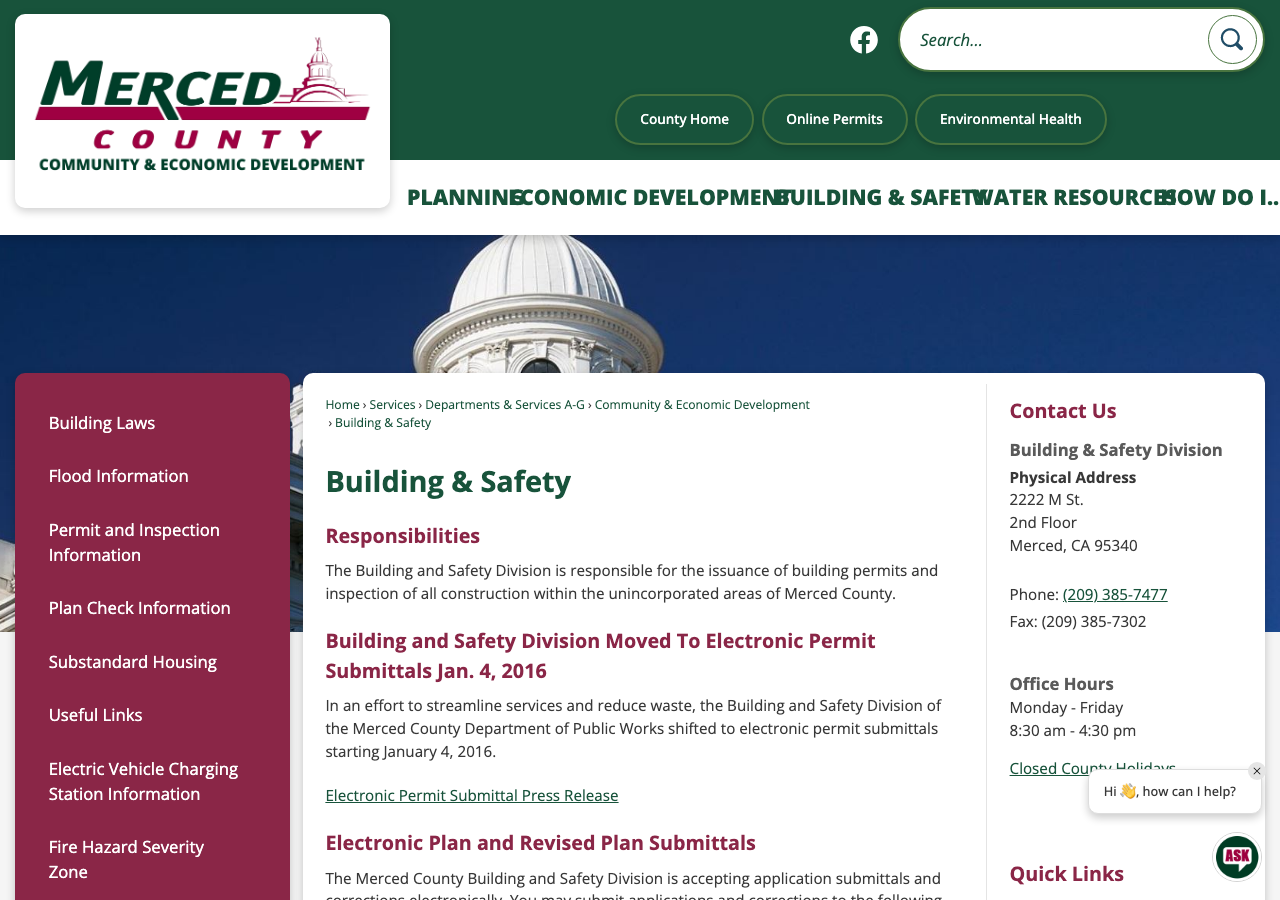
Average approval time — application to PTO
From the CPUC interconnection record. Bars show the average days taken each year; a year with no recorded projects is left blank rather than drawn as zero.