
Placer County
State of California
Placer County is a county authority in the State of California, covering 18 regions, serving 404,739 residents. 7,417 residential solar installs are on record here. This page is the permit route for that jurisdiction: the fifteen steps from working out who has a say over an address through to permission to operate, the documents this authority publishes, and 62 answers taken from those documents and dated.
Permitting 5 steps · 28 questions
Whether a permit is needed — Yes. A building permit is required for any roof- or ground-mounted residential PV system; the application form lists 'Solar (Roof or Ground)' as a permit type. Q3 Electrical and building permits — Combined. The electrical work is added to the building permit record; a separate electrical permit is not issued when the work accompanies a building permit. Q4 Plan review — Not published for solar specifically. SolarAPP+ is real-time - permit issued electronically on payment. Q18 Where you file — Accela Citizen Access - https://permits.placer.ca.gov (branded 'Placer County Online Permits Portal' / e-Permits), used for application, payment, Q20
- Permit required
- Yes. A building permit is required for any roof- or ground-mounted residential PV system; the application form lists 'Solar (Roof or Ground)' as a permit type.92% source
- What it costs
- $213.83 roof-mounted residential PV; $370.18 ground-mounted (Building Division Fee Schedule effective 1 Jul 2026, item 7 under Electrical Inspection Fees;88% source
- Plan review turnaround
- Not published for solar specifically. SolarAPP+ is real-time - permit issued electronically on payment. Solar is also listed under 'Counter Services' as a single-trip counter permit.60% source
- Key document
- published checklist cited by 7 open the document
-
Confirm who has a say over your address
A city address is usually permitted by the city, not the county — but not always, and some authorities keep building and hand electrical to someone else. Getting this wrong costs the whole submittal, because every requirement below belongs to whoever actually holds jurisdiction. Check the overlays in the same pass: an HOA, a historic district, a windstorm certification or a system-size cap can reshape the design, and all of them are cheaper to find now than after the array is laid out.
- Is this authority the AHJ for residential solar at this address? Yes - Placer County Community Development Resource Agency, Building Services Division is the AHJ for residential rooftop PV in the unincorporated county (offices in Auburn and Tahoe City). 93% · department page
- What does this authority permit itself, and what does it delegate? Both. Building and electrical are held by Building Services and are issued on one record. Fire is NOT held by the county building division - each fire protection district adopts its own amended California Fire Code, ratified by the Board of Supervisors, and Placer County Fire Department (CAL FIRE contract) covers the remainder. The PV checklist requires fire department approval where panels cover more than 50% of total roof area. 85% · fee schedule
- Is a permit required for a residential rooftop PV system? Yes. A building permit is required for any roof- or ground-mounted residential PV system; the application form lists 'Solar (Roof or Ground)' as a permit type. 92% · application form
- Is there a separate electrical permit, or is it combined? Combined. The electrical work is added to the building permit record; a separate electrical permit is not issued when the work accompanies a building permit. 85% · fee schedule
- Is a HOA or architectural approval required first? No. The county does not require HOA or architectural approval before a solar permit, and Gov. Code 65850.5(b) bars a city or county from conditioning approval on HOA approval. Caveat for the Tahoe end of the county: the Olympic Valley Design Review Committee reviews projects in that community, and TRPA scenic-quality rules apply in the Lake Tahoe basin. 72% · department page
- Is a wind or windstorm certification required? No. No wind or windstorm certification is required. Wind design criteria are set locally though: the Residential Design Criteria sheet gives 95 mph (Roseville/Auburn service area) and, for the Truckee/Tahoe service area, 130 mph for 5,001-7,000 ft, 140 mph for 7,001-8,000 ft and 150 mph above 8,001 ft (Risk Category II), with topographic effects and special wind region flagged YES, per PCC 15.04.160 and 15.04.290. Site-specific wind speeds by exposure category and topography may be substituted per CBC/CRC/ASCE 7. 80% · adopting ordinance
- Is a Specific Use Permit or Council approval ever required? No Specific Use Permit, use permit or Board approval for residential rooftop PV - review is administrative and non-discretionary under Gov. Code 65850.5. Two local overlays qualify this: (a) in the Lake Tahoe basin a TRPA determination runs alongside the county building permit ('The Tahoe Regional Planning Agency (TRPA) and the Placer County Building Division work together to process building permits in the Tahoe basin'), and PCC 17.56.350.A.7 expressly preserves TRPA maximum site-coverage enforcement over ground-mounted systems there; (b) ground-mounted systems that fall outside PCC 17.56.350 - notably a system serving anything other than structures or legally established uses on the same site - lose the by-right setback relief and would need discretionary zoning approval. 68% · ordinance
- Is there a system-size cap on residential generation? No kW or panel cap on residential rooftop PV. For GROUND mount, PCC 17.56.350.A.1 limits the by-right system to 'generating electricity to service structures or other legally established uses located on the same site as the solar electric generating system only', which is a de facto sizing constraint; and setbacks scale with height - 7.5 ft for systems 6 ft or less, 10 ft for 8 ft or less, 15 ft for 10 ft or less, and 15 ft for systems over 10 ft and under 15 ft, with tracker travel not permitted to encroach or exceed the stated height in any position. 78% · ordinance
-
Check who is allowed to apply
Several authorities require the electrical permit to be pulled by a licensed electrician, or require the contractor to be registered with them BEFORE applying. Registration is not same-day. This is second on the list rather than fourth because it is the step most likely to stop the job before the drawings matter.
- Who is allowed to pull the electrical permit? Either - 'Only property owners, licensed contractors or agents with written authorization may obtain permits.' License class and number are verified against CSLB. The SolarAPP+ route is restricted to licensed contractors. 86% · application form
- Must the contractor be registered with this authority before applying? No. There is no local contractor registration; the contractor declaration is verified against the CSLB licence database. 74% · department page
- Is a homeowner permitted to self-install and self-permit? Yes for the standard permit route - Owner-Builder Declaration, AB 2335 notice and Owner-Builder Consideration Guide are published. No for the SolarAPP+ route, which requires a licensed contractor. 84% · application form
-
Build the submittal package
Almost everywhere wants a site plan, a one-line or three-line electrical diagram, equipment cut sheets with listings, and a structural attachment detail. Build it against the published checklist rather than the last jurisdiction you worked in — the checklist is what the reviewer marks against.
- What documents make up a complete submittal? Standard route (PV Submittal Checklist - System Summary Sheet, doc '301 PV Checklist 220215'): signed contract with the property owner for the solar installation; electrical schematic diagram (module series/parallel wiring, disconnects, grounding/bonding, wire and conduit type/size/count, rapid shutdown, DC colour coding, batteries with locations/rooms and venting); site diagram; equipment cut sheets (inverters, modules, generator, transfer switch); labeling schedule per CEC 110.21(B), 690.13, 690.31, 690.56, 705.10 and 705.12; system kW; completed page 2 System Summary; Class A UL 1703 fire-classification documentation; identification of rapid-shutdown location and method per CEC 690.12; engineered or listed racking system; Class A roof assembly detail for BIPV; electrical load calculation worksheet if derating the main breaker below 175 A; an Electrical Engineer for ALL battery connections; ground mount adds engineering. SolarAPP+ route: approved SolarAPP+ checklist plus approval ID number and product spec sheets only - no construction documents. 90% · published checklist
- How many copies, and in what format? Two sets for roof mount, three sets for ground mount, minimum sheet size 11 in x 17 in. Digital submittals must follow the county's file-naming convention, e.g. BLD25-01234_JONES_PV, BLD25-01234_JONES_PV INFO, with COR1/COR2 for county-required corrections and REV1/REV2 for applicant revisions; a new full plan set is required for each re-submittal. 86% · published checklist
- Is a site plan required, and what must it show? Yes. The site diagram must show arrangement of panels on the roof or ground, location of combiner box, inverter, utility disconnect and main service, approximate distance from panel to all components, all setbacks dimensioned to all structures and property lines, and generator/transfer switch locations if applicable. 90% · published checklist
- Is a one-line / three-line diagram required? Yes - an electrical schematic diagram of the system is a required submittal item on the PV checklist. 90% · published checklist
- Are string and conductor calculations required? Yes. Page 2 of the System Summary Sheet requires calculated system voltage (Voc x modules in series x 1.13, CEC 690.7), operating voltage and current, and minimum PV source-circuit ampacity / conductor sizing (Isc x parallel circuits x 1.25 x 1.25, CEC 690.8). An electrical load calculation worksheet is additionally required if the main breaker is derated below 175 A. 88% · published checklist
- Is a structural PE stamp required, and at what threshold? No blanket structural PE stamp for roof mount - an 'engineered or listed racking system for mounting and attachment' satisfies the requirement. Engineering IS required for ground mount and wind generators when the total height from ground to top of array (not post height) exceeds 7 feet, AND for all such structures where the ground snow load (Pg) exceeds 50 psf, covering mounting, attachments and foundation for minimum wind and snow loads with details of attachments, anchors, brackets, panels and hardware. 85% · published checklist
- Is an electrical PE stamp required, and at what threshold? No electrical PE stamp for PV itself, but the checklist states flatly: 'For ALL Battery Connections: An Electrical Engineer is required.' There is no kWh or kW threshold - it applies to every battery connection. 80% · published checklist
-
Apply and pay
Most authorities now take the whole application through a portal, and several states cap or constrain what a residential solar permit may cost. Check whether plan check is billed separately before you quote the job.
- Which permit portal does this authority use? Accela Citizen Access - https://permits.placer.ca.gov (branded 'Placer County Online Permits Portal' / e-Permits), used for application, payment, inspection scheduling, Open Conditions of Approval and revisions. SolarAPP+ (https://solarapp.nrel.gov) sits in front of it as the automated plan-review portal for eligible rooftop PV and storage. 92% · portal landing page
- Can the whole application be completed online? Yes. Application, upload, payment, instant issuance, inspection scheduling and revisions are all online. The county warns 'If you start the process online, you will need to finish the process online. If you start via paper, it must be finished via paper.' A counter route remains available. 88% · department page
- What does a residential solar permit cost? $213.83 roof-mounted residential PV; $370.18 ground-mounted (Building Division Fee Schedule effective 1 Jul 2026, item 7 under Electrical Inspection Fees; identical figures in the 1 Jul 2025 schedule). Add-ons: CDRA Technology Surcharge 3.5% of total fees, capped at $578.36; imaging/processing/storage minimum $29.84; SB 1473 green building fee $1.00 per $25,000 valuation, minimum $1.00; strong-motion (seismic) fee minimum $0.50. A typical roof-mount total is therefore roughly $250-$255 plus the separate SolarAPP+ processing fee charged by NREL if that route is used. Commercial systems are 1% of valuation. 88% · fee schedule
- How is the fee calculated? Flat - a single per-system fee, split only by roof mount vs ground mount. Not valuation-based and not per kW or per panel for residential. Commercial PV is 1% of valuation. 90% · fee schedule
- Is there a separate plan-check fee? No separate plan-check fee line for residential solar. The PV fee is a flat electrical inspection fee; the schedule's Plan Check & Processing fees (Full Plan Review 50% of Table 3-A; Limited Review 10% of Table 3-A or $156.22) are tied to valuation-based building permits, and SolarAPP+ replaces plan review entirely. An Additional Plan Check & Processing Fee of $156.22/hour (minimum $156.22) does apply where an incomplete or unacceptable correction response produces three or more rechecks, or where revisions arrive mid-review or during construction. 55% · fee schedule
-
Plan review — and start the utility in parallel
Interconnection is a separate process from the permit and usually the longer pole. Where the utility does not depend on the permit being issued, running both at once is the single biggest saving available on a residential job.
- What is the stated plan-review turnaround? Not published for solar specifically. SolarAPP+ is real-time - permit issued electronically on payment. Solar is also listed under 'Counter Services' as a single-trip counter permit. The county's Plan Review Turnaround administrative policy (effective 22 Aug 2007) lists Over The Counter Permits at 1 working day and Quick Checks at 5 to 15 working days (1-3 weeks), with 2nd/subsequent reviews at 5 to 10 working days; it has no solar line and states the times are a goal, not a guarantee, and that the clock starts when the plan review fee is collected. 60% · department policy
- How long is an issued permit valid before it expires? 2 years from date of issue. An application is deemed abandoned 1 year after the date of filing if no permit has been issued, and documents may be destroyed 180 days after that. No expiry notice is sent. 88% · application form
- Which utility handles interconnection here? Split - four utilities touch Placer County and the correct one depends on the parcel. (1) PG&E serves most of the western and central unincorporated county. (2) Liberty Utilities (CalPeco Electric), a CPUC-regulated IOU, serves the Lake Tahoe basin portion and areas east - Tahoe City, Tahoe Vista, Kings Beach, Carnelian Bay, Olympic Valley. (3) SMUD, a municipal utility outside CPUC Rule 21, serves a small adjoining portion of western Placer County. (4) Roseville Electric is a municipal utility serving the incorporated City of Roseville, which is not in this AHJ's area. Rule 21 governs interconnection for PG&E and Liberty; SMUD and Roseville Electric set their own terms. 86% · department policy
- Where does the utility sit in the sequence? Parallel. The county tells applicants to 'Confirm with your electric utility provider that your proposed system complies with their interconnection requirements. Some utility providers require pre-approval prior to installation.' PG&E's published sequence has the contractor file the interconnection application before installation, the AHJ inspection follow installation, and PTO issue after the final building permit is submitted to PG&E. 84% · department page
28 questions answered against Placer County’s own published documents
Q1 Is this authority the AHJ for residential solar at this address? Core Jurisdiction & scope
Yes - Placer County Community Development Resource Agency, Building Services Division is the AHJ for residential rooftop PV in the unincorporated county (offices in Auburn and Tahoe City).
Why the confidence is not higherThe Division publishes the PV submittal checklist, the solar permit fee, the SolarAPP+ automated path and the inspection codes for PV final, and issues the BLD permit record. Chief Building Official is Timothy Wegner (named on the Design Criteria sheet and the Electrical Service Permits policy).
department page checked 2026-08-28 https://www.placer.ca.gov/9150/solar-app
Q2 What does this authority permit itself, and what does it delegate? Core Jurisdiction & scope
Both. Building and electrical are held by Building Services and are issued on one record. Fire is NOT held by the county building division - each fire protection district adopts its own amended California Fire Code, ratified by the Board of Supervisors, and Placer County Fire Department (CAL FIRE contract) covers the remainder. The PV checklist requires fire department approval where panels cover more than 50% of total roof area.
Why the confidence is not higherFee schedule: 'Where such electrical work is performed in conjunction with a building permit, the fee is added to that permit, and a separate electrical permit is not required.' Fire jurisdiction shown by the Dec 2025 - Mar 2026 BOS items ratifying the 2025 Fire Code with local amendments for Newcastle, North Tahoe, Penryn, Placer Hills, Foresthill and Alpine Springs CWD.
fee schedule checked 2026-08-28 https://www.placer.ca.gov/DocumentCenter/View/113034/Building-Division-Fee-Schedule
Q3 Is a permit required for a residential rooftop PV system? Core Jurisdiction & scope
Yes. A building permit is required for any roof- or ground-mounted residential PV system; the application form lists 'Solar (Roof or Ground)' as a permit type.
Why the confidence is not higherPermit application form states no structure regulated by the Code shall be altered without a permit, and PCC 17.56.350.A.2 conditions the ground-mount setback relief on 'The system is installed following approval of a building permit.'
application form checked 2026-08-28 https://www.placer.ca.gov/DocumentCenter/View/2964/
Q4 Is there a separate electrical permit, or is it combined? Core Jurisdiction & scope
Combined. The electrical work is added to the building permit record; a separate electrical permit is not issued when the work accompanies a building permit.
Why the confidence is not higherVerbatim from the ELECTRICAL INSPECTION FEES preamble of the Building Division Fee Schedule effective 1 Jul 2026. Solar PV appears there as item 7 under electrical fees, i.e. the PV fee IS the electrical fee.
fee schedule checked 2026-08-28 https://www.placer.ca.gov/DocumentCenter/View/113034/Building-Division-Fee-Schedule
Q5 Who is allowed to pull the electrical permit? Core Who may apply
Either - 'Only property owners, licensed contractors or agents with written authorization may obtain permits.' License class and number are verified against CSLB. The SolarAPP+ route is restricted to licensed contractors.
Why the confidence is not higherQuoted from the header of the Placer County building permit application form; SolarAPP+ eligibility list opens with 'Installed by a licensed contractor.'
application form checked 2026-08-28 https://www.placer.ca.gov/DocumentCenter/View/2964/
Q6 Must the contractor be registered with this authority before applying? Core Who may apply
No. There is no local contractor registration; the contractor declaration is verified against the CSLB licence database.
Why the confidence is not higherThe application form says 'License Class and License # will be verified by CSLB' and the Apply for a Permit page links only to the CSLB licence check. No registration form or fee appears on the Apply for a Permit page, the Code Handouts and Policies index or the fee schedule. Site-search controls passed (positive 'electrical' 1,964 hits; fabricated 'zzqqxsolarplacer' 0 hits).
department page checked 2026-08-28 https://www.placer.ca.gov/2202/Apply-for-a-Permit
Q7 Is a homeowner permitted to self-install and self-permit? Who may apply
Yes for the standard permit route - Owner-Builder Declaration, AB 2335 notice and Owner-Builder Consideration Guide are published. No for the SolarAPP+ route, which requires a licensed contractor.
Why the confidence is not higherOwner-builder forms are listed on Apply for a Permit and the declaration block is printed on the application form itself; SolarAPP+ eligibility requires licensed-contractor installation.
application form checked 2026-08-28 https://www.placer.ca.gov/2202/Apply-for-a-Permit
Q8 What documents make up a complete submittal? Core Submittal package
Standard route (PV Submittal Checklist - System Summary Sheet, doc '301 PV Checklist 220215'): signed contract with the property owner for the solar installation; electrical schematic diagram (module series/parallel wiring, disconnects, grounding/bonding, wire and conduit type/size/count, rapid shutdown, DC colour coding, batteries with locations/rooms and venting); site diagram; equipment cut sheets (inverters, modules, generator, transfer switch); labeling schedule per CEC 110.21(B), 690.13, 690.31, 690.56, 705.10 and 705.12; system kW; completed page 2 System Summary; Class A UL 1703 fire-classification documentation; identification of rapid-shutdown location and method per CEC 690.12; engineered or listed racking system; Class A roof assembly detail for BIPV; electrical load calculation worksheet if derating the main breaker below 175 A; an Electrical Engineer for ALL battery connections; ground mount adds engineering. SolarAPP+ route: approved SolarAPP+ checklist plus approval ID number and product spec sheets only - no construction documents.
Why the confidence is not higherRead verbatim from the PV Submittal Checklist PDF extracted with pdftotext -layout, and from the SolarAPP+ step list. Note the checklist header still reads '2019 CALIFORNIA BUILDING STANDARDS CODE' and is stamped 220215 (15 Feb 2022) - it is two code cycles stale; the state edition in force is the 2025 CBSC / 2023 NEC.
published checklist checked 2026-08-28 https://www.placer.ca.gov/DocumentCenter/View/3218/PV-Submittal-Checklist-PDF
Q9 How many copies, and in what format? Submittal package
Two sets for roof mount, three sets for ground mount, minimum sheet size 11 in x 17 in. Digital submittals must follow the county's file-naming convention, e.g. BLD25-01234_JONES_PV, BLD25-01234_JONES_PV INFO, with COR1/COR2 for county-required corrections and REV1/REV2 for applicant revisions; a new full plan set is required for each re-submittal.
Why the confidence is not higherVerbatim from the PV Submittal Checklist and its attached Document Naming Conventions sheet.
published checklist checked 2026-08-28 https://www.placer.ca.gov/DocumentCenter/View/3218/PV-Submittal-Checklist-PDF
Q10 Is a site plan required, and what must it show? Core Submittal package
Yes. The site diagram must show arrangement of panels on the roof or ground, location of combiner box, inverter, utility disconnect and main service, approximate distance from panel to all components, all setbacks dimensioned to all structures and property lines, and generator/transfer switch locations if applicable.
Why the confidence is not higherVerbatim bullet from the PV Submittal Checklist.
published checklist checked 2026-08-28 https://www.placer.ca.gov/DocumentCenter/View/3218/PV-Submittal-Checklist-PDF
Q11 Is a one-line / three-line diagram required? Core Drawings & calculations
Yes - an electrical schematic diagram of the system is a required submittal item on the PV checklist.
Why the confidence is not higherExplicit checklist line item; it must show module series/parallel wiring, disconnects, grounding/bonding, conductor and conduit sizes and counts, rapid shutdown and DC colour coding.
published checklist checked 2026-08-28 https://www.placer.ca.gov/DocumentCenter/View/3218/PV-Submittal-Checklist-PDF
Q12 Are string and conductor calculations required? Drawings & calculations
Yes. Page 2 of the System Summary Sheet requires calculated system voltage (Voc x modules in series x 1.13, CEC 690.7), operating voltage and current, and minimum PV source-circuit ampacity / conductor sizing (Isc x parallel circuits x 1.25 x 1.25, CEC 690.8). An electrical load calculation worksheet is additionally required if the main breaker is derated below 175 A.
Why the confidence is not higherVerbatim from page 2 of the PV Submittal Checklist.
published checklist checked 2026-08-28 https://www.placer.ca.gov/DocumentCenter/View/3218/PV-Submittal-Checklist-PDF
Q13 Is a structural PE stamp required, and at what threshold? Core Engineering & stamps
No blanket structural PE stamp for roof mount - an 'engineered or listed racking system for mounting and attachment' satisfies the requirement. Engineering IS required for ground mount and wind generators when the total height from ground to top of array (not post height) exceeds 7 feet, AND for all such structures where the ground snow load (Pg) exceeds 50 psf, covering mounting, attachments and foundation for minimum wind and snow loads with details of attachments, anchors, brackets, panels and hardware.
Why the confidence is not higherVerbatim from the 'For Ground Mount and Wind Generator Systems Provide' and 'For Roof Mounted Systems Provide' blocks of the PV Submittal Checklist. The 50 psf snow trigger is a Sierra-specific threshold a flatland jurisdiction would not carry.
published checklist checked 2026-08-28 https://www.placer.ca.gov/DocumentCenter/View/3218/PV-Submittal-Checklist-PDF
Q14 Is an electrical PE stamp required, and at what threshold? Engineering & stamps
No electrical PE stamp for PV itself, but the checklist states flatly: 'For ALL Battery Connections: An Electrical Engineer is required.' There is no kWh or kW threshold - it applies to every battery connection.
Why the confidence is not higherVerbatim checklist line. This is a local requirement above the state baseline and applies on the standard route; systems taken through SolarAPP+ (PV plus storage) are not subject to it because SolarAPP+ replaces plan review entirely.
published checklist checked 2026-08-28 https://www.placer.ca.gov/DocumentCenter/View/3218/PV-Submittal-Checklist-PDF
Q15 What does a residential solar permit cost? Core Fees
$213.83 roof-mounted residential PV; $370.18 ground-mounted (Building Division Fee Schedule effective 1 Jul 2026, item 7 under Electrical Inspection Fees; identical figures in the 1 Jul 2025 schedule). Add-ons: CDRA Technology Surcharge 3.5% of total fees, capped at $578.36; imaging/processing/storage minimum $29.84; SB 1473 green building fee $1.00 per $25,000 valuation, minimum $1.00; strong-motion (seismic) fee minimum $0.50. A typical roof-mount total is therefore roughly $250-$255 plus the separate SolarAPP+ processing fee charged by NREL if that route is used. Commercial systems are 1% of valuation.
Why the confidence is not higherBoth fee schedules extracted with pdftotext -layout and read directly; surcharge text taken from the CDRA Administrative Fee Schedule pages of the same PDF. Well inside the Gov. Code 66015 cap of $450 + $15/kW above 15 kW.
fee schedule checked 2026-08-28 https://www.placer.ca.gov/DocumentCenter/View/113034/Building-Division-Fee-Schedule
Q16 How is the fee calculated? Core Fees
Flat - a single per-system fee, split only by roof mount vs ground mount. Not valuation-based and not per kW or per panel for residential. Commercial PV is 1% of valuation.
Why the confidence is not higherThe residential entries are fixed dollar amounts under Electrical Inspection Fees; only the commercial line uses valuation, consistent with Gov. Code 65850.55 which forbids valuation-based residential solar fees.
fee schedule checked 2026-08-28 https://www.placer.ca.gov/DocumentCenter/View/113034/Building-Division-Fee-Schedule
Q17 Is there a separate plan-check fee? Fees
No separate plan-check fee line for residential solar. The PV fee is a flat electrical inspection fee; the schedule's Plan Check & Processing fees (Full Plan Review 50% of Table 3-A; Limited Review 10% of Table 3-A or $156.22) are tied to valuation-based building permits, and SolarAPP+ replaces plan review entirely. An Additional Plan Check & Processing Fee of $156.22/hour (minimum $156.22) does apply where an incomplete or unacceptable correction response produces three or more rechecks, or where revisions arrive mid-review or during construction.
Why the confidence is not higherThe flat solar fee and the plan-check percentages sit in different sections of the schedule and the schedule does not say which applies to a standard (non-SolarAPP+) solar submittal where plans ARE submitted; the county's fee estimator at permitguide.placer.ca.gov returned HTTP 403 so it could not be used to confirm. Recorded low on that ambiguity.
fee schedule checked 2026-08-28 https://www.placer.ca.gov/DocumentCenter/View/113034/Building-Division-Fee-Schedule
Q18 What is the stated plan-review turnaround? Core Timeline & validity
Not published for solar specifically. SolarAPP+ is real-time - permit issued electronically on payment. Solar is also listed under 'Counter Services' as a single-trip counter permit. The county's Plan Review Turnaround administrative policy (effective 22 Aug 2007) lists Over The Counter Permits at 1 working day and Quick Checks at 5 to 15 working days (1-3 weeks), with 2nd/subsequent reviews at 5 to 10 working days; it has no solar line and states the times are a goal, not a guarantee, and that the clock starts when the plan review fee is collected.
Why the confidence is not higherThe turnaround policy PDF has no text layer and was read by OCR (pdftoppm 300 dpi + tesseract); it is 19 years old and predates AB 2188. No solar-specific review deadline is published, and California sets none.
department policy checked 2026-08-28 https://www.placer.ca.gov/DocumentCenter/View/3498/Plan-Review-Turn-Around-Times-PDF
Q19 How long is an issued permit valid before it expires? Timeline & validity
2 years from date of issue. An application is deemed abandoned 1 year after the date of filing if no permit has been issued, and documents may be destroyed 180 days after that. No expiry notice is sent.
Why the confidence is not higherVerbatim from the TIME LIMITATIONS block printed on the Placer County building permit application form.
application form checked 2026-08-28 https://www.placer.ca.gov/DocumentCenter/View/2964/
Q20 Which permit portal does this authority use? Core Portal & process
Accela Citizen Access - https://permits.placer.ca.gov (branded 'Placer County Online Permits Portal' / e-Permits), used for application, payment, inspection scheduling, Open Conditions of Approval and revisions. SolarAPP+ (https://solarapp.nrel.gov) sits in front of it as the automated plan-review portal for eligible rooftop PV and storage.
Why the confidence is not higherBoth URLs and the 'Residential - SolarAPP+' permit type name are given step by step on the county's SolarAPP+ page; the e-Permits page confirms Building, TRPA Building, Planning and Engineering permits are filed there.
portal landing page checked 2026-08-28 https://www.placer.ca.gov/9150/solar-app
Q21 Can the whole application be completed online? Core Portal & process
Yes. Application, upload, payment, instant issuance, inspection scheduling and revisions are all online. The county warns 'If you start the process online, you will need to finish the process online. If you start via paper, it must be finished via paper.' A counter route remains available.
Why the confidence is not higherQuoted from the Apply for a Permit page; the SolarAPP+ page describes end-to-end online issuance ('Upon payment, your permit will be immediately issued electronically').
department page checked 2026-08-28 https://www.placer.ca.gov/2202/Apply-for-a-Permit
Q22 Which utility handles interconnection here? Core Utility interconnection
Split - four utilities touch Placer County and the correct one depends on the parcel. (1) PG&E serves most of the western and central unincorporated county. (2) Liberty Utilities (CalPeco Electric), a CPUC-regulated IOU, serves the Lake Tahoe basin portion and areas east - Tahoe City, Tahoe Vista, Kings Beach, Carnelian Bay, Olympic Valley. (3) SMUD, a municipal utility outside CPUC Rule 21, serves a small adjoining portion of western Placer County. (4) Roseville Electric is a municipal utility serving the incorporated City of Roseville, which is not in this AHJ's area. Rule 21 governs interconnection for PG&E and Liberty; SMUD and Roseville Electric set their own terms.
Why the confidence is not higherThree county-side sources: the SolarAPP+ page lists PG&E, SMUD and Roseville Electric contact numbers; the Building Services Electrical Service Permits policy states service sizing is 'consistent with PG&E, SMUD, and Liberty Electric policy'; and a 27 Jul 2021 County Executive Office memo to the Board states 'Liberty Utilities provides electrical service to much of the Tahoe basin and areas east and south of Truckee.' SMUD's own territory page says it serves 'most of Sacramento County (and small, adjoining portions of Placer and Yolo Counties.)' Note the county's SolarAPP+ utility list omits Liberty - consistent with SolarAPP+ being unusable in the Tahoe basin because of the 30 psf snow-load ceiling.
department policy checked 2026-08-28 https://www.placer.ca.gov/DocumentCenter/View/58751/Electrical-Service-Permits-PDF
Q23 Where does the utility sit in the sequence? Core Utility interconnection
Parallel. The county tells applicants to 'Confirm with your electric utility provider that your proposed system complies with their interconnection requirements. Some utility providers require pre-approval prior to installation.' PG&E's published sequence has the contractor file the interconnection application before installation, the AHJ inspection follow installation, and PTO issue after the final building permit is submitted to PG&E.
Why the confidence is not higherCounty wording quoted from the SolarAPP+ page step 1; sequence from PG&E's Getting started with solar page. No county rule makes utility sign-off a precondition of permit issuance.
department page checked 2026-08-28 https://www.placer.ca.gov/9150/solar-app
Q24 Is a HOA or architectural approval required first? Overlays & special cases
No. The county does not require HOA or architectural approval before a solar permit, and Gov. Code 65850.5(b) bars a city or county from conditioning approval on HOA approval. Caveat for the Tahoe end of the county: the Olympic Valley Design Review Committee reviews projects in that community, and TRPA scenic-quality rules apply in the Lake Tahoe basin.
Why the confidence is not higherNo HOA condition appears anywhere on the Apply for a Permit page, the PV Submittal Checklist or the SolarAPP+ steps; site-search controls passed. The Olympic Valley DRC is a published county committee and is a genuine local overlay, so it is flagged rather than ignored.
department page checked 2026-08-28 https://www.placer.ca.gov/5544/olympic-valley-design-review-committee
Q25 Is there a historic-district review? Overlays & special cases
Nothing published by this authority.
Where we lookedCould not establish whether unincorporated Placer County has a historic-district or historic-resource design review that would attach to a residential rooftop PV permit. Looked in: the county site search for 'historic district design review certificate of appropriateness' and 'historic design review district' (search validated in the same run - positive control 'electrical' returned 1,964 hits, fabricated control 'zzqqxsolarplacer' returned 0), which surfaced only the Olympic Valley Design Review Committee; the Building Services Apply for a Permit page; the PV Submittal Checklist; the SolarAPP+ eligibility and step list; and the Code Handouts & Policies index - none mentions historic review. The authoritative source, Placer County Code Chapter 17 (Zoning) on qcode.us, could not be read: qcode.us and library.qcode.us both 301 to resolve.ecode360.com and return HTTP 403 behind a Cloudflare managed challenge, including with the Referer: https://www.iccsafe.org/ header the brief prescribes; the r.jina.ai reader proxy returned 401 (blocked network reputation); and the Wayback CDX index holds no snapshot of the current library.qcode.us paths and only 2011/2019/2020 snapshots of the old qcode paths, too stale to rely on. Recording this as an unproven absence rather than a No.
https://library.qcode.us/lib/placer_county_ca/pub/county_code/item/chapter_15-article_15_04-part_ii
Q26 Is a wind or windstorm certification required? Overlays & special cases
No. No wind or windstorm certification is required. Wind design criteria are set locally though: the Residential Design Criteria sheet gives 95 mph (Roseville/Auburn service area) and, for the Truckee/Tahoe service area, 130 mph for 5,001-7,000 ft, 140 mph for 7,001-8,000 ft and 150 mph above 8,001 ft (Risk Category II), with topographic effects and special wind region flagged YES, per PCC 15.04.160 and 15.04.290. Site-specific wind speeds by exposure category and topography may be substituted per CBC/CRC/ASCE 7.
Why the confidence is not higherRead directly from Table R301.2(1) in the county's Design Criteria PDF, which cites the two Placer County Code sections as the source of the criteria.
adopting ordinance checked 2026-08-28 https://www.placer.ca.gov/DocumentCenter/View/57216/Design-Criteria-PDF
Q27 Is a Specific Use Permit or Council approval ever required? Overlays & special cases
No Specific Use Permit, use permit or Board approval for residential rooftop PV - review is administrative and non-discretionary under Gov. Code 65850.5. Two local overlays qualify this: (a) in the Lake Tahoe basin a TRPA determination runs alongside the county building permit ('The Tahoe Regional Planning Agency (TRPA) and the Placer County Building Division work together to process building permits in the Tahoe basin'), and PCC 17.56.350.A.7 expressly preserves TRPA maximum site-coverage enforcement over ground-mounted systems there; (b) ground-mounted systems that fall outside PCC 17.56.350 - notably a system serving anything other than structures or legally established uses on the same site - lose the by-right setback relief and would need discretionary zoning approval.
Why the confidence is not higherTRPA relationship quoted from the county's TRPA page; the same-site limitation and TRPA coverage carve-out quoted from the ordinance text adding PCC 17.56.350. The current codified text of Chapter 17 could not be re-read (see not_found note on the code library).
ordinance checked 2026-08-28 https://www.placer.ca.gov/2275/tahoe-regional-planning-agency
Q28 Is there a system-size cap on residential generation? Overlays & special cases
No kW or panel cap on residential rooftop PV. For GROUND mount, PCC 17.56.350.A.1 limits the by-right system to 'generating electricity to service structures or other legally established uses located on the same site as the solar electric generating system only', which is a de facto sizing constraint; and setbacks scale with height - 7.5 ft for systems 6 ft or less, 10 ft for 8 ft or less, 15 ft for 10 ft or less, and 15 ft for systems over 10 ft and under 15 ft, with tracker travel not permitted to encroach or exceed the stated height in any position.
Why the confidence is not higherQuoted from the ordinance adding PCC 17.56.350 (BOS item 07A, Feb 2019). Interconnection-side size limits are set by the utility, not the county.
ordinance checked 2026-08-28 https://www.placer.ca.gov/DocumentCenter/View/34946
Lines marked with a percentage were read off this authority’s own published documents. Unmarked guidance is general good practice, not this jurisdiction’s rule — always confirm against the authority before you submit.
Install 5 steps · 20 questions
-
Build to the code editions actually in force here
The NEC edition a jurisdiction enforces is often a cycle behind the newest one published, and local amendments sit on top of it. Rapid shutdown, conductor sizing and labelling all change between editions, so the edition in force is the first thing to establish, not the last.
- Which NEC edition is in force? 2023 NEC, in force as the 2025 California Electrical Code (Title 24 Part 3), effective 1 Jan 2026. 90% · adopting ordinance
- Which building code edition is in force? 2025 California Building Code and 2025 California Residential Code (2024 IBC/IRC base), effective 1 Jan 2026, as amended by Placer County Code Chapter 15, Article 15.04. 90% · adopting ordinance
- Which fire code edition is in force? 2025 California Fire Code - but adopted district by district, not countywide by the building department. Each fire protection district adopts the 2025 CFC with its own local amendments and the Board of Supervisors ratifies it: Newcastle FPD, North Tahoe FPD, Penryn FPD and Placer Hills FPD (BOS 4 Dec 2025), Alpine Springs County Water District (10 Dec 2025) and Foresthill FPD (18 Mar 2026). The applicable edition and amendments therefore depend on which district the parcel sits in; Placer County Fire Department (CAL FIRE cooperative agreement since 1952) covers the remainder. 84% · adopting ordinance
- Are there local amendments to any of the above? Yes. Building side: Placer County Code Chapter 15, Article 15.04 amends the CBC/CRC - snow and wind design criteria at PCC 15.04.160 (CRC) and 15.04.290 (CBC) with snow-load Tables A-16-C and A-16-D at 15.04.360, and Wildland-Urban Interface amendments to CBC Chapter 7A / CRC R337 at PCC 15.04.270 (which extends WUI compliance to additions and remodels that replace roofing, siding and windows within one year, beyond the state trigger). Administrative/technical policies add more: all roof-mounted PV in Placer County must have a Class A fire rating. Fire side: district amendments, e.g. North Tahoe FPD adds CFC 509.2.1 and amends CFC 1205.4.3 (see Q37/Q38). 78% · ordinance
- What is the installation judged against? The 2025 California Building Standards Code (2025 CBC/CRC, 2025 CEC = 2023 NEC, 2025 CFC, new Part 7 WUI Code) as amended by Placer County Code Chapter 15 Article 15.04 and by the amended fire code of the fire protection district in which the parcel lies; plus Building Services administrative and technical policies (Class A roof-mounted PV policy, Electrical Service Permits policy) and, in the Lake Tahoe basin, TRPA. NEC Article 690 is adopted with no California amendment. 82% · adopting ordinance
-
Fire access, setbacks and pathways
Ridge setbacks and roof access pathways are fire-service requirements and they constrain the array layout. They are the most common cause of a redesign after the fire department comments on a plan set.
- What ridge setback and access pathways are required? State rules govern the geometry: 2025 CFC 1205 and 2025 CRC R329 (renumbered this cycle from CFC 1204 / CRC R324) apply as adopted; no Placer County or North Tahoe FPD amendment to the access-pathway sections was found. Two local layers sit on top. (1) The PV Submittal Checklist: 'Solar panels that cover more than 50% of the total roof area, require fire department approval.' (2) The county publishes, as its 'Solar System Roof Coverage Installation Guidelines' handout, the CAL FIRE Office of the State Fire Marshal Solar Photovoltaic Installation Guideline dated 22 April 2008 - hip roofs one 3 ft clear eave-to-ridge pathway per module-bearing slope at a structurally strong location; single-ridge roofs two 3 ft pathways per slope; modules no closer than 1.5 ft to a hip or valley where modules are on both sides; modules no higher than 3 ft below the ridge for smoke ventilation; commercial 6 ft clear roof perimeter, reduced to 4 ft where either axis is 250 ft or less. That document states on its own face that it 'does not have the force of law' unless adopted by local ordinance, and it predates CFC 1205 by seventeen years - treat it as the county's expectation, not as the code. Most of the county is in a fire hazard severity zone, so CBC 7A / CRC R337 as amended by PCC 15.04.270 also apply. 72% · fire code + amendments
-
Rapid shutdown
Which rapid-shutdown rule applies follows directly from the NEC edition in force, and the initiation device has to be at a location the fire service can reach and identify. This is inspected, and it is labelled.
- Is rapid shutdown required, and to which NEC edition? Yes - rapid shutdown to CEC 690.12 of the 2023 NEC (2025 CEC), in force since 1 Jan 2026. The submittal must 'Identify location and method of rapid shutdown per CEC sec. 690.12' and show it on the electrical schematic with DC colour coding. In the North Tahoe Fire Protection District (Tahoe basin unincorporated Placer) CFC 1205.4.3 is amended: 'Where a facility is provided with more than one electrical power supply, the rapid shutdown switch shall be interconnected to, or within 3 feet (914 mm) of, the electrical shunt trip/switch in accordance with Section 509.2.1.' 86% · fire code + amendments
-
Labels and placards
The NEC sets a baseline for permanent markings at the service equipment and the disconnecting means. On top of that, an authority may specify its own wording, and the utility may specify more again. Where any of them writes its own text, a generic off-the-shelf label set will not pass — this is the detail most often fixed on a return visit.
- Which placards does this authority require at the service equipment? Countywide the requirement is a labeling schedule for equipment and electrical hazard per CEC 110.21(B), 690.13, 690.31, 690.56, 705.10 and 705.12, submitted with the plans, plus DC colour coding. In the North Tahoe FPD an added CFC 509.2.1 requires a remote electrical shunt trip/switch on the exterior of the building for any new or existing structure with a solar PV system, ESS, fuel cell or generator, each with 'an approved, permanently mounted, weatherproof sign indicating the power source it controls', and the amended CFC 1205.4.3 requires a label within 3 ft of the rapid shutdown switch. 85% · published checklist
- Does the authority specify placard wording of its own? Yes, in the Tahoe basin; not by the county itself. Placer County Building Services prescribes no wording of its own - it points to the CEC sections. North Tahoe FPD prescribes exact wording: 'RAPID SHUTDOWN SWITCH FOR SOLAR PV SYSTEM' on the label within 3 ft of the rapid shutdown switch, and signs naming the controlled source on each shunt trip, e.g. 'MAIN POWER SHUNT TRIP SWITCH', 'GENERATOR SHUNT TRIP SWITCH', 'ENERGY STORAGE BATTERIES SHUNT TRIP SWITCH'. Separately, the guideline the county publishes as its own roof-coverage handout carries the 2008 OSFM wording 'CAUTION: SOLAR ELECTRIC SYSTEM CONNECTED' at the main service disconnect and 'CAUTION SOLAR CIRCUIT' on DC raceways - advisory only. 80% · fire code + amendments
- Does it specify letter height, colour or material? Not in any county ordinance. The county-published 2008 OSFM guideline specifies red background, white lettering, minimum 3/8 inch letter height, all capital letters, Arial or similar non-bold font, and reflective weather-resistant material, recommending UL 969 as the weather-rating standard (UL listing of markings not required) - but that document is advisory on its own terms. North Tahoe FPD requires only 'an approved, permanently mounted, weatherproof sign' and gives no letter height or colour. Otherwise CEC 110.21(B) governs. 62% · department policy
- Is a site plan / facility map placard required, and what must it show? Yes in effect. The submittal must include a labeling schedule covering CEC 705.10, which in the 2023 NEC requires a permanent plaque or directory at each service equipment location (or at an approved readily visible location) identifying the location of all electric power source disconnecting means on or in the premises. Placer County adds no site-plan-placard specification of its own beyond the 705.10 reference. In the North Tahoe FPD the exterior shunt trip signage effectively performs the same wayfinding function. 70% · published checklist
- Does the UTILITY specify placards beyond the AHJ's? Yes, for PG&E and Liberty (both CPUC-jurisdictional). PG&E Electric Rule 21 H.1.d 'Visible Disconnect Required' requires the isolating device to 'include markings or signage that clearly indicates open and closed positions', to be 'clearly marked on the submitted single line diagram and its type and location approved by Distribution Provider prior to installation', and adds: 'If the device is not adjacent to the PCC, permanent signage must be installed at a Distribution Provider approved location providing a clear description of the location of the device. If the switch is not accessible outside the locked premises, signage with contact information and a Distribution Provider approved locking device for the premises shall be installed.' Generating facilities with non-islanding inverters totalling 1 kVA or less are exempt. SMUD, being municipal, sets its own terms outside Rule 21. 80% · utility DG manual
- Where must the labels be placed? At the service equipment / main service disconnect, per CEC 110.21(B), 690.13, 690.31, 690.56, 705.10 and 705.12 - the county specifies the code sections rather than the positions. The guideline it publishes places the residential marking within the main service disconnect, or on the outside cover where the disconnect is operable with the panel closed, and requires DC conduit/raceway/enclosure/cable-assembly markings every 10 feet, at turns, above and/or below penetrations, and on all DC combiner and junction boxes; no marking is required at the inverter. In the North Tahoe FPD the shunt trip must be 'installed in an approved location on the exterior of the building in an easily accessible and conspicuous location and protected from the elements', with multiple shunt trips 'separated by no more than 3 feet (914 mm)'. Utility-side signage location is PG&E-approved per Rule 21. 78% · department policy
-
Disconnect, storage and listed equipment
Where the AC disconnect must sit relative to the meter is usually the utility's rule, not the building department's. Battery storage frequently carries its own permit, its own inspection and its own fire conditions.
- Where must the AC disconnect be, relative to the meter? PG&E Electric Rule 21 H.1.d does NOT set a distance from the meter. It requires, where PG&E's operating practices call for it, 'a ganged, manually-operated isolating switch (or a comparable device mutually agreed upon)' installed 'near the Point of Interconnection'; the device must allow visible verification that separation has been accomplished (which may be met by opening the enclosure to observe contact separation), include markings or signage clearly indicating open and closed positions, be reachable for emergency purposes quickly and conveniently 24 hours a day by PG&E personnel 'without obstacles or requiring those seeking access to obtain keys, special permission, or security clearances', be capable of being locked in the open position, and be clearly marked on the submitted single-line diagram with type and location approved by PG&E before installation. Non-islanding inverters totalling 1 kVA or less are exempt. Placer County requires the utility disconnect to be shown on the site diagram and its distance from the array indicated. SMUD sets its own requirement outside Rule 21. 82% · utility DG manual
- Must equipment be on a specific approved list? No published approved-equipment list, but two listing requirements bite. (1) The whole roof-mounted PV system must carry a Class A fire classification certificate from a Nationally Recognized Testing Laboratory - the county names UL, TUV Rheinland, CSA and Intertek - naming the racking used and the module type (or exact make/model if untyped), per UL 1703 as revised May 2014, and certified for the roof slope class in use. This is stricter than the state rule, which only requires the PV system rating to match the roof covering's required rating: 'All roof mounted solar photovoltaic systems in Placer County must have a Class A Fire Rating.' (2) The System Summary Sheet requires the inverter to be 'Listed for Utility Interconnection'. Contractors must also submit a field self-certification that the installed system matches the approved plans. 84% · department policy
- Are batteries permitted, and under what conditions? Yes. Batteries are permitted and are handled on the same permit as the PV. Standard route: batteries must appear on the electrical schematic 'and their locations/rooms and venting', and 'For ALL Battery Connections: An Electrical Engineer is required.' SolarAPP+ route: 'New rooftop residential PV solar systems with energy storage systems' are eligible, subject to the same 30 psf snow-load ceiling and 400 A panel limit, and to no existing generator or transfer switch. Substantively the 2025 CRC R330 (renumbered from R328) and 2025 CFC 1207 apply, as amended by the parcel's fire protection district - in North Tahoe FPD an ESS triggers the exterior shunt trip under added CFC 509.2.1 with an 'ENERGY STORAGE BATTERIES SHUNT TRIP SWITCH' sign. 80% · fire code + amendments
- Is there a separate ESS permit or inspection? No separate ESS permit - storage is carried on the same building permit record as the PV, and the fee schedule has no ESS line. There IS a separate ESS inspection: inspection code 515 (Energy Storage System), distinct from 513 (PV Final) and 602 (Final Electric). 62% · department page
- Is a ground mount treated as a structure? Yes - a ground-mounted system is treated as a structure. PCC 17.56.350 sets setbacks by the overall height of the tallest part measured from average finished grade including tracker travel; a building permit is required; the system must sit outside easements, rights-of-way, well/septic setbacks, watercourse setbacks (PCC 17.54.140), wetlands or special protection areas, and outside any required emergency vehicle access or fire lane with defensible-space fuel modification around it per Board of Forestry Fire Safe Regulations section 1276.02. Where the system is placed on top of another structure that must meet a greater setback, the more restrictive governs. The ground area it occupies does not count toward permissible site coverage - except inside the Lake Tahoe Basin, where TRPA may enforce its own maximum site coverage. Fee and submittal also differ: $370.18 instead of $213.83, three plan sets instead of two, and engineering when the array exceeds 7 ft in height or ground snow load exceeds 50 psf. 86% · ordinance
- Is there a local rule on service upgrades or busbar sizing? Yes. Building Services Electrical Service Permits policy (issued 10 Feb 2022, signed by Chief Building Official Timothy Wegner 7 Sep 2023): residences may install a single-phase service up to 400 A (320 A continuous) without justification; larger requests must be reviewed by a Senior Building Inspector for acceptable justification. Electric services are not allowed on vacant property, and permanent service is not released for connection until the foundation is poured and supports installed. Busbar: the PV checklist applies the CEC 705.12 dwelling-unit exception (sum of overcurrent device ratings not to exceed 120% of busbar or conductor) and requires an electrical Load Calculation Worksheet if the main breaker is derated below 175 A. SolarAPP+ eligibility is capped at a new or existing main service panel no larger than 400 A. Secondary EV-only residential services are capped at 100 A. 86% · department policy
- Is a specific mounting system or attachment spacing required? No proprietary mounting system is mandated, but the attachment rules are unusually specific and snow-driven. (a) Roof mount must use an 'engineered or listed racking system for mounting and attachment of system'. (b) The whole array-plus-racking assembly must carry a Class A fire classification from an NRTL naming the specific racking and the module TYPE (UL 1703 typing, 15 types) or the exact module make/model if untyped, must be certified for the roof slope class actually used (steep slope greater than 2:12, or low slope 2:12 or less), and edge deflectors must be included and detailed if the certification requires them. (c) Ground mount requires engineering when array height exceeds 7 ft, and for all such structures where ground snow load exceeds 50 psf. (d) Ground snow load may be established from Placer County Code Tables A-16-C and A-16-D (PCC 15.04.360), the county Snow Load GIS layer, ASCE 7, or a site-specific case study approved by the Building Official - and 'In the event of a discrepancy in ground snow load values at a given site, the most restrictive value shall govern unless adequate justification is provided by a registered design professional and approved by the Building Official.' (e) SolarAPP+ is available only where ground snow load is 30 psf or less, excludes ballasted systems and BIPV, and excludes metal roofs and low-slope roofs (under 3:12) wherever ground snow load exceeds 15 psf. 88% · department policy
20 questions answered against Placer County’s own published documents
Q29 Which NEC edition is in force? Core Code editions in force
2023 NEC, in force as the 2025 California Electrical Code (Title 24 Part 3), effective 1 Jan 2026.
Why the confidence is not higherThe county's own notice states the 2025 California Building Standards Code took effect 1 Jan 2026 across building, residential, electrical, mechanical, plumbing, fire, energy and green standards, and that 'All construction permit applications submitted on or after Jan. 1 must comply with the new code requirements.' Caution: the county's Building Codes & Standards page and the PV checklist still reference the 2019 edition, and the Design Criteria sheet is captioned to the 2022 CRC - those are stale publications, not amendments; under H&SC 18938(b) the state edition applies regardless.
adopting ordinance checked 2026-08-28 https://www.placer.ca.gov/10542/updated-building-code
Q30 Which building code edition is in force? Core Code editions in force
2025 California Building Code and 2025 California Residential Code (2024 IBC/IRC base), effective 1 Jan 2026, as amended by Placer County Code Chapter 15, Article 15.04.
Why the confidence is not higherSame county notice. Note California added a new Part 7, the Wildland-Urban Interface Code, in this cycle - directly relevant here because the county states 'The majority of Placer County is located within a fire hazard severity zone that requires the use of materials and construction methods for exterior wildfire exposure.'
adopting ordinance checked 2026-08-28 https://www.placer.ca.gov/10542/updated-building-code
Q31 Which fire code edition is in force? Code editions in force
2025 California Fire Code - but adopted district by district, not countywide by the building department. Each fire protection district adopts the 2025 CFC with its own local amendments and the Board of Supervisors ratifies it: Newcastle FPD, North Tahoe FPD, Penryn FPD and Placer Hills FPD (BOS 4 Dec 2025), Alpine Springs County Water District (10 Dec 2025) and Foresthill FPD (18 Mar 2026). The applicable edition and amendments therefore depend on which district the parcel sits in; Placer County Fire Department (CAL FIRE cooperative agreement since 1952) covers the remainder.
Why the confidence is not higherBoard agenda items read directly from the county Document Center. This is a genuine jurisdictional split and it changes the answer to Q37-Q43 depending on parcel.
adopting ordinance checked 2026-08-28 https://www.placer.ca.gov/DocumentCenter/View/99818
Q32 Are there local amendments to any of the above? Core Code editions in force
Yes. Building side: Placer County Code Chapter 15, Article 15.04 amends the CBC/CRC - snow and wind design criteria at PCC 15.04.160 (CRC) and 15.04.290 (CBC) with snow-load Tables A-16-C and A-16-D at 15.04.360, and Wildland-Urban Interface amendments to CBC Chapter 7A / CRC R337 at PCC 15.04.270 (which extends WUI compliance to additions and remodels that replace roofing, siding and windows within one year, beyond the state trigger). Administrative/technical policies add more: all roof-mounted PV in Placer County must have a Class A fire rating. Fire side: district amendments, e.g. North Tahoe FPD adds CFC 509.2.1 and amends CFC 1205.4.3 (see Q37/Q38).
Why the confidence is not higherPCC section numbers are cited on the county's Designers page and inside the Design Criteria and WUI Compliance Checklist handouts. Note the state baseline: AB 130 (Stats. 2025 Ch. 22) freezes NEW more-restrictive residential amendments 1 Oct 2025 - 1 Jun 2031; the amendments above predate that window, but the fire-district 2025 CFC amendments were adopted in Nov-Dec 2025 and ratified inside it, which is worth a second look by anyone relying on them. Caveat on sourcing: the CURRENT codified text of PCC 15.04 could not be read first-hand - qcode.us and library.qcode.us both 301 to resolve.ecode360.com and return HTTP 403 behind a Cloudflare managed challenge, including with the Referer: https://www.iccsafe.org/ header; r.jina.ai returned 401; the Wayback CDX index holds no snapshot of the current library.qcode.us paths and only 2011/2019/2020 snapshots of the old ones. The section numbers and their subject matter above are taken from the county's own Design Criteria PDF and WUI Compliance Checklist, which cite them directly. A county site search for the 2025-cycle building code adoption ordinance ('ordinance amending chapter 15.04 building code', 'adopting 2025 California Building Standards Code local amendments findings') surfaced only unrelated 2023/2025 amendments to 15.04.110 and 15.04.160, so it is NOT established that Placer re-adopted its Chapter 15 amendments for the 2025 cycle.
ordinance checked 2026-08-28 https://www.placer.ca.gov/2257/designers
Q33 What is the installation judged against? Core Electrical
The 2025 California Building Standards Code (2025 CBC/CRC, 2025 CEC = 2023 NEC, 2025 CFC, new Part 7 WUI Code) as amended by Placer County Code Chapter 15 Article 15.04 and by the amended fire code of the fire protection district in which the parcel lies; plus Building Services administrative and technical policies (Class A roof-mounted PV policy, Electrical Service Permits policy) and, in the Lake Tahoe basin, TRPA. NEC Article 690 is adopted with no California amendment.
Why the confidence is not higherComposite of the code notice, the PCC sections cited in county handouts and the district fire code ratifications.
adopting ordinance checked 2026-08-28 https://www.placer.ca.gov/10542/updated-building-code
Q34 Is there a local rule on service upgrades or busbar sizing? Electrical
Yes. Building Services Electrical Service Permits policy (issued 10 Feb 2022, signed by Chief Building Official Timothy Wegner 7 Sep 2023): residences may install a single-phase service up to 400 A (320 A continuous) without justification; larger requests must be reviewed by a Senior Building Inspector for acceptable justification. Electric services are not allowed on vacant property, and permanent service is not released for connection until the foundation is poured and supports installed. Busbar: the PV checklist applies the CEC 705.12 dwelling-unit exception (sum of overcurrent device ratings not to exceed 120% of busbar or conductor) and requires an electrical Load Calculation Worksheet if the main breaker is derated below 175 A. SolarAPP+ eligibility is capped at a new or existing main service panel no larger than 400 A. Secondary EV-only residential services are capped at 100 A.
Why the confidence is not higherAll quoted from the policy PDF and the PV checklist, both extracted with pdftotext -layout.
department policy checked 2026-08-28 https://www.placer.ca.gov/DocumentCenter/View/58751/Electrical-Service-Permits-PDF
Q35 Is a specific mounting system or attachment spacing required? Structural & mounting
No proprietary mounting system is mandated, but the attachment rules are unusually specific and snow-driven. (a) Roof mount must use an 'engineered or listed racking system for mounting and attachment of system'. (b) The whole array-plus-racking assembly must carry a Class A fire classification from an NRTL naming the specific racking and the module TYPE (UL 1703 typing, 15 types) or the exact module make/model if untyped, must be certified for the roof slope class actually used (steep slope greater than 2:12, or low slope 2:12 or less), and edge deflectors must be included and detailed if the certification requires them. (c) Ground mount requires engineering when array height exceeds 7 ft, and for all such structures where ground snow load exceeds 50 psf. (d) Ground snow load may be established from Placer County Code Tables A-16-C and A-16-D (PCC 15.04.360), the county Snow Load GIS layer, ASCE 7, or a site-specific case study approved by the Building Official - and 'In the event of a discrepancy in ground snow load values at a given site, the most restrictive value shall govern unless adequate justification is provided by a registered design professional and approved by the Building Official.' (e) SolarAPP+ is available only where ground snow load is 30 psf or less, excludes ballasted systems and BIPV, and excludes metal roofs and low-slope roofs (under 3:12) wherever ground snow load exceeds 15 psf.
Why the confidence is not higherAssembled from the PV Submittal Checklist, the Class A administrative policy (OCR of a scanned PDF, effective 1 Feb 2015), the Design Criteria sheet's Ground Snow Load note, and the SolarAPP+ eligibility list. This is the Sierra-specific answer: a flatland jurisdiction has none of it.
department policy checked 2026-08-28 https://www.placer.ca.gov/DocumentCenter/View/57216/Design-Criteria-PDF
Q36 What ridge setback and access pathways are required? Core Fire pathways & setbacks
State rules govern the geometry: 2025 CFC 1205 and 2025 CRC R329 (renumbered this cycle from CFC 1204 / CRC R324) apply as adopted; no Placer County or North Tahoe FPD amendment to the access-pathway sections was found. Two local layers sit on top. (1) The PV Submittal Checklist: 'Solar panels that cover more than 50% of the total roof area, require fire department approval.' (2) The county publishes, as its 'Solar System Roof Coverage Installation Guidelines' handout, the CAL FIRE Office of the State Fire Marshal Solar Photovoltaic Installation Guideline dated 22 April 2008 - hip roofs one 3 ft clear eave-to-ridge pathway per module-bearing slope at a structurally strong location; single-ridge roofs two 3 ft pathways per slope; modules no closer than 1.5 ft to a hip or valley where modules are on both sides; modules no higher than 3 ft below the ridge for smoke ventilation; commercial 6 ft clear roof perimeter, reduced to 4 ft where either axis is 250 ft or less. That document states on its own face that it 'does not have the force of law' unless adopted by local ordinance, and it predates CFC 1205 by seventeen years - treat it as the county's expectation, not as the code. Most of the county is in a fire hazard severity zone, so CBC 7A / CRC R337 as amended by PCC 15.04.270 also apply.
Why the confidence is not higherGuideline text and its self-disclaimer read verbatim from the county-published PDF; the 50% roof-coverage trigger is verbatim from the PV checklist; absence of a pathway amendment confirmed by OCR search of the North Tahoe FPD 2025 fire code ordinance (positive control 'fire code' 53 hits, fabricated control 'zzqqx' 0 hits) and its amendment index, which lists only 1203.1.3, 1203.7, 1203.8 and 1205.4.3 in that range.
fire code + amendments checked 2026-08-28 https://www.placer.ca.gov/DocumentCenter/View/3282/Solar-System-Roof-Coverage-Installation-Guidelines-PDF
Q37 Is rapid shutdown required, and to which NEC edition? Core Rapid shutdown
Yes - rapid shutdown to CEC 690.12 of the 2023 NEC (2025 CEC), in force since 1 Jan 2026. The submittal must 'Identify location and method of rapid shutdown per CEC sec. 690.12' and show it on the electrical schematic with DC colour coding. In the North Tahoe Fire Protection District (Tahoe basin unincorporated Placer) CFC 1205.4.3 is amended: 'Where a facility is provided with more than one electrical power supply, the rapid shutdown switch shall be interconnected to, or within 3 feet (914 mm) of, the electrical shunt trip/switch in accordance with Section 509.2.1.'
Why the confidence is not higherCounty requirement from the PV checklist (which still cites the 2019 CEC section numbering - the section number 690.12 is unchanged); NTFPD amendment read from the OCR of the ordinance ratified by the Board on 4 Dec 2025, district ordinance dated 4 Nov 2025.
fire code + amendments checked 2026-08-28 https://www.placer.ca.gov/DocumentCenter/View/99818
Q38 Which placards does this authority require at the service equipment? Core Labels Signage & labelling
Countywide the requirement is a labeling schedule for equipment and electrical hazard per CEC 110.21(B), 690.13, 690.31, 690.56, 705.10 and 705.12, submitted with the plans, plus DC colour coding. In the North Tahoe FPD an added CFC 509.2.1 requires a remote electrical shunt trip/switch on the exterior of the building for any new or existing structure with a solar PV system, ESS, fuel cell or generator, each with 'an approved, permanently mounted, weatherproof sign indicating the power source it controls', and the amended CFC 1205.4.3 requires a label within 3 ft of the rapid shutdown switch.
Why the confidence is not higherChecklist line quoted verbatim (it appears twice on the sheet); NTFPD text from OCR of the ratified ordinance.
published checklist checked 2026-08-28 https://www.placer.ca.gov/DocumentCenter/View/3218/PV-Submittal-Checklist-PDF
Q39 Does the authority specify placard wording of its own? Core Labels Signage & labelling
Yes, in the Tahoe basin; not by the county itself. Placer County Building Services prescribes no wording of its own - it points to the CEC sections. North Tahoe FPD prescribes exact wording: 'RAPID SHUTDOWN SWITCH FOR SOLAR PV SYSTEM' on the label within 3 ft of the rapid shutdown switch, and signs naming the controlled source on each shunt trip, e.g. 'MAIN POWER SHUNT TRIP SWITCH', 'GENERATOR SHUNT TRIP SWITCH', 'ENERGY STORAGE BATTERIES SHUNT TRIP SWITCH'. Separately, the guideline the county publishes as its own roof-coverage handout carries the 2008 OSFM wording 'CAUTION: SOLAR ELECTRIC SYSTEM CONNECTED' at the main service disconnect and 'CAUTION SOLAR CIRCUIT' on DC raceways - advisory only.
Why the confidence is not higherAll wording quoted verbatim from the two source documents; the OSFM guideline's own 'Wording' section states the guidelines 'are not legally enforceable requirements' absent local adoption.
fire code + amendments checked 2026-08-28 https://www.placer.ca.gov/DocumentCenter/View/99818
Q40 Does it specify letter height, colour or material? Core Labels Signage & labelling
Not in any county ordinance. The county-published 2008 OSFM guideline specifies red background, white lettering, minimum 3/8 inch letter height, all capital letters, Arial or similar non-bold font, and reflective weather-resistant material, recommending UL 969 as the weather-rating standard (UL listing of markings not required) - but that document is advisory on its own terms. North Tahoe FPD requires only 'an approved, permanently mounted, weatherproof sign' and gives no letter height or colour. Otherwise CEC 110.21(B) governs.
Why the confidence is not higherRead from both documents. Recorded at moderate confidence because the current codified text of Placer County Code Chapter 15 Article 15.04 could not be retrieved to confirm the guideline was never adopted by ordinance (see not_found).
department policy checked 2026-08-28 https://www.placer.ca.gov/DocumentCenter/View/3282/Solar-System-Roof-Coverage-Installation-Guidelines-PDF
Q41 Is a site plan / facility map placard required, and what must it show? Core Labels Signage & labelling
Yes in effect. The submittal must include a labeling schedule covering CEC 705.10, which in the 2023 NEC requires a permanent plaque or directory at each service equipment location (or at an approved readily visible location) identifying the location of all electric power source disconnecting means on or in the premises. Placer County adds no site-plan-placard specification of its own beyond the 705.10 reference. In the North Tahoe FPD the exterior shunt trip signage effectively performs the same wayfinding function.
Why the confidence is not higherThe 705.10 reference is verbatim on the PV checklist; the county publishes no separate facility-map placard handout - the Code Handouts & Policies index was read in full and contains none (site-search controls passed).
published checklist checked 2026-08-28 https://www.placer.ca.gov/DocumentCenter/View/3218/PV-Submittal-Checklist-PDF
Q42 Does the UTILITY specify placards beyond the AHJ's? Core Labels Signage & labelling
Yes, for PG&E and Liberty (both CPUC-jurisdictional). PG&E Electric Rule 21 H.1.d 'Visible Disconnect Required' requires the isolating device to 'include markings or signage that clearly indicates open and closed positions', to be 'clearly marked on the submitted single line diagram and its type and location approved by Distribution Provider prior to installation', and adds: 'If the device is not adjacent to the PCC, permanent signage must be installed at a Distribution Provider approved location providing a clear description of the location of the device. If the switch is not accessible outside the locked premises, signage with contact information and a Distribution Provider approved locking device for the premises shall be installed.' Generating facilities with non-islanding inverters totalling 1 kVA or less are exempt. SMUD, being municipal, sets its own terms outside Rule 21.
Why the confidence is not higherQuoted verbatim from the PG&E Electric Rule No. 21 tariff PDF (Sheet 171, Advice 7692-E, effective 29 Aug 2025), downloaded and extracted with pdftotext -layout. Positive control 'interconnection' 1,668 hits; fabricated control 'zzqqx' 0 hits.
utility DG manual checked 2026-08-28 https://www.pge.com/tariffs/assets/pdf/tariffbook/ELEC_RULES_21.pdf
Q43 Where must the labels be placed? Core Labels Signage & labelling
At the service equipment / main service disconnect, per CEC 110.21(B), 690.13, 690.31, 690.56, 705.10 and 705.12 - the county specifies the code sections rather than the positions. The guideline it publishes places the residential marking within the main service disconnect, or on the outside cover where the disconnect is operable with the panel closed, and requires DC conduit/raceway/enclosure/cable-assembly markings every 10 feet, at turns, above and/or below penetrations, and on all DC combiner and junction boxes; no marking is required at the inverter. In the North Tahoe FPD the shunt trip must be 'installed in an approved location on the exterior of the building in an easily accessible and conspicuous location and protected from the elements', with multiple shunt trips 'separated by no more than 3 feet (914 mm)'. Utility-side signage location is PG&E-approved per Rule 21.
Why the confidence is not higherComposite of the PV checklist, the county-published OSFM guideline (advisory) and the NTFPD ordinance text.
department policy checked 2026-08-28 https://www.placer.ca.gov/DocumentCenter/View/3282/Solar-System-Roof-Coverage-Installation-Guidelines-PDF
Q44 Must equipment be on a specific approved list? Equipment listing
No published approved-equipment list, but two listing requirements bite. (1) The whole roof-mounted PV system must carry a Class A fire classification certificate from a Nationally Recognized Testing Laboratory - the county names UL, TUV Rheinland, CSA and Intertek - naming the racking used and the module type (or exact make/model if untyped), per UL 1703 as revised May 2014, and certified for the roof slope class in use. This is stricter than the state rule, which only requires the PV system rating to match the roof covering's required rating: 'All roof mounted solar photovoltaic systems in Placer County must have a Class A Fire Rating.' (2) The System Summary Sheet requires the inverter to be 'Listed for Utility Interconnection'. Contractors must also submit a field self-certification that the installed system matches the approved plans.
Why the confidence is not higherQuoted from the Building Services administrative policy 'Roof mounted Solar Class A requirements', effective 1 Feb 2015 (scanned PDF read by OCR, with the attached OSFM Information Bulletin 14-011), and from the PV Submittal Checklist.
department policy checked 2026-08-28 https://www.placer.ca.gov/DocumentCenter/View/3512/Roof-Mounted-Photovoltaic-Solar-Class-A-Requirements-PDF
Q45 Are batteries permitted, and under what conditions? Core Battery / ESS
Yes. Batteries are permitted and are handled on the same permit as the PV. Standard route: batteries must appear on the electrical schematic 'and their locations/rooms and venting', and 'For ALL Battery Connections: An Electrical Engineer is required.' SolarAPP+ route: 'New rooftop residential PV solar systems with energy storage systems' are eligible, subject to the same 30 psf snow-load ceiling and 400 A panel limit, and to no existing generator or transfer switch. Substantively the 2025 CRC R330 (renumbered from R328) and 2025 CFC 1207 apply, as amended by the parcel's fire protection district - in North Tahoe FPD an ESS triggers the exterior shunt trip under added CFC 509.2.1 with an 'ENERGY STORAGE BATTERIES SHUNT TRIP SWITCH' sign.
Why the confidence is not higherChecklist and SolarAPP+ eligibility text quoted verbatim; NTFPD text from OCR of the ratified ordinance.
fire code + amendments checked 2026-08-28 https://www.placer.ca.gov/DocumentCenter/View/3218/PV-Submittal-Checklist-PDF
Q46 Is there a separate ESS permit or inspection? Battery / ESS
No separate ESS permit - storage is carried on the same building permit record as the PV, and the fee schedule has no ESS line. There IS a separate ESS inspection: inspection code 515 (Energy Storage System), distinct from 513 (PV Final) and 602 (Final Electric).
Why the confidence is not higherInspection codes listed verbatim on the county's SolarAPP+ page; the 1 Jul 2026 fee schedule was searched and contains no energy-storage or battery fee entry (grep of the pdftotext output). Recorded at moderate confidence because the county publishes no ESS handout confirming the point directly.
department page checked 2026-08-28 https://www.placer.ca.gov/9150/solar-app
Q47 Is a ground mount treated as a structure? Core Ground mount
Yes - a ground-mounted system is treated as a structure. PCC 17.56.350 sets setbacks by the overall height of the tallest part measured from average finished grade including tracker travel; a building permit is required; the system must sit outside easements, rights-of-way, well/septic setbacks, watercourse setbacks (PCC 17.54.140), wetlands or special protection areas, and outside any required emergency vehicle access or fire lane with defensible-space fuel modification around it per Board of Forestry Fire Safe Regulations section 1276.02. Where the system is placed on top of another structure that must meet a greater setback, the more restrictive governs. The ground area it occupies does not count toward permissible site coverage - except inside the Lake Tahoe Basin, where TRPA may enforce its own maximum site coverage. Fee and submittal also differ: $370.18 instead of $213.83, three plan sets instead of two, and engineering when the array exceeds 7 ft in height or ground snow load exceeds 50 psf.
Why the confidence is not higherOrdinance text read verbatim from the Feb 2019 BOS item adding PCC 17.56.350; fee and set counts from the fee schedule and PV checklist.
ordinance checked 2026-08-28 https://www.placer.ca.gov/DocumentCenter/View/34946
Q48 Where must the AC disconnect be, relative to the meter? Core Utility equipment
PG&E Electric Rule 21 H.1.d does NOT set a distance from the meter. It requires, where PG&E's operating practices call for it, 'a ganged, manually-operated isolating switch (or a comparable device mutually agreed upon)' installed 'near the Point of Interconnection'; the device must allow visible verification that separation has been accomplished (which may be met by opening the enclosure to observe contact separation), include markings or signage clearly indicating open and closed positions, be reachable for emergency purposes quickly and conveniently 24 hours a day by PG&E personnel 'without obstacles or requiring those seeking access to obtain keys, special permission, or security clearances', be capable of being locked in the open position, and be clearly marked on the submitted single-line diagram with type and location approved by PG&E before installation. Non-islanding inverters totalling 1 kVA or less are exempt. Placer County requires the utility disconnect to be shown on the site diagram and its distance from the array indicated. SMUD sets its own requirement outside Rule 21.
Why the confidence is not higherQuoted verbatim from the Rule 21 tariff PDF, Sheets 171-172 (Advice 7692-E, effective 29 Aug 2025). Worth noting because the commonly repeated 'within 10 feet of the meter' rule is not in the tariff.
utility DG manual checked 2026-08-28 https://www.pge.com/tariffs/assets/pdf/tariffbook/ELEC_RULES_21.pdf
Lines marked with a percentage were read off this authority’s own published documents. Unmarked guidance is general good practice, not this jurisdiction’s rule — always confirm against the authority before you submit.
Inspection 5 steps · 14 questions
-
Book it
Booking is a portal, a phone call or an email depending on the authority, and the notice required is rarely zero. Book before the work is finished rather than after — the lead time, not the work, is usually what sets the date.
- How is an inspection booked? Portal - https://permits.placer.ca.gov, 24/7, 'Schedule an Inspection' under Building Permits. A phone IVR is the equal alternative: Auburn 530-745-3020, Tahoe 530-581-6205, 24 hours a day, requiring the PID number (the numeric portion of the permit number) and the inspection code. Remote video inspections are booked separately through Appointment Plus. 92% · department page
- How much notice is required? 1 business day. 'Customers may request a building permit inspection no later than 3:00 p.m. on the business day prior to the inspection date. The inspection schedule will be published by 5:00 p.m. on the business day prior to the inspection date.' Inspections may be booked up to 5 days in advance, and a next-day inspection may be cancelled up to 11:59 p.m. the day before. Remote video inspections can be same-day with a minimum 2 hours notice. 90% · department page
- Are same-day or AM/PM windows offered? No AM/PM windows are offered. Inspections are scheduled between 8:00 a.m. and 3:30 p.m. and the county publishes a Daily Inspection List (a Power BI dashboard) giving an estimated two-hour arrival window for the assigned inspector, explicitly disclaimed as not guaranteed. Same-day is available only through the Remote Video Inspection programme, with a minimum of 2 hours notice. 85% · department page
-
Know who turns up
Some authorities inspect their own solar work; some delegate it, and a few do not inspect the PV equipment itself at all. Who is coming determines what they will look at.
- Does this AHJ perform its own final solar inspection? Yes. Placer County Building Services inspectors perform the solar final. The county publishes its inspector roster and field inspection areas, and offers remote video inspection as an alternative for eligible inspections including limited re-inspections - 'Ground Mount Solar (PV System)' and 'Solar Panel - Final' are both on the RVI eligible list, and SolarAPP+ permits are expressly RVI-eligible. 90% · department page
- If delegated, to whom? Not delegated. Two narrow carve-outs: the fire protection district must approve where solar panels cover more than 50% of the total roof area, and in the Lake Tahoe basin TRPA has its own final inspection checklist that the county publishes alongside its CRC checklists. 70% · department page
-
Work the stages in order
A rough-in or mid-roof inspection, where one is required, has to happen before the work it covers is closed up. Missing a stage means opening something back up, and it is the most expensive kind of correction.
- Which inspections are required, and in what order? For a rooftop retrofit, effectively a single final. The county's published inspection codes for this work are 513 PV Final, 515 ESS (energy storage system), 602 Final Electric, and 507 Panel Changeout where a main service panel upgrade or replacement is included. Where a service upgrade is involved the panel changeout is inspected before the PV final. Gov. Code 65850.5 limits eligible small residential rooftop PV to one inspection. 74% · department page
- Is a rough-in or mid-roof inspection required? No. No rough-in or mid-roof inspection appears among the published inspection codes for PV (507, 513, 515, 602). The county does warn that 'Partial and phased inspections identified during the inspection process will require additional inspection fees per PC ORD 15.04.050 G.2' and that for the checklisted CRC inspections 'This inspection cannot be phased: At time of this inspection all work shall be completed.' 62% · department page
-
Have the paperwork on site
The approved plan set, the permit, and the equipment listings should be on site and reachable. Inspectors routinely verify that installed equipment matches what was approved, and that the labels are the ones the plan set promised.
- Is there a published inspection checklist? No solar-specific inspection checklist. The county publishes inspection checklists only for Drywall, Final, Floor Joist-Underfloor, Foundation-Slab, Frame and Shear-Roof Sheathing (CRC), plus TRPA Final and TRPA Pre-Grade. The item listed as 'Solar/Photovoltaic Checklist' under Electrical on that page resolves to DocumentCenter/View/3218, which is the PV SUBMITTAL checklist, not an inspection checklist. The published checklists are self-review documents: 'The following checklists are to be reviewed for completion by the contractor/owner prior to scheduling an inspection. Each item is to be checked as OK or N/A... Present the completed form to the Building Inspector prior to commencing the inspection.' In the Tahoe office only, failure to complete the form delays the inspection and triggers a re-inspection fee. 80% · department page
- What must be on site at inspection? The permit card / inspection card carrying the PID number and inspection codes, and the approved plan set. For SolarAPP+ permits: 'Please remember to have the most recently approved SolarAPP+ checklists and specification sheets available and on site during a scheduled field inspection. Failure to do so may result in re-inspection fees.' Where a revision was approved, both the original and the revised permit cards must be on site and the inspection must still be booked under the original BLD number. In the Tahoe office the completed self-review inspection checklist must be handed to the inspector before the inspection starts. For remote video inspections the address must be visible in the opening street view and all tools and paperwork ready before the appointment. 86% · department page
- Does the inspector verify labels and listings? Yes. Verification of labelling and listing is built into the paperwork the inspector sees: the plans carry a labeling schedule keyed to CEC 110.21(B), 690.13, 690.31, 690.56, 705.10 and 705.12; the NRTL Class A certificate naming racking and module type is part of the approved set; and 'Contractors will be required to submit a self-certification, certifying that the system as noted in the approved plans is what was installed in the field' - the county's stated reason being limited walking area around panels and steep or tile roofs making field verification of module type impractical. For SolarAPP+ permits the approved SolarAPP+ checklist and specification sheets must be on site or 'Failure to do so may result in re-inspection fees.' 74% · department policy
-
Sign-off, and permission to operate
Passing gives you a final or an equivalent sign-off. That is not the same as permission to operate: PTO comes from the utility, and who tells the utility the inspection passed varies. A system left switched off for weeks is usually waiting on this handover.
- What is issued on pass? Final. A passed 513 PV Final (with 602 Final Electric, and 515 where storage is installed) closes the permit; no certificate of occupancy is issued for a PV retrofit. Applicants are directed to the Accela portal for 'Open Conditions of Approval' and 'For important final inspection information and instructions on how to determine your permit's Open Conditions of Approval, visit the Placer County Online Permits Portal.' The signed-off final permit is what PG&E then requires for PTO. 58% · department page
- Who notifies the utility for PTO? Installer. PG&E: 'Your contractor submits all required paperwork to PG&E' - the interconnection application, the system diagram and 'a copy of the final building permit' - and 'After PG&E approves the documents, we'll upgrade your meter and send you official written permission to operate.' Placer County does not notify the utility; its role ends at the final inspection. 85% · utility DG manual
- Is there a re-inspection fee? $156.22 re-inspection fee (Building Division Fee Schedule effective 1 Jul 2026, Miscellaneous Inspection & Flat Rate Fees item 1, cross-referenced to PCC 15.04.050 G.2). Extra inspection or inspection where no fee is indicated is also $156.22. After-hours inspections are $234.38 per hour with a 2-inspection minimum. 88% · fee schedule
- How are corrections issued and cleared? Plan review: corrections are issued as correction letters and resubmitted as a complete new plan set under the county naming convention with a COR number (BLD25-01234_JONES_COR1_...); applicant-initiated changes use REV numbering. Three or more rechecks caused by an incomplete or unacceptable response, significant mid-review revisions, or field-change revisions during construction trigger an Additional Plan Check & Processing Fee of $156.22/hour, minimum $156.22. Field: 'Prior to this inspection, all required sequential inspections and correction notices must be completed.' Re-inspection is $156.22; limited re-inspections are eligible for remote video. SolarAPP+ revisions go back through SolarAPP+ first, then into Accela as a Create Amendment, producing a REV### record for payment and record-keeping only - all inspections stay on the original BLD number. 72% · department policy
14 questions answered against Placer County’s own published documents
Q49 How is an inspection booked? Core Booking & scheduling
Portal - https://permits.placer.ca.gov, 24/7, 'Schedule an Inspection' under Building Permits. A phone IVR is the equal alternative: Auburn 530-745-3020, Tahoe 530-581-6205, 24 hours a day, requiring the PID number (the numeric portion of the permit number) and the inspection code. Remote video inspections are booked separately through Appointment Plus.
Why the confidence is not higherBoth routes and the required inputs are set out step by step on the county Inspections page and repeated on the SolarAPP+ page.
department page checked 2026-08-28 https://www.placer.ca.gov/2220/Inspections
Q50 How much notice is required? Core Booking & scheduling
1 business day. 'Customers may request a building permit inspection no later than 3:00 p.m. on the business day prior to the inspection date. The inspection schedule will be published by 5:00 p.m. on the business day prior to the inspection date.' Inspections may be booked up to 5 days in advance, and a next-day inspection may be cancelled up to 11:59 p.m. the day before. Remote video inspections can be same-day with a minimum 2 hours notice.
Why the confidence is not higherQuoted verbatim from the county Inspections page; the RVI notice period is from the Remote Video Inspections page.
department page checked 2026-08-28 https://www.placer.ca.gov/2220/Inspections
Q51 Are same-day or AM/PM windows offered? Booking & scheduling
No AM/PM windows are offered. Inspections are scheduled between 8:00 a.m. and 3:30 p.m. and the county publishes a Daily Inspection List (a Power BI dashboard) giving an estimated two-hour arrival window for the assigned inspector, explicitly disclaimed as not guaranteed. Same-day is available only through the Remote Video Inspection programme, with a minimum of 2 hours notice.
Why the confidence is not higherQuoted from the Inspections page ('In an effort to allow contractors and homeowners the opportunity to estimate a two-hour window of time...') and the RVI page.
department page checked 2026-08-28 https://www.placer.ca.gov/2220/Inspections
Q52 Does this AHJ perform its own final solar inspection? Core Who inspects
Yes. Placer County Building Services inspectors perform the solar final. The county publishes its inspector roster and field inspection areas, and offers remote video inspection as an alternative for eligible inspections including limited re-inspections - 'Ground Mount Solar (PV System)' and 'Solar Panel - Final' are both on the RVI eligible list, and SolarAPP+ permits are expressly RVI-eligible.
Why the confidence is not higherInspections page, Inspection Forms & Checklists page (List of Building Inspectors and Contact Information PDF) and the RVI page.
department page checked 2026-08-28 https://www.placer.ca.gov/6527/Remote-Video-Inspections
Q53 If delegated, to whom? Core Who inspects
Not delegated. Two narrow carve-outs: the fire protection district must approve where solar panels cover more than 50% of the total roof area, and in the Lake Tahoe basin TRPA has its own final inspection checklist that the county publishes alongside its CRC checklists.
Why the confidence is not higher50% trigger verbatim from the PV Submittal Checklist; TRPA Final Inspection Checklist listed on the county's Inspection Forms & Checklists page.
department page checked 2026-08-28 https://www.placer.ca.gov/2228/Inspection-Forms-Checklists
Q54 Which inspections are required, and in what order? Core Stages & sequence
For a rooftop retrofit, effectively a single final. The county's published inspection codes for this work are 513 PV Final, 515 ESS (energy storage system), 602 Final Electric, and 507 Panel Changeout where a main service panel upgrade or replacement is included. Where a service upgrade is involved the panel changeout is inspected before the PV final. Gov. Code 65850.5 limits eligible small residential rooftop PV to one inspection.
Why the confidence is not higherInspection codes quoted verbatim from the county's SolarAPP+ page. The county publishes no ordered inspection sequence for PV specifically, so the ordering above is inferred from the codes plus the general rule that sequential inspections and correction notices must be cleared before the next inspection.
department page checked 2026-08-28 https://www.placer.ca.gov/9150/solar-app
Q55 Is a rough-in or mid-roof inspection required? Stages & sequence
No. No rough-in or mid-roof inspection appears among the published inspection codes for PV (507, 513, 515, 602). The county does warn that 'Partial and phased inspections identified during the inspection process will require additional inspection fees per PC ORD 15.04.050 G.2' and that for the checklisted CRC inspections 'This inspection cannot be phased: At time of this inspection all work shall be completed.'
Why the confidence is not higherAbsence established from the published inspection-code list on the SolarAPP+ page and the Inspection Forms & Checklists page, which lists checklists for drywall, final, floor joist/underfloor, foundation/slab, frame and shear/roof sheathing but nothing solar. Recorded at moderate confidence because the county does not publish a full inspection-code table.
department page checked 2026-08-28 https://www.placer.ca.gov/2228/Inspection-Forms-Checklists
Q56 Does the inspector verify labels and listings? Core What is checked
Yes. Verification of labelling and listing is built into the paperwork the inspector sees: the plans carry a labeling schedule keyed to CEC 110.21(B), 690.13, 690.31, 690.56, 705.10 and 705.12; the NRTL Class A certificate naming racking and module type is part of the approved set; and 'Contractors will be required to submit a self-certification, certifying that the system as noted in the approved plans is what was installed in the field' - the county's stated reason being limited walking area around panels and steep or tile roofs making field verification of module type impractical. For SolarAPP+ permits the approved SolarAPP+ checklist and specification sheets must be on site or 'Failure to do so may result in re-inspection fees.'
Why the confidence is not higherSelf-certification wording quoted verbatim from the Class A administrative policy (OCR); on-site document requirement quoted from the SolarAPP+ page.
department policy checked 2026-08-28 https://www.placer.ca.gov/DocumentCenter/View/3512/Roof-Mounted-Photovoltaic-Solar-Class-A-Requirements-PDF
Q57 Is there a published inspection checklist? Core What is checked
No solar-specific inspection checklist. The county publishes inspection checklists only for Drywall, Final, Floor Joist-Underfloor, Foundation-Slab, Frame and Shear-Roof Sheathing (CRC), plus TRPA Final and TRPA Pre-Grade. The item listed as 'Solar/Photovoltaic Checklist' under Electrical on that page resolves to DocumentCenter/View/3218, which is the PV SUBMITTAL checklist, not an inspection checklist. The published checklists are self-review documents: 'The following checklists are to be reviewed for completion by the contractor/owner prior to scheduling an inspection. Each item is to be checked as OK or N/A... Present the completed form to the Building Inspector prior to commencing the inspection.' In the Tahoe office only, failure to complete the form delays the inspection and triggers a re-inspection fee.
Why the confidence is not higherFull checklist index read from the Inspection Forms & Checklists page and the linked document ID verified by download (byte-identical to the PV submittal packet, MD5 67579c7d4bcb99bf2b9930f039344ed3). Site-search controls passed.
department page checked 2026-08-28 https://www.placer.ca.gov/2228/Inspection-Forms-Checklists
Q58 What must be on site at inspection? Core Documents on site
The permit card / inspection card carrying the PID number and inspection codes, and the approved plan set. For SolarAPP+ permits: 'Please remember to have the most recently approved SolarAPP+ checklists and specification sheets available and on site during a scheduled field inspection. Failure to do so may result in re-inspection fees.' Where a revision was approved, both the original and the revised permit cards must be on site and the inspection must still be booked under the original BLD number. In the Tahoe office the completed self-review inspection checklist must be handed to the inspector before the inspection starts. For remote video inspections the address must be visible in the opening street view and all tools and paperwork ready before the appointment.
Why the confidence is not higherQuoted verbatim from the SolarAPP+ page, the Inspection Forms & Checklists page and the RVI page.
department page checked 2026-08-28 https://www.placer.ca.gov/9150/solar-app
Q59 Is there a re-inspection fee? Corrections & re-inspection
$156.22 re-inspection fee (Building Division Fee Schedule effective 1 Jul 2026, Miscellaneous Inspection & Flat Rate Fees item 1, cross-referenced to PCC 15.04.050 G.2). Extra inspection or inspection where no fee is indicated is also $156.22. After-hours inspections are $234.38 per hour with a 2-inspection minimum.
Why the confidence is not higherRead directly from the extracted fee schedule; identical in the 1 Jul 2025 schedule.
fee schedule checked 2026-08-28 https://www.placer.ca.gov/DocumentCenter/View/113034/Building-Division-Fee-Schedule
Q60 How are corrections issued and cleared? Corrections & re-inspection
Plan review: corrections are issued as correction letters and resubmitted as a complete new plan set under the county naming convention with a COR number (BLD25-01234_JONES_COR1_...); applicant-initiated changes use REV numbering. Three or more rechecks caused by an incomplete or unacceptable response, significant mid-review revisions, or field-change revisions during construction trigger an Additional Plan Check & Processing Fee of $156.22/hour, minimum $156.22. Field: 'Prior to this inspection, all required sequential inspections and correction notices must be completed.' Re-inspection is $156.22; limited re-inspections are eligible for remote video. SolarAPP+ revisions go back through SolarAPP+ first, then into Accela as a Create Amendment, producing a REV### record for payment and record-keeping only - all inspections stay on the original BLD number.
Why the confidence is not higherComposite of the Document Naming Conventions sheet, the fee schedule's Additional Plan check clause, the Inspection Forms & Checklists notes and the SolarAPP+ revision FAQ - all quoted from primary county documents.
department policy checked 2026-08-28 https://www.placer.ca.gov/DocumentCenter/View/3218/PV-Submittal-Checklist-PDF
Q61 What is issued on pass? Core Final sign-off & PTO
Final. A passed 513 PV Final (with 602 Final Electric, and 515 where storage is installed) closes the permit; no certificate of occupancy is issued for a PV retrofit. Applicants are directed to the Accela portal for 'Open Conditions of Approval' and 'For important final inspection information and instructions on how to determine your permit's Open Conditions of Approval, visit the Placer County Online Permits Portal.' The signed-off final permit is what PG&E then requires for PTO.
Why the confidence is not higherThe inspection code names and the Open Conditions of Approval mechanism are published, but the county does not publish a statement of what document is issued on pass; the 'Final' answer is read from the code naming plus PG&E's requirement for 'a copy of the final building permit'. Recorded low on that gap.
department page checked 2026-08-28 https://www.placer.ca.gov/2228/Inspection-Forms-Checklists
Q62 Who notifies the utility for PTO? Core Final sign-off & PTO
Installer. PG&E: 'Your contractor submits all required paperwork to PG&E' - the interconnection application, the system diagram and 'a copy of the final building permit' - and 'After PG&E approves the documents, we'll upgrade your meter and send you official written permission to operate.' Placer County does not notify the utility; its role ends at the final inspection.
Why the confidence is not higherQuoted from PG&E's Getting started with solar page. SMUD and Roseville Electric run their own equivalent processes outside Rule 21; the county's SolarAPP+ page pushes the utility relationship onto the applicant at step 1.
utility DG manual checked 2026-08-28 https://www.pge.com/en/clean-energy/solar/getting-started-with-solar.html
Lines marked with a percentage were read off this authority’s own published documents. Unmarked guidance is general good practice, not this jurisdiction’s rule — always confirm against the authority before you submit.
Jurisdiction & key facts
The standing 62-question set, answered for Placer County against this authority’s own published documents. Every answer carries the confidence it was recorded at and the document it came from. Where nothing is published we say so and show where we looked — a blank here is a finding, not a gap.
Placer County is the authority having jurisdiction 88% confidence
- Holds
- Building AND electrical for residential solar in the unincorporated county, on a single combined permit record, administered by the Building Services Division of the Community Development Resource Agency (Auburn office 3091 County Center Drive; Tahoe office 775 N Lake Blvd, Tahoe City). Chief Building Official / deputy director: Timothy Wegner. The Division sets the submittal checklist, the flat solar fee, the Class A fire-rating policy, the electrical service-size policy, and performs its own inspections (513 PV Final, 515 ESS, 602 Final Electric, 507 Panel Changeout), including by remote video.
- Delegated to
- Fire is NOT held by the county building department. Each fire protection district adopts the 2025 California Fire Code with its own local amendments and the Board of Supervisors ratifies it - Newcastle FPD, North Tahoe FPD, Penryn FPD and Placer Hills FPD on 4 Dec 2025, Alpine Springs County Water District on 10 Dec 2025, Foresthill FPD on 18 Mar 2026 - so the fire rules on a solar job depend on which district the parcel sits in; Placer County Fire Department (CAL FIRE cooperative agreement since 1952) covers the remainder. The county PV checklist routes any array covering more than 50% of total roof area to the fire department for approval. In the Lake Tahoe basin the Tahoe Regional Planning Agency runs alongside the county ('TRPA and the Placer County Building Division work together to process building permits in the Tahoe basin'), and PCC 17.56.350.A.7 expressly preserves TRPA site-coverage enforcement over ground-mounted systems there.
- Overridden by
- State law and the utilities. (a) The 2025 California Building Standards Code applies from 1 Jan 2026 regardless of what the county publishes (H&SC 18938(b)) - and the county publishes stale documents: the PV Submittal Checklist is captioned to the 2019 code and stamped Feb 2022, the Building Codes & Standards page still points at 2016/2019 material, and the Residential Design Criteria sheet is captioned to the 2022 CRC. (b) AB 130 (Stats. 2025, Ch. 22) freezes new more-restrictive residential local amendments from 1 Oct 2025 to 1 Jun 2031 - note the fire-district 2025 CFC amendments above were adopted and ratified inside that window. (c) Gov. Code 65850.5 makes eligible small residential rooftop PV review administrative and non-discretionary with one inspection; Gov. Code 65850.52 (SB 379) mandates automated permitting, which the county satisfies with SolarAPP+ (live since 5 Jun 2025, CEC grant funded); Gov. Code 66015 caps the fee, which Placer's $213.83 is well inside; Gov. Code 65850.55 forbids valuation-based residential solar fees, and Placer's is flat. (d) Interconnection is the utility's: PG&E and Liberty Utilities (CalPeco) under CPUC Electric Rule 21, SMUD and Roseville Electric under their own municipal terms.
- Why not higher
- The brief's department name is CORRECT - building and electrical do sit in the Building Services Division. One naming caution: the county's own site labels the parent agency inconsistently, as 'Community Development Resource Agency' on fee schedules, handouts and breadcrumb trails and as 'Community Development' on newer pages, and several indexed URLs under the old CDRA path are dead (https://www.placer.ca.gov/2267/Solar-Photovoltaic-Permitting is still the top site-search hit for 'solar photovoltaic' and returns HTTP 404). The real correction to make is that this county is NOT a single AHJ for a solar job: fire sits with whichever of a dozen-odd fire protection districts covers the parcel, each with its own amended 2025 CFC, and in the Tahoe basin TRPA is a third agency. The practical split runs on snow: SolarAPP+ instant permitting is capped at 30 psf ground snow load, so the western county gets same-minute permits while the Sierra and Tahoe half of the same county goes through full plan review with an engineering trigger above 50 psf.
- Permit required
- Yes. A building permit is required for any roof- or ground-mounted residential PV system; the application form lists 'Solar (Roof or Ground)' as a permit type.92%
- Permit cost
- $213.83 roof-mounted residential PV; $370.18 ground-mounted (Building Division Fee Schedule effective 1 Jul 2026, item 7 under Electrical Inspection Fees;88%
- Plan review
- Not published for solar specifically. SolarAPP+ is real-time - permit issued electronically on payment. Solar is also listed under 'Counter Services' as a single-trip counter permit.60%
- Portal
- Accela Citizen Access - https://permits.placer.ca.gov (branded 'Placer County Online Permits Portal' / e-Permits), used for application, payment, inspection scheduling,92%
- Electrical code
- 2023 NEC, in force as the 2025 California Electrical Code (Title 24 Part 3), effective 1 Jan 2026.90%
- Own placard wording
- Yes, in the Tahoe basin; not by the county itself. Placer County Building Services prescribes no wording of its own - it points to the CEC sections.80%
- Booking an inspection
- Portal - https://permits.placer.ca.gov, 24/7, 'Schedule an Inspection' under Building Permits. A phone IVR is the equal alternative: Auburn 530-745-3020, Tahoe 530-581-6205, 24 hours a day,92%
Labels & placards for this authority
Placer County writes its own placard wording. A standard NEC label set will not satisfy it — the exact text, and in most cases the size, colour and font, are specified below.
Wording 80%
Yes, in the Tahoe basin; not by the county itself. Placer County Building Services prescribes no wording of its own - it points to the CEC sections. North Tahoe FPD prescribes exact wording: 'RAPID SHUTDOWN SWITCH FOR SOLAR PV SYSTEM' on the label within 3 ft of the rapid shutdown switch, and signs naming the controlled source on each shunt trip, e.g. 'MAIN POWER SHUNT TRIP SWITCH', 'GENERATOR SHUNT TRIP SWITCH', 'ENERGY STORAGE BATTERIES SHUNT TRIP SWITCH'. Separately, the guideline the county publishes as its own roof-coverage handout carries the 2008 OSFM wording 'CAUTION: SOLAR ELECTRIC SYSTEM CONNECTED' at the main service disconnect and 'CAUTION SOLAR CIRCUIT' on DC raceways - advisory only.
Size, colour & material 62%
Not in any county ordinance. The county-published 2008 OSFM guideline specifies red background, white lettering, minimum 3/8 inch letter height, all capital letters, Arial or similar non-bold font, and reflective weather-resistant material, recommending UL 969 as the weather-rating standard (UL listing of markings not required) - but that document is advisory on its own terms. North Tahoe FPD requires only 'an approved, permanently mounted, weatherproof sign' and gives no letter height or colour. Otherwise CEC 110.21(B) governs.
Where they go 78%
At the service equipment / main service disconnect, per CEC 110.21(B), 690.13, 690.31, 690.56, 705.10 and 705.12 - the county specifies the code sections rather than the positions. The guideline it publishes places the residential marking within the main service disconnect, or on the outside cover where the disconnect is operable with the panel closed, and requires DC conduit/raceway/enclosure/cable-assembly markings every 10 feet, at turns, above and/or below penetrations, and on all DC combiner and junction boxes; no marking is required at the inverter. In the North Tahoe FPD the shunt trip must be 'installed in an approved location on the exterior of the building in an easily accessible and conspicuous location and protected from the elements', with multiple shunt trips 'separated by no more than 3 feet (914 mm)'. Utility-side signage location is PG&E-approved per Rule 21.
What the utility wants on top 80%
Yes, for PG&E and Liberty (both CPUC-jurisdictional). PG&E Electric Rule 21 H.1.d 'Visible Disconnect Required' requires the isolating device to 'include markings or signage that clearly indicates open and closed positions', to be 'clearly marked on the submitted single line diagram and its type and location approved by Distribution Provider prior to installation', and adds: 'If the device is not adjacent to the PCC, permanent signage must be installed at a Distribution Provider approved location providing a clear description of the location of the device. If the switch is not accessible outside the locked premises, signage with contact information and a Distribution Provider approved locking device for the premises shall be installed.' Generating facilities with non-islanding inverters totalling 1 kVA or less are exempt. SMUD, being municipal, sets its own terms outside Rule 21.
Each figure above is sourced and dated in the full answer set below (questions 38–43). Where an authority’s own published sheet is older than the code it has adopted, the answer says so.
Their website



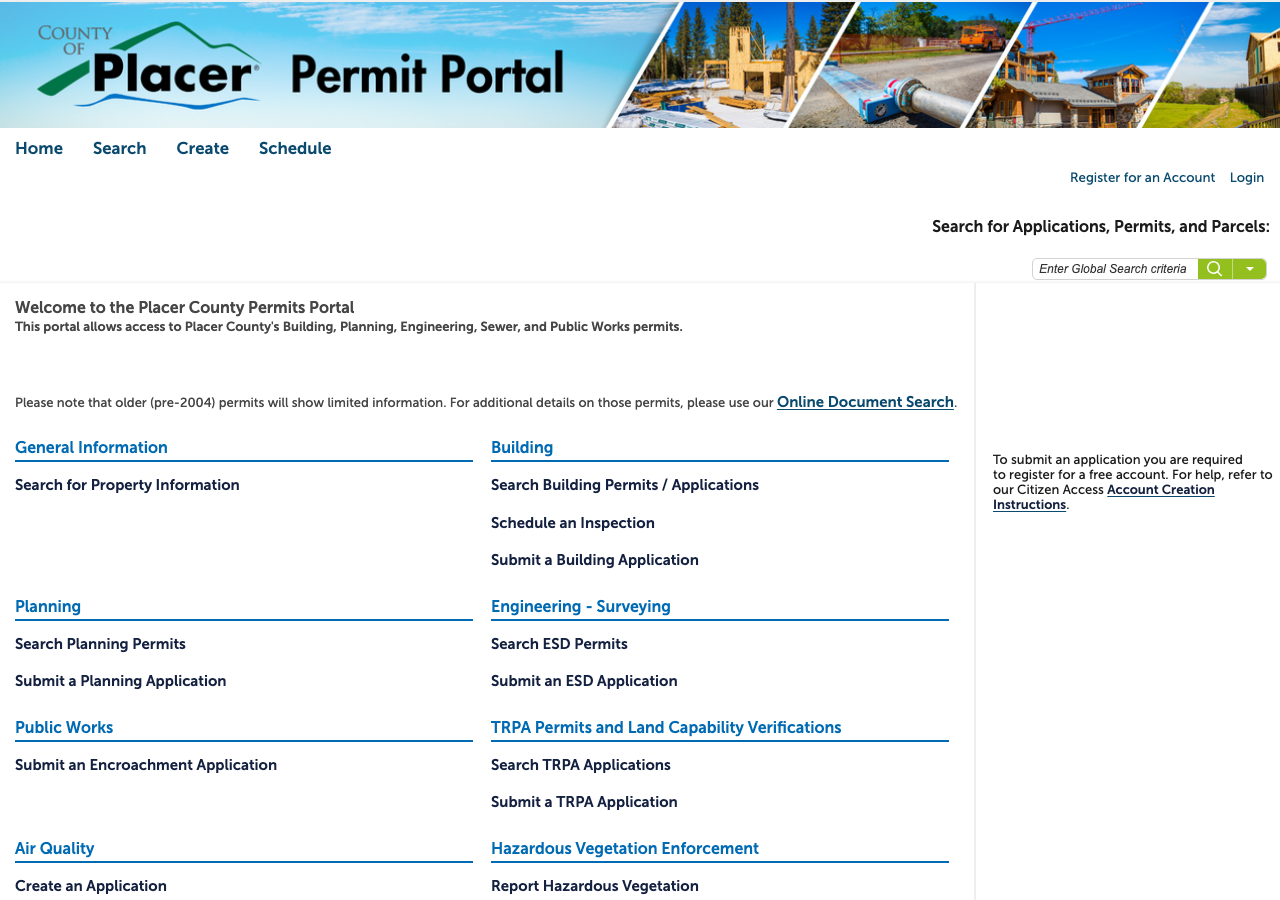
Average approval time — application to PTO
From the CPUC interconnection record. Bars show the average days taken each year; a year with no recorded projects is left blank rather than drawn as zero.