
Sacramento County
State of California
Sacramento County is the 9th largest jurisdiction in California — 1,585,055 residents across 27 regions, with 212 residential solar installs on record. This page is the permit route for that jurisdiction: the fifteen steps from working out who has a say over an address through to permission to operate, the documents this authority publishes, and 62 answers taken from those documents and dated.
Permitting 5 steps · 28 questions
Whether a permit is needed — Yes. A building permit is required for a residential rooftop PV system; the Division publishes a dedicated 'Residential Roof Mount PV Submission Checklist' (EC-23)… Q3 Electrical and building permits — Combined — one residential solar permit. The FAQ lists a single 'Residential solar permit or solar with a energy storage system (ESS) using SOLARAPP', Q4 Plan review — Effectively instant for the standard case — a residential rooftop solar permit run through SolarAPP+ is auto-issued online with no plan review queue. Q18 Where you file — Two portals in sequence: SolarAPP+ (gosolarapp.org) for the automated design review, Q20
- Permit required
- Yes. A building permit is required for a residential rooftop PV system; the Division publishes a dedicated 'Residential Roof Mount PV Submission Checklist' (EC-23) and lists 'Residential solar…95% source
- What it costs
- Tiered by system size and statutorily capped — the County no longer publishes dollar figures for 1–15 kW.80% source
- Plan review turnaround
- Effectively instant for the standard case — a residential rooftop solar permit run through SolarAPP+ is auto-issued online with no plan review queue.80% source
- Key document
- county checklist + SMUD Interconnection Guidelines 11-01 cited by 7 open the document
-
Confirm who has a say over your address
A city address is usually permitted by the city, not the county — but not always, and some authorities keep building and hand electrical to someone else. Getting this wrong costs the whole submittal, because every requirement below belongs to whoever actually holds jurisdiction. Check the overlays in the same pass: an HOA, a historic district, a windstorm certification or a system-size cap can reshape the design, and all of them are cheaper to find now than after the array is laid out.
- Is this authority the AHJ for residential solar at this address? Yes — for unincorporated Sacramento County. Building and electrical permits are issued by the Sacramento County Building Permits & Inspection Division. Incorporated cities (Sacramento, Elk Grove, Citrus Heights, Folsom, Rancho Cordova, Galt, Isleton) permit their own. 90% · county code (Title 16)
- What does this authority permit itself, and what does it delegate? Both — building and electrical. Fire is delegated to the fire protection district (Sacramento Metropolitan Fire District over most of the unincorporated area). 90% · county code — § 16.28.030 Adoption of the California Electrical Code
- Is a permit required for a residential rooftop PV system? Yes. A building permit is required for a residential rooftop PV system; the Division publishes a dedicated 'Residential Roof Mount PV Submission Checklist' (EC-23) and lists 'Residential solar permit' among permits it issues. 95% · published checklist (EC-23, updated 5/2023)
- Is there a separate electrical permit, or is it combined? Combined — one residential solar permit. The FAQ lists a single 'Residential solar permit or solar with a energy storage system (ESS) using SOLARAPP', and County Code § 16.90.030(M) sets one solar permit fee schedule rather than separate building and electrical fees. 70% · department FAQ
- Is there a system-size cap on residential generation? Cap is set by the utility, not the county: SMUD limits the system to 'up to 110% of the customer's own electrical requirements'. SMUD also caps single-phase generators on a shared single-phase secondary at 20 kVA gross AC nameplate, with no more than 6 kVA of imbalance between the two sides of a 240-volt service. No county-level size cap was found. 85% · utility checklist (SMUD 3815_6/25) + Guidelines 11-01 § 3.1.6
-
Check who is allowed to apply
Several authorities require the electrical permit to be pulled by a licensed electrician, or require the contractor to be registered with them BEFORE applying. Registration is not same-day. This is second on the list rather than fourth because it is the step most likely to stop the job before the drawings matter.
- Who is allowed to pull the electrical permit? Either, but the fast path is contractor-only. The SolarAPP+ auto-issued permit is expressly 'for contractor use only' and open to licensed contractors. An owner-builder route exists outside SolarAPP+ (form AP-16 Notice To Property Owner as Owner Builder). 60% · department FAQ + forms library
- Is a homeowner permitted to self-install and self-permit? Yes — an owner-builder route exists. The Division publishes form AP-16 'Notice To Property Owner as Owner Builder'. It cannot be used through SolarAPP+, which is contractor-only. 65% · forms library
-
Build the submittal package
Almost everywhere wants a site plan, a one-line or three-line electrical diagram, equipment cut sheets with listings, and a structural attachment detail. Build it against the published checklist rather than the last jurisdiction you worked in — the checklist is what the reviewer marks against.
- What documents make up a complete submittal? Per EC-23, a complete submittal is: (1) Site Plan; (2) Roof Plan; (3) Single Line Electrical Diagram; (4) PV Module and Inverter Specifications; (5) Equipment Mounting Specifications; (6) Signage details; (7) SMUD Interconnection Approval Letter. Verbatim on the last: 'A SMUD interconnection letter must be included at submittal.' 95% · published checklist (EC-23, updated 5/2023)
- How many copies, and in what format? Electronic submittal — plans are submitted and reviewed online through the Accela Citizen Access portal; fees are paid there too ('All plan review and/or permit fees will be paid online through the Citizen Access Portal'). No copy count is published because submittal is not paper. 60% · department FAQ
- Is a site plan required, and what must it show? Yes. Verbatim from EC-23: 'A site plan drawn to scale showing the property lines, location of dwelling, side yards, north arrow, location of the panels on the roof, total number of panels, location of electrical service, junction boxes, system disconnect and inverter.' A separate Roof Plan is also required 'indicating the number of modules, location of modules, roofing material and fire access setbacks.' 95% · published checklist (EC-23)
- Is a one-line / three-line diagram required? Yes — a Single Line Electrical Diagram is required, and EC-23 enumerates ten mandatory contents: 1. Array configuration; 2. Array wiring; 3. Combiner junction box; 4. Conductor sizes; 5. Conduit sizes; 6. Grounding conductor and equipment grounding specifications; 7. Inverter type and model number specified; 8. Location of equipment disconnect identified; 9. Size of electrical panel and or sub-panels; 10. Point of connection attachment method identified. (SMUD separately asks for a 'labeled solar one-line/three-line drawing'.) 95% · published checklist (EC-23)
- Are string and conductor calculations required? Partly. Conductor sizes and conduit sizes are required on the single line diagram, and module specs must state 'total voltage output ... and recommended conductor and grounding sizes'. Standalone string/voltage-drop calculations are not called for as a separate submittal item. 75% · published checklist (EC-23)
- Is a structural PE stamp required, and at what threshold? No structural PE stamp is called for on a standard residential roof-mount PV submittal, and no threshold is published. EC-23 requires only 'Equipment Mounting Specifications ... with the specific mounting arrangement identified which is based upon the type of roof framing and roof covering' — manufacturer mounting details, not an engineer's calculations. 55% · published checklist (EC-23)
-
Apply and pay
Most authorities now take the whole application through a portal, and several states cap or constrain what a residential solar permit may cost. Check whether plan check is billed separately before you quote the job.
- Which permit portal does this authority use? Two portals in sequence: SolarAPP+ (gosolarapp.org) for the automated design review, then Sacramento County's Accela Citizen Access portal at https://aca-prod.accela.com/SACCO (also reachable as actonline.saccounty.gov/CitizenAccess) for the permit itself, fee payment and inspection scheduling. 90% · department page + FAQ
- Can the whole application be completed online? Yes — application, fee payment and inspection scheduling are all online. Fees: 'All plan review and/or permit fees will be paid online through the Citizen Access Portal.' Inspections can be booked in the same portal. 90% · department FAQ
- What does a residential solar permit cost? Tiered by system size and statutorily capped — the County no longer publishes dollar figures for 1–15 kW. County Code § 16.90.030(M)(1) 'Residential rooftop solar panel fees (calculated per SB1222/Cal. Govt. Code Section 66015 limits)' gives: 1 kW to 8 kW and 9 kW to 15 kW — 'fees are calculated based on Cal. Gov't Code sections 65850.55, 66016 and Health and Safety Code Section 17951. Fees are limited pursuant to Gov't Code Section 66015.'; 16 kW and greater — 'fee calculated is fee immediately above plus $15.00 per additional kW over 15kW'. Minimum fee is based on the hourly BI-II rate. 80% · county code — § 16.90.030(M) Solar Permit Fees
- How is the fee calculated? Tiered (by system kW), with a per-kW adder above 15 kW and a statutory cap. 90% · county code — § 16.90.030(M)
- Is there a separate plan-check fee? Generally yes — § 16.90.030 provides 'Upon submittal of a plan for plan review, a plan review fee of 40% of the total building permit fee shall be collected'. For residential solar this is almost certainly subsumed in the capped solar fee rather than charged on top, since Gov't Code 66015 caps the total. 55% · county code — § 16.90.030
-
Plan review — and start the utility in parallel
Interconnection is a separate process from the permit and usually the longer pole. Where the utility does not depend on the permit being issued, running both at once is the single biggest saving available on a residential job.
- What is the stated plan-review turnaround? Effectively instant for the standard case — a residential rooftop solar permit run through SolarAPP+ is auto-issued online with no plan review queue. The FAQ lists 'Residential solar permit or solar with a energy storage system (ESS) using SOLARAPP' among applications 'automatically issued online', and the Division describes SolarAPP+ as giving 'an online application for an auto-issued permit'. 80% · department FAQ + SolarAPP+ news page
- How long is an issued permit valid before it expires? 365 days. County Code Ch. 16.02 re-titles and amends CBC § 105.5: 'Every permit issued by the Building Official ... shall expire by limitation and become null and void if the building or work authorized by such permit is not commenced within 365 days from the date of permit issuance or if the building or work authorized by such permit is suspended or abandoned as indicated by no inspection of work within a period of 365 days.' Renewal costs one-half a new permit fee. Separately, an application with no permit issued within 180 days expires (amended CBC § 105.3.2). 90% · county code — Ch. 16.02, amended CBC §§ 105.3.2 and 105.5
- Which utility handles interconnection here? Sacramento Municipal Utility District (SMUD) — a publicly-owned utility, not a CPUC investor-owned utility. It interconnects under its own Rule 21 and its own Interconnection Guidelines (Manual 11-01), not the CPUC Rule 21 tariff. 95% · county checklist + SMUD Interconnection Guidelines 11-01
- Where does the utility sit in the sequence? Before permit — and again after. EC-23: 'SMUD Interconnection Approval Letter: A SMUD interconnection letter must be included at submittal.' Then at the far end, SMUD Interconnection Guidelines § 1.5: 'The Facility Owner is responsible for all local building permits and final inspections with the local agency before SMUD performs its final inspection.' So the sequence is SMUD approval → county permit → install → county final → SMUD final → PTO. 90% · utility interconnection guidelines (Manual 11-01, rev. 13, 04/17/2025) + county checklist EC-23
28 questions answered against Sacramento County’s own published documents
Q1 Is this authority the AHJ for residential solar at this address? Core Jurisdiction & scope
Yes — for unincorporated Sacramento County. Building and electrical permits are issued by the Sacramento County Building Permits & Inspection Division. Incorporated cities (Sacramento, Elk Grove, Citrus Heights, Folsom, Rancho Cordova, Galt, Isleton) permit their own.
Why the confidence is not higherCounty Code Title 16 vests permit authority in the County Building Official and the Division publishes its own solar submittal checklist. 90 rather than 95 because 'this address' was not a specific parcel — the answer holds for unincorporated territory only.
county code (Title 16) checked 2026-08-28 https://ecode360.com/44034091
Q2 What does this authority permit itself, and what does it delegate? Core Jurisdiction & scope
Both — building and electrical. Fire is delegated to the fire protection district (Sacramento Metropolitan Fire District over most of the unincorporated area).
Why the confidence is not higherCh. 16.04 (Building Code) and Ch. 16.28 (Electrical Code) are both County chapters administered under Ch. 16.02; Title 16 has no fire chapter and Sac Metro Fire adopts the CFC separately.
county code — § 16.28.030 Adoption of the California Electrical Code checked 2026-08-28 https://ecode360.com/44035080
Q3 Is a permit required for a residential rooftop PV system? Core Jurisdiction & scope
Yes. A building permit is required for a residential rooftop PV system; the Division publishes a dedicated 'Residential Roof Mount PV Submission Checklist' (EC-23) and lists 'Residential solar permit' among permits it issues.
Why the confidence is not higherThe authority's own checklist EC-23 and its FAQ both presuppose a required permit.
published checklist (EC-23, updated 5/2023) checked 2026-08-28 https://development.saccounty.gov/content/dam/cd/building/docs/transition/EC-23%20Residential%20Roof%20Mount%20PV.pdf
Q4 Is there a separate electrical permit, or is it combined? Core Jurisdiction & scope
Combined — one residential solar permit. The FAQ lists a single 'Residential solar permit or solar with a energy storage system (ESS) using SOLARAPP', and County Code § 16.90.030(M) sets one solar permit fee schedule rather than separate building and electrical fees.
Why the confidence is not higher70 because both sources describe a single permit product but neither states explicitly that no separate electrical permit may be pulled; the county does maintain a standalone 'Residential electrical panel repair or replacement' permit, so a service upgrade alongside solar may still be separate.
department FAQ checked 2026-08-28 https://development.saccounty.gov/us/en/building-permits-inspection/frequently-asked-questions.html
Q5 Who is allowed to pull the electrical permit? Core Who may apply
Either, but the fast path is contractor-only. The SolarAPP+ auto-issued permit is expressly 'for contractor use only' and open to licensed contractors. An owner-builder route exists outside SolarAPP+ (form AP-16 Notice To Property Owner as Owner Builder).
Why the confidence is not higher60 because the contractor-only restriction on SolarAPP+ is stated plainly by the authority, but no county document says which licence classification (C-10 electrical vs C-46 solar) may pull the electrical portion — that is California CSLB law, not a county rule, and I found no county page addressing it.
department FAQ + forms library checked 2026-08-28 https://development.saccounty.gov/us/en/building-permits-inspection/frequently-asked-questions.html
Q6 Must the contractor be registered with this authority before applying? Core Who may apply
Nothing published by this authority.
Where we lookedDivision FAQ, building forms and documents library (which does contain AP-36 'Contractor Declaration', suggesting a declaration at application rather than pre-registration), and the SolarAPP+ page. None states whether a contractor must register with the County before applying; SolarAPP+ registration is with SolarAPP+, not the County.
Q7 Is a homeowner permitted to self-install and self-permit? Who may apply
Yes — an owner-builder route exists. The Division publishes form AP-16 'Notice To Property Owner as Owner Builder'. It cannot be used through SolarAPP+, which is contractor-only.
Why the confidence is not higher65 because the existence of the AP-16 form proves the county issues owner-builder permits generally, but no county document confirms owner-builder permits are accepted specifically for solar PV.
forms library checked 2026-08-28 https://development.saccounty.gov/us/en/building-permits-inspection/building-forms-and-documents.html
Q8 What documents make up a complete submittal? Core Submittal package
Per EC-23, a complete submittal is: (1) Site Plan; (2) Roof Plan; (3) Single Line Electrical Diagram; (4) PV Module and Inverter Specifications; (5) Equipment Mounting Specifications; (6) Signage details; (7) SMUD Interconnection Approval Letter. Verbatim on the last: 'A SMUD interconnection letter must be included at submittal.'
Why the confidence is not higherThis is the authority's own dedicated residential roof-mount PV checklist, read in full. Marked down from 100 only because it is dated 5/2023 and so predates the 2025 code cycle and the SolarAPP+ rollout, which may bypass parts of it.
published checklist (EC-23, updated 5/2023) checked 2026-08-28 https://development.saccounty.gov/content/dam/cd/building/docs/transition/EC-23%20Residential%20Roof%20Mount%20PV.pdf
Q9 How many copies, and in what format? Submittal package
Electronic submittal — plans are submitted and reviewed online through the Accela Citizen Access portal; fees are paid there too ('All plan review and/or permit fees will be paid online through the Citizen Access Portal'). No copy count is published because submittal is not paper.
Why the confidence is not higher60 because the county states electronic submittal and online fee payment, but neither EC-23 nor the FAQ states a file format, sheet size or copy count. The absence of a copy count follows from the process being electronic rather than from an explicit statement.
department FAQ checked 2026-08-28 https://development.saccounty.gov/us/en/building-permits-inspection/frequently-asked-questions.html
Q10 Is a site plan required, and what must it show? Core Submittal package
Yes. Verbatim from EC-23: 'A site plan drawn to scale showing the property lines, location of dwelling, side yards, north arrow, location of the panels on the roof, total number of panels, location of electrical service, junction boxes, system disconnect and inverter.' A separate Roof Plan is also required 'indicating the number of modules, location of modules, roofing material and fire access setbacks.'
Why the confidence is not higherDirectly quoted from the authority's own checklist. Not 100 because EC-23 is dated 5/2023.
published checklist (EC-23) checked 2026-08-28 https://development.saccounty.gov/content/dam/cd/building/docs/transition/EC-23%20Residential%20Roof%20Mount%20PV.pdf
Q11 Is a one-line / three-line diagram required? Core Drawings & calculations
Yes — a Single Line Electrical Diagram is required, and EC-23 enumerates ten mandatory contents: 1. Array configuration; 2. Array wiring; 3. Combiner junction box; 4. Conductor sizes; 5. Conduit sizes; 6. Grounding conductor and equipment grounding specifications; 7. Inverter type and model number specified; 8. Location of equipment disconnect identified; 9. Size of electrical panel and or sub-panels; 10. Point of connection attachment method identified. (SMUD separately asks for a 'labeled solar one-line/three-line drawing'.)
Why the confidence is not higherEnumerated list quoted directly from EC-23. Note the county asks for a single-line; the three-line is a SMUD interconnection requirement, not a county one.
published checklist (EC-23) checked 2026-08-28 https://development.saccounty.gov/content/dam/cd/building/docs/transition/EC-23%20Residential%20Roof%20Mount%20PV.pdf
Q12 Are string and conductor calculations required? Drawings & calculations
Partly. Conductor sizes and conduit sizes are required on the single line diagram, and module specs must state 'total voltage output ... and recommended conductor and grounding sizes'. Standalone string/voltage-drop calculations are not called for as a separate submittal item.
Why the confidence is not higher75 because the sizing data is explicitly required but EC-23 nowhere uses the word 'calculations' — the distinction between showing sizes and submitting calculations is my reading of the checklist, not the county's statement.
published checklist (EC-23) checked 2026-08-28 https://development.saccounty.gov/content/dam/cd/building/docs/transition/EC-23%20Residential%20Roof%20Mount%20PV.pdf
Q13 Is a structural PE stamp required, and at what threshold? Core Engineering & stamps
No structural PE stamp is called for on a standard residential roof-mount PV submittal, and no threshold is published. EC-23 requires only 'Equipment Mounting Specifications ... with the specific mounting arrangement identified which is based upon the type of roof framing and roof covering' — manufacturer mounting details, not an engineer's calculations.
Why the confidence is not higher55 because this is an absence inside one document rather than a positive statement. EC-23 is the county's only residential roof-mount PV checklist and it lists submittal items exhaustively, so a stamp requirement would be expected to appear there — but the document is dated 5/2023, predates the 2025 code cycle, and says nothing about what happens on a non-standard or overloaded roof.
published checklist (EC-23) checked 2026-08-28 https://development.saccounty.gov/content/dam/cd/building/docs/transition/EC-23%20Residential%20Roof%20Mount%20PV.pdf
Q14 Is an electrical PE stamp required, and at what threshold? Engineering & stamps
Nothing published by this authority.
Where we lookedEC-23 Residential Roof Mount PV Submission Checklist, read in full — it enumerates all submittal items and mentions no electrical PE stamp or threshold.
Q15 What does a residential solar permit cost? Core Fees
Tiered by system size and statutorily capped — the County no longer publishes dollar figures for 1–15 kW. County Code § 16.90.030(M)(1) 'Residential rooftop solar panel fees (calculated per SB1222/Cal. Govt. Code Section 66015 limits)' gives: 1 kW to 8 kW and 9 kW to 15 kW — 'fees are calculated based on Cal. Gov't Code sections 65850.55, 66016 and Health and Safety Code Section 17951. Fees are limited pursuant to Gov't Code Section 66015.'; 16 kW and greater — 'fee calculated is fee immediately above plus $15.00 per additional kW over 15kW'. Minimum fee is based on the hourly BI-II rate.
Why the confidence is not higher80 because this is the current adopted code text (SCC 1775, 5/12/2026) read directly, but it deliberately states no dollar amount for the residential tiers — the actual figure is set by the state cap and the county's hourly BI-II rate, neither of which the chapter publishes. Widely-circulated figures of $232 / $477 come from the withdrawn AP-25 handout and are NOT in the current code.
county code — § 16.90.030(M) Solar Permit Fees checked 2026-08-28 https://ecode360.com/44036451
Q16 How is the fee calculated? Core Fees
Tiered (by system kW), with a per-kW adder above 15 kW and a statutory cap.
Why the confidence is not higherThe fee table in § 16.90.030(M)(1) is explicitly banded by 'System Size - Kilowatts'. Marked down slightly because the bands themselves resolve to a capped amount rather than a published tier price.
county code — § 16.90.030(M) checked 2026-08-28 https://ecode360.com/44036451
Q17 Is there a separate plan-check fee? Fees
Generally yes — § 16.90.030 provides 'Upon submittal of a plan for plan review, a plan review fee of 40% of the total building permit fee shall be collected'. For residential solar this is almost certainly subsumed in the capped solar fee rather than charged on top, since Gov't Code 66015 caps the total.
Why the confidence is not higher55 because the 40% plan review fee is quoted from the county's own current code, but the code does not say whether it applies to the solar fee schedule in subsection (M), and the state cap makes an additive plan-check fee unlikely. The interaction is my inference, not the county's statement.
county code — § 16.90.030 checked 2026-08-28 https://ecode360.com/44036451
Q18 What is the stated plan-review turnaround? Core Timeline & validity
Effectively instant for the standard case — a residential rooftop solar permit run through SolarAPP+ is auto-issued online with no plan review queue. The FAQ lists 'Residential solar permit or solar with a energy storage system (ESS) using SOLARAPP' among applications 'automatically issued online', and the Division describes SolarAPP+ as giving 'an online application for an auto-issued permit'.
Why the confidence is not higher80 because the authority states the permit is auto-issued, which answers the question for eligible projects, but it publishes no turnaround figure in business days for projects that fall outside SolarAPP+ eligibility and must go to conventional plan review. Third-party expediter sites quote 15–45 days; that is not an authority source and I have not recorded it.
department FAQ + SolarAPP+ news page checked 2026-08-28 https://development.saccounty.gov/us/en/building-permits-inspection/frequently-asked-questions.html
Q19 How long is an issued permit valid before it expires? Timeline & validity
365 days. County Code Ch. 16.02 re-titles and amends CBC § 105.5: 'Every permit issued by the Building Official ... shall expire by limitation and become null and void if the building or work authorized by such permit is not commenced within 365 days from the date of permit issuance or if the building or work authorized by such permit is suspended or abandoned as indicated by no inspection of work within a period of 365 days.' Renewal costs one-half a new permit fee. Separately, an application with no permit issued within 180 days expires (amended CBC § 105.3.2).
Why the confidence is not higherQuoted verbatim from the county's current adopted amendment. Note this is the county's local amendment — it doubles the standard 180-day state figure, so generic California guidance is wrong here.
county code — Ch. 16.02, amended CBC §§ 105.3.2 and 105.5 checked 2026-08-28 https://ecode360.com/44034092
Q20 Which permit portal does this authority use? Core Portal & process
Two portals in sequence: SolarAPP+ (gosolarapp.org) for the automated design review, then Sacramento County's Accela Citizen Access portal at https://aca-prod.accela.com/SACCO (also reachable as actonline.saccounty.gov/CitizenAccess) for the permit itself, fee payment and inspection scheduling.
Why the confidence is not higherBoth portals named on the Division's own pages. 90 because two different hostnames for the Accela instance are published across county pages, which suggests a migration in progress.
department page + FAQ checked 2026-08-28 https://development.saccounty.gov/us/en/building-permits-inspection/news/streamlining-solar-permitting-with-solarapp-.html
Q21 Can the whole application be completed online? Core Portal & process
Yes — application, fee payment and inspection scheduling are all online. Fees: 'All plan review and/or permit fees will be paid online through the Citizen Access Portal.' Inspections can be booked in the same portal.
Why the confidence is not higherStated by the authority for each step. Not 95 because the SMUD interconnection letter must be obtained from the utility first, outside the county's system.
department FAQ checked 2026-08-28 https://development.saccounty.gov/us/en/building-permits-inspection/frequently-asked-questions.html
Q22 Which utility handles interconnection here? Core Utility interconnection
Sacramento Municipal Utility District (SMUD) — a publicly-owned utility, not a CPUC investor-owned utility. It interconnects under its own Rule 21 and its own Interconnection Guidelines (Manual 11-01), not the CPUC Rule 21 tariff.
Why the confidence is not higherThe county's own solar checklist requires a SMUD interconnection letter, and SMUD publishes residential interconnection documents for the territory. The Rule 21 distinction matters: SMUD's guidelines state they are SMUD's own, parallel to 'the California Public Utility Commission's (CPUC) approved investor-owned utilities' Rule 21'.
county checklist + SMUD Interconnection Guidelines 11-01 checked 2026-08-28 https://development.saccounty.gov/content/dam/cd/building/docs/transition/EC-23%20Residential%20Roof%20Mount%20PV.pdf
Q23 Where does the utility sit in the sequence? Core Utility interconnection
Before permit — and again after. EC-23: 'SMUD Interconnection Approval Letter: A SMUD interconnection letter must be included at submittal.' Then at the far end, SMUD Interconnection Guidelines § 1.5: 'The Facility Owner is responsible for all local building permits and final inspections with the local agency before SMUD performs its final inspection.' So the sequence is SMUD approval → county permit → install → county final → SMUD final → PTO.
Why the confidence is not higherBoth ends quoted verbatim from the two authorities' own current documents (SMUD Manual 11-01 rev. 13, effective 04/17/2025). 90 rather than 95 because EC-23 is dated 5/2023 and it is not stated whether the SolarAPP+ auto-issue path still enforces the letter-at-submittal step.
utility interconnection guidelines (Manual 11-01, rev. 13, 04/17/2025) + county checklist EC-23 checked 2026-08-28 https://www.smud.org/-/media/Documents/Business-Solutions-and-Rebates/Interconnection/11-01-Interconnection-Guidelines-February-2022.ashx
Q24 Is a HOA or architectural approval required first? Overlays & special cases
Nothing published by this authority.
Where we lookedDivision FAQ, EC-23, and County Code Title 16 chapter list. HOA approval is a private covenant matter and California Civil Code 714 (Solar Rights Act) restricts HOA obstruction; no county building document conditions a permit on HOA or architectural approval.
Q25 Is there a historic-district review? Overlays & special cases
Nothing published by this authority.
Where we lookedThe Division's current site. The statement that a historic district or a building 50 years or older triggers preservation review appears only in the AP-25 Solar PV Information Package, which the County has WITHDRAWN — building.saccounty.gov now 302-redirects that PDF to the division landing page and the migrated site has no replacement. I am not recording it against a dead URL. This is worth re-checking against Title 22 (Zoning) / Planning & Environmental Review, which I did not reach.
https://development.saccounty.gov/us/en/building-permits-inspection.html
Q26 Is a wind or windstorm certification required? Overlays & special cases
Nothing published by this authority.
Where we lookedCounty Code Title 16 chapter list and EC-23. No wind or windstorm certification regime found; California has no TDI-equivalent scheme and wind loading is handled through CBC/CRC structural provisions.
Q27 Is a Specific Use Permit or Council approval ever required? Overlays & special cases
Nothing published by this authority.
Where we lookedCounty Code Title 16 (Buildings and Construction) chapter list and the Division's pages. Any Special Development Permit or use-permit trigger would live in Title 22 (Zoning) under Planning & Environmental Review, which I did not reach — this is a real gap, not an established absence.
Q28 Is there a system-size cap on residential generation? Overlays & special cases
Cap is set by the utility, not the county: SMUD limits the system to 'up to 110% of the customer's own electrical requirements'. SMUD also caps single-phase generators on a shared single-phase secondary at 20 kVA gross AC nameplate, with no more than 6 kVA of imbalance between the two sides of a 240-volt service. No county-level size cap was found.
Why the confidence is not higherThe 110% figure is from SMUD's own current residential checklist (rev. 6/25) and the kVA limits from Guidelines § 3.1.6. 85 because this is a utility limit — the question asks at authority level and the county publishes no cap of its own.
utility checklist (SMUD 3815_6/25) + Guidelines 11-01 § 3.1.6 checked 2026-08-28 https://www.smud.org/-/media/Documents/Going-Green/Solar-and-Storage/Residential-Solar-Interconnection-Checklist.ashx
Lines marked with a percentage were read off this authority’s own published documents. Unmarked guidance is general good practice, not this jurisdiction’s rule — always confirm against the authority before you submit.
Install 5 steps · 20 questions
-
Build to the code editions actually in force here
The NEC edition a jurisdiction enforces is often a cycle behind the newest one published, and local amendments sit on top of it. Rapid shutdown, conductor sizing and labelling all change between editions, so the edition in force is the first thing to establish, not the last.
- Which NEC edition is in force? 2025 California Electrical Code (Title 24 Part 3), which is based on the 2023 NEC. County Code § 16.28.030: 'The 2025 California Electrical Code, Title 24, Part 3 of the California Code of Regulations ... are hereby adopted as amended and incorporated by reference herein.' (SCC 1710 § 12, 2022; SCC 1775, 5/12/2026) 95% · county code — § 16.28.030
- Which building code edition is in force? 2025 California Building Code (Title 24 Part 2) per § 16.04.030, and 2025 California Residential Code (Title 24 Part 2.5) per § 16.10.030 — the latter adopted together with Appendices BF (Patio Covers), BO (Existing Buildings and Structures), BG (Sound Transmission) and CJ (Emergency Housing). A one- or two-family dwelling rooftop PV job falls under the CRC. 95% · county code — §§ 16.04.030 and 16.10.030
- Which fire code edition is in force? 2025 California Fire Code (Title 24 Part 9), adopted not by the County but by the Sacramento Metropolitan Fire District in Ordinance 2025-02, introduced 23 October 2025, 'including Appendix 4, Appendix B, Appendix BB, Appendix C, Appendix CC, Appendix H, Appendix O, Appendix P'. The ordinance defines 'municipality' to 'include the incorporated and unincorporated areas of the County of Sacramento', and its provisions are 'controlling within the boundaries of the District'. 90% · fire district adopting ordinance
- Are there local amendments to any of the above? Yes, local amendments exist — but none of them touch solar PV. County amendments found: Ch. 16.02 re-titles and amends CBC § 105.3.2 (plan review expiry, 180 days) and § 105.5 (permit expiry, 365 days); § 16.10.050 amends CRC R310.1 emergency escape openings, adds Appendix BO 106.4 'Limitation of Reconstruction' (50%-removal triggers new-construction treatment), and adopts/amends Appendix CI pool safety. The fire district's amendment table (read in full) amends §§ 105.5.5, 105.6, 108.7, 110.3.1, 112.1, 113.4, 114.4, 202, 503.6.1, 507.1.1, 510.4.1.x, 901.4.7, the 903.2 sprinkler series, 1028.5.1, 5003.9.1.2, 5601.1.6, Chapter 80 and Appendices B/C. Chapter 12 (Energy Systems — § 1204 solar PV, § 1207 ESS) is absent from that table entirely, so unamended state text governs solar. 90% · county code Ch. 16.02 / § 16.10.050 + fire district Ord. 2025-02 amendment table
- What is the installation judged against? The 2025 California Electrical Code as adopted at § 16.28.030, applied to 'all electrical systems associated with construction, alteration, moving, demolition, repair, and use of any building, structure or building service equipment within this jurisdiction'. EC-23 reinforces this for PV specifically: equipment 'shall be properly signed in accordance with the installation instructions and applicable code year CEC requirements'. 95% · county code — § 16.28.030
-
Fire access, setbacks and pathways
Ridge setbacks and roof access pathways are fire-service requirements and they constrain the array layout. They are the most common cause of a redesign after the fire department comments on a plan set.
- What ridge setback and access pathways are required? Unamended 2025 California Fire Code Chapter 12 (§ 1204) applies — the fire district adopted the CFC with no amendment to Chapter 12. Under that state text: at least one 36-inch-wide pathway from lowest roof edge to ridge on each roof plane carrying an array (on the same plane, an adjacent plane, or straddling both), plus at least one pathway on the street or driveway side of the roof; ridge setback of not less than 18 inches on both sides of a horizontal ridge where the array covers 33% or less of plan-view total roof area, and not less than 36 inches on both sides where it exceeds 33%. EC-23 requires the roof plan to show 'fire access setbacks'. 75% · fire district adopting ordinance (adoption + non-amendment) + state CFC 2025 Ch. 12 (dimensions)
-
Rapid shutdown
Which rapid-shutdown rule applies follows directly from the NEC edition in force, and the initiation device has to be at a location the fire service can reach and identify. This is inspected, and it is labelled.
- Is rapid shutdown required, and to which NEC edition? Yes — to the 2025 California Electrical Code, i.e. the 2023 NEC rapid-shutdown provisions at Article 690.12. No county amendment modifies it. 75% · county code — § 16.28.030 (edition in force); requirement inherited from adopted CEC
-
Labels and placards
The NEC sets a baseline for permanent markings at the service equipment and the disconnecting means. On top of that, an authority may specify its own wording, and the utility may specify more again. Where any of them writes its own text, a generic off-the-shelf label set will not pass — this is the detail most often fixed on a return visit.
- Which placards does this authority require at the service equipment? The county requires no placard of its own design. EC-23, verbatim: 'All PV equipment shall be properly signed in accordance with the installation instructions and applicable code year CEC requirements. Provide details of the various safety signage specified by the manufacturer and current code year CEC.' In practice that means the 2025 CEC placard set — permanent plaque/directory at the service equipment (705.10), PV system disconnect marking, rapid-shutdown labelling (690.56) and disconnect markings (690.13) — plus whatever the module and inverter listings require. 75% · published checklist (EC-23)
- Does the authority specify placard wording of its own? No. The county specifies no placard wording of its own — it defers entirely to manufacturer installation instructions and the adopted CEC. 90% · published checklist (EC-23)
- Does it specify letter height, colour or material? No county specification of letter height, colour or material. These fall to the adopted CEC and the ANSI Z535.4 conventions it invokes, and to manufacturer instructions. The only county-adjacent durability language found anywhere is SMUD's, requiring disconnect marking durable enough for the outdoor environment. 80% · published checklist (EC-23)
- Is a site plan / facility map placard required, and what must it show? Yes, by inheritance rather than by county rule — 2025 CEC 705.10 requires a permanent plaque or directory at the service equipment (or at an approved readily visible location) denoting all electric power source locations on the premises. The county adds no facility-map content requirement of its own; its site-plan requirements (EC-23) are a submittal item, not a placard. 70% · county code — § 16.28.030 (edition in force); requirement inherited from adopted CEC 705.10
- Does the UTILITY specify placards beyond the AHJ's? Yes — SMUD imposes marking requirements beyond the AHJ's. Where an isolating switch is required, Interconnection Guidelines § 3.1.5 requires the device to 'include markings or signage that clearly indicates open and closed positions', and further: 'be clearly marked on the submitted single line diagram and its type and location approved by SMUD prior to installation. If the device is not adjacent to the PCC, permanent signage must be installed at a SMUD approved location providing a clear description of the location of the device.' Generating facilities with non-islanding inverters totalling 1 kVA or less are exempt. 85% · utility interconnection guidelines (Manual 11-01, rev. 13, 04/17/2025) § 3.1.5
- Where must the labels be placed? At the service equipment (CEC 705.10 plaque/directory), on the PV and interconnection disconnecting means, and on the rapid-shutdown initiation device — all per the adopted 2025 CEC, since the county states no placement rule. SMUD adds: signage on the isolating device showing open/closed position, and if that device is not adjacent to the Point of Common Coupling, permanent signage at a SMUD-approved location describing where the device is. 75% · utility guidelines § 3.1.5 + adopted CEC
-
Disconnect, storage and listed equipment
Where the AC disconnect must sit relative to the meter is usually the utility's rule, not the building department's. Battery storage frequently carries its own permit, its own inspection and its own fire conditions.
- Where must the AC disconnect be, relative to the meter? Usually no AC disconnect at all for a typical house: SMUD no longer requires one on inverter-based systems where the premises has a self-contained meter and the inverter is on the California Energy Commission eligible list. It still applies to transformer-rated-meter services, non-listed inverters, and non-inverter generators. Where required, Guidelines § 3.1.5 places it 'near the Point of Interconnection' and requires it to: allow visible verification of separation; indicate open/closed position; be reachable 'for Emergency purposes quickly and conveniently 24 hours a day by SMUD personnel ... without obstacles or requiring those seeking access to obtain keys, special permission, or security clearances'; and 'be capable of being locked in the open position'. No numeric distance from the meter is specified. 70% · utility interconnection guidelines § 3.1.5
- Must equipment be on a specific approved list? Yes, at utility level: SMUD requires the installer to 'Ensure PV equipment and inverter are listed and approved by the CEC' — here 'CEC' means the California Energy Commission's list of eligible inverters, not the California Electrical Code. SMUD's AC-disconnect waiver is also conditioned on the inverter appearing on that list. 85% · utility checklist (SMUD 3815_6/25)
- Are batteries permitted, and under what conditions? Permitted. The county issues a combined 'Residential solar permit or solar with a energy storage system (ESS) using SOLARAPP'. Conditions come from the unamended 2025 CFC § 1207 (Energy Storage Systems), since the fire district's ordinance amends no part of Chapter 12; the only ESS-adjacent amendment is a sprinkler exception in § 903.2 for telecommunications-building batteries, which does not apply to dwellings. 70% · department FAQ + fire district Ord. 2025-02
- Is there a separate ESS permit or inspection? No separate ESS permit for the standard case — the FAQ describes one auto-issued permit covering 'solar with a energy storage system (ESS) using SOLARAPP'. 60% · department FAQ (conflicting with department news page)
- Is a ground mount treated as a structure? Yes — treated differently from rooftop and priced as a structure. County Code § 16.90.030(M)(3) gives ground mounts their own fee basis, 'Solar permit fees for ground mount panels for commercial or residential projects': 1 kW to 10 kW = 7 hourly units; 11 kW to 1.0 MW = 7 hourly units plus 1 hourly unit for each additional 10 kW or portion thereof; 1 MW and greater = 106 hourly units plus 25 hourly units per additional MW. Note this is time-and-materials pricing, NOT the capped per-kW residential rooftop schedule. 65% · county code — § 16.90.030(M)(3)
- Is a specific mounting system or attachment spacing required? No specific proprietary mounting system or attachment spacing is mandated, but EC-23 requires 'Equipment specifications showing the various mounting details for both the panels and inverter with the specific mounting arrangement identified which is based upon the type of roof framing and roof covering. The mounting diagram must specify that the panel shall provide sufficient space to allow for the removal of debris and allow for water drainage.' 90% · published checklist (EC-23)
20 questions answered against Sacramento County’s own published documents
Q29 Which NEC edition is in force? Core Code editions in force
2025 California Electrical Code (Title 24 Part 3), which is based on the 2023 NEC. County Code § 16.28.030: 'The 2025 California Electrical Code, Title 24, Part 3 of the California Code of Regulations ... are hereby adopted as amended and incorporated by reference herein.' (SCC 1710 § 12, 2022; SCC 1775, 5/12/2026)
Why the confidence is not higherQuoted verbatim from the current adopted county code. The underlying NEC year (2023) is the standard CEC derivation, not stated in the county text — hence 95 not 100. Note: search-engine snippets still claim Sacramento County is on the 2022 CEC; that is stale and the live chapter contradicts it.
county code — § 16.28.030 checked 2026-08-28 https://ecode360.com/44035080
Q30 Which building code edition is in force? Core Code editions in force
2025 California Building Code (Title 24 Part 2) per § 16.04.030, and 2025 California Residential Code (Title 24 Part 2.5) per § 16.10.030 — the latter adopted together with Appendices BF (Patio Covers), BO (Existing Buildings and Structures), BG (Sound Transmission) and CJ (Emergency Housing). A one- or two-family dwelling rooftop PV job falls under the CRC.
Why the confidence is not higherBoth adoption sections read verbatim on the live code. Appendix list matters because Appendix BO carries the county's 50%-reconstruction amendment.
county code — §§ 16.04.030 and 16.10.030 checked 2026-08-28 https://ecode360.com/44034127
Q31 Which fire code edition is in force? Code editions in force
2025 California Fire Code (Title 24 Part 9), adopted not by the County but by the Sacramento Metropolitan Fire District in Ordinance 2025-02, introduced 23 October 2025, 'including Appendix 4, Appendix B, Appendix BB, Appendix C, Appendix CC, Appendix H, Appendix O, Appendix P'. The ordinance defines 'municipality' to 'include the incorporated and unincorporated areas of the County of Sacramento', and its provisions are 'controlling within the boundaries of the District'.
Why the confidence is not higherRead in full from the fire district's own certified ordinance PDF. 90 because the District's boundary is not the whole unincorporated county — a parcel in another fire district takes that district's adoption instead.
fire district adopting ordinance checked 2026-08-28 https://metrofire.ca.gov/files/fca1dc973/CERTIFIED+ORD+2025-02+2025+CALIFORNIA+FIRE+CODE,+TITLE+24,+CODE+OF+REGULATIONS,+PART+9.pdf
Q32 Are there local amendments to any of the above? Core Code editions in force
Yes, local amendments exist — but none of them touch solar PV. County amendments found: Ch. 16.02 re-titles and amends CBC § 105.3.2 (plan review expiry, 180 days) and § 105.5 (permit expiry, 365 days); § 16.10.050 amends CRC R310.1 emergency escape openings, adds Appendix BO 106.4 'Limitation of Reconstruction' (50%-removal triggers new-construction treatment), and adopts/amends Appendix CI pool safety. The fire district's amendment table (read in full) amends §§ 105.5.5, 105.6, 108.7, 110.3.1, 112.1, 113.4, 114.4, 202, 503.6.1, 507.1.1, 510.4.1.x, 901.4.7, the 903.2 sprinkler series, 1028.5.1, 5003.9.1.2, 5601.1.6, Chapter 80 and Appendices B/C. Chapter 12 (Energy Systems — § 1204 solar PV, § 1207 ESS) is absent from that table entirely, so unamended state text governs solar.
Why the confidence is not higherPositive amendments quoted from live code chapters read directly. The solar-specific absence is well-proved: I read the fire ordinance's complete amendment table end to end and ran controls on the extracted text ('fire' 193 hits, 'zzqqx' 0), with no hit for photovoltaic, solar, 1204, 1207, access pathway or setback. I did NOT rely on eCode360's site search for any absence — its index failed a positive control, returning no 'solar' hit for Chapter 16.90 even though I had just read six occurrences of the word in that chapter's text.
county code Ch. 16.02 / § 16.10.050 + fire district Ord. 2025-02 amendment table checked 2026-08-28 https://ecode360.com/44034092
Q33 What is the installation judged against? Core Electrical
The 2025 California Electrical Code as adopted at § 16.28.030, applied to 'all electrical systems associated with construction, alteration, moving, demolition, repair, and use of any building, structure or building service equipment within this jurisdiction'. EC-23 reinforces this for PV specifically: equipment 'shall be properly signed in accordance with the installation instructions and applicable code year CEC requirements'.
Why the confidence is not higherAdoption clause quoted verbatim; no solar-specific electrical amendment found in Title 16.
county code — § 16.28.030 checked 2026-08-28 https://ecode360.com/44035080
Q34 Is there a local rule on service upgrades or busbar sizing? Electrical
Nothing published by this authority.
Where we lookedCounty Code Ch. 16.28 (Electrical Code) — § 16.28.030 adopts the 2025 CEC 'as amended' but I did not locate a published local amendment addressing service upgrades or busbar sizing; Ch. 16.02 amendments read cover administration, not conductors.
Q35 Is a specific mounting system or attachment spacing required? Structural & mounting
No specific proprietary mounting system or attachment spacing is mandated, but EC-23 requires 'Equipment specifications showing the various mounting details for both the panels and inverter with the specific mounting arrangement identified which is based upon the type of roof framing and roof covering. The mounting diagram must specify that the panel shall provide sufficient space to allow for the removal of debris and allow for water drainage.'
Why the confidence is not higherQuoted verbatim. The debris-clearance and drainage clause is a genuine county-specific submittal condition that generic NEC/CRC guidance does not carry. Marked down only for EC-23's 5/2023 date.
published checklist (EC-23) checked 2026-08-28 https://development.saccounty.gov/content/dam/cd/building/docs/transition/EC-23%20Residential%20Roof%20Mount%20PV.pdf
Q36 What ridge setback and access pathways are required? Core Fire pathways & setbacks
Unamended 2025 California Fire Code Chapter 12 (§ 1204) applies — the fire district adopted the CFC with no amendment to Chapter 12. Under that state text: at least one 36-inch-wide pathway from lowest roof edge to ridge on each roof plane carrying an array (on the same plane, an adjacent plane, or straddling both), plus at least one pathway on the street or driveway side of the roof; ridge setback of not less than 18 inches on both sides of a horizontal ridge where the array covers 33% or less of plan-view total roof area, and not less than 36 inches on both sides where it exceeds 33%. EC-23 requires the roof plan to show 'fire access setbacks'.
Why the confidence is not higher75 because the two halves rest on different evidence. The adoption of the 2025 CFC and the absence of any Chapter 12 amendment are proved directly from the fire district's own ordinance, read in full with controls. The dimensions themselves I took from a secondary rendering of the state code text rather than from the code book, so the figures should be confirmed against CFC 2025 § 1204 before being relied on for a specific job.
fire district adopting ordinance (adoption + non-amendment) + state CFC 2025 Ch. 12 (dimensions) checked 2026-08-28 https://metrofire.ca.gov/files/fca1dc973/CERTIFIED+ORD+2025-02+2025+CALIFORNIA+FIRE+CODE,+TITLE+24,+CODE+OF+REGULATIONS,+PART+9.pdf
Q37 Is rapid shutdown required, and to which NEC edition? Core Rapid shutdown
Yes — to the 2025 California Electrical Code, i.e. the 2023 NEC rapid-shutdown provisions at Article 690.12. No county amendment modifies it.
Why the confidence is not higher75 because the code edition in force is proved verbatim from § 16.28.030 and EC-23 explicitly defers PV requirements to 'applicable code year CEC', but the county publishes no rapid-shutdown statement of its own — the requirement is inherited from the adopted state code rather than asserted by the authority.
county code — § 16.28.030 (edition in force); requirement inherited from adopted CEC checked 2026-08-28 https://ecode360.com/44035080
Q38 Which placards does this authority require at the service equipment? Core Labels Signage & labelling
The county requires no placard of its own design. EC-23, verbatim: 'All PV equipment shall be properly signed in accordance with the installation instructions and applicable code year CEC requirements. Provide details of the various safety signage specified by the manufacturer and current code year CEC.' In practice that means the 2025 CEC placard set — permanent plaque/directory at the service equipment (705.10), PV system disconnect marking, rapid-shutdown labelling (690.56) and disconnect markings (690.13) — plus whatever the module and inverter listings require.
Why the confidence is not higher75 because the deferral is quoted verbatim from the authority and is unambiguous, but it means the actual placard list comes from the adopted CEC rather than from any county enumeration — and EC-23 (5/2023) says 'applicable code year', which now resolves to the 2025 CEC rather than the edition current when it was written. The specific article numbers are mine, not the county's.
published checklist (EC-23) checked 2026-08-28 https://development.saccounty.gov/content/dam/cd/building/docs/transition/EC-23%20Residential%20Roof%20Mount%20PV.pdf
Q39 Does the authority specify placard wording of its own? Core Labels Signage & labelling
No. The county specifies no placard wording of its own — it defers entirely to manufacturer installation instructions and the adopted CEC.
Why the confidence is not higherEC-23 is the county's only residential PV document and its signage clause is a pure deferral, quoted in full. This is a clean, well-scoped absence: the place a county wording rule would be published is the PV checklist's own 'Signage Requirements' bullet, and that bullet points elsewhere instead.
published checklist (EC-23) checked 2026-08-28 https://development.saccounty.gov/content/dam/cd/building/docs/transition/EC-23%20Residential%20Roof%20Mount%20PV.pdf
Q40 Does it specify letter height, colour or material? Core Labels Signage & labelling
No county specification of letter height, colour or material. These fall to the adopted CEC and the ANSI Z535.4 conventions it invokes, and to manufacturer instructions. The only county-adjacent durability language found anywhere is SMUD's, requiring disconnect marking durable enough for the outdoor environment.
Why the confidence is not higher80 because it is a proved absence in the right place — EC-23's signage bullet is the document that would carry a local lettering rule and it carries none — but I could not check a county inspection field guide, which is where an unwritten practice would live if one exists.
published checklist (EC-23) checked 2026-08-28 https://development.saccounty.gov/content/dam/cd/building/docs/transition/EC-23%20Residential%20Roof%20Mount%20PV.pdf
Q41 Is a site plan / facility map placard required, and what must it show? Core Labels Signage & labelling
Yes, by inheritance rather than by county rule — 2025 CEC 705.10 requires a permanent plaque or directory at the service equipment (or at an approved readily visible location) denoting all electric power source locations on the premises. The county adds no facility-map content requirement of its own; its site-plan requirements (EC-23) are a submittal item, not a placard.
Why the confidence is not higher70 because the requirement is real but comes from the adopted state code, not from a county statement — the county's only signage text is the EC-23 deferral. I found no county document mentioning a site-plan placard, so the distinction between submittal drawing and installed placard is mine.
county code — § 16.28.030 (edition in force); requirement inherited from adopted CEC 705.10 checked 2026-08-28 https://ecode360.com/44035080
Q42 Does the UTILITY specify placards beyond the AHJ's? Core Labels Signage & labelling
Yes — SMUD imposes marking requirements beyond the AHJ's. Where an isolating switch is required, Interconnection Guidelines § 3.1.5 requires the device to 'include markings or signage that clearly indicates open and closed positions', and further: 'be clearly marked on the submitted single line diagram and its type and location approved by SMUD prior to installation. If the device is not adjacent to the PCC, permanent signage must be installed at a SMUD approved location providing a clear description of the location of the device.' Generating facilities with non-islanding inverters totalling 1 kVA or less are exempt.
Why the confidence is not higherQuoted verbatim from SMUD Manual 11-01 rev. 13, effective 04/17/2025 — current. 85 rather than 95 because these clauses sit in the general interconnection guidelines covering all generator classes, and SMUD has separately dropped the AC disconnect for typical residential self-contained-meter installs, so on many houses no isolating switch — and therefore no such signage — is required at all.
utility interconnection guidelines (Manual 11-01, rev. 13, 04/17/2025) § 3.1.5 checked 2026-08-28 https://www.smud.org/-/media/Documents/Business-Solutions-and-Rebates/Interconnection/11-01-Interconnection-Guidelines-February-2022.ashx
Q43 Where must the labels be placed? Core Labels Signage & labelling
At the service equipment (CEC 705.10 plaque/directory), on the PV and interconnection disconnecting means, and on the rapid-shutdown initiation device — all per the adopted 2025 CEC, since the county states no placement rule. SMUD adds: signage on the isolating device showing open/closed position, and if that device is not adjacent to the Point of Common Coupling, permanent signage at a SMUD-approved location describing where the device is.
Why the confidence is not higher75 because the SMUD half is quoted verbatim from a current utility document, while the county half is inherited from the adopted CEC rather than stated by the county — EC-23 gives no placement instruction at all.
utility guidelines § 3.1.5 + adopted CEC checked 2026-08-28 https://www.smud.org/-/media/Documents/Business-Solutions-and-Rebates/Interconnection/11-01-Interconnection-Guidelines-February-2022.ashx
Q44 Must equipment be on a specific approved list? Equipment listing
Yes, at utility level: SMUD requires the installer to 'Ensure PV equipment and inverter are listed and approved by the CEC' — here 'CEC' means the California Energy Commission's list of eligible inverters, not the California Electrical Code. SMUD's AC-disconnect waiver is also conditioned on the inverter appearing on that list.
Why the confidence is not higherQuoted from SMUD's current residential checklist (rev. 6/25). Flagging the acronym collision deliberately: 'CEC' means the Energy Commission equipment list in SMUD documents and the Electrical Code in county documents, and conflating them would produce a wrong answer. 85 because the county itself imposes no approved-list requirement.
utility checklist (SMUD 3815_6/25) checked 2026-08-28 https://www.smud.org/-/media/Documents/Going-Green/Solar-and-Storage/Residential-Solar-Interconnection-Checklist.ashx
Q45 Are batteries permitted, and under what conditions? Core Battery / ESS
Permitted. The county issues a combined 'Residential solar permit or solar with a energy storage system (ESS) using SOLARAPP'. Conditions come from the unamended 2025 CFC § 1207 (Energy Storage Systems), since the fire district's ordinance amends no part of Chapter 12; the only ESS-adjacent amendment is a sprinkler exception in § 903.2 for telecommunications-building batteries, which does not apply to dwellings.
Why the confidence is not higher70 because the county plainly permits solar-plus-ESS and I proved the absence of any local Chapter 12 amendment by reading the ordinance's full amendment table with controls — but neither the county nor the district publishes residential ESS siting conditions (garage vs exterior wall, separation, quantity limits), so the operative detail sits in unamended state code I did not read directly.
department FAQ + fire district Ord. 2025-02 checked 2026-08-28 https://development.saccounty.gov/us/en/building-permits-inspection/frequently-asked-questions.html
Q46 Is there a separate ESS permit or inspection? Battery / ESS
No separate ESS permit for the standard case — the FAQ describes one auto-issued permit covering 'solar with a energy storage system (ESS) using SOLARAPP'.
Why the confidence is not higher60 because the county's two pages conflict. The FAQ includes ESS in the SolarAPP+ permit, while the Division's SolarAPP+ news page states the platform excludes 'ballasted systems, battery backup systems, and building-integrated photovoltaic installations'. The FAQ is the more specific and apparently later statement, and SB 379 extended automated permitting to storage, so I have gone with it — but a battery-backup (islanding) configuration may well still fall outside the automated path and need conventional review.
department FAQ (conflicting with department news page) checked 2026-08-28 https://development.saccounty.gov/us/en/building-permits-inspection/frequently-asked-questions.html
Q47 Is a ground mount treated as a structure? Core Ground mount
Yes — treated differently from rooftop and priced as a structure. County Code § 16.90.030(M)(3) gives ground mounts their own fee basis, 'Solar permit fees for ground mount panels for commercial or residential projects': 1 kW to 10 kW = 7 hourly units; 11 kW to 1.0 MW = 7 hourly units plus 1 hourly unit for each additional 10 kW or portion thereof; 1 MW and greater = 106 hourly units plus 25 hourly units per additional MW. Note this is time-and-materials pricing, NOT the capped per-kW residential rooftop schedule.
Why the confidence is not higher65 because the fee treatment is quoted verbatim from the current code and clearly separates ground mounts from the capped rooftop schedule, which strongly implies conventional structural plan review — but the code section is about fees, and no county document actually states that a ground mount is a 'structure' for code purposes or gives setback/height rules. The zoning treatment would sit in Title 22 (Zoning), which I did not reach.
county code — § 16.90.030(M)(3) checked 2026-08-28 https://ecode360.com/44036451
Q48 Where must the AC disconnect be, relative to the meter? Core Utility equipment
Usually no AC disconnect at all for a typical house: SMUD no longer requires one on inverter-based systems where the premises has a self-contained meter and the inverter is on the California Energy Commission eligible list. It still applies to transformer-rated-meter services, non-listed inverters, and non-inverter generators. Where required, Guidelines § 3.1.5 places it 'near the Point of Interconnection' and requires it to: allow visible verification of separation; indicate open/closed position; be reachable 'for Emergency purposes quickly and conveniently 24 hours a day by SMUD personnel ... without obstacles or requiring those seeking access to obtain keys, special permission, or security clearances'; and 'be capable of being locked in the open position'. No numeric distance from the meter is specified.
Why the confidence is not higher70 because the requirements text is quoted verbatim from SMUD's current Manual 11-01 (rev. 13, 04/17/2025), but the waiver for self-contained meters comes from a secondary trade report rather than the manual — and SMUD's own residential checklist still asks for the 'make, model and quantity of ... AC disconnect switch', which reads as though one is expected. That tension is unresolved. The absence of a meter-adjacency dimension is proved: I searched the full 125-page manual text for distance and adjacency phrasing and found none, with controls passing ('electrical' 54 hits, 'zzqqx' 0).
utility interconnection guidelines § 3.1.5 checked 2026-08-28 https://www.smud.org/-/media/Documents/Business-Solutions-and-Rebates/Interconnection/11-01-Interconnection-Guidelines-February-2022.ashx
Lines marked with a percentage were read off this authority’s own published documents. Unmarked guidance is general good practice, not this jurisdiction’s rule — always confirm against the authority before you submit.
Inspection 5 steps · 14 questions
-
Book it
Booking is a portal, a phone call or an email depending on the authority, and the notice required is rarely zero. Book before the work is finished rather than after — the lead time, not the work, is usually what sets the date.
- How is an inspection booked? Portal, phone or text — three published routes: online at https://aca-prod.accela.com/SACCO; phone IVR on (916) 875-5296 following the menu prompts; or SMS to (855) 280-5383 using the keywords SCHEDULE, CANCEL, RESCHEDULE or RESULTS. 95% · department page
- How much notice is required? Next business day, booked by 5 p.m. the day before — 'Next day inspection, if available, you must schedule by 5 p.m. the previous day.' 90% · department FAQ
- Are same-day or AM/PM windows offered? No — no time windows offered. Verbatim: 'No, We cannot schedule a specific time for your inspection.' No AM/PM banding is published either. 85% · department FAQ
-
Know who turns up
Some authorities inspect their own solar work; some delegate it, and a few do not inspect the PV equipment itself at all. Who is coming determines what they will look at.
- Does this AHJ perform its own final solar inspection? Yes — Sacramento County Building Permits & Inspection Division performs its own inspections. It publishes its own numbered inspection-code list and operates its own scheduling IVR, text line and portal, and its own 'Today's Inspections' page. 85% · department page
-
Work the stages in order
A rough-in or mid-roof inspection, where one is required, has to happen before the work it covers is closed up. Missing a stage means opening something back up, and it is the most expensive kind of correction.
- Which inspections are required, and in what order? No PV-specific inspection code exists. The published code list contains 351 'Solar Water Heater' and 583 'Solar Pool Heater' — both thermal, not PV. A rooftop PV job therefore books against the general codes, principally 299 'Final Electrical' and, where structural work is inspected, 199 'Structural Final'. For a SolarAPP+ permit this is typically a single combined final. 55% · department inspection code list
-
Have the paperwork on site
The approved plan set, the permit, and the equipment listings should be on site and reachable. Inspectors routinely verify that installed equipment matches what was approved, and that the labels are the ones the plan set promised.
- What must be on site at inspection? The signed job card, at minimum — 'Your signed job card for final is your Certificate of Occupancy for Residential projects only', which requires the card to be present and signed on site through the inspection sequence. Approved plans would conventionally accompany it. 65% · department FAQ
-
Sign-off, and permission to operate
Passing gives you a final or an equivalent sign-off. That is not the same as permission to operate: PTO comes from the utility, and who tells the utility the inspection passed varies. A system left switched off for weeks is usually waiting on this handover.
- What is issued on pass? Final — a signed job card. Verbatim: 'Your signed job card for final is your Certificate of Occupancy for Residential projects only.' No separate certificate document is issued for residential work; commercial projects 'may receive a signed Certificate of Occupancy'. 85% · department FAQ
- Who notifies the utility for PTO? Installer / facility owner — the county does not notify SMUD. SMUD Interconnection Guidelines § 1.5: 'The Facility Owner is responsible for all local building permits and final inspections with the local agency before SMUD performs its final inspection.' SMUD then performs its own inspection and, after meter work, issues Permission to Operate. 90% · utility interconnection guidelines § 1.5
14 questions answered against Sacramento County’s own published documents
Q49 How is an inspection booked? Core Booking & scheduling
Portal, phone or text — three published routes: online at https://aca-prod.accela.com/SACCO; phone IVR on (916) 875-5296 following the menu prompts; or SMS to (855) 280-5383 using the keywords SCHEDULE, CANCEL, RESCHEDULE or RESULTS.
Why the confidence is not higherAll three quoted from the Division's own scheduling page, including the keyword set.
department page checked 2026-08-28 https://development.saccounty.gov/us/en/building-permits-inspection/scheduling-inspections.html
Q50 How much notice is required? Core Booking & scheduling
Next business day, booked by 5 p.m. the day before — 'Next day inspection, if available, you must schedule by 5 p.m. the previous day.'
Why the confidence is not higherQuoted verbatim from the Division's FAQ. Marked down slightly for the 'if available' qualifier, which makes next-day a best case rather than a guarantee.
department FAQ checked 2026-08-28 https://development.saccounty.gov/us/en/building-permits-inspection/frequently-asked-questions.html
Q51 Are same-day or AM/PM windows offered? Booking & scheduling
No — no time windows offered. Verbatim: 'No, We cannot schedule a specific time for your inspection.' No AM/PM banding is published either.
Why the confidence is not higherThe refusal of a specific time is quoted verbatim. 85 because the FAQ answers 'specific time' and is silent on whether an AM/PM preference can be requested, so I cannot rule that out.
department FAQ checked 2026-08-28 https://development.saccounty.gov/us/en/building-permits-inspection/frequently-asked-questions.html
Q52 Does this AHJ perform its own final solar inspection? Core Who inspects
Yes — Sacramento County Building Permits & Inspection Division performs its own inspections. It publishes its own numbered inspection-code list and operates its own scheduling IVR, text line and portal, and its own 'Today's Inspections' page.
Why the confidence is not higherInferred from the authority operating a complete inspection apparatus in its own name, which is strong but indirect — no page says in terms 'we perform the final solar inspection'. The fire district retains fire-code enforcement, and SMUD performs its own separate final inspection afterwards.
department page checked 2026-08-28 https://development.saccounty.gov/us/en/building-permits-inspection/scheduling-inspections.html
Q53 If delegated, to whom? Core Who inspects
Nothing published by this authority.
Where we lookedNot applicable — the County performs its own inspections (see q52), so there is no delegate.
https://development.saccounty.gov/us/en/building-permits-inspection/scheduling-inspections.html
Q54 Which inspections are required, and in what order? Core Stages & sequence
No PV-specific inspection code exists. The published code list contains 351 'Solar Water Heater' and 583 'Solar Pool Heater' — both thermal, not PV. A rooftop PV job therefore books against the general codes, principally 299 'Final Electrical' and, where structural work is inspected, 199 'Structural Final'. For a SolarAPP+ permit this is typically a single combined final.
Why the confidence is not higher55 because the code list is the authority's own and the absence of a PV code within it is well-scoped, but which general code a PV job should be booked under is my inference from that list, not a county instruction. A solar permit issued through SolarAPP+ may map to a specific inspection type not shown on this public page.
department inspection code list checked 2026-08-28 https://development.saccounty.gov/us/en/building-permits-inspection/scheduling-inspections.html
Q55 Is a rough-in or mid-roof inspection required? Stages & sequence
Nothing published by this authority.
Where we lookedDivision scheduling page inspection-code list and FAQ. No rough-in or mid-roof inspection is identified for PV; the code list contains no PV-specific stage at all.
https://development.saccounty.gov/us/en/building-permits-inspection/scheduling-inspections.html
Q56 Does the inspector verify labels and listings? Core What is checked
Nothing published by this authority.
Where we lookedDivision FAQ, scheduling page and EC-23. No published statement that inspectors verify labels and listings. EC-23 requires signage details at submittal, which implies verification at inspection, but the county does not say so and I will not assert inspector practice without a source or a phone call.
https://development.saccounty.gov/us/en/building-permits-inspection/frequently-asked-questions.html
Q57 Is there a published inspection checklist? Core What is checked
Nothing published by this authority.
Where we lookedDivision building forms and documents library and the scheduling page. The library's only PV item is EC-23, which is a SUBMITTAL checklist, not an inspection checklist. No published solar inspection checklist found.
Q58 What must be on site at inspection? Core Documents on site
The signed job card, at minimum — 'Your signed job card for final is your Certificate of Occupancy for Residential projects only', which requires the card to be present and signed on site through the inspection sequence. Approved plans would conventionally accompany it.
Why the confidence is not higher65 because the job card's role is quoted verbatim and necessarily implies it is on site, but the county publishes no 'documents required at inspection' list — the plans-on-site part is convention, not a sourced county requirement.
department FAQ checked 2026-08-28 https://development.saccounty.gov/us/en/building-permits-inspection/frequently-asked-questions.html
Q59 Is there a re-inspection fee? Corrections & re-inspection
Nothing published by this authority.
Where we lookedCounty Code Ch. 16.90 (Construction Permit Fees), searched in the live chapter text with controls passing. Only one re-inspection reference appeared and it did not resolve to a stated residential re-inspection fee amount; general inspection work is priced on the hourly BI-II unit rate (a 'building compliance inspection fee' minimum of 3.5 hourly units / $406 exists but is a different fee).
Q60 How are corrections issued and cleared? Corrections & re-inspection
Nothing published by this authority.
Where we lookedDivision scheduling page and FAQ. Inspection results can be retrieved via the portal, IVR menu and the text keyword RESULTS, but no page describes how correction notices are issued or cleared.
https://development.saccounty.gov/us/en/building-permits-inspection/scheduling-inspections.html
Q61 What is issued on pass? Core Final sign-off & PTO
Final — a signed job card. Verbatim: 'Your signed job card for final is your Certificate of Occupancy for Residential projects only.' No separate certificate document is issued for residential work; commercial projects 'may receive a signed Certificate of Occupancy'.
Why the confidence is not higherQuoted verbatim from the Division's FAQ. Marked down because the statement is framed around occupancy for dwellings generally rather than around a solar retrofit specifically, where no occupancy question arises.
department FAQ checked 2026-08-28 https://development.saccounty.gov/us/en/building-permits-inspection/frequently-asked-questions.html
Q62 Who notifies the utility for PTO? Core Final sign-off & PTO
Installer / facility owner — the county does not notify SMUD. SMUD Interconnection Guidelines § 1.5: 'The Facility Owner is responsible for all local building permits and final inspections with the local agency before SMUD performs its final inspection.' SMUD then performs its own inspection and, after meter work, issues Permission to Operate.
Why the confidence is not higherQuoted verbatim from SMUD's current manual (rev. 13, 04/17/2025), and it places the duty on the facility owner unambiguously. 90 rather than 95 because the manual describes the responsibility rather than the mechanics of the notification, so exactly how the county final is evidenced to SMUD is not stated.
utility interconnection guidelines § 1.5 checked 2026-08-28 https://www.smud.org/-/media/Documents/Business-Solutions-and-Rebates/Interconnection/11-01-Interconnection-Guidelines-February-2022.ashx
Lines marked with a percentage were read off this authority’s own published documents. Unmarked guidance is general good practice, not this jurisdiction’s rule — always confirm against the authority before you submit.
Jurisdiction & key facts
The standing 62-question set, answered for Sacramento County against this authority’s own published documents. Every answer carries the confidence it was recorded at and the document it came from. Where nothing is published we say so and show where we looked — a blank here is a finding, not a gap.
Sacramento County is the authority having jurisdiction 90% confidence
- Holds
- building and electrical (Sacramento County Building Official, via Sacramento County Code Title 16 — Ch. 16.04 Building Code, Ch. 16.10 Residential Code, Ch. 16.28 Electrical Code, administered under Ch. 16.02)
- Delegated to
- Fire code is NOT held by the County. The 2025 California Fire Code over unincorporated Sacramento County is adopted and enforced by the Sacramento Metropolitan Fire District (Ord. 2025-02, adopted 23 Oct 2025). Title 16 of the County Code contains no fire code chapter at all. Note the ordinance's enforcement clause vests authority in 'the Chief of any fire protection district or a community service district having a fire department ... in their respective districts' — so for a parcel outside Sac Metro Fire's boundary (e.g. Cosumnes CSD, Wilton, Courtland, Herald, Walnut Grove), the fire AHJ is that district, not Sac Metro.
- Overridden by
- State law caps and directs the county in three ways: (a) Cal. Gov't Code 65850.5 (AB 2188) mandates expedited streamlined review; (b) Gov't Code 65850.52 (SB 379) mandates an automated online permitting platform — the County uses SolarAPP+; (c) Gov't Code 66015 caps the residential solar permit fee, and the County's own fee chapter now defers to that cap instead of stating dollar amounts. SMUD is the interconnection gatekeeper and its approval letter is required BEFORE the county permit is issued.
- Why not higher
- County Code Title 16 chapters read directly on eCode360 and each names the County Building Official; the fire ordinance was read in full from Sac Metro Fire's own PDF and its territory clause is explicit. 90 not higher because Sac Metro Fire's boundary does not cover 100% of unincorporated county area, so the fire AHJ is address-dependent and I could not test a specific address.
- Permit required
- Yes. A building permit is required for a residential rooftop PV system; the Division publishes a dedicated 'Residential Roof Mount PV Submission Checklist' (EC-23) and lists 'Residential…95%
- Permit cost
- Tiered by system size and statutorily capped — the County no longer publishes dollar figures for 1–15 kW.80%
- Plan review
- Effectively instant for the standard case — a residential rooftop solar permit run through SolarAPP+ is auto-issued online with no plan review queue.80%
- Portal
- Two portals in sequence: SolarAPP+ (gosolarapp.org) for the automated design review, then Sacramento County's Accela Citizen Access portal at https://aca-prod.accela.com/SACCO (also…90%
- Electrical code
- 2025 California Electrical Code (Title 24 Part 3), which is based on the 2023 NEC. County Code § 16.28.030: 'The 2025 California Electrical Code, Title 24,95%
- Own placard wording
- No. The county specifies no placard wording of its own — it defers entirely to manufacturer installation instructions and the adopted CEC.90%
- Booking an inspection
- Portal, phone or text — three published routes: online at https://aca-prod.accela.com/SACCO; phone IVR on (916) 875-5296 following the menu prompts;95%
Labels & placards for this authority
Wording 90%
No. The county specifies no placard wording of its own — it defers entirely to manufacturer installation instructions and the adopted CEC.
Size, colour & material 80%
No county specification of letter height, colour or material. These fall to the adopted CEC and the ANSI Z535.4 conventions it invokes, and to manufacturer instructions. The only county-adjacent durability language found anywhere is SMUD's, requiring disconnect marking durable enough for the outdoor environment.
Where they go 75%
At the service equipment (CEC 705.10 plaque/directory), on the PV and interconnection disconnecting means, and on the rapid-shutdown initiation device — all per the adopted 2025 CEC, since the county states no placement rule. SMUD adds: signage on the isolating device showing open/closed position, and if that device is not adjacent to the Point of Common Coupling, permanent signage at a SMUD-approved location describing where the device is.
What the utility wants on top 85%
Yes — SMUD imposes marking requirements beyond the AHJ's. Where an isolating switch is required, Interconnection Guidelines § 3.1.5 requires the device to 'include markings or signage that clearly indicates open and closed positions', and further: 'be clearly marked on the submitted single line diagram and its type and location approved by SMUD prior to installation. If the device is not adjacent to the PCC, permanent signage must be installed at a SMUD approved location providing a clear description of the location of the device.' Generating facilities with non-islanding inverters totalling 1 kVA or less are exempt.
Each figure above is sourced and dated in the full answer set below (questions 38–43). Where an authority’s own published sheet is older than the code it has adopted, the answer says so.
Their website


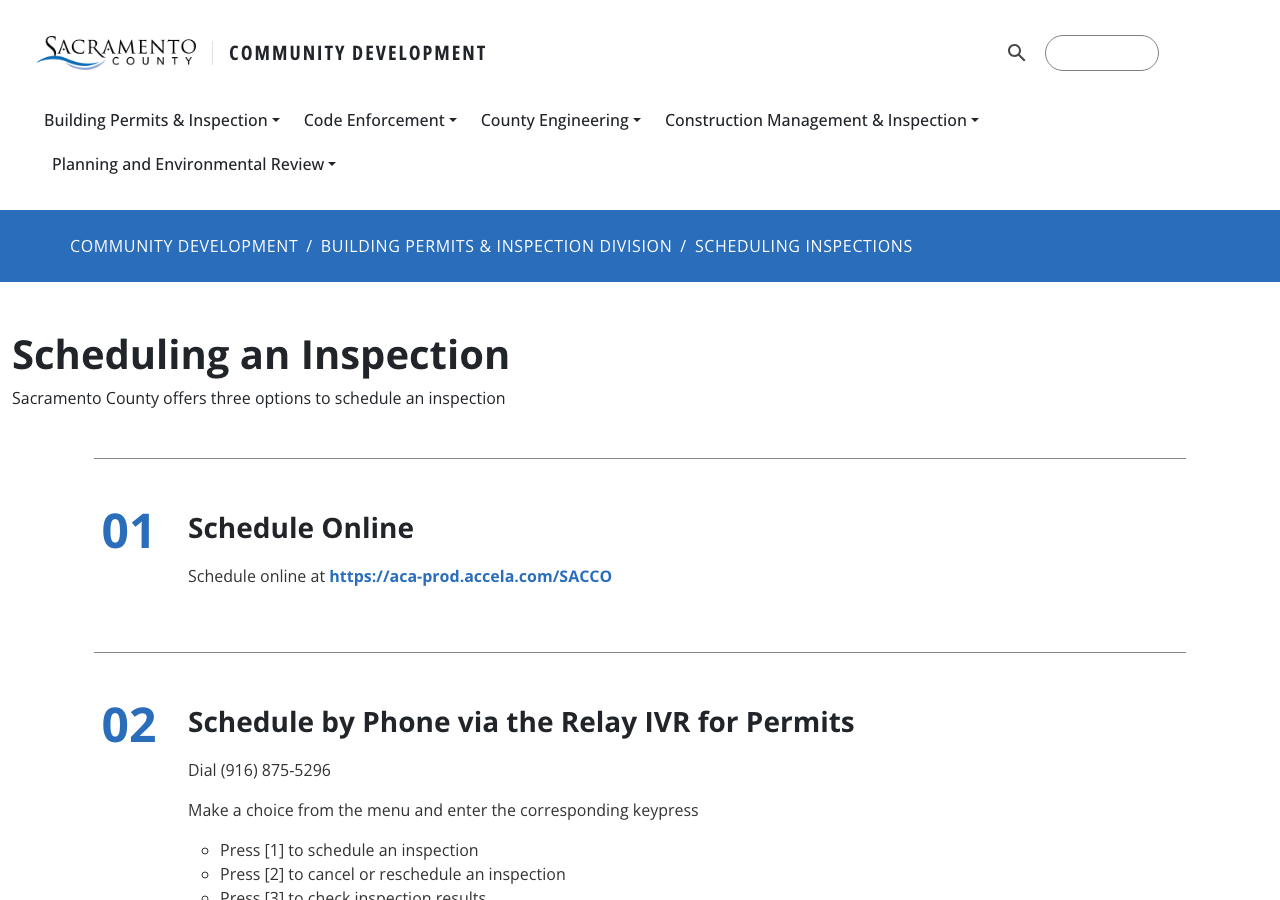
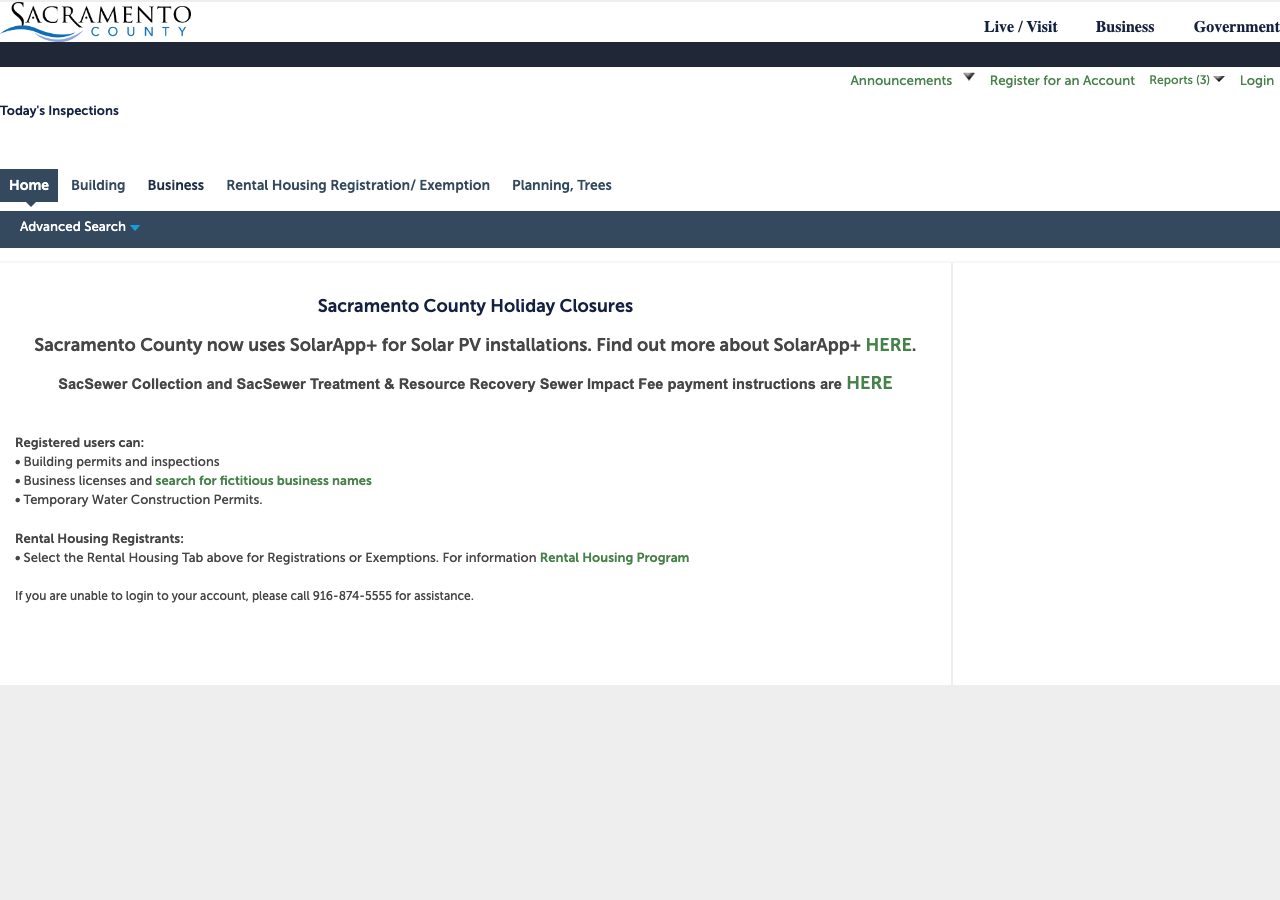
Average approval time — application to PTO
From the CPUC interconnection record. Bars show the average days taken each year; a year with no recorded projects is left blank rather than drawn as zero.