
San Joaquin County
State of California
San Joaquin County is a county authority in the State of California, covering 22 regions, serving 779,233 residents. 3,514 residential solar installs are on record here. This page is the permit route for that jurisdiction: the fifteen steps from working out who has a say over an address through to permission to operate, the documents this authority publishes, and 62 answers taken from those documents and dated.
Permitting 5 steps · 28 questions
Whether a permit is needed — Yes Q3 Electrical and building permits — Combined — one permit Q4 Plan review — SolarAPP+ route: instant automated approval; 'Allow 1 to 2 business days for processing prior to scheduling an inspection.' Traditional plan-review route: no… Q18 Where you file — Two: (1) Accela Citizen Access / Online Permitting System at permits.sjgov.org (branded 'Manage My Records'); Q20
- Permit required
- Yes95% source
- What it costs
- $350.00 for a residential PV system up to 100 amps (fee includes plan review). 101–1000 amps: $525.00. Over 1000 amps: $850.00.85% source
- Plan review turnaround
- SolarAPP+ route: instant automated approval; 'Allow 1 to 2 business days for processing prior to scheduling an inspection.' Traditional plan-review route: no turnaround published.75% source
- Key document
- published checklist cited by 5 open the document
-
Confirm who has a say over your address
A city address is usually permitted by the city, not the county — but not always, and some authorities keep building and hand electrical to someone else. Getting this wrong costs the whole submittal, because every requirement below belongs to whoever actually holds jurisdiction. Check the overlays in the same pass: an HOA, a historic district, a windstorm certification or a system-size cap can reshape the design, and all of them are cheaper to find now than after the array is laid out.
- Is this authority the AHJ for residential solar at this address? Yes — for a property in the unincorporated county (not Mountain House, not an incorporated city) 90% · department permit page
- What does this authority permit itself, and what does it delegate? Both 90% · adopting ordinance
- Is a permit required for a residential rooftop PV system? Yes 95% · department permit page
- Is there a separate electrical permit, or is it combined? Combined — one permit 65% · fee schedule
- Is a HOA or architectural approval required first? No — and the county is forbidden from requiring it. CA Gov. Code 65850.5: a city or county 'shall not condition approval for any solar energy system permit on the approval of a solar energy system by an association'. 85% · state statute
- Is a wind or windstorm certification required? No separate wind or windstorm certification (California has no TDI-style certification scheme). Wind is handled inside the structural submittal: the checklist requires an 'engineers report for wind exposure C, seismic zone D, showing maximum rail spans, max cantilever, max down force, max uplift and lateral reactions'. 65% · published checklist
- Is there a system-size cap on residential generation? No county ordinance cap on residential generation size was located. The practical caps are route-based: SolarAPP+ accepts systems ≤38.4 kW with service rating ≤400 A, service disconnects and busbars ≤225 A, an individual battery ≤20 kWh and ESS aggregate ≤80 kWh. Anything larger, ground-mounted, ballasted, homeowner-installed, or multi-family goes through traditional plan review with no published size limit. 55% · department page + SolarAPP+ scope article (https://help.gosolarapp.org/article/43-what-types-of-systems-are-eligible-for-solarapp-review)
-
Check who is allowed to apply
Several authorities require the electrical permit to be pulled by a licensed electrician, or require the contractor to be registered with them BEFORE applying. Registration is not same-day. This is second on the list rather than fourth because it is the step most likely to stop the job before the drawings matter.
- Who is allowed to pull the electrical permit? Either — a CSLB-licensed contractor (or an authorised agent of the licensee), or the homeowner as an Owner-Builder 75% · permit application terms and conditions
- Must the contractor be registered with this authority before applying? No county pre-registration for the current routes — but a SolarAPP+ account with a license verified by SolarAPP+/NREL is required for the instant-permit route 55% · department page + legacy terms document
- Is a homeowner permitted to self-install and self-permit? Yes — via the Owner-Builder route, but NOT through SolarAPP+ 80% · county form
-
Build the submittal package
Almost everywhere wants a site plan, a one-line or three-line electrical diagram, equipment cut sheets with listings, and a structural attachment detail. Build it against the published checklist rather than the last jurisdiction you worked in — the checklist is what the reviewer marks against.
- What documents make up a complete submittal? Traditional route (Solar (PV) Permit Checklist, extracted verbatim): (1) one completed Building Permit Application; (2) complete set of plans signed by the designer — ground mount arrays require a site plan — showing (a) property lines, buildings/structures existing and proposed, north arrow, lot dimensions, easements; (b) location of all equipment and components on plot plan; (c) all electrical equipment specifications; (d) all electrical calculations; (e) means of grounding and bonding for all equipment and support systems; (f) structural analysis of support structure if the array dead load exceeds three pounds per square foot; (g) engineer's report for wind exposure C, seismic zone D showing maximum rail spans, max cantilever, max down force, max uplift and lateral reactions, plus total weight of array and psf distributed weight; (h) Cal-Fire required setbacks shown on roof plan; (i) required placards and their locations shown on plan. SolarAPP+ route: no drawings — the contractor enters system data into the portal and the permit issues instantly. 90% · published checklist
- How many copies, and in what format? Electronic only — no paper copy count published. Submission is through the Online Permitting System (Accela) or SolarAPP+. 75% · department permit page
- Is a site plan required, and what must it show? Yes for ground mount — must show all property lines, buildings/structures (existing and proposed), north arrow, lot dimensions, easements, and the location of all equipment and components on the plot plan. A separate general Site Plan Checklist is also published. 85% · published checklist
- Are string and conductor calculations required? Yes — 'All electrical calculations' are a required plan item; the plans must also show 'means of grounding and bonding for all equipment and support systems' 80% · published checklist
- Is a structural PE stamp required, and at what threshold? Threshold is stated: 'Structural analysis of support structure is required if "dead" load of array exceeds three pounds per square foot.' Separately, an engineer's report is required for wind exposure C, seismic zone D showing maximum rail spans, max cantilever, max down force, max uplift and lateral reactions, and total array weight plus psf distributed weight. 75% · published checklist
-
Apply and pay
Most authorities now take the whole application through a portal, and several states cap or constrain what a residential solar permit may cost. Check whether plan check is billed separately before you quote the job.
- Which permit portal does this authority use? Two: (1) Accela Citizen Access / Online Permitting System at permits.sjgov.org (branded 'Manage My Records'); (2) SolarAPP+ (gosolarapp.org, NREL) for eligible residential roof-mounted retrofit PV and PV+storage. Note SolarAPP+ issues its own permit number that differs from the Accela record number — inspections must be booked with the Accela number. 90% · portal landing page
- Can the whole application be completed online? Yes — application, payment and inspection scheduling are all online; solar submittals are required to be electronic 85% · department permit page
- What does a residential solar permit cost? $350.00 for a residential PV system up to 100 amps (fee includes plan review). 101–1000 amps: $525.00. Over 1000 amps: $850.00. SolarAPP+ adds a separate SolarAPP+ processing fee paid in that portal (amount not published by the county). 85% · published fee schedule
- How is the fee calculated? Tiered — by system amperage (≤100 A / 101–1000 A / >1000 A), not by valuation, kW, or panel count 90% · published fee schedule
- Is there a separate plan-check fee? No — the PV fee is inclusive: '8) Photo Voltaic Systems. (Fee includes plan review)'. Revisions are chargeable: additional plan review for revisions to approved plans, and for reviews exceeding three, is $150.00/hour; minimum fee for any plan review performed is $150.00. 85% · published fee schedule
-
Plan review — and start the utility in parallel
Interconnection is a separate process from the permit and usually the longer pole. Where the utility does not depend on the permit being issued, running both at once is the single biggest saving available on a residential job.
- What is the stated plan-review turnaround? SolarAPP+ route: instant automated approval; 'Allow 1 to 2 business days for processing prior to scheduling an inspection.' Traditional plan-review route: no turnaround published. 75% · department page
- How long is an issued permit valid before it expires? 12 months. Ordinance 4686 §105.5: a permit becomes invalid unless work is commenced within 12 months of issuance, or if work is suspended or abandoned for 12 months after commencement; work is deemed suspended if no inspection has been recorded and approved within 12 months of the last approved inspection. The building official may grant extensions of not more than 180 days each. Renewal after suspension costs one-half the new permit fee (full fee if abandoned over a year, or 25% if rough inspections were approved). 85% · adopting ordinance
- Which utility handles interconnection here? Pacific Gas and Electric Company (PG&E) for essentially all of the unincorporated county. Exception: the Mountain House area is served by Modesto Irrigation District (MID) — PG&E was barred from distribution service there from 1 January 2001 by CPUC decision under Pub. Util. Code §9610. (Lodi Electric Utility is city-only and does not serve unincorporated territory.) 75% · CPUC decision + PG&E tariff service area map (https://www.pge.com/tariffs/assets/pdf/tariffbook/ELEC_MAPS_Service%20Area%20Map.pdf)
- Where does the utility sit in the sequence? Parallel — but PG&E gates the end. PG&E's NEM Interconnection Agreement (Form 79-1151A) states: 'In order for PG&E to approve your system, you will need to provide (1) this signed Agreement, (2) Application Form 79-1151B, and (3) a copy of the final signed jurisdiction approval (building permit) for your project.' A complete application requires 'Evidence of the Customer final inspection clearance from the governmental authority having jurisdiction'. 80% · utility interconnection agreement (tariff form)
28 questions answered against San Joaquin County’s own published documents
Q1 Is this authority the AHJ for residential solar at this address? Core Jurisdiction & scope
Yes — for a property in the unincorporated county (not Mountain House, not an incorporated city)
Why the confidence is not higherCounty's own building page and solar permit page both assert issuance; only doubt is address-level (Mountain House now self-permits)
department permit page checked 2026-08-28 https://www.sjgov.org/department/cdd/building/permits/residential-permits/solar
Q2 What does this authority permit itself, and what does it delegate? Core Jurisdiction & scope
Both
Why the confidence is not higherOrdinance 4686 adopts both the 2025 CBC (§8-1000) and the 2025 CEC (§8-1013), and the Building Division page says it inspects 'electrical, plumbing, and mechanical installations'. Nothing is delegated. Deducted for no single sentence saying 'we hold both for solar'.
adopting ordinance checked 2026-08-28 https://sjgov.org/docs/default-source/community-development/building/ordinances/ord-4686.pdf
Q3 Is a permit required for a residential rooftop PV system? Core Jurisdiction & scope
Yes
Why the confidence is not higherVerbatim: 'A Building Permit is required for solar installations, including: Roof-mounted solar systems, Ground-mounted solar arrays, Similar systems'. Solar is not in the Ordinance 4686 §105.2 exempt list (14 items, checked in full).
department permit page checked 2026-08-28 https://www.sjgov.org/department/cdd/building/permits/residential-permits/solar
Q4 Is there a separate electrical permit, or is it combined? Core Jurisdiction & scope
Combined — one permit
Why the confidence is not higherThe solar page issues a single Building Permit, and SolarAPP+ issues one instant permit covering the whole PV system. But the fee schedule prices PV under section 'Electrical Permit Fees' item 8 ('Photo Voltaic Systems'), so the money is booked as electrical while the document is called a building permit. No page states the combination explicitly, hence 65.
fee schedule checked 2026-08-28 https://www.sjgov.org/docs/default-source/community-development/building/commonly-used-documents/building-fee-schedule.pdf?sfvrsn=58a1ec37_10
Q5 Who is allowed to pull the electrical permit? Core Who may apply
Either — a CSLB-licensed contractor (or an authorised agent of the licensee), or the homeowner as an Owner-Builder
Why the confidence is not higherThe county's Web User Permit terms state 'only the licensee or authorized agents of the licensee may obtain any type of building permit' and 'I will obtain permits only for work I am properly licensed by the State Contractors Board to perform'; the Owner-Builder Acknowledgment form is a standing published route. Deducted because the Web User terms document is undated and legacy (it names VeloCityHall, fax numbers, and a 180-day expiry that Ordinance 4686 has since superseded with 12 months).
permit application terms and conditions checked 2026-08-28 https://www.sjgov.org/commdev/cgi-bin/cdyn.exe/web_user_permit?grp=handouts-building&obj=web_user_permit
Q6 Must the contractor be registered with this authority before applying? Core Who may apply
No county pre-registration for the current routes — but a SolarAPP+ account with a license verified by SolarAPP+/NREL is required for the instant-permit route
Why the confidence is not higherThe county's solar page's step 1 is only 'Register as a user in the Online Permitting System' (a self-service Accela account); SolarAPP+ registration verifies the contractor licence at SolarAPP+, not at the county. HOWEVER the legacy Web Permit System terms do impose a county-held licence file ('You cannot obtain web permits if your license is not current in our system', update via Tom Ushing (209) 468-9780). I could not establish whether that legacy registration still gates the Accela route, so this is inference from two county documents that disagree.
department page + legacy terms document checked 2026-08-28 https://www.sjgov.org/department/cdd/building/permits/solarapp
Q7 Is a homeowner permitted to self-install and self-permit? Who may apply
Yes — via the Owner-Builder route, but NOT through SolarAPP+
Why the confidence is not higherThe county publishes an Owner-Builder Acknowledgment and Information Verification Form and will 'NOT issue a building permit until you have read, initialed... signed, and returned this form'. SolarAPP+'s own scope article excludes 'Systems installed by Homeowners', so a self-installer must use the traditional plan-review route. Deducted because no county page states homeowner solar self-permitting in those words.
county form checked 2026-08-28 https://www.sjgov.org/docs/default-source/community-development/building/commonly-used-documents/955-bld-owner-builder-verification.pdf?sfvrsn=1fea12fc_13
Q8 What documents make up a complete submittal? Core Submittal package
Traditional route (Solar (PV) Permit Checklist, extracted verbatim): (1) one completed Building Permit Application; (2) complete set of plans signed by the designer — ground mount arrays require a site plan — showing (a) property lines, buildings/structures existing and proposed, north arrow, lot dimensions, easements; (b) location of all equipment and components on plot plan; (c) all electrical equipment specifications; (d) all electrical calculations; (e) means of grounding and bonding for all equipment and support systems; (f) structural analysis of support structure if the array dead load exceeds three pounds per square foot; (g) engineer's report for wind exposure C, seismic zone D showing maximum rail spans, max cantilever, max down force, max uplift and lateral reactions, plus total weight of array and psf distributed weight; (h) Cal-Fire required setbacks shown on roof plan; (i) required placards and their locations shown on plan. SolarAPP+ route: no drawings — the contractor enters system data into the portal and the permit issues instantly.
Why the confidence is not higherExtracted directly with pdftotext -layout from the county's own current Solar (PV) Permit Checklist. Deducted because the PDF carries no revision date and the checklist's clause structure leaves it slightly ambiguous whether items (a)–(g) apply to all submittals or only to ground mounts.
published checklist checked 2026-08-28 https://www.sjgov.org/docs/default-source/community-development/building/checklists/solar-(pv)-permit-checklist.pdf?sfvrsn=a53f8868_7
Q9 How many copies, and in what format? Submittal package
Electronic only — no paper copy count published. Submission is through the Online Permitting System (Accela) or SolarAPP+.
Why the confidence is not higherThe solar page's process is entirely online and Gov. Code 65850.5 requires electronic submittal statewide. No copy count or file-format spec (PDF, sheet size, resolution) is published anywhere I looked.
department permit page checked 2026-08-28 https://www.sjgov.org/department/cdd/building/permits/residential-permits/solar
Q10 Is a site plan required, and what must it show? Core Submittal package
Yes for ground mount — must show all property lines, buildings/structures (existing and proposed), north arrow, lot dimensions, easements, and the location of all equipment and components on the plot plan. A separate general Site Plan Checklist is also published.
Why the confidence is not higherVerbatim from the Solar (PV) Permit Checklist item 2(a)/(b). Deducted because the checklist's wording ('Ground mount arrays require a site plan:') leaves it unclear whether a roof-mount plan-review submittal also needs one.
published checklist checked 2026-08-28 https://www.sjgov.org/docs/default-source/community-development/building/checklists/solar-(pv)-permit-checklist.pdf?sfvrsn=a53f8868_7
Q11 Is a one-line / three-line diagram required? Core Drawings & calculations
Nothing published by this authority.
Where we lookedSolar (PV) Permit Checklist (extracted in full with pdftotext -layout — it requires 'all electrical equipment specifications', 'all electrical calculations' and 'means of grounding and bonding', but never names a one-line or three-line diagram); Ordinance 4686 §8-1005 Construction Documents; the county solar permit page; the residential electrical permit page. Note for the caller: the SolarAPP+ route submits no drawings at all, and PG&E separately requires the AC disconnect to be 'clearly marked on the submitted single-line diagram' for interconnection — that is a utility submittal, not an AHJ one.
Q12 Are string and conductor calculations required? Drawings & calculations
Yes — 'All electrical calculations' are a required plan item; the plans must also show 'means of grounding and bonding for all equipment and support systems'
Why the confidence is not higherVerbatim checklist items 2(d) and 2(e). Deducted because the checklist does not name string or conductor calculations specifically — 'all electrical calculations' is a catch-all, and this applies only to the traditional plan-review route, not SolarAPP+.
published checklist checked 2026-08-28 https://www.sjgov.org/docs/default-source/community-development/building/checklists/solar-(pv)-permit-checklist.pdf?sfvrsn=a53f8868_7
Q13 Is a structural PE stamp required, and at what threshold? Core Engineering & stamps
Threshold is stated: 'Structural analysis of support structure is required if "dead" load of array exceeds three pounds per square foot.' Separately, an engineer's report is required for wind exposure C, seismic zone D showing maximum rail spans, max cantilever, max down force, max uplift and lateral reactions, and total array weight plus psf distributed weight.
Why the confidence is not higherVerbatim from the county's own checklist — a rare published numeric threshold. Deducted because the checklist says 'structural analysis' and 'engineers report', never 'PE stamp' or 'wet-stamped by a California-licensed engineer', so whether a stamp specifically is demanded is not stated.
published checklist checked 2026-08-28 https://www.sjgov.org/docs/default-source/community-development/building/checklists/solar-(pv)-permit-checklist.pdf?sfvrsn=a53f8868_7
Q14 Is an electrical PE stamp required, and at what threshold? Engineering & stamps
Nothing published by this authority.
Where we lookedSolar (PV) Permit Checklist (names only 'structural analysis' and an 'engineers report', both structural); Ordinance 4686 §8-1005; the building fee schedule (no PE-review line). Nothing on an electrical PE stamp or its threshold anywhere.
Q15 What does a residential solar permit cost? Core Fees
$350.00 for a residential PV system up to 100 amps (fee includes plan review). 101–1000 amps: $525.00. Over 1000 amps: $850.00. SolarAPP+ adds a separate SolarAPP+ processing fee paid in that portal (amount not published by the county).
Why the confidence is not higherFee schedule section 'Electrical Permit Fees' item 8, 'Photo Voltaic Systems. (Fee includes plan review)'. Deducted because the schedule is stamped 'Effective January 31, 2022' — four years old and predating the 2025 code cycle adopted in January 2026 — and because it does not distinguish residential from commercial PV. It is within the CA Gov. Code 66015 cap of $450 for residential PV.
published fee schedule checked 2026-08-28 https://www.sjgov.org/docs/default-source/community-development/building/commonly-used-documents/building-fee-schedule.pdf?sfvrsn=58a1ec37_10
Q16 How is the fee calculated? Core Fees
Tiered — by system amperage (≤100 A / 101–1000 A / >1000 A), not by valuation, kW, or panel count
Why the confidence is not higherThe PV line item is an explicit three-band amperage table, distinct from the valuation-based Building Permit Fee Table in section A. Deducted only for the schedule's 2022 date.
published fee schedule checked 2026-08-28 https://www.sjgov.org/docs/default-source/community-development/building/commonly-used-documents/building-fee-schedule.pdf?sfvrsn=58a1ec37_10
Q17 Is there a separate plan-check fee? Fees
No — the PV fee is inclusive: '8) Photo Voltaic Systems. (Fee includes plan review)'. Revisions are chargeable: additional plan review for revisions to approved plans, and for reviews exceeding three, is $150.00/hour; minimum fee for any plan review performed is $150.00.
Why the confidence is not higherVerbatim from the fee schedule, sections B and Electrical item 8. Deducted for the 2022 effective date.
published fee schedule checked 2026-08-28 https://www.sjgov.org/docs/default-source/community-development/building/commonly-used-documents/building-fee-schedule.pdf?sfvrsn=58a1ec37_10
Q18 What is the stated plan-review turnaround? Core Timeline & validity
SolarAPP+ route: instant automated approval; 'Allow 1 to 2 business days for processing prior to scheduling an inspection.' Traditional plan-review route: no turnaround published.
Why the confidence is not higherVerbatim from the county SolarAPP+ page. Deducted because the 1–2 days is the county's post-issuance sync into Accela, not a plan-review clock, and because the county publishes no turnaround at all for ground-mount or otherwise ineligible systems.
department page checked 2026-08-28 https://www.sjgov.org/department/cdd/building/permits/solarapp
Q19 How long is an issued permit valid before it expires? Timeline & validity
12 months. Ordinance 4686 §105.5: a permit becomes invalid unless work is commenced within 12 months of issuance, or if work is suspended or abandoned for 12 months after commencement; work is deemed suspended if no inspection has been recorded and approved within 12 months of the last approved inspection. The building official may grant extensions of not more than 180 days each. Renewal after suspension costs one-half the new permit fee (full fee if abandoned over a year, or 25% if rough inspections were approved).
Why the confidence is not higherExtracted verbatim with pdftotext from Ordinance 4686, adopted 13 January 2026. IMPORTANT: the county's legacy Web User Permit terms page still says 180 days, and secondary permit-guide sites repeat that — it is stale and Ordinance 4686 supersedes it. Deducted because the ordinance text uses strike-through/insert formatting that pdftotext renders as '2022 2025', so I am reading the amended value from context.
adopting ordinance checked 2026-08-28 https://sjgov.org/docs/default-source/community-development/building/ordinances/ord-4686.pdf
Q20 Which permit portal does this authority use? Core Portal & process
Two: (1) Accela Citizen Access / Online Permitting System at permits.sjgov.org (branded 'Manage My Records'); (2) SolarAPP+ (gosolarapp.org, NREL) for eligible residential roof-mounted retrofit PV and PV+storage. Note SolarAPP+ issues its own permit number that differs from the Accela record number — inspections must be booked with the Accela number.
Why the confidence is not higherBoth named on the county's own pages, with the number-mismatch warning stated verbatim: 'it is necessary to use the Accela record number not the SolarApp+ permit number'. Deducted only because permits.sjgov.org 403s automated fetches, so I read the mirror pages on www.sjgov.org.
portal landing page checked 2026-08-28 https://www.sjgov.org/department/cdd/building/permits/solarapp
Q21 Can the whole application be completed online? Core Portal & process
Yes — application, payment and inspection scheduling are all online; solar submittals are required to be electronic
Why the confidence is not higherThe solar page's six steps are all online (register, apply, intake, pay by credit card, issue) and CA Gov. Code 65850.5 mandates electronic submittal and electronic signature statewide. Deducted because in-person and mail payment remain offered, and a ground-mount project outside SolarAPP+ still goes through staff intake.
department permit page checked 2026-08-28 https://www.sjgov.org/department/cdd/building/permits/residential-permits/solar
Q22 Which utility handles interconnection here? Core Utility interconnection
Pacific Gas and Electric Company (PG&E) for essentially all of the unincorporated county. Exception: the Mountain House area is served by Modesto Irrigation District (MID) — PG&E was barred from distribution service there from 1 January 2001 by CPUC decision under Pub. Util. Code §9610. (Lodi Electric Utility is city-only and does not serve unincorporated territory.)
Why the confidence is not higherThe MID/Mountain House transfer is documented in a CPUC decision, and PG&E's tariff service-area map covers San Joaquin County. Deducted to 75 because I confirmed the boundary from the CPUC decision and PG&E's territory map rather than an address-level lookup, and because Mountain House is now an incorporated city, so the MID exception may no longer touch unincorporated territory at all.
CPUC decision + PG&E tariff service area map (https://www.pge.com/tariffs/assets/pdf/tariffbook/ELEC_MAPS_Service%20Area%20Map.pdf) checked 2026-08-28 https://docs.cpuc.ca.gov/published/Comment_decision/33912.htm
Q23 Where does the utility sit in the sequence? Core Utility interconnection
Parallel — but PG&E gates the end. PG&E's NEM Interconnection Agreement (Form 79-1151A) states: 'In order for PG&E to approve your system, you will need to provide (1) this signed Agreement, (2) Application Form 79-1151B, and (3) a copy of the final signed jurisdiction approval (building permit) for your project.' A complete application requires 'Evidence of the Customer final inspection clearance from the governmental authority having jurisdiction'.
Why the confidence is not higherExtracted verbatim with pdftotext from PG&E's own tariff form. The application can be filed at any time (parallel), but PTO cannot issue before the AHJ final. Deducted because the form is stamped Advice 5667-E, October 2019 — pre-NEM-3.0 — so the form number may have been superseded even if the sequence has not.
utility interconnection agreement (tariff form) checked 2026-08-28 https://www.pge.com/assets/pge/docs/about/doing-business-with-pge/form79-1151A.pdf
Q24 Is a HOA or architectural approval required first? Overlays & special cases
No — and the county is forbidden from requiring it. CA Gov. Code 65850.5: a city or county 'shall not condition approval for any solar energy system permit on the approval of a solar energy system by an association'.
Why the confidence is not higherState statute, verbatim, and it pre-empts the county. Deducted because this is state law rather than a county document — the county publishes nothing of its own on HOAs — and because a private HOA CC&R obligation may still exist between homeowner and association (limited separately by Civil Code §714), it simply cannot be a permit condition.
state statute checked 2026-08-28 https://leginfo.legislature.ca.gov/faces/codes_displaySection.xhtml?lawCode=GOV§ionNum=65850.5
Q25 Is there a historic-district review? Overlays & special cases
Nothing published by this authority.
Where we lookedOrdinances 4686 and 4687 (full text extracted; zero hits for 'historic'). NOT proved absent overall — the San Joaquin County Development Title is where a historic-district overlay would live, and I could not search it: the Municode API failed its own positive control ('electrical' returned 0 hits on productId 16452 while the fabricated control 'zzqqx' also returned 0), so no absence from that library is valid. Needs re-checking against the Development Title directly.
https://library.municode.com/ca/san_joaquin_county/codes/development_title
Q26 Is a wind or windstorm certification required? Overlays & special cases
No separate wind or windstorm certification (California has no TDI-style certification scheme). Wind is handled inside the structural submittal: the checklist requires an 'engineers report for wind exposure C, seismic zone D, showing maximum rail spans, max cantilever, max down force, max uplift and lateral reactions'.
Why the confidence is not higherThe positive half (the wind-exposure-C engineering requirement) is verbatim from the county checklist and is solid. The negative half is inference — no certification scheme appears in the checklist, the fee schedule, or Ordinances 4686/4687 — but I did not search the county Development Title, so I cannot rule out a zoning-side requirement.
published checklist checked 2026-08-28 https://www.sjgov.org/docs/default-source/community-development/building/checklists/solar-(pv)-permit-checklist.pdf?sfvrsn=a53f8868_7
Q27 Is a Specific Use Permit or Council approval ever required? Overlays & special cases
Nothing published by this authority.
Where we lookedOrdinances 4686 and 4687 (no Specific Use Permit or Council-approval provision for solar); the county solar permit page; the Solar (PV) Permit Checklist. Same caveat as q25 — the Development Title, which is where a use permit requirement would sit, was not searchable.
https://library.municode.com/ca/san_joaquin_county/codes/development_title
Q28 Is there a system-size cap on residential generation? Overlays & special cases
No county ordinance cap on residential generation size was located. The practical caps are route-based: SolarAPP+ accepts systems ≤38.4 kW with service rating ≤400 A, service disconnects and busbars ≤225 A, an individual battery ≤20 kWh and ESS aggregate ≤80 kWh. Anything larger, ground-mounted, ballasted, homeowner-installed, or multi-family goes through traditional plan review with no published size limit.
Why the confidence is not higherThe SolarAPP+ numbers are verbatim from the SolarAPP+ scope article and the county's own SolarAPP+ page ('400A main service, 225A service disconnect switches and 225A busbars'). Downgraded to 55 because the absence of a county cap is only partly proved: I grepped Ordinances 4686 and 4687 in full (no solar hits at all) but could NOT search the San Joaquin County Development Title — the Municode API failed its own positive control ('electrical' returned 0 hits), so no absence from that library is valid.
department page + SolarAPP+ scope article (https://help.gosolarapp.org/article/43-what-types-of-systems-are-eligible-for-solarapp-review) checked 2026-08-28 https://www.sjgov.org/department/cdd/building/permits/solarapp
Lines marked with a percentage were read off this authority’s own published documents. Unmarked guidance is general good practice, not this jurisdiction’s rule — always confirm against the authority before you submit.
Install 5 steps · 20 questions
-
Build to the code editions actually in force here
The NEC edition a jurisdiction enforces is often a cycle behind the newest one published, and local amendments sit on top of it. Rapid shutdown, conductor sizing and labelling all change between editions, so the edition in force is the first thing to establish, not the last.
- Which NEC edition is in force? 2025 California Electrical Code, which 'incorporates by adoption the 2023 Edition of the National Electrical Code of the National Fire Protection Association' — i.e. NEC 2023 95% · adopting ordinance
- Which building code edition is in force? 2025 California Building Code (including Chapter 1 Division II and Appendix Chapters C, I, J and Q; incorporating the 2024 IBC) and the 2025 California Residential Code. Also adopted: 2025 California Mechanical Code (2024 UMC), 2025 California Plumbing Code (2024 UPC), 2025 CALGreen (excluding Appendices A4, A5, A6.1), and the 2025 California Wildland Urban Interface Code. 95% · adopting ordinance
- Which fire code edition is in force? 2025 California Fire Code (Title 24 CCR Part 9), incorporating the 2024 International Fire Code — adopted by a separate ordinance, No. 4687, into Title 4 Public Safety, Division 1 Fire Prevention 95% · adopting ordinance
- Are there local amendments to any of the above? Yes — but none of them touch solar. Ordinance 4686 amends CBC Ch.1 Div.II administrative sections (104.7 records, 105.2 exempt work, 105.3.2, 105.5 expiration, 107.2.6.1, 107.3.1, 109.2/109.3/109.4/109.6 fees, 110.3.12.1, 110.5 inspection requests, 111.1/111.2 certificate of occupancy), deletes §108 and §116, and replaces §113 with a local Building Board of Appeals. Ordinance 4687 amends CFC §503.1 (fire apparatus access roads, to the San Joaquin County Fire Chiefs Association standard), §§315/2810 (pallet and lumber yards), and adds local explosives/fireworks and cost-recovery provisions. 90% · adopting ordinance
- What is the installation judged against? The 2025 California Electrical Code (NEC 2023) as adopted by Ordinance 4686 §8-1013, administered under CBC Chapter 1 Division II as locally amended (§8-1013.1). No local technical amendments to the electrical code. 90% · adopting ordinance
-
Fire access, setbacks and pathways
Ridge setbacks and roof access pathways are fire-service requirements and they constrain the array layout. They are the most common cause of a redesign after the fire department comments on a plan set.
- What ridge setback and access pathways are required? The county requires setbacks to be drawn but publishes no dimensions of its own: Solar (PV) Permit Checklist item 2(h) — 'Show Cal-Fire required setbacks on roof plan.' The governing dimensions therefore come from the adopted 2025 California Fire Code and 2025 California Residential Code (ridge setback and access/smoke-ventilation pathways), which Ordinance 4687 adopts with NO solar-specific local amendment. 70% · published checklist + adopting ordinance
-
Rapid shutdown
Which rapid-shutdown rule applies follows directly from the NEC edition in force, and the initiation device has to be at a location the fire service can reach and identify. This is inspected, and it is labelled.
- Is rapid shutdown required, and to which NEC edition? Yes — to the 2025 California Electrical Code, which incorporates NEC 2023 (Art. 690.12 rapid shutdown). No local amendment or exception. 80% · adopting ordinance
-
Labels and placards
The NEC sets a baseline for permanent markings at the service equipment and the disconnecting means. On top of that, an authority may specify its own wording, and the utility may specify more again. Where any of them writes its own text, a generic off-the-shelf label set will not pass — this is the detail most often fixed on a return visit.
- Which placards does this authority require at the service equipment? The county requires placards but does not enumerate them: Solar (PV) Permit Checklist item 2(i) — 'Show required placards and their locations on plan.' The actual set therefore comes from (a) the 2025 CEC / NEC 2023 Articles 690 and 705 as adopted, and (b) PG&E, which requires permanently attached signage on the front of the AC disconnect reading e.g. 'UTILITY AC DISCONNECT SWITCH', open/closed position marking on the switch, and NGOM labelling where a net generation output meter is installed. 75% · published checklist + utility Greenbook doc 060559
- Does the authority specify placard wording of its own? No 75% · published checklist + adopting ordinances
- Does it specify letter height, colour or material? Nothing from the county. From PG&E (governs the utility AC disconnect label): 'Labels shall be permanent and suitable for the environment and shall be engraved phenolic or comply with ANSI Z535.4. Lettering shall be a minimum 3/8" high and in all capitals.' 85% · utility Greenbook standard (doc 060559 Rev. #07)
- Is a site plan / facility map placard required, and what must it show? The county requires placard LOCATIONS to be shown on the submitted plan (checklist item 2(i)) but specifies no site-plan/facility-map placard of its own. PG&E requires a map placard in two situations: 'When the disconnect switch is not grouped with the meter panel provide a map showing the location', and 'If a Net Generation Output Meter (NGOM) is installed provide proper labeling as described and a map showing the location if not grouped together with the other meter(s) and disconnect switch.' Also: 'If the device is not adjacent to the PG&E's electric revenue meter(s), a clear map and signs indicating of the location of the disconnect switch are required. If the disconnect switch is not accessible outside the locked premises, include signs with contact information and a distribution provider-approved locking device.' 70% · utility Greenbook standard (doc 060559 Rev. #07)
- Does the UTILITY specify placards beyond the AHJ's? Yes — PG&E requires beyond the AHJ: (1) permanently attached signage on the front of the AC disconnect explaining it is the ac disconnect switch for the generation, example 'UTILITY AC DISCONNECT SWITCH'; (2) marking or signage on the switch clearly indicating open (off) and closed (on) positions; (3) engraved phenolic or ANSI Z535.4 material, minimum 3/8" lettering, all capitals; (4) a location map where the disconnect is not grouped with the meter panel; (5) NGOM labelling and map where a net generation output meter is fitted; (6) the disconnect 'clearly marked on the submitted single-line diagram indicating the manufacturer, model type, voltage rating, current rating, and location'. 90% · utility Greenbook standard (doc 060559 Rev. #07)
- Where must the labels be placed? PG&E label: permanently attached on the FRONT of the AC disconnect switch enclosure. Position marking: on the switch itself. Where the disconnect is not grouped with the meter panel, a location map is additionally required. County: locations are not prescribed — they must simply be shown on the submitted plan and are then judged against the plan at inspection. 75% · utility Greenbook standard + county checklist
-
Disconnect, storage and listed equipment
Where the AC disconnect must sit relative to the meter is usually the utility's rule, not the building department's. Battery storage frequently carries its own permit, its own inspection and its own fire conditions.
- Where must the AC disconnect be, relative to the meter? PG&E requirement — 'Located 10 feet or less, in line of sight, from PG&E's electric meter at the point of common coupling or interconnection and is seen easily from the meter panel'; or in an approved electric meter room within the same 10 feet and line of sight. If outdoors with the meter it must be at the same grade level. NOT allowed on any floor or level above grade, on a roof, or in a room that is not an approved electric meter room. Mounting height 48 inches minimum to 75 inches maximum, ground to top of enclosure. Must be installed between the PG&E meter and all generation sources, must isolate generation only (not customer loads), and must accept a PG&E padlock with a 5/16-inch shaft (keyed locks not allowed). EXEMPTION: inverter-based systems on PG&E single-phase services up to 240 V may be exempted, as PG&E determines, if the meter panel is self-contained (not transformer-rated), accepts form 'S' socket-based meters (not bolt-on), is rated CL 320 or less continuous, and is single-phase 120/240 V or 120/208 V. 90% · utility Greenbook standard (doc 060559 Rev. #07)
- Must equipment be on a specific approved list? No county approved-equipment list. PG&E does maintain one for the AC disconnect: 'PG&E-approved disconnect switch models, rated up to 1200 amps, currently listed in both the Eaton and Siemens Safety Switch Cross-Reference Guides, meet all of the functional requirements' — published on PG&E's Distribution Interconnection Handbook site (pge.com/dih). General equipment must be listed by UL or another NRTL. 65% · utility Greenbook standard
- Are batteries permitted, and under what conditions? Yes, permitted. Solar-plus-storage can go through SolarAPP+ (the county links the IREC 'How to Use SolarAPP+ For Solar and Storage Projects' training and requires it before submitting storage projects). SolarAPP+ eligibility limits: individual battery ≤20 kWh, ESS aggregate ≤80 kWh depending on where the batteries are installed. Substantively judged against the 2025 California Fire Code (Ord. 4687) and 2025 CRC/CBC as adopted, with no solar- or ESS-specific local amendment. 65% · department page + SolarAPP+ scope article
- Is there a separate ESS permit or inspection? No separate ESS permit for a combined solar-plus-storage project through SolarAPP+ — one permit and one inspection checklist covers both 50% · department page + fee schedule
- Is a ground mount treated as a structure? Yes — a ground-mounted array needs a Building Permit in its own right and is treated structurally. The solar page lists 'Ground-mounted solar arrays' as requiring a Building Permit; the checklist requires a site plan showing property lines, existing and proposed structures, north arrow, lot dimensions and easements, plus structural analysis of the support structure and an engineer's report for wind exposure C / seismic zone D. Ground mounts are outside SolarAPP+ scope and must go through traditional plan review. 80% · department permit page + published checklist
- Is a specific mounting system or attachment spacing required? No specific mounting system or attachment spacing is prescribed. Performance-based instead: the engineer's report must show 'maximum rail spans, max cantilever, max down force, max uplift and lateral reactions', plus total array weight and psf distributed weight; structural analysis of the support structure is triggered when array dead load exceeds 3 psf. 70% · published checklist
20 questions answered against San Joaquin County’s own published documents
Q29 Which NEC edition is in force? Core Code editions in force
2025 California Electrical Code, which 'incorporates by adoption the 2023 Edition of the National Electrical Code of the National Fire Protection Association' — i.e. NEC 2023
Why the confidence is not higherOrdinance 4686 §8-1013, adopted 13 January 2026, effective 30 days later. Extracted verbatim with pdftotext. The PDF shows strike-through as '2022 2025' and '2020 2023'; the second figure of each pair is the newly adopted one, confirmed by the ordinance title naming the 2025 codes.
adopting ordinance checked 2026-08-28 https://sjgov.org/docs/default-source/community-development/building/ordinances/ord-4686.pdf
Q30 Which building code edition is in force? Core Code editions in force
2025 California Building Code (including Chapter 1 Division II and Appendix Chapters C, I, J and Q; incorporating the 2024 IBC) and the 2025 California Residential Code. Also adopted: 2025 California Mechanical Code (2024 UMC), 2025 California Plumbing Code (2024 UPC), 2025 CALGreen (excluding Appendices A4, A5, A6.1), and the 2025 California Wildland Urban Interface Code.
Why the confidence is not higherOrdinance 4686 §§8-1000 to 8-1017, adopted 13 January 2026, effective 30 days after adoption but no sooner than 1 January 2026 per Health & Safety Code §18941.5(a)(1). The Building Division page independently states '2025 California Building Code'.
adopting ordinance checked 2026-08-28 https://sjgov.org/docs/default-source/community-development/building/ordinances/ord-4686.pdf
Q31 Which fire code edition is in force? Code editions in force
2025 California Fire Code (Title 24 CCR Part 9), incorporating the 2024 International Fire Code — adopted by a separate ordinance, No. 4687, into Title 4 Public Safety, Division 1 Fire Prevention
Why the confidence is not higherOrdinance 4687 §4-1005 defines 'Code' verbatim as 'the 2025 California Fire Code, Title 24, California Code of Regulations, Part 9, incorporating the 2024 Edition of the International Fire Code'. Same Board meeting, 13 January 2026. Worth noting the fire code sits in a DIFFERENT ordinance and a different Title from the building codes.
adopting ordinance checked 2026-08-28 https://www.sjgov.org/docs/default-source/community-development/building/ordinances/ord-4687.pdf?sfvrsn=3437562_6
Q32 Are there local amendments to any of the above? Core Code editions in force
Yes — but none of them touch solar. Ordinance 4686 amends CBC Ch.1 Div.II administrative sections (104.7 records, 105.2 exempt work, 105.3.2, 105.5 expiration, 107.2.6.1, 107.3.1, 109.2/109.3/109.4/109.6 fees, 110.3.12.1, 110.5 inspection requests, 111.1/111.2 certificate of occupancy), deletes §108 and §116, and replaces §113 with a local Building Board of Appeals. Ordinance 4687 amends CFC §503.1 (fire apparatus access roads, to the San Joaquin County Fire Chiefs Association standard), §§315/2810 (pallet and lumber yards), and adds local explosives/fireworks and cost-recovery provisions.
Why the confidence is not higherBoth ordinances extracted in full with pdftotext -layout and searched. Controls run in the same pass: positive control 'electrical' returned 11 hits in Ord 4686 and 'fire' 137 hits in Ord 4687; fabricated control 'zzqqx' returned 0 in both — so the search is sound. Deducted because these are Title 8 Div.1 and Title 4 Div.1 only; the county Development Title (zoning) was not searchable and could carry amendments of its own.
adopting ordinance checked 2026-08-28 https://sjgov.org/docs/default-source/community-development/building/ordinances/ord-4686.pdf
Q33 What is the installation judged against? Core Electrical
The 2025 California Electrical Code (NEC 2023) as adopted by Ordinance 4686 §8-1013, administered under CBC Chapter 1 Division II as locally amended (§8-1013.1). No local technical amendments to the electrical code.
Why the confidence is not higherVerbatim from the ordinance. Deducted because the ordinance says '...except those portions which are not adopted or which are amended specifically hereinafter' and then specifies no electrical technical amendments — an absence I proved by full-text grep of the extracted ordinance, but the code books themselves I did not read.
adopting ordinance checked 2026-08-28 https://sjgov.org/docs/default-source/community-development/building/ordinances/ord-4686.pdf
Q34 Is there a local rule on service upgrades or busbar sizing? Electrical
Nothing published by this authority.
Where we lookedOrdinance 4686 (full text extracted with pdftotext; grep for 'busbar', 'bus bar', 'service upgrade', 'ampacity', 'panel upgrade' returned zero, with 'electrical' positive control at 11 hits and 'zzqqx' fabricated control at 0) and Ordinance 4687 (same grep, zero). Also checked the Solar (PV) Permit Checklist and the fee schedule's electrical section. No local rule found. Note: the SolarAPP+ route enforces a 225 A busbar / 225 A service disconnect / 400 A service ceiling, but that is the platform's limit, not a county amendment.
https://sjgov.org/docs/default-source/community-development/building/ordinances/ord-4686.pdf
Q35 Is a specific mounting system or attachment spacing required? Structural & mounting
No specific mounting system or attachment spacing is prescribed. Performance-based instead: the engineer's report must show 'maximum rail spans, max cantilever, max down force, max uplift and lateral reactions', plus total array weight and psf distributed weight; structural analysis of the support structure is triggered when array dead load exceeds 3 psf.
Why the confidence is not higherPositive requirement is verbatim from the county checklist. The negative — no prescribed product or spacing — rests on the checklist plus a full-text grep of both ordinances finding nothing on mounting. Deducted because the Development Title was not searchable.
published checklist checked 2026-08-28 https://www.sjgov.org/docs/default-source/community-development/building/checklists/solar-(pv)-permit-checklist.pdf?sfvrsn=a53f8868_7
Q36 What ridge setback and access pathways are required? Core Fire pathways & setbacks
The county requires setbacks to be drawn but publishes no dimensions of its own: Solar (PV) Permit Checklist item 2(h) — 'Show Cal-Fire required setbacks on roof plan.' The governing dimensions therefore come from the adopted 2025 California Fire Code and 2025 California Residential Code (ridge setback and access/smoke-ventilation pathways), which Ordinance 4687 adopts with NO solar-specific local amendment.
Why the confidence is not higherBoth halves sourced: the checklist wording is verbatim, and the absence of a local amendment is proved by a full-text grep of Ordinance 4687 (positive control 'fire' = 137 hits, fabricated 'zzqqx' = 0, 'solar'/'photovolt'/'setback'/'pathway' = 0). Deducted because the county's phrase 'Cal-Fire required setbacks' is loose — most of unincorporated San Joaquin County is Local Responsibility Area served by local fire districts under the County Fire Warden, not CAL FIRE State Responsibility Area — so which document a plan checker actually measures against is not stated.
published checklist + adopting ordinance checked 2026-08-28 https://www.sjgov.org/docs/default-source/community-development/building/checklists/solar-(pv)-permit-checklist.pdf?sfvrsn=a53f8868_7
Q37 Is rapid shutdown required, and to which NEC edition? Core Rapid shutdown
Yes — to the 2025 California Electrical Code, which incorporates NEC 2023 (Art. 690.12 rapid shutdown). No local amendment or exception.
Why the confidence is not higherFollows directly from the adopted edition in Ordinance 4686 §8-1013, and SolarAPP+ runs its compliance check against model electrical codes. Held at 80 rather than 95 because the county never mentions rapid shutdown in any of its own documents — this is inference from the adopted code edition, not a county statement.
adopting ordinance checked 2026-08-28 https://sjgov.org/docs/default-source/community-development/building/ordinances/ord-4686.pdf
Q38 Which placards does this authority require at the service equipment? Core Labels Signage & labelling
The county requires placards but does not enumerate them: Solar (PV) Permit Checklist item 2(i) — 'Show required placards and their locations on plan.' The actual set therefore comes from (a) the 2025 CEC / NEC 2023 Articles 690 and 705 as adopted, and (b) PG&E, which requires permanently attached signage on the front of the AC disconnect reading e.g. 'UTILITY AC DISCONNECT SWITCH', open/closed position marking on the switch, and NGOM labelling where a net generation output meter is installed.
Why the confidence is not higherBoth the county checklist line and the PG&E requirements are verbatim from documents I extracted myself. Deducted because the county delegates the list entirely — a plan checker's actual required set is not published, and the operative sentence is a single line on a one-page undated checklist.
published checklist + utility Greenbook doc 060559 checked 2026-08-28 https://www.sjgov.org/docs/default-source/community-development/building/checklists/solar-(pv)-permit-checklist.pdf?sfvrsn=a53f8868_7
Q39 Does the authority specify placard wording of its own? Core Labels Signage & labelling
No
Why the confidence is not higherThe county specifies no placard wording of its own anywhere I looked: the Solar (PV) Permit Checklist only says to show 'required placards and their locations on plan'; a full-text grep of Ordinance 4686 and Ordinance 4687 returns zero hits for solar, photovoltaic, or PV (with 'electrical'/'fire' positive controls passing and a 'zzqqx' fabricated control returning 0). Wording therefore comes from NEC and PG&E. Held at 75 because the county Development Title could not be searched and I could not open the project-specific SolarAPP+ Permit and Inspection Checklist (403).
published checklist + adopting ordinances checked 2026-08-28 https://www.sjgov.org/docs/default-source/community-development/building/checklists/solar-(pv)-permit-checklist.pdf?sfvrsn=a53f8868_7
Q40 Does it specify letter height, colour or material? Core Labels Signage & labelling
Nothing from the county. From PG&E (governs the utility AC disconnect label): 'Labels shall be permanent and suitable for the environment and shall be engraved phenolic or comply with ANSI Z535.4. Lettering shall be a minimum 3/8" high and in all capitals.'
Why the confidence is not higherVerbatim from PG&E Greenbook document 060559, Rev. #07, dated 3/25/2022, extracted with pdftotext -layout. Deducted because the document is four years old (though it is the current published revision, and Rev #07 supersedes Rev #06 per its own change note), and because it governs only the utility AC disconnect label, not NEC-mandated PV placards generally.
utility Greenbook standard (doc 060559 Rev. #07) checked 2026-08-28 https://www.pge.com/assets/pge/docs/about/doing-business-with-pge/060559.pdf
Q41 Is a site plan / facility map placard required, and what must it show? Core Labels Signage & labelling
The county requires placard LOCATIONS to be shown on the submitted plan (checklist item 2(i)) but specifies no site-plan/facility-map placard of its own. PG&E requires a map placard in two situations: 'When the disconnect switch is not grouped with the meter panel provide a map showing the location', and 'If a Net Generation Output Meter (NGOM) is installed provide proper labeling as described and a map showing the location if not grouped together with the other meter(s) and disconnect switch.' Also: 'If the device is not adjacent to the PG&E's electric revenue meter(s), a clear map and signs indicating of the location of the disconnect switch are required. If the disconnect switch is not accessible outside the locked premises, include signs with contact information and a distribution provider-approved locking device.'
Why the confidence is not higherPG&E text is verbatim from doc 060559 Rev. #07 (3/25/2022). Deducted because the county itself is silent on the NEC 705.10 directory/facility map, so the answer is assembled from the utility spec plus the adopted NEC rather than from an AHJ statement, and PG&E's 'map' is a location map for the disconnect rather than a full 705.10 facility directory.
utility Greenbook standard (doc 060559 Rev. #07) checked 2026-08-28 https://www.pge.com/assets/pge/docs/about/doing-business-with-pge/060559.pdf
Q42 Does the UTILITY specify placards beyond the AHJ's? Core Labels Signage & labelling
Yes — PG&E requires beyond the AHJ: (1) permanently attached signage on the front of the AC disconnect explaining it is the ac disconnect switch for the generation, example 'UTILITY AC DISCONNECT SWITCH'; (2) marking or signage on the switch clearly indicating open (off) and closed (on) positions; (3) engraved phenolic or ANSI Z535.4 material, minimum 3/8" lettering, all capitals; (4) a location map where the disconnect is not grouped with the meter panel; (5) NGOM labelling and map where a net generation output meter is fitted; (6) the disconnect 'clearly marked on the submitted single-line diagram indicating the manufacturer, model type, voltage rating, current rating, and location'.
Why the confidence is not higherAll six extracted verbatim with pdftotext -layout from PG&E Greenbook doc 060559 Rev. #07. Deducted only for the document's 2022 date; it is the current published revision and PG&E's Distribution Interconnection Handbook is the parent document.
utility Greenbook standard (doc 060559 Rev. #07) checked 2026-08-28 https://www.pge.com/assets/pge/docs/about/doing-business-with-pge/060559.pdf
Q43 Where must the labels be placed? Core Labels Signage & labelling
PG&E label: permanently attached on the FRONT of the AC disconnect switch enclosure. Position marking: on the switch itself. Where the disconnect is not grouped with the meter panel, a location map is additionally required. County: locations are not prescribed — they must simply be shown on the submitted plan and are then judged against the plan at inspection.
Why the confidence is not higherPG&E placement is verbatim; the county half is an absence proved by grep of the checklist and both ordinances. Deducted because NEC-mandated placard placement at the service equipment is not restated by either the county or PG&E in the documents I read.
utility Greenbook standard + county checklist checked 2026-08-28 https://www.pge.com/assets/pge/docs/about/doing-business-with-pge/060559.pdf
Q44 Must equipment be on a specific approved list? Equipment listing
No county approved-equipment list. PG&E does maintain one for the AC disconnect: 'PG&E-approved disconnect switch models, rated up to 1200 amps, currently listed in both the Eaton and Siemens Safety Switch Cross-Reference Guides, meet all of the functional requirements' — published on PG&E's Distribution Interconnection Handbook site (pge.com/dih). General equipment must be listed by UL or another NRTL.
Why the confidence is not higherPG&E text verbatim from doc 060559. The county absence rests on grep of the checklist, fee schedule and both ordinances — solid for those documents but the Development Title was not searchable, and the PG&E list is switch-only, not a whole-system approved list.
utility Greenbook standard checked 2026-08-28 https://www.pge.com/assets/pge/docs/about/doing-business-with-pge/060559.pdf
Q45 Are batteries permitted, and under what conditions? Core Battery / ESS
Yes, permitted. Solar-plus-storage can go through SolarAPP+ (the county links the IREC 'How to Use SolarAPP+ For Solar and Storage Projects' training and requires it before submitting storage projects). SolarAPP+ eligibility limits: individual battery ≤20 kWh, ESS aggregate ≤80 kWh depending on where the batteries are installed. Substantively judged against the 2025 California Fire Code (Ord. 4687) and 2025 CRC/CBC as adopted, with no solar- or ESS-specific local amendment.
Why the confidence is not higherThe county SolarAPP+ page and the SolarAPP+ scope article are both explicit on the route and the kWh limits. Downgraded to 65 because the county publishes no ESS handout, checklist or fee line of its own — the conditions are the state code's and the platform's, not the county's, and I could not open the SolarAPP+ storage eligibility checklist (403).
department page + SolarAPP+ scope article checked 2026-08-28 https://www.sjgov.org/department/cdd/building/permits/solarapp
Q46 Is there a separate ESS permit or inspection? Battery / ESS
No separate ESS permit for a combined solar-plus-storage project through SolarAPP+ — one permit and one inspection checklist covers both
Why the confidence is not higherInference, flagged as such. The county's SolarAPP+ page treats storage as part of the same project submission and issues one 'Permit and Inspection Checklist'; the fee schedule's Electrical section has no ESS line item at all (checked in full — the only generation entry is 'Photo Voltaic Systems'). But the county states nothing directly, publishes no ESS handout, and I could not test a storage-only project, which SolarAPP+ handles under a different eligibility checklist.
department page + fee schedule checked 2026-08-28 https://www.sjgov.org/department/cdd/building/permits/solarapp
Q47 Is a ground mount treated as a structure? Core Ground mount
Yes — a ground-mounted array needs a Building Permit in its own right and is treated structurally. The solar page lists 'Ground-mounted solar arrays' as requiring a Building Permit; the checklist requires a site plan showing property lines, existing and proposed structures, north arrow, lot dimensions and easements, plus structural analysis of the support structure and an engineer's report for wind exposure C / seismic zone D. Ground mounts are outside SolarAPP+ scope and must go through traditional plan review.
Why the confidence is not higherThree independent county/platform statements agree. Deducted because 'treated as a structure' in the ZONING sense — setbacks, lot coverage, accessory-structure height limits in the county Development Title — I could not verify: the Municode search failed its own positive control.
department permit page + published checklist checked 2026-08-28 https://www.sjgov.org/department/cdd/building/permits/residential-permits/solar
Q48 Where must the AC disconnect be, relative to the meter? Core Utility equipment
PG&E requirement — 'Located 10 feet or less, in line of sight, from PG&E's electric meter at the point of common coupling or interconnection and is seen easily from the meter panel'; or in an approved electric meter room within the same 10 feet and line of sight. If outdoors with the meter it must be at the same grade level. NOT allowed on any floor or level above grade, on a roof, or in a room that is not an approved electric meter room. Mounting height 48 inches minimum to 75 inches maximum, ground to top of enclosure. Must be installed between the PG&E meter and all generation sources, must isolate generation only (not customer loads), and must accept a PG&E padlock with a 5/16-inch shaft (keyed locks not allowed). EXEMPTION: inverter-based systems on PG&E single-phase services up to 240 V may be exempted, as PG&E determines, if the meter panel is self-contained (not transformer-rated), accepts form 'S' socket-based meters (not bolt-on), is rated CL 320 or less continuous, and is single-phase 120/240 V or 120/208 V.
Why the confidence is not higherExtracted verbatim with pdftotext -layout from PG&E Greenbook doc 060559 Rev. #07, 3/25/2022. Deducted for the document's age; it is the current revision (its own change note says it replaces Rev. #06). The exemption is discretionary ('as determined by PG&E'), so a typical CL200/CL320 residential retrofit often needs no separate disconnect at all.
utility Greenbook standard (doc 060559 Rev. #07) checked 2026-08-28 https://www.pge.com/assets/pge/docs/about/doing-business-with-pge/060559.pdf
Lines marked with a percentage were read off this authority’s own published documents. Unmarked guidance is general good practice, not this jurisdiction’s rule — always confirm against the authority before you submit.
Inspection 5 steps · 14 questions
-
Book it
Booking is a portal, a phone call or an email depending on the authority, and the notice required is rarely zero. Book before the work is finished rather than after — the lead time, not the work, is usually what sets the date.
- How is an inspection booked? Portal or Phone — online through the permitting system at permits.sjgov.org, or by calling the 24-hour inspection recorder on (209) 468-3165. Ordinance 4686 §110.5 also allows a written request. For a SolarAPP+ permit, book with the Accela record number, NOT the SolarAPP+ permit number. 90% · department page
- How much notice is required? About one business day. Verbatim: 'Inspection requests received before 3:00 p.m. will be made on the next business day; requests received after 3:00 p.m. will be done the day following.' Ordinance 4686 §110.5: 'The building official may require that every request for inspection be filed at least one working day before such inspection is desired.' Cancellations by phone must be called in before 9:00 a.m. on the day; online reschedules must be made before 12:00 AM one day prior. For a SolarAPP+ permit, allow 1–2 business days after issuance before the record is schedulable. 90% · department page + adopting ordinance
-
Know who turns up
Some authorities inspect their own solar work; some delegate it, and a few do not inspect the PV equipment itself at all. Who is coming determines what they will look at.
- Does this AHJ perform its own final solar inspection? Yes — San Joaquin County CDD Building Inspection Division performs its own inspections 85% · department page + adopting ordinance
- If delegated, to whom? Not delegated — the county's own Building Inspection Division inspects; contact (209) 468-3165 / building@sjgov.org, 1810 E. Hazelton Ave, Stockton CA 95205 80% · department page
-
Work the stages in order
A rough-in or mid-roof inspection, where one is required, has to happen before the work it covers is closed up. Missing a stage means opening something back up, and it is the most expensive kind of correction.
- Which inspections are required, and in what order? One inspection. CA Gov. Code 65850.5: for a small residential rooftop solar system eligible for expedited review, 'only one inspection shall be required, which shall be done in a timely manner and may include a consolidated inspection', with the sole exception of a separate fire safety inspection where the jurisdiction has no agreement with the local fire authority. The SolarAPP+ route is consistent: a single inspection against the project's SolarAPP+ Permit and Inspection Checklist. Ground-mount and other traditional-route projects are not covered by that one-inspection rule and will follow the normal footing/rough/final sequence. 75% · state statute + county SolarAPP+ page
- Is a rough-in or mid-roof inspection required? No — not for an eligible small residential rooftop system, where state law allows only one (possibly consolidated) inspection 70% · state statute
-
Have the paperwork on site
The approved plan set, the permit, and the equipment listings should be on site and reachable. Inspectors routinely verify that installed equipment matches what was approved, and that the labels are the ones the plan set promised.
- Is there a published inspection checklist? Yes — for the SolarAPP+ route, a project-specific 'Permit and Inspection Checklist' is generated at permit issuance: 'Download and print the Permit and Inspection Checklist. These must be on the jobsite at the time of inspection.' For the traditional route, the county publishes the Solar (PV) Permit Checklist, but that is a submittal checklist, not an inspection one. 80% · department page
- What must be on site at inspection? (1) The SolarAPP+ Permit and Inspection Checklist, printed — 'These must be on the jobsite at the time of inspection.' (2) The approved construction documents: Ordinance 4686 §107.3.1 — one approved set 'shall be kept at the site of work and shall be open to inspection by the building official or a duly authorized representative'. (3) The printed, signed permit and inspection record list, posted at the job site. 80% · department page + adopting ordinance + permit terms
-
Sign-off, and permission to operate
Passing gives you a final or an equivalent sign-off. That is not the same as permission to operate: PTO comes from the utility, and who tells the utility the inspection passed varies. A system left switched off for weeks is usually waiting on this handover.
- What is issued on pass? Final. For a one- or two-family dwelling no separate certificate is issued: Ordinance 4686 §111.1 Exception 2 — 'For one- and two-family dwellings and their accessory structures, a building permit with an approved final inspection shall be considered the certificate of occupancy.' The approved final is then what PG&E accepts as the 'final signed jurisdiction approval'. 85% · adopting ordinance
- Who notifies the utility for PTO? Installer (or the customer, or an authorised third party acting for them) — NOT the AHJ. PG&E: 'In order for PG&E to approve your system, you will need to provide (1) this signed Agreement, (2) Application Form 79-1151B, and (3) a copy of the final signed jurisdiction approval (building permit) for your project.' A complete application requires 'Evidence of the Customer final inspection clearance from the governmental authority having jurisdiction over the generating system.' PG&E then issues the PTO letter. 80% · utility interconnection agreement (tariff form)
- Is there a re-inspection fee? $150.00 each — 'Additional fee that may be charged after two consecutive failed inspections of the same item' 90% · published fee schedule
14 questions answered against San Joaquin County’s own published documents
Q49 How is an inspection booked? Core Booking & scheduling
Portal or Phone — online through the permitting system at permits.sjgov.org, or by calling the 24-hour inspection recorder on (209) 468-3165. Ordinance 4686 §110.5 also allows a written request. For a SolarAPP+ permit, book with the Accela record number, NOT the SolarAPP+ permit number.
Why the confidence is not higherBoth routes stated on the county inspections page and repeated on the SolarAPP+ page; the ordinance backs the written option. Deducted only because the ordinance's stated online address is the site root rather than the portal.
department page checked 2026-08-28 https://www.sjgov.org/department/cdd/building/permits/inspections
Q50 How much notice is required? Core Booking & scheduling
About one business day. Verbatim: 'Inspection requests received before 3:00 p.m. will be made on the next business day; requests received after 3:00 p.m. will be done the day following.' Ordinance 4686 §110.5: 'The building official may require that every request for inspection be filed at least one working day before such inspection is desired.' Cancellations by phone must be called in before 9:00 a.m. on the day; online reschedules must be made before 12:00 AM one day prior. For a SolarAPP+ permit, allow 1–2 business days after issuance before the record is schedulable.
Why the confidence is not higherVerbatim from the county's SolarAPP+ and inspections pages plus the ordinance. Deducted only because the 'day following' wording for post-3 p.m. requests is ambiguous between the second business day and the calendar day after.
department page + adopting ordinance checked 2026-08-28 https://www.sjgov.org/department/cdd/building/permits/solarapp
Q51 Are same-day or AM/PM windows offered? Booking & scheduling
Nothing published by this authority.
Where we lookedThe county inspections page and the SolarAPP+ page — both give only the 3:00 p.m. cut-off and next-business-day rule, with a 9:00 a.m. cancellation deadline. No AM/PM window, no time slot, no same-day option is published. permits.sjgov.org, where a live scheduler might show windows, returns 403 to automated fetches, so I could not confirm from the portal itself.
https://www.sjgov.org/department/cdd/building/permits/inspections
Q52 Does this AHJ perform its own final solar inspection? Core Who inspects
Yes — San Joaquin County CDD Building Inspection Division performs its own inspections
Why the confidence is not higherThe Building Division page states it provides inspection services for electrical, plumbing and mechanical installations, the county runs its own inspection recorder line and Accela scheduling, and Ordinance 4686 §110 places inspection duty on the building official. Deducted because no page says 'we perform the final solar inspection' in those words, and Gov. Code 65850.5 contemplates that a separate fire safety inspection may be performed where the jurisdiction has no agreement with the local fire authority — San Joaquin County's fire service is a patchwork of local districts under the County Fire Warden, and I could not establish whether any of them inspect solar separately.
department page + adopting ordinance checked 2026-08-28 https://www.sjgov.org/department/cdd/building
Q53 If delegated, to whom? Core Who inspects
Not delegated — the county's own Building Inspection Division inspects; contact (209) 468-3165 / building@sjgov.org, 1810 E. Hazelton Ave, Stockton CA 95205
Why the confidence is not higherFollows from Q52. Deducted for the same fire-inspection uncertainty: a local fire district could hold a separate fire safety inspection under Gov. Code 65850.5, and I found no agreement document either way.
department page checked 2026-08-28 https://www.sjgov.org/department/cdd/building
Q54 Which inspections are required, and in what order? Core Stages & sequence
One inspection. CA Gov. Code 65850.5: for a small residential rooftop solar system eligible for expedited review, 'only one inspection shall be required, which shall be done in a timely manner and may include a consolidated inspection', with the sole exception of a separate fire safety inspection where the jurisdiction has no agreement with the local fire authority. The SolarAPP+ route is consistent: a single inspection against the project's SolarAPP+ Permit and Inspection Checklist. Ground-mount and other traditional-route projects are not covered by that one-inspection rule and will follow the normal footing/rough/final sequence.
Why the confidence is not higherThe statute is verbatim and pre-empts the county. Downgraded because the county publishes no inspection-sequence page of its own — I could not find a county list of solar inspection types — so the ground-mount sequence is inference from general practice, not sourced.
state statute + county SolarAPP+ page checked 2026-08-28 https://leginfo.legislature.ca.gov/faces/codes_displaySection.xhtml?lawCode=GOV§ionNum=65850.5
Q55 Is a rough-in or mid-roof inspection required? Stages & sequence
No — not for an eligible small residential rooftop system, where state law allows only one (possibly consolidated) inspection
Why the confidence is not higherFollows from Gov. Code 65850.5's one-inspection rule. Deducted because it is an inference from the statute rather than a county statement, and it does not cover ground mounts or systems outside the expedited scope.
state statute checked 2026-08-28 https://leginfo.legislature.ca.gov/faces/codes_displaySection.xhtml?lawCode=GOV§ionNum=65850.5
Q56 Does the inspector verify labels and listings? Core What is checked
Nothing published by this authority.
Where we lookedThe county inspections page (silent on what is checked); the SolarAPP+ page (requires the project-specific Permit and Inspection Checklist on the jobsite but does not reproduce its contents); the Solar (PV) Permit Checklist (requires placards and their locations to be SHOWN ON THE PLAN, which implies verification against the approved plan but does not say it). I could not open the SolarAPP+ inspection checklist itself — gosolarapp.org returned 403 and the NREL static PDF path did not resolve — so I will not assert what an inspector verifies. Recording this as an honest gap rather than a guess.
https://www.sjgov.org/department/cdd/building/permits/solarapp
Q57 Is there a published inspection checklist? Core What is checked
Yes — for the SolarAPP+ route, a project-specific 'Permit and Inspection Checklist' is generated at permit issuance: 'Download and print the Permit and Inspection Checklist. These must be on the jobsite at the time of inspection.' For the traditional route, the county publishes the Solar (PV) Permit Checklist, but that is a submittal checklist, not an inspection one.
Why the confidence is not higherVerbatim from the county SolarAPP+ page. Deducted because the SolarAPP+ checklist is generated per project and is not a public document — I could not open it (gosolarapp.org returned 403 and the NREL static PDF path did not resolve), so I cannot say what it asks an inspector to verify.
department page checked 2026-08-28 https://www.sjgov.org/department/cdd/building/permits/solarapp
Q58 What must be on site at inspection? Core Documents on site
(1) The SolarAPP+ Permit and Inspection Checklist, printed — 'These must be on the jobsite at the time of inspection.' (2) The approved construction documents: Ordinance 4686 §107.3.1 — one approved set 'shall be kept at the site of work and shall be open to inspection by the building official or a duly authorized representative'. (3) The printed, signed permit and inspection record list, posted at the job site.
Why the confidence is not higherAll three verbatim: (1) county SolarAPP+ page, (2) Ordinance 4686 §107.3.1, (3) county Web User Permit terms clause 9 ('I will print, sign and post the permit and inspection record list at the job site'). Deducted because item (3) comes from the undated legacy Web User Permit document.
department page + adopting ordinance + permit terms checked 2026-08-28 https://www.sjgov.org/department/cdd/building/permits/solarapp
Q59 Is there a re-inspection fee? Corrections & re-inspection
$150.00 each — 'Additional fee that may be charged after two consecutive failed inspections of the same item'
Why the confidence is not higherVerbatim from the fee schedule, Electrical Permit Fees item 11 (the same $150 re-inspection fee appears in the building, plumbing and mechanical sections). Deducted for the schedule's 31 January 2022 effective date and because the fee is discretionary ('may be charged').
published fee schedule checked 2026-08-28 https://www.sjgov.org/docs/default-source/community-development/building/commonly-used-documents/building-fee-schedule.pdf?sfvrsn=58a1ec37_10
Q60 How are corrections issued and cleared? Corrections & re-inspection
Nothing published by this authority.
Where we lookedThe county inspections page, the solar permit page, the SolarAPP+ page, and Ordinance 4686 §8-1008 (which amends only §110.3.12.1 and §110.5 and says nothing about correction notices). No published description of how corrections are issued or cleared. The $150 re-inspection fee's trigger ('after two consecutive failed inspections of the same item') is the only correction-adjacent thing published.
https://www.sjgov.org/department/cdd/building/permits/inspections
Q61 What is issued on pass? Core Final sign-off & PTO
Final. For a one- or two-family dwelling no separate certificate is issued: Ordinance 4686 §111.1 Exception 2 — 'For one- and two-family dwellings and their accessory structures, a building permit with an approved final inspection shall be considered the certificate of occupancy.' The approved final is then what PG&E accepts as the 'final signed jurisdiction approval'.
Why the confidence is not higherVerbatim from Ordinance 4686 §111.1, adopted 13 January 2026. Deducted because the ordinance does not say in what form the applicant receives evidence of the approved final (portal record, signed card, or letter) for onward submission to PG&E.
adopting ordinance checked 2026-08-28 https://sjgov.org/docs/default-source/community-development/building/ordinances/ord-4686.pdf
Q62 Who notifies the utility for PTO? Core Final sign-off & PTO
Installer (or the customer, or an authorised third party acting for them) — NOT the AHJ. PG&E: 'In order for PG&E to approve your system, you will need to provide (1) this signed Agreement, (2) Application Form 79-1151B, and (3) a copy of the final signed jurisdiction approval (building permit) for your project.' A complete application requires 'Evidence of the Customer final inspection clearance from the governmental authority having jurisdiction over the generating system.' PG&E then issues the PTO letter.
Why the confidence is not higherExtracted verbatim with pdftotext -layout from PG&E's own tariff Form 79-1151A. Deducted because the form is stamped Advice 5667-E, October 2019 (pre-NEM-3.0), and because I could not verify whether San Joaquin County additionally reports finals to PG&E electronically — the PG&E help article would not render.
utility interconnection agreement (tariff form) checked 2026-08-28 https://www.pge.com/assets/pge/docs/about/doing-business-with-pge/form79-1151A.pdf
Lines marked with a percentage were read off this authority’s own published documents. Unmarked guidance is general good practice, not this jurisdiction’s rule — always confirm against the authority before you submit.
Jurisdiction & key facts
The standing 62-question set, answered for San Joaquin County against this authority’s own published documents. Every answer carries the confidence it was recorded at and the document it came from. Where nothing is published we say so and show where we looked — a blank here is a finding, not a gap.
San Joaquin County is the authority having jurisdiction 90% confidence
- Holds
- building and electrical (and, through the County Fire Warden / Bureau of Fire Prevention in the same department, fire)
- Overridden by
- CA Gov. Code 65850.5 (AB 2188 / SB 379) — mandates an expedited streamlined process, a published checklist, electronic submittal, an online automated permitting platform, and ONLY ONE inspection for eligible small residential rooftop solar; CA Gov. Code 66015 caps the residential PV permit fee at $450 + $15/kW above 15 kW (in force to 1 Jan 2034). PG&E's Rule 21 / Greenbook governs the AC disconnect and its labelling, and PG&E — not the county — issues Permission to Operate.
- Why not higher
- The brief's naming is correct: building AND electrical both sit in the Community Development Department's Building Inspection Division (Deputy Director Jeff Niemeyer), not a separate public-works agency. The department's own solar page states 'A Building Permit is required for solar installations, including: Roof-mounted solar systems, Ground-mounted solar arrays', and Ordinance 4686 §8-1013 adopts the California Electrical Code with §8-1013.1 administering it under the same Chapter 1 as the Building Code. The department masthead reads 'Planning ∙ Building ∙ Code Enforcement ∙ Fire Prevention', and Ordinance 4687 §4-1002 makes the County Fire Warden the Fire Code Official. TWO IMPORTANT CARVE-OUTS: (1) Mountain House incorporated as a city on 1 July 2024 and now runs its own Community Development Department and GreenVue permit portal — the county's SolarAPP+ page still tells applicants to get a signed MHCSD application, which is stale, and the county is no longer the AHJ there. (2) Incorporated cities (Stockton, Lodi, Tracy, Manteca, Ripon, Escalon, Lathrop) are outside this authority. Not deducted further because I did not phone the department to confirm the Mountain House hand-off date.
- Permit required
- Yes95%
- Permit cost
- $350.00 for a residential PV system up to 100 amps (fee includes plan review). 101–1000 amps: $525.00. Over 1000 amps: $850.00.85%
- Plan review
- SolarAPP+ route: instant automated approval; 'Allow 1 to 2 business days for processing prior to scheduling an inspection.' Traditional plan-review route: no turnaround published.75%
- Portal
- Two: (1) Accela Citizen Access / Online Permitting System at permits.sjgov.org (branded 'Manage My Records');90%
- Electrical code
- 2025 California Electrical Code, which 'incorporates by adoption the 2023 Edition of the National Electrical Code of the National Fire Protection Association' — i.e. NEC 202395%
- Own placard wording
- No75%
- Booking an inspection
- Portal or Phone — online through the permitting system at permits.sjgov.org, or by calling the 24-hour inspection recorder on (209) 468-3165.90%
Labels & placards for this authority
Wording 75%
No
Size, colour & material 85%
Nothing from the county. From PG&E (governs the utility AC disconnect label): 'Labels shall be permanent and suitable for the environment and shall be engraved phenolic or comply with ANSI Z535.4. Lettering shall be a minimum 3/8" high and in all capitals.'
Where they go 75%
PG&E label: permanently attached on the FRONT of the AC disconnect switch enclosure. Position marking: on the switch itself. Where the disconnect is not grouped with the meter panel, a location map is additionally required. County: locations are not prescribed — they must simply be shown on the submitted plan and are then judged against the plan at inspection.
What the utility wants on top 90%
Yes — PG&E requires beyond the AHJ: (1) permanently attached signage on the front of the AC disconnect explaining it is the ac disconnect switch for the generation, example 'UTILITY AC DISCONNECT SWITCH'; (2) marking or signage on the switch clearly indicating open (off) and closed (on) positions; (3) engraved phenolic or ANSI Z535.4 material, minimum 3/8" lettering, all capitals; (4) a location map where the disconnect is not grouped with the meter panel; (5) NGOM labelling and map where a net generation output meter is fitted; (6) the disconnect 'clearly marked on the submitted single-line diagram indicating the manufacturer, model type, voltage rating, current rating, and location'.
Each figure above is sourced and dated in the full answer set below (questions 38–43). Where an authority’s own published sheet is older than the code it has adopted, the answer says so.
Their website


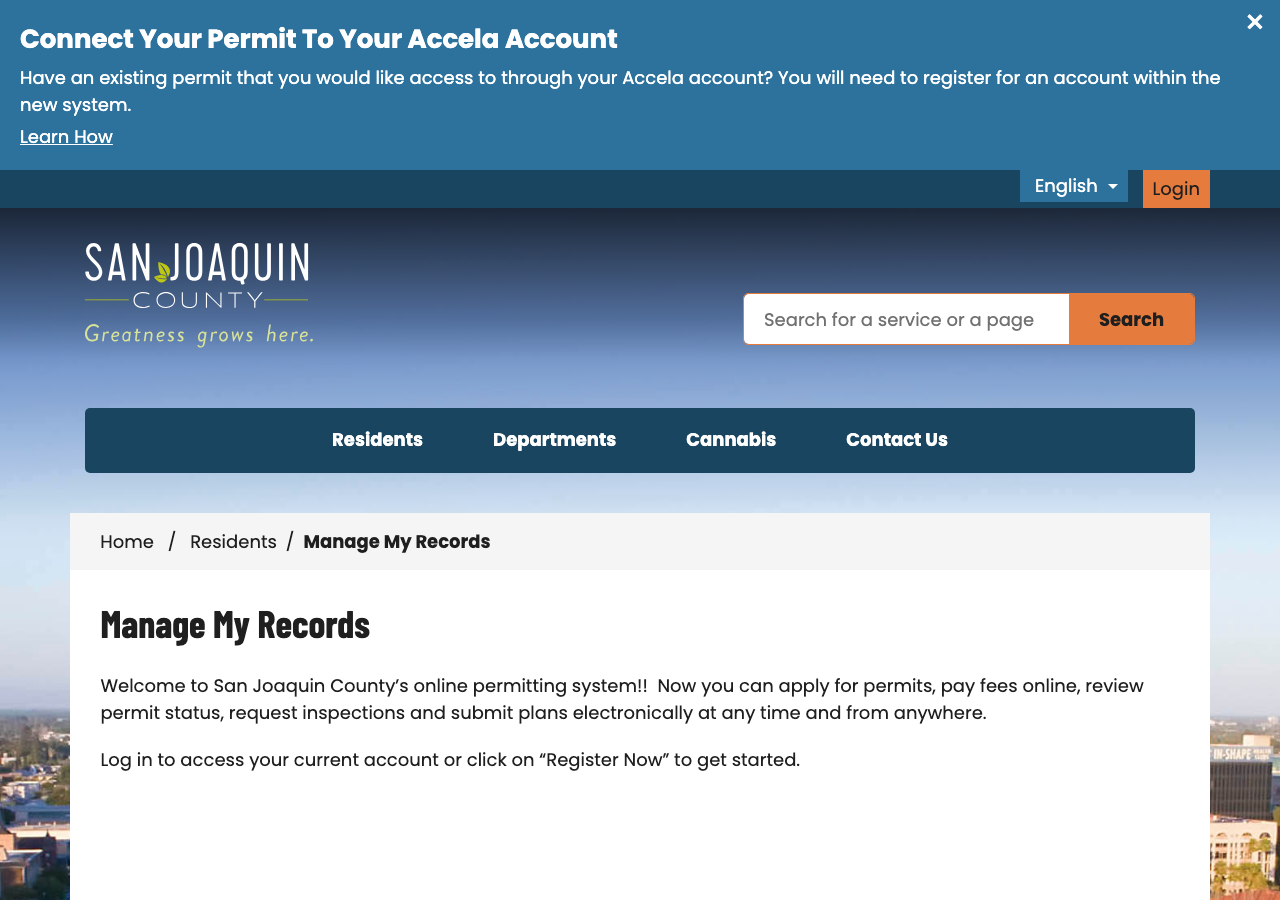
Average approval time — application to PTO
From the CPUC interconnection record. Bars show the average days taken each year; a year with no recorded projects is left blank rather than drawn as zero.