
Town of Corte Madera
Marin County
Town of Corte Madera is a city authority in the State of California, serving 10,222 residents. 629 residential solar installs are on record here. This page is the permit route for that jurisdiction: the fifteen steps from working out who has a say over an address through to permission to operate, the documents this authority publishes, and 62 answers taken from those documents and dated.
Permitting 5 steps · 28 questions
Whether a permit is needed — Yes Q3 Electrical and building permits — Combined Q4 Plan review — Approximately 3 business days for the plan-review track ('depending on staff availability'); instant/same-day for Symbium-eligible systems Q18 Where you file — Two systems for two purposes: Symbium (symbium.com/embed-search/?jurisdiction=corte_madera), live since 30 Sep 2024, for SB 379/Gov. Q20
- Permit required
- Yes95% source
- What it costs
- $216 flat for residential systems 15kW AC or less; $450 base fee plus $15 per kW for each kW above 15kW95% source
- Plan review turnaround
- Approximately 3 business days for the plan-review track ('depending on staff availability'); instant/same-day for Symbium-eligible systems82% source
- Key document
- portal / department page cited by 7 open the document
-
Confirm who has a say over your address
A city address is usually permitted by the city, not the county — but not always, and some authorities keep building and hand electrical to someone else. Getting this wrong costs the whole submittal, because every requirement below belongs to whoever actually holds jurisdiction. Check the overlays in the same pass: an HOA, a historic district, a windstorm certification or a system-size cap can reshape the design, and all of them are cheaper to find now than after the array is laid out.
- Is this authority the AHJ for residential solar at this address? Yes 95% · department page
- What does this authority permit itself, and what does it delegate? Both 88% · fee schedule
- Is a permit required for a residential rooftop PV system? Yes 95% · department page
- Is there a separate electrical permit, or is it combined? Combined 85% · fee schedule
- Is a HOA or architectural approval required first? No 65% · department page (absence checked)
- Is a wind or windstorm certification required? No 80% · department page (absence checked)
- Is a Specific Use Permit or Council approval ever required? No, for the eligible small-residential-rooftop path - the Town's own guidance states Planning approval is not required for solar PV installations up to 10kW, and the Planning Division's forms list has no CUP or Design Review item aimed at solar specifically. Larger or non-qualifying systems are not shown to trigger a CUP either; none of the Town's zoning overlay chapters (Hillside, Ridgeline, ADU, ACD, etc.) were found to name solar as a use requiring discretionary review. 60% · department page
- Is there a system-size cap on residential generation? No absolute cap on residential generation size was found in the zoning code. The Town's (legacy, 2015) Eligibility Checklist gates its EXPEDITED/by-right path at 10kW AC, roof-mounted, not exceeding the legal building height, utility-interactive and 'without battery storage' - systems outside those bounds fall to standard plan review rather than being prohibited outright. This legacy checklist predates the Town's current Symbium instant-permitting platform (live since 30 Sep 2024), whose own eligibility criteria were not independently documented by the Town and may differ. 55% · published checklist (PDF, dated 10/07/2015)
-
Check who is allowed to apply
Several authorities require the electrical permit to be pulled by a licensed electrician, or require the contractor to be registered with them BEFORE applying. Registration is not same-day. This is second on the list rather than fourth because it is the step most likely to stop the job before the drawings matter.
- Who is allowed to pull the electrical permit? Either 60% · department page
- Must the contractor be registered with this authority before applying? No 55% · department page (absence checked)
- Is a homeowner permitted to self-install and self-permit? Ambiguous - the Town publishes a standing Owner-Builder Acknowledgement Form, but the Symbium instant-permitting page is framed around contractors 50% · department page
-
Build the submittal package
Almost everywhere wants a site plan, a one-line or three-line electrical diagram, equipment cut sheets with listings, and a structural attachment detail. Build it against the published checklist rather than the last jurisdiction you worked in — the checklist is what the reviewer marks against.
- What documents make up a complete submittal? For the plan-review track (non-Symbium or Symbium-ineligible PV <=10kW): completed permit application; demonstrated compliance with the Eligibility Checklist for Expedited Solar Photovoltaic Permitting; a completed Standard Electrical Plan; a roof plan showing roof layout, PV panels, approximate roof access point, code-compliant access pathways, PV system fire classification and locations of all required labels/markings; and completed Structural Criteria with supporting documentation. This is the Town's own currently-linked 'Submittal Requirements Bulletin' (PV Toolkit Document #1), last revised 10/06/2015 and still the only submittal-requirements document linked from the live Solar Photovoltaic page. 78% · published checklist (PDF, dated 10/06/2015, still linked)
- How many copies, and in what format? Electronic PDF only, submitted by email to buildingpermit@cortemadera.gov for the plan-review track (no physical copies), formatted per the Town's current 'Document Submittal Guideline' (updated 21 Jan 2026): exported (not scanned) PDF where possible, unsecured, landscape orientation, a 6-inch cover-sheet approval block and 4x6-inch stamp block, drawn to a stated scale, Arial/Gill Sans/Tahoma 10pt minimum, grayscale, bookmarked/indexed, <=400MB per file. The Symbium instant path is fully online with no plan set submitted. 85% · published guideline (PDF, updated 21 Jan 2026)
- Is a site plan required, and what must it show? Yes - a roof plan showing roof layout, PV panels, approximate roof access point, code-compliant access pathways, PV system fire classification and label locations (plan-review track, per the Town's linked Submittal Requirements Bulletin); Ordinance 1049's own Chapter 12 addition (CMMC 15.02, Sec. 1201.4) separately requires 'a scaled and dimensioned site plan showing the location of all energy systems, property lines, buildings, service and electrical panels, transfer switches, disconnects, underground wiring and piping, fuel type and piping, map placard and signage,' clearly designating property frontage for viewer orientation. 82% · adopting ordinance
- Is a one-line / three-line diagram required? Yes 70% · published checklist (PDF, dated 10/07/2015, still linked)
- Is a structural PE stamp required, and at what threshold? No numeric threshold published for residential rooftop PV specifically. The Town's still-linked (2013 CBC/CRC-cycle) 'Structural Criteria for Residential Rooftop Solar Energy Installations' bulletin (PV Toolkit Document #5) sets a pass/fail checklist (roof slope, rafter spacing/size, module weight <=4 psf, anchor spacing per table, fastener embedment) and states: 'All items above are checked YES. No additional calculations are required' OR 'One or more items are checked NO. Attach project-specific drawings and calculations stamped and signed by a California-licensed civil or structural engineer' - i.e., the PE stamp is triggered by failing this checklist, not by a stated valuation or weight number. 65% · published checklist (PDF, 2013 CBC/CRC-cycle template, still linked)
-
Apply and pay
Most authorities now take the whole application through a portal, and several states cap or constrain what a residential solar permit may cost. Check whether plan check is billed separately before you quote the job.
- Which permit portal does this authority use? Two systems for two purposes: Symbium (symbium.com/embed-search/?jurisdiction=corte_madera), live since 30 Sep 2024, for SB 379/Gov. Code 65850.52 instant residential solar/ESS permitting; and Accela Citizen Access (ACA, aca-prod.accela.com/CORTE), the Town's general portal for permit history, fee payment and inspection scheduling (including for solar/ESS permits issued through the plan-review track). NOT SolarAPP+ (a site search for 'SolarAPP' on cortemadera.gov returns zero results, confirming the platform is genuinely absent rather than just unlinked). 88% · portal / department page
- Can the whole application be completed online? Partially 80% · published guideline
- What does a residential solar permit cost? $216 flat for residential systems 15kW AC or less; $450 base fee plus $15 per kW for each kW above 15kW 95% · fee schedule
- How is the fee calculated? Tiered 90% · fee schedule
- Is there a separate plan-check fee? No 78% · fee schedule
-
Plan review — and start the utility in parallel
Interconnection is a separate process from the permit and usually the longer pole. Where the utility does not depend on the permit being issued, running both at once is the single biggest saving available on a residential job.
- What is the stated plan-review turnaround? Approximately 3 business days for the plan-review track ('depending on staff availability'); instant/same-day for Symbium-eligible systems 82% · department page
- How long is an issued permit valid before it expires? 180 days to commence work after issuance; the permit becomes invalid if work is suspended or abandoned for 180 days; the Building Official may grant one or more written extensions of up to 180 days each on a showing of justifiable cause 75% · published form (citing CBC 105.5)
- Which utility handles interconnection here? Pacific Gas and Electric Company (PG&E) 90% · fire protection standard
- Where does the utility sit in the sequence? Parallel, with PG&E's final step gated by the Town's inspection 85% · utility DG manual
28 questions answered against Town of Corte Madera’s own published documents
Q1 Is this authority the AHJ for residential solar at this address? Core Jurisdiction & scope
Yes
Why the confidence is not higherCorte Madera is an incorporated Town; its own Building Division issues and inspects residential PV permits (fee schedule line 'Rooftop Solar Permit - Residential'; Symbium instant-permitting page). Marin County's own AHJ file expressly excludes Corte Madera as one of eleven incorporated jurisdictions outside county jurisdiction.
department page checked 2026-08-31 https://www.cortemadera.gov/572/Solar-Photovoltaic
Q2 What does this authority permit itself, and what does it delegate? Core Jurisdiction & scope
Both
Why the confidence is not higherThe current FY2025-26 fee schedule prices 'Rooftop Solar Permit - Residential' as one line item (not stacked building+electrical fees), and Symbium issues one instant permit. Planning is switched off for qualifying rooftop PV per the Town's own linked guidance ('Planning and Fire Department review and approval is not required for solar PV installations of this size'), and the Planning Division's published forms list has no solar checklist. Fire (Central Marin Fire Department, a Corte Madera/Larkspur JPA) governs installation details via Ord. 1049's Chapter 12 additions and its own Standard 523, but charges no separate residential PV/ESS fee.
fee schedule checked 2026-08-31 https://www.cortemadera.gov/DocumentCenter/View/10385/Adopted---Corte-Madera---Fee-Schedule---FY-2025-26
Q3 Is a permit required for a residential rooftop PV system? Core Jurisdiction & scope
Yes
Why the confidence is not higherThe Town's own Solar Photovoltaic Permitting page lists 'Solar Residential Only', 'Solar with ESS Residential' and 'ESS Only Residential' as permit types requiring plan review outside Symbium, and the legacy Submittal Requirements Bulletin states an Electrical Permit is required for any PV system up to 10kW.
department page checked 2026-08-31 https://www.cortemadera.gov/572/Solar-Photovoltaic
Q4 Is there a separate electrical permit, or is it combined? Core Jurisdiction & scope
Combined
Why the confidence is not higherThe fee schedule's Building Fees section prices a single 'Rooftop Solar Permit - Residential' line ($216 flat <=15kW; $450+$15/kW above); there is no separate stacked electrical-permit fee for PV. Symbium likewise issues one instant permit covering the installation.
fee schedule checked 2026-08-31 https://www.cortemadera.gov/DocumentCenter/View/10385/Adopted---Corte-Madera---Fee-Schedule---FY-2025-26
Q5 Who is allowed to pull the electrical permit? Core Who may apply
Either
Why the confidence is not higherThe Town's Solar page frames the Symbium instant path around 'Contractors seeking to pull permits under SB 379', which reads contractor-oriented, but the traditional plan-review track (systems disqualified from or not using Symbium) is submitted by email with no stated licensing restriction, and the Town separately publishes an 'Owner-Builder Acknowledgement Form' as a standing Building Division form, implying owner-builder permitting is contemplated Town-wide.
department page checked 2026-08-31 https://www.cortemadera.gov/572/Solar-Photovoltaic
Q6 Must the contractor be registered with this authority before applying? Core Who may apply
No
Why the confidence is not higherNo Town contractor pre-registration or business-license requirement was found on the Building Division, Solar Photovoltaic, or Online Permit Center pages; applicants provide a CSLB license number at time of application only.
department page (absence checked) checked 2026-08-31 https://www.cortemadera.gov/130/Building-Division
Q7 Is a homeowner permitted to self-install and self-permit? Who may apply
Ambiguous - the Town publishes a standing Owner-Builder Acknowledgement Form, but the Symbium instant-permitting page is framed around contractors
Why the confidence is not higherThe Town's Solar Photovoltaic page addresses itself to 'Contractors seeking to pull permits under SB 379'; the standard California owner-builder route (B&P Code 7044) is not excluded anywhere, and the Town's own 'Owner-Builder Acknowledgement Form' is a listed Building Division Form, but no document states outright whether a homeowner can use Symbium or must go through email/plan review instead.
department page checked 2026-08-31 https://www.cortemadera.gov/572/Solar-Photovoltaic
Q8 What documents make up a complete submittal? Core Submittal package
For the plan-review track (non-Symbium or Symbium-ineligible PV <=10kW): completed permit application; demonstrated compliance with the Eligibility Checklist for Expedited Solar Photovoltaic Permitting; a completed Standard Electrical Plan; a roof plan showing roof layout, PV panels, approximate roof access point, code-compliant access pathways, PV system fire classification and locations of all required labels/markings; and completed Structural Criteria with supporting documentation. This is the Town's own currently-linked 'Submittal Requirements Bulletin' (PV Toolkit Document #1), last revised 10/06/2015 and still the only submittal-requirements document linked from the live Solar Photovoltaic page.
Why the confidence is not higherExtracted directly (pdftotext) from the Town's own linked PDF, reached from the live Solar Photovoltaic page today. The document itself is a 2015-vintage, 2013-code-cycle 'PV Toolkit' bulletin (unrevised since), so its specific fee figures ($150/$180) are stale, but it remains the Town's only published submittal-content list for the plan-review track.
published checklist (PDF, dated 10/06/2015, still linked) checked 2026-08-31 http://www.townofcortemadera.org/DocumentCenter/View/2040
Q9 How many copies, and in what format? Submittal package
Electronic PDF only, submitted by email to buildingpermit@cortemadera.gov for the plan-review track (no physical copies), formatted per the Town's current 'Document Submittal Guideline' (updated 21 Jan 2026): exported (not scanned) PDF where possible, unsecured, landscape orientation, a 6-inch cover-sheet approval block and 4x6-inch stamp block, drawn to a stated scale, Arial/Gill Sans/Tahoma 10pt minimum, grayscale, bookmarked/indexed, <=400MB per file. The Symbium instant path is fully online with no plan set submitted.
Why the confidence is not higherThe formatting bulletin is dated 21 Jan 2026 (current) and is the Town's general submittal-format document for all Building Permit applications, cross-referenced from the Submittal Requirements page.
published guideline (PDF, updated 21 Jan 2026) checked 2026-08-31 https://www.cortemadera.gov/DocumentCenter/View/9496/Document-Submittal-Guidelines-January-2026
Q10 Is a site plan required, and what must it show? Core Submittal package
Yes - a roof plan showing roof layout, PV panels, approximate roof access point, code-compliant access pathways, PV system fire classification and label locations (plan-review track, per the Town's linked Submittal Requirements Bulletin); Ordinance 1049's own Chapter 12 addition (CMMC 15.02, Sec. 1201.4) separately requires 'a scaled and dimensioned site plan showing the location of all energy systems, property lines, buildings, service and electrical panels, transfer switches, disconnects, underground wiring and piping, fuel type and piping, map placard and signage,' clearly designating property frontage for viewer orientation.
Why the confidence is not higherTwo independent Town/fire-authority sources agree on a site-plan requirement, though the roof-plan bulletin is a stale 2015 document.
adopting ordinance checked 2026-08-31 https://www.centralmarinfire.org/prevention/documents/file/Ordinances/Corte%20Madera%20Fire%20Code%20Ordinance%20No.%201049.pdf
Q11 Is a one-line / three-line diagram required? Core Drawings & calculations
Yes
Why the confidence is not higherThe (legacy but still-linked) Eligibility Checklist for Expedited Solar Photovoltaic Permitting requires 'A Solar PV Standard Plan and supporting documentation ... completed and attached' as an electrical requirement; no document states a one-line diagram is waived.
published checklist (PDF, dated 10/07/2015, still linked) checked 2026-08-31 http://www.townofcortemadera.org/DocumentCenter/View/2041
Q12 Are string and conductor calculations required? Drawings & calculations
Nothing published by this authority.
Where we lookedThe Town's linked Eligibility Checklist (DocumentCenter/View/2041) and Submittal Requirements Bulletin (DocumentCenter/View/2040) - both require a 'Solar PV Standard Plan' and one-line diagram but do not itemize separate string/conductor calculations as a distinct deliverable; no current Ordinance 1049 or fee-schedule text mentions them either.
Q13 Is a structural PE stamp required, and at what threshold? Core Engineering & stamps
No numeric threshold published for residential rooftop PV specifically. The Town's still-linked (2013 CBC/CRC-cycle) 'Structural Criteria for Residential Rooftop Solar Energy Installations' bulletin (PV Toolkit Document #5) sets a pass/fail checklist (roof slope, rafter spacing/size, module weight <=4 psf, anchor spacing per table, fastener embedment) and states: 'All items above are checked YES. No additional calculations are required' OR 'One or more items are checked NO. Attach project-specific drawings and calculations stamped and signed by a California-licensed civil or structural engineer' - i.e., the PE stamp is triggered by failing this checklist, not by a stated valuation or weight number.
Why the confidence is not higherRead directly from the Town's own currently-linked structural bulletin; it is a generic, unedited statewide 'PV Toolkit' template built for the 2013 CBC/CRC and has not been updated for the current 2025 code cycle, so its applicability to today's installations is not certain.
published checklist (PDF, 2013 CBC/CRC-cycle template, still linked) checked 2026-08-31 http://www.townofcortemadera.org/DocumentCenter/View/2043
Q14 Is an electrical PE stamp required, and at what threshold? Engineering & stamps
Nothing published by this authority.
Where we lookedOrdinance 1049 (fire code), the current fee schedule, the Town's Building Codes & Guidelines page, and the legacy Structural Criteria/Eligibility Checklist bulletins - none states an electrical PE-stamp requirement or threshold for residential PV/ESS; California licensing law (B&P Code) governs generally.
https://www.cortemadera.gov/135/California-Building-Codes-Guidelines
Q15 What does a residential solar permit cost? Core Fees
$216 flat for residential systems 15kW AC or less; $450 base fee plus $15 per kW for each kW above 15kW
Why the confidence is not higherCurrent FY2025-26 fee schedule, Building Fees Section A, item 10 'Rooftop Solar Permit - Residential'. Footnote [a] applies the fee to new construction/additions/TI/residential remodels generally; footnote [b] notes a separate additional fee (applicable to other Section A permit types) does NOT apply to solar permits, implying the $216/$450+$15/kW figures are close to all-in for the Town's own charges. The >15kW tier is numerically identical in structure to the statewide Gov. Code 66015 cap.
fee schedule checked 2026-08-31 https://www.cortemadera.gov/DocumentCenter/View/10385/Adopted---Corte-Madera---Fee-Schedule---FY-2025-26
Q16 How is the fee calculated? Core Fees
Tiered
Why the confidence is not higherFlat $216 below the 15kW AC threshold, then a per-kW add-on above it - a hybrid the question set's 'Tiered' option best captures. Non-residential rooftop solar in the same fee schedule uses three separate tiers (<=50kW, 50-250kW, >250kW), confirming the Town's general approach to solar fees is tiered rather than flat or pure valuation-based.
fee schedule checked 2026-08-31 https://www.cortemadera.gov/DocumentCenter/View/10385/Adopted---Corte-Madera---Fee-Schedule---FY-2025-26
Q17 Is there a separate plan-check fee? Fees
No
Why the confidence is not higherThe fee schedule's Section A (which prices 'Rooftop Solar Permit - Residential') states its fees 'include all applicable inspection, and plan review fees.' Section C's separate, itemized plan-check fees explicitly apply only to Section B permits ('New Buildings, Additions, Tenant Improvements, Residential Remodels ... Not Identified Elsewhere in This Fee Schedule') - solar IS identified elsewhere (Section A), so it is carved out of the valuation-based plan-check regime.
fee schedule checked 2026-08-31 https://www.cortemadera.gov/DocumentCenter/View/10385/Adopted---Corte-Madera---Fee-Schedule---FY-2025-26
Q18 What is the stated plan-review turnaround? Core Timeline & validity
Approximately 3 business days for the plan-review track ('depending on staff availability'); instant/same-day for Symbium-eligible systems
Why the confidence is not higherThe Town's own Solar Photovoltaic page states: 'Please note that permit processing will take approximately 3 business days, depending on staff availability' for PV/ESS applications not using Symbium; the Symbium platform's entire purpose (SB 379/Gov. Code 65850.52 compliance) is instantaneous plan review and permit issuance for eligible systems.
department page checked 2026-08-31 https://www.cortemadera.gov/572/Solar-Photovoltaic
Q19 How long is an issued permit valid before it expires? Timeline & validity
180 days to commence work after issuance; the permit becomes invalid if work is suspended or abandoned for 180 days; the Building Official may grant one or more written extensions of up to 180 days each on a showing of justifiable cause
Why the confidence is not higherQuoted verbatim on the Town's own 'Permit Extension Request' form from '2022 California Building Code' Section 105.5 - this is a standard, generally-unamended state provision, but the form's citation to the 2022 CBC is one cycle behind the current 2025 CBC now in force; no separate local amendment to this section was found to suggest the substantive 180-day rule has changed.
published form (citing CBC 105.5) checked 2026-08-31 https://www.cortemadera.gov/DocumentCenter/View/790
Q20 Which permit portal does this authority use? Core Portal & process
Two systems for two purposes: Symbium (symbium.com/embed-search/?jurisdiction=corte_madera), live since 30 Sep 2024, for SB 379/Gov. Code 65850.52 instant residential solar/ESS permitting; and Accela Citizen Access (ACA, aca-prod.accela.com/CORTE), the Town's general portal for permit history, fee payment and inspection scheduling (including for solar/ESS permits issued through the plan-review track). NOT SolarAPP+ (a site search for 'SolarAPP' on cortemadera.gov returns zero results, confirming the platform is genuinely absent rather than just unlinked).
Why the confidence is not higherBoth portals are directly linked and named from the Town's own current Building Division and Solar Photovoltaic pages; the SolarAPP absence was control-checked against a positive 'solar' search (751 results) and a fabricated 'zzqqx' search (0 results) on the same site-search endpoint.
portal / department page checked 2026-08-31 https://www.cortemadera.gov/572/Solar-Photovoltaic
Q21 Can the whole application be completed online? Core Portal & process
Partially
Why the confidence is not higherSystems eligible for Symbium are issued a permit fully online with no plan set submitted. Systems requiring plan review (non-Symbium or Symbium-ineligible PV/ESS) are NOT submitted through a self-service upload portal - the Town's current Document Submittal Guideline (updated 21 Jan 2026) directs applicants to email PDF plan sets to buildingpermit@cortemadera.gov; only fee payment, permit history and inspection scheduling for that track run through the separate Accela ACA portal.
published guideline checked 2026-08-31 https://www.cortemadera.gov/DocumentCenter/View/9496/Document-Submittal-Guidelines-January-2026
Q22 Which utility handles interconnection here? Core Utility interconnection
Pacific Gas and Electric Company (PG&E)
Why the confidence is not higherConfirmed directly by Central Marin Fire Department's own Standard 523, Example #4, which describes 'the main electrical disconnect from P.G.&E.' - a first-party fire-authority document, not PowerToChoose or a third-party territory map.
fire protection standard checked 2026-08-31 https://www.centralmarinfire.org/prevention/documents/file/Standards/CMFD%20523%20Solar_PV%20Systems.pdf
Q23 Where does the utility sit in the sequence? Core Utility interconnection
Parallel, with PG&E's final step gated by the Town's inspection
Why the confidence is not higherPG&E Electric Rule 21 Section F.13.b (downloaded and searched fresh this run) provides that for NEM-1/NEM-2/NBT-1 facilities of 1 MW or smaller, Permission to Operate 'shall normally be processed not later than thirty (30) Business Days' following receipt of a completed interconnection request, a signed Generator Interconnection Agreement, AND 'evidence of Applicant's final electric inspection clearance from the Governmental Authority having jurisdiction.' The interconnection application can be filed independently of (parallel to) the Town's permit process, but PG&E will not grant PTO until the Town's final clearance exists; the Town's own permitting and inspection process has no dependency on PG&E.
utility DG manual checked 2026-08-31 https://www.pge.com/tariffs/assets/pdf/tariffbook/ELEC_RULES_21.pdf
Q24 Is a HOA or architectural approval required first? Overlays & special cases
No
Why the confidence is not higherNo Town document conditions residential solar approval on HOA or architectural-committee approval; the Planning Division's published forms list (ADU, CUP, Design Review, Variance, Sign Permit, etc.) contains no solar-specific item at all, and Gov. Code 65850.5(a) bars this statewide.
department page (absence checked) checked 2026-08-31 https://www.cortemadera.gov/484/Planning-and-Zoning-Permits
Q25 Is there a historic-district review? Overlays & special cases
Nothing published by this authority.
Where we lookedThe Planning Division's published forms list (no historic-review checklist exists there) and the Town's Solar Photovoltaic and Building Codes pages. The full Title 18 (Zoning) code text could not be retrieved from Municode this run - library.municode.com returned HTTP 403 to WebFetch and its internal /api/ endpoints returned 401 to direct requests even with browser-style headers and a Referer set, and the Wayback Machine's captures of the same URLs are the same client-rendered Angular shell (no server-side content), so no historic-overlay-district text could be confirmed present or absent. Recording 'No' would not meet this brief's bar for a proved absence.
https://library.municode.com/ca/corte_madera/codes/code_of_ordinances
Q26 Is a wind or windstorm certification required? Overlays & special cases
No
Why the confidence is not higherCalifornia has no windstorm-certification programme equivalent to the Texas TDI scheme; no such requirement appears in Ordinance 1049, the fee schedule, or any Building Division page.
department page (absence checked) checked 2026-08-31 https://www.cortemadera.gov/135/California-Building-Codes-Guidelines
Q27 Is a Specific Use Permit or Council approval ever required? Overlays & special cases
No, for the eligible small-residential-rooftop path - the Town's own guidance states Planning approval is not required for solar PV installations up to 10kW, and the Planning Division's forms list has no CUP or Design Review item aimed at solar specifically. Larger or non-qualifying systems are not shown to trigger a CUP either; none of the Town's zoning overlay chapters (Hillside, Ridgeline, ADU, ACD, etc.) were found to name solar as a use requiring discretionary review.
Why the confidence is not higherBased on the Town's own solar-page statement plus the absence of any solar item on the published Planning Division forms list; the full zoning title (Title 18) could not be retrieved from Municode this run (API returned 401/403 to automated access) to confirm no overlay-district trigger exists for larger systems.
department page checked 2026-08-31 https://www.cortemadera.gov/572/Solar-Photovoltaic
Q28 Is there a system-size cap on residential generation? Overlays & special cases
No absolute cap on residential generation size was found in the zoning code. The Town's (legacy, 2015) Eligibility Checklist gates its EXPEDITED/by-right path at 10kW AC, roof-mounted, not exceeding the legal building height, utility-interactive and 'without battery storage' - systems outside those bounds fall to standard plan review rather than being prohibited outright. This legacy checklist predates the Town's current Symbium instant-permitting platform (live since 30 Sep 2024), whose own eligibility criteria were not independently documented by the Town and may differ.
Why the confidence is not higherThe only sized threshold found is the 2015 Eligibility Checklist's cutoff, which is likely superseded in practice by Symbium's own (unpublished by the Town) eligibility logic; no zoning-code kW cap was located.
published checklist (PDF, dated 10/07/2015) checked 2026-08-31 http://www.townofcortemadera.org/DocumentCenter/View/2041
Lines marked with a percentage were read off this authority’s own published documents. Unmarked guidance is general good practice, not this jurisdiction’s rule — always confirm against the authority before you submit.
Install 5 steps · 20 questions
-
Build to the code editions actually in force here
The NEC edition a jurisdiction enforces is often a cycle behind the newest one published, and local amendments sit on top of it. Rapid shutdown, conductor sizing and labelling all change between editions, so the edition in force is the first thing to establish, not the last.
- Which NEC edition is in force? 2023 85% · adopting ordinance / department page
- Which building code edition is in force? 2025 California Building Code and 2025 California Residential Code, effective 1 January 2026 95% · department page
- Which fire code edition is in force? 2025 California Fire Code plus the 2024 International Fire Code 95% · adopting ordinance
- Are there local amendments to any of the above? Yes 88% · adopting ordinance
- What is the installation judged against? 2025 CEC Article 690/705 (2023 NEC base, not locally amended) + 2025 CBC/CRC + 2025 CFC (including Section 1205, Solar Photovoltaic Power Systems, adopted un-amended) + Corte Madera's own added CFC Chapter 12 Energy Systems provisions (Sections 1201.4-1201.7: site plan, signs/labels, single exterior disconnect, mandatory shutdown test) under Ordinance 1049 + Central Marin Fire Department's own Fire Protection Standard 523 (Solar Photovoltaic Systems, rev. 1/1/2023), which supplies detailed signage/disconnect/testing specifications beyond the bare code + PG&E Electric Rule 21 for interconnection. 85% · ordinance + fire protection standard
-
Fire access, setbacks and pathways
Ridge setbacks and roof access pathways are fire-service requirements and they constrain the array layout. They are the most common cause of a redesign after the fire department comments on a plan set.
- What ridge setback and access pathways are required? 2025 California Fire Code Section 1205 (Solar Photovoltaic Power Systems, successor to the 2013-cycle Section 605.11) applies as adopted, with NO local amendment to the pathway/setback numbers - confirmed by a full-text search of Ordinance 1049 for '1205', 'pathway' and 'ridge', which returns zero hits (positive control: the same search returns Section 918 and Chapter 12 text, proving the search worked). The Town's own currently-linked legacy handout ('2013 Solar Panels - Residential Fire Code') still states the SUPERSEDED 2013-cycle numeric rules verbatim (3-ft eave-to-ridge access pathway on hip roofs, two 3-ft pathways on single-ridge roofs, 18-inch hip/valley setback, panels no higher than 3 ft below the ridge) under old Section 605.11 and cites the now-lapsed Ordinance 936 metal-conduit rule - this document is stale and should not be relied on for the current section number, though its substantive pathway numbers are likely materially unchanged from the current unamended CFC 1205 base text. 65% · fire code excerpt (PDF, 2013-cycle, still linked but superseded)
-
Rapid shutdown
Which rapid-shutdown rule applies follows directly from the NEC edition in force, and the initiation device has to be at a location the fire service can reach and identify. This is inspected, and it is labelled.
- Is rapid shutdown required, and to which NEC edition? Yes - NEC 2023 Article 690.12, via the 2025 California Electrical Code (unamended by the Town). Corte Madera separately layers its OWN local shutdown requirement via Ordinance 1049 Sections 1201.6 (a single, approved, readily accessible, independently labeled exterior disconnect located as close as possible to the main service panel) and 1201.7 (mandatory operational testing of new installations: simulate a normal power failure by closing the main service breaker, then use the disconnect(s) to terminate ALL alternate power sources - main service, PV, ESS and generators - and verify the shutdown is complete). Central Marin Fire's Standard 523 confirms this test is performed and verified at the field inspection, with all shutoff switches checked for being operational, and carries an express exception for Enphase-style module-level rapid-shutdown equipment that de-energizes at the roof panels. 88% · ordinance + fire protection standard
-
Labels and placards
The NEC sets a baseline for permanent markings at the service equipment and the disconnecting means. On top of that, an authority may specify its own wording, and the utility may specify more again. Where any of them writes its own text, a generic off-the-shelf label set will not pass — this is the detail most often fixed on a return visit.
- Which placards does this authority require at the service equipment? At minimum: (1) standard 2023 NEC Article 690/705 labels (rapid-shutdown label 690.56(C), disconnect marking 690.13(B), point-of-interconnection directory 705.10) - state law, not local; (2) Central Marin Fire's OWN Standard 523 label set, verified this run: an exterior/interior DC-conduit CAUTION label ('CAUTION - Solar PV Wiring May Remain Energized After Disconnection During Daylight Hours') every 20 feet (mounted at eye level on vertical runs); a Power Source Warning label posted on both the exterior and interior of the main service panel stating how many and which power sources supply the building and how to cut all power (verbatim examples given for 2/3/4-source combinations, e.g. 'WARNING - TWO POWER SOURCES - SOURCES INCLUDE: UTILITY GRID AND PV SOLAR'); individually labeled Disconnect labels (e.g. 'BATTERY DISCONNECT', 'PV DISCONNECT', 'GENERATOR DISCONNECT') affixed to each disconnecting means; a Disconnect-Location label at the main PG&E electrical disconnect giving written directions to any other disconnects; and a Site Card Placard (facility map) verified at the final inspection; (3) PG&E Rule 21 H.1.d requires the isolating device be marked open/closed and, if not adjacent to the point of common coupling, accompanied by permanent signage at a PG&E-approved location. 90% · fire protection standard (image-only PDF, OCR + visual read)
- Does the authority specify placard wording of its own? Yes 92% · fire protection standard
- Does it specify letter height, colour or material? Yes - red label with white lettering, minimum letter height of approximately one-quarter inch ('no smaller than 1/4 inch' per the standard's own text, OCR-read from a scanned original); conduit labels installed every 20 feet, with one label mounted at eye level where conduit runs vertically. 80% · fire protection standard (OCR read)
- Is a site plan / facility map placard required, and what must it show? Yes - a Site Card Placard, required and 'verified at the final inspection', posted at the exterior main service panel (and at the equipment location if installed internally), showing the location of the main service panel, all disconnects (numerically labeled to match the number of power sources) and, per Ordinance 1049 Section 1201.4, the property frontage 'for viewer orientation'. Standard 523 illustrates this with a worked example: a roof diagram with a 'STREET FRONTAGE' arrow and numbered disconnects (#1 Main, #2 PV, #3 ESS) radiating from a 'YOU ARE HERE' main-service-panel marker. 90% · fire protection standard + ordinance
- Does the UTILITY specify placards beyond the AHJ's? Yes, to a limited extent - PG&E Electric Rule 21 Section H.1.d requires the generating facility's isolating/visible disconnect device be clearly marked open/closed, capable of being locked open, clearly marked on the submitted single-line diagram with its type and location pre-approved by PG&E, and - only if the device is NOT adjacent to the Point of Common Coupling - accompanied by 'permanent signage ... installed at a Distribution Provider approved location.' No letter height, color or material is specified in Rule 21 itself. 80% · utility DG manual
- Where must the labels be placed? At the main service panel, both exterior and interior (power-source warning label); every 20 feet along DC conduit runs, at eye level where vertical (conduit caution label); on the main PG&E electrical disconnect (disconnect-location label with written directions to other disconnects); on each individual disconnecting means (disconnect labels); and, per PG&E Rule 21, on or adjacent to the isolating device itself, or at a PG&E-approved alternate location if that device is not adjacent to the point of common coupling. 85% · fire protection standard / utility spec
-
Disconnect, storage and listed equipment
Where the AC disconnect must sit relative to the meter is usually the utility's rule, not the building department's. Battery storage frequently carries its own permit, its own inspection and its own fire conditions.
- Where must the AC disconnect be, relative to the meter? No Town or PG&E rule fixes a distance from the METER. Corte Madera's own rule (Ordinance 1049 Section 1201.6, restated in Standard 523) is proximity-to-PANEL, not proximity-to-meter: a single, approved, readily accessible, independently and clearly labeled exterior disconnect 'located prior to any load/service panel and installed as close as possible to the main service panel or as approved by the fire code official,' reachable by emergency personnel from the exterior without ladders or special equipment, with integrated toggle/rocker/electronic switches barred from serving as this independent disconnect - and an express exception for Enphase-type module-level rapid-shutdown systems that de-energize at the roof panels on loss of AC reference. PG&E Rule 21 H.1.d requires only that the isolating device be visible, lockable, marked on the pre-approved single-line diagram, and (only if not adjacent to the point of common coupling) accompanied by signage at a PG&E-approved location - no numeric distance appears in Rule 21 either. 80% · fire protection standard + utility DG manual
- Must equipment be on a specific approved list? Yes 65% · published checklist / utility spec
- Are batteries permitted, and under what conditions? Permitted, with conditions. 'Battery Backup Storage - Residential' is its own line in the Town's current fee schedule ($96). Central Marin Fire's Standard 523 requires: energy storage systems in enclosed rooms be mounted a minimum of 24 inches above the finished floor, with a permanent placard on any battery cabinet; ESS installed in an attached garage, basement or interior room be equipped with EITHER a fire sprinkler system OR a heat detector hardwired to an interior smoke alarm audible at a minimum of 70 decibels in any sleeping room; individual solar arrays not exceed 100 feet in length without a 5-foot separation between arrays. Ordinance 1049's Chapter 12 additions (signs/labels, single disconnect, shutdown test) apply equally to energy storage systems. 90% · fire protection standard + fee schedule
- Is there a separate ESS permit or inspection? Yes 80% · fee schedule
- Is a ground mount treated as a structure? Likely yes, though not stated outright 55% · fee schedule
- Is there a local rule on service upgrades or busbar sizing? No local rule found on service-upgrade sizing or busbar rating beyond the unamended 2023 NEC (705.12) 65% · adopting ordinance (absence checked)
- Is a specific mounting system or attachment spacing required? No current local mounting/attachment-spacing standard was found in Ordinance 1049 or on the Town's current Building Division pages. The Town's own still-linked but stale generic 'PV Toolkit Document #5' Structural Criteria bulletin (built for 2013 CBC/CRC, unfilled statewide template with no Corte Madera-specific edits found) does carry anchor-spacing tables by roof slope and rafter spacing for flush-mounted arrays. 65% · published checklist (PDF, 2013 CBC/CRC-cycle template, still linked)
20 questions answered against Town of Corte Madera’s own published documents
Q29 Which NEC edition is in force? Core Code editions in force
2023
Why the confidence is not higherThe Town's own current Building Codes & Guidelines page states that, as of 1 Jan 2026, submitted plans must adhere to the '2025 California Electrical Code'; the 2025 CEC incorporates the 2023 NEC per the standard statewide triennial code-adoption cycle (the Town's page does not itself spell out the NEC year, hence this is a documented inference rather than a verbatim quote).
adopting ordinance / department page checked 2026-08-31 https://www.cortemadera.gov/135/California-Building-Codes-Guidelines
Q30 Which building code edition is in force? Core Code editions in force
2025 California Building Code and 2025 California Residential Code, effective 1 January 2026
Why the confidence is not higherTown's own current Building Codes & Guidelines page, dated as of 1 Jan 2026, lists the 2025 CBC and 2025 CRC among the full suite of 2025-cycle codes now in force.
department page checked 2026-08-31 https://www.cortemadera.gov/135/California-Building-Codes-Guidelines
Q31 Which fire code edition is in force? Code editions in force
2025 California Fire Code plus the 2024 International Fire Code
Why the confidence is not higherOrdinance No. 1049 of the Town Council of Corte Madera repeals and re-enacts Municipal Code Chapter 15.02 to adopt the 2025 CFC and 2024 IFC with local amendments; introduced 7 Oct 2025, adopted 21 Oct 2025 by a 5-0 Council vote, effective 30 days after adoption or 1 Jan 2026, whichever is later.
adopting ordinance checked 2026-08-31 https://www.centralmarinfire.org/prevention/documents/file/Ordinances/Corte%20Madera%20Fire%20Code%20Ordinance%20No.%201049.pdf
Q32 Are there local amendments to any of the above? Core Code editions in force
Yes
Why the confidence is not higherOrdinance 1049 adds extensive local, findings-supported amendments: new CFC Section 918 (Exterior Wildfire Protection Systems), deletions to Chapter 11 (existing-building requirements), and a new Chapter 12 'Energy Systems' (Sections 1201.4 site plan, 1201.5 signs/labels, 1201.6 disconnect, 1201.7 operational shutdown testing, plus Section 1208 Home Backup Generators) - verbatim identical to unincorporated Marin County's own 16.16.040 additions, confirming a shared Marin Fire Chiefs Association model. An OLDER local amendment (Ordinance 936, amending 2013-cycle CFC Section 605.11.2.1 to require PV DC wiring be run entirely in metal conduit) was searched for in both the 2022-cycle update (Ordinance 1063) and the current Ordinance 1049 and found in NEITHER - it appears to have lapsed rather than carried forward, and the Town's own still-linked '2013 Solar Panels - Residential Fire Code' handout citing it is now stale.
adopting ordinance checked 2026-08-31 https://www.centralmarinfire.org/prevention/documents/file/Ordinances/Corte%20Madera%20Fire%20Code%20Ordinance%20No.%201049.pdf
Q33 What is the installation judged against? Core Electrical
2025 CEC Article 690/705 (2023 NEC base, not locally amended) + 2025 CBC/CRC + 2025 CFC (including Section 1205, Solar Photovoltaic Power Systems, adopted un-amended) + Corte Madera's own added CFC Chapter 12 Energy Systems provisions (Sections 1201.4-1201.7: site plan, signs/labels, single exterior disconnect, mandatory shutdown test) under Ordinance 1049 + Central Marin Fire Department's own Fire Protection Standard 523 (Solar Photovoltaic Systems, rev. 1/1/2023), which supplies detailed signage/disconnect/testing specifications beyond the bare code + PG&E Electric Rule 21 for interconnection.
Why the confidence is not higherSynthesized from the current adopting ordinance, the current fire-authority standard, and the current PG&E tariff, all read directly this run.
ordinance + fire protection standard checked 2026-08-31 https://www.centralmarinfire.org/prevention/documents/file/Standards/CMFD%20523%20Solar_PV%20Systems.pdf
Q34 Is there a local rule on service upgrades or busbar sizing? Electrical
No local rule found on service-upgrade sizing or busbar rating beyond the unamended 2023 NEC (705.12)
Why the confidence is not higherOrdinance 1049's Chapter 12 additions address only disconnects, signage and shutdown testing, not busbar/service sizing; the fee schedule treats 'Service Panel Upgrade - Residential' ($288) as its own separate line item from solar, implying no PV-specific busbar rule ties the two together.
adopting ordinance (absence checked) checked 2026-08-31 https://www.centralmarinfire.org/prevention/documents/file/Ordinances/Corte%20Madera%20Fire%20Code%20Ordinance%20No.%201049.pdf
Q35 Is a specific mounting system or attachment spacing required? Structural & mounting
No current local mounting/attachment-spacing standard was found in Ordinance 1049 or on the Town's current Building Division pages. The Town's own still-linked but stale generic 'PV Toolkit Document #5' Structural Criteria bulletin (built for 2013 CBC/CRC, unfilled statewide template with no Corte Madera-specific edits found) does carry anchor-spacing tables by roof slope and rafter spacing for flush-mounted arrays.
Why the confidence is not higherSearched Ordinance 1049 in full for 'attachment'/'anchor'/'mounting' with no PV-specific hits; the only spacing tables that exist are in the 2013-cycle legacy toolkit document, which the Town has not updated for the current code cycle.
published checklist (PDF, 2013 CBC/CRC-cycle template, still linked) checked 2026-08-31 http://www.townofcortemadera.org/DocumentCenter/View/2043
Q36 What ridge setback and access pathways are required? Core Fire pathways & setbacks
2025 California Fire Code Section 1205 (Solar Photovoltaic Power Systems, successor to the 2013-cycle Section 605.11) applies as adopted, with NO local amendment to the pathway/setback numbers - confirmed by a full-text search of Ordinance 1049 for '1205', 'pathway' and 'ridge', which returns zero hits (positive control: the same search returns Section 918 and Chapter 12 text, proving the search worked). The Town's own currently-linked legacy handout ('2013 Solar Panels - Residential Fire Code') still states the SUPERSEDED 2013-cycle numeric rules verbatim (3-ft eave-to-ridge access pathway on hip roofs, two 3-ft pathways on single-ridge roofs, 18-inch hip/valley setback, panels no higher than 3 ft below the ridge) under old Section 605.11 and cites the now-lapsed Ordinance 936 metal-conduit rule - this document is stale and should not be relied on for the current section number, though its substantive pathway numbers are likely materially unchanged from the current unamended CFC 1205 base text.
Why the confidence is not higherThe current ordinance was searched directly and found not to touch this section; the numeric detail comes only from the stale 2015-era handout, which is flagged rather than treated as current law.
fire code excerpt (PDF, 2013-cycle, still linked but superseded) checked 2026-08-31 http://www.townofcortemadera.org/DocumentCenter/View/2039
Q37 Is rapid shutdown required, and to which NEC edition? Core Rapid shutdown
Yes - NEC 2023 Article 690.12, via the 2025 California Electrical Code (unamended by the Town). Corte Madera separately layers its OWN local shutdown requirement via Ordinance 1049 Sections 1201.6 (a single, approved, readily accessible, independently labeled exterior disconnect located as close as possible to the main service panel) and 1201.7 (mandatory operational testing of new installations: simulate a normal power failure by closing the main service breaker, then use the disconnect(s) to terminate ALL alternate power sources - main service, PV, ESS and generators - and verify the shutdown is complete). Central Marin Fire's Standard 523 confirms this test is performed and verified at the field inspection, with all shutoff switches checked for being operational, and carries an express exception for Enphase-style module-level rapid-shutdown equipment that de-energizes at the roof panels.
Why the confidence is not higherRead directly from the current adopting ordinance and the current (rev. 1/1/2023) fire-authority standard; this is Corte Madera's most operationally distinctive requirement beyond the bare NEC label.
ordinance + fire protection standard checked 2026-08-31 https://www.centralmarinfire.org/prevention/documents/file/Standards/CMFD%20523%20Solar_PV%20Systems.pdf
Q38 Which placards does this authority require at the service equipment? Core Labels Signage & labelling
At minimum: (1) standard 2023 NEC Article 690/705 labels (rapid-shutdown label 690.56(C), disconnect marking 690.13(B), point-of-interconnection directory 705.10) - state law, not local; (2) Central Marin Fire's OWN Standard 523 label set, verified this run: an exterior/interior DC-conduit CAUTION label ('CAUTION - Solar PV Wiring May Remain Energized After Disconnection During Daylight Hours') every 20 feet (mounted at eye level on vertical runs); a Power Source Warning label posted on both the exterior and interior of the main service panel stating how many and which power sources supply the building and how to cut all power (verbatim examples given for 2/3/4-source combinations, e.g. 'WARNING - TWO POWER SOURCES - SOURCES INCLUDE: UTILITY GRID AND PV SOLAR'); individually labeled Disconnect labels (e.g. 'BATTERY DISCONNECT', 'PV DISCONNECT', 'GENERATOR DISCONNECT') affixed to each disconnecting means; a Disconnect-Location label at the main PG&E electrical disconnect giving written directions to any other disconnects; and a Site Card Placard (facility map) verified at the final inspection; (3) PG&E Rule 21 H.1.d requires the isolating device be marked open/closed and, if not adjacent to the point of common coupling, accompanied by permanent signage at a PG&E-approved location.
Why the confidence is not higherStandard 523 was downloaded and read in full (OCR + visual read of the label-example graphics, since the PDF is an image scan with no text layer); PG&E Rule 21 was downloaded and searched fresh this run.
fire protection standard (image-only PDF, OCR + visual read) checked 2026-08-31 https://www.centralmarinfire.org/prevention/documents/file/Standards/CMFD%20523%20Solar_PV%20Systems.pdf
Q39 Does the authority specify placard wording of its own? Core Labels Signage & labelling
Yes
Why the confidence is not higherCentral Marin Fire's Standard 523 gives verbatim required wording for every label type it requires (conduit caution label, power-source warning label with worked examples for 2/3/4 sources, disconnect labels, disconnect-location label, site card placard) - a rare case of an authority specifying exact text rather than only function.
fire protection standard checked 2026-08-31 https://www.centralmarinfire.org/prevention/documents/file/Standards/CMFD%20523%20Solar_PV%20Systems.pdf
Q40 Does it specify letter height, colour or material? Core Labels Signage & labelling
Yes - red label with white lettering, minimum letter height of approximately one-quarter inch ('no smaller than 1/4 inch' per the standard's own text, OCR-read from a scanned original); conduit labels installed every 20 feet, with one label mounted at eye level where conduit runs vertically.
Why the confidence is not higherRead from the scanned original via OCR; the fraction character rendered ambiguously in OCR ('4" inch') but context (a red/white safety-label spec) and the surrounding text make 1/4 inch the clear reading. This is notably smaller than the 3/8-inch minimum seen in several other California jurisdictions' CFC-based marking rules, which is worth flagging rather than assuming a typo toward 3/8.
fire protection standard (OCR read) checked 2026-08-31 https://www.centralmarinfire.org/prevention/documents/file/Standards/CMFD%20523%20Solar_PV%20Systems.pdf
Q41 Is a site plan / facility map placard required, and what must it show? Core Labels Signage & labelling
Yes - a Site Card Placard, required and 'verified at the final inspection', posted at the exterior main service panel (and at the equipment location if installed internally), showing the location of the main service panel, all disconnects (numerically labeled to match the number of power sources) and, per Ordinance 1049 Section 1201.4, the property frontage 'for viewer orientation'. Standard 523 illustrates this with a worked example: a roof diagram with a 'STREET FRONTAGE' arrow and numbered disconnects (#1 Main, #2 PV, #3 ESS) radiating from a 'YOU ARE HERE' main-service-panel marker.
Why the confidence is not higherRead directly from Ordinance 1049's own codified text and from Standard 523's worked visual example (page 7), obtained via OCR/visual read of the scanned PDF.
fire protection standard + ordinance checked 2026-08-31 https://www.centralmarinfire.org/prevention/documents/file/Standards/CMFD%20523%20Solar_PV%20Systems.pdf
Q42 Does the UTILITY specify placards beyond the AHJ's? Core Labels Signage & labelling
Yes, to a limited extent - PG&E Electric Rule 21 Section H.1.d requires the generating facility's isolating/visible disconnect device be clearly marked open/closed, capable of being locked open, clearly marked on the submitted single-line diagram with its type and location pre-approved by PG&E, and - only if the device is NOT adjacent to the Point of Common Coupling - accompanied by 'permanent signage ... installed at a Distribution Provider approved location.' No letter height, color or material is specified in Rule 21 itself.
Why the confidence is not higherRule 21 was downloaded fresh this run and searched directly (searched for 'Isolation Device', 'locked in the open position', 'Point of Common Coupling' - all found; a fabricated term returned zero hits). No PG&E Greenbook (TD-7001M) was independently re-verified this run, so any more specific meter-panel signage requirement PG&E may separately publish there is not confirmed here.
utility DG manual checked 2026-08-31 https://www.pge.com/tariffs/assets/pdf/tariffbook/ELEC_RULES_21.pdf
Q43 Where must the labels be placed? Core Labels Signage & labelling
At the main service panel, both exterior and interior (power-source warning label); every 20 feet along DC conduit runs, at eye level where vertical (conduit caution label); on the main PG&E electrical disconnect (disconnect-location label with written directions to other disconnects); on each individual disconnecting means (disconnect labels); and, per PG&E Rule 21, on or adjacent to the isolating device itself, or at a PG&E-approved alternate location if that device is not adjacent to the point of common coupling.
Why the confidence is not higherConsolidated from Central Marin Fire's Standard 523 (read in full) and PG&E Rule 21 (searched fresh this run).
fire protection standard / utility spec checked 2026-08-31 https://www.centralmarinfire.org/prevention/documents/file/Standards/CMFD%20523%20Solar_PV%20Systems.pdf
Q44 Must equipment be on a specific approved list? Equipment listing
Yes
Why the confidence is not higherThe Town's (legacy) Eligibility Checklist requires the system be 'utility interactive', implying listed/certified inverter equipment; PG&E Rule 21 separately requires UL-1741-listed, Distribution-Provider-Certified Equipment for any inverter-based generating facility. No Town-specific approved-product list beyond these was found.
published checklist / utility spec checked 2026-08-31 http://www.townofcortemadera.org/DocumentCenter/View/2041
Q45 Are batteries permitted, and under what conditions? Core Battery / ESS
Permitted, with conditions. 'Battery Backup Storage - Residential' is its own line in the Town's current fee schedule ($96). Central Marin Fire's Standard 523 requires: energy storage systems in enclosed rooms be mounted a minimum of 24 inches above the finished floor, with a permanent placard on any battery cabinet; ESS installed in an attached garage, basement or interior room be equipped with EITHER a fire sprinkler system OR a heat detector hardwired to an interior smoke alarm audible at a minimum of 70 decibels in any sleeping room; individual solar arrays not exceed 100 feet in length without a 5-foot separation between arrays. Ordinance 1049's Chapter 12 additions (signs/labels, single disconnect, shutdown test) apply equally to energy storage systems.
Why the confidence is not higherRead directly from Central Marin Fire's own current standard (rev. 1/1/2023) and the Town's current fee schedule.
fire protection standard + fee schedule checked 2026-08-31 https://www.centralmarinfire.org/prevention/documents/file/Standards/CMFD%20523%20Solar_PV%20Systems.pdf
Q46 Is there a separate ESS permit or inspection? Battery / ESS
Yes
Why the confidence is not higher'Battery Backup Storage - Residential' ($96) is a distinct fee/permit line from 'Rooftop Solar Permit - Residential' ($216) in the Town's current fee schedule, so a PV-plus-battery job carries two permit fees; both are inspected together by the same Building inspector under Central Marin Fire's single combined shutdown-test protocol.
fee schedule checked 2026-08-31 https://www.cortemadera.gov/DocumentCenter/View/10385/Adopted---Corte-Madera---Fee-Schedule---FY-2025-26
Q47 Is a ground mount treated as a structure? Core Ground mount
Likely yes, though not stated outright
Why the confidence is not higher'Ground-Mount Solar' is priced as its own separate $192 fee line, distinct from 'Rooftop Solar Permit - Residential', implying a distinct review scope consistent with structure-level treatment, but no Town document explicitly states a ground-mounted array is a 'structure' for zoning-setback purposes.
fee schedule checked 2026-08-31 https://www.cortemadera.gov/DocumentCenter/View/10385/Adopted---Corte-Madera---Fee-Schedule---FY-2025-26
Q48 Where must the AC disconnect be, relative to the meter? Core Utility equipment
No Town or PG&E rule fixes a distance from the METER. Corte Madera's own rule (Ordinance 1049 Section 1201.6, restated in Standard 523) is proximity-to-PANEL, not proximity-to-meter: a single, approved, readily accessible, independently and clearly labeled exterior disconnect 'located prior to any load/service panel and installed as close as possible to the main service panel or as approved by the fire code official,' reachable by emergency personnel from the exterior without ladders or special equipment, with integrated toggle/rocker/electronic switches barred from serving as this independent disconnect - and an express exception for Enphase-type module-level rapid-shutdown systems that de-energize at the roof panels on loss of AC reference. PG&E Rule 21 H.1.d requires only that the isolating device be visible, lockable, marked on the pre-approved single-line diagram, and (only if not adjacent to the point of common coupling) accompanied by signage at a PG&E-approved location - no numeric distance appears in Rule 21 either.
Why the confidence is not higherRead directly from the current fire-authority standard and a fresh download/search of PG&E Rule 21 this run (searched for 'Isolation Device', distance figures and 'placard' with no numeric-distance hits found).
fire protection standard + utility DG manual checked 2026-08-31 https://www.centralmarinfire.org/prevention/documents/file/Standards/CMFD%20523%20Solar_PV%20Systems.pdf
Lines marked with a percentage were read off this authority’s own published documents. Unmarked guidance is general good practice, not this jurisdiction’s rule — always confirm against the authority before you submit.
Inspection 5 steps · 14 questions
-
Book it
Booking is a portal, a phone call or an email depending on the authority, and the notice required is rarely zero. Book before the work is finished rather than after — the lead time, not the work, is usually what sets the date.
- How is an inspection booked? Portal 95% · department page
- Are same-day or AM/PM windows offered? No same-day guarantee stated; two fixed daily windows are offered instead - Monday through Friday, 9:00 AM-12:00 PM and 1:00 PM-4:00 PM. No AM/PM selection or narrower window is described. 88% · department page
-
Know who turns up
Some authorities inspect their own solar work; some delegate it, and a few do not inspect the PV equipment itself at all. Who is coming determines what they will look at.
- Does this AHJ perform its own final solar inspection? Delegated 60% · department page + fire protection standard (inference)
- If delegated, to whom? For the fire-code portion of a PV/ESS job specifically: Central Marin Fire Department, the operating brand of a Joint Powers Authority ('Central Marin Fire Authority' in the Town's own adopting-ordinance text) formed in 2018 between the Town of Corte Madera and the City of Larkspur, also serving incorporated Greenbrae and parts of Marin County Service Area 31. Building and electrical are NOT delegated - they stay with the Town's own Building Division. 85% · department page
-
Work the stages in order
A rough-in or mid-roof inspection, where one is required, has to happen before the work it covers is closed up. Missing a stage means opening something back up, and it is the most expensive kind of correction.
- Which inspections are required, and in what order? A single combined final inspection for both the building/electrical work and Central Marin Fire's Chapter 12 requirements (signage verification and the whole-system shutdown test) - no separate rough-in stage is described anywhere. This matches the Town's legacy 'Inspection Guide for PV Systems' (PV Toolkit Document #7), which frames the entire inspection as one field visit against the approved Standard Plan. 68% · published inspection guide (PDF, 2013-cycle, still linked)
- Is a rough-in or mid-roof inspection required? No 62% · fire protection standard (absence checked)
-
Have the paperwork on site
The approved plan set, the permit, and the equipment listings should be on site and reachable. Inspectors routinely verify that installed equipment matches what was approved, and that the labels are the ones the plan set promised.
- Is there a published inspection checklist? Yes 75% · published checklist (PDF, 2013-cycle, still linked)
- What must be on site at inspection? The approved plans (the Inspection Guide repeatedly requires items to match 'the approved plan') and, per Central Marin Fire's Standard 523, the completed Site Card Placard posted at the main service panel, checked in place at the final inspection. 65% · fire protection standard + inspection guide
- Does the inspector verify labels and listings? Yes 85% · fire protection standard + inspection guide
-
Sign-off, and permission to operate
Passing gives you a final or an equivalent sign-off. That is not the same as permission to operate: PTO comes from the utility, and who tells the utility the inspection passed varies. A system left switched off for weeks is usually waiting on this handover.
- What is issued on pass? Final 62% · fire protection standard (inference)
- Who notifies the utility for PTO? Installer 78% · utility DG manual
- Is there a re-inspection fee? $144 per re-inspection, applying after the first re-inspection 88% · fee schedule
14 questions answered against Town of Corte Madera’s own published documents
Q49 How is an inspection booked? Core Booking & scheduling
Portal
Why the confidence is not higherThe Town launched a new online Building Permit Inspection Request Portal via Accela Citizen Access (ACA) on 17 June 2024; phone-in inspection requests were explicitly discontinued after that date. Separate ACA modules exist for Building, Fire and Public Works inspections; Planning inspections are booked by email instead.
department page checked 2026-08-31 https://www.cortemadera.gov/893/inspections
Q50 How much notice is required? Core Booking & scheduling
Nothing published by this authority.
Where we lookedThe Inspections page, the Building Codes & Guidelines page, and the Online Permit Center page - all describe the two daily inspection windows (9-12, 1-4) and that requests go through the Accela ACA portal, but none states a minimum advance-notice period (e.g., '24 hours' or 'by 3pm the prior business day').
Q51 Are same-day or AM/PM windows offered? Booking & scheduling
No same-day guarantee stated; two fixed daily windows are offered instead - Monday through Friday, 9:00 AM-12:00 PM and 1:00 PM-4:00 PM. No AM/PM selection or narrower window is described.
Why the confidence is not higherStated identically on both the Inspections page and the California Building Codes & Guidelines page (Building Division contact box).
department page checked 2026-08-31 https://www.cortemadera.gov/893/inspections
Q52 Does this AHJ perform its own final solar inspection? Core Who inspects
Delegated
Why the confidence is not higherThe Town's own Building Division performs the building final inspection in-house. A separate 'Schedule a Fire Inspection' Accela module exists for Central Marin Fire Department (the Corte Madera/Larkspur JPA), but CMFD's current fee schedule carries no residential PV/ESS line, and its Standard 523 describes its signage/shutdown-test items as verified 'at the final inspection' without naming a distinct paid fire call-out - so for an ordinary residential PV/ESS job the fire-code items appear to be folded into the Building final rather than triggering a separately booked, separately charged fire inspection. This inference is not stated outright in any single Town or CMFD document.
department page + fire protection standard (inference) checked 2026-08-31 https://www.cortemadera.gov/893/inspections
Q53 If delegated, to whom? Core Who inspects
For the fire-code portion of a PV/ESS job specifically: Central Marin Fire Department, the operating brand of a Joint Powers Authority ('Central Marin Fire Authority' in the Town's own adopting-ordinance text) formed in 2018 between the Town of Corte Madera and the City of Larkspur, also serving incorporated Greenbrae and parts of Marin County Service Area 31. Building and electrical are NOT delegated - they stay with the Town's own Building Division.
Why the confidence is not higherConfirmed from centralmarinfire.org's own About page and from Ordinance 1049's recitals naming 'Central Marin Fire Authority' as the adopting/enforcing body.
department page checked 2026-08-31 https://www.centralmarinfire.org/about
Q54 Which inspections are required, and in what order? Core Stages & sequence
A single combined final inspection for both the building/electrical work and Central Marin Fire's Chapter 12 requirements (signage verification and the whole-system shutdown test) - no separate rough-in stage is described anywhere. This matches the Town's legacy 'Inspection Guide for PV Systems' (PV Toolkit Document #7), which frames the entire inspection as one field visit against the approved Standard Plan.
Why the confidence is not higherThe Inspection Guide is a stale 2015-era, 2013-code-cycle document, but nothing in the current Ordinance 1049 or Standard 523 describes a multi-stage sequence either - both describe testing/verification as occurring at 'the final inspection' (singular).
published inspection guide (PDF, 2013-cycle, still linked) checked 2026-08-31 http://www.townofcortemadera.org/DocumentCenter/View/2044
Q55 Is a rough-in or mid-roof inspection required? Stages & sequence
No
Why the confidence is not higherNeither the current fire-authority standard (Standard 523) nor the Town's legacy Inspection Guide names a rough-in or mid-roof inspection stage for residential PV; both describe only a single final/completion inspection.
fire protection standard (absence checked) checked 2026-08-31 https://www.centralmarinfire.org/prevention/documents/file/Standards/CMFD%20523%20Solar_PV%20Systems.pdf
Q56 Does the inspector verify labels and listings? Core What is checked
Yes
Why the confidence is not higherCentral Marin Fire's Standard 523 states the Site Card Placard 'will be required and verified at the final inspection'; the Town's legacy Inspection Guide's Field Inspection checklist separately requires verifying 'PV module model number, quantity and location according to the approved plan' and 'PV system markings, labels and signs according to the approved plan,' and that equipment is 'installed, listed and labeled according to the approved plan.'
fire protection standard + inspection guide checked 2026-08-31 https://www.centralmarinfire.org/prevention/documents/file/Standards/CMFD%20523%20Solar_PV%20Systems.pdf
Q57 Is there a published inspection checklist? Core What is checked
Yes
Why the confidence is not higherThe Town's own linked 'Inspection Guide for PV Systems in One- and Two-Family Dwellings' (PV Toolkit Document #7) is a published two-section field/comprehensive inspection checklist, still hosted and linked from the live Solar Photovoltaic page today, though it is a 2015-era document written against the 2013 CEC/CRC/CBC/CFC.
published checklist (PDF, 2013-cycle, still linked) checked 2026-08-31 http://www.townofcortemadera.org/DocumentCenter/View/2044
Q58 What must be on site at inspection? Core Documents on site
The approved plans (the Inspection Guide repeatedly requires items to match 'the approved plan') and, per Central Marin Fire's Standard 523, the completed Site Card Placard posted at the main service panel, checked in place at the final inspection.
Why the confidence is not higherNo document explicitly lists a 'permit card' or 'inspection card' requirement the way some other California jurisdictions' general Building Division pages do; this answer is assembled from the PV-specific documents rather than a single explicit on-site-documents list.
fire protection standard + inspection guide checked 2026-08-31 https://www.centralmarinfire.org/prevention/documents/file/Standards/CMFD%20523%20Solar_PV%20Systems.pdf
Q59 Is there a re-inspection fee? Corrections & re-inspection
$144 per re-inspection, applying after the first re-inspection
Why the confidence is not higherCurrent FY2025-26 fee schedule, Building Fees section, item 18 'Re-inspection Fee (each) $144', footnoted '[c] Reinspection fee applies after the first re-inspection.'
fee schedule checked 2026-08-31 https://www.cortemadera.gov/DocumentCenter/View/10385/Adopted---Corte-Madera---Fee-Schedule---FY-2025-26
Q60 How are corrections issued and cleared? Corrections & re-inspection
Nothing published by this authority.
Where we lookedThe Inspections page, the Building Division page, and the current fee schedule (which confirms a $144 re-inspection fee exists) - none describes the mechanism by which corrections are issued to the applicant (e.g., a written correction notice vs. a verbal note at the job site) or how clearance of a correction is documented before re-inspection is booked.
Q61 What is issued on pass? Core Final sign-off & PTO
Final
Why the confidence is not higherNo Town document names a Certificate of Occupancy, green tag, or a specific letter issued for a solar retrofit on an existing single-family home; Central Marin Fire's Standard 523 repeatedly frames the sign-off event as 'the final inspection,' consistent with a Building Permit Final rather than a new CO for an existing-home PV/ESS retrofit.
fire protection standard (inference) checked 2026-08-31 https://www.centralmarinfire.org/prevention/documents/file/Standards/CMFD%20523%20Solar_PV%20Systems.pdf
Q62 Who notifies the utility for PTO? Core Final sign-off & PTO
Installer
Why the confidence is not higherPG&E Electric Rule 21 Section F.13.b conditions Permission to Operate (for NEM-1/NEM-2/NBT-1 facilities up to 1 MW) on the Distribution Provider's receipt of, among other things, 'evidence of Applicant's final electric inspection clearance from the Governmental Authority having jurisdiction' - the Applicant/installer supplies this to PG&E; the Town does not itself notify the utility.
utility DG manual checked 2026-08-31 https://www.pge.com/tariffs/assets/pdf/tariffbook/ELEC_RULES_21.pdf
Lines marked with a percentage were read off this authority’s own published documents. Unmarked guidance is general good practice, not this jurisdiction’s rule — always confirm against the authority before you submit.
Jurisdiction & key facts
The standing 62-question set, answered for Town of Corte Madera against this authority’s own published documents. Every answer carries the confidence it was recorded at and the document it came from. Where nothing is published we say so and show where we looked — a blank here is a finding, not a gap.
Town of Corte Madera is the authority having jurisdiction 92% confidence
- Holds
- Building AND electrical for residential rooftop PV/ESS, combined into a single permit type, through the Community Development Department's Building Division (300 Tamalpais Drive; 415-927-5062). The brief named no department, and Corte Madera is a straightforward case: it is an incorporated Town (not unincorporated Marin County territory), so Marin County's Community Development Agency has no jurisdiction here at all - Marin County's own file lists Corte Madera as one of eleven incorporated jurisdictions expressly outside its scope. Fire code adoption and enforcement sits with the CENTRAL MARIN FIRE DEPARTMENT, the operating brand of a Joint Powers Authority ('Central Marin Fire Authority' in the adopting ordinance's own text) formed in 2018 between the Town of Corte Madera and the City of Larkspur; it also serves incorporated Greenbrae and parts of County Service Area 31 (centralmarinfire.org/about). The Town's own current fire code, Ordinance No. 1049 (introduced 7 Oct 2025, adopted 21 Oct 2025, effective 1 Jan 2026), repeals and re-enacts Corte Madera Municipal Code Chapter 15.02 to adopt the 2025 CFC + 2024 IFC with local, findings-supported amendments recommended by 'a review committee formed by the Marin Fire Chiefs Association, Fire Prevention Officers Section' - the same regional model used by unincorporated Marin County (its Chapter 12 Energy Systems additions, CMMC 15.02 Sections 1201.4-1201.7, are verbatim identical to Marin County Code 16.16.040 1201.4-1201.7). Planning/zoning review is effectively switched off for qualifying rooftop PV: the Town's own currently-linked guidance states 'Planning and Fire Department review and approval is not required for solar PV installations of this size' (≤10kW), and the Planning Division's own published forms list (ADU, CUP, Design Review, Variance, etc.) contains no solar-specific checklist at all. As of 30 Sep 2024 the Town runs a Symbium-based automated instant-permitting platform for SB 379/Gov. Code 65850.52 compliance (symbium.com/embed-search/?jurisdiction=corte_madera), separate from its Accela Citizen Access (ACA) portal, which is used Town-wide for fee payment, permit history and inspection scheduling (aca-prod.accela.com/CORTE) - two different portals doing two different jobs, not one system.
- Overridden by
- PG&E's Rule 21 governs interconnection timing and equipment/disconnect standards statewide and sits functionally 'after' the Town's own building/electrical sign-off: Rule 21 Section F.13.b conditions Permission to Operate (for NEM/NBT facilities up to 1 MW) on, among other things, 'evidence of Applicant's final electric inspection clearance from the Governmental Authority having jurisdiction over the Generating Facility' - so PG&E does not gate the Town's own permit or inspection, but the Town's final electrical clearance gates PG&E's PTO. Gov. Code 66015 caps the residential solar permit fee at $450 + $15/kW above 15kW; Corte Madera's own $216 flat fee (<=15kW) / $450+$15/kW (>15kW) sits comfortably inside that cap and, unusually, matches its exact structure above 15kW. Gov. Code 65850.5(a) statewide bars conditioning solar approval on HOA/association approval - consistent with no HOA-approval requirement found in any Town document. AB 130 (Stats. 2025, Ch. 22) freezes any MORE-RESTRICTIVE residential local amendment from 1 Oct 2025 to 1 Jun 2031; Ordinance 1049 (adopted 21 Oct 2025, inside the freeze window) is a full repeal-and-reenactment of the fire code with 'local findings' language, which is worth flagging against AB 130 though this run did not resolve whether any specific residential provision in it is more restrictive than the un-amended 2025 CFC. Central Marin Fire Department's OWN Fire Protection Standard 523 (Solar Photovoltaic Systems, developed by the Marin County Fire Prevention Officers, rev. 1/1/2023) supplies detailed signage/disconnect/testing specifications that go well beyond the bare NEC and are the Town's real operative signage law for a PV job even though they are a fire-department standard rather than a codified municipal-code section.
- Why not higher
- Corte Madera is an incorporated Town, so unincorporated Marin County's Community Development Agency has no jurisdiction here (Marin County's own AHJ file lists Corte Madera as one of eleven incorporated jurisdictions expressly outside its scope). The Town's own Building Division page names itself as the department that reviews building permit applications and plans 'for compliance with State and local building codes including structural, electrical, mechanical, plumbing, and energy efficiency' and 'provides inspection and code enforcement services for all building related construction' - confirmed further by the Town's current fee schedule pricing a residential rooftop-solar permit directly, and by its own Solar Photovoltaic page describing its Symbium instant-permitting platform and email-based plan-review path.
- Permit required
- Yes95%
- Permit cost
- $216 flat for residential systems 15kW AC or less; $450 base fee plus $15 per kW for each kW above 15kW95%
- Plan review
- Approximately 3 business days for the plan-review track ('depending on staff availability'); instant/same-day for Symbium-eligible systems82%
- Portal
- Two systems for two purposes: Symbium (symbium.com/embed-search/?jurisdiction=corte_madera), live since 30 Sep 2024, for SB 379/Gov.88%
- Electrical code
- 202385%
- Own placard wording
- Yes92%
- Booking an inspection
- Portal95%
Labels & placards for this authority
Town of Corte Madera writes its own placard wording. A standard NEC label set will not satisfy it — the exact text, and in most cases the size, colour and font, are specified below.
Wording 92%
Yes
Size, colour & material 80%
Yes - red label with white lettering, minimum letter height of approximately one-quarter inch ('no smaller than 1/4 inch' per the standard's own text, OCR-read from a scanned original); conduit labels installed every 20 feet, with one label mounted at eye level where conduit runs vertically.
Where they go 85%
At the main service panel, both exterior and interior (power-source warning label); every 20 feet along DC conduit runs, at eye level where vertical (conduit caution label); on the main PG&E electrical disconnect (disconnect-location label with written directions to other disconnects); on each individual disconnecting means (disconnect labels); and, per PG&E Rule 21, on or adjacent to the isolating device itself, or at a PG&E-approved alternate location if that device is not adjacent to the point of common coupling.
What the utility wants on top 80%
Yes, to a limited extent - PG&E Electric Rule 21 Section H.1.d requires the generating facility's isolating/visible disconnect device be clearly marked open/closed, capable of being locked open, clearly marked on the submitted single-line diagram with its type and location pre-approved by PG&E, and - only if the device is NOT adjacent to the Point of Common Coupling - accompanied by 'permanent signage ... installed at a Distribution Provider approved location.' No letter height, color or material is specified in Rule 21 itself.
Each figure above is sourced and dated in the full answer set below (questions 38–43). Where an authority’s own published sheet is older than the code it has adopted, the answer says so.
Their website

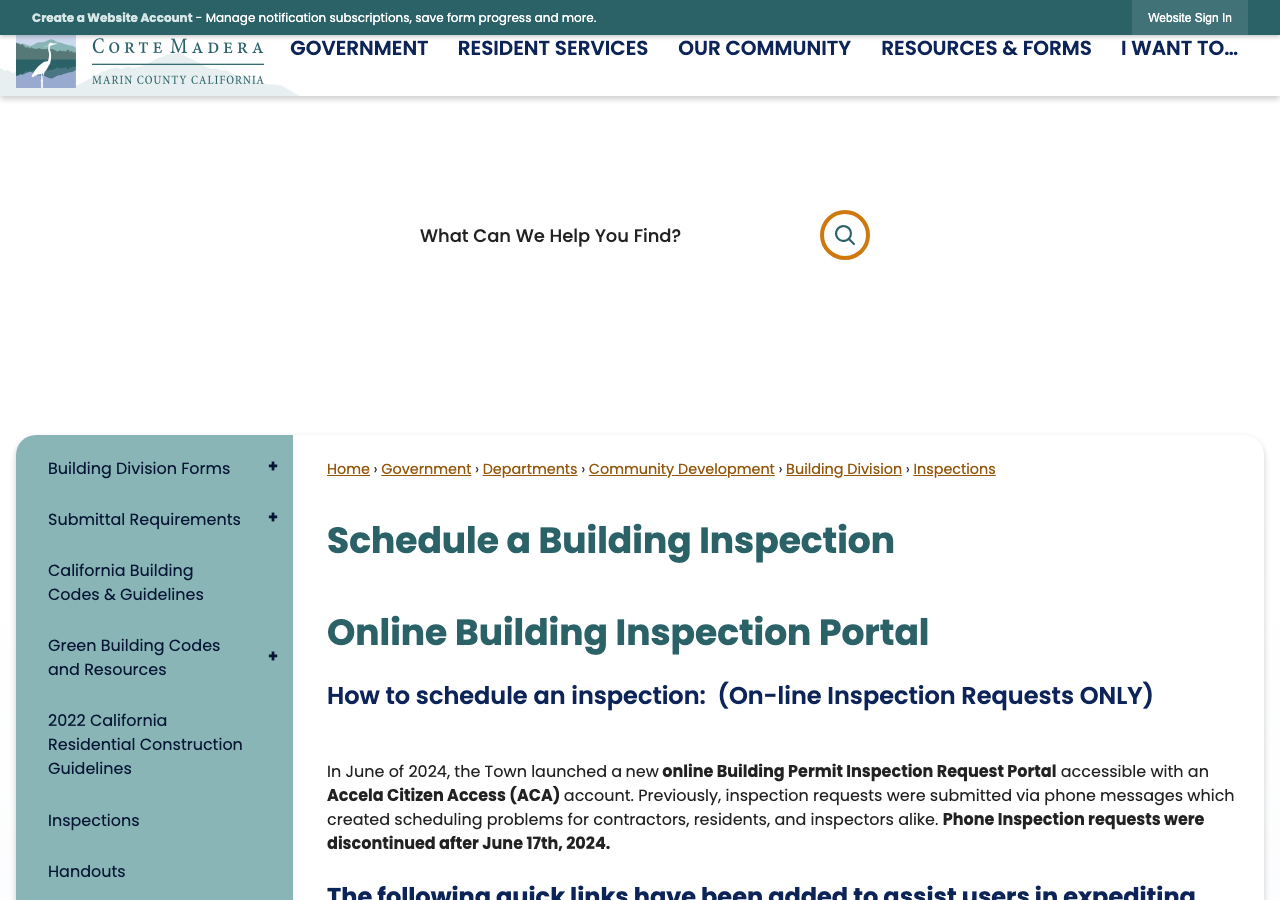
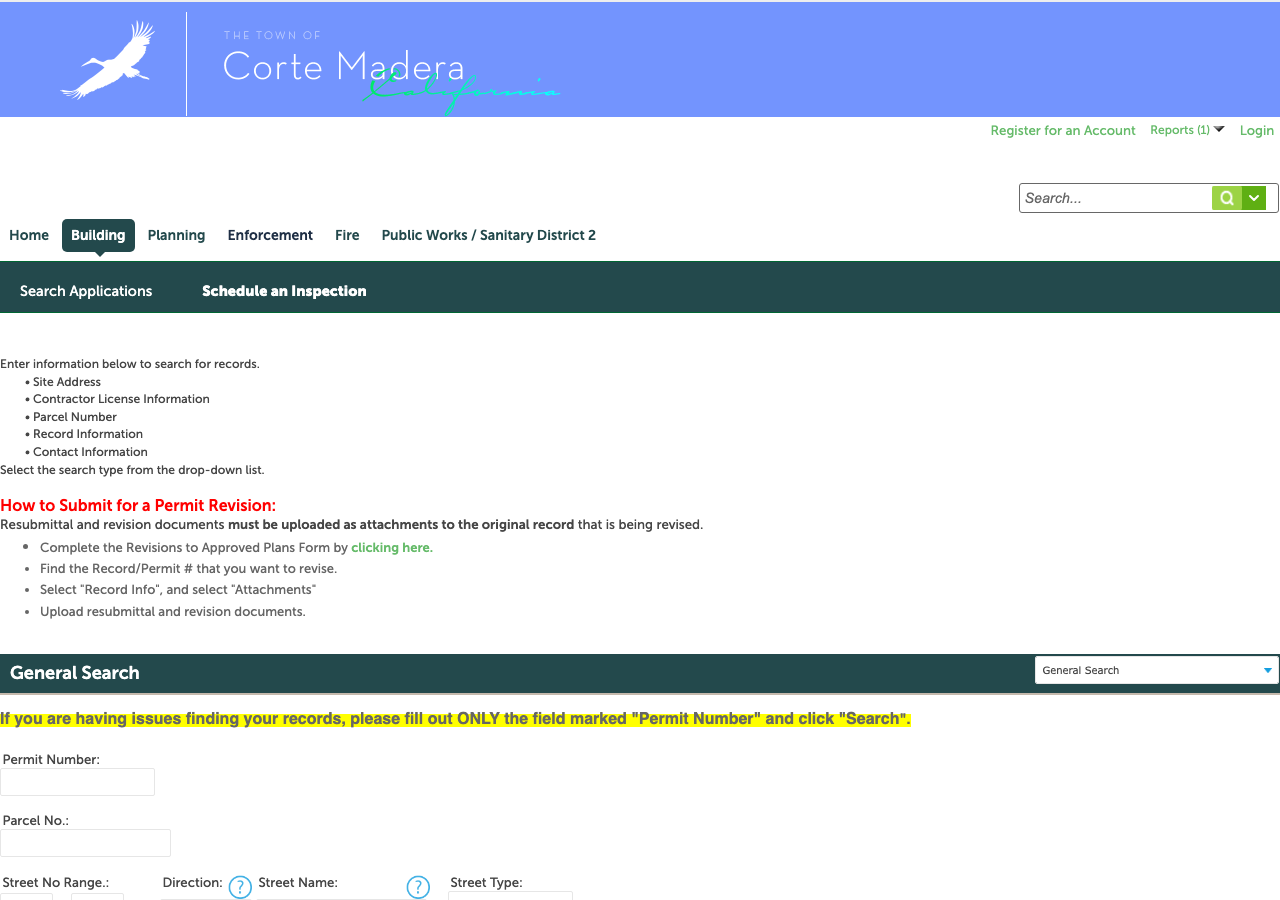
Average approval time — application to PTO
From the CPUC interconnection record. Bars show the average days taken each year; a year with no recorded projects is left blank rather than drawn as zero.