
Town of Los Altos Hills
Santa Clara County
Town of Los Altos Hills is a city authority in the State of California, serving 8,489 residents. 1,044 residential solar installs are on record here. This page is the permit route for that jurisdiction: the fifteen steps from working out who has a say over an address through to permission to operate, the documents this authority publishes, and 62 answers taken from those documents and dated.
Permitting 5 steps · 28 questions
Whether a permit is needed — Yes Q3 Electrical and building permits — Combined Q4 Plan review — Per LAHMC §8-9.05(a): the Building Division shall issue the permit within three business days of a complete application meeting the approved checklist/standard… Q18 Where you file — SolarAPP+ (for eligible systems, generating an Approval ID submitted into the Town's permitting system) plus the Town's eTRAKiT portal (trakit.losaltoshills.ca.gov)… Q20
- Permit required
- Yes95% source
- What it costs
- $450 flat for residential PV up to 15kW AC, plus $15/kW for capacity above 15kW95% source
- Plan review turnaround
- Per LAHMC §8-9.05(a): the Building Division shall issue the permit within three business days of a complete application meeting the approved checklist/standard plan, 'and whenever possible...92% source
- Key document
- published fee schedule (inferred from structure, not stated explicitly) cited by 4 open the document
-
Confirm who has a say over your address
A city address is usually permitted by the city, not the county — but not always, and some authorities keep building and hand electrical to someone else. Getting this wrong costs the whole submittal, because every requirement below belongs to whoever actually holds jurisdiction. Check the overlays in the same pass: an HOA, a historic district, a windstorm certification or a system-size cap can reshape the design, and all of them are cheaper to find now than after the array is laid out.
- Is this authority the AHJ for residential solar at this address? Yes 95% · municipal code
- What does this authority permit itself, and what does it delegate? Both 92% · municipal code
- Is a permit required for a residential rooftop PV system? Yes 95% · municipal code
- Is there a separate electrical permit, or is it combined? Combined 80% · fee schedule
- Is a HOA or architectural approval required first? No 65% · municipal code (absence-based inference)
- Is there a historic-district review? Not clearly stated for solar specifically; likely No for most parcels 45% · municipal code (partial search)
- Is a wind or windstorm certification required? No dedicated windstorm certification found; wind loading is a design parameter under the adopted CBC/CRC rather than a separate certificate 55% · absence-based inference (no dedicated design-criteria handout with a stated wind speed was located this run)
- Is a Specific Use Permit or Council approval ever required? Yes — and there is a real, unresolved tension between two of the Town's own codified chapters. LAHMC §8-9.06 (the AB 2188 expedited-solar ordinance) allows a Conditional Use Permit to be required ONLY if the Building Official/Planning Director finds a specific, documented adverse health/safety impact. Separately, Title 10 Zoning §10-2.301(a) requires a discretionary 'Site Development Permit' (Administrative Review by the Planning Director, no notice/hearing) for: (1) any spa/solar panel/dish antenna exceeding 3 ft height or 30 sq ft of development area; (8) any structure supporting ground-mounted PV facilities 6 ft/900 sq ft or larger; and (9) ANY rooftop PV installation, regardless of size, that raises the roofline by less than 18 inches (i.e., ordinary flush-mounted residential solar). This zoning-level Administrative Review currently carries an $8,408 'Minor Administrative Review' fee (2026 Planning Fee Schedule, eff. 8/1/2026) — far above the Gov. Code §65850.55-capped $450+$15/kW solar permit fee. None of the Town's own solar-specific handouts (Solar Photovoltaic Installation Requirements, SolarAPP+ guide) mention this zoning permit or its fee. 85% · municipal code + fee schedule
- Is there a system-size cap on residential generation? No single hard cap; at least three different, uncoordinated size figures apply depending on path 85% · municipal code + department guide
-
Check who is allowed to apply
Several authorities require the electrical permit to be pulled by a licensed electrician, or require the contractor to be registered with them BEFORE applying. Registration is not same-day. This is second on the list rather than fourth because it is the step most likely to stop the job before the drawings matter.
- Who is allowed to pull the electrical permit? Either 78% · permit application form
- Must the contractor be registered with this authority before applying? Yes 75% · municipal code + permit application form
- Is a homeowner permitted to self-install and self-permit? Yes 80% · permit application form
-
Build the submittal package
Almost everywhere wants a site plan, a one-line or three-line electrical diagram, equipment cut sheets with listings, and a structural attachment detail. Build it against the published checklist rather than the last jurisdiction you worked in — the checklist is what the reviewer marks against.
- What documents make up a complete submittal? For SolarAPP+-eligible systems (<=38.4kW on a detached 1-2 family dwelling/townhome/accessory structure): one combined PDF (Building Permit Application + SolarAPP+ Approval Document + SolarAPP+ Approval ID + manufacturer's equipment specifications) plus the SolarAPP+-approved plan set, submitted through the Town's eTRAKiT portal. For non-eligible/larger systems, the Town's general Building Permit Submittal Checklist applies: site plan, roof plan, floor/structural plans, and building elevations (which must show 'solar equipment' among exterior features), plus structural calculations and Title 24 energy compliance documentation as applicable. 90% · department guide + published checklist
- How many copies, and in what format? SolarAPP+ path: one combined PDF submittal + one PDF plan set (all electronic, via eTRAKiT). Standard (non-SolarAPP+) path per the Town's general checklist: 4 sets of Site and Architectural plans plus structural calculations (minimum 24in x 36in sheets, drawn to at least 1/4in = 1ft) and 2 sets of Engineering plans where required. 85% · published checklist
- Is a site plan required, and what must it show? Yes. For standard (non-SolarAPP+) submittals, the Town's general checklist requires a Site Plan (accurate boundary survey, min 1/8in=1ft) showing property lines/dimensions, north arrow, vicinity map, scope of work, existing/proposed structures and distances to property lines, and a Roof Plan/Building Elevations sheet that must depict roof hip/ridge/valley lines and 'solar equipment' among exterior features and fire pathways per the 2019 CRC or CA Fire Marshal Guidelines. For SolarAPP+ submittals, the SolarAPP+-approved plan set (which includes an equivalent site/roof layout) substitutes for this. 85% · published checklist
- Is a one-line / three-line diagram required? Yes 80% · department handout + municipal code (inference by analogy from adjacent generator-permit requirements)
-
Apply and pay
Most authorities now take the whole application through a portal, and several states cap or constrain what a residential solar permit may cost. Check whether plan check is billed separately before you quote the job.
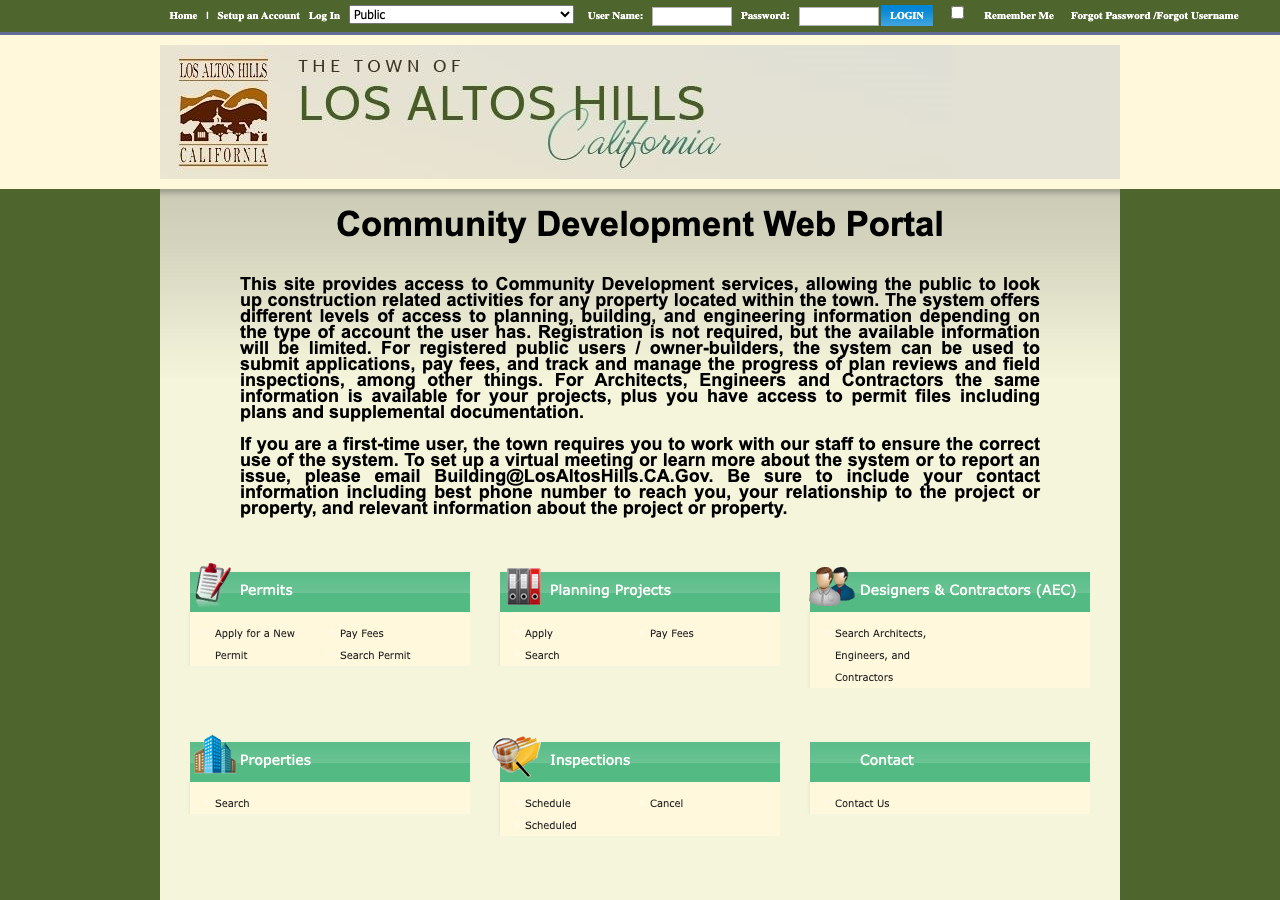
- Which permit portal does this authority use? SolarAPP+ (for eligible systems, generating an Approval ID submitted into the Town's permitting system) plus the Town's eTRAKiT portal (trakit.losaltoshills.ca.gov) for permit issuance, fee payment and inspection scheduling. 90% · department guide
- Can the whole application be completed online? Yes, for SolarAPP+-eligible systems submitted by a licensed contractor 85% · department guide
- What does a residential solar permit cost? $450 flat for residential PV up to 15kW AC, plus $15/kW for capacity above 15kW 95% · published fee schedule
- How is the fee calculated? Tiered 85% · published fee schedule
- Is there a separate plan-check fee? No (for the itemized solar fee) 60% · published fee schedule (inferred from structure, not stated explicitly)
-
Plan review — and start the utility in parallel
Interconnection is a separate process from the permit and usually the longer pole. Where the utility does not depend on the permit being issued, running both at once is the single biggest saving available on a residential job.
- What is the stated plan-review turnaround? Per LAHMC §8-9.05(a): the Building Division shall issue the permit within three business days of a complete application meeting the approved checklist/standard plan, 'and whenever possible... the same day of receipt.' 92% · municipal code
- How long is an issued permit valid before it expires? 12 months (365 days) from permit issuance for a solar-only permit valued under $100,000 (LAHMC Table 2, §8-10.04, 'All Other Construction Projects'), with up to two 6-month extensions available on written request at least 14 days before expiration (§8-10.05). 82% · municipal code
- Which utility handles interconnection here? Pacific Gas & Electric (PG&E) 82% · town public communications (secondary; utility's own territory map not independently checked this run)
28 questions answered against Town of Los Altos Hills’s own published documents
Q1 Is this authority the AHJ for residential solar at this address? Core Jurisdiction & scope
Yes
Why the confidence is not higherLAHMC §8-9.01 applies the expedited chapter to residential rooftop solar and the Building Department issues residential building/electrical permits directly (no county delegation for building/electrical). Note a real internal tension recorded at Q27/jurisdiction: Title 10 zoning (§10-2.301(a)) separately requires a discretionary 'Site Development Permit' for most solar installations, alongside the nondiscretionary building permit.
municipal code checked 2026-08-31 https://ecode360.com/43997756
Q2 What does this authority permit itself, and what does it delegate? Core Jurisdiction & scope
Both
Why the confidence is not higherMuni Code §8-8.01 assigns the Building Official responsibility for the Building, Residential, Electrical, Mechanical, Plumbing, Energy, Historical, Existing Building and CALGreen codes; only Fire Code administration is assigned elsewhere (codified to a 'Los Altos County Fire Protection District' — see jurisdiction note on this stale name; the Town's own site confirms the current agency is Santa Clara County Fire Department).
municipal code checked 2026-08-31 https://ecode360.com/43997745
Q3 Is a permit required for a residential rooftop PV system? Core Jurisdiction & scope
Yes
Why the confidence is not higherLAHMC §8-8.02(a): unlawful to 'erect, install, alter, repair, replace, convert... any electrical... element' without first obtaining a Town permit; §8-9.01 confirms residential rooftop solar is covered by the expedited-permit chapter.
municipal code checked 2026-08-31 https://ecode360.com/43997745
Q4 Is there a separate electrical permit, or is it combined? Core Jurisdiction & scope
Combined
Why the confidence is not higher2026 Building Master Fee Schedule (eff. 8/1/2026) lists a single itemized 'Solar – Residential' fee line (B009, $450 + $15/kW over 15kW) with no separate electrical-permit line for solar; the Building Permit Application form uses one job-type checkbox scheme rather than separate solar/electrical permits for the same installation.
fee schedule checked 2026-08-31 https://losaltoshills.ca.gov/DocumentCenter/View/8060/Buidling-2026-Fees
Q5 Who is allowed to pull the electrical permit? Core Who may apply
Either
Why the confidence is not higherThe Town's general Building Permit Application (Section 4a/4b) allows either a 'CALIFORNIA LICENSED CONTRACTOR'S DECLARATION' (any properly licensed contractor class) or an 'OWNER-BUILDER'S DECLARATION' for permits generally. However, the Town's dedicated SolarAPP+ path explicitly restricts that streamlined route to licensed B-General, C-10 Electrical, or C-46 Solar contractors and states 'Homeowners do not qualify for SolarAPP+' — so the answer differs by pathway; see Q7.
permit application form checked 2026-08-31 https://www.losaltoshills.ca.gov/DocumentCenter/View/3438/Building-Permit-Application-PDF
Q6 Must the contractor be registered with this authority before applying? Core Who may apply
Yes
Why the confidence is not higherLAHMC Title 3, Ch. 1 (Business Licenses): 'unlawful for any person to transact and carry on any business, trade, profession, calling, or occupation in the Town without first having procured a license'; the Town's own Building Permit Application form has a dedicated 'LAH Business License #' field under Contractor Information, indicating it is checked at intake. Not higher because no solar-specific enforcement statement was found.
municipal code + permit application form checked 2026-08-31 https://ecode360.com/43813892
Q7 Is a homeowner permitted to self-install and self-permit? Who may apply
Yes
Why the confidence is not higherThe general Building Permit Application offers an Owner-Builder declaration path (Section 4b) available for any building permit, including solar, under the standard (non-SolarAPP+) submittal route. The Town's SolarAPP+-specific guide explicitly excludes homeowners from that particular streamlined portal ('Homeowners do not qualify for SolarAPP+'), so a homeowner wanting to self-install/self-permit must use the standard route rather than SolarAPP+.
permit application form checked 2026-08-31 https://www.losaltoshills.ca.gov/DocumentCenter/View/3438/Building-Permit-Application-PDF
Q8 What documents make up a complete submittal? Core Submittal package
For SolarAPP+-eligible systems (<=38.4kW on a detached 1-2 family dwelling/townhome/accessory structure): one combined PDF (Building Permit Application + SolarAPP+ Approval Document + SolarAPP+ Approval ID + manufacturer's equipment specifications) plus the SolarAPP+-approved plan set, submitted through the Town's eTRAKiT portal. For non-eligible/larger systems, the Town's general Building Permit Submittal Checklist applies: site plan, roof plan, floor/structural plans, and building elevations (which must show 'solar equipment' among exterior features), plus structural calculations and Title 24 energy compliance documentation as applicable.
Why the confidence is not higherDirectly extracted (pdftotext) from the Town's own dated 'SolarAPP+ Solar & ESS Permits' guide (10/24/2024) and the general 'Building Permit Submittal Checklist' (2022 CBC/CRC edition, current per the Building Department's live document links).
department guide + published checklist checked 2026-08-31 https://www.losaltoshills.ca.gov/DocumentCenter/View/7026/SolarAPP-Application-Form
Q9 How many copies, and in what format? Submittal package
SolarAPP+ path: one combined PDF submittal + one PDF plan set (all electronic, via eTRAKiT). Standard (non-SolarAPP+) path per the Town's general checklist: 4 sets of Site and Architectural plans plus structural calculations (minimum 24in x 36in sheets, drawn to at least 1/4in = 1ft) and 2 sets of Engineering plans where required.
Why the confidence is not higherSolarAPP+ guide (10/24/2024) describes a single combined-PDF electronic submittal; the general Building Permit Submittal Checklist specifies '4 sets... and 2 sets of Engineering Plans' for standard building-permit submittals, which would apply outside the SolarAPP+ track.
published checklist checked 2026-08-31 https://www.losaltoshills.ca.gov/DocumentCenter/View/5801/2023-permit-submittal-checklist-LAH
Q10 Is a site plan required, and what must it show? Core Submittal package
Yes. For standard (non-SolarAPP+) submittals, the Town's general checklist requires a Site Plan (accurate boundary survey, min 1/8in=1ft) showing property lines/dimensions, north arrow, vicinity map, scope of work, existing/proposed structures and distances to property lines, and a Roof Plan/Building Elevations sheet that must depict roof hip/ridge/valley lines and 'solar equipment' among exterior features and fire pathways per the 2019 CRC or CA Fire Marshal Guidelines. For SolarAPP+ submittals, the SolarAPP+-approved plan set (which includes an equivalent site/roof layout) substitutes for this.
Why the confidence is not higherExtracted directly from the Town's general Building Permit Submittal Checklist PDF (not summarized) — Site Plan section and Roof Plan item 2.
published checklist checked 2026-08-31 https://www.losaltoshills.ca.gov/DocumentCenter/View/5801/2023-permit-submittal-checklist-LAH
Q11 Is a one-line / three-line diagram required? Core Drawings & calculations
Yes
Why the confidence is not higherThe Town's Generator Permit handout requires an 'Electrical Riser Diagram' showing service, panels, transfer switches, disconnects, over-current protection, grounding, conduit/wire sizes for on-site power equipment, and solar systems for producing electricity must meet CEC/IEEE/UL/PUC standards per LAHMC §8-9.03. A dedicated one-line diagram is a standard SolarAPP+ national eligibility requirement as well, though no LAH-specific solar one-line diagram requirement document was located distinct from the general electrical-plan requirement.
department handout + municipal code (inference by analogy from adjacent generator-permit requirements) checked 2026-08-31 https://www.losaltoshills.ca.gov/DocumentCenter/View/7657/Generator-Permit-Updated-90524
Q12 Are string and conductor calculations required? Drawings & calculations
Nothing published by this authority.
Where we lookedTown's general Building Permit Submittal Checklist, the dedicated 'Solar Photovoltaic Installation Requirements' handout, and the SolarAPP+ guide — none of the Town's own documents explicitly states a string/conductor calculation requirement by name (SolarAPP+'s own national software performs these calculations as part of its automated review, but the Town publishes no separate local requirement).
https://www.losaltoshills.ca.gov/DocumentCenter/View/7026/SolarAPP-Application-Form
Q13 Is a structural PE stamp required, and at what threshold? Core Engineering & stamps
Nothing published by this authority.
Where we lookedGeneral Building Permit Submittal Checklist's 'Additional Information' section requires 'Two sets of Structural Calculations' and that 'Plans and other documents authored by licensed California Professionals shall be stamped and signed' when a registered design professional is required by state law, but states no specific numeric valuation/weight/size threshold that triggers a mandatory PE stamp for solar specifically.
https://www.losaltoshills.ca.gov/DocumentCenter/View/5801/2023-permit-submittal-checklist-LAH
Q14 Is an electrical PE stamp required, and at what threshold? Engineering & stamps
Nothing published by this authority.
Where we lookedSame checklist and the Solar Photovoltaic Installation Requirements handout — neither states an electrical-PE-stamp threshold distinct from the general design-professional requirement.
Q15 What does a residential solar permit cost? Core Fees
$450 flat for residential PV up to 15kW AC, plus $15/kW for capacity above 15kW
Why the confidence is not higherTown of Los Altos Hills Building Department Master Fee Schedule, ID B009 'Solar - Residential', adopted 18 Jun 2026, effective 1 Aug 2026 — read directly from the PDF (pdftotext), current as of this run's date. Superseded a prior FY2023/24 schedule (same $450+$15/kW figure, effective 21 Oct 2023) that has since sunset (per the Town's Fee Schedule page, the FY23-26 schedule 'sunsets on July 31st, 2026').
published fee schedule checked 2026-08-31 https://losaltoshills.ca.gov/DocumentCenter/View/8060/Buidling-2026-Fees
Q16 How is the fee calculated? Core Fees
Tiered
Why the confidence is not higherFlat $450 up to 15kW AC, then a per-kW rate above that threshold, per the 2026 Building Master Fee Schedule (B009). The same schedule also separately prices commercial solar with two more kW-based tiers (up to 250kW and over 250kW), all cited to Gov. Code §66015 in the Town's own document (note: the more commonly cited statute for the solar fee cap is Gov. Code §65850.55; recorded as the Town's document states it).
published fee schedule checked 2026-08-31 https://losaltoshills.ca.gov/DocumentCenter/View/8060/Buidling-2026-Fees
Q17 Is there a separate plan-check fee? Fees
No (for the itemized solar fee)
Why the confidence is not higherThe 2026 Building Master Fee Schedule lists B009 'Solar - Residential' as a standalone itemized-permit line (like reroofs, pools, HVAC) separate from the valuation-tiered 'Building Fee' (B001) to which the schedule's distinct 'Building Plan Check Fee' (B004, 'Actual Cost') and 'Building Administrative Fee' (B002, 28% of B001) are tied. Because B004/B002 are written against B001's valuation model, and B009 is a footnoted state-law-capped flat/per-kW fee, the itemized structure suggests the solar fee is all-inclusive — but the schedule does not say so explicitly, so this is inferred from document structure, not a stated rule.
published fee schedule (inferred from structure, not stated explicitly) checked 2026-08-31 https://losaltoshills.ca.gov/DocumentCenter/View/8060/Buidling-2026-Fees
Q18 What is the stated plan-review turnaround? Core Timeline & validity
Per LAHMC §8-9.05(a): the Building Division shall issue the permit within three business days of a complete application meeting the approved checklist/standard plan, 'and whenever possible... the same day of receipt.'
Why the confidence is not higherDirect text of the codified AB 2188 expedited-permitting ordinance.
municipal code checked 2026-08-31 https://ecode360.com/43997775
Q19 How long is an issued permit valid before it expires? Timeline & validity
12 months (365 days) from permit issuance for a solar-only permit valued under $100,000 (LAHMC Table 2, §8-10.04, 'All Other Construction Projects'), with up to two 6-month extensions available on written request at least 14 days before expiration (§8-10.05).
Why the confidence is not higherThe Town replaces the standard CBC 180-day permit-expiration rule with its own codified 'Construction Time Limits' chapter; a stand-alone solar permit would fall under Table 2's lowest valuation tier (12 months) rather than Table 1 (new dwellings/remodels with additions).
municipal code checked 2026-08-31 https://ecode360.com/43997789
Q20 Which permit portal does this authority use? Core Portal & process
SolarAPP+ (for eligible systems, generating an Approval ID submitted into the Town's permitting system) plus the Town's eTRAKiT portal (trakit.losaltoshills.ca.gov) for permit issuance, fee payment and inspection scheduling.
Why the confidence is not higherTown's own dated (10/24/2024) 'SolarAPP+ Solar & ESS Permits' guide describes this exact workflow and links directly to the eTRAKiT login page.
department guide checked 2026-08-31 https://www.losaltoshills.ca.gov/DocumentCenter/View/7026/SolarAPP-Application-Form
Q21 Can the whole application be completed online? Core Portal & process
Yes, for SolarAPP+-eligible systems submitted by a licensed contractor
Why the confidence is not higherSolarAPP+ automates plan review and the Town's own guide describes contractors submitting entirely online (SolarAPP+ approval -> eTRAKiT submittal -> fee payment -> permit issuance), with only inspection requiring an in-person site visit. Homeowners/owner-builders are excluded from this online path per the same document and would use the standard paper/email submittal instead.
department guide checked 2026-08-31 https://www.losaltoshills.ca.gov/DocumentCenter/View/7026/SolarAPP-Application-Form
Q22 Which utility handles interconnection here? Core Utility interconnection
Pacific Gas & Electric (PG&E)
Why the confidence is not higherNot found on a single dedicated 'utility' page, but confirmed from multiple of the Town's own public communications returned by its site search (Public Safety Power Shutoff notices, undergrounding FAQ) which consistently name PG&E as the electric utility serving Los Altos Hills; Los Altos Hills is not part of any municipal utility or CCA-only generation-only arrangement noted on the Town's site.
town public communications (secondary; utility's own territory map not independently checked this run) checked 2026-08-31 https://www.losaltoshills.ca.gov/Search/Results?searchPhrase=PG%26E
Q23 Where does the utility sit in the sequence? Core Utility interconnection
Nothing published by this authority.
Where we lookedTown's Building Department page, Solar Photovoltaic Installation Requirements handout, and SolarAPP+ guide — none of the Town's own documents states where PG&E interconnection sits in the permit sequence; PG&E's own Rule 21/DG interconnection manual was not fetched this run.
https://www.losaltoshills.ca.gov/DocumentCenter/View/7026/SolarAPP-Application-Form
Q24 Is a HOA or architectural approval required first? Overlays & special cases
No
Why the confidence is not higherNo HOA or architectural-approval prerequisite is stated in LAHMC Ch. 8-9 (the solar ordinance) or on the Building Permit Application form; Los Altos Hills is a town of individual large lots without a townwide HOA structure. Not higher because I did not find an explicit statement disclaiming any HOA requirement (an absence, not a stated 'No').
municipal code (absence-based inference) checked 2026-08-31 https://ecode360.com/43997768
Q25 Is there a historic-district review? Overlays & special cases
Not clearly stated for solar specifically; likely No for most parcels
Why the confidence is not higherLAHMC §8-9.01/.06 (the solar ordinance) makes no mention of historic/landmark review. The Town does have a Title 11 'Land Mark Designation and Preservation' chapter, but time did not permit a full read of that title for a solar-specific exemption or trigger this run; recording at reduced confidence rather than as a clean absence.
municipal code (partial search) checked 2026-08-31 https://ecode360.com/44000651
Q26 Is a wind or windstorm certification required? Overlays & special cases
No dedicated windstorm certification found; wind loading is a design parameter under the adopted CBC/CRC rather than a separate certificate
Why the confidence is not higherCalifornia does not run a TDI-style windstorm certification program; no LAH-specific wind-certification document was found in the Building Department's published forms/handouts.
absence-based inference (no dedicated design-criteria handout with a stated wind speed was located this run) checked 2026-08-31 https://www.losaltoshills.ca.gov/292/Building-Department
Q27 Is a Specific Use Permit or Council approval ever required? Overlays & special cases
Yes — and there is a real, unresolved tension between two of the Town's own codified chapters. LAHMC §8-9.06 (the AB 2188 expedited-solar ordinance) allows a Conditional Use Permit to be required ONLY if the Building Official/Planning Director finds a specific, documented adverse health/safety impact. Separately, Title 10 Zoning §10-2.301(a) requires a discretionary 'Site Development Permit' (Administrative Review by the Planning Director, no notice/hearing) for: (1) any spa/solar panel/dish antenna exceeding 3 ft height or 30 sq ft of development area; (8) any structure supporting ground-mounted PV facilities 6 ft/900 sq ft or larger; and (9) ANY rooftop PV installation, regardless of size, that raises the roofline by less than 18 inches (i.e., ordinary flush-mounted residential solar). This zoning-level Administrative Review currently carries an $8,408 'Minor Administrative Review' fee (2026 Planning Fee Schedule, eff. 8/1/2026) — far above the Gov. Code §65850.55-capped $450+$15/kW solar permit fee. None of the Town's own solar-specific handouts (Solar Photovoltaic Installation Requirements, SolarAPP+ guide) mention this zoning permit or its fee.
Why the confidence is not higherRead directly from the current, live ecode360 codification of both Title 8 Ch. 9 and Title 10 §10-2.301, cross-checked against the current (eff. 8/1/2026) Planning Fee Schedule. High confidence on what the code text says; moderate on how it is actually applied in practice to a routine rooftop PV job, since no Town document reconciles it with the state-mandated ministerial process.
municipal code + fee schedule checked 2026-08-31 https://ecode360.com/44000233
Q28 Is there a system-size cap on residential generation? Overlays & special cases
No single hard cap; at least three different, uncoordinated size figures apply depending on path
Why the confidence is not higher(1) LAHMC §8-9.02 defines 'small residential rooftop solar energy system' (eligible for the ministerial/expedited 3-day process) as <=10kW AC / 30kW thermal on a single/two-family dwelling. (2) The Town's own SolarAPP+ guide sets that portal's own ceiling at 38.4kW. (3) Title 10 zoning imposes no separate kW cap, but does gate any ground-mounted PV support structure at 6ft height/900 sq ft (development-area bonus math also references a 500 sq ft ground-mount PV threshold). No document states an outright prohibition on larger residential systems processed through the standard (non-expedited, non-SolarAPP+) permit route.
municipal code + department guide checked 2026-08-31 https://ecode360.com/43997757
Lines marked with a percentage were read off this authority’s own published documents. Unmarked guidance is general good practice, not this jurisdiction’s rule — always confirm against the authority before you submit.
Install 5 steps · 20 questions
-
Build to the code editions actually in force here
The NEC edition a jurisdiction enforces is often a cycle behind the newest one published, and local amendments sit on top of it. Rapid shutdown, conductor sizing and labelling all change between editions, so the edition in force is the first thing to establish, not the last.
- Which NEC edition is in force? 2020 82% · municipal code
- Which building code edition is in force? 2022 California Building Code / 2022 California Residential Code 85% · municipal code
- Which fire code edition is in force? 2022 California Fire Code 85% · municipal code
- Are there local amendments to any of the above? Yes 90% · municipal code
- What is the installation judged against? The adopted 2022 CEC, plus IEEE standards, accredited testing-laboratory listing (e.g. UL), and CPUC safety/reliability rules where applicable 88% · municipal code
-
Fire access, setbacks and pathways
Ridge setbacks and roof access pathways are fire-service requirements and they constrain the array layout. They are the most common cause of a redesign after the fire department comments on a plan set.
- What ridge setback and access pathways are required? From the Town's own 'Solar Photovoltaic Installation Requirements' handout (2019 CEC Art. 690 basis, dated 6/17/2020): hip-roof layouts require a 3-ft-wide clear access pathway from eave to ridge on each slope with panels; single-ridge roofs require TWO 3-ft-wide pathways (eave to ridge) on each slope; panels near hips/valleys must be no closer than 18 inches (adjacent placement allowed only when panels are on one side of an equal-length hip/valley); and panels must stay at least 3 ft below the ridge for fire department smoke ventilation. 85% · published handout (dated; code-cycle citation is stale)
-
Rapid shutdown
Which rapid-shutdown rule applies follows directly from the NEC edition in force, and the initiation device has to be at a location the fire service can reach and identify. This is inspected, and it is labelled.
- Is rapid shutdown required, and to which NEC edition? Rapid shutdown is required via the state-adopted electrical code (NEC 690.12, incorporated through the 2022 CEC/2020 NEC adopted at LAHMC §8-1.3.01); no Town document states this in its own words or cites '690.12' by section number. 60% · municipal code (control-proven absence of local text; requirement applies by code reference)
-
Labels and placards
The NEC sets a baseline for permanent markings at the service equipment and the disconnecting means. On top of that, an authority may specify its own wording, and the utility may specify more again. Where any of them writes its own text, a generic off-the-shelf label set will not pass — this is the detail most often fixed on a return visit.
- Which placards does this authority require at the service equipment? A DC-side marking/placard reading 'WARNING: PHOTOVOLTAIC POWER SOURCE', placed on interior and exterior DC conduit, enclosures, raceways, cable assemblies, junction boxes, combiner boxes and disconnects, and adjacent to the main service disconnect. 82% · published handout (dated)
- Does the authority specify placard wording of its own? Yes 82% · published handout (dated)
- Does it specify letter height, colour or material? Yes — capital letters, minimum 3/8 inch height, white lettering on a red background; materials must be reflective and weather-resistant. 82% · published handout (dated)
- Where must the labels be placed? On the interior and exterior DC conduit, enclosures, raceways, cable assemblies, junction boxes, combiner boxes and disconnects, and placed adjacent to the main service disconnect where it is clearly visible from where the disconnect is operated. 82% · published handout (dated)
-
Disconnect, storage and listed equipment
Where the AC disconnect must sit relative to the meter is usually the utility's rule, not the building department's. Battery storage frequently carries its own permit, its own inspection and its own fire conditions.
- Must equipment be on a specific approved list? Yes 82% · municipal code
- Are batteries permitted, and under what conditions? Yes, conditionally, with a codified local fire/life-safety amendment for interior ESS 82% · municipal code
- Is there a separate ESS permit or inspection? No dedicated separate ESS permit type; ESS is folded into the same 'Solar & ESS Permits' process as PV, but priced differently (by project valuation rather than by kW). 70% · department guide + fee schedule
- Is a ground mount treated as a structure? Likely Yes for anything beyond a small accessory-scale array, based on zoning treatment rather than an explicit statement 60% · municipal code (inferred)
20 questions answered against Town of Los Altos Hills’s own published documents
Q29 Which NEC edition is in force? Core Code editions in force
2020
Why the confidence is not higherLAHMC §8-1.3.01 adopts the '2022 California Electrical Code, Part 3' — the 2022 CEC is based on the 2020 NEC. Confirmed independently by the Town's own Generator Permit handout (dated 9/24/2024): 'The Town of Los Altos Hills has adopted the 2022 California Electrical Code (CEC).' Both are the Town's own documents and agree; the Town has not yet locally codified the 2025 CEC (based on the 2023 NEC) which took effect statewide 1 Jan 2026 — see Q30/32 note on code-cycle lag.
municipal code checked 2026-08-31 https://ecode360.com/43997576
Q30 Which building code edition is in force? Core Code editions in force
2022 California Building Code / 2022 California Residential Code
Why the confidence is not higherLAHMC §§8-1.1.01/8-1.2.01, live on ecode360 as of this run's date (31 Aug 2026), last amended by Ord. 604 (eff. 17 Nov 2022) and Ord. 607 (eff. 6 Jan 2023) for residential wildfire provisions. This appears to lag the statewide 2025 CBC/CRC cycle that took effect 1 Jan 2026 — no evidence of a newer local adoption ordinance was found this run (flagged as a code-cycle-lag finding, not resolved).
municipal code checked 2026-08-31 https://ecode360.com/43997552
Q31 Which fire code edition is in force? Code editions in force
2022 California Fire Code
Why the confidence is not higherLAHMC §8-1.8.01, with a local amendments attachment ('CFC 2022 Amendments', LO4964-008a). Fire Code administration/enforcement is codified to fall to 'the Los Altos County Fire Protection District' per §8-8.01 — see jurisdiction note; the Town's own site confirms the currently serving agency is Santa Clara County Fire Department.
municipal code checked 2026-08-31 https://ecode360.com/43997623
Q32 Are there local amendments to any of the above? Core Code editions in force
Yes
Why the confidence is not higherNumerous local amendments read directly from the code: broadened NFPA-13D sprinkler mandate (§8-1.2.02(a), CRC R313.2), an ESS-specific fire-detection amendment (§8-1.2.02(b), CRC R328.7 — heat detectors/smoke alarms for ESS in dwellings/garages), a roofing fire-retardant amendment (Building Code §1505.1.3), and a full CFC amendments attachment.
municipal code checked 2026-08-31 https://ecode360.com/43997560
Q33 What is the installation judged against? Core Electrical
The adopted 2022 CEC, plus IEEE standards, accredited testing-laboratory listing (e.g. UL), and CPUC safety/reliability rules where applicable
Why the confidence is not higherLAHMC §8-9.03: solar-electric systems 'shall meet all applicable safety and performance standards established by the California Electrical Code, the Institute of Electrical and Electronics Engineers, and accredited testing laboratories such as Underwriters Laboratories and, where applicable, rules of the Public Utilities Commission.'
municipal code checked 2026-08-31 https://ecode360.com/43997767
Q34 Is there a local rule on service upgrades or busbar sizing? Electrical
Nothing published by this authority.
Where we lookedLAHMC §8-1.3.01 (CEC adoption chapter, full text read) and the Town's Generator Permit and Solar Photovoltaic Installation Requirements handouts — none contains a local amendment addressing service-upgrade sizing or busbar rules specific to solar.
Q35 Is a specific mounting system or attachment spacing required? Structural & mounting
Nothing published by this authority.
Where we lookedThe dedicated 'Solar Photovoltaic Installation Requirements' handout (marking/pathway/setback specs only) and the general Building Permit Submittal Checklist (generic bolt/fastener disclosure item, no LAH-specific spacing rule) — no city-mandated mounting system or attachment-spacing standard beyond manufacturer specifications was found.
Q36 What ridge setback and access pathways are required? Core Fire pathways & setbacks
From the Town's own 'Solar Photovoltaic Installation Requirements' handout (2019 CEC Art. 690 basis, dated 6/17/2020): hip-roof layouts require a 3-ft-wide clear access pathway from eave to ridge on each slope with panels; single-ridge roofs require TWO 3-ft-wide pathways (eave to ridge) on each slope; panels near hips/valleys must be no closer than 18 inches (adjacent placement allowed only when panels are on one side of an equal-length hip/valley); and panels must stay at least 3 ft below the ridge for fire department smoke ventilation.
Why the confidence is not higherExtracted directly (pdftotext) from the Town's own dated handout. Confidence not higher because the document's code-basis citation (2019 CEC/Article 690, eff. 1/1/2020) is now superseded by the currently-adopted 2022 CEC, though the pathway/setback figures themselves match the standard CFC 1204/1205 model language still in force nationally and were not contradicted by anything in the Town's current CFC 2022 Amendments attachment.
published handout (dated; code-cycle citation is stale) checked 2026-08-31 https://www.losaltoshills.ca.gov/DocumentCenter/View/4203/Solar-Photovoltaic-Installation-Requirements-PDF
Q37 Is rapid shutdown required, and to which NEC edition? Core Rapid shutdown
Rapid shutdown is required via the state-adopted electrical code (NEC 690.12, incorporated through the 2022 CEC/2020 NEC adopted at LAHMC §8-1.3.01); no Town document states this in its own words or cites '690.12' by section number.
Why the confidence is not higherFull-text search of the codified solar chapter (Ch. 8-9), the CFC 2022 Amendments attachment, and the Solar Photovoltaic Installation Requirements handout for '690.12' and 'rapid shutdown' returned zero hits (positive controls 'electrical' and 'battery'/'ESS' returned hits in the same documents, fabricated control 'zzqqx' returned zero) — a control-proven absence of LOCAL text, with the requirement applying only by reference through the adopted electrical code.
municipal code (control-proven absence of local text; requirement applies by code reference) checked 2026-08-31 https://ecode360.com/43997576
Q38 Which placards does this authority require at the service equipment? Core Labels Signage & labelling
A DC-side marking/placard reading 'WARNING: PHOTOVOLTAIC POWER SOURCE', placed on interior and exterior DC conduit, enclosures, raceways, cable assemblies, junction boxes, combiner boxes and disconnects, and adjacent to the main service disconnect.
Why the confidence is not higherTown's own 'Solar Photovoltaic Installation Requirements' handout, extracted directly. Note this handout is dated 6/17/2020 and cites the 2019 CEC/Article 690 (now superseded by the 2022 CEC) — the marking content itself matches the long-standing NEC 690.31/690.35 + CFC 605.11 national model language and was not contradicted by the current CFC 2022 Amendments attachment (which is silent on PV marking, control-checked).
published handout (dated) checked 2026-08-31 https://www.losaltoshills.ca.gov/DocumentCenter/View/4203/Solar-Photovoltaic-Installation-Requirements-PDF
Q39 Does the authority specify placard wording of its own? Core Labels Signage & labelling
Yes
Why the confidence is not higherSame handout specifies the exact required wording: 'WARNING: PHOTOVOLTAIC POWER SOURCE.'
published handout (dated) checked 2026-08-31 https://www.losaltoshills.ca.gov/DocumentCenter/View/4203/Solar-Photovoltaic-Installation-Requirements-PDF
Q40 Does it specify letter height, colour or material? Core Labels Signage & labelling
Yes — capital letters, minimum 3/8 inch height, white lettering on a red background; materials must be reflective and weather-resistant.
Why the confidence is not higherTown's own handout, extracted directly.
published handout (dated) checked 2026-08-31 https://www.losaltoshills.ca.gov/DocumentCenter/View/4203/Solar-Photovoltaic-Installation-Requirements-PDF
Q41 Is a site plan / facility map placard required, and what must it show? Core Labels Signage & labelling
Nothing published by this authority.
Where we lookedThe Solar Photovoltaic Installation Requirements handout (DC marking/pathway spec only, no facility map/site-plan placard mentioned), the general Building Permit Submittal Checklist (site plan requirements are general, not a NEC 705.10-style placard), and the codified Ch. 8-9 solar ordinance — none names a dedicated facility-map/site-plan placard requirement.
Q42 Does the UTILITY specify placards beyond the AHJ's? Core Labels Signage & labelling
Nothing published by this authority.
Where we lookedTown's own solar documents do not reference a PG&E-specific placard requirement beyond the Town's own marking spec; PG&E's own Rule 21/interconnection handbook (Greenbook) was not fetched this run, so this is a genuine gap rather than a proven absence at the utility level.
Q43 Where must the labels be placed? Core Labels Signage & labelling
On the interior and exterior DC conduit, enclosures, raceways, cable assemblies, junction boxes, combiner boxes and disconnects, and placed adjacent to the main service disconnect where it is clearly visible from where the disconnect is operated.
Why the confidence is not higherTown's own handout, extracted directly.
published handout (dated) checked 2026-08-31 https://www.losaltoshills.ca.gov/DocumentCenter/View/4203/Solar-Photovoltaic-Installation-Requirements-PDF
Q44 Must equipment be on a specific approved list? Equipment listing
Yes
Why the confidence is not higherLAHMC §8-9.03: solar-electric equipment must meet standards set by 'accredited testing laboratories such as Underwriters Laboratories' — an equipment-listing requirement, though not phrased as a single 'approved equipment list.'
municipal code checked 2026-08-31 https://ecode360.com/43997767
Q45 Are batteries permitted, and under what conditions? Core Battery / ESS
Yes, conditionally, with a codified local fire/life-safety amendment for interior ESS
Why the confidence is not higherLAHMC §8-1.2.02(b) amends CRC §R328.7: rooms/areas within dwelling units, basements, and attached garages where an ESS is installed must be protected by smoke alarms per R314, with an interconnected heat detector/heat alarm required where smoke alarms cannot be installed per their listing (State Fire Marshal amendment carried into the local code for Group R-3/townhomes).
municipal code checked 2026-08-31 https://ecode360.com/43997560
Q46 Is there a separate ESS permit or inspection? Battery / ESS
No dedicated separate ESS permit type; ESS is folded into the same 'Solar & ESS Permits' process as PV, but priced differently (by project valuation rather than by kW).
Why the confidence is not higherTown's own SolarAPP+ guide is titled 'SolarAPP+ Solar & ESS Permits' and states 'Solar permit costs are based on total system KW; batteries are based on valuation' — implying one combined permit/process with a different fee basis for the battery component, rather than two separate permits. The 2026 Building Master Fee Schedule has no standalone ESS/battery fee line (only 'Solar - Residential', B009).
department guide + fee schedule checked 2026-08-31 https://www.losaltoshills.ca.gov/DocumentCenter/View/7026/SolarAPP-Application-Form
Q47 Is a ground mount treated as a structure? Core Ground mount
Likely Yes for anything beyond a small accessory-scale array, based on zoning treatment rather than an explicit statement
Why the confidence is not higherLAHMC §10-2.301(a)(8) requires a Site Development Permit for 'any structure supporting photovoltaic power generation facilities' 6 ft/900 sq ft or larger (i.e., treats larger ground-mount PV support structures like any other structure requiring zoning review), and §10-2.703(c) separately treats 'freestanding solar panels' as regulated 'appurtenances' requiring siting/screening approval. No Building Code section was found stating outright that a ground-mount rack is 'a structure' for permitting purposes, so this is inferred from the zoning treatment rather than a direct statement.
municipal code (inferred) checked 2026-08-31 https://ecode360.com/43999543
Q48 Where must the AC disconnect be, relative to the meter? Core Utility equipment
Nothing published by this authority.
Where we lookedTown's Solar Photovoltaic Installation Requirements handout (DC-side marking only, no AC-disconnect-to-meter placement rule) and general Building Department pages — this is a PG&E service-equipment/Rule 21 requirement not fetched this run.
Lines marked with a percentage were read off this authority’s own published documents. Unmarked guidance is general good practice, not this jurisdiction’s rule — always confirm against the authority before you submit.
Inspection 5 steps · 14 questions
-
Book it
Booking is a portal, a phone call or an email depending on the authority, and the notice required is rarely zero. Book before the work is finished rather than after — the lead time, not the work, is usually what sets the date.
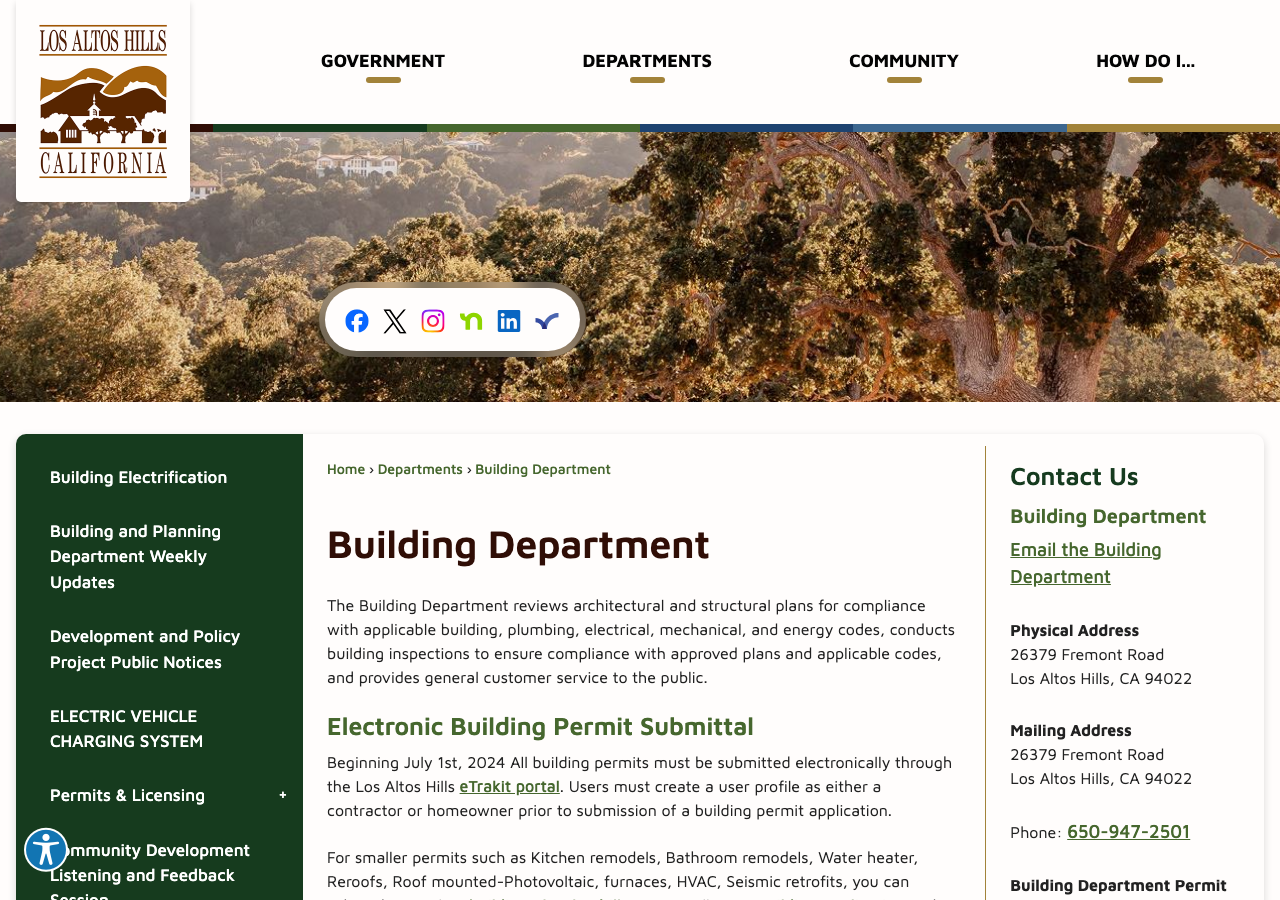
- How is an inspection booked? Phone: call (650) 947-2501 to schedule; the Town's eTRAKiT portal is also used for online permits/payment and is referenced as an inspection-scheduling channel in the Town's own indexed content. 85% · department page
- How much notice is required? Recommended 3-4 business days in advance; same-day inspections are not provided. 88% · department page
- Are same-day or AM/PM windows offered? AM or PM preference only (no same-day, no guaranteed narrow window) 88% · department page
-
Know who turns up
Some authorities inspect their own solar work; some delegate it, and a few do not inspect the PV equipment itself at all. Who is coming determines what they will look at.
- Does this AHJ perform its own final solar inspection? Yes 90% · municipal code
-
Work the stages in order
A rough-in or mid-roof inspection, where one is required, has to happen before the work it covers is closed up. Missing a stage means opening something back up, and it is the most expensive kind of correction.
- Which inspections are required, and in what order? For small residential rooftop solar: a single inspection performed by the Building Division (LAHMC §8-9.05(f)-(h)); if the system fails, a follow-up inspection is authorized. Generator installations (a related electrical scope) require an underground-conduit-trench inspection, a slab-rebar inspection (if applicable), and one final Building inspection performed after any required Planning/Engineering/Fire finals. 78% · municipal code + department handout
- Is a rough-in or mid-roof inspection required? No 82% · municipal code
-
Have the paperwork on site
The approved plan set, the permit, and the equipment listings should be on site and reachable. Inspectors routinely verify that installed equipment matches what was approved, and that the labels are the ones the plan set promised.
Nothing recorded for Town of Los Altos Hills on this step yet — 3 questions checked and found unpublished. The guidance above is general.
-
Sign-off, and permission to operate
Passing gives you a final or an equivalent sign-off. That is not the same as permission to operate: PTO comes from the utility, and who tells the utility the inspection passed varies. A system left switched off for weeks is usually waiting on this handover.
- Is there a re-inspection fee? $163 per half-hour (reinspection) 90% · published fee schedule
- How are corrections issued and cleared? For application-stage deficiencies: LAHMC §8-9.05(e) requires a written correction notice detailing all deficiencies be sent to the applicant for resubmission. For a failed field inspection: §8-9.05(h) authorizes a subsequent inspection (which 'need not conform to the requirements of this chapter,' i.e. the one-inspection/turnaround guarantees no longer apply after a failure), but no separate written-correction-notice procedure for post-inspection failures is described. 75% · municipal code
14 questions answered against Town of Los Altos Hills’s own published documents
Q49 How is an inspection booked? Core Booking & scheduling
Phone: call (650) 947-2501 to schedule; the Town's eTRAKiT portal is also used for online permits/payment and is referenced as an inspection-scheduling channel in the Town's own indexed content.
Why the confidence is not higherBuilding Department page states plainly under 'To Schedule Inspections': 'Please call 650-947-2501 to schedule.' The Town's own site-search results also index an 'eTRAKiT (schedule an inspection/online permits)' feature link.
department page checked 2026-08-31 https://www.losaltoshills.ca.gov/292/Building-Department
Q50 How much notice is required? Core Booking & scheduling
Recommended 3-4 business days in advance; same-day inspections are not provided.
Why the confidence is not higherBuilding Department page: 'It is recommended that you schedule inspections 3 to 4 days in advance as inspection slots are not always available next day. Same day inspections are not provided.'
department page checked 2026-08-31 https://www.losaltoshills.ca.gov/292/Building-Department
Q51 Are same-day or AM/PM windows offered? Booking & scheduling
AM or PM preference only (no same-day, no guaranteed narrow window)
Why the confidence is not higherBuilding Department page instructs callers to state 'whether you prefer AM or PM' when scheduling, and explicitly states 'Same day inspections are not provided' and inspections are not scheduled/performed on Fridays.
department page checked 2026-08-31 https://www.losaltoshills.ca.gov/292/Building-Department
Q52 Does this AHJ perform its own final solar inspection? Core Who inspects
Yes
Why the confidence is not higherLAHMC §8-9.05(f): 'Only one inspection shall be required and performed by the Building Division for small residential rooftop solar energy systems unless additional inspections are deemed necessary by the Building Official.'
municipal code checked 2026-08-31 https://ecode360.com/43997775
Q53 If delegated, to whom? Core Who inspects
Nothing published by this authority.
Where we lookedN/A — LAHMC §8-9.05(f) states the Town's own Building Division performs the required inspection itself; no delegate is named for residential rooftop solar.
Q54 Which inspections are required, and in what order? Core Stages & sequence
For small residential rooftop solar: a single inspection performed by the Building Division (LAHMC §8-9.05(f)-(h)); if the system fails, a follow-up inspection is authorized. Generator installations (a related electrical scope) require an underground-conduit-trench inspection, a slab-rebar inspection (if applicable), and one final Building inspection performed after any required Planning/Engineering/Fire finals.
Why the confidence is not higherSolar sequence from the codified ordinance; generator sequence (used as the closest documented analogue for on-site electrical-equipment inspection staging) from the Town's own dated Generator Permit handout.
municipal code + department handout checked 2026-08-31 https://ecode360.com/43997775
Q55 Is a rough-in or mid-roof inspection required? Stages & sequence
No
Why the confidence is not higherLAHMC §8-9.05(f)-(h): only ONE inspection is required/performed for eligible small residential rooftop solar systems — no separate rough-in or mid-roof stage is described.
municipal code checked 2026-08-31 https://ecode360.com/43997775
Q56 Does the inspector verify labels and listings? Core What is checked
Nothing published by this authority.
Where we lookedLAHMC §8-9 (solar ordinance) and Building Department page describe the inspection process generally but never state explicitly that the inspector checks equipment labels/listings as a discrete step, even though equipment must be UL-listed per §8-9.03 (Q44).
Q57 Is there a published inspection checklist? Core What is checked
Nothing published by this authority.
Where we lookedBuilding Department's published document list (Building-Permits-Forms page) — a general Building Permit Submittal Checklist exists, but no separate, solar-specific INSPECTION checklist (as distinct from the submittal checklist) was found published.
Q58 What must be on site at inspection? Core Documents on site
Nothing published by this authority.
Where we lookedBuilding Department page and general checklist — neither states a specific list of documents/cards required to be on site at the time of a solar inspection.
Q59 Is there a re-inspection fee? Corrections & re-inspection
$163 per half-hour (reinspection)
Why the confidence is not higher2026 Building Master Fee Schedule, ID B042 'Reinspection': $163 per 1/2 hour — this replaces the prior FY2023/24 flat $210 reinspection fee, current as of the effective date (1 Aug 2026) of this run.
published fee schedule checked 2026-08-31 https://losaltoshills.ca.gov/DocumentCenter/View/8060/Buidling-2026-Fees
Q60 How are corrections issued and cleared? Corrections & re-inspection
For application-stage deficiencies: LAHMC §8-9.05(e) requires a written correction notice detailing all deficiencies be sent to the applicant for resubmission. For a failed field inspection: §8-9.05(h) authorizes a subsequent inspection (which 'need not conform to the requirements of this chapter,' i.e. the one-inspection/turnaround guarantees no longer apply after a failure), but no separate written-correction-notice procedure for post-inspection failures is described.
Why the confidence is not higherDirect text of the codified solar ordinance.
municipal code checked 2026-08-31 https://ecode360.com/43997775
Q61 What is issued on pass? Core Final sign-off & PTO
Nothing published by this authority.
Where we lookedLAHMC §8-9 describes pass/fail of the single solar inspection but never names the specific document type issued on pass (Final vs. Certificate of Occupancy vs. Green Tag vs. Letter) for a solar retrofit on an existing residence.
Q62 Who notifies the utility for PTO? Core Final sign-off & PTO
Nothing published by this authority.
Where we lookedTown's Building Department page, SolarAPP+ guide, and Solar Photovoltaic Installation Requirements handout — none states who submits interconnection/PTO paperwork to PG&E (installer vs. AHJ vs. homeowner); this is typically a PG&E-side process not verified this run.
https://www.losaltoshills.ca.gov/DocumentCenter/View/7026/SolarAPP-Application-Form
Lines marked with a percentage were read off this authority’s own published documents. Unmarked guidance is general good practice, not this jurisdiction’s rule — always confirm against the authority before you submit.
Jurisdiction & key facts
The standing 62-question set, answered for Town of Los Altos Hills against this authority’s own published documents. Every answer carries the confidence it was recorded at and the document it came from. Where nothing is published we say so and show where we looked — a blank here is a finding, not a gap.
Town of Los Altos Hills is the authority having jurisdiction 88% confidence
- Holds
- Building and Electrical (Town's own Building Department, per LAHMC §8-8.01); Fire Code administration is assigned by the same section to a fire agency, but the codified name is stale
- Overridden by
- CA Gov. Code §65850.5 (Solar Rights Act/AB 2188) mandatory nondiscretionary expedited review, codified locally at LAHMC Ch. 8-9 (Ord. 559, 2015); Gov. Code §65850.55 fee cap. A real, apparently unreconciled internal conflict: Title 10 Zoning §10-2.301(a) separately requires a discretionary Planning-Director 'Site Development Permit — Administrative Review' for almost every rooftop or ground-mounted solar installation (see Q27), carrying an $8,408 fee (2026 Planning Fee Schedule) far above the state fee cap — a tension the Town's own solar-specific handouts do not mention or resolve. Separately, LAHMC §8-8.01 assigns Fire Code administration/enforcement to 'the Los Altos County Fire Protection District' — a name that does not match any agency found in current operation; the Town's own site (returned by its own search) confirms Los Altos Hills is currently served, as an unincorporated area, by the Santa Clara County Fire Department (SCCFD), which lists Los Altos Hills by name among its served communities. This looks like a stale/renamed-district reference in the code rather than an active delegation to a different body.
- Why not higher
- LAHMC §8-8.01 (read live on ecode360, 31 Aug 2026) plainly assigns Building/Residential/Electrical/Mechanical/Plumbing/Energy/Historical/Existing-Building/CALGreen administration to the Town's own Building Official, and the Town's own Building Department page and permit forms confirm it issues these permits directly (no county or firm delegation found for building/electrical). Confidence is not higher because of the two unresolved internal tensions described above (the zoning Site Development Permit overlay, and the stale Fire agency name), which a caller needs to know about even though they don't change who the AHJ is for building/electrical.
Check the code edition before you build
This authority's published code edition does not match what the state has adopted. That usually means the authority's ordinance has not been updated for the current cycle — but a local amendment can also be lawful. Confirm with the building department before you submit.
- Permit required
- Yes95%
- Permit cost
- $450 flat for residential PV up to 15kW AC, plus $15/kW for capacity above 15kW95%
- Plan review
- Per LAHMC §8-9.05(a): the Building Division shall issue the permit within three business days of a complete application meeting the approved checklist/standard plan,92%
- Portal
- SolarAPP+ (for eligible systems, generating an Approval ID submitted into the Town's permitting system) plus the Town's eTRAKiT portal (trakit.losaltoshills.ca.gov) for permit issuance,90%
- Electrical code
- 202082%
- Own placard wording
- Yes82%
- Booking an inspection
- Phone: call (650) 947-2501 to schedule; the Town's eTRAKiT portal is also used for online permits/payment and is referenced as an inspection-scheduling channel in the Town's own indexed…85%
Labels & placards for this authority
Town of Los Altos Hills writes its own placard wording. A standard NEC label set will not satisfy it — the exact text, and in most cases the size, colour and font, are specified below.
Wording 82%
Yes
Size, colour & material 82%
Yes — capital letters, minimum 3/8 inch height, white lettering on a red background; materials must be reflective and weather-resistant.
Where they go 82%
On the interior and exterior DC conduit, enclosures, raceways, cable assemblies, junction boxes, combiner boxes and disconnects, and placed adjacent to the main service disconnect where it is clearly visible from where the disconnect is operated.
What the utility wants on top None%
Each figure above is sourced and dated in the full answer set below (questions 38–43). Where an authority’s own published sheet is older than the code it has adopted, the answer says so.
Their website
Average approval time — application to PTO
From the CPUC interconnection record. Bars show the average days taken each year; a year with no recorded projects is left blank rather than drawn as zero.